
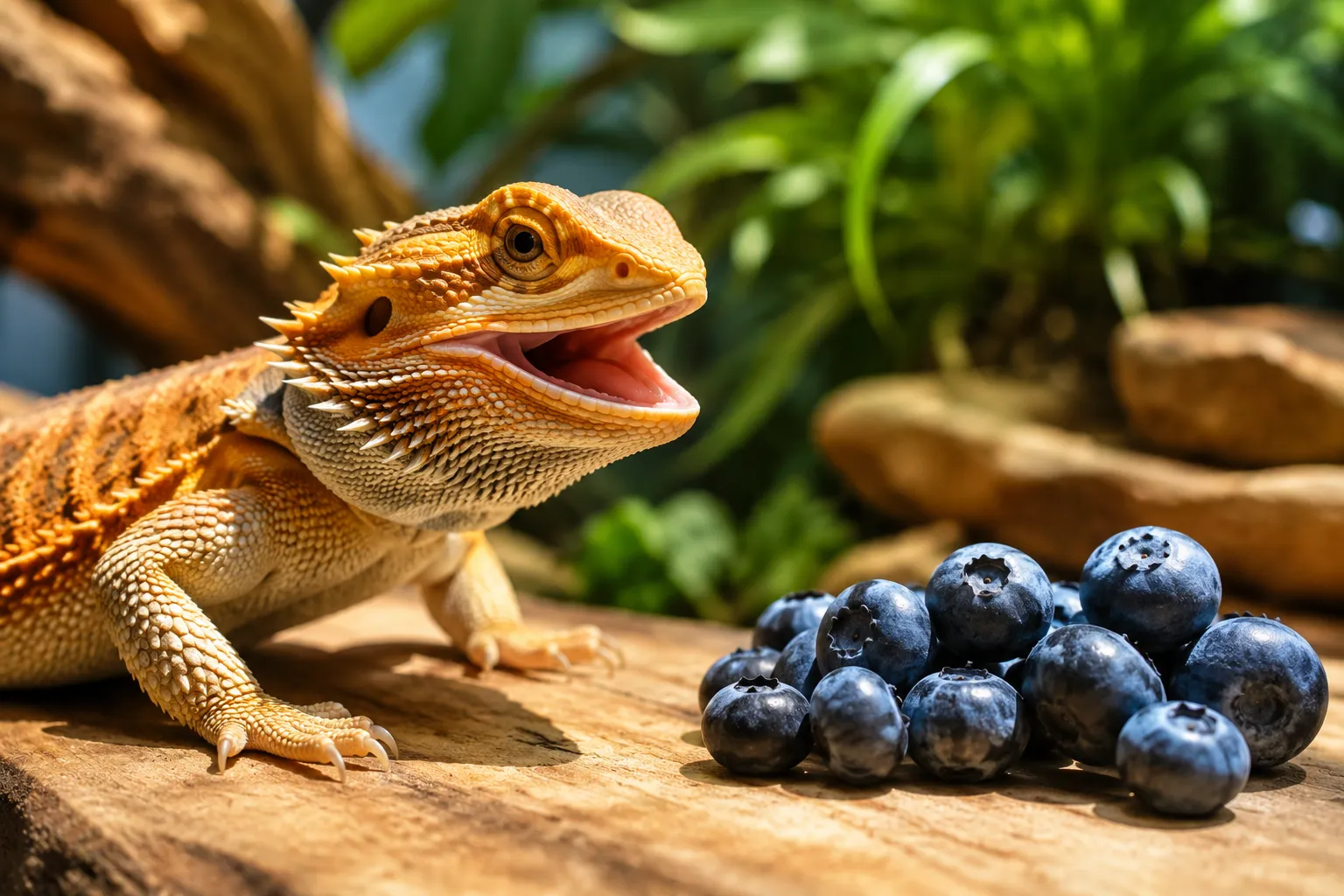
Quick Answer: Yes, bearded dragons can eat blueberries safely, but only as an occasional treat. Blueberries should make up no more than 5-10% of your dragon’s fruit intake and should be offered once or twice per week at most due to their high sugar content and unfavorable calcium-to-phosphorus ratio.
Key Takeaways
- Blueberries are safe for bearded dragons but should only be fed sparingly as treats, not staple foods
- Limit portions to 1-3 blueberries per feeding, depending on your dragon’s size
- Feed blueberries no more than once or twice weekly to avoid sugar-related health issues
- Always cut blueberries in half or quarters for dragons under 12 months old to prevent choking
- Fresh blueberries are better than frozen, but thawed frozen berries work if fresh aren’t available
- Mix blueberries with calcium-rich greens to balance the poor calcium-to-phosphorus ratio
- Baby bearded dragons can eat blueberries but need smaller portions and less frequent feeding
- Overfeeding blueberries can lead to diarrhea, obesity, and metabolic bone disease over time

Vitamin Enriched Formula That Provides Essential Proteins, Fats, Vitamins And Minerals

All Natural: 100% all-natural and preservative-free

Quick and Easy Preparation: Simply add water to our Fruit Mix Instant Meal for a hassle-free, nutritious option. Ideal for tortoise habitat accessories and tortoise food, it rehydrates in minutes, making it perfect for baby turtle food and box turtle food.
Are Blueberries Safe for Bearded Dragons?
Blueberries are safe for bearded dragons when fed in moderation. These berries contain beneficial antioxidants, vitamin C, and fiber that can support your dragon’s immune system and digestion. However, they also come with nutritional drawbacks that make them unsuitable as a regular food.
The main concern with blueberries is their calcium-to-phosphorus ratio of approximately 1:1.2. Bearded dragons need foods with a calcium-to-phosphorus ratio of at least 2:1 to maintain healthy bones and prevent metabolic bone disease. Phosphorus actually binds to calcium in the digestive system, preventing absorption.
Nutritional benefits of blueberries include:
- High antioxidant content that supports immune function
- Vitamin C for tissue repair and growth
- Vitamin K for blood clotting
- Dietary fiber for digestive health
- High water content for hydration
Potential risks include:
- Poor calcium-to-phosphorus ratio (1:1.2)
- High sugar content (about 10 grams per 100 grams)
- Can contribute to obesity if overfed
- May cause diarrhea in large quantities
- Oxalates present in small amounts
The key is treating blueberries as what they are: a sweet treat, not a nutritional staple. Think of them like candy for your dragon, enjoyable occasionally but not part of the daily diet.
How Many Blueberries Can a Bearded Dragon Eat at Once?
A bearded dragon should eat no more than 1-3 blueberries per feeding session, depending on their size and age. Adult dragons (over 18 months) can handle 2-3 berries, while juveniles (6-18 months) should get 1-2 berries, and babies (under 6 months) should receive only half to one small berry.
Portion guidelines by age:
- Baby dragons (0-6 months): Half of one small blueberry or one tiny wild blueberry
- Juvenile dragons (6-18 months): 1-2 medium blueberries
- Adult dragons (18+ months): 2-3 medium blueberries
These portions assume you’re feeding blueberries as part of a mixed salad, not as a standalone snack. Always account for other fruits in the meal when calculating portions. If you’re also offering strawberries or mango, reduce the blueberry count accordingly.
Common mistake: Many new owners see their dragon eagerly eating blueberries and assume they should offer more. Dragons lack the instinct to self-regulate sugar intake in captivity. Just because your dragon will eat five blueberries doesn’t mean they should.
A good rule of thumb: the total fruit portion (including blueberries) should fit in a space about the size of your dragon’s head. The rest of the meal should be leafy greens and vegetables.
How Often Can Bearded Dragons Have Blueberries?
Bearded dragons should have blueberries no more than once or twice per week. This frequency prevents sugar overload while still allowing your dragon to enjoy the taste and nutritional benefits of this fruit as an occasional treat.
The weekly feeding schedule for a balanced bearded dragon diet should look like this:
Daily (every feeding):
- Collard greens, mustard greens, or turnip greens
- Butternut squash or bell peppers
- Appropriate insects (for juveniles and young adults)
2-3 times per week:
- Calcium-rich vegetables like bok choy
- Other safe vegetables like green beans
Once or twice per week:
- Fruits like blueberries, strawberries, or mango (rotate varieties)
Choose blueberries if: Your dragon needs variety in their fruit rotation, you want to provide antioxidants, or you’re looking for a high-water-content treat during warm weather.
Skip blueberries if: Your dragon has shown signs of diarrhea recently, they’re overweight, or you’ve already fed other fruits that week.
Some owners designate specific days as “fruit days”, for example, every Wednesday and Saturday. This creates a routine that prevents accidental overfeeding and helps you track your dragon’s overall diet balance.
Can Baby Bearded Dragons Eat Blueberries?
Baby bearded dragons can eat blueberries, but they need much smaller portions and less frequent feeding than adults. Babies under six months should receive no more than half of one small blueberry once per week, and it must be cut into tiny pieces to prevent choking.
Baby dragons have different nutritional needs than adults. They require a diet that’s approximately 70-80% protein (insects) and 20-30% plant matter to support their rapid growth. Within that small plant matter portion, the focus should be on calcium-rich greens, not sugary fruits.
Special considerations for baby dragons:
- Cut blueberries into quarters or smaller pieces
- Offer only once every 7-10 days maximum
- Always mix with calcium-dusted greens
- Monitor closely for digestive issues
- Prioritize protein sources over treats
Warning signs to watch for: If your baby dragon develops runny stools after eating blueberries, eliminate them from the diet entirely until they’re at least 12 months old. Their digestive systems are more sensitive than adults.
The risk with feeding babies too many blueberries is that they’ll fill up on low-nutrition treats instead of eating the protein and calcium-rich foods they need for proper bone and muscle development. A baby dragon that prefers fruit over insects may develop metabolic bone disease or fail to grow properly.
Do Blueberries Need to Be Cut Up for Bearded Dragons?
Blueberries should be cut in half or quarters for any bearded dragon under 12 months old to prevent choking. Adult dragons can typically handle whole blueberries, but cutting them in half is still recommended for easier digestion and to reduce choking risk, especially for smaller adult dragons.
Preparation guidelines:
- Babies (0-6 months): Cut into quarters or smaller
- Juveniles (6-18 months): Cut in half minimum
- Adults (18+ months): Whole berries acceptable, but halves are safer
- Large adults (20+ inches): Whole berries are fine
Beyond size considerations, cutting blueberries serves another purpose: it releases some of the juice and makes the berries easier to digest. The tough skin of a whole blueberry can sometimes pass through a dragon’s digestive system intact, reducing nutrient absorption.
Proper preparation steps:
- Rinse blueberries thoroughly under cool water to remove pesticides
- Pat dry with a clean towel
- Cut to appropriate size for your dragon’s age
- Mix with leafy greens and vegetables
- Lightly dust the entire salad with calcium powder
- Serve immediately (don’t let cut fruit sit for hours)
Common mistake: Feeding whole blueberries to eager juvenile dragons because they seem to swallow them fine. Even if they don’t choke, whole berries are harder to digest and may cause impaction in younger dragons with less developed digestive systems.

Can Bearded Dragons Eat Frozen Blueberries?
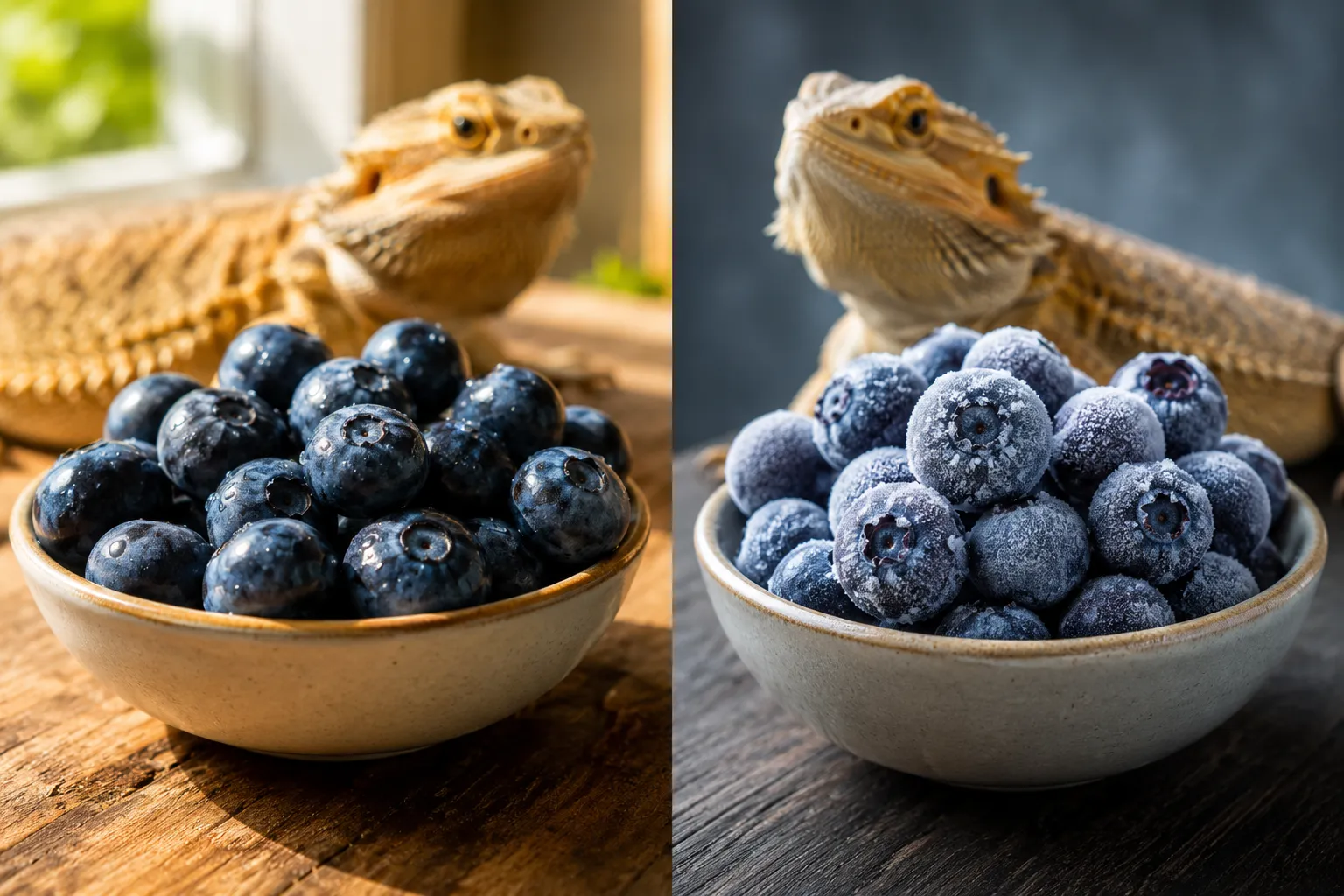
Bearded dragons can eat frozen blueberries, but they must be completely thawed and brought to room temperature first. Frozen or cold fruit can cause digestive upset and lower your dragon’s body temperature, which interferes with proper digestion since they’re cold-blooded reptiles.
Fresh blueberries are always the better choice because they retain more nutrients and have better texture. However, frozen blueberries work as a backup option when fresh berries aren’t available or are out of season.
How to prepare frozen blueberries:
- Remove desired portion from freezer
- Let thaw completely at room temperature (30-60 minutes)
- Drain excess water that accumulates during thawing
- Pat dry with paper towel
- Cut to appropriate size
- Ensure berries are room temperature before serving
Never microwave blueberries to speed up thawing. Microwaving creates hot spots that can burn your dragon’s mouth and destroys beneficial nutrients.
Frozen blueberries tend to be mushier than fresh ones after thawing, which some dragons actually prefer because they’re easier to eat. However, the softer texture also means they break down faster in the salad, potentially making the greens soggy if you don’t serve the meal right away.
Choose frozen blueberries if: Fresh berries are unavailable, you want to buy in bulk and save money, or you live in an area where fresh berries are expensive or low quality.
Stick with fresh if: Your dragon is picky about texture, you want maximum nutritional value, or you’re feeding a baby dragon who needs the firmest, easiest-to-cut berries.
What Happens If a Bearded Dragon Eats Too Many Blueberries?
If a bearded dragon eats too many blueberries, they’ll likely experience diarrhea within 12-24 hours due to the high sugar and water content. Long-term overfeeding of blueberries can lead to obesity, fatty liver disease, tooth decay, and metabolic bone disease from calcium deficiency.
Immediate effects of overfeeding (1-2 days):
- Watery or runny stools
- Increased urination
- Lethargy from blood sugar spike and crash
- Decreased appetite for regular foods
- Possible stomach discomfort
Long-term effects of regular overfeeding (weeks to months):
- Weight gain and obesity
- Metabolic bone disease from poor calcium absorption
- Fatty liver disease
- Weakened immune system
- Shortened lifespan
The sugar content in blueberries is particularly problematic. While natural fruit sugar is better than processed sugar, bearded dragons didn’t evolve to handle high-sugar diets. In the wild, they eat primarily insects and tough desert vegetation with minimal fruit.
What to do if your dragon ate too many blueberries:
- Remove all fruit from their diet for the next 7-10 days
- Offer extra water or give a shallow bath to prevent dehydration from diarrhea
- Focus on calcium-rich greens and appropriate insects
- Monitor stool consistency and energy levels
- Contact a reptile veterinarian if diarrhea persists beyond 48 hours
Most dragons will recover quickly from a single overfeeding incident. The real danger comes from making blueberries a daily treat or feeding large portions multiple times per week.
Are Blueberries Too High in Sugar for Bearded Dragons?
Blueberries contain approximately 10 grams of sugar per 100 grams, which is moderately high for bearded dragons and is the primary reason they should only be fed sparingly. While not the highest-sugar fruit available, blueberries contain enough sugar to cause health problems if fed too frequently or in large amounts.
For context, bearded dragons in their natural Australian habitat eat very little fruit. Their wild diet consists mainly of insects, flowers, and tough vegetation with minimal sugar content. Their bodies aren’t designed to process large amounts of sugar efficiently.
Sugar content comparison (per 100g):
- Blueberries: ~10g sugar
- Strawberries: ~5-7g sugar (better choice)
- Mango: ~14g sugar (higher)
- Papaya: ~8g sugar (moderate)
- Grapes: ~16g sugar (too high, avoid)
- Collard greens: <1g sugar (ideal staple)
The sugar in blueberries can cause several issues:
Blood sugar spikes: Dragons can experience energy crashes after eating sugary foods, similar to humans. This affects their activity levels and overall health.
Preference for sweet foods: Dragons who eat too much fruit often refuse to eat their vegetables and greens, leading to nutritional deficiencies.
Obesity: Excess sugar converts to fat, and captive dragons don’t get enough exercise to burn it off.
Dental issues: While less common than in mammals, bearded dragons can develop mouth problems from high-sugar diets.
Choose blueberries over higher-sugar fruits like grapes, bananas, or mango when you want to offer a treat. But always remember that even “better” fruit options should be limited to 5-10% of the overall diet.

Perfect Blend of Crickets, Mealworms and Pellets

This food is natural with added vitamins, minerals, and other trace nutrients. There are no artificial colors, flavors, or preservatives added!

Unique textured pellets that bearded dragons love to eat
Should Blueberries Be Mixed with Other Foods for Bearded Dragons?
Blueberries should always be mixed with calcium-rich greens and vegetables, never fed alone. Mixing blueberries with staple foods helps balance the poor calcium-to-phosphorus ratio, prevents your dragon from filling up on treats, and encourages them to eat their nutritious greens.
A properly balanced salad with blueberries might look like this:
Ideal blueberry salad composition:
- 70% calcium-rich greens (collard greens, mustard greens, turnip greens)
- 20% other vegetables (butternut squash, bell pepper, green beans)
- 10% fruit including blueberries (2-3 berries for an adult)
- Light dusting of calcium powder over everything
Mixing strategies that work:
- Chop blueberries into small pieces and scatter throughout the salad so your dragon must eat greens to get to them
- Place whole or halved blueberries on top of greens as a “reward” for eating the healthy stuff first
- Mash one blueberry and use the juice to lightly coat greens, making them more appealing
What not to do: Don’t create a separate pile of blueberries in the bowl. Many dragons will pick out all the fruit first and ignore the vegetables. This defeats the purpose of offering a balanced meal.
Some dragons are picky eaters who refuse vegetables. For these dragons, mixing a tiny amount of mashed blueberry with their greens can make the vegetables more appealing. However, this should be a temporary strategy while you work on improving their diet, not a permanent solution.
Pro tip: Dust the entire salad (including blueberries) with calcium powder. Some of the powder will stick to the moist berries, helping offset the calcium-phosphorus imbalance.
Blueberries vs Strawberries for Bearded Dragons
Strawberries are generally a better choice than blueberries for bearded dragons because they contain less sugar (5-7g per 100g vs 10g) and have a slightly better calcium-to-phosphorus ratio. However, both fruits should be fed sparingly as occasional treats, not dietary staples.
Nutritional comparison:
| Factor | Blueberries | Strawberries |
|---|---|---|
| Sugar content | ~10g per 100g | ~5-7g per 100g |
| Calcium:Phosphorus | 1:1.2 | 1:1.3 |
| Vitamin C | Moderate | High |
| Water content | ~84% | ~91% |
| Choking risk | Moderate (round) | Lower (can be sliced flat) |
Choose blueberries if:
- Your dragon prefers them and refuses strawberries
- You want higher antioxidant content
- You’re rotating fruit varieties for enrichment
Choose strawberries if:
- You want to minimize sugar intake
- Your dragon needs extra hydration
- You want easier-to-prepare fruit (slices flat easily)
Rotate both: The best approach is rotating between different safe fruits weekly. One week offer blueberries, the next week strawberries, then perhaps a small amount of mango or papaya. This rotation provides dietary variety while preventing your dragon from becoming fixated on one type of fruit.
Both fruits share the same feeding frequency recommendation: no more than once or twice per week, in small portions, mixed with greens and vegetables.
What Fruits Are Better Than Blueberries for Bearded Dragons?
Several fruits offer better nutritional profiles than blueberries for bearded dragons, including figs (excellent calcium content), papaya (good calcium-to-phosphorus ratio), and strawberries (lower sugar). However, even these “better” options should still be limited to occasional treats rather than regular foods.
Top fruit choices ranked by nutritional value:
Excellent choices (once per week):
- Figs: High calcium content, good for balancing diet
- Papaya: Better calcium-to-phosphorus ratio, digestive enzymes
- Cactus fruit (prickly pear): Native to similar climates, good nutrition
Good choices (1-2 times per week):
- Strawberries: Lower sugar than blueberries
- Blueberries: Moderate choice, high antioxidants
- Mango: Higher sugar but good vitamin A (small amounts)
Occasional choices (2-3 times per month):
- Raspberries: Good nutrition but seeds may cause issues
- Blackberries: Similar to raspberries
- Melon: Very high water content, minimal nutrition
Fruits to avoid completely:
- Grapes: Too high in sugar, poor nutrition
- Bananas: Extremely high sugar, poor calcium ratio
- Citrus fruits: Too acidic, can cause digestive upset
- Avocado: Toxic to bearded dragons
The “best” fruit ultimately depends on your dragon’s overall diet. If they’re getting plenty of calcium from greens and supplements, an occasional blueberry treat is fine. If their calcium intake is borderline, prioritize figs or papaya instead.
Reality check: No fruit is nutritionally necessary for bearded dragons. They can live perfectly healthy lives eating only insects, greens, and vegetables. Fruit is purely for enrichment and variety, not nutritional requirements.
Why Is My Bearded Dragon Not Eating Blueberries?
If your bearded dragon isn’t eating blueberries, it’s likely due to individual taste preference, unfamiliarity with the food, or because they’re already full from other foods. Some dragons simply don’t like blueberries, and that’s perfectly fine since fruit isn’t a necessary part of their diet.
Common reasons dragons refuse blueberries:
Taste preference: Just like people, dragons have individual preferences. Some love blueberries, others ignore them completely.
Never seen them before: Dragons can be suspicious of new foods. It may take 10-15 exposures before they try something unfamiliar.
Already full: If you offer blueberries after they’ve eaten their fill of insects and greens, they may not be interested in treats.
Temperature: Cold or frozen berries are unappealing. Ensure berries are room temperature.
Size intimidation: Whole blueberries might seem too large. Try cutting them smaller.
Health issues: Loss of appetite for all foods (not just blueberries) may indicate illness.
Strategies to encourage trying blueberries:
- Mash and mix: Crush one blueberry and mix the juice with their favorite greens
- Hand feeding: Offer a small piece directly from your fingers during bonding time
- Placement: Put berries near their favorite basking spot where they’ll encounter them naturally
- Patience: Offer weekly without pressure; they may try it eventually
- Model behavior: Some dragons are curious when they see their owner eating the same food
Important: Never force-feed blueberries or withhold other foods to make your dragon hungry enough to eat them. Fruit is a treat, not a requirement. If your dragon doesn’t like blueberries, simply offer other safe fruits or skip fruit entirely.
Some of the healthiest bearded dragons never eat fruit at all. Focus on ensuring they’re eating appropriate amounts of insects (for juveniles) and calcium-rich greens (for all ages). Everything else is optional.
What Fruits Should Bearded Dragons Never Eat?
Bearded dragons should never eat avocado (toxic), citrus fruits (too acidic), or rhubarb (toxic), and should avoid high-sugar fruits like grapes and bananas. These foods can cause serious health problems ranging from digestive upset to organ failure.
Toxic fruits (never feed):
- Avocado: Contains persin, which is toxic to reptiles and can cause death
- Rhubarb: Contains oxalic acid in dangerous concentrations
- Any fruit with pits/seeds: Apple seeds, cherry pits, and peach pits contain cyanide compounds
Harmful fruits (avoid):
- Citrus fruits (oranges, lemons, limes, grapefruit): Too acidic, causes digestive upset and mouth sores
- Grapes: Extremely high sugar, poor nutritional value, possible kidney issues
- Bananas: Very high sugar and poor calcium-to-phosphorus ratio (1:3)
Problematic fruits (use extreme caution):
- Tomatoes: Acidic and contain some toxic compounds in leaves/stems; only ripe flesh in tiny amounts
- Kiwi: Very acidic, can cause mouth irritation
- Pineapple: Extremely acidic, enzyme content may irritate digestive system
Why these fruits are dangerous:
The toxic fruits contain compounds that bearded dragons cannot metabolize properly. Avocado’s persin affects heart function and can cause respiratory distress. Citrus acid burns their digestive tract lining. High-oxalate fruits like rhubarb bind calcium so aggressively they can cause immediate metabolic problems.
Signs of fruit toxicity:
- Vomiting or regurgitation
- Severe diarrhea
- Lethargy or weakness
- Difficulty breathing
- Tremors or seizures
- Refusing all food
If your dragon ate a toxic fruit: Contact a reptile veterinarian immediately. Don’t wait for symptoms to appear. Many toxins work quickly, and early intervention is critical.
Safe fruit list for quick reference:
- Blueberries ✓ (limited)
- Strawberries ✓ (limited)
- Papaya ✓ (limited)
- Mango ✓ (limited)
- Figs ✓ (limited)
- Cactus fruit ✓ (limited)
- Melon ✓ (very limited)
When in doubt, skip the fruit. Bearded dragons thrive on a simple diet of insects, calcium-rich greens, and vegetables. Exotic fruits aren’t worth the risk.
Frequently Asked Questions
Can bearded dragons eat blueberries every day?
No, bearded dragons should not eat blueberries every day. Daily blueberry feeding leads to excessive sugar intake, calcium deficiency, and potential obesity. Limit blueberries to once or twice per week maximum as an occasional treat.
Do I need to remove blueberry skins?
No, you don’t need to remove blueberry skins. The skin is safe and contains beneficial fiber and antioxidants. However, cutting berries in half helps with digestion and reduces choking risk, especially for younger dragons.
Can bearded dragons eat dried blueberries?
Dried blueberries are not recommended because the drying process concentrates the sugar content significantly, making them much less healthy than fresh berries. If you must use dried berries, rehydrate them completely and offer only tiny amounts.
Will blueberries change my bearded dragon’s poop color?
Yes, blueberries can temporarily tint your dragon’s urate (the white part of their waste) slightly blue or purple. This is normal and harmless, caused by the natural pigments in blueberries passing through their system.
Can bearded dragons eat wild blueberries?
Wild blueberries are safe if you’re certain they haven’t been exposed to pesticides, herbicides, or contamination from wild animal waste. Thoroughly wash any wild berries and start with very small amounts to test for digestive tolerance.
Are organic blueberries better for bearded dragons?
Organic blueberries reduce pesticide exposure, which is beneficial for your dragon’s health. However, all blueberries (organic or conventional) should be thoroughly washed before feeding, and the same portion limits apply regardless of organic status.
Can bearded dragons eat blueberry leaves?
Blueberry leaves are not toxic but offer minimal nutritional value and aren’t commonly fed to bearded dragons. Stick with the berries themselves and focus on proven safe greens like collard greens and mustard greens for leafy vegetables.
What if my bearded dragon ate a whole container of blueberries?
If your dragon ate excessive blueberries, expect diarrhea within 24 hours. Provide extra hydration through a shallow bath, remove all fruit from their diet for 7-10 days, and monitor closely. Contact a vet if diarrhea persists beyond 48 hours or if they show signs of lethargy.
Can bearded dragons drink blueberry juice?
No, bearded dragons should not drink blueberry juice. The concentrated sugar content is too high, and they don’t need juice for hydration. Fresh water should be their only beverage, supplemented by the moisture in their vegetables and greens.
At what age can bearded dragons start eating blueberries?
Bearded dragons can start eating tiny amounts of blueberries around 6 months of age, but it’s safer to wait until 12 months when their digestive systems are more developed. Babies under 6 months should focus exclusively on protein and calcium-rich greens.
Can bearded dragons eat blueberries with other fruits?
Bearded dragons can eat blueberries mixed with other safe fruits, but the total fruit portion should remain small (5-10% of the meal). Don’t combine multiple high-sugar fruits in one feeding, as this concentrates the sugar content too much.
How do I know if blueberries are making my dragon sick?
Signs that blueberries are causing problems include watery diarrhea, decreased appetite for regular foods, lethargy after eating, or consistently refusing meals after fruit days. If you notice these symptoms, eliminate blueberries from the diet and consult a reptile veterinarian.
Conclusion
Blueberries can be a safe and enjoyable occasional treat for your bearded dragon when fed properly. The key is moderation: limit portions to 1-3 berries per feeding, offer them no more than once or twice weekly, and always mix them with calcium-rich greens and vegetables. While blueberries provide beneficial antioxidants and vitamins, their high sugar content and poor calcium-to-phosphorus ratio mean they should never become a dietary staple.
Remember that every bearded dragon is an individual. Some will eagerly devour blueberries, while others will ignore them completely, and both responses are perfectly normal. Fruit isn’t a nutritional requirement for these reptiles; it’s simply enrichment. Focus your energy on providing high-quality insects (for juveniles), calcium-rich greens like collard and mustard greens, and appropriate vegetables. These foods form the foundation of a healthy bearded dragon diet.
Action steps for feeding blueberries safely:
- Start with just one small piece to test your dragon’s tolerance
- Always cut berries appropriately for your dragon’s age and size
- Mix with greens and dust the entire salad with calcium powder
- Track feeding frequency to avoid accidental overfeeding
- Watch for any digestive issues and adjust accordingly
- Rotate between different safe fruits for variety
If you’re ever uncertain about your bearded dragon’s diet, consult with a reptile veterinarian who can provide personalized guidance based on your pet’s age, health status, and specific needs. A well-balanced diet is one of the most important factors in helping your bearded dragon live a long, healthy life.

✔ HEALTHY - This nutritious blend includes figs, papaya, green beans, cabbage, squash, apple and carrots

ESSENTIAL HEALTH SUPPORT: Help your beloved crawling ones to stay healthy and prosper. Calcium deficiency in reptiles is a major contributing factor in Metabolic Bone Disease (MBD). In the wild the lizard would eat a huge variety of insects that have been foraging and feeding. Gargeer calcium powder serves as a food supplement for all reptiles and amphibians in captivity, aimed to promote and maintain bones, muscles, and nerve functions

OPTIMAL NUTRITION FOR HERBIVOROUS REPTILES; Zilla Herbivore Medley provides a complete diet for herbivores like bearded dragons, tortoises, uromastyx and iguanas