Quick Answer
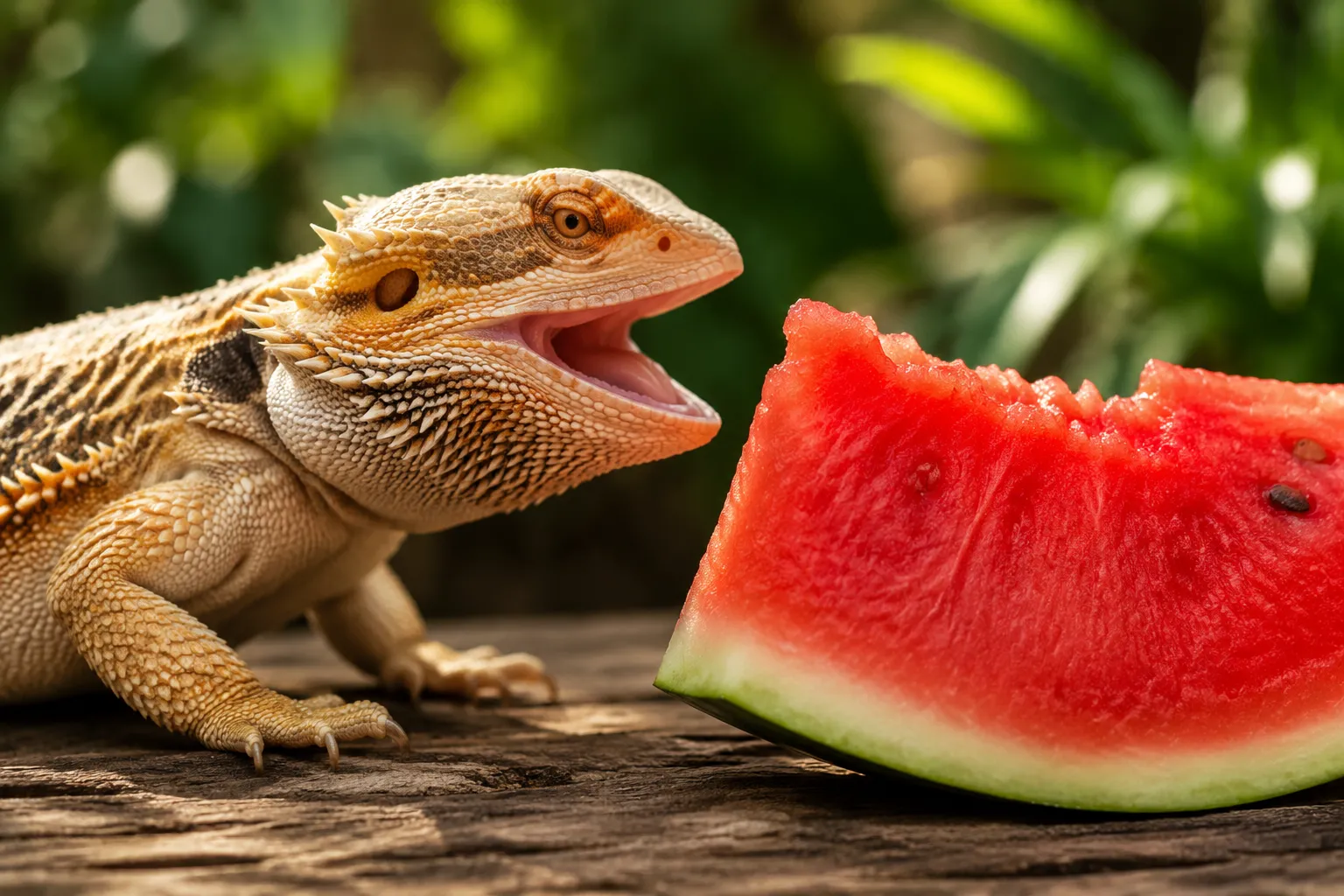
Yes, bearded dragons can eat watermelon, but only as an occasional treat in small amounts. Watermelon is safe for bearded dragons when prepared correctly (seedless, rind removed, cut into small pieces), but it should never replace their staple diet of insects and leafy greens. The high water content and sugar levels mean watermelon should be offered sparingly, no more than once or twice per month, to avoid digestive issues and nutritional imbalances.

Vitamin Enriched Formula That Provides Essential Proteins, Fats, Vitamins And Minerals

All Natural: 100% all-natural and preservative-free

OPTIMAL NUTRITION FOR HERBIVOROUS REPTILES; Zilla Herbivore Medley provides a complete diet for herbivores like bearded dragons, tortoises, uromastyx and iguanas
Key Takeaways
- Watermelon is safe but should be rare: Offer watermelon only once or twice monthly as a special treat, not a regular food item
- Preparation matters: Always remove seeds, rind, and white parts; serve only the pink/red flesh in small, bite-sized cubes
- High water content is a double-edged sword: While hydrating, too much watermelon can cause diarrhea and runny stools
- Sugar content is concerning: Watermelon’s natural sugars can lead to obesity and health problems if fed too frequently
- Baby bearded dragons need different nutrition: Juveniles should avoid watermelon entirely and focus on protein-rich insects and calcium-dense greens
- Better fruit alternatives exist: Blueberries, strawberries, and papaya offer more nutritional value with less risk
- The rind is not safe: Watermelon rind is too tough to digest and poses a choking hazard
- Portion control is critical: A few small cubes (about the size of the space between your dragon’s eyes) is the maximum serving
- Watch for digestive reactions: Monitor your bearded dragon’s droppings after introducing watermelon for the first time
- Variety beats repetition: Rotate different safe fruits rather than feeding the same treat repeatedly
Is Watermelon Safe for Bearded Dragons?
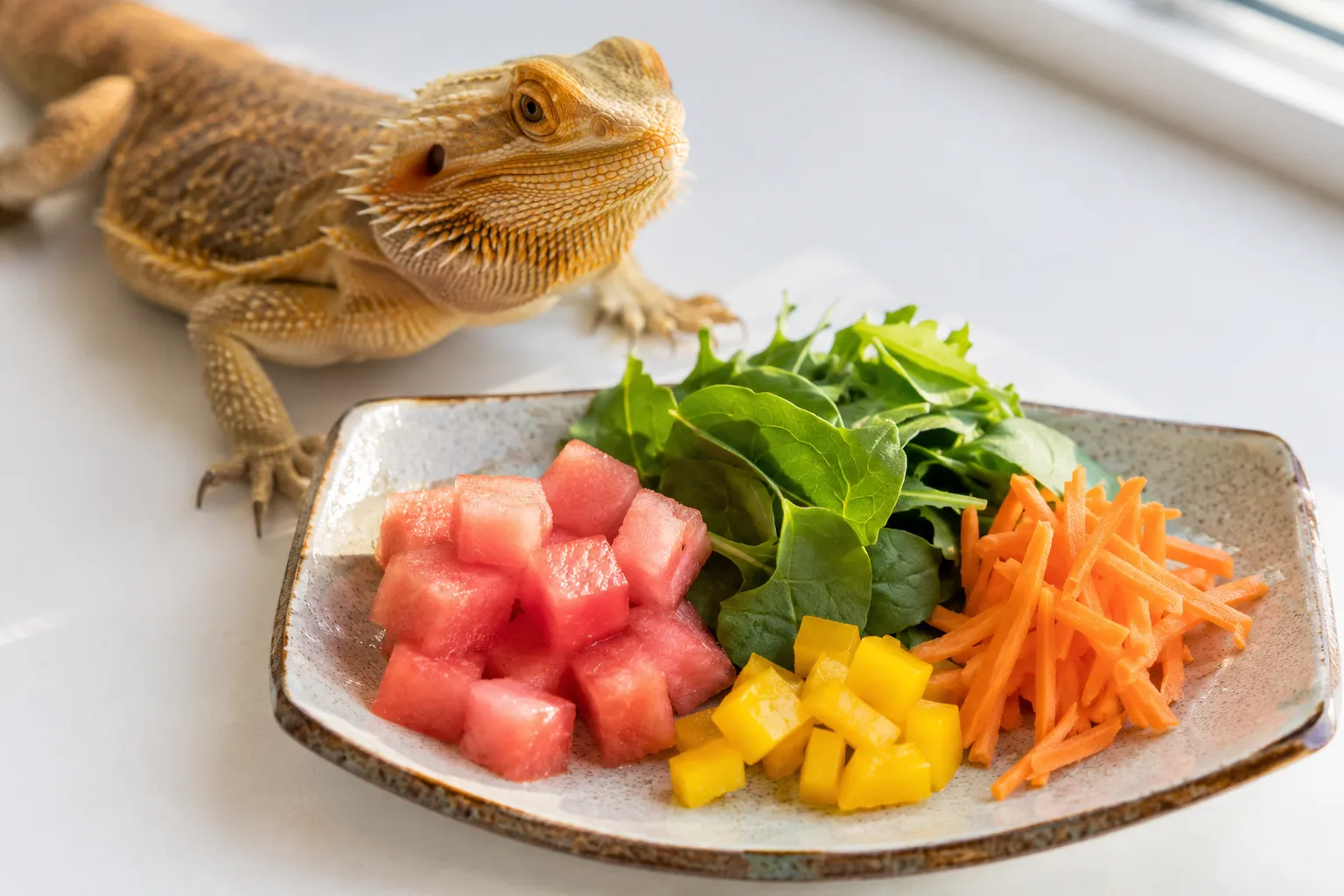
Watermelon is generally safe for bearded dragons when fed correctly and in moderation. The fruit contains no toxic compounds that harm reptiles, and many bearded dragons enjoy the sweet taste and juicy texture. However, safety depends entirely on how you prepare it and how often you offer it.
The main safety concerns with watermelon center around three factors:
- High water content (92%): Can cause diarrhea and digestive upset if overfed
- Sugar levels: Natural sugars can contribute to obesity and fatty liver disease over time
- Poor calcium-to-phosphorus ratio: Watermelon has more phosphorus than calcium, which can interfere with calcium absorption
To keep watermelon safe, always remove all seeds (even small white ones), cut away the entire rind and white portions, and serve only the pink or red flesh. Cut the flesh into pieces no larger than the space between your bearded dragon’s eyes to prevent choking.
Common mistake: Many owners assume that because watermelon is mostly water, it’s harmless to feed frequently. In reality, the combination of high water and sugar content makes frequent feeding problematic for reptile digestion.
How Much Watermelon Can a Bearded Dragon Eat?
A bearded dragon should eat no more than 2-3 small cubes of watermelon per serving, with servings limited to once or twice per month. Each cube should be roughly the size of the space between the dragon’s eyes, typically about 1/4 to 1/2 inch for adults.
Here’s a practical serving guide:
Adult bearded dragons (12+ months):
- 2-3 small cubes per serving
- Maximum frequency: twice monthly
- Always mixed with other foods, never alone
Juvenile bearded dragons (6-12 months):
- 1-2 tiny pieces maximum
- Once monthly at most
- Better to avoid entirely during rapid growth phase
Baby bearded dragons (0-6 months):
- No watermelon recommended
- Focus on protein and calcium-rich foods
The reason for these strict limits is that bearded dragons need a diet composed primarily of insects (for protein) and leafy greens (for vitamins and minerals). Fruits like watermelon should make up less than 5% of their total diet.
Choose watermelon if: Your dragon is well-hydrated, maintaining healthy weight, eating their staple foods consistently, and you want to offer an occasional special treat.
Skip watermelon if: Your dragon has diarrhea, is overweight, refuses their regular vegetables, or is under six months old.
Can Baby Bearded Dragons Eat Watermelon?
Baby bearded dragons should not eat watermelon. Juveniles under six months old require a diet focused heavily on protein (80% insects) and calcium-rich greens (20% vegetables) to support their rapid growth and bone development. Watermelon offers virtually no nutritional benefit during this critical growth phase.
Young bearded dragons need:
- High protein intake (small crickets, dubia roaches, black soldier fly larvae)
- Calcium and vitamin D3 supplementation
- Nutrient-dense greens like collard greens and turnip greens
- Consistent feeding schedules (2-3 times daily)
Introducing watermelon too early can cause several problems:
- Fills them up without nutrition: Baby dragons have small stomachs; watermelon displaces more valuable foods
- Diarrhea risk is higher: Young reptiles have more sensitive digestive systems
- Calcium interference: The phosphorus in watermelon can bind with calcium, reducing absorption during crucial bone development
Wait until your bearded dragon is at least 12 months old and eating a consistent, balanced diet before introducing any watermelon. Even then, keep it extremely limited.
How Often Should Bearded Dragons Eat Watermelon?
Bearded dragons should eat watermelon no more than once or twice per month. This frequency keeps watermelon in the “rare treat” category where it belongs, preventing the health issues associated with regular consumption while still allowing your pet to enjoy variety.
Ideal feeding schedule for treats:
- Week 1: Staple diet only (greens, vegetables, insects)
- Week 2: One small fruit treat (could be watermelon)
- Week 3: Staple diet only
- Week 4: Different fruit treat (blueberries, strawberries, etc.)
This rotation ensures your bearded dragon gets dietary variety without overloading on any single treat food. Many experienced reptile keepers recommend treating watermelon like dessert, something special that appears rarely, not a regular menu item.
Edge case: During hot summer months, some owners offer watermelon slightly more often (every 10-14 days) for extra hydration. While this can work for healthy adult dragons, always monitor their droppings and reduce frequency immediately if you notice runny stools.
The key principle is that consistency in staple foods matters more than variety in treats. Your bearded dragon’s health depends on daily access to appropriate greens and protein, not on fruit diversity.
Can Bearded Dragons Eat Watermelon Rind?
No, bearded dragons should never eat watermelon rind. The rind is too tough and fibrous for bearded dragons to digest properly, and it poses a serious choking hazard. Even the white part between the pink flesh and the green outer skin should be completely removed before serving.
The rind presents multiple dangers:
- Choking risk: The tough texture doesn’t break down easily in a reptile’s mouth
- Impaction hazard: Large pieces can block the digestive tract
- No nutritional value: The rind contains even less nutrition than the flesh
- Pesticide concentration: Agricultural chemicals concentrate in the outer layers
Always prepare watermelon by cutting away all green rind and white portions, serving only the soft pink or red flesh. Even if your bearded dragon shows interest in the rind, resist the temptation to offer it.
What to do if your dragon accidentally eats rind: Monitor them closely for 24-48 hours. Watch for signs of distress like gaping, lethargy, or straining to defecate. If you notice any concerning symptoms or if they consumed a large piece, contact a reptile veterinarian immediately.
Can Bearded Dragons Eat Watermelon Seeds?
Bearded dragons should not eat watermelon seeds. Both the large black seeds and the smaller white seeds should be completely removed before serving watermelon to your pet. Seeds pose choking hazards and can cause intestinal blockages, especially in smaller or younger dragons.
Why seeds are dangerous:
- Choking hazard: Seeds can lodge in the throat
- Impaction risk: Seeds don’t digest and can accumulate in the gut
- No nutritional benefit: Seeds offer nothing valuable to your dragon’s diet
- Size matters: Even small white seeds can cause problems
The safest approach is to buy seedless watermelon varieties or meticulously remove every seed before serving. Take the extra few minutes to inspect each piece, it’s worth the effort to prevent a veterinary emergency.
Preparation tip: Cut watermelon into small cubes, then examine each piece individually under good lighting. Even “seedless” varieties sometimes contain small white seeds that are easy to miss.
What Fruits Are Better Than Watermelon for Bearded Dragons?
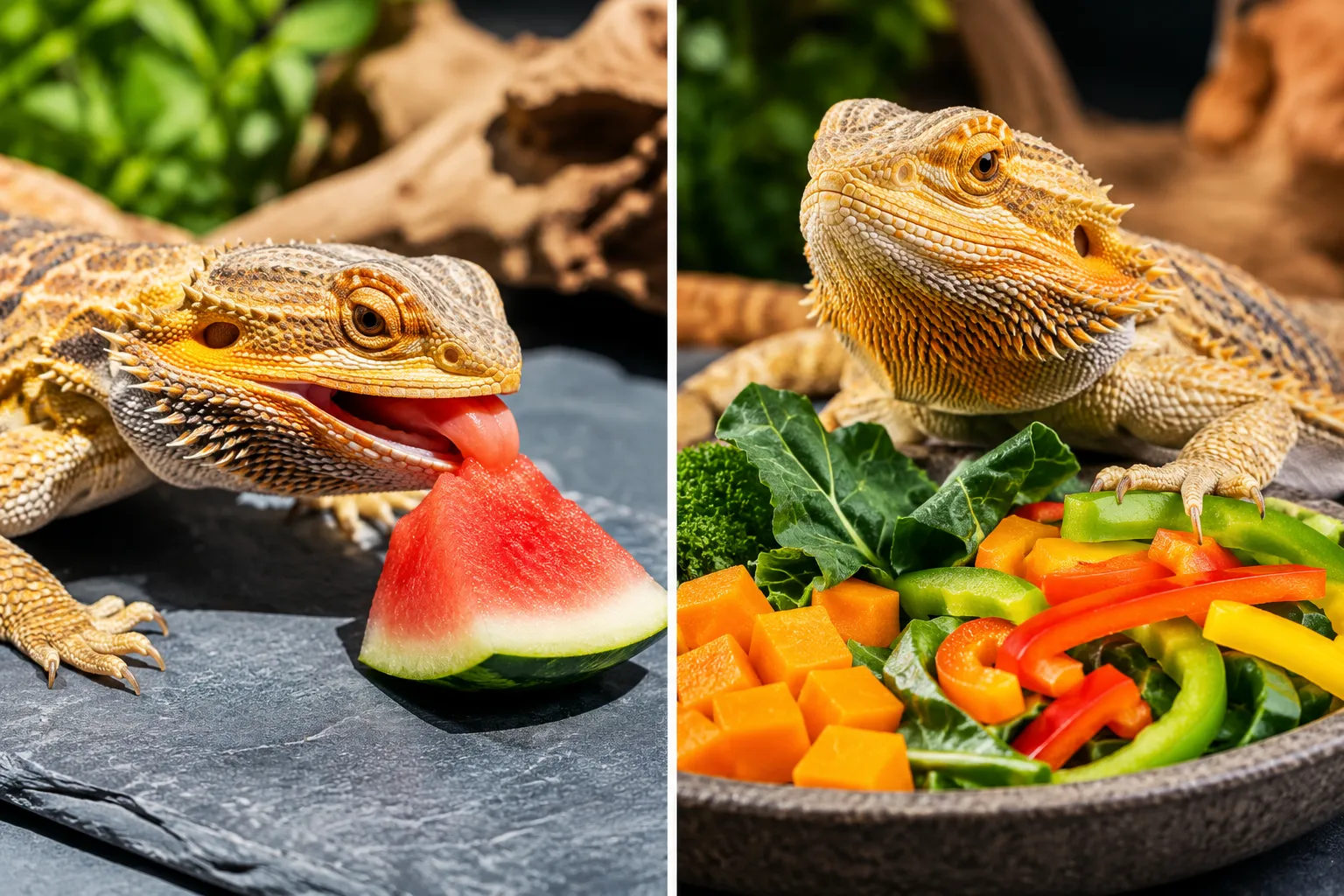
Several fruits offer better nutritional profiles than watermelon for bearded dragons. The best alternatives include blueberries, strawberries, papaya, mango, and figs, all of which provide more vitamins, minerals, and fiber with less water content and better calcium-to-phosphorus ratios.
Top fruit alternatives ranked by nutritional value:
- Papaya: Rich in vitamin A, digestive enzymes, and fiber; better calcium ratio
- Figs: High in calcium and fiber; excellent occasional treat
- Blueberries: Packed with antioxidants; small size makes portion control easy
- Strawberries: Good vitamin C content; naturally portion-sized
- Mango: High in vitamin A; sweet taste most dragons love
- Raspberries: Lower sugar than many fruits; good fiber content
Comparison: Watermelon vs. Better Alternatives
| Fruit | Calcium:Phosphorus | Water Content | Key Benefits | Serving Frequency |
|---|---|---|---|---|
| Watermelon | Poor (1:3) | 92% | Hydration only | 1-2x monthly |
| Papaya | Good (1:2) | 88% | Vitamin A, enzymes | 1x weekly |
| Figs | Excellent (2:1) | 79% | Calcium, fiber | 1x weekly |
| Blueberries | Fair (1:2) | 84% | Antioxidants | 2x weekly |
| Strawberries | Fair (1:1.5) | 91% | Vitamin C | 2x weekly |
The ideal approach is to rotate through several safe fruits rather than relying on any single option. This strategy provides nutritional variety while preventing overconsumption of any particular fruit’s drawbacks.
Choose papaya or figs if: You want fruits that contribute meaningfully to calcium intake and digestive health.
Choose berries if: You want easy portion control and frequent treat options that won’t disrupt diet balance.
Why Is Watermelon Bad for Bearded Dragons?
Watermelon isn’t inherently “bad,” but it has several characteristics that make it a poor choice for regular feeding. The primary concerns are its extremely high water content (92%), high sugar levels, poor calcium-to-phosphorus ratio (1:3), and minimal nutritional value beyond basic hydration.
Specific problems with regular watermelon consumption:
Digestive issues: The high water content can overwhelm a bearded dragon’s digestive system, leading to diarrhea, runny stools, and dehydration from fluid loss. Reptile digestive systems evolved for arid environments with moisture-dense foods, not water-logged fruits.
Calcium binding: Watermelon contains more phosphorus than calcium. Phosphorus binds with calcium in the digestive tract, preventing absorption. Over time, this can contribute to metabolic bone disease (MBD), a serious condition causing weak bones, deformities, and paralysis.
Sugar-related health problems: While natural, the sugars in watermelon can lead to:
- Obesity and fatty deposits
- Fatty liver disease
- Dental problems
- Blood sugar fluctuations
Nutritional displacement: When bearded dragons fill up on watermelon, they eat less of the nutrient-dense foods they actually need. This is especially problematic because dragons often prefer sweet foods over their healthier staples.
Common mistake: Thinking that because watermelon is healthy for humans, it’s equally good for reptiles. Bearded dragons have completely different nutritional requirements than mammals.

Zoo Med's Flower Food Topper is a high fiber dietary supplement composed of dried flowers. Flowers are a natural and vital component in the diets of herbivorous and omnivorous lizards and tortoises, providing much-needed fiber, minerals, and vitamins.

Quick and Easy Preparation: Simply add water to our Fruit Mix Instant Meal for a hassle-free, nutritious option. Ideal for tortoise habitat accessories and tortoise food, it rehydrates in minutes, making it perfect for baby turtle food and box turtle food.

FRESH AND HEALTHY: We only choose fresh and healthy Grasshoppers as raw materials, without any additives, and then seal stored through advanced frozen-drying technology; Bearded dragon food ensures the freshness and natural taste of the product
Can Watermelon Cause Diarrhea in Bearded Dragons?
Yes, watermelon can definitely cause diarrhea in bearded dragons, especially when fed in large amounts or too frequently. The 92% water content is the primary culprit, it’s simply too much liquid for a desert-adapted reptile’s digestive system to process efficiently.
Signs your bearded dragon has watermelon-induced diarrhea:
- Watery, runny droppings (instead of formed feces with white urate)
- Increased frequency of defecation
- Liquid pooling around droppings
- Staining around the vent area
- Lethargy or reduced appetite
If your bearded dragon develops diarrhea after eating watermelon, take these steps:
- Stop all fruit immediately: Return to staple diet only
- Ensure hydration: Offer water and monitor for dehydration signs
- Increase fiber: Offer extra leafy greens to help firm up stools
- Monitor for 48 hours: Most cases resolve within 1-2 days
- Contact a vet if: Diarrhea persists beyond 48 hours, dragon becomes lethargic, or you notice blood in droppings
Prevention strategy: Always start with tiny amounts when introducing watermelon for the first time. Offer just one small cube and wait 24 hours to observe the results before deciding whether to include it in their treat rotation.
Some bearded dragons have more sensitive digestive systems than others. If your dragon consistently develops diarrhea from watermelon, even in small amounts, simply avoid it and choose alternative treats.
Do Bearded Dragons Like Watermelon?
Most bearded dragons do like watermelon and will eagerly eat it when offered. The sweet taste and juicy texture appeal to their natural preference for sugary foods. However, just because they like it doesn’t mean they should eat it frequently, bearded dragons will often choose tasty treats over nutritious staples if given the choice.
Behavioral observations:
- Many dragons show excitement when they see watermelon
- Some will preferentially eat watermelon before touching their greens
- A few dragons show no interest at all (individual preferences vary)
- Young dragons may be more hesitant with new textures
This preference for sweet foods is actually a challenge for responsible reptile keeping. In the wild, bearded dragons encounter sweet fruits rarely, so they’re programmed to take advantage when they find them. In captivity, owners must provide appropriate limits that wild scarcity would naturally impose.
Training tip: If your bearded dragon becomes fixated on watermelon and starts refusing their staple foods, stop offering it entirely for several weeks. This “reset” helps re-establish healthy eating patterns. When you reintroduce treats, make them contingent on eating greens first.
Remember that your bearded dragon’s preferences shouldn’t dictate their diet, your knowledge of their nutritional needs should guide feeding decisions.
What Happens If My Bearded Dragon Eats Too Much Watermelon?
If a bearded dragon eats too much watermelon in one sitting, the most immediate consequence is typically diarrhea and digestive upset within 6-24 hours. The excess water and sugar overwhelm their system, leading to loose, watery stools and potential dehydration from fluid loss.
Short-term effects of watermelon overconsumption:
- Diarrhea and runny droppings
- Stomach discomfort (may see unusual postures or reduced activity)
- Temporary loss of appetite for regular foods
- Increased thirst or, paradoxically, dehydration from diarrhea
- Lethargy or reduced basking behavior
Long-term effects of regular overconsumption:
- Weight gain and obesity
- Fatty liver disease
- Metabolic bone disease (from calcium-phosphorus imbalance)
- Nutritional deficiencies (from displacement of nutrient-dense foods)
- Weakened immune system
What to do if your dragon ate too much watermelon:
- Remove all remaining watermelon immediately
- Provide fresh water and ensure proper temperatures for digestion
- Offer high-fiber greens (collard greens, turnip greens) to help normalize digestion
- Skip the next feeding if they seem uncomfortable
- Monitor droppings for 48 hours
- Return to normal staple diet once symptoms resolve
- Contact a reptile vet if symptoms persist beyond 48 hours or worsen
Prevention: Measure out the appropriate portion (2-3 small cubes) before offering watermelon, and remove your dragon from the feeding area once they’ve finished to prevent overindulgence.
Best Way to Prepare Watermelon for Bearded Dragons
The best way to prepare watermelon for bearded dragons is to cut only the pink or red flesh into small, bite-sized cubes (about 1/4 to 1/2 inch), removing all seeds, rind, and white portions. Serve it at room temperature, never cold from the refrigerator, as cold food can cause digestive problems for reptiles.
Step-by-step preparation guide:
- Choose fresh, ripe watermelon: Organic is preferable to minimize pesticide exposure
- Wash the outside thoroughly: Even though you’ll remove the rind, washing prevents contamination
- Cut a small section: You only need a tiny amount, so don’t prepare more than necessary
- Remove all rind and white parts: Cut away everything except the pink/red flesh
- Check for seeds: Inspect carefully and remove every seed, including small white ones
- Cut into appropriate-sized cubes: Pieces should be no larger than the space between your dragon’s eyes
- Let it reach room temperature: If refrigerated, let it sit out for 15-20 minutes
- Serve in a clean dish: Use a shallow feeding dish, not directly on substrate
- Mix with greens (optional): Some owners mix watermelon cubes with salad to encourage vegetable consumption
- Remove uneaten portions: Take away any watermelon not eaten within 2-3 hours to prevent bacterial growth
Pro tip: Prepare watermelon just before feeding time. Don’t pre-cut and store it, as the texture deteriorates and bacteria can multiply rapidly on cut fruit.
Serving presentation: Place 2-3 small cubes on top of their regular salad or in a separate small dish. Never offer watermelon as a complete meal, it should always be a small addition to their regular diet.
Watermelon vs Cantaloupe for Bearded Dragons
Both watermelon and cantaloupe are safe occasional treats for bearded dragons, but cantaloupe is nutritionally superior due to its higher vitamin A content, better calcium-to-phosphorus ratio, and lower water content. If choosing between the two, cantaloupe is the better option for regular (but still infrequent) feeding.
Nutritional comparison:
Cantaloupe advantages:
- Much higher vitamin A (important for eye health, immune function, and skin)
- Better calcium-to-phosphorus ratio (closer to 1:1)
- Lower water content (90% vs. 92%)
- More fiber for digestive health
- Richer orange color indicates more beta-carotene
Watermelon advantages:
- Slightly more hydrating (though this is a minor difference)
- Some dragons prefer the sweeter taste
- Easier to cut into uniform pieces
Feeding recommendations:
- Cantaloupe: Can be offered once weekly in small amounts
- Watermelon: Should remain at 1-2 times monthly
Both fruits should still be considered treats, not staples. The ideal approach is to rotate between several safe fruits, including both cantaloupe and watermelon, to provide variety without overfeeding any single option.
Choose cantaloupe if: You want a fruit treat with actual nutritional benefits that can be offered slightly more often.
Choose watermelon if: Your dragon refuses cantaloupe or you want maximum hydration during particularly hot weather.
What Fruits Should Bearded Dragons Never Eat?
Bearded dragons should never eat avocado, rhubarb, or citrus fruits (oranges, lemons, limes, grapefruit), as these can be toxic or cause serious digestive problems. Additionally, avoid feeding any fruit with pits or large seeds that haven’t been removed, as these pose choking and impaction hazards.
Toxic and dangerous fruits to avoid completely:
Avocado: Contains persin, which is toxic to many animals including reptiles. Can cause heart damage, respiratory distress, and death. Never feed any part of an avocado.
Rhubarb: Contains oxalic acid in high concentrations, which binds calcium and can cause kidney damage. All parts of the rhubarb plant are dangerous.
Citrus fruits (oranges, lemons, limes, grapefruit): The high acidity can cause severe digestive upset, mouth sores, and stomach irritation. The citric acid is too harsh for reptile digestive systems.
Problematic fruits to avoid or use extreme caution:
- Grapes: High sugar content and possible kidney issues (though research is limited in reptiles)
- Cherries: Pits contain cyanide compounds; flesh is very high in sugar
- Apples: Seeds contain cyanide; flesh is acceptable only if seeds are completely removed
- Pears: Similar to apples; seeds must be removed entirely
- Stone fruits with pits (peaches, plums, apricots): Pits are toxic and pose choking hazards
General rule: If you’re unsure whether a fruit is safe, don’t feed it. Stick to well-researched, commonly recommended options like berries, papaya, mango, and melon (in moderation).
The safest approach is to focus your bearded dragon’s diet on proven staples, appropriate insects and leafy greens, and use only well-documented safe fruits as occasional treats.
FAQ
Can bearded dragons eat watermelon every day?
No, bearded dragons should never eat watermelon daily. The high water and sugar content would cause diarrhea, nutritional imbalances, and potential obesity. Limit watermelon to once or twice per month as a special treat only.
Is watermelon good for hydrating bearded dragons?
While watermelon does provide hydration, it’s not the best hydration method for bearded dragons. Fresh water in a shallow dish, regular misting, and water-rich vegetables like cucumber (also occasional) are better options. Over-hydrating with watermelon causes diarrhea.
Can bearded dragons eat yellow watermelon?
Yes, yellow watermelon is safe for bearded dragons in the same small amounts as red watermelon. The nutritional profile is nearly identical. Follow the same preparation guidelines: remove all seeds and rind, serve small cubes, and limit frequency to 1-2 times monthly.
What should I do if my bearded dragon won’t eat watermelon?
Nothing, this is perfectly fine. Not all bearded dragons like watermelon, and it’s not a necessary part of their diet. Focus on ensuring they eat their staple foods (insects and greens) consistently. Fruit preferences vary by individual and don’t affect health.
Can watermelon replace vegetables in a bearded dragon’s diet?
Absolutely not. Watermelon has minimal nutritional value compared to leafy greens and vegetables. Bearded dragons need nutrient-dense greens like collard greens, mustard greens, and turnip greens daily. Watermelon is purely a treat and provides almost no vitamins or minerals.
How do I know if watermelon is making my bearded dragon sick?
Watch for diarrhea (watery droppings), lethargy, loss of appetite, unusual postures indicating stomach discomfort, or refusal to bask. If any of these symptoms appear within 24 hours of feeding watermelon, discontinue it immediately and return to their regular diet.
Can I freeze watermelon for my bearded dragon?
You can freeze watermelon, but always thaw it completely and bring it to room temperature before serving. Cold food can cause digestive problems in reptiles. Frozen watermelon also becomes mushier when thawed, which some dragons may not like.
Is organic watermelon better for bearded dragons?
Organic watermelon is preferable because it minimizes pesticide exposure, which can be harmful to small reptiles. However, if organic isn’t available, thoroughly washing conventional watermelon and removing all rind (where pesticides concentrate) makes it acceptably safe.
Can bearded dragons eat watermelon skin or rind?
No, never feed watermelon rind or skin to bearded dragons. The tough, fibrous texture poses serious choking and impaction risks. Always remove all green rind and white portions, serving only the soft pink or red flesh.
What’s the best time of day to feed watermelon to bearded dragons?
Feed watermelon during the morning or early afternoon when your bearded dragon is most active and their body temperature is optimal for digestion. Avoid feeding treats in the evening when their metabolism slows down, as this can cause digestive issues.
Can bearded dragons eat watermelon with other fruits?
It’s better to offer one type of fruit at a time so you can monitor how your bearded dragon reacts to each specific food. Mixing multiple fruits makes it difficult to identify which one might cause problems if digestive issues develop.
How long can watermelon sit in my bearded dragon’s enclosure?
Remove any uneaten watermelon within 2-3 hours. The high water and sugar content makes it a breeding ground for bacteria, especially under warm basking lights. Spoiled fruit can cause serious digestive infections.
Conclusion
Watermelon can be a safe and enjoyable occasional treat for adult bearded dragons when prepared correctly and offered sparingly. The key to success is understanding that watermelon should never be a dietary staple, it’s a rare indulgence, not a regular menu item. Limit servings to 2-3 small cubes once or twice monthly, always removing seeds and rind completely.
Remember that your bearded dragon’s health depends primarily on their staple diet of appropriate insects and nutrient-dense leafy greens. Fruits like watermelon add variety and enrichment but contribute almost nothing to their nutritional requirements. Better alternatives like papaya, figs, and berries offer more vitamins and minerals with less risk of digestive upset.
Action steps for responsible watermelon feeding:
- Wait until your bearded dragon is at least 12 months old before introducing watermelon
- Prepare properly: seedless, rindless, room-temperature cubes no larger than the space between their eyes
- Start with just one small cube to test tolerance
- Monitor droppings for 24-48 hours after first feeding
- If no digestive issues occur, add watermelon to your monthly treat rotation
- Never increase frequency beyond twice monthly
- Discontinue immediately if diarrhea or other problems develop
- Prioritize staple foods, if your dragon refuses greens, eliminate all treats until eating habits normalize
By treating watermelon as the occasional special treat it should be, you can safely add variety to your bearded dragon’s diet without compromising their health. When in doubt, remember that less is more when it comes to fruit in reptile nutrition.

✔ HEALTHY - This nutritious blend includes figs, papaya, green beans, cabbage, squash, apple and carrots

TASTY HYDRATION: Banana and honey enhance flavor, promoting voluntary drinking for even picky reptiles

BALANCED INSECT DIET: Use for insects such as crickets, beetles, cockroaches, and millipedes