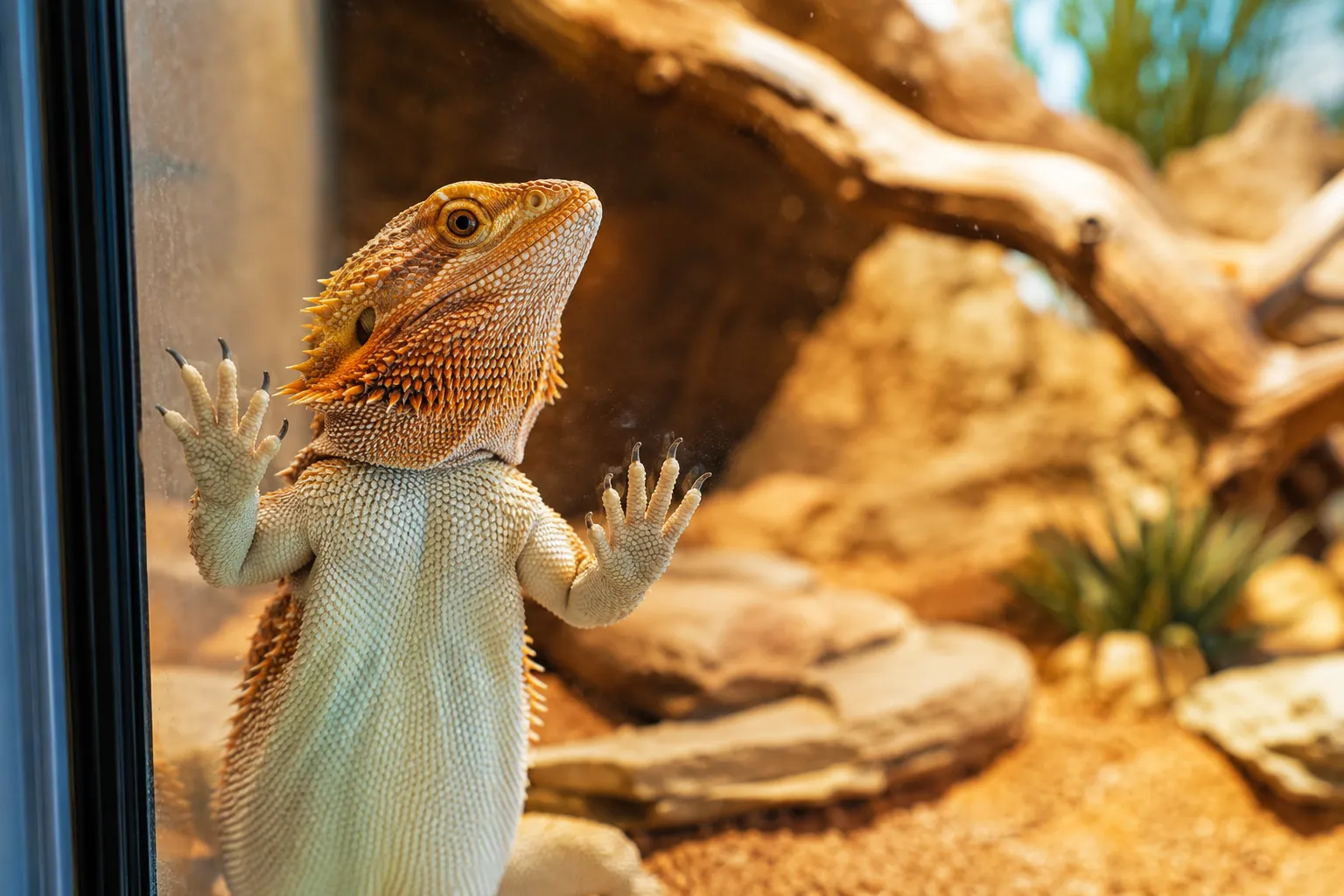
Quick Answer: Glass surfing in bearded dragons is a behavior where your pet frantically scratches or “swims” against the glass walls of their enclosure, usually signaling stress, inadequate tank conditions, or environmental discomfort. Common triggers include tanks that are too small, incorrect temperatures, seeing their reflection, boredom, or the need to establish territory. Identifying and addressing the underlying cause typically resolves the behavior within days to weeks.
Key Takeaways
- Glass surfing means your bearded dragon is repeatedly scratching or pressing against the tank glass, often appearing to “swim” vertically
- The behavior almost always indicates stress, discomfort, or unmet environmental needs rather than playfulness
- Most common causes include inadequate tank size (minimum 75 gallons for adults), incorrect temperature gradients, or lack of enrichment
- Reflections in the glass can trigger territorial responses, making your dragon think another beardie is invading their space
- New environments typically cause temporary glass surfing that resolves within 1-3 weeks as your dragon acclimates
- Persistent glass surfing lasting more than a month warrants a vet visit to rule out health issues
- Proper tank setup with correct lighting, temperatures, hiding spots, and enrichment prevents most glass surfing episodes

【Safe Material & Durable】Bearded dragon hammock is made of natural seagrass. Natural wooden bridge for reptiles to climb. The jungle vine is made of iron wire inside and soft PU material outside. Reptile plants are made from intentionally non-toxic plastic and the stems were made from iron wire. It creates a dynamic environment with fun hiding spots and intriguing obstacles.

Precision Health Guardian: Your reptile pets are very sensitive to temperature and humidity, and small changes can affect their comfort and even their health. This humidity thermometer utilizes a built-in high-precision measurement chip that monitors the environment with 0.9°F accuracy, ensuring you are always aware of the actual conditions in your animal's tank. It's not just a matter of caring, it's a consideration for your pet's long-term health.

Bearded dragon bandana. Cute design for a bearded dragon lover who loves reptiles like bearded dragons.
What Does Glass Surfing Mean in Bearded Dragons?
Glass surfing is the term reptile keepers use when a bearded dragon repeatedly scratches, paws, or presses against the glass walls of their enclosure, often standing on their hind legs and making swimming motions with their front legs. The behavior looks like your dragon is trying to climb or swim up the glass, hence the “surfing” name.
This isn’t a playful behavior or exercise routine. When bearded dragons glass surf, they’re communicating distress or discomfort through the only means available to them. The behavior can range from occasional brief episodes to persistent, frantic scratching that lasts hours.
What it looks like in practice:
- Standing upright against the glass with front legs moving in a paddling motion
- Repeatedly running along the same section of glass wall
- Scratching or clawing at the glass, sometimes accompanied by head bobbing
- Pacing back and forth along the tank perimeter
- Attempting to climb smooth glass surfaces despite repeated sliding down
The intensity and frequency of glass surfing often correlates with the severity of whatever is bothering your dragon. Occasional brief episodes might indicate minor stress, while constant frantic surfing signals a more serious problem that needs immediate attention.
Is Glass Surfing a Sign My Bearded Dragon Is Stressed?
Yes, glass surfing is almost always a stress indicator in bearded dragons. While the specific stressor varies, the behavior itself signals that something in your dragon’s environment or routine isn’t meeting their needs. Bearded dragons are generally calm, docile reptiles when their conditions are right, so persistent glass surfing should never be dismissed as normal.
Common stress triggers that cause glass surfing:
- Environmental stressors: Incorrect temperatures, inadequate UVB lighting, or humidity issues
- Space constraints: Feeling cramped or unable to establish proper temperature zones
- Visual stressors: Seeing their reflection, other pets, or excessive household activity
- Hunger or thirst: Nutritional needs not being met on schedule
- Breeding season hormones: Increased territorial behavior during mating periods (typically spring)
- Illness or parasites: Internal discomfort manifesting as restless behavior
The key distinction is between temporary stress (like adjusting to a new home) and chronic stress from ongoing poor conditions. Temporary glass surfing that resolves within a few weeks is less concerning than behavior that persists for months, which can lead to physical injury from repeated scratching and long-term health problems from chronic stress.
How to Stop My Bearded Dragon From Glass Surfing
Stopping glass surfing requires identifying and fixing the underlying cause rather than trying to prevent the behavior itself. Start with a systematic check of your dragon’s environment and care routine, addressing the most common triggers first.
Step-by-step troubleshooting process:
- Verify tank size: Adults need minimum 75 gallons (48″ x 18″ x 18″), juveniles need at least 40 gallons
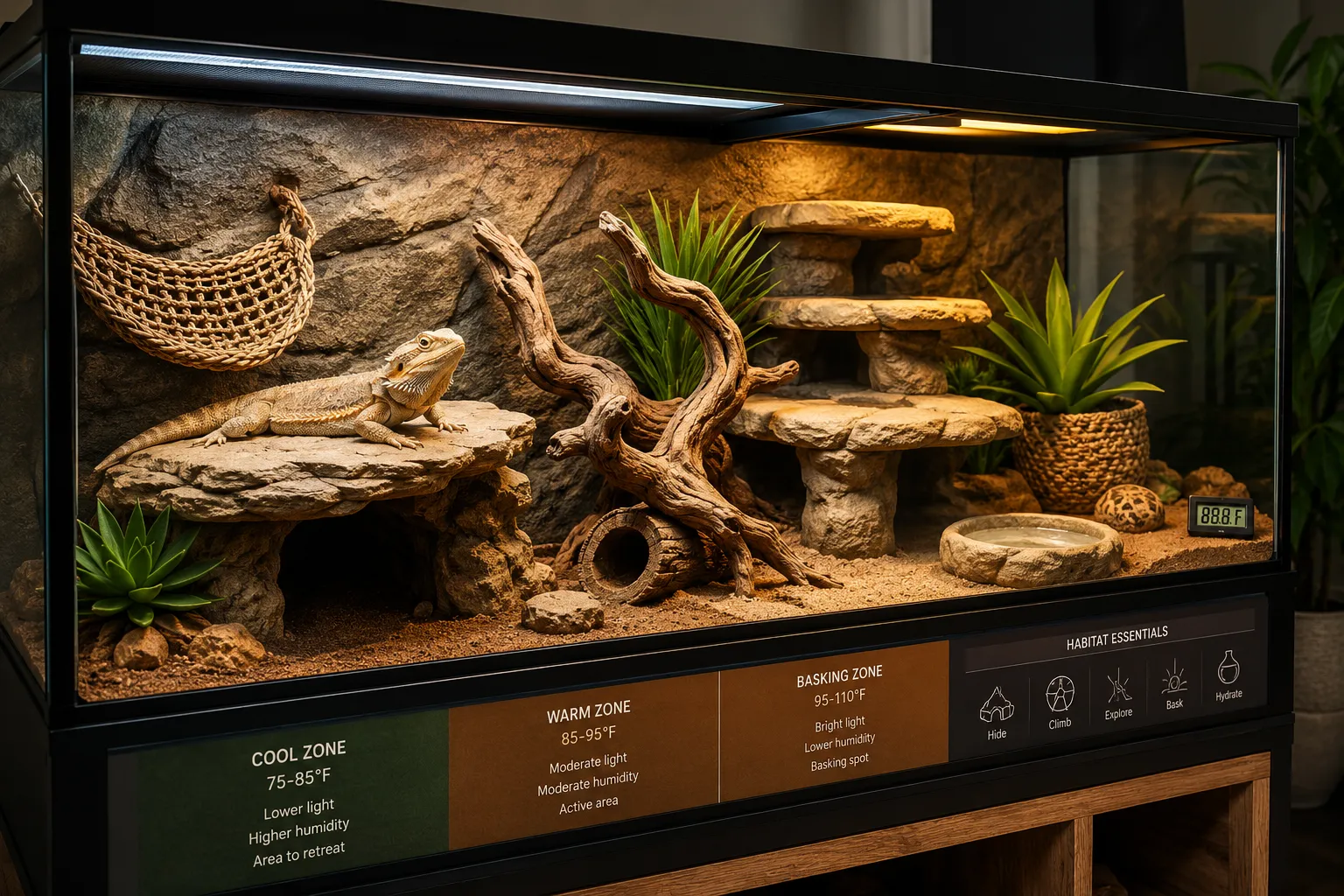
- Check temperature zones: Basking spot should be 95-105°F, cool side 75-85°F, with a proper gradient between
- Confirm UVB lighting: Replace UVB bulbs every 6-12 months even if they still produce visible light; use 10.0 or 12% UVB tubes
- Eliminate reflections: Cover glass sides with background material or move tank away from windows
- Add enrichment: Include multiple basking platforms, hiding spots, climbing branches, and textured surfaces
- Establish routine: Feed at consistent times, maintain regular day/night cycles (12-14 hours light)
- Reduce external stimuli: Move tank away from high-traffic areas, block view of other pets
Common mistake to avoid: Don’t add more decorations to a tank that’s already too small. A cluttered small tank is worse than a minimalist small tank. Upgrade the enclosure size first, then add appropriate enrichment.
Most glass surfing resolves within 2-4 weeks once you’ve corrected the environmental issue. If the behavior continues despite addressing all common causes, schedule a vet visit to rule out health problems like parasites or metabolic issues.
Glass Surfing vs Normal Bearded Dragon Behavior
Normal bearded dragon behavior includes periods of activity and rest, with dragons spending time basking, exploring their environment calmly, and occasionally repositioning themselves. Glass surfing is distinctly different from these healthy behaviors and shouldn’t be confused with normal movement.
Normal behavior includes:
- Calmly walking around the enclosure exploring
- Moving between basking and cool zones to thermoregulate
- Digging or scratching substrate (not glass) to create sleeping spots
- Standing alert and watching their surroundings without frantic movement
- Brief periods of increased activity during feeding time
Glass surfing is abnormal when:
- The behavior is repetitive and focused on the same glass section
- Your dragon appears frantic or agitated rather than curious
- It continues for extended periods (more than a few minutes at a time)
- The behavior happens daily or multiple times per day
- Your dragon ignores food, basking, or other normal activities to continue surfing
Some new owners mistake glass surfing for their dragon “wanting to come out” or “being playful.” While bearded dragons do recognize their owners and may become active when you approach, true glass surfing is compulsive and stress-driven. A dragon that wants interaction will typically watch you calmly and may approach the glass without frantic scratching.
Can Glass Surfing Hurt My Bearded Dragon?
Glass surfing itself can cause physical harm to your bearded dragon, especially when the behavior is frequent or prolonged. The repeated scratching and climbing attempts can lead to injuries, and the underlying stress causes additional health problems over time.
Physical risks from glass surfing:
- Nail damage: Constant scratching can break, split, or tear nails, leading to bleeding and infection risk
- Snout injuries: Rubbing their nose against glass can cause rostral abrasions (nose rubs) that may become infected
- Stress-related illness: Chronic stress weakens the immune system, making dragons more susceptible to respiratory infections and parasites
- Exhaustion: Persistent glass surfing burns calories and energy, potentially leading to weight loss
- Metabolic issues: Stress can interfere with proper digestion and calcium absorption
Beyond physical injury, the psychological impact of chronic stress shouldn’t be underestimated. Bearded dragons experiencing ongoing stress may develop behavioral problems, become aggressive or withdrawn, and have shortened lifespans compared to dragons in optimal conditions.
When to worry: If you notice bleeding, visible wounds, lethargy, loss of appetite, or weight loss alongside glass surfing, these are red flags requiring immediate veterinary attention. Don’t wait to see if the behavior resolves on its own when physical symptoms are present.
Do Bearded Dragons Glass Surf When They See Their Reflection?
Yes, seeing their reflection is one of the most common triggers for glass surfing behavior. Bearded dragons don’t recognize their reflection as themselves; instead, they perceive it as another dragon invading their territory, which triggers territorial and stress responses.
Male bearded dragons are particularly prone to reflection-triggered glass surfing because they’re naturally territorial. When they see what appears to be another male in their space, their instinct is to defend their territory through displays of dominance, which can escalate into frantic glass surfing when the “intruder” doesn’t leave.
Signs your dragon is reacting to reflections:
- Glass surfing is concentrated on specific glass panels where reflections are strongest
- Behavior worsens during certain times of day when lighting creates more reflection
- You observe head bobbing, beard darkening, or arm waving before or during surfing
- The behavior improves when you temporarily cover the glass with paper or cardboard
How to eliminate reflection problems:
- Apply background material to the outside of back and side glass panels
- Use textured backgrounds or 3D foam backgrounds that break up reflections
- Adjust room lighting to reduce glare on the tank glass
- Position the tank away from windows where natural light creates strong reflections
- Consider using matte-finish glass or acrylic if building a custom enclosure
Testing whether reflections are the cause is simple: temporarily tape paper or cardboard over the glass sections where your dragon surfs most. If the behavior stops or significantly decreases within 24-48 hours, reflections were likely the primary trigger.
Is My Tank Too Small If My Bearded Dragon Is Glass Surfing?
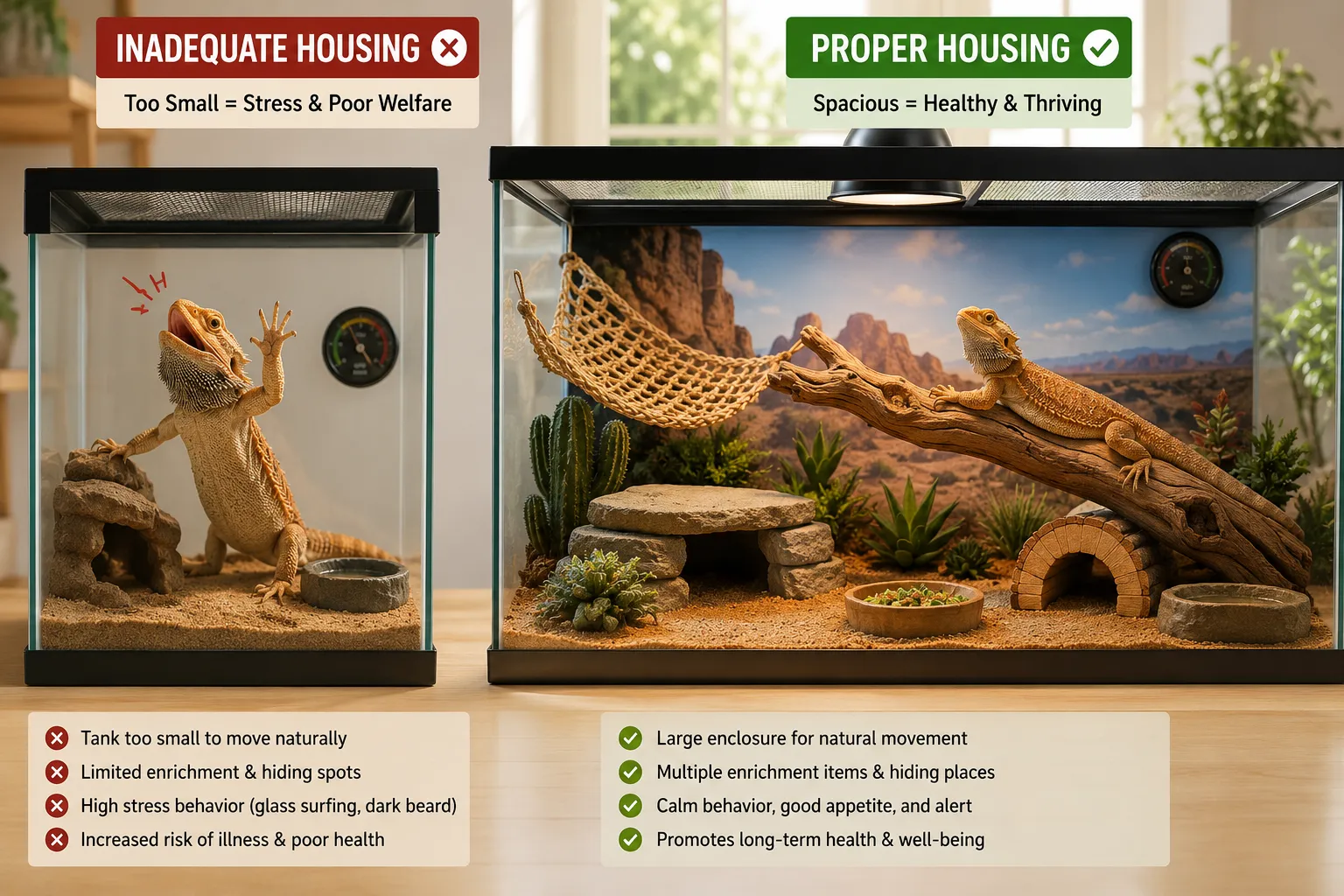
Tank size is one of the top three causes of glass surfing, and many bearded dragons are housed in enclosures that are too small for their needs. If your dragon is glass surfing and you’re using anything smaller than a 75-gallon tank for an adult, inadequate space is very likely contributing to the behavior.
Minimum tank size requirements:
- Hatchlings (0-3 months): 20 gallons, but will quickly outgrow this
- Juveniles (3-12 months): 40 gallons minimum, 75 gallons preferred
- Adults (12+ months): 75 gallons absolute minimum, 120 gallons ideal
- Large adults (20+ inches): 120 gallons or custom 4′ x 2′ x 2′ enclosures
Tank dimensions matter as much as volume. Bearded dragons need horizontal space more than vertical space. A 75-gallon tank should be at least 48 inches long to provide adequate room for a proper temperature gradient and activity space. Tall, narrow tanks don’t meet their needs even if the gallon capacity seems sufficient.
Why small tanks cause glass surfing:
- Insufficient space to establish proper temperature zones (basking, warm, cool)
- Inability to escape from heat or light when needed
- Lack of room for natural behaviors like exploring and patrolling territory
- Feeling trapped or confined triggers stress responses
- No space for adequate enrichment items without overcrowding
Choose a larger tank if: Your dragon is longer than one-third the tank length, you can’t maintain a 20-degree temperature gradient, or you can’t fit multiple basking spots and hiding areas without overcrowding. When in doubt, bigger is always better for bearded dragons.
How Long Does Glass Surfing Last in Bearded Dragons?
The duration of glass surfing depends entirely on the underlying cause and how quickly you address it. Temporary glass surfing from minor stressors typically resolves within days to weeks, while behavior stemming from chronic poor conditions can persist for months until you make necessary changes.
Typical timelines by cause:
- New tank adjustment: 1-3 weeks as your dragon acclimates to the new environment
- Reflection issues: Resolves within 2-7 days after eliminating reflections
- Temperature problems: Improves within 3-5 days after correcting heating
- Tank size upgrade: May take 2-4 weeks for dragon to settle into larger space
- Seasonal hormones: Can last 4-8 weeks during breeding season (spring), then naturally subsides
- Chronic stress from poor conditions: Continues indefinitely until you fix the environment
After you’ve made environmental corrections, give your dragon at least 1-2 weeks to adjust before concluding the changes didn’t work. Bearded dragons don’t instantly change behavior; they need time to recognize that their environment has improved and it’s safe to relax.
Red flag timeline: If glass surfing continues for more than 4-6 weeks after you’ve systematically addressed all common causes (tank size, temperatures, lighting, reflections, enrichment), schedule a veterinary exam. Persistent behavior despite optimal conditions may indicate underlying health issues like parasites, metabolic bone disease, or neurological problems.

Fast & Accurate Monitoring: Our reptile thermometer and humidity gauge features a built-in high-precision sensor chip that delivers instant, reliable readings to maintain your pet's ideal habitat conditions. Supports Fahrenheit readings (14-122°F ±4°F) and humidity measurements (20%-90%RH ±5%) for optimal reptile/amphibian health

REPTILE ACCESSORIES: The best possible environment for your reptile is one that mimics its natural environment as closely as possible. As their carer, it is our responsibility to provide them with accurate temperature and humidity levels, and having a 2-in-1 thermo-hygrometer is a very important thing to have. This device from PAIZOO allows you to read the temperature and humidity levels easily for the optimal health of your reptile

Accurate 2-in-1 Temperature & Humidity Monitoring: Monitor your reptile habitat with one compact digital thermometer hygrometer. The high-sensitivity sensor measures temperatures from 14°F to 122°F (-10°C to 50°C) with ±1°C accuracy and humidity from 20%RH to 90%RH with ±3%RH accuracy, helping you keep track of important terrarium conditions.
Bearded Dragon Glass Surfing After Moving to New Tank
Glass surfing immediately after moving to a new tank is extremely common and usually temporary. The behavior represents your dragon’s stress response to unfamiliar surroundings, new smells, different spatial layout, and the general disruption of their established routine.
This type of glass surfing is actually a positive sign that your dragon is alert and aware of their environment. They’re essentially exploring and testing the boundaries of their new space, even though the behavior looks distressing to owners.
What to expect with new tank adjustment:
- Glass surfing typically starts within the first 24-48 hours after the move
- Behavior is usually most intense during the first week
- Gradual reduction in frequency and intensity over 2-3 weeks
- Complete resolution within 3-4 weeks for most dragons
- Some dragons adjust within days, while others take the full month
How to minimize new tank stress:
- Transfer familiar items from the old tank (basking rocks, favorite hides, decorations with their scent)
- Maintain the exact same temperature zones and lighting schedule as before
- Keep the tank in a quiet, low-traffic area during the adjustment period
- Maintain your regular feeding schedule without changes
- Limit handling for the first 3-5 days to let them settle
- Avoid making additional changes or rearranging decorations during adjustment
Common mistake: Constantly rearranging the tank or adding new items trying to “help” your dragon settle. This actually prolongs stress by preventing them from becoming familiar with their environment. Set up the tank properly from the start, then leave it alone for at least 2-3 weeks.
If glass surfing after a tank move persists beyond 4 weeks or intensifies rather than gradually improving, the new tank likely has an environmental problem (wrong size, temperature issues, reflection problems) rather than simple adjustment stress.
Do All Bearded Dragons Glass Surf or Just Some?
Not all bearded dragons glass surf, and individual personality plays a role in how dragons respond to stress. Some dragons are naturally more laid-back and tolerate less-than-ideal conditions without displaying obvious stress behaviors, while others are more sensitive and reactive to environmental issues.
However, the absence of glass surfing doesn’t necessarily mean your dragon is perfectly content. Some stressed bearded dragons become lethargic and withdrawn rather than hyperactive. They may simply shut down instead of displaying active stress behaviors like glass surfing.
Factors that influence glass surfing tendency:
- Individual temperament: Some dragons are naturally more anxious or territorial
- Age: Juveniles and young adults tend to glass surf more than older dragons
- Sex: Males are more prone to territorial glass surfing, especially during breeding season
- Previous environment: Dragons from poor conditions may be more reactive to changes
- Socialization: Dragons handled regularly from a young age may be calmer overall
Dragons less likely to glass surf:
- Older adults (5+ years) who are well-established in their environment
- Females outside of breeding season
- Dragons in optimal conditions with all needs consistently met
- Individuals with naturally calm, docile temperaments
Important note: Just because your dragon doesn’t glass surf doesn’t mean you can skip proper care requirements. All bearded dragons need appropriate tank size, correct temperatures, UVB lighting, and enrichment regardless of whether they display stress behaviors. Some dragons suffer silently.
Common Mistakes That Cause Bearded Dragon Glass Surfing
Many glass surfing cases stem from well-intentioned but incorrect care practices. Understanding these common mistakes helps you avoid triggering the behavior in the first place or quickly identify what’s wrong when it starts.
Top mistakes that trigger glass surfing:
- Using pet store “starter kits”: These typically include tanks far too small (20-40 gallons) and inadequate lighting
- Relying on heat rocks or pads: Bearded dragons need overhead basking lights, not bottom heat, to properly thermoregulate
- Not replacing UVB bulbs on schedule: UVB output degrades months before the bulb burns out, causing metabolic stress
- Cohabiting multiple bearded dragons: They’re solitary animals; housing together causes constant territorial stress
- Placing tanks in high-traffic areas: Constant movement, noise, and other pets visible outside the tank create chronic stress
- Inconsistent feeding schedules: Irregular meals can cause food-seeking glass surfing behavior
- Using glass thermometers or stick-on gauges: These are notoriously inaccurate; use digital thermometers with probes
- Overcrowding with decorations: Too many items in a small tank reduces usable space and increases stress
- Wrong substrate: Loose substrates like sand can cause impaction stress; use tile, reptile carpet, or paper
- Ignoring seasonal changes: Room temperature drops in winter can affect tank temperatures if not monitored
The “good enough” trap: Many owners assume that because their dragon is eating and hasn’t died, conditions must be adequate. Bearded dragons are hardy and can survive in suboptimal conditions for years, but survival isn’t the same as thriving. Glass surfing is often the first visible sign that “good enough” care isn’t actually meeting their needs.
Prevention strategy: Set up the enclosure correctly from day one using research-based guidelines rather than pet store advice. Invest in proper equipment (quality UVB, accurate thermometers, appropriately-sized tank) upfront rather than upgrading piecemeal after problems develop.
When to Take Your Bearded Dragon to the Vet for Glass Surfing
While most glass surfing resolves with environmental corrections, certain situations warrant professional veterinary evaluation. Knowing when home troubleshooting isn’t enough can prevent minor issues from becoming serious health problems.
Schedule a vet visit if:
- Glass surfing persists for more than 4-6 weeks despite correcting all environmental factors
- Your dragon shows additional symptoms: lethargy, loss of appetite, weight loss, abnormal feces
- You notice physical injuries from glass surfing: bleeding nails, nose wounds, limping
- The behavior suddenly intensifies or changes pattern after months of stability
- Your dragon displays neurological symptoms: twitching, seizures, inability to coordinate movement
- Glass surfing is accompanied by aggressive behavior, constant beard darkening, or extreme stress posturing
What the vet will check:
- Parasite screening through fecal examination
- Metabolic bone disease assessment (X-rays if needed)
- Nutritional deficiencies through physical exam and history
- Neurological function and coordination
- Overall body condition and weight assessment
- Potential pain or discomfort from internal issues
Information to bring: Document the glass surfing behavior with notes on frequency, duration, time of day, and any patterns you’ve noticed. Take photos of your complete tank setup including thermometer readings. List all recent changes to diet, environment, or routine. This information helps your vet identify potential causes more quickly.
Cost consideration: An exotic vet visit typically costs $75-150 for the exam, with additional charges for tests. While this seems expensive, catching health problems early is far cheaper than treating advanced illness. If your dragon’s behavior suggests something beyond environmental stress, don’t delay the visit hoping it will resolve on its own.
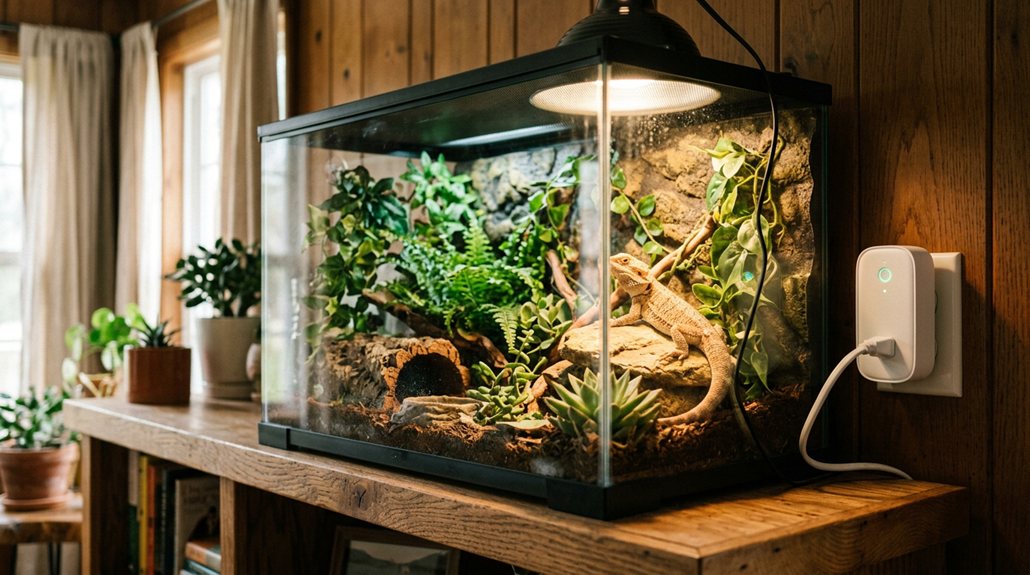
Best Tank Setup to Prevent Glass Surfing
Creating an optimal environment from the start prevents most glass surfing episodes. A properly designed bearded dragon enclosure meets all their physical and psychological needs, eliminating the stress triggers that cause the behavior.
Complete setup checklist:
Tank specifications:
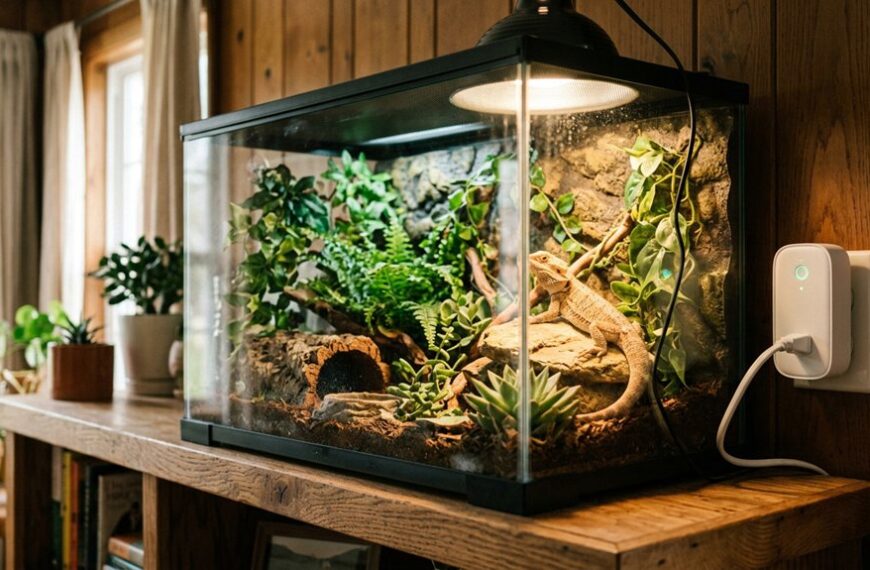
- Minimum 75 gallons (48″ x 18″ x 18″) for adults, 120 gallons ideal
- Solid sides or background material on back and sides to eliminate reflections
- Screen top for ventilation and light penetration
- Positioned away from windows, other pets, and high-traffic areas
Heating and lighting:
- Basking bulb creating 95-105°F basking spot (measured with digital thermometer)
- Cool side maintained at 75-85°F
- Proper temperature gradient across tank length
- 10.0 or 12% UVB tube light covering 2/3 of tank length
- 12-14 hour day/night cycle with all lights off at night
- Nighttime temperatures can drop to 65-70°F safely
Substrate and furnishings:
- Tile, reptile carpet, or paper substrate (avoid loose substrates)
- Multiple basking platforms at different heights and temperatures
- At least 2-3 hiding spots (one on warm side, one on cool side)
- Climbing branches or rocks for enrichment
- Textured surfaces for nail maintenance
- Food and water dishes that can’t tip easily
Environmental enrichment:
- Rearrange decorations every 2-3 months for novelty
- Rotate different climbing structures periodically
- Provide safe outdoor time in warm weather (supervised)
- Regular handling and interaction (15-30 minutes daily once settled)
- Visual barriers if other pets are visible from tank
Maintenance schedule:
- Daily: Spot-clean waste, check temperatures, refresh water
- Weekly: Deep clean food dishes, check UVB bulb function
- Monthly: Full substrate cleaning or replacement
- Every 6-12 months: Replace UVB bulbs even if still producing light
This setup addresses all major glass surfing triggers: adequate space, proper temperatures for thermoregulation, elimination of reflections, enrichment to prevent boredom, and environmental stability. Dragons in optimal conditions rarely develop glass surfing behavior.
FAQ
Why is my bearded dragon scratching at the glass?
Glass scratching is glass surfing behavior indicating stress from environmental issues like inadequate tank size, incorrect temperatures, reflections, or lack of enrichment. Identify and fix the underlying cause rather than trying to stop the behavior directly.
Is glass surfing dangerous for my bearded dragon?
Yes, persistent glass surfing can cause nail damage, nose injuries, exhaustion, and chronic stress that weakens the immune system. The behavior itself is harmful, and the underlying stress causes additional health problems if not addressed.
How do I know if my tank is too small?
If your adult bearded dragon is longer than one-third the tank length, you can’t maintain a proper temperature gradient, or there’s no room for enrichment without overcrowding, the tank is too small. Adults need minimum 75 gallons.
Can boredom cause glass surfing?
Yes, lack of environmental enrichment and mental stimulation can trigger glass surfing. Bearded dragons need climbing structures, hiding spots, varied basking areas, and occasional rearrangement of their environment to stay mentally engaged.
Will my bearded dragon stop glass surfing on its own?
Glass surfing rarely resolves without intervention. The behavior continues as long as the underlying stressor remains. You must identify and correct the environmental issue causing the stress for the behavior to stop.
Do female bearded dragons glass surf less than males?
Females generally glass surf less frequently than males because they’re less territorial. However, females can still glass surf from environmental stress, inadequate conditions, or during breeding season when they’re seeking nesting sites.
Should I cover my bearded dragon’s tank to stop glass surfing?
Covering the glass temporarily can help identify if reflections are the cause, but permanent covering isn’t the solution. Instead, apply background material to eliminate reflections while maintaining visibility for monitoring your dragon’s health and behavior.
Can glass surfing mean my bearded dragon is hungry?
Yes, hunger can trigger glass surfing, especially if your dragon has learned that the behavior gets your attention and leads to feeding. Maintain consistent feeding schedules to prevent food-seeking glass surfing behavior.
How long after fixing the problem will glass surfing stop?
Most dragons reduce glass surfing within 3-7 days after you correct the environmental issue, with complete resolution in 2-4 weeks. Adjustment periods vary by individual temperament and how long the stressor was present.
Is glass surfing worse at certain times of day?
Glass surfing often intensifies during morning hours when dragons are most active and during times when reflections are strongest due to lighting angles. Breeding season (spring) also increases glass surfing frequency in both sexes.
Can other pets cause my bearded dragon to glass surf?
Yes, visible dogs, cats, or other pets outside the tank can trigger territorial stress and glass surfing. Position the tank where your dragon can’t see other animals, or use visual barriers to block their view.
Do bearded dragons glass surf when they want to come out?
While some owners interpret glass surfing as their dragon wanting interaction, the behavior actually indicates stress rather than a desire for handling. A dragon that wants attention will typically watch you calmly without frantic scratching.
Conclusion
Glass surfing in bearded dragons is a clear communication that something in their environment needs attention. Whether the cause is an undersized tank, incorrect temperatures, reflections triggering territorial responses, or lack of enrichment, the behavior signals stress that requires your intervention. Most cases resolve within 2-4 weeks once you’ve identified and corrected the underlying issue.
Start your troubleshooting with the most common causes: verify your tank is at least 75 gallons for adults, confirm your temperature gradient is correct with a basking spot of 95-105°F, eliminate reflections with background material, and ensure your UVB lighting is functioning properly. These four factors account for the majority of glass surfing cases.
Take action now:
- Measure your tank dimensions and temperatures with accurate digital thermometers
- Check when you last replaced your UVB bulb (replace every 6-12 months)
- Test for reflections by temporarily covering glass panels
- Assess your enrichment setup and add climbing structures or hiding spots if needed
- Document the behavior frequency to track whether your changes are working
If glass surfing persists beyond 4-6 weeks despite addressing all environmental factors, or if your dragon shows additional symptoms like lethargy or weight loss, schedule a veterinary exam to rule out health issues. Remember that bearded dragons are hardy animals that can survive in suboptimal conditions, but your goal should be helping them thrive, not just survive. A dragon in proper conditions with all needs met rarely displays stress behaviors like glass surfing.

【Complete 2-Piece Enrichment Set】Package includes 1 hollowed-out vegetable feeder ball (with 1 chain + 1 suction cup) and 1 suction cup bell ball. All essential tools for turning mealtime into a game and adding daily stimulation to your bearded dragon’s habitat

【Enrichment Climbing Wall for Reptiles】 Designed to encourage natural climbing and exploration behaviors, this miniature rock climbing wall adds activity and mental stimulation to reptile and amphibian enclosures

Turtle-Inspired Dig Box for Feeding & Enrichment: Designed for bearded dragons and other small reptiles, this turtle-shaped dig tray works as a feeding area, enrichment spot, and habitat accessory inside reptile enclosures. A more visually interesting alternative to plain reptile bowls and generic tank decor