Quick Answer: Yes, bearded dragons can eat broccoli, but only occasionally and in small amounts. Broccoli contains goitrogens and has a poor calcium-to-phosphorus ratio (1:0.7), which can interfere with calcium absorption and thyroid function when fed too often. Offer broccoli as a treat once or twice per month, not as a staple vegetable.
Key Takeaways
- Bearded dragons can safely eat broccoli in small portions once or twice monthly
- Broccoli contains goitrogens that can block iodine absorption and disrupt thyroid health when overfed
- The calcium-to-phosphorus ratio in broccoli (1:0.7) is suboptimal and can contribute to metabolic bone disease
- Both broccoli florets and stems are safe to feed, but should be chopped into small, bite-sized pieces
- Baby bearded dragons should avoid broccoli entirely until they reach 12 months old
- Better daily vegetable options include collard greens, mustard greens, turnip greens, and butternut squash
- Never cook broccoli for bearded dragons, always serve it raw and fresh
- Signs of calcium deficiency from too much broccoli include lethargy, tremors, and soft or swollen jaw

ESSENTIAL CALCIUM SUPPLEMENT: Help your reptiles and amphibians stay healthy and prosper with this calcium powder. Calcium deficiency in reptiles is a major contributing factor in Metabolic Bone Disease (MBD). This All Reptile Calcium Powder serves as a supplement for all reptiles and amphibians in captivity, aimed to promote and maintain bones, muscles, and nerve functions

Are you looking for a bearded dragon Apparel for a bearded dragon owner, breeder, or keeper?

Are you looking for a bearded dragon Apparel for a bearded dragon owner, breeder, or keeper?
Is Broccoli Safe for Bearded Dragons to Eat?
Broccoli is technically safe for bearded dragons when offered sparingly, but it’s far from an ideal vegetable choice. The main safety concern revolves around two compounds: goitrogens and oxalates, plus an unfavorable mineral balance.
Goitrogens are naturally occurring substances in broccoli that interfere with thyroid function by blocking iodine uptake. When bearded dragons consume goitrogen-rich foods regularly, they risk developing thyroid problems that can affect their metabolism, growth, and overall health. Occasional consumption poses minimal risk, but weekly or daily feeding creates cumulative problems.
The calcium-to-phosphorus ratio in broccoli sits at roughly 1:0.7, meaning it contains more phosphorus than calcium. Bearded dragons need a ratio of at least 2:1 (calcium to phosphorus) in their diet. Phosphorus binds to calcium in the digestive tract and prevents absorption, which over time contributes to metabolic bone disease (MBD), a serious and potentially fatal condition.
When broccoli is safe:
- Fed once or twice per month maximum
- Mixed with calcium-rich greens like collard or mustard greens
- Offered in small portions (1-2 small florets)
- Given to healthy adult dragons with no existing calcium deficiency
When to avoid broccoli:
- Your dragon shows signs of MBD (lethargy, tremors, difficulty walking)
- You’re feeding other goitrogen-rich foods the same week (kale, cabbage, bok choy)
- Your dragon is under 12 months old
- Your dragon has thyroid issues or metabolic problems
How Often Can Bearded Dragons Eat Broccoli?
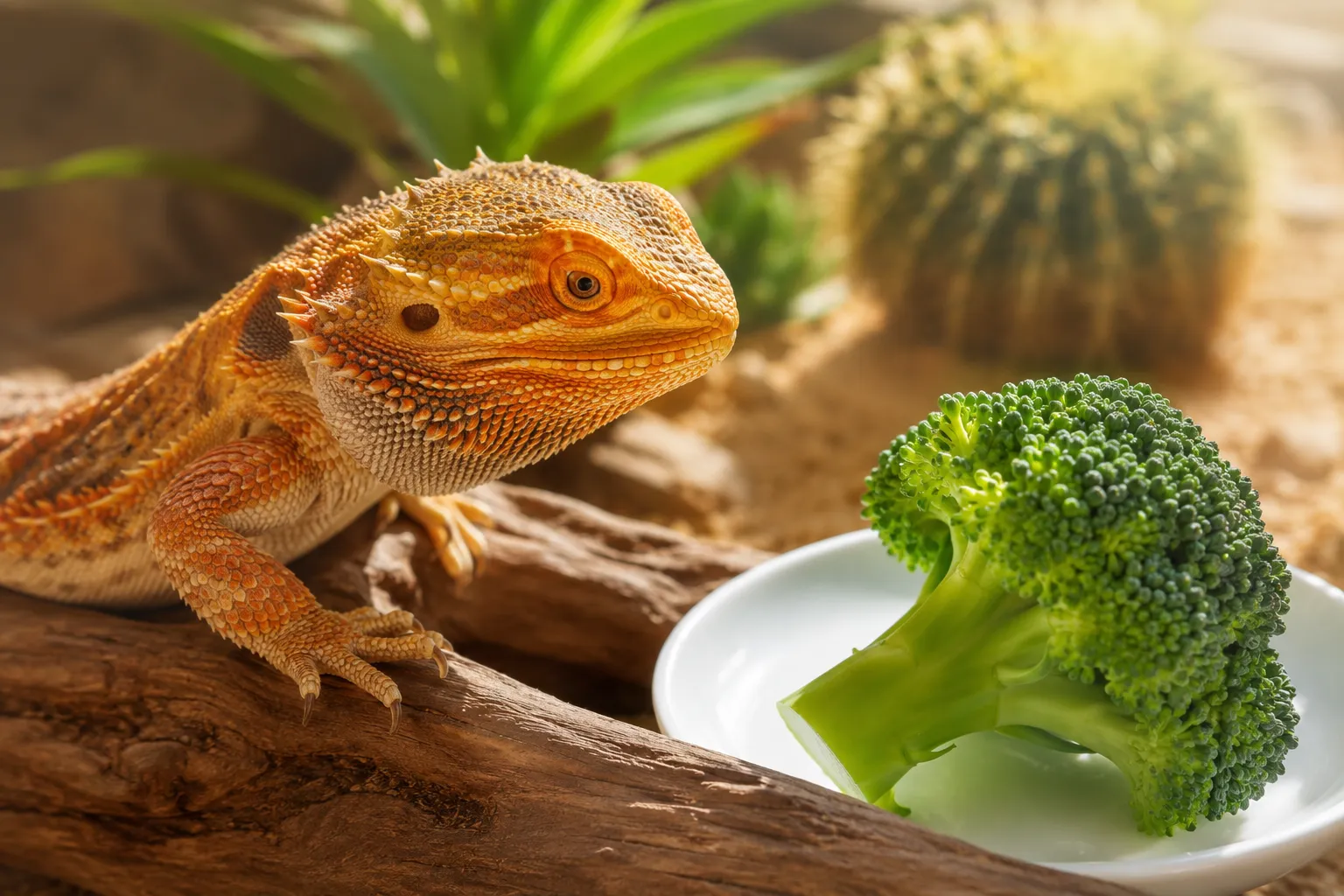
Bearded dragons should eat broccoli no more than once or twice per month. This limited frequency prevents the buildup of goitrogens and minimizes the negative impact of broccoli’s poor calcium-to-phosphorus ratio on your dragon’s health.
Think of broccoli as an occasional treat rather than a dietary staple. The same way you wouldn’t eat cake every day, your bearded dragon shouldn’t have broccoli regularly. When you do offer it, keep the portion small, one or two bite-sized florets mixed into a larger salad of better vegetables.
Safe feeding schedule:
- Maximum frequency: Once every 2-3 weeks
- Ideal frequency: Once per month
- Portion size: 1-2 small florets (about the size of your dragon’s eye)
- Always combine with: High-calcium greens like collard greens or turnip greens
A common mistake is rotating broccoli into a weekly vegetable rotation. Even once per week is too frequent and can lead to gradual calcium depletion and thyroid stress over months. If you notice your dragon loves broccoli, resist the temptation to offer it more often, there are safer vegetables they’ll enjoy just as much.
Can Baby Bearded Dragons Eat Broccoli?
Baby bearded dragons should not eat broccoli until they reach at least 12 months of age. Juvenile dragons have much higher calcium requirements than adults because they’re growing rapidly, and broccoli’s poor mineral profile poses a greater risk during this critical development period.
From hatching to 12 months, baby bearded dragons need a diet with optimal calcium-to-phosphorus ratios to build strong bones and prevent metabolic bone disease. Their bones are forming quickly, and any interference with calcium absorption can cause permanent skeletal deformities, stunted growth, and serious health complications.
Why babies should avoid broccoli:
- Rapidly growing bones need maximum calcium absorption
- Goitrogens pose greater risk to developing thyroid glands
- Babies have less body mass to buffer the effects of poor mineral ratios
- Better vegetable options provide superior nutrition without risks
Better vegetables for baby bearded dragons:
- Collard greens (calcium-to-phosphorus ratio of 14.5:1)
- Mustard greens (2.4:1 ratio)
- Turnip greens (4.5:1 ratio)
- Butternut squash (good vitamin A source)
- Dandelion greens (2.8:1 ratio)
Once your bearded dragon reaches adulthood (12+ months), you can introduce broccoli as an occasional treat following the once-per-month guideline. Even then, prioritize calcium-rich vegetables as the foundation of their diet.
Broccoli vs Kale for Bearded Dragons: Which Is Better?
Neither broccoli nor kale should be a staple vegetable for bearded dragons, but if you must choose between them, kale is slightly better when fed sparingly. Both vegetables contain goitrogens and have suboptimal mineral profiles, making them poor daily choices compared to collard greens or mustard greens.
Kale’s nutritional profile:
- Calcium-to-phosphorus ratio: 2.4:1 (better than broccoli)
- Contains goitrogens (thyroid disruptors)
- High in vitamin A and vitamin K
- Recommended frequency: Once per week maximum
Broccoli’s nutritional profile:
- Calcium-to-phosphorus ratio: 1:0.7 (worse than kale)
- Contains goitrogens (thyroid disruptors)
- Good vitamin C content (less critical for reptiles)
- Recommended frequency: Once per month maximum
The key difference is the calcium-to-phosphorus ratio. Kale at least provides more calcium than phosphorus, while broccoli does the opposite. However, both vegetables pale in comparison to truly excellent options.
Better alternatives to both:
| Vegetable | Ca:P Ratio | Goitrogens | Feeding Frequency |
|---|---|---|---|
| Collard greens | 14.5:1 | None | Daily staple |
| Mustard greens | 2.4:1 | None | Daily staple |
| Turnip greens | 4.5:1 | None | Daily staple |
| Kale | 2.4:1 | Yes | Weekly treat |
| Broccoli | 1:0.7 | Yes | Monthly treat |
Choose collard greens or mustard greens as your daily base, and save both kale and broccoli for occasional variety.
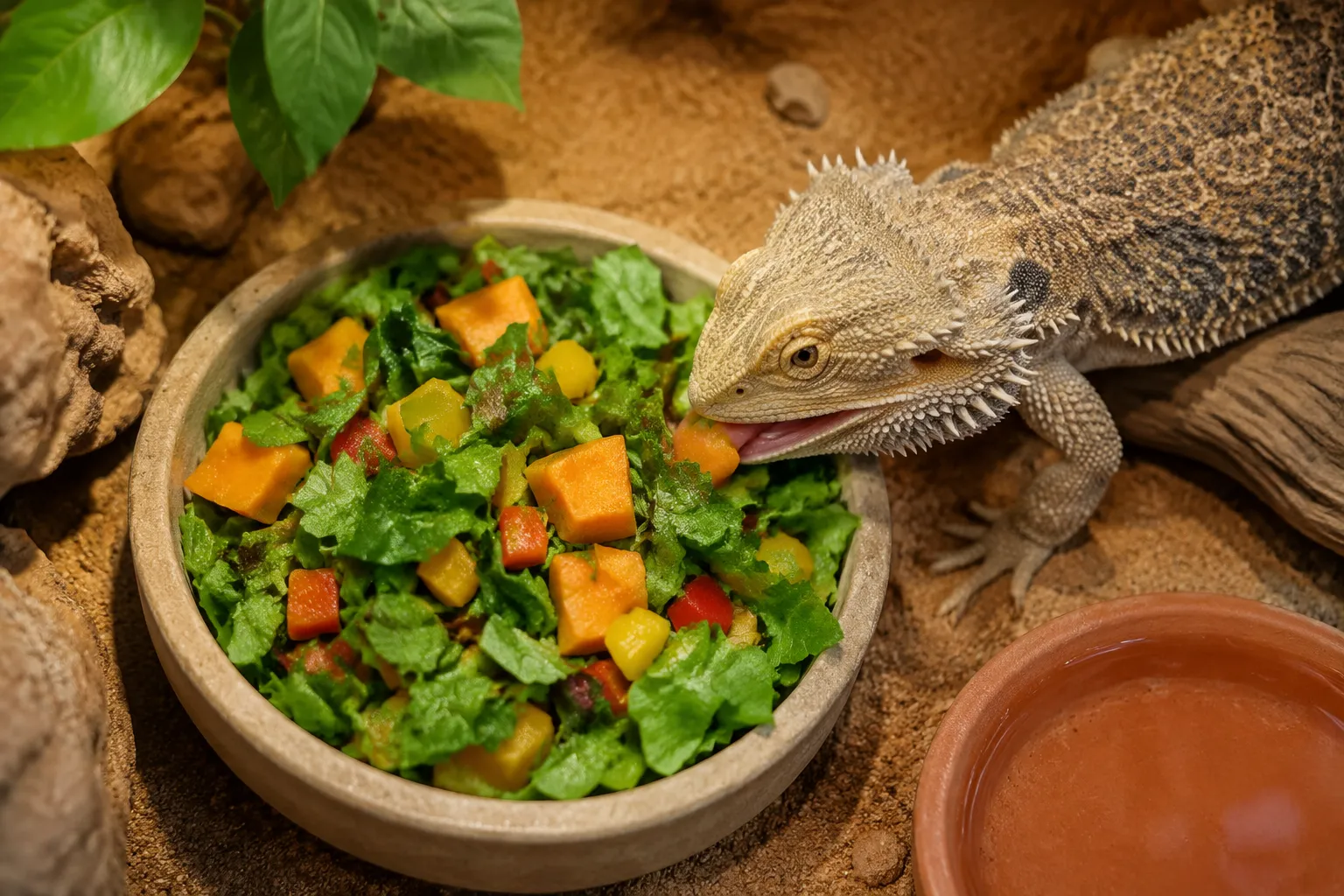
What Vegetables Are Better Than Broccoli for Bearded Dragons?
Dozens of vegetables outperform broccoli nutritionally for bearded dragons. The best daily staples have high calcium-to-phosphorus ratios (2:1 or better), no goitrogens, and rich vitamin content without oxalates that bind calcium.
Top daily staple vegetables:
Collard greens lead the pack with an impressive 14.5:1 calcium-to-phosphorus ratio. They’re rich in vitamins A, C, and K, contain no goitrogens, and most bearded dragons readily accept them. Chop them into bite-sized pieces and offer them daily as the foundation of your dragon’s salad.
Mustard greens provide a 2.4:1 ratio and add variety to the diet. They have a slightly spicy flavor that many dragons enjoy, and they’re packed with vitamins and minerals without the downsides of broccoli.
Turnip greens offer a 4.5:1 ratio and excellent nutritional density. They’re widely available in grocery stores and provide calcium, vitamin A, and folate.
Dandelion greens (2.8:1 ratio) are a natural favorite for many bearded dragons. You can harvest them from pesticide-free yards or buy them at farmers’ markets and specialty stores.
Butternut squash provides excellent vitamin A, which supports eye health, immune function, and skin shedding. While lower in calcium, it has minimal phosphorus and makes a great addition to salads 2-3 times per week.
Vegetables to offer 2-3 times weekly:
- Bell peppers (red, yellow, orange, not green)
- Acorn squash
- Spaghetti squash
- Green beans
- Snap peas
Vegetables to limit or avoid:
- Spinach (high oxalates)
- Lettuce (no nutritional value)
- Cabbage (goitrogens)
- Broccoli (goitrogens, poor ratio)
How Much Broccoli Can I Feed My Bearded Dragon?
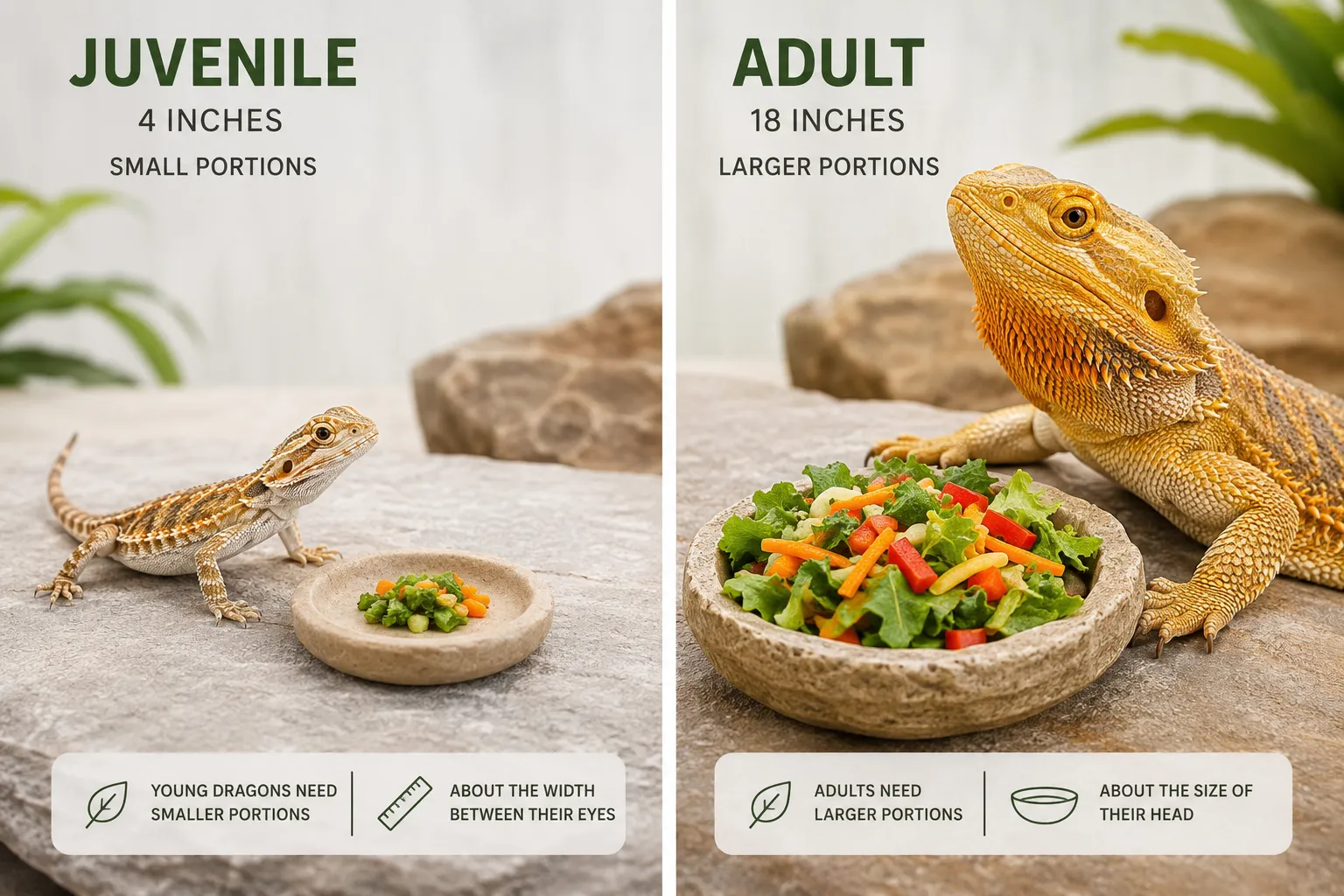
Feed your bearded dragon no more than 1-2 small broccoli florets per month, with each floret roughly the size of the space between your dragon’s eyes. This small portion minimizes the risks associated with goitrogens and poor mineral balance while still allowing your dragon to enjoy the taste and texture variety.
Portion guidelines by dragon size:
Juvenile dragons (6-12 months): Avoid broccoli entirely. Their calcium needs are too high to risk any interference.
Adult dragons (12+ months, 16-24 inches): One or two florets the size of their eye, offered once per month maximum.
Senior dragons (5+ years): Same as adults, but monitor closely for any signs of digestive upset or decreased appetite.
Always chop broccoli into appropriately sized pieces. Bearded dragons don’t chew their food thoroughly, so pieces that are too large can cause choking or impaction. A good rule is that no food item should be wider than the space between your dragon’s eyes.
How to prepare broccoli:
- Wash thoroughly to remove pesticides
- Chop florets into small, bite-sized pieces
- Mix with 5-6 times more calcium-rich greens
- Serve raw, never cooked
- Remove uneaten portions after 1-2 hours
The broccoli should make up no more than 10-15% of that particular salad, with the remaining 85-90% consisting of collard greens, mustard greens, or other high-calcium vegetables.
Why Is Broccoli Bad for Bearded Dragons?
Broccoli isn’t toxic or immediately dangerous, but it’s considered “bad” for bearded dragons because of three specific nutritional problems: goitrogens that disrupt thyroid function, an inverted calcium-to-phosphorus ratio that prevents calcium absorption, and the availability of far superior vegetable alternatives.
The goitrogen problem: Goitrogens are compounds that interfere with the thyroid gland’s ability to absorb iodine. The thyroid needs iodine to produce hormones that regulate metabolism, growth, and energy levels. When bearded dragons consume goitrogen-rich foods regularly, they can develop hypothyroidism, leading to lethargy, weight gain, poor appetite, and metabolic problems.
The calcium-phosphorus problem: Bearded dragons need more calcium than phosphorus in their diet, ideally a 2:1 ratio or higher. Broccoli flips this ratio, containing more phosphorus (67 mg per 100g) than calcium (47 mg per 100g). Phosphorus binds to calcium in the digestive tract and prevents its absorption. Over time, this calcium deficiency leads to metabolic bone disease, characterized by:
- Soft, rubbery jaw (often called “rubber jaw”)
- Tremors and muscle spasms
- Difficulty walking or paralysis of hind legs
- Curved or deformed spine
- Lethargy and weakness
- Bone fractures from normal activity
The opportunity cost problem: Every bite of broccoli is a missed opportunity to feed something better. When your dragon fills up on broccoli, they’re not eating collard greens with a 14.5:1 calcium ratio or mustard greens packed with vitamins. In nutrition, what you don’t eat matters as much as what you do eat.
Broccoli isn’t poisonous, but it’s nutritionally counterproductive when better options exist.
Can Bearded Dragons Eat Broccoli Stems and Leaves?
Yes, bearded dragons can eat both broccoli stems and leaves, and both parts are equally safe (or equally limited) as the florets. The nutritional profile and goitrogen content remain similar throughout the entire broccoli plant, so the same feeding restrictions apply, offer sparingly, no more than once per month.
Broccoli florets are the most commonly offered part because they’re tender and easy to chop. Most bearded dragons accept them readily due to their softer texture.
Broccoli stems are firmer and require more thorough chopping. Cut them into small, thin pieces to prevent choking. Some dragons enjoy the crunchier texture, while others may ignore stems in favor of softer vegetables. The stems contain slightly more fiber than florets, which can aid digestion in small amounts.
Broccoli leaves are the large, leafy greens that grow around the broccoli head. They’re often discarded by grocery stores but are perfectly edible. The leaves have a similar nutritional profile to the florets and stems, including the same goitrogen content and calcium-to-phosphorus concerns.
Preparation tips for all broccoli parts:
- Wash thoroughly to remove dirt and pesticides
- Chop into pieces smaller than the space between your dragon’s eyes
- Remove any tough, woody portions of stems
- Mix with high-calcium greens (collard, mustard, turnip)
- Serve raw, cooking destroys nutrients and changes texture
Whether you offer florets, stems, or leaves, the monthly frequency limit remains the same. Don’t think of them as separate foods, they’re all broccoli, and they all carry the same nutritional drawbacks.

Vitamin Enriched Formula That Provides Essential Proteins, Fats, Vitamins And Minerals

All Natural: 100% all-natural and preservative-free

Unique textured pellets that bearded dragons love to eat
My Bearded Dragon Ate Too Much Broccoli: What Do I Do?
If your bearded dragon accidentally ate too much broccoli in one sitting, don’t panic, a single overfeeding incident is unlikely to cause immediate harm. Monitor your dragon closely for the next 24-48 hours and take steps to support their calcium levels and digestion.
Immediate steps:
Remove remaining broccoli from the enclosure to prevent further consumption.
Offer calcium-rich greens like collard greens or mustard greens for the next several feedings to help balance the phosphorus intake.
Ensure proper UVB lighting is working correctly. UVB helps bearded dragons synthesize vitamin D3, which is essential for calcium absorption. Check that your UVB bulb is less than 6 months old and positioned 8-12 inches from your dragon’s basking spot.
Dust the next few meals with calcium powder (without D3 if you have proper UVB, with D3 if you don’t) to boost calcium intake.
What to watch for:
- Digestive upset: Loose stools or diarrhea within 24 hours
- Lethargy: Unusual tiredness or reluctance to move
- Loss of appetite: Refusing food for more than 2 days
- Tremors or twitching: Signs of calcium deficiency (rare from one incident but possible if the dragon was already borderline deficient)
When to see a vet:
Most dragons will be fine after eating too much broccoli once, but contact a reptile veterinarian if you notice:
- Tremors, muscle spasms, or seizures
- Inability to walk or use hind legs
- Severe lethargy lasting more than 48 hours
- Complete loss of appetite for 3+ days
- Visible swelling of the jaw or limbs
Prevention for the future: Measure out appropriate portions before feeding time, and keep broccoli stored away from the enclosure. If multiple people care for your dragon, create a feeding chart that tracks what was offered and when to prevent accidental overfeeding.
Do I Need to Cook Broccoli for My Bearded Dragon?
No, you should never cook broccoli for your bearded dragon, always serve it raw. Cooking destroys heat-sensitive vitamins (especially vitamin C and some B vitamins), changes the texture in ways that may be less appealing to reptiles, and offers no digestive benefits for bearded dragons.
Bearded dragons have digestive systems designed to process raw plant matter. In their natural Australian habitat, they consume raw vegetation, flowers, and insects, nothing is cooked. Their stomach acid and gut bacteria are adapted to break down raw cellulose and extract nutrients from uncooked plants.
Why raw is better:
- Preserves maximum vitamin content
- Maintains natural texture and moisture
- Matches their evolutionary diet
- Easier for them to recognize as food
Cooking problems:
- Heat destroys vitamin C, thiamine (B1), and folate
- Softens fiber, potentially reducing digestive benefits
- May make vegetables mushy and unappealing
- Adds unnecessary preparation time
Proper raw preparation:
- Rinse broccoli under cool water to remove dirt and pesticides
- Pat dry with a clean towel
- Chop into appropriately sized pieces
- Serve immediately or store in the refrigerator for up to 24 hours
- Bring to room temperature before serving (never feed cold vegetables straight from the fridge)
The only exception to the raw-food rule is if you’re trying to soften an extremely hard vegetable like raw sweet potato, but even then, steaming lightly is better than boiling or roasting. For broccoli specifically, there’s no reason to cook it, the florets are already tender enough for bearded dragons to eat raw.
What Happens If Bearded Dragons Eat Broccoli Every Day?
If a bearded dragon eats broccoli every day, they will likely develop metabolic bone disease (MBD) and potentially thyroid problems within weeks to months. Daily broccoli consumption creates a chronic calcium deficiency and continuous thyroid disruption that compounds over time, leading to serious and potentially irreversible health problems.
Timeline of problems from daily broccoli:
Weeks 1-2: The dragon may appear normal, but calcium stores in bones begin depleting as phosphorus from broccoli prevents calcium absorption. Goitrogens start interfering with thyroid function.
Weeks 3-4: Early signs of calcium deficiency may appear, including slight lethargy, reduced appetite, or less enthusiastic movement. The dragon may start spending more time basking or lying flat.
Weeks 4-8: Visible symptoms of MBD emerge, such as tremors, difficulty walking, reluctance to climb, and soft or swollen jaw. The dragon may drag their hind legs or show weakness in their limbs.
Months 2-3: Advanced MBD develops with severe bone deformities, curved spine, frequent bone fractures, paralysis, and potentially fatal complications. Thyroid problems may cause metabolic slowdown, weight changes, and organ stress.
Specific health consequences:
Metabolic bone disease symptoms:
- Rubber jaw (soft, pliable jawbone)
- Tremors and muscle twitching
- Hind leg paralysis or dragging
- Curved or kinked spine
- Swollen limbs
- Bone fractures from normal activity
- Seizures in severe cases
Thyroid dysfunction symptoms:
- Unexplained weight gain or loss
- Chronic lethargy
- Poor appetite
- Slow growth in juveniles
- Difficulty shedding
Can it be reversed? Early-stage MBD can sometimes be reversed with aggressive calcium supplementation, proper UVB exposure, and veterinary care. Advanced MBD with bone deformities is often permanent, though symptoms can be managed. Prevention is far easier than treatment, never feed broccoli daily.
Can Bearded Dragons Eat Frozen Broccoli?
Yes, bearded dragons can eat frozen broccoli after it’s been thawed, but fresh broccoli is always preferable. Frozen broccoli loses some nutritional value during the freezing and thawing process, particularly water-soluble vitamins like vitamin C and some B vitamins, though the mineral content remains largely intact.
How to prepare frozen broccoli:
Thaw completely at room temperature or in the refrigerator, never microwave, as this creates hot spots that can burn your dragon’s mouth.
Drain excess water thoroughly. Frozen vegetables release a lot of moisture when thawed, which can make the salad soggy and less appealing.
Bring to room temperature before serving. Cold food can slow digestion and make your dragon reluctant to eat.
Chop into appropriate sizes if the frozen pieces are too large.
Fresh vs. frozen comparison:
Fresh broccoli advantages:
- Maximum vitamin content
- Better texture and crunch
- No added processing or blanching
- More appealing to most dragons
Frozen broccoli disadvantages:
- 10-25% loss of vitamin C during blanching and freezing
- Softer, sometimes mushy texture after thawing
- May contain added salt or seasonings (check labels)
- Less visually appealing
If you only have frozen broccoli available, it’s acceptable to use occasionally, but don’t make it a habit. The same feeding restrictions apply, no more than once per month, in small portions, mixed with calcium-rich greens. Given that broccoli is already a nutritionally suboptimal choice, starting with a frozen version that’s lost additional nutrients makes it even less valuable.
When frozen is acceptable: If you live in an area with limited access to fresh produce, frozen vegetables can provide variety during winter months. Just prioritize frozen collard greens, mustard greens, or butternut squash over frozen broccoli.
Best Vegetables for Bearded Dragons Daily Diet
The best daily vegetables for bearded dragons are collard greens, mustard greens, and turnip greens, which should make up 80-90% of the vegetable portion of their diet. These leafy greens provide optimal calcium-to-phosphorus ratios, no goitrogens, and rich vitamin content that supports bone health, immune function, and overall vitality.
Daily staple vegetables (feed every day):
Collard greens (14.5:1 Ca:P ratio) are the gold standard for bearded dragon nutrition. They’re packed with calcium, vitamin A, vitamin K, and fiber. Chop them into bite-sized pieces and offer them as the base of every salad.
Mustard greens (2.4:1 Ca:P ratio) add variety and a slightly spicy flavor many dragons enjoy. They’re rich in vitamins A, C, and K, plus folate and calcium.
Turnip greens (4.5:1 Ca:P ratio) provide excellent nutrition and are widely available. They contain calcium, vitamin A, vitamin C, and manganese.
Dandelion greens (2.8:1 Ca:P ratio) are a natural favorite. Harvest from pesticide-free areas or buy organic. They’re rich in calcium, vitamins A and K, and iron.
Vegetables to offer 2-3 times per week:
- Butternut squash: Excellent vitamin A source, low phosphorus
- Acorn squash: Similar benefits to butternut squash
- Bell peppers (red, yellow, orange): High in vitamin C and beta-carotene
- Green beans: Good fiber, moderate nutrition
- Snap peas: Crunchy texture, moderate nutrition
- Carrots (shredded): High in vitamin A, but also high in sugar, limit to twice weekly
Occasional treats (once per week or less):
- Kale: 2.4:1 ratio but contains goitrogens
- Bok choy: Decent nutrition but contains goitrogens
- Cabbage: Contains goitrogens, offer rarely
- Broccoli: Poor ratio and goitrogens, once per month maximum
Vegetables to avoid entirely:
- Spinach: High oxalates bind calcium
- Lettuce (iceberg, romaine): No nutritional value, mostly water
- Avocado: Toxic to bearded dragons
- Rhubarb: Toxic to bearded dragons
- Onions and garlic: Toxic to bearded dragons
Sample daily salad formula:
- 50% collard greens (chopped)
- 30% mustard greens (chopped)
- 15% butternut squash (grated)
- 5% bell pepper (diced)
Rotate the secondary vegetables (squash, peppers, etc.) to provide variety while keeping the calcium-rich greens as the consistent foundation.
Signs of Calcium Deficiency in Bearded Dragons from Broccoli
Calcium deficiency from excessive broccoli consumption manifests as metabolic bone disease (MBD), with symptoms ranging from subtle behavioral changes to severe physical deformities. Early detection is critical because advanced MBD can cause permanent damage or death.
Early warning signs (weeks 2-4 of calcium deficiency):
Lethargy and weakness: Your dragon spends more time lying flat, shows less interest in climbing or exploring, and may seem generally tired. This happens because calcium is essential for muscle contraction, and deficiency causes muscle weakness.
Reduced appetite: Dragons with developing MBD often eat less enthusiastically or refuse food entirely. Their bodies are struggling to function properly, which affects their hunger drive.
Increased basking time: Dragons may bask excessively trying to compensate for metabolic problems, or they may lie flat more often because movement is becoming difficult.
Twitching or tremors: Mild muscle twitches, especially in the legs or tail, indicate that calcium levels are dropping to dangerous levels. Calcium regulates nerve and muscle function, so deficiency causes involuntary movements.
Intermediate symptoms (weeks 4-8):
Soft or swollen jaw: The jawbone becomes rubbery and pliable when pressed gently. This is often called “rubber jaw” and is a classic MBD symptom. The jaw may also appear swollen or puffy.
Difficulty walking: Your dragon may stumble, drag their hind legs, or show weakness in their limbs. They may avoid climbing or struggle to support their body weight.
Reluctance to move: Even when not basking, the dragon stays in one spot and resists handling or movement.
Decreased grip strength: When you handle your dragon, their grip feels weaker than usual, and they may slip or struggle to hold onto your hand or arm.
Advanced symptoms (months 2-3):
Hind leg paralysis: Complete or partial paralysis of the back legs, causing the dragon to drag their lower body.
Spinal deformities: Curved, kinked, or twisted spine visible when viewing the dragon from above.
Bone fractures: Bones break from normal activity like walking or climbing because they’ve become brittle and weak.
Seizures: Severe calcium deficiency can cause neurological problems, including seizures and convulsions.
Inability to eat: Jaw deformities become so severe that the dragon cannot open their mouth properly to eat.
What to do if you spot these signs:
Stop feeding broccoli immediately and any other vegetables with poor calcium ratios or goitrogens.
Increase calcium-rich greens to 100% of vegetable intake, collard greens, mustard greens, turnip greens only.
Dust all food with calcium powder (with D3 if UVB is inadequate, without D3 if UVB is proper).
Check UVB lighting: Replace bulbs older than 6 months, ensure proper distance (8-12 inches), and verify your dragon can bask directly under the light for 10-12 hours daily.
See a reptile veterinarian immediately: MBD requires professional treatment, often including calcium injections, liquid calcium supplements, and specific care protocols.
Early-stage MBD can often be reversed with aggressive intervention, but advanced cases may leave permanent deformities. Prevention through proper diet is always better than treatment.
Frequently Asked Questions
Can bearded dragons eat broccoli every day?
No, bearded dragons should never eat broccoli every day. Daily broccoli consumption will lead to metabolic bone disease and thyroid problems due to its poor calcium-to-phosphorus ratio and goitrogen content. Limit broccoli to once per month maximum.
Is broccoli or cauliflower better for bearded dragons?
Neither is ideal, but cauliflower is slightly better than broccoli because it has a more favorable calcium-to-phosphorus ratio (1:1.9 vs 1:0.7). However, both contain goitrogens and should only be offered occasionally. Collard greens or mustard greens are far superior choices.
Can bearded dragons eat raw broccoli?
Yes, bearded dragons should only eat raw broccoli, never cooked. Raw broccoli preserves maximum nutrients and matches their natural diet of raw vegetation. Always chop it into small, bite-sized pieces before serving.
What vegetables can bearded dragons eat daily?
Bearded dragons can eat collard greens, mustard greens, turnip greens, and dandelion greens daily. These leafy greens provide optimal calcium-to-phosphorus ratios (2:1 or better) and should form the foundation of their vegetable diet.
How do I know if my bearded dragon has calcium deficiency?
Signs of calcium deficiency include lethargy, tremors, soft or swollen jaw, difficulty walking, hind leg weakness or paralysis, curved spine, and reduced appetite. If you notice any of these symptoms, stop feeding broccoli immediately and consult a reptile veterinarian.
Can bearded dragons eat broccoli sprouts?
Yes, bearded dragons can eat broccoli sprouts in the same limited quantities as regular broccoli, once per month maximum. Sprouts contain the same goitrogens and similar mineral profiles as mature broccoli, so the same restrictions apply.
What happens if my bearded dragon refuses to eat vegetables?
If your dragon refuses vegetables, try offering different varieties, chopping them smaller, or mixing them with favorite foods. Ensure proper temperatures (basking spot 95-105°F) and lighting, as dragons won’t eat if their environment is wrong. Gradually reduce insect portions to encourage vegetable consumption.
Can bearded dragons eat broccoli leaves from the garden?
Yes, bearded dragons can eat broccoli leaves from your garden if they’re grown without pesticides or chemicals. Wash them thoroughly and follow the same feeding restrictions as store-bought broccoli, once per month maximum in small portions.
Is frozen broccoli as nutritious as fresh for bearded dragons?
Frozen broccoli loses 10-25% of its vitamin C and some B vitamins during processing, but mineral content remains similar. Fresh is always better, but thawed frozen broccoli is acceptable occasionally if fresh isn’t available.
What’s the best calcium supplement for bearded dragons?
The best calcium supplement is plain calcium carbonate powder without added phosphorus. Use calcium with D3 if your UVB lighting is inadequate, or calcium without D3 if you provide proper UVB (10-12 hours daily from a bulb less than 6 months old).
Can bearded dragons eat broccoli rabe?
Broccoli rabe (rapini) is a relative of broccoli and contains similar goitrogens and an unfavorable calcium-to-phosphorus ratio. Apply the same restrictions, offer only once per month in small amounts, mixed with calcium-rich greens.
How much of a bearded dragon’s diet should be vegetables?
Adult bearded dragons (12+ months) should eat a diet that’s 70-80% vegetables and 20-30% insects. Juveniles (under 12 months) need the opposite ratio, 70-80% insects and 20-30% vegetables, because they require more protein for growth.
Conclusion
Bearded dragons can eat broccoli, but only as an occasional treat, once or twice per month at most. While not toxic, broccoli’s goitrogen content and poor calcium-to-phosphorus ratio (1:0.7) make it a suboptimal choice compared to calcium-rich staples like collard greens, mustard greens, and turnip greens. Baby bearded dragons under 12 months should avoid broccoli entirely due to their higher calcium needs during rapid growth.
When you do offer broccoli, keep portions small (1-2 florets the size of your dragon’s eye), serve it raw and chopped into bite-sized pieces, and always mix it with high-calcium vegetables. Both florets and stems are safe to feed, but the monthly frequency limit applies to all parts of the plant.
Your action plan:
- Build a daily salad base of 80-90% calcium-rich greens (collard, mustard, or turnip greens)
- Add variety with butternut squash, bell peppers, and green beans 2-3 times weekly
- Reserve broccoli as a monthly treat only, never as a staple
- Monitor your dragon for signs of calcium deficiency: lethargy, tremors, soft jaw, or difficulty walking
- Maintain proper UVB lighting (10-12 hours daily, bulb replaced every 6 months) to support calcium absorption
- Dust food with calcium powder according to your dragon’s age and UVB access
If you notice any symptoms of metabolic bone disease or if your dragon has been eating too much broccoli, switch immediately to 100% calcium-rich greens and consult a reptile veterinarian. Early intervention can reverse calcium deficiency, but advanced MBD may cause permanent damage.
Remember: what you don’t feed matters as much as what you do feed. Every bite of broccoli is a missed opportunity to provide superior nutrition through collard greens or other optimal vegetables. Keep broccoli as an occasional treat, and your bearded dragon will thrive on a diet that truly supports their health.

Package Dimensions: 12.953 H x 7.62 L x 7.62 W (centimeters)

Encourages greens eating through natural foraging behavior – The hanging bearded dragon veggie feeder ball turns salad time into an interactive challenge, prompting your dragon to bite, pull, and chew leafy greens instead of ignoring a plain bearded dragon feeding dish, making daily greens easier to accept.

SIMULATED WILD HUNTING & ESCAPE-PROOF – The bright green color and textured climbing slits attract insects, triggering your reptile’s natural prey drive. Smooth inner walls and raised edges prevent crickets and roaches from escaping. This reptile anti-escape feeding bowl turns mealtime into a fun hunting game – perfect for picky eaters and hand‑feeding addicts.