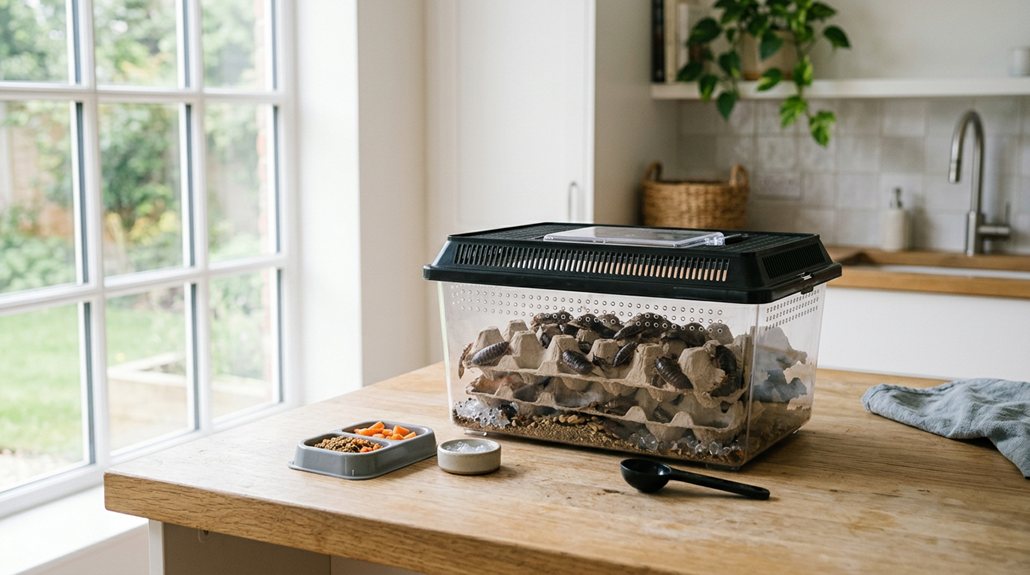
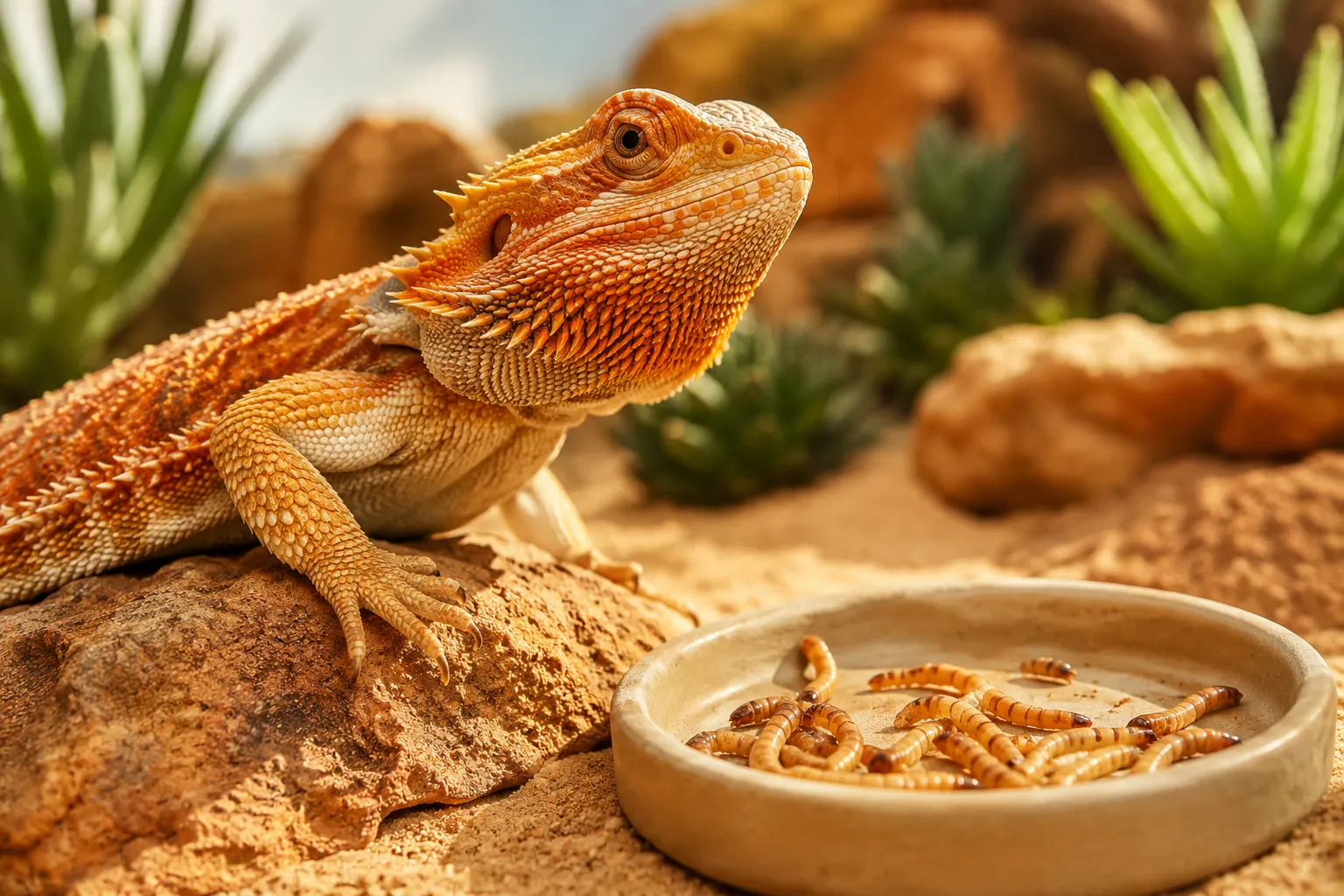
Quick Answer: Yes, bearded dragons can eat mealworms, but they should only be offered occasionally as treats rather than staple feeders. Mealworms have a tough exoskeleton made of chitin that can be difficult to digest, and their high fat content combined with poor calcium-to-phosphorus ratio makes them nutritionally inferior to other feeder insects like dubia roaches or crickets.
Key Takeaways
- Mealworms are safe for bearded dragons in moderation but should not be a dietary staple
- Adult bearded dragons can eat 5-10 mealworms per feeding, while juveniles should avoid them entirely due to impaction risk
- The hard exoskeleton of mealworms poses a digestion challenge, especially for younger dragons
- Superworms are a better alternative to mealworms because they have softer shells and more protein
- Live mealworms are significantly more nutritious than dried or freeze-dried varieties
- Dubia roaches, crickets, and black soldier fly larvae are superior feeder insects for regular feeding
- Always gut-load mealworms 24 hours before feeding and dust them with calcium powder
- Mealworms contain about 13% fat, which is too high for dragons prone to obesity

Vitamin Enriched Formula That Provides Essential Proteins, Fats, Vitamins And Minerals

Premium Quality Chicken Treats: Specially formulated, high quality chicken snacks for laying hens, only the best for your pet chickens

Balanced Mix for Daily Lizard Wellness --- A nutrient-rich blend of sun-dried veggies, freeze-dried fruits, and calcium-coated insects, our Lizard Fruit & Insect Mix helps support digestion, vitality, and bone strength.
Are Mealworms Safe for Bearded Dragons to Eat?
Mealworms are generally safe for bearded dragons when fed in small quantities as an occasional treat. However, they come with several concerns that make them less than ideal as a regular food source. The primary safety issue revolves around their tough exoskeleton, which contains chitin that can be challenging for bearded dragons to break down during digestion.
Key safety considerations include:
- Digestive difficulty: The hard outer shell requires strong digestive enzymes to process
- Impaction risk: Particularly dangerous for baby and juvenile dragons whose digestive systems are still developing
- Nutritional imbalance: Poor calcium-to-phosphorus ratio (approximately 1:6) can contribute to metabolic bone disease if fed too frequently
- Choking hazard: Large mealworms can pose a risk if the dragon doesn’t chew properly
For adult bearded dragons with fully developed digestive systems, mealworms pose minimal risk when offered sparingly. The key is moderation and ensuring your dragon is properly hydrated, as adequate water intake helps move food through the digestive tract and reduces impaction risk.
Choose mealworms only if your bearded dragon is at least 12 months old, has regular bowel movements, and you’re using them as an occasional treat (once or twice per week maximum) rather than a dietary staple.
How Many Mealworms Can a Bearded Dragon Eat Per Day?
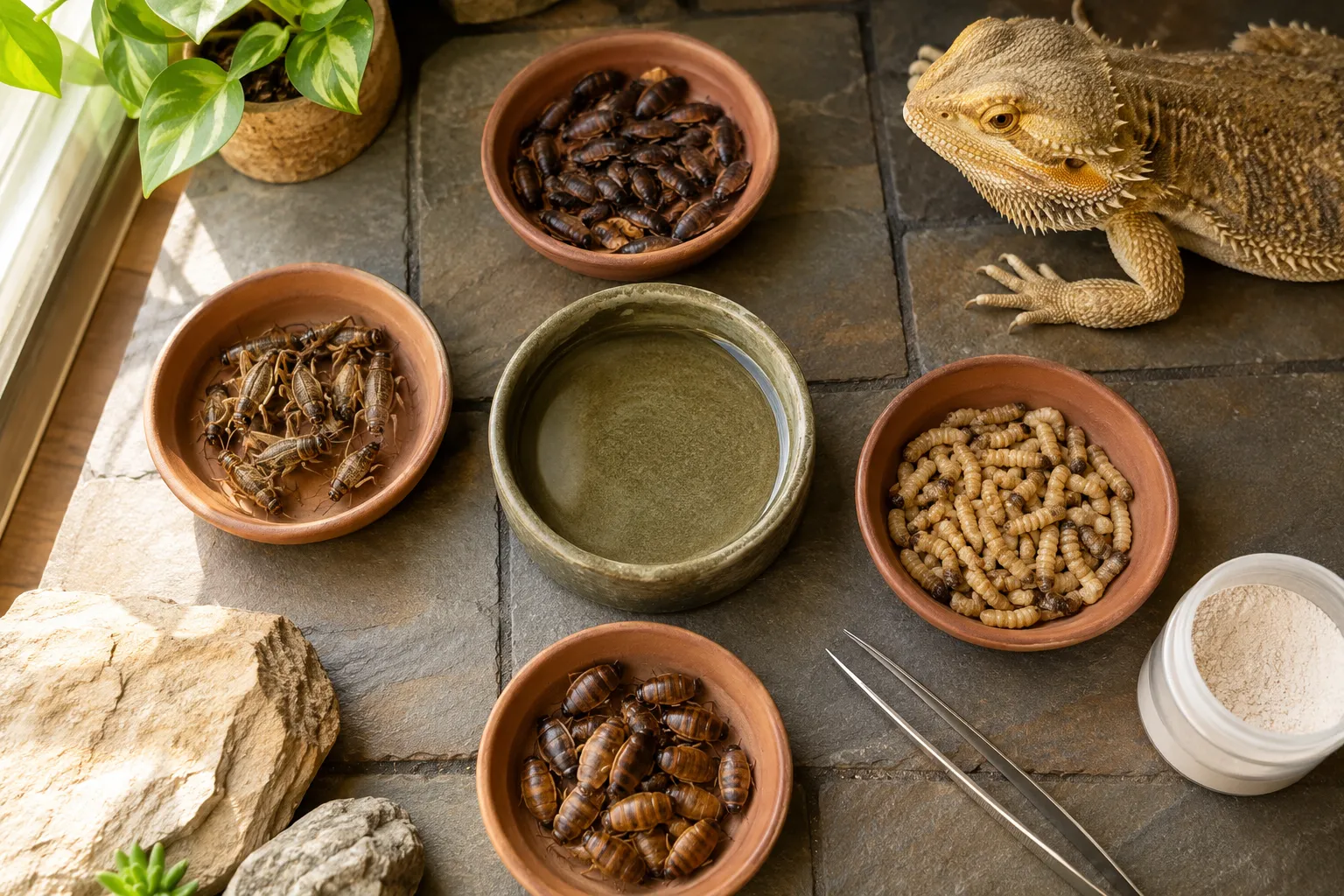
Adult bearded dragons can safely eat 5-10 mealworms per feeding session, but this should only happen once or twice per week at most. The exact number depends on the size of both the mealworms and your dragon, as well as what other foods are being offered that day.
Feeding guidelines by age:
- Baby bearded dragons (0-4 months): Avoid mealworms entirely
- Juvenile bearded dragons (4-12 months): 2-3 small mealworms maximum, only once per week
- Adult bearded dragons (12+ months): 5-10 medium mealworms, 1-2 times per week
The general rule is that no feeder insect should be larger than the space between your bearded dragon’s eyes. This prevents choking and reduces the risk of impaction from food that’s too large to digest properly.
Common mistake: Feeding mealworms daily because your dragon seems to love them. Bearded dragons often prefer high-fat foods (like mealworms) over healthier options, similar to how humans might choose candy over vegetables. This preference doesn’t mean mealworms are good for them.
When calculating daily insect intake, remember that adult bearded dragons should get about 20% of their diet from insects and 80% from vegetables and greens. If you’re feeding mealworms on a given day, they should represent only a portion of that 20% insect allowance.
Can Baby Bearded Dragons Eat Mealworms or Are They Too Hard to Digest?
Baby bearded dragons should not eat mealworms because their digestive systems are too immature to handle the tough chitin exoskeleton. The risk of impaction in babies is significantly higher than in adults, and the consequences can be fatal.
Why mealworms are dangerous for baby dragons:
- Underdeveloped digestive enzymes: Babies lack the strong stomach acids needed to break down chitin effectively
- Smaller digestive tract: Even small mealworms can cause blockages in tiny dragons
- Rapid growth needs: Babies require high-calcium, easily digestible protein, which mealworms don’t provide
- Higher impaction rate: Studies from reptile veterinarians show baby dragons fed mealworms have elevated impaction cases
Instead of mealworms, baby bearded dragons should eat appropriately sized crickets, dubia roaches (small nymphs), or black soldier fly larvae. These alternatives have softer bodies that are much easier to digest and offer better nutritional profiles for growing dragons.
Safe age to introduce mealworms: Wait until your bearded dragon is at least 12 months old and has demonstrated consistent, healthy digestion with other feeder insects. Even then, start with just 1-2 small mealworms and monitor their droppings for the next 24-48 hours to ensure proper digestion.
If you’re raising a juvenile dragon (4-12 months), you can occasionally offer 2-3 small mealworms, but only after they’ve been eating other insects successfully for several months. Watch closely for signs of digestive distress like lethargy, loss of appetite, or straining during bowel movements.
Why Are Mealworms Bad for Bearded Dragons? Understanding Impaction Risk
Mealworms carry a reputation for causing impaction in bearded dragons, which occurs when undigested food creates a blockage in the digestive tract. This happens because the chitin in mealworm exoskeletons doesn’t break down easily, especially when dragons are dehydrated, too cold, or eating insects that are too large.
Factors that increase impaction risk:
- Inadequate temperatures: Bearded dragons need a basking spot of 95-105°F to properly digest food; cooler temperatures slow digestion
- Dehydration: Lack of water makes it harder for food to move through the intestines
- Overfeeding: Too many mealworms in one sitting overwhelms the digestive system
- Large mealworms: Bigger insects with thicker shells are harder to break down
- Substrate ingestion: Dragons that accidentally eat loose substrate (sand, wood chips) along with mealworms face compounded impaction risk
Beyond impaction, mealworms are problematic because of their nutritional profile. With a calcium-to-phosphorus ratio of approximately 1:6, they actually pull calcium from your dragon’s bones when digested. Phosphorus binds to calcium and prevents absorption, which over time can contribute to metabolic bone disease (MBD), a serious and often irreversible condition.
Signs of impaction to watch for:
- Lack of bowel movements for 3+ days
- Lethargy and reduced activity
- Loss of appetite
- Dragging back legs
- Visible swelling in the abdomen
Prevention strategy: If you choose to feed mealworms, always ensure your dragon’s enclosure has proper temperatures, provide fresh water daily, gut-load the mealworms with nutritious food for 24 hours before feeding, and dust them heavily with calcium powder. Never feed mealworms to a dragon that seems dehydrated or hasn’t had a bowel movement recently.
What Insects Are Better Than Mealworms for Bearded Dragons?
Several feeder insects offer superior nutrition and digestibility compared to mealworms, making them better choices for regular feeding. Dubia roaches, crickets, and black soldier fly larvae top the list of recommended alternatives.
Best feeder insects ranked:
- Dubia roaches: 36% protein, soft body, excellent calcium-to-phosphorus ratio (1:3), can’t climb glass or make noise
- Black soldier fly larvae (Phoenix worms): Natural calcium source with 1.5:1 calcium-to-phosphorus ratio, no gut-loading needed
- Crickets: 21% protein, readily available, affordable, good for hunting enrichment
- Hornworms: 85% moisture content, excellent for hydration, low in fat
- Silkworms: High protein, soft-bodied, great for picky eaters
Comparison table:
| Insect | Protein | Fat | Ca:P Ratio | Digestibility |
|---|---|---|---|---|
| Mealworms | 20% | 13% | 1:6 | Difficult |
| Dubia Roaches | 36% | 7% | 1:3 | Easy |
| Crickets | 21% | 6% | 1:9 | Moderate |
| Black Soldier Fly Larvae | 17% | 10% | 1.5:1 | Very Easy |
Why dubia roaches are the gold standard: They contain more than 1.5 times the protein of mealworms, less than half the fat, and a much better calcium-to-phosphorus ratio. Their soft exoskeleton makes them easy to digest for dragons of all ages, and they don’t smell, make noise, or escape like crickets do.
Choose crickets if you want an affordable, readily available option that provides hunting enrichment. Choose black soldier fly larvae if your dragon needs extra calcium or tends toward dehydration. Choose dubia roaches if you want the most nutritionally complete feeder insect available.
Mealworms vs Superworms for Bearded Dragons: Which Is Better?
Superworms are a better choice than regular mealworms for bearded dragons because they offer more protein, a softer exoskeleton, and lower impaction risk. However, both should still be considered occasional treats rather than dietary staples due to their high fat content.
Key differences:
- Size: Superworms are 2-3 times larger than mealworms (1.5-2 inches vs. 0.5-1 inch)
- Protein content: Superworms contain about 20% protein compared to mealworms’ 20%, but with more moisture
- Exoskeleton: Superworms have a thinner, more pliable shell that’s easier to digest
- Fat content: Superworms have 16-18% fat compared to mealworms’ 13%, making both high-fat options
- Aggression: Superworms can bite, so never leave them unattended in the enclosure
When to choose superworms over mealworms:
- Your dragon is a strong eater and needs extra calories (underweight dragons, breeding females)
- You want a larger insect for adult dragons
- Your dragon has successfully digested mealworms without issues
- You’re looking for variety in the diet
When to avoid both: If your bearded dragon is overweight, prone to impaction, under 12 months old, or has a history of digestive issues, skip both mealworms and superworms in favor of dubia roaches or black soldier fly larvae.
The calcium-to-phosphorus ratio in superworms is similarly poor (around 1:7), so the same supplementation rules apply: always dust with calcium powder and gut-load for 24 hours before feeding. Neither mealworms nor superworms should make up more than 10% of your dragon’s total insect intake.
How to Prepare Mealworms for Bearded Dragons Before Feeding
Proper preparation of mealworms significantly improves their nutritional value and reduces health risks. The two essential steps are gut-loading and calcium dusting, both of which should happen before every feeding.
Step-by-step preparation process:
Gut-load for 24 hours: Place mealworms in a container with nutritious foods like sweet potato, carrots, collard greens, and commercial gut-load powder. The mealworms eat these foods, and that nutrition transfers to your dragon.
Remove large mealworms: Sort through and remove any mealworms larger than the space between your dragon’s eyes to prevent choking.
Dust with calcium powder: Place 5-10 mealworms in a plastic bag or cup with calcium powder (with D3 if your dragon doesn’t get UVB exposure, without D3 if they do) and shake gently until coated.
Feed immediately: Offer the dusted mealworms right away using feeding tongs. Don’t let them sit, as they’ll quickly shake off the calcium powder.
Count and monitor: Keep track of how many mealworms your dragon eats and watch for any signs of digestive distress over the next 24-48 hours.
Gut-loading foods to use:
- Sweet potato (high in vitamin A)
- Carrots (beta-carotene)
- Collard greens (calcium)
- Squash (fiber and moisture)
- Commercial gut-load powder (complete nutrition)
Foods to avoid: Iceberg lettuce (no nutrition), spinach (binds calcium), and high-oxalate vegetables.
Common mistake: Feeding mealworms straight from the pet store container without gut-loading. Store-bought mealworms are typically kept in bran or oatmeal, which provides minimal nutrition. A mealworm is essentially a vessel for whatever it has eaten in the past 24 hours, so gut-loading is crucial for transferring nutrients to your dragon.
Edge case: If your mealworms are starting to pupate (turning into beetles), separate them immediately. Pupating mealworms and beetles are not suitable food for bearded dragons and can cause digestive upset.
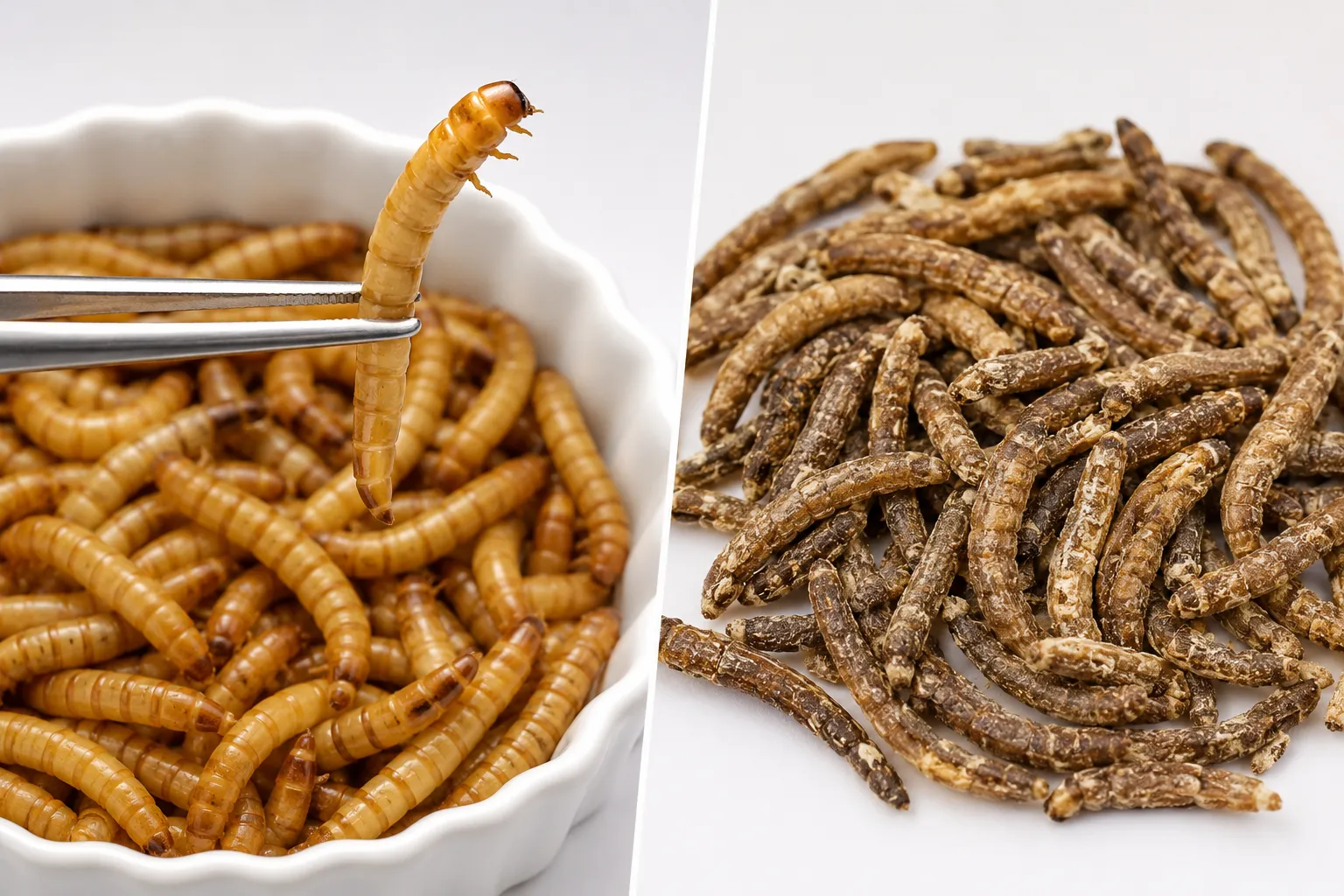
Can Bearded Dragons Eat Dried Mealworms or Only Live Ones?
Live mealworms are significantly better than dried or freeze-dried mealworms for bearded dragons. While dried mealworms are technically safe, they lack moisture, have reduced nutritional value, and don’t provide the movement that stimulates a dragon’s hunting instinct.
Problems with dried mealworms:
- No moisture content: Dried mealworms contain less than 5% moisture compared to 60% in live mealworms, increasing dehydration risk
- Nutrient degradation: The freeze-drying process destroys many vitamins and enzymes
- No hunting enrichment: Bearded dragons are visual hunters that respond to movement; dried insects don’t trigger this natural behavior
- Harder texture: Dried mealworms are even more difficult to digest than live ones
- Less appealing: Many dragons simply refuse to eat dried insects
When dried mealworms might be acceptable:
- As a last resort for a dragon that refuses all other foods (though this is rare)
- Mixed into salads to add protein for picky eaters who won’t hunt
- For elderly dragons with reduced mobility who can’t catch live prey
If you must use dried mealworms, rehydrate them first by soaking in warm water for 10-15 minutes. This restores some moisture and makes them slightly easier to digest. However, this still doesn’t replace the nutritional value and enrichment of live insects.
Better alternatives to dried mealworms: If you’re looking for convenience, consider canned insects like silkworms or grasshoppers, which retain more moisture and nutrition than freeze-dried options. Or invest in a small dubia roach colony, which requires minimal maintenance and provides fresh, nutritious feeders on demand.

Perfect Blend of Crickets, Mealworms and Pellets

This food is natural with added vitamins, minerals, and other trace nutrients. There are no artificial colors, flavors, or preservatives added!

Unique textured pellets that bearded dragons love to eat
How Often Should I Feed My Bearded Dragon Mealworms?
Feed mealworms to your bearded dragon no more than once or twice per week as an occasional treat. They should never be a daily feeder or make up more than 10% of your dragon’s total insect intake due to their poor nutritional profile and high fat content.
Recommended feeding schedule:
- Adult bearded dragons: 5-10 mealworms once or twice per week
- Juvenile bearded dragons (12+ months): 2-3 small mealworms once per week maximum
- Baby bearded dragons: None
How to incorporate mealworms into a balanced diet:
Monday: Dubia roaches (10-15 for adults)
Wednesday: Crickets (10-15 for adults)
Friday: Mealworms (5-10 for adults) OR black soldier fly larvae
Daily: Fresh salad with collard greens, butternut squash, bell peppers
The key is variety. Rotating between different feeder insects ensures your bearded dragon gets a complete range of nutrients and prevents them from becoming fixated on one food type.
Common mistake: Feeding mealworms every day because your dragon loves them. This leads to nutritional imbalances, obesity, and potential metabolic bone disease from the poor calcium-to-phosphorus ratio. If your dragon refuses other insects after eating mealworms regularly, you may need to stop offering mealworms entirely for 2-3 weeks to reset their preferences.
Decision rule: If your bearded dragon is overweight (thick tail base, fat deposits around the legs), reduce mealworm frequency to once every two weeks or eliminate them entirely. If your dragon is underweight or recovering from illness, superworms might be a better high-calorie option, but only under veterinary guidance.
Are Mealworms Too High in Fat for Adult Bearded Dragons?
Yes, mealworms are too high in fat to be a regular part of an adult bearded dragon’s diet. At approximately 13% fat content, they can contribute to obesity, fatty liver disease, and other health problems when fed frequently.
Why fat content matters:
Adult bearded dragons have slower metabolisms than juveniles and require less protein and fat overall. Their diet should shift to about 80% vegetables and only 20% insects. High-fat insects like mealworms can quickly lead to weight gain, especially in dragons that don’t get enough exercise or have enclosures that are too small.
Signs your dragon is getting too much fat:
- Thick, bulging tail base
- Fat deposits visible around the legs and neck
- Lethargy and reduced activity
- Difficulty moving or climbing
- Fatty liver disease (diagnosed by a vet through blood work)
Fat comparison of common feeders:
- Mealworms: 13% fat
- Superworms: 16-18% fat
- Waxworms: 22% fat (should be very rare treats only)
- Dubia roaches: 7% fat
- Crickets: 6% fat
- Black soldier fly larvae: 10% fat
For adult bearded dragons, especially those over 3 years old or with sedentary lifestyles, stick to lower-fat options like dubia roaches and crickets for regular feeding. Reserve mealworms for special occasions or as a training treat when you need to encourage specific behaviors.
Exception: Breeding females, underweight dragons recovering from illness, or dragons with high activity levels may benefit from occasional higher-fat insects. However, this should be done under the guidance of a reptile veterinarian who can assess your specific dragon’s needs.
Can Mealworms Cause Impaction in Bearded Dragons?
Yes, mealworms can cause impaction in bearded dragons, particularly when risk factors like improper temperatures, dehydration, or overfeeding are present. Impaction occurs when undigested material creates a blockage in the intestinal tract, which can be life-threatening if not addressed.
Primary causes of mealworm-related impaction:
- Inadequate basking temperature: Dragons need 95-105°F to produce the digestive enzymes that break down chitin
- Dehydration: Lack of water prevents food from moving smoothly through the intestines
- Feeding too many at once: Overwhelming the digestive system with hard-to-digest material
- Mealworms too large: Insects bigger than the space between the eyes are harder to break down
- Young dragons: Immature digestive systems can’t handle tough exoskeletons
- Substrate ingestion: Loose substrates eaten along with food compound the blockage
Symptoms of impaction:
- No bowel movement for 3+ days
- Straining or dragging back legs
- Loss of appetite
- Lethargy and weakness
- Visible abdominal swelling
- Regurgitation
What to do if you suspect impaction:
- Increase temperature: Ensure basking spot is at proper temperature (95-105°F)
- Warm baths: Give 15-20 minute warm water baths (85-90°F) daily to stimulate bowel movements
- Gentle massage: Massage the belly in a downward motion during baths
- Stop feeding: Don’t offer any food until the blockage passes
- See a vet immediately: If no improvement within 24-48 hours, impaction requires veterinary intervention
Prevention is key: The best way to avoid mealworm impaction is to feed them sparingly, ensure proper husbandry (temperature, hydration, appropriate substrate), and choose more digestible insects for regular feeding.
What Size Mealworms Are Safe for Juvenile Bearded Dragons?
Small mealworms measuring no more than 0.5 inches in length are the only size safe for juvenile bearded dragons (12+ months old), and even then, they should be fed very sparingly. The general rule that no feeder insect should be larger than the space between your dragon’s eyes is especially critical for juveniles.
Size guidelines by age:
- 12-18 months (juvenile): Small mealworms only, 0.5 inches maximum, 2-3 per week
- 18+ months (adult): Medium mealworms, 0.75-1 inch, 5-10 per feeding, 1-2 times per week
- Under 12 months: No mealworms at all
How to measure mealworms:
Use a ruler or compare the mealworm to the space between your dragon’s eyes. If the mealworm is longer or thicker than that space, it’s too large. When in doubt, choose smaller insects.
Common mistake: Buying a mixed container of mealworms from the pet store and feeding whatever size comes out. Always sort through and select appropriately sized insects for your dragon’s age and size.
Better options for juveniles: Instead of worrying about mealworm sizes, feed juvenile bearded dragons small dubia roach nymphs, appropriately sized crickets (1/4 to 1/2 inch), or black soldier fly larvae. These insects are easier to digest, more nutritious, and pose less risk of impaction.
If your juvenile dragon is particularly small or has a history of digestive issues, avoid mealworms entirely until they reach full adult size (18+ months old and 16+ inches in length).
My Bearded Dragon Won’t Eat Mealworms: What Should I Do?
If your bearded dragon won’t eat mealworms, don’t worry, this is actually a good thing. Mealworms aren’t nutritionally necessary, and many healthy dragons prefer other insects. Focus on offering better alternatives like dubia roaches, crickets, or black soldier fly larvae instead.
Reasons a dragon might refuse mealworms:
- Instinctive avoidance: Some dragons naturally avoid hard-shelled insects
- Previous negative experience: If a mealworm caused digestive discomfort before, they may remember and refuse them
- Preference for other foods: Dragons that eat better insects regularly may not be interested in mealworms
- Health issues: Illness, stress, or digestive problems can cause appetite changes
- Temperature problems: If the enclosure is too cool, dragons lose their appetite
What to do instead:
- Offer better alternatives: Try dubia roaches, crickets, hornworms, or silkworms
- Check husbandry: Verify basking temperature (95-105°F), UVB lighting (10-12 hours daily), and proper enclosure setup
- Ensure variety: Rotate between different insects and fresh vegetables daily
- Don’t force it: If your dragon is eating other foods well, there’s no need to push mealworms
When to be concerned: If your bearded dragon refuses all food (not just mealworms) for more than 3-5 days, loses weight, or shows signs of lethargy, consult a reptile veterinarian. However, refusing mealworms specifically while eating other foods is completely normal and not a cause for concern.
Edge case: If you’ve been feeding mealworms exclusively and your dragon suddenly refuses them, this could indicate digestive discomfort or impaction. Monitor for other symptoms and transition to easier-to-digest insects immediately.
FAQ
Can bearded dragons eat mealworm beetles?
No, bearded dragons should not eat mealworm beetles (darkling beetles). The beetles have an even harder exoskeleton than mealworms and can secrete defensive chemicals that may irritate your dragon’s mouth and digestive system.
How long can mealworms live before feeding them to my bearded dragon?
Mealworms can live for several weeks when stored properly in a cool place (50-60°F) with bran or oatmeal substrate. However, always gut-load them with nutritious food for 24 hours before feeding to maximize their nutritional value.
Can I feed my bearded dragon mealworms every day?
No, you should not feed mealworms daily. Limit mealworms to once or twice per week as an occasional treat due to their high fat content, poor calcium-to-phosphorus ratio, and difficult-to-digest exoskeleton.
What happens if my bearded dragon eats too many mealworms?
Eating too many mealworms can cause impaction, obesity, nutritional imbalances, and metabolic bone disease over time. If your dragon has eaten an excessive amount in one sitting, monitor for signs of digestive distress and ensure proper temperatures and hydration.
Are mealworms good for bearded dragons with metabolic bone disease?
No, mealworms are a poor choice for dragons with metabolic bone disease (MBD) because their calcium-to-phosphorus ratio (1:6) actually prevents calcium absorption. Choose black soldier fly larvae or heavily supplemented dubia roaches instead.
Can I breed mealworms at home for my bearded dragon?
Yes, you can breed mealworms at home, but breeding dubia roaches is more worthwhile since they’re more nutritious. If you do breed mealworms, keep them in a container with bran, provide moisture through vegetables, and maintain temperatures around 75-80°F.
Do I need to remove mealworm heads before feeding?
No, you don’t need to remove mealworm heads. While some keepers do this to reduce the hard parts, properly sized mealworms fed to healthy adult dragons don’t require this step. Focus instead on choosing appropriately sized insects and proper supplementation.
Can bearded dragons eat giant mealworms?
Giant mealworms (superworms) can be fed to adult bearded dragons, but they’re even higher in fat than regular mealworms. Use them sparingly and only for dragons over 12 months old. Never leave superworms unattended in the enclosure, as they can bite.
How do I know if my bearded dragon is impacted from mealworms?
Signs of impaction include no bowel movements for 3+ days, lethargy, loss of appetite, straining, dragging back legs, and abdominal swelling. If you notice these symptoms, provide warm baths, stop feeding, and contact a reptile veterinarian immediately.
Are freeze-dried mealworms safe for bearded dragons?
Freeze-dried mealworms are technically safe but not recommended. They lack moisture, have reduced nutritional value, don’t provide hunting enrichment, and are even harder to digest than live mealworms. Live insects are always the better choice.
Can bearded dragons eat mealworms as their only protein source?
No, mealworms should never be the only protein source. A varied diet of dubia roaches, crickets, black soldier fly larvae, and other insects is essential for complete nutrition. Mealworms lack the calcium and digestibility needed for a healthy diet.
What’s the best way to store mealworms before feeding them to my bearded dragon?
Store mealworms in a ventilated container with bran or oatmeal substrate at 50-60°F. Add a slice of potato or carrot for moisture. Before feeding, move them to a warmer area (75°F) with nutritious vegetables for 24-hour gut-loading.
Conclusion
Can bearded dragons eat mealworms? Yes, but with significant limitations. While mealworms are safe for adult bearded dragons in small quantities, they should only be offered as an occasional treat, once or twice per week at most, rather than a dietary staple. Their tough exoskeleton, high fat content, and poor calcium-to-phosphorus ratio make them nutritionally inferior to alternatives like dubia roaches, crickets, and black soldier fly larvae.
Key points to remember:
- Never feed mealworms to baby bearded dragons under 12 months old
- Limit adult dragons to 5-10 mealworms per feeding, 1-2 times weekly
- Always gut-load for 24 hours and dust with calcium powder before feeding
- Ensure proper basking temperatures (95-105°F) and hydration to prevent impaction
- Choose dubia roaches or black soldier fly larvae for regular feeding instead
Your next steps:
- Evaluate your current feeding routine and reduce mealworm frequency if needed
- Source better feeder insects like dubia roaches or crickets for regular feeding
- Verify your enclosure temperatures and UVB lighting are correct
- Create a varied feeding schedule that rotates between different insects
- Monitor your dragon’s weight and digestion regularly
If your bearded dragon is thriving on a varied diet of nutritious insects and fresh vegetables, mealworms can be an occasional treat. But if you’re looking to provide the best possible nutrition, focus your efforts on more digestible, calcium-rich alternatives that support long-term health and vitality.

Calcium supplement without Vitamin D3 is

Highly bio-available source of calcium carbonate

Calcium is essential to reptiles for the prevention of metabolic bone disease