Quick Answer: Bearded dragons bob their heads primarily to establish dominance, signal territorial behavior, or communicate during mating season. This behavior is completely normal and serves as their main form of body language communication with other dragons and sometimes their owners. While head bobbing is usually harmless, the speed, frequency, and context help determine whether it signals dominance, stress, mating interest, or occasionally illness.
Key Takeaways
- Head bobbing is normal bearded dragon behavior used for communication, dominance displays, and mating rituals
- Males bob their heads more frequently and aggressively than females, especially during breeding season
- Fast, jerky head bobs typically signal aggression or territorial behavior, while slow bobs indicate submission or acknowledgment
- Head bobbing at reflections means your dragon sees a rival and should be addressed by covering mirrors or glass
- Stress-related head bobbing is accompanied by other signs like black beard, glass surfing, or loss of appetite
- Baby bearded dragons bob their heads less frequently than adults and usually in submissive patterns
- Head bobbing combined with lethargy, weight loss, or refusal to eat may indicate illness requiring vet attention
- Arm waving often accompanies head bobbing and signals submission or non-threatening intentions

【Anti-Escape Design】Security buckle on the glass sliding doors ensure the tank closed tightly, prevent your reptile amphibian chameleon pets from escaping. And the security lock avoid the doors open accidently by your kids and keep your kids safe.

Fit 64 Gallon Reptile Enclosure: measuring 36" L x 24" W x 18" H, this bearded dragon tank provides a secure and stable living space for small pets. This precise dimension ensures excellent compatibility with standard desktop setups and provides ample room for essential accessories
What Does It Mean When a Bearded Dragon Bobs Its Head?
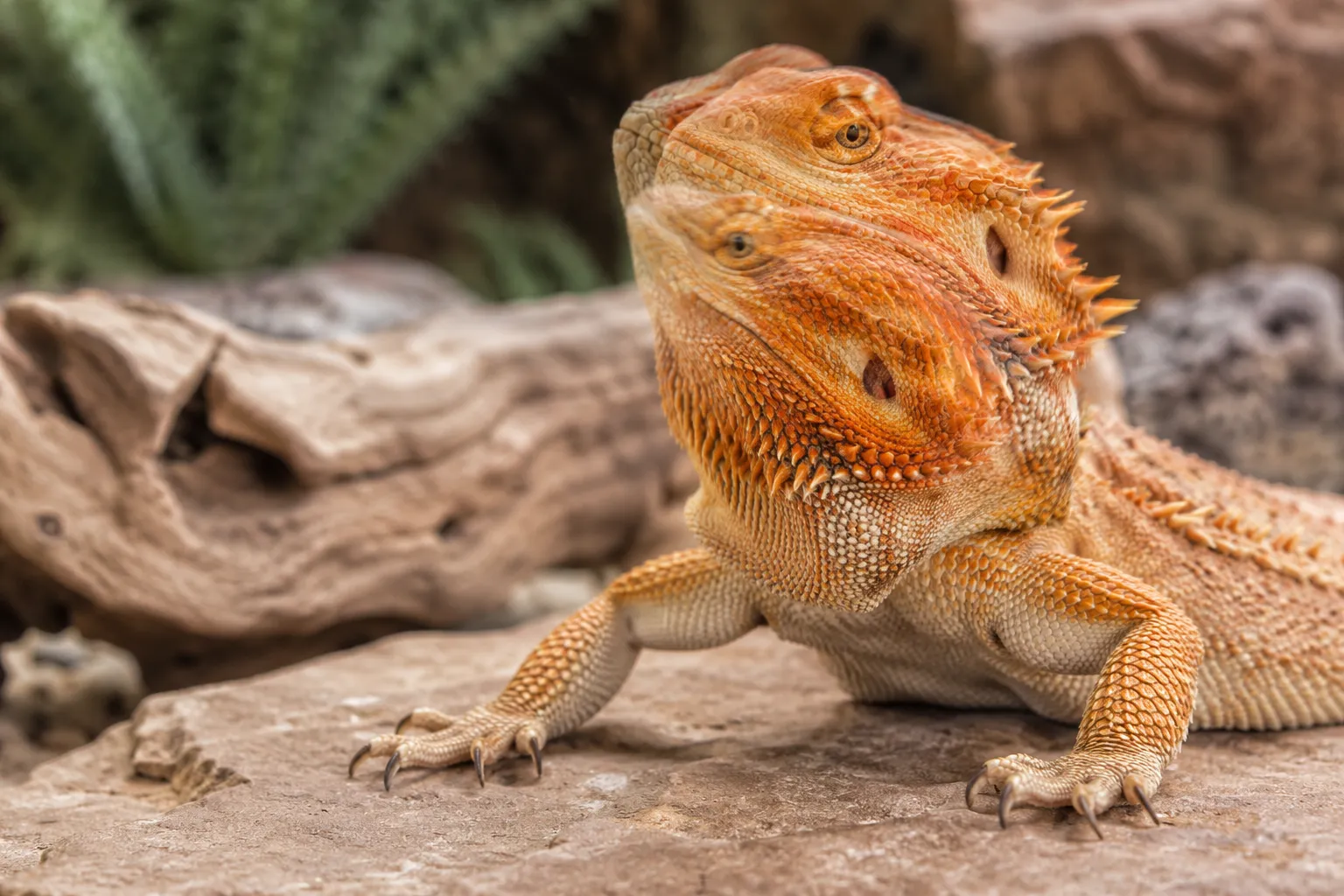
Head bobbing in bearded dragons is a form of body language that communicates dominance, territorial claims, or mating interest to other dragons. The behavior involves rapid up-and-down movements of the head and sometimes the entire upper body, ranging from slow deliberate bobs to fast aggressive jerks.
The main reasons bearded dragons bob their heads include:
- Dominance assertion, Establishing hierarchy with other dragons or claiming territory
- Mating behavior, Males bob to attract females or signal breeding readiness
- Territorial display, Warning others to stay away from their space, food, or basking spot
- Response to perceived threats, Reacting to reflections, other pets, or unfamiliar objects
- Acknowledgment, Slow bobs can signal awareness of another dragon without aggression
The context matters significantly. A dragon bobbing at feeding time in its own enclosure behaves differently than one bobbing aggressively at a tank mate. Watch for accompanying behaviors like beard puffing (turning black), body flattening, or hissing, which indicate the head bobbing is aggressive rather than casual communication.
Is Head Bobbing in Bearded Dragons Normal Behavior?
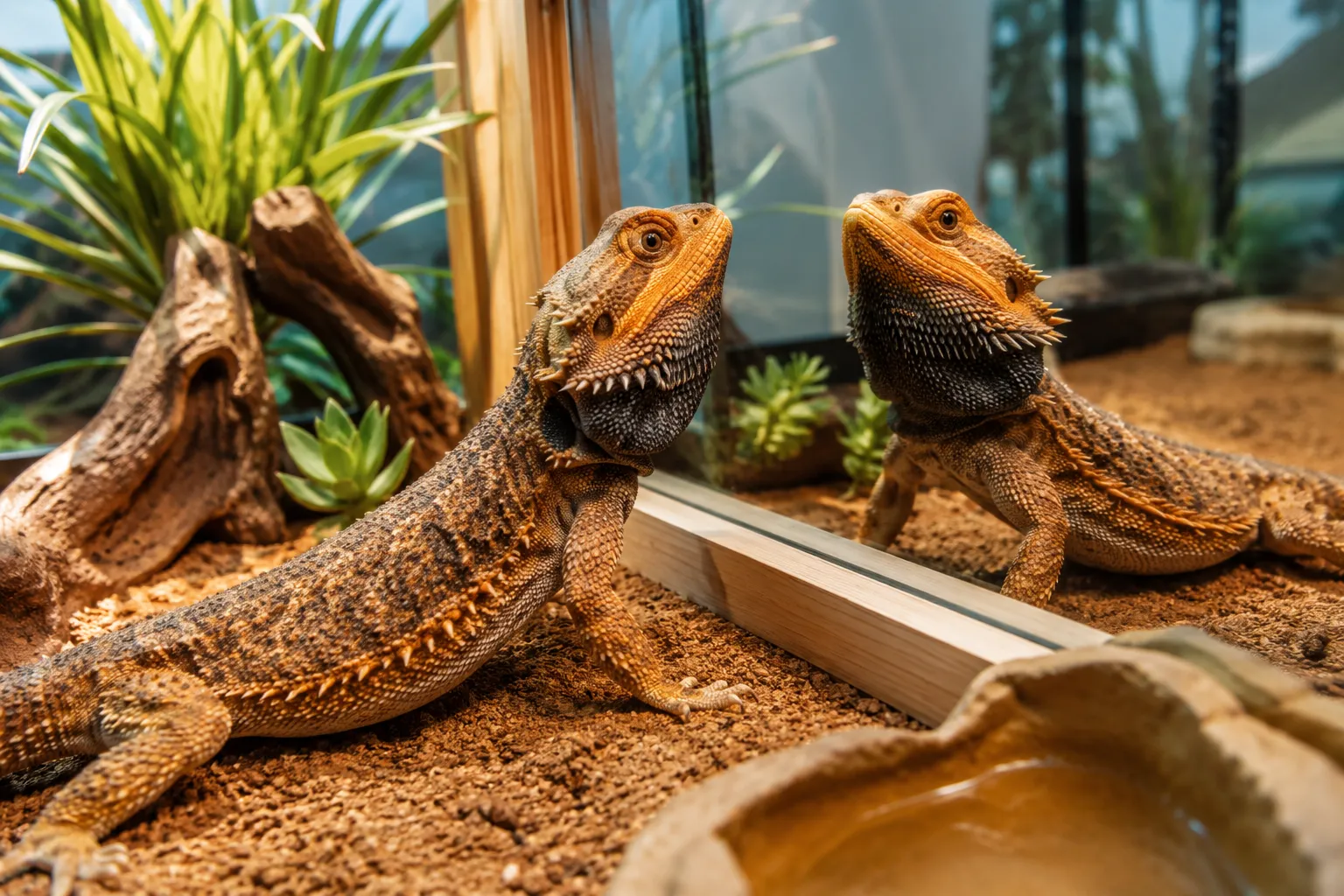
Yes, head bobbing is completely normal and healthy behavior for bearded dragons of all ages. It’s hardwired into their communication system and doesn’t indicate a problem in most cases.
Bearded dragons lack vocal cords and rely entirely on visual body language to communicate. Head bobbing serves as their primary “language” alongside arm waving, beard puffing, and color changes. Even solitary pet dragons will bob their heads at their owners, other household pets, or their own reflections because the instinct remains strong regardless of whether other dragons are present.
When head bobbing is normal:
- During morning basking when your dragon is alert and active
- When introducing new objects or rearranging the enclosure
- During feeding time as excitement or territorial behavior over food
- When your dragon sees you approach (acknowledging your presence)
- Periodically throughout the day without other stress symptoms
When to monitor more closely:
- Constant head bobbing for hours without breaks
- Head bobbing combined with refusal to eat for multiple days
- Aggressive bobbing accompanied by biting attempts at you or tank mates
- Head bobbing with lethargy, weight loss, or unusual stool
Most bearded dragons will bob their heads occasionally throughout their lives. It’s only concerning when paired with other behavioral changes or health symptoms.
Difference Between Male and Female Bearded Dragon Head Bobbing
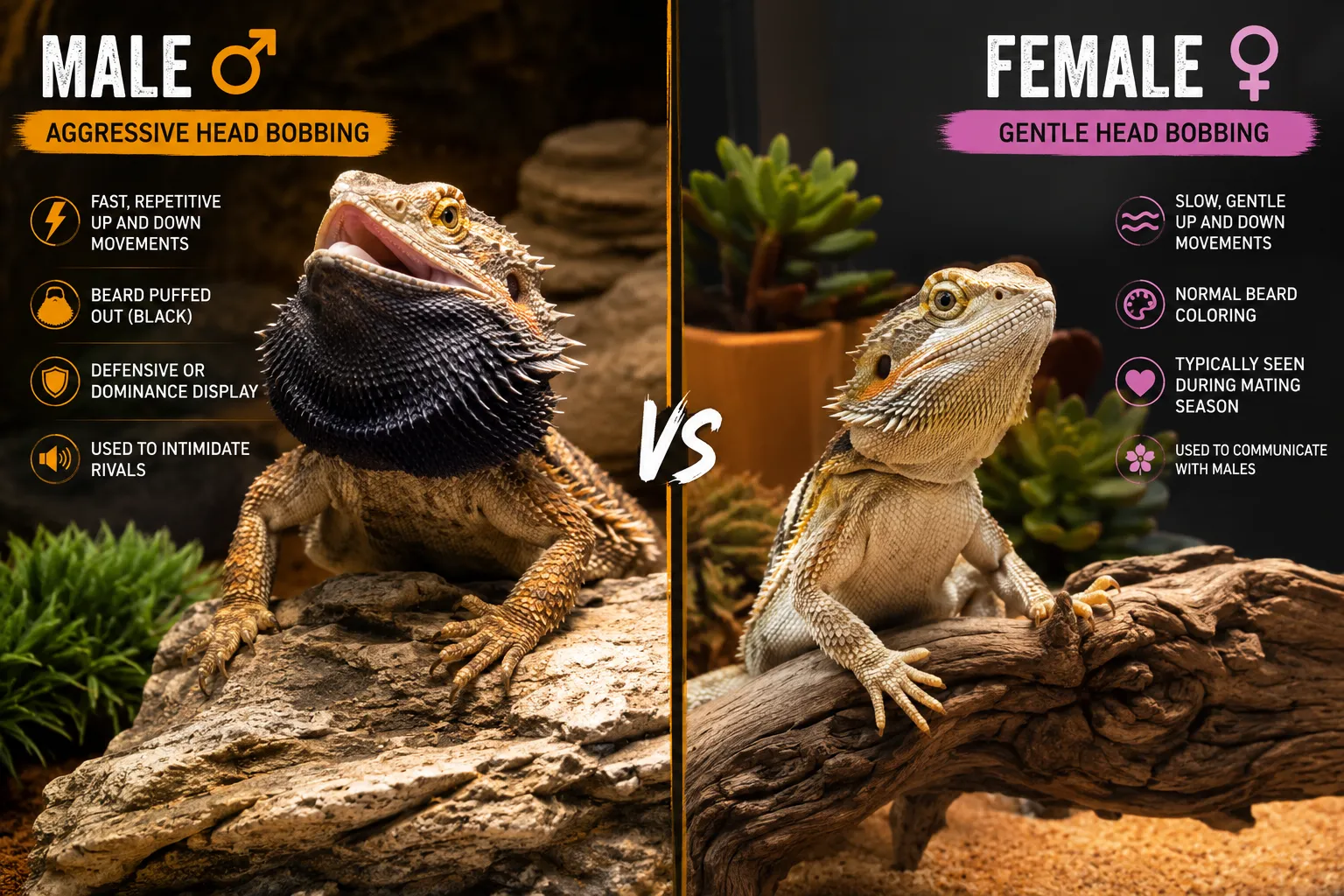
Male bearded dragons bob their heads significantly more often and with greater intensity than females. Males use head bobbing as their primary dominance display and mating signal, while females typically bob only in response to males or to establish hierarchy with other females.
Male head bobbing characteristics:
- Fast, vigorous, and repetitive movements
- Often accompanied by beard puffing and darkening
- Increases dramatically during breeding season (spring and early summer)
- Directed at females, other males, reflections, and sometimes owners
- Can last for extended periods when asserting dominance
Female head bobbing characteristics:
- Slower, gentler movements with longer pauses
- Less frequent overall compared to males
- Often signals submission or acknowledgment rather than dominance
- May bob back at males during breeding season to signal receptiveness or rejection
- Rarely accompanied by aggressive beard displays
Females will sometimes perform slow head bobs to communicate “I see you, but I’m not a threat” to dominant males or other females. If a female bobs rapidly and aggressively, she’s likely rejecting a male’s advances or defending resources like food or basking spots.
How to Stop My Bearded Dragon From Head Bobbing Aggressively
You can reduce aggressive head bobbing by addressing the triggers causing territorial or stress responses, though you cannot and should not eliminate all head bobbing since it’s natural communication.
Steps to reduce aggressive head bobbing:
- Separate tank mates, House bearded dragons individually, as cohabitation causes constant stress and dominance battles
- Cover reflective surfaces, Place backgrounds on glass walls or remove mirrors that create the illusion of rival dragons
- Establish routine, Feed at consistent times and minimize sudden enclosure changes that trigger territorial responses
- Provide adequate space, Ensure your enclosure is at least 75 gallons for adults to reduce territorial stress
- Limit visual stimulation, Position the tank away from windows where your dragon sees outdoor movement or other pets
- Check temperature gradients, Improper temperatures cause stress; maintain basking spots at 95-105°F and cool sides at 75-85°F
Common mistake: Trying to “discipline” or punish head bobbing behavior. Bearded dragons don’t understand punishment and will only become more stressed. Instead, modify the environment to remove triggers.
If your dragon bobs aggressively specifically at you during handling, it may be feeling threatened or territorial about being removed from its enclosure. Approach slowly, scoop from the side rather than from above (which mimics predator attacks), and handle during calmer afternoon hours rather than active morning periods.
Bearded Dragon Head Bobbing vs Arm Waving Meaning
Head bobbing and arm waving represent opposite messages in bearded dragon communication. Head bobbing signals dominance and confidence, while arm waving indicates submission and non-aggression.
Head bobbing signals:
- “I’m dominant here”
- “This is my territory”
- “I’m ready to mate” (males)
- “Back off” (when aggressive)
Arm waving signals:
- “I’m not a threat”
- “I acknowledge your dominance”
- “I’m submitting”
- “Please don’t hurt me”
Bearded dragons often use both behaviors in sequence. A submissive dragon might wave its arm in response to a dominant dragon’s head bobbing, essentially saying “I see you’re in charge, I’m not challenging you.” Conversely, a dominant dragon might bob its head after another dragon waves, confirming the hierarchy.
Females commonly wave at males before or after the male’s head bobbing display. Baby and juvenile dragons wave more frequently than adults because they’re naturally submissive to larger dragons. If your dragon waves at you, it’s acknowledging you as the dominant presence, which is normal and healthy in the pet-owner relationship.
Is My Bearded Dragon Head Bobbing Because of Stress or Dominance?
Distinguishing between stress-induced and dominance-driven head bobbing requires observing accompanying behaviors and environmental context.
Dominance head bobbing indicators:
- Occurs during active, alert periods
- Dragon maintains normal eating and basking routines
- Beard may darken but dragon appears otherwise healthy
- Triggered by specific stimuli (reflections, other pets, feeding time)
- Dragon is responsive and engaged with environment
Stress head bobbing indicators:
- Accompanied by black or dark beard that stays dark for extended periods
- Glass surfing (scratching at tank walls trying to escape)
- Loss of appetite lasting more than 2-3 days
- Hiding more than usual or refusing to bask
- Lethargy or unusual stillness between bobbing episodes
- Occurs constantly without clear triggers
Choose stress as the cause if: Your dragon shows multiple stress symptoms beyond head bobbing, environmental conditions are incorrect (wrong temperatures, inadequate UVB, too-small enclosure), or you recently made major changes like new tank mates, relocation, or enclosure modifications.
Choose dominance as the cause if: Your dragon is otherwise healthy and active, head bobbing occurs in response to specific triggers, and the behavior is intermittent rather than constant.
A healthy dragon establishing dominance will bob confidently with good body posture. A stressed dragon often appears tense, with a flattened body and darker overall coloration even when not actively bobbing.
When Should I Be Worried About Bearded Dragon Head Bobbing?
Head bobbing becomes concerning when accompanied by other health or behavioral problems, or when it’s so constant that it interferes with normal activities like eating and basking.
Red flags requiring veterinary attention:
- Head bobbing combined with weight loss over 2-3 weeks
- Refusal to eat for more than 5-7 days alongside head bobbing
- Lethargy, weakness, or inability to support body weight properly
- Unusual head movements that seem uncontrolled or jerky (may indicate neurological issues)
- Head bobbing with respiratory symptoms like gaping, mucus, or wheezing
- Sudden onset of aggressive head bobbing in a previously calm dragon without environmental changes
Situations requiring environmental adjustment but not emergency vet care:
- Constant head bobbing at reflections (cover glass, add backgrounds)
- Aggressive bobbing at tank mates (separate immediately)
- Head bobbing during breeding season with normal eating and activity
- Occasional head bobbing at household pets or family members
Decision rule: If your bearded dragon maintains normal appetite, regular bowel movements, proper basking behavior, and healthy body weight, head bobbing alone is not a medical emergency. If head bobbing appears alongside any decline in eating, activity, or physical condition lasting more than a few days, schedule a vet visit.
Neurological problems can sometimes cause head tremors that look similar to head bobbing but are involuntary and irregular. True communication head bobbing is rhythmic and deliberate, while neurological tremors appear shaky and uncontrolled.
Do Baby Bearded Dragons Head Bob More Than Adults?
Baby bearded dragons actually head bob less frequently than adults and almost always in submissive patterns rather than dominant displays. Juvenile dragons lack the size and maturity to establish dominance, so they rely more on arm waving and submissive behavior.
Baby bearded dragons (0-6 months) focus primarily on growth and survival rather than territorial behavior. They instinctively know they’re vulnerable to larger dragons and avoid confrontational displays. When babies do bob their heads, the movements are typically slow and gentle, often in response to larger dragons or even their owners.
Baby dragon head bobbing patterns:
- Infrequent and usually brief episodes
- Slow, deliberate movements rather than rapid jerks
- Often paired with arm waving to signal submission
- May bob at their reflection but less aggressively than adults
- Increases slightly as they approach juvenile stage (6-12 months)
Adult dragon head bobbing patterns:
- Frequent, especially in males during breeding season
- Fast and vigorous, particularly when asserting dominance
- More sustained episodes lasting several minutes
- Confident displays without accompanying submission signals
- Increases with sexual maturity (12-18 months)
If your baby bearded dragon is head bobbing constantly and aggressively, it may indicate stress from improper housing, incorrect temperatures, or illness rather than normal communication. Baby dragons should appear curious and active but not territorial or aggressive.

The reptile uvb light kit effectively stimulate the appetite and activities of reptiles, induce reproductive behavior by emitting UVB radiation. Provides broad, even illumination for larger terrariums, simulating natural sunlight.

My Bearded Dragon Is Head Bobbing at Its Reflection, What to Do
A bearded dragon head bobbing at its reflection believes it’s seeing a rival dragon and is attempting to establish dominance or defend territory. This behavior can cause chronic stress if not addressed.
Immediate solutions:
- Apply aquarium background, Attach a solid-colored background to the outside of glass walls to eliminate reflections
- Reposition lighting, Adjust lights so they don’t create reflective glare on glass surfaces
- Cover mirrors, Remove or cover any mirrors near the enclosure
- Add interior decorations, Place plants, rocks, or hides along glass walls to break up reflective surfaces from the inside
- Use frosted film, Apply removable frosted window film to lower portions of glass where your dragon spends most time
Why this matters: Constantly seeing a “rival” that never backs down or leaves creates ongoing stress. Your dragon may spend excessive time head bobbing instead of eating, basking, or resting. Over time, this chronic stress can weaken the immune system and lead to health problems.
Some dragons are more reactive to reflections than others. Males during breeding season are particularly prone to aggressive displays at their own reflection. If your dragon only occasionally bobs at its reflection without other stress signs, it’s less urgent, but eliminating reflections still improves overall well-being.
Common mistake: Thinking the dragon will “get used to” its reflection. Bearded dragons don’t recognize reflections as themselves and will continue treating the image as a rival indefinitely.
Can Head Bobbing Mean My Bearded Dragon Is Sick?
Head bobbing alone rarely indicates illness, but certain types of abnormal head movements or head bobbing combined with other symptoms can signal health problems.
Normal communication head bobbing is rhythmic, deliberate, and occurs when the dragon is alert and responsive. Illness-related head movements appear different and come with additional warning signs.
Illness-related head movements to watch for:
- Tremors or twitching, Involuntary shaking that’s irregular and uncontrolled may indicate metabolic bone disease, calcium deficiency, or neurological issues
- Head tilting, Persistent head tilt to one side suggests ear infection, neurological problems, or vestibular disease
- Slow, weak movements, Head bobbing that seems effortful or is accompanied by overall weakness may indicate systemic illness
- Gaping with head bobbing, Respiratory infection often causes open-mouth breathing alongside unusual head movements
Other symptoms that indicate illness when combined with head bobbing:
- Sunken eyes or wrinkled skin (dehydration)
- Soft or rubbery jaw (metabolic bone disease)
- Discharge from nose or mouth (respiratory infection)
- Abnormal stool or lack of bowel movements
- Dramatic color changes that don’t return to normal
- Inability to catch food or coordinate movements
Decision rule: If head bobbing looks like normal rhythmic communication and your dragon is eating, pooping, and basking normally, illness is unlikely. If head movements seem uncontrolled, weak, or are paired with any physical symptoms or behavioral changes, schedule a veterinary exam.
Metabolic bone disease (MBD) is particularly important to rule out if head movements seem abnormal, as MBD causes tremors and weakness that can be mistaken for communication behavior. MBD results from inadequate calcium or UVB lighting and requires immediate veterinary treatment.
How to Tell If Bearded Dragon Head Bobbing Is Mating Behavior
Mating-related head bobbing occurs primarily in sexually mature males (12+ months) and intensifies during breeding season, typically spring through early summer. The behavior is directed specifically at females and has distinct characteristics.
Male mating head bobbing signs:
- Very rapid, vigorous bobbing directed at female dragons
- Accompanied by beard darkening and puffing
- Foot stomping or circling behavior around the female
- Attempting to position himself behind or beside the female
- Increases in frequency and intensity during spring months
- May include tail twitching or body undulation
Female receptive responses:
- Slow head bobbing back at the male (signaling interest)
- Remaining still and allowing approach
- Arm waving to signal non-aggression
- Normal coloration without stress darkening
Female rejection responses:
- Rapid aggressive head bobbing back at male
- Running away or hiding
- Beard darkening and body flattening
- Hissing or opening mouth in threat display
Males will sometimes head bob at females year-round, but the behavior becomes noticeably more intense and persistent during breeding season. If you have a single male dragon without any females present, he may still display mating head bobs at his reflection, at you, or seemingly at nothing, driven by seasonal hormonal changes.
Important: Never house male and female bearded dragons together unless you’re an experienced breeder prepared for eggs and offspring. Males can become aggressive during mating, and females can become egg-bound (a life-threatening condition) even without successful mating.
Common Mistakes When Interpreting Bearded Dragon Body Language
Many bearded dragon owners misread body language signals, leading to unnecessary worry or missed warning signs of actual problems.
Mistake 1: Assuming all head bobbing is aggression
Head bobbing is communication, not always aggression. Slow bobs can signal acknowledgment or mild dominance without hostile intent. Context and accompanying behaviors determine the message.
Mistake 2: Thinking arm waving means the dragon is “saying hello”
Arm waving is submission, not greeting. While it’s not necessarily negative (acknowledging your dominance is normal), it’s not the friendly wave many owners imagine.
Mistake 3: Ignoring the beard color
A puffed black beard transforms head bobbing from casual communication to serious threat display. Always check beard color when interpreting head bobbing intensity.
Mistake 4: Expecting consistent behavior year-round
Breeding season dramatically changes behavior, especially in males. Head bobbing that seems excessive in March may be completely normal hormonal behavior, not a new problem.
Mistake 5: Comparing different dragons’ behavior directly
Individual personality varies significantly. Some dragons are naturally more assertive and bob frequently, while others rarely display dominance. Compare your dragon to its own baseline, not to other dragons.
Mistake 6: Overlooking environmental triggers
Owners often focus on the head bobbing itself rather than identifying what triggers it. Reflections, other pets visible through glass, or even TV screens showing animals can all trigger territorial displays.
Mistake 7: Assuming baby dragons are “playing” when head bobbing
Baby dragons don’t play in the way mammals do. Any head bobbing in babies signals stress, submission, or early dominance testing, not playful behavior.
Understanding that bearded dragons communicate through instinctive body language rather than emotion or reasoning helps interpret their behavior more accurately. They’re responding to visual stimuli and hormonal drives, not expressing feelings in the way humans do.
Bearded Dragon Head Bobbing After Getting a New Tank Mate
Head bobbing after introducing a new tank mate is a dominance display as the dragons establish hierarchy, but cohabitation of bearded dragons is strongly discouraged due to chronic stress and injury risk.
When two bearded dragons are placed together, immediate and intense head bobbing is normal as they determine who is dominant. The dominant dragon (usually the larger one) will bob rapidly and aggressively, while the submissive dragon typically responds with arm waving and slow head bobs. However, this hierarchy establishment doesn’t end the stress.
Problems with bearded dragon cohabitation:
- Constant competition for basking spots, food, and territory
- Dominant dragon may prevent submissive dragon from accessing heat or UVB
- Risk of biting, tail nipping, or serious injury during feeding
- Chronic stress weakens immune systems in both dragons
- Submissive dragon may fail to thrive due to stress even without visible aggression
- Males will fight aggressively, often causing severe injuries
- Male-female pairs lead to constant breeding stress and unwanted eggs
If you’ve already housed dragons together:
- Separate immediately, Provide individual enclosures for each dragon
- Monitor for injuries, Check for bite marks, missing toes, or tail damage
- Watch eating behavior, Ensure both dragons resume normal appetite after separation
- Provide visual barriers, Position enclosures so dragons cannot see each other, which can continue triggering territorial stress
Even if two dragons appear to “get along” with only occasional head bobbing, the submissive dragon experiences ongoing stress that isn’t always visible. Bearded dragons are solitary animals in the wild, coming together only briefly for mating. They don’t benefit from companionship and thrive best when housed individually.
Exception: Very young babies (under 3 months) are sometimes housed together temporarily by breeders, but should be separated as they grow and begin establishing dominance.
Frequently Asked Questions
Why does my bearded dragon bob its head at me?
Your bearded dragon bobs its head at you to establish dominance or acknowledge your presence as the dominant figure in its environment. This is normal behavior and doesn’t indicate aggression toward you, though males during breeding season may be more intense.
How long does head bobbing last?
Normal head bobbing episodes last anywhere from a few seconds to several minutes, depending on the trigger. Occasional bobbing throughout the day is normal, but constant head bobbing for hours suggests stress or environmental problems that need addressing.
Can female bearded dragons head bob aggressively?
Yes, female bearded dragons can head bob aggressively when defending resources, rejecting male advances, or establishing dominance with other females, though they typically bob less frequently and intensely than males.
Is head bobbing painful for bearded dragons?
No, head bobbing is not painful. It’s a natural communication behavior that doesn’t cause physical discomfort. However, if head movements appear uncontrolled or your dragon seems distressed, neurological issues or illness may be present.
Should I head bob back at my bearded dragon?
Head bobbing back at your bearded dragon won’t harm anything but also won’t communicate effectively since you’re not another dragon. Most dragons will simply continue their normal behavior regardless of your response.
Do bearded dragons head bob when happy?
Bearded dragons don’t head bob to express happiness. The behavior signals dominance, territory, or mating interest. A content dragon typically basks calmly, eats well, and shows normal activity without excessive head bobbing.
Why does my bearded dragon head bob after eating?
Head bobbing after eating often signals territorial behavior over food resources or general alertness and activity during the post-meal period. As long as your dragon is eating normally, this is not concerning.
Can stress cause a bearded dragon to stop head bobbing?
Severe stress or illness can cause a normally active dragon to become lethargic and stop normal behaviors including head bobbing. However, moderate stress more commonly increases head bobbing rather than eliminating it.
How do I know if head bobbing is too much?
Head bobbing is excessive if it prevents normal activities like eating and basking, continues for hours without breaks, or is accompanied by other stress symptoms like black beard, glass surfing, or appetite loss.
Do bearded dragons head bob at other pets?
Yes, bearded dragons will head bob at other household pets visible near their enclosure, treating them as potential threats or rivals. This can cause stress if the pet frequently approaches the tank.
Why does my bearded dragon head bob slowly?
Slow head bobbing typically signals acknowledgment, mild dominance, or submission rather than aggressive territorial behavior. It’s a less intense form of communication compared to rapid bobbing.
At what age do bearded dragons start head bobbing?
Bearded dragons can begin head bobbing as early as a few months old, but the behavior becomes much more frequent and pronounced as they reach sexual maturity around 12-18 months, especially in males.
Conclusion
Head bobbing is natural, healthy communication for bearded dragons, serving as their primary way to establish dominance, signal mating interest, and acknowledge other dragons or perceived rivals. While the behavior can look concerning to new owners, it’s rarely a problem on its own. The key is understanding context: watch for accompanying behaviors like beard darkening, body language, and overall health indicators to determine whether head bobbing is normal communication or a sign of stress or illness.
Take these steps to ensure your bearded dragon’s head bobbing remains healthy communication:
- Eliminate reflective surfaces that create the illusion of rival dragons
- House bearded dragons individually to prevent chronic territorial stress
- Maintain proper enclosure temperatures, UVB lighting, and space requirements
- Monitor for changes in eating, basking, and activity patterns alongside head bobbing
- Expect increased head bobbing during breeding season, especially in males
- Seek veterinary care if head bobbing is accompanied by weight loss, lethargy, or unusual movements
Understanding your bearded dragon’s body language helps you provide better care and recognize when environmental adjustments are needed. Most head bobbing is simply your dragon being a dragon, communicating in the only way it knows how.

Note: The colour in your print may vary slightly from what you see on your screen due to different screen types

SIZE: 12X8 Inch,this sign is compact and can easily be displayed in various locations.

Bearded Dragon Decoration: This wooden sign, featuring a cute bearded dragon and the slogan "Silently Judging You," is the perfect decorative piece for your home. Your family and friends will surely love it, drawn to its charming design and bringing them surprise and joy.