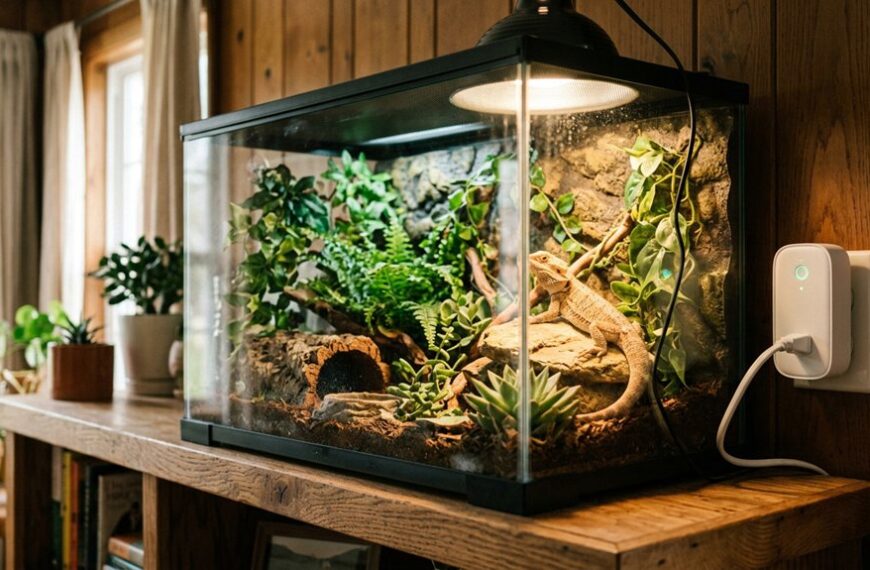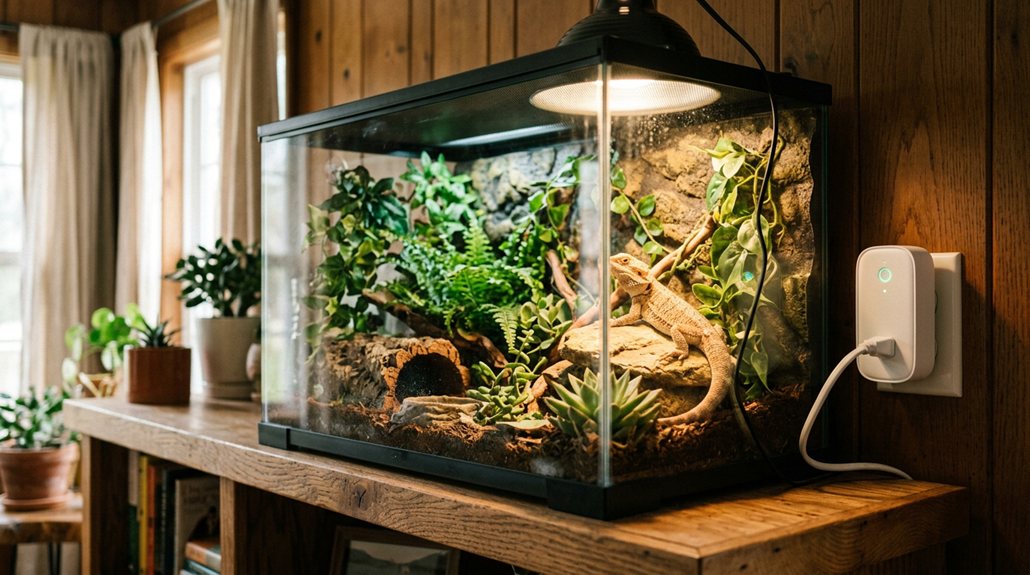
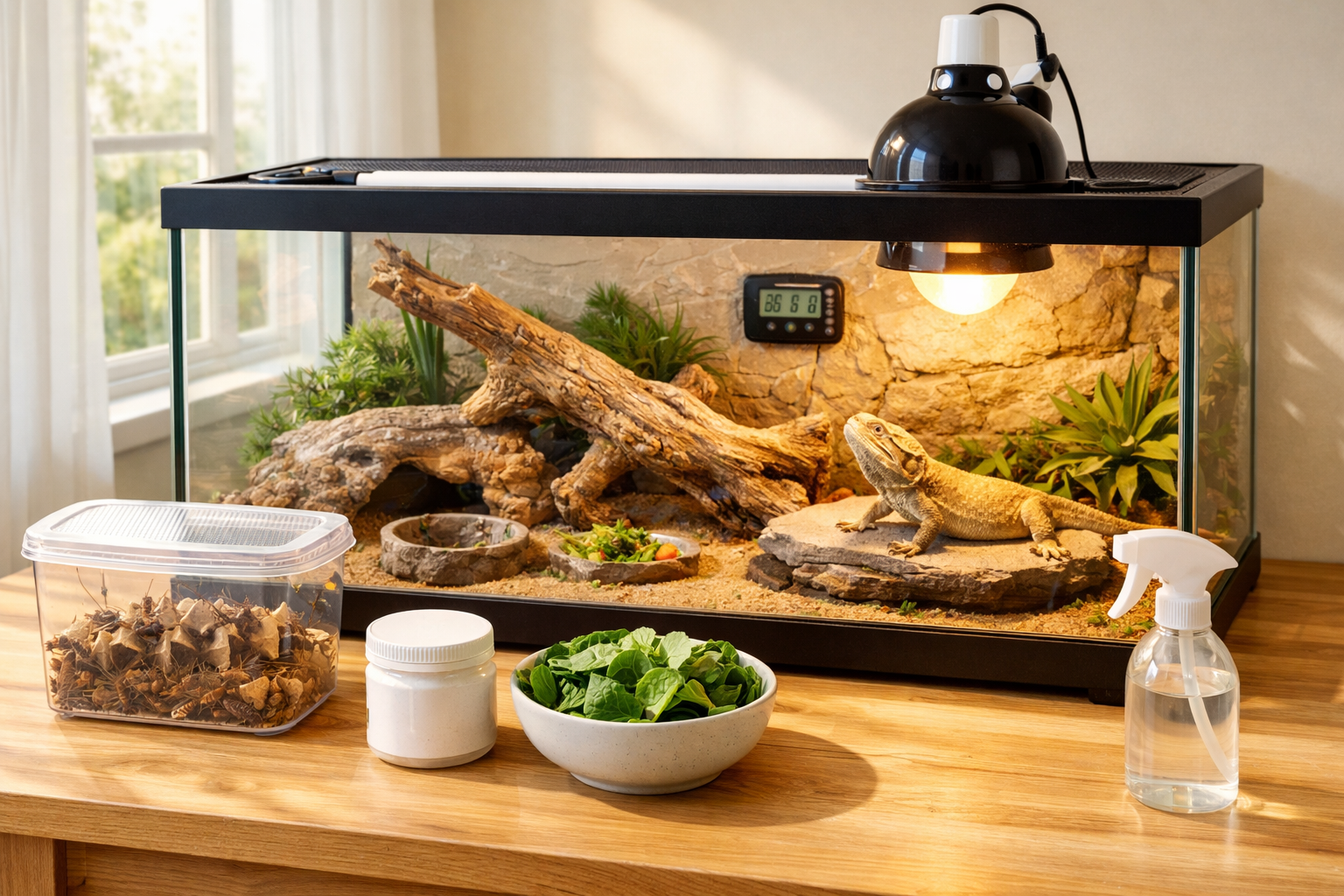
Bringing home a bearded dragon without the right supplies can lead to serious health problems within 24 hours. A complete bearded dragon supply checklist for day one includes a properly sized enclosure (minimum 40 gallons for juveniles, 75+ gallons for adults), UVB lighting (T5 HO 10.0 or 12% tube), a basking bulb creating a 95-110°F hot spot, digital thermometers, safe substrate, climbing décor, food and water dishes, live feeder insects, fresh vegetables, and calcium supplements.
Key Takeaways
- Enclosure size matters from day one: Baby bearded dragons need at least a 40-gallon tank, while adults require 75-120 gallons to thrive
- UVB lighting is non-negotiable: A T5 HO 10.0 or 12% UVB tube bulb is essential for calcium absorption and preventing metabolic bone disease
- Temperature zones are critical: Create a basking spot of 95-110°F and a cool side of 75-85°F using separate heat sources
- Substrate safety prevents impaction: Tile, reptile carpet, or paper towels are safest; avoid loose substrates like sand for juveniles
- Day-one diet requires variety: Stock live crickets or dubia roaches plus fresh greens like collard greens, mustard greens, or turnip greens
- Budget realistically: Initial setup costs typically range from $300-600 for quality equipment that will last years
- Common mistakes cost lives: Skipping UVB, using inadequate heating, or feeding the wrong foods can cause irreversible health damage within weeks

Great for Small Reptiles - This 40-gallon reptile enclosure is ideal for juvenile bearded dragons, leopard geckos, corn snakes, or other small reptiles. Compact and beginner-friendly, it’s a perfect choice for those with limited space or new to reptile care. TIP: This tank is not suitable for holding water.

50 GALLON SPACIOUS ENCLOSURE: Measuring 36" x 17.5" x 18" (91.5x45x45.5cm), this large reptile terrarium provides ample room for climbing, exploring, and adding thick substrate layers. It is the perfect, comfortable habitat for lizards, and other reptiles.

Multifunctional Design: This 20 gallon reptile terrarium features a multifunctional design, capable of meeting the needs of various reptiles. Whether for resting, breeding or display, it can provide your pet with an ideal living environment.
What Size Tank Does a Bearded Dragon Need as a Baby?
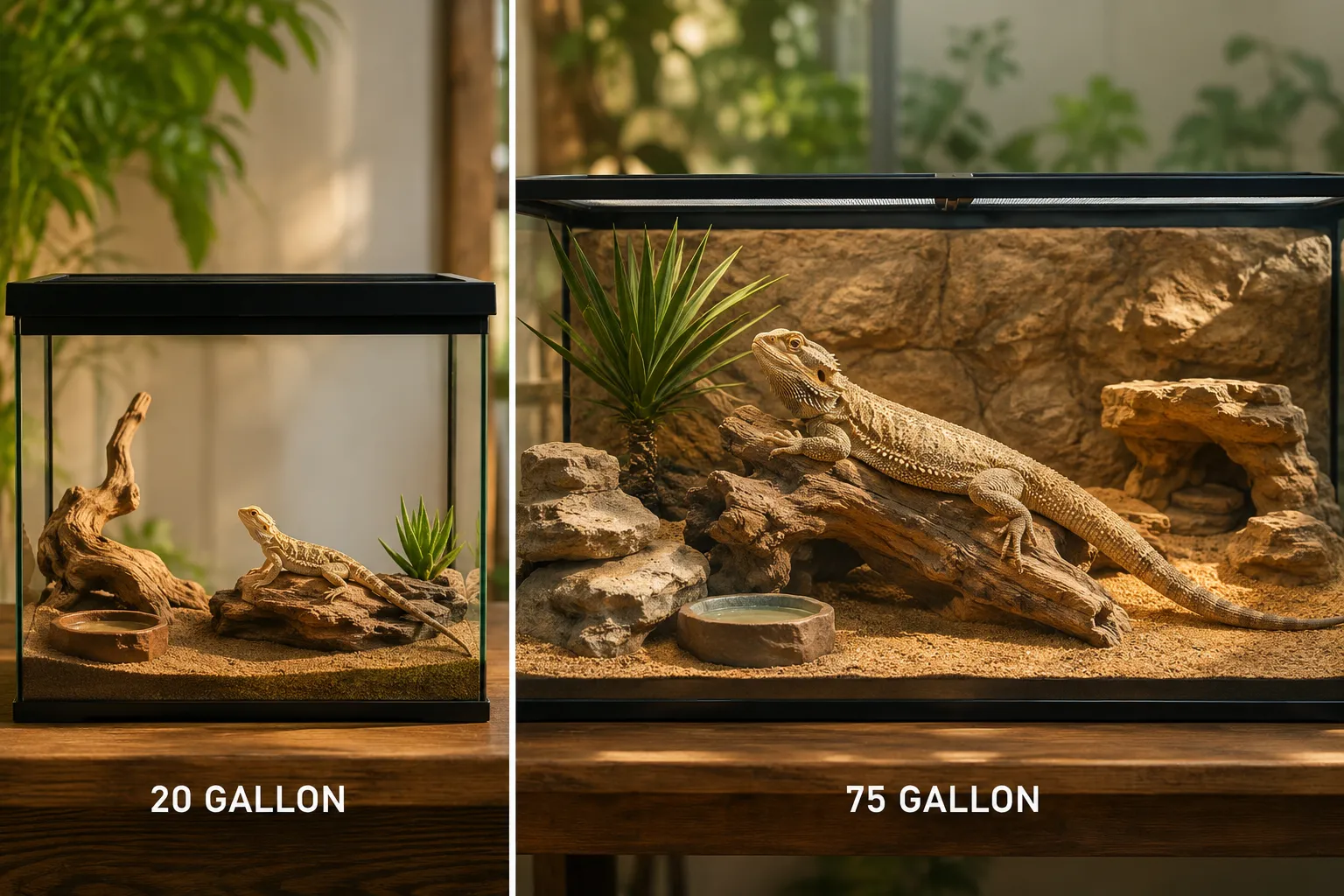
Baby bearded dragons need a minimum 40-gallon tank (36″ x 18″ x 18″), though many experienced keepers recommend starting with a 75-gallon to avoid upgrading costs later. The myth that babies get “lost” in large enclosures is false, proper heating gradients and multiple feeding stations work in any size tank.
A 20-gallon tank is too small even for hatchlings because it doesn’t provide adequate temperature gradient. Bearded dragons are active lizards that need space to thermoregulate by moving between hot and cool zones. In cramped quarters, they can’t escape heat stress or find their preferred temperature.
Tank size by age:
- Hatchling to 6 months: 40-gallon minimum (better: 75-gallon)
- 6-12 months: 75-gallon minimum
- Adult (12+ months): 120-gallon or 4′ x 2′ x 2′ enclosure
Choose a tank with front-opening doors rather than top-only access. Bearded dragons perceive threats from above (like predatory birds), so reaching down from the top can cause stress. For more detailed guidance on choosing the right size, see our complete guide to bearded dragon tank sizes.
Best UVB Bulb for Bearded Dragon Setup
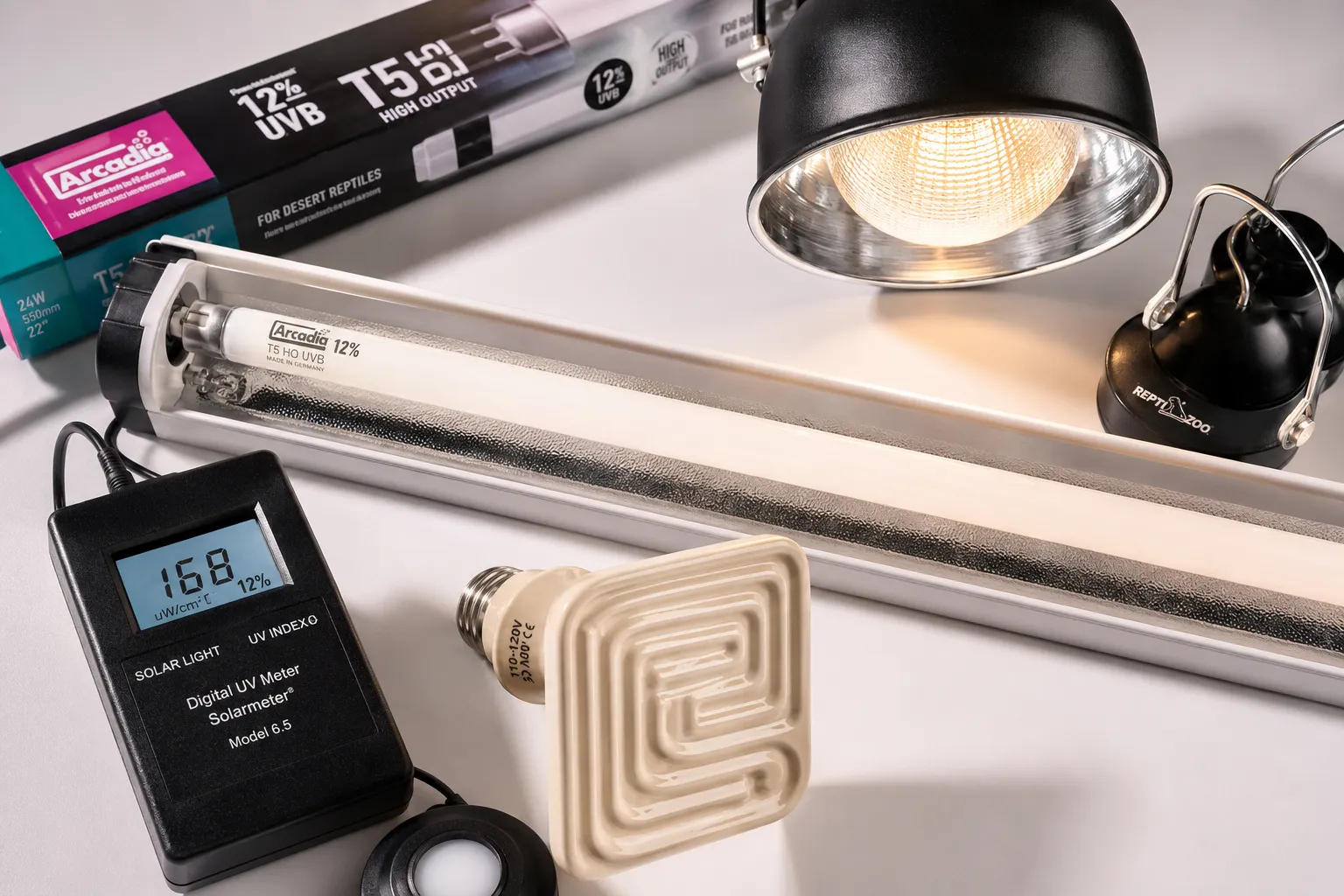
The best UVB bulb for a bearded dragon is a T5 High Output (HO) tube bulb with 10.0 or 12% UVB output, mounted 12-18 inches from the basking spot. Reptisun 10.0 T5 HO and Arcadia 12% T5 HO are the gold standards that provide proper UVB penetration through mesh screen tops.
Compact coil UVB bulbs don’t provide adequate coverage and have been linked to eye problems in reptiles. Mercury vapor bulbs combine heat and UVB but offer less control over temperature gradients. Tube bulbs give even UVB distribution across the entire tank length.
UVB bulb specifications:
- Type: T5 High Output tube (not T8)
- Strength: 10.0 or 12% UVB
- Length: Match tank length (24″ bulb for 40-gallon, 36″ for 75-gallon)
- Mounting: Inside the tank or directly on mesh (not above glass or plastic)
- Replacement schedule: Every 6-12 months even if still glowing
Position the UVB tube to overlap with the basking area so your dragon receives both heat and UVB simultaneously. This mimics natural sunbathing behavior. Mount it on the same side as the basking bulb, not on the opposite end.
Common mistake: Using a regular fluorescent plant grow light or aquarium bulb instead of reptile-specific UVB. These don’t produce the correct wavelengths for vitamin D3 synthesis.
How Much Does It Cost to Set Up a Bearded Dragon Habitat?
Setting up a proper bearded dragon habitat costs between $300-600 for initial supplies, depending on whether you choose budget or premium equipment. This includes the enclosure, lighting, heating, thermometers, décor, substrate, and first month’s food and supplements.
Detailed cost breakdown:
- Enclosure: $100-250 (40-75 gallon glass tank or PVC enclosure)
- UVB fixture and bulb: $60-120 (T5 HO fixture plus bulb)
- Basking bulb and dome: $15-30
- Thermometers (2 digital): $15-25
- Thermostat: $30-50 (highly recommended)
- Substrate: $10-40 (tile, reptile carpet, or paper towels)
- Décor and hides: $30-60 (branches, rocks, hides)
- Food and water dishes: $10-20
- Initial food supply: $20-40 (live insects, greens, supplements)
Ongoing monthly costs: $30-60 for feeder insects, fresh vegetables, and supplements. Budget an additional $50-100 annually for bulb replacements.
You can reduce costs by shopping sales, buying used tanks (thoroughly disinfected), and making your own décor from safe materials. However, never compromise on UVB lighting quality, this is where health problems start.
Bearded Dragon vs Leopard Gecko: Which Is Easier for Beginners?
Bearded dragons are generally easier for beginners than leopard geckos because they’re more forgiving of minor husbandry mistakes, have visible health cues, and tolerate handling better. However, leopard geckos require smaller enclosures and slightly lower initial investment.
Bearded dragon advantages:
- More interactive and social personality
- Easier to spot health problems (color changes, behavior shifts)
- Tolerate a wider temperature range
- Diurnal (awake during the day when you are)
- More forgiving diet (omnivorous with variety)
Leopard gecko advantages:
- Smaller space requirements (20-gallon minimum)
- Lower initial setup cost ($200-350)
- Can use under-tank heating instead of overhead basking
- Easier to find pet-sitters (less intimidating size)
Both species need UVB lighting despite outdated advice suggesting leopard geckos don’t. Both live 10-20 years with proper care. Choose based on your space, budget, and whether you prefer a lizard that’s active during your waking hours (bearded dragon) or evening hours (leopard gecko).
For kids: Bearded dragons are typically better because their larger size makes them easier to handle safely, and their daytime activity matches children’s schedules.
Do Bearded Dragons Need a Heat Lamp at Night?
Bearded dragons do not need a heat lamp at night if your home stays above 65°F. They require a temperature drop to 65-75°F at night to maintain healthy circadian rhythms, and constant heat can disrupt their sleep cycle and stress their metabolism.
If your house drops below 65°F at night, use a ceramic heat emitter (CHE) or deep heat projector (DHP) that produces heat without visible light. Never use colored night bulbs (red or blue), reptiles can see these wavelengths and they disrupt sleep.
Nighttime heating options:
- Above 65°F: No supplemental heat needed
- 60-65°F: Ceramic heat emitter on low setting
- Below 60°F: Ceramic heat emitter or DHP on thermostat
Turn off all lights at night, including UVB. Bearded dragons need 12-14 hours of light and 10-12 hours of complete darkness. Leaving lights on 24/7 causes chronic stress, suppressed immune function, and shortened lifespan.
Exception: During brumation (winter dormancy), bearded dragons naturally tolerate and prefer cooler temperatures of 55-65°F for weeks or months. This is normal seasonal behavior, not a health emergency.
What Substrate Is Safe for Bearded Dragons?
The safest substrates for bearded dragons are ceramic tile, slate tile, reptile carpet, or paper towels because they eliminate impaction risk and make cleaning easy. Loose substrates like sand, walnut shell, and wood chips pose serious impaction dangers, especially for juveniles under 12 months.
Safe substrate options:
- Ceramic or slate tile: Best overall, retains heat, easy to clean, natural look, lasts forever
- Reptile carpet: Affordable, reusable, but harbors bacteria if not cleaned frequently
- Paper towels: Cheapest, most hygienic, ideal for quarantine or sick dragons
- Textured shelf liner: Non-adhesive type, easy to clean, provides grip
Unsafe substrates to avoid:
- Sand (including calcium sand): High impaction risk, eye irritation
- Walnut shell: Sharp edges, impaction risk
- Wood chips/shavings: Splinters, mold growth, impaction
- Loose coconut fiber: Impaction risk when hunting insects
Some experienced keepers use excavator clay or bioactive soil mixes for adult bearded dragons, but these require advanced knowledge of humidity control and are inappropriate for beginners or juveniles.
Impaction warning: Bearded dragons accidentally ingest substrate while hunting insects. Even one feeding on loose substrate can cause a blockage requiring emergency veterinary surgery.
Can I Use a Regular Light Bulb for My Bearded Dragon?
You cannot use only a regular light bulb for a bearded dragon because standard incandescent or LED bulbs don’t produce UVB radiation necessary for calcium metabolism. However, you can use a regular incandescent bulb (not LED) as a basking heat source alongside a separate UVB tube bulb.
What regular bulbs can do:
- Provide basking heat (incandescent or halogen only)
- Create visible light for day/night cycle
- Cost less than specialty reptile bulbs
What regular bulbs cannot do:
- Produce UVB for vitamin D3 synthesis
- Prevent metabolic bone disease
- Replace proper reptile lighting
Use a standard 75-100 watt incandescent household bulb in a dome fixture for basking heat. Position it to create a 95-110°F basking spot. This saves money compared to expensive “reptile basking bulbs” that are often identical to hardware store bulbs at triple the price.
Critical: The regular bulb only replaces the heat source, never the UVB tube. You must have both, a basking bulb for heat and a T5 HO UVB tube for proper lighting.
What Vegetables Can Bearded Dragons Eat on Day One?
Bearded dragons can eat collard greens, mustard greens, turnip greens, dandelion greens, butternut squash, and bell peppers on day one. These vegetables are nutritionally balanced, safe, and readily available at most grocery stores.
Best day-one vegetables:
- Collard greens (staple, high calcium)
- Mustard greens (staple, high calcium)
- Turnip greens (staple, high calcium)
- Dandelion greens (staple, high calcium, vitamin A)
- Butternut squash (occasional, vitamin A)
- Bell peppers (occasional, vitamin C)
Chop vegetables into pieces smaller than the space between your dragon’s eyes to prevent choking. Mix 2-3 types daily for variety. Offer fresh greens every morning, even if your baby dragon ignores them at first, they’ll learn to eat vegetables by seeing them regularly.
For more detailed feeding information, check our guides on carrots, celery, and other vegetables.
Vegetables to avoid:
- Iceberg lettuce (no nutritional value)
- Spinach (binds calcium)
- Avocado (toxic)
- Rhubarb (toxic)
How Often Do You Feed a Baby Bearded Dragon?
Baby bearded dragons (0-6 months) need live insects 2-3 times daily, with as many appropriately sized feeders as they’ll eat in 10-15 minutes per feeding. Offer fresh vegetables daily even though babies often ignore them, focusing primarily on protein for rapid growth.
Feeding schedule by age:
- 0-3 months: 3 feedings daily, 20-40 small insects per feeding
- 3-6 months: 2-3 feedings daily, 30-50 insects per feeding
- 6-12 months: 2 feedings daily, 30-40 insects per feeding
- 12+ months (adult): 1 feeding daily, 70% vegetables, 30% insects
Feeder insect sizes: Choose insects no larger than the space between your dragon’s eyes. For babies, this means small crickets (1/4″), small dubia roaches, or black soldier fly larvae.
Dust insects with calcium powder (without D3) at every feeding and with calcium plus D3 twice weekly. Use a multivitamin once weekly. This supplementation prevents metabolic bone disease.
Common mistake: Leaving live crickets in the tank overnight. Crickets will bite sleeping bearded dragons, causing stress and injury. Remove uneaten insects after 15 minutes.

2 Pack Of Zoo Med T5 HO ReptiSun 10.0 UVB Lamps

Stronger UVB and brighter light than standard ReptiSun 10.0 lamps

【 Complete T5 UVB Lighting Combo Kit】The GREENPAW T5 UVB reptile light fixture comes as a complete lighting kit, including a 8W 10.0 reptile UVB bulb, 12.44-inch terrarium hood, mounting accessories, and power cord. Specifically designed for 16-24 inch reptile terrariums and vivariums. This kit delivers reliable UVB light for reptiles, ideal for new owners.
Is a Bearded Dragon a Good Pet for Kids?
Bearded dragons are good pets for kids aged 8 and older with adult supervision because they’re docile, tolerate handling well, and have predictable care routines. However, they require significant parental involvement for daily feeding, tank maintenance, and ensuring proper husbandry.
Why bearded dragons work for families:
- Calm temperament with minimal biting
- Large enough for safe handling by children
- Diurnal schedule matches family routines
- Visible health indicators teach responsibility
- 10-15 year lifespan provides long-term companionship
Parental responsibilities:
- Monitoring temperature and lighting daily
- Supervising handling to prevent drops
- Managing live insect feeding
- Ensuring consistent care during busy schedules
- Covering veterinary costs ($50-200 annually)
Children under 8 typically lack the fine motor control and attention span for safe handling. They may also struggle with the “gross factor” of live insect feeding. Assess your individual child’s maturity rather than relying solely on age.
Salmonella safety: All reptiles carry salmonella. Teach children to wash hands thoroughly after handling and never kiss or snuggle the dragon near their face.
Common Mistakes When Setting Up a Bearded Dragon Tank
The most common mistake when setting up a bearded dragon tank is inadequate UVB lighting, either using the wrong bulb type, mounting it incorrectly, or skipping it entirely. This leads to metabolic bone disease, which causes permanent skeletal deformities and often death within months.
Top setup mistakes:
- Using compact coil UVB instead of tube bulbs (insufficient coverage)
- Mounting UVB above glass or plastic (blocks UVB rays)
- No temperature gradient (dragon can’t thermoregulate)
- Only one thermometer (can’t monitor both zones)
- Loose substrate for juveniles (impaction risk)
- No thermostat on heat sources (fire hazard, temperature spikes)
- Tank near window or AC vent (unstable temperatures)
- Décor with sharp edges (injury risk)
- Water dish too deep (drowning risk for babies)
- Skipping quarantine period (missing early health problems)
The 24-hour test: Set up your tank completely and run it for 24 hours before bringing your dragon home. Monitor temperatures every 2-3 hours to ensure stability. Adjust bulb wattage or positioning as needed. This prevents emergency scrambling with a stressed animal.
Edge case: If you live in a very hot climate, you may need less powerful basking bulbs or even cooling solutions during summer. Conversely, cold climates may require higher wattage or multiple heat sources.
Do You Need a Thermostat for a Bearded Dragon Enclosure?
You should use a thermostat for your bearded dragon’s basking bulb to prevent dangerous temperature spikes that can cause burns or heat stress. A quality thermostat costs $30-50 and automatically regulates heat output, providing consistent temperatures and reducing fire risk from overheated fixtures.
Benefits of using a thermostat:
- Prevents temperature spikes above safe levels
- Maintains consistent basking temperature
- Reduces electricity costs by cycling heat on/off
- Extends bulb lifespan
- Provides safety shutoff if malfunction occurs
Thermostat types:
- On/off thermostat: $30-40, basic temperature control, slight fluctuations
- Dimming/proportional thermostat: $50-100, precise control, no fluctuations
- Pulse-proportional thermostat: $80-150, best for ceramic heaters
Connect your basking bulb to the thermostat and place the probe at basking spot height. Set the target temperature to 100-105°F for most setups. The thermostat will cycle the bulb to maintain that temperature regardless of room conditions.
Don’t use a thermostat for: UVB bulbs (they need constant power) or nighttime ceramic heaters set very low (though a thermostat is still beneficial for safety).
Cheaper Alternatives to Expensive Bearded Dragon Supplies
You can significantly reduce bearded dragon setup costs by using hardware store heat bulbs instead of branded reptile bulbs, DIY décor from safe materials, and buying used tanks from classifieds. However, never compromise on UVB lighting quality, this is the one area where cheap alternatives cause serious health problems.
Money-saving alternatives:
- Heat bulbs: Hardware store halogen flood lights ($5-8) instead of reptile basking bulbs ($15-25)
- Enclosure: Used aquarium from Craigslist ($50-100) instead of new ($150-250)
- Substrate: Ceramic tile from home improvement store ($0.50-2 per tile) instead of reptile-branded products
- Décor: Cleaned branches from outside, stacked slate pieces, DIY hides from terracotta pots
- Thermometers: Digital indoor/outdoor thermometers ($10-15) instead of reptile-branded versions ($20-30)
- Food dishes: Ceramic ramekins or small plates ($3-5) instead of reptile bowls ($10-15)
Never cheap out on:
- UVB bulb and fixture (health-critical, no substitutes)
- Digital thermometers (analog gauges are dangerously inaccurate)
- Calcium supplements (generic versions often have poor absorption)
DIY décor safety: Bake branches at 200°F for 2 hours to kill parasites and bacteria. Avoid pine, cedar, or any wood that produces sap. Test rocks by pouring vinegar on them, if they fizz, they’re unsafe (calcium-based rocks alter pH).
What Happens If a Bearded Dragon Doesn’t Get Enough UVB?
Without adequate UVB exposure, bearded dragons develop metabolic bone disease (MBD) within 4-8 weeks, causing soft bones, tremors, paralysis, and often death. UVB is essential for synthesizing vitamin D3, which enables calcium absorption, without it, the body pulls calcium from bones, leading to skeletal collapse.
Early MBD symptoms (2-4 weeks):
- Lethargy and reduced appetite
- Twitching or tremors in limbs
- Difficulty walking or climbing
- Swollen or rubbery jaw
Advanced MBD symptoms (6-12 weeks):
- Bowed or curved legs
- Spinal deformities
- Inability to lift body off ground
- Seizures
- Broken bones from normal activity
MBD is largely irreversible once skeletal deformities occur. Early cases caught within the first month may improve with proper UVB, calcium supplementation, and veterinary care, but advanced cases cause permanent disability.
Prevention is simple: Use a T5 HO 10.0 or 12% UVB tube bulb, replace it every 6-12 months, and ensure your dragon can bask 12-18 inches from the bulb for several hours daily.
Dietary calcium alone isn’t enough: Even with perfect calcium supplementation, dragons cannot absorb it without UVB-generated vitamin D3. Both elements must be present.
Complete Bearded Dragon Supply Checklist for Day One
Here’s your comprehensive shopping list organized by priority. Print this checklist and check off items as you acquire them to ensure nothing is forgotten before bringing your dragon home.
Essential (must-have before bringing dragon home):
- ☐ 40-75 gallon tank with screen top
- ☐ T5 HO UVB tube bulb (10.0 or 12%) and fixture
- ☐ Basking bulb (75-100W incandescent) and dome fixture
- ☐ Two digital thermometers with probes
- ☐ Substrate (tile, reptile carpet, or paper towels)
- ☐ Basking platform or rock
- ☐ Hide cave for cool side
- ☐ Food dish (shallow, ceramic)
- ☐ Water dish (shallow, easy to clean)
- ☐ Live feeder insects (crickets or dubia roaches)
- ☐ Fresh vegetables (collard greens, mustard greens)
- ☐ Calcium powder without D3
- ☐ Calcium powder with D3
- ☐ Reptile multivitamin
Highly recommended (get within first week):
- ☐ Thermostat for basking bulb
- ☐ Hygrometer (humidity gauge)
- ☐ Additional climbing branches or décor
- ☐ Spray bottle for misting
- ☐ Feeding tongs (12″ long)
- ☐ Small scale for weighing dragon
- ☐ Reptile-safe disinfectant
- ☐ Backup basking bulb
Optional but useful:
- ☐ Timer for lights (automates day/night cycle)
- ☐ Ceramic heat emitter for nighttime (if needed)
- ☐ UV meter (measures UVB output)
- ☐ Hammock or climbing ledge
- ☐ Separate feeding enclosure
- ☐ Reptile carrier for vet visits
First-month supplies:
- ☐ Additional feeder insects (restock weekly)
- ☐ Variety of vegetables for rotation
- ☐ Paper towels for substrate changes
- ☐ Notebook for tracking feeding and behavior
Total estimated cost for essentials: $300-450. With highly recommended items: $400-600.
Frequently Asked Questions
Can I keep two baby bearded dragons together?
No, bearded dragons are solitary and territorial. Housing two together leads to dominance behaviors, stress, competition for basking spots, and potential injury. Even babies should be housed separately from day one.
How long can a bearded dragon go without UVB?
A bearded dragon should never go without UVB. Even 2-3 weeks without proper UVB begins depleting vitamin D3 stores and calcium absorption, starting the metabolic bone disease process. If your bulb burns out, replace it immediately.
Do I need to give my bearded dragon baths?
Bearded dragons don’t require regular baths but benefit from a 10-15 minute soak in shallow lukewarm water once or twice weekly. This aids hydration, helps with shedding, and encourages bowel movements. Never leave them unattended.
What temperature should the cool side of the tank be?
The cool side should be 75-85°F during the day. This temperature gradient allows your dragon to thermoregulate by moving between zones. If the cool side exceeds 90°F, your tank is too hot overall.
Can bearded dragons eat fruit every day?
No, fruit should be limited to 5-10% of diet (once or twice weekly) because high sugar content can cause digestive issues and obesity. Focus on leafy greens as the vegetable staple, with fruit as an occasional treat.
How do I know if my bearded dragon is getting enough UVB?
Healthy bone development, normal appetite, active behavior, and regular basking indicate adequate UVB. Use a UV meter to measure output if concerned, readings should be 3.0-5.0 UVI at basking distance. Annual vet checkups can detect early MBD.
Should I leave crickets in the tank for my dragon to hunt?
Remove uneaten crickets after 10-15 minutes. Leaving them in the tank overnight allows them to bite your sleeping dragon, causing stress and injury. Feed only as many insects as your dragon will eat during supervised feeding time.
Can I use a fish tank for a bearded dragon?
Yes, standard glass aquariums work well for bearded dragons. Ensure it has a secure screen top for ventilation and UVB penetration. Front-opening reptile terrariums are better for reducing stress but cost significantly more.
Do bearded dragons need a water dish if I mist them?
Yes, always provide a shallow water dish even if you mist daily. Some dragons prefer drinking from standing water, and the dish adds humidity. Change water daily to prevent bacterial growth.
How often should I clean the bearded dragon tank?
Spot-clean feces daily, replace substrate weekly (or clean and disinfect reusable substrate), and deep-clean the entire enclosure monthly. Regular cleaning prevents bacterial infections and parasites.
Can I take my bearded dragon outside for natural sunlight?
Yes, supervised outdoor time in direct sunlight (not through window glass) provides excellent UVB exposure. Only do this when outdoor temperature is 75-95°F, never leave them unattended, and watch for signs of overheating. Natural sunlight cannot replace daily indoor UVB lighting.
What’s the difference between calcium with D3 and without D3?
Calcium without D3 is used daily because your dragon synthesizes D3 from UVB exposure. Calcium with D3 is used 2-3 times weekly as backup. Over-supplementing D3 can cause toxicity, so balance both types carefully.
Conclusion
Setting up a proper bearded dragon habitat before bringing your new pet home prevents health emergencies and sets the foundation for a thriving, long-lived companion. The bearded dragon supply checklist for day one prioritizes life-critical equipment, proper UVB lighting, adequate heating with temperature gradients, safe substrate, and appropriate nutrition, while allowing flexibility on optional accessories you can add over time.
Your next steps:
- Purchase essential equipment first: Focus your budget on the tank, T5 HO UVB tube, basking bulb, thermometers, and substrate
- Set up and test for 24 hours: Run your complete habitat for a full day before bringing your dragon home, monitoring temperatures every few hours
- Stock fresh food and supplements: Have live insects, leafy greens, and calcium powder ready for day-one feeding
- Find a reptile veterinarian: Locate an exotic vet experienced with bearded dragons before you need emergency care
- Join bearded dragon communities: Online forums and local reptile groups provide ongoing support and troubleshooting help
Remember that proper setup costs $300-600 initially but prevents thousands in veterinary bills from preventable conditions like metabolic bone disease. Your bearded dragon depends entirely on you to create the environment it needs to thrive, there’s no room for shortcuts on the essentials. With the right supplies in place from day one, you’re setting up both yourself and your new dragon for years of healthy, enjoyable companionship.

Enhances UVB & Light Reflection: The reptile light fixture focuses the light emitted by the bulb, ensuring even distribution across the entire illumination area. The polished interior surface greatly enhances light reflection, minimizing losses of both light and UVB. This reflective effect optimizes the efficiency of the light source, promoting the health and growth of reptiles

Simulated Sunlight: Most amphibians and reptiles are poikilotherms, whose body temperature changes with their environment. Therefore, sunlight and temperature affect the growth, development and reproduction of reptiles. The REPTI HOME reptile heat lamp is able to simulate sunlight, and create an area for reptiles to bask in the sun, which provide a comfortable habitat for your reptile pet

Directs heat and light toward a specific area for basking reptiles.Controller type:Push Button