Quick Answer
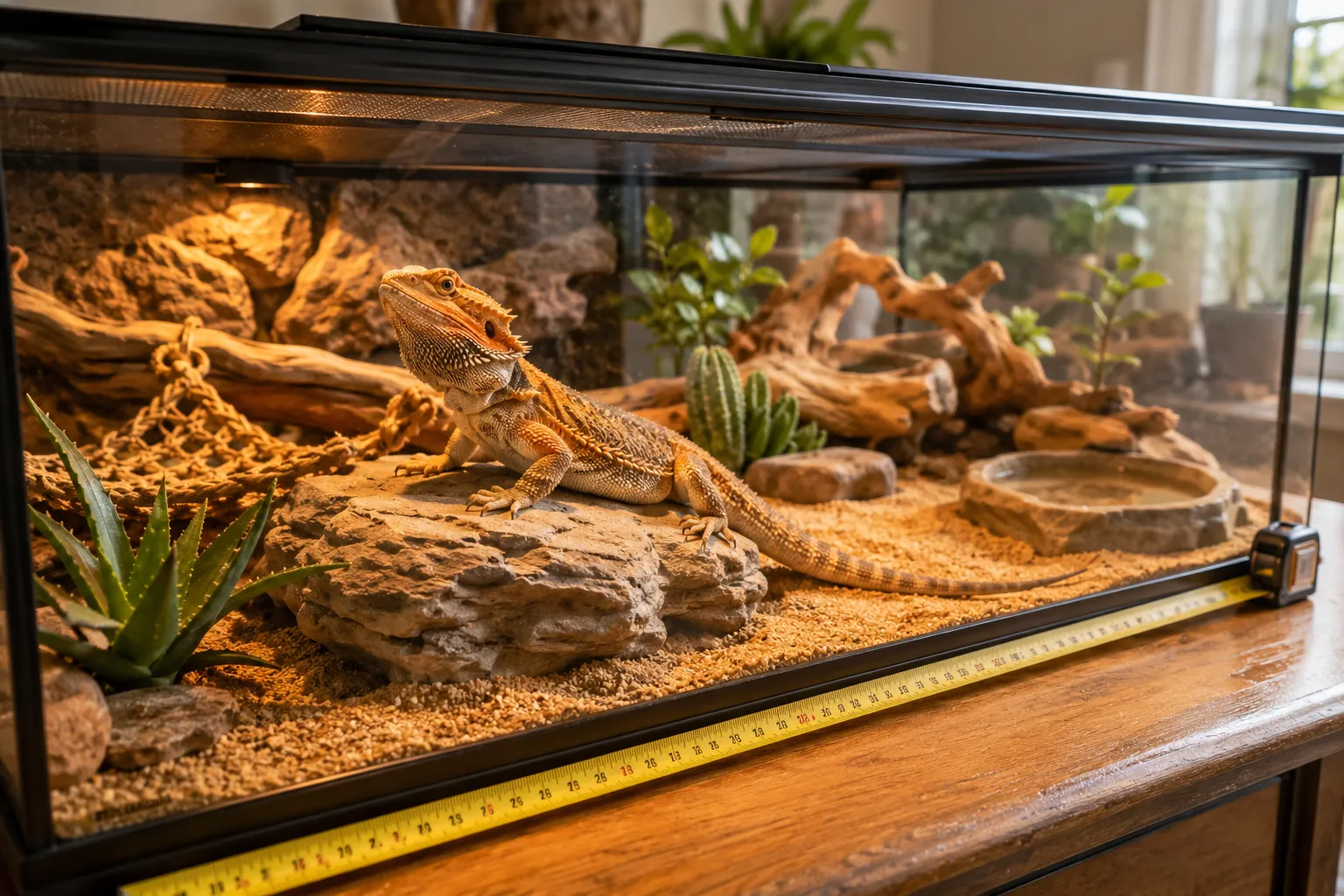
No, a bearded dragon cannot live in a 40-gallon tank forever. While a 40-gallon tank works well for juveniles up to about 10-12 months old, adult bearded dragons grow to 18-24 inches in length and require a minimum of 75 gallons, with 120 gallons being the recommended standard for long-term health and wellbeing. Keeping an adult in a 40-gallon tank long-term leads to stress, restricted movement, and behavioral problems.
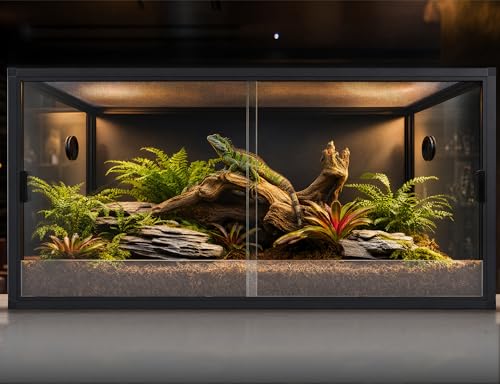
𝗣𝗮𝗻𝗼𝗿𝗮𝗺𝗶𝗰 𝗦𝗶𝗱𝗲 𝗩𝗶𝗲𝘄 𝗘𝘅𝗽𝗲𝗿𝗶𝗲𝗻𝗰𝗲 - This reptile enclosure features crystal-clear acrylic side panels that create a wider, brighter panoramic view from every angle, transforming your reptile habitat into a stunning living centerpiece.

120 Gallon Reptile Habitat: The upper enclosure measures about 47.2"L × 24.4"W × 23.6"H, giving reptiles space for basking, hiding, climbing, and daily movement.

[A Spacious World for Your Reptiles] Transform your reptile’s environment with this extra-large 120 gallon terrarium. The 4x2x2 design offers generous room for climbing branches, basking zones, and multiple hides — ideal for bearded dragons, snakes, and larger lizards, or even cohabiting pets. (Note: Shipped by 2 boxes, may arrive separately.)
Key Takeaways
- Adult bearded dragons need at least 75-120 gallons, a 40-gallon tank is too small for full-grown dragons
- Juveniles can start in 40-gallon tanks but will outgrow them within 10-12 months
- Adult bearded dragons reach 18-24 inches in captivity, requiring significantly more space than juveniles
- 40-gallon breeder tanks offer better floor space than 40-gallon long tanks due to width
- Signs of outgrowing a tank include glass surfing, aggression, lethargy, and reduced appetite
- Small tanks cause chronic stress that weakens immune systems and shortens lifespan
- Upgrading costs $200-600 for a 120-gallon setup including the tank, stand, and accessories
- Minimum tank size increases with age, babies need 20 gallons, juveniles 40 gallons, adults 75-120 gallons
- Proper space prevents health issues like metabolic bone disease, obesity, and respiratory infections
- Long-term housing should prioritize horizontal space over vertical height for these ground-dwelling lizards
What Size Tank Does an Adult Bearded Dragon Need?
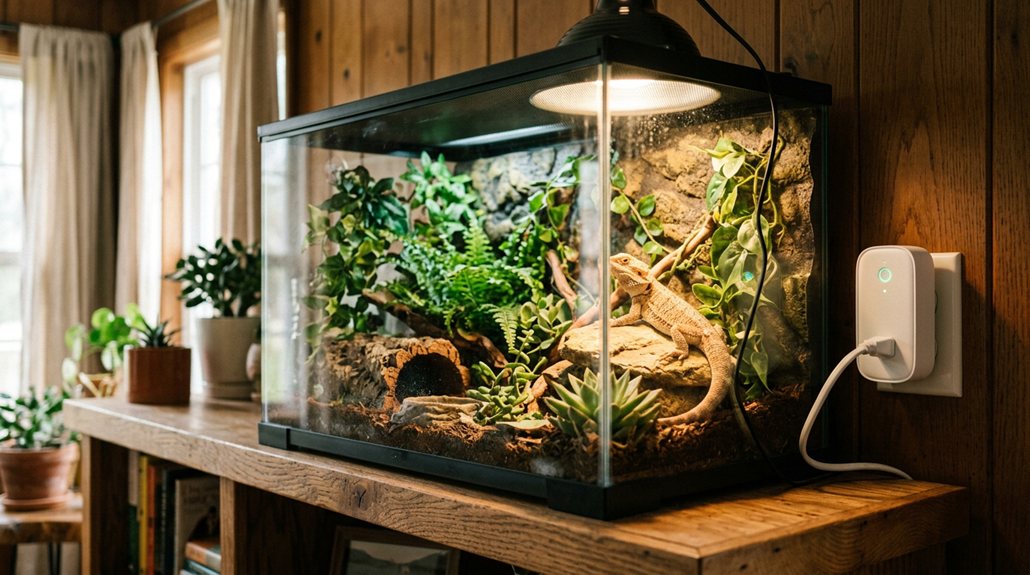
An adult bearded dragon needs a minimum of 75 gallons, but 120 gallons (48″ x 24″ x 24″) is the recommended standard for optimal health and quality of life. The tank should prioritize length and width over height since bearded dragons are terrestrial reptiles that spend most of their time on the ground rather than climbing.
The 120-gallon recommendation comes from reptile veterinarians and herpetology experts who emphasize that larger enclosures reduce stress and allow for proper temperature gradients. A full-grown bearded dragon measuring 20 inches from nose to tail tip needs room to move, explore, and exhibit natural behaviors.
Key space requirements for adults:
- Minimum length: 4 feet (48 inches) to allow full-body movement
- Minimum width: 18-24 inches for turning radius and activity
- Minimum height: 18-20 inches for basking platforms and vertical temperature zones
- Floor space priority: At least 8-12 square feet of usable ground area
Choose a 120-gallon tank if your dragon will live in this enclosure for 10+ years. Choose a 75-gallon tank only as a temporary solution while planning a larger upgrade, or if you have a smaller-than-average adult (under 16 inches).
Is a 40-Gallon Tank Too Small for a Full-Grown Bearded Dragon?
Yes, a 40-gallon tank is too small for a full-grown bearded dragon. An adult dragon measuring 18-24 inches in length cannot comfortably turn around, establish proper temperature gradients, or move freely in a 40-gallon enclosure that typically measures 36″ x 18″ x 18″ (long) or 36″ x 18″ x 16″ (breeder).
Why 40 gallons fails for adults:
- Insufficient length: The dragon’s body takes up most of the 36-inch length, leaving no room for activity
- Poor temperature gradient: Not enough space to create distinct basking (95-105°F) and cool zones (75-85°F)
- Behavioral restriction: No room for natural behaviors like exploring, digging, or pacing
- Stress accumulation: Cramped conditions trigger chronic stress responses
A common mistake is assuming that because a bearded dragon fits in a 40-gallon tank, it’s adequate. Reptiles need space to move between temperature zones, exercise, and engage in species-appropriate behaviors. A tank that’s only slightly longer than the animal’s body length is equivalent to a human living in a closet, technically possible but harmful long-term.
The only scenario where a 40-gallon tank remains appropriate is for a permanently small adult (rare genetic dwarfism) or as a temporary quarantine/medical enclosure for short periods.
How Big Do Bearded Dragons Get in Captivity?
Bearded dragons in captivity typically reach 16-24 inches in total length from nose to tail tip, with most adults averaging 18-22 inches. Males generally grow larger than females, and size depends on genetics, diet quality, and husbandry practices during the first year of rapid growth.
Growth timeline:
- Hatchling (0-2 months): 3-4 inches, grows rapidly
- Juvenile (2-7 months): 5-16 inches, fastest growth phase
- Sub-adult (7-12 months): 16-20 inches, growth slows
- Adult (12+ months): 18-24 inches, reaches full size by 18 months
Factors affecting size:
- Genetics: Bloodline determines maximum potential size
- Nutrition: Protein-rich diet during juvenile phase supports growth
- UVB exposure: Proper lighting enables calcium absorption for bone development
- Health: Parasites or illness during growth phases stunt development
Most bearded dragons reach 90% of their adult size by their first birthday. A dragon that’s 18 inches at 12 months will likely reach 20-22 inches by 18 months. Plan enclosure size based on expected adult length, not current juvenile size, to avoid multiple expensive upgrades.
40-Gallon Breeder vs 40-Gallon Long for Bearded Dragon
A 40-gallon breeder tank (36″ x 18″ x 16″) is better than a 40-gallon long (48″ x 12″ x 16″) for bearded dragons because the extra width (18″ vs 12″) provides more usable floor space and better accommodates the dragon’s body width when turning.
40-gallon breeder advantages:
- Better width: 18 inches allows comfortable turning and side-to-side movement
- More floor space: 648 square inches vs 576 square inches
- Easier temperature gradient: Width helps separate basking and cool zones
- Better for juveniles: Accommodates growth up to 10-12 months
40-gallon long advantages:
- Extra length: 48 inches vs 36 inches provides more front-to-back movement
- Better for smaller adults: Works temporarily for dragons under 16 inches
- Narrower footprint: Fits better in tight spaces
The verdict: For juvenile bearded dragons that will live in a 40-gallon tank for 6-12 months before upgrading, choose the breeder. The extra width matters more than the extra length at this life stage. However, neither option is suitable for long-term adult housing, both should be considered temporary enclosures only.
If you’re choosing between these two for a baby dragon, go with the 40-gallon breeder and plan to upgrade to 120 gallons by the dragon’s first birthday.
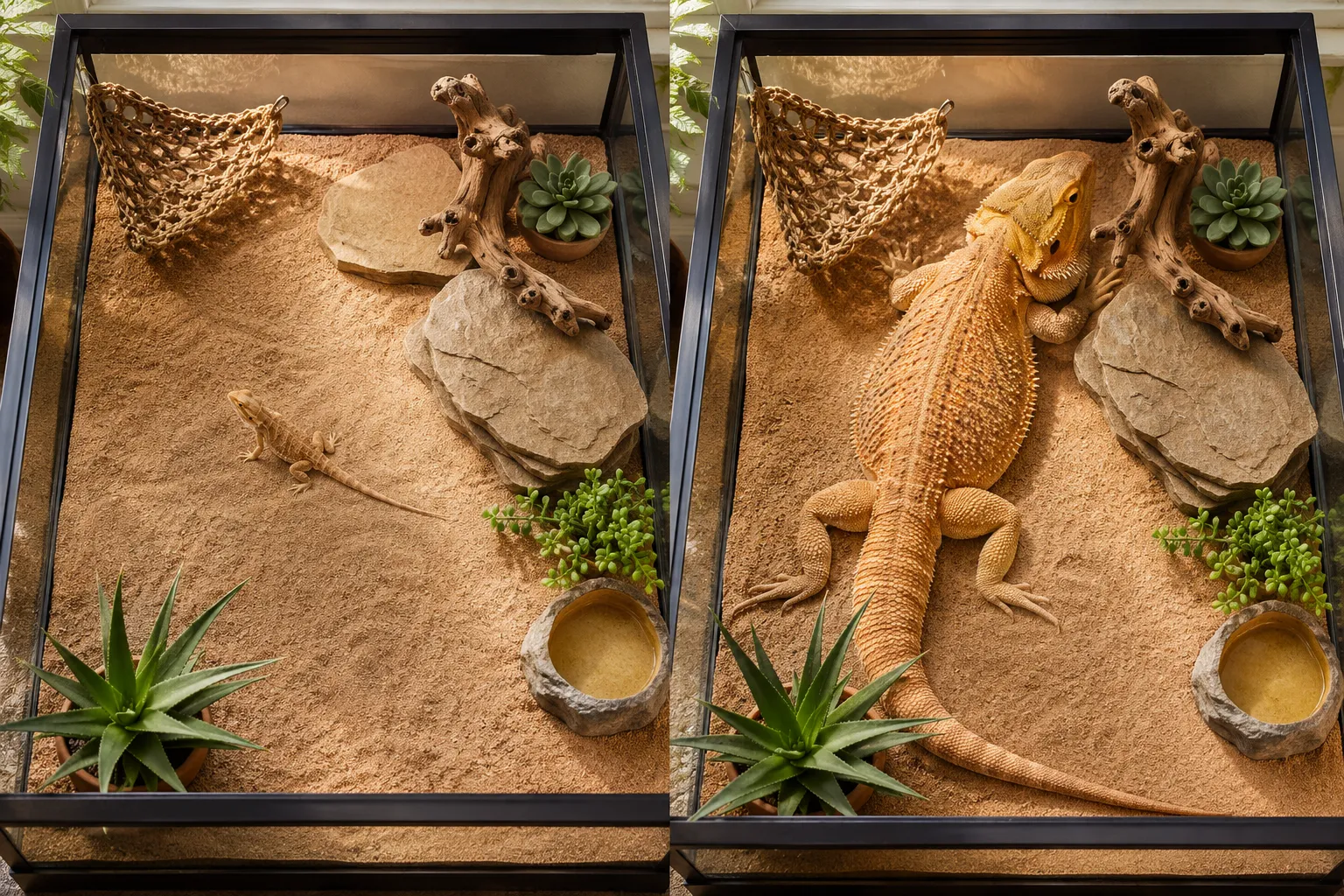
Can a Baby Bearded Dragon Start in a 40-Gallon Tank?
Yes, a baby bearded dragon can start in a 40-gallon tank, and many experienced keepers recommend it. Starting with a larger enclosure eliminates the need for an intermediate upgrade and allows you to establish proper temperature gradients from day one. The myth that babies get “lost” or can’t find food in large tanks is outdated and not supported by reptile behavior research.
Benefits of starting babies in 40-gallon tanks:
- One less upgrade: Skip the 20-gallon phase entirely
- Better temperature control: Easier to create distinct thermal zones
- Cost-effective: Avoid buying multiple tanks during rapid growth
- Reduced stress: No need to move the dragon to new environments
How to set up a 40-gallon for a baby:
- Concentrate resources: Place food dishes, basking spot, and hides in one area initially
- Use multiple feeding stations: Place insects in 2-3 locations to ensure the baby finds them
- Monitor feeding: Watch the first few meals to confirm the baby is eating
- Provide clear sight lines: Avoid overcrowding with decorations that block visibility
The key is proper setup, not tank size. Babies thrive in 40-gallon tanks when food is accessible and temperatures are correct. Choose a 40-gallon breeder for babies, then plan to upgrade to 120 gallons by 10-12 months when the dragon reaches 16-18 inches.
What Happens If a Bearded Dragon Tank Is Too Small?
A bearded dragon kept in a tank that’s too small experiences chronic stress, behavioral problems, and increased risk of health issues including weakened immune function, obesity, metabolic bone disease, and shortened lifespan. Small tanks prevent natural behaviors and create inadequate environmental conditions.
Physical health consequences:
- Obesity: Lack of exercise space leads to weight gain and fatty liver disease
- Muscle atrophy: Insufficient movement causes muscle weakness
- Metabolic issues: Poor temperature gradients disrupt digestion and calcium metabolism
- Respiratory infections: Inadequate ventilation and temperature control increase infection risk
- Weakened immune system: Chronic stress suppresses immune response
Behavioral problems:
- Glass surfing: Repeatedly scratching at tank walls trying to escape
- Aggression: Increased territorial behavior and biting
- Lethargy: Depression-like symptoms and reduced activity
- Appetite loss: Stress-induced refusal to eat
- Brumation issues: Difficulty regulating natural seasonal cycles
Environmental problems:
- Temperature gradient failure: Not enough space for proper hot and cool zones
- Humidity control issues: Small spaces trap moisture or dry out too quickly
- Waste accumulation: Feces in limited space increases bacteria and ammonia
A bearded dragon in a 40-gallon tank showing glass surfing, reduced appetite, or aggression is signaling that the enclosure is inadequate. These aren’t personality quirks, they’re distress signals that require immediate attention and typically resolve within days of moving to appropriately sized housing.
How to Upgrade from 40-Gallon to Larger Bearded Dragon Enclosure
Upgrading from a 40-gallon to a larger bearded dragon enclosure requires planning the new setup, acclimating your dragon gradually, and transferring familiar items to reduce stress. The process typically takes 1-2 weeks from purchase to full transition.
Step-by-step upgrade process:
- Choose the new enclosure: Select a 120-gallon tank (48″ x 24″ x 24″) or custom-built enclosure
- Purchase equipment: Get appropriately sized heat lamps, UVB tubes (typically 36-48″), and larger hides
- Set up and test: Run the new enclosure for 48 hours to stabilize temperatures before moving the dragon
- Transfer familiar items: Move the dragon’s favorite basking rock, hide, and substrate to the new tank
- Move the dragon: Transfer during the morning when dragons are most alert and adaptable
- Monitor closely: Watch feeding, basking behavior, and stress signs for the first week
- Adjust as needed: Fine-tune temperatures and placement based on the dragon’s behavior
What to keep from the old tank:
- Primary basking spot (rock or platform)
- Favorite hide or cave
- Food and water dishes
- Some substrate (mix with new for familiar scent)
What to replace:
- UVB bulb (upgrade to longer tube for better coverage)
- Heat lamp (may need higher wattage for larger space)
- Thermometers (add more to monitor multiple zones)
Common upgrade mistakes:
- Moving the dragon before temperatures stabilize in the new tank
- Completely changing all decorations and substrate at once
- Placing the new tank in a different room with different ambient conditions
- Underestimating the weight of a filled 120-gallon tank (600+ pounds)
Budget for the upgrade: Expect to spend $200-400 for a glass 120-gallon tank, $100-200 for a sturdy stand, and $100-200 for new lighting and accessories. Custom PVC or wood enclosures cost $400-800 but offer better insulation and lighter weight.
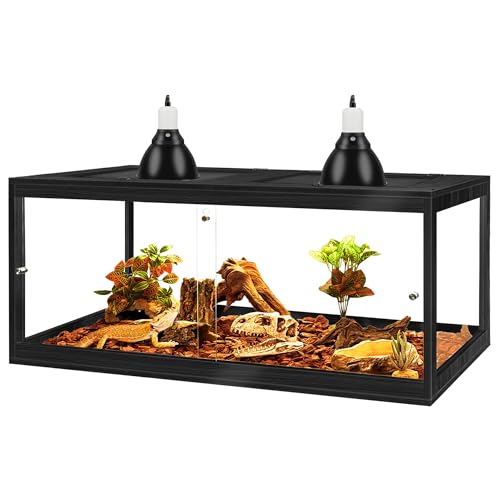
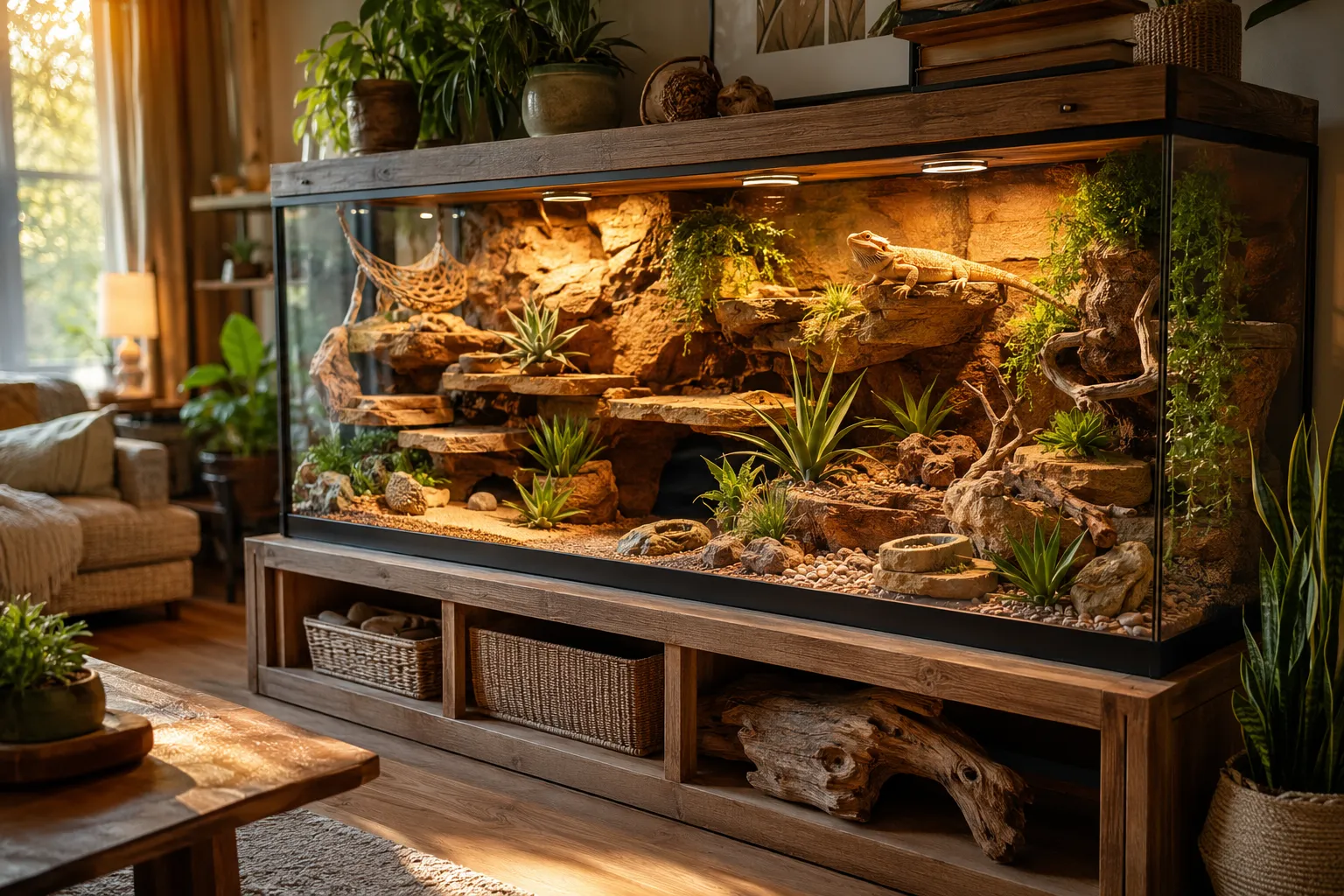
【Premium Wooden Reptile Habitat】Give your reptiles a safe and dependable home. Crafted from solid wood with a water-repellent polyester coating, this enclosure is built to last while maintaining a dry and stable environment. Specially designed for terrestrial reptiles (not for aquatic species), it provides a reliable space where your pet can thrive every day.

【360° Tempered Glass Viewing】All four sides are made of crystal-clear tempered glass, offering full visibility of your reptile's activities. Compared with standard glass or acrylic, tempered glass is stronger and more scratch-resistant, ensuring your enclosure stays clear and attractive even when pets climb or rub against the panels.Note: Items Inside of the cage are NOT included.

【Premium Materials & Sturdy Build】Crafted from strong tempered glass and natural wood with a waterproof coating, this reptile terrarium combines durability with a modern, stylish look. The included acrylic base panel offers reliable protection against spills and moisture, keeping the habitat clean and long-lasting. Its spacious interior allows your reptile to roam, bask, and hide—supporting natural behaviors and overall health.(Note: The product does not include the decorations in the picture)
Minimum Tank Size for Bearded Dragon by Age
Bearded dragon tank size requirements increase with age and body length. Babies need 20-40 gallons, juveniles need 40-75 gallons, and adults require 75-120 gallons minimum, with larger always being better for enrichment and quality of life.
Age-based tank size guide:
| Age Range | Body Length | Minimum Tank Size | Recommended Size | Tank Dimensions |
|---|---|---|---|---|
| 0-2 months | 3-4 inches | 20 gallons | 40 gallons | 36″ x 18″ x 16″ |
| 2-7 months | 5-16 inches | 40 gallons | 40-75 gallons | 36″ x 18″ x 16″ |
| 7-12 months | 16-20 inches | 75 gallons | 120 gallons | 48″ x 24″ x 24″ |
| 12+ months | 18-24 inches | 75 gallons | 120 gallons | 48″ x 24″ x 24″ |
Choosing your upgrade path:
- Budget-conscious: Start with 20 gallons, upgrade to 40 gallons at 3 months, then 120 gallons at 12 months (three tanks total)
- Recommended: Start with 40 gallons, upgrade to 120 gallons at 10-12 months (two tanks total)
- Ideal: Start with 75 gallons, upgrade to 120 gallons at 12 months, or start directly in 120 gallons (one or two tanks total)
The “start big” approach: Many experienced keepers now recommend starting babies directly in their adult-sized 120-gallon enclosure. This eliminates all upgrades, reduces stress from moves, and costs less overall than buying multiple tanks. The key is proper setup with concentrated feeding areas and appropriate temperature zones.
When to upgrade: Move to the next size when your dragon reaches 75% of the tank’s length or shows stress behaviors like glass surfing. Don’t wait until the dragon is fully cramped, proactive upgrades prevent behavioral problems from developing.
Signs Your Bearded Dragon Has Outgrown Their Tank
A bearded dragon has outgrown their tank when they display stress behaviors like glass surfing, show reduced appetite, become lethargic, or when their body length exceeds 60% of the tank’s length. These signs indicate the enclosure no longer meets their physical and psychological needs.
Physical size indicators:
- Body length ratio: Dragon’s body is more than 60% of tank length
- Turning difficulty: Dragon struggles to turn around without backing up
- Tail contact: Tail touches the back wall when the dragon faces forward
- Cramped basking: Dragon can’t fully stretch out on basking platform
Behavioral stress signs:
- Glass surfing: Repeatedly scratching at tank walls, especially in corners
- Pacing: Walking back and forth along the front glass for extended periods
- Aggression: Increased biting, beard puffing, or territorial displays
- Escape attempts: Trying to climb out or push on screen tops
- Reduced activity: Spending excessive time hiding or sleeping
Health and appetite changes:
- Decreased appetite: Refusing food or eating less than normal
- Weight loss: Visible hip bones or thin tail base
- Lethargy: Lack of interest in normal activities
- Irregular bowel movements: Constipation or changes in feces
Environmental clues:
- Temperature gradient failure: Can’t maintain proper hot and cool zones
- Overcrowding: Not enough room for all necessary equipment (basking spot, hides, food dishes)
- Constant visibility: Dragon has no private space away from viewing angles
If your bearded dragon shows two or more of these signs, the tank is too small and should be upgraded within 2-4 weeks. Temporary solutions include increasing out-of-tank time for exercise, but this doesn’t replace the need for proper housing.
Do Bearded Dragons Get Stressed in Small Tanks?
Yes, bearded dragons experience chronic stress in small tanks because confined spaces prevent natural behaviors, create poor environmental conditions, and trigger constant low-level anxiety. This stress weakens their immune system, shortens lifespan, and reduces overall quality of life.
How small tanks cause stress:
- Restricted movement: Inability to exercise and explore triggers frustration
- Poor thermoregulation: Inadequate temperature gradients prevent proper body temperature control
- Lack of security: No space for adequate hiding spots or visual barriers
- Constant visibility: Feeling exposed to potential threats (humans, pets, movement)
- Territorial frustration: Instinct to patrol and defend territory can’t be satisfied
Stress response in reptiles:
Reptiles don’t show stress the same way mammals do. Instead of vocalizing or obvious distress, they exhibit subtle behavioral changes and physiological responses. Chronic stress elevates cortisol levels, which suppresses immune function and makes dragons more susceptible to respiratory infections, parasites, and metabolic disorders.
Long-term stress effects:
- Shortened lifespan: Stressed dragons live 5-8 years instead of 10-15 years
- Frequent illness: Weakened immune system leads to recurring infections
- Behavioral problems: Aggression, food refusal, and abnormal repetitive behaviors
- Reproductive issues: Females may develop egg-binding or refuse to breed
- Cognitive decline: Reduced environmental enrichment affects brain health
Stress vs. temperament: Some owners mistake stress behaviors for “personality.” A dragon that’s always hiding, rarely active, or frequently aggressive isn’t naturally shy or grumpy, it’s likely stressed by inadequate housing. Most behavioral problems resolve within 1-2 weeks of moving to properly sized enclosures with appropriate enrichment.
Best Tank Size for Bearded Dragon Long-Term
The best tank size for long-term bearded dragon housing is 120 gallons (48″ x 24″ x 24″) or larger, with custom enclosures of 150-200 gallons being ideal for maximum enrichment and quality of life. Larger enclosures allow for complex environmental setups, multiple temperature zones, and space for natural behaviors.
Why 120 gallons is the standard:
- Adequate length: 48 inches allows full-body movement for 18-24 inch dragons
- Proper width: 24 inches provides turning radius and activity space
- Temperature control: Enough space for distinct basking (95-105°F), warm (85-90°F), and cool (75-80°F) zones
- Enrichment options: Room for multiple hides, climbing structures, digging areas, and visual barriers
- Lifespan housing: Suitable for the dragon’s entire 10-15 year life
When to go bigger than 120 gallons:
- Extra-large dragons: Males over 22 inches benefit from 150+ gallon enclosures
- Enrichment priority: Owners wanting to create naturalistic bioactive setups
- Multiple basking areas: Space for varied temperature and UVB zones
- Breeding considerations: Females need extra space if producing eggs
Custom enclosure advantages:
- PVC construction: Better insulation, lighter weight, easier to modify
- Front-opening doors: Easier access and less threatening to the dragon
- Built-in features: Integrated lighting, drainage, and ventilation
- Exact dimensions: Customize to fit available space
Space limitations: If you cannot accommodate a 120-gallon tank due to space or weight constraints, consider a 75-gallon (48″ x 18″ x 18″) as the absolute minimum for adult housing. However, prioritize floor space over height, a 120-gallon tank that’s 48″ x 24″ x 18″ is better than a 75-gallon that’s 48″ x 18″ x 24″.
The investment in proper housing pays off in veterinary savings, longer lifespan, and a healthier, more active pet. A well-housed bearded dragon displays natural behaviors, maintains healthy weight, and shows curiosity and engagement with its environment.
How Much Does a 120-Gallon Bearded Dragon Tank Cost?
A complete 120-gallon bearded dragon setup costs $500-900 for glass tanks or $700-1,200 for custom PVC enclosures, including the tank, stand, lighting, heating, substrate, decorations, and accessories. Ongoing monthly costs for electricity, food, and substrate replacement run $30-60.
Initial setup cost breakdown:
- 120-gallon glass tank: $200-400 (Zen Habitats, Carolina Custom Cages, or Petco during sales)
- Sturdy stand: $150-300 (must support 600+ pounds when filled)
- UVB tube light (36-48″): $40-80 (ReptiSun 10.0 or Arcadia 12%)
- UVB fixture: $30-60
- Basking bulb and dome: $20-40
- Thermostat: $30-80 (essential for safety)
- Substrate: $30-60 (tile, excavator clay, or bioactive mix)
- Hides and decorations: $50-100
- Thermometers/hygrometers: $20-40
- Food and water dishes: $15-30
Custom PVC enclosure costs:
- 4′ x 2′ x 2′ PVC cage: $400-700 (Zen Habitats, Dubia.com, or custom builders)
- Advantages: Lighter weight, better insulation, front-opening doors, easier to clean
- Disadvantages: Higher upfront cost, limited viewing angles
Money-saving strategies:
- Buy during sales: Petco’s dollar-per-gallon sales (when available) or Black Friday deals
- DIY stand: Build your own from 2×4 lumber for $50-100
- Used tanks: Check Craigslist, Facebook Marketplace, or reptile forums (inspect for cracks)
- Gradual upgrades: Buy the tank first, then add premium accessories over time
Ongoing monthly costs:
- Electricity: $15-25 (running heat and UVB 12-14 hours daily)
- Food: $10-20 (insects, vegetables, supplements)
- Substrate replacement: $5-15 (depending on type)
- UVB bulb replacement: $40-80 every 6-12 months (prorated monthly)
Budget reality check: A 120-gallon setup is expensive upfront but costs less over the dragon’s lifetime than multiple smaller tanks plus veterinary bills from stress-related illness. Plan to spend $600-900 initially, then $40-70 monthly for a properly maintained adult bearded dragon.
FAQ
Can I keep a bearded dragon in a 40-gallon tank permanently?
No, a 40-gallon tank is too small for permanent adult housing. Adults need 75-120 gallons minimum. A 40-gallon tank works only for juveniles up to 10-12 months old.
At what age does a bearded dragon outgrow a 40-gallon tank?
Most bearded dragons outgrow a 40-gallon tank between 10-12 months of age when they reach 16-18 inches in length. Some fast-growing dragons may need an upgrade as early as 8-9 months.
What’s the absolute minimum tank size for an adult bearded dragon?
The absolute minimum for an adult bearded dragon is 75 gallons (48″ x 18″ x 18″), but 120 gallons (48″ x 24″ x 24″) is strongly recommended for long-term health and quality of life.
Is a 75-gallon tank big enough for a bearded dragon?
A 75-gallon tank meets the minimum requirement for adult bearded dragons but is not ideal. It works for smaller adults (under 18 inches) or as a temporary solution, but 120 gallons is better for most dragons.
Can I use a 40-gallon tank for a baby bearded dragon?
Yes, a 40-gallon tank works well for baby bearded dragons and eliminates the need for a 20-gallon starter tank. Babies thrive in 40-gallon setups when food is accessible and temperatures are properly maintained.
How do I know when my bearded dragon needs a bigger tank?
Your bearded dragon needs a bigger tank when showing glass surfing, reduced appetite, lethargy, or when their body length exceeds 60% of the tank’s length. Upgrade proactively before severe stress develops.
What happens if I keep an adult bearded dragon in a 40-gallon tank?
Keeping an adult in a 40-gallon tank causes chronic stress, behavioral problems, weakened immune function, obesity, and shortened lifespan. Most stress-related issues resolve within weeks of upgrading to proper housing.
Is a 40-gallon breeder or 40-gallon long better for bearded dragons?
A 40-gallon breeder (36″ x 18″ x 16″) is better than a 40-gallon long (48″ x 12″ x 16″) because the extra width provides more usable floor space and better accommodates turning and movement.
How much does it cost to upgrade from a 40-gallon to 120-gallon tank?
Upgrading from a 40-gallon to 120-gallon setup costs $500-900 including the tank, stand, larger lighting fixtures, and new accessories. Used tanks and DIY stands can reduce costs to $300-500.
Can bearded dragons get depressed in small tanks?
Yes, bearded dragons exhibit depression-like symptoms in small tanks including lethargy, reduced appetite, excessive hiding, and lack of interest in normal activities. These behaviors typically resolve with proper housing.
What size tank do bearded dragons need in the wild vs. captivity?
Wild bearded dragons have unlimited space but use home ranges of 1-2 acres. In captivity, 120 gallons (8 square feet of floor space) provides adequate room for natural behaviors when properly enriched.
Should I buy a 120-gallon tank from the start or upgrade gradually?
Buying a 120-gallon tank from the start saves money long-term, eliminates upgrade stress, and provides optimal housing immediately. However, starting with a 40-gallon and upgrading at 10-12 months is also acceptable if budget is limited.
Conclusion
A bearded dragon cannot live in a 40-gallon tank forever. While 40-gallon tanks work well for juveniles up to 10-12 months old, adult bearded dragons require a minimum of 75 gallons, with 120 gallons being the recommended standard for long-term health, natural behavior, and quality of life. Keeping an adult dragon in a 40-gallon tank leads to chronic stress, behavioral problems, and health complications that shorten lifespan and increase veterinary costs.
Take these action steps now:
- Assess your dragon’s current size, If over 16 inches or showing stress behaviors, upgrade immediately
- Plan your budget, Save $500-900 for a complete 120-gallon setup or explore used options
- Choose the right enclosure, Prioritize floor space (48″ x 24″) over height for these ground-dwelling reptiles
- Set up before moving, Run the new tank for 48 hours to stabilize temperatures before transferring your dragon
- Monitor after upgrade, Watch for improved appetite, reduced glass surfing, and increased activity within 1-2 weeks
Investing in proper housing is the single most important decision for your bearded dragon’s long-term wellbeing. The difference between a cramped 40-gallon tank and a spacious 120-gallon enclosure is the difference between surviving and thriving. Your dragon will reward you with 10-15 years of healthy, active companionship when given the space they need to live naturally.

Ultimate Substrate for Bearded Dragons: Specifically designed substrate that provides an authentic habitat for bearded dragons and other Australian desert dwelling reptiles

Ultimate Substrate for Bearded Dragons: Specifically designed substrate that provides an authentic environment for bearded dragons and other Australian desert dwelling reptiles

【Safe Material & Durable】Bearded dragon hammock is made of natural seagrass. Natural wooden bridge for reptiles to climb. The jungle vine is made of iron wire inside and soft PU material outside. Reptile plants are made from intentionally non-toxic plastic and the stems were made from iron wire. It creates a dynamic environment with fun hiding spots and intriguing obstacles.