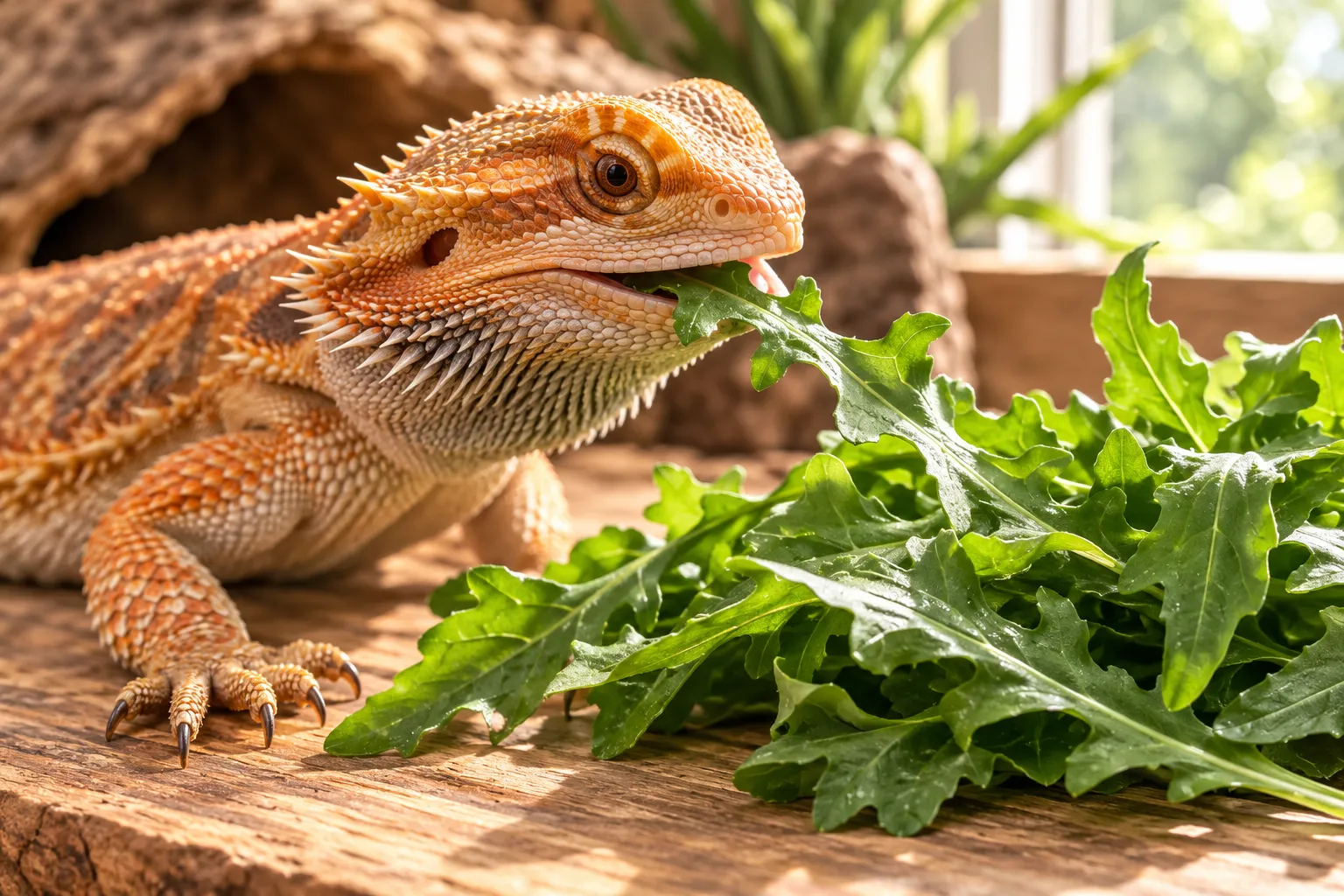
Quick Answer: Yes, bearded dragons can eat arugula safely, but only as an occasional treat rather than a daily staple. Arugula contains beneficial vitamins and minerals but also has moderate levels of oxalates that can interfere with calcium absorption when fed too frequently. Offer arugula once or twice per week as part of a varied greens rotation.
Key Takeaways
- Arugula is safe for bearded dragons in moderation but should not be a daily staple green
- Feed arugula 1-2 times per week mixed with other leafy greens to avoid oxalate buildup
- Baby bearded dragons can eat arugula but need more protein-focused diets with greens as a smaller portion
- Arugula’s calcium-to-phosphorus ratio is decent, but its oxalate content limits how often it should be offered
- Best daily greens include collard greens, mustard greens, and dandelion greens instead of arugula
- Always wash arugula thoroughly and chop it into bite-sized pieces before feeding
- Most bearded dragons enjoy arugula’s peppery taste and will readily eat it
- Overfeeding arugula can lead to digestive upset and potential calcium absorption issues over time

Turn Salad Time Into Active Feeding – This bearded dragon bridge combines a flexible climbing route with a foraging ball for bearded dragon, encouraging natural bearded dragon climbing while eating greens. Instead of ignoring food bowls, your dragon is encouraged to climb, balance, and reach for moving leaves, making mealtime more engaging and help make feeding time more engaging.

NUTRITIOUS FOOD FOR REPTILES such as bearded dragons, uromastyx, iguanas, tortoises and more; An appetizing way to introduce additional nutrients to your reptile’s diet

Is Arugula Safe for Bearded Dragons to Eat?
Arugula is safe for bearded dragons when offered in appropriate amounts as part of a balanced diet. This leafy green contains vitamins A, C, and K, along with calcium and other nutrients that support reptile health. However, arugula also contains oxalates (also called oxalic acid), which bind to calcium and prevent its absorption in the digestive system.
The key to safely feeding arugula lies in frequency and portion control. When offered occasionally alongside other greens, arugula poses no health risks and provides nutritional variety. The oxalate content becomes problematic only when arugula makes up a large percentage of the diet over extended periods.
What makes arugula safe in moderation:
- Contains beneficial vitamins that support immune function and vision
- Provides hydration through its high water content
- Offers dietary variety that can prevent food boredom
- Has a favorable calcium-to-phosphorus ratio compared to some other greens
Common mistake to avoid: Don’t assume all leafy greens are equally suitable for daily feeding. Arugula falls into the “rotation green” category rather than the “staple green” category, which is an important distinction for long-term bearded dragon health.
How Often Can Bearded Dragons Eat Arugula?
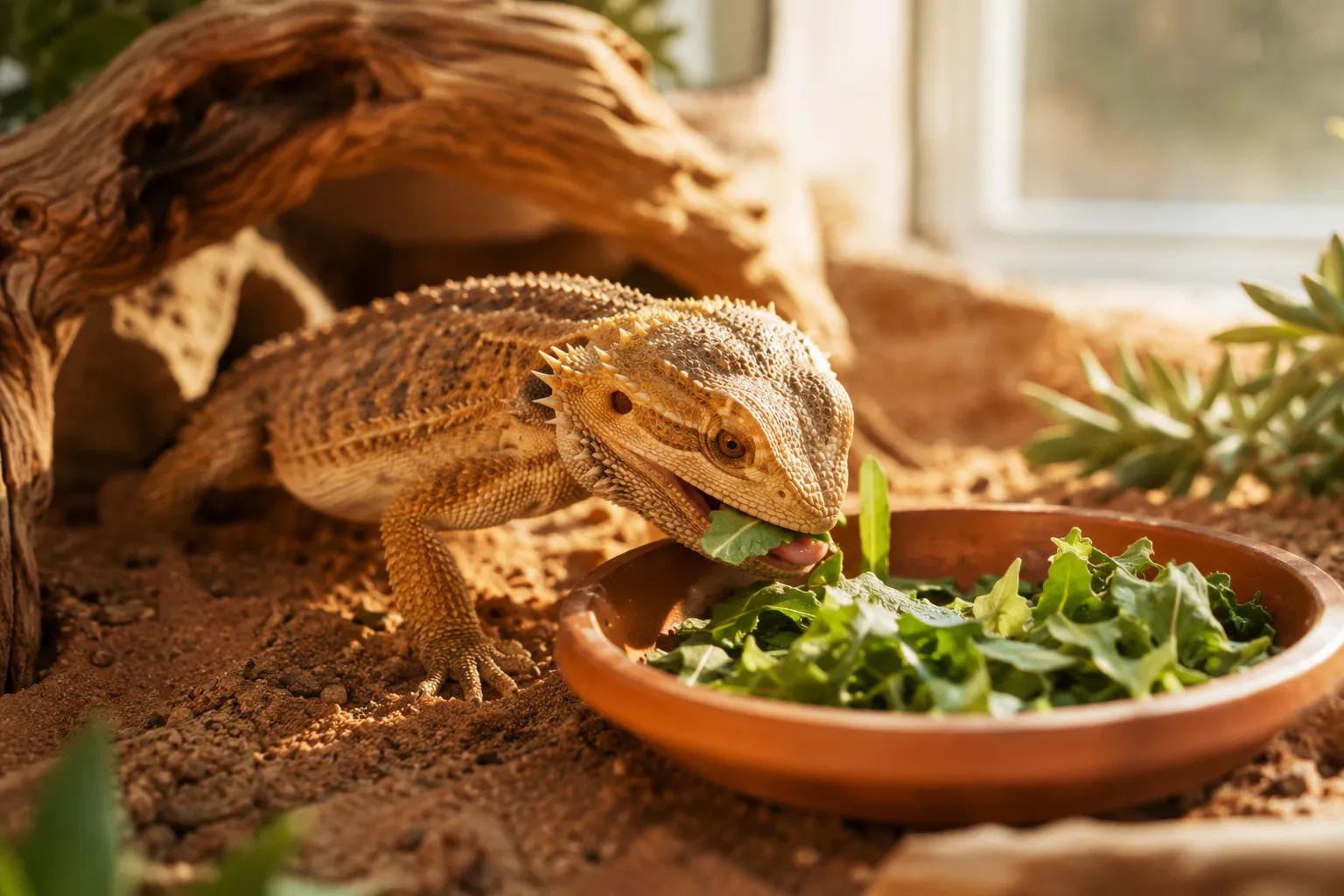
Bearded dragons should eat arugula no more than once or twice per week. This frequency allows them to enjoy the nutritional benefits while minimizing the risk of oxalate-related calcium deficiency. On days when you offer arugula, mix it with staple greens rather than serving it alone.
A practical feeding schedule might include arugula on Monday and Thursday, with staple greens like collard greens or mustard greens filling the other five days. This rotation ensures your bearded dragon receives consistent nutrition without overexposure to any single green’s potential drawbacks.
Feeding frequency guidelines:
- Adult bearded dragons: 1-2 times per week, mixed with other greens
- Juvenile bearded dragons: 1 time per week, smaller portions
- Baby bearded dragons: Once every 10-14 days, very small amounts
The portion size matters as much as frequency. When you do serve arugula, it should make up no more than 20-30% of the total greens offered in that meal. The remaining 70-80% should consist of staple greens with lower oxalate content.
Arugula Nutrition Facts for Bearded Dragons
Arugula provides several nutrients that benefit bearded dragons, though its nutritional profile explains why it works better as an occasional food rather than a daily staple. Understanding what arugula offers helps you make informed decisions about your dragon’s diet.
Key nutrients in arugula (per 100g):
- Calcium: 160 mg
- Phosphorus: 52 mg
- Calcium-to-phosphorus ratio: Approximately 3:1 (favorable)
- Vitamin A: High levels supporting eye health and immune function
- Vitamin K: Supports blood clotting and bone health
- Water content: About 92%, providing hydration
- Oxalates: Moderate levels (exact amounts vary by growing conditions)
The calcium-to-phosphorus ratio in arugula is actually quite good. Bearded dragons need more calcium than phosphorus in their diet, ideally at a ratio of 2:1 or higher. Arugula’s 3:1 ratio meets this requirement well. However, the oxalates present in arugula can bind to that calcium and prevent absorption, which is why frequency matters more than the raw ratio.
Choose arugula when: You want to add variety to your dragon’s diet and haven’t offered it recently in the same week. It works well mixed into a salad with collard greens and squash.
What Greens Are Best for Bearded Dragons Daily?
The best daily greens for bearded dragons are collard greens, mustard greens, turnip greens, and dandelion greens. These staple greens have low oxalate content, excellent calcium-to-phosphorus ratios, and high nutritional value, making them suitable for everyday feeding without the restrictions that apply to arugula.
Top staple greens for daily feeding:
- Collard greens – Low oxalates, high calcium, widely available
- Mustard greens – Excellent calcium content, low oxalates, slightly spicy flavor most dragons enjoy
- Turnip greens – High in calcium and vitamins, low oxalates
- Dandelion greens – Outstanding calcium-to-phosphorus ratio, can be foraged or purchased
- Endive – Low oxalates, good hydration, mild flavor
These greens should form the foundation of your bearded dragon’s vegetable intake. You can offer them daily in appropriate portions based on your dragon’s age and size. Adult bearded dragons should receive a salad of these greens every day, while juveniles need smaller portions alongside their protein-heavy diet.
Rotation strategy: Even among staple greens, variety matters. Rotate between 2-3 different staple greens throughout the week, then add occasional greens like arugula, bok choy, or watercress once or twice weekly for variety.
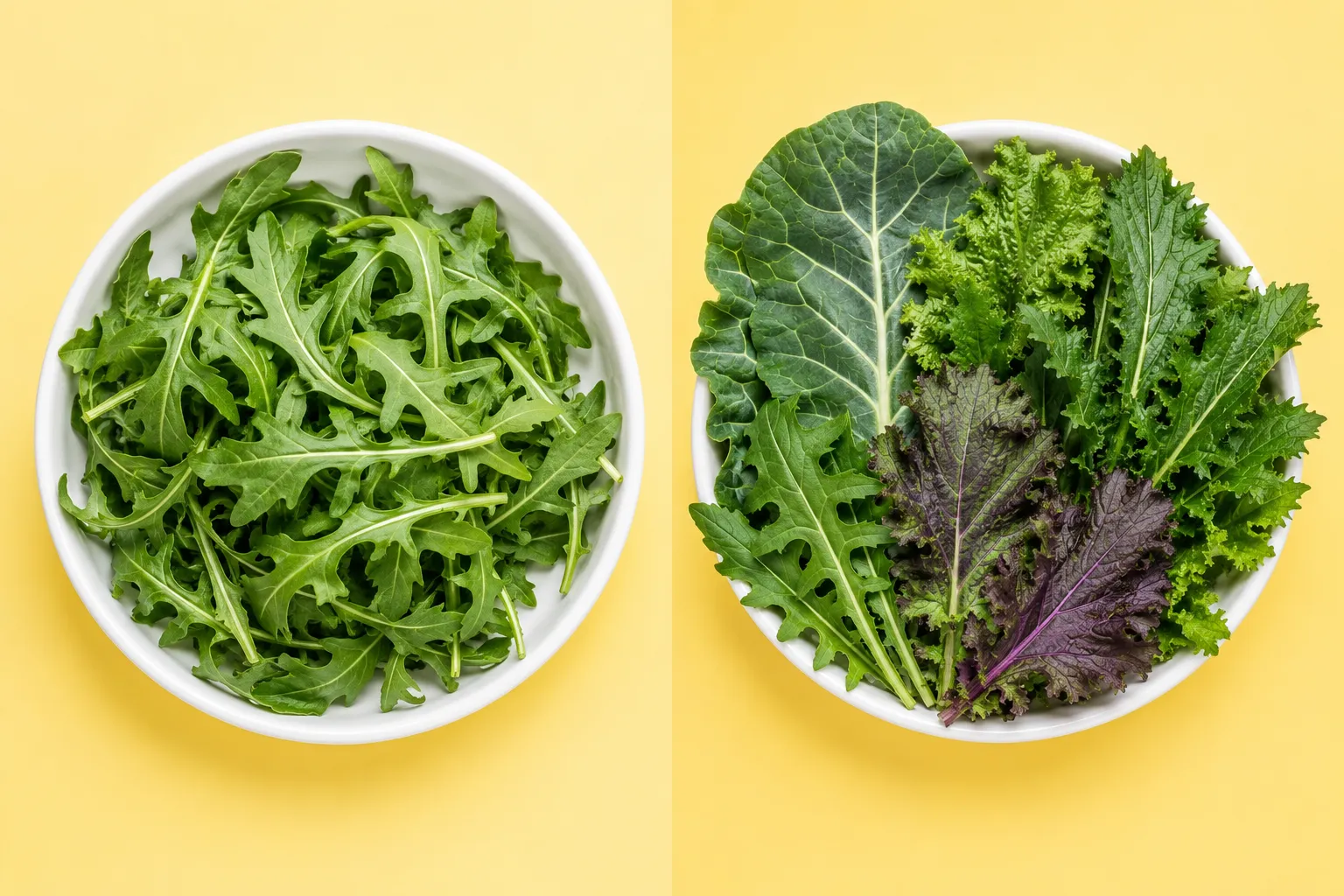
Arugula vs Kale for Bearded Dragons: Which Is Better?
Neither arugula nor kale should be a daily staple for bearded dragons, but arugula is the better choice between the two when offered occasionally. Kale contains higher levels of oxalates and goitrogens (compounds that can interfere with thyroid function) compared to arugula, making it more problematic even in small amounts.
Comparison breakdown:
| Factor | Arugula | Kale |
|---|---|---|
| Oxalate level | Moderate | High |
| Feeding frequency | 1-2 times per week | Once per week or less |
| Goitrogen content | Low | Moderate to high |
| Calcium content | Good | Good |
| Overall suitability | Occasional treat | Rare treat |
Arugula wins this comparison because it poses fewer risks when incorporated into a rotation diet. Kale’s combination of high oxalates and goitrogens makes it less desirable, even though it contains beneficial nutrients. If you’re choosing between the two for your weekly rotation, pick arugula and save kale for very occasional variety.
Better alternatives to both: Instead of debating between arugula and kale, focus on building meals around collard greens and mustard greens, then add arugula for occasional variety. This approach provides better nutrition with fewer potential complications.
Can Baby Bearded Dragons Eat Arugula?
Baby bearded dragons can eat arugula, but it should be offered even less frequently than for adults, approximately once every 10-14 days in very small amounts. Baby bearded dragons (0-4 months old) require a diet that’s 70-80% protein from insects and only 20-30% plant matter, so greens play a smaller role in their overall nutrition during this rapid growth phase.
When you do offer arugula to a baby bearded dragon, chop it into very fine pieces that are smaller than the space between their eyes. This prevents choking and makes digestion easier. Mix these small arugula pieces with staple greens rather than offering arugula alone.
Age-based arugula guidelines:
- Baby (0-4 months): Once every 10-14 days, finely chopped, very small portions
- Juvenile (4-12 months): Once per week, chopped into small pieces
- Sub-adult (12-18 months): 1-2 times per week, regular chop
- Adult (18+ months): 1-2 times per week, regular chop
The reason for extra caution with babies is their critical need for calcium during bone development. Since arugula’s oxalates can interfere with calcium absorption, and babies need maximum calcium for growth, it makes sense to limit arugula even more strictly during this life stage.
How Much Arugula Should I Feed My Bearded Dragon?
Feed your bearded dragon approximately 1-2 cups of mixed greens per meal (for adults), with arugula making up no more than 20-30% of that total volume when you include it. For a typical adult bearded dragon, this translates to about 1/4 to 1/2 cup of arugula mixed with 1 to 1.5 cups of staple greens.
Portion sizes vary based on your dragon’s size, age, and appetite. A good rule of thumb is to offer a salad bowl that’s roughly the size of your dragon’s head. They should be able to eat their fill within 10-15 minutes, with any uneaten greens removed afterward to prevent spoilage.
Portion guidelines by age:
- Adults: 1-2 cups total greens daily; arugula portion = 1/4 to 1/2 cup when offered
- Juveniles: 1/2 to 1 cup total greens daily; arugula portion = 2-3 tablespoons when offered
- Babies: 1/4 to 1/2 cup total greens daily; arugula portion = 1 tablespoon when offered
Always chop arugula into pieces that are no larger than the space between your bearded dragon’s eyes. This size guideline applies to all foods and helps prevent choking or impaction. For arugula specifically, removing the thickest stem portions can make it easier to digest.
Preparation tip: Wash arugula thoroughly under running water to remove any pesticides or dirt, then pat it dry before chopping. Mix it with other greens and vegetables like butternut squash, bell peppers, or carrots to create a nutritionally complete salad.
Is Arugula Too High in Oxalates for Bearded Dragons?
Arugula contains moderate levels of oxalates, which means it’s not too high for occasional feeding but is high enough to avoid daily use. Oxalates bind to calcium in the digestive tract, forming calcium oxalate crystals that pass through the body without being absorbed. When bearded dragons consume high-oxalate foods too frequently, they can develop calcium deficiency even if their diet technically contains adequate calcium.
The oxalate content in arugula falls into a middle range compared to other greens. It’s not as problematic as spinach or beet greens (which are very high in oxalates and should be avoided), but it’s higher than staple greens like collard greens or mustard greens.
Oxalate comparison (approximate levels):
- Very high oxalates (avoid): Spinach, beet greens, Swiss chard
- Moderate oxalates (occasional use): Arugula, bok choy, watercress
- Low oxalates (daily staples): Collard greens, mustard greens, turnip greens, dandelion greens
The practical takeaway is that arugula’s oxalate level is manageable within a varied diet. Feed it 1-2 times per week, and the oxalates won’t accumulate to problematic levels. Problems arise only when high or moderate-oxalate greens dominate the diet over weeks or months.
Edge case: If your bearded dragon has a history of metabolic bone disease or calcium deficiency, consult with a reptile veterinarian before adding arugula to the diet. In these cases, sticking exclusively to low-oxalate staple greens may be the safer approach until calcium levels normalize.

Vitamin Enriched Formula That Provides Essential Proteins, Fats, Vitamins And Minerals

Package Dimensions: 12.953 H x 7.62 L x 7.62 W (centimeters)

ESSENTIAL NUTRITION: Elevate your bearded dragon's health with our SALAD TOPPER. Packed with premium ingredients like Alfalfa Leaf Powder, Dandelion, and Calcium Carbonate, it provides essential nutrients for optimal health and well-being
What Vegetables Should Bearded Dragons Avoid?
Bearded dragons should avoid vegetables that are toxic, high in oxalates, or have poor calcium-to-phosphorus ratios. Some vegetables can cause digestive upset, nutrient deficiencies, or even serious health problems when fed regularly or in large amounts.
Vegetables to avoid completely:
- Avocado – Contains persin, which is toxic to reptiles
- Rhubarb – Extremely high in oxalates and potentially toxic
- Onions and garlic – Can cause digestive issues and are potentially toxic
- Iceberg lettuce – No nutritional value, can cause diarrhea
Vegetables to avoid or severely limit:
- Spinach – Very high oxalates that block calcium absorption
- Beet greens – Very high oxalates
- Swiss chard – Very high oxalates
- Cabbage – Contains goitrogens that interfere with thyroid function
- Broccoli – High in goitrogens, can cause thyroid issues if fed frequently
The common thread among problematic vegetables is either toxicity, excessive oxalates, or compounds that interfere with nutrient absorption. Even vegetables that aren’t outright toxic can cause problems when they make up too much of the diet.
Safe vegetable additions: Bell peppers, butternut squash, yellow squash, carrots (shredded), green beans, and snap peas all make excellent additions to a bearded dragon’s salad. These vegetables are low in oxalates and provide good nutrition without the risks associated with the avoid list.
Can Arugula Cause Diarrhea in Bearded Dragons?
Arugula can cause diarrhea in bearded dragons if fed in excessive amounts or if introduced too quickly to a dragon that hasn’t eaten it before. The high water content in arugula (about 92%) contributes to looser stools when consumed in large quantities. Additionally, some bearded dragons have more sensitive digestive systems and may react to arugula’s natural compounds with temporary digestive upset.
If you notice loose stools after feeding arugula, reduce the portion size or frequency. Diarrhea that persists for more than 24 hours or is accompanied by lethargy, loss of appetite, or other symptoms warrants a veterinary visit, as it could indicate parasites or other health issues unrelated to diet.
How to prevent digestive upset:
- Introduce arugula gradually, starting with just a few leaves mixed into familiar greens
- Don’t feed arugula more than 1-2 times per week
- Keep arugula portions to 20-30% of the total greens offered
- Ensure your dragon is properly hydrated, as dehydration can worsen digestive issues
- Monitor stool consistency for 24 hours after introducing any new food
Most bearded dragons tolerate arugula well when it’s offered in appropriate amounts. Digestive issues are more likely to occur when arugula suddenly becomes a large portion of the diet or when it’s fed daily despite the recommendations for occasional use.
Choose arugula if: Your dragon has shown no digestive sensitivity to other greens and you’re looking to add variety. Skip it if your dragon has a history of digestive issues or if you’re already dealing with loose stools from other causes.
Do Bearded Dragons Like the Taste of Arugula?
Most bearded dragons enjoy the taste of arugula and will readily eat it when offered. Arugula has a slightly peppery, mustard-like flavor that many bearded dragons find appealing, similar to their preference for mustard greens. The texture is also softer and easier to chew compared to tougher greens like collard greens, which some dragons appreciate.
Individual preferences vary, just as they do with humans. Some bearded dragons will eagerly devour arugula, while others may be more hesitant or prefer other greens. If your dragon seems uninterested in arugula at first, try mixing it with their favorite greens or topping the salad with a few pieces of colorful bell pepper or squash to increase appeal.
Signs your dragon likes arugula:
- Eats it immediately when offered
- Actively searches through the salad bowl for arugula pieces
- Shows increased interest in salad time when arugula is included
- Finishes the arugula before moving on to other greens
If your dragon refuses arugula: Don’t force it. Bearded dragons can thrive on a diet of staple greens without ever eating arugula. Focus on the greens your dragon does enjoy, ensuring they’re nutritionally appropriate staples like collard greens, mustard greens, or turnip greens.
The peppery flavor that makes arugula appealing to many dragons comes from compounds called glucosinolates, which are also found in mustard greens and other cruciferous vegetables. Dragons that enjoy mustard greens often enjoy arugula as well.
What Happens If My Bearded Dragon Eats Too Much Arugula?
If your bearded dragon eats too much arugula in a single meal, they may experience temporary digestive upset including loose stools or mild diarrhea due to the high water content. This typically resolves within 24 hours without intervention. However, if arugula becomes a daily staple over weeks or months, the cumulative oxalate exposure can lead to calcium deficiency and metabolic bone disease.
Metabolic bone disease (MBD) is a serious condition caused by insufficient calcium absorption. Symptoms include lethargy, loss of appetite, tremors, difficulty walking, swollen limbs, and soft or deformed bones. MBD develops gradually over time, not from a single meal of too much arugula, but from chronic dietary imbalances.
Short-term effects of overfeeding arugula:
- Loose stools or diarrhea within 12-24 hours
- Mild stomach discomfort (dragon may be less active)
- Increased water intake
- These effects typically resolve on their own
Long-term effects of feeding arugula too frequently:
- Reduced calcium absorption due to oxalate accumulation
- Increased risk of metabolic bone disease
- Potential kidney issues from calcium oxalate crystal formation
- Nutritional imbalances from lack of dietary variety
If you’ve accidentally overfed arugula, simply return to a diet focused on staple greens and monitor your dragon’s stool consistency. Ensure they have access to proper UVB lighting and calcium supplementation to support bone health. If you’ve been feeding arugula daily for an extended period, schedule a veterinary checkup to assess calcium levels and bone health.
Best Leafy Greens for Bearded Dragons Besides Arugula
The best leafy greens for bearded dragons besides arugula include collard greens, mustard greens, turnip greens, dandelion greens, and endive. These greens offer superior nutrition, lower oxalate content, and can be fed daily as dietary staples rather than occasional treats.
Top staple greens (feed daily):
- Collard greens – Excellent calcium-to-phosphorus ratio, low oxalates, high in vitamins A and C
- Mustard greens – High calcium content, low oxalates, slightly spicy flavor that appeals to most dragons
- Turnip greens – Outstanding calcium levels, low oxalates, readily available in most grocery stores
- Dandelion greens – Best calcium-to-phosphorus ratio of common greens, can be foraged pesticide-free or purchased
- Endive (escarole) – Low oxalates, good hydration, mild flavor that works well mixed with other greens
Good rotation greens (feed 1-3 times per week):
- Bok choy – Moderate calcium, moderate oxalates
- Watercress – High in vitamins, moderate oxalates
- Cilantro – Adds flavor variety, moderate oxalates
- Basil – Aromatic herb that many dragons enjoy, use sparingly
Building a rotation of 3-4 staple greens for daily feeding, supplemented with 2-3 occasional greens like arugula for weekly variety, creates the most nutritionally complete diet. This approach prevents both nutrient deficiencies and the accumulation of anti-nutrients like oxalates.
Preparation matters: Always wash greens thoroughly, chop them into appropriate sizes, and mix different types together. A colorful salad with varied textures is more appealing to bearded dragons and ensures they receive a broad spectrum of nutrients.
Common Mistakes Feeding Bearded Dragons Greens
The most common mistakes when feeding bearded dragons greens include relying on a single type of green, feeding high-oxalate greens daily, offering pieces that are too large, and neglecting to wash produce properly. These errors can lead to nutritional deficiencies, digestive problems, and long-term health issues.
Top feeding mistakes to avoid:
- Feeding only one type of green – Even if it’s a good staple like collard greens, variety ensures complete nutrition
- Making arugula or other moderate-oxalate greens a daily staple – Rotate these greens instead of feeding them every day
- Cutting greens too large – Pieces should be no bigger than the space between your dragon’s eyes
- Not washing produce – Pesticides and dirt can cause health problems
- Feeding iceberg lettuce – It has virtually no nutritional value and can cause diarrhea
- Ignoring calcium-to-phosphorus ratios – Greens with more phosphorus than calcium (like lettuce) should be avoided
- Forgetting to remove uneaten greens – Spoiled food can harbor bacteria and attract pests
The single biggest mistake: Treating all greens as equal. Understanding the difference between staple greens (low oxalates, good calcium) and occasional greens (moderate oxalates or other limitations) is critical for long-term health.
Another common error is assuming that because a green is healthy for humans, it’s automatically good for bearded dragons. Spinach is a perfect example, it’s a nutritional powerhouse for people but problematic for bearded dragons due to extremely high oxalates. Always research a food’s suitability for reptiles specifically before offering it.
Best practice: Create a weekly meal plan that includes 3-4 different staple greens rotated throughout the week, with 1-2 occasional greens like arugula added for variety. This structured approach prevents both monotony and accidental overfeeding of any single green.
FAQ
Can bearded dragons eat arugula every day?
No, bearded dragons should not eat arugula every day. Feed arugula only 1-2 times per week due to its moderate oxalate content, which can interfere with calcium absorption when consumed too frequently. Daily greens should be low-oxalate staples like collard greens or mustard greens.
Is arugula better than spinach for bearded dragons?
Yes, arugula is significantly better than spinach for bearded dragons. Spinach contains extremely high levels of oxalates and should be avoided entirely, while arugula has only moderate oxalates and can be safely fed occasionally. Choose arugula over spinach every time.
How do I prepare arugula for my bearded dragon?
Wash arugula thoroughly under running water, pat it dry, then chop it into pieces no larger than the space between your dragon’s eyes. Mix the chopped arugula with other staple greens and vegetables to create a balanced salad, making arugula no more than 20-30% of the total greens offered.
Can arugula replace collard greens in my bearded dragon’s diet?
No, arugula cannot replace collard greens as a dietary staple. Collard greens have lower oxalates and better overall nutrition for daily feeding, while arugula works best as an occasional variety green. Use collard greens as your foundation and add arugula for variety 1-2 times per week.
Will arugula help my bearded dragon stay hydrated?
Arugula can contribute to hydration due to its high water content (about 92%), but it should not be relied upon as a primary hydration source. Bearded dragons need access to fresh water daily and should receive regular baths to support hydration, with arugula serving as a supplementary moisture source.
What should I do if my bearded dragon won’t eat arugula?
If your bearded dragon refuses arugula, simply offer other nutritious greens instead. Not all dragons like every food, and arugula isn’t necessary for a complete diet. Focus on staple greens your dragon does enjoy, such as collard greens, mustard greens, or turnip greens.
Can I feed arugula to a bearded dragon with metabolic bone disease?
Consult a reptile veterinarian before feeding arugula to a bearded dragon with metabolic bone disease. Dragons recovering from MBD need maximum calcium absorption, and arugula’s oxalates may interfere with this process. Your vet may recommend sticking exclusively to low-oxalate greens until calcium levels improve.
Is organic arugula better for bearded dragons?
Organic arugula is preferable because it contains fewer pesticide residues, but thoroughly washed conventional arugula is also safe. The nutritional content and oxalate levels are similar between organic and conventional arugula, so choose based on availability and budget while always washing produce thoroughly.
How long can I store arugula before feeding it to my bearded dragon?
Store fresh arugula in the refrigerator for up to 5-7 days in a sealed container or plastic bag with a paper towel to absorb excess moisture. Discard any arugula that becomes slimy, wilted, or develops an off smell, as spoiled greens can cause digestive problems.
Can bearded dragons eat arugula flowers?
Yes, bearded dragons can eat arugula flowers safely. The flowers have a similar peppery taste to the leaves and are non-toxic. However, they should still be offered only occasionally as part of the same 1-2 times per week guideline that applies to arugula leaves.
Does arugula provide enough calcium for bearded dragons?
No, arugula alone does not provide enough calcium for bearded dragons, especially because its oxalates reduce calcium absorption. Bearded dragons need calcium supplementation dusted on their insects and a variety of calcium-rich, low-oxalate greens to meet their calcium requirements for healthy bone development.
What’s the difference between arugula and rocket for bearded dragons?
There is no difference, arugula and rocket are two names for the same plant (Eruca vesicaria). The feeding guidelines, nutritional content, and oxalate concerns are identical regardless of which name is used. Feed it 1-2 times per week as an occasional green.
Conclusion
Arugula can be a healthy and enjoyable addition to your bearded dragon’s diet when offered in moderation. While it provides beneficial vitamins, minerals, and hydration, its moderate oxalate content means it should remain an occasional treat rather than a daily staple. Feed arugula 1-2 times per week, mixed with low-oxalate staple greens like collard greens, mustard greens, or turnip greens, to provide variety without compromising calcium absorption.
The key to successfully incorporating arugula into your bearded dragon’s meal plan is understanding the difference between staple greens and rotation greens. Build your dragon’s diet foundation on low-oxalate staples that can be fed daily, then add arugula and other moderate-oxalate greens for variety and enrichment. Always chop greens into appropriately sized pieces, wash them thoroughly, and monitor your dragon’s response to new foods.
Action steps for feeding arugula safely:
- Limit arugula to 1-2 times per week maximum
- Mix arugula with staple greens, keeping it to 20-30% of the total greens offered
- Chop arugula into pieces no larger than the space between your dragon’s eyes
- Wash all produce thoroughly before feeding
- Rotate between 3-4 different staple greens throughout the week
- Monitor your dragon’s stool consistency and overall health
- Ensure proper UVB lighting and calcium supplementation to support bone health
By following these guidelines, you can safely offer arugula as part of a varied, nutritionally complete diet that keeps your bearded dragon healthy and thriving for years to come.

Unique textured pellets that bearded dragons love to eat

OPTIMAL NUTRITION FOR HERBIVOROUS REPTILES; Zilla Herbivore Medley provides a complete diet for herbivores like bearded dragons, tortoises, uromastyx and iguanas

100+ BATHS PER BOTTLE — Unlike powders, this reptile electrolyte soak is a concentrated liquid formula — just add a pump to a cup of water. One 8oz bottle replaces dozens of single-use packets, making it the best value bearded dragon bath supplement on the market.