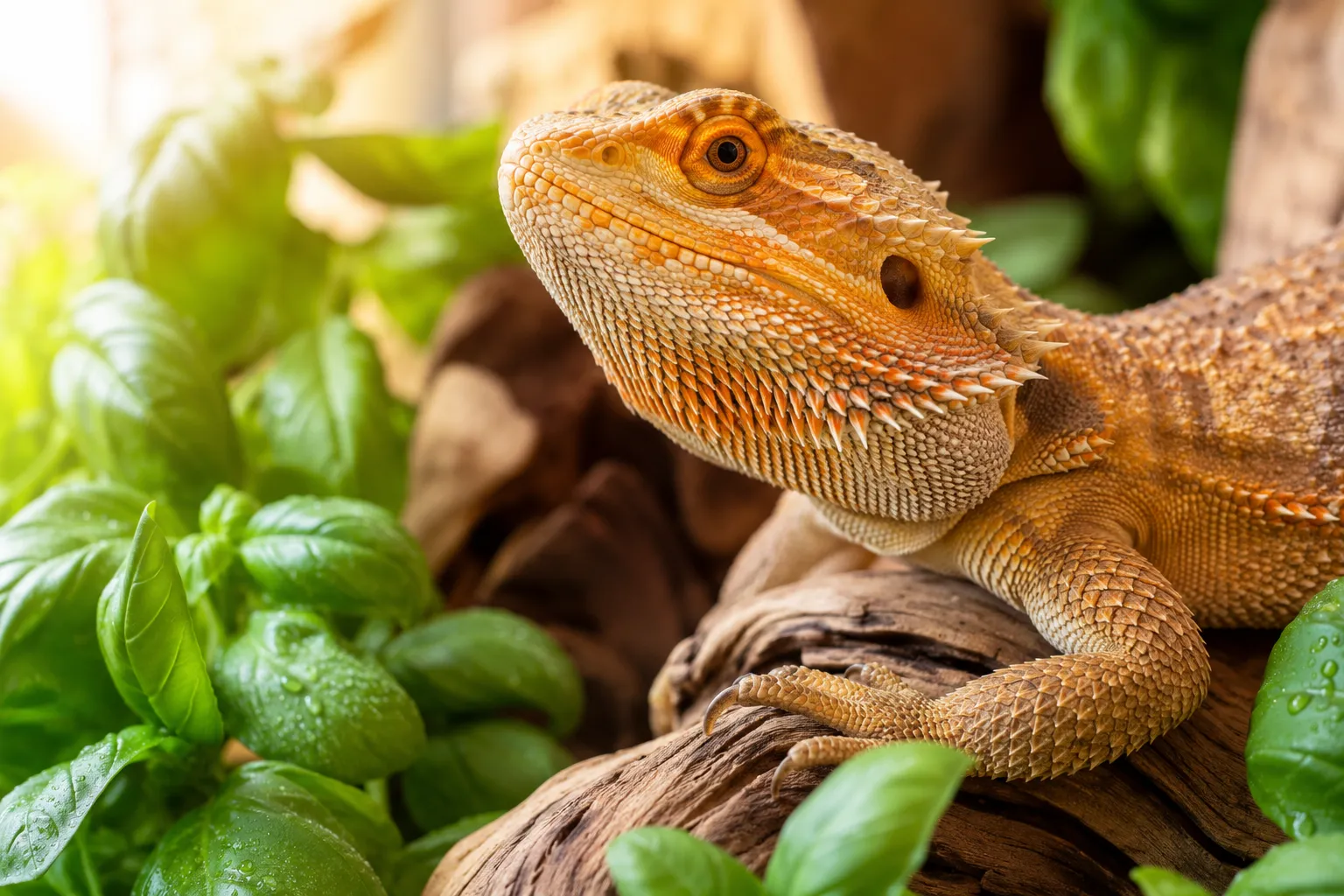
Quick Answer: Yes, bearded dragons can safely eat basil in moderation. This aromatic herb is non-toxic and provides vitamins A, K, and antioxidants. Offer fresh basil as an occasional treat or salad topper 1-2 times per week, chopped into small pieces. While basil won’t harm your dragon, it should complement, not replace, staple greens like collard greens, mustard greens, and turnip greens.
Key Takeaways
- Basil is safe for bearded dragons when fed fresh and in moderation
- Feed 1-2 times per week as a supplementary herb, not a staple green
- Fresh basil is better than dried basil, which lacks moisture and concentrated nutrients
- All basil parts are edible,leaves, stems, and flowers are safe for dragons
- Baby dragons can eat basil but need more protein-focused diets than adults
- Chop basil into small pieces to prevent choking and make eating easier
- Basil offers vitamins A and K plus antioxidants that support immune health
- Variety matters more,rotate basil with other safe herbs like cilantro and parsley
- Too much basil can cause digestive upset due to essential oils in the herb

Easy Spray, Rinse, and Serve Routine: Spray onto produce, allow it to sit briefly, rinse, then add to your reptile’s bowl.
Is Basil Safe for Bearded Dragons to Eat?
Basil is completely safe for bearded dragons and poses no toxicity risk. This popular culinary herb contains beneficial nutrients including vitamin A (important for eye health and skin shedding), vitamin K (supports blood clotting), calcium, iron, and antioxidants that help fight cellular damage.
Unlike some plants that contain harmful compounds, basil doesn’t have oxalates at concerning levels or toxic alkaloids. The essential oils that give basil its distinctive aroma are present in small amounts that won’t harm reptiles when consumed occasionally.
What makes basil a good choice:
- Non-toxic to reptiles at any life stage
- Provides variety in taste and texture
- Contains anti-inflammatory compounds
- Easy to grow at home for fresh supply
- Aromatic properties may stimulate appetite in picky eaters
One important note: While safe, basil should never become a dietary staple. It lacks the calcium-to-phosphorus ratio that bearded dragons need from their primary greens. Think of basil as a garnish or flavor enhancer rather than a main course vegetable.
How Much Basil Can I Feed My Bearded Dragon?
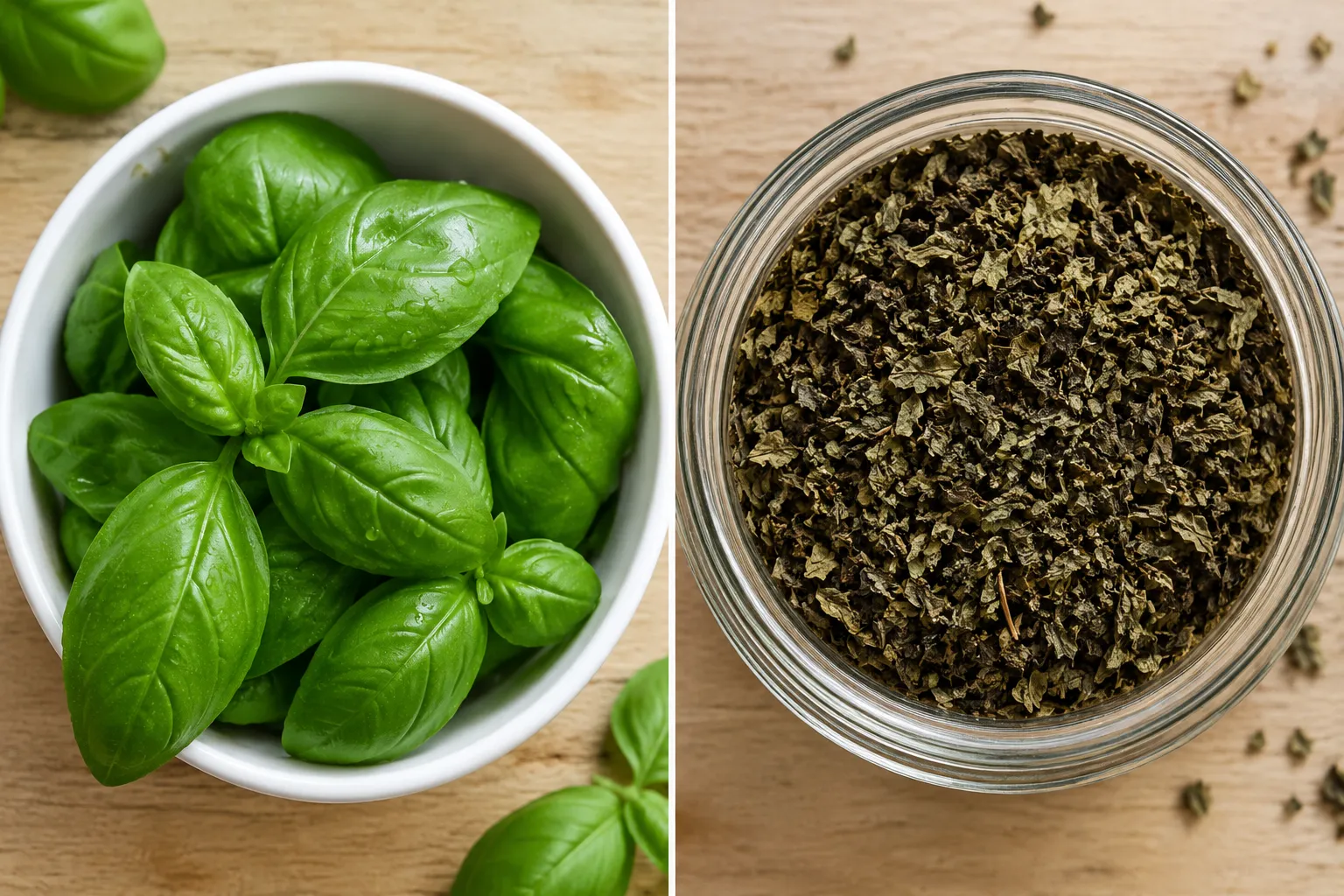
Feed your bearded dragon 3-5 small basil leaves (or the equivalent chopped) 1-2 times per week. This amount provides flavor variety and nutritional benefits without overloading their system with the herb’s essential oils.
A good rule of thumb: basil should make up no more than 5-10% of the plant matter in any single feeding. The bulk of their salad should consist of staple greens like collard greens, mustard greens, dandelion greens, or turnip greens.
Portion guidelines by dragon size:
- Juvenile dragons (4-12 months): 2-3 small leaves, finely chopped
- Sub-adult dragons (12-18 months): 3-4 medium leaves, roughly chopped
- Adult dragons (18+ months): 4-5 large leaves, torn or chopped
Common mistake to avoid: Don’t feed basil daily just because your dragon loves it. The concentrated oils can cause loose stools or digestive discomfort if overfed. Rotate basil with other herbs and keep staple greens as the foundation of every salad.
Basil vs Parsley for Bearded Dragons: Which Is Better?
Both basil and parsley are safe herbs for bearded dragons, but parsley edges ahead nutritionally due to its higher calcium content and lower essential oil concentration. That said, variety trumps picking a single “winner”, rotating both herbs provides the best nutritional diversity.
Nutritional comparison:
| Nutrient | Basil (per 100g) | Parsley (per 100g) | Winner |
|---|---|---|---|
| Calcium | 177 mg | 138 mg | Basil |
| Vitamin A | 5275 IU | 8424 IU | Parsley |
| Vitamin K | 414 mcg | 1640 mcg | Parsley |
| Protein | 3.2 g | 3.0 g | Tie |
| Water content | 92% | 88% | Basil |
Choose basil if: Your dragon is a picky eater who responds to aromatic foods, or you want a milder herb that’s less likely to cause digestive changes.
Choose parsley if: You want a nutrient-dense herb with exceptional vitamin K content, or your dragon already eats basil regularly and needs variety.
Best approach: Alternate between both herbs weekly. Offer basil one week, parsley the next, and occasionally mix small amounts of both into the same salad. This rotation prevents boredom and ensures a broader spectrum of micronutrients.
Can Baby Bearded Dragons Eat Basil or Only Adults?
Baby bearded dragons can safely eat basil, but it should be offered even more sparingly than for adults. Juveniles (under 12 months) need a diet that’s 70-80% protein from insects and only 20-30% plant matter, so herbs like basil play a minimal role during this growth phase.
When you do offer basil to baby dragons, chop it very finely, almost minced, to prevent choking. Their smaller mouths and less developed chewing ability make large pieces a hazard.
Age-specific feeding guidelines:
- 0-4 months: Skip herbs entirely; focus on appropriately sized insects and finely chopped staple greens
- 4-8 months: Introduce 1-2 tiny basil pieces once per week, mixed into salad
- 8-12 months: Offer 2-3 small leaves weekly as they transition to more plant matter
- 12+ months: Follow adult feeding guidelines (3-5 leaves, 1-2 times weekly)
Why protein matters more for babies: Young bearded dragons are growing rapidly and need the amino acids, fat, and energy that insects provide. While basil offers vitamins, it doesn’t support the explosive growth rate that characterizes the first year of life.
If your baby dragon ignores basil completely, don’t worry. Focus on establishing good eating habits with staple greens and properly gut-loaded insects. You can reintroduce herbs once they’re older and eating a more varied diet.
What Herbs Are Safe for Bearded Dragons Besides Basil?
Bearded dragons can safely enjoy a variety of fresh herbs that add flavor, nutrients, and enrichment to their diet. Rotating different herbs prevents boredom and provides a wider range of vitamins and minerals.
Safe herbs to offer regularly:
- Cilantro (coriander): High in vitamins A, C, and K; most dragons love the taste
- Parsley: Nutrient-dense with excellent vitamin K content; feed in moderation
- Oregano: Contains antioxidants; offer sparingly due to strong flavor
- Mint: Refreshing and aromatic; some dragons enjoy it, others refuse it
- Thyme: Safe in small amounts; strong flavor means less is more
- Dill: Mild flavor with good vitamin A content; well-tolerated by most dragons
- Rosemary: Safe but very aromatic; offer tiny amounts occasionally
Herbs to avoid completely:
- Chives: Contains compounds toxic to reptiles
- Garlic: Can cause digestive upset and is potentially toxic
- Onion (any variety): Toxic to bearded dragons
Feeding strategy: Treat herbs as flavor enhancers rather than nutritional foundations. Mix one or two herb varieties into each salad alongside staple greens, vegetables, and appropriate fruits. This approach mimics the dietary diversity wild bearded dragons experience when foraging.
How Often Should I Give My Bearded Dragon Basil?
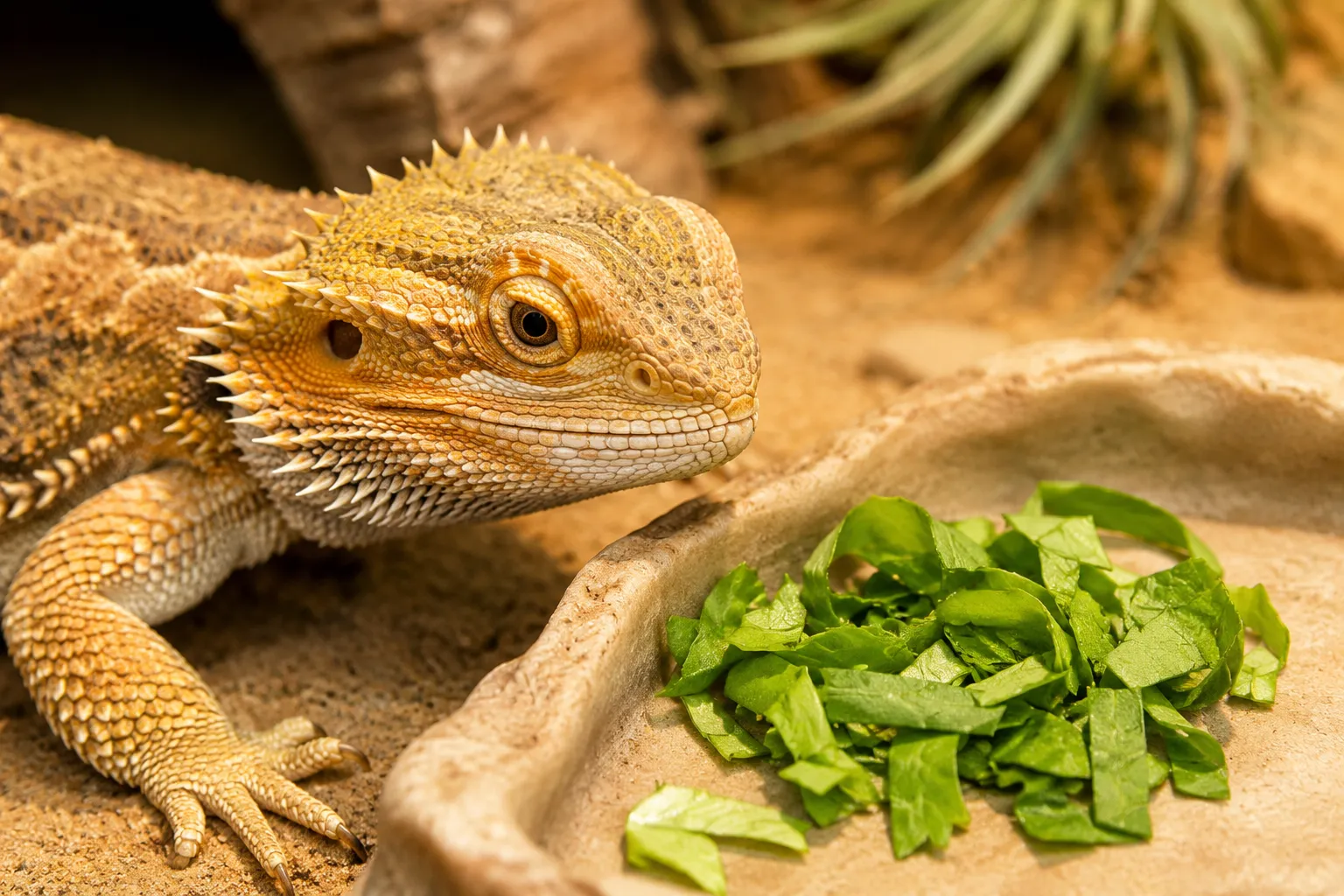
Offer basil to your bearded dragon 1-2 times per week at most. This frequency provides variety and nutritional benefits without overexposing your dragon to the herb’s concentrated essential oils, which can cause digestive issues if consumed too often.
Sample weekly feeding schedule:
- Monday: Staple greens + vegetables (no herbs)
- Wednesday: Staple greens + vegetables + basil
- Friday: Staple greens + vegetables (no herbs)
- Sunday: Staple greens + vegetables + different herb (cilantro or parsley)
This rotation ensures your dragon gets consistent nutrition from staple greens while enjoying occasional herb variety. The days without herbs give their digestive system a break from processing aromatic compounds.
Signs you’re feeding basil too often:
- Loose or watery stools
- Decreased appetite for staple greens
- Unusual lethargy after eating
- Refusing other vegetables
If you notice these symptoms, reduce basil frequency to once per week or once every 10 days. Every dragon has individual tolerance levels, so adjust based on your pet’s response.
Pro tip: Keep a simple feeding log on your phone or calendar. Note when you offer basil and how your dragon responds. This record helps you identify patterns and optimize their diet over time.
Can Bearded Dragons Eat Dried Basil or Only Fresh?
Fresh basil is significantly better than dried basil for bearded dragons. While dried basil isn’t toxic, it lacks the moisture content that helps with hydration and has a more concentrated flavor that many dragons find unappealing.
Why fresh basil wins:
- Moisture content: Fresh basil is about 92% water, contributing to hydration
- Nutrient preservation: Vitamins A and K degrade during the drying process
- Palatability: Fresh herbs have appealing texture and aroma that dried versions lack
- Easier digestion: Soft fresh leaves are gentler on the digestive system
If you only have dried basil: You can offer a tiny pinch (literally 3-5 flakes) sprinkled on their salad once in a while, but don’t expect enthusiasm. Most bearded dragons will ignore dried herbs or eat around them.
Better alternatives to dried basil:
- Grow fresh basil in a pot on your windowsill (easy and inexpensive)
- Buy small amounts of fresh basil from the grocery store weekly
- Freeze fresh basil leaves in ice cube trays with water for later use
- Use other fresh herbs that are more readily available
Common mistake: Some owners think dried herbs are more convenient for long-term storage, but the nutritional trade-off isn’t worth it. Bearded dragons benefit most from fresh, whole foods that retain their natural moisture and vitamin content.
My Bearded Dragon Won’t Eat Basil: What Should I Do?
If your bearded dragon refuses basil, don’t worry, it’s completely normal and not a health concern. Bearded dragons have individual taste preferences, and some simply don’t enjoy aromatic herbs. Never force-feed basil or any food your dragon consistently rejects.
Why some dragons refuse basil:
- Strong aroma can be off-putting to sensitive individuals
- Texture preference (some dragons prefer crunchy vegetables over soft leaves)
- Already satisfied with current diet variety
- Natural taste variation among individual dragons
Strategies to encourage basil consumption (if you want to try):
- Mix it thoroughly: Chop basil very finely and mix it into favorite greens so they can’t pick it out
- Start tiny: Offer just one small piece mixed with highly preferred foods
- Try different varieties: Sweet basil, Thai basil, and lemon basil have different flavor profiles
- Pair with movement: Place basil on top of live insects to create visual interest
- Respect their choice: If they refuse after 3-4 attempts, accept that basil isn’t their preference
What to do instead: Focus on other safe herbs and greens your dragon does enjoy. There’s no nutritional requirement for basil specifically, cilantro, parsley, or even just a varied rotation of staple greens provides everything they need.
Important reminder: A bearded dragon that refuses basil but eats their staple greens, vegetables, and insects is perfectly healthy. Dietary variety is beneficial, but forcing specific foods creates stress and can damage the trust between you and your pet.

ONE POLLEN TO RULE THEM ALL. Bee pollen can be beneficial for many species of reptiles, including but not limited to turtles and tortoises, lizards, and geckos! Bearded dragons, crested geckos, blue tongued skinks, and tegus are only a few reptile species that seem to enjoy bee pollen in their diet.

🏆 WORKS ON THE PICKIEST BEARDIES: Even stubborn bearded dragons eat their greens when dusted with HONEY&SUN 100% pure organic bee pollen — no fillers, no additives, no artificial anything. Finely milled to coat greens and live feeders perfectly, preserving natural amino acids and enzymes.
Replenish & Rehydrate: Helps restore hydration, energy, and balance for reptiles during stress, illness, or egg-laying.
What Are the Benefits of Feeding Basil to Bearded Dragons?
Basil provides several nutritional and behavioral benefits when incorporated into a bearded dragon’s diet as an occasional treat. While not a superfood, this herb offers advantages beyond basic nutrition.
Nutritional benefits:
- Vitamin A: Supports eye health, skin integrity, and proper shedding
- Vitamin K: Essential for blood clotting and bone metabolism
- Antioxidants: Compounds like beta-carotene help protect cells from damage
- Calcium: Provides 177 mg per 100g, though not enough to meet daily requirements alone
- Iron: Supports oxygen transport in the blood
Behavioral and health benefits:
- Appetite stimulation: The strong aroma can encourage picky eaters to investigate their food
- Dietary enrichment: New textures and flavors prevent boredom with repetitive meals
- Hydration support: High water content (92%) contributes to overall fluid intake
- Digestive variety: Different plant compounds support diverse gut bacteria
- Mental stimulation: Foraging for different foods mimics natural behavior
Anti-inflammatory properties: Basil contains compounds like eugenol and rosmarinic acid that have mild anti-inflammatory effects. While research on these benefits in reptiles is limited, they likely provide some cellular protection.
Realistic expectations: Basil won’t cure health problems or dramatically improve your dragon’s condition. Think of it as one small piece of a comprehensive diet that includes proper staple greens, appropriate vegetables, gut-loaded insects, and correct supplementation with calcium and vitamins.
Can Too Much Basil Hurt My Bearded Dragon?
Yes, feeding too much basil can cause digestive upset in bearded dragons due to the herb’s concentrated essential oils. While basil isn’t toxic, overfeeding can lead to loose stools, decreased appetite, and potential nutrient imbalances.
Problems from excessive basil consumption:
- Digestive irritation: Essential oils like eugenol can irritate the gut lining when consumed in large amounts
- Diarrhea: Loose or watery stools from too much aromatic herb
- Reduced staple green intake: Dragons may fill up on basil and ignore more nutritious options
- Nutrient imbalance: Basil’s calcium-to-phosphorus ratio isn’t ideal for reptiles
- Appetite suppression: Strong flavors may temporarily reduce interest in other foods
What counts as “too much”:
- Feeding basil daily or multiple times per day
- Offering basil as a primary salad component (more than 10% of plant matter)
- Giving whole handfuls instead of a few leaves
- Feeding basil to the exclusion of staple greens
Signs your dragon has eaten too much basil:
- Watery or unusually soft droppings within 12-24 hours
- Refusing food at the next meal
- Appearing uncomfortable or lethargic
- Decreased activity level
What to do if you’ve overfed basil: Simply skip basil for the next 1-2 weeks and return to staple greens and appropriate vegetables. Ensure your dragon stays hydrated by offering baths and water-rich foods like butternut squash. Most dragons recover quickly once the dietary irritant is removed.
Prevention is simple: Stick to the recommended 3-5 leaves, 1-2 times per week, and always prioritize staple greens as the foundation of every salad.
Do I Need to Chop Basil Before Giving It to My Bearded Dragon?
Yes, you should chop basil into appropriately sized pieces before offering it to your bearded dragon. While adult dragons can handle whole small leaves, chopping reduces choking risk and makes the herb easier to eat and digest.
Size guidelines by dragon age:
- Baby dragons (0-6 months): Finely minced, almost paste-like consistency
- Juvenile dragons (6-12 months): Chopped into pieces smaller than the space between their eyes
- Adult dragons (12+ months): Torn or roughly chopped into bite-sized pieces
Why chopping matters:
- Prevents choking: Large leaves can get stuck in the throat or cause gagging
- Improves digestion: Smaller pieces are easier for the digestive system to break down
- Encourages eating: Bite-sized pieces are less intimidating than whole leaves
- Better mixing: Chopped basil distributes evenly throughout the salad
How to prepare basil:
- Rinse leaves thoroughly under cool water to remove dirt and potential pesticides
- Pat dry with a clean towel or paper towel
- Remove any thick stems (though thin stems are fine)
- Tear or chop into appropriate sizes using clean scissors or a knife
- Mix into salad immediately or store in the refrigerator for up to 24 hours
Stems and flowers: Both are safe to feed. Stems provide extra texture and fiber, while basil flowers are often sweeter and may appeal to picky eaters. Chop stems into small segments to prevent choking.
Common mistake: Some owners assume that because bearded dragons have strong jaws, they can handle any size food. In reality, reptiles don’t chew like mammals, they tear and swallow. Appropriately sized pieces prevent health emergencies and make mealtime safer.
What Foods Should Bearded Dragons Never Eat?
While basil is safe, many common foods are toxic or dangerous for bearded dragons. Knowing what to avoid is just as important as knowing what to feed.
Toxic foods (never feed):
- Avocado: Contains persin, which is toxic to reptiles
- Rhubarb: High in oxalic acid, which binds calcium and can cause kidney damage
- Onions, garlic, chives: Contain compounds that damage red blood cells
- Fireflies/lightning bugs: Extremely toxic; even one can be fatal
- Wild-caught insects: May carry parasites or pesticide exposure
Foods that cause health problems:
- Spinach: Very high in oxalates that bind calcium
- Lettuce (iceberg): No nutritional value and can cause diarrhea
- Beet greens: High oxalate content
- Rhubarb leaves: Toxic compounds throughout the plant
- Tomato leaves: Contain toxic alkaloids (fruit is okay in moderation)
Foods to limit severely:
- Cabbage: Goitrogens can interfere with thyroid function
- Broccoli: Same goitrogen concerns as cabbage
- Citrus fruits: Too acidic for regular consumption
- High-fat insects: Waxworms and superworms should be rare treats only
Choking hazards:
- Whole grapes (cut into quarters)
- Large chunks of any food
- Seeds from fruits
- Pits from stone fruits
Safe food categories to focus on:
- Staple greens: Collard greens, mustard greens, turnip greens, dandelion greens
- Vegetables: Butternut squash, bell peppers, carrots (shredded), green beans
- Occasional fruits: Blueberries, strawberries, mango, papaya (10% of diet max)
- Protein: Dubia roaches, crickets, black soldier fly larvae (gut-loaded and dusted)
- Herbs: Basil, cilantro, parsley (as discussed)
When in doubt about a new food, research it specifically for bearded dragons before offering. What’s safe for humans or other pets may be dangerous for reptiles.
Is Basil Good for Picky Bearded Dragons?
Basil can be an excellent tool for encouraging picky bearded dragons to eat, thanks to its strong aroma and distinctive flavor. Many dragons who refuse bland greens will investigate basil out of curiosity, potentially leading them to eat the other foods mixed in.
Why basil works for picky eaters:
- Strong scent: Aromatic compounds stimulate the olfactory system and trigger feeding responses
- Novel texture: Different from typical greens, which creates interest
- Flavor variety: Breaks up monotony of repetitive meals
- Visual appeal: Bright green color can attract attention
Strategies for picky dragons:
- Gateway herb method: Offer a small piece of basil on top of their favorite insect to create positive associations
- Scent transfer: Rub basil leaves on other greens to transfer the aroma
- Tiny portions: Start with just one small leaf to avoid overwhelming them
- Mix thoroughly: Chop basil finely and mix it throughout the salad so they can’t pick it out
- Consistency: Offer basil on the same day each week to establish routine
Realistic expectations: Basil isn’t a magic solution for picky eating. If your dragon refuses all greens, the problem may be environmental (wrong temperature, stress, illness) rather than food preference. Address husbandry issues first.
When basil doesn’t help: Some picky dragons prefer crunchy vegetables over soft leaves. If basil fails, try:
- Shredded carrots (bright color, crunchy texture)
- Bell pepper strips (sweet flavor, crisp texture)
- Butternut squash (naturally sweet)
- Bee pollen sprinkled on salad (strong aroma, nutritious)
Important note: Never let basil become the only food your dragon will eat. If they start refusing everything except basil, you’ve created a new problem. Use basil as a bridge to accepting varied foods, not as a permanent crutch.
Can Bearded Dragons Eat Basil Stems and Flowers?
Yes, bearded dragons can safely eat basil stems and flowers along with the leaves. All parts of the basil plant are non-toxic and edible, though each part offers slightly different textures and nutritional profiles.
Basil stems:
- Safety: Completely safe when chopped into small segments
- Texture: More fibrous than leaves, providing extra chewing stimulation
- Nutrition: Similar vitamin content to leaves with slightly more fiber
- Preparation: Cut into pieces no longer than the space between your dragon’s eyes
- Palatability: Some dragons enjoy the crunch; others prefer softer leaves
Basil flowers:
- Safety: Non-toxic and often more appealing than leaves
- Flavor: Slightly sweeter and milder than mature leaves
- Nutrition: Contains similar vitamins with additional plant compounds
- Appearance: Small white or purple flowers that add visual variety
- Feeding tip: Offer whole small flowers or separate petals for tiny dragons
Which part is best?
There’s no “best” part, variety is ideal. Offering a mix of leaves, stems, and flowers provides different textures and keeps meals interesting. Most bearded dragons will eat all parts without issue.
Preparation tips:
- Rinse all parts thoroughly to remove dirt and insects
- Remove very thick, woody stems from mature plants (thin stems are fine)
- Chop stems into small segments to prevent choking
- Offer flowers whole or torn, depending on dragon size
- Mix all parts together in the salad for complete variety
Growing your own basil: If you grow basil at home, you can harvest leaves, stems, and flowers fresh for your dragon. This ensures no pesticide exposure and provides the freshest possible nutrition. Just avoid using any fertilizers or chemicals on plants intended for reptile consumption.
Common question: “My basil plant is flowering, should I pinch them off?” For human culinary use, yes, but for your bearded dragon, let some flowers develop. They’re a nutritious treat your dragon might enjoy.
Frequently Asked Questions
Can bearded dragons eat purple basil?
Yes, purple basil (also called red basil) is safe for bearded dragons. It contains the same nutrients as green basil with additional anthocyanins (antioxidants that give it the purple color). Feed it in the same quantities as regular basil.
Should I wash basil before feeding it to my bearded dragon?
Always wash basil thoroughly under cool running water before feeding. This removes dirt, potential pesticides, and any insects that might be hiding in the leaves. Pat dry before chopping and serving.
Can bearded dragons eat basil every day?
No, bearded dragons should not eat basil every day. Limit basil to 1-2 times per week to prevent digestive upset from the concentrated essential oils. Daily feeding can cause loose stools and nutrient imbalances.
Is Thai basil safe for bearded dragons?
Yes, Thai basil is safe for bearded dragons. It has a slightly stronger anise-like flavor compared to sweet basil, which some dragons may find more or less appealing. Offer it in the same small quantities as regular basil.
Can bearded dragons eat basil from the grocery store?
Yes, grocery store basil is safe as long as you wash it thoroughly. Choose organic basil when possible to minimize pesticide exposure. Avoid wilted or yellowing basil, which has reduced nutritional value.
How do I store fresh basil for my bearded dragon?
Store unwashed basil stems in a glass of water (like a bouquet) at room temperature for 3-5 days, or wrap in a damp paper towel and refrigerate for up to one week. Wash only what you’ll use immediately.
Can bearded dragons eat basil pesto?
No, never feed basil pesto to bearded dragons. Pesto contains garlic, oil, salt, and cheese, all inappropriate or harmful for reptiles. Only offer plain, fresh basil leaves.
Will basil help my bearded dragon shed?
Basil’s vitamin A content supports healthy skin, which may contribute to easier shedding. However, proper hydration, humidity, and overall nutrition are much more important factors for successful sheds.
Can bearded dragons eat lemon basil?
Yes, lemon basil is safe for bearded dragons. It has a citrus aroma but doesn’t contain actual lemon juice or citric acid. Some dragons enjoy the unique scent, while others may find it too strong.
Is basil better than kale for bearded dragons?
Neither is better, they serve different purposes. Kale is a staple green (though high in oxalates, so feed in rotation), while basil is an occasional herb for variety. Your dragon needs both staple greens and occasional herbs for optimal nutrition.
Can bearded dragons eat basil seeds?
Basil seeds are technically safe but offer no nutritional benefit and could pose a choking hazard. There’s no reason to feed them, stick to leaves, stems, and flowers instead.
How long does it take for basil to digest in bearded dragons?
Bearded dragons typically digest plant matter within 24-48 hours, depending on temperature and metabolism. Basil’s soft texture makes it relatively quick to process compared to tougher vegetables.
Conclusion
Basil is a safe, nutritious herb that can add variety and enrichment to your bearded dragon’s diet when offered in moderation. Feed 3-5 fresh leaves 1-2 times per week, chopped into appropriate sizes, as a supplement to staple greens like collard greens and mustard greens. Both baby and adult dragons can enjoy basil, along with the stems and flowers, though fresh basil is always preferable to dried.
Remember that basil should enhance, not replace, the foundation of a proper bearded dragon diet. Rotate basil with other safe herbs like cilantro and parsley, and always prioritize staple greens that provide the calcium and nutrients your dragon needs for long-term health.
Next steps to optimize your dragon’s diet:
- Create a weekly feeding schedule that includes basil 1-2 times
- Grow your own basil plant for a fresh, pesticide-free supply
- Keep a feeding log to track which herbs your dragon prefers
- Research other safe herbs and vegetables to expand dietary variety
- Consult with a reptile veterinarian if you notice any digestive issues
By offering basil as part of a varied, balanced diet alongside proper supplementation and husbandry, you’ll support your bearded dragon’s health and keep mealtime interesting for years to come.

OPTIMAL NUTRITION FOR HERBIVOROUS REPTILES; Zilla Herbivore Medley provides a complete diet for herbivores like bearded dragons, tortoises, uromastyx and iguanas

Age range description: All Stages

New Fluker's Crafted Cuisine Bearded Dragon Diet (6.75 oz.)