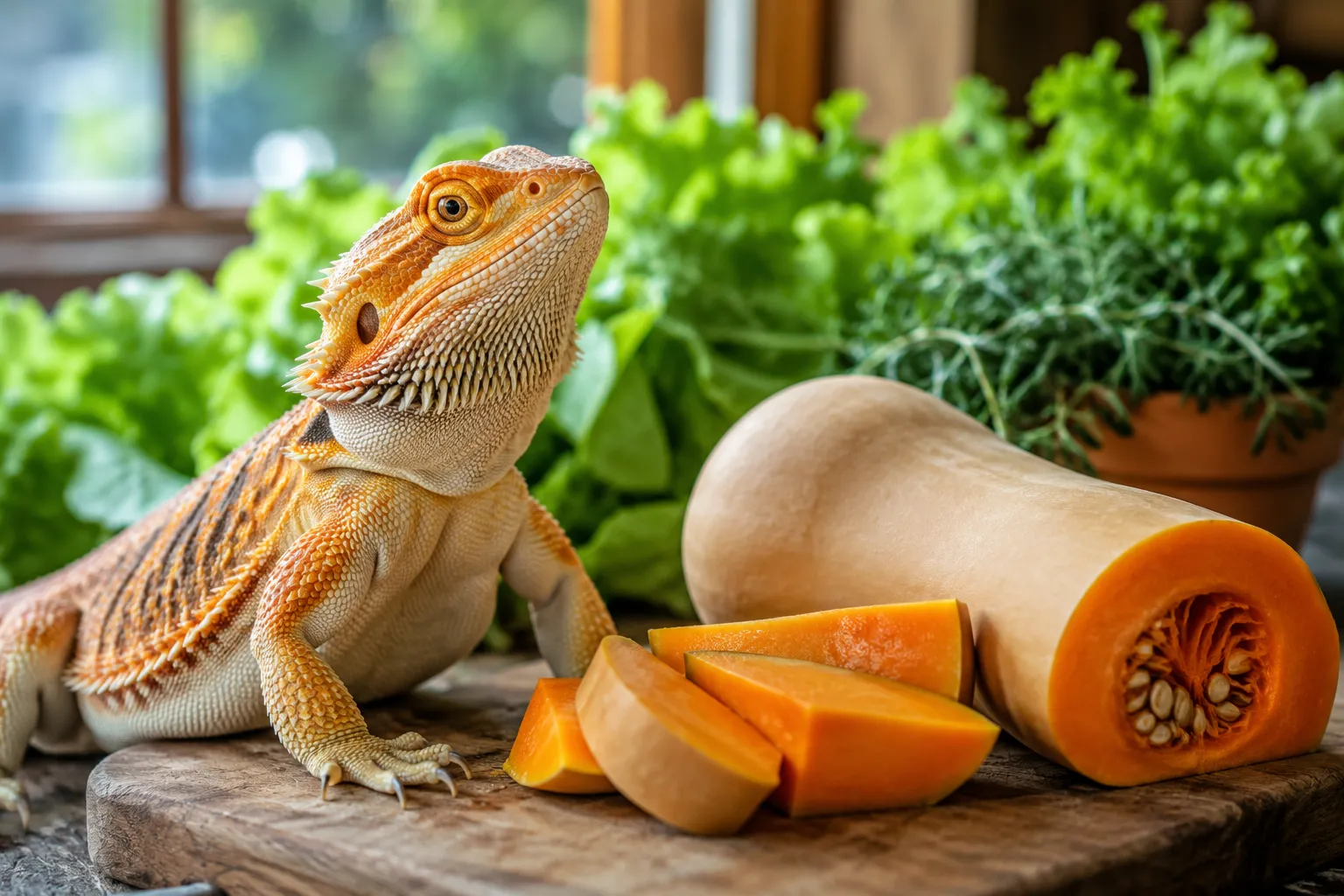
Quick Answer: Yes, bearded dragons can safely eat butternut squash as an occasional treat. This nutritious vegetable provides vitamins A and C, fiber, and hydration, but should only make up a small portion of their diet due to its high vitamin A content and unfavorable calcium-to-phosphorus ratio. Serve it cooked and diced into small pieces, and limit portions to once or twice per week.
Key Takeaways
- Butternut squash is safe for bearded dragons when served cooked and in moderation
- Feed butternut squash only 1-2 times per week as part of a varied vegetable rotation
- Always cook the squash and cut it into small, bite-sized pieces to prevent choking
- Remove the skin and seeds before serving to your bearded dragon
- Baby bearded dragons can eat butternut squash but need smaller portions than adults
- The calcium-to-phosphorus ratio in butternut squash (1:1.2) isn’t ideal, so pair it with calcium-rich greens
- Butternut squash should never replace staple vegetables like collard greens or mustard greens
- Overfeeding can cause digestive issues including diarrhea due to high water and fiber content
- Most bearded dragons enjoy the mild, slightly sweet taste of butternut squash
- Avoid feeding raw butternut squash as it’s harder to digest and poses a choking risk

Vitamin Enriched Formula That Provides Essential Proteins, Fats, Vitamins And Minerals

Unique textured pellets that bearded dragons love to eat

Package Dimensions: 12.953 H x 7.62 L x 7.62 W (centimeters)
Is Butternut Squash Safe for Bearded Dragons?
Butternut squash is completely safe for bearded dragons when prepared correctly and fed in appropriate amounts. This winter squash contains beneficial nutrients including beta-carotene (which converts to vitamin A), vitamin C, potassium, and dietary fiber that support your dragon’s overall health.
The main safety considerations involve portion control and preparation method. Butternut squash has a calcium-to-phosphorus ratio of approximately 1:1.2, which means it contains slightly more phosphorus than calcium. Since phosphorus can bind to calcium and prevent absorption, feeding too much butternut squash could contribute to metabolic bone disease over time.
Key safety points:
- No toxic compounds or harmful substances for reptiles
- High water content (around 86%) helps with hydration
- Vitamin A content is beneficial but can cause toxicity if overfed
- Must be cooked to improve digestibility and reduce choking risk
- Should represent only 5-10% of total vegetable intake
The biggest mistake owners make is treating butternut squash as a staple vegetable rather than an occasional addition. Think of it as a nutritious side dish, not the main course.
How to Prepare Butternut Squash for Bearded Dragons
Proper preparation makes butternut squash safe and easy for your bearded dragon to eat. Always cook the squash before serving, as raw butternut squash is too hard and fibrous for reptiles to digest properly.
Step-by-step preparation:
- Wash thoroughly, Rinse the outside of the squash under running water to remove dirt and potential pesticides
- Peel the skin, Use a vegetable peeler to remove the tough outer skin completely
- Cut and deseed, Slice the squash in half lengthwise and scoop out all seeds and stringy pulp
- Cook until soft, Steam, boil, or bake the squash until it’s tender (about 15-20 minutes for cubes)
- Cool completely, Let the squash reach room temperature before serving
- Dice into small pieces, Cut into cubes no larger than the space between your dragon’s eyes
- Mix with other vegetables, Combine with calcium-rich greens like collard greens or turnip greens
Cooking methods ranked:
- Steaming (best), Preserves the most nutrients and doesn’t add oils or fats
- Boiling (good), Easy and effective, though some nutrients leach into water
- Baking (acceptable), Concentrates flavors but may dry out the squash
- Microwaving (quick option), Works in a pinch but can create hot spots
Never add salt, butter, oils, or seasonings. Plain cooked squash is all your bearded dragon needs.
Raw or Cooked Butternut Squash for Bearded Dragons
Always serve cooked butternut squash to your bearded dragon, never raw. Raw butternut squash is extremely hard and difficult for reptiles to chew and digest, creating serious choking hazards and potential impaction risks.
Cooking breaks down the tough cell walls and complex starches in butternut squash, making nutrients more bioavailable and the texture safer for consumption. Raw squash can sit in your dragon’s digestive tract and cause blockages, especially in younger or smaller dragons.
Why cooked is essential:
- Softens the dense flesh to prevent choking
- Makes nutrients easier to absorb
- Reduces risk of digestive impaction
- Eliminates hard-to-digest raw starches
- Creates a texture your dragon can actually chew
Some owners ask about lightly blanched squash, but it’s better to cook it fully until fork-tender. The extra cooking time doesn’t significantly reduce nutritional value and dramatically improves safety.
How Much Butternut Squash Can a Bearded Dragon Eat?
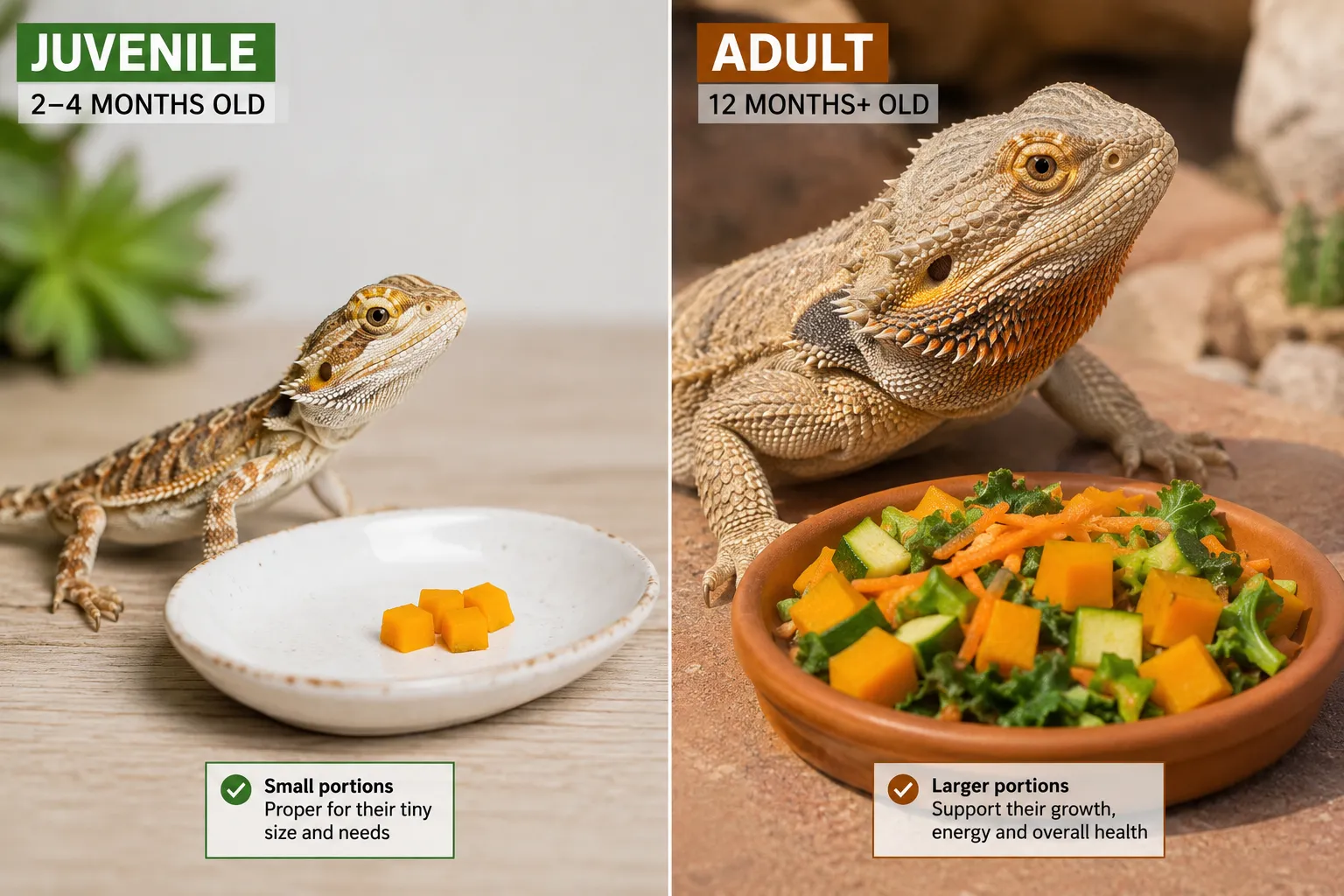
A bearded dragon should eat butternut squash only once or twice per week, with portion sizes adjusted based on age and size. For an adult dragon, offer 1-2 tablespoons of diced butternut squash mixed with other vegetables as part of their salad.
Portion guidelines by age:
- Baby bearded dragons (0-4 months): 1-2 small cubes once per week
- Juvenile bearded dragons (4-12 months): 1 teaspoon mixed with greens, 1-2 times per week
- Adult bearded dragons (12+ months): 1-2 tablespoons, 1-2 times per week
The 80/20 rule applies here: 80% of your dragon’s vegetable intake should come from staple greens (collard greens, mustard greens, turnip greens, dandelion greens), while only 20% should come from occasional vegetables like butternut squash.
Common mistake: Feeding butternut squash daily because your dragon loves it. This can lead to nutritional imbalances, vitamin A toxicity, and calcium deficiency over time. Variety is crucial for reptile health.
If your bearded dragon is particularly small or has digestive sensitivities, start with even smaller portions and monitor their droppings for any changes.
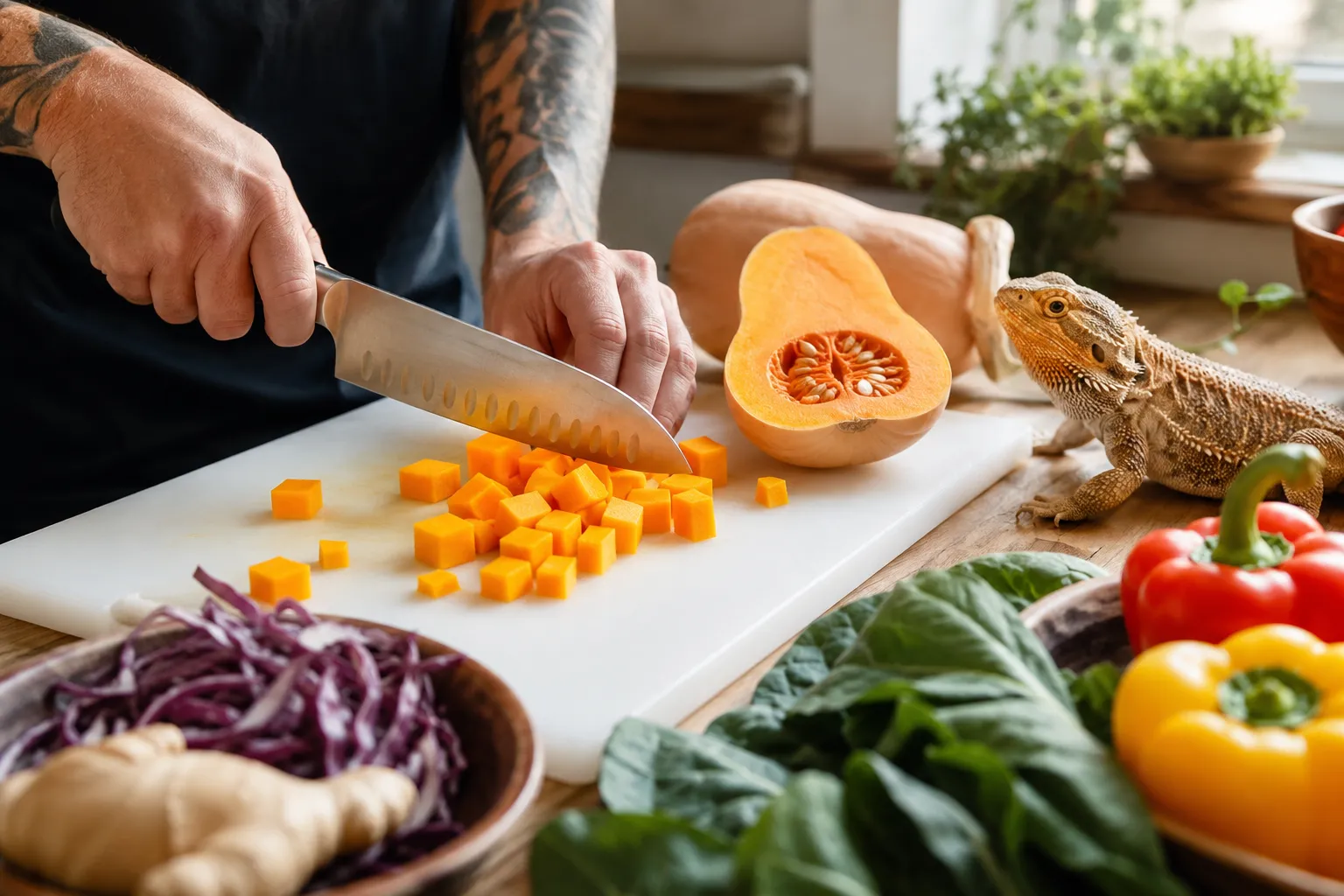
Can Baby Bearded Dragons Eat Butternut Squash?
Baby bearded dragons can eat butternut squash, but it should be offered sparingly and in very small portions. Young dragons need a diet focused primarily on protein (80% insects, 20% vegetables), so butternut squash should only appear occasionally in their veggie mix.
For babies under four months old, limit butternut squash to once per week maximum, and cut it into pieces smaller than a grain of rice. Their tiny digestive systems are still developing, and they need calcium-rich greens more than they need starchy vegetables.
Special considerations for baby dragons:
- Cut pieces extra small to prevent choking
- Mix with calcium-dusted greens to balance the phosphorus
- Watch for diarrhea or soft stools after feeding
- Prioritize staple greens over occasional vegetables
- Ensure pieces are soft enough to mash with minimal pressure
Baby bearded dragons are more prone to impaction and digestive issues than adults, so err on the side of caution. If you notice any digestive upset after feeding butternut squash, remove it from their diet for a few weeks before trying again.
Butternut Squash vs Sweet Potato for Bearded Dragons
Both butternut squash and sweet potato are safe occasional vegetables for bearded dragons, but butternut squash is generally the better choice due to its lower oxalate content and better nutrient profile.
Nutritional comparison:
| Factor | Butternut Squash | Sweet Potato |
|---|---|---|
| Calcium-to-phosphorus ratio | 1:1.2 (poor) | 1:2.5 (worse) |
| Vitamin A content | High | Very high |
| Oxalate level | Low | Moderate |
| Water content | 86% | 77% |
| Feeding frequency | 1-2x per week | 1x per week |
Sweet potatoes contain significantly more phosphorus relative to calcium, making them even less ideal as a regular food. They also have higher oxalate levels, which can bind to calcium and further reduce absorption.
Choose butternut squash if: Your dragon needs more hydration, you’re looking for a lower-oxalate option, or you want a vegetable you can feed slightly more often.
Choose sweet potato if: You want to add more variety, your dragon refuses butternut squash, or you’re already feeding it very occasionally.
The best approach is to rotate both vegetables along with other occasional options like bell peppers, green beans, and yellow squash, while keeping staple greens as the foundation of every salad.
What Vegetables Are Better Than Butternut Squash for Bearded Dragons?
Several vegetables outrank butternut squash nutritionally and should form the bulk of your bearded dragon’s plant-based diet. These staple greens offer superior calcium-to-phosphorus ratios and can be fed daily without concern.
Top-tier staple vegetables (feed daily):
- Collard greens, Calcium-to-phosphorus ratio of 14.5:1, excellent choice
- Mustard greens, Ratio of 2.4:1, high in vitamins A and C
- Turnip greens, Ratio of 4.5:1, nutrient-dense and readily available
- Dandelion greens, Ratio of 2.8:1, wild-foraged option
- Endive, Ratio of 1.9:1, good texture and hydration
Better occasional vegetables than butternut squash:
- Acorn squash, Similar nutrition but slightly better calcium ratio
- Bell peppers, High in vitamin C, low in oxalates
- Green beans, Good fiber source with decent calcium
- Okra, Higher calcium content than most vegetables
Butternut squash ranks as a middle-tier occasional vegetable. It’s not harmful, but it shouldn’t replace the greens listed above. A proper bearded dragon salad should be 70-80% staple greens, 10-20% occasional vegetables (including butternut squash), and 10% other additions like edible flowers.
The mistake many owners make is feeding too much variety at the expense of staple greens. Your dragon needs those calcium-rich greens every single day.
Can Bearded Dragons Eat Butternut Squash Every Day?
No, bearded dragons should not eat butternut squash every day. Daily feeding can lead to nutritional imbalances, particularly calcium deficiency and potential vitamin A toxicity over time.
The unfavorable calcium-to-phosphorus ratio means that frequent butternut squash consumption actively works against your dragon’s calcium absorption. Since bearded dragons are prone to metabolic bone disease, maintaining proper calcium levels is critical for bone health, muscle function, and overall wellbeing.
Risks of daily feeding:
- Calcium deficiency leading to metabolic bone disease
- Vitamin A toxicity from excessive beta-carotene intake
- Digestive upset from too much fiber and water
- Nutritional imbalances from lack of dietary variety
- Reduced appetite for more nutritious staple greens
Proper feeding schedule: Offer butternut squash 1-2 times per week maximum, always mixed with calcium-rich staple greens. On the other five days, focus on collard greens, mustard greens, and other high-calcium vegetables.
Think of butternut squash like dessert for humans, enjoyable and nutritious in moderation, but problematic as a daily staple. Your bearded dragon may beg for it every day because of its mild sweetness, but responsible ownership means prioritizing long-term health over short-term preferences.

OPTIMAL NUTRITION FOR HERBIVOROUS REPTILES; Zilla Herbivore Medley provides a complete diet for herbivores like bearded dragons, tortoises, uromastyx and iguanas

New Fluker's Crafted Cuisine Bearded Dragon Diet (6.75 oz.)

All Natural: 100% all-natural and preservative-free
Butternut Squash Causing Diarrhea in Bearded Dragons
Butternut squash can cause diarrhea in bearded dragons when fed in excessive amounts due to its high water content (86%) and fiber levels. Occasional soft stools after eating butternut squash are normal, but persistent diarrhea indicates you’re feeding too much or too frequently.
If your bearded dragon develops diarrhea after eating butternut squash, remove it from their diet immediately and focus on staple greens with lower water content for several days. Ensure they stay hydrated and monitor their droppings for improvement.
Common causes of squash-related diarrhea:
- Portion sizes too large for the dragon’s size
- Feeding butternut squash too frequently (more than twice weekly)
- Not mixing squash with drier, fiber-rich greens
- Individual sensitivity or digestive issues
- Squash not cooked thoroughly enough
Prevention strategies:
- Start with very small portions and gradually increase
- Always mix butternut squash with staple greens
- Limit feeding to once or twice per week maximum
- Ensure the squash is fully cooked and cooled
- Monitor your dragon’s droppings after each feeding
If diarrhea persists for more than 48 hours or is accompanied by lethargy, loss of appetite, or other symptoms, consult a reptile veterinarian. Chronic diarrhea can lead to dehydration and nutritional deficiencies.
Some bearded dragons simply have more sensitive digestive systems and may not tolerate butternut squash well. If your dragon consistently develops loose stools after eating it, choose alternative vegetables instead.
Do Bearded Dragons Like Butternut Squash?
Most bearded dragons enjoy butternut squash due to its mild, slightly sweet flavor and soft texture when cooked. The natural sugars in butternut squash make it more palatable than bitter greens, which is why many dragons eagerly eat it.
However, individual preferences vary significantly. Some bearded dragons will devour butternut squash immediately, while others show little interest or prefer different vegetables. Food preferences can also change with age, season, and overall health status.
Factors affecting acceptance:
- Texture, Cooked squash is soft and easy to eat
- Flavor, Mild sweetness appeals to many reptiles
- Temperature, Room temperature is most appealing
- Presentation, Mixed with familiar greens increases acceptance
- Individual personality, Some dragons are pickier eaters than others
If your dragon refuses butternut squash:
Don’t force it. Bearded dragons can thrive without ever eating butternut squash. Focus on the vegetables they do enjoy, ensuring you’re still offering calcium-rich staple greens daily. You can try reintroducing butternut squash in a few weeks, as preferences sometimes change.
If your dragon loves it too much:
This creates the opposite problem. Dragons that love butternut squash may refuse other vegetables or wait for their favorite food. Maintain strict portion control and don’t give in to begging behavior. Mix small amounts of butternut squash with larger portions of staple greens to encourage balanced eating.
Is Butternut Squash Skin Safe for Bearded Dragons?
No, you should always remove butternut squash skin before feeding it to your bearded dragon. The tough, fibrous skin is difficult to digest and poses choking and impaction risks, even when cooked.
Butternut squash skin remains relatively hard even after cooking, and bearded dragons lack the jaw strength and digestive enzymes needed to break it down effectively. The skin can create blockages in the digestive tract, particularly in smaller or younger dragons.
Why skin should be removed:
- Too tough and fibrous to digest properly
- Can cause intestinal blockages or impaction
- Offers minimal nutritional value
- May contain pesticide residues on the outer surface
- Creates unnecessary choking hazards
Proper skin removal: Use a sharp vegetable peeler to remove all the outer skin before cooking. Peel deeply enough to remove the tough layer just under the skin as well. The flesh should be uniformly orange or tan with no green or hard spots remaining.
Some owners wonder if small amounts of skin mixed into cooked squash are acceptable, but it’s better to remove it entirely. The few seconds it takes to peel the squash properly can prevent serious health complications.
What Squash Should Bearded Dragons Avoid?
Most squash varieties are safe for bearded dragons in moderation, but a few should be avoided or fed with extreme caution due to high oxalate content, poor calcium ratios, or digestive concerns.
Squash to avoid or limit:
- Spaghetti squash, Very high water content can cause diarrhea
- Zucchini, High in oxalates which bind calcium; feed sparingly
- Summer squash, Similar oxalate concerns as zucchini
- Pumpkin, Not toxic but offers little nutritional value; better as rare treat
Safe squash options (in moderation):
- Butternut squash (1-2 times per week)
- Acorn squash (1-2 times per week)
- Yellow squash (once per week)
- Kabocha squash (once per week)
The key distinction is between winter squash (butternut, acorn, kabocha) and summer squash (zucchini, yellow squash). Winter squashes generally have better nutritional profiles for bearded dragons, though none should be fed as staple vegetables.
Red flags for any squash:
- Moldy or spoiled portions
- Seasoned or prepared with oils, butter, or salt
- Raw and uncooked
- Seeds and stringy pulp still attached
When in doubt, stick with butternut squash and acorn squash as your occasional squash options, and always prioritize calcium-rich leafy greens as the foundation of your dragon’s vegetable intake.
Nutritional Benefits of Butternut Squash for Bearded Dragons
Butternut squash provides several important nutrients that support bearded dragon health when fed as part of a balanced diet. While not a staple food, it offers nutritional benefits that complement other vegetables.
Key nutrients in butternut squash:
- Beta-carotene (Vitamin A), Supports eye health, immune function, and skin health; bearded dragons convert beta-carotene to active vitamin A as needed
- Vitamin C, Acts as an antioxidant and supports immune system function
- Potassium, Helps regulate fluid balance and muscle function
- Fiber, Promotes healthy digestion and regular bowel movements
- Magnesium, Supports bone health and metabolic processes
- Water content, Provides hydration, especially helpful for dragons that don’t drink enough
Nutritional profile per 100g cooked butternut squash:
- Calories: 40
- Protein: 0.9g
- Fiber: 2g
- Calcium: 48mg
- Phosphorus: 33mg
- Vitamin A: 10,630 IU
- Vitamin C: 15mg
The high vitamin A content is both a benefit and a concern. While vitamin A is essential for bearded dragons, excessive amounts can cause toxicity. This is why butternut squash should remain an occasional food rather than a daily staple.
The fiber content aids digestion and helps prevent constipation, though too much can cause the opposite problem (diarrhea). The water content is beneficial for hydration, particularly during shedding periods or in dry environments.
Mixing Butternut Squash with Other Vegetables for Bearded Dragons
Mixing butternut squash with other vegetables is the best way to serve it, creating a balanced salad that provides diverse nutrients while minimizing the impact of butternut squash’s poor calcium-to-phosphorus ratio.
Ideal butternut squash salad combinations:
Basic balanced mix:
- 60% collard greens or mustard greens (chopped)
- 20% butternut squash (cooked and diced)
- 10% bell pepper (diced)
- 10% grated carrot
Calcium-boosting mix:
- 50% turnip greens
- 25% dandelion greens
- 15% butternut squash (cooked)
- 10% green beans (chopped)
Variety mix:
- 40% collard greens
- 20% endive
- 20% butternut squash (cooked)
- 10% yellow squash (cooked)
- 10% edible flowers (hibiscus, nasturtium)
Mixing principles:
- Always make calcium-rich greens the largest component (50-70%)
- Limit butternut squash to 15-25% of the total salad
- Add variety with 2-3 other vegetables
- Ensure all pieces are appropriately sized
- Dust the entire salad with calcium powder 3-4 times per week
Preparation tips:
Prepare the butternut squash separately (cook, cool, dice), then mix it with fresh raw greens just before serving. This prevents the moisture from the cooked squash from wilting the greens prematurely. Toss everything together thoroughly so your dragon can’t pick out only their favorite items.
Some bearded dragons will eat around vegetables they don’t prefer, so mixing creates a more balanced intake. If your dragon consistently leaves certain vegetables, try different cutting sizes or mixing ratios until you find what works.
FAQ
Can bearded dragons eat butternut squash seeds?
No, remove all seeds before feeding butternut squash to your bearded dragon. The seeds are hard, difficult to digest, and pose choking hazards. Always scoop out seeds and stringy pulp before cooking the squash.
How often can I feed my bearded dragon butternut squash?
Feed butternut squash only 1-2 times per week as an occasional vegetable. It should never replace daily staple greens like collard greens or mustard greens due to its unfavorable calcium-to-phosphorus ratio.
Can I feed frozen butternut squash to my bearded dragon?
Yes, frozen butternut squash is safe if you cook it thoroughly and let it cool to room temperature before serving. Frozen squash often has similar nutritional value to fresh and is more convenient for many owners.
Will butternut squash help my bearded dragon with constipation?
Butternut squash can help with mild constipation due to its high water and fiber content. However, if your dragon is severely constipated, consult a veterinarian rather than relying on dietary changes alone.
Can bearded dragons eat butternut squash soup or puree?
Plain butternut squash puree (just cooked squash, no additives) is safe, but whole pieces are better for dental health and natural eating behavior. Never feed soup with added salt, cream, butter, or seasonings.
Is butternut squash better than carrots for bearded dragons?
Both are occasional vegetables with pros and cons. Butternut squash has more water and vitamin A, while carrots have slightly more calcium. Rotate both in moderation rather than choosing one exclusively.
Can bearded dragons eat butternut squash leaves or vines?
No, feed only the flesh of the butternut squash. The leaves and vines haven’t been studied for reptile safety and may contain compounds that could cause digestive upset.
What should I do if my bearded dragon ate too much butternut squash?
Monitor for diarrhea or digestive upset. Ensure they have access to water and offer only staple greens for the next few days. If symptoms persist beyond 48 hours or worsen, consult a reptile veterinarian.
Can bearded dragons eat butternut squash with the skin on if it’s cooked?
No, always remove the skin even if cooked. The skin remains tough and fibrous after cooking and can cause impaction or choking regardless of preparation method.
Does butternut squash provide enough calcium for bearded dragons?
No, butternut squash has insufficient calcium and an unfavorable calcium-to-phosphorus ratio. Bearded dragons need calcium-rich staple greens daily, plus calcium supplementation, to meet their nutritional requirements.
Can I give my bearded dragon butternut squash as a treat?
Yes, butternut squash works well as an occasional treat when prepared properly. Just remember that “treat” means 1-2 times per week maximum, not daily, and always mixed with nutritious greens.
Will my bearded dragon’s color change from eating butternut squash?
No, eating butternut squash won’t change your bearded dragon’s color. Color changes typically result from temperature, mood, age, or health issues, not diet, though severe vitamin deficiencies can affect skin health over time.
Conclusion
Butternut squash can be a nutritious and enjoyable addition to your bearded dragon’s diet when served correctly and in moderation. The key is treating it as an occasional vegetable rather than a staple, limiting portions to 1-2 times per week, and always mixing it with calcium-rich greens like collard greens or mustard greens.
Action steps for feeding butternut squash safely:
- Cook the squash thoroughly until soft (steaming is best)
- Remove all skin and seeds before serving
- Cut into small, bite-sized pieces appropriate for your dragon’s size
- Mix with staple greens to create a balanced salad
- Limit portions based on age (1-2 tablespoons for adults, less for juveniles)
- Feed only 1-2 times per week maximum
- Monitor droppings for any signs of digestive upset
- Dust salads with calcium powder 3-4 times weekly
Remember that variety is essential for bearded dragon health. Rotate butternut squash with other occasional vegetables like bell peppers, green beans, and acorn squash, but always maintain a foundation of calcium-rich staple greens that should comprise 70-80% of every salad.
If your bearded dragon shows signs of digestive upset, refuses butternut squash, or has specific health conditions, consult with a reptile veterinarian for personalized dietary recommendations. With proper preparation and portion control, butternut squash can be a safe, nutritious treat that adds variety to your dragon’s diet.

Age range description: adult

Bearded Dragon Bites Is A Soft Moist Ready To Eat Food Designed For Bearded Dragons

Age range description: All Stages