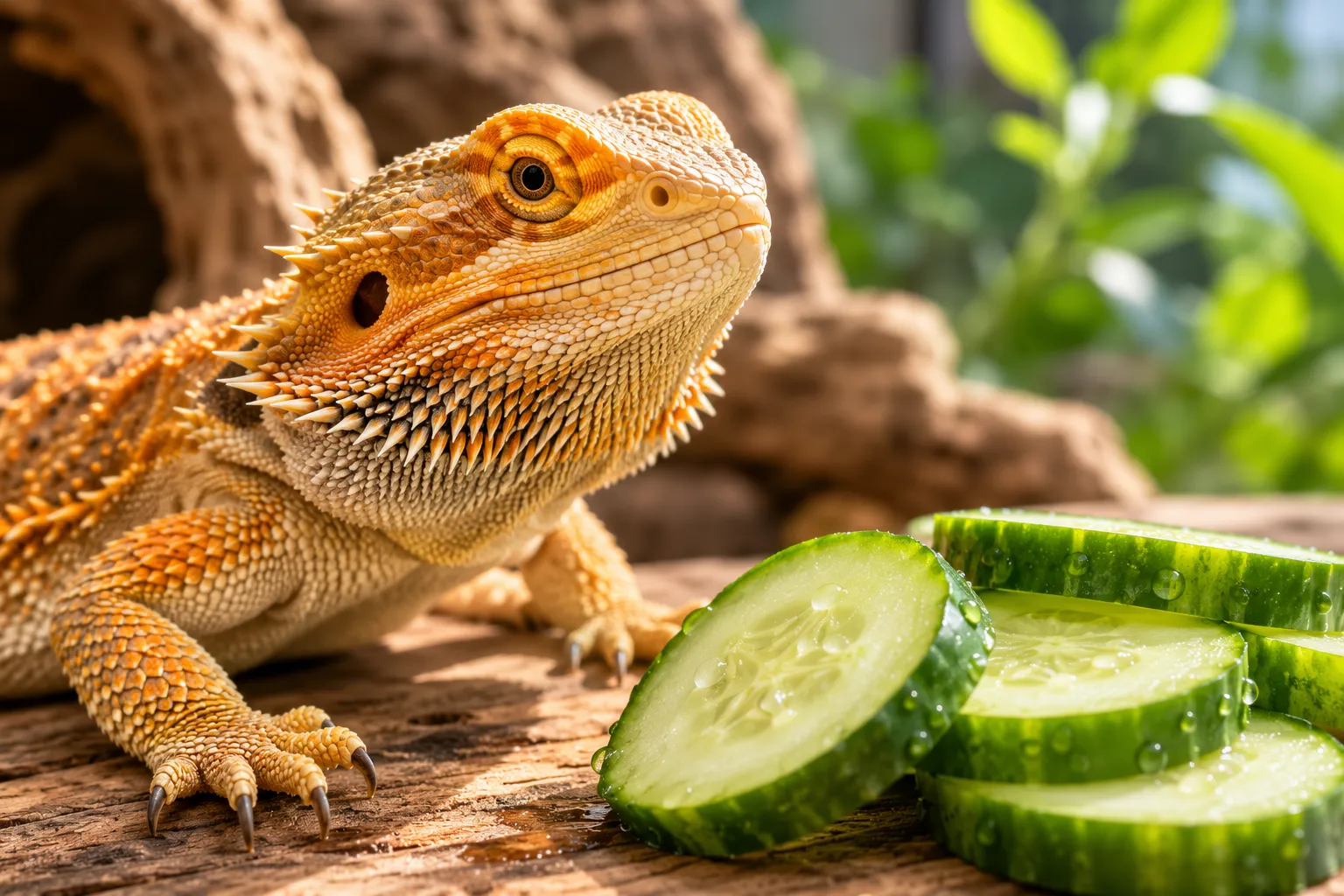
Quick Answer: Yes, bearded dragons can eat cucumber, but only as an occasional treat rather than a dietary staple. Cucumber is safe for bearded dragons in small amounts, but it offers minimal nutritional value and has a very high water content (around 96%) that can cause digestive issues if fed too frequently. Limit cucumber to once or twice per week at most, and always pair it with more nutrient-dense vegetables.
Key Takeaways
- Cucumber is safe but not nutritious, it’s mostly water with very little protein, calcium, or vitamins
- Feed cucumber sparingly, no more than 1-2 times per week as a small treat
- Always remove seeds and peel, these can be harder to digest and may contain pesticides
- Cut into small pieces, quarter-inch cubes prevent choking and make eating easier
- Baby bearded dragons should avoid cucumber, they need calcium-rich, protein-dense foods for growth
- Cucumber can cause diarrhea, the high water content leads to loose stools if overfed
- Better vegetable alternatives exist, collard greens, butternut squash, and bell peppers offer far more nutrition
- Never feed cucumber daily, the poor calcium-to-phosphorus ratio can contribute to metabolic bone disease
- Skin and seeds are technically safe, but removing them reduces digestive stress
- Hydration benefit is minimal, bearded dragons get most water from their food and drinking bowl

Vitamin Enriched Formula That Provides Essential Proteins, Fats, Vitamins And Minerals

All Natural: 100% all-natural and preservative-free
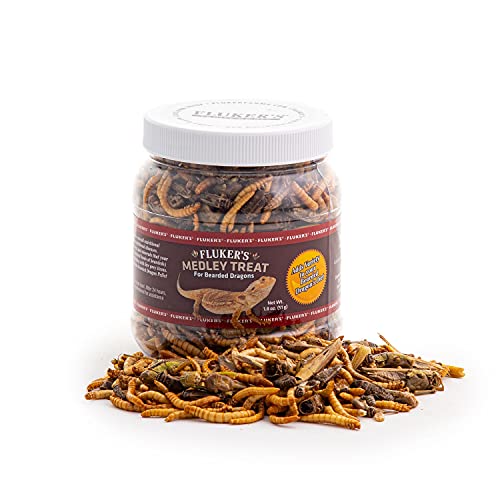
All without the hassle of dealing with live Prey items
Is Cucumber Safe for Bearded Dragons?
Cucumber is non-toxic and safe for bearded dragons to consume in moderation. The vegetable contains no harmful compounds that would poison your pet, and many bearded dragons enjoy the mild taste and crunchy texture.
However, “safe” doesn’t mean “beneficial.” Cucumber’s safety comes with significant nutritional limitations:
- Extremely low in calcium, bearded dragons need high-calcium foods to prevent metabolic bone disease
- Poor calcium-to-phosphorus ratio, phosphorus actually blocks calcium absorption
- Minimal vitamins, contains trace amounts of vitamin K and C, but nothing substantial
- Almost no protein, adult bearded dragons still need some protein from vegetables
Choose cucumber if: Your bearded dragon is well-hydrated, eating a balanced diet of nutrient-dense vegetables and insects, and you want to offer occasional variety.
Avoid cucumber if: Your dragon shows signs of metabolic bone disease, is underweight, refuses other vegetables, or is under 12 months old.
How Often Can Bearded Dragons Eat Cucumber?
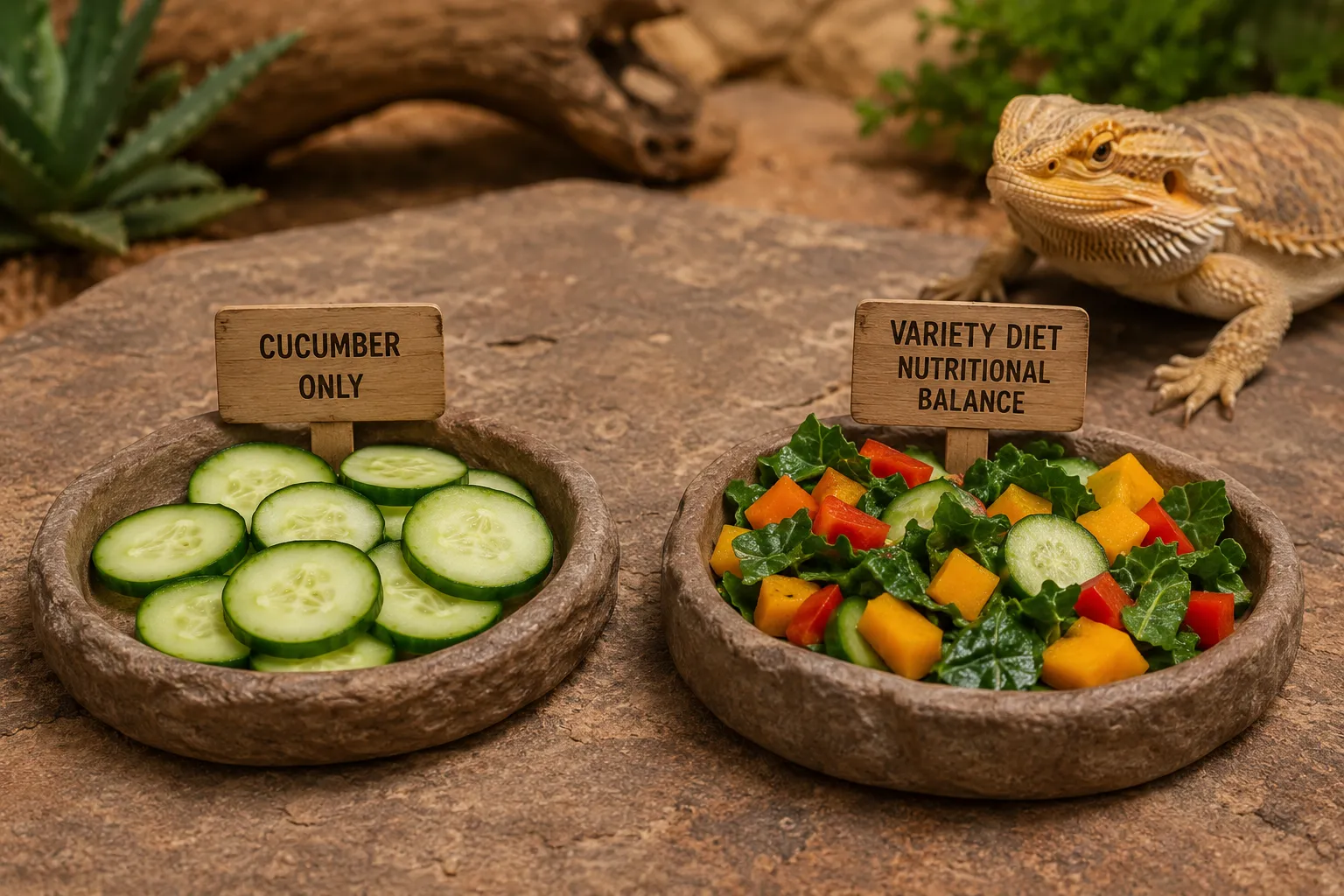
Bearded dragons should eat cucumber no more than once or twice per week, and only in small portions. A serving size of 2-3 small cubes (about one teaspoon total) mixed with other vegetables is appropriate for an adult bearded dragon.
The frequency limitation exists because:
- Nutritional displacement, cucumber fills them up without providing essential nutrients
- Digestive concerns, too much water content leads to diarrhea and dehydration from electrolyte loss
- Calcium balance, regular cucumber consumption can worsen calcium deficiency over time
Weekly feeding schedule example:
- Monday: Collard greens, butternut squash, bell pepper
- Wednesday: Mustard greens, acorn squash, carrots
- Friday: Turnip greens, sweet potato, cucumber (small amount)
- Sunday: Dandelion greens, butternut squash, green beans
Common mistake: Feeding cucumber daily because your bearded dragon seems to love it. Dragons often prefer watery, mild vegetables because they’re easy to eat, but this preference doesn’t reflect nutritional needs.
Nutritional Value of Cucumber for Bearded Dragons
Cucumber provides minimal nutritional benefit to bearded dragons. Per 100 grams of cucumber, the nutritional profile includes approximately 96% water, 3.6g carbohydrates, 0.7g protein, and only 16mg calcium compared to 24mg phosphorus.
Nutritional breakdown:
- Water content: 96% (excessive for regular feeding)
- Calcium: 16mg per 100g (very low)
- Phosphorus: 24mg per 100g (creates negative calcium ratio)
- Protein: 0.7g per 100g (inadequate)
- Vitamin A: Minimal (bearded dragons need substantial amounts)
- Fiber: 0.5g per 100g (low)
Comparison to better vegetables:
| Vegetable | Calcium (mg) | Phosphorus (mg) | Ca:P Ratio | Protein (g) |
|---|---|---|---|---|
| Cucumber | 16 | 24 | 0.7:1 | 0.7 |
| Collard Greens | 232 | 19 | 12:1 | 3.0 |
| Butternut Squash | 48 | 33 | 1.5:1 | 1.0 |
| Mustard Greens | 115 | 58 | 2:1 | 2.7 |
The ideal calcium-to-phosphorus ratio for bearded dragons is 2:1 or higher. Cucumber’s inverted ratio means it actually works against your dragon’s calcium absorption.
Can Baby Bearded Dragons Eat Cucumber?
Baby bearded dragons should not eat cucumber. Juvenile dragons (under 12 months) require a diet extremely high in protein and calcium to support rapid growth and bone development, and cucumber provides neither.
Why cucumber is inappropriate for babies:
- Growth demands, babies need 70-80% insects and 20-30% vegetables, all nutrient-dense
- Bone development, inadequate calcium during growth leads to permanent skeletal deformities
- Protein requirements, babies need protein for muscle and organ development
- Limited stomach capacity, every bite should be nutritionally valuable
Better vegetable options for baby bearded dragons:
- Collard greens (finely chopped)
- Mustard greens
- Turnip greens
- Butternut squash (grated)
- Acorn squash
Wait until your bearded dragon reaches at least 12 months old before introducing cucumber, and even then, keep it minimal. Focus juvenile feeding on calcium-dusted insects (crickets, dubia roaches) and calcium-rich leafy greens.
Cucumber vs Zucchini for Bearded Dragons
Both cucumber and zucchini are low-nutrient vegetables that should be fed sparingly, but zucchini offers slightly better nutritional value. Zucchini contains more calcium (16mg vs 16mg per 100g), similar phosphorus levels, and marginally more vitamins and minerals.
Nutritional comparison:
| Nutrient | Cucumber | Zucchini | Winner |
|---|---|---|---|
| Calcium | 16mg | 16mg | Tie |
| Phosphorus | 24mg | 38mg | Cucumber (lower is better) |
| Vitamin A | 105 IU | 200 IU | Zucchini |
| Vitamin C | 2.8mg | 17.9mg | Zucchini |
| Water content | 96% | 95% | Zucchini (slightly less watery) |
Verdict: Neither should be a dietary staple, but if choosing between the two, zucchini provides marginally better nutrition. However, both pale in comparison to leafy greens and colorful vegetables like bell peppers, squash varieties, and carrots.
Best practice: Rotate both cucumber and zucchini as occasional treats (once per week each at most), but build the vegetable diet foundation on collard greens, mustard greens, turnip greens, and butternut squash.
Do I Need to Peel Cucumber for My Bearded Dragon?
Peeling cucumber before feeding it to your bearded dragon is recommended but not strictly necessary if you buy organic produce. Cucumber skin can harbor pesticide residues and is slightly tougher to digest than the flesh, making peeling the safer choice.
Reasons to peel cucumber:
- Pesticide exposure, conventional cucumbers are often heavily treated with chemicals
- Digestive ease, the skin is tougher and may be harder for some dragons to break down
- Wax coatings, many store-bought cucumbers have a wax coating that isn’t digestible
When you can skip peeling:
- You buy organic, unwaxed cucumbers
- You thoroughly wash the cucumber under running water
- Your bearded dragon has no digestive sensitivities
Preparation steps:
- Wash cucumber thoroughly under cool running water
- Peel if conventional (non-organic) or waxed
- Cut cucumber in half lengthwise
- Remove seeds with a spoon (optional but recommended)
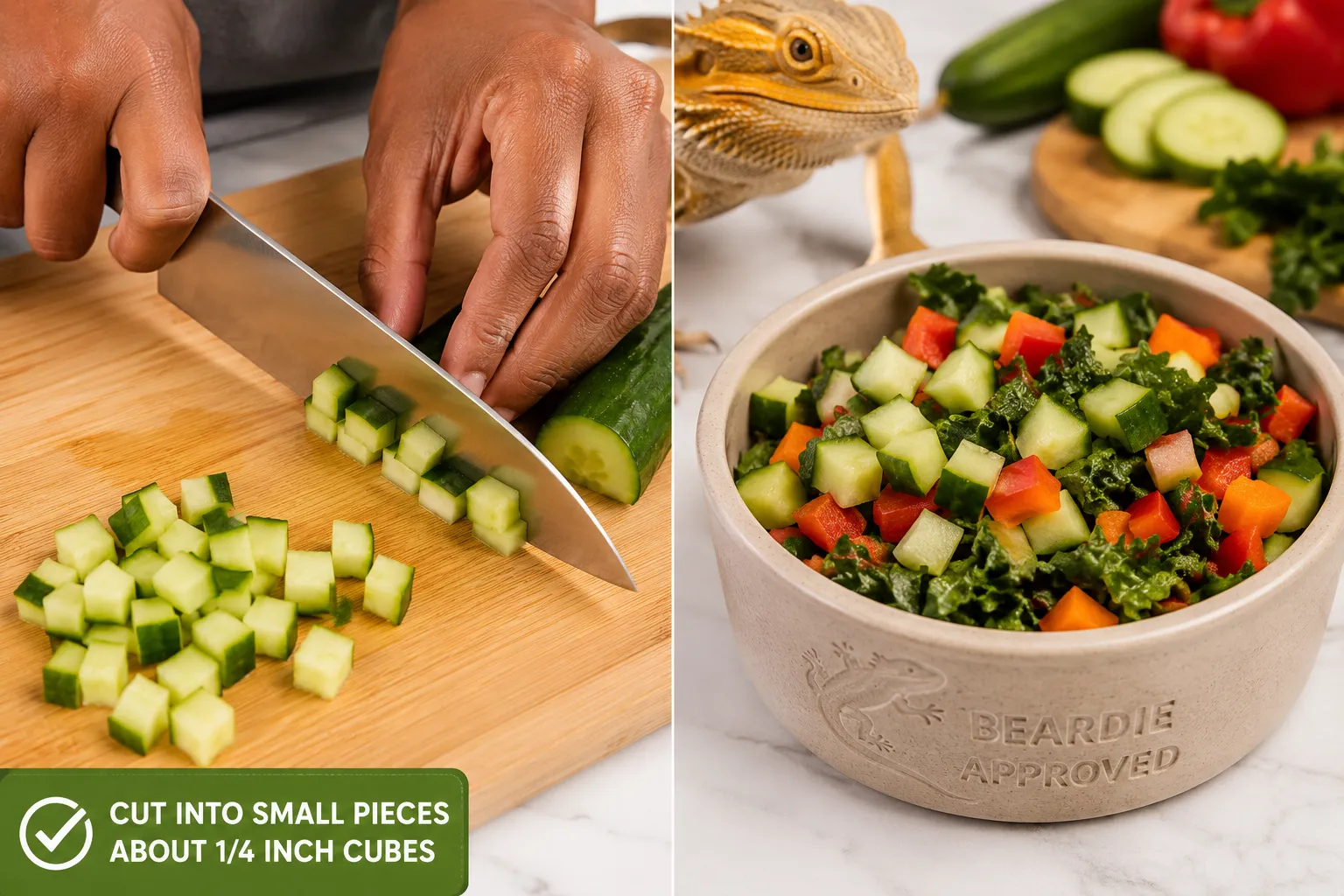
- Dice into quarter-inch cubes
- Mix with nutrient-dense vegetables before serving
Edge case: If your bearded dragon consistently leaves cucumber skin uneaten, always peel it. This behavior suggests the skin is too tough for their preference or digestive comfort.
Why Is Cucumber Not Good for Bearded Dragons Daily?
Feeding cucumber daily can lead to nutritional deficiencies, metabolic bone disease, and digestive problems in bearded dragons. The vegetable’s poor calcium-to-phosphorus ratio and minimal nutrient density make it unsuitable as a regular food item.
Health risks of daily cucumber feeding:
1. Metabolic Bone Disease (MBD)
- Phosphorus blocks calcium absorption
- Inadequate calcium causes soft, deformed bones
- Symptoms include lethargy, tremors, swollen limbs, and difficulty walking
2. Nutritional Deficiencies
- Lack of vitamin A leads to eye problems and immune issues
- Insufficient protein causes muscle wasting
- Missing trace minerals affect organ function
3. Digestive Issues
- Excessive water content causes chronic diarrhea
- Loose stools lead to dehydration and electrolyte imbalance
- Reduced appetite for nutrient-dense foods
4. Weight Problems
- Cucumber fills stomach without providing calories
- Can lead to gradual weight loss
- Reduced energy and activity levels
Real-world example: A bearded dragon fed cucumber daily for several months may appear healthy initially but will gradually develop MBD symptoms like a softened jaw, difficulty climbing, and lethargy. By the time symptoms appear, bone damage may be irreversible.
What Vegetables Are Better Than Cucumber for Bearded Dragons?
Collard greens, mustard greens, turnip greens, butternut squash, acorn squash, bell peppers, and carrots are all significantly better vegetable choices than cucumber for bearded dragons. These vegetables provide high calcium content, better calcium-to-phosphorus ratios, and essential vitamins.
Top vegetable choices ranked by nutritional value:
Tier 1 (Daily staples):
- Collard greens, 12:1 calcium-to-phosphorus ratio, high vitamin A
- Mustard greens, 2:1 ratio, excellent vitamin K
- Turnip greens, 4.5:1 ratio, high calcium
- Dandelion greens, 2.8:1 ratio, nutrient-dense
Tier 2 (Regular rotation, 3-4 times per week):
- Butternut squash, Good vitamin A, moderate calcium
- Acorn squash, Similar benefits to butternut
- Bell peppers (red, orange, yellow), High vitamin C and A
- Carrots, Vitamin A, beta-carotene (shredded only)
Tier 3 (Occasional treats, 1-2 times per week):
- Green beans, Moderate nutrition
- Zucchini, Low nutrition but safe
- Cucumber, Minimal nutrition, high water
Weekly meal plan example:
- 60% leafy greens (collard, mustard, turnip, dandelion, rotate daily)
- 30% colorful vegetables (squash, bell peppers, carrots, rotate)
- 10% occasional treats (cucumber, zucchini, green beans)


Can Bearded Dragons Eat Cucumber Skin and Seeds?
Bearded dragons can technically eat cucumber skin and seeds, but removing both is recommended for optimal digestion and safety. The skin may contain pesticide residues and is tougher to digest, while seeds can pose a minor choking risk and are harder to break down.
Cucumber skin considerations:
- Safe if organic and thoroughly washed
- Contains slightly more fiber than flesh
- May be difficult for some dragons to chew
- Can harbor pesticides if conventionally grown
Cucumber seed considerations:
- Small seeds are generally safe
- Large, mature seeds are harder to digest
- Removing seeds reduces choking risk
- Seedless cucumber varieties eliminate this concern
Best practice: Peel the cucumber and scoop out seeds before dicing. This takes an extra 30 seconds but ensures your bearded dragon gets the easiest-to-digest portion with minimal risk.
When to definitely remove skin and seeds:
- Baby or juvenile bearded dragons (under 12 months)
- Dragons with digestive sensitivities or previous impaction issues
- Conventionally grown (non-organic) cucumbers
- First time introducing cucumber to your dragon
How to Prepare Cucumber for Bearded Dragons
Preparing cucumber for bearded dragons involves washing, peeling, removing seeds, and cutting into appropriately sized pieces. Proper preparation ensures safety, improves digestibility, and makes the cucumber easier for your dragon to eat.
Step-by-step preparation:
Wash thoroughly, Rinse cucumber under cool running water for 30 seconds, rubbing the surface to remove dirt and residues
Peel the skin, Use a vegetable peeler to remove the outer skin, especially if the cucumber is conventionally grown or waxed
Cut lengthwise, Slice the cucumber in half from end to end to expose the seed cavity
Remove seeds, Use a spoon to scoop out the seeds from the center of each half
Dice into small cubes, Cut the cucumber into quarter-inch cubes (roughly the size of your dragon’s eye space between their eyes)
Mix with other vegetables, Combine cucumber pieces with nutrient-dense greens and vegetables in a 1:5 ratio (one part cucumber to five parts nutritious vegetables)
Serve fresh, Offer immediately and remove uneaten portions after 2-3 hours to prevent bacterial growth
Sizing guide:
- Adult bearded dragons: Quarter-inch cubes
- Juvenile dragons (not recommended): If you must, dice into eighth-inch pieces
- Rule of thumb: Pieces should be no larger than the space between your dragon’s eyes
Common mistake: Serving cucumber in large slices or spears. Bearded dragons can choke on large pieces, and smaller cubes are much easier to eat and digest.
My Bearded Dragon Won’t Eat Cucumber, What Should I Do?
If your bearded dragon won’t eat cucumber, don’t worry, this is actually a non-issue since cucumber isn’t nutritionally necessary. Focus on offering nutrient-dense vegetables instead, and consider your dragon’s refusal a blessing in disguise.
Why your dragon might refuse cucumber:
- Preference for other foods, many dragons prefer sweeter or more flavorful vegetables
- Texture aversion, some dragons dislike the watery, soft texture
- Already well-hydrated, they may not be drawn to high-water-content foods
- Instinctive selection, dragons sometimes avoid low-nutrient foods naturally
What to do instead:
1. Offer better alternatives:
- Try butternut squash (naturally sweet)
- Offer red or orange bell peppers (colorful and flavorful)
- Introduce shredded carrots (appealing color)
2. Don’t force it:
- Cucumber isn’t nutritionally important
- Forcing foods creates stress
- Focus on vegetables they do enjoy
3. Ensure dietary variety:
- Rotate 5-7 different vegetables weekly
- Include daily leafy greens
- Add colorful vegetables for visual appeal
4. Check overall diet:
- Ensure they’re eating enough insects (adults: 20-30%, juveniles: 70-80%)
- Verify they’re consuming leafy greens daily
- Monitor weight and activity levels
When to be concerned: If your bearded dragon refuses ALL vegetables, not just cucumber, consult a reptile veterinarian. General food refusal can indicate illness, parasites, or environmental issues (wrong temperature, inadequate lighting).
Can Cucumber Cause Diarrhea in Bearded Dragons?
Yes, cucumber can cause diarrhea in bearded dragons when fed in excessive amounts or too frequently. The vegetable’s 96% water content overwhelms the digestive system, leading to loose, watery stools and potential dehydration from electrolyte loss.
How cucumber causes digestive upset:
- Excessive water, floods the intestines faster than water can be absorbed
- Low fiber, insufficient bulk to form solid stools
- Rapid transit, food moves through digestive system too quickly
- Electrolyte dilution, excessive water flushes out essential minerals
Signs your dragon has cucumber-related diarrhea:
- Watery or very loose stools
- More frequent defecation than normal
- Undigested food visible in stool
- Lethargy or reduced activity
- Sunken eyes (dehydration sign)
Treatment steps:
- Stop feeding cucumber immediately, remove it from the diet for at least 2 weeks
- Increase fiber, offer more leafy greens (collard, mustard, turnip)
- Reduce water-heavy foods, avoid other high-water vegetables temporarily
- Monitor hydration, ensure fresh water is available, but don’t force-feed water
- Watch for improvement, stools should firm up within 2-3 days
Prevention: Limit cucumber to once per week maximum, serve only 2-3 small cubes mixed with other vegetables, and always pair with fiber-rich leafy greens.
When to see a vet: If diarrhea persists more than 3 days after removing cucumber, if your dragon shows signs of severe dehydration (sunken eyes, skin tenting, lethargy), or if you notice blood in the stool.
How Much Cucumber Is Too Much for a Bearded Dragon?
More than 2-3 small cubes (approximately one teaspoon) of cucumber per feeding is too much for a bearded dragon. Cucumber should never comprise more than 5-10% of a single meal and should only be offered once or twice per week at most.
Serving size guidelines:
Adult bearded dragons (18+ months):
- Maximum per feeding: 2-3 quarter-inch cubes
- Frequency: Once per week
- Percentage of meal: 5-10% maximum
- Always mixed with nutrient-dense vegetables
Juvenile bearded dragons (12-18 months):
- Maximum per feeding: 1-2 small cubes (if any)
- Frequency: Once every 2 weeks
- Better option: Skip cucumber entirely
Baby bearded dragons (under 12 months):
- Recommended amount: None
- Focus on calcium-rich greens and protein instead
Visual portion guide:
- Think of cucumber as a garnish, not a main ingredient
- If you’re serving a salad bowl, cucumber should be barely visible among the greens
- The majority of the bowl should be leafy greens (60%) and colorful vegetables (30%)
Signs you’re feeding too much cucumber:
- Loose or watery stools
- Your dragon refuses other vegetables
- Weight loss or lethargy
- Reduced interest in insects
Decision rule: If you’re questioning whether you’re feeding too much cucumber, you probably are. When in doubt, reduce the amount or frequency.
Frequently Asked Questions
Can bearded dragons eat cucumber every day?
No, bearded dragons should not eat cucumber every day. Daily cucumber feeding can lead to nutritional deficiencies, metabolic bone disease, and digestive issues due to its poor calcium-to-phosphorus ratio and excessive water content. Limit cucumber to once or twice per week at most.
Is cucumber or lettuce better for bearded dragons?
Neither cucumber nor lettuce is nutritionally valuable for bearded dragons, but cucumber is slightly better than iceberg lettuce. Both are mostly water with minimal nutrients. Instead, feed collard greens, mustard greens, or turnip greens, which provide essential calcium and vitamins.
Can cucumber hydrate my bearded dragon?
While cucumber contains 96% water, it’s not an effective or necessary hydration method for bearded dragons. Dragons get adequate hydration from their regular vegetables, insects, and drinking water. Over-relying on cucumber for hydration can cause diarrhea and electrolyte imbalance.
Do bearded dragons like the taste of cucumber?
Many bearded dragons enjoy cucumber’s mild taste and crunchy texture, but preference varies by individual. Some dragons love it, while others ignore it completely. However, preference doesn’t indicate nutritional value, dragons often prefer less nutritious foods.
Can I feed my bearded dragon cucumber with the peel on?
You can feed cucumber with the peel on if it’s organic and thoroughly washed, but peeling is safer and recommended. Conventional cucumber peels may contain pesticide residues and wax coatings that aren’t digestible. Peeling also makes the cucumber easier to digest.
What happens if my bearded dragon eats too much cucumber?
Eating too much cucumber can cause diarrhea, dehydration, nutritional deficiencies, and contribute to metabolic bone disease over time. Immediate effects include watery stools and lethargy. Long-term overconsumption leads to calcium deficiency and weakened bones.
Can bearded dragons eat English cucumber or Persian cucumber?
Yes, bearded dragons can eat English cucumber and Persian cucumber in the same limited quantities as regular cucumber. All cucumber varieties have similar nutritional profiles, mostly water with minimal nutrients. The same feeding guidelines apply regardless of cucumber type.
Should I mix cucumber with other vegetables?
Yes, always mix cucumber with nutrient-dense vegetables like collard greens, butternut squash, and bell peppers. Cucumber should never be fed alone and should comprise no more than 5-10% of the vegetable portion. The bulk of the meal should be calcium-rich leafy greens.
Can cucumber cause impaction in bearded dragons?
Cucumber itself is unlikely to cause impaction because of its high water content and soft texture. However, cucumber seeds or large pieces of peel could potentially contribute to impaction, especially in younger dragons. Remove seeds and peel, and cut into small pieces to minimize risk.
Is organic cucumber better for bearded dragons?
Yes, organic cucumber is better because it contains fewer pesticide residues and typically isn’t coated with wax. However, even organic cucumber should be fed sparingly due to its poor nutritional profile. Organic doesn’t make cucumber more nutritious, it just makes it safer.
Can bearded dragons eat pickled cucumber?
No, bearded dragons should never eat pickled cucumber. Pickles contain high amounts of salt, vinegar, and spices that are harmful to bearded dragons. Only feed fresh, raw cucumber in small amounts. Processed or seasoned vegetables are always inappropriate for reptiles.
How long does cut cucumber last for my bearded dragon?
Cut cucumber should be served fresh and removed from your bearded dragon’s enclosure after 2-3 hours. Bacteria grows rapidly on cut produce, especially in warm terrarium environments. Discard any uneaten cucumber and prepare fresh portions for each feeding.
Conclusion
Bearded dragons can eat cucumber, but it should remain a rare treat rather than a dietary staple. While cucumber is safe and non-toxic, its minimal nutritional value and poor calcium-to-phosphorus ratio make it unsuitable for regular feeding. The 96% water content can cause digestive upset when overfed, and relying on cucumber displaces more nutritious vegetables that your dragon actually needs.
Action steps for feeding cucumber safely:
- Limit frequency, offer cucumber no more than once per week
- Control portions, serve only 2-3 small cubes mixed with other vegetables
- Prepare properly, peel, remove seeds, and dice into quarter-inch cubes
- Prioritize nutrition, build your dragon’s diet on collard greens, mustard greens, butternut squash, and bell peppers
- Monitor response, watch for loose stools or digestive issues and reduce cucumber if they occur
- Skip for babies, avoid feeding cucumber to bearded dragons under 12 months old
The best approach is to view cucumber as an occasional variety item that adds texture and interest to your bearded dragon’s diet, not as a nutritional contributor. Focus your feeding efforts on calcium-rich leafy greens and colorful vegetables that support bone health, growth, and overall vitality. Your bearded dragon will thrive on a diverse diet of nutrient-dense foods, with cucumber appearing only as a minor supporting player in their weekly meal rotation.

Age range description: adult

Package Dimensions: 12.953 H x 7.62 L x 7.62 W (centimeters)

NUTRITIOUS FOOD FOR REPTILES such as bearded dragons, uromastyx, iguanas, tortoises and more; An appetizing way to introduce additional nutrients to your reptile’s diet