
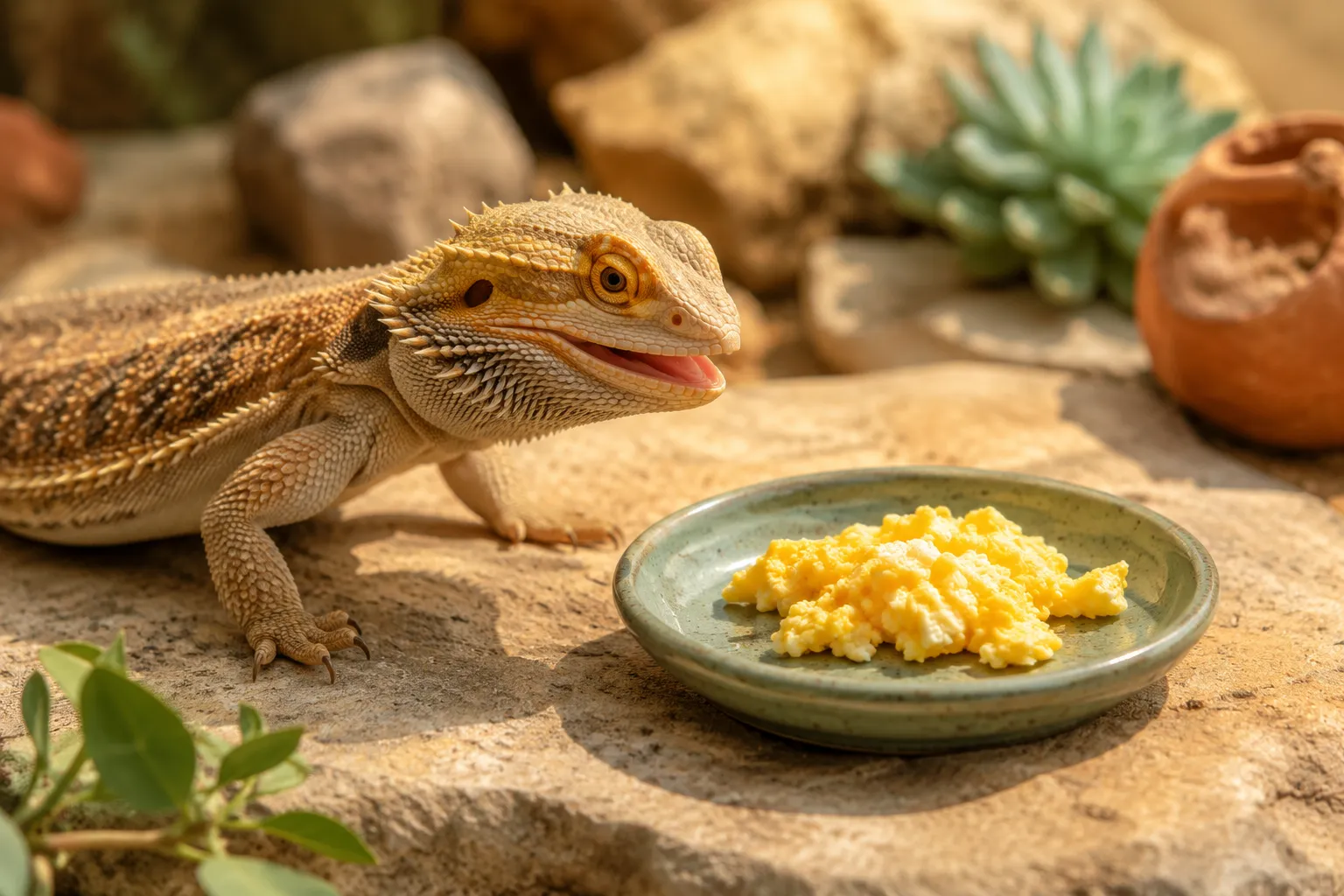
Quick Answer: Yes, bearded dragons can eat eggs as an occasional protein treat. Eggs should be fully cooked (scrambled or boiled with no additives), served in small portions, and offered no more than once or twice per month. While eggs provide protein and nutrients, they should never replace insects and vegetables as the primary diet components for these omnivorous reptiles.
Key Takeaways
- Bearded dragons can safely eat cooked eggs (scrambled or boiled) as an occasional treat
- Eggs must be fully cooked with no butter, oil, salt, or seasonings added
- Feed eggs sparingly, once or twice monthly maximum to avoid nutritional imbalances
- Both egg whites and yolks are safe, but yolks are higher in fat and cholesterol
- Raw eggs pose salmonella risk and should never be fed to bearded dragons
- Baby bearded dragons need primarily insects; eggs aren’t recommended until adulthood
- Crushed eggshells can provide calcium but must be prepared properly
- Insects remain the superior protein source compared to eggs for bearded dragons
- Overfeeding eggs can lead to obesity, kidney stress, and digestive issues

🦎 Targeted Nutrition for Egg-Laying Females Formulated specifically for adult female bearded dragons during pre-lay, active egg production, and post-lay recovery—one of the most demanding life stages.

Material: The kitchen timer is made of stainless steel; it is lightweight and durable enough for years of use. It is not washable; simply wipe it clean periodically
Are Eggs Safe for Bearded Dragons to Eat?
Eggs are safe for bearded dragons when prepared correctly and fed in moderation. Cooked eggs provide complete protein, vitamins A and D, iron, and other nutrients that can complement a bearded dragon’s diet. However, eggs are high in fat and cholesterol, which means they should function as an occasional supplement rather than a dietary staple.
The key safety factors include:
- Cooking method: Eggs must be fully cooked to eliminate bacteria
- No additives: Skip butter, oil, salt, pepper, cheese, or any seasonings
- Portion control: A small amount (roughly the size of your dragon’s eye) is sufficient
- Frequency: Limit to 1-2 times per month maximum
Common mistake: Some owners assume eggs can replace feeder insects because they’re easier to prepare. This creates nutritional imbalances since insects provide chitin, movement stimulation, and a different nutrient profile that eggs can’t replicate.
Can Bearded Dragons Eat Raw Eggs or Do They Need to Be Cooked?
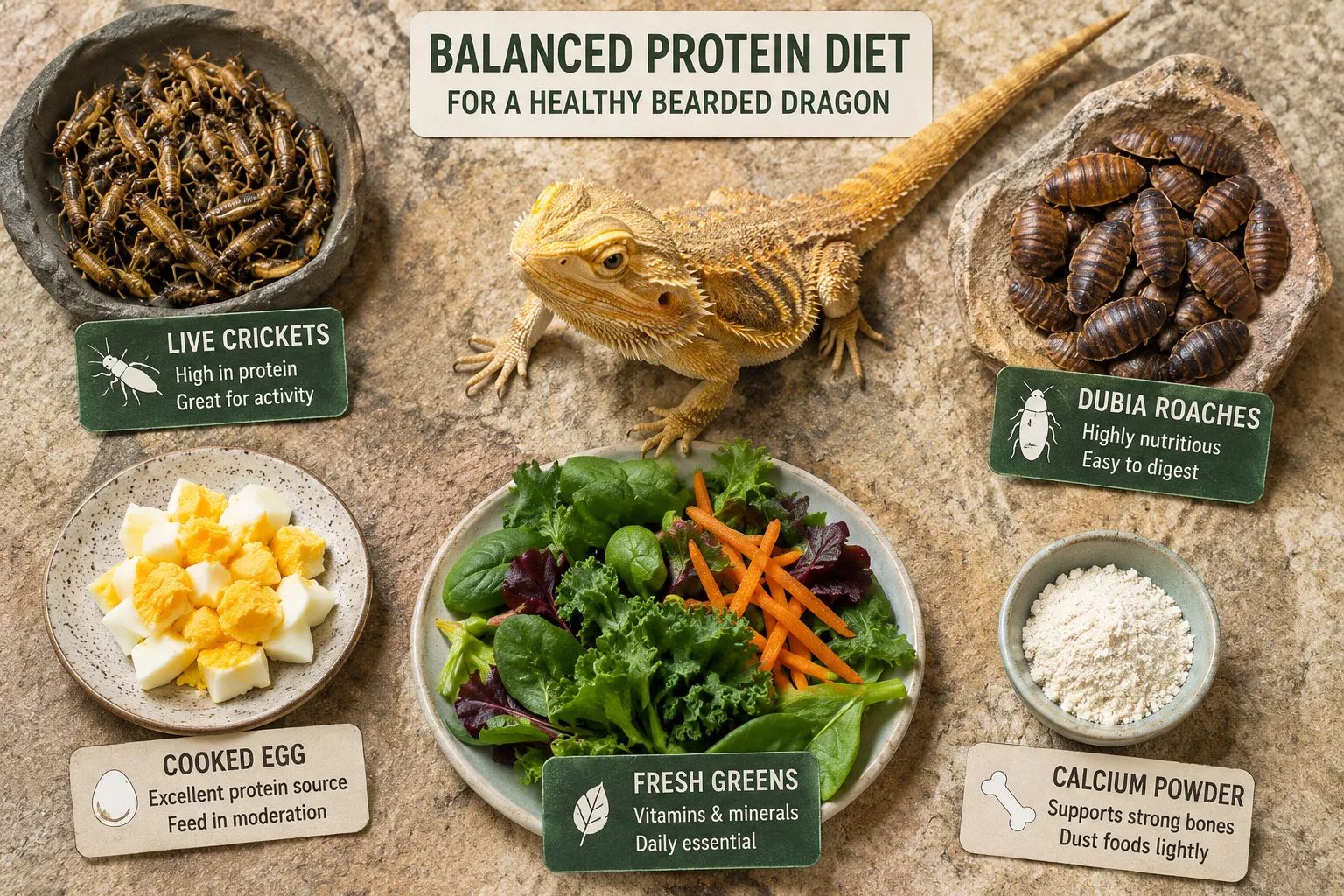
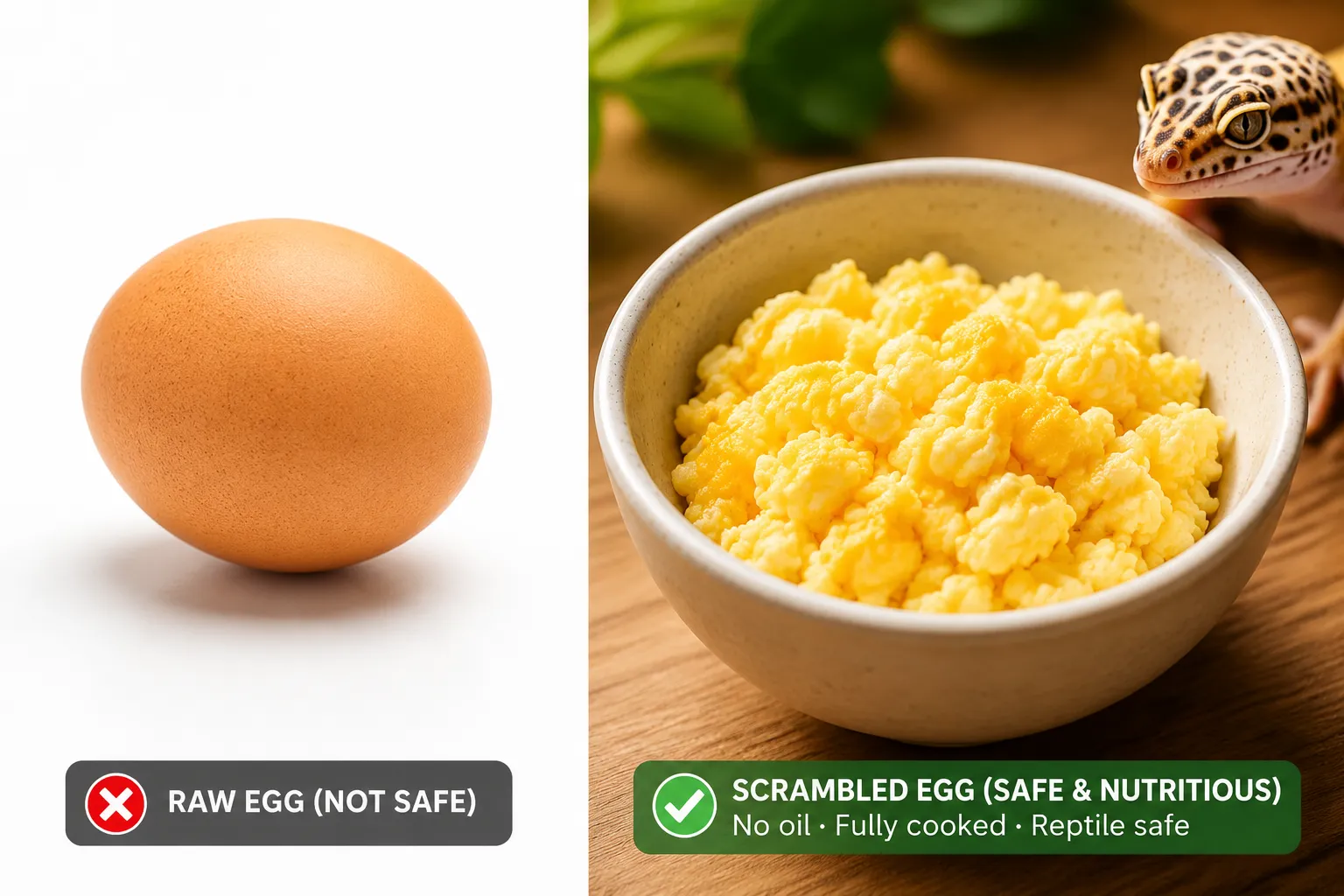
Bearded dragons should only eat fully cooked eggs, never raw. Raw eggs carry significant salmonella risk for reptiles, and the avidin protein in raw egg whites can bind biotin (vitamin B7), potentially causing deficiency over time. Cooking neutralizes both risks while maintaining the nutritional benefits.
Why cooking matters:
- Kills harmful bacteria like salmonella and E. coli
- Deactivates avidin, preventing biotin interference
- Makes protein more digestible for reptilian systems
- Reduces risk of parasitic contamination
Choose this preparation if: You want the safest option, scrambled eggs (no oil) or hard-boiled eggs are both excellent choices. Scrambled eggs are easier to portion, while boiled eggs can be chopped into small pieces.
How Often Can I Feed My Bearded Dragon Eggs?
Feed eggs to your bearded dragon no more than once or twice per month. While nutritious, eggs are calorie-dense and high in fat, making frequent feeding problematic for reptiles with slower metabolisms than mammals. Overfeeding eggs can lead to obesity, fatty liver disease, and kidney strain.
Recommended feeding schedule:
- Adult bearded dragons: 1-2 times monthly as a treat
- Juveniles (under 12 months): Once monthly at most, very small portions
- Hatchlings (under 6 months): Not recommended; focus on insects and greens
The 80-20 rule applies here: 80% of your dragon’s diet should come from appropriate staples (insects for juveniles, vegetables for adults), with only 20% from treats like eggs, fruits, or occasional waxworms.
Edge case: If your bearded dragon is recovering from illness or needs extra protein temporarily, consult a reptile veterinarian before increasing egg frequency. Medical situations may warrant different feeding protocols.
Scrambled Eggs vs Boiled Eggs for Bearded Dragons
Both scrambled and boiled eggs work well for bearded dragons, but preparation details matter more than the cooking method. The critical factor is avoiding any added fats, oils, or seasonings during cooking.
Scrambled eggs:
- Cook in a non-stick pan with no butter or oil
- Easier to portion into tiny pieces
- Softer texture may appeal to some dragons
- Cool completely before serving
Boiled eggs:
- Hard-boil for 10-12 minutes to ensure thorough cooking
- Chop into small, manageable pieces
- Can separate yolk from white if desired
- Stores slightly longer in refrigerator
Decision rule: Choose scrambled if your dragon prefers softer textures or you want easier portion control. Choose boiled if you’re preparing food in advance or want to offer just the white (lower fat) portion.
Neither method is nutritionally superior, both provide the same protein and nutrients when prepared correctly. The main difference lies in texture preference and convenience.
Can Baby Bearded Dragons Eat Eggs?
Baby bearded dragons (under 6 months) should not eat eggs. Hatchlings and juveniles require a protein-heavy diet consisting of 70-80% live insects and 20-30% vegetables to support rapid growth. Their digestive systems are optimized for insect protein, and eggs don’t provide the movement stimulation that encourages natural hunting behaviors.
Why babies need insects instead:
- Live prey stimulates natural predatory instincts
- Insect exoskeletons provide chitin for digestion
- Higher protein-to-fat ratio than eggs
- Better calcium-to-phosphorus balance when gut-loaded
- Supports healthy bone development during critical growth phase
When to introduce eggs: Wait until your bearded dragon reaches 12-18 months old and transitions to an adult diet (more vegetables, fewer insects). At that point, eggs can be introduced as a monthly treat in very small portions.
If you’re concerned about protein variety for a juvenile, focus on rotating feeder insects, crickets, dubia roaches, black soldier fly larvae, and silkworms, rather than introducing eggs prematurely.
What Happens If a Bearded Dragon Eats Too Many Eggs?
Overfeeding eggs can cause several health problems in bearded dragons, primarily related to excess fat, cholesterol, and protein. While a single egg meal won’t cause immediate harm, regular overfeeding leads to cumulative issues that affect long-term health.
Health risks from too many eggs:
- Obesity: Excess calories stored as fat, reducing mobility and lifespan
- Fatty liver disease: Fat accumulation in liver tissue impairs function
- Kidney stress: High protein loads strain reptilian kidneys over time
- Nutritional imbalance: Displaces essential vegetables and properly gut-loaded insects
- Digestive upset: Diarrhea or constipation from sudden diet changes
Warning signs to watch for:
- Lethargy or reduced activity levels
- Weight gain around the belly and tail base
- Decreased appetite for regular foods
- Loose or unusually colored stools
Recovery approach: If you’ve been overfeeding eggs, simply return to the proper diet, primarily vegetables for adults, insects for juveniles, and skip eggs entirely for 2-3 months. Most bearded dragons recover well when normal feeding resumes.
Are Egg Shells Good for Bearded Dragons?
Eggshells can provide supplemental calcium for bearded dragons when properly prepared, but they’re not necessary if you’re already using commercial calcium powder. Eggshells are roughly 95% calcium carbonate, making them a natural calcium source, but preparation is crucial to avoid bacterial contamination.
How to prepare eggshells safely:
- Boil eggshells for 10 minutes to sterilize
- Bake at 250°F for 10-15 minutes to dry completely
- Grind into fine powder using a coffee grinder or mortar and pestle
- Store in an airtight container
- Sprinkle small amounts on vegetables (not every meal)
Important considerations:
- Eggshell powder lacks vitamin D3, which bearded dragons need to absorb calcium
- Commercial calcium supplements are formulated with proper D3 ratios
- Eggshells don’t replace UVB lighting requirements
- Improper preparation can introduce bacteria
Choose eggshells if: You prefer natural supplements and are willing to prepare them correctly. Choose commercial calcium powder if you want convenience and guaranteed D3 content.
Can Bearded Dragons Eat Egg Yolk and Egg White?
Bearded dragons can safely eat both egg yolk and egg white, though each part offers different nutritional profiles. The white is nearly pure protein with minimal fat, while the yolk contains most of the vitamins, minerals, and fat content.
Egg white nutritional profile:
- High protein, low fat
- Contains riboflavin and selenium
- Fewer calories per gram
- Lower cholesterol
Egg yolk nutritional profile:
- Vitamins A, D, E, and K
- B-complex vitamins
- Iron, calcium, and phosphorus
- Higher fat and cholesterol content
Feeding strategy: Most owners feed the whole egg since the small portions given monthly make separating whites from yolks unnecessary. However, if your bearded dragon is overweight or prone to obesity, offering primarily egg white with minimal yolk reduces fat intake while maintaining protein benefits.
Practical tip: One large egg contains about 6 grams of protein. A single monthly serving for an adult bearded dragon should be roughly 1-2 teaspoons of cooked egg, a tiny fraction of a whole egg. This small amount makes the white-versus-yolk debate less critical for most pet owners.

All Natural: 100% all-natural and preservative-free

Vitamin Enriched Formula That Provides Essential Proteins, Fats, Vitamins And Minerals

Unique textured pellets that bearded dragons love to eat
Best Protein Sources for Bearded Dragons Besides Eggs
While eggs serve as an occasional treat, several protein sources are better suited as dietary staples for bearded dragons. Live insects remain the gold standard for reptilian protein, offering movement stimulation, appropriate fat ratios, and essential nutrients when properly gut-loaded.
Top protein sources ranked:
- Dubia roaches: Excellent protein-to-fat ratio, easy to digest, long shelf life
- Black soldier fly larvae: High calcium content, soft-bodied, nutritious
- Crickets: Widely available, affordable, good protein source when gut-loaded
- Silkworms: High protein, low fat, rich in calcium and vitamins
- Hornworms: Hydrating, good for picky eaters, but higher in fat
- Superworms: Occasional treat only due to high fat content
Why insects beat eggs:
- Provide natural hunting enrichment
- Better calcium-to-phosphorus ratios when gut-loaded
- Lower fat content per serving
- Chitin supports digestive health
- More closely mimics natural diet
Gut-loading matters: Feed your insects nutritious foods (leafy greens, vegetables, commercial gut-load) 24-48 hours before offering them to your dragon. This transforms insects into nutrient-delivery vehicles, something eggs can’t replicate.
Do Eggs Cause Impaction in Bearded Dragons?
Eggs do not directly cause impaction in bearded dragons when fed properly. Impaction, a blockage in the digestive tract, typically results from ingesting substrate (sand, loose particles), dehydration, inadequate temperatures, or consuming prey that’s too large. Cooked eggs are soft, easily digestible, and unlikely to create blockages.
Actual impaction causes:
- Loose substrate ingestion (sand, walnut shell, wood chips)
- Inadequate basking temperatures (below 95-105°F)
- Dehydration reducing digestive motility
- Oversized prey items
- Underlying health conditions
Why the egg-impaction myth exists: Some owners confuse correlation with causation. If a bearded dragon becomes impacted after eating eggs, the likely culprit is improper husbandry (wrong substrate, low temperatures) rather than the egg itself.
Prevention checklist:
- Use solid substrates (tile, reptile carpet, paper towels)
- Maintain proper temperature gradients (basking spot 95-105°F)
- Provide fresh water daily
- Feed appropriately sized portions
- Ensure adequate UVB lighting
If your bearded dragon shows signs of impaction (lethargy, lack of bowel movements, dragging back legs), consult a reptile veterinarian immediately. The issue stems from husbandry, not occasional egg treats.
Can Bearded Dragons Eat Quail Eggs or Just Chicken Eggs?
Bearded dragons can eat both quail eggs and chicken eggs safely. Quail eggs offer the same nutritional benefits as chicken eggs but in a smaller package, which can make portion control easier. The nutritional profiles are nearly identical, so the choice comes down to convenience and availability.
Quail egg advantages:
- Smaller size (about 1/5 the size of chicken eggs)
- Easier to portion for small or juvenile dragons
- Slightly higher protein density per gram
- Some owners find them more convenient
Chicken egg advantages:
- Widely available in any grocery store
- More economical for occasional feeding
- Easier to separate whites from yolks if desired
- Longer shelf life
Preparation is identical: Whether using quail or chicken eggs, cook them fully with no additives, cool completely, and serve in small portions. One quail egg is roughly equivalent to 1-2 teaspoons of chicken egg, making it a convenient single-serving option.
Other egg types: Duck eggs and turkey eggs are also safe but less common. The key principle remains the same, fully cooked, no seasonings, small portions, infrequent feeding.
How to Prepare Eggs for Bearded Dragons Safely
Proper egg preparation ensures your bearded dragon gets nutritional benefits without health risks. The process is straightforward but requires attention to detail, particularly regarding additives and portion sizes.
Step-by-step preparation:
- Choose your method: Scrambled or hard-boiled (both work equally well)
- Cook without additives: No butter, oil, salt, pepper, milk, or seasonings
- Ensure thorough cooking: Scrambled eggs should be fully set; boiled eggs need 10-12 minutes
- Cool completely: Hot food can burn your dragon’s mouth
- Portion appropriately: 1-2 teaspoons for adults, less for juveniles
- Chop into small pieces: Bite-sized portions prevent choking
- Serve immediately or refrigerate: Use within 24 hours if stored
For scrambled eggs:
- Use a non-stick pan to avoid needing oil
- Stir frequently for even cooking
- Cook until no liquid remains
For boiled eggs:
- Place eggs in cold water, bring to boil
- Boil for 10-12 minutes
- Cool in ice water for easy peeling
- Chop whites and yolks together or separately
Serving tip: Mix small egg pieces with your dragon’s regular salad to encourage eating vegetables. The egg acts as a flavor enhancer while maintaining nutritional balance.
Are Eggs Better Than Insects for Bearded Dragon Protein?
Insects are superior to eggs as the primary protein source for bearded dragons. While eggs provide complete protein and certain vitamins, they lack the behavioral enrichment, appropriate fat ratios, and digestive benefits that live insects offer. Eggs should complement, not replace, an insect-based protein strategy.
Why insects win:
| Factor | Insects | Eggs |
|---|---|---|
| Enrichment | Stimulate natural hunting behavior | No behavioral benefit |
| Fat content | Lower when properly selected | Higher, especially in yolks |
| Calcium ratio | Excellent when gut-loaded | Poor calcium-to-phosphorus ratio |
| Digestibility | Chitin supports gut health | Easily digested but no fiber |
| Frequency | Daily for juveniles, several times weekly for adults | Monthly treat only |
Nutritional comparison: A dubia roach contains roughly 36% protein and 7% fat, while a whole egg is about 13% protein and 11% fat by weight. The roach offers better protein density with less fat, ideal for reptilian metabolism.
When eggs have an advantage: For bearded dragons recovering from illness, eggs provide easily digestible protein that requires no hunting effort. They’re also useful for owners who are squeamish about handling live insects, though this shouldn’t be the primary feeding strategy.
Bottom line: Use insects as your protein foundation and eggs as an occasional supplement. This approach provides optimal nutrition while supporting natural behaviors.
Common Mistakes When Feeding Eggs to Bearded Dragons
Even well-intentioned owners make errors when introducing eggs to their bearded dragon’s diet. Avoiding these common mistakes ensures your dragon gets benefits without health risks.
Mistake #1: Adding butter or oil
Many owners cook eggs the way they’d prepare them for themselves, adding fats that bearded dragons don’t need. Always use a non-stick pan or boiling method to avoid additives.
Mistake #2: Feeding eggs too frequently
Eggs are treats, not staples. Feeding weekly or multiple times per week leads to nutritional imbalances and obesity. Stick to once or twice monthly maximum.
Mistake #3: Serving eggs too hot
Bearded dragons can burn their mouths on hot food. Always cool eggs to room temperature before serving.
Mistake #4: Offering raw or undercooked eggs
Some owners believe raw is more “natural,” but raw eggs carry salmonella risk and contain avidin that blocks biotin absorption. Always cook thoroughly.
Mistake #5: Using eggs as an insect replacement
Eggs don’t provide the same nutritional profile or behavioral enrichment as live insects. They’re a supplement, not a substitute.
Mistake #6: Feeding eggs to babies
Hatchlings and juveniles need insect-based protein for proper growth. Wait until adulthood before introducing eggs.
Mistake #7: Ignoring portion sizes
A whole egg is far too much for a bearded dragon. Stick to 1-2 teaspoons per feeding, roughly the size of your dragon’s eye.
Mistake #8: Not monitoring weight
Regular weighing helps you catch obesity early. If your dragon gains excessive weight, reduce treat frequency including eggs.
FAQ
Can bearded dragons eat scrambled eggs every day?
No, bearded dragons should not eat eggs daily. Eggs are high in fat and cholesterol, making them appropriate only as an occasional treat, once or twice per month maximum. Daily egg feeding leads to obesity, nutritional imbalances, and potential organ stress.
Do I need to add calcium powder to eggs for my bearded dragon?
You can lightly dust eggs with calcium powder, but it’s not essential if you’re already supplementing your dragon’s regular diet properly. Eggs have a poor calcium-to-phosphorus ratio, so adding calcium helps balance this, but the small monthly portion makes it less critical than dusting insects.
Can bearded dragons eat egg yolk only?
Yes, but egg yolks are higher in fat and cholesterol than whites. If your dragon is overweight, offering primarily egg white with minimal yolk is a better choice. For healthy-weight dragons, the whole egg in small portions is fine.
What happens if my bearded dragon eats raw egg accidentally?
One accidental raw egg exposure is unlikely to cause immediate harm, but monitor for signs of digestive upset (diarrhea, lethargy) over the next 24-48 hours. If symptoms appear, consult a reptile veterinarian. Avoid raw eggs in the future due to salmonella risk.
Can bearded dragons eat fried eggs?
Only if fried without any oil, butter, or cooking spray in a non-stick pan. However, scrambled (no oil) or boiled eggs are safer choices since “fried” often implies added fats that bearded dragons shouldn’t consume.
Are eggs good for bearded dragons with metabolic bone disease?
Eggs alone won’t treat metabolic bone disease (MBD). MBD requires proper UVB lighting, calcium supplementation with D3, and veterinary care. While eggs contain some calcium, they have a poor calcium-to-phosphorus ratio and shouldn’t be relied upon for MBD recovery.
Can bearded dragons eat eggshells for calcium?
Yes, if properly prepared, boiled, baked, and ground into fine powder. However, commercial calcium supplements with D3 are more reliable and convenient. Eggshells lack vitamin D3, which bearded dragons need to absorb calcium effectively.
How much egg should I feed my bearded dragon?
Feed 1-2 teaspoons of cooked egg per serving, roughly the size of your dragon’s eye. This small portion provides protein benefits without excessive fat or calories. Never feed more than this amount in a single meal.
Can bearded dragons eat egg whites only?
Yes, egg whites are safe and provide protein with minimal fat. Separating whites from yolks reduces calorie and cholesterol content, making them a good option for overweight dragons or those prone to obesity.
Do bearded dragons like eggs?
Most bearded dragons readily eat eggs when offered, likely due to the protein content and soft texture. However, individual preferences vary, some dragons show more enthusiasm than others. Never force-feed; if your dragon refuses eggs, stick to insects and vegetables.
Can eggs replace feeder insects for bearded dragons?
No, eggs cannot replace feeder insects. Insects provide superior nutrition, appropriate fat ratios, behavioral enrichment, and digestive benefits that eggs lack. Use eggs as an occasional supplement to an insect-based protein strategy, not as a replacement.
Are organic eggs better for bearded dragons?
Organic eggs offer no significant nutritional advantage for bearded dragons over conventional eggs. The key factors are proper cooking (no additives) and appropriate portion sizes, not whether the eggs are organic, free-range, or conventional.
Conclusion
Bearded dragons can safely enjoy eggs as an occasional protein treat when prepared correctly, fully cooked with no additives, served in small portions, and offered no more than once or twice monthly. While eggs provide complete protein and certain vitamins, they should never replace the dietary foundation of live insects and fresh vegetables that these omnivorous reptiles need for optimal health.
Your action plan:
- Wait for adulthood: Don’t offer eggs to bearded dragons under 12 months old
- Cook properly: Scramble without oil or hard-boil with no seasonings
- Portion carefully: Serve only 1-2 teaspoons per feeding
- Limit frequency: Once or twice monthly maximum
- Monitor weight: Regular weighing helps catch obesity early
- Prioritize insects: Keep live feeders as your primary protein source
- Maintain variety: Rotate between different feeder insects and vegetables
Remember that proper husbandry, appropriate temperatures, UVB lighting, calcium supplementation, and a varied diet, matters far more than any single food item. Eggs can be a nutritious addition to your bearded dragon’s diet when used appropriately, but they’re just one small piece of comprehensive reptile care. If you’re ever uncertain about your dragon’s diet or health, consult a reptile veterinarian for personalized guidance.

HIGH PROTEIN FEEDER INSECT - Freeze dried grasshoppers rich in protein and essential amino acids - a bigger bite for bearded dragons, geckos, chameleons, and turtles

NUTRITIOUS FOOD FOR REPTILES such as bearded dragons, uromastyx, iguanas, tortoises and more; An appetizing way to introduce additional nutrients to your reptile’s diet

FRESH AND HEALTHY: We only choose fresh and healthy Grasshoppers as raw materials, without any additives, and then seal stored through advanced frozen-drying technology; Bearded dragon food ensures the freshness and natural taste of the product