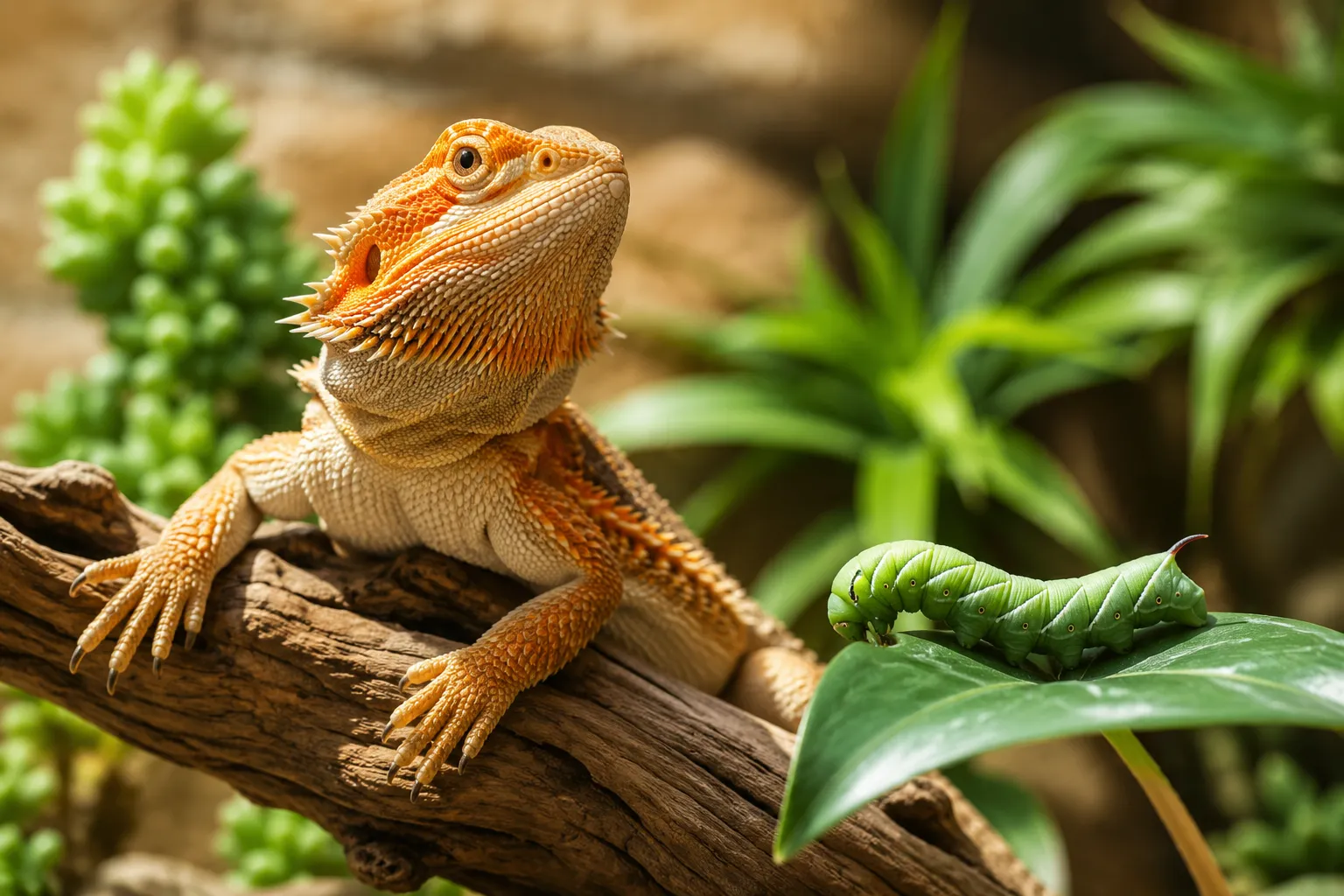
Hornworms are not only safe for bearded dragons to eat, they’re one of the most nutritious and hydrating feeder insects available. These bright green caterpillars are packed with moisture (around 85% water content), low in fat, and rich in calcium, making them an excellent treat or supplement to your dragon’s regular diet. However, they should be fed in moderation due to their high water content, which can cause loose stools if overfed.
Key Takeaways
- Hornworms are safe and nutritious for bearded dragons when purchased from reputable feeder insect suppliers
- Feed 3-5 hornworms per week to adult dragons as treats, not daily staples
- Baby bearded dragons can eat small hornworms (under 1 inch) starting around 3-4 months old
- Wild hornworms are toxic and should never be fed to your dragon
- Hornworms contain 85% water, making them excellent for hydration but potentially causing diarrhea if overfed
- Size matters: choose hornworms no larger than the space between your dragon’s eyes
- Cost ranges from $8-15 for a cup of 25 small hornworms from online suppliers
- Hornworms are lower in fat than many other feeder insects, making them suitable for overweight dragons
- Dubia roaches offer better protein for daily feeding, while hornworms work best as occasional treats
- Store hornworms at 55-60°F to slow their rapid growth rate
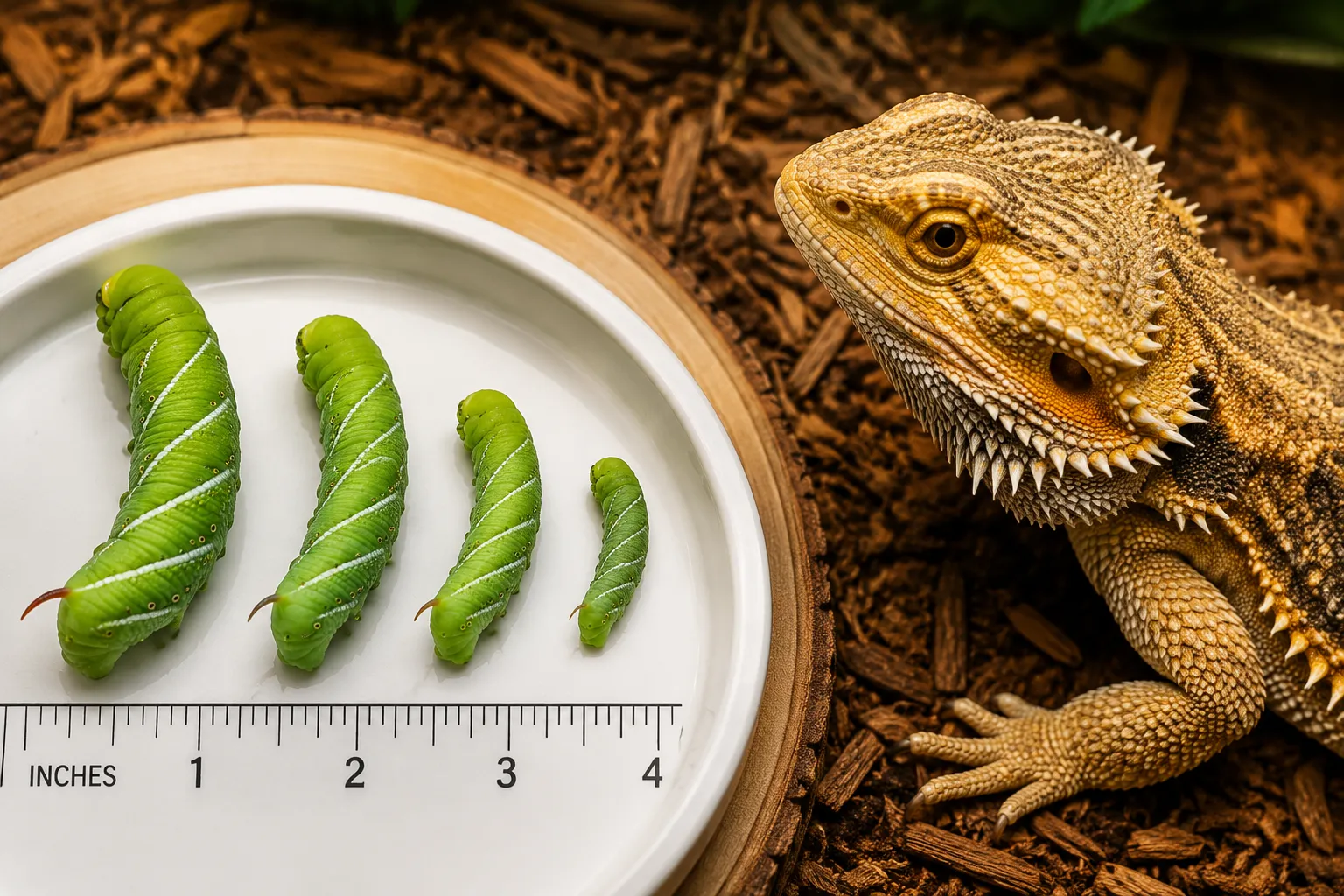


Always overcounted. We start all of our hornworm cups with 40 eggs to ensure quantity.

Ideal Reptile Food: Our live hornworms serve as the perfect nutritional treat for bearded dragons, geckos, aquatic turtles, frogs and other reptiles. Ensures optimal nutrition and hydration
Are Hornworms Safe for Bearded Dragons to Eat?
Yes, captive-bred hornworms from reputable feeder insect suppliers are completely safe for bearded dragons. These commercially raised hornworms are fed a specialized diet that makes them nutritious and non-toxic. They provide excellent hydration, contain a favorable calcium-to-phosphorus ratio (roughly 1:1 to 2:1), and are easy for dragons to digest.
What makes store-bought hornworms safe:
- Raised on artificial diet or safe plants like mulberry leaves
- Free from pesticides and parasites
- Gut-loaded with nutrients before sale
- Soft-bodied and easy to digest
- No hard exoskeleton that could cause impaction
Important safety note: Never feed your bearded dragon wild hornworms from your garden. Wild hornworms typically feed on tomato and tobacco plants, which contain toxic alkaloids called solanine and nicotine. These toxins accumulate in the hornworm’s body and can poison your dragon, potentially causing serious illness or death.
The bright green color and distinctive horn on the tail make hornworms visually appealing to bearded dragons, triggering their hunting instinct. Most dragons will eagerly chase and consume these wiggly treats.
How Many Hornworms Can a Bearded Dragon Eat Per Day?
Adult bearded dragons should eat 2-3 hornworms per feeding session, offered 2-3 times per week maximum. Juvenile dragons (4-12 months) can have 1-2 small hornworms 2-3 times weekly. Hornworms should make up no more than 10-15% of your dragon’s total insect intake.
Feeding guidelines by age:
- Baby dragons (0-3 months): Not recommended; stick to smaller insects
- Juveniles (4-12 months): 1-2 small hornworms (under 1.5 inches), 2-3x per week
- Sub-adults (12-18 months): 2-3 medium hornworms (1.5-2.5 inches), 2-3x per week
- Adults (18+ months): 2-4 large hornworms (2-4 inches), 2-3x per week
The reason for moderation is simple: hornworms are extremely high in moisture. While this makes them excellent for hydration (especially helpful for dragons who don’t drink enough water), too many can cause loose stools or diarrhea. Think of hornworms as the watermelon of the insect world, refreshing and nutritious, but too much leads to digestive upset.
Common mistake: New dragon owners often overfeed hornworms because their pets love them so much. Resist the temptation to give more just because your dragon begs. Variety and balance are key to a healthy diet.
Can Baby Bearded Dragons Eat Hornworms?
Baby bearded dragons can safely eat small hornworms starting around 3-4 months of age, but only if the hornworms are appropriately sized. The hornworm must be smaller than the space between the dragon’s eyes to prevent choking or impaction. For most babies, this means hornworms under 1 inch in length.
Guidelines for feeding hornworms to babies:
- Wait until your dragon is at least 3 months old and eating well
- Choose the smallest hornworms available (often called “small” or “mini”)
- Limit to 1-2 hornworms, twice per week maximum
- Watch for loose stools and reduce frequency if they occur
- Prioritize smaller staple insects like small dubia roaches or crickets for daily feeding
Baby bearded dragons need high-protein insects for growth, and while hornworms provide decent protein (around 9% protein content), they’re not protein-dense enough to be a staple. Their high water content can also fill up a baby’s small stomach without providing enough calories and nutrients for proper growth.
Better choice for babies: Focus on appropriately-sized dubia roaches, black soldier fly larvae, and small crickets as daily staples, using tiny hornworms only as an occasional treat once your dragon is eating consistently.
What Size Hornworms Are Safe for Bearded Dragons?
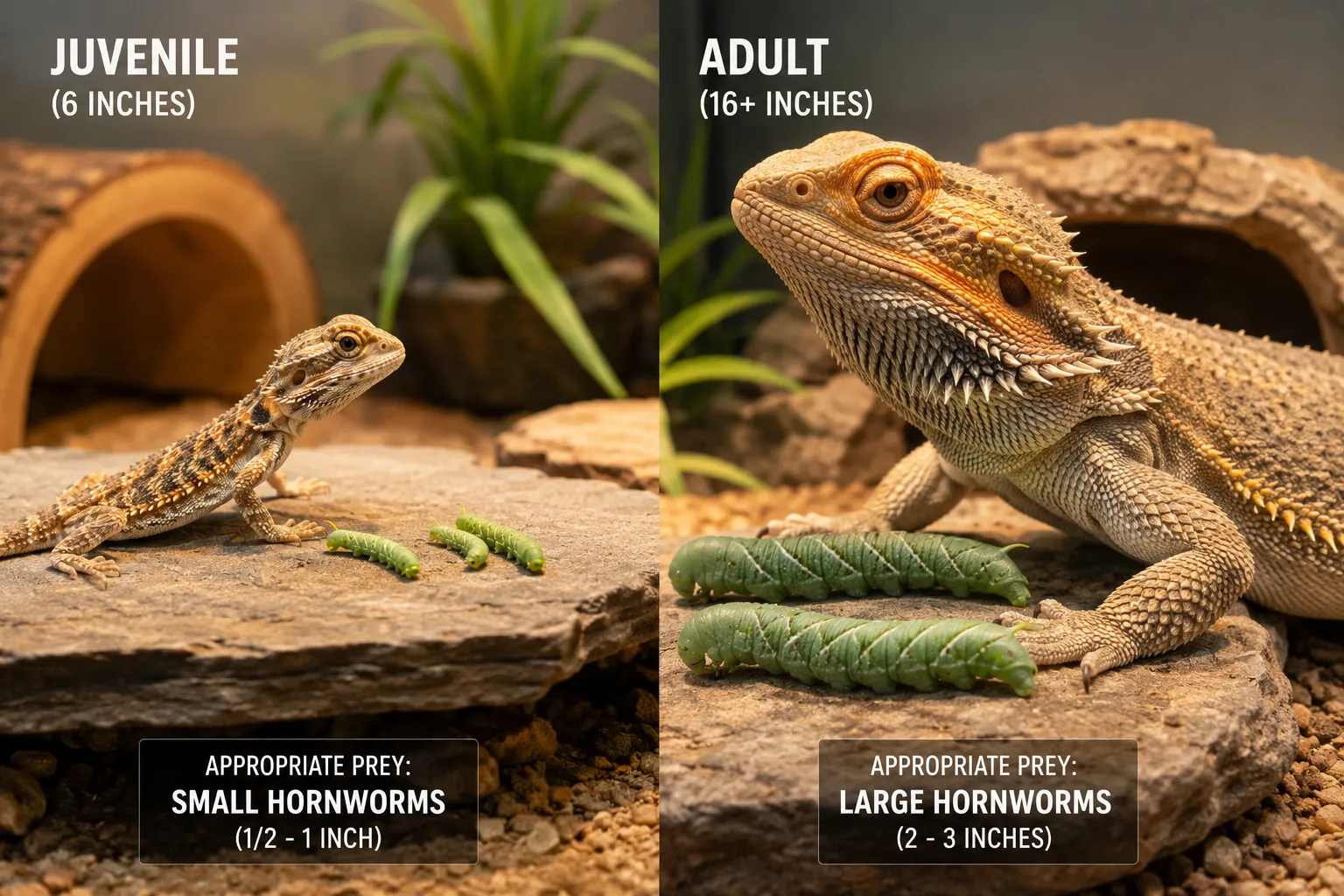
Safe hornworm size follows the same rule as all feeder insects: no larger than the space between your bearded dragon’s eyes. For most adult dragons, this means hornworms between 2-4 inches in length. Juveniles should eat hornworms between 1-2 inches, while very young dragons need hornworms under 1 inch.
Size chart by dragon age:
| Dragon Age | Dragon Length | Safe Hornworm Size |
|---|---|---|
| 0-3 months | 3-8 inches | Not recommended |
| 4-6 months | 8-12 inches | 0.5-1 inch |
| 7-12 months | 12-16 inches | 1-2 inches |
| 12-18 months | 16-20 inches | 2-3 inches |
| Adult (18+ months) | 18-24 inches | 2-4 inches |
Why size matters: Feeding insects that are too large can cause choking, impaction, or injury to your dragon’s digestive tract. Hornworms are soft-bodied, which makes them safer than hard-shelled insects, but an oversized hornworm can still pose a risk.
Pro tip: Hornworms grow incredibly fast, they can double in size within a few days at room temperature. Buy them in the size you need and store them at 55-60°F to slow their growth. If they get too large for your dragon, you can’t shrink them back down.
Hornworms vs Dubia Roaches for Bearded Dragons
Dubia roaches are better as a daily staple feeder, while hornworms work best as a weekly treat. Dubia roaches contain roughly 36% protein and only 7% fat with a good calcium-to-phosphorus ratio, making them nutritionally superior for regular feeding. Hornworms contain about 9% protein and 3% fat but offer 85% moisture content, making them excellent for hydration but less suitable as a primary food source.
Nutritional comparison:
| Nutrient | Hornworms | Dubia Roaches |
|---|---|---|
| Protein | ~9% | ~36% |
| Fat | ~3% | ~7% |
| Moisture | ~85% | ~65% |
| Calcium:Phosphorus | ~1:1 to 2:1 | ~1:3 |
| Chitin (shell) | None | Moderate |
When to choose hornworms:
- Your dragon is dehydrated or not drinking enough water
- You need a low-fat treat for an overweight dragon
- Your dragon is recovering from illness and needs easy-to-digest food
- You want to add variety to prevent food boredom
- Your dragon has trouble digesting harder insects
When to choose dubia roaches:
- Daily feeding for growing juveniles who need high protein
- Building muscle mass in underweight dragons
- As a nutritional staple for adult dragons
- When you need a feeder that stores well long-term
- For dragons with healthy weight and hydration
Cost consideration: Dubia roaches are generally more cost-effective for regular feeding. A colony of dubias can even be bred at home, while hornworms must be purchased repeatedly and grow too quickly to store long-term.
How Often Should I Feed My Bearded Dragon Hornworms?
Feed hornworms to your bearded dragon 2-3 times per week maximum, treating them as a supplement rather than a staple. Adult dragons can have 2-4 hornworms per feeding session on these days, while juveniles should receive 1-2 smaller hornworms. Space out hornworm feedings to prevent digestive issues from their high water content.
Sample weekly feeding schedule for an adult dragon:
- Monday: Dubia roaches + greens
- Tuesday: Greens only
- Wednesday: Hornworms (2-3) + greens
- Thursday: Greens only
- Friday: Black soldier fly larvae + greens
- Saturday: Hornworms (2-3) + greens
- Sunday: Dubia roaches + greens
This schedule provides variety while keeping hornworms at about 20% of weekly insect intake. Adjust based on your dragon’s individual needs, activity level, and weight.
Signs you’re feeding hornworms too often:
- Consistently loose or watery stools
- Weight loss despite regular eating
- Refusing other feeder insects
- Decreased appetite for vegetables
- Lethargy or reduced activity
If you notice these signs, reduce hornworm frequency to once per week or every other week. Some dragons have more sensitive digestive systems and need less moisture in their diet.
Where to Buy Hornworms for Bearded Dragons
Purchase hornworms from reputable online feeder insect suppliers, local reptile specialty stores, or some larger pet store chains. Online suppliers typically offer the best selection of sizes and the freshest insects. Popular online sources include Rainbow Mealworms, Dubia.com, Josh’s Frogs, and Symton Black Soldier Flies.
Best places to buy hornworms:
- Online feeder insect suppliers: Widest selection, bulk pricing, shipped directly to your door
- Local reptile stores: Immediate availability, can inspect before buying, no shipping stress on insects
- Pet store chains: Convenient but limited selection and higher prices
- Reptile expos: Good prices, fresh stock, but infrequent availability
What to look for when buying:
- Bright green color (not brown or black spots)
- Active movement when container is opened
- Appropriate size for your dragon
- Clear, clean container with proper ventilation
- Included food source (usually a blue or green gel)
Avoid buying from: Garden centers or bait shops, as these may sell wild-caught hornworms that have fed on toxic plants. Always purchase from suppliers that specifically raise hornworms as feeder insects.
How Much Do Hornworms Cost for Feeding Reptiles?
Hornworms typically cost between $8-15 for a cup of 25 small hornworms, $12-20 for 25 medium hornworms, and $15-25 for 25 large hornworms from online suppliers. Local pet stores often charge $1-2 per individual hornworm, making them significantly more expensive than buying in bulk online. Shipping adds $5-15 depending on your location and weather conditions.
Price breakdown by source:
- Online bulk orders: $0.30-1.00 per hornworm
- Local pet stores: $1.00-2.00 per hornworm
- Reptile expos: $0.40-1.20 per hornworm
- Subscription services: $0.35-0.90 per hornworm with regular deliveries
Cost-saving tips:
- Buy in bulk online rather than individually at pet stores
- Split orders with other reptile owners to share shipping costs
- Order during mild weather to avoid expensive cold/heat packs
- Consider subscription services for regular deliveries at discounted rates
- Buy smaller hornworms that will grow to the size you need
Why hornworms cost more than other feeders: Hornworms grow extremely fast and have a short shelf life, making them harder for suppliers to maintain. They also require specialized food and can’t be bred as easily as crickets or dubia roaches, driving up production costs.

Ideal Reptile Food: Our live hornworms serve as the perfect nutritional treat for bearded dragons, geckos, aquatic turtles, frogs and other reptiles. Ensures optimal nutrition and hydration

Ideal Reptile Food: Our live hornworms serve as the perfect nutritional treat for bearded dragons, geckos, aquatic turtles, frogs and other reptiles. Ensures optimal nutrition and hydration

Ideal Reptile Food: Our live hornworms serve as the perfect nutritional treat for bearded dragons, geckos, aquatic turtles, frogs and other reptiles. Ensures optimal nutrition and hydration
Can Hornworms Make Bearded Dragons Sick?
Captive-bred hornworms from reputable suppliers will not make bearded dragons sick under normal circumstances. However, wild hornworms that have fed on tomato, tobacco, or other nightshade plants contain toxic alkaloids that can poison your dragon, potentially causing vomiting, lethargy, seizures, or death. Additionally, overfeeding hornworms can cause digestive upset and diarrhea due to their high water content.
Situations where hornworms might cause problems:
- Wild hornworms: Contain plant toxins; never feed these
- Overfeeding: Too many cause diarrhea and nutrient imbalance
- Spoiled hornworms: Dead or dying hornworms may harbor bacteria
- Wrong size: Oversized hornworms can cause choking or impaction
- Exclusive diet: Feeding only hornworms leads to nutritional deficiencies
Signs of illness from hornworms:
- Vomiting or regurgitation shortly after eating
- Severe diarrhea or watery stools
- Lethargy or weakness
- Loss of appetite
- Tremors or unusual behavior
If your dragon shows these symptoms after eating hornworms, contact a reptile veterinarian immediately. Bring information about where you purchased the hornworms and whether they could have been wild-caught.
Prevention: Only buy from trusted feeder insect suppliers, feed appropriate quantities, and never collect hornworms from your garden or outdoor areas.
Do Hornworms Cause Diarrhea in Bearded Dragons?
Hornworms can cause diarrhea in bearded dragons when fed in excessive quantities due to their extremely high moisture content (85% water). Feeding 2-3 hornworms twice weekly typically won’t cause issues, but feeding them daily or giving 5+ in one sitting often results in loose, watery stools. Some dragons have more sensitive digestive systems and may develop diarrhea even with moderate hornworm consumption.
Why hornworms affect stool consistency:
- 85% water content overwhelms the digestive system
- Less fiber than other insects to bulk up stools
- Rapid digestion due to soft body structure
- Individual dragon sensitivity varies
How to prevent hornworm-related diarrhea:
- Limit to 2-3 hornworms per feeding, 2-3 times weekly maximum
- Don’t feed hornworms on consecutive days
- Balance with drier insects like dubia roaches or black soldier fly larvae
- Reduce frequency if you notice consistently soft stools
- Ensure your dragon is eating enough vegetables for fiber
When diarrhea is normal vs. concerning:
- Normal: Slightly softer stool on days when hornworms are fed, returns to normal within 24 hours
- Concerning: Watery diarrhea lasting more than 48 hours, blood in stool, accompanied by lethargy or loss of appetite
If diarrhea persists beyond hornworm feeding days or your dragon shows other symptoms, consult a reptile veterinarian. Chronic diarrhea can lead to dehydration and weight loss, even though the hornworms themselves are hydrating.
Can Bearded Dragons Eat Wild Hornworms from My Garden?
Never feed wild hornworms from your garden to your bearded dragon. Wild hornworms typically feed on tomato plants, tobacco plants, and other nightshade family plants that contain toxic alkaloids (solanine and nicotine). These toxins accumulate in the hornworm’s body and can poison your dragon, potentially causing serious illness or death.
Why wild hornworms are dangerous:
- Feed on toxic nightshade plants (tomatoes, tobacco, peppers, eggplant)
- Accumulate plant toxins in their bodies
- May have been exposed to pesticides or herbicides
- Could carry parasites or diseases
- No way to know their diet history
Toxic plants wild hornworms commonly eat:
- Tomato plants (all green parts)
- Tobacco plants
- Potato plants
- Eggplant
- Peppers
- Jimsonweed
- Datura
Even if you don’t grow these plants in your garden, wild hornworms may have traveled from neighboring properties where these plants exist. There’s no safe way to determine a wild hornworm’s diet history just by looking at it.
What to do if your dragon accidentally eats a wild hornworm:
- Monitor closely for symptoms (vomiting, lethargy, tremors, loss of appetite)
- Contact a reptile veterinarian immediately
- Provide information about potential plant exposure in your area
- Keep your dragon hydrated
- Don’t wait for symptoms to appear before seeking advice
Safe alternative: Only purchase hornworms from reputable feeder insect suppliers who raise them on controlled, non-toxic diets specifically for reptile consumption.
Are Hornworms Too High in Fat for Bearded Dragons?
No, hornworms are actually low in fat compared to most other feeder insects. Hornworms contain approximately 3% fat, making them one of the leanest feeder options available. In comparison, superworms contain around 18% fat, waxworms have 22% fat, and even dubia roaches contain 7% fat. This makes hornworms an excellent choice for overweight bearded dragons or those prone to fatty liver disease.
Fat content comparison:
- Hornworms: ~3% fat (very low)
- Dubia roaches: ~7% fat (low to moderate)
- Crickets: ~6% fat (low to moderate)
- Black soldier fly larvae: ~15% fat (moderate to high)
- Superworms: ~18% fat (high)
- Waxworms: ~22% fat (very high)
Benefits of hornworms’ low fat content:
- Safe for overweight dragons on weight-loss diets
- Reduced risk of fatty liver disease
- Good for older, less active dragons
- Can be fed more frequently than high-fat insects
- Easier to digest for dragons with sensitive systems
The real concern with hornworms isn’t fat, it’s water. Their 85% moisture content means they’re not calorie-dense, which can be problematic for underweight dragons who need more calories. For these dragons, higher-fat insects like dubia roaches or black soldier fly larvae are better choices.
Choose hornworms if: Your dragon is overweight, has fatty liver disease, or needs a low-calorie treat. Choose higher-fat insects if: Your dragon is underweight, recovering from illness, or needs to gain weight.
Can Overweight Bearded Dragons Eat Hornworms?
Yes, hornworms are an excellent feeder choice for overweight bearded dragons due to their low fat content (3%) and high water content (85%). They provide hydration and nutrition without adding excessive calories, making them ideal for weight management. Overweight dragons can safely eat 2-4 hornworms 2-3 times per week as part of a reduced-calorie diet.
Why hornworms work well for weight loss:
- Very low in fat compared to other insects
- High water content increases satiety without adding calories
- Soft texture makes them easy to digest
- Provide essential nutrients without caloric density
- Help maintain hydration during diet adjustments
Weight management feeding plan with hornworms:
- Reduce overall insect intake to 2-3 times per week (adults)
- Use hornworms as the primary insect feeder
- Increase vegetable portion to 80-90% of diet
- Avoid high-fat insects like superworms and waxworms completely
- Monitor weight weekly and adjust portions accordingly
Other low-fat feeder options for overweight dragons:
- Black soldier fly larvae (moderate fat but high calcium)
- Silkworms (low fat, high protein)
- Dubia roaches (moderate fat but good protein)
- Crickets (low fat but less nutritious than hornworms)
Common mistake: Owners sometimes restrict food too severely, causing malnutrition. Overweight dragons still need regular feeding, just with lower-calorie options like hornworms and more vegetables. Gradual weight loss (5-10% of body weight per month) is healthier than rapid weight loss.
Monitor these signs during weight loss:
- Energy levels remain normal
- Appetite stays consistent
- Stools remain regular (not constipated)
- Weight decreases gradually
- Muscle tone improves
If your dragon becomes lethargic or stops eating, consult a reptile veterinarian to ensure the diet plan is appropriate.
Best Feeder Insects for Bearded Dragons Besides Hornworms
The best feeder insects for bearded dragons include dubia roaches (high protein, good calcium ratio), black soldier fly larvae (extremely high calcium), crickets (readily available, affordable), and silkworms (high protein, low fat). A varied diet rotating between these insects plus occasional hornworms provides optimal nutrition and prevents dietary boredom.
Top feeder insects ranked by nutritional value:
- Dubia roaches: 36% protein, 7% fat, 1:3 Ca:P ratio, best daily staple
- Black soldier fly larvae: 17% protein, 42% calcium, excellent calcium source
- Silkworms: 64% protein (dry weight), low fat, great for growth
- Hornworms: 9% protein, 85% moisture, best for hydration
- Crickets: 21% protein, 6% fat, affordable and available
How to create a balanced rotation:
- Daily staple (5-6 days/week): Dubia roaches or crickets
- Calcium boost (2-3 days/week): Black soldier fly larvae
- Hydration treat (2-3 days/week): Hornworms
- Variety option (1-2 days/week): Silkworms or other specialty feeders
Insects to feed sparingly (treats only):
- Superworms: High fat (18%), hard exoskeleton
- Waxworms: Very high fat (22%), addictive
- Mealworms: Hard exoskeleton, lower nutrition
- Butterworms: High fat, expensive
Insects to avoid completely:
- Lightning bugs/fireflies: Toxic and deadly
- Wild-caught insects: May contain pesticides or parasites
- Boxelder bugs: Toxic
- Insects from bait shops: Unknown diet and safety
Age-specific recommendations:
- Babies (0-3 months): Small dubia roaches, small crickets, tiny black soldier fly larvae
- Juveniles (4-12 months): Medium dubia roaches, crickets, small hornworms, black soldier fly larvae
- Adults (12+ months): Large dubia roaches, adult crickets, large hornworms, variety of others
Variety is key to preventing nutritional deficiencies and keeping your dragon interested in food. Rotate between at least 3-4 different feeder types throughout the week.
FAQ
Can bearded dragons eat hornworms every day?
No, bearded dragons should not eat hornworms every day. Their high water content (85%) can cause diarrhea and digestive upset if fed daily. Limit hornworms to 2-3 times per week, with 2-4 hornworms per feeding session for adults.
Are hornworms better than crickets for bearded dragons?
Hornworms and crickets serve different purposes. Crickets provide more protein (21% vs 9%) and work better as a daily staple, while hornworms offer superior hydration and lower fat content, making them better as a supplemental treat.
How long do hornworms last before feeding?
Hornworms last 1-2 weeks when stored at 55-60°F with their provided food. At room temperature, they grow extremely fast and may become too large within 3-5 days. Refrigeration below 50°F will kill them.
Can bearded dragons eat tomato hornworms?
Only captive-bred tomato hornworms raised on safe food are acceptable. Wild tomato hornworms that have eaten tomato plants contain toxic alkaloids and should never be fed to bearded dragons.
Do hornworms need to be gut-loaded?
Hornworms come with their own food (usually a blue or green gel) that serves as gut-loading. Continue feeding them this food until you offer them to your dragon to maintain their nutritional value.
What happens if a hornworm is too big for my bearded dragon?
A hornworm larger than the space between your dragon’s eyes can cause choking, impaction, or digestive blockage. Always choose appropriately sized hornworms and allow them to grow only to the safe size for your dragon.
Can bearded dragons eat hornworm moths?
Yes, bearded dragons can eat hornworm moths (also called hawk moths or sphinx moths) if the hornworms were raised on safe food. The moths are lower in moisture and higher in protein than the caterpillar stage.
Are blue hornworms different from green hornworms?
The blue color in some hornworms comes from their food (a blue-tinted gel diet). Nutritionally, they’re the same as green hornworms. The color doesn’t affect safety or nutritional value.
Can hornworms replace vegetables in a bearded dragon’s diet?
No, hornworms cannot replace vegetables. Adult bearded dragons need 70-80% of their diet to be vegetables for fiber, vitamins, and minerals. Hornworms are an insect supplement, not a vegetable replacement.
How do I store hornworms to keep them small?
Store hornworms at 55-60°F in a wine cooler or cool room to slow their growth. Keep them in their original container with ventilation holes and continue feeding them their provided food to keep them healthy.
Will bearded dragons eat dead hornworms?
Most bearded dragons prefer live, moving prey and will ignore dead hornworms. Dead hornworms may also harbor bacteria and should be removed from the enclosure immediately to prevent illness.
Can hornworms help a dehydrated bearded dragon?
Yes, hornworms are excellent for rehydrating bearded dragons due to their 85% water content. They’re often recommended by veterinarians for dragons recovering from dehydration or illness.
Conclusion
Hornworms are a safe, nutritious, and highly beneficial treat for bearded dragons when fed appropriately. Their low fat content, high moisture level, and favorable calcium ratio make them an excellent supplement to a varied diet, but they shouldn’t replace protein-rich staples like dubia roaches or crickets. The key to successfully incorporating hornworms into your dragon’s diet is moderation: 2-4 hornworms, 2-3 times per week, in the appropriate size for your dragon’s age and size.
Action steps for feeding hornworms:
- Purchase captive-bred hornworms from reputable suppliers only, never use wild hornworms
- Choose hornworms no larger than the space between your dragon’s eyes
- Start with 1-2 hornworms per feeding to test your dragon’s digestive tolerance
- Store hornworms at 55-60°F to control their rapid growth
- Rotate hornworms with other feeder insects for nutritional variety
- Monitor your dragon’s stool consistency and reduce frequency if diarrhea occurs
- Use hornworms as a hydration tool for dragons who don’t drink enough water
Remember that every bearded dragon is unique. Some may thrive on regular hornworm treats, while others with sensitive digestive systems may need them less frequently. Pay attention to your dragon’s individual response and adjust accordingly. When in doubt about your dragon’s diet or health, consult a qualified reptile veterinarian for personalized guidance.

Scientifically Formulated Nutrition

Live arrival guarantee.

【Crested Gecko Food】-This reptile food insect puree is developed based on the dietary structure of various reptiles.It contain pure and natural farm-raised insects, with no additives, this highly palatable Crested Gecko food ensures maximum acceptance, even for the pickiest geckos.