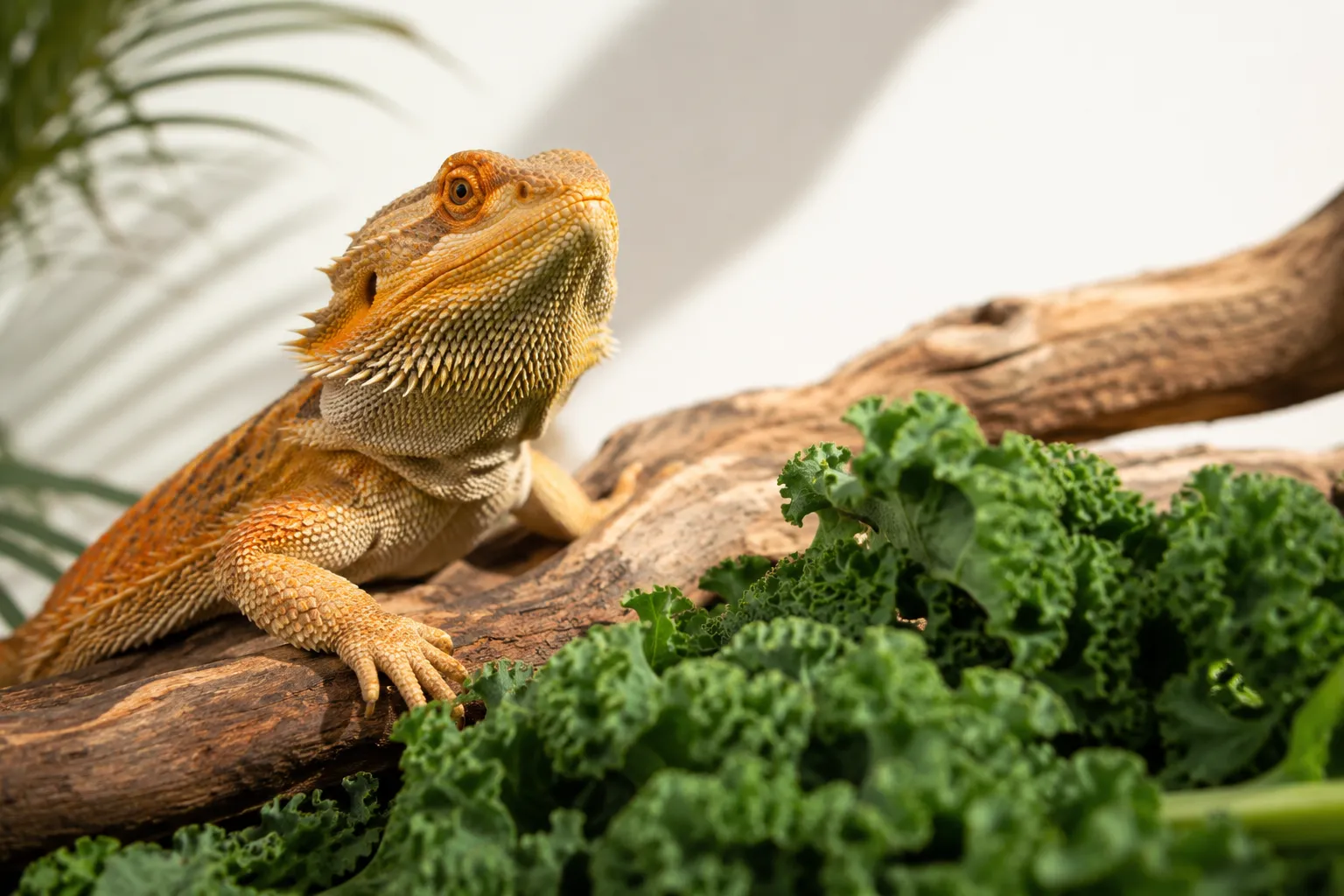
Quick Answer: Yes, bearded dragons can eat kale, but only occasionally and in small amounts. Kale contains high levels of oxalates and goitrogens that can interfere with calcium absorption and thyroid function when fed regularly. Offer kale as a treat once or twice per month at most, and prioritize safer leafy greens like collard greens, mustard greens, and turnip greens for daily feeding.
Key Takeaways
- Kale is safe in moderation but should never be a staple green due to its high oxalate and goitrogen content
- Feed kale only once or twice per month to avoid calcium binding and thyroid issues
- Collard greens, mustard greens, and turnip greens are far superior daily alternatives with better calcium-to-phosphorus ratios
- Baby bearded dragons should avoid kale entirely because their rapid growth requires maximum calcium absorption
- Always chop kale into small pieces and mix it with other vegetables to dilute the oxalate concentration
- Watch for signs of metabolic bone disease (lethargy, swollen limbs, tremors) if you’ve been feeding kale too frequently
- The calcium-to-phosphorus ratio in kale is approximately 2.4:1, which seems good but is undermined by oxalates
- Remove stems and thick veins before feeding, as these contain the highest concentration of problematic compounds
- Never feed kale daily regardless of how much your bearded dragon seems to enjoy it

Vitamin Enriched Formula That Provides Essential Proteins, Fats, Vitamins And Minerals

All Natural: 100% all-natural and preservative-free

FRESH AND HEALTHY: We only choose fresh and healthy Grasshoppers as raw materials, without any additives, and then seal stored through advanced frozen-drying technology; Bearded dragon food ensures the freshness and natural taste of the product
Is Kale Safe for Bearded Dragons to Eat?
Kale is technically safe for bearded dragons when offered sparingly, but it comes with significant nutritional drawbacks that make it a poor choice for regular feeding. The primary concerns are oxalates and goitrogens, two naturally occurring compounds that can harm your dragon’s health over time.
Oxalates bind to calcium in the digestive tract, preventing absorption and potentially leading to metabolic bone disease (MBD). Since bearded dragons require high calcium intake to maintain strong bones and prevent MBD, any food that blocks calcium absorption becomes problematic when fed frequently.
Goitrogens interfere with thyroid function by blocking iodine uptake. While occasional exposure won’t cause issues, regular consumption can lead to thyroid problems and hormonal imbalances that affect growth, metabolism, and overall health.
When kale is acceptable:
- As an occasional treat (1-2 times per month maximum)
- Mixed with other safer greens to dilute oxalate concentration
- For adult dragons with established bone health
- In very small portions (a few small pieces)
When to avoid kale completely:
- Daily or weekly feeding schedules
- For baby or juvenile dragons under 12 months
- If your dragon shows any signs of MBD
- As a primary or staple leafy green
How Often Can Bearded Dragons Eat Kale?
Bearded dragons should eat kale no more than once or twice per month. This infrequent feeding schedule allows you to offer variety without exposing your dragon to harmful levels of oxalates and goitrogens that accumulate with regular consumption.
Think of kale like dessert for humans, enjoyable occasionally but problematic as a dietary staple. Many bearded dragons actually love the taste of kale, which can tempt owners to feed it more often, but frequency matters more than preference when it comes to reptile nutrition.
Safe feeding frequency by age:
- Baby dragons (0-6 months): Avoid kale entirely
- Juvenile dragons (6-12 months): Once per month maximum, very small portions
- Adult dragons (12+ months): Once or twice per month, small portions mixed with other greens
Signs you’re feeding kale too often:
- Lethargy or reduced activity levels
- Swollen or misshapen limbs
- Tremors or twitching
- Difficulty walking or climbing
- Soft or rubbery jaw
- Loss of appetite
If you notice any of these symptoms, stop feeding kale immediately and consult a reptile veterinarian, as these are classic signs of metabolic bone disease.
Kale vs Collard Greens for Bearded Dragons
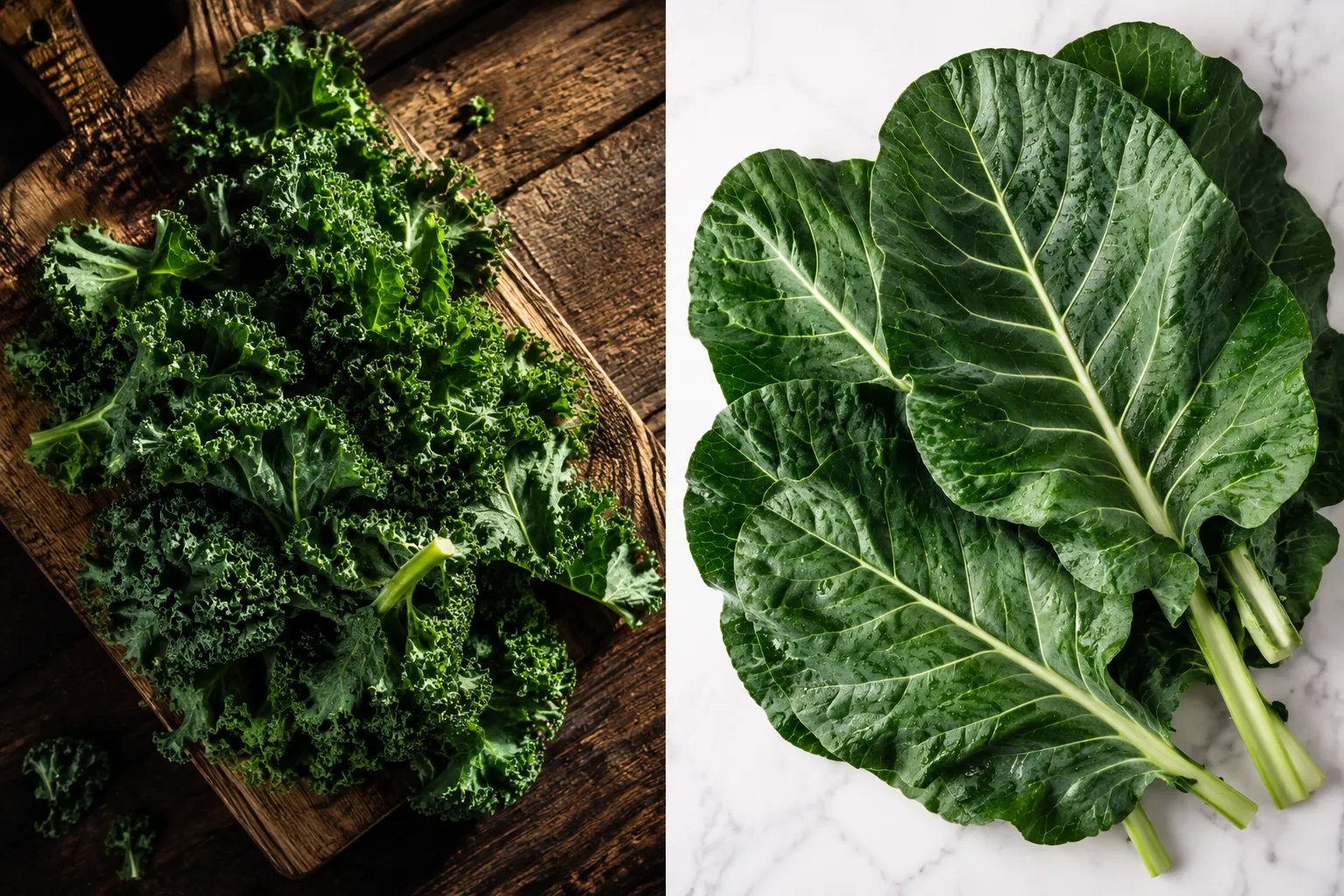
Collard greens are vastly superior to kale for bearded dragons and should be your go-to leafy green for daily feeding. While both vegetables belong to the same plant family (Brassica), their nutritional profiles differ dramatically in ways that matter for reptile health.
Nutritional comparison:
| Factor | Kale | Collard Greens |
|---|---|---|
| Calcium-to-phosphorus ratio | 2.4:1 | 14.5:1 |
| Oxalate content | High | Low |
| Goitrogen content | High | Moderate |
| Safe feeding frequency | 1-2x per month | Daily |
| Best for | Occasional variety | Staple green |
Why collard greens win:
The calcium-to-phosphorus ratio tells the story. Bearded dragons need a ratio of at least 2:1 (calcium to phosphorus) in their diet, with higher ratios being better. Collard greens deliver an exceptional 14.5:1 ratio with minimal oxalates, meaning your dragon actually absorbs that calcium. Kale’s 2.4:1 ratio looks acceptable on paper, but the high oxalate content blocks much of that calcium from being absorbed.
Taste and texture differences:
Collard greens have broader, flatter leaves that are easier to chop into appropriate sizes. Kale’s curly texture can be harder for some dragons to eat, especially smaller juveniles. Most bearded dragons readily accept collard greens once they’re accustomed to them, though some may initially prefer kale’s slightly sweeter taste.
Choose collard greens if: You want a safe daily staple that supports bone health and provides excellent nutrition.
Choose kale only if: You’re offering occasional variety and have already established a solid base diet of better greens.
Can Baby Bearded Dragons Eat Kale?
Baby bearded dragons should not eat kale. Their rapid growth phase demands maximum calcium absorption to build strong bones, and kale’s high oxalate content directly interferes with this critical developmental need.
During the first six months of life, baby bearded dragons grow at an astonishing rate, sometimes doubling or tripling in size. This growth requires enormous amounts of calcium to support bone development. Any food that blocks calcium absorption, like kale, poses a serious risk of metabolic bone disease, which can cause permanent deformities and lifelong health problems.
Why babies are especially vulnerable:
- Faster growth means higher calcium requirements
- Developing bones are more susceptible to MBD
- Smaller body size means oxalates have proportionally greater impact
- Less dietary variety means problematic foods have outsized effects
Safe alternatives for baby bearded dragons:
- Collard greens (finely chopped)
- Mustard greens
- Turnip greens
- Dandelion greens
- Endive
- Escarole
Feeding guidelines for babies:
Baby bearded dragons should eat 80% protein (appropriately sized insects) and 20% vegetables. The vegetable portion should consist entirely of safe, high-calcium greens with low oxalate content. Wait until your dragon reaches at least 12 months of age before introducing kale, and even then, keep it strictly occasional.
What Greens Are Better Than Kale for Bearded Dragons?
Many leafy greens outperform kale nutritionally and can be fed daily without health concerns. Building your bearded dragon’s diet around these superior options ensures optimal calcium absorption, thyroid health, and overall nutrition.
Top-tier daily greens (feed these regularly):
- Collard greens, Exceptional 14.5:1 calcium-to-phosphorus ratio, low oxalates, widely available
- Mustard greens, High calcium, low oxalates, adds variety and flavor
- Turnip greens, Excellent calcium content, nutritious, readily accepted
- Dandelion greens, Outstanding calcium source, can forage pesticide-free leaves from your yard
- Endive, Good calcium, low oxalates, adds textural variety
- Escarole, Similar benefits to endive, slightly different flavor profile
Good occasional greens (rotate for variety):
- Bok choy
- Watercress
- Arugula
- Cilantro
- Basil
- Parsley (small amounts)
Greens to avoid or strictly limit:
- Spinach (extremely high oxalates)
- Kale (high oxalates and goitrogens)
- Cabbage (high goitrogens)
- Lettuce (nutritionally empty, causes diarrhea)
Building a rotation:
Create a weekly rotation using 3-4 different greens from the top-tier list. For example: collard greens Monday-Wednesday, mustard greens Thursday-Friday, turnip greens Saturday-Sunday. This approach provides nutritional variety while maintaining safety.
Why Is Kale Bad for Bearded Dragons?
Kale isn’t inherently toxic, but its high concentrations of oxalates and goitrogens make it problematic when fed regularly. Understanding these compounds helps explain why kale earns its reputation as a risky food for bearded dragons.
The oxalate problem:
Oxalates (oxalic acid) bind with calcium in the digestive tract, forming calcium oxalate crystals that cannot be absorbed. This process effectively “steals” calcium from your dragon’s diet. Over time, calcium deficiency leads to metabolic bone disease, characterized by weak bones, fractures, paralysis, and potentially death.
Kale contains approximately 20-25 mg of oxalates per 100 grams, not the highest among vegetables, but high enough to cause problems with frequent feeding. For comparison, spinach contains 970 mg per 100 grams (which is why spinach should be avoided entirely), while collard greens contain only 4 mg per 100 grams.
The goitrogen issue:
Goitrogens interfere with thyroid hormone production by blocking iodine uptake. The thyroid gland regulates metabolism, growth, and numerous bodily functions. Chronic goitrogen exposure can lead to:
- Hypothyroidism (underactive thyroid)
- Goiter (enlarged thyroid gland)
- Slowed metabolism and weight gain
- Lethargy and reduced activity
- Impaired growth in juveniles
Why some sources recommend kale:
Older reptile care guides sometimes list kale as acceptable because its calcium-to-phosphorus ratio looks good on paper. However, these recommendations fail to account for oxalate binding, which dramatically reduces actual calcium absorption. Modern reptile nutrition research emphasizes bioavailability, not just nutrient presence, but actual absorption.
The cumulative effect:
One serving of kale won’t harm your bearded dragon. The danger lies in regular feeding that allows oxalates and goitrogens to accumulate. Think of it like exposure to a mild toxin, occasional contact is manageable, but daily exposure causes serious problems.
How Much Kale Should I Feed My Bearded Dragon?
When you do offer kale as an occasional treat, limit the portion to 2-3 small pieces (about the size of your dragon’s eye) mixed thoroughly with other safer greens. This small amount provides variety without delivering problematic levels of oxalates and goitrogens.
Proper portion guidelines:
- Maximum frequency: Once or twice per month
- Portion size: 2-3 pieces the size of the space between your dragon’s eyes
- Preparation: Finely chopped, stems removed
- Serving method: Mixed with at least 3-4 times as much safer greens (collard, mustard, turnip)
The mixing strategy:
Never serve kale alone. Always combine it with high-calcium, low-oxalate greens to dilute the oxalate concentration. A good ratio is 1 part kale to 4 parts safer greens. For example, if you offer 1 tablespoon of chopped kale, mix it with 4 tablespoons of collard greens, mustard greens, and other vegetables.
Visual portion guide:
Adult bearded dragons should receive a salad bowl roughly the size of their head at each feeding. If you’re including kale in that bowl, it should represent no more than 10-15% of the total volume, with the remaining 85-90% consisting of safer vegetables.
Common portioning mistakes:
- Offering kale as the primary green in a salad
- Feeding kale multiple times per week
- Giving large portions because “my dragon loves it”
- Not mixing kale with other vegetables
- Feeding kale to babies or juveniles
Can Kale Cause Health Problems in Bearded Dragons?
Yes, regular kale consumption can cause serious health problems in bearded dragons, primarily metabolic bone disease (MBD) and thyroid dysfunction. These conditions develop gradually, making them easy to miss until they become severe.
Metabolic Bone Disease (MBD):
MBD is the most common and serious consequence of feeding too much kale. When oxalates bind calcium and prevent absorption, the body begins pulling calcium from bones to maintain blood calcium levels. This process weakens the skeletal system progressively.
Early MBD symptoms:
- Slight lethargy or reduced activity
- Decreased appetite
- Minor tremors in limbs or jaw
- Reluctance to climb or jump
Advanced MBD symptoms:
- Visibly swollen or deformed limbs
- Soft, rubbery jaw (rubber jaw syndrome)
- Inability to walk or stand properly
- Seizures or severe tremors
- Spinal deformities or curved spine
- Paralysis of hind legs
Thyroid problems:
Chronic goitrogen exposure from regular kale feeding can suppress thyroid function, leading to hypothyroidism. Symptoms include:
- Unexplained weight gain despite normal eating
- Extreme lethargy and long sleeping periods
- Slowed growth in juveniles
- Reduced body temperature regulation
- Thickened or swollen neck area (goiter)
Kidney issues:
Calcium oxalate crystals can accumulate in the kidneys, potentially causing kidney stones or kidney damage. Symptoms include:
- Decreased urination or straining to urinate
- Blood in urine
- Swollen abdomen
- Loss of appetite and weight loss
Treatment and recovery:
If you suspect kale has caused health problems, immediately stop feeding it and consult a reptile veterinarian. Treatment typically involves:
- Calcium supplementation (oral or injectable)
- UVB lighting optimization
- Dietary correction with high-calcium greens
- Supportive care and monitoring
Early-stage MBD can often be reversed with proper treatment, but advanced cases may cause permanent damage.

Ultra-fine powder, zero waste: Micron-level grinding ensures excellent adhesion, allowing it to coat food and leafy greens smoothly and evenly, ensuring adequate and easily absorbable nutrition with every feeding

OPTIMAL NUTRITION FOR HERBIVOROUS REPTILES; Zilla Herbivore Medley provides a complete diet for herbivores like bearded dragons, tortoises, uromastyx and iguanas

Package Dimensions: 12.953 H x 7.62 L x 7.62 W (centimeters)
What Vegetables Can Bearded Dragons Eat Daily?
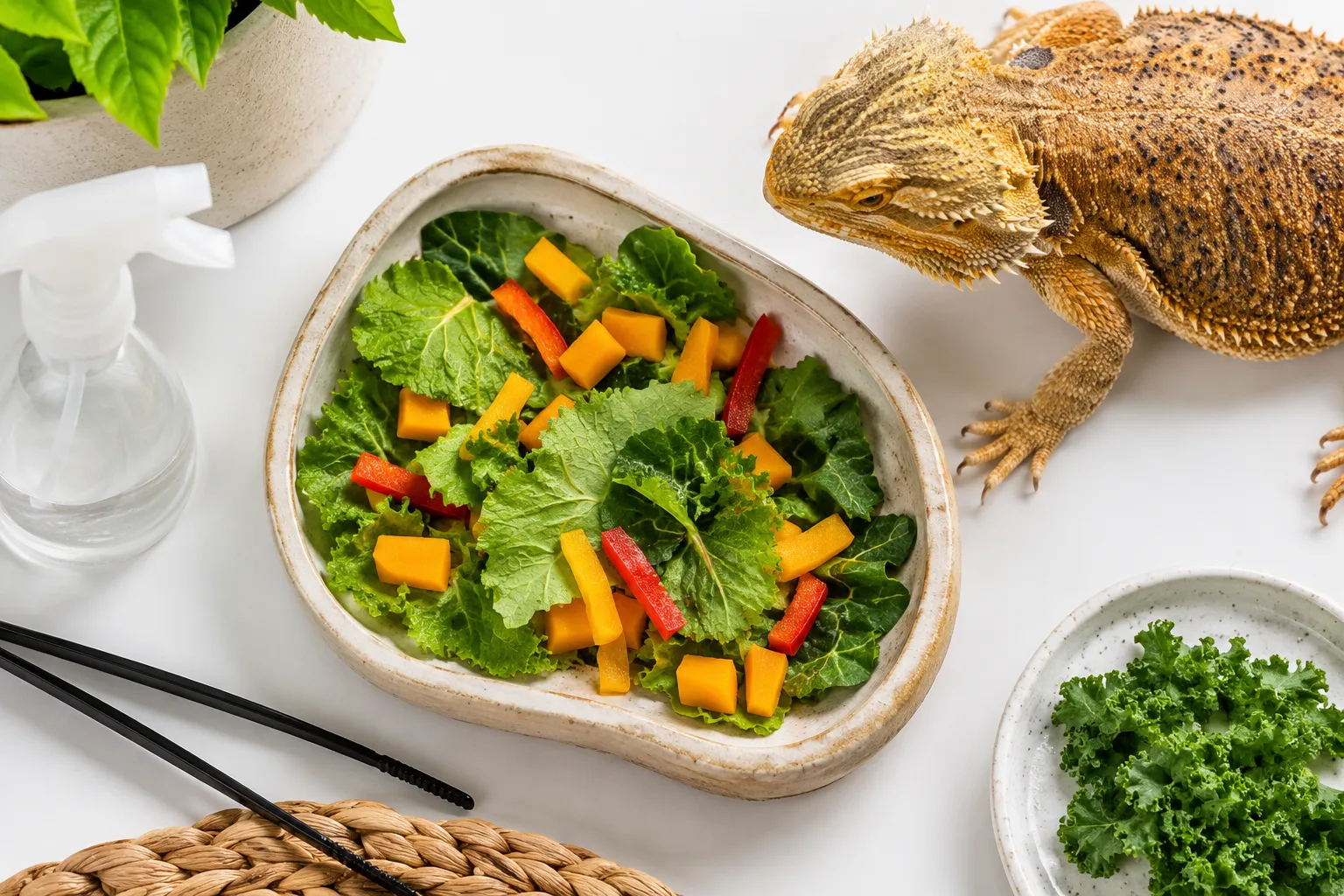
Bearded dragons can safely eat a variety of vegetables daily, with leafy greens forming the foundation and other vegetables adding nutritional diversity and enrichment. Building a balanced daily salad ensures your dragon receives optimal nutrition without exposure to problematic compounds.
Daily staple greens (rotate these as the base):
- Collard greens
- Mustard greens
- Turnip greens
- Dandelion greens
- Endive
- Escarole
Daily vegetables for variety (add to greens):
- Squash: Butternut, acorn, yellow squash (shredded or small cubes)
- Bell peppers: Red, yellow, orange (avoid green, less nutritious)
- Carrots: Shredded or finely grated (small amounts due to vitamin A)
- Green beans: Chopped into small pieces
- Okra: Sliced thin
- Cactus pad (nopales): Spines removed, chopped
Weekly vegetables (offer 2-3 times per week):
- Bok choy
- Cabbage (small amounts)
- Broccoli (small amounts, florets only)
- Cucumber (mostly water, use sparingly)
- Zucchini
Occasional treats (once or twice per month):
- Kale
- Spinach (very rarely, tiny amounts)
- Tomatoes (small amounts)
- Peas
Sample daily salad formula:
- Base (70%): Mix of 2-3 staple greens (collard, mustard, turnip)
- Vegetables (25%): 2-3 daily vegetables (squash, bell pepper, green beans)
- Treats (5%): Small amount of fruit or occasional vegetable
Preparation tips:
- Chop everything into pieces smaller than the space between your dragon’s eyes
- Remove any tough stems or thick veins
- Wash all produce thoroughly to remove pesticides
- Serve at room temperature, never cold from the refrigerator
- Remove uneaten salad after 1-2 hours to prevent spoilage
Do I Need to Prepare Kale Before Feeding My Bearded Dragon?
Yes, proper preparation is essential when feeding kale to minimize risks and make it easier for your bearded dragon to eat and digest. Taking a few simple steps reduces oxalate exposure and prevents choking hazards.
Step-by-step kale preparation:
Wash thoroughly: Rinse kale under cool running water for 30 seconds to remove pesticides, dirt, and potential bacteria. Organic kale is preferable but still requires washing.
Remove stems and thick veins: The stems and central veins contain the highest concentrations of oxalates and goitrogens. Strip the leafy portions away from these tough parts and discard the stems.
Chop finely: Cut kale into very small pieces, no larger than the space between your dragon’s eyes. Kale’s curly texture can be difficult to eat, so smaller pieces prevent choking and make consumption easier.
Mix with other greens: Combine the small amount of kale with at least 3-4 times as much safer greens like collard greens, mustard greens, or turnip greens. This dilutes the oxalate concentration.
Serve at room temperature: Never serve cold vegetables straight from the refrigerator, as this can slow digestion and cause discomfort.
Should you cook kale?
Cooking kale (steaming or boiling) can reduce oxalate content by 30-50%, but it also destroys some beneficial nutrients and changes the texture. Most reptile nutritionists recommend feeding raw vegetables to preserve maximum nutrition, but if you’re concerned about oxalates, light steaming is an option. Never add oils, butter, salt, or seasonings.
Common preparation mistakes:
- Leaving thick stems attached
- Cutting pieces too large
- Serving kale alone without mixing
- Not washing thoroughly
- Offering cold vegetables
Kale Calcium to Phosphorus Ratio for Reptiles
Kale has a calcium-to-phosphorus ratio of approximately 2.4:1, which meets the minimum 2:1 ratio recommended for bearded dragons but falls far short of optimal. More importantly, the high oxalate content in kale significantly reduces the bioavailability of that calcium, making the ratio misleading.
Understanding calcium-to-phosphorus ratios:
Bearded dragons need more calcium than phosphorus in their diet because phosphorus can interfere with calcium absorption when present in excess. The ideal ratio is 2:1 or higher (calcium to phosphorus). Ratios below 2:1 can contribute to metabolic bone disease over time.
Kale’s ratio in context:
| Vegetable | Ca:P Ratio | Oxalate Level | Overall Rating |
|---|---|---|---|
| Kale | 2.4:1 | High | Poor (occasional only) |
| Collard greens | 14.5:1 | Low | Excellent (daily) |
| Mustard greens | 2.4:1 | Low | Excellent (daily) |
| Turnip greens | 4.5:1 | Low | Excellent (daily) |
| Spinach | 2.0:1 | Very high | Avoid entirely |
Why the ratio alone doesn’t tell the full story:
Mustard greens and kale have identical calcium-to-phosphorus ratios (2.4:1), yet mustard greens are safe for daily feeding while kale should be limited to occasional treats. The difference lies in oxalate content. Mustard greens have low oxalates, allowing your dragon to absorb most of the available calcium. Kale’s high oxalates bind much of that calcium, making it unavailable for absorption.
Bioavailability matters more than raw numbers:
When evaluating vegetables for bearded dragons, consider:
- Calcium-to-phosphorus ratio (should be 2:1 or higher)
- Oxalate content (lower is better)
- Goitrogen content (lower is better)
- Overall nutrient density
Kale fails on points 2 and 3, which is why superior alternatives exist despite similar ratios.
What Happens If a Bearded Dragon Eats Too Much Kale?
If a bearded dragon eats too much kale over an extended period, the most likely consequence is metabolic bone disease (MBD) caused by calcium deficiency. The timeline and severity depend on how frequently kale is fed, the dragon’s age, and the overall diet quality.
Short-term overconsumption (one large serving):
A single large serving of kale is unlikely to cause immediate harm in a healthy adult bearded dragon. You might notice:
- Slightly softer stools
- Mild digestive discomfort
- No appetite for the next meal
Simply skip kale for the next several weeks and return to safer greens. Monitor for any unusual symptoms.
Long-term overconsumption (weekly or daily feeding):
Regular kale feeding over weeks or months can lead to serious health problems:
Week 1-4:
- Subtle energy decrease
- Slightly reduced appetite
- No obvious physical symptoms
Week 4-12:
- Visible lethargy
- Minor tremors in limbs
- Reduced climbing and activity
- Possible slight limb swelling
Month 3+:
- Clear signs of MBD (swollen limbs, soft jaw, difficulty walking)
- Potential thyroid issues (weight gain, extreme lethargy)
- Possible kidney problems from oxalate accumulation
- Severe cases may show paralysis or seizures
Emergency response:
If you realize you’ve been feeding kale too frequently:
- Stop immediately: Remove kale from the diet completely
- Increase calcium: Offer high-calcium greens (collard, mustard, turnip) exclusively
- Check UVB lighting: Ensure your dragon has proper UVB exposure (10-12 hours daily with appropriate bulb strength)
- Supplement calcium: Dust insects with calcium powder at every feeding
- Veterinary consultation: If you notice any MBD symptoms, see a reptile vet immediately
Prevention is key:
The best approach is preventing overconsumption by treating kale as an occasional treat (1-2 times per month maximum) rather than a regular dietary component.
Best Leafy Greens for Bearded Dragons List
The best leafy greens for bearded dragons combine high calcium content, low oxalates, low goitrogens, and good overall nutrition. This comprehensive list ranks greens by safety and nutritional value to help you build an optimal diet.
Tier 1: Daily staples (feed these regularly)
Collard greens ⭐ Top choice
- Calcium-to-phosphorus ratio: 14.5:1
- Oxalate level: Low
- Availability: Excellent
- Notes: The gold standard for bearded dragon greens
Mustard greens
- Calcium-to-phosphorus ratio: 2.4:1
- Oxalate level: Low
- Availability: Good
- Notes: Adds variety and flavor, readily accepted
Turnip greens
- Calcium-to-phosphorus ratio: 4.5:1
- Oxalate level: Low
- Availability: Good
- Notes: Excellent nutrition, easy to find
Dandelion greens
- Calcium-to-phosphorus ratio: 2.8:1
- Oxalate level: Low
- Availability: Seasonal (or forage pesticide-free)
- Notes: Outstanding calcium source, free if you forage
Endive
- Calcium-to-phosphorus ratio: 1.9:1
- Oxalate level: Low
- Availability: Good
- Notes: Good for variety, slightly lower calcium
Escarole
- Calcium-to-phosphorus ratio: 2.0:1
- Oxalate level: Low
- Availability: Good
- Notes: Similar to endive, adds textural variety
Tier 2: Rotate for variety (2-3 times per week)
- Bok choy (moderate goitrogens)
- Watercress
- Arugula
- Cilantro
- Basil
- Parsley (small amounts)
Tier 3: Occasional treats only (1-2 times per month)
- Kale (high oxalates and goitrogens)
- Cabbage (high goitrogens)
- Chard (high oxalates)
Tier 4: Avoid entirely
- Spinach (extremely high oxalates)
- Iceberg lettuce (no nutritional value, causes diarrhea)
- Rhubarb (toxic)
- Avocado (toxic)
Building your rotation:
Choose 3-4 greens from Tier 1 and rotate them throughout the week. Add Tier 2 greens occasionally for variety. Limit Tier 3 greens to rare treats, and never feed Tier 4 greens.
Can Bearded Dragons Eat Kale Every Day?
No, bearded dragons should never eat kale every day. Daily kale consumption will lead to calcium deficiency, metabolic bone disease, and potential thyroid problems due to the cumulative effects of oxalates and goitrogens.
Why daily feeding is dangerous:
Even small daily portions of kale expose your bearded dragon to problematic compounds that accumulate over time. Oxalates continuously bind dietary calcium, creating a chronic deficiency that depletes bone calcium stores. Goitrogens steadily interfere with thyroid function, potentially causing hormonal imbalances.
The cumulative effect timeline:
- Week 1-2: No obvious symptoms, but calcium absorption is impaired
- Week 3-6: Subtle energy decrease, possible appetite changes
- Week 6-12: Early MBD symptoms appear (minor tremors, reduced activity)
- Month 3+: Clear MBD signs (swollen limbs, soft jaw, difficulty walking)
What to feed daily instead:
Replace daily kale with these superior alternatives:
- Collard greens: The best daily staple, exceptional calcium-to-phosphorus ratio
- Mustard greens: Safe for daily feeding, adds flavor variety
- Turnip greens: Excellent nutrition, readily available
- Mixed rotation: Combine 2-3 of the above daily for optimal variety
If your dragon is addicted to kale:
Some bearded dragons develop a preference for kale and may refuse other greens initially. To transition:
- Gradual reduction: Slowly decrease kale percentage over 1-2 weeks
- Mix thoroughly: Combine kale with safer greens so they can’t pick it out
- Hunger motivation: If they refuse to eat, wait a day, healthy dragons can safely skip a meal
- Variety introduction: Try different safe greens to find alternatives they enjoy
- Complete elimination: Once transitioned, keep kale as a rare monthly treat only
The bottom line:
Daily kale feeding is one of the most common dietary mistakes bearded dragon owners make. The vegetable’s reputation as a “superfood” for humans doesn’t translate to reptile nutrition. Prioritize species-appropriate greens that support rather than undermine your dragon’s health.
Frequently Asked Questions
Can bearded dragons eat kale stems?
No, remove kale stems before feeding. Stems contain the highest concentrations of oxalates and goitrogens, plus they’re tough and difficult to digest. Strip the leafy portions away from stems and discard the stems entirely.
Is raw or cooked kale better for bearded dragons?
Raw kale is generally preferred because it retains more nutrients, though light steaming can reduce oxalate content by 30-50%. If you cook kale, steam it briefly without any oils, butter, salt, or seasonings. Most reptile nutritionists recommend raw vegetables for maximum nutrition.
Can bearded dragons eat kale chips?
No, never feed kale chips to bearded dragons. Commercial kale chips contain salt, oils, and seasonings that are harmful to reptiles. Even homemade unseasoned kale chips are too dry and concentrated, making oxalate exposure worse.
What should I do if my bearded dragon only wants to eat kale?
Gradually transition to safer greens by mixing decreasing amounts of kale with increasing amounts of collard greens, mustard greens, or turnip greens over 1-2 weeks. If your dragon refuses to eat, wait a day, healthy dragons can safely skip a meal, and hunger will motivate them to try new foods.
How do I know if my bearded dragon has calcium deficiency from kale?
Watch for metabolic bone disease symptoms: lethargy, tremors, swollen or misshapen limbs, soft jaw, difficulty walking, or reluctance to climb. If you notice any of these signs, stop feeding kale immediately and consult a reptile veterinarian.
Can I feed kale if I dust it with calcium powder?
Calcium supplementation helps but doesn’t fully counteract kale’s oxalates, which bind calcium in the digestive tract regardless of supplementation. It’s better to choose low-oxalate greens that allow natural calcium absorption rather than relying on supplements to compensate for poor food choices.
Are there any bearded dragons that can eat kale daily?
No, all bearded dragons are susceptible to the negative effects of oxalates and goitrogens. While individual tolerance may vary slightly, no bearded dragon should eat kale daily regardless of age, size, or apparent health.
What’s the difference between curly kale and dinosaur kale for bearded dragons?
Both curly kale (Scots kale) and dinosaur kale (Lacinato or Tuscan kale) contain similar levels of oxalates and goitrogens. Neither is significantly safer than the other, and both should be limited to occasional treats. Dinosaur kale’s flatter leaves may be slightly easier to chop and eat.
Can bearded dragons eat kale flowers?
Kale flowers (when the plant bolts) are safe in the same limited quantities as kale leaves, occasionally only. However, they offer little nutritional benefit and still contain oxalates. Focus on proven nutritious vegetables rather than experimenting with kale flowers.
How long after eating kale will my bearded dragon show symptoms?
Symptoms from occasional kale feeding are unlikely. Problems develop from regular consumption over weeks or months. Early MBD symptoms typically appear after 6-12 weeks of frequent kale feeding, while advanced symptoms may take 3-6 months to manifest.
Is organic kale safer for bearded dragons?
Organic kale eliminates pesticide exposure but contains the same levels of oxalates and goitrogens as conventional kale. While organic is preferable to reduce chemical exposure, it doesn’t make kale safe for daily feeding. The same frequency limits apply regardless of whether kale is organic or conventional.
Can I grow kale specifically for my bearded dragon?
You can grow kale at home, but it’s better to grow safer alternatives like collard greens, mustard greens, or dandelion greens that can be fed daily. If you enjoy gardening for your dragon, prioritize vegetables that support rather than undermine their health.
Conclusion
Bearded dragons can eat kale, but only as an occasional treat limited to once or twice per month in small portions. The high oxalate and goitrogen content in kale makes it unsuitable as a daily staple, despite its reputation as a nutritious vegetable for humans. Regular kale consumption leads to calcium deficiency, metabolic bone disease, and potential thyroid problems that can seriously compromise your dragon’s health.
Key actions to take:
- Replace kale with superior alternatives: Make collard greens, mustard greens, and turnip greens your daily staples
- Limit kale strictly: If you feed kale at all, keep it to 1-2 times per month maximum
- Prepare properly: Remove stems, chop finely, and mix with safer greens
- Never feed kale to babies: Young dragons need maximum calcium absorption for growth
- Monitor for symptoms: Watch for signs of MBD (lethargy, tremors, swollen limbs) and consult a vet if they appear
- Focus on variety: Build a rotation of safe vegetables rather than relying on any single green
The question “Can bearded dragons eat kale?” has a nuanced answer: yes, they can, but they shouldn’t regularly. Your dragon’s long-term health depends on prioritizing vegetables that support calcium absorption and thyroid function rather than undermining them. By choosing superior leafy greens for daily feeding and treating kale as a rare variety item, you’ll give your bearded dragon the best chance at a long, healthy life free from preventable nutritional diseases.

Unique textured pellets that bearded dragons love to eat
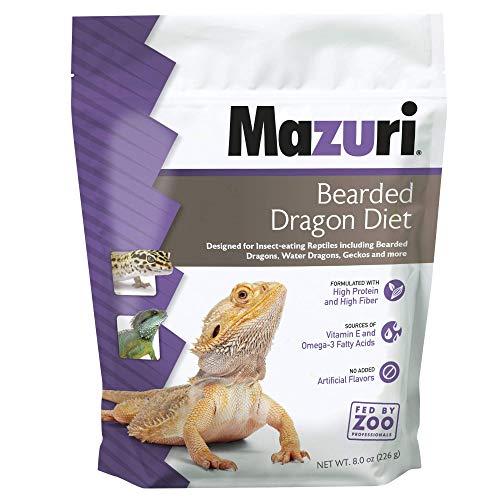
Great source of omega-3 fatty acids and Vitamin E.

New Fluker's Crafted Cuisine Bearded Dragon Diet (6.75 oz.)