
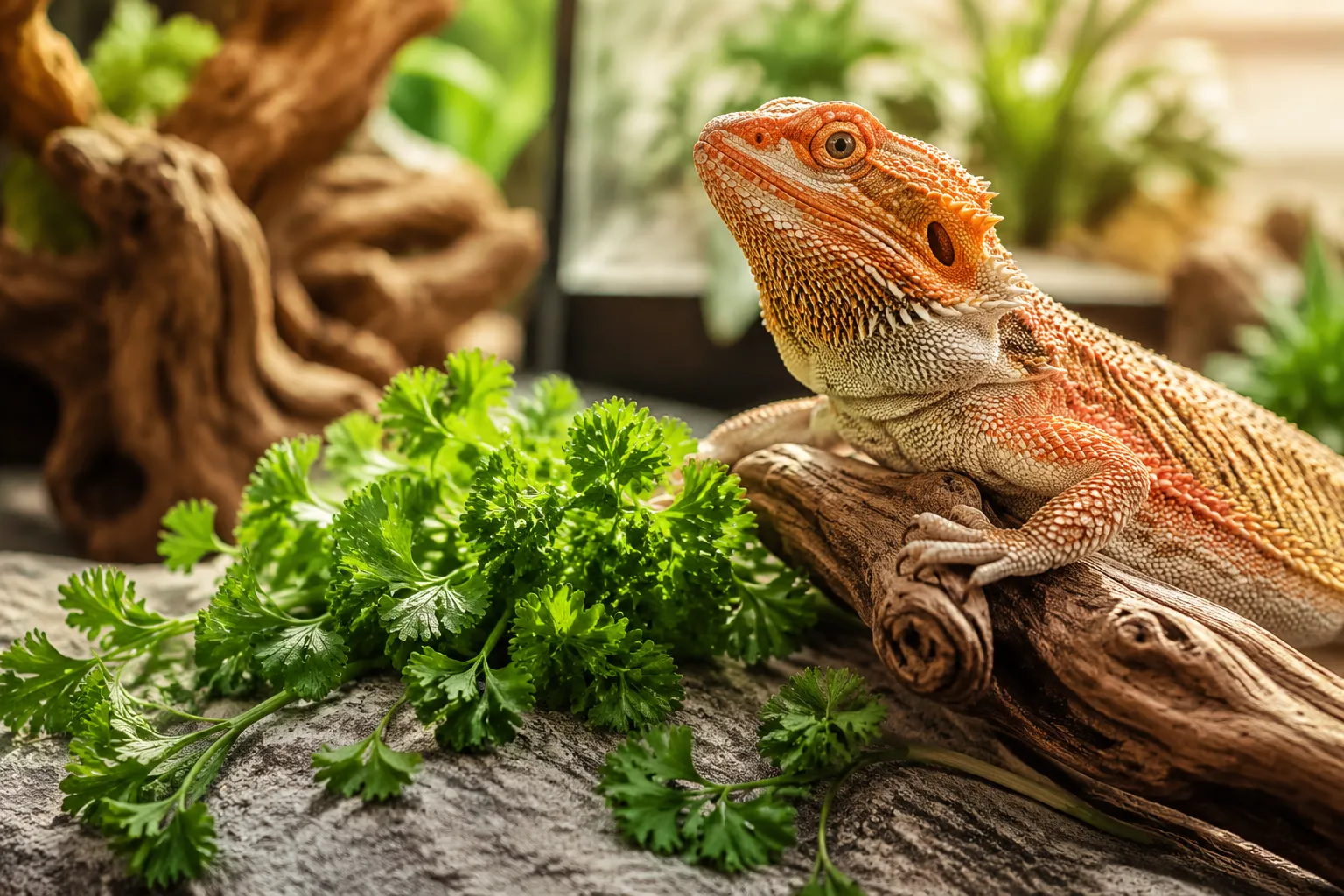
Quick Answer: Yes, bearded dragons can eat parsley, but only in small amounts as an occasional treat. Parsley contains high levels of oxalates that can bind calcium and prevent absorption, which is dangerous for bearded dragons who need calcium for bone health. Offer parsley sparingly, no more than once or twice per month, and always mix it with other safer greens.
Key Takeaways
- Parsley is safe for bearded dragons in very small quantities but should never be a staple green
- High oxalate content in parsley binds calcium, increasing the risk of metabolic bone disease
- Limit parsley to once or twice monthly, mixing small amounts with calcium-rich greens
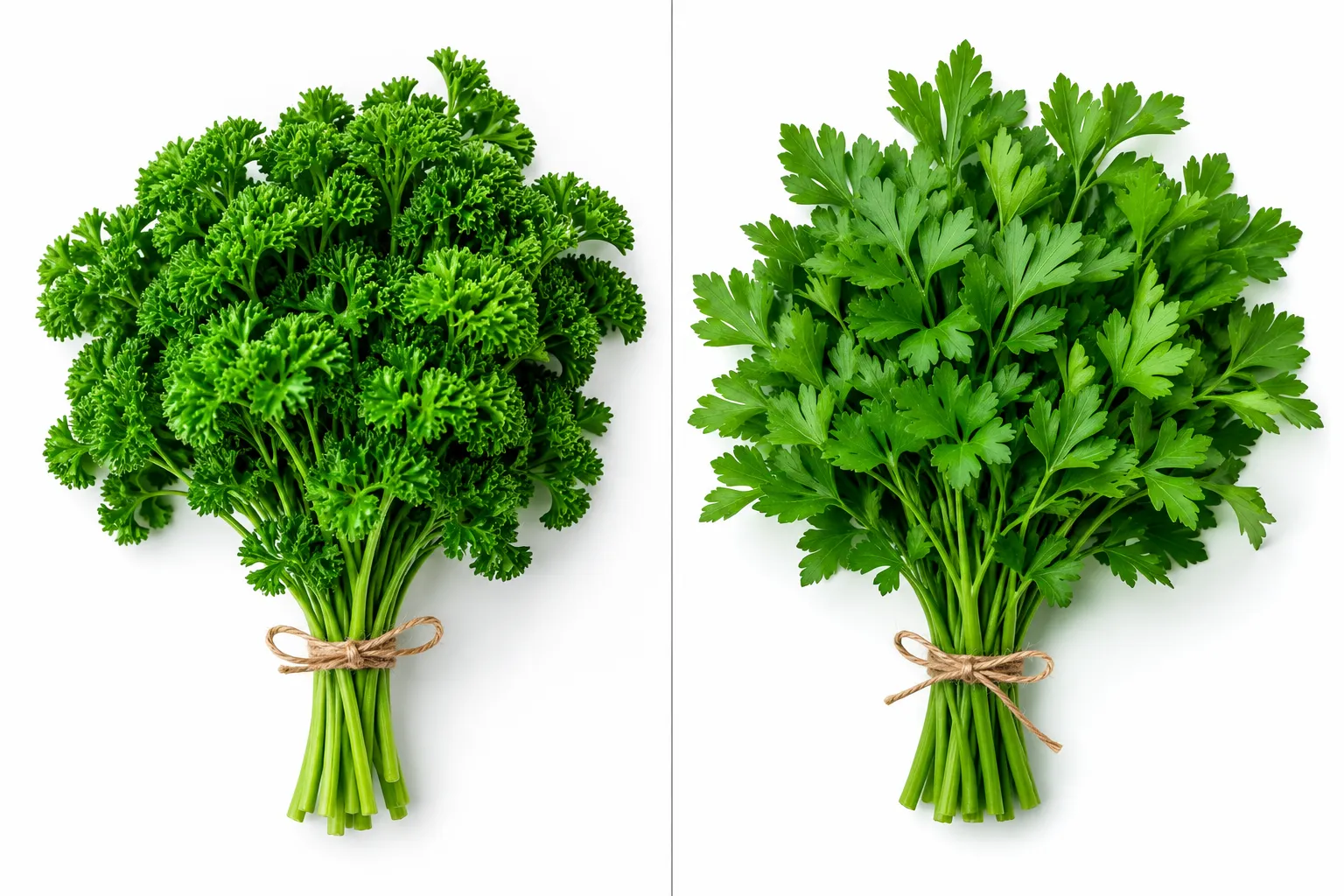
- Both curly and flat-leaf parsley varieties are safe, though flat-leaf has slightly lower oxalates
- Baby bearded dragons should avoid parsley entirely due to their higher calcium needs
- Better alternatives include collard greens, mustard greens, turnip greens, and dandelion greens
- Never feed parsley daily or as a primary vegetable in your dragon’s diet
- Most bearded dragons enjoy the taste of parsley but moderation is essential
- Cilantro is a safer herb alternative with lower oxalate levels
Great source of omega-3 fatty acids and Vitamin E. Formulated for the special feeding needs of insectivorous reptiles. No added artificial flavors.
Is Parsley Safe for Bearded Dragons to Eat?
Parsley is technically safe for bearded dragons when fed in very limited quantities. The main concern is its high oxalate content, which interferes with calcium absorption in the digestive system. Since bearded dragons require substantial calcium to maintain healthy bones and prevent metabolic bone disease (MBD), foods high in oxalates should be minimized.
Why oxalates matter:
- Oxalates bind to calcium in the gut, forming calcium oxalate crystals
- These crystals pass through the body without being absorbed
- Regular consumption of high-oxalate foods can lead to calcium deficiency
- Calcium deficiency causes MBD, characterized by weak bones, tremors, and paralysis
When parsley is acceptable:
- Mixed with calcium-rich greens like collard or mustard greens
- Offered as a flavor variety once or twice per month
- Given in small pinches rather than full servings
- Part of a diverse, rotating diet with multiple vegetable types
The key is treating parsley as a garnish or occasional flavor boost rather than a dietary staple. If your bearded dragon has shown signs of calcium deficiency or MBD in the past, avoid parsley completely until calcium levels normalize.
How Much Parsley Can I Feed My Bearded Dragon?
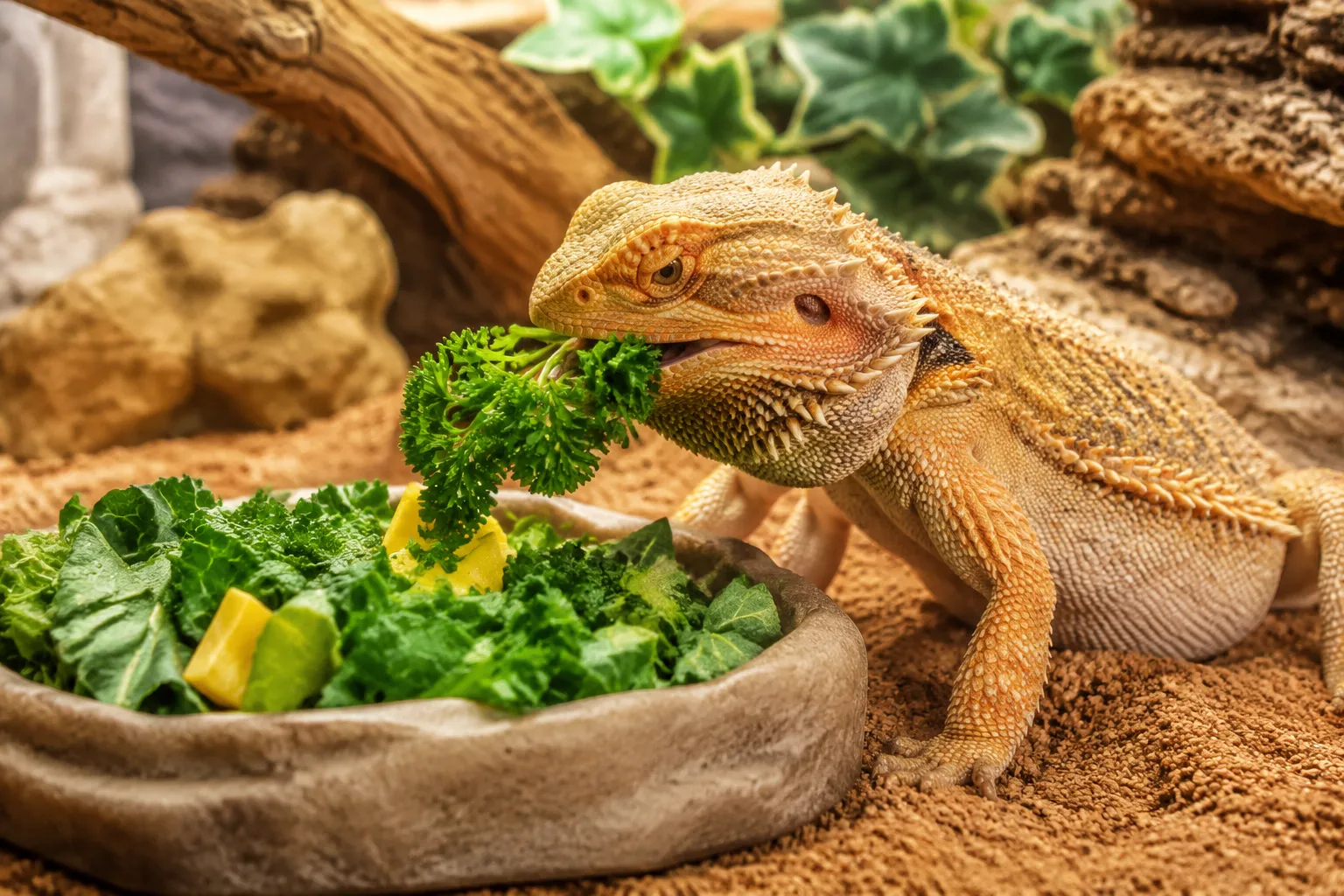
Feed your bearded dragon no more than a small pinch of chopped parsley once or twice per month. A safe serving size is approximately 2-3 small leaves or one teaspoon of finely chopped parsley mixed into a larger salad of safer greens. This amount provides variety without significantly impacting calcium absorption.
Portion guidelines by dragon size:
- Hatchlings (0-3 months): None, avoid parsley entirely
- Juveniles (3-12 months): 1-2 small leaves monthly, mixed with other greens
- Adults (12+ months): 2-3 leaves or 1 teaspoon chopped, twice monthly maximum
Best practices for serving parsley:
- Wash thoroughly to remove pesticides and dirt
- Chop into small, manageable pieces to prevent choking
- Mix with 5-6 parts safer greens (collards, mustard greens, turnip greens)
- Remove any uneaten parsley after 2-3 hours to prevent spoilage
- Never offer parsley as the primary green in a meal
Common mistake: Some owners see their dragon enjoying parsley and assume it’s safe to feed regularly. Even if your dragon loves the taste, stick to the monthly limit. The cumulative effect of oxalates builds over time, and consistent feeding can lead to calcium deficiency even if no immediate symptoms appear.
Can Too Much Parsley Bind Calcium in Bearded Dragons?
Yes, excessive parsley consumption directly binds calcium and prevents absorption, potentially leading to metabolic bone disease. Parsley contains approximately 1.70 mg of oxalates per gram of fresh weight, making it one of the higher-oxalate herbs commonly available. When fed regularly or in large amounts, these oxalates significantly reduce the bioavailability of dietary calcium.
How calcium binding works:
- Oxalic acid in parsley combines with calcium in the digestive tract
- Forms insoluble calcium oxalate that cannot be absorbed through the intestinal wall
- The bound calcium is excreted rather than used for bone maintenance
- Over time, this creates a calcium deficit even if the diet includes calcium-rich foods
Signs of calcium deficiency from too much parsley:
- Tremors or twitching, especially in the limbs or jaw
- Lethargy and reduced appetite
- Soft or rubbery jaw (rubber jaw syndrome)
- Difficulty walking or climbing
- Swollen or deformed limbs
- Seizures in severe cases
Recovery steps if you’ve overfed parsley:
- Stop feeding parsley immediately
- Increase calcium-rich greens like collard and mustard greens
- Ensure proper UVB lighting (10-12 hours daily) for vitamin D3 synthesis
- Consider calcium supplementation under veterinary guidance
- Schedule a vet visit if symptoms appear
The calcium-to-phosphorus ratio in a bearded dragon’s diet should be approximately 2:1. High-oxalate foods like parsley disrupt this balance, making it harder to maintain optimal bone health even with proper supplementation.
How Often Should Bearded Dragons Eat Parsley?
Bearded dragons should eat parsley no more than once or twice per month. This frequency allows for dietary variety without accumulating problematic oxalate levels. Space parsley feedings at least two weeks apart, and always combine it with calcium-rich vegetables to help offset the oxalate content.
Recommended feeding schedule:
- Week 1-2: Focus on staple greens (collards, mustard greens, turnip greens)
- Week 3: Optional parsley serving (small pinch mixed with staples)
- Week 4-5: Return to staple greens only
- Week 6: Second optional parsley serving if desired
- Repeat cycle
Better rotation strategy:
Instead of relying on parsley for variety, rotate through safer herbs and greens:
- Week 1: Collard greens with cilantro
- Week 2: Mustard greens with basil
- Week 3: Turnip greens with small parsley amount
- Week 4: Dandelion greens with endive
This approach provides flavor diversity while minimizing oxalate exposure. Most bearded dragons don’t require parsley at all, it’s purely optional for owners who want to offer maximum variety.
Choose parsley if: Your dragon seems bored with regular greens and you want to add occasional flavor variety.
Skip parsley if: Your dragon has a history of MBD, is a juvenile with high calcium needs, or already eats a diverse diet of safer greens.
Parsley vs Cilantro for Bearded Dragons: Which Is Better?
Cilantro is significantly better for bearded dragons than parsley because it contains much lower oxalate levels while providing similar flavor variety. Cilantro has approximately 0.10 mg of oxalates per gram compared to parsley’s 1.70 mg per gram, making it roughly 17 times safer for regular feeding. Both herbs are nutritious, but cilantro poses minimal calcium-binding risk.
Nutritional comparison:
| Nutrient | Parsley (per 100g) | Cilantro (per 100g) | Winner |
|---|---|---|---|
| Oxalates | High (1.70 mg/g) | Low (0.10 mg/g) | Cilantro |
| Vitamin A | 8424 IU | 6748 IU | Parsley |
| Calcium | 138 mg | 67 mg | Parsley |
| Phosphorus | 58 mg | 48 mg | Cilantro (lower is better) |
| Water content | 87.7% | 92.2% | Cilantro |
Feeding frequency comparison:
- Parsley: Once or twice monthly only
- Cilantro: 2-3 times per week safely
Taste preference: Most bearded dragons enjoy both herbs, though some show a slight preference for cilantro’s milder flavor. Parsley has a stronger, slightly bitter taste that some dragons may initially reject.
Best use cases:
- Use cilantro as a regular flavor addition to salads
- Reserve parsley for rare variety when you want something different
- Combine both herbs occasionally for maximum flavor diversity (still limiting parsley to monthly)
If you’re choosing just one herb to keep in your feeding rotation, cilantro is the clear winner for safety and versatility.
Is Curly Parsley or Flat-Leaf Parsley Better for Bearded Dragons?
Flat-leaf parsley (Italian parsley) is slightly better for bearded dragons than curly parsley because it contains marginally lower oxalate levels and is easier to chop into safe, manageable pieces. However, the difference is minimal, and both varieties should still be limited to the same monthly feeding frequency. The choice between them is less important than the portion size and frequency.
Key differences:
- Flat-leaf parsley: Smoother texture, slightly milder flavor, easier to chop finely
- Curly parsley: Ruffled leaves, stronger flavor, can be harder to break into small pieces
Oxalate content: Flat-leaf parsley contains approximately 1.58 mg oxalates per gram versus curly parsley’s 1.70 mg per gram. This 7% difference is negligible in the small amounts you’ll be feeding.
Practical considerations:
- Flat-leaf is easier to wash thoroughly between the leaves
- Curly parsley’s texture may be more appealing to some dragons
- Both varieties have similar nutritional profiles beyond oxalates
- Availability and freshness matter more than variety type
Preparation tip: Regardless of variety, always chop parsley into pieces no larger than the space between your bearded dragon’s eyes. This prevents choking and makes it easier to mix with other greens.
Choose whichever variety is freshest at your grocery store. The feeding guidelines remain identical: small amounts, infrequent feeding, always mixed with safer greens.
Can Baby Bearded Dragons Eat Parsley?
Baby bearded dragons should not eat parsley at all. Juveniles under 12 months old have significantly higher calcium requirements for rapid bone growth, and even small amounts of high-oxalate foods can interfere with proper development. The risk of metabolic bone disease is much higher in young dragons, making parsley an unnecessary risk during this critical growth phase.
Why babies need to avoid parsley:
- Juvenile dragons need 3-4 times more calcium per body weight than adults
- Their bones are actively growing and mineralizing
- Calcium deficiency during growth causes permanent skeletal deformities
- Young dragons are more sensitive to dietary imbalances
Calcium needs by age:
- Hatchlings (0-3 months): Highest calcium needs, feed insects daily with calcium powder
- Juveniles (3-12 months): High calcium needs, 70% insects / 30% vegetables
- Sub-adults (12-18 months): Moderate calcium needs, 50% insects / 50% vegetables
- Adults (18+ months): Maintenance calcium needs, 20% insects / 80% vegetables
Safe greens for baby bearded dragons:
- Collard greens (calcium-rich, low oxalates)
- Mustard greens (excellent calcium-to-phosphorus ratio)
- Turnip greens (high calcium, low oxalates)
- Dandelion greens (nutritious, safe for daily feeding)
- Endive (good variety option)
When to introduce parsley: Wait until your bearded dragon is at least 12-18 months old and has established healthy bone density. Even then, start with tiny amounts (1-2 small leaves) and monitor for any signs of calcium deficiency.
Common mistake: Owners sometimes think variety is more important than safety for young dragons. During the first year, focus on proven staple greens rather than experimenting with higher-risk foods like parsley.
Can Parsley Cause Health Problems in Bearded Dragons?
Parsley can cause health problems in bearded dragons when fed too frequently or in large amounts, primarily through calcium deficiency leading to metabolic bone disease. Additionally, excessive parsley consumption may contribute to kidney issues due to oxalate crystal formation, though this is less common than MBD. Occasional small servings pose minimal risk, but regular feeding creates cumulative health concerns.
Primary health risks:
Metabolic Bone Disease (MBD):
- Caused by chronic calcium deficiency from oxalate binding
- Symptoms include soft bones, tremors, paralysis, and deformities
- Can be fatal if left untreated
- Requires veterinary intervention and months of recovery
Kidney problems:
- Oxalate crystals can accumulate in kidneys over time
- May lead to kidney stones or reduced kidney function
- Symptoms include decreased appetite, lethargy, and dehydration
- More common when parsley is combined with other high-oxalate foods
Digestive upset:
- Large amounts of parsley can cause diarrhea
- Strong flavor may reduce appetite for other foods
- Can lead to dehydration if digestive issues persist
Risk factors that increase problems:
- Feeding parsley more than twice monthly
- Offering parsley as a primary green rather than a garnish
- Inadequate UVB lighting (reduces calcium absorption further)
- Diet already low in calcium-rich foods
- Young or elderly dragons with compromised health
- Previous history of MBD or kidney issues
Prevention strategies:
- Stick to recommended portion sizes and frequency
- Always mix parsley with calcium-rich greens
- Maintain proper UVB lighting (10-12 hours daily)
- Dust insects with calcium powder 3-4 times weekly
- Monitor for early signs of calcium deficiency
- Schedule annual veterinary checkups
Most health problems from parsley are completely preventable through proper portion control and feeding frequency.

ESSENTIAL NUTRITION: Elevate your bearded dragon's health with our SALAD TOPPER. Packed with premium ingredients like Alfalfa Leaf Powder, Dandelion, and Calcium Carbonate, it provides essential nutrients for optimal health and well-being

Vitamin Enriched Formula That Provides Essential Proteins, Fats, Vitamins And Minerals

Package Dimensions: 12.953 H x 7.62 L x 7.62 W (centimeters)
What Herbs Are Safe for Bearded Dragons?
Several herbs are safe for bearded dragons and can be fed more frequently than parsley due to lower oxalate content. The safest options include cilantro, basil, oregano, thyme, and rosemary, all of which provide flavor variety without significant calcium-binding risk. These herbs can be offered 2-3 times weekly as part of a diverse salad rotation.
Safe herbs ranked by feeding frequency:
Feed regularly (2-3 times weekly):
- Cilantro: Very low oxalates, high water content, most dragons enjoy it
- Basil: Low oxalates, aromatic, good vitamin K source
- Oregano: Low oxalates, antimicrobial properties, strong flavor (use sparingly)
Feed occasionally (once weekly):
- Thyme: Moderate oxalates, strong flavor, small amounts only
- Rosemary: Low oxalates, very strong flavor, tiny amounts as garnish
- Dill: Low oxalates, mild flavor, good variety option
Feed rarely (1-2 times monthly):
- Parsley: High oxalates, limit strictly
- Mint: Low oxalates but very strong flavor that many dragons dislike
Herbs to avoid completely:
- Chives: Toxic to reptiles, can cause digestive damage
- Garlic: Toxic, can cause anemia and organ damage
- Onion (any variety): Highly toxic, potentially fatal
Serving suggestions:
- Chop herbs finely and mix with staple greens
- Use herbs as 10-15% of the total salad volume
- Rotate different herbs weekly for variety
- Always wash herbs thoroughly before serving
- Remove woody stems that could cause choking
Flavor pairing ideas:
- Collard greens + cilantro + small basil amount
- Mustard greens + oregano (tiny pinch) + cilantro
- Turnip greens + dill + basil
- Dandelion greens + cilantro + monthly parsley treat
Herbs should complement staple greens rather than replace them. The bulk of every salad should still consist of calcium-rich vegetables like collards, mustard greens, and turnip greens.
Can Bearded Dragons Eat Parsley Every Day?
No, bearded dragons should never eat parsley every day. Daily parsley consumption will cause calcium deficiency and metabolic bone disease due to the cumulative effect of oxalates binding calcium over time. Even small daily amounts create a chronic calcium deficit that proper supplementation cannot overcome. Parsley must remain an occasional treat limited to once or twice monthly.
Why daily feeding is dangerous:
- Oxalates accumulate faster than the body can process them
- Calcium absorption decreases progressively with each feeding
- Bone density declines gradually, often without visible symptoms initially
- By the time symptoms appear, significant damage has already occurred
Timeline of daily parsley damage:
- Week 1-2: No visible symptoms, but calcium absorption begins declining
- Week 3-4: Subtle signs like reduced appetite or slight lethargy
- Week 5-8: Early MBD symptoms, tremors, weakness, reduced activity
- Week 9+: Advanced MBD, soft jaw, deformities, difficulty moving
What happens if you’ve been feeding parsley daily:
- Stop immediately: Remove parsley from the diet completely
- Increase calcium: Focus exclusively on calcium-rich greens
- Check UVB: Ensure proper lighting for vitamin D3 synthesis
- Supplement carefully: Consider calcium powder under vet guidance
- Monitor closely: Watch for MBD symptoms and seek veterinary care if they appear
- Wait before reintroducing: Don’t offer parsley again for at least 2-3 months
Better daily greens:
Instead of parsley, rotate these safe options daily:
- Monday: Collard greens with cilantro
- Tuesday: Mustard greens with basil
- Wednesday: Turnip greens with cilantro
- Thursday: Dandelion greens with small basil amount
- Friday: Collard greens with endive
- Saturday: Mustard greens with cilantro
- Sunday: Mixed staple greens with occasional parsley (twice monthly only)
The key to a healthy bearded dragon diet is variety among safe foods, not frequent feeding of risky foods like parsley.
Do Bearded Dragons Like the Taste of Parsley?
Most bearded dragons enjoy the taste of parsley and will readily eat it when offered, which is why owners must be careful not to overfeed it based on their dragon’s enthusiasm. Parsley has a fresh, slightly bitter flavor that many reptiles find appealing, and its strong aroma can stimulate appetite. However, taste preference doesn’t indicate nutritional safety, many dragons will eagerly eat foods that aren’t good for them in large quantities.
Taste factors that appeal to bearded dragons:
- Strong, distinctive aroma that triggers feeding response
- Slightly bitter flavor that contrasts with milder greens
- Tender texture that’s easy to chew and swallow
- Bright green color that attracts visual attention
Individual preferences vary:
- Some dragons love parsley and eat it immediately
- Others show mild interest and prefer it mixed with other greens
- A small percentage dislike the bitter taste and avoid it completely
- Younger dragons may be more hesitant than adults with established preferences
Signs your dragon enjoys parsley:
- Eats it first when offered in a mixed salad
- Shows increased activity or excitement when parsley is present
- Finishes parsley completely while leaving other greens
- Actively searches the bowl for more after finishing
What to do if your dragon loves parsley too much:
- Mix tiny amounts with larger portions of safer greens
- Don’t offer parsley more frequently just because they enjoy it
- Use parsley as a “gateway” to introduce other new greens
- Ensure other vegetables are equally fresh and appealing
- Maintain strict portion control regardless of enthusiasm
Common scenario: An owner notices their dragon eagerly eating parsley and assumes it must be healthy because the dragon “knows what’s good for them.” This is false, bearded dragons lack the instinct to avoid high-oxalate foods and will overeat parsley if given the opportunity.
Alternative strategy: If your dragon loves parsley, use that preference to your advantage by mixing tiny parsley amounts with new vegetables you’re trying to introduce. The parsley flavor may encourage them to try unfamiliar greens.
What Are the Best Greens for Bearded Dragons Instead of Parsley?
The best greens for bearded dragons instead of parsley are collard greens, mustard greens, turnip greens, and dandelion greens, all of which have excellent calcium-to-phosphorus ratios and low oxalate content. These staple greens can be fed daily and should comprise 80-90% of your dragon’s vegetable intake. They provide superior nutrition without the calcium-binding risks associated with parsley.
Top staple greens ranked:
Tier 1 (feed daily, rotate as base):
- Collard greens: 232 mg calcium per 100g, low oxalates, excellent Ca:P ratio of 14:1
- Mustard greens: 103 mg calcium per 100g, low oxalates, good Ca:P ratio of 2.4:1
- Turnip greens: 190 mg calcium per 100g, low oxalates, excellent Ca:P ratio of 4.5:1
- Dandelion greens: 187 mg calcium per 100g, low oxalates, good Ca:P ratio of 2.8:1
Tier 2 (feed 3-4 times weekly for variety):
- Endive: 52 mg calcium per 100g, low oxalates, good variety option
- Escarole: 52 mg calcium per 100g, low oxalates, similar to endive
- Bok choy: 105 mg calcium per 100g, moderate oxalates (limit to 2-3 times weekly)
- Watercress: 120 mg calcium per 100g, low oxalates, peppery flavor
Tier 3 (occasional variety, once weekly):
- Butternut squash: Good vitamin A, low calcium but safe
- Bell peppers: High vitamin C, colorful variety
- Cilantro: Low oxalates, safe herb option
Sample weekly rotation:
- Monday: Collard greens + cilantro + butternut squash
- Tuesday: Mustard greens + endive + bell pepper
- Wednesday: Turnip greens + cilantro + bok choy
- Thursday: Dandelion greens + escarole + squash
- Friday: Collard greens + watercress + bell pepper
- Saturday: Mustard greens + cilantro + endive
- Sunday: Mixed staple greens + occasional parsley (twice monthly)
Preparation tips:
- Wash all greens thoroughly to remove pesticides
- Chop into pieces smaller than the space between your dragon’s eyes
- Mix 3-4 different vegetables per meal for variety
- Remove uneaten greens after 2-3 hours to prevent spoilage
- Offer fresh vegetables daily, even if your dragon doesn’t eat them immediately
Why these greens are superior to parsley:
- Can be fed daily without health risks
- Provide essential calcium for bone health
- Low oxalate content doesn’t interfere with calcium absorption
- Offer complete nutrition when rotated properly
- Most bearded dragons readily accept them after initial introduction
Focus your feeding efforts on these proven staple greens, and use parsley only as a rare flavor accent rather than a regular component of the diet.
What Vegetables Should Bearded Dragons Not Eat?
Bearded dragons should not eat vegetables high in oxalates (spinach, beet greens, rhubarb), those high in goitrogens (kale, cabbage, broccoli), or any from the allium family (onions, garlic, leeks). Additionally, avoid iceberg lettuce due to its lack of nutritional value and avocado, which is toxic to reptiles. These vegetables either interfere with nutrient absorption, disrupt thyroid function, or contain compounds that are directly harmful.
Vegetables to avoid completely (toxic or highly dangerous):
- Avocado: Contains persin, which is toxic to reptiles and can be fatal
- Onions (all types): Cause digestive damage and anemia
- Garlic: Toxic, damages red blood cells
- Chives: Part of allium family, toxic to reptiles
- Leeks: Toxic allium family member
- Rhubarb: Extremely high oxalates, can cause kidney failure
Vegetables to avoid due to high oxalates:
- Spinach: Very high oxalates (0.97 mg/g), binds calcium aggressively
- Beet greens: High oxalates, similar risks to spinach
- Swiss chard: High oxalates, interferes with calcium absorption
- Parsley: High oxalates (acceptable only in tiny monthly amounts)
Vegetables to limit due to goitrogens (thyroid disruptors):
- Kale: High goitrogens, can cause thyroid problems with regular feeding
- Cabbage: Goitrogens interfere with iodine absorption
- Broccoli: Moderate goitrogens, offer only occasionally
- Brussels sprouts: High goitrogens, limit strictly
- Cauliflower: Moderate goitrogens, occasional only
Vegetables with poor nutritional value:
- Iceberg lettuce: 96% water, almost no nutrients, can cause diarrhea
- Celery: Mostly water, stringy texture can cause impaction
- Cucumber: High water content, minimal nutrition (small amounts okay for hydration)
Why these vegetables are problematic:
Oxalates: Bind calcium in the digestive tract, preventing absorption and leading to MBD over time.
Goitrogens: Interfere with thyroid hormone production by blocking iodine absorption, potentially causing metabolic issues.
Alliums: Contain compounds that damage red blood cells and digestive tissue in reptiles.
Low nutrition: Provide bulk without meaningful vitamins or minerals, potentially displacing more nutritious foods.
Safe alternatives to common problem vegetables:
- Instead of spinach → Use collard greens or mustard greens
- Instead of kale → Use turnip greens or dandelion greens
- Instead of iceberg lettuce → Use endive or escarole
- Instead of cabbage → Use bok choy (in moderation)
What to do if your dragon ate a problem vegetable:
- Small amount once: Monitor for symptoms but likely no intervention needed
- Regular feeding: Stop immediately and switch to safe staples
- Large amount of toxic vegetable: Contact a reptile veterinarian immediately
- Symptoms appear: Seek veterinary care regardless of amount consumed
The safest approach is sticking to proven staple greens and avoiding experimentation with vegetables outside the recommended list.
FAQ
Can bearded dragons eat parsley stems?
Yes, bearded dragons can eat parsley stems in the same limited quantities as the leaves, once or twice monthly. Stems contain similar oxalate levels to leaves but have a tougher texture, so chop them finely to prevent choking. Most dragons prefer the softer leaves over stems.
Is dried parsley safe for bearded dragons?
Dried parsley is safe in the same limited amounts as fresh parsley, but it offers less nutritional value and hydration. Fresh parsley is always preferable because it contains more vitamins and water content. If using dried parsley, rehydrate it slightly and offer even smaller amounts due to concentration.
Can parsley help with bearded dragon digestion?
Parsley does not provide significant digestive benefits for bearded dragons and should not be used as a digestive aid. Better options for digestive health include proper hydration, appropriate fiber from staple greens, and occasional small amounts of pumpkin or squash. The risks of parsley outweigh any minor digestive benefits.
What happens if my bearded dragon eats too much parsley at once?
If your bearded dragon eats too much parsley at once, monitor for digestive upset like diarrhea and watch for early calcium deficiency symptoms over the following weeks. One large serving is unlikely to cause immediate harm, but avoid feeding parsley again for at least a month and focus on calcium-rich greens to compensate.
Can bearded dragons eat parsley flowers?
Bearded dragons can eat parsley flowers in the same limited quantities as parsley leaves. The flowers contain similar oxalate levels and should be counted toward the monthly parsley limit. Most dragons find the flowers less appealing than the leaves due to their different texture.
Is organic parsley better for bearded dragons?
Organic parsley is slightly better because it contains fewer pesticide residues, but it still has the same high oxalate content and feeding restrictions. Whether organic or conventional, parsley should be limited to once or twice monthly. Always wash parsley thoroughly regardless of whether it’s organic.
Can parsley cause impaction in bearded dragons?
Parsley is unlikely to cause impaction because its leaves are soft and easily digestible. However, large unchewed pieces or tough stems could potentially contribute to impaction, especially in younger dragons. Always chop parsley finely and mix it with other greens to minimize any risk.
Do bearded dragons need parsley in their diet?
No, bearded dragons do not need parsley in their diet at all. Parsley is purely optional for variety and offers no nutritional benefits that cannot be obtained from safer greens like collard, mustard, or turnip greens. Many healthy bearded dragons never eat parsley and thrive on staple vegetables alone.
Can bearded dragons eat parsley root?
Bearded dragons should not eat parsley root. The root is much tougher and harder to digest than the leaves, poses a choking hazard, and contains concentrated oxalates. Stick to feeding only the leaves and tender stems in limited amounts.
How do I introduce parsley to my bearded dragon?
Introduce parsley by mixing one or two finely chopped leaves with familiar staple greens your dragon already enjoys. Offer this mixture once and observe whether your dragon eats it willingly. If accepted, wait at least two weeks before offering parsley again, maintaining the monthly limit regardless of initial enthusiasm.
Can bearded dragons eat cooked parsley?
Bearded dragons can eat cooked parsley, but cooking reduces nutritional value and is unnecessary. Raw parsley is preferable because it retains more vitamins and natural enzymes. If you do cook parsley, avoid adding any oils, seasonings, or salt, and still maintain the same monthly feeding limits.
Will parsley change my bearded dragon’s stool color?
Parsley may cause slightly greener stool due to its chlorophyll content, but this is normal and not a cause for concern. If stool becomes watery, contains blood, or shows other abnormal changes after feeding parsley, discontinue use and consult a veterinarian if symptoms persist.
Conclusion
Parsley can be a safe occasional treat for adult bearded dragons when offered in strict moderation, no more than once or twice monthly in small amounts mixed with calcium-rich staple greens. While most dragons enjoy the taste, parsley’s high oxalate content poses significant calcium-binding risks that can lead to metabolic bone disease if overfed. Baby and juvenile bearded dragons should avoid parsley entirely due to their critical calcium needs during growth.
Key actions to take:
- Limit parsley strictly: Offer only 2-3 small leaves or one teaspoon chopped, twice monthly maximum
- Always mix with safe greens: Combine parsley with collard, mustard, or turnip greens at a 1:5 ratio
- Choose cilantro instead: For regular herb variety, cilantro is 17 times safer with much lower oxalates
- Focus on staple greens: Build your dragon’s diet around proven calcium-rich vegetables that can be fed daily
- Monitor for symptoms: Watch for signs of calcium deficiency like tremors, lethargy, or soft jaw
- Maintain proper care: Ensure adequate UVB lighting and calcium supplementation to support bone health
Remember that parsley is completely optional in a bearded dragon’s diet. Many dragons live long, healthy lives without ever eating parsley. If you choose to offer it, treat it as a rare flavor accent rather than a regular dietary component. When in doubt, stick to the proven staple greens that provide superior nutrition without the calcium-binding risks.

All Natural: 100% all-natural and preservative-free

OPTIMAL NUTRITION FOR HERBIVOROUS REPTILES; Zilla Herbivore Medley provides a complete diet for herbivores like bearded dragons, tortoises, uromastyx and iguanas

Unique textured pellets that bearded dragons love to eat


