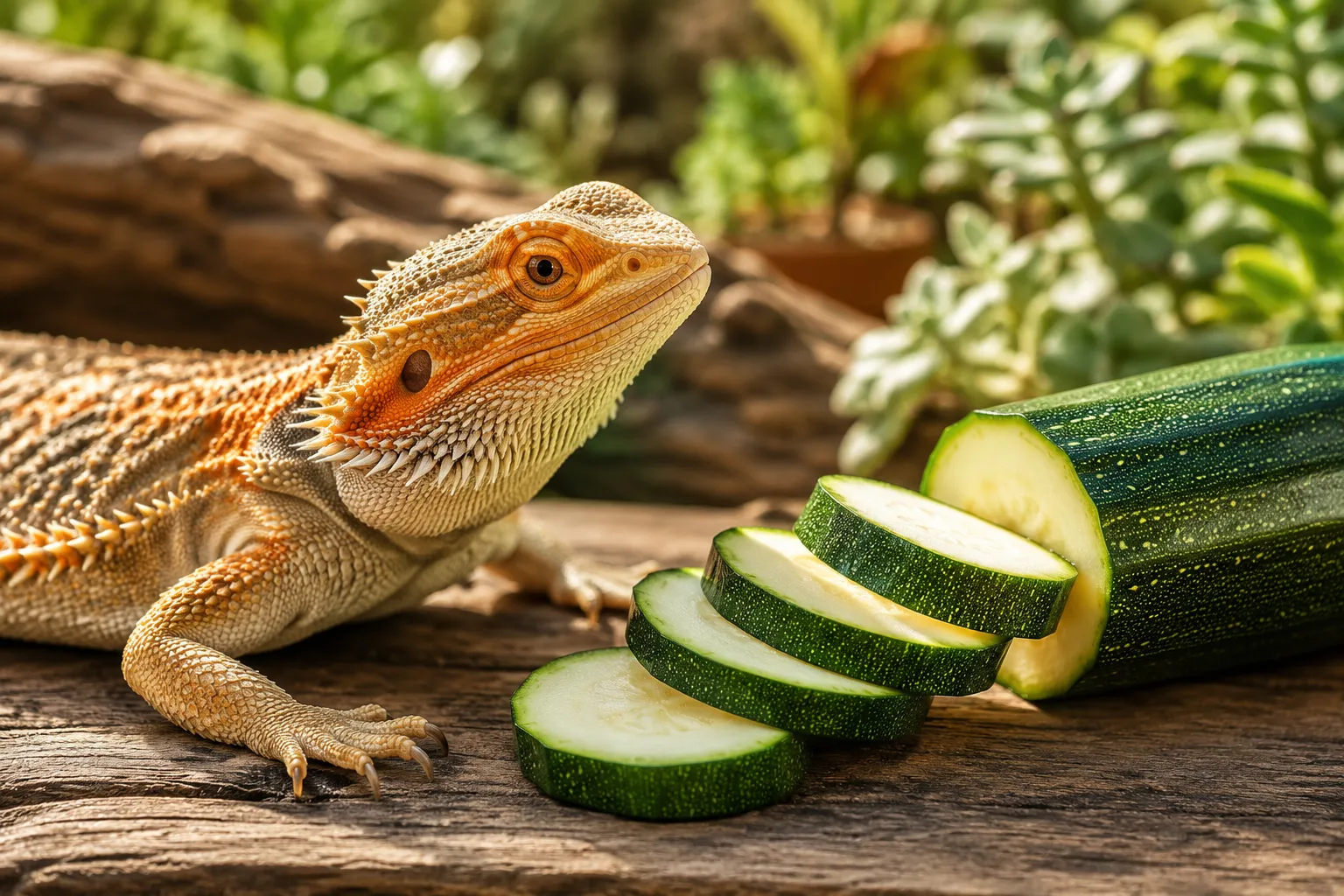
Quick Answer: Yes, bearded dragons can safely eat zucchini as part of a balanced diet. Zucchini is non-toxic and provides hydration and fiber, but it should be fed in moderation (once or twice per week) because of its poor calcium-to-phosphorus ratio. Raw zucchini is preferred over cooked, and it works best as a supplementary vegetable rather than a dietary staple.
Key Takeaways
- Zucchini is safe for bearded dragons but should be offered only 1-2 times per week due to its unfavorable calcium-to-phosphorus ratio
- Raw zucchini is better than cooked because it retains more nutrients and natural texture
- You don’t need to peel zucchini, the skin contains beneficial fiber and nutrients
- Baby bearded dragons can eat zucchini, but it should make up a smaller portion of their diet compared to protein sources
- Zucchini provides hydration and fiber but lacks the calcium density that bearded dragons need for bone health
- Overfeeding zucchini can lead to digestive issues like diarrhea and may contribute to metabolic bone disease over time
- Better vegetable alternatives include collard greens, mustard greens, turnip greens, and butternut squash

Vitamin Enriched Formula That Provides Essential Proteins, Fats, Vitamins And Minerals

All Natural: 100% all-natural and preservative-free

Reliable Material: Thickness: 2.6 mm. Made of safe, sturdy plastic, the bearded dragon feeder withstands daily bumps and drops during long-term use. Its smooth, washable body ensures effortless cleaning anytime, keeping your pet’s dining area spotless
Is Zucchini Safe for Bearded Dragons to Eat?
Zucchini is completely safe and non-toxic for bearded dragons when fed appropriately. This summer squash contains no harmful compounds and won’t cause immediate health problems when offered in reasonable amounts.
The main safety consideration with zucchini isn’t toxicity but nutritional balance. Zucchini has a calcium-to-phosphorus ratio of approximately 1:1.5, which means it contains more phosphorus than calcium. Bearded dragons need a ratio of at least 2:1 (calcium to phosphorus) to maintain healthy bones and prevent metabolic bone disease.
What makes zucchini safe but not ideal:
- Contains no toxic compounds or harmful substances
- Provides beneficial hydration (about 95% water content)
- Offers dietary fiber that supports digestion
- Low in oxalates, which can bind calcium in other vegetables
- Easy to digest when served raw and chopped appropriately
The key to safely feeding zucchini is treating it as an occasional treat rather than a dietary foundation. When balanced with calcium-rich greens and proper supplementation, zucchini adds variety without compromising your dragon’s health.
How Often Can Bearded Dragons Eat Zucchini?
Bearded dragons should eat zucchini no more than once or twice per week as part of a varied vegetable rotation. This frequency allows your dragon to enjoy the hydration and fiber benefits without the calcium-binding effects of excessive phosphorus intake.
Recommended feeding schedule:
- Adult bearded dragons: 1-2 times per week, mixed with calcium-rich greens
- Juvenile bearded dragons: Once per week maximum, since they need more calcium for growth
- Portion size: Zucchini should represent no more than 10-15% of the total vegetable portion in any single meal
Think of zucchini as a supporting player, not the star of the vegetable lineup. On days when you offer zucchini, pair it with high-calcium greens like collard greens, mustard greens, or dandelion greens to balance the phosphorus content.
Common mistake to avoid: Don’t fall into a routine of feeding the same vegetables every day just because your dragon likes them. Variety prevents nutritional deficiencies and keeps your bearded dragon interested in eating.
Do You Need to Peel Zucchini for Bearded Dragons?
You do not need to peel zucchini before feeding it to your bearded dragon. The skin is safe, digestible, and actually contains valuable nutrients and fiber that benefit your dragon’s digestive system.
Zucchini skin is thin and soft compared to harder squashes, making it easy for bearded dragons to chew and digest. The skin also provides texture variety that can make meals more interesting for your pet.
Benefits of leaving the skin on:
- Contains additional fiber for healthy digestion
- Provides extra nutrients concentrated in the outer layer
- Saves preparation time
- Offers natural texture that encourages chewing
- No risk of choking or digestive blockage
Preparation steps:
- Wash the zucchini thoroughly under running water to remove any pesticides or dirt
- Cut off both ends
- Slice into appropriately sized pieces (see portion guidance below)
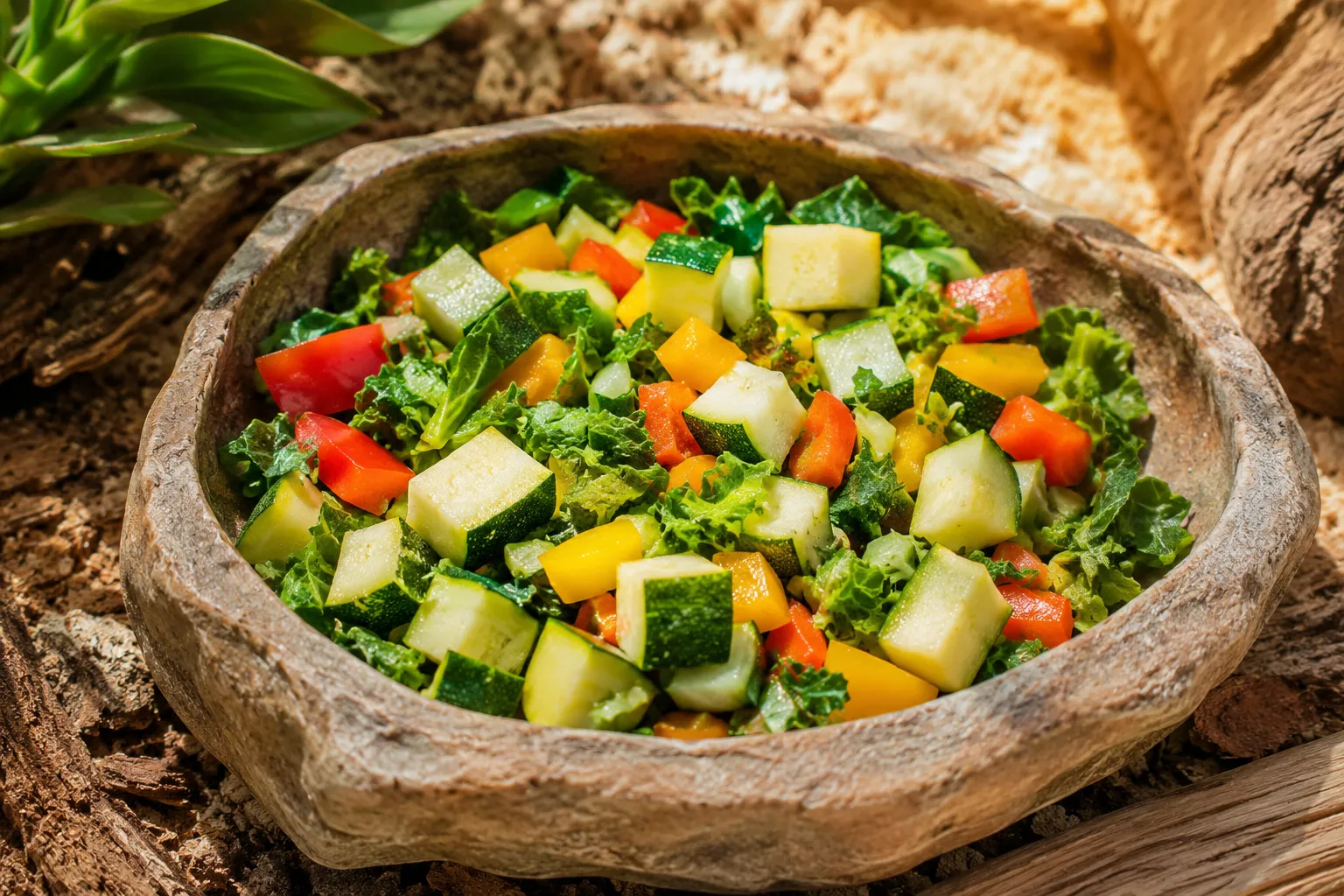
- Serve raw alongside other vegetables
Choose organic zucchini when possible to minimize pesticide exposure, but a thorough wash makes conventional zucchini safe as well.
Raw or Cooked Zucchini for Bearded Dragons?
Raw zucchini is the better choice for bearded dragons compared to cooked zucchini. Raw vegetables retain more vitamins, maintain their natural texture, and provide the fiber content that supports healthy digestion in reptiles.
Cooking zucchini reduces its nutritional value by breaking down heat-sensitive vitamins like vitamin C and some B vitamins. It also makes the vegetable mushier, which can be less appealing to bearded dragons that prefer crunchy textures.
Why raw is preferred:
- Preserves maximum vitamin and mineral content
- Maintains firm texture that encourages natural chewing behavior
- Provides better hydration (cooking releases water)
- Closer to what bearded dragons would encounter in their natural environment
- Easier to prepare, no cooking required
If you must cook zucchini: Lightly steam it for 2-3 minutes maximum, then let it cool completely before serving. Never add salt, oil, butter, or seasonings of any kind, as these can harm your bearded dragon.
Most bearded dragons readily accept raw zucchini, especially when it’s cut into small, manageable pieces and mixed with their favorite greens.
Can Baby Bearded Dragons Eat Zucchini?
Baby bearded dragons can eat zucchini, but it should represent an even smaller portion of their diet compared to adults. Hatchlings and juveniles (under 12 months) need significantly more protein and calcium for rapid growth, so vegetables should make up only 20-30% of their total diet.
For baby bearded dragons, prioritize calcium-rich greens over zucchini. When you do offer zucchini, serve it no more than once per week and in very small amounts.
Age-specific feeding guidelines:
- 0-3 months: Focus on insects (80% of diet); offer zucchini rarely, if at all
- 3-8 months: Insects still dominate (70%); zucchini once per week maximum
- 8-12 months: Transition period (60% insects); zucchini 1-2 times per week
- 12+ months (adult): Vegetables increase to 70-80%; zucchini 1-2 times per week
Preparation for babies: Cut zucchini into pieces no larger than the space between your baby dragon’s eyes. This prevents choking and makes eating easier for their smaller mouths.
Baby bearded dragons are building their skeletal structure during these critical growth months, so calcium-rich foods must take priority over low-calcium options like zucchini.
How Much Zucchini Should I Feed My Bearded Dragon?
Feed your bearded dragon approximately 1-2 tablespoons of chopped zucchini per feeding session, mixed with other vegetables. This amount should represent no more than 10-15% of the total vegetable portion in that meal.
The exact amount depends on your dragon’s size, age, and appetite, but the general rule is that zucchini should never dominate the vegetable bowl.
Portion guidelines by size:
- Baby dragons (0-6 months): 1-2 small pieces (about 1 teaspoon) once per week
- Juvenile dragons (6-12 months): 1 tablespoon mixed with greens, once per week
- Adult dragons (12+ months): 1-2 tablespoons mixed with greens, 1-2 times per week
How to prepare proper portions:
- Cut zucchini into pieces no larger than the space between your dragon’s eyes
- For adults, aim for roughly ¼-inch cubes or thin slices
- Mix zucchini with 5-6 times more calcium-rich greens by volume
- Offer the mixture in a shallow feeding dish
Remove any uneaten vegetables after 1-2 hours to prevent bacterial growth and maintain food freshness. If your dragon consistently leaves zucchini uneaten, reduce the portion or frequency.
What Vegetables Are Better Than Zucchini for Bearded Dragons?
Several vegetables offer superior nutritional profiles compared to zucchini, particularly those with higher calcium content and better calcium-to-phosphorus ratios. The best staple vegetables for bearded dragons include collard greens, mustard greens, turnip greens, and dandelion greens.
Top vegetable alternatives ranked by nutritional value:
- Collard greens, Excellent calcium-to-phosphorus ratio (14.5:1), high in vitamins A and K
- Mustard greens, Strong calcium content (2.4:1 ratio), rich in antioxidants
- Turnip greens, High calcium (4.5:1 ratio), good fiber content
- Dandelion greens, Excellent calcium source (2.8:1 ratio), widely available
- Butternut squash, Better calcium ratio than zucchini (2.7:1), higher in vitamin A
- Endive, Good calcium content (1.9:1 ratio), adds variety
- Escarole, Decent calcium (2:1 ratio), mild flavor most dragons accept
Why these are better than zucchini:
- Higher calcium content supports bone health and prevents metabolic bone disease
- Better calcium-to-phosphorus ratios allow for more frequent feeding
- More nutrient-dense per serving
- Can serve as daily staples rather than occasional treats
Build your dragon’s vegetable rotation around these calcium-rich options, using zucchini as an occasional supplement for hydration and variety rather than a primary vegetable source.
Can Bearded Dragons Eat Zucchini Every Day?
Bearded dragons should not eat zucchini every day due to its unfavorable calcium-to-phosphorus ratio and potential to cause nutritional imbalances over time. Daily zucchini feeding can contribute to calcium deficiency and increase the risk of metabolic bone disease.
Feeding zucchini daily creates two main problems. First, the excess phosphorus binds with calcium in your dragon’s digestive system, preventing proper calcium absorption. Second, zucchini displaces more nutritious vegetables that should form the foundation of your dragon’s diet.
Risks of daily zucchini consumption:
- Metabolic bone disease: Chronic calcium deficiency leads to weak bones, deformities, and fractures
- Nutritional deficiencies: Zucchini lacks the vitamin density of leafy greens
- Digestive issues: High water content can cause loose stools when overfed
- Reduced appetite for better foods: Dragons may develop preferences for less nutritious options
What daily feeding looks like instead: Rotate 3-4 different calcium-rich greens throughout the week as your base vegetables, then add zucchini 1-2 times per week for variety. This approach provides nutritional diversity while maintaining proper calcium intake.
If your bearded dragon seems to prefer zucchini over other vegetables, try mixing small amounts into their greens rather than offering it separately. This encourages them to eat the more nutritious options.

ESSENTIAL CALCIUM SUPPLEMENT: Help your reptiles and amphibians stay healthy and prosper with this calcium powder. Calcium deficiency in reptiles is a major contributing factor in Metabolic Bone Disease (MBD). This All Reptile Calcium Powder serves as a supplement for all reptiles and amphibians in captivity, aimed to promote and maintain bones, muscles, and nerve functions

Unique textured pellets that bearded dragons love to eat

Nature Zone Herp Pro Supplements for Bearded Dragons Powder Formula: Calcium/Probiotics
Zucchini Calcium to Phosphorus Ratio for Bearded Dragons
Zucchini has a calcium-to-phosphorus ratio of approximately 1:1.5 (or about 16mg calcium to 24mg phosphorus per 100g), which falls well below the ideal 2:1 ratio that bearded dragons require for optimal health.
This inverted ratio means zucchini contains more phosphorus than calcium, creating a nutritional imbalance when fed too frequently. Phosphorus binds with calcium in the digestive tract, preventing calcium absorption and potentially leading to deficiency over time.
Understanding the ratio problem:
- Ideal ratio: 2:1 or higher (calcium to phosphorus)
- Zucchini’s ratio: 1:1.5 (more phosphorus than calcium)
- Result: Each serving of zucchini requires additional calcium from other sources to balance
Comparison with better vegetables:
| Vegetable | Calcium:Phosphorus Ratio | Feeding Frequency |
|---|---|---|
| Collard greens | 14.5:1 | Daily staple |
| Mustard greens | 2.4:1 | Daily staple |
| Butternut squash | 2.7:1 | Several times per week |
| Zucchini | 1:1.5 | 1-2 times per week only |
How to compensate: When you feed zucchini, always pair it with high-calcium greens and ensure your dragon receives proper calcium supplementation (calcium powder dusted on insects or vegetables). This helps offset the phosphorus content and maintains overall nutritional balance.
The calcium-to-phosphorus ratio is one of the most important nutritional considerations for bearded dragon health, making it essential to understand which vegetables support or undermine this balance.
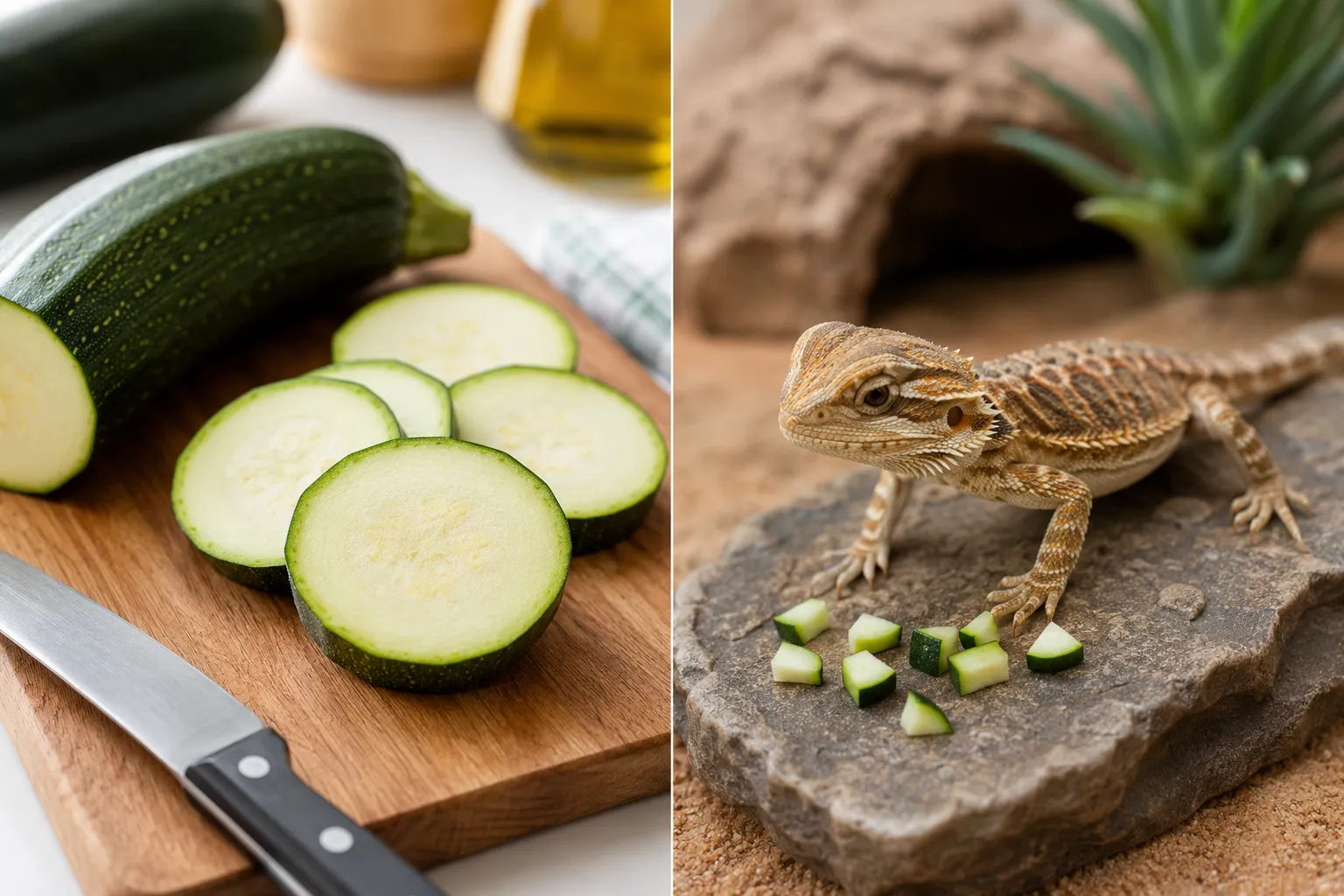
Can Zucchini Cause Diarrhea in Bearded Dragons?
Zucchini can cause diarrhea in bearded dragons when fed in excessive amounts due to its very high water content (approximately 95%). While occasional loose stools from zucchini aren’t dangerous, frequent diarrhea can lead to dehydration and nutrient malabsorption.
The high water content that makes zucchini hydrating in small amounts becomes problematic when it dominates the diet. Bearded dragons have digestive systems adapted for drier foods, so too much watery vegetable matter can overwhelm their ability to absorb nutrients properly.
Signs your dragon is eating too much zucchini:
- Consistently watery or loose droppings
- More frequent bowel movements than normal
- Undigested vegetable pieces in feces
- Reduced appetite for other foods
- Lethargy or decreased activity
How to prevent zucchini-related diarrhea:
- Limit zucchini to 1-2 times per week maximum
- Keep portions small (1-2 tablespoons for adults)
- Always mix zucchini with drier vegetables like greens
- Monitor your dragon’s droppings after introducing zucchini
- Reduce or eliminate zucchini if loose stools develop
If your bearded dragon develops diarrhea after eating zucchini, remove it from the diet for 1-2 weeks and focus on leafy greens and other lower-moisture vegetables. Ensure your dragon stays hydrated through regular baths and access to clean water.
Persistent diarrhea lasting more than 2-3 days warrants a veterinary visit, as it may indicate parasites or other health issues beyond dietary causes.
What Happens If a Bearded Dragon Eats Too Much Zucchini?
If a bearded dragon eats too much zucchini over time, the most serious consequence is calcium deficiency leading to metabolic bone disease (MBD). Short-term overconsumption typically causes digestive upset, including diarrhea and potential dehydration.
Metabolic bone disease develops gradually when bearded dragons don’t absorb enough calcium relative to phosphorus. The excess phosphorus in zucchini binds with calcium, making it unavailable for bone maintenance and growth. The dragon’s body then pulls calcium from bones to maintain blood calcium levels, weakening the skeletal structure.
Short-term effects of too much zucchini:
- Diarrhea or loose, watery stools
- Bloating or abdominal discomfort
- Reduced appetite for other foods
- Dehydration from excessive water loss
Long-term effects of chronic overfeeding:
- Metabolic bone disease: Soft, brittle bones that fracture easily
- Skeletal deformities: Curved spine, swollen limbs, misshapen jaw
- Muscle tremors: Caused by calcium deficiency affecting nerve function
- Lethargy and weakness: Difficulty moving or climbing
- Nutritional deficiencies: Missing out on vitamins from more nutritious vegetables
Recovery steps if you’ve been overfeeding zucchini:
- Immediately reduce or eliminate zucchini from the diet
- Increase calcium-rich greens like collard and mustard greens
- Ensure proper calcium supplementation on insects and vegetables
- Provide appropriate UVB lighting (10-12 hours daily) to support calcium absorption
- Schedule a veterinary check-up if you notice any signs of MBD
Early-stage metabolic bone disease can be reversed with proper nutrition and care, but advanced cases may cause permanent damage. Prevention through balanced feeding is always easier than treatment.
Best Way to Prepare Zucchini for Bearded Dragons
The best way to prepare zucchini for bearded dragons is to wash it thoroughly, cut it into appropriately sized raw pieces, and mix it with calcium-rich greens before serving. This simple preparation maximizes nutrition while ensuring safe consumption.
Step-by-step preparation guide:
Select fresh zucchini: Choose firm, medium-sized zucchini without soft spots or blemishes. Organic is preferable but not required.
Wash thoroughly: Rinse under cool running water, gently scrubbing the skin to remove any dirt, pesticides, or bacteria.
Remove ends: Cut off both the stem end and blossom end of the zucchini.
Cut to appropriate size:
- For adult dragons: Cut into ¼-inch cubes or thin slices
- For juveniles: Cut into ⅛-inch pieces
- For babies: Finely dice into pieces smaller than the space between their eyes
Mix with other vegetables: Combine zucchini with 5-6 times more calcium-rich greens by volume (collard greens, mustard greens, etc.).
Serve immediately: Place the mixture in a shallow feeding dish. Remove any uneaten portions after 1-2 hours.
Additional preparation tips:
- Never cook, season, or add oil to zucchini for bearded dragons
- Cut pieces small enough to prevent choking but large enough to encourage chewing
- Vary the cut style (cubes, slices, strips) to maintain interest
- Prepare only what your dragon will eat in one sitting to ensure freshness
Storage: If you prep vegetables in advance, store cut zucchini in an airtight container in the refrigerator for up to 2 days. Always bring refrigerated vegetables to room temperature before serving, as cold food can slow digestion.
Why Is My Bearded Dragon Not Eating Zucchini?
Your bearded dragon may not be eating zucchini due to personal preference, unfamiliarity with the food, improper preparation, or underlying health issues. Not all bearded dragons enjoy zucchini, and that’s perfectly fine since it’s not a necessary dietary component.
Bearded dragons develop individual food preferences just like other pets. Some readily accept zucchini while others show no interest, and both responses are normal. Since zucchini isn’t nutritionally essential, there’s no need to force your dragon to eat it.
Common reasons for zucchini refusal:
- Preference for other vegetables: Your dragon may simply prefer leafy greens or other squashes
- Unfamiliar food: Dragons can be cautious about new foods; repeated exposure may help
- Piece size: Chunks may be too large or too small for comfortable eating
- Temperature: Cold vegetables from the refrigerator are less appealing
- Health issues: Illness, stress, or brumation can reduce appetite for all foods
- Already full: If your dragon ate enough insects or other vegetables, it may refuse zucchini
Strategies to encourage zucchini acceptance:
- Mix it in: Finely chop zucchini and mix it thoroughly with favorite greens
- Try different cuts: Experiment with slices, cubes, or shredded zucchini
- Offer when hungry: Present zucchini before insects or other preferred foods
- Be patient: Offer zucchini weekly without pressure; some dragons eventually try it
- Use variety: Rotate different squashes to find what your dragon prefers
When not to worry: If your bearded dragon eats a variety of other vegetables, especially calcium-rich greens, refusing zucchini isn’t a health concern. Focus on providing nutritious options your dragon actually enjoys rather than forcing foods it rejects.
When to investigate further: If your dragon refuses all vegetables or shows a sudden decrease in appetite across all foods, consult a reptile veterinarian to rule out health problems.
Zucchini vs Squash for Bearded Dragons: Which Is Better?
Most squash varieties are better than zucchini for bearded dragons, particularly butternut squash, acorn squash, and yellow squash, which offer superior calcium-to-phosphorus ratios and higher nutrient density. However, all squashes should still be fed in moderation as part of a varied diet.
Butternut squash stands out as the best squash option with a calcium-to-phosphorus ratio of approximately 2.7:1, compared to zucchini’s unfavorable 1:1.5 ratio. It also contains significantly more vitamin A, which supports eye health, immune function, and skin condition.
Nutritional comparison of common squashes:
| Squash Type | Ca:P Ratio | Vitamin A | Best Use |
|---|---|---|---|
| Butternut squash | 2.7:1 | Very high | Regular rotation (2-3x/week) |
| Acorn squash | 1.8:1 | High | Regular rotation (2-3x/week) |
| Yellow squash | 1.3:1 | Moderate | Occasional (1-2x/week) |
| Zucchini | 1:1.5 | Low | Occasional (1-2x/week) |
Why butternut squash wins:
- Better calcium-to-phosphorus ratio supports bone health
- Higher vitamin A content (essential for bearded dragons)
- Firmer texture that many dragons prefer
- Can be fed more frequently than zucchini
- More nutrient-dense per serving
Preparation differences: Butternut and acorn squash require peeling and cooking (lightly steamed) before serving, while zucchini and yellow squash can be served raw. Despite the extra preparation, butternut squash’s nutritional advantages make it worth the effort.
Best approach: Rotate multiple squash types along with calcium-rich greens rather than relying on any single vegetable. This provides nutritional variety while preventing the imbalances that come from repetitive feeding.
FAQ
Can bearded dragons eat zucchini skin?
Yes, bearded dragons can safely eat zucchini skin. The skin is thin, digestible, and contains beneficial fiber and nutrients. Always wash the zucchini thoroughly before serving to remove any pesticides or contaminants.
How do I know if my bearded dragon likes zucchini?
Your bearded dragon likes zucchini if it actively eats the pieces when offered, shows interest when you place it in the feeding dish, and doesn’t consistently leave it uneaten. Some dragons eat zucchini enthusiastically while others ignore it completely.
Can I feed my bearded dragon zucchini flowers?
Yes, zucchini flowers are safe for bearded dragons and can be offered occasionally. They’re low in nutrients but add variety and enrichment. Ensure the flowers are pesticide-free and wash them thoroughly before serving.
Is yellow squash better than zucchini for bearded dragons?
Yellow squash is slightly better than zucchini with a calcium-to-phosphorus ratio of about 1.3:1 compared to zucchini’s 1:1.5, but both should be fed sparingly. Butternut squash is a better choice than either option.
Can bearded dragons eat frozen zucchini?
Bearded dragons can eat thawed frozen zucchini, but fresh is preferable. Freezing breaks down cell walls, making the texture mushier and reducing some nutrient content. If using frozen, thaw completely and bring to room temperature before serving.
What should I do if my bearded dragon ate too much zucchini?
Monitor your dragon for diarrhea or digestive upset. Ensure it stays hydrated through baths and water access. Skip zucchini for the next 1-2 weeks and focus on calcium-rich greens. If diarrhea persists beyond 2-3 days, consult a veterinarian.
Can bearded dragons eat zucchini seeds?
Yes, bearded dragons can eat the small, soft seeds inside zucchini. They’re safe and digestible. Unlike larger squash seeds, zucchini seeds don’t pose a choking hazard and don’t need to be removed.
How long does cut zucchini last for bearded dragons?
Cut raw zucchini lasts 1-2 days in an airtight container in the refrigerator. Always bring it to room temperature before serving. Discard any zucchini that develops sliminess, off-odors, or visible mold.
Should I dust zucchini with calcium powder?
You can lightly dust zucchini with calcium powder to improve its nutritional profile, though it’s more effective to dust insects. Mixing zucchini with calcium-rich greens is usually sufficient to balance the phosphorus content.
Can bearded dragons eat zucchini bread or cooked zucchini dishes?
No, bearded dragons should never eat zucchini bread or cooked dishes containing zucchini. These preparations contain added ingredients like sugar, salt, oil, and flour that are harmful to reptiles. Only plain, raw zucchini is appropriate.
At what age can bearded dragons start eating zucchini?
Bearded dragons can start eating small amounts of zucchini around 3-4 months of age, but it should represent a very small portion of their diet. Focus primarily on calcium-rich greens and protein sources during the juvenile growth phase.
Can bearded dragons eat zucchini leaves or vines?
Zucchini leaves and vines are not toxic but aren’t commonly fed to bearded dragons. They can be tough and difficult to digest. Stick with the fruit itself and focus on proven safe greens like collard and mustard greens for leafy vegetables.
Conclusion
Zucchini can be a safe and hydrating addition to your bearded dragon’s diet when offered in moderation, about once or twice per week. While it’s non-toxic and provides beneficial fiber and water content, its poor calcium-to-phosphorus ratio means it should never become a dietary staple. Raw zucchini with the skin on, cut into appropriately sized pieces and mixed with calcium-rich greens, offers the best nutritional value.
The key to successfully incorporating zucchini into your bearded dragon’s meal plan is balance and variety. Build your dragon’s vegetable rotation around high-calcium options like collard greens, mustard greens, and butternut squash, using zucchini as an occasional supplement rather than a primary food source. This approach prevents calcium deficiency while still providing the enrichment and hydration benefits that zucchini offers.
Action steps for feeding zucchini safely:
- Limit zucchini to 1-2 times per week maximum
- Always serve raw, thoroughly washed, and cut to appropriate size
- Mix zucchini with 5-6 times more calcium-rich greens by volume
- Monitor your dragon’s droppings for signs of digestive upset
- Rotate multiple vegetable types throughout the week for nutritional diversity
- Ensure proper calcium supplementation and UVB lighting to support overall health
Remember that every bearded dragon has individual preferences. If your dragon refuses zucchini, don’t force it, plenty of more nutritious alternatives exist. Focus on providing a varied, calcium-rich diet that supports your dragon’s long-term health and happiness.
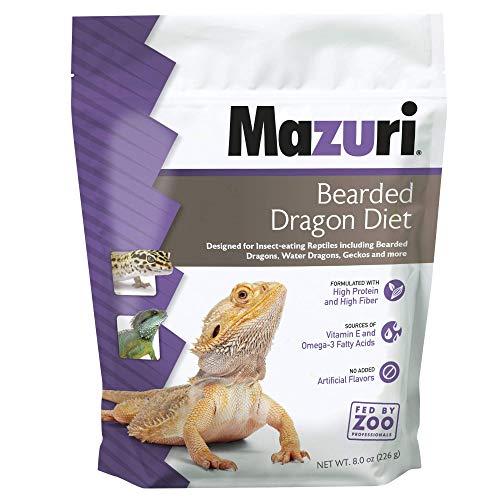
Great source of omega-3 fatty acids and Vitamin E.

NUTRITIOUS FOOD FOR REPTILES such as bearded dragons, uromastyx, iguanas, tortoises and more; An appetizing way to introduce additional nutrients to your reptile’s diet