Quick Answer: Yes, you can handle a bearded dragon every day, but sessions should be limited to 10-20 minutes for adults and 5-10 minutes for juveniles. Daily handling helps build trust and socialization, but over-handling can cause stress. The key is reading your dragon’s body language and respecting their need for rest, especially after feeding or during shedding.
Key Takeaways
- Daily handling is safe when limited to 10-20 minute sessions for adult bearded dragons
- Baby bearded dragons need shorter, gentler handling sessions (5-10 minutes) to avoid stress
- Wait 24-48 hours before handling a newly adopted bearded dragon to allow acclimation
- Never handle immediately after feeding, wait at least 2-3 hours to prevent regurgitation
- Watch for stress signals like beard darkening, hissing, arm waving, or attempting to flee
- Morning and early evening are typically the best times for handling sessions
- Proper technique matters, always support the body and approach from the side, never from above
- Some dragons are more social than others; respect individual personality differences
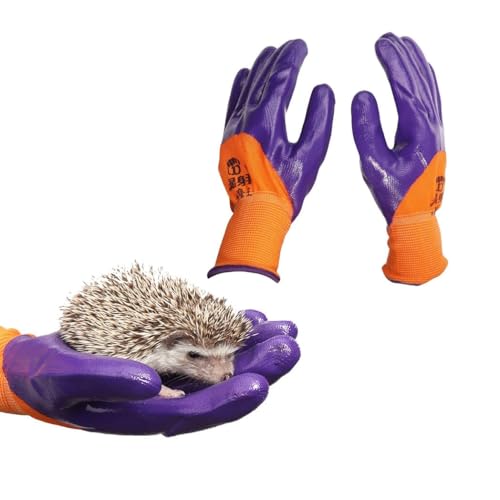
🛡️Ultimate Protection for Handlers : The Hedgehog Anti-Scratch Gloves offer unparalleled safety during small animal handling, ensuring a secure shield against bites and scratches. Ideal for birds, hamsters, sugar gliders, and reptiles

Durable Leather Construction: Made from Kevlar reinforced leather for maximum protection and grip
How Often Should You Handle a Bearded Dragon?
Most bearded dragons thrive with daily handling sessions lasting 10-20 minutes for adults and 5-10 minutes for juveniles. This frequency helps maintain socialization and builds trust between you and your pet without causing excessive stress.
The ideal handling schedule depends on several factors:
- Age: Baby dragons (0-6 months) should be handled less frequently and for shorter periods
- Temperament: Some dragons are naturally more social and tolerate longer sessions
- Health status: Sick, shedding, or gravid (egg-bearing) females need minimal handling
- Time of day: Dragons are most receptive during their active periods
Choose daily handling if your dragon shows positive body language (relaxed posture, bright eyes, willingness to climb onto your hand). Reduce frequency if you notice stress signals or behavioral changes.
A common mistake is assuming more handling equals better bonding. In reality, quality matters more than quantity. Short, positive interactions build stronger trust than lengthy sessions that exhaust your dragon.
Is It Bad to Hold My Bearded Dragon Too Much?
Yes, excessive handling can stress your bearded dragon and lead to health problems. Over-handling manifests as chronic stress, which weakens the immune system, disrupts digestion, and can trigger behavioral issues like aggression or hiding.
Signs you’re handling too much include:
- Persistent dark beard even when returned to the enclosure
- Loss of appetite or irregular eating patterns
- Lethargy or decreased activity levels
- Glass surfing (frantically scratching at tank walls)
- Defensive behaviors like hissing or biting when approached
Bearded dragons need substantial alone time to thermoregulate, digest food, and simply rest. Their natural behavior in the wild involves basking for hours with minimal disturbance. Constant interaction disrupts these essential activities.
The balance: Handle your dragon once daily for appropriate durations, then allow them uninterrupted time in their properly heated enclosure. If you notice stress-related behaviors, reduce handling frequency for several days.
How Long Can You Hold a Bearded Dragon Each Day?
Adult bearded dragons can typically be held for 10-20 minutes per session, once or twice daily. Juveniles (6-12 months) should be limited to 10-15 minutes, while babies (under 6 months) need even shorter sessions of 5-10 minutes.
Duration guidelines by age:
| Age Group | Session Length | Frequency |
|---|---|---|
| Baby (0-6 months) | 5-10 minutes | Once daily |
| Juvenile (6-12 months) | 10-15 minutes | 1-2 times daily |
| Adult (12+ months) | 10-20 minutes | 1-2 times daily |
These are maximums, not targets. Many dragons prefer shorter interactions. Watch for signs your dragon wants to return to their enclosure: restlessness, attempting to climb down, or darkening coloration.
Pro tip: Break longer handling into multiple short sessions rather than one extended period. Two 10-minute sessions with a break between are less stressful than one 20-minute marathon.
Temperature also affects safe handling duration. Bearded dragons are ectothermic and rely on external heat. If your room is cooler than 75°F, shorten handling time or provide a heat source nearby where your dragon can warm up.
Signs Your Bearded Dragon Is Stressed From Handling
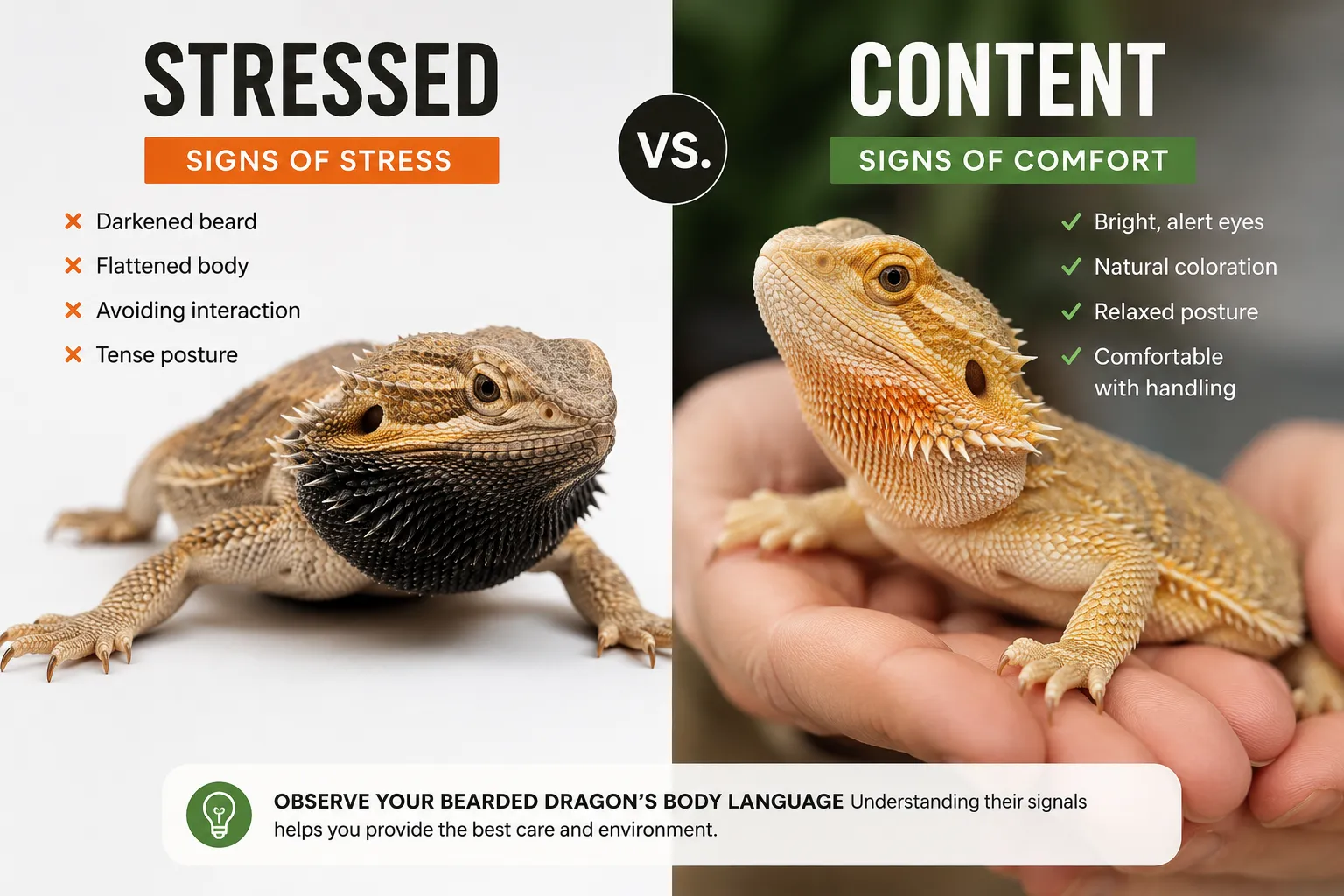
Recognizing stress signals is crucial for determining whether you can handle a bearded dragon every day without causing harm. Stressed dragons display distinct physical and behavioral changes that serve as clear warnings.
Physical stress indicators:
- Darkened or black beard, the most obvious sign of distress
- Flattened body, making themselves appear larger as a defense mechanism
- Puffed-up body, inflating to look more intimidating
- Rapid breathing or gaping mouth
- Color changes, overall darkening of body coloration
Behavioral stress signals:
- Hissing, a clear “leave me alone” message
- Arm waving, a submissive gesture indicating discomfort
- Tail twitching, agitation or annoyance
- Attempting to flee, scrambling to escape your hands
- Biting or lunging, defensive aggression
If you observe these signs during handling, immediately return your dragon to their enclosure and give them space. Continuing to handle a stressed dragon damages trust and can lead to chronic anxiety.
Context matters: A slightly darkened beard during the first few seconds of handling is normal as dragons adjust. Persistent stress signals throughout the session indicate a real problem.
Do Bearded Dragons Like Being Held Every Day?
Individual bearded dragons vary significantly in their tolerance and enjoyment of daily handling. While many become comfortable with routine interaction, “like” is a strong word for reptiles that lack the social bonding instincts of mammals.
Most bearded dragons tolerate daily handling well once properly socialized, and some appear to seek out interaction. However, they’re primarily motivated by warmth, security, and routine rather than affection in the mammalian sense.
Signs your dragon tolerates or enjoys handling:
- Willingly climbs onto your hand without coaxing
- Remains calm with normal coloration
- Explores your arms or shoulders calmly
- Shows no stress signals during or after sessions
- Doesn’t immediately rush back to the enclosure when given the option
Signs your dragon merely tolerates handling:
- Accepts being picked up but remains still and watchful
- Doesn’t actively resist but shows no enthusiasm
- Returns to basking spot immediately when placed back
Some dragons never fully enjoy handling despite proper technique and patience. Respect these individual differences rather than forcing interaction. A dragon that prefers minimal handling can still be a rewarding pet to observe and care for.
When Should You Not Handle Your Bearded Dragon?
Several situations require avoiding handling entirely, regardless of your normal routine. Handling during these times can cause serious stress or health complications.
Never handle when:
- Immediately after feeding, wait 2-3 hours minimum to prevent regurgitation or impaction
- During active shedding, the process is uncomfortable, and handling can damage new skin
- When sick or injured, handling adds stress that impairs healing
- During brumation, this hibernation-like state requires minimal disturbance
- For gravid (pregnant) females, excessive handling can cause egg-binding stress
- Right after lights-on, dragons need time to warm up and become alert
- Late evening, approaching sleep time, dragons become less tolerant
Temporary handling restrictions:
- First 24-48 hours after bringing a new dragon home
- After veterinary visits, allow recovery time
- During extreme temperature fluctuations in the room
- When the dragon is in a hide, respect their need for privacy
A common mistake is handling a dragon that’s just eaten to “show them off” to visitors. This significantly increases the risk of regurgitation and teaches your dragon to associate handling with discomfort.
How to Properly Pick Up and Hold a Bearded Dragon
Proper handling technique is essential for answering “can you handle a bearded dragon every day?” safely. Incorrect methods cause stress and can lead to injury for both you and your pet.
Step-by-step picking up technique:
- Approach from the side or front, never from above, which triggers predator instincts
- Move slowly and deliberately, sudden movements startle dragons
- Slide one hand under the chest, supporting the front legs and ribcage
- Support the hindquarters with your other hand, never let the back half dangle
- Lift gently and smoothly, avoid jerky motions
- Keep them horizontal, tilting head-down can cause panic
Holding positions:
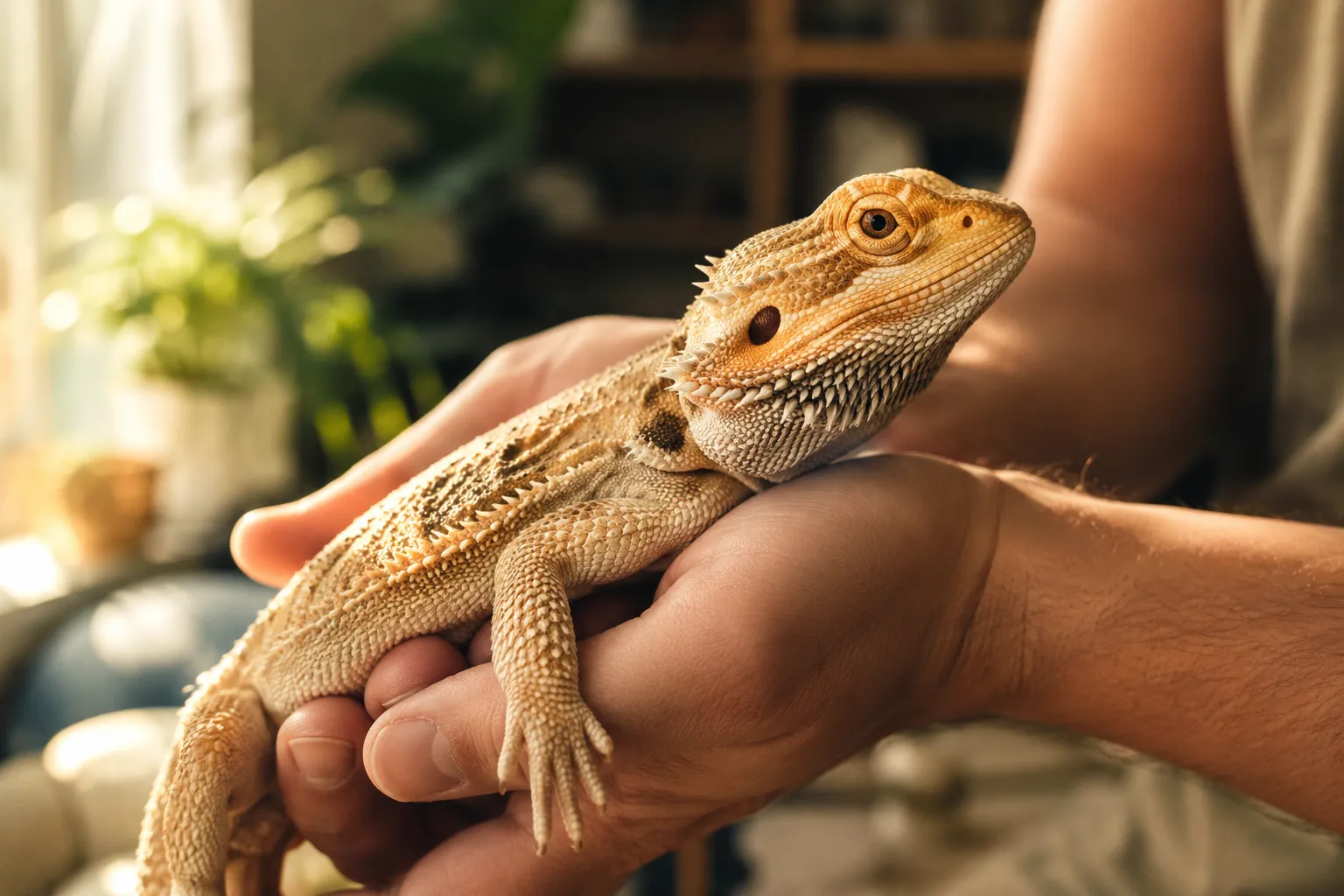
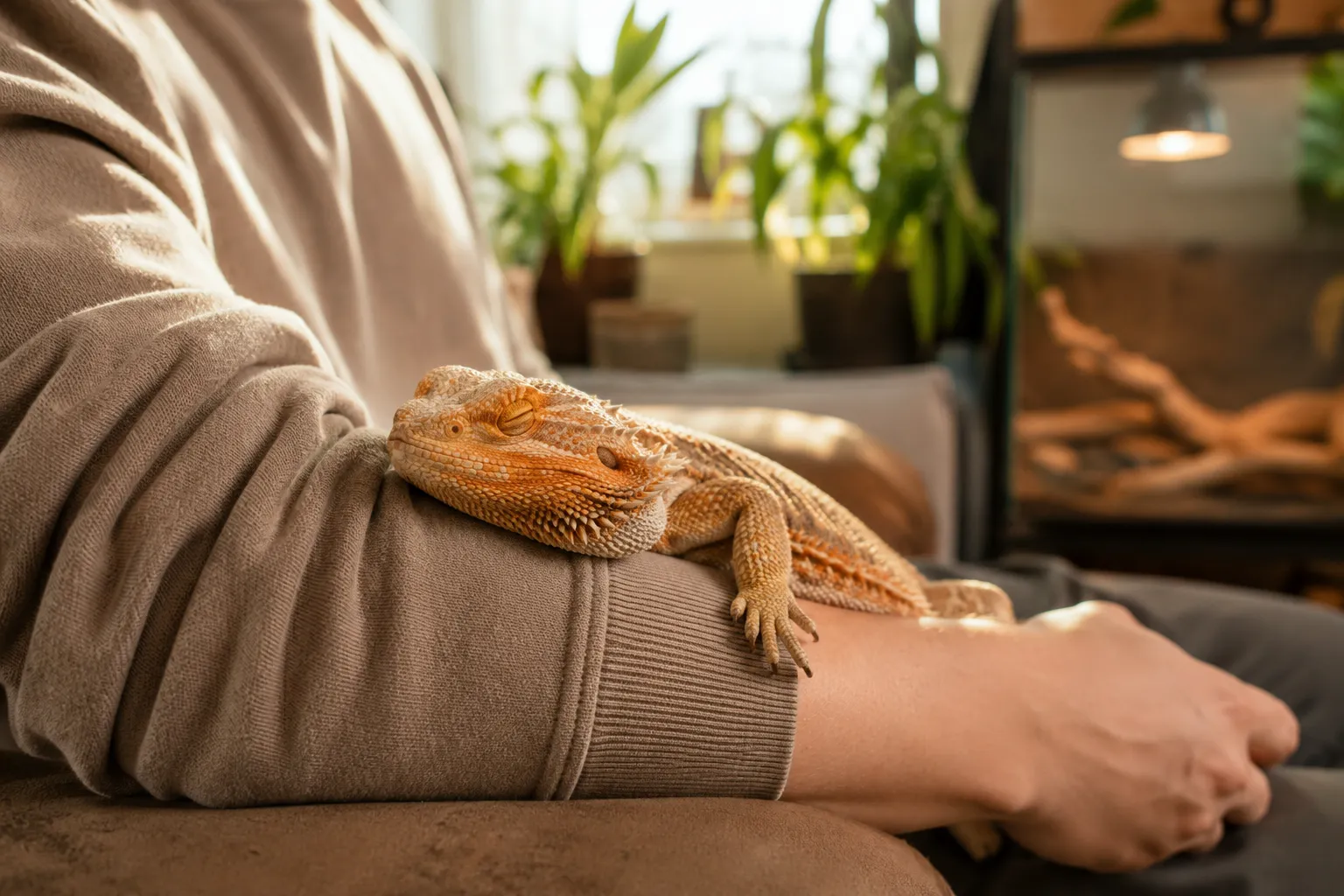
- Forearm rest: Dragon sits on your forearm with tail draped over your arm
- Two-hand support: One hand under chest, one supporting hindquarters
- Shoulder perch: For very calm dragons, but always supervise closely
What to avoid:
- Grabbing from above (mimics predator attack)
- Holding by the tail (can cause tail drop or injury)
- Squeezing the body (restricts breathing)
- Restraining the legs (causes panic)
- Handling with cold hands (uncomfortable for ectotherms)
If your dragon resists, don’t force it. Try again later when they’re more receptive. Forced handling destroys trust and makes future sessions more difficult.
Can Baby Bearded Dragons Be Handled Daily?
Baby bearded dragons can be handled daily, but sessions must be significantly shorter and gentler than with adults. Limit handling to 5-10 minutes once per day for dragons under six months old.
Young dragons are more fragile and stress more easily than adults. Their small size makes them feel more vulnerable, and excessive handling during critical growth periods can impact development and health.
Special considerations for babies:
- Wait 3-5 days after bringing them home before first handling
- Start with 2-3 minute sessions and gradually increase
- Handle over soft surfaces, babies are more likely to jump or fall
- Wash hands thoroughly, babies are more susceptible to bacteria
- Watch for stress more carefully, they hide discomfort less obviously
Baby dragons grow rapidly and need maximum time for eating, basking, and digesting. Prioritize their feeding schedule and growth over socialization during the first few months.
The growth trade-off: While early socialization helps create friendly adults, over-handling babies can stunt growth and create chronic stress. Find the balance by keeping sessions brief and positive.

Bearded Dragon Feeding Guide Magnet – Quick-reference guide for daily and weekly feeding, designed to help keep your lizard healthy and happy.

Funny Bearded Dragon Warning Sign:Featuring the humorous message “Small Movements May Cause Big Reactions,” this metal sign adds personality to reptile rooms, pet spaces, and home decor.

【Durable Material】8"x 12" Sign is great for any use! Funny wall art bearded dragon sign, made of 100% rust-free strong aluminum, bright, eye-catching colors that won't fade over time.
My Bearded Dragon Hisses When I Try to Hold It
Hissing is a clear defensive signal that your bearded dragon feels threatened or uncomfortable with handling. This behavior requires a step-back approach rather than forcing interaction.
Common reasons for hissing:
- Insufficient acclimation time, new dragons need days or weeks to settle
- Previous negative experiences, rescue dragons may have handling trauma
- Approaching too quickly, sudden movements trigger defense responses
- Handling during stress periods, shedding, illness, or after feeding
- Territorial behavior, some dragons are more defensive in their enclosure
- Natural temperament, some individuals are simply less social
Rebuilding trust with a hissing dragon:
- Pause all handling for 3-5 days to reduce stress
- Hand-feed treats through the enclosure to create positive associations
- Practice presence, sit near the enclosure without attempting to touch
- Start with brief touches, gentle head strokes before attempting to pick up
- Use the gradual approach, place your hand in the enclosure without grabbing
- Try different times, some dragons are more receptive at certain hours
If hissing persists beyond several weeks of patient work, consult a reptile veterinarian to rule out pain or illness. Some dragons simply prefer minimal handling, which is a valid personality trait to respect.
How Long Should I Wait to Handle a New Bearded Dragon?
Wait 24-48 hours minimum before handling a newly adopted bearded dragon, though 3-5 days is ideal for reducing relocation stress. This acclimation period allows your dragon to adjust to new sights, sounds, temperatures, and enclosure setup.
First week priorities:
- Days 1-2: No handling, observe from a distance, ensure proper temperatures
- Days 3-5: Offer food, change water, minimal interaction
- Days 5-7: Begin brief handling attempts (2-3 minutes)
- Week 2+: Gradually increase to normal handling schedule
During the acclimation period:
- Monitor eating behavior (some dragons won’t eat for several days)
- Check basking and hiding patterns
- Ensure proper temperature gradients (basking spot 95-105°F, cool side 75-85°F)
- Observe for signs of illness or injury
- Resist the urge to “check on” them constantly
Exception: If you need to handle for health checks or enclosure maintenance, keep it brief and gentle. Necessary handling is different from social interaction.
New dragons from pet stores often experience more stress than those from breeders due to multiple relocations and handling by many people. Adjust acclimation time based on your dragon’s source and apparent stress level.
Do Bearded Dragons Need Alone Time Without Handling?
Yes, bearded dragons require substantial alone time daily for essential biological functions. Even with daily handling sessions, your dragon should spend 23+ hours in their enclosure with minimal disturbance.
Why alone time matters:
- Thermoregulation: Dragons need hours of uninterrupted basking to maintain proper body temperature
- Digestion: Proper digestion requires warmth and rest, not activity
- Sleep: Bearded dragons need 10-12 hours of darkness and quiet for healthy sleep cycles
- Stress recovery: Time without stimulation allows cortisol levels to normalize
- Natural behaviors: Exploring, digging, and basking are important for mental health
Minimum alone time requirements:
- At least 23 hours per day in their enclosure
- Uninterrupted basking time after morning lights-on (2-3 hours)
- Complete darkness and quiet during nighttime hours
- Privacy during shedding, brumation, or illness
Think of handling as a brief enrichment activity rather than the main event of your dragon’s day. Their enclosure should provide everything they need for physical and mental well-being, with handling as a supplementary social experience.
A common mistake among new owners is treating bearded dragons like dogs or cats that need constant interaction. Reptiles have fundamentally different social needs and stress responses.
Handling Bearded Dragon After Feeding Mistakes
Handling a bearded dragon immediately after feeding is one of the most common and potentially dangerous mistakes owners make. This practice can cause regurgitation, impaction, or chronic digestive stress.
Why post-feeding handling is dangerous:
- Regurgitation risk: Stress or movement can cause dragons to vomit undigested food
- Impaction potential: Disturbing digestion can lead to food becoming stuck in the digestive tract
- Stress response: Handling triggers fight-or-flight, which diverts blood from digestion
- Aspiration risk: Regurgitated food can enter the lungs
Safe waiting periods:
- After insects: Wait 2-3 hours minimum
- After vegetables: Wait 1-2 hours minimum
- After large meals: Wait 3-4 hours
- For baby dragons: Wait 2-3 hours (they eat more frequently)
Signs of digestive distress from premature handling:
- Regurgitation of whole or partially digested food
- Lethargy or unusual stillness
- Bloated appearance
- Refusal to eat at next feeding
- Straining or abnormal bowel movements
If your dragon regurgitates after handling, skip the next feeding and monitor closely. If it happens repeatedly, consult a reptile veterinarian as it may indicate a more serious issue.
Best practice: Schedule handling sessions in the morning before feeding or in the evening well after digestion is complete. This creates a predictable routine that doesn’t interfere with feeding schedules.
Best Time of Day to Handle a Bearded Dragon
The best time to handle a bearded dragon is mid-morning (2-3 hours after lights-on) or early evening (before the last hour before lights-off), when dragons are naturally alert and active but not focused on feeding or preparing for sleep.
Optimal handling windows:
Morning (10 AM – 12 PM):
- Dragon has warmed up and become alert
- Before main feeding time
- Energy levels are high
- Good for active interaction
Early Evening (4 PM – 6 PM):
- Digestion is complete from morning feeding
- Still active and alert
- Good for calm, relaxed handling
- Allows time to settle before sleep
Times to avoid:
- Immediately after lights-on (6-8 AM), dragons are still warming up and sluggish
- Right after feeding (whenever that occurs), wait 2-3 hours
- Late evening (last hour before lights-off), dragons are winding down
- During peak basking (first 2 hours after lights-on), interrupts essential thermoregulation
Individual variation: Some dragons are more active in mornings, others in afternoons. Observe your dragon’s natural activity patterns and schedule handling during their most alert periods.
Seasonal changes: During brumation season (fall/winter), dragons may have narrower windows of alertness. Adjust handling times based on when your dragon is most active rather than sticking rigidly to a schedule.
How to Tell If Your Bearded Dragon Wants to Be Held
Reading your bearded dragon’s body language helps you determine whether they’re receptive to handling on any given day. While dragons don’t “ask” to be held like dogs might, they do show clear signs of willingness or reluctance.
Signs your dragon is receptive to handling:
- Alert posture with head raised and eyes bright
- Approaches the glass when you’re near the enclosure
- Watches you with interest rather than hiding
- Normal coloration without darkened beard
- Climbs onto your hand willingly when offered
- Relaxed body without flattening or puffing
Signs your dragon wants to be left alone:
- Hiding in a cave or under décor
- Darkened beard or overall color darkening
- Flattened body or puffed appearance
- Turns away when you approach
- Runs to the back of the enclosure
- Closes eyes or appears sleepy
- Hisses or opens mouth defensively
The “hand test”: Open the enclosure and place your hand inside without reaching for your dragon. If they approach or climb on voluntarily, they’re receptive. If they retreat or show stress signals, respect their preference and try later.
Context clues: Consider what your dragon was doing before you approached. A dragon actively basking probably wants to continue basking. A dragon exploring the enclosure may be more open to interaction.
Understanding these signals helps you answer “can you handle a bearded dragon every day?” with nuance, yes, but only when they’re receptive, not on a rigid schedule that ignores their communication.
Frequently Asked Questions
Can I handle my bearded dragon for an hour?
No, an hour is too long for most bearded dragons. Limit sessions to 10-20 minutes for adults and 5-10 minutes for juveniles. Extended handling causes stress, prevents thermoregulation, and can lead to health issues.
Why does my bearded dragon close its eyes when I pet it?
Eye-closing during petting usually indicates discomfort or stress, not pleasure. Bearded dragons close their eyes as a defensive response when they can’t escape. If your dragon consistently closes its eyes during handling, reduce frequency and duration.
Should I handle my bearded dragon during shedding?
No, avoid handling during active shedding. The process is uncomfortable and itchy, and handling can damage new skin or cause incomplete sheds. Wait until shedding is complete before resuming normal handling.
Can bearded dragons recognize their owners?
Yes, bearded dragons can recognize individual people through sight, smell, and routine. They may show more relaxed behavior with familiar handlers compared to strangers, though this is based on learned association rather than emotional bonding.
How do I know if I’m holding my bearded dragon correctly?
Correct holding involves supporting both the chest and hindquarters, keeping the dragon horizontal, and avoiding squeezing. Your dragon should appear calm with normal coloration and not struggle to escape.
Is it normal for my bearded dragon to poop while being held?
Yes, it’s relatively common. Handling can stimulate bowel movements, especially if your dragon was due for one. It’s not a sign of stress unless accompanied by other stress signals.
Can I take my bearded dragon outside for handling?
Yes, but with precautions: ensure temperatures are appropriate (75°F+), supervise constantly to prevent escape, watch for predators, and limit time to prevent overheating. Never leave them unattended outdoors.
Why does my bearded dragon run away from me?
Running away indicates fear or stress. Common causes include insufficient acclimation time, approaching too quickly, previous negative experiences, or handling during stressful periods like shedding.
Should I handle my bearded dragon every day or give days off?
Daily handling is fine for most adult dragons, but occasional days off are beneficial, especially during shedding, after veterinary visits, or if your dragon shows stress. Quality matters more than perfect consistency.
Can I handle my bearded dragon right after buying it?
No, wait 24-48 hours minimum, ideally 3-5 days. New dragons need time to acclimate to their environment before adding the stress of handling.
How long does it take for a bearded dragon to get used to handling?
Most dragons adjust within 2-4 weeks of consistent, gentle handling. Rescue dragons or those with negative experiences may take several months. Progress varies significantly by individual temperament.
What should I do if my bearded dragon bites during handling?
Don’t drop them or react dramatically. Gently return them to their enclosure and give them space. Biting usually indicates fear or stress. Reassess your handling technique and frequency before trying again.
Conclusion
Can you handle a bearded dragon every day? Yes, with the right approach. Daily handling sessions of 10-20 minutes for adults and 5-10 minutes for juveniles help build trust and socialization without causing stress. The key is reading your dragon’s body language, respecting their need for alone time, and avoiding handling during vulnerable periods like immediately after feeding or during shedding.
Success with daily handling depends on proper technique, timing, and individual temperament. Always approach from the side, support the entire body, and watch for stress signals like beard darkening or hissing. Schedule sessions during your dragon’s alert periods (mid-morning or early evening) and maintain their enclosure as their primary living space, not a holding area between handling sessions.
Your next steps:
- Assess your current handling routine against the guidelines in this article
- Learn to recognize your dragon’s specific stress signals and receptive behaviors
- Establish a consistent schedule that respects feeding times and rest periods
- Practice proper picking-up and holding techniques
- Monitor your dragon’s response and adjust frequency as needed
Remember that every bearded dragon is an individual. Some thrive with daily interaction, while others prefer minimal handling. The best owners adapt their approach to their dragon’s personality rather than forcing a one-size-fits-all routine. For more guidance on understanding your pet’s needs, explore our resources on bearded dragon behavior and comprehensive care.

Age range description: All Stages

Reptile Toy Set: Includes 1 vegetable feeding ball, 1 bone-shaped rolling feeder, 1 feeding bell ball, 1 large suction cup, and a generously long chain. Designed specifically for bearded dragons, hamsters, parrots, and other small reptiles and pets, it serves as an ideal matching accessory.

HUNTING DRAGON: We all know some bearded dragons may be picky, and will need some encouragement getting used to a brand-new food. Let's patiently help them fall in love with Gargeer gels! We advise starting with a solid stripe you'll hand feed, using tongs/tweezers, an action that triggers their hunting instinct. A healthy fun for all parties involved