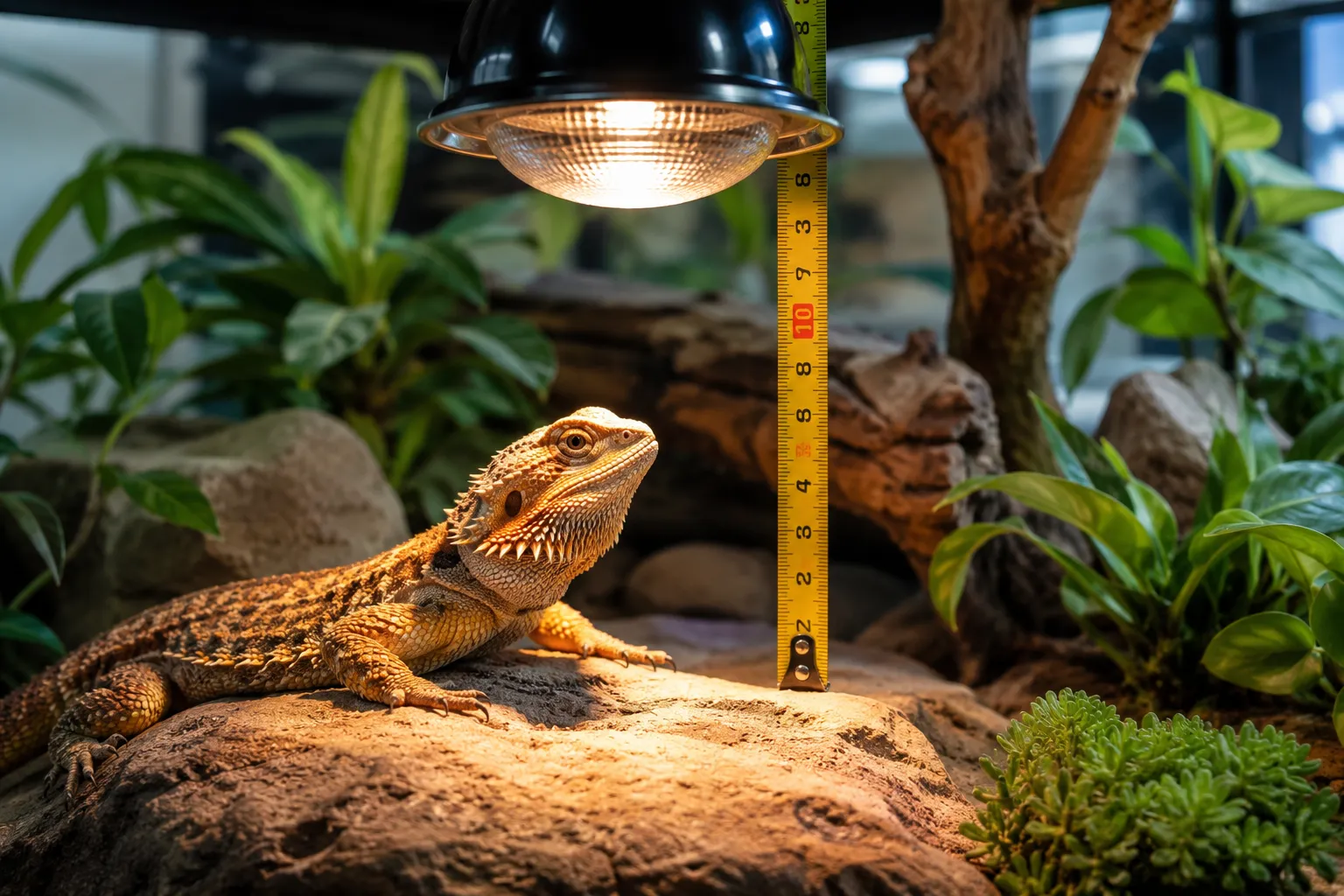
Nearly 80% of metabolic bone disease cases in captive reptiles stem from improper UVB exposure, and distance plays the biggest role. How far should UVB be from the basking spot? For most bearded dragons, the sweet spot is 10-12 inches for T5 HO fluorescent tubes and 12-18 inches for mercury vapor bulbs, but the exact distance depends on bulb type, wattage, and whether your enclosure has a screen top.
Key Takeaways
- T5 HO fluorescent tubes should be mounted 10-12 inches from the basking spot for bearded dragons
- Mercury vapor bulbs require 12-18 inches of distance due to higher UVB output and heat
- Screen tops block 30-50% of UVB, requiring closer placement or higher-output bulbs
- UVB meters are the only reliable way to verify proper exposure at the basking spot (aim for 3.0-5.0 UVI for bearded dragons)
- Bulb wattage and age directly affect safe distance, older bulbs lose output and may need repositioning
- Too close risks eye damage and burns; too far leads to vitamin D3 deficiency and metabolic bone disease
- Different reptile species need different UVI levels, so distance requirements vary by animal

Stronger UVB and brighter light than standard ReptiSun 10.0 lamps

【High-Efficiency Reflector】Curved polished aluminum reflector intensifies both light and UVB output, Aids in vitamin D3 activation and calcium absorption, promoting growth and preventing skeletal diseases in pets.

Used and recommended by zoos, veterinarians, and top reptile professionals
What Is UVB Light and Why Do Reptiles Need It?
UVB light is a specific wavelength of ultraviolet radiation (290-320 nanometers) that enables reptiles to synthesize vitamin D3 in their skin. Without adequate UVB exposure, reptiles cannot properly absorb calcium from their diet, leading to metabolic bone disease, weakened bones, and organ failure.
In the wild, bearded dragons and other diurnal reptiles bask in direct sunlight for several hours daily, receiving natural UVB radiation. Captive reptiles depend entirely on artificial UVB sources to replicate this essential process. The intensity of UVB exposure decreases dramatically with distance, following an inverse square law, which is why placement matters so much.
Key functions of UVB for reptiles:
- Triggers vitamin D3 synthesis in the skin
- Enables calcium absorption in the digestive tract
- Supports bone growth and density
- Regulates immune system function
- Influences natural behaviors and appetite
For comprehensive guidance on keeping your bearded dragon healthy, check out our bearded dragon care resources.
How Far Should UVB Bulb Be From Bearded Dragon Basking Spot?
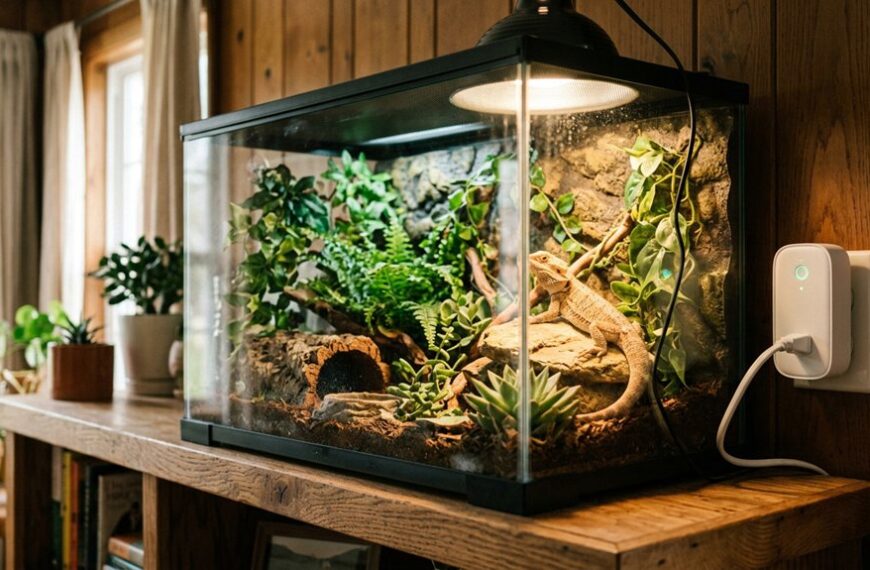
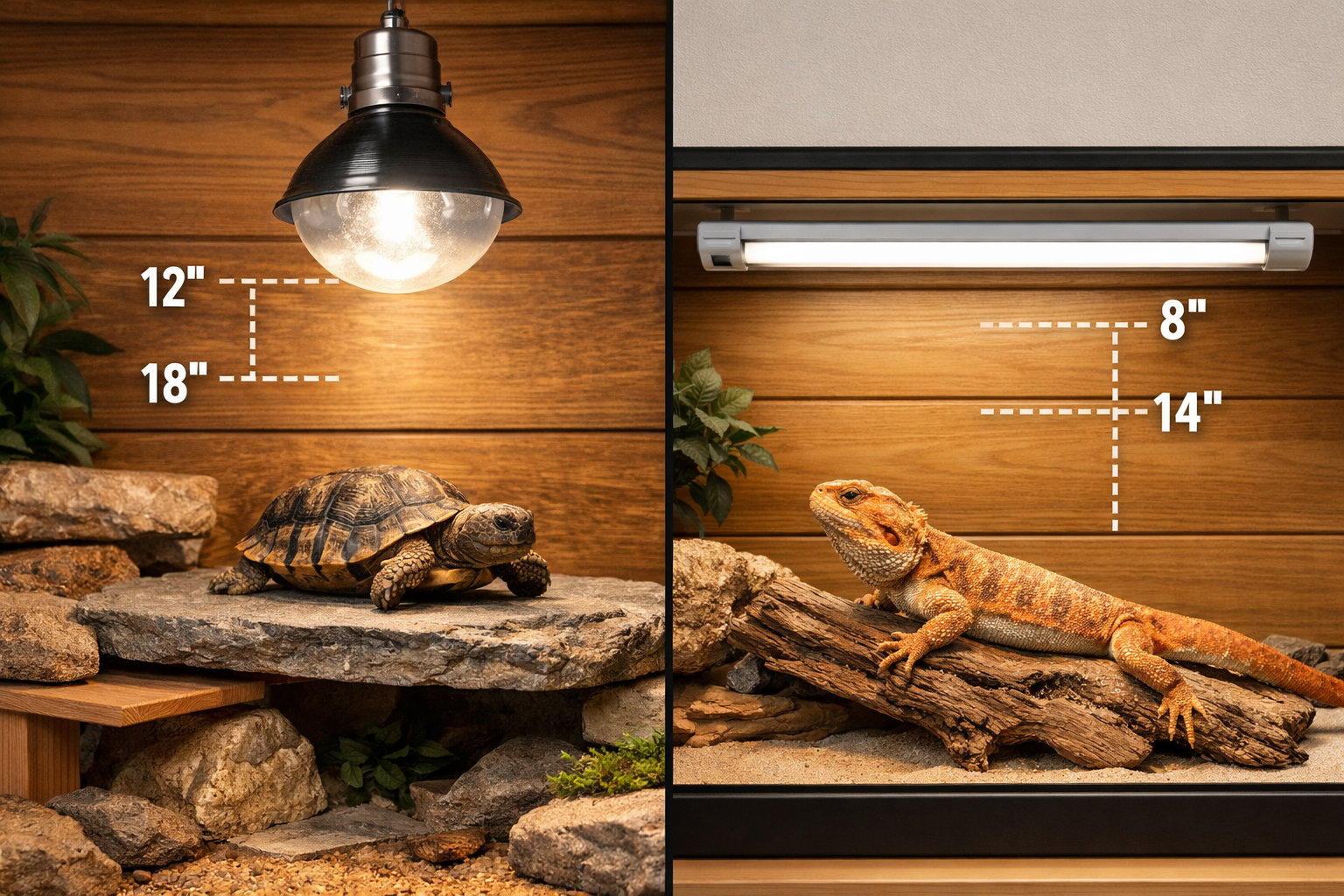
For bearded dragons, mount T5 HO fluorescent UVB tubes 10-12 inches above the basking spot, measured from the bulb to the highest point your dragon can reach. This distance typically delivers a UVI reading of 3.0-5.0, which matches the mid-range exposure bearded dragons experience in their native Australian habitat.
Distance guidelines by bulb type for bearded dragons:
- T5 HO 10.0/12% tubes: 10-12 inches (most common setup)
- T8 10.0 tubes: 6-8 inches (lower output, less recommended)
- Compact fluorescent UVB: 6-8 inches (not ideal for primary UVB source)
- Mercury vapor bulbs: 12-18 inches (provides both heat and UVB)
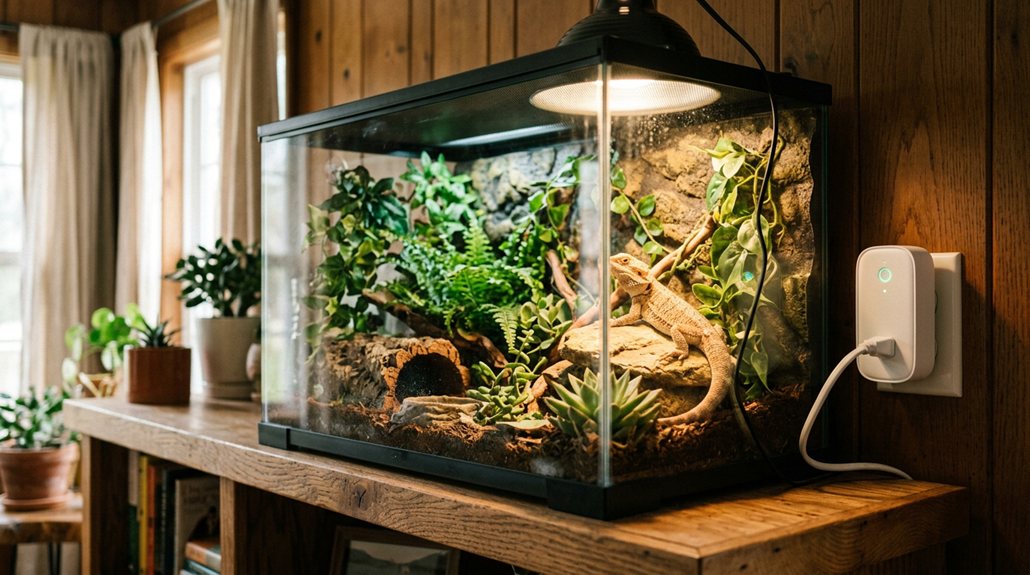
The basking spot should allow your bearded dragon to get within this optimal range while also providing a thermal gradient. Position branches, rocks, or platforms so the dragon’s back is at the correct distance when basking. Remember that bearded dragons will climb, so measure from the highest accessible point, not the tank floor.
Common mistake: Many keepers measure from the substrate level instead of from the actual basking platform height, resulting in excessive distance and inadequate UVB exposure.
UVB Distance for Tortoise Basking Area
Tortoises generally need UVB fixtures mounted 12-18 inches above their basking area, with the exact distance depending on species and bulb type. Mediterranean species like Russian tortoises and Greek tortoises require UVI levels of 2.9-7.4, while tropical forest species need lower levels around 1.0-2.6.
For larger tortoise enclosures, mercury vapor bulbs work well because they provide both heat and UVB over a wider area. Mount these 15-18 inches above the highest point of the basking zone. For T5 HO tubes, 12-15 inches works for most tortoise species, but always verify with a UVB meter since tortoise shells can block some radiation from reaching the skin.
Choose your distance based on:
- Desert species (sulcata, leopard): Higher UVI needs, 12-15 inches with strong bulbs
- Mediterranean species (Russian, Greek): Moderate UVI, 12-18 inches
- Forest species (red-footed, yellow-footed): Lower UVI, 15-20 inches or partial shade options
Unlike bearded dragons, tortoises spend more time at ground level, so you can measure from the substrate surface rather than elevated platforms.
Does UVB Distance Change With Different Wattage Bulbs?
Wattage primarily affects heat output, not UVB output, but higher-wattage bulbs often produce more intense UVB as a byproduct. The percentage rating (5.0, 10.0, 12%) indicates UVB strength more accurately than wattage alone, so always prioritize the UVB percentage when determining distance.
For fluorescent tubes, a 10.0 (or 12%) T5 HO bulb produces significantly more UVB than a 5.0 bulb of the same wattage. The 10.0 bulb should be mounted 10-12 inches away for bearded dragons, while a 5.0 bulb would need to be much closer (6-8 inches) to achieve the same UVI, but this would create an inadequate basking zone size.
Mercury vapor bulbs combine wattage and UVB output more directly. A 100-watt mercury vapor bulb produces less UVB than a 160-watt version, so the higher-wattage bulb needs greater distance:
- 100W mercury vapor: 12-15 inches
- 160W mercury vapor: 15-18 inches
Always verify the manufacturer’s specifications and use a UVB meter to confirm proper exposure, since output varies significantly between brands even at the same wattage.
Mercury Vapor Bulb vs Fluorescent Tube UVB Distance
Mercury vapor bulbs require 12-18 inches of distance from the basking spot, while T5 HO fluorescent tubes need 10-12 inches. Mercury vapor bulbs produce more concentrated UVB and significant heat, making them ideal for larger enclosures but requiring more careful placement to avoid overexposure.
Mercury vapor bulbs:
- Emit UVB and heat from a single point source
- Create a more focused basking zone
- Require 12-18 inches minimum distance
- Last 6-12 months before UVB output drops
- Best for enclosures 4 feet or larger
- Can cause eye damage if too close
Fluorescent tubes (T5 HO):
- Distribute UVB evenly along the tube length
- Create a larger usable basking area
- Require 10-12 inches distance for 10.0/12% bulbs
- Need replacement every 9-12 months
- Better for standard 40-75 gallon tanks
- Less risk of concentrated overexposure
Choose mercury vapor bulbs if you need a single fixture for both heat and UVB in a large enclosure. Choose fluorescent tubes if you want even UVB distribution across a wider area and plan to use separate heat sources. Many experienced keepers prefer T5 HO tubes for bearded dragons because they provide more consistent coverage.
What Happens If UVB Light Is Too Close to Basking Spot?
Placing UVB too close to the basking spot can cause photokeratoconjunctivitis (eye inflammation), skin burns, and behavioral changes like excessive hiding. Bearded dragons exposed to excessive UVB may squint, keep their eyes closed during the day, or develop cloudy eye tissue.
Signs of UVB overexposure:
- Squinting or keeping eyes closed
- Avoiding the basking area
- Darkened or discolored skin patches
- Lethargy and reduced appetite
- Cloudy or swollen eyes
Most cases occur when mercury vapor bulbs are placed closer than 12 inches or when compact fluorescent bulbs are positioned too near the animal. The damage accumulates over days or weeks, not immediately, so keepers may not notice the problem until symptoms appear.
Safe practice: Always start with the manufacturer’s recommended distance, then verify UVI levels with a meter. If your dragon consistently avoids the basking spot despite proper temperatures, the UVB may be too intense. For more information on bearded dragon habitat setup, explore our detailed guides.
What Happens If UVB Is Too Far Away From My Reptile?
When UVB is too far from your reptile, the animal cannot synthesize adequate vitamin D3, leading to metabolic bone disease (MBD), soft or deformed bones, lethargy, and loss of appetite. MBD develops gradually over weeks to months and can be fatal if untreated.
Early signs of insufficient UVB:
- Reduced appetite or selective eating
- Lethargy and decreased activity
- Difficulty walking or climbing
- Tremors or twitching
- Swollen or misshapen jaw (rubber jaw)
Bearded dragons need UVI readings of 3.0-5.0 at the basking spot to maintain health. If your bulb is mounted too high, say 18-20 inches for a T5 HO tube, the UVI may drop to 1.0-2.0, which is insufficient for proper calcium metabolism. Over time, the dragon’s bones weaken, fractures occur, and organ function deteriorates.
Prevention: Measure UVI at the basking spot with a Solarmeter 6.5 or similar device. If readings are below 3.0, lower the fixture or upgrade to a higher-output bulb. Don’t rely on visual assessment, UVB is invisible, and bulbs lose output long before they stop producing visible light.
How to Measure UVB Output at Basking Spot
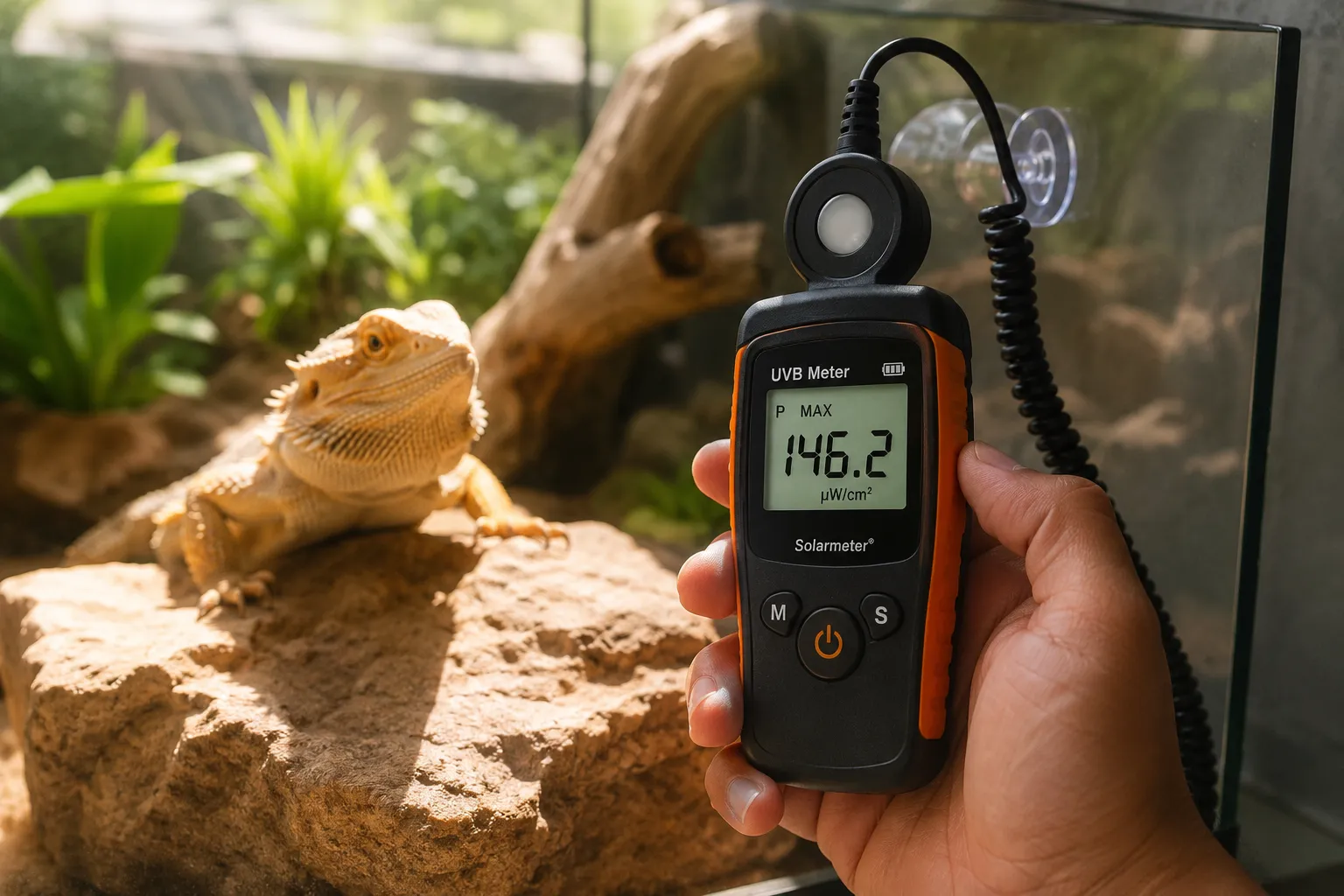
To measure UVB output accurately, use a digital UVB meter (Solarmeter 6.5 is the industry standard) and take readings at the exact height and location where your reptile’s back will be when basking. Turn on the UVB bulb and let it warm up for 10-15 minutes before measuring, since output increases as the bulb reaches operating temperature.
Step-by-step measurement process:
- Position the meter at the basking spot height (top of rock, branch, or platform)
- Hold the sensor facing directly toward the UVB bulb
- Wait 10-15 seconds for the reading to stabilize
- Record the UVI number displayed on the meter
- Take multiple readings across the basking zone to check for hot spots
- Compare to species requirements (3.0-5.0 for bearded dragons)
If you don’t have a UVB meter, follow manufacturer distance guidelines strictly and watch for behavioral signs of improper exposure. However, meters are the only reliable method, bulb output varies by brand, age, and environmental factors like screen tops.
Target UVI ranges by species:
- Bearded dragons: 3.0-5.0 UVI
- Leopard geckos: 1.0-2.0 UVI (lower requirement)
- Chameleons: 3.0-6.0 UVI (species-dependent)
- Tortoises: 2.0-7.0 UVI (varies by species)

We Did Many Experiments➤ We have done too many experiments on each 70-watt (120v) amphibian, reptile light/bulb to ensure you to provide proper and well-working conditions. We also offer a best-in-class lifespan compared to other competitive basking bulbs.

Perfect UVB daylight bulb - UVB 50uW/cm²: heat & UVA / UVB / visible light all in one lamp, no harmful UVC output - self-ballasted vapor heat lamp bulb simulates sunlight, keeps animals warm and promotes vitamin production necessary for health.

Perfect UVB daylight bulb - UVB 80uW/cm²: heat & UVA / UVB / visible light all in one lamp, no harmful UVC - self-ballasted vapor heat lamp bulb simulates sunlight, keeps animals warm and promotes vitamin production necessary for health.
Do I Need a UVB Meter to Check Distance?
While not absolutely required, a UVB meter is the only way to verify that your reptile receives proper UVB exposure. Manufacturer distance guidelines provide a starting point, but actual output varies based on bulb age, screen interference, reflector design, and individual bulb variation, factors you cannot assess visually.
A quality UVB meter like the Solarmeter 6.5 costs $200-$270 but lasts for years and works across all your reptile enclosures. For keepers with multiple animals or expensive reptiles, the investment prevents costly veterinary bills from MBD treatment. Some reptile stores and veterinary clinics offer meter rentals or free testing services.
When a meter is essential:
- Setting up a new enclosure for the first time
- After replacing UVB bulbs (verify new output)
- Every 3-4 months to check bulb degradation
- When using screen tops (measure actual penetration)
- If your reptile shows signs of UVB-related health issues
When you can skip the meter:
- You’re following proven setups from experienced keepers
- Your reptile shows excellent health and normal behavior
- You replace bulbs on schedule (every 9-12 months)
- You’re using standard equipment in a standard enclosure
Even without a meter, never guess at distance. Follow manufacturer specifications exactly and monitor your animal’s health closely. For more on proper bearded dragon care, including health monitoring, visit our comprehensive guides.
UVB Distance for Screen Top vs Open Enclosure
Screen tops block 30-50% of UVB radiation, requiring you to mount fixtures 2-4 inches closer than in open enclosures or to use higher-output bulbs. For bearded dragons with screen tops, mount T5 HO 10.0 tubes 8-10 inches from the basking spot instead of the standard 10-12 inches.
The mesh density and material affect blocking percentage, fine metal mesh blocks more UVB than plastic-coated wire. Some keepers remove a section of screen and mount the fixture directly inside the enclosure, which eliminates the blocking issue entirely but requires careful attention to prevent the animal from touching the hot bulb.
Options for screen-top enclosures:
- Mount fixture inside: Eliminates screen blocking, requires protective guard
- Use higher-output bulbs: 12% or 14% tubes compensate for screen loss
- Reduce distance: Move fixture 2-4 inches closer than manufacturer specs
- Verify with meter: Measure actual UVI after screen to confirm adequate levels
Open enclosures (like PVC or wood cages with no screen barrier) allow full UVB penetration, so you can follow standard distance guidelines. These setups are increasingly popular because they maintain humidity better and don’t interfere with lighting.
Common mistake: Keepers often mount fixtures on top of screen lids without accounting for UVB loss, then wonder why their reptile develops MBD despite “proper” distance. Always measure or adjust for screen interference.
How Often Should I Replace UVB Bulb and Does Distance Change Over Time?
Replace T5 HO fluorescent UVB bulbs every 9-12 months and mercury vapor bulbs every 6-12 months, even if they still produce visible light. UVB output degrades steadily over time, dropping to 50-70% of original strength by the end of the bulb’s useful life, while the bulb continues to look bright.
As bulbs age, you have two options: replace them on schedule or gradually lower the fixture to compensate for declining output. Most keepers prefer scheduled replacement because it’s simpler and ensures consistent UVB levels. If you choose to adjust distance, use a UVB meter monthly to track output decline and lower the fixture incrementally to maintain target UVI readings.
Replacement schedule by bulb type:
- T5 HO fluorescent (10.0/12%): 9-12 months
- T8 fluorescent: 6-9 months (shorter lifespan)
- Compact fluorescent: 6-9 months
- Mercury vapor bulbs: 6-12 months (brand-dependent)
Mark your calendar when you install a new bulb and set a reminder for replacement. Many keepers replace all UVB bulbs on January 1st each year for easy tracking. The cost of timely replacement ($30-60 per bulb) is far less than treating metabolic bone disease ($200-500+ in vet bills).
Warning: Never assume a bulb is still effective because it looks bright. UVB is invisible to human eyes, and bulbs lose UVB output long before they burn out visually.
Can My Reptile Get Burned From UVB Being Too Close?
Yes, reptiles can suffer eye damage and skin burns from excessive UVB exposure, though thermal burns from heat lamps are more common. UVB-related injuries typically affect the eyes first, causing photokeratoconjunctivitis, inflammation of the cornea and conjunctiva that appears as squinting, cloudiness, or swelling.
Mercury vapor bulbs pose the highest risk because they emit concentrated UVB and heat from a single point. Placing these bulbs closer than 12 inches can cause both thermal burns and UVB overexposure. Compact fluorescent UVB bulbs have also been linked to eye problems when positioned too close, particularly older models from the early 2000s.
Risk factors for UVB burns:
- Mercury vapor bulbs placed closer than 12 inches
- Compact fluorescent bulbs within 6 inches
- Lack of shade or hiding areas in the enclosure
- Prolonged exposure without UVB gradients
- Using bulbs not designed for reptiles
Prevention: Provide multiple basking zones at different distances from the UVB source, allowing your reptile to self-regulate exposure. Include shaded areas where the animal can retreat from UVB entirely. Monitor behavior, if your reptile consistently avoids the basking area despite proper temperatures, the UVB may be too intense.
For more guidance on creating safe bearded dragon habitats, including proper lighting zones, explore our detailed setup guides.
UVB Distance for Chameleon vs Leopard Gecko
Chameleons need UVB fixtures mounted 8-12 inches from basking branches to achieve UVI levels of 3.0-6.0, while leopard geckos require much lower exposure (1.0-2.0 UVI) with fixtures placed 12-18 inches away or using lower-output 5.0 bulbs. These differences reflect each species’ natural habitat and evolutionary adaptations.
Chameleon UVB setup:
- Species: Veiled, panther, Jackson’s chameleons
- UVI target: 3.0-6.0 (varies by species)
- Bulb type: T5 HO 5.0 or 10.0 depending on species
- Distance: 8-12 inches from highest basking branch
- Special consideration: Provide UVB gradient with shaded areas
Chameleons are arboreal and bask in tree canopies where UVB exposure is high. They need strong UVB to maintain health, and their elevated basking behavior means fixtures should be positioned to cover vertical space.
Leopard gecko UVB setup:
- Species: Leopard geckos (crepuscular/nocturnal)
- UVI target: 1.0-2.0 (low requirement)
- Bulb type: T5 HO 5.0 or 2.0
- Distance: 12-18 inches from basking spot
- Special consideration: UVB is beneficial but not as critical as for diurnal species
Leopard geckos are crepuscular and receive less direct sun exposure in the wild. Recent research shows they benefit from low-level UVB, but excessive exposure can cause stress. For more information on leopard gecko diet and care, check our species-specific guides.
Key principle: Match UVB intensity and distance to your species’ natural behavior and habitat. Diurnal basking species need stronger UVB closer to basking spots, while crepuscular or nocturnal species need lower levels at greater distances.
Common Mistakes People Make With UVB Placement in Reptile Tanks
The most frequent UVB placement errors include mounting fixtures too far away, failing to account for screen blocking, measuring distance from the wrong point, and not replacing bulbs on schedule. These mistakes lead to inadequate UVB exposure and metabolic bone disease, even when keepers believe they’ve set up lighting correctly.
Top UVB placement mistakes:
- Measuring from substrate instead of basking platform: Results in 4-8 inches of extra distance and insufficient UVB
- Ignoring screen top interference: Reduces UVB by 30-50% without adjustment
- Using compact fluorescent bulbs as primary UVB: Provides inadequate coverage for most enclosures
- Placing UVB at one end only: Creates dead zones where reptiles receive no UVB
- Keeping bulbs beyond replacement date: Output drops to inadequate levels while bulb still glows
- Not providing UVB gradients: Prevents reptiles from self-regulating exposure
- Assuming all bulbs of same type perform equally: Brand and quality variations affect output significantly
How to avoid these mistakes:
- Measure distance from the highest point your reptile can reach when basking
- Use a UVB meter to verify actual output after screen interference
- Choose T5 HO tubes over compact fluorescents for primary UVB
- Position UVB to cover 50-75% of enclosure length
- Mark replacement dates on your calendar
- Create basking zones at multiple distances from the UVB source
- Invest in quality bulbs from reputable reptile lighting brands
Many keepers also make the mistake of relying on “all-in-one” dome fixtures that combine heat and UVB in a single compact bulb. While convenient, these rarely provide adequate UVB coverage for the entire basking area and should be supplemented with tube fixtures.
For comprehensive guidance on setting up your enclosure correctly from the start, visit our bearded dragon care section.
FAQ
How do I know if my UVB bulb is still working?
You cannot tell by looking, UVB is invisible and bulbs lose output while still producing visible light. Use a UVB meter to check output every 3-4 months, or replace bulbs on a fixed schedule (every 9-12 months for T5 HO tubes). If your reptile shows signs of MBD or lethargy despite proper care, test or replace the bulb immediately.
Can I use a regular fluorescent bulb for UVB?
No. Standard fluorescent bulbs produce no meaningful UVB radiation. You must use bulbs specifically designed for reptiles, labeled with UVB percentage (5.0, 10.0, 12%) or UVB output specifications. Reptile UVB bulbs use special phosphor coatings that emit UVB wavelengths.
Should UVB be on the same side as the heat lamp?
Yes, position UVB over or near the basking spot where your reptile spends time under the heat lamp. Reptiles bask to raise body temperature and naturally receive UVB during this behavior. Separating heat and UVB forces the animal to choose between warmth and UVB exposure.
Do bearded dragons need UVB at night?
No. Turn off all UVB lighting at night to provide a natural day-night cycle. Bearded dragons need 12-14 hours of UVB during the day and complete darkness at night. If nighttime temperatures drop too low, use a ceramic heat emitter or deep heat projector that produces no light.
Can I use UVB through glass?
No. Standard glass blocks nearly all UVB radiation. Never place UVB bulbs outside a glass enclosure or behind glass panels. If your enclosure has glass doors, mount the UVB fixture inside the tank or use an open-top design.
How far should a 5.0 UVB bulb be from my reptile?
For T5 HO 5.0 bulbs, mount 8-12 inches from the basking spot for species requiring moderate UVB (2.0-4.0 UVI). This bulb strength works well for tropical species, leopard geckos, and some tortoises. Desert species like bearded dragons typically need 10.0 or 12% bulbs instead.
What UVI level do bearded dragons need?
Bearded dragons need UVI readings of 3.0-5.0 at the basking spot, matching the mid-range exposure they experience in Australian habitats. Readings below 3.0 risk MBD, while readings above 6.0 may cause eye damage with prolonged exposure.
Can UVB bulbs lose strength before they burn out?
Yes. UVB output degrades to 50-70% of original strength over 9-12 months while the bulb continues producing visible light. This is why scheduled replacement is essential, the bulb looks fine but no longer provides adequate UVB for your reptile’s health.
Do I need UVB if I give my bearded dragon vitamin D3 supplements?
UVB is still strongly recommended even with D3 supplementation. Natural UVB synthesis allows reptiles to self-regulate vitamin D3 production and provides other health benefits beyond calcium metabolism. Supplements alone often lead to imbalances, either deficiency or toxicity from over-supplementation.
How do I create a UVB gradient in my enclosure?
Mount the UVB fixture over one side of the enclosure, covering 50-75% of the length. This creates a gradient from high UVB under the fixture to low/no UVB at the far end. Add partial shade (plants, hides, branches) to give your reptile control over exposure levels.
Can I use a mercury vapor bulb in a small tank?
Mercury vapor bulbs work best in enclosures 4 feet or longer because they require 12-18 inches of distance and produce significant heat. In smaller tanks, T5 HO fluorescent tubes provide better UVB distribution without overheating the space.
What’s the difference between UVA and UVB?
UVA (320-400nm) affects behavior, appetite, and color perception but doesn’t produce vitamin D3. UVB (290-320nm) enables vitamin D3 synthesis and calcium absorption. Reptiles need both, and most reptile bulbs provide both wavelengths, but UVB is the critical component for preventing MBD.
Conclusion
Getting UVB distance right is one of the most important aspects of reptile care, directly impacting your bearded dragon’s ability to synthesize vitamin D3 and maintain healthy bones. For most bearded dragons, mounting T5 HO 10.0 tubes 10-12 inches from the basking spot provides optimal exposure, while mercury vapor bulbs need 12-18 inches due to their higher output.
Take these action steps today:
- Measure the current distance from your UVB bulb to the highest point of your basking area
- Adjust fixture height based on bulb type and species requirements
- Invest in a UVB meter or have your setup tested at a reptile store
- Mark your calendar for bulb replacement in 9-12 months
- Check for screen interference and adjust distance or bulb strength accordingly
- Monitor your reptile’s behavior and health for signs of improper UVB exposure
Remember that proper UVB placement works together with correct temperatures, nutrition, and overall habitat design. For more guidance on creating the perfect environment for your bearded dragon, explore our comprehensive bearded dragon care resources and habitat setup guides.
Your reptile depends on you to provide the UVB exposure it cannot get indoors naturally. Taking the time to set up lighting correctly now prevents serious health problems and expensive veterinary treatment down the road. When in doubt, measure with a meter and adjust based on actual UVI readings rather than guessing.

The spectral response is designed for reptile UVI assessment and basking-light monitoring.

【UV Monitoring for Reptile Care】Accurately Measures 280-400nm Reptile UV Spectrum Specifically designed for reptile care, this UV meter measures UVA and UVB intensity across the 280-400nm UV range required by lizards, turtles, and other reptiles. It displays real-time UV Index (UVI) to help monitor UV levels at your pet’s actual basking spot. If the screen does not turn on when first used, please replace the battery with the included backup battery.
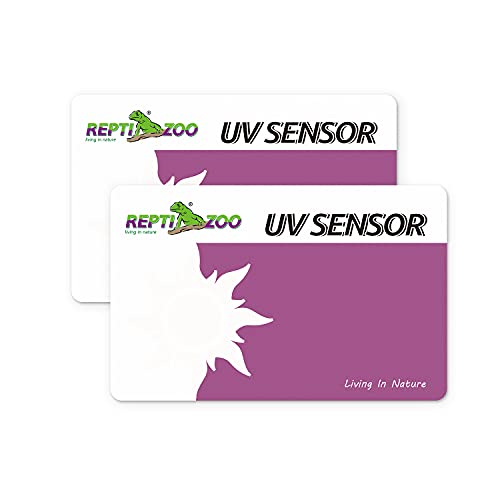
UVB tester reptile card measures the intensity of the UVB rays of UV fluorescent lamps.