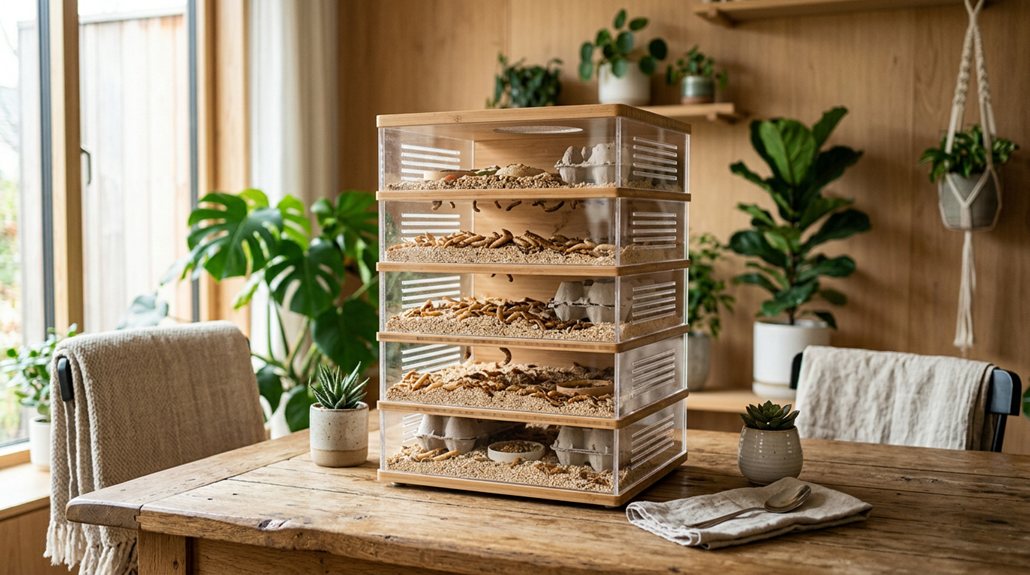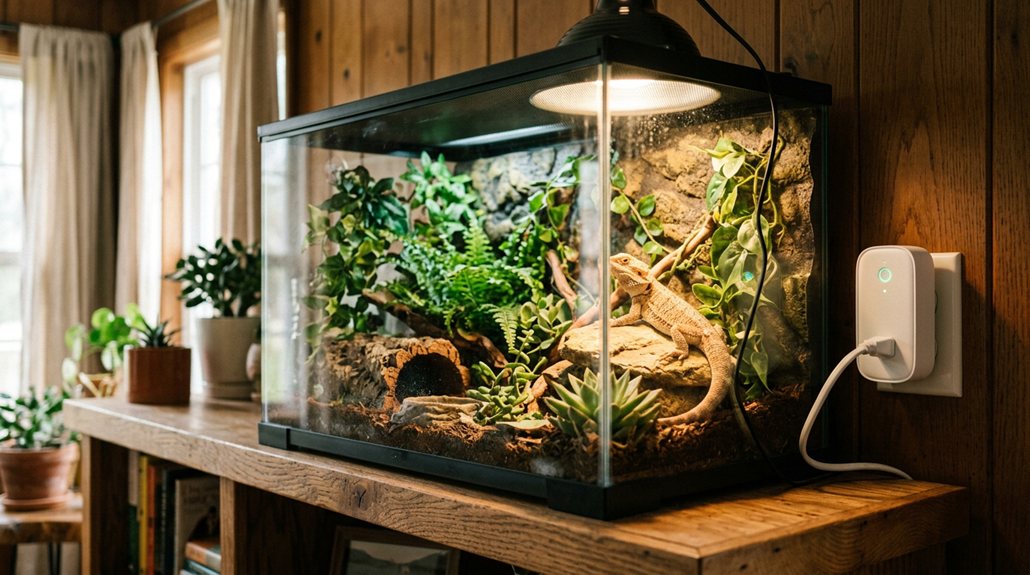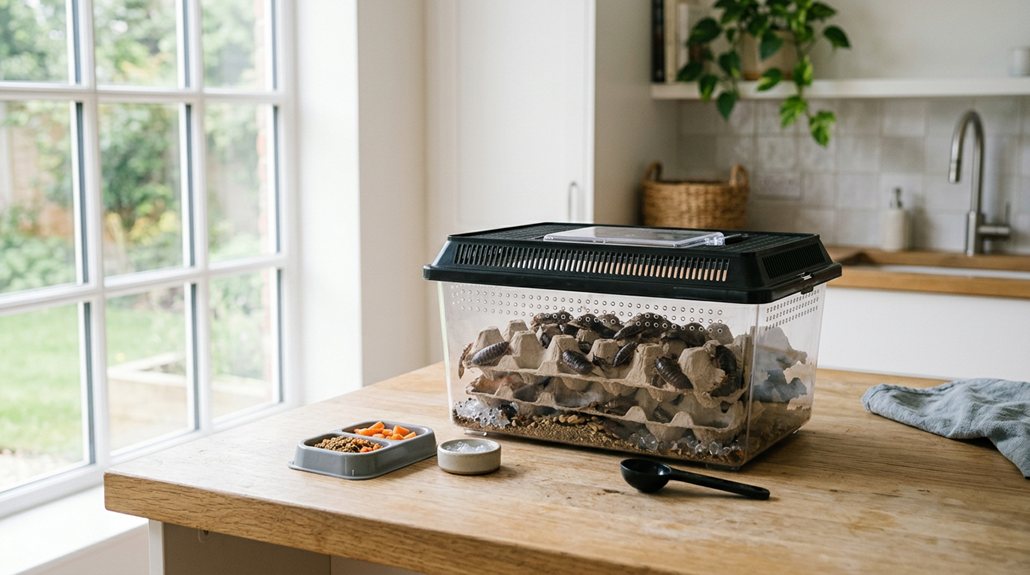
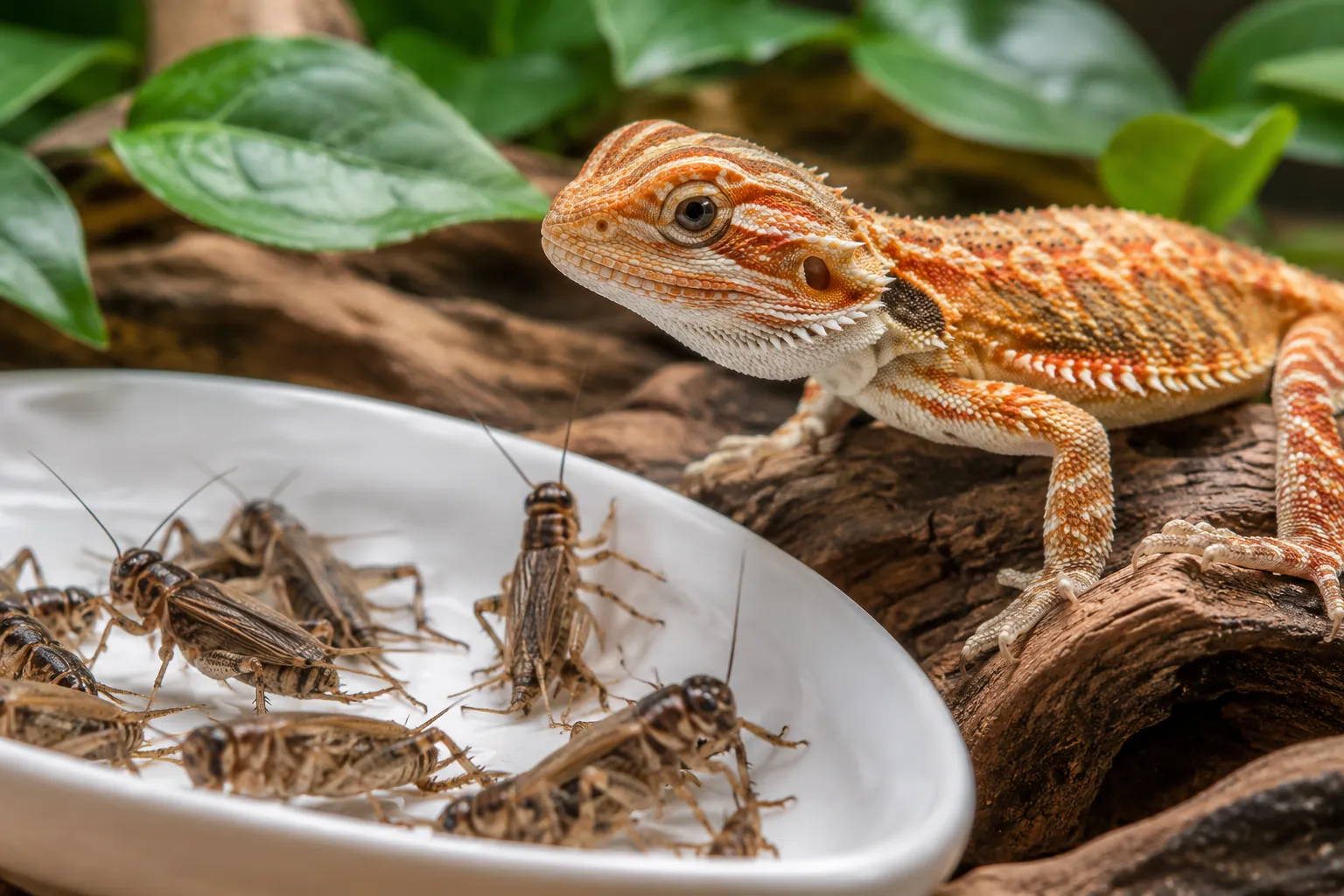
A baby bearded dragon should eat 25 to 80 crickets per day, depending on its age and size. Hatchlings (0-2 months) typically consume 25-50 small crickets daily across 3-5 feeding sessions, while juveniles (2-4 months) can eat 50-80 appropriately-sized crickets split between 2-3 meals. The key is offering as many crickets as your baby beardie will eat in 10-15 minute feeding windows, ensuring the insects are no larger than the space between the dragon’s eyes.
Key Takeaways
- Baby bearded dragons need 25-80 crickets daily depending on age, with younger hatchlings eating less and older juveniles eating more
- Feed baby beardies 2-5 times per day in 10-15 minute sessions, offering as many crickets as they’ll consume in that window
- Cricket size matters more than quantity, insects should never be larger than the space between your beardie’s eyes
- Protein should dominate a baby’s diet (80% insects, 20% vegetables) until around 12 months of age
- Overfeeding is rare in babies under 6 months, but monitor for lethargy and uneaten crickets as warning signs
- Dubia roaches are a nutritious alternative, with 1 roach roughly equal to 1.5-2 crickets in nutritional value
- Always gut-load crickets 24 hours before feeding and dust with calcium powder at every meal

Perfect Blend of Crickets, Mealworms and Pellets
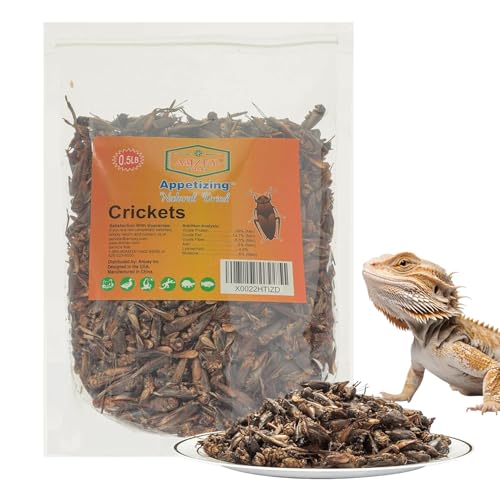
Freeze dried crickets are a perfect source of protein for a variety of animals and reptiles, such as salamanders, small snakes, frogs, toads, rats, bats, shrews, mice and insect-eating birds.

New Fluker's Crafted Cuisine Juvenile Bearded Dragon Diet (6. 75 oz. )
What Counts as a Baby Bearded Dragon Age?
A baby bearded dragon is typically defined as any beardie from hatching up to 12 months old, though the baby stage is often divided into more specific growth phases. Hatchlings are 0-2 months old, juveniles are 2-7 months, and sub-adults are 7-12 months. Each phase has different nutritional needs and feeding frequencies.
Age breakdown for feeding purposes:
- Hatchlings (0-2 months): 3-5 inches long, need 3-5 feedings daily
- Juveniles (2-7 months): 5-16 inches long, need 2-3 feedings daily
- Sub-adults (7-12 months): 16-20 inches long, transition to 1-2 feedings daily
The distinction matters because a 1-month-old hatchling has a much smaller stomach capacity than a 6-month-old juvenile, even though both are technically “babies.” Always adjust cricket quantities based on your specific beardie’s size and appetite rather than relying solely on age.
How Often Should Baby Bearded Dragons Eat Crickets Per Day?
Baby bearded dragons should eat crickets 2-5 times per day depending on their age. Hatchlings under 2 months need 3-5 feeding sessions spread throughout the day, juveniles aged 2-7 months do well with 2-3 sessions, and sub-adults approaching 12 months can transition to 1-2 daily feedings. Each feeding session should last 10-15 minutes, during which you offer as many appropriately-sized crickets as your beardie will actively hunt and consume.
Recommended feeding schedule by age:
- 0-2 months: Morning, midday, early afternoon, late afternoon, early evening (5 sessions)
- 2-4 months: Morning, midday, late afternoon (3 sessions)
- 4-7 months: Morning and late afternoon (2 sessions)
- 7-12 months: Morning and afternoon, or just morning (1-2 sessions)
Space feedings at least 3-4 hours apart to allow proper digestion. Baby beardies have fast metabolisms and need frequent meals to support their rapid growth rate, they can double in size within just a few months. Missing a feeding occasionally won’t harm your beardie, but consistent underfeeding during this critical growth phase can lead to metabolic bone disease and stunted development.
How Many Crickets Should a Baby Beardie Eat Per Feeding?
A baby bearded dragon should eat 10-25 crickets per feeding session, though the exact number varies based on age, size, and individual appetite. The best approach is to offer crickets continuously during a 10-15 minute window and let your beardie eat until it loses interest. Hatchlings might eat 10-15 small crickets per session, while hungry juveniles can consume 20-25 or more medium-sized crickets in one sitting.
Cricket quantities by age per feeding:
- Hatchlings (0-2 months): 10-15 small crickets
- Young juveniles (2-4 months): 15-20 medium crickets
- Older juveniles (4-7 months): 20-25 medium crickets
- Sub-adults (7-12 months): 15-20 large crickets (as appetite begins to decrease)
Don’t worry about counting exact numbers, focus instead on your beardie’s behavior. A properly fed baby will slow down, stop hunting actively, and may walk away from remaining crickets. Remove any uneaten crickets after 15 minutes to prevent them from biting your beardie or stressing it out overnight.
Cricket Size for Baby Bearded Dragon
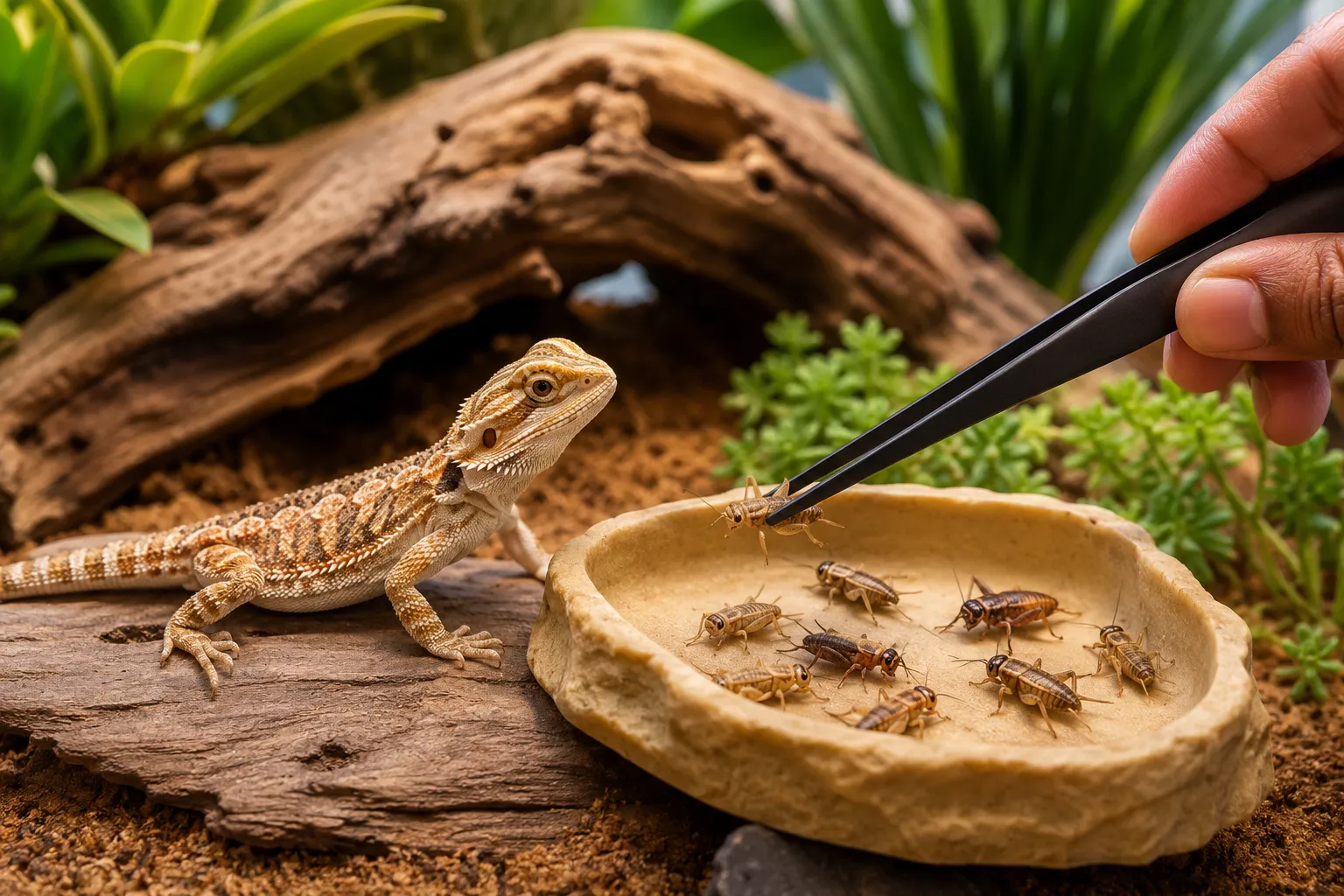
Crickets for baby bearded dragons should never be larger than the space between the dragon’s eyes, measured from the inside corner of one eye to the inside corner of the other. This rule prevents choking and impaction, which can occur when beardies attempt to swallow prey items that are too large for their digestive system. For most hatchlings, this means 1/4-inch crickets; for juveniles, 1/4 to 3/8-inch crickets work well.
Cricket sizing guide:
- Hatchlings (0-2 months): 1/4-inch crickets (pinheads or week-old crickets)
- Juveniles (2-4 months): 1/4 to 3/8-inch crickets (small to medium)
- Older juveniles (4-7 months): 3/8 to 1/2-inch crickets (medium)
- Sub-adults (7-12 months): 1/2 to 3/4-inch crickets (medium to large)
When in doubt, go smaller. A cricket that’s slightly too small poses no risk and will simply require your beardie to eat a few more to feel satisfied. A cricket that’s too large can cause serious digestive blockages, especially in very young hatchlings. Many reptile suppliers label crickets by age (pinheads, week-old, two-week-old) or size category, making it easier to select appropriate feeders.
Can You Overfeed a Baby Bearded Dragon Crickets?
You can overfeed a baby bearded dragon crickets, but it’s relatively uncommon in beardies under 6 months old because their rapid growth rate and high metabolism naturally regulate their appetite. However, overfeeding becomes more likely in older juveniles (6-12 months) and can lead to obesity, fatty liver disease, and shortened lifespan. Signs of overfeeding include lethargy, consistently leaving crickets uneaten, rapid weight gain, and a visibly distended belly that doesn’t flatten between feedings.
Warning signs you’re overfeeding:
- Beardie stops hunting actively before the 10-minute mark
- Visible fat deposits around the base of the tail
- Lethargy or reluctance to move after eating
- Consistently leaving 5+ crickets uneaten per session
- Belly remains rounded even 2-3 hours after feeding
The bigger risk with baby beardies isn’t overfeeding but rather improper feeding,offering crickets that are too large, failing to provide proper UVB lighting for digestion, or not dusting crickets with calcium. If your baby beardie is eating enthusiastically and maintaining normal activity levels, it’s almost certainly not overfed. Trust your beardie’s appetite during the first 6 months, but start monitoring portion sizes more carefully as it approaches adulthood.
What Happens If Baby Bearded Dragon Eats Too Many Crickets?
If a baby bearded dragon eats too many crickets in one sitting, it may experience temporary digestive discomfort, lethargy, or regurgitation, though serious complications are rare in otherwise healthy beardies. The most common consequence is simply a very full, sluggish dragon that needs extra time to digest before its next meal. However, chronic overfeeding over weeks or months can lead to obesity, fatty liver disease, and metabolic issues that shorten lifespan.
Immediate effects of overeating:
- Distended, firm belly that looks uncomfortably full
- Reduced activity and reluctance to move
- Basking for extended periods to aid digestion
- Occasional regurgitation if stomach is overstuffed
- Skipping the next scheduled meal
If your baby beardie overeats once, simply skip the next feeding and resume the normal schedule afterward. Ensure your basking spot is at the proper temperature (100-110°F for babies) to support digestion. The real concern is establishing a pattern of overfeeding that leads to long-term health problems. If your beardie consistently overeats and shows signs of obesity, reduce portion sizes and consult a reptile veterinarian.
Do Baby Bearded Dragons Need Crickets Every Day?
Yes, baby bearded dragons need crickets or other protein sources every single day without exception during their first 12 months of life. Unlike adult beardies who can skip occasional meals, babies are in a critical growth phase that demands daily protein intake to support bone development, muscle growth, and organ maturation. Missing even one day of feeding can slow growth and increase the risk of metabolic bone disease.
Why daily feeding is non-negotiable for babies:
- Rapid growth requires constant protein and calcium intake
- Developing bones need daily calcium supplementation via dusted insects
- Fast metabolism means babies can’t store energy like adults
- Growth spurts during first 6 months demand maximum nutrition
- Missing meals increases risk of stunted growth and MBD
Plan for daily feedings before bringing home a baby beardie. If you travel frequently or have an unpredictable schedule, arrange for a knowledgeable pet sitter or consider waiting until you can commit to daily care. Some owners prep cricket portions in advance or use automatic feeders, but direct supervision during feeding is ideal to monitor appetite and remove uneaten insects.
Should Baby Bearded Dragons Eat Crickets or Vegetables First?
Baby bearded dragons should eat crickets (protein) first, followed by vegetables, because their diet should be approximately 80% insects and 20% plant matter during the first 12 months. Offering crickets first ensures your baby gets the protein and calcium it needs for growth before filling up on lower-calorie greens. Many babies will ignore vegetables entirely if offered simultaneously with crickets, since their hunting instinct drives them toward moving prey.
Best feeding order for babies:
- Morning: Offer crickets first in a 10-15 minute feeding session
- After crickets: Place a small dish of fresh chopped greens in the enclosure
- Throughout the day: Leave vegetables available for grazing between cricket feedings
- Evening: Final cricket feeding, then remove any uneaten vegetables
Common vegetables for baby beardies include collard greens, mustard greens, turnip greens, and small amounts of butternut squash or bell pepper. Avoid spinach, kale, and lettuce. Even though babies won’t eat much vegetation, offering it daily establishes good habits and ensures they recognize plants as food when their diet shifts toward 50/50 protein-to-plant ratio after 12 months.
How Long Should Feeding Time Last for Baby Bearded Dragon?
Feeding time for a baby bearded dragon should last 10-15 minutes per session, which gives your beardie enough time to hunt and consume crickets until satisfied without leaving insects in the enclosure too long. Most baby beardies will eat enthusiastically for the first 5-10 minutes, then slow down or stop hunting as they become full. Any crickets remaining after 15 minutes should be removed to prevent them from biting your beardie or causing stress.
Feeding session timeline:
- Minutes 0-5: Peak hunting activity, beardie actively chases crickets
- Minutes 5-10: Eating continues but with less intensity
- Minutes 10-15: Beardie slows down, may ignore remaining crickets
- After 15 minutes: Remove all uneaten crickets from enclosure
If your baby beardie finishes all crickets in under 5 minutes and still appears hungry (actively searching, tongue flicking, alert posture), offer 5-10 more crickets and extend the session slightly. Conversely, if your beardie loses interest after just 3-4 minutes, it may be full, stressed, or the enclosure temperature may be incorrect. Proper basking temperature (100-110°F) is essential for appetite and digestion.

Made From Nutritious Items Such As Kelp, Spirulina, And Brewer'S Yeast

FEEDER CRICKETS FOR PETS: Premium 3/4 inch banded crickets provide active prey for reptiles, amphibians, birds, bats, and other insect-eating pets; ideal feeder insects for leopard geckos, bearded dragons, tree frogs, pacman frogs, and sugar gliders.

100% Bee Pollen for reptiles
How to Tell If Baby Beardie Is Still Hungry After Crickets
A baby bearded dragon that’s still hungry after eating crickets will display active hunting behaviors including head bobbing, tongue flicking, alert posture with raised head, and continued pursuit of any remaining insects in the enclosure. A satisfied beardie, by contrast, will slow down, stop chasing crickets, settle into a resting position, or move to the basking spot to digest. Learning to read these behavioral cues helps you adjust portion sizes appropriately.
Signs your baby is still hungry:
- Continues hunting and chasing crickets actively
- Tongue flicking and scanning the enclosure for more food
- Alert, upright posture with head raised
- Approaches your hand or the feeding area expectantly
- Eats all offered crickets in under 5 minutes
Signs your baby is satisfied:
- Stops pursuing crickets even when they’re visible
- Settles into a resting position or moves to basking spot
- Relaxed body posture with head lowered
- Ignores remaining crickets walking nearby
- Begins grooming or closing eyes
If your beardie consistently appears hungry after eating the recommended number of crickets, gradually increase portions by 5-10 crickets per session. Growth spurts can temporarily increase appetite, and it’s better to offer slightly more food than to underfeed during critical development phases.
Best Feeding Schedule for 2 Month Old Bearded Dragon
A 2-month-old bearded dragon should eat 3-4 times per day, with feeding sessions spaced 3-4 hours apart and each session offering 10-15 small crickets (1/4-inch size) dusted with calcium powder. At this age, beardies are transitioning from the hatchling phase into early juvenile stage and need frequent meals to support rapid growth. A typical schedule might include feedings at 8 AM, 12 PM, 4 PM, and optionally 7 PM if your beardie is still actively hunting.
Sample feeding schedule for 2-month-old beardie:
- 8:00 AM: 10-15 calcium-dusted crickets (10-15 minute session)
- 12:00 PM: 10-15 calcium-dusted crickets + fresh greens offered
- 4:00 PM: 10-15 calcium-dusted crickets
- 7:00 PM (optional): 5-10 crickets if beardie is still hungry
Total daily intake at this age should be approximately 40-60 small crickets. Ensure your basking spot maintains 105-110°F during the day to support digestion, and provide 12-14 hours of UVB lighting. At 2 months, your beardie is still very small and vulnerable, so consistency in feeding schedule and proper supplementation with calcium powder (daily) and multivitamin (2-3 times per week) is critical.
How Many Crickets vs Dubia Roaches for Baby Beardie
Dubia roaches are more nutritious than crickets, so baby bearded dragons need fewer roaches to meet the same nutritional requirements, approximately 1 Dubia roach equals 1.5-2 crickets in terms of protein and fat content. A baby beardie that eats 30 crickets per day would need only 15-20 appropriately-sized Dubia roaches to receive equivalent nutrition. Roaches are also easier to digest, less likely to carry parasites, and don’t smell or chirp like crickets.
Cricket vs. Dubia roach comparison:
| Factor | Crickets | Dubia Roaches |
|---|---|---|
| Protein content | Lower | Higher (35-40% protein) |
| Fat content | Lower | Slightly higher |
| Digestibility | Good | Excellent |
| Parasite risk | Higher | Lower |
| Escape risk | High (jump) | Low (can’t climb) |
| Noise | Loud chirping | Silent |
| Smell | Strong odor | Minimal odor |
| Cost | Less expensive | More expensive |
Many beardie owners use a combination of both feeders to provide variety. If switching from crickets to Dubia roaches, start by offering 50-60% of the cricket quantity and adjust based on your beardie’s appetite and growth rate. Always ensure roaches are appropriately sized (no larger than the space between your beardie’s eyes) and gut-loaded for 24 hours before feeding.
Baby Bearded Dragon Not Eating Crickets What to Do
If your baby bearded dragon isn’t eating crickets, first check that your basking temperature is 100-110°F and your UVB light is functioning properly, as improper temperatures are the most common cause of appetite loss in baby beardies. A beardie that’s too cold cannot digest food and will refuse to eat. Other common causes include stress from a new environment, crickets that are too large, illness, or parasites.
Troubleshooting steps for appetite loss:
- Verify temperatures: Use a digital thermometer to confirm basking spot is 100-110°F
- Check UVB lighting: Replace UVB bulbs every 6-12 months even if they still produce visible light
- Reduce cricket size: Try smaller crickets (1/8-inch pinheads) to see if size is the issue
- Minimize stress: Reduce handling, cover three sides of enclosure, ensure hiding spots
- Try different feeders: Offer Dubia roaches, black soldier fly larvae, or small waxworms
- Check for illness: Look for lethargy, sunken eyes, weight loss, or abnormal feces
If your baby beardie refuses food for more than 2-3 days despite proper temperatures and husbandry, consult a reptile veterinarian immediately. Baby beardies have minimal fat reserves and can deteriorate quickly without food. Parasites, respiratory infections, and metabolic bone disease can all cause appetite loss and require professional treatment.
Alternatives to Crickets for Baby Bearded Dragons
The best alternatives to crickets for baby bearded dragons include Dubia roaches, black soldier fly larvae (Calciworms), small silkworms, and occasional waxworms or hornworms as treats. Dubia roaches are the most nutritionally complete alternative and are often preferred by experienced keepers due to their high protein content, ease of digestion, and low parasite risk. Black soldier fly larvae are naturally high in calcium and don’t require dusting, making them an excellent supplemental feeder.
Recommended cricket alternatives:
- Dubia roaches: Best overall alternative, high protein, easy to digest, can’t climb or fly
- Black soldier fly larvae: High calcium content, no dusting needed, good for variety
- Silkworms: Excellent nutrition, very digestible, but expensive and harder to source
- Superworms: Only for juveniles 4+ months, high fat content, use sparingly
- Hornworms: High moisture content, good for hydration, but low nutritional value
- Waxworms: High fat, use only as occasional treats (1-2 per week)
Avoid mealworms for baby beardies under 6 months due to their hard exoskeleton and high risk of impaction. A varied diet of 2-3 different feeder insects provides better nutrition than crickets alone and prevents dietary deficiencies. Rotate feeders throughout the week rather than offering the same insect at every meal.
Common Mistakes Feeding Baby Bearded Dragons Crickets
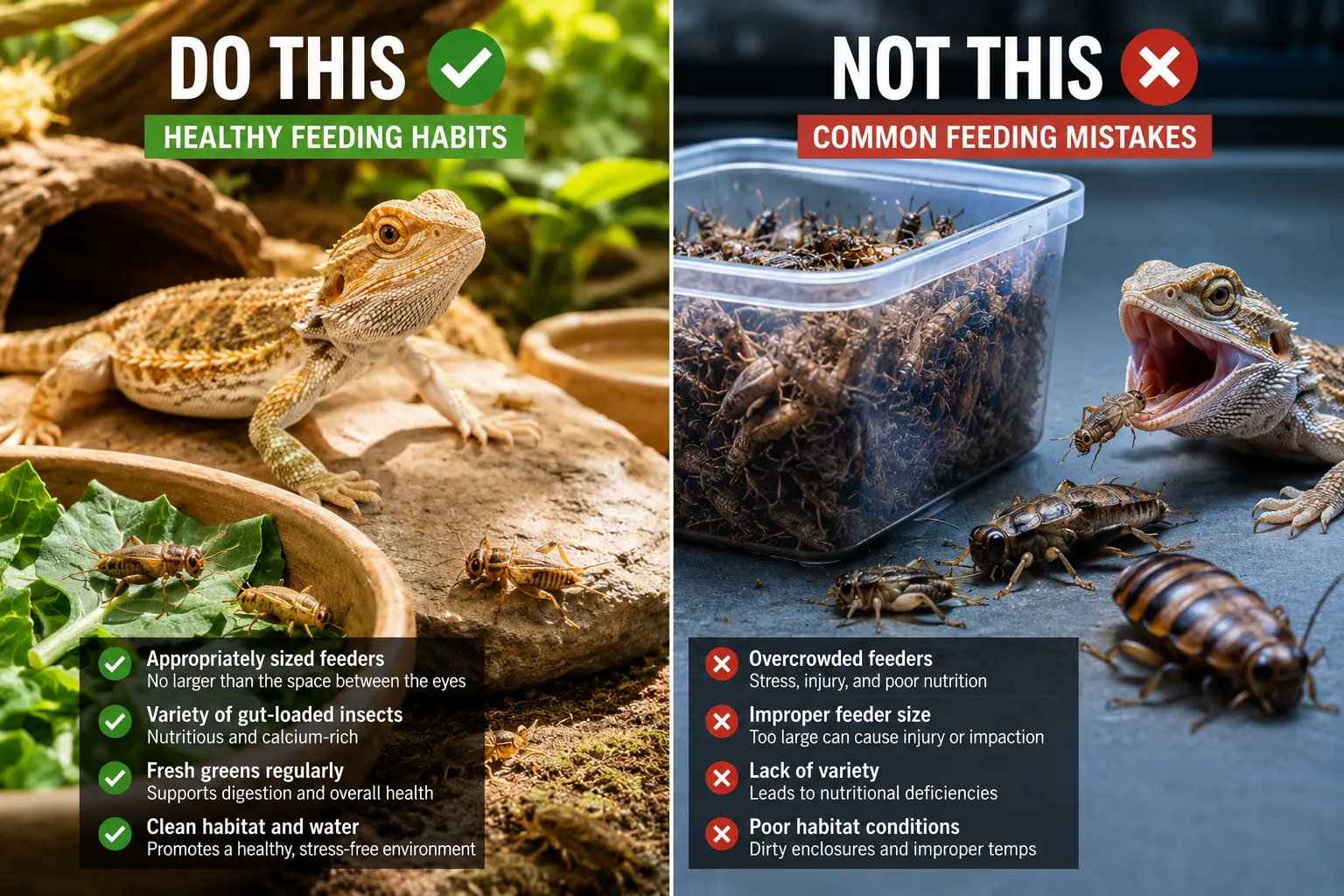
The most common mistakes when feeding baby bearded dragons crickets include offering crickets that are too large, failing to dust with calcium powder at every feeding, leaving uneaten crickets in the enclosure overnight, and not gut-loading crickets before feeding. These errors can lead to impaction, metabolic bone disease, stress, and nutritional deficiencies that compromise your beardie’s health and growth.
Top feeding mistakes to avoid:
- Wrong cricket size: Offering crickets larger than the space between eyes causes choking and impaction
- Skipping calcium dusting: Leads to metabolic bone disease and deformed bones
- Not gut-loading: Crickets without proper nutrition provide minimal value to your beardie
- Leaving crickets overnight: Crickets can bite and stress your sleeping beardie
- Inconsistent feeding schedule: Irregular meals slow growth and cause stress
- Improper temperatures: Feeding when basking spot is too cool prevents digestion
- No variety: Feeding only crickets can lead to nutritional deficiencies
- Overhandling after meals: Stresses beardie and can cause regurgitation
Always dust crickets with calcium powder (without D3 if you have proper UVB, with D3 if UVB is questionable) at every feeding. Gut-load crickets for 24 hours before feeding by offering them high-quality vegetables, commercial gut-load diet, or cricket food. Remove all uneaten crickets after 15 minutes, and never feed your beardie immediately after handling or when enclosure temperatures are incorrect.
FAQ
How many crickets should a 1-month-old bearded dragon eat?
A 1-month-old bearded dragon should eat 25-40 small crickets (1/4-inch pinheads) per day, split across 3-5 feeding sessions. Offer 8-12 crickets per session in 10-15 minute windows, and adjust based on appetite.
Can I feed my baby bearded dragon too many crickets?
Yes, but it’s uncommon in beardies under 6 months old. Signs of overfeeding include lethargy, consistently leaving crickets uneaten, and visible fat deposits. Trust your beardie’s appetite during rapid growth phases.
What size crickets for a 3-month-old bearded dragon?
A 3-month-old bearded dragon should eat 1/4 to 3/8-inch crickets (small to medium size). The cricket should never be larger than the space between the beardie’s eyes measured from inside corner to inside corner.
How often do baby bearded dragons eat crickets?
Baby bearded dragons eat crickets 2-5 times per day depending on age. Hatchlings (0-2 months) need 3-5 feedings daily, juveniles (2-7 months) need 2-3 feedings, and sub-adults (7-12 months) need 1-2 feedings.
Should I leave crickets in my baby bearded dragon’s tank?
No, never leave crickets in the tank after feeding time. Remove all uneaten crickets after 10-15 minutes to prevent them from biting your beardie, causing stress, or hiding in the substrate.
How do I know if my baby beardie is still hungry?
A hungry baby beardie will actively hunt crickets, display tongue flicking, maintain an alert upright posture, and continue chasing insects. A full beardie will stop hunting, relax its posture, and move to the basking spot.
Can baby bearded dragons eat dead crickets?
Baby bearded dragons can eat freshly killed crickets, but they strongly prefer live, moving prey that triggers their hunting instinct. Dead crickets lose nutritional value quickly and may be ignored entirely.
What happens if I feed my baby bearded dragon crickets that are too big?
Crickets that are too large can cause choking, impaction, and digestive blockages. Symptoms include lethargy, loss of appetite, and inability to defecate. Always follow the “space between the eyes” sizing rule.
Do baby bearded dragons need calcium powder on crickets?
Yes, baby bearded dragons need calcium powder dusted on crickets at every single feeding to prevent metabolic bone disease. Use calcium without D3 if you have proper UVB lighting, or with D3 if UVB is inadequate.
How many Dubia roaches equal crickets for baby bearded dragons?
One Dubia roach equals approximately 1.5-2 crickets in nutritional value. A baby beardie eating 30 crickets per day would need only 15-20 appropriately-sized Dubia roaches for equivalent nutrition.
Why won’t my baby bearded dragon eat crickets anymore?
Common causes include incorrect temperatures (basking spot should be 100-110°F), stress, illness, parasites, or crickets that are too large. Check husbandry first, then consult a reptile vet if appetite loss persists beyond 2-3 days.
Should baby bearded dragons eat vegetables or crickets first?
Baby bearded dragons should eat crickets first because their diet should be 80% protein during the first year. Offer crickets in timed feeding sessions, then leave fresh vegetables available for grazing afterward.
Conclusion
Understanding how many crickets a baby bearded dragon should eat is fundamental to raising a healthy, thriving reptile. The answer, 25 to 80 crickets per day depending on age, provides a starting framework, but successful feeding requires attention to cricket size, feeding frequency, proper supplementation, and your individual beardie’s appetite signals. Baby beardies are in a critical growth phase that demands daily protein intake, frequent meals, and meticulous calcium supplementation to prevent metabolic bone disease.
Take these action steps today:
- Measure the space between your beardie’s eyes and purchase appropriately-sized crickets (never larger than that measurement)
- Establish a consistent feeding schedule with 2-5 sessions per day based on your beardie’s age
- Dust every cricket feeding with calcium powder and provide a multivitamin 2-3 times per week
- Verify your basking temperature is 100-110°F and your UVB light is functioning properly
- Remove all uneaten crickets after 10-15 minutes to prevent bites and stress
- Consider incorporating Dubia roaches or other feeder insects for nutritional variety
Monitor your baby beardie’s growth, energy levels, and appetite closely during the first year. A healthy baby should be alert, active, growing steadily, and eating enthusiastically at every feeding. If appetite decreases, growth stalls, or you notice lethargy or other concerning symptoms, consult a reptile veterinarian immediately. With proper feeding practices and attention to husbandry, your baby bearded dragon will develop into a healthy, robust adult that can live 10-15 years or more.

Large Dubia Roaches 1-1 3/4"


Large Dubia 5/8 to 3/4""