
Quick Answer
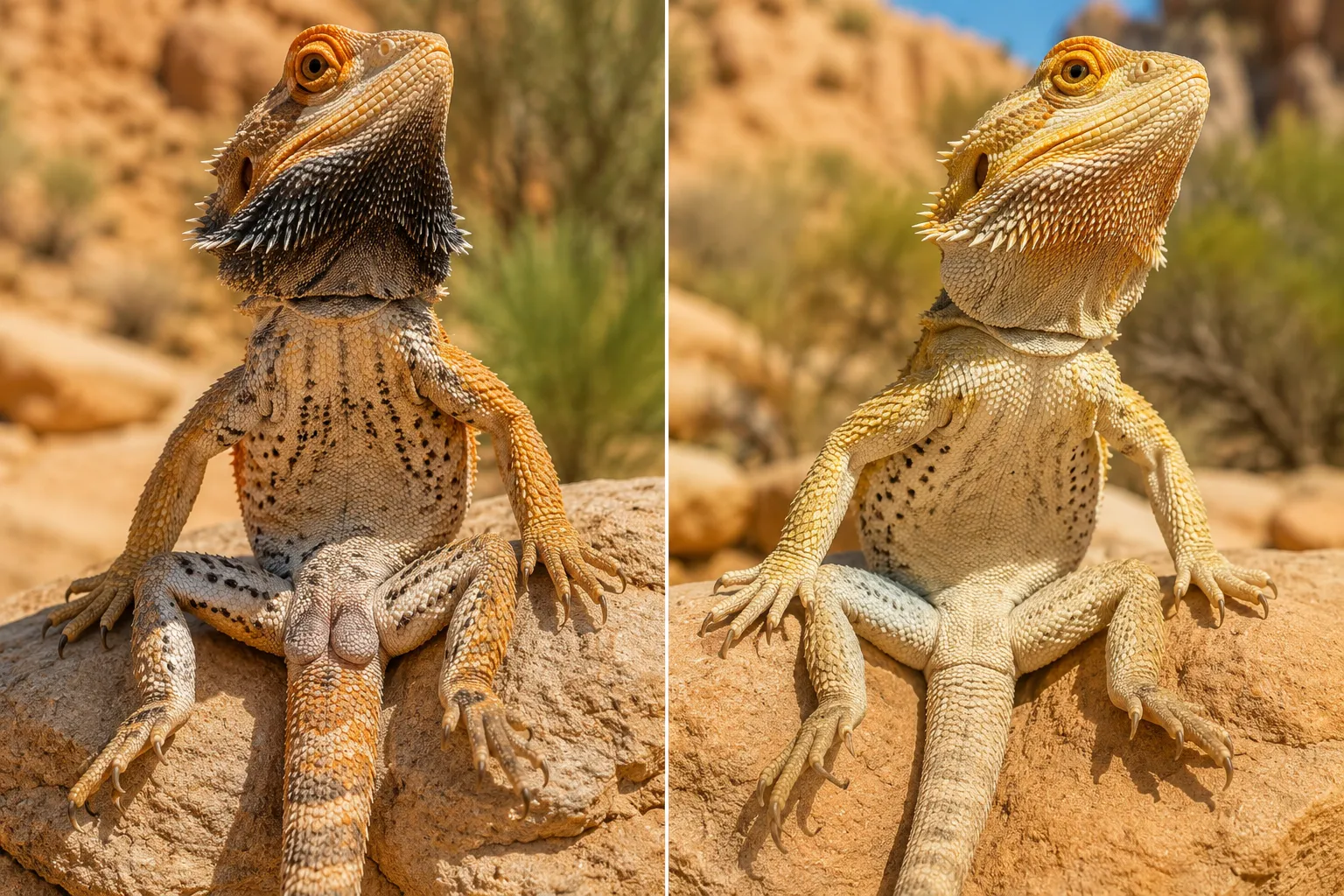
Determining whether a bearded dragon is male or female requires examining three key physical features: hemipenal bulges at the tail base (males have two distinct bumps, females have one central bump), femoral pores on the inner thighs (males have larger, more prominent pores), and head size (males typically develop broader, more triangular heads). These differences become reliably visible when bearded dragons reach 8-12 months of age, though experienced keepers can sometimes sex them as early as 4-6 months.

Bruh design for Bearded Dragon lovers

Ideal Gift - Vegan leather cover with patterns.

Check our Brand for more great Designs!
Key Takeaways
- Hemipenal bulges are the most reliable indicator: males have two distinct bulges on either side of the tail base, while females have one small central bulge
- Femoral pores appear larger, darker, and more pronounced in males compared to the smaller, less visible pores in females
- Accurate sexing is difficult before 8-12 months of age when secondary sexual characteristics fully develop
- Males grow larger on average, reaching 18-24 inches with broader, more triangular heads than females
- Behavioral differences exist but aren’t reliable for sexing: males display more territorial behaviors like head bobbing and beard darkening
- Pet store errors in gender identification are common, especially with juveniles under 6 months old
- Female bearded dragons can lay infertile eggs without mating, requiring proper calcium supplementation and lay boxes
- Housing males and females together leads to constant breeding stress, aggression, and health problems for both dragons
How Can You Tell If a Bearded Dragon Is Male or Female
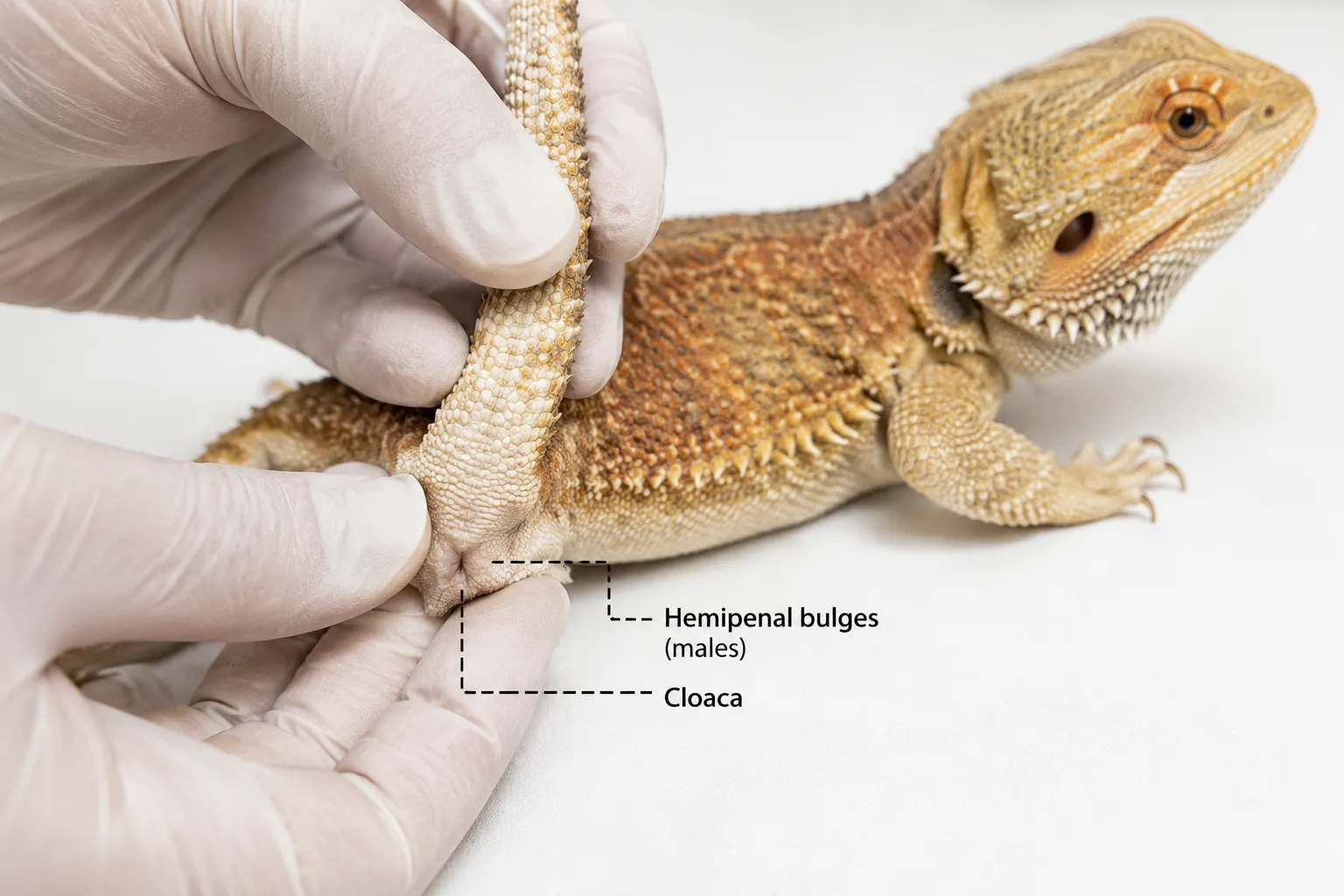
Male and female bearded dragons can be distinguished by examining three primary physical characteristics: hemipenal bulges, femoral pores, and head shape. The most definitive method involves gently lifting the tail and looking at the area just below the vent (cloaca) where males display two distinct bulges on either side of the tail base, while females show only one small central bulge or a relatively flat area.
To properly check for hemipenal bulges:
- Gently lift the tail upward at a 90-degree angle (never force it)
- Look at the underside of the tail base, just below the vent
- Identify the bulge pattern: two side-by-side bulges indicate male, one central bump or flat area indicates female
- Use good lighting to see subtle differences in younger dragons
The femoral pores provide additional confirmation. These are small dots or pores running along the inside of each hind leg from the vent toward the knee. In males, these pores are significantly larger, darker, and often appear waxy or raised. Female pores remain small, barely visible, and don’t produce the waxy secretions that males develop during maturity.
Common mistake: Trying to sex bearded dragons under 4 months old often leads to incorrect identification because the sexual characteristics haven’t developed enough to be reliable. Even experienced breeders can misidentify very young dragons.
What Age Can You Sex a Bearded Dragon
Bearded dragons can be reliably sexed starting at 8-12 months of age when their secondary sexual characteristics become fully apparent. Before this age, the physical differences between males and females are subtle and easily misidentified, even by experienced reptile keepers and veterinarians.
Age-based sexing accuracy:
- 0-4 months (hatchling): Extremely difficult and unreliable; sexual characteristics are underdeveloped
- 4-6 months (juvenile): Possible for experienced breeders but still prone to errors of 20-30%
- 6-8 months (sub-adult): Moderately reliable; hemipenal bulges become more distinct
- 8-12 months (young adult): Highly reliable; all sexual characteristics are well-developed
- 12+ months (adult): Definitive identification possible through multiple physical markers
The hemipenal bulges begin to show subtle differences around 4-6 months, but they’re not prominent enough for confident identification until closer to 8 months. Femoral pores also enlarge significantly in males during this maturation period, making them a more useful diagnostic tool after 6 months.
Choose professional sexing if: You’re purchasing a dragon specifically for breeding purposes or need to know the gender before the 8-month mark. Reptile veterinarians and experienced breeders can use probing techniques (not recommended for pet owners) to determine sex earlier, though this carries risks if done improperly.
Male vs Female Bearded Dragon Size Differences
Male bearded dragons typically grow larger than females, reaching 18-24 inches in total length (including tail) and weighing 350-600 grams at maturity. Females generally measure 16-20 inches and weigh 300-500 grams, though individual variation exists based on genetics, diet, and overall bearded dragon care practices.
Size comparison at maturity:
| Characteristic | Male | Female |
|---|---|---|
| Total length | 18-24 inches | 16-20 inches |
| Weight | 350-600 grams | 300-500 grams |
| Head width | Broader, more triangular | Narrower, more rounded |
| Body build | Stockier, more muscular | Slimmer, more streamlined |
| Tail thickness | Thicker at base | Thinner overall |
The size difference becomes noticeable around 10-14 months of age as males experience a growth spurt and develop more robust body structures. However, size alone should never be used as the sole method for determining gender because well-fed females can sometimes outweigh underfed males, and genetic variation creates significant overlap between the sexes.
Important note: A large bearded dragon isn’t automatically male, and a small one isn’t necessarily female. Always confirm gender using hemipenal bulges and femoral pores rather than relying on size estimates.
Do Male Bearded Dragons Have Bigger Heads Than Females
Yes, male bearded dragons develop noticeably broader, more triangular heads compared to females, particularly after reaching sexual maturity around 12-18 months of age. This sexual dimorphism in head shape is driven by testosterone and becomes one of the most visually obvious differences between adult males and females when viewed from above or in profile.
Male head characteristics include:
- Wider skull at the temporal region (behind the eyes)
- More pronounced jowls that create a triangular appearance when viewed from above
- Thicker neck and more muscular jaw structure
- Larger beard area that can puff out more dramatically during displays
Female heads remain more streamlined and rounded, with less pronounced jowls and a narrower overall skull width. This difference serves a biological purpose: males use their larger heads and beards in territorial displays and combat with other males, while females don’t require these features for reproduction.
Edge case: Some female bearded dragons from large-bodied genetic lines may have broader heads than small males from different bloodlines. Head shape is a useful secondary characteristic but should always be confirmed with primary sexual characteristics (hemipenal bulges and femoral pores).
How to Check Femoral Pores on Bearded Dragons
Femoral pores are small glands located on the underside of each hind leg, running in a line from the vent area toward the knee. To check them, gently hold your bearded dragon and examine the inner thigh area under good lighting, looking for a row of small dots or pores that may appear raised, waxy, or darkened depending on the dragon’s sex and age.
Step-by-step femoral pore examination:
- Position your dragon comfortably in your hand or on a flat surface
- Locate the inner thigh area of each hind leg
- Look for a line of pores running from the vent toward the knee joint
- Assess pore size and prominence: large, dark, waxy = likely male; small, barely visible = likely female
- Compare both legs to ensure consistent findings
- Cross-reference with hemipenal bulge examination for confirmation
In mature males (10+ months), femoral pores become significantly enlarged and often produce a waxy secretion that can appear yellowish or brownish. These secretions contain pheromones used in territorial marking and mating behaviors. Female pores remain small throughout life and rarely produce visible secretions.
Common mistake: Confusing scales or skin folds with femoral pores. True femoral pores appear as distinct, evenly-spaced dots in a relatively straight line along the inner thigh. If you’re unsure what you’re looking at, compare images online or consult with a reptile veterinarian.
Can You Tell Bearded Dragon Gender by Behavior
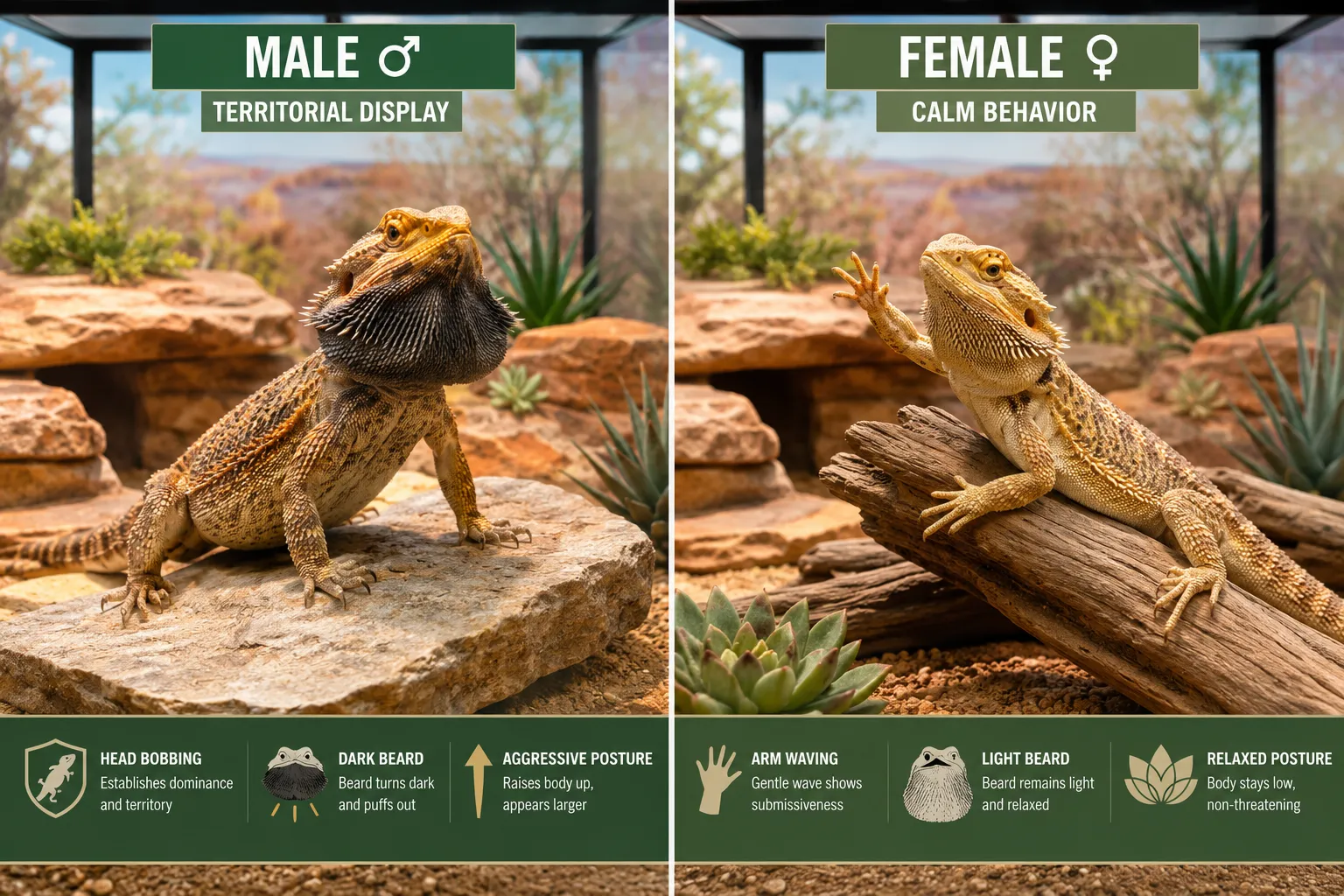
Behavioral differences between male and female bearded dragons exist but are not reliable indicators for determining gender. While males tend to display more territorial and dominant behaviors such as head bobbing, beard darkening, and arm waving, individual personality variation and environmental factors make behavior an unreliable sexing method compared to physical examination.
Typical male behaviors:
- Frequent head bobbing in rapid, aggressive patterns
- Beard darkening and puffing during displays
- Territorial posturing with raised body and flattened profile
- More active during breeding season (spring and fall)
- Aggressive responses to their reflection or other dragons
Typical female behaviors:
- Slow arm waving as a submissive gesture
- Less territorial aggression overall
- Digging behavior when gravid (carrying eggs)
- Calmer demeanor in most situations
- Less dramatic beard displays
However, these are generalizations with many exceptions. Some females display aggressive head bobbing, and some males are docile and rarely show territorial behaviors. Environmental stress, tank size, lighting conditions, and individual personality all influence bearded dragon behavior more than gender alone.
Decision rule: Use behavior as a supplementary observation only after confirming gender through physical examination. Never purchase a bearded dragon assuming its gender based solely on how it acts in a pet store environment.
Is It Easier to Keep Male or Female Bearded Dragons as Pets
For beginner keepers, there is no significant difference in care difficulty between male and female bearded dragons, and both sexes make equally good pets when housed individually. The main consideration is that females may lay infertile eggs even without mating (typically 2-4 clutches per year), requiring additional calcium supplementation and a lay box, while males may display more territorial behaviors during breeding season but have no egg-laying concerns.
Male advantages:
- No egg-laying complications or calcium depletion risks
- Slightly larger size appeals to some keepers
- No need for lay boxes or nesting areas
- Consistent behavior year-round
Female advantages:
- Generally calmer and less territorial
- Less aggressive toward their reflection
- Easier to house multiple females together (though not recommended for beginners)
- Smaller size may fit better in standard enclosures
Female considerations:
- Infertile egg production requires extra calcium and vitamin D3
- Risk of egg binding (dystocia) if calcium-deficient or lacking proper lay area
- May become restless and dig excessively when gravid
- Slightly higher veterinary costs if egg-related complications arise
Choose a male if: You want to avoid any egg-laying concerns and prefer a slightly larger, more robust dragon. Choose a female if: You don’t mind providing extra calcium support during egg production and prefer a generally calmer temperament.
For most beginners, individual personality matters more than gender. Focus on selecting a healthy dragon with clear eyes, good body weight, and alert behavior rather than prioritizing sex.

Realistic Bearded Dragon: Detailed sculpting captures the recognizable look of this Australian reptile, with lifelike texture and natural proportions for a convincing toy that fits pet-themed play.

3 Pack Articulated Bearded Dragon Figures – Includes three 3D printed articulated bearded dragon figures designed for adult desk use, fidgeting, and display.
What Happens If You House Male and Female Bearded Dragons Together
Housing male and female bearded dragons together results in constant breeding stress, frequent mating attempts, potential injuries, and serious health complications for both dragons. Males will persistently pursue females for breeding, causing chronic stress, bite wounds, weight loss, and exhaustion in females, while males may become aggressive and territorial. This practice is strongly discouraged by reptile veterinarians and experienced keepers.
Consequences of co-housing males and females:
- Constant breeding attempts that stress both dragons
- Female exhaustion from repeated mating and egg production
- Bite wounds on the female’s neck and body from mating behavior
- Calcium depletion in females from producing multiple clutches
- Aggression and fighting over basking spots and food
- Egg binding risks increase with frequent egg production
- Reduced lifespan for both dragons due to chronic stress
Even if the pair appears to “get along,” the female experiences significant physiological stress from the male’s presence. Females housed with males often produce 4-6 clutches per year (compared to 2-4 when housed alone), dramatically increasing their risk of metabolic bone disease, egg binding, and premature death.
Breeding considerations: Responsible breeders only introduce males and females for brief, supervised breeding sessions and immediately separate them afterward. Continuous cohabitation is never appropriate, even for breeding purposes.
Can Pet Stores Tell You Wrong Gender for Bearded Dragons
Yes, pet stores frequently misidentify bearded dragon gender, with error rates estimated at 30-50% for juveniles under 6 months old. This occurs because most pet store employees lack the training and experience to accurately sex young bearded dragons, and the sexual characteristics aren’t fully developed when dragons are sold at 2-4 months of age.
Common reasons for pet store gender errors:
- Dragons too young to show clear sexual characteristics
- Undertrained staff without reptile expertise
- Quick visual assessment without proper tail examination
- Supplier misinformation passed along without verification
- Reluctance to handle dragons for thorough examination
- Confusion between hemipenal bulges and fat deposits
Many pet stores rely on information from their suppliers, who may have also misidentified the dragons or made educated guesses based on unreliable characteristics like size or behavior. The error compounds as incorrect information passes through the supply chain.
Protect yourself: Always verify gender yourself using the hemipenal bulge method or have a reptile veterinarian confirm the sex within the first few weeks of purchase. Many keepers discover their “male” is actually female (or vice versa) only when unexpected behaviors emerge around 8-12 months of age.
If accurate gender matters for your situation (naming, future breeding plans, or avoiding egg-laying concerns), consider purchasing from a reputable breeder who can provide more reliable sexing or wait until the dragon is 8+ months old when gender is definitively identifiable.
Do Female Bearded Dragons Lay Eggs Without a Male
Yes, female bearded dragons produce and lay infertile eggs without any contact with males, similar to how chickens lay unfertilized eggs. This process, called parthenogenesis or infertile egg production, typically begins when females reach sexual maturity around 18-24 months of age and can occur 2-4 times per year, with clutches ranging from 15-35 eggs.
Infertile egg-laying cycle:
- Pre-lay behavior: Increased restlessness, digging, reduced appetite, and pacing
- Gravid period: 4-6 weeks of carrying eggs before laying
- Laying process: 1-3 hours of digging and depositing eggs in a suitable substrate
- Post-lay recovery: 1-2 weeks of increased appetite and calcium needs
- Frequency: Typically 2-4 clutches per year, though some females produce more
Providing proper support during egg production is critical for female health. Females need increased calcium supplementation (daily dusting during gravid periods), a lay box filled with moist sand or soil mixture at least 6-8 inches deep, and extra bearded dragon feeding to maintain body condition.
Warning signs of egg binding (dystocia):
- Straining without producing eggs after 24-48 hours
- Lethargy and loss of appetite beyond normal pre-lay behavior
- Swollen abdomen with visible discomfort
- Paralysis or weakness in hind legs
Egg binding is a medical emergency requiring immediate veterinary intervention. Proper calcium supplementation, adequate hydration, and appropriate lay areas significantly reduce this risk.
Hemipenal Bulges in Male Bearded Dragons: How to See Them
Hemipenal bulges are the two distinct swellings located on either side of the tail base in male bearded dragons, just below the vent (cloaca). To see them clearly, gently lift the dragon’s tail upward to a 90-degree angle while the dragon is calm, then examine the underside of the tail base under bright lighting, looking for two symmetrical bumps that create a distinct “double bulge” appearance.
Detailed examination technique:
- Ensure your dragon is calm and comfortable (stressed dragons may clench their tail muscles)
- Support the body with one hand while gently grasping the tail with the other
- Lift the tail upward smoothly to approximately 90 degrees (never force it)
- Position under bright light to see subtle contours
- Look for the double bulge pattern: two distinct swellings on either side of the midline
- Compare to reference images if uncertain about what you’re seeing
In males, the hemipenal bulges house the paired reproductive organs (hemipenes) that evert during mating. These bulges become more pronounced with age and are most visible in dragons over 8 months old. In females, this area appears relatively flat or shows only a single small central bump where the tail meets the body.
Lighting matters: Poor lighting makes it difficult to see the subtle contours that distinguish male from female anatomy. Use a bright flashlight or examine the dragon in direct sunlight for the clearest view.
Edge case: Overweight dragons may have fat deposits near the tail base that can be confused with hemipenal bulges. True hemipenal bulges are symmetrical, positioned immediately below the vent, and remain consistent regardless of the dragon’s body condition.
Common Mistakes When Sexing Baby Bearded Dragons
The most common mistake when sexing baby bearded dragons is attempting to determine gender before 8 months of age when sexual characteristics are underdeveloped and easily misidentified. Even experienced breeders achieve only 70-80% accuracy with juveniles under 6 months, and pet owners without extensive reptile experience often misidentify gender in young dragons.
Frequent sexing errors:
- Relying on size alone to determine gender (large = male assumption)
- Confusing fat deposits with hemipenal bulges in well-fed babies
- Insufficient lighting during examination leading to missed details
- Forcing the tail upward too aggressively, causing the dragon to clench muscles
- Examining stressed dragons whose muscle tension obscures anatomical features
- Using behavior as a primary indicator instead of physical characteristics
- Trusting pet store identification without independent verification
- Comparing to poor-quality reference images online
Another significant error is examining the dragon from the wrong angle. Hemipenal bulges are only visible from the underside of the tail base, not from the side or top. Many beginners look at the tail from the wrong perspective and miss the diagnostic features entirely.
Best practice: If you need to know gender before 8 months, have a reptile veterinarian or experienced breeder perform the examination. If gender isn’t immediately critical, wait until 10-12 months when sexual characteristics are unmistakable and can be confirmed by any keeper following proper examination techniques.
Decision rule: If you can’t clearly see two distinct bulges or significantly enlarged femoral pores, assume the identification is uncertain and plan accordingly. Don’t make housing, naming, or breeding decisions based on uncertain gender identification.
Should I Get a Male or Female Bearded Dragon for a Beginner
For beginners, either male or female bearded dragons make excellent pets, and the decision should be based on whether you’re willing to manage infertile egg production (females) or prefer to avoid egg-laying concerns entirely (males). Both sexes have similar care requirements, temperaments, and lifespans when properly maintained, so gender should be a secondary consideration after selecting a healthy, well-socialized individual.
Choose a male if you:
- Want to avoid egg-laying complications and extra calcium costs
- Prefer a slightly larger, more robust dragon
- Don’t mind occasional territorial displays during breeding season
- Want simpler year-round care without seasonal variations
Choose a female if you:
- Are comfortable providing extra calcium during egg production
- Can set up a lay box with appropriate substrate
- Prefer a generally calmer, less territorial personality
- Don’t mind the smaller average size
More important than gender:
- Health indicators: Clear eyes, alert behavior, good body weight, no visible injuries
- Age: 2-4 months is ideal for bonding; older juveniles (6-8 months) are hardier
- Temperament: Individual personality varies more than gender-based differences
- Source: Reputable breeders provide better health guarantees than pet stores
- Your commitment: Proper tank size, lighting, and diet matter more than gender
Many beginners overthink the gender decision when factors like proper UVB lighting, appropriate temperature gradients, and varied diet have far greater impact on the dragon’s health and your experience as a keeper. Focus on learning proper husbandry practices regardless of which sex you choose.
Reality check: You may not be able to choose gender if purchasing a juvenile under 6 months, since accurate sexing isn’t possible at that age. Be prepared to adapt your care routine once the dragon’s true gender becomes apparent around 10-12 months.
Frequently Asked Questions
Can you tell bearded dragon gender by tail thickness?
Tail thickness alone is not a reliable indicator of gender, though mature males often have slightly thicker tail bases due to hemipenal bulges. Always confirm gender by examining the hemipenal bulge pattern and femoral pores rather than relying on tail thickness, which varies significantly based on body condition and genetics.
At what age do male bearded dragons develop femoral pores?
All bearded dragons have femoral pores from birth, but they become noticeably larger and more prominent in males starting around 6-8 months of age. By 10-12 months, male femoral pores are significantly darker, larger, and often produce waxy secretions, while female pores remain small and barely visible throughout life.
Can two female bearded dragons live together?
While two females can sometimes cohabitate more peacefully than other gender combinations, it’s still not recommended even for experienced keepers. Dominance hierarchies, competition for basking spots, and stress-related health issues commonly develop, and the subordinate dragon often suffers from chronic stress, reduced feeding, and suppressed immune function.
Do male bearded dragons grow faster than females?
Males and females grow at similar rates until around 10-12 months, when males typically experience a growth spurt that results in their larger adult size. Growth rate depends more on diet quality, temperature, UVB exposure, and genetics than on gender alone during the first year of life.
How many eggs do female bearded dragons lay per clutch?
Female bearded dragons typically lay 15-35 eggs per clutch, with an average of 20-25 eggs. Younger females producing their first clutch often lay fewer eggs (10-20), while mature females in peak condition may produce larger clutches of 30-35 eggs. Clutch size also depends on the female’s body condition and calcium availability.
Can you keep a male and female bearded dragon in separate tanks in the same room?
Yes, keeping males and females in separate enclosures in the same room is safe as long as they cannot see each other. Use visual barriers between tanks to prevent stress from territorial displays. Never allow them to interact outside their enclosures unless you intentionally want them to breed and are prepared for the consequences.
Do bearded dragons change gender?
No, bearded dragons do not change gender after hatching. However, extreme temperatures during egg incubation can influence sex determination, and some genetic females exposed to very high temperatures during development may develop male characteristics. Once hatched, the dragon’s sex remains fixed for life.
How accurate is sexing bearded dragons by head size?
Head size becomes a moderately reliable secondary indicator after 12-18 months when males develop noticeably broader, more triangular heads. However, accuracy is only 60-70% because individual variation and genetic differences create significant overlap. Always confirm gender using hemipenal bulges and femoral pores rather than head size alone.
Can female bearded dragons have large femoral pores?
Some females may have slightly more visible femoral pores than others, but they never develop the large, dark, waxy pores characteristic of males. If femoral pores appear significantly enlarged and produce secretions, the dragon is almost certainly male, even if other characteristics seemed ambiguous.
What should I do if my bearded dragon’s gender was misidentified?
If you discover your dragon’s gender was misidentified, update your care routine accordingly. For newly identified females, add a lay box and increase calcium supplementation in preparation for potential egg production. For newly identified males, monitor for increased territorial behavior during breeding season. Gender misidentification doesn’t affect the dragon’s health or your bond with them.
Do male bearded dragons live longer than females?
When properly cared for, males and females have similar lifespans of 10-15 years in captivity. However, females face higher health risks from egg production, including calcium depletion and egg binding, which can reduce lifespan if not properly managed. Males avoid these risks but may experience stress-related issues from territorial behavior if housed inappropriately.
Can you sex bearded dragons through X-rays or ultrasound?
Yes, veterinary imaging can definitively identify gender at any age by visualizing internal reproductive organs. X-rays can show developing eggs in females or the position of hemipenes in males, while ultrasound can identify ovaries or testes. However, these methods are expensive and unnecessary for most pet owners since physical examination becomes reliable by 8-12 months.
Conclusion
Determining whether your bearded dragon is male or female becomes straightforward once you know what to look for and when to look for it. The three primary indicators, hemipenal bulges, femoral pores, and head shape, provide reliable gender identification when examined together in dragons 8 months or older. Males display two distinct bulges at the tail base, large dark femoral pores, and broader triangular heads, while females show one small central bulge or flat tail base, barely visible femoral pores, and narrower rounded heads.
For beginners, gender matters less than proper husbandry, individual health, and temperament. Both males and females make excellent pets when their specific needs are met: males require no special accommodations beyond standard care, while females need extra calcium support and lay boxes for infertile egg production. Avoid common mistakes like attempting to sex very young dragons, relying on behavior or size alone, or trusting pet store identifications without verification.
Take these next steps:
- Wait until 8-12 months for reliable gender identification if your dragon is younger
- Examine hemipenal bulges using proper tail-lifting technique under bright lighting
- Check femoral pores on both hind legs for size and prominence differences
- Verify with a reptile veterinarian if you need certainty before the 8-month mark
- Adjust care accordingly once gender is confirmed, adding lay boxes and extra calcium for females
- Never house males and females together regardless of how well they seem to get along
Understanding your bearded dragon’s gender helps you provide appropriate care and anticipate potential health considerations, but remember that individual personality, proper bearded dragon care practices, and your commitment to learning about reptile husbandry matter far more than whether you have a male or female. Focus on creating an optimal environment with proper lighting, temperature, diet, and enrichment, and your bearded dragon will thrive regardless of gender.

Practical material and accessories combination: The use of thick plastic raw materials suitable for the reptile breeding place, can withstand the daily activities of the reptile. Equipped with natural wooden ladders, it is easy for climbing pets to enter the digging box and provide them with a climbing path.In addition, it is also equipped with special cleaning tools, whether it is to clean the plastic digging box or clean the Terrarium tank. At the same time, the paired tweezers are convenient for the owner to accurately feed the pet, avoiding direct contact

【Warm & Comfortable Material】The lizard bed and pillow are made of durable and breathable canvas, filled with PP cotton. This blanket has a soft and comfortable surface. The hammock is made of canvas material. The hammock is suitable for reptiles to rest and play on
Resin Reptile Rock Hide Cave Material : Reptile hide is made of high quality resin material, does not fade, the appearance of reptile hideout is more layered and beautiful, easy to clean, super durable, reptile rock cave will not cause harm to your reptile pet