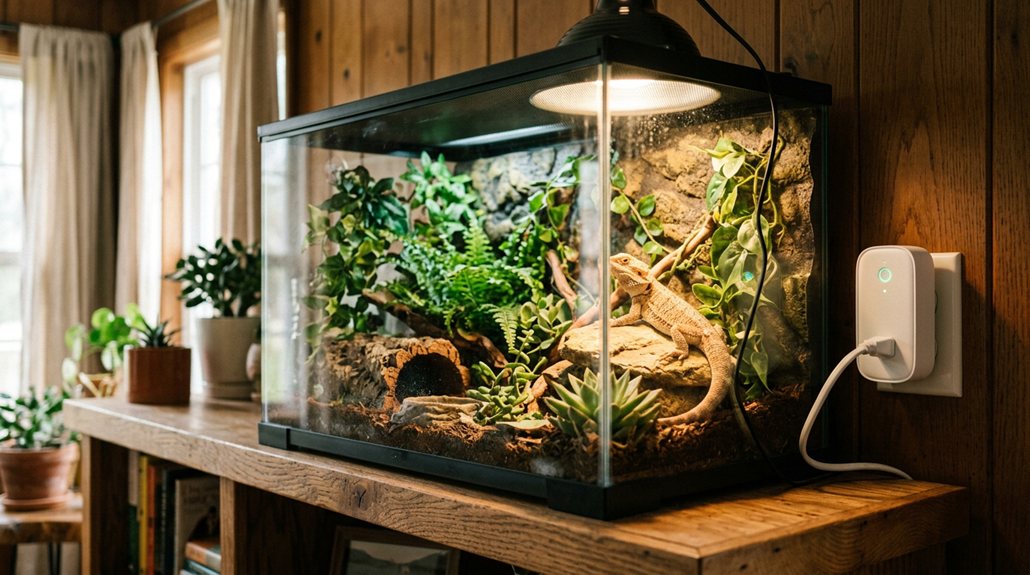
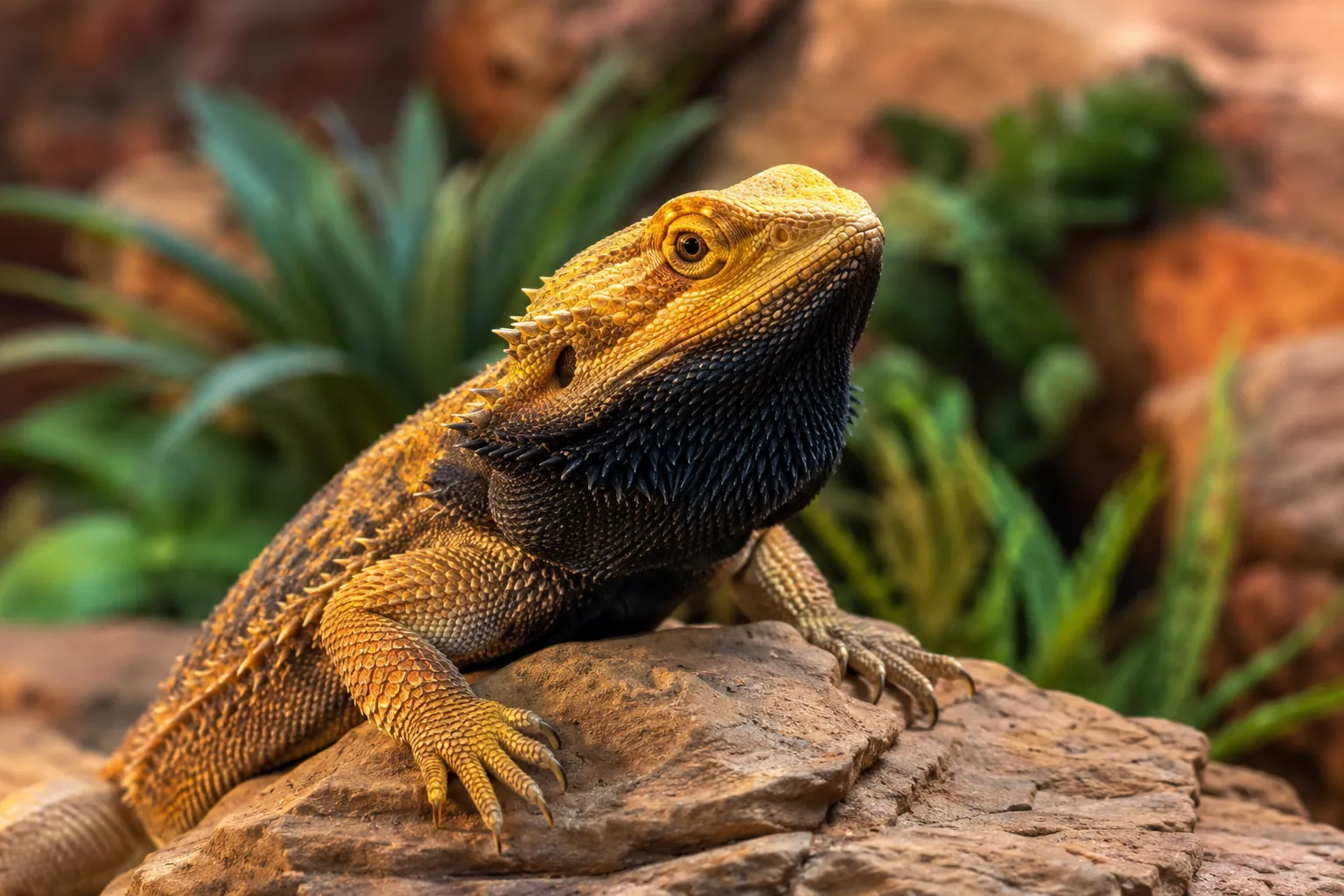
Quick Answer: A bearded dragon’s beard turns black primarily due to stress, territorial behavior, or temperature regulation, though it can also signal illness or breeding readiness. This color change is caused by blood flow and pigment cells expanding in the throat area, and while often harmless, it requires attention to identify and address the underlying cause.
Key Takeaways
- Black beards are usually stress-related and not immediately dangerous, but they signal something needs your attention
- Common triggers include improper tank temperatures, new environments, territorial displays, handling stress, or the presence of other pets
- Duration varies widely from a few minutes to several hours depending on the cause and how quickly you address it
- A black beard alone isn’t an emergency, but combined with lethargy, loss of appetite, or unusual behavior warrants a vet visit
- Female bearded dragons can display black beards during breeding season as a rejection signal to males
- Temperature problems are one of the most overlooked causes, with incorrect basking spots triggering stress responses
- Puffed body plus black beard typically indicates a defensive or territorial display rather than illness
- Most cases resolve once you identify and remove the stressor from the dragon’s environment

Fast & Accurate Monitoring: Our reptile thermometer and humidity gauge features a built-in high-precision sensor chip that delivers instant, reliable readings to maintain your pet's ideal habitat conditions. Supports Fahrenheit readings (14-122°F ±4°F) and humidity measurements (20%-90%RH ±5%) for optimal reptile/amphibian health

Accurate measure temperature in vivariums, hatchers, brooders, propagators, etc.

Bearded Dragon Funny Lizard Graphic Tee
What Does It Mean When a Bearded Dragon’s Beard Turns Black?
When a bearded dragon’s beard turns black, it’s a physiological response triggered by increased blood flow and the expansion of specialized pigment cells called melanophores in the throat area. This color change serves as a visual communication tool that signals various emotional and physical states.
The beard darkening mechanism works similarly to how chameleons change color, though bearded dragons have more limited color-shifting abilities. The process happens quickly, sometimes within seconds, when the dragon experiences certain triggers.
Common meanings behind a black beard include:
- Stress response to environmental changes, loud noises, or unfamiliar surroundings
- Territorial display when encountering other bearded dragons or their own reflection
- Temperature regulation attempts when the tank is too cold or too hot
- Defensive posturing in response to perceived threats from pets or people
- Breeding behavior particularly in males showing dominance or females rejecting advances
- Illness or discomfort though this usually comes with other symptoms
The key is that a black beard is a symptom, not a disease itself. Think of it as your dragon’s way of saying “something’s not right” or “back off.” The darkness can range from a light gray to deep charcoal black depending on the intensity of whatever triggered the response.
Is a Black Beard on My Bearded Dragon Dangerous?
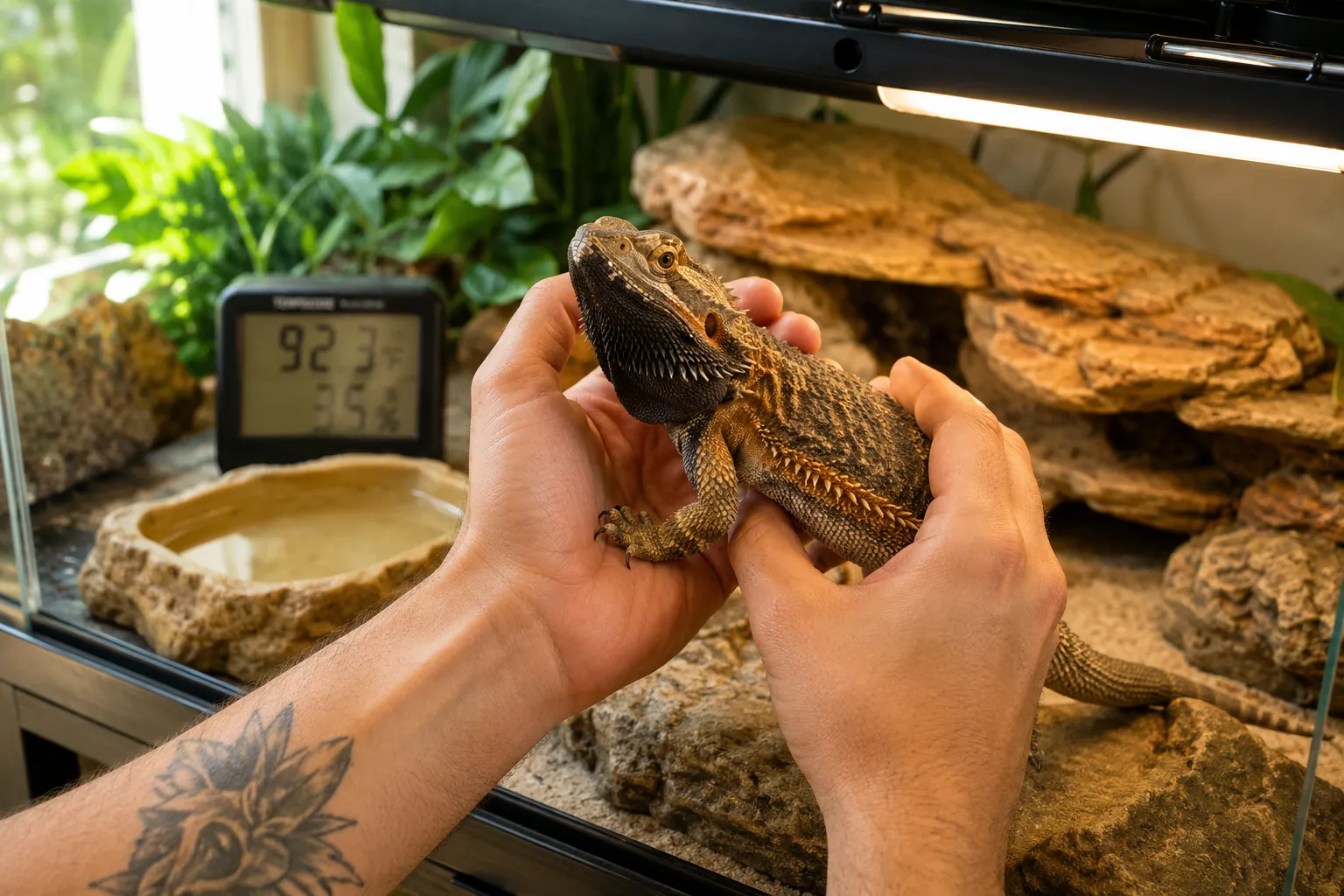
A black beard by itself is not dangerous and doesn’t cause harm to your bearded dragon. It’s a natural communication mechanism that these reptiles have evolved to express themselves, similar to how a dog might raise its hackles or a cat might puff its tail.
However, what causes the black beard can potentially be dangerous if left unaddressed. The beard color is your early warning system that something in your dragon’s environment or health needs attention.
When a black beard is typically harmless:
- Brief episodes lasting a few minutes during handling
- Occasional displays when seeing their reflection
- Short-term response to household noises or activity
- Temporary reaction to tank cleaning or rearrangement
When to be concerned:
- Black beard persists for hours or days without improvement
- Accompanied by lethargy, loss of appetite, or unusual hiding
- Occurs with labored breathing or gaping mouth (outside of basking)
- Combined with color changes elsewhere on the body (darkening overall)
- Your dragon stops eating for more than a few days
The danger lies in ignoring persistent black beards that signal ongoing stress, which can weaken your dragon’s immune system over time and make them susceptible to illness. Chronic stress from improper husbandry is far more harmful than the beard color itself.
Black Beard vs Normal Beard Color in Bearded Dragons
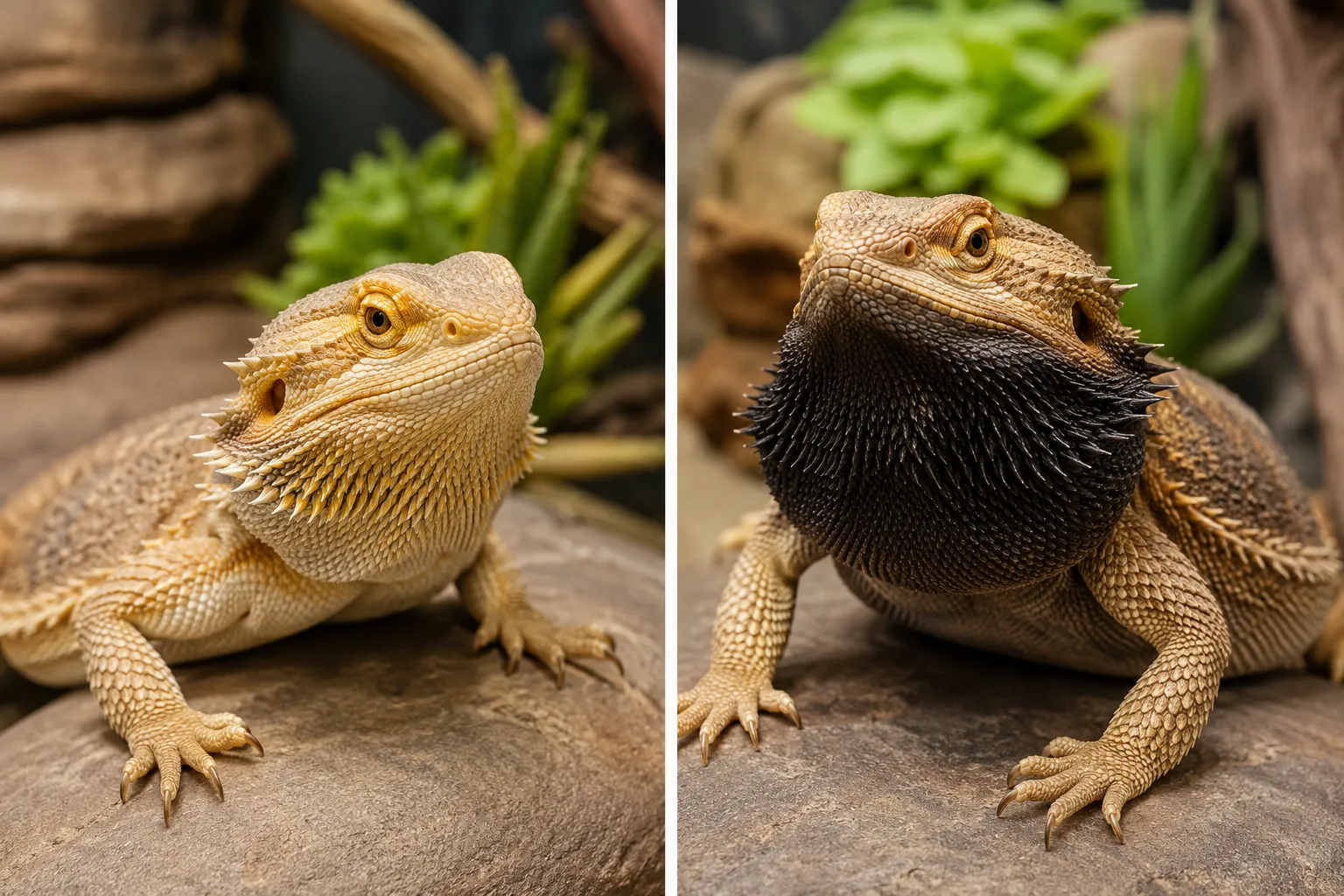
A normal bearded dragon’s beard typically matches or is slightly lighter than the rest of their body coloration, ranging from cream and tan to light brown or orange depending on their morph. The beard should appear flat against the throat when the dragon is calm and relaxed.
In contrast, a black beard shows dramatic darkening that can extend from light gray to jet black, often accompanied by the beard puffing out to make the dragon appear larger. This transformation can happen in seconds and is immediately noticeable.
Visual differences at a glance:
| Normal Beard | Black Beard |
|---|---|
| Matches body color (tan, cream, orange) | Dark gray to jet black |
| Flat against throat | Often puffed out |
| Smooth appearance | May appear spiky or bristled |
| Indicates calm, content state | Signals stress, threat, or discomfort |
| Consistent throughout the day | Can change rapidly based on triggers |
Some bearded dragons naturally have slightly darker beards than others based on their genetics and morph, but even these dragons will show a noticeable darkening when stressed. The change is relative to their baseline color, so you’ll learn what’s normal for your specific dragon over time.
Important note: Male bearded dragons tend to display black beards more frequently than females, especially during breeding season or when establishing territory. This doesn’t mean something is wrong; it’s just part of their natural behavior pattern.
How to Calm Down a Stressed Bearded Dragon with Black Beard
Calming a stressed bearded dragon requires identifying and removing the stressor while creating a peaceful environment for recovery. The black beard should fade back to normal coloration once your dragon feels safe again, which can take anywhere from a few minutes to several hours.
Immediate steps to calm your dragon:
- Reduce stimulation by dimming lights, lowering noise levels, and removing other pets from the area
- Stop handling if you were interacting with your dragon and place them back in their enclosure
- Check tank temperatures using a reliable thermometer to ensure basking spot is 95-105°F and cool side is 75-85°F
- Cover part of the enclosure with a towel to create a sense of security and privacy
- Eliminate reflections by covering glass sides if your dragon is displaying at their own reflection
- Maintain distance and observe from afar rather than hovering over the tank
Long-term stress reduction strategies:
- Establish a consistent daily routine for feeding, lighting, and interaction
- Position the tank in a quiet area away from high-traffic zones and loud appliances
- Provide multiple hiding spots using caves, logs, or commercial hides
- Ensure proper UVB lighting (10-12 hours daily) and replace bulbs every 6-12 months
- Gradually acclimate your dragon to handling through short, positive sessions
- Keep the tank clean but avoid excessive rearranging that disrupts their territory
Common mistake: Many owners try to comfort their stressed dragon by taking them out and holding them, which often increases stress. Bearded dragons aren’t like mammals; they typically prefer to be left alone when stressed rather than seeking comfort through contact.
If your dragon’s beard remains black despite addressing obvious stressors, keep a log of when it happens, what was occurring beforehand, and how long it lasts. This information helps identify patterns and can be valuable if you need to consult a veterinarian.
Do Bearded Dragons Turn Their Beard Black When Sick or Just Stressed?
Bearded dragons can display black beards for both stress and illness, but the accompanying symptoms differ significantly. Stress-related black beards typically occur in otherwise active, alert dragons responding to environmental triggers, while illness-related darkening comes with additional warning signs.
Stress-only indicators:
- Dragon remains alert and responsive to movement
- Normal appetite and regular bowel movements continue
- Active during normal hours with typical basking behavior
- Black beard appears suddenly in response to specific triggers
- Color returns to normal once the stressor is removed
Illness warning signs with black beard:
- Lethargy and spending excessive time hiding or sleeping
- Loss of appetite lasting more than 2-3 days
- Changes in stool (diarrhea, unusual color, or no bowel movements)
- Sunken eyes or wrinkled skin indicating dehydration
- Labored breathing or wheezing sounds
- Overall body darkening, not just the beard
- Lack of response to normal stimuli
Common illnesses that may cause black beards include:
- Respiratory infections (often with mucus around nostrils or mouth)
- Parasitic infections (accompanied by weight loss and abnormal stool)
- Metabolic bone disease (with tremors, weakness, or deformed limbs)
- Impaction (with bloated belly and straining without defecation)
The key distinction is that sick bearded dragons show multiple symptoms beyond just the black beard, and the beard often stays dark persistently rather than coming and going. A healthy but stressed dragon will still eat, bask, and show interest in their surroundings between stress episodes.
Decision rule: If your dragon has a black beard but is eating normally, basking regularly, and acting alert, focus on identifying environmental stressors. If the black beard persists for more than 24 hours alongside any other symptoms listed above, schedule a veterinary appointment.
How Long Does a Bearded Dragon’s Beard Stay Black?
The duration of a black beard depends entirely on the trigger and how quickly you address it. Brief stress responses might last only 5-10 minutes, while ongoing environmental problems can keep the beard dark for hours or even days until resolved.
Typical duration by cause:
- Handling stress: 5-30 minutes after returning to enclosure
- Loud noise or sudden movement: 10-20 minutes once environment quiets
- Territorial display at reflection: Intermittent while reflection is visible, stops when covered
- Temperature issues: Persistent until temperatures are corrected
- New environment: Can last 1-3 days during acclimation period
- Illness: Remains dark consistently until underlying condition is treated
- Breeding behavior: May last several hours or recur daily during breeding season
Most healthy bearded dragons will cycle in and out of the black beard display throughout the day if the stressor remains present. For example, if your dragon is stressed by a dog walking past the tank, the beard might darken each time the dog appears and lighten when the dog leaves.
When duration becomes concerning: If your dragon’s beard stays solid black for more than 6-8 hours without any lightening, or if it remains dark for multiple consecutive days, this signals either a serious ongoing stressor or a potential health issue that needs immediate attention.
Some dragons are naturally more reactive than others. Younger bearded dragons and newly adopted dragons tend to display black beards more frequently as they adjust to their environment and establish comfort levels with their keepers.
Is My Bearded Dragon Angry or Scared When Beard Is Black?
A black beard can indicate either fear or aggression depending on the context and accompanying body language. Bearded dragons use the same visual signal for different emotional states, so you need to read the full picture to understand what your dragon is communicating.
Signs your dragon is scared (defensive):
- Beard is black and puffed out
- Body flattened against the ground or pressed into a corner
- Tail tucked close to the body
- Attempting to hide or escape
- Mouth closed, body still and frozen
- Occurs when approached or during handling
Signs your dragon is displaying aggression (offensive):
- Beard is black and puffed out
- Body raised high on legs, appearing larger
- Tail raised or whipping side to side
- Head bobbing rapidly
- Mouth open (gaping) showing teeth
- Hissing sounds
- Occurs when seeing another dragon or reflection
Territorial display (not true aggression):
- Black beard with slow, deliberate head bobbing
- Body positioned prominently in the enclosure
- Alert posture but not necessarily aggressive
- Common in males, especially during breeding season
- Not directed at escaping or attacking
The context matters enormously. A black beard during handling usually indicates fear or discomfort with being held. A black beard while your dragon stares at their reflection or another dragon indicates territorial behavior. A black beard combined with hiding when you approach the tank suggests fear of you or the environment.
Common mistake: Interpreting all black beards as aggression and assuming your dragon “hates” you. Most pet bearded dragons displaying black beards are actually scared, not aggressive. True aggression toward humans is relatively rare in well-socialized dragons.
Understanding whether your dragon is scared or displaying dominance helps you respond appropriately. Scared dragons need space and gradual trust-building, while territorial displays often resolve on their own once the perceived threat (like a reflection) is removed.
Can Improper Tank Temperature Cause Black Beard in Bearded Dragons?
Improper tank temperatures are one of the most common and overlooked causes of black beards in bearded dragons. These desert reptiles are extremely sensitive to temperature, and when their thermal needs aren’t met, they experience significant stress that triggers the black beard response.
Temperature requirements for bearded dragons:
- Basking spot: 95-105°F (adults), 100-110°F (juveniles)
- Cool side: 75-85°F
- Nighttime: 65-75°F (can drop lower for adults)
- Temperature gradient: Essential for thermoregulation
When temperatures are incorrect, bearded dragons cannot properly digest food, maintain immune function, or regulate their metabolism. This physiological stress manifests as a black beard along with other behavioral changes.
Temperature problems that trigger black beards:
- Basking spot too cool (below 95°F) prevents proper digestion and causes stress
- Entire tank too hot with no cool retreat area causes overheating stress
- Nighttime temperatures too high prevent proper rest cycles
- Sudden temperature fluctuations from drafts or inconsistent heating
- No temperature gradient forcing the dragon to choose between too hot or too cold
How to fix temperature-related black beards:
- Measure accurately using a temperature gun or digital thermometer with probes, not stick-on gauges
- Check multiple spots including basking surface, cool side floor, and mid-tank areas
- Adjust basking bulb wattage or distance to achieve proper basking temperature
- Add or remove heat sources to create proper gradient
- Use a thermostat to maintain consistent temperatures and prevent fluctuations
- Verify at dragon level where your dragon actually sits, not at the top of the tank
Many owners discover their temperatures are off by 10-15 degrees when they finally measure accurately. This simple fix often resolves persistent black beard issues within hours as the dragon’s stress level drops.
Pro tip: Bearded dragons will often display black beards while basking if they’re trying to absorb more heat because the basking spot is too cool. The darker coloration helps them absorb heat more efficiently, but it also signals that your temperatures need adjustment.


What to Do If My Bearded Dragon’s Beard Is Black and Not Eating
A black beard combined with loss of appetite is more concerning than a black beard alone because it suggests either significant stress or an underlying health issue. Bearded dragons are typically enthusiastic eaters, so appetite loss lasting more than 2-3 days requires investigation.
Immediate assessment steps:
- Verify all husbandry parameters including temperatures, UVB lighting, humidity, and substrate
- Check for signs of illness such as lethargy, abnormal stool, labored breathing, or discharge
- Review recent changes in environment, diet, handling, or household activity
- Examine the mouth for signs of mouth rot (redness, swelling, or discharge)
- Feel the belly gently for signs of impaction (hard, bloated feeling)
Common causes of black beard with appetite loss:
- Impaction from ingesting substrate, too-large feeders, or inadequate temperatures
- Brumation preparation (seasonal dormancy, typically in fall/winter for adults)
- Respiratory infection often with additional symptoms like mucus or wheezing
- Severe stress from major environmental changes or persistent stressors
- Parasites causing digestive discomfort and nutrient malabsorption
- Metabolic bone disease making it painful to move and hunt food
When to see a vet immediately:
- No food intake for 5+ days (3+ days for juveniles)
- Black beard persists constantly for more than 24 hours
- Additional symptoms like lethargy, abnormal stool, or labored breathing
- Visible weight loss or sunken eyes
- Unresponsive or unable to lift body off the ground
What you can try at home first:
- Offer favorite foods and live feeders to stimulate appetite
- Provide a warm bath (95-100°F water) to encourage bowel movement and hydration
- Ensure basking temperatures are optimal for digestion
- Reduce handling and environmental stress completely
- Monitor for 24-48 hours while keeping detailed notes
Important distinction: Adult bearded dragons naturally eat less frequently than juveniles and may refuse food for a few days without concern, especially before shedding or during seasonal changes. However, a black beard combined with appetite loss suggests something beyond normal appetite fluctuation.
If your dragon’s beard lightens and appetite returns within 48 hours of optimizing husbandry, the issue was likely stress-related. If symptoms persist or worsen, veterinary care is essential to rule out illness.
Do Female Bearded Dragons Get Black Beards During Breeding Season?
Female bearded dragons absolutely display black beards during breeding season, though their reasons and frequency differ from males. Females typically use the black beard as a rejection signal to indicate they’re not receptive to mating or to establish boundaries with overly persistent males.
Female black beard behaviors during breeding season:
- Rejection display: Black beard with head bobbing to tell males “not interested”
- Arm waving with black beard: Submissive signal that can also mean “leave me alone”
- Gravid stress: Black beard when carrying eggs and feeling vulnerable
- Territorial defense: Protecting nesting areas or favorite basking spots
Female bearded dragons can become gravid (develop eggs) even without a male present, as they can produce infertile eggs. During this time, they often display black beards more frequently due to the physical stress of carrying eggs and the instinctive drive to find suitable nesting sites.
Signs your female is gravid:
- Increased appetite followed by decreased appetite
- Restless digging behavior in substrate
- Visible egg bulges in the belly (in later stages)
- More frequent black beard displays
- Increased aggression or desire for solitude
Breeding season timeline: Bearded dragons typically enter breeding readiness in spring (March-May) as daylight hours increase, though captive dragons with consistent lighting may show breeding behaviors year-round. Females can produce 2-3 clutches per season.
What to do if your female displays breeding behaviors:
- Provide a lay box with 6-8 inches of moist sand/soil mixture for egg laying
- Increase calcium supplementation to support egg development
- Reduce handling during gravid period to minimize stress
- Monitor for egg binding (inability to lay eggs), which requires immediate vet care
- Expect black beard displays to decrease after eggs are laid
Common mistake: Assuming only males display black beards during breeding season. Females are equally capable of the display and use it as an important communication tool, especially when housed with males or when experiencing the hormonal changes of egg development.
If you have a female bearded dragon displaying a black beard with digging behavior and no other signs of illness, she’s likely preparing to lay eggs and needs appropriate nesting accommodations.
Common Mistakes That Stress Bearded Dragons and Cause Black Beard
Many well-intentioned bearded dragon owners unknowingly create stressful conditions that trigger frequent black beard displays. Understanding these common mistakes helps you create a more comfortable environment and reduce unnecessary stress for your pet.
Top husbandry mistakes causing black beards:
1. Incorrect tank size
- Tanks smaller than 40 gallons for adults create cramped, stressful conditions
- Juveniles in oversized tanks may feel exposed and vulnerable
- Solution: Use appropriate tank size (40-75 gallons for adults)
2. Inadequate hiding spots
- Bearded dragons need secure places to retreat when stressed
- Lack of hides creates constant anxiety about exposure
- Solution: Provide 2-3 hiding spots at different temperature zones
3. Tank positioned in high-traffic areas
- Constant movement, noise, and activity creates chronic stress
- Dragons feel threatened by people and pets walking past frequently
- Solution: Place tank in quieter area with one side against a wall
4. Reflective surfaces
- Dragons see their reflection as another dragon and display territorially
- Glass sides, mirrors, or shiny decorations trigger constant stress
- Solution: Cover reflective sides or use background material
5. Cohabitation with other bearded dragons
- Bearded dragons are solitary and become stressed when housed together
- Even “peaceful” cohabitation involves constant territorial stress
- Solution: House all bearded dragons separately, always
6. Excessive or improper handling
- Handling too frequently or for too long causes stress
- Grabbing from above mimics predator attacks
- Solution: Handle 10-15 minutes daily maximum, approach from the side
7. Inconsistent lighting schedules
- Irregular day/night cycles disrupt natural rhythms
- Solution: Use timers for 12-14 hours of light, 10-12 hours of darkness
8. Inappropriate substrate
- Loose substrates like sand can cause impaction stress
- Solution: Use tile, reptile carpet, or paper towels for safety
9. Other pets near the enclosure
- Dogs, cats, and birds are natural predators that trigger fear responses
- Solution: Keep other pets away from the dragon’s line of sight
10. Sudden environmental changes
- Moving the tank, rearranging decorations, or changing routines
- Solution: Make changes gradually and maintain consistency
The cumulative effect: Multiple small stressors add up. A dragon might tolerate one issue, but combining several creates chronic stress that manifests as frequent black beards, appetite loss, and weakened immunity.
Quick fix checklist:
- ✓ Proper temperatures verified with accurate thermometer
- ✓ UVB lighting replaced every 6-12 months
- ✓ Tank in quiet location away from traffic
- ✓ No reflective surfaces visible to dragon
- ✓ Appropriate hiding spots provided
- ✓ Consistent daily schedule maintained
- ✓ Other pets kept away from enclosure
- ✓ Handling kept brief and gentle
Addressing these common mistakes often resolves persistent black beard issues within days as your dragon’s stress level decreases and they feel more secure in their environment.
Black Beard with Puffed Up Body in Bearded Dragon Meaning
When a bearded dragon displays both a black beard and a puffed-up body simultaneously, this is a classic defensive or territorial display designed to make the dragon appear larger and more intimidating. This combination is the bearded dragon’s primary threat display and is more dramatic than a black beard alone.
What the puffed body with black beard means:
The dragon is attempting to appear as large and threatening as possible to deter a perceived threat. The body inflates with air, the beard extends outward and darkens, and often the mouth opens in a gaping display. This is the reptile equivalent of a cat arching its back and puffing its fur.
Common triggers for this display:
- Another bearded dragon in visual range (including reflections)
- Predator animals like dogs, cats, or birds near the enclosure
- Unfamiliar people approaching the tank, especially children
- Handling attempts when the dragon doesn’t want to be picked up
- Territorial defense of basking spots, food, or favorite areas
- Breeding season displays between males or from females rejecting males
Body language to watch for:
- Flattened, widened body making the dragon appear pancake-like
- Beard fully extended and jet black
- Legs stiffened and body raised high
- Tail may be raised or curved
- Mouth often open (gaping) showing the inside of the mouth
- Possible hissing sounds
- Head may bob aggressively
Is this dangerous behavior? Not typically. This is a warning display meant to avoid actual conflict. Bearded dragons prefer to look threatening rather than actually fight. However, if you ignore these warning signs and continue to approach or handle the dragon, they may bite as a last resort.
How to respond:
- Back away and give the dragon space immediately
- Identify the trigger by looking around for what caused the display
- Remove the stressor if possible (cover reflection, remove other pet from room)
- Wait for the dragon to calm before attempting any interaction
- Don’t force handling when your dragon is displaying defensively
When this display is normal vs. concerning:
- Normal: Occasional displays when startled, during breeding season, or when first introduced to new environments
- Concerning: Constant displays throughout the day, displays directed at you after months of bonding, or displays combined with other illness symptoms
Some bearded dragons are naturally more defensive than others based on personality and past experiences. Newly adopted dragons often display more frequently until they acclimate and learn that their environment is safe.
Training tip: If your dragon frequently displays at you, work on trust-building through consistent, gentle interactions. Offer food from your hand, sit near the tank without handling, and approach slowly from the side rather than from above. Most dragons become less defensive as they learn to trust their keeper.
When to Take Bearded Dragon to Vet for Black Beard
While most black beard episodes resolve with husbandry adjustments, certain situations require professional veterinary care to rule out or treat underlying health issues. Knowing when to seek help can prevent minor problems from becoming serious.
Seek veterinary care immediately if:
- Black beard persists constantly for more than 48 hours despite addressing all environmental factors
- Your dragon hasn’t eaten for 5+ days (3+ days for juveniles under 6 months)
- Labored breathing, wheezing, or mucus discharge from nose or mouth
- Lethargy to the point of unresponsiveness or inability to lift body
- Abnormal stool including bloody, very watery, or foul-smelling diarrhea
- No bowel movement for 7+ days with bloated, hard belly (possible impaction)
- Visible weight loss, sunken eyes, or wrinkled skin indicating dehydration
- Tremors, seizures, or inability to use limbs properly
- Swelling, discharge, or discoloration around the mouth (mouth rot)
- Black beard combined with overall body darkening and weakness
Schedule a vet appointment within 2-3 days if:
- Black beard occurs daily for a week despite optimal husbandry
- Gradual decrease in appetite over several weeks
- Behavioral changes like increased hiding or decreased activity
- Suspected parasites (weight loss despite eating, abnormal stool)
- Female showing signs of being egg-bound (restless, digging, straining)
- Any uncertainty about whether symptoms are normal
What to bring to the vet:
- Recent photos or video of the black beard display and any other symptoms
- Written log of when black beards occur and what triggers them
- Details about husbandry (tank size, temperatures, lighting, diet)
- Fresh fecal sample in a sealed container (for parasite testing)
- List of any recent changes in environment or routine
Questions your vet will ask:
- How long has the black beard been occurring?
- Is it constant or intermittent?
- What other symptoms have you noticed?
- What are your exact tank temperatures and lighting setup?
- What is the dragon’s diet and feeding schedule?
- When was the last normal bowel movement?
- Has anything changed recently in the environment?
Cost considerations: An exotic vet visit typically costs $50-150 for the examination, with additional costs for diagnostics (fecal tests, X-rays, blood work) ranging from $100-400. While this seems expensive, early intervention prevents more costly emergency care later.
Finding a qualified vet: Not all veterinarians treat reptiles. Search for an exotic animal vet or reptile specialist in your area. The Association of Reptilian and Amphibian Veterinarians (ARAV) maintains a directory of qualified professionals.
Trust your instincts: If something feels wrong beyond just the black beard, it’s better to have a vet confirm everything is fine than to wait until a treatable condition becomes serious. Bearded dragons are experts at hiding illness until it’s advanced, so subtle signs deserve attention.
Frequently Asked Questions
Can a bearded dragon’s beard stay black permanently?
No, a healthy bearded dragon’s beard will not stay black permanently. The color change is temporary and controlled by blood flow and pigment cells. If a beard remains black for days without lightening, this indicates either chronic stress or illness that needs to be addressed, not a permanent color change.
Do baby bearded dragons get black beards?
Yes, juvenile and baby bearded dragons can display black beards just like adults, though they may do so less frequently. Young dragons often show black beards when adjusting to new environments, during handling, or when stressed by improper temperatures. The same triggers apply regardless of age.
Can a black beard mean my bearded dragon is happy?
No, a black beard never indicates happiness or contentment. It always signals some form of stress, territorial display, or physiological response to temperature or breeding hormones. A happy, relaxed bearded dragon will have a beard that matches their normal body coloration.
Will my bearded dragon’s beard turn black when shedding?
Bearded dragons don’t typically display black beards specifically because of shedding, but they may become more irritable during the shedding process, which can trigger stress-related black beards. If your dragon’s beard darkens during a shed, it’s usually due to the discomfort or irritation of shedding rather than the shed itself.
Is it normal for my bearded dragon’s beard to be black every morning?
If your dragon’s beard is consistently black every morning, this suggests overnight temperatures are dropping too low or there’s a stressor present during nighttime hours. Check that nighttime temperatures stay above 65°F and ensure no nocturnal pets or activities are disturbing your dragon’s sleep.
Can diet cause a black beard in bearded dragons?
Diet doesn’t directly cause black beards, but nutritional deficiencies or digestive problems from improper diet can create stress that manifests as a black beard. Impaction from inappropriate foods or substrate ingestion commonly causes black beards along with appetite loss and lethargy.
Do bearded dragons have black beards when they sleep?
No, bearded dragons do not display black beards while sleeping. During sleep, they are relaxed and their beard returns to normal coloration. If you notice a black beard at night, your dragon is likely awake and stressed by something in their environment.
How can I tell if my bearded dragon’s black beard is from stress or aggression?
Look at the context and body language. Stress-related black beards typically involve flattening against the ground, attempting to hide, or freezing in place. Aggression-related black beards come with raised body posture, head bobbing, tail whipping, and often an open mouth. The situation also matters, black beards during handling usually indicate stress, while black beards directed at reflections or other dragons indicate territorial behavior.
Can improper UVB lighting cause black beards?
Yes, inadequate UVB lighting can cause black beards indirectly. Without proper UVB, bearded dragons cannot synthesize vitamin D3, leading to metabolic bone disease and general poor health. This creates physiological stress that can manifest as black beards along with other symptoms like lethargy and loss of appetite.
Will getting a bigger tank stop my bearded dragon’s black beard?
If your dragon is in a tank that’s too small (less than 40 gallons for an adult), upgrading to an appropriately sized enclosure may reduce black beard displays by decreasing stress. However, tank size is just one factor. You’ll also need to address temperatures, lighting, hiding spots, and other environmental stressors for complete resolution.
Do bearded dragons get black beards from being lonely?
No, bearded dragons are solitary animals and do not experience loneliness or need companionship from other bearded dragons. In fact, housing bearded dragons together causes stress and frequent black beard displays due to territorial conflicts. A single dragon in a proper setup is a content dragon.
Can handling my bearded dragon too much cause a black beard?
Yes, excessive handling is a common cause of stress-related black beards. Even dragons that tolerate handling can become stressed if handled too frequently or for too long. Limit handling sessions to 10-15 minutes once or twice daily, and always watch for signs your dragon wants to return to their enclosure.
Conclusion
A black beard on your bearded dragon is a communication tool that signals stress, territorial behavior, temperature regulation needs, or occasionally illness. While the dramatic color change can be alarming for new owners, it’s usually not dangerous by itself and serves as your early warning system that something needs attention in your dragon’s environment or health.
The most common causes, improper temperatures, environmental stress, territorial displays, and handling anxiety, are all manageable with proper husbandry adjustments. By maintaining optimal tank temperatures (95-105°F basking spot, 75-85°F cool side), providing adequate hiding spots, minimizing stressors, and establishing consistent routines, you can significantly reduce black beard episodes.
Take action now:
- Measure your tank temperatures accurately with a temperature gun or digital thermometer
- Evaluate your dragon’s environment for common stressors like reflections, high-traffic placement, or other pets
- Observe when the black beard occurs and log potential triggers
- Make necessary husbandry adjustments and give your dragon time to acclimate
- Monitor for additional symptoms that might indicate illness rather than simple stress
- Consult an exotic veterinarian if the black beard persists for more than 48 hours or is accompanied by appetite loss, lethargy, or other concerning symptoms
Remember that each bearded dragon has a unique personality, and some are naturally more reactive than others. With patience, proper care, and attention to their needs, most black beard issues resolve as your dragon becomes comfortable and secure in their environment. The key is treating the black beard as valuable feedback from your pet rather than a problem to eliminate, it’s telling you exactly what needs to change to keep your dragon healthy and content.


Bruh design for Bearded Dragon lovers

Check our Brand for more great Designs!