
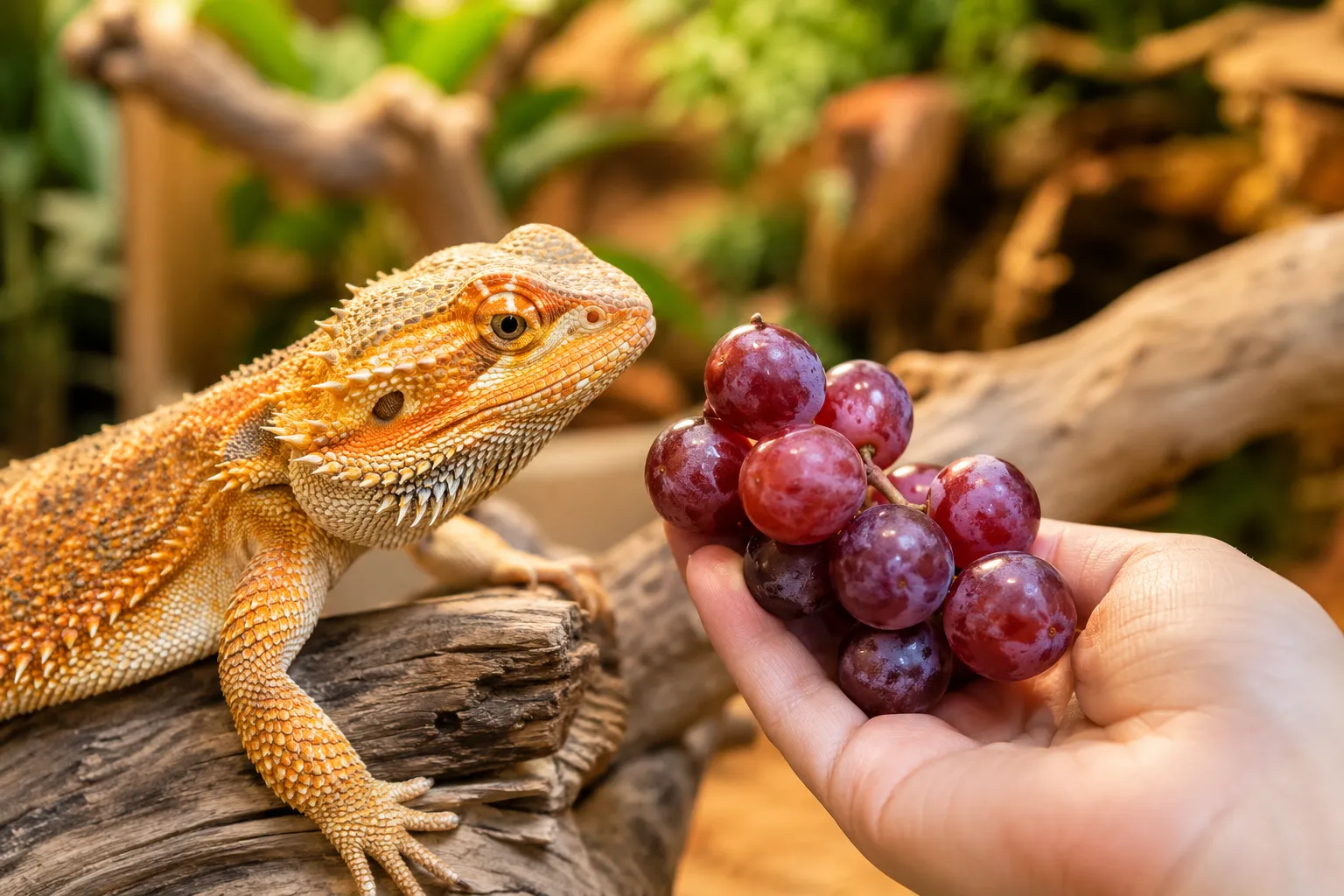
Quick Answer: Yes, bearded dragons can eat grapes, but only as an occasional treat in small amounts. Grapes contain high sugar levels and an unfavorable calcium-to-phosphorus ratio that can harm your dragon’s health if fed too frequently. Limit grapes to once or twice per month, offering only 1-2 small pieces cut into quarters to prevent choking.
Key Takeaways
- Grapes are safe for bearded dragons only as rare treats (1-2 times monthly maximum)
- Always cut grapes into small quarters to prevent choking hazards
- Remove seeds when present, though seedless varieties are safer
- High sugar content can lead to obesity, fatty liver disease, and digestive issues
- The poor calcium-to-phosphorus ratio (1:1.4) can contribute to metabolic bone disease
- Baby bearded dragons should avoid grapes entirely due to their sensitive digestive systems
- Green and red grapes are equally acceptable in tiny amounts
- Better fruit alternatives include papaya, figs, and occasional berries
- Never feed frozen grapes directly, thaw and bring to room temperature first
- Grapes should represent less than 5% of total fruit intake, which itself should be only 10% of diet

Vitamin Enriched Formula That Provides Essential Proteins, Fats, Vitamins And Minerals

All Natural: 100% all-natural and preservative-free

✔ HEALTHY - This nutritious blend includes figs, papaya, green beans, cabbage, squash, apple and carrots
Are Grapes Safe for Bearded Dragons to Eat?
Grapes are technically safe for bearded dragons when offered correctly, but they come with significant nutritional drawbacks that make them a poor regular food choice. The primary concerns are their high sugar content (approximately 16 grams per 100 grams of grapes) and their calcium-to-phosphorus ratio of roughly 1:1.4, which works against your dragon’s calcium absorption.
Why the calcium-to-phosphorus ratio matters: Bearded dragons need a diet with a calcium-to-phosphorus ratio of at least 1.5:1 or ideally 2:1. Phosphorus binds to calcium in the digestive tract and prevents absorption. When foods contain more phosphorus than calcium, they actively deplete your dragon’s calcium stores, potentially leading to metabolic bone disease over time.
The sugar problem: Wild bearded dragons rarely encounter sugary fruits in their natural Australian habitat. Their digestive systems aren’t designed to process high amounts of simple sugars regularly. Excessive sugar intake can cause:
- Obesity and fat deposits around organs
- Fatty liver disease
- Diarrhea and digestive upset
- Tooth decay
- Blood sugar fluctuations
When grapes are acceptable: If you limit grapes to a tiny treat once or twice monthly and prepare them properly, the risk remains minimal. Think of grapes like candy for your dragon, fine on rare occasions but never a dietary staple.
How Often Can Bearded Dragons Have Grapes?

Bearded dragons should eat grapes no more than once or twice per month as a special treat. Many experienced reptile keepers recommend even less frequent feeding, perhaps once every 4-6 weeks, especially for dragons with weight issues or those prone to digestive problems.
Frequency guidelines by life stage:
- Adult bearded dragons (18+ months): 1-2 times monthly maximum
- Juvenile bearded dragons (4-18 months): Once monthly at most, very small portions
- Baby bearded dragons (0-4 months): Avoid entirely
The key principle is that fruits should comprise only about 10% of an adult bearded dragon’s diet, and grapes should represent just a small fraction of that fruit portion. The bulk of their diet should consist of:
- 70-80% vegetables (collard greens, mustard greens, butternut squash, bell peppers)
- 10-20% protein (insects like dubia roaches, crickets, black soldier fly larvae)
- 10% or less fruit (with grapes being an occasional option within that category)
Common mistake: New owners often want to feed grapes more frequently because their dragons seem to love them. Bearded dragons naturally gravitate toward sweet foods, but their enthusiasm doesn’t indicate nutritional value. Your dragon would probably eat grapes daily if offered, but doing so would seriously compromise their health.
Can Baby Bearded Dragons Eat Grapes?
Baby bearded dragons should not eat grapes at all. Their nutritional needs differ significantly from adults, requiring a diet much higher in protein (approximately 70-80% insects) and lower in plant matter to support their rapid growth phase.
Why babies should avoid grapes:
- Choking hazard: Even quartered grapes pose a serious choking risk for small dragons with tiny throats
- Nutritional interference: The poor calcium-to-phosphorus ratio is especially dangerous during the critical bone development phase
- Digestive sensitivity: Baby dragons have more delicate digestive systems that struggle with high-sugar foods
- Protein displacement: Any space in their stomach taken up by grapes means less room for the protein-rich insects they desperately need
What to feed baby bearded dragons instead: Focus on appropriately-sized insects (smaller than the space between their eyes) dusted with calcium powder, along with finely chopped dark leafy greens. Save any fruit treats until your dragon reaches at least 12 months of age, and even then, choose options with better nutritional profiles than grapes.
If you accidentally gave your baby dragon a small piece of grape, don’t panic. One exposure likely won’t cause lasting harm, but discontinue the practice immediately and stick to age-appropriate foods going forward.
How to Prepare Grapes for Bearded Dragons
Proper preparation is essential to minimize the risks associated with feeding grapes to your bearded dragon. Follow these steps every time you offer this treat:
Step-by-step preparation:
- Wash thoroughly: Rinse grapes under cool running water for at least 30 seconds to remove pesticides, wax coatings, and potential bacteria
- Choose organic when possible: Conventional grapes often rank high on pesticide residue lists; organic varieties reduce chemical exposure
- Remove any stems: The stems are tough and indigestible
- Check for and remove seeds: While seedless varieties are safest, if you’re using seeded grapes, cut them open and remove all seeds
- Cut into small quarters: Even for adult dragons, cut each grape into at least four pieces. For smaller dragons, cut into even tinier portions
- Serve at room temperature: Cold grapes from the refrigerator can cause digestive upset; let them warm to room temperature first
- Limit portion size: Offer only 1-2 small grape quarters per feeding session
Presentation tips: Place the grape pieces in your dragon’s regular feeding dish mixed with their salad greens, or offer them by hand as a training reward. Never leave uneaten grape pieces in the enclosure for more than an hour, as they can attract insects and grow bacteria in the warm terrarium environment.
What not to do: Don’t feed whole grapes (choking hazard), don’t offer grapes straight from the freezer, don’t give grape juice or dried raisins (concentrated sugar), and don’t mix grapes with calcium powder (the phosphorus will still interfere with absorption).

Can Bearded Dragons Eat Grape Skin and Seeds?
Bearded dragons can eat grape skins without issue, the skin is actually where most of the grape’s limited nutritional benefits reside, including small amounts of fiber and antioxidants. However, grape seeds should be removed whenever present, especially for smaller dragons.
Grape skin considerations:
- The skin is digestible and safe for bearded dragons
- It contains slightly more fiber than the flesh, which can aid digestion in small amounts
- Some dragons may prefer skinless grapes; watch your individual pet’s preferences
- Organic grape skins have fewer pesticide residues than conventional varieties
Grape seed concerns:
- Seeds pose a choking hazard, particularly for juvenile dragons
- While not toxic, seeds are difficult to digest and provide no nutritional value
- Large seeds could potentially cause intestinal blockage in rare cases
- Always choose seedless grape varieties to eliminate this risk entirely
Best practice: Purchase seedless grapes (which are widely available and affordable) to avoid the seed issue altogether. If you only have seeded grapes available, take the extra time to slice them open and manually remove every seed before cutting the grape into quarters.
The small amount of effort required to prepare grapes safely is worth it to prevent a potential veterinary emergency. Choking and intestinal blockages can be life-threatening and expensive to treat.
What Happens If a Bearded Dragon Eats Too Many Grapes?
If your bearded dragon eats too many grapes in one sitting or receives them too frequently over time, several health problems can develop ranging from mild to severe.
Immediate effects (within 24 hours):
- Diarrhea: The high sugar and water content can cause loose, watery stools
- Stomach upset: Your dragon may appear uncomfortable, lethargic, or refuse food
- Regurgitation: In extreme cases, overeating grapes may cause vomiting
- Dehydration: Paradoxically, diarrhea from too many grapes can lead to fluid loss
Long-term effects (with repeated overfeeding):
- Obesity: Excess sugar converts to fat, leading to an overweight dragon with reduced mobility
- Fatty liver disease: Sugar overload can cause fat accumulation in the liver, a serious and potentially fatal condition
- Metabolic bone disease (MBD): The poor calcium-to-phosphorus ratio contributes to calcium deficiency, causing soft bones, deformities, paralysis, and seizures
- Dental problems: Sugar promotes bacterial growth that can damage teeth and gums
- Nutritional imbalances: Filling up on grapes means less appetite for nutritionally complete foods
What to do if your dragon ate too many grapes: Remove any remaining grapes immediately, ensure fresh water is available, and monitor your dragon closely for the next 24-48 hours. If diarrhea persists beyond 24 hours, if your dragon becomes lethargic or stops eating entirely, or if you notice any signs of distress, contact a reptile veterinarian promptly.
Prevention: Measure out the appropriate portion (1-2 small quarters) before feeding time and put the rest of the grapes away. This prevents the temptation to offer “just one more piece” and helps you maintain consistent feeding practices.
Grapes vs Blueberries for Bearded Dragons
When comparing grapes and blueberries as occasional treats for bearded dragons, blueberries have a slight nutritional edge but should still be limited to rare treats.
Nutritional comparison:
| Nutrient | Grapes (per 100g) | Blueberries (per 100g) | Better Choice |
|---|---|---|---|
| Sugar | ~16g | ~10g | Blueberries |
| Calcium | 10mg | 6mg | Grapes |
| Phosphorus | 20mg | 12mg | Blueberries |
| Ca:P Ratio | 1:2 | 1:2 | Tie (both poor) |
| Water content | 81% | 84% | Tie |
| Vitamin C | 3.2mg | 9.7mg | Blueberries |
Key differences:
- Blueberries contain less sugar (about 40% less), making them slightly safer for blood sugar and weight management
- Both have poor calcium-to-phosphorus ratios, so neither should be fed frequently
- Blueberries are smaller, which can be easier to portion control but also easier to overfeed
- Grapes have higher water content, which can contribute to diarrhea more readily
- Blueberries contain more antioxidants, though the benefit for reptiles is not well-studied
Practical feeding advice: You can alternate between grapes and blueberries as monthly treats, or choose blueberries as the slightly healthier option. Either way, the feeding frequency should remain the same, no more than 1-2 times per month. Cut blueberries in half or quarters for smaller dragons to prevent choking.
Neither fruit should be a regular part of your dragon’s diet. Better fruit options with more favorable nutritional profiles include papaya, figs, and occasional mango.
Can Bearded Dragons Eat Green Grapes or Red Grapes?
Both green (white) grapes and red (purple) grapes are equally safe for bearded dragons in small, infrequent amounts. The color difference comes primarily from antioxidant compounds in the skin, but the core nutritional profile, including the problematic sugar content and calcium-to-phosphorus ratio, remains essentially the same.
Nutritional similarities:
- Sugar content is nearly identical (15-17g per 100g)
- Calcium and phosphorus levels are comparable
- Water content is the same
- Both pose equal choking hazards if not cut properly
Minor differences:
- Red/purple grapes contain higher levels of anthocyanins (antioxidants that give them their color)
- Green grapes may have slightly higher vitamin K content
- Some dragons show individual preferences for one color over another based on taste
The bottom line: Choose whichever color your dragon prefers or whichever you have available. The color makes no meaningful difference to their health or safety. The preparation method (washing, cutting into quarters, removing seeds) and feeding frequency (1-2 times monthly maximum) matter far more than the grape variety.
Cotton candy grapes warning: These specially bred grapes contain significantly more sugar than regular varieties (sometimes 50% more) and should be avoided entirely for bearded dragons. Stick with standard green or red grape varieties.

Reliable Material: Thickness: 2.6 mm. Made of safe, sturdy plastic, the bearded dragon feeder withstands daily bumps and drops during long-term use. Its smooth, washable body ensures effortless cleaning anytime, keeping your pet’s dining area spotless

【Reptile Feeder】The chameleon feeder allows the reptiles to catch insects, and it can be used by reptiles for a long time.

AUTOMATIC WATER FEEDER: This water feeder will refill the water into the dish automatically whether you are at home or not, it will provides constant source of fresh water and keep the water quality good so you will not worry if reptile have enough water.
Why Are Grapes Considered Bad for Bearded Dragons?
Grapes aren’t toxic or poisonous to bearded dragons, but reptile experts and veterinarians generally discourage regular grape feeding due to several nutritional red flags that make them a poor food choice.
Primary concerns:
Terrible calcium-to-phosphorus ratio: At roughly 1:2, grapes actively work against calcium absorption. Bearded dragons need the opposite ratio (2:1 or better) to maintain healthy bones and prevent metabolic bone disease.
Excessive sugar content: With about 16 grams of sugar per 100 grams, grapes are essentially candy for reptiles. This sugar load can cause obesity, fatty liver disease, and digestive upset.
High water content with low nutrition: Grapes are about 81% water, which means they fill up your dragon’s stomach with minimal nutritional benefit, potentially reducing appetite for more nutritious foods.
Lack of essential nutrients: Grapes provide almost no protein, minimal vitamins (except some vitamin C and K), and very little fiber, all nutrients bearded dragons need.
Choking hazard: The round, slippery shape and firm texture make whole grapes a serious choking risk, especially for younger dragons.
Why dragons love them anyway: Bearded dragons naturally gravitate toward sweet foods because in the wild, sweetness often indicates ripe, energy-rich food. However, their instincts didn’t evolve to handle the concentrated sugars found in cultivated fruits like grapes. Just because your dragon eagerly eats grapes doesn’t mean they’re good for them.
The expert consensus: Most reptile veterinarians and experienced keepers place grapes in the “occasional treat only” category, recommending many other fruits and vegetables as better regular options.
Best Fruits for Bearded Dragons Instead of Grapes
If you’re looking for healthier fruit alternatives to grapes, several options offer better nutritional profiles while still providing variety and enrichment for your bearded dragon.
Top fruit choices (still limit to 10% of diet):
Excellent options (can offer weekly):
- Papaya: Great calcium-to-phosphorus ratio (4.8:1), high in vitamin A, digestive enzymes
- Figs: Good calcium content, fiber-rich, 2.5:1 Ca:P ratio
- Prickly pear cactus (nopales): Outstanding 14:1 Ca:P ratio, high fiber, hydrating
Good options (offer 2-3 times monthly):
- Mango: Better Ca:P ratio than grapes (1:1), high in vitamins A and C
- Strawberries: Decent nutrition, but still sugary, cut into small pieces
- Raspberries: Lower sugar than many fruits, good fiber content
- Blackberries: Similar benefits to raspberries with slightly better calcium
Occasional treats (once monthly, like grapes):
- Blueberries: Lower sugar than grapes but still high
- Watermelon: Very hydrating but mostly water with little nutrition
- Apple: Remove seeds (toxic), high sugar, poor Ca:P ratio
Fruits to avoid entirely:
- Citrus fruits (oranges, lemons, limes, grapefruit): Too acidic, can cause digestive upset
- Avocado: Toxic to bearded dragons
- Rhubarb: Contains oxalates that bind calcium
Feeding strategy: Rotate through the excellent and good options weekly, reserving grapes and other occasional treats for special enrichment. Mix small fruit pieces with dark leafy greens to create a balanced salad that prioritizes vegetables while offering variety.
How Many Grapes Can I Give My Bearded Dragon?
For an adult bearded dragon, the safe serving size is 1-2 small grape quarters (equivalent to half of one whole grape or less) offered no more than once or twice per month.
Portion guidelines by dragon size:
- Adult dragons (18+ inches, 18+ months): 1-2 grape quarters (½ to 1 whole grape cut up)
- Juvenile dragons (12-18 inches, 4-18 months): 1 grape quarter maximum (¼ of one whole grape)
- Baby dragons (under 12 inches, 0-4 months): None, avoid entirely
Visual portion guide: A grape quarter for a bearded dragon is roughly equivalent to a human eating a single chocolate truffle. It’s a small indulgence, not a meal component.
Why such small amounts? Remember that fruits should comprise only about 10% of an adult dragon’s total diet, and grapes should represent just a tiny fraction of that fruit allowance due to their poor nutritional profile. If you’re feeding grapes twice monthly, each serving should be minimal to avoid the cumulative effects of excess sugar and phosphorus.
Practical tip: When you bring grapes home from the store, immediately portion out individual servings into small containers or bags. Label them with dates (spacing them 2-4 weeks apart) so you don’t accidentally overfeed. This pre-planning makes it easier to maintain healthy feeding practices.
What if your dragon begs for more? Bearded dragons lack the ability to self-regulate sugar intake and will often beg for more sweet treats even when they’ve had enough. Stay firm with portion limits, your dragon’s long-term health depends on your discipline, not their preferences.
Do Grapes Cause Diarrhea in Bearded Dragons?
Yes, grapes can cause diarrhea in bearded dragons, especially when fed in excessive amounts or to dragons with sensitive digestive systems. The combination of high water content (81%), significant sugar levels, and the fruit’s natural laxative effect can lead to loose or watery stools.
Why grapes cause digestive upset:
- High water content increases stool moisture and frequency
- Sugar fermentation in the gut can cause gas, cramping, and loose stools
- Rapid digestion of simple sugars speeds intestinal transit time
- Individual sensitivity varies, some dragons tolerate grapes better than others
Signs your dragon has grape-related diarrhea:
- Watery or unusually loose stools within 12-24 hours of eating grapes
- More frequent defecation than normal
- Stool with undigested grape pieces visible
- Urate (white portion) that’s more liquid than usual
- Lethargy or reduced appetite following grape consumption
What to do if grapes cause diarrhea:
- Discontinue grapes immediately and don’t offer them again for at least 4-6 weeks
- Ensure hydration: Provide fresh water and consider a shallow bath to encourage drinking
- Offer binding foods: Plain collard greens or mustard greens can help firm up stools
- Monitor for 24-48 hours: Most grape-induced diarrhea resolves quickly once the fruit passes through
- Contact a vet if: Diarrhea persists beyond 48 hours, your dragon becomes lethargic, or you notice blood in the stool
Prevention: Stick to the recommended portion sizes (1-2 small quarters) and frequency (1-2 times monthly maximum). If your dragon has experienced grape-related diarrhea before, consider eliminating grapes entirely and choosing fruits with lower water content like papaya or figs.
Are Frozen Grapes OK for Bearded Dragons?
Frozen grapes should never be fed directly to bearded dragons while still frozen, but properly thawed grapes that have been frozen for storage are acceptable in the same small, infrequent amounts as fresh grapes.
Why frozen grapes are dangerous:
- Temperature shock: Cold foods can cause digestive upset, cramping, and stress in reptiles
- Impaction risk: Frozen items can slow digestion dangerously
- Metabolic disruption: Bearded dragons are ectothermic (cold-blooded) and rely on external heat to digest food; cold food interferes with this process
- Potential choking: Frozen grapes are harder and more slippery than fresh ones
How to safely use frozen grapes:
- Thaw completely: Remove grapes from the freezer and let them reach room temperature (this takes 30-60 minutes)
- Check temperature: The grape should feel neither cold nor warm to your touch
- Prepare normally: Wash, cut into quarters, remove any seeds
- Serve immediately: Don’t refreeze thawed grapes
Nutritional impact of freezing: Freezing grapes doesn’t significantly change their nutritional content, sugar levels, or calcium-to-phosphorus ratio. The same feeding guidelines apply, 1-2 small quarters, 1-2 times monthly maximum.
Storage tip: If you buy organic grapes in bulk, freezing them can extend their shelf life and ensure you always have a small treat available. Just remember to plan ahead and thaw them properly before feeding time.
Summer cooling myth: Some owners wonder if frozen grapes can help cool down overheated dragons. While the intention is good, this approach is risky. If your dragon is overheating, address the enclosure temperature directly and offer a shallow lukewarm bath instead.
What Fruits Should Bearded Dragons Never Eat?
Several fruits are toxic or dangerous for bearded dragons and should be completely avoided, regardless of portion size or preparation method.
Toxic fruits (never feed):
- Avocado: Contains persin, which is toxic to many reptiles and can cause heart damage, respiratory distress, and death
- Rhubarb: High in oxalic acid, which binds calcium and can cause kidney damage
- Citrus fruits (oranges, lemons, limes, grapefruit, tangerrine): Extremely acidic, can cause severe digestive upset, mouth sores, and stomach damage
Dangerous due to preparation issues:
- Cherries: Pits contain cyanide compounds; flesh is very high in sugar
- Peaches, plums, apricots: Pits are toxic; flesh is acceptable in tiny amounts if pit is completely removed
- Apple seeds: Contain cyanide compounds; flesh is acceptable if all seeds are removed
Problematic due to nutritional issues:
- Bananas: Extremely poor Ca:P ratio (1:3), very high sugar, binding texture can cause impaction
- Grapes (in excess): As discussed, acceptable only as rare treats due to sugar and Ca:P issues
- Dried fruits (raisins, dried cranberries, etc.): Concentrated sugar, sticky texture, choking hazard
Why these fruits are dangerous:
The toxic fruits contain compounds that bearded dragons cannot metabolize safely. Even small amounts can cause serious illness or death. The problematic fruits won’t kill your dragon in tiny amounts but offer such poor nutrition (or pose such significant risks) that they should be avoided when better options exist.
Emergency response: If your bearded dragon accidentally consumes a toxic fruit, contact a reptile veterinarian immediately. Provide information about what was eaten, how much, and when. Time is critical with toxin exposure.
Safe approach: When in doubt, leave it out. Stick to the proven safe fruits like papaya, figs, and occasional berries, and you’ll never have to worry about accidental poisoning.
Frequently Asked Questions
Can bearded dragons eat grapes every day?
No, bearded dragons should never eat grapes daily. The high sugar content and poor calcium-to-phosphorus ratio would quickly lead to obesity, fatty liver disease, and metabolic bone disease. Limit grapes to once or twice per month maximum as a special treat.
Are grape leaves safe for bearded dragons?
Grape leaves are not toxic but offer minimal nutritional value and can be tough to digest. They’re not a recommended food item. Stick to proven safe greens like collard greens, mustard greens, and turnip greens for the vegetable portion of your dragon’s diet.
Can bearded dragons drink grape juice?
No, bearded dragons should never drink grape juice. It contains concentrated sugar without the fiber of whole grapes, leading to rapid blood sugar spikes and digestive upset. Bearded dragons should drink only fresh, clean water.
What should I do if my bearded dragon ate a whole grape?
Monitor your dragon closely for the next 24 hours for signs of choking, digestive distress, or diarrhea. One whole grape is unlikely to cause serious harm to an adult dragon, but watch for lethargy, loss of appetite, or abnormal stools. Contact a vet if any concerning symptoms develop.
Are organic grapes better for bearded dragons?
Organic grapes are preferable because they contain fewer pesticide residues, but they still have the same high sugar content and poor calcium-to-phosphorus ratio as conventional grapes. Organic grapes are safer but should still be limited to rare treats.
Can bearded dragons eat raisins instead of grapes?
No, raisins are even worse than fresh grapes. They contain concentrated sugar (about 60 grams per 100 grams), have a sticky texture that can cause choking or impaction, and offer no advantages over fresh grapes. Avoid raisins entirely.
How do I know if my bearded dragon is allergic to grapes?
True allergies are rare in reptiles, but some dragons may show sensitivity through diarrhea, vomiting, skin irritation, or lethargy after eating grapes. If your dragon consistently shows negative reactions to grapes, discontinue feeding them and consult a reptile veterinarian.
Can bearded dragons eat grape tomatoes?
Grape tomatoes are not actually grapes, they’re a variety of tomato. Tomatoes are acidic and should be fed sparingly (once monthly at most) in very small amounts. They’re not toxic but aren’t ideal due to acidity and poor calcium content.
What’s the best time of day to feed grapes to my bearded dragon?
Feed grapes in the morning or early afternoon when your dragon is most active and their basking light has been on for at least an hour. This ensures their body temperature is optimal for digestion. Never feed grapes (or any food) close to lights-out time.
Can bearded dragons eat seedless grapes without cutting them?
No, even seedless grapes must be cut into quarters to prevent choking. The round, slippery shape and firm texture make whole grapes a serious choking hazard regardless of whether they contain seeds. Always cut grapes into small pieces.
Do wild bearded dragons eat grapes in Australia?
No, grapes are not native to the Australian habitats where bearded dragons live. Wild bearded dragons eat primarily insects, native flowers, and occasional native fruits and vegetation. Their natural diet contains very little sugar compared to cultivated fruits like grapes.
Can bearded dragons eat grapes with metabolic bone disease?
Dragons with metabolic bone disease should avoid grapes entirely due to the poor calcium-to-phosphorus ratio, which would worsen their condition. Focus on calcium-rich foods and follow your veterinarian’s treatment plan strictly.
Conclusion
Bearded dragons can eat grapes, but only as an occasional treat offered in tiny amounts, 1-2 small grape quarters once or twice per month at most. While not toxic, grapes present several nutritional challenges including high sugar content, poor calcium-to-phosphorus ratio, and minimal essential nutrients. These factors make grapes a poor regular food choice that can contribute to obesity, fatty liver disease, and metabolic bone disease when overfed.
Key actions to take:
- Limit frequency: Offer grapes no more than 1-2 times monthly
- Prepare properly: Always wash, cut into quarters, and remove seeds
- Choose better alternatives: Prioritize papaya, figs, and prickly pear for regular fruit treats
- Focus on staples: Ensure 70-80% of your dragon’s diet consists of appropriate vegetables and insects
- Monitor your dragon: Watch for diarrhea or digestive upset after feeding grapes
- Avoid for babies: Never feed grapes to bearded dragons under 12 months old
The bottom line is that grapes should be viewed as an occasional enrichment item rather than a nutritious food. Your bearded dragon’s long-term health depends on a diet built around dark leafy greens, appropriate insects, and calcium supplementation, not sweet treats. When you do offer grapes, keep portions small and infrequent, and your dragon can safely enjoy this treat without compromising their health.
For ongoing nutrition guidance, consult with a reptile veterinarian who can provide personalized recommendations based on your dragon’s age, size, health status, and individual needs.

Insect-Based Nutrition: Formulated with highly palatable Black Soldier Fly larvae, these protein-packed pellets provide essential nutrients for bearded dragons and other insect-eating reptiles

Are you looking for a bearded dragon Apparel for a bearded dragon owner, breeder, or keeper?

Are you looking for a bearded dragon Apparel for a bearded dragon owner, breeder, or keeper?


