

Quick Answer: Yes, bearded dragons can eat wax worms, but only as an occasional treat, not as a staple food. Wax worms are extremely high in fat (20-25% fat content) and low in essential nutrients, making them similar to junk food for reptiles. Feeding them more than once or twice per week can lead to obesity, fatty liver disease, and nutritional imbalances in bearded dragons.
Key Takeaways
- Wax worms are safe for bearded dragons but should only be fed as rare treats due to their high fat content
- Adult bearded dragons can have 2-3 wax worms once or twice per week maximum
- Baby bearded dragons should avoid wax worms entirely because they need protein-rich, nutrient-dense foods for growth
- Wax worms contain 20-25% fat compared to just 5-7% in crickets, making them nutritionally unbalanced
- Bearded dragons can become “addicted” to wax worms and refuse healthier foods after repeated feeding
- Healthier alternatives include dubia roaches, black soldier fly larvae, crickets, and silkworms
- Overfeeding wax worms can cause obesity, fatty liver disease, and long-term health problems

Vitamin Enriched Formula That Provides Essential Proteins, Fats, Vitamins And Minerals

High-Protein and Calcium-Rich: Our premium live waxworms are loaded with essential nutrients including high protein, fat, and calcium, making them a dietary supplement for reptiles, birds, amphibians, and other pets
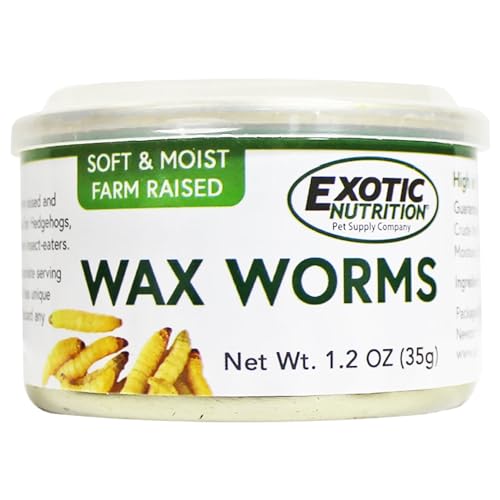
✔ NUTRITIOUS - The insects have been 'cooked in the can' to maintain their nutritional value, flavor, and aroma.
Are Wax Worms Safe for Bearded Dragons?
Wax worms are physically safe for bearded dragons to eat and are not toxic or poisonous. However, “safe” doesn’t mean “healthy” or appropriate for regular feeding. These soft-bodied larvae pose no choking hazard and are easy to digest, but their nutritional profile makes them unsuitable as anything more than an infrequent treat.
The main safety concern with wax worms isn’t immediate toxicity but rather the long-term health consequences of regular consumption. Their extremely high fat content can lead to:
- Obesity, Excess body fat that strains organs and joints
- Fatty liver disease, Fat accumulation in the liver that impairs function
- Nutritional deficiencies, Displacement of nutrient-rich foods from the diet
- Metabolic issues, Disrupted calcium-to-phosphorus ratios
Think of wax worms like candy for bearded dragons. A piece of candy won’t harm a child, but a diet heavy in candy will cause serious health problems. The same principle applies here.
When wax worms ARE appropriate:
- As a training reward during handling sessions
- To entice a sick or recovering dragon to eat
- As an occasional enrichment treat (once every 7-14 days)
- To add weight to an underweight dragon under veterinary guidance
Why Are Wax Worms Bad for Bearded Dragons?

Wax worms are considered poor feeder insects because their nutritional composition is fundamentally mismatched with bearded dragon dietary needs. The primary issue is their fat-to-protein ratio, which is inverted compared to what these reptiles require.
Nutritional breakdown of wax worms:
- Fat content: 20-25%
- Protein content: 15-17%
- Calcium: Very low
- Phosphorus: High (poor Ca:P ratio of approximately 1:7)
Bearded dragons need a calcium-to-phosphorus ratio of at least 2:1 in their diet. Wax worms provide the opposite, which can contribute to metabolic bone disease when fed regularly.
Additional problems with wax worms:
Addictive palatability, The high fat content makes wax worms taste extremely appealing to bearded dragons. Many owners report their dragons refusing healthier insects after being fed wax worms regularly, similar to a child refusing vegetables after eating dessert.
Nutritional displacement, When dragons fill up on wax worms, they consume fewer nutrient-dense insects like dubia roaches or crickets that provide essential vitamins, minerals, and balanced protein.
Digestive concerns, While wax worms themselves don’t typically cause impaction, a diet too high in fat can slow digestive transit time and contribute to other gastrointestinal issues.
Organ stress, The liver and pancreas must work harder to process excessive dietary fat, potentially leading to inflammation or disease over time.
How Often Can Bearded Dragons Eat Wax Worms?
Adult bearded dragons should eat wax worms no more than once or twice per week, with at least 3-4 days between feedings. Even at this frequency, wax worms should represent only a small portion of the overall insect intake, think of them as 5-10% of total feeder insects at most.
Recommended feeding schedule:
For healthy adult bearded dragons:
- Frequency: Once every 7-14 days
- Quantity: 2-3 wax worms per feeding
- Context: As a treat, not a meal replacement
For juvenile bearded dragons (6-12 months):
- Frequency: Once every 14 days maximum
- Quantity: 1-2 small wax worms
- Better option: Avoid entirely and focus on nutrient-dense feeders
For baby bearded dragons (under 6 months):
- Frequency: Not recommended
- Reason: Babies need maximum nutrition for rapid growth
The key principle is moderation and consistency. Don’t feed wax worms multiple days in a row, and don’t increase frequency just because your dragon seems to love them. That enthusiasm is precisely why you need to limit access.
Signs you’re feeding wax worms too often:
- Your dragon refuses other feeder insects
- Visible weight gain or fat deposits around the tail base and limbs
- Decreased activity or lethargy
- Loose or fatty-looking stools
Can Baby Bearded Dragons Eat Wax Worms?
Baby bearded dragons should not eat wax worms. While technically safe in small amounts, wax worms offer nothing beneficial to growing dragons and can actively harm their development by displacing essential nutrients.
Baby bearded dragons (0-6 months) are in their most critical growth phase, requiring high-quality protein, calcium, and vitamins to build strong bones, muscles, and organs. During this period, they should eat 80% insects and 20% vegetables, with those insects being as nutrient-dense as possible.
Why babies should avoid wax worms:
Nutritional opportunity cost, Every wax worm a baby eats is one less cricket, dubia roach, or black soldier fly larvae they could have eaten. Those alternatives provide 2-3 times more protein and significantly better calcium content.
Addiction risk, Baby dragons are especially prone to developing preferences for high-fat foods. Introducing wax worms early can create feeding problems that persist into adulthood.
Growth impacts, Inadequate nutrition during the baby stage can result in stunted growth, metabolic bone disease, and weakened immune systems that cause lifelong health issues.
Better feeder insects for baby bearded dragons:
- Small crickets (appropriately sized)
- Small dubia roaches
- Black soldier fly larvae (Phoenix worms)
- Silkworms
- Small hornworms (occasional treat, better than wax worms)
Choose feeders no larger than the space between your dragon’s eyes to prevent choking. Focus on variety and gut-loading (feeding nutritious foods to the insects before offering them to your dragon) to maximize nutritional value.
How Many Wax Worms Should I Feed My Bearded Dragon?
For adult bearded dragons, feed 2-3 wax worms per treat session, with sessions occurring no more than once per week. This small quantity provides the taste experience and enrichment without overwhelming their diet with fat.
Portion guidelines by age and size:
Adult bearded dragons (18+ months):
- 2-3 medium wax worms
- Once every 7-14 days
- Represents less than 5% of weekly insect intake
Juvenile bearded dragons (6-18 months):
- 1-2 small wax worms
- Once every 14 days maximum
- Only if maintaining healthy weight and eating staple insects well
Baby bearded dragons (0-6 months):
- Zero wax worms recommended
- Focus entirely on nutrient-dense feeders
Size matters: Choose wax worms that are appropriately sized for your dragon. The general rule is that any feeder insect should be no larger than the space between your bearded dragon’s eyes. For wax worms, this usually means small to medium larvae for most adult dragons.
Context is important: These numbers assume your dragon is healthy, at an appropriate weight, and eating a varied diet of staple insects and vegetables. If your dragon is overweight, eliminate wax worms entirely until they return to a healthy body condition.
What Happens If a Bearded Dragon Eats Too Many Wax Worms?
If a bearded dragon eats too many wax worms in a single feeding, the immediate effects are usually mild, possibly some loose stools or temporary lethargy as their system processes the high fat content. The real danger comes from regular overfeeding over weeks and months.
Short-term effects (single overeating incident):
- Loose or greasy-looking feces
- Temporary decreased appetite for the next day or two
- Mild lethargy or reduced activity
- Possible mild digestive discomfort
These typically resolve within 24-48 hours without intervention. Ensure your dragon has proper heating (basking spot of 95-105°F) to aid digestion and offer water.
Long-term effects (chronic overfeeding):
Obesity, The most common consequence. Overweight bearded dragons show fat deposits at the base of the tail, in the limbs, and around the jaw. Obesity stresses joints, organs, and reduces lifespan.
Fatty liver disease (hepatic lipidosis), Fat accumulates in liver cells, impairing liver function. This serious condition can be fatal and requires veterinary treatment. Symptoms include lethargy, loss of appetite, and yellowing of the skin or eyes.
Nutritional secondary hyperparathyroidism (metabolic bone disease), When wax worms displace calcium-rich foods and provide poor calcium-to-phosphorus ratios, dragons can develop weak, deformed bones. This condition is painful and often irreversible.
Food refusal, Dragons become so accustomed to the taste of high-fat wax worms that they refuse healthier insects, creating a dangerous cycle of poor nutrition.
Reduced lifespan, The cumulative effects of obesity and organ stress can significantly shorten a bearded dragon’s life expectancy, which should be 10-15 years with proper care.
If you’ve been overfeeding wax worms, stop immediately and transition back to staple feeders. If your dragon refuses other insects, you may need to wait them out, healthy adult dragons can safely go several days without food while you break the wax worm habit.

Wax Worms vs Mealworms for Bearded Dragons
Both wax worms and mealworms are commonly available feeder insects, but neither should be a staple in a bearded dragon’s diet. However, if comparing the two as occasional treats, mealworms are slightly better than wax worms, though both have significant drawbacks.
Nutritional comparison:
| Nutrient | Wax Worms | Mealworms |
|---|---|---|
| Fat content | 20-25% | 12-15% |
| Protein content | 15-17% | 18-20% |
| Calcium | Very low | Low |
| Phosphorus | High | High |
| Chitin (shell) | Soft | Hard |
Wax worms:
- Pros: Soft-bodied, easy to digest, highly palatable, good for enticing sick dragons
- Cons: Extremely high fat, very low calcium, highly addictive, poor nutritional value
Mealworms:
- Pros: Higher protein than wax worms, more widely available, easier to store
- Cons: Hard chitin shell can cause impaction (especially in young dragons), still high in fat, poor calcium-to-phosphorus ratio
The verdict: Neither should be fed regularly. If you must choose between them as an occasional treat, mealworms are marginally better due to higher protein and lower fat. However, both are inferior to proper staple feeders.
Better alternatives to both:
- Dubia roaches, 36% protein, 7% fat, excellent Ca:P ratio
- Black soldier fly larvae, High calcium, good protein, soft-bodied
- Crickets, 21% protein, 6% fat, widely available
- Silkworms, High protein, low fat, excellent for hydration
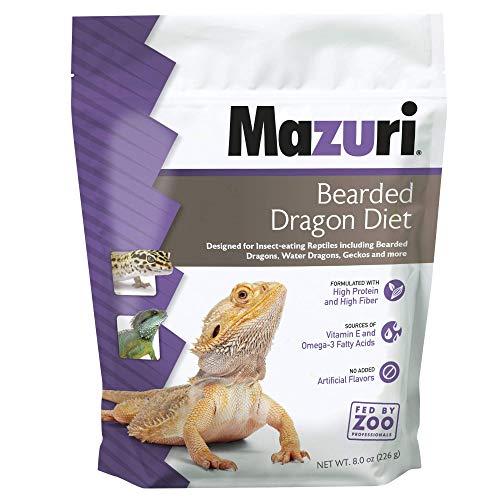
Great source of omega-3 fatty acids and Vitamin E.

All Natural: 100% all-natural and preservative-free

Insect-Based Nutrition: Formulated with highly palatable Black Soldier Fly larvae, these protein-packed pellets provide essential nutrients for bearded dragons and other insect-eating reptiles
Are Wax Worms Too Fatty for Bearded Dragons?
Yes, wax worms are too fatty to serve as a regular part of a bearded dragon’s diet. With a fat content of 20-25%, they contain 3-4 times more fat than appropriate staple feeders and can quickly lead to obesity and related health problems.
To put this in perspective, wild bearded dragons in their native Australian habitat consume insects with an average fat content of 5-10%. Their metabolism is adapted to this leaner diet. Domestic bearded dragons have the same nutritional needs as their wild counterparts, even though they’re less active in captivity.
Why the fat content matters:
Metabolic mismatch, Bearded dragons evolved eating lean insects in an environment where food could be scarce. Their bodies are efficient at storing fat for lean times. In captivity with unlimited food access, this efficiency becomes a liability when fed high-fat insects.
Organ function, The liver and pancreas must process dietary fat. Chronic high-fat intake can lead to inflammation, fatty deposits, and eventual organ dysfunction.
Calcium absorption, Excessive dietary fat can interfere with calcium absorption in the digestive tract, compounding the already poor calcium content of wax worms.
Activity levels, Captive bearded dragons are typically less active than wild ones, meaning they burn fewer calories. High-fat foods are even more problematic in this lower-activity context.
When high fat might be acceptable:
- Underweight dragons recovering from illness (under veterinary guidance)
- Dragons preparing for brumation who need to build fat reserves
- Extremely active breeding females who need extra calories
Even in these cases, there are better high-calorie options than wax worms, such as hornworms or silkworms, which provide more balanced nutrition alongside their calories.
Can Wax Worms Cause Impaction in Bearded Dragons?
Wax worms themselves rarely cause impaction in bearded dragons because they have soft bodies with minimal chitin (the hard material that forms insect exoskeletons). Unlike mealworms or superworms with their tough shells, wax worms are easily digestible.
However, wax worms can contribute to digestive problems in indirect ways:
Indirect impaction risks:
Substrate ingestion, Bearded dragons eating wax worms off loose substrate (sand, walnut shell, etc.) may accidentally ingest substrate material. While the wax worm itself won’t cause impaction, the substrate can. Always feed insects in a dish or on a solid surface.
Slowed digestion, High-fat diets can slow overall digestive transit time. If a dragon is eating wax worms regularly alongside other foods, the fat content may slow digestion enough to increase impaction risk from other sources.
Dehydration, Dragons eating too many fatty foods and not enough moisture-rich vegetables may become dehydrated, which is a major impaction risk factor. Proper hydration is essential for moving food through the digestive system.
True impaction causes to watch for:
- Loose substrate (sand, walnut shell, wood chips)
- Insects with hard shells (mealworms, superworms) fed to young dragons
- Inadequate heating (basking temps below 95°F)
- Dehydration
- Oversized prey items
Preventing impaction:
- Use solid substrates (tile, reptile carpet, paper)
- Maintain proper basking temperatures (95-105°F)
- Ensure adequate hydration through vegetables and occasional baths
- Feed appropriately sized insects
- Limit hard-shelled insects, especially for juveniles
If your bearded dragon shows signs of impaction (no bowel movements for several days, lethargy, loss of appetite, dragging back legs), consult a reptile veterinarian immediately.
Do Bearded Dragons Get Addicted to Wax Worms?
While “addiction” isn’t technically accurate in the clinical sense, bearded dragons absolutely develop strong preferences for wax worms that can lead to food refusal behaviors remarkably similar to addiction. This happens because of the high fat content, which makes wax worms taste exceptionally good to reptiles.
Why wax worms are so appealing:
Evolutionary programming, In the wild, high-fat foods are rare and valuable. Bearded dragons are programmed to seek out and prefer calorie-dense foods when available. Wax worms trigger this instinctive preference.
Taste and texture, The soft, fatty texture and rich taste make wax worms more palatable than leaner, crunchier insects like crickets or roaches.
Learned preference, After repeated exposure to wax worms, bearded dragons learn to associate feeding time with this highly rewarding food and may refuse less appealing options.
Signs your dragon is “hooked” on wax worms:
- Refusing crickets, dubia roaches, or other staple insects
- Only showing interest in food when wax worms are present
- Becoming more selective or picky about other foods
- Losing weight because they’re not eating enough of other insects
Breaking the wax worm habit:
If your bearded dragon has developed a strong preference for wax worms, you’ll need to reset their expectations:
- Stop offering wax worms completely, Go cold turkey for at least 2-3 weeks
- Offer staple insects daily, Present crickets, dubia roaches, or other healthy feeders
- Be patient, Healthy adult dragons can safely go 3-5 days without food; they will eventually eat
- Increase variety, Try different staple insects to find what appeals to them
- Gut-load feeders, Make staple insects more nutritious and appealing by feeding them quality foods
- Ensure proper husbandry, Correct temperatures and lighting increase appetite
Don’t give in when your dragon refuses food for a day or two. This is a waiting game, and offering wax worms “just this once” will reset all your progress.
Best Feeder Insects for Bearded Dragons Instead of Wax Worms
Several feeder insects provide far better nutrition than wax worms while still being palatable and safe for bearded dragons. These should form the foundation of your dragon’s insect diet.
Top staple feeder insects:
Dubia roaches
- Protein: 36%
- Fat: 7%
- Excellent calcium-to-phosphorus ratio
- Pros: Highly nutritious, don’t smell, can’t climb smooth surfaces, long-lived
- Cons: Illegal in some states (Florida, Hawaii), more expensive than crickets
Crickets
- Protein: 21%
- Fat: 6%
- Moderate calcium content
- Pros: Widely available, affordable, good activity to stimulate hunting
- Cons: Noisy, smelly, die quickly, can bite dragons if left in enclosure
Black soldier fly larvae (Phoenix worms, Calciworms)
- Protein: 17%
- Fat: 10%
- Naturally high in calcium (excellent Ca:P ratio)
- Pros: No gut-loading needed, soft-bodied, good for calcium supplementation
- Cons: Small size means you need many for adult dragons, less movement
Silkworms
- Protein: 64% (dry weight)
- Fat: 10%
- High moisture content
- Pros: Highly nutritious, great for hydration, low fat, excellent for sick dragons
- Cons: Expensive, require special care, limited availability
Hornworms (occasional treat)
- Protein: 9%
- Fat: 3%
- Very high moisture content (85%)
- Pros: Excellent for hydration, low fat, highly palatable
- Cons: Low protein, grow very quickly, can be large, should be occasional due to high water content
Feeding strategy for optimal nutrition:
Create a rotation of 2-3 staple insects (dubia roaches, crickets, black soldier fly larvae) and offer them daily for juveniles or every other day for adults. Supplement with calcium powder (without D3) at most feedings and with calcium plus D3 once or twice weekly.
Reserve wax worms, hornworms, and other treats for occasional enrichment, no more than 5-10% of total insect intake.
Nutritional Value of Wax Worms for Reptiles
Wax worms (larvae of the wax moth, Galleria mellonella) have a nutritional profile that makes them suitable as an occasional treat but inadequate as a dietary staple for bearded dragons or most other reptiles.
Complete nutritional breakdown:
Macronutrients (approximate):
- Moisture: 60-62%
- Protein: 15-17%
- Fat: 20-25%
- Fiber: 2-3%
- Ash (minerals): 1-2%
Micronutrients:
- Calcium: 20-30 mg/100g (very low)
- Phosphorus: 150-200 mg/100g (high)
- Calcium-to-phosphorus ratio: Approximately 1:7 (poor; should be 2:1 or better)
- Vitamins: Minimal amounts of B vitamins
What this means for bearded dragons:
The high fat and low calcium content make wax worms nutritionally unbalanced. Bearded dragons require:
- Moderate to high protein (for growth and maintenance)
- Low to moderate fat (5-10% in feeder insects)
- High calcium relative to phosphorus (2:1 ratio minimum)
Wax worms fail on two of these three criteria. Their protein content is acceptable but not exceptional, their fat content is far too high, and their calcium-to-phosphorus ratio is inverted.
When wax worms might be useful:
Despite their poor nutritional profile, wax worms have specific applications:
Appetite stimulation, For sick, stressed, or recovering reptiles that refuse other foods, the high palatability of wax worms can encourage eating.
Weight gain, Under veterinary supervision, wax worms can help underweight reptiles gain weight quickly, though better options usually exist.
Training and enrichment, As an occasional high-value reward, wax worms can be useful for positive reinforcement during handling or training.
Comparison to better feeders:
For context, dubia roaches provide 36% protein, 7% fat, and a favorable calcium-to-phosphorus ratio, making them nutritionally superior in every way. Black soldier fly larvae offer similar protein to wax worms but with significantly more calcium and less fat.
The bottom line: wax worms are nutritionally poor compared to appropriate staple feeders and should be treated as an occasional indulgence rather than a regular food source.
Frequently Asked Questions
Can bearded dragons eat wax worms every day?
No, bearded dragons should never eat wax worms daily. The high fat content (20-25%) will quickly lead to obesity, fatty liver disease, and nutritional imbalances. Limit wax worms to once per week at most, treating them as an occasional snack rather than a regular food.
How do I get my bearded dragon to stop refusing food after eating wax worms?
Stop offering wax worms completely for 2-3 weeks and only present staple insects like dubia roaches or crickets. Healthy adult dragons can safely go several days without food and will eventually eat when hungry. Don’t give in to food refusal by offering wax worms again, as this reinforces the picky behavior.
Are wax worms better than mealworms for bearded dragons?
No, mealworms are slightly better than wax worms because they contain more protein (18-20% vs. 15-17%) and less fat (12-15% vs. 20-25%). However, neither should be a dietary staple. Dubia roaches, crickets, and black soldier fly larvae are far superior to both.
Can I feed wax worms to a bearded dragon with metabolic bone disease?
No, wax worms are a poor choice for dragons with metabolic bone disease (MBD) because they have very low calcium and a poor calcium-to-phosphorus ratio. Focus on calcium-rich feeders like black soldier fly larvae, properly supplemented crickets or dubia roaches, and calcium powder supplementation as directed by your veterinarian.
How long can I keep wax worms before feeding them to my bearded dragon?
Wax worms can be stored in the refrigerator (55-60°F) for 2-3 weeks. Keep them in a ventilated container with their bedding material. Check regularly and remove any dead worms. Don’t gut-load wax worms as you would other feeders since they’re only occasional treats.
Will wax worms help my underweight bearded dragon gain weight?
Wax worms can help an underweight dragon gain weight due to their high calorie content, but they’re not the best option. Silkworms, hornworms, and increased quantities of dubia roaches provide better nutrition while still adding calories. Consult a reptile veterinarian to determine why your dragon is underweight before using wax worms as a solution.
Can bearded dragons eat wax worm beetles?
Yes, bearded dragons can eat wax moths (the adult form of wax worms), though they’re less commonly offered. The moths have similar nutritional drawbacks to the larvae, high fat and low calcium, so they should also be treated as occasional treats only.
Are wax worms gut-loaded like other feeder insects?
Wax worms are typically not gut-loaded because they’re fed as treats rather than staple insects, and they’re usually stored in the refrigerator where they’re inactive and not eating. If you do keep them at room temperature, they’ll eat their bedding (usually bran or oats), but this doesn’t significantly improve their nutritional value.
How many wax worms equal one cricket nutritionally?
This comparison is difficult because wax worms and crickets have very different nutritional profiles. Roughly speaking, one wax worm contains about the same calories as 1-2 crickets but with 3-4 times more fat and significantly less protein and calcium. You can’t substitute wax worms for crickets on a one-to-one basis and maintain proper nutrition.
Can bearded dragons eat frozen wax worms?
Yes, bearded dragons can eat previously frozen wax worms that have been thawed. However, freezing may reduce some nutritional value and change the texture. Most dragons prefer live or freshly killed insects because movement triggers their hunting instinct. If using frozen wax worms, thaw them completely and ensure they’re at room temperature before offering.
Do wax worms carry parasites that can harm bearded dragons?
Wax worms from reputable commercial breeders are generally parasite-free and safe to feed. Wild-caught wax worms (found in beehives) should never be fed to bearded dragons as they may carry parasites, pesticides, or other contaminants. Always purchase feeder insects from trusted suppliers.
What’s the best way to offer wax worms to my bearded dragon?
Offer wax worms in a smooth feeding dish to prevent substrate ingestion, or use feeding tongs to hand-feed them. This also helps with portion control since you can limit the number offered. Never leave wax worms loose in the enclosure where they might burrow into substrate or hide.
Conclusion
Wax worms can be part of a bearded dragon’s diet, but only as an occasional treat, not a regular food source. Their extremely high fat content (20-25%) and poor calcium-to-phosphorus ratio make them nutritionally inadequate for regular feeding. Think of them as dessert: enjoyable in small amounts but harmful if they replace nutritious meals.
Key actions to take:
Limit frequency, Feed wax worms no more than once per week to adult bearded dragons, and avoid them entirely for babies under six months old.
Control portions, Stick to 2-3 wax worms per feeding session, representing less than 5% of your dragon’s total insect intake.
Prioritize staple feeders, Build your dragon’s diet around nutrient-dense insects like dubia roaches, crickets, and black soldier fly larvae that provide balanced protein, moderate fat, and good calcium content.
Watch for food refusal, If your bearded dragon starts refusing healthier insects after eating wax worms, stop offering wax worms completely for 2-3 weeks to reset their preferences.
Monitor body condition, Regularly check your dragon’s weight and body condition. Fat deposits around the tail base, limbs, or jaw indicate overfeeding of high-fat foods.
Consult a vet when needed, If your dragon is overweight, underweight, or showing signs of illness, work with a reptile veterinarian to develop an appropriate feeding plan rather than self-treating with wax worms.
By treating wax worms as the occasional indulgence they should be, rather than a dietary staple, you’ll help your bearded dragon maintain optimal health, proper weight, and a long, active life. Focus on variety, balance, and moderation in all aspects of your dragon’s diet, and they’ll thrive for years to come.

Protein-Packed for Growth: Specially formulated for juvenile bearded dragons, this high-protein diet with Black Soldier Fly larvae fuels rapid growth and supports strong muscles

Unique textured pellets that bearded dragons love to eat

Package Dimensions: 12.953 H x 7.62 L x 7.62 W (centimeters)


