
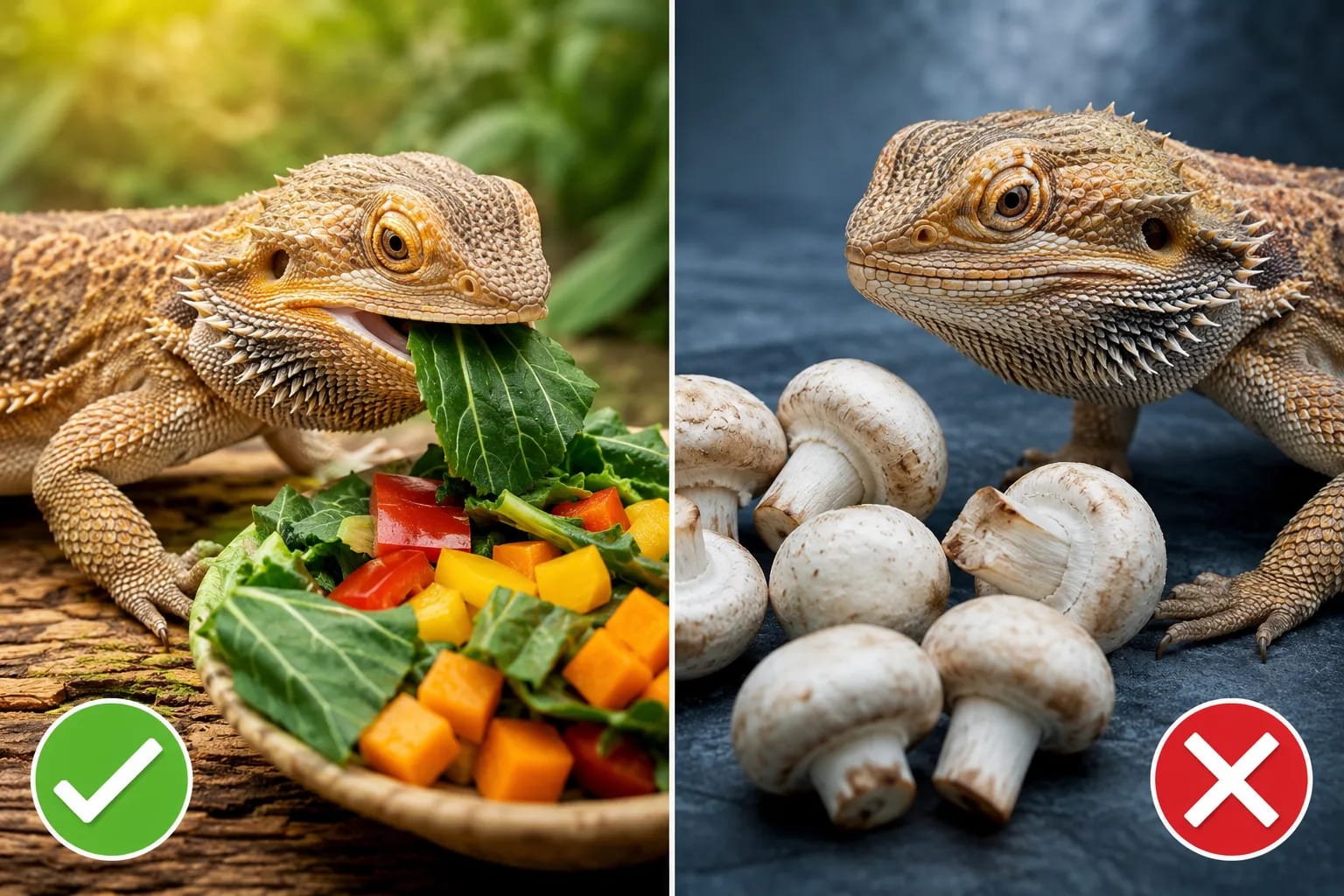
Quick Answer: No, bearded dragons should not eat mushrooms. While not all mushrooms are immediately toxic, they offer no nutritional value to bearded dragons and can cause digestive problems, potential toxicity, and other health complications. Wild mushrooms pose an even greater risk due to the difficulty in identifying toxic species. Stick to proven safe vegetables and insects for your bearded dragon’s diet.
Key Takeaways
- Mushrooms are not recommended for bearded dragons, whether raw, cooked, store-bought, or wild
- No nutritional benefit exists for bearded dragons eating mushrooms, as they lack the digestive enzymes to properly process fungi
- Digestive upset is the most common result when bearded dragons consume mushrooms, including diarrhea and lethargy
- Wild mushrooms are extremely dangerous due to the risk of toxic species that can cause organ failure
- Safe alternatives include collard greens, butternut squash, bell peppers, and other leafy vegetables
- Accidental ingestion requires immediate monitoring and veterinary contact if symptoms appear
- Baby bearded dragons are especially vulnerable and should never be given mushrooms
- Store-bought mushrooms like portobello and shiitake are safer than wild varieties but still not appropriate food
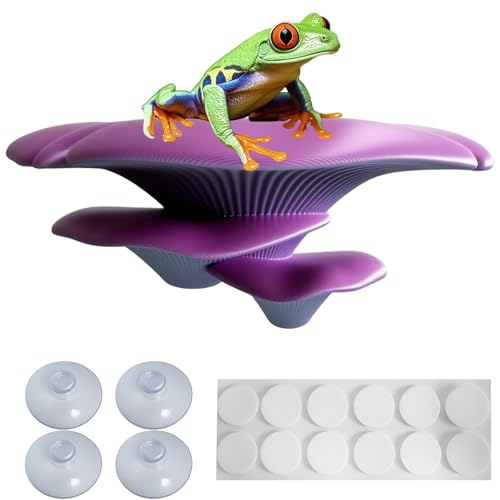
【Versatile Mushroom Decorations】: Add a natural, forest-inspired accent to your reptile terrarium or aquarium. These mushroom decorations are perfect for leopard gecko tank accessories, frog habitats, or bearded dragon climbing setups

Bearded Dragon Cottagecore design. Grab this Bearded Dragon Mushroom T-Shirt for your bearded lover friends, family or relatives! It's the perfect gift idea & present for Birthdays, Mother's Day, Father's Day or Christmas!

Forest-Inspired Mushroom Decor – A whimsical mushroom centerpiece transforms your reptile tank into a forest-like habitat, adding charm while encouraging natural exploration for Small Lizards, geckos, frogs, snakes and more
Are Mushrooms Safe for Bearded Dragons to Eat?
Mushrooms are not safe for bearded dragons and should be avoided entirely. While some common grocery store mushrooms may not cause immediate death, they provide zero nutritional benefit and can trigger digestive distress in these reptiles.
Bearded dragons evolved in the arid regions of Australia, where their natural diet consists of insects, leafy plants, and occasional flowers. Fungi were never part of their evolutionary diet, which means their digestive systems lack the specialized enzymes needed to break down mushroom cell walls effectively.
Key reasons mushrooms are unsafe:
- Lack of digestive enzymes for processing chitin (the tough material in mushroom cell walls)
- High moisture content can cause diarrhea and dehydration through fluid imbalance
- Potential toxins even in “edible” varieties that humans can safely consume
- Nutritional imbalance with poor calcium-to-phosphorus ratios
- Risk of misidentification if wild mushrooms are involved
The risk far outweighs any perceived benefit. Even if your bearded dragon shows interest in mushrooms, this curiosity doesn’t indicate the food is appropriate or safe.
What Happens If a Bearded Dragon Eats a Mushroom?
If a bearded dragon eats a mushroom, the most common outcome is digestive upset within 6-24 hours, including diarrhea, loss of appetite, and lethargy. The severity depends on the mushroom type, quantity consumed, and the individual dragon’s size and health status.
Common reactions include:
- Mild cases: Loose stools, reduced appetite for 24-48 hours, slight lethargy
- Moderate cases: Watery diarrhea, refusal to eat, hiding behavior, dehydration signs
- Severe cases (toxic mushrooms): Vomiting, tremors, seizures, organ failure, potential death
The bearded dragon’s inability to properly digest mushrooms means the fungi pass through their system largely unprocessed, irritating the intestinal lining and disrupting normal gut flora. This can lead to secondary complications like bacterial overgrowth or impaction if the dragon becomes dehydrated.
Timeline of symptoms:
- 0-6 hours: Usually no visible symptoms
- 6-24 hours: Digestive symptoms begin to appear
- 24-48 hours: Peak symptoms if the mushroom was mildly problematic
- 48+ hours: Recovery begins, or symptoms worsen if toxicity is involved
Choose immediate veterinary care if your dragon shows severe symptoms like tremors, inability to move properly, or continuous vomiting.
Can Bearded Dragons Eat Cooked Mushrooms or Only Raw?
Bearded dragons should not eat mushrooms in any form, whether raw or cooked. Cooking does not make mushrooms safe or digestible for these reptiles, as heat does not break down the chitin in mushroom cell walls or add the missing digestive enzymes bearded dragons need.
Some owners mistakenly believe that cooking mushrooms makes them safer because humans often cook mushrooms to improve digestibility. However, bearded dragons have fundamentally different digestive systems than mammals. Cooking may reduce some bacteria or parasites, but it doesn’t address the core problems:
Why cooking doesn’t help:
- Chitin remains indigestible regardless of temperature
- Nutritional value doesn’t improve with cooking
- Potential toxins may concentrate when water evaporates
- Cooked mushrooms are often prepared with oils, butter, or seasonings that are harmful to reptiles
If anything, cooked mushrooms prepared for human consumption are more dangerous because they often contain added salt, garlic, onions, or oils that are toxic to bearded dragons. A plain cooked mushroom is no safer than a raw one for your pet.
Which Mushrooms Are Toxic to Bearded Dragons?
All wild mushrooms should be considered toxic to bearded dragons due to the extreme difficulty in accurate identification and the presence of species that cause organ failure. Even common store-bought varieties like button, portobello, and shiitake mushrooms are inappropriate, though they’re less immediately dangerous than wild toxic species.
Highly toxic wild mushrooms include:
- Death cap (Amanita phalloides): Causes liver and kidney failure
- Destroying angel (Amanita species): Fatal even in small amounts
- False morel (Gyromitra species): Contains toxins that damage the nervous system
- Galerina species: Contain the same toxins as death caps
Store-bought mushrooms to avoid:
- Button mushrooms (white/brown)
- Portobello mushrooms
- Shiitake mushrooms
- Oyster mushrooms
- Cremini mushrooms
Even “safe” culinary mushrooms can cause problems because bearded dragons cannot digest them properly. The distinction between “edible for humans” and “safe for bearded dragons” is critical. A mushroom that’s perfectly safe on your dinner plate can still cause serious digestive upset in your reptile.
Common mistake: Assuming that if a mushroom is sold in grocery stores, it must be safe for all animals. This logic doesn’t apply to species with specialized diets like bearded dragons.
What Vegetables Can Bearded Dragons Eat Instead of Mushrooms?
Bearded dragons thrive on a variety of leafy greens and vegetables that provide proper nutrition without the risks associated with mushrooms. The best alternatives include collard greens, mustard greens, butternut squash, bell peppers, and turnip greens, all of which offer excellent calcium-to-phosphorus ratios.

Top safe vegetable choices:
- Collard greens: High in calcium, low in oxalates, excellent staple
- Mustard greens: Nutrient-dense with good calcium content
- Butternut squash: Rich in vitamin A, good for variety
- Bell peppers (red, yellow, orange): High in vitamin C and color variety
- Turnip greens: Excellent calcium source
- Dandelion greens: Wild-foraged option (pesticide-free only)
- Endive: Good texture and nutrition
- Escarole: Similar benefits to endive
Vegetables to offer occasionally (2-3 times per week):
- Carrots (shredded)
- Green beans
- Snap peas
- Zucchini
- Yellow squash
Feeding ratio for adult bearded dragons: Aim for 80% vegetables and 20% insects. For juveniles under 12 months, reverse this ratio to 80% insects and 20% vegetables to support rapid growth.
Choose organic vegetables when possible, and always wash produce thoroughly to remove pesticides. Cut vegetables into pieces no larger than the space between your dragon’s eyes to prevent choking.
How Often Can I Feed My Bearded Dragon Mushrooms If They’re Safe?
You should never feed mushrooms to your bearded dragon, regardless of frequency. There is no safe amount or schedule for mushroom consumption because these fungi offer no nutritional value and pose digestive risks every time they’re consumed.
Some owners ask whether an occasional mushroom as a “treat” would be acceptable, but this thinking is flawed. Treats for bearded dragons should still provide nutritional value and be digestible. Mushrooms fail on both counts.
Better treat options include:
- Hornworms: High moisture content, loved by most dragons (feed sparingly due to low nutritional density)
- Blueberries: Antioxidant-rich, small portions 1-2 times per week
- Mango: Vitamin-rich fruit, occasional treat
- Bee pollen: Nutrient supplement that many dragons enjoy
The concept of feeding frequency only applies to foods that are safe in moderation. Mushrooms don’t fall into this category. They’re not toxic in the way that onions or avocados are immediately poisonous, but they’re also not food that becomes safe with reduced frequency.
Decision rule: If a food provides no nutrition and causes digestive upset, feeding it less often doesn’t make it appropriate. Simply remove it from the diet entirely.
Can Baby Bearded Dragons Eat Mushrooms?
Baby bearded dragons should absolutely never eat mushrooms, as their developing digestive systems are even more sensitive than adults and they have less body mass to buffer against potential toxins. Juveniles under six months old are particularly vulnerable to digestive upset and nutritional imbalances.
Young bearded dragons grow rapidly and require precise nutrition to develop properly. Their diet should consist primarily of appropriately-sized insects (80%) with small amounts of finely chopped vegetables (20%). Any digestive disruption during this critical growth phase can lead to:
Risks specific to baby bearded dragons:
- Metabolic bone disease from nutritional imbalances
- Stunted growth due to poor nutrient absorption
- Dehydration from diarrhea (more dangerous in small bodies)
- Impaction if digestive upset leads to constipation
- Failure to thrive from repeated digestive stress
Baby bearded dragons are also more likely to sample new items in their environment as they explore. Keep mushrooms and other inappropriate foods completely out of their enclosure to prevent accidental ingestion.
Safe foods for baby bearded dragons:
- Small crickets (appropriately sized)
- Small dubia roaches
- Black soldier fly larvae
- Finely chopped collard greens
- Tiny pieces of butternut squash
Feed babies 2-3 times daily with as many insects as they’ll eat in 10-15 minutes, plus fresh vegetables available throughout the day.
My Bearded Dragon Ate a Mushroom by Accident, What Should I Do?
If your bearded dragon accidentally ate a mushroom, immediately remove any remaining mushroom pieces from the enclosure, note the time of ingestion and mushroom type if known, and monitor your dragon closely for the next 48 hours for signs of distress. Contact your reptile veterinarian if symptoms develop.
Immediate steps:
- Remove the mushroom source from the enclosure completely
- Identify the mushroom type if possible (take a photo)
- Note the quantity consumed (estimate size)
- Record the time of ingestion
- Monitor temperature to ensure proper basking and digestion
- Provide fresh water to help flush the system
Symptoms requiring immediate veterinary care:
- Vomiting or regurgitation
- Severe lethargy or inability to move
- Tremors or seizures
- Labored breathing
- Swollen abdomen
- Blood in stool
Symptoms requiring veterinary consultation within 24 hours:
- Watery diarrhea lasting more than one bowel movement
- Complete loss of appetite for more than 24 hours
- Hiding behavior that’s unusual for your dragon
- Dark or discolored stool
If the mushroom was wild or unknown: Treat this as a potential emergency. Wild mushrooms can be deadly, and identification is extremely difficult even for experts. Contact your vet immediately and consider bringing a sample of the mushroom if available.
Most accidental ingestions of small amounts of common store-bought mushrooms result in mild digestive upset that resolves within 48 hours. However, vigilant monitoring is essential because individual reactions vary.

Lifelike Mushroom Design: Feature a realistic mushroom shape with rustic door, windows, chimney, bench and lamp, offering a cozy hideout for reptiles and creating a charming, functional decor element for an eye-catching terrarium display

Cottagecore Bearded Dragon Aesthetic Mushroom Lizard Witchy Design for Bearded Dragon Fans

Bruh design for Bearded Dragon lovers
Why Are Mushrooms Bad for Bearded Dragons?
Mushrooms are bad for bearded dragons because these reptiles lack the digestive enzymes needed to break down fungal chitin, resulting in poor nutrient absorption, digestive irritation, and potential toxicity from compounds that are harmless to mammals but problematic for reptiles.
The fundamental issue is evolutionary mismatch. Bearded dragons evolved in Australian deserts where fungi are scarce and never formed part of their natural diet. Their digestive systems are optimized for:
What bearded dragons are designed to digest:
- Insect exoskeletons (different structure than fungal chitin)
- Plant cellulose from desert vegetation
- Occasional flowers and fruits
- High-protein, moderate-fat animal matter
Why mushrooms cause problems:
- Chitin structure: Fungal cell walls contain beta-glucans and chitin that require specific enzymes bearded dragons don’t produce
- Phosphorus content: Most mushrooms have poor calcium-to-phosphorus ratios, contributing to metabolic bone disease risk
- Mycotoxins: Even “edible” mushrooms may contain compounds that affect reptile liver function
- Moisture imbalance: High water content disrupts normal digestive processes
- Lack of nutritional value: Mushrooms provide minimal vitamins, minerals, or protein that bearded dragons can actually absorb
Additionally, mushrooms can harbor bacteria and parasites that affect reptiles differently than mammals. What’s safe for human consumption may carry pathogens that bypass our immune systems but affect cold-blooded animals.
Common misconception: “If it’s natural and grows in the ground, it must be safe.” Many natural substances are toxic to specific species. Bearded dragons can’t eat chocolate, avocado, or rhubarb either, despite these being “natural” foods.
Do Wild Bearded Dragons Eat Mushrooms in Nature?
Wild bearded dragons in their native Australian habitat do not regularly consume mushrooms, as fungi are scarce in the arid and semi-arid environments where these reptiles live. Their natural diet consists of insects, native vegetation, flowers, and occasional small vertebrates, with no documented evidence of intentional mushroom consumption.
The Australian outback and scrubland environments that bearded dragons inhabit experience:
Environmental factors limiting mushroom availability:
- Low annual rainfall (10-20 inches in many regions)
- High temperatures and intense sun exposure
- Sandy, well-draining soils
- Limited organic matter for fungal growth
- Seasonal drought periods
Mushrooms require moisture, shade, and organic material to fruit. These conditions are rare in bearded dragon territory. When fungi do appear (typically after rare rain events), they’re usually small, short-lived, and not abundant enough to form a significant food source.
Wild bearded dragon diet composition:
- 50-60% insects: Crickets, beetles, ants, termites, grasshoppers
- 30-40% plant matter: Native grasses, flowers, leaves, seeds
- 5-10% opportunistic feeding: Small lizards, nestling birds, carrion
Field studies of wild bearded dragon stomach contents have not reported mushrooms as a dietary component. This strongly suggests that even when available, mushrooms are not recognized as food by these reptiles.
Edge case: A wild bearded dragon might accidentally ingest a small mushroom while catching prey or eating vegetation, but this would be incidental rather than intentional feeding behavior.
What Are the Best Safe Foods for Bearded Dragons?
The best safe foods for bearded dragons include a rotation of calcium-rich leafy greens like collard greens and mustard greens, appropriately-sized live insects such as dubia roaches and crickets, and colorful vegetables like bell peppers and butternut squash that provide essential vitamins without excessive oxalates or goitrogens.
Top-tier staple vegetables (feed daily):
- Collard greens
- Mustard greens
- Turnip greens
- Dandelion greens
- Endive
- Escarole
Excellent variety vegetables (feed 3-4 times per week):
- Butternut squash
- Acorn squash
- Bell peppers (red, yellow, orange)
- Snap peas
- Green beans
- Okra
Best feeder insects (protein source):
- Dubia roaches: Excellent nutrition, easy to digest, long-lived
- Black soldier fly larvae: High calcium content
- Crickets: Readily available, good nutrition when gut-loaded
- Hornworms: High moisture, good for hydration (occasional treat)
- Silkworms: Excellent protein and calcium
Occasional treats (1-2 times per week):
- Blueberries
- Strawberries
- Mango
- Papaya
- Raspberries
Sample daily feeding schedule for adult bearded dragon:
- Morning: Fresh salad of collard greens, bell pepper, and butternut squash
- Afternoon: 5-10 appropriately-sized dubia roaches dusted with calcium powder
- Evening: Remove uneaten vegetables
Feeding amounts: Vegetables should be offered in unlimited quantities, while insects should be portioned based on the dragon’s age. Adults need fewer insects (20% of diet) while juveniles need more (80% of diet).
Supplement schedule:
- Calcium powder (without D3): 5 days per week
- Calcium with D3: 2 days per week
- Multivitamin: 1-2 times per week
Choose variety over repetition. Rotating through different safe vegetables ensures balanced nutrition and prevents boredom.
Can Bearded Dragons Eat Portobello or Shiitake Mushrooms?
Bearded dragons should not eat portobello or shiitake mushrooms, despite these varieties being popular culinary mushrooms for humans. While these store-bought mushrooms are less dangerous than wild toxic species, they still offer no nutritional benefit and can cause digestive problems in bearded dragons.
Why portobello mushrooms are inappropriate:
- High moisture content (92% water) leads to diarrhea
- Poor calcium-to-phosphorus ratio (1:10 or worse)
- Contains compounds that irritate reptile digestive systems
- Provides minimal absorbable protein or vitamins
- Large, dense texture increases choking and impaction risk
Why shiitake mushrooms are inappropriate:
- Contains lentinan and other polysaccharides that bearded dragons cannot digest
- May contain higher levels of compounds that stress reptile liver function
- Tough, chewy texture even when cooked
- No evolutionary adaptation for processing this food type
Some owners report that their bearded dragons show interest in these mushrooms or even eat them without immediate visible problems. However, lack of immediate symptoms doesn’t indicate safety. Chronic low-level digestive stress can contribute to long-term health issues like:
- Weakened immune system
- Poor nutrient absorption from other foods
- Increased susceptibility to parasites
- Gradual liver or kidney stress
Decision rule: If a food requires your dragon’s body to work harder for zero nutritional gain, it’s not appropriate regardless of whether it causes immediate dramatic symptoms.
The same principle applies to all culinary mushroom varieties: oyster, cremini, enoki, maitake, and others. None provide value to your bearded dragon’s diet.
Signs of Mushroom Poisoning in Bearded Dragons
Signs of mushroom poisoning in bearded dragons include severe lethargy, vomiting or regurgitation, tremors or seizures, loss of coordination, dark or bloody diarrhea, and labored breathing, typically appearing within 6-48 hours of ingestion depending on the toxin type and quantity consumed.
Early warning signs (6-12 hours):
- Reduced activity level
- Loss of appetite
- Hiding behavior
- Darker coloration than normal
- Loose or watery stool
Moderate symptoms (12-24 hours):
- Refusal to move or bask
- Watery diarrhea
- Dehydration signs (sunken eyes, skin tenting)
- Weakness in limbs
- Unresponsive to handling
Severe symptoms (24-48 hours or sooner with highly toxic mushrooms):
- Vomiting or regurgitation
- Tremors or muscle twitching
- Seizures or convulsions
- Inability to coordinate movement
- Labored or open-mouth breathing
- Blood in stool or vomit
- Complete unresponsiveness
Organ failure symptoms (48+ hours with toxic species):
- Jaundice (yellowing of skin and eyes)
- Swollen abdomen
- Complete loss of muscle tone
- Coma-like state
The severity and timeline depend heavily on which mushroom was consumed. A small piece of button mushroom from the grocery store might cause mild diarrhea for a day, while a wild toxic mushroom could cause organ failure within 24-48 hours.
Critical action point: If your bearded dragon shows any symptoms beyond mild lethargy after mushroom ingestion, contact your reptile veterinarian immediately. Mushroom toxicity can progress rapidly, and early intervention significantly improves outcomes.
What to tell your vet:
- Time of mushroom ingestion
- Type of mushroom (bring photo or sample if possible)
- Estimated quantity consumed
- Timeline of symptoms
- Your dragon’s age, weight, and general health status
Are Store-Bought Mushrooms Safer Than Wild Mushrooms for Bearded Dragons?
Store-bought mushrooms are marginally safer than wild mushrooms for bearded dragons only in that they’re less likely to contain immediately lethal toxins, but neither category should be fed to these reptiles. Wild mushrooms pose extreme danger due to potential misidentification of deadly species, while store-bought varieties still cause digestive problems and offer no nutritional value.
Relative risk comparison:
| Mushroom Type | Risk Level | Primary Concerns |
|---|---|---|
| Wild mushrooms (unknown species) | Extreme | Potential organ failure, death, impossible to identify safely |
| Wild mushrooms (identified by expert) | Very High | Misidentification risk, unknown toxins for reptiles |
| Store-bought culinary mushrooms | Moderate | Digestive upset, no nutrition, potential chronic stress |
| Safe vegetables (collard greens, etc.) | None | Appropriate nutrition, natural diet component |
Why wild mushrooms are especially dangerous:
- Even experienced mycologists can misidentify species
- Many toxic mushrooms closely resemble edible varieties
- A single death cap mushroom can be lethal
- Toxin levels vary based on growing conditions
- Some toxins have no antidote
Why store-bought mushrooms are still inappropriate:
- Digestive system incompatibility remains
- No nutritional benefit regardless of safety from acute toxins
- May contain pesticides or other agricultural chemicals
- Still cause diarrhea and digestive stress
- Take up space in the diet that should go to nutritious foods
Common mistake: Thinking that because you safely eat store-bought mushrooms, they must be fine for your pet. Bearded dragons have completely different digestive physiology and nutritional needs than humans.
Bottom line: Neither wild nor store-bought mushrooms belong in a bearded dragon’s diet. The distinction between them is only relevant in emergency situations where accidental ingestion has occurred and you’re assessing risk level for veterinary triage.
Frequently Asked Questions
Can bearded dragons eat mushrooms as a treat?
No, bearded dragons should not eat mushrooms even as an occasional treat. Mushrooms provide no nutritional value and cause digestive upset regardless of frequency. Better treat options include blueberries, hornworms, or mango in small amounts.
What should I do if my bearded dragon ate a wild mushroom?
Contact your reptile veterinarian immediately if your bearded dragon ate a wild mushroom. Wild mushrooms can be deadly, and symptoms may not appear for 6-24 hours. Monitor for lethargy, vomiting, tremors, or diarrhea while seeking professional help.
Are white button mushrooms safe for bearded dragons?
White button mushrooms are not safe for bearded dragons despite being common grocery store items. They cause digestive problems, offer no nutrition, and contain compounds that bearded dragons cannot properly process.
Can mushrooms kill a bearded dragon?
Yes, toxic wild mushrooms can kill a bearded dragon through organ failure. Store-bought mushrooms are less likely to be immediately lethal but can cause serious digestive problems and contribute to long-term health issues.
How long after eating a mushroom will a bearded dragon show symptoms?
Symptoms typically appear 6-24 hours after mushroom ingestion, though highly toxic species may cause problems sooner. Mild digestive upset usually peaks at 24-48 hours, while serious toxicity can progress rapidly.
What vegetables are similar to mushrooms but safe for bearded dragons?
No vegetables are similar to mushrooms in texture or taste, but safe alternatives with interesting textures include bell peppers, snap peas, and butternut squash. These provide actual nutrition unlike mushrooms.
Can bearded dragons eat mushroom soup or mushroom powder?
No, bearded dragons should not consume mushrooms in any form, including soup, powder, or processed products. These preparations often contain additional harmful ingredients like salt, onions, or garlic.
Do bearded dragons like the taste of mushrooms?
Some bearded dragons may show curiosity toward mushrooms, but interest doesn’t indicate safety or appropriateness. Bearded dragons often investigate new items in their environment regardless of whether they’re food.
What’s the difference between mushrooms and fungi for bearded dragons?
Mushrooms are the fruiting bodies of fungi. All mushrooms should be avoided for bearded dragons. The term “fungi” is broader and includes molds and yeasts, none of which belong in a bearded dragon’s diet.
Can bearded dragons eat mushrooms found in their outdoor enclosure?
No, remove any mushrooms that appear in outdoor enclosures immediately. Wild mushrooms are especially dangerous due to potential toxicity, and bearded dragons may accidentally ingest them while hunting insects.
Are dried mushrooms safer than fresh mushrooms for bearded dragons?
Dried mushrooms are not safer than fresh mushrooms for bearded dragons. Drying concentrates the indigestible compounds and doesn’t make them appropriate food. Avoid all mushroom forms.
What’s the best emergency food if I run out of vegetables?
If you temporarily run out of vegetables, offer extra insects and contact your pet store for appropriate greens. Never substitute mushrooms or other inappropriate foods during shortages.
Conclusion
Bearded dragons should never eat mushrooms, whether wild, store-bought, raw, or cooked. These fungi offer zero nutritional value to your reptile and can cause digestive upset, potential toxicity, and long-term health complications. Wild mushrooms pose extreme danger due to the risk of deadly species, while even common grocery store varieties like portobello and shiitake cause problems because bearded dragons lack the digestive enzymes to process fungal chitin.
If your bearded dragon accidentally consumes a mushroom, monitor closely for symptoms including lethargy, diarrhea, vomiting, or tremors, and contact your reptile veterinarian immediately if concerning signs appear. The timeline for symptoms typically ranges from 6-48 hours depending on the mushroom type and quantity consumed.
Your action plan:
- Remove all mushrooms from your bearded dragon’s environment immediately
- Stock your feeding routine with proven safe vegetables like collard greens, mustard greens, and butternut squash
- Provide appropriate protein through dubia roaches, crickets, or black soldier fly larvae
- Keep your reptile veterinarian’s contact information readily available
- Educate family members and pet sitters about foods to avoid
Focus your feeding efforts on the diverse array of safe, nutritious vegetables and insects that support your bearded dragon’s health. With proper diet consisting of calcium-rich greens, colorful vegetables, and quality insects, your bearded dragon will thrive without ever needing mushrooms. When in doubt about any new food, consult your reptile veterinarian before offering it to your pet.

Vitamin Enriched Formula That Provides Essential Proteins, Fats, Vitamins And Minerals

All Natural: 100% all-natural and preservative-free

Unique textured pellets that bearded dragons love to eat


