
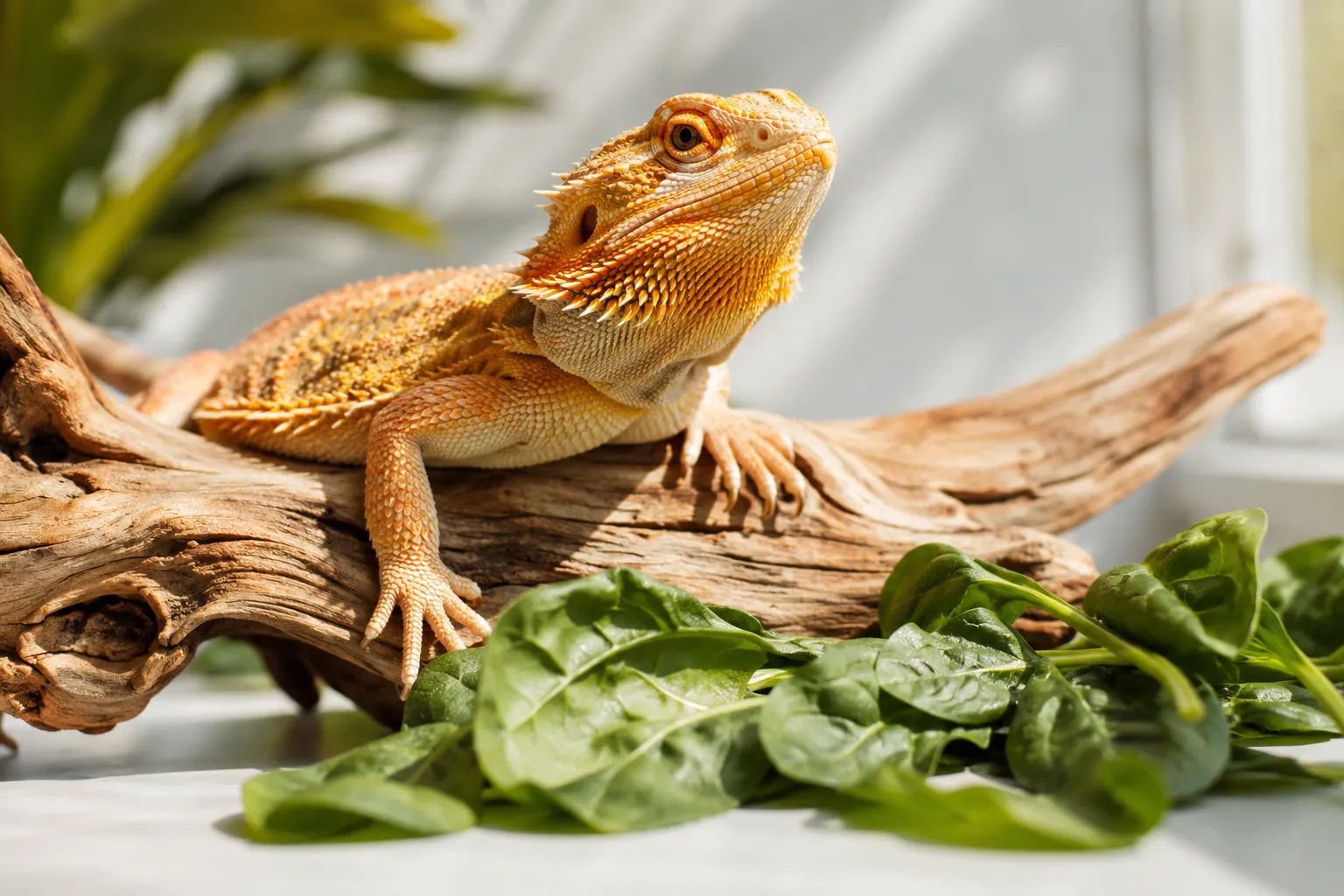
Quick Answer: Bearded dragons can technically eat spinach, but it should only be offered rarely or avoided altogether. Spinach contains high levels of oxalates that bind to calcium and prevent absorption, which can lead to metabolic bone disease and other serious health problems in bearded dragons. Better leafy green alternatives like collard greens, mustard greens, and turnip greens provide nutrition without the calcium-blocking risks.
Key Takeaways
- Spinach is not recommended for regular feeding due to extremely high oxalate content that blocks calcium absorption
- Oxalates in spinach can contribute to metabolic bone disease, a serious and potentially fatal condition in bearded dragons
- If spinach is fed at all, limit it to once per month or less as a tiny portion mixed with safer greens
- Baby bearded dragons should never eat spinach because they need maximum calcium for bone development
- Safe daily alternatives include collard greens, mustard greens, turnip greens, and dandelion greens
- A single large serving of spinach can block calcium absorption for several days
- Bearded dragons may enjoy the taste of spinach, but preference doesn’t equal nutritional safety
- The calcium-to-phosphorus ratio in spinach is extremely poor for reptile health
- Kale is a better option than spinach but still contains moderate oxalates and should be rotated with other greens
- Always dust vegetables with calcium powder to help counteract dietary calcium blockers

【Size of Classic Wing Bearded Dragon Harness】3 different sizes and adjustable clip allows the bearded dragon harness suitable for baby, juvenile or adult beardie

Soft and Lightweight: the bearded dragon leash and harness are made of quality soft leather straps and lightweight nylon rope, with stainless steel rings and aluminum buckles; They are safe for learning, sturdy and comfortable, and friendly to your pet's skin
【3-SIZE GROWTH-READY PACK】 Includes S/M/L adjustable leather harnesses for small animals at every stage (3"–7" chest girth). Fits bearded dragons, chameleons, guinea pigs, and more—no need to replace as your pet grows.
Is Spinach Safe for Bearded Dragons to Eat?
Spinach is not considered safe for regular feeding to bearded dragons. While a tiny amount won’t immediately harm your dragon, spinach contains one of the highest concentrations of oxalic acid (oxalates) among common vegetables, making it a poor dietary choice for reptiles that depend heavily on calcium.
The primary concern centers on how oxalates work in a bearded dragon’s digestive system. When oxalates bind with calcium, they form calcium oxalate crystals that the body cannot absorb. This means that even if you’re providing calcium supplements, the spinach actively prevents your dragon from using that calcium for bone health, muscle function, and other vital processes.
Key safety considerations:
- Oxalate content in spinach ranges from 600-970 mg per 100g of raw leaves
- A single serving can interfere with calcium absorption for 24-48 hours
- Repeated feeding creates cumulative calcium deficiency over time
- Young, growing dragons face the highest risk from calcium depletion
- Even “spinach as a treat” can disrupt carefully balanced nutrition plans
Many experienced reptile keepers and veterinarians recommend removing spinach from bearded dragon diets entirely. The risk simply outweighs any nutritional benefit, especially when dozens of safer leafy greens provide better nutrition without the calcium-blocking effect.
Why Is Spinach Bad for Bearded Dragons?
Spinach poses multiple nutritional problems for bearded dragons beyond just oxalates. The combination of high oxalates, poor calcium-to-phosphorus ratio, and moderate goitrogen content makes it one of the least suitable vegetables for reptile diets.
The oxalate problem explained: Oxalic acid binds to calcium in the digestive tract before the body can absorb it. For bearded dragons, which require significant calcium for bone density, egg production (in females), and metabolic function, this binding effect is particularly dangerous. Over time, calcium deficiency leads to metabolic bone disease (MBD), characterized by soft bones, deformities, seizures, and potentially death.
Additional concerns with spinach:
- Poor calcium ratio: Spinach contains more phosphorus than calcium, and phosphorus also inhibits calcium absorption
- Goitrogens present: These compounds can interfere with thyroid function when consumed regularly
- Water content: While hydration is good, spinach provides mostly water with limited nutritional density compared to better greens
- Vitamin imbalance: The nutrient profile doesn’t match what bearded dragons need from their staple vegetables
The cumulative effect matters most. One meal of spinach might not cause visible harm, but regular feeding (even weekly) creates a slow calcium drain that manifests as MBD months later. By the time symptoms appear, bone damage may already be irreversible.
Choose spinach alternatives if: Your dragon needs consistent calcium absorption (all dragons), you’re feeding a growing juvenile, your female dragon is producing eggs, or your dragon has any history of MBD or calcium deficiency.
How Often Can Bearded Dragons Have Spinach?
Bearded dragons should have spinach no more than once per month, if at all, and only in very small amounts mixed with safer greens. Most reptile veterinarians and experienced keepers recommend avoiding spinach completely rather than trying to calculate “safe” portions.
If you choose to offer spinach occasionally, follow these strict guidelines:
Frequency rules:
- Maximum once every 4-6 weeks
- Never as a staple or regular rotation vegetable
- Only for adult dragons (18+ months old)
- Skip entirely if your dragon shows any signs of calcium deficiency
Portion control:
- One or two small leaves maximum per feeding
- Mix thoroughly with high-calcium greens (3-4 parts safe greens to 1 part spinach)
- Dust the entire salad with calcium powder before serving
- Remove any uneaten spinach after 30 minutes
When to avoid spinach entirely:
- Baby bearded dragons (0-6 months)
- Juvenile dragons (6-18 months)
- Pregnant or egg-laying females
- Dragons recovering from MBD
- Dragons on calcium-restricted diets for medical reasons
- Any dragon showing signs of lethargy, tremors, or weak limbs
The “once a month” guideline assumes your dragon receives proper calcium supplementation, UVB lighting, and a varied diet of safe vegetables the rest of the time. Even with perfect husbandry, many keepers find it simpler to eliminate spinach rather than risk the calcium interference.
Common mistake: Thinking “a little bit won’t hurt” and offering spinach weekly. This frequency is enough to create chronic calcium deficiency over 6-12 months, especially in dragons that don’t bask properly or have suboptimal UVB exposure.
Oxalates in Spinach and Bearded Dragon Health
Oxalates (oxalic acid) are naturally occurring compounds in many plants that serve as a defense mechanism against being eaten. In bearded dragons, dietary oxalates create a direct threat to calcium metabolism and overall health.
How oxalates harm bearded dragons:
When a bearded dragon eats spinach, the oxalic acid moves through the digestive tract and chemically binds with calcium ions. This creates insoluble calcium oxalate crystals that pass through the body without being absorbed. The result is twofold: the dragon loses access to calcium from the spinach itself, and the oxalates can also bind to calcium from other foods eaten at the same meal or from supplements.
Oxalate content comparison (per 100g):
- Spinach: 600-970 mg
- Collard greens: 74 mg
- Mustard greens: 128 mg
- Turnip greens: 250 mg
- Kale: 20-100 mg (varies by type)
The difference is dramatic. Spinach contains roughly 10 times more oxalates than most recommended staple greens.
Health consequences of high oxalate intake:
- Metabolic Bone Disease (MBD): Soft, rubbery jaw, swollen limbs, curved spine, difficulty walking
- Muscle weakness: Tremors, twitching, inability to climb or grip
- Egg binding: Females cannot form proper eggshells or push eggs out
- Kidney stress: Calcium oxalate crystals can accumulate in kidneys
- Seizures: Severe calcium deficiency affects nerve function
The insidious nature of oxalate damage is that it accumulates slowly. A dragon might eat spinach regularly for months before showing symptoms, at which point bone damage may be permanent. Young dragons develop MBD faster because they’re actively growing and have higher calcium demands.
Edge case: Some keepers report feeding small amounts of spinach without apparent problems. This likely reflects either short-term observation (damage hasn’t manifested yet), excellent calcium supplementation that partially offsets the oxalates, or individual variation in calcium metabolism. However, this doesn’t make spinach safe, it just means some dragons tolerate the risk longer before showing symptoms.
What Happens If My Bearded Dragon Eats Too Much Spinach?
If your bearded dragon eats a large amount of spinach in one sitting or consumes it regularly over time, the primary risk is calcium depletion leading to metabolic bone disease and related complications.
Immediate effects (within 24-48 hours):
- Reduced calcium absorption from all food sources
- Potential digestive upset or loose stool (from high water and fiber content)
- Temporary decrease in appetite in some dragons
- No visible symptoms in most cases (the danger is cumulative)
Short-term effects (days to weeks):
- Gradual calcium depletion from bones and tissues
- Subtle weakness or reduced activity level
- Decreased appetite or selective eating
- Slightly softer stool consistency
Long-term effects (weeks to months of regular spinach feeding):
- Metabolic Bone Disease symptoms: Swollen or misshapen limbs, rubbery jaw, difficulty walking, tremors, lethargy
- Skeletal deformities: Curved spine, bowed legs, flattened or misshapen skull
- Muscle problems: Twitching, inability to grip branches, weakness in limbs
- Reproductive issues: Egg binding in females, soft-shelled eggs
- Severe cases: Seizures, paralysis, death
What to do if your dragon ate a lot of spinach:
- Don’t panic if it was a one-time incident, single exposures rarely cause immediate crisis
- Increase calcium supplementation for the next 3-5 days (dust all vegetables with calcium powder)
- Offer high-calcium greens like collard greens and mustard greens for the next week
- Ensure proper UVB lighting (10-12 hours daily with appropriate UVB bulb)
- Monitor for symptoms like lethargy, tremors, or difficulty moving
- Contact a reptile veterinarian if you notice any concerning symptoms or if your dragon ate spinach regularly for weeks
Recovery timeline: If caught early, calcium levels can normalize within 1-2 weeks with proper supplementation and diet correction. However, bone damage from advanced MBD may be permanent, requiring lifelong management.
Best Leafy Greens for Bearded Dragons Instead of Spinach

Bearded dragons thrive on a variety of leafy greens that provide excellent nutrition without the calcium-blocking oxalates found in spinach. The best staple greens offer high calcium content, low oxalates, good vitamin profiles, and appropriate fiber.
Top daily staple greens:
- Collard greens: High calcium, low oxalates, excellent calcium-to-phosphorus ratio (14.5:1)
- Mustard greens: Rich in vitamins A and C, good calcium content, low oxalates
- Turnip greens: High calcium and vitamin K, moderate oxalates but still safe for daily feeding
- Dandelion greens: Excellent calcium source, high in vitamins, very low oxalates (wild-harvested must be pesticide-free)
- Endive: Good hydration, low oxalates, mild flavor most dragons accept
Excellent rotation greens (2-3 times per week):
- Escarole: Similar to endive, good nutrient profile
- Watercress: High in vitamins, low oxalates, adds variety
- Bok choy: Mild flavor, good calcium, moderate goitrogens (don’t overfeed)
- Arugula: Peppery flavor some dragons enjoy, good vitamin content
Occasional greens (once per week):
- Kale: Better than spinach but contains moderate oxalates and goitrogens
- Cabbage (green or red): Low calcium but safe in small amounts for variety
- Cilantro: Adds flavor variety, safe in moderation
- Basil: Aromatic herb that provides enrichment
Feeding strategy for optimal nutrition:
Create a “salad base” using 2-3 staple greens daily, rotating which specific greens you use throughout the week. This ensures your dragon gets varied nutrition without relying on any single vegetable. Aim for a mix that provides:
- High overall calcium content
- Variety of vitamins (especially A, C, and K)
- Mix of textures and flavors to maintain interest
- Appropriate fiber for digestive health
Preparation tips:
- Wash all greens thoroughly to remove pesticides
- Chop into appropriately sized pieces (smaller for juveniles)
- Mix greens together rather than offering one type at a time
- Dust with calcium powder (with D3) 4-5 times per week for adults, daily for juveniles
- Remove uneaten greens after 1-2 hours to prevent spoilage
Common mistake: Feeding only one or two types of greens repeatedly. Even safe greens should be rotated to prevent nutritional imbalances and keep your dragon interested in eating vegetables.
Can Baby Bearded Dragons Eat Spinach?
Baby bearded dragons should never eat spinach under any circumstances. Juveniles have dramatically higher calcium requirements than adults due to rapid bone growth, and even small amounts of oxalates can severely compromise their development.
Why spinach is especially dangerous for babies:
Young bearded dragons (0-12 months) are building their entire skeletal system and require maximum calcium absorption during this critical growth phase. Their bones are actively mineralizing, and any interference with calcium metabolism can cause permanent deformities or developmental problems that affect them for life.
Calcium requirements by age:
- Babies (0-6 months): Need calcium supplementation with every feeding, require 80% insects and 20% vegetables
- Juveniles (6-12 months): Need daily calcium supplementation, transition to 50/50 insects and vegetables
- Adults (12+ months): Need calcium 4-5 times per week, eat 70-80% vegetables and 20-30% insects
The oxalates in spinach would block calcium absorption during the exact life stage when dragons need it most. This creates a perfect storm for metabolic bone disease that manifests quickly in growing dragons.
Safe vegetables for baby bearded dragons:
Focus exclusively on high-calcium, low-oxalate options:
- Finely chopped collard greens
- Mustard greens cut into tiny pieces
- Small amounts of grated butternut squash
- Finely shredded turnip greens
- Tiny pieces of bell pepper (for vitamin C)
Feeding guidelines for babies:
- Offer vegetables daily even though they prefer insects
- Chop greens very finely (smaller than the space between their eyes)
- Dust all food with calcium powder containing D3
- Provide proper UVB lighting (10-12 hours daily)
- Monitor growth and activity levels closely
Warning signs of calcium deficiency in babies:
- Lethargy or reduced activity
- Trembling or twitching, especially in limbs
- Difficulty walking or climbing
- Swollen limbs or joints
- Curved spine or tail
- Soft or rubbery jaw
If you notice any of these symptoms, contact a reptile veterinarian immediately. Early intervention can prevent permanent damage, but advanced MBD in juveniles often causes lifelong disability.
Spinach vs Kale for Bearded Dragons: Which Is Better?
Kale is significantly better than spinach for bearded dragons, though it’s still not the best choice for a daily staple green. While kale contains far fewer oxalates than spinach, it does have moderate levels of both oxalates and goitrogens that make it better suited as a rotation vegetable rather than a daily staple.
Nutritional comparison:
| Factor | Spinach | Kale | Winner |
|---|---|---|---|
| Oxalate content | 600-970 mg/100g | 20-100 mg/100g | Kale (much lower) |
| Calcium content | 99 mg/100g | 150 mg/100g | Kale (higher) |
| Calcium:Phosphorus ratio | 2:1 | 2.4:1 | Kale (slightly better) |
| Goitrogen content | Moderate | Moderate-High | Spinach (lower) |
| Vitamin A | High | Very High | Kale (higher) |
| Overall safety | Not recommended | Acceptable in rotation | Kale |
When to choose kale: Use kale as a rotation green 2-3 times per week mixed with other vegetables. It provides excellent vitamin A and calcium content without the extreme oxalate levels of spinach. Kale works well for adult bearded dragons with no history of thyroid issues.
When kale isn’t ideal: Dragons with thyroid problems should avoid kale due to goitrogen content. Baby dragons should eat kale sparingly (once per week maximum) because their systems are more sensitive to goitrogens.
Better options than both: Collard greens, mustard greens, and turnip greens outperform both spinach and kale for bearded dragon nutrition. These staple greens provide:
- Higher calcium content than kale
- Lower oxalates than both spinach and kale
- Minimal goitrogens
- Better overall nutrient profiles for reptile health
Practical feeding approach: If you have kale available, offer it 2-3 times per week as part of a varied salad. If you have spinach, skip it entirely and choose literally any other leafy green. The nutritional benefits of kale justify occasional use, while spinach’s risks outweigh any benefits.
Common mistake: Assuming kale is a “superfood” for bearded dragons because it’s healthy for humans. While kale is acceptable, it’s not optimal for daily feeding due to goitrogen content. Rotate it with collard greens, mustard greens, and other low-oxalate options for best results.

All Natural: 100% all-natural and preservative-free

【Reptile Cricket Keeper】: REPTI ZOO Reptile Cricket Powder Mixer Kit features crystal-clear visibility and escape-proof 6" height. The twist-lock lid with ventilation holes safely contains cricket while blending calcium powder for reptiles through patented shaking technology;

Nature Zone Herp Pro Supplements for Bearded Dragons Powder Formula: Calcium/Probiotics
Spinach Causing Calcium Deficiency in Bearded Dragons
Spinach is one of the most common dietary causes of calcium deficiency in captive bearded dragons. The mechanism is straightforward: oxalates in spinach bind to calcium and prevent absorption, creating a functional calcium deficiency even when the dragon receives adequate calcium from other sources.
How spinach-induced calcium deficiency develops:
The process typically unfolds over weeks to months of regular spinach feeding. Each meal containing spinach blocks calcium absorption for 24-48 hours. If spinach appears in the diet weekly or more often, the dragon experiences chronic calcium depletion that gradually drains calcium from bones and tissues.
Progression timeline:
- Weeks 1-4: No visible symptoms; calcium slowly depleting from bones
- Weeks 4-8: Subtle changes like reduced activity, slightly softer stool, decreased appetite
- Weeks 8-16: Early MBD symptoms appear, mild tremors, slight weakness, reduced climbing
- Months 4-6: Obvious MBD, swollen limbs, difficulty walking, rubbery jaw, visible deformities
- Months 6+: Severe MBD, paralysis, seizures, life-threatening complications
Risk factors that accelerate calcium deficiency:
- Inadequate UVB lighting (prevents vitamin D3 synthesis needed for calcium absorption)
- Insufficient calcium supplementation
- Diet heavy in other high-oxalate foods (beet greens, Swiss chard)
- Young age (higher calcium demands)
- Egg production in females (massive calcium drain)
- Poor overall diet lacking calcium-rich foods
Symptoms of calcium deficiency to watch for:
- Early signs: Lethargy, reduced appetite, slight trembling in limbs
- Moderate signs: Difficulty walking, weakness in legs, soft or swollen jaw, twitching
- Advanced signs: Curved spine, bowed legs, inability to stand, seizures, paralysis
Treatment for spinach-induced calcium deficiency:
- Immediately stop feeding spinach and all high-oxalate vegetables
- Increase calcium supplementation under veterinary guidance (may need liquid calcium initially)
- Optimize UVB lighting with appropriate bulb strength and placement
- Feed only high-calcium greens like collard greens and mustard greens
- Veterinary care: Blood calcium testing, possible calcium injections for severe cases
- Long-term management: Some bone damage may be permanent, requiring ongoing support
Prevention is critical: Once MBD develops, treatment can stabilize the condition but may not reverse bone deformities. The best approach is avoiding spinach entirely and building a diet around proven safe vegetables.
Choose calcium-rich alternatives if: Your dragon shows any signs of weakness or lethargy, you’re unsure about your current diet’s calcium content, your UVB lighting is older than 6-12 months (bulbs lose effectiveness), or you want to prevent problems rather than treat them.
What Greens Should Bearded Dragons Never Eat?
Beyond spinach, several other leafy greens and vegetables pose serious health risks to bearded dragons and should be completely avoided. These foods contain toxic compounds, extreme nutrient imbalances, or dangerous levels of oxalates or goitrogens.
Never feed these greens:
High-oxalate vegetables (worse than or equal to spinach):
- Beet greens: Extremely high oxalates (up to 1,000 mg/100g)
- Swiss chard: Very high oxalates (700+ mg/100g)
- Rhubarb leaves: Toxic levels of oxalates, can cause kidney failure
- Parsley: High oxalates, also high in vitamin A (risk of toxicity with oversupplementation)
Toxic or potentially harmful greens:
- Avocado: Contains persin, which is toxic to many animals including reptiles
- Iceberg lettuce: No nutritional value, high water content can cause diarrhea
- Rhubarb (any part): Contains toxic compounds beyond just oxalates
- Onion and garlic greens: Toxic to reptiles, can cause hemolytic anemia
Problematic due to goitrogens or other concerns:
- Broccoli (leaves and florets): Very high goitrogens, interferes with thyroid function
- Cauliflower leaves: High goitrogens, poor calcium ratio
- Brussels sprout leaves: High goitrogens, digestive upset
Why these vegetables are dangerous:
The high-oxalate vegetables create the same calcium-binding problem as spinach but often with even higher oxalate concentrations. Regular feeding of beet greens or Swiss chard will cause calcium deficiency faster than spinach.
Toxic vegetables like avocado and rhubarb contain compounds that can cause acute poisoning, kidney damage, or death. Even small amounts can be dangerous, and there’s no safe serving size.
Goitrogen-heavy vegetables interfere with thyroid hormone production when fed regularly. While occasional exposure isn’t typically harmful, making these vegetables dietary staples can cause metabolic problems over time.
Safe alternatives for every situation:
- Instead of high-oxalate greens: Use collard greens, mustard greens, or turnip greens
- Instead of iceberg lettuce: Use endive, escarole, or romaine (though romaine is low in nutrition)
- Instead of high-goitrogen vegetables: Rotate multiple safe greens to avoid overexposure to any single compound
- For variety: Use herbs like cilantro and basil, or vegetables like bell peppers and squash
Common mistake: Assuming that because a vegetable is healthy for humans, it’s safe for bearded dragons. Reptile digestive systems and nutritional needs differ dramatically from mammals. Always research specific foods before offering them to your dragon.
Do Bearded Dragons Like Spinach?
Many bearded dragons do enjoy the taste of spinach and will readily eat it when offered, but preference doesn’t indicate nutritional safety. Bearded dragons lack the instinct to avoid foods that are harmful to them, especially when those foods taste good.
Why dragons might prefer spinach:
- Mild, slightly sweet flavor that many reptiles find palatable
- Soft texture that’s easy to chew and swallow
- High water content provides hydration
- Novelty factor if it’s a new food
The preference problem: Bearded dragons evolved in Australian deserts eating native plants and insects. They have no evolutionary experience with spinach and no biological mechanism to detect oxalates or understand that spinach blocks calcium absorption. A dragon will happily eat spinach daily if offered, even as it develops metabolic bone disease.
Behavioral observations from keepers:
- Some dragons show strong preference for spinach over safer greens
- Dragons may become “picky” and refuse other vegetables if spinach is offered regularly
- The palatability can make spinach seem like a good choice, but this is misleading
- Dragons don’t show immediate negative reactions (no taste aversion develops)
Managing food preferences:
If your dragon loves spinach but you want to transition to safer greens:
- Cold turkey approach: Simply stop offering spinach and offer only safe greens; most dragons adapt within 3-7 days
- Gradual transition: Mix decreasing amounts of spinach with increasing amounts of safe greens over 1-2 weeks
- Flavor enhancement: Add small amounts of fruit (5% of vegetable portion) to make safe greens more appealing
- Variety strategy: Offer 3-4 different safe greens daily to find alternatives your dragon enjoys
What if my dragon refuses vegetables without spinach?
This is common but manageable. Dragons can be stubborn, but they won’t starve themselves. Continue offering safe greens daily, remove uneaten food after 1-2 hours, and don’t give in by offering spinach. Most dragons accept new foods within a week once they realize spinach isn’t coming back.
Edge case: Some dragons genuinely prefer bitter greens like mustard greens or dandelion greens over milder options. If your dragon is one of these, you’re in luck, these preferences align with nutritional needs. Encourage these preferences by offering preferred safe greens more frequently.
Safe Vegetables for Bearded Dragons Daily Feeding
Building a daily vegetable rotation for your bearded dragon requires balancing nutrition, variety, calcium content, and palatability. The goal is creating a sustainable feeding plan that provides complete nutrition without relying on any problematic vegetables.
Daily staple vegetables (offer every day, rotating varieties):
Leafy greens (should make up 70-80% of vegetable portion):
- Collard greens
- Mustard greens
- Turnip greens
- Dandelion greens
- Endive or escarole
Supporting vegetables (20-30% of vegetable portion):
- Butternut squash (grated or small cubes)
- Bell peppers (red, yellow, or orange for vitamin C)
- Carrots (grated, not whole, choking hazard)
- Yellow squash or zucchini (small amounts)
- Green beans (chopped)
Sample daily salad formula:
For adult bearded dragons:
- 2-3 types of staple leafy greens (chopped): 70% of bowl
- 1-2 supporting vegetables: 25% of bowl
- Small amount of fruit (optional, 2-3 times per week): 5% of bowl
- Dust entire salad with calcium powder (with D3) 4-5 times per week
For juvenile bearded dragons:
- Same vegetable mix but chopped very finely
- Smaller total portion (they eat mostly insects)
- Dust with calcium powder daily
- Focus on highest-calcium options (collard greens, mustard greens)
Weekly rotation example:
- Monday: Collard greens + mustard greens + bell pepper + butternut squash
- Tuesday: Turnip greens + endive + grated carrot + green beans
- Wednesday: Dandelion greens + collard greens + yellow squash + bell pepper
- Thursday: Mustard greens + escarole + butternut squash + small amount of blueberries
- Friday: Collard greens + turnip greens + bell pepper + grated carrot
- Saturday: Endive + dandelion greens + green beans + yellow squash
- Sunday: Mustard greens + collard greens + butternut squash + bell pepper
Preparation and feeding tips:
- Wash thoroughly: Remove pesticides and dirt from all vegetables
- Chop appropriately: Pieces should be smaller than the space between your dragon’s eyes
- Mix well: Combine all ingredients so your dragon can’t pick out only favorite items
- Fresh daily: Prepare salads fresh each day; don’t leave vegetables in the enclosure overnight
- Temperature: Room temperature vegetables are best; avoid cold vegetables straight from the refrigerator
- Calcium dusting: Lightly dust the entire salad before serving
Foods to limit (offer only 1-2 times per week):
- Kale (moderate oxalates and goitrogens)
- Cabbage (low calcium, goitrogens)
- Bok choy (goitrogens)
- Fruits (high sugar, use sparingly as treats)
Common mistake: Offering the same 1-2 vegetables every single day. Even safe vegetables should be rotated to prevent nutritional imbalances and maintain your dragon’s interest in eating vegetables.
How Much Spinach Is Too Much for a Bearded Dragon?
Any amount of spinach fed regularly is too much for a bearded dragon. Even small portions offered weekly can create cumulative calcium deficiency over time. If spinach is fed at all, the absolute maximum safe frequency is once per month in a very small portion mixed with safer greens.
Quantity guidelines (if you choose to offer spinach despite recommendations):
Maximum safe serving:
- 1-2 small spinach leaves per feeding
- Mixed with at least 3-4 times as much safe greens (collard, mustard, turnip greens)
- Offered no more than once every 4-6 weeks
- Only for adult dragons (never juveniles or babies)
- Entire salad dusted with calcium powder
What constitutes “too much”:
- Definitely too much: Spinach offered weekly or more often
- Still too much: Spinach as a primary salad ingredient (more than 25% of the bowl)
- Risky: Spinach offered every 2-3 weeks, even in small amounts
- Borderline: Spinach once per month as a tiny portion (acceptable for some keepers, but many vets still recommend avoiding entirely)
Calculating oxalate load:
A 100g serving of spinach contains 600-970mg of oxalates. For perspective, a bearded dragon eating 50g of spinach (a moderate salad portion) would consume 300-485mg of oxalates in one meal. This amount can bind to and block absorption of roughly 300-400mg of calcium, more than the dragon’s entire daily calcium requirement.
Individual variation matters:
Some dragons tolerate occasional spinach better than others due to:
- Overall diet quality (dragons with excellent calcium supplementation and varied diets have more buffer)
- UVB exposure (proper lighting helps maximize calcium absorption from non-spinach sources)
- Age and health status (young, growing, or compromised dragons are more vulnerable)
- Genetic factors (some individual variation in calcium metabolism exists)
However, individual tolerance doesn’t make spinach safe, it just means some dragons can handle the risk longer before showing symptoms.
Better approach than calculating “safe” amounts:
Rather than trying to determine how much spinach your dragon can tolerate, simply choose vegetables that don’t require risk calculation. Collard greens, mustard greens, and turnip greens provide better nutrition without any need to limit portions or worry about calcium blocking.
If your dragon has eaten too much spinach:
- Increase calcium supplementation for the next week
- Offer only high-calcium greens for 7-10 days
- Ensure UVB lighting is optimal
- Monitor for any signs of weakness or lethargy
- Contact a reptile vet if symptoms develop
Frequently Asked Questions
Can bearded dragons eat cooked spinach?
No, cooked spinach is not safer than raw spinach for bearded dragons. While cooking slightly reduces oxalate content, it doesn’t eliminate enough to make spinach safe. Cooked vegetables also lose nutritional value and aren’t part of a natural bearded dragon diet. Stick to raw, safe greens like collard greens and mustard greens instead.
Is baby spinach better than regular spinach for bearded dragons?
Baby spinach contains the same high oxalate levels as mature spinach and poses the same calcium-blocking risks. The “baby” designation refers only to leaf size and tenderness, not nutritional content. Neither baby nor regular spinach should be fed to bearded dragons.
Can spinach cause impaction in bearded dragons?
Spinach itself doesn’t typically cause impaction because the leaves are soft and digestible. The primary danger is calcium deficiency from oxalates, not digestive blockage. However, any vegetable can contribute to impaction if the dragon is dehydrated, lacks proper heat for digestion, or eats pieces that are too large.
What should I do if my bearded dragon ate spinach by accident?
A single accidental exposure to spinach rarely causes immediate harm. Dust your dragon’s next few meals with calcium powder, offer high-calcium greens like collard greens for the next week, and monitor for any signs of lethargy or weakness. Contact a vet only if symptoms develop.
Are there any benefits to feeding spinach to bearded dragons?
Spinach contains vitamins A, C, and K, plus iron and antioxidants. However, these nutrients are available in safer vegetables without the calcium-blocking oxalates. The risks of spinach far outweigh any nutritional benefits, making it a poor choice regardless of its vitamin content.
Can bearded dragons eat spinach stems?
Spinach stems contain the same high oxalate levels as the leaves and should be avoided. Stems are also tougher and harder to digest, making them even less suitable than the leaves. Remove all parts of spinach from your dragon’s diet.
How long does it take for spinach to affect calcium levels?
Oxalates in spinach begin binding calcium immediately in the digestive tract, blocking absorption for 24-48 hours after consumption. However, visible symptoms of calcium deficiency typically take weeks to months of regular spinach feeding to develop, as the body gradually depletes calcium stores from bones.
Is organic spinach safer for bearded dragons than conventional?
Organic spinach has the same oxalate content as conventional spinach. While organic produce avoids pesticides (which is good), it doesn’t change the fundamental nutritional problems that make spinach unsuitable for bearded dragons. Choose organic versions of safe greens like collard greens instead.
Can I feed spinach if I give extra calcium supplements?
Extra calcium supplementation doesn’t fully offset the calcium-blocking effect of spinach oxalates. While supplementation helps, the oxalates can still bind to calcium from supplements and other foods, reducing overall absorption. It’s better to avoid spinach entirely rather than trying to compensate with more supplements.
What’s the best emergency vegetable if I run out of safe greens?
If you temporarily run out of staple greens, romaine lettuce (not iceberg) can serve as a short-term substitute for 1-2 days. It’s low in nutrition but also low in oxalates and won’t cause harm. Butternut squash, bell peppers, and green beans can also fill gaps temporarily. Restock safe greens as soon as possible.
Do wild bearded dragons eat spinach in Australia?
No, spinach is not native to Australia and wild bearded dragons never encounter it. Wild dragons eat native Australian plants, flowers, and insects. Their natural diet contains no spinach or similar high-oxalate vegetables, which is why their systems aren’t adapted to handle oxalates safely.
Can bearded dragons eat frozen spinach?
Frozen spinach has the same oxalate content as fresh spinach and should be avoided. Additionally, frozen vegetables often have a mushy texture when thawed and may have lost some nutritional value during processing. Always offer fresh vegetables, and choose safe options like fresh collard greens or mustard greens.
Conclusion
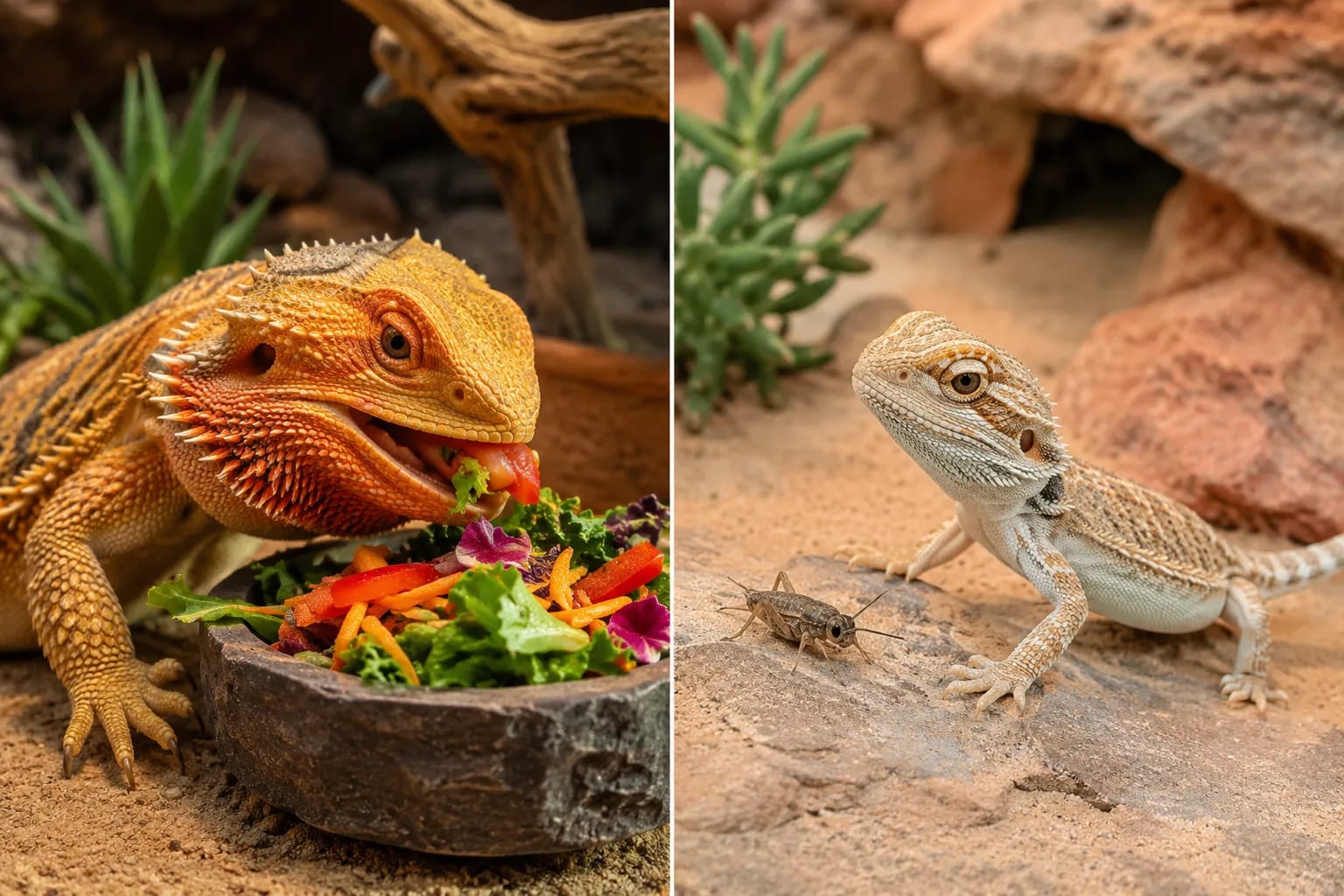
Spinach should be avoided in bearded dragon diets due to its extremely high oxalate content, which blocks calcium absorption and can lead to metabolic bone disease. While a tiny amount once per month might not cause immediate harm in adult dragons, the risk simply isn’t worth taking when dozens of safer, more nutritious alternatives exist.
The best approach is building a varied diet around proven safe staple greens like collard greens, mustard greens, turnip greens, and dandelion greens. These vegetables provide excellent calcium content, low oxalates, and complete nutrition without any need to calculate “safe” portions or worry about calcium blocking.
Action steps for bearded dragon owners:
- Remove spinach from your feeding rotation entirely, along with other high-oxalate vegetables like beet greens and Swiss chard
- Stock up on safe staple greens and rotate 2-3 different types daily for variety
- Dust vegetables with calcium powder (with D3) 4-5 times per week for adults, daily for juveniles
- Ensure proper UVB lighting with appropriate bulb strength, replaced every 6-12 months
- Monitor your dragon’s health for any signs of calcium deficiency like lethargy, weakness, or tremors
- Consult a reptile veterinarian if you notice any concerning symptoms or if your dragon has been eating spinach regularly
Remember that bearded dragons can’t instinctively avoid foods that harm them. As their caretaker, your job is making informed choices that support long-term health rather than short-term preferences. By choosing safe vegetables and avoiding problematic ones like spinach, you’ll help your bearded dragon live a long, healthy life with strong bones and optimal nutrition.

Vitamin Enriched Formula That Provides Essential Proteins, Fats, Vitamins And Minerals

Unique textured pellets that bearded dragons love to eat

Perfect Blend of Crickets, Mealworms and Pellets


