Quick Answer
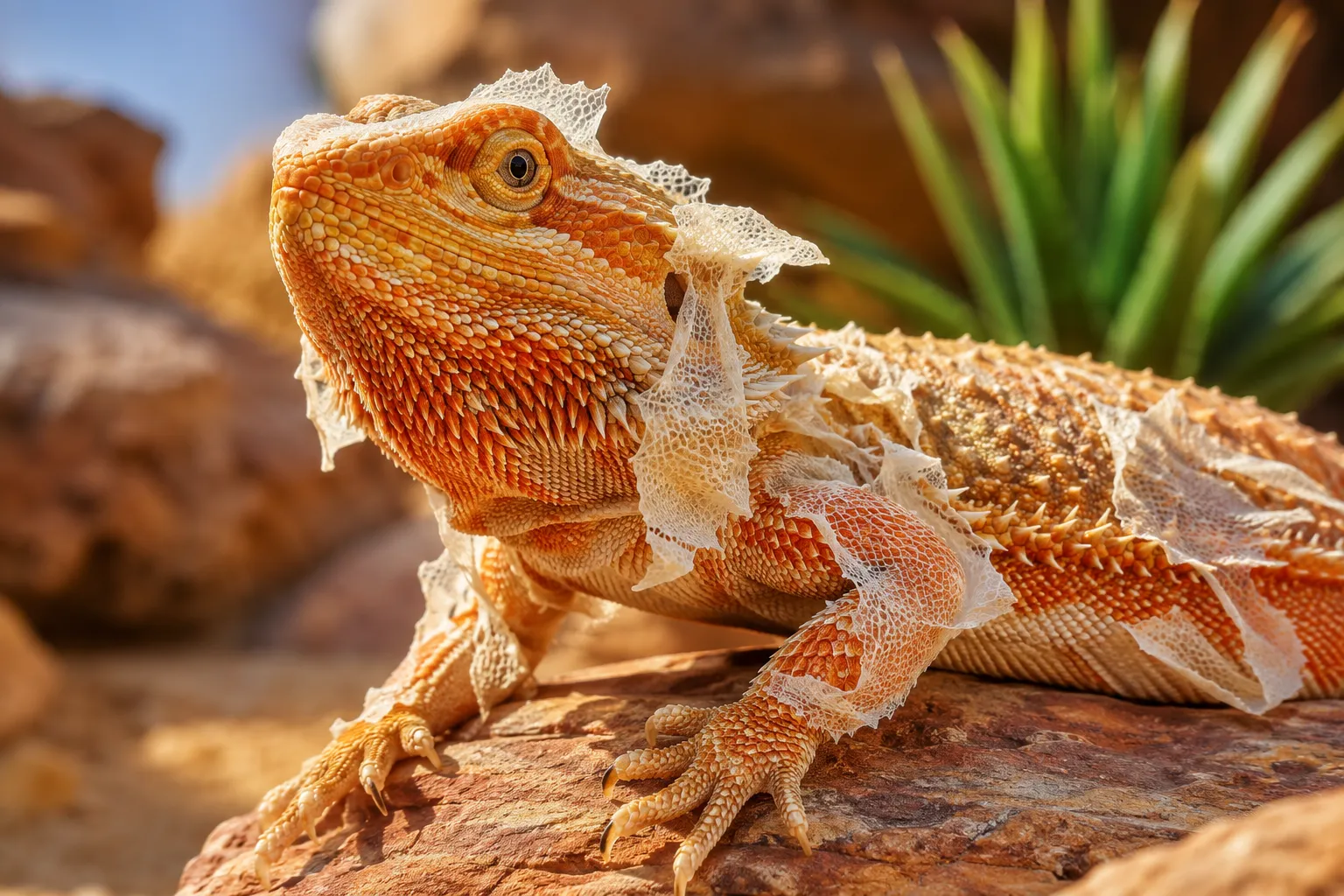
Bearded dragons shed at different rates depending on their age. Baby bearded dragons (0-6 months) shed every 1-3 weeks as they grow rapidly, juveniles (6-12 months) shed every 4-6 weeks, and adult bearded dragons (18+ months) typically shed every 6-12 weeks or even less frequently. The shedding frequency slows dramatically as they reach full size, and factors like diet, hydration, health, and seasonal changes can all influence how often your dragon sheds.

Precision Health Guardian: Your reptile pets are very sensitive to temperature and humidity, and small changes can affect their comfort and even their health. This humidity thermometer utilizes a built-in high-precision measurement chip that monitors the environment with 0.9°F accuracy, ensuring you are always aware of the actual conditions in your animal's tank. It's not just a matter of caring, it's a consideration for your pet's long-term health.

Reptile Necessary: Meet the need of Humidity and Temperature measuring for monitoring reptile's living conditions and health. Easily check your pet's living environment. When there are abnormalities, you can timely discovery through reptile thermometer.

【Not Only A Thermo-Hygrometer But Also A Terrarium Ventilation Fan】Allows precise monitoring of both temperature and humidity in your terrarium. Terrarium ventilation fan will allow for a constant airflow of fresh air while maintaining the desired ambient tempts and optimum humidity levels for the species that you are keeping
Key Takeaways
- Baby bearded dragons shed every 1-3 weeks due to rapid growth, while adults may only shed 2-4 times per year
- Shedding frequency decreases significantly with age as growth slows down
- A healthy shed usually takes 1-3 weeks from start to finish, often occurring in patches rather than all at once
- If your adult dragon hasn’t shed in 6+ months, check humidity levels, diet, and overall health
- Never manually peel off shedding skin, this can damage healthy scales and cause injury
- Increased bathing, proper humidity (30-40%), and a balanced diet support healthy shedding
- Stuck shed around toes, tail tips, and eyes requires gentle intervention to prevent circulation problems
- Appetite often decreases during shedding, and dragons may become more irritable or lethargic
How Often Do Baby Bearded Dragons Shed Compared to Adults?
Baby bearded dragons shed far more frequently than adults because they’re growing at an incredible rate. From hatching to 6 months old, babies can shed every 1-3 weeks as they rapidly increase in size. During this explosive growth phase, their skin simply can’t keep up with their expanding bodies, so they need to replace it constantly.
Juvenile bearded dragons (6-12 months) slow down a bit but still shed every 4-6 weeks. By the time they reach sub-adult stage (12-18 months), shedding drops to every 6-8 weeks. Adult bearded dragons (18+ months and older) have reached their full size, so they only shed every 2-4 months on average, some healthy adults may go 6 months between sheds.
Age-based shedding schedule:
- Hatchlings (0-3 months): Every 1-2 weeks
- Young juveniles (3-6 months): Every 2-3 weeks
- Older juveniles (6-12 months): Every 4-6 weeks
- Sub-adults (12-18 months): Every 6-8 weeks
- Adults (18+ months): Every 8-12 weeks or longer
The dramatic difference exists because growth drives shedding. Once your dragon reaches adult size (typically 16-24 inches long), the biological need to shed decreases significantly. If you notice your baby isn’t shedding at least monthly, it might indicate slow growth due to inadequate diet, improper temperatures, or health issues.
Bearded Dragon Shedding Schedule by Age
Understanding the typical shedding timeline helps you recognize what’s normal for your dragon’s life stage. The schedule below represents averages for healthy, well-cared-for bearded dragons, but individual variation is common.
Detailed shedding timeline:
| Age Range | Typical Shedding Frequency | Growth Rate | What to Expect |
|---|---|---|---|
| 0-2 months | Every 7-14 days | Extremely rapid | Full body sheds, very frequent |
| 2-4 months | Every 10-21 days | Very rapid | May start shedding in larger patches |
| 4-8 months | Every 3-4 weeks | Rapid | More patchy shedding pattern |
| 8-12 months | Every 4-6 weeks | Moderate | Noticeably slower frequency |
| 12-18 months | Every 6-8 weeks | Slowing | Approaching adult pattern |
| 18+ months | Every 8-16 weeks | Minimal/none | Maintenance shedding only |
Keep in mind that these are guidelines, not rigid rules. A healthy adult dragon might shed three times one year and only twice the next. Seasonal factors, breeding cycles, and individual metabolism all play roles. Track your specific dragon’s pattern in a care journal to establish their personal baseline.
Common mistake: Comparing your dragon’s shedding frequency to another owner’s dragon and assuming something is wrong. Just like humans grow at different rates, bearded dragons have individual variation within the normal range.
What Does It Mean If My Bearded Dragon Hasn’t Shed in Months?
If your adult bearded dragon hasn’t shed in 4-6 months, it’s usually not a concern, many healthy adults naturally go this long between sheds. However, if a juvenile hasn’t shed in 6-8 weeks or an adult hasn’t shed in 8-12 months, you should investigate potential causes.
The most common reasons for delayed shedding include low humidity (below 30%), inadequate hydration, poor nutrition lacking in vitamins A and D3, insufficient UVB lighting, or underlying health problems like parasites or metabolic bone disease. Stress and improper temperature gradients can also slow the shedding cycle.
Steps to encourage shedding if it’s been too long:
- Check your husbandry basics: Verify basking spot is 95-105°F, cool side is 75-85°F, and UVB bulb is less than 6 months old
- Increase humidity temporarily: Mist the enclosure once daily or provide a humid hide with damp sphagnum moss
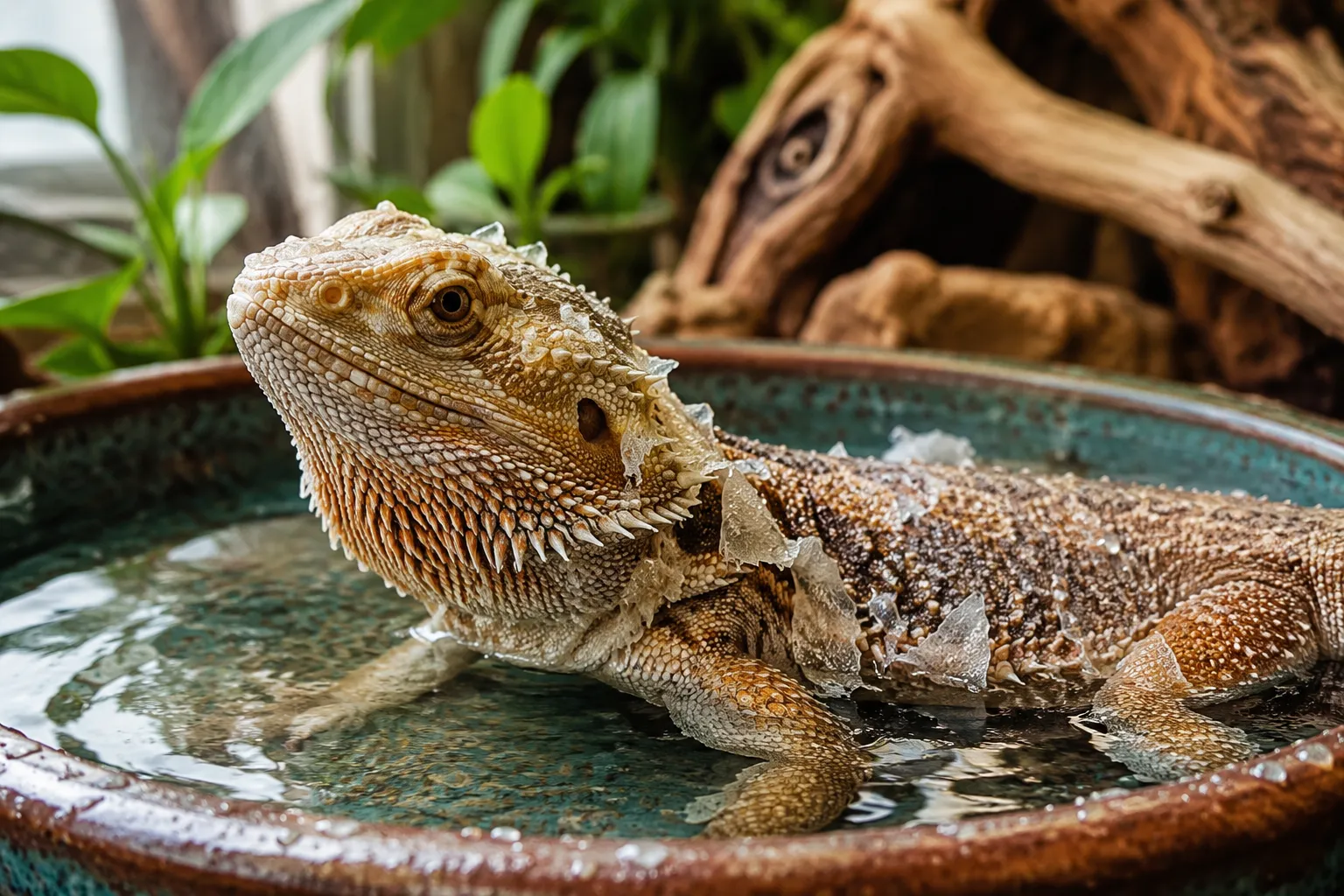
- Offer more frequent baths: 15-20 minute lukewarm soaks 3-4 times per week
- Review diet quality: Ensure varied greens, appropriate insects, and proper calcium/vitamin supplementation
- Schedule a vet check: If nothing improves after 2-3 weeks of intervention
Choose this approach if your dragon is otherwise acting normal, eating well, and showing no signs of illness. If your dragon is lethargic, losing weight, or showing other behavioral changes, skip the home remedies and consult a reptile veterinarian immediately.
Signs My Bearded Dragon Is About to Shed
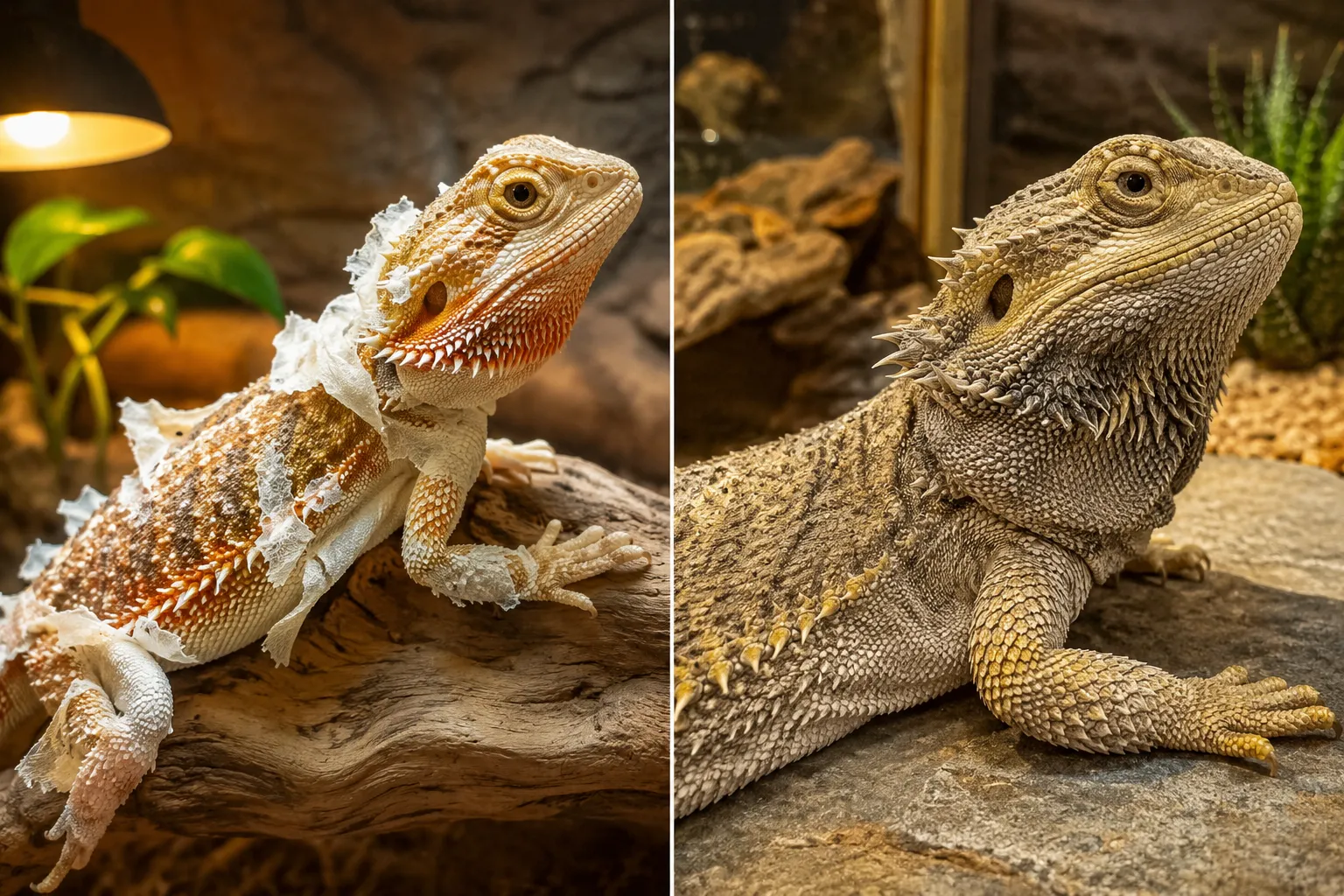
Bearded dragons show several telltale signs 3-7 days before they begin actively shedding. The most obvious indicator is a color change, your dragon’s skin will appear duller, paler, or grayish as the old layer separates from the new skin underneath. Their eyes may look cloudy or milky, similar to snakes before shedding.
Behavioral changes are equally common. Many dragons become less active, more irritable, or lose interest in food. Some will rub against rough surfaces like rocks or branches to help loosen the skin. You might also notice your dragon spending more time in their water dish or basking area.
Pre-shed checklist of symptoms:
- Dull, faded coloration across the body or in patches
- Whitish or silvery appearance where skin is separating
- Cloudy or milky eyes (not always present)
- Decreased appetite or complete food refusal
- Increased scratching or rubbing behavior
- More time basking to help loosen skin
- Irritability or hiding more than usual
- Increased water consumption or soaking
Not every dragon shows all these signs, and some shed with barely any behavioral changes. The color change is the most reliable indicator. Once you see that characteristic dull, ashy appearance, expect active shedding to begin within a few days.
Edge case: Some bearded dragons shed with almost no warning signs and maintain normal behavior throughout. This is perfectly healthy, consider yourself lucky if your dragon is an easy shedder!
Is It Normal for Bearded Dragons to Shed in Patches?
Yes, patchy shedding is completely normal and actually more common than full-body sheds, especially in juvenile and adult bearded dragons. Unlike snakes that shed their entire skin in one piece, bearded dragons typically shed in sections over several days or weeks.
You’ll often see the head shed first, followed by the legs, body, and finally the tail. Sometimes one side of the body sheds while the other side hasn’t started yet. This asymmetrical, patchwork pattern is nothing to worry about as long as the shed eventually completes and doesn’t get stuck for extended periods.
Typical shedding pattern progression:
- Head and face (including around eyes and mouth)
- Front legs and shoulders
- Back and sides of body
- Back legs and hips
- Tail (often sheds in rings)
The patchy approach actually makes sense for an active lizard that needs to continue hunting, basking, and moving around. A full-body shed would be more vulnerable and restrictive. Very young babies are more likely to shed their entire body at once, but even they often show some patchiness.
When to worry: If patches of shed remain stuck in the same spot for more than 2-3 weeks, especially around toes, tail tip, or eyes, intervention is needed to prevent circulation problems or infection.
How Long Does a Bearded Dragon Shed Take?
A complete shedding cycle typically takes 1-3 weeks from the first signs of dullness to the last piece of old skin coming off. The active shedding phase, when skin is visibly peeling and coming loose, usually lasts 3-7 days, but some pieces may hang on for another week or two before naturally falling off.
Baby bearded dragons often complete their sheds faster (3-7 days total) because they shed more frequently and their skin is thinner. Adult dragons may take the full 2-3 weeks, especially if they’re shedding in multiple separate patches over time.
Shedding timeline breakdown:
- Days 1-3: Pre-shed phase with color dulling and behavioral changes
- Days 4-7: Active shedding begins, skin starts peeling and flaking off
- Days 8-14: Most shed is complete, some stubborn patches may remain
- Days 15-21: Final pieces fall off naturally (if any remain)
The process should be gradual and self-limiting. If your dragon is still struggling with the same stuck shed after 3 weeks, or if the skin appears tight and constricting (especially around digits), it’s time to help.
Decision rule: If the shed is progressing steadily with new pieces coming off every few days, leave it alone. If nothing has changed in 5-7 days and the skin looks dry and tight, increase humidity and bathing frequency.
How to Help a Bearded Dragon Shed Properly
The best way to help your bearded dragon shed is to maintain proper husbandry year-round, but you can provide extra support during active shedding. Increased humidity, regular bathing, and rough surfaces for rubbing all facilitate the natural process without risky manual intervention.
Raise the enclosure humidity to 35-40% during shedding by misting once or twice daily (normal humidity is 30-35%). Offer lukewarm baths 3-4 times per week for 15-20 minutes, the soaking softens the old skin and makes it easier to remove. Make sure your tank includes rough rocks, branches, or reptile-safe cork bark that your dragon can rub against.
Complete shedding support protocol:
- Maintain optimal temperatures: Basking spot 100-105°F, cool side 75-85°F
- Provide daily misting: Light spray in the morning to raise humidity temporarily
- Offer regular baths: 15-20 minutes in lukewarm water (85-90°F) 3-4x per week
- Add rough surfaces: Natural rocks, branches, or reptile hammocks for rubbing
- Ensure proper nutrition: Continue offering varied greens and appropriately sized insects
- Keep UVB optimal: Replace bulbs every 6 months regardless of whether they still glow
- Don’t force feed: Reduced appetite during shedding is normal
Never use oils, lotions, or human skin products on your bearded dragon. These can clog pores and cause more problems than they solve. Plain water and proper humidity are all you need.
Common mistake: Over-handling your dragon during shedding. While gentle baths are helpful, excessive handling can stress them out. Let them do their thing and only intervene if shed becomes stuck.

HELP YOUR REPTILE SHED with a penetrating reptile bath; A simple 20 minute soak can help old skin slide off with ease
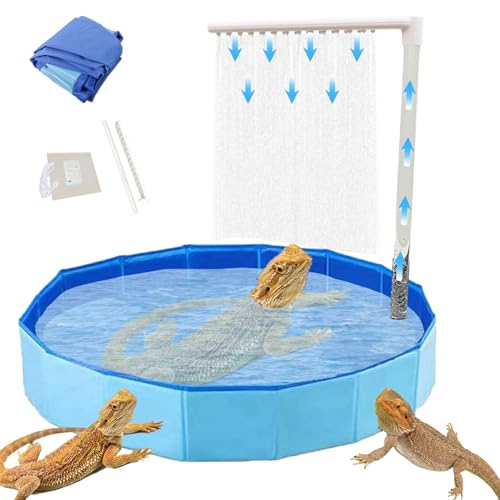
🌈 【Great Bearded Dragon Supplies】: Our Bearded Dragon Bath is foldable and comes with a 5V low-voltage pump for silent, continuous, and stable operation. The faucet, with 26 outlets, ensures uniform water distribution and a gentle flow, providing a comfortable bathing and play experience for bearded dragons, lizards, and other reptiles.
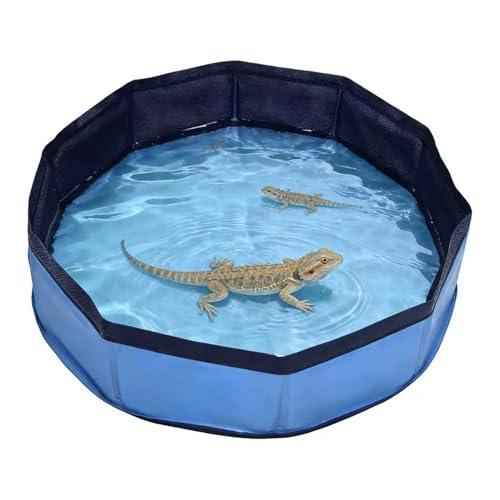
【Durable & Pet-Friendly PVC Material】 Made from thick, durable PVC, this pet bath pool is designed for repeated everyday use. The textured inner surface provides added traction, helping pets stay more stable and reducing slipping during bathing and play, while the reinforced bottom panel adds stability and helps the pool maintain its shape during use.
Should I Peel Off My Bearded Dragon’s Shed?
No, you should never manually peel or pull off your bearded dragon’s shedding skin. When skin is ready to come off, it will release naturally with minimal effort. Forcing it off prematurely can tear healthy new skin underneath, cause bleeding, create open wounds susceptible to infection, and cause significant pain to your dragon.
The old skin detaches through a natural biological process as a separation layer forms between old and new skin. Pulling skin that hasn’t fully separated yet damages the delicate new scales and can lead to scarring, discoloration, or permanent scale damage.
When gentle assistance is appropriate:
- Shed has been stuck in the same spot for 2-3+ weeks
- Skin appears to be constricting blood flow (especially toes or tail tip)
- Dragon is showing signs of discomfort or distress
- Shed around eyes is interfering with vision
Even in these cases, “assistance” means gentle encouragement, not forceful peeling. After a 20-minute lukewarm bath, you can very gently rub stuck areas with a soft, damp cloth or use a soft toothbrush in circular motions. If the skin doesn’t come off with minimal pressure, stop immediately and try again after another bath the next day.
Safe removal technique for stuck shed:
- Give a 20-minute lukewarm bath to soften the skin
- Gently rub the area with a damp cloth or soft toothbrush
- Apply only the lightest pressure, if it doesn’t come off easily, stop
- Never pull on hanging pieces that are still attached
- If it won’t budge after 2-3 attempts over several days, see a vet
Choose this hands-off approach unless you see clear signs of circulation problems (swollen toes, darkening tail tip, constriction rings). Your patience will be rewarded with healthy, undamaged scales.
Bearded Dragon Stuck Shed: What to Do
Stuck shed occurs when old skin fails to come off naturally and remains adhered to the body for an extended period. The most problematic areas are the toes, tail tip, and around the eyes, where constricting shed can cut off circulation or impair function.
For stuck shed on toes or tail, increase bathing frequency to twice daily for 15-20 minutes in lukewarm water. After each bath, very gently try to roll the shed off with your fingers or a damp cotton swab. If it’s truly stuck, create a “sauna” by placing your dragon in a plastic container with air holes, lined with warm, damp towels for 10-15 minutes before attempting removal.
Stuck shed intervention steps:
- Identify the problem areas: Check toes, tail tip, vent, and around eyes
- Increase bathing: Twice daily 15-20 minute soaks in 85-90°F water
- Try gentle removal: After bathing, use damp cotton swab or soft cloth with minimal pressure
- Create humidity chamber: Plastic container with damp towels for 10-15 minutes
- Monitor for circulation issues: Watch for swelling, discoloration, or necrosis
- Veterinary intervention: If stuck for 3+ weeks or showing circulation problems
For stuck shed around the eyes, never try to remove it yourself. This delicate area requires professional attention if the shed doesn’t come off naturally after increased humidity and bathing. A reptile vet can safely remove eye shed without risking corneal damage.
Red flags requiring immediate vet attention:
- Toes or tail tip turning dark purple or black
- Visible swelling above a constriction ring
- Dragon showing pain when area is touched
- Stuck shed around eyes for more than 1 week
- Any signs of infection (redness, discharge, odor)
Stuck shed is almost always preventable with proper humidity and hydration. If your dragon repeatedly has stuck shed problems, review your entire husbandry setup with a reptile veterinarian or experienced keeper.
Do Bearded Dragons Eat Less When They’re Shedding?
Yes, decreased appetite during shedding is completely normal and nothing to worry about. Many bearded dragons reduce their food intake or stop eating entirely for 3-7 days during active shedding. This temporary fasting is a natural response to the physical stress and discomfort of the shedding process.
The appetite typically returns to normal within a day or two after the majority of the shed is complete. As long as your dragon is otherwise healthy, maintaining good body weight, and drinking water, a brief shedding-related appetite loss is not a concern.
What to expect with shedding appetite changes:
- Mild reduction: Eating 30-50% less than normal
- Significant reduction: Only eating favorite foods or treats
- Complete refusal: Not eating anything for 3-7 days
- Normal hydration: Still drinking water or soaking regularly
Continue offering food daily even if your dragon isn’t interested, some will surprise you and eat normally throughout their shed. Don’t force-feed or become overly concerned unless the appetite doesn’t return within a week of the shed completing.
When appetite loss is concerning:
- Dragon hasn’t eaten in 2+ weeks
- Visible weight loss or sunken fat pads
- Appetite doesn’t return after shed completes
- Accompanied by lethargy, weakness, or other symptoms
In these cases, the appetite loss may not be shed-related at all, and you should consult a veterinarian. Choose to monitor closely if your dragon is a baby or juvenile, as they have higher metabolic needs and can’t safely go as long without food as adults can. For more information on maintaining proper nutrition, check out our bearded dragon feeding guide.
Difference Between Bearded Dragon Shedding and Skin Infection
Distinguishing between normal shedding and a skin infection is crucial for proper care. Normal shedding involves dull, pale, or grayish skin that eventually peels away in dry flakes or sheets, revealing healthy, vibrant scales underneath. The process is symmetrical (both sides of the body shed similarly) and doesn’t produce any odor or discharge.
Skin infections present very differently. Look for localized redness, swelling, or discoloration that doesn’t match the typical shedding pattern. Infected areas may have a foul odor, produce discharge or pus, feel hot to the touch, or show open sores and lesions. The dragon may be lethargic, lose appetite beyond normal shedding behavior, and show signs of pain when the area is touched.
Normal shedding characteristics:
- Dull, pale, or whitish appearance
- Dry, flaky skin that peels away
- Symmetrical pattern on both sides
- No odor or discharge
- Healthy skin revealed underneath
- Temporary behavioral changes only
Skin infection warning signs:
- Localized redness or dark discoloration
- Swelling or raised bumps
- Foul smell or discharge
- Open wounds or lesions
- Asymmetrical or random pattern
- Persistent lethargy and appetite loss
- Pain response when touched
Fungal infections can sometimes be confused with stuck shed because both create patches of abnormal skin. However, fungal infections typically show as brown, yellow, or discolored patches with irregular borders, while stuck shed maintains the normal scale pattern underneath, it’s just covered by old skin.
Decision rule: If the skin looks abnormal (not just dull), smells bad, or is accompanied by systemic illness signs, assume infection and see a vet. If it’s just dull and peeling with normal behavior, it’s shedding.
Do Bearded Dragons Shed More in Summer or Winter?
Bearded dragons typically shed more frequently during warmer months (spring and summer) and less frequently during cooler months (fall and winter). This pattern mirrors their natural behavior in the wild, where increased temperatures, longer daylight hours, and greater food availability during warm seasons promote faster growth and metabolism.
Many bearded dragons also experience brumation, a reptile form of hibernation, during winter months, which significantly slows or completely stops shedding. Even dragons that don’t fully brumate often show reduced activity and slower metabolic processes in winter, leading to less frequent shedding.
Seasonal shedding patterns:
- Spring (March-May): Increased shedding frequency as metabolism ramps up
- Summer (June-August): Peak shedding season with most frequent cycles
- Fall (September-November): Gradual decrease in shedding frequency
- Winter (December-February): Minimal shedding, possible brumation
Indoor bearded dragons with consistent year-round temperatures and lighting may not show as dramatic seasonal variation, but many still retain some seasonal rhythm. If your dragon’s shedding slows in winter but they’re otherwise healthy, eating well, and maintaining good body condition, this is normal.
Common mistake: Assuming something is wrong when your dragon doesn’t shed for several months during winter. If they’re sleeping more and eating less but maintaining stable weight, they may be experiencing a mild brumation response.
For more information on seasonal behavior changes, see our guide on brumation signs and timeline.
Why Is My Bearded Dragon Shedding So Frequently?
If your bearded dragon is shedding more often than expected for their age, it’s usually a sign of rapid growth, which is positive for babies and juveniles. However, unusually frequent shedding in adults can indicate underlying health issues or husbandry problems.
For young dragons, frequent shedding (every 1-3 weeks) is completely normal and indicates they’re growing well. If your baby is shedding this often, it means your care is excellent and they’re thriving. Continue providing proper nutrition, temperatures, and UVB lighting to support this healthy growth.
Reasons for frequent shedding in adults:
- Rapid weight gain: If an underweight rescue is catching up to healthy weight
- Recovery from illness: Post-illness growth spurt as health improves
- Improved husbandry: Better care leading to renewed growth
- Parasites: Internal parasites can sometimes trigger abnormal shedding
- Skin conditions: Fungal or bacterial infections may cause excessive shedding
- Metabolic issues: Thyroid or other metabolic problems (rare)
If your adult dragon (18+ months) is shedding more than once every 6-8 weeks without obvious explanation like weight gain or husbandry improvements, schedule a veterinary checkup. Bring a fresh fecal sample to test for parasites, which are a common cause of unusual shedding patterns.
When frequent shedding is concerning:
- Adult shedding every 2-4 weeks consistently
- Shedding accompanied by weight loss
- Skin looks abnormal between sheds
- Other symptoms present (lethargy, appetite loss, behavioral changes)
Choose to monitor closely if your dragon is between 12-18 months old, as some individuals have late growth spurts that cause temporarily increased shedding frequency before settling into the adult pattern.
Frequently Asked Questions
Can I handle my bearded dragon while it’s shedding?
You can handle your bearded dragon during shedding, but minimize it to reduce stress. Gentle handling for necessary tasks like feeding or tank maintenance is fine, but avoid excessive interaction. Never pull or pick at shedding skin during handling, as this can damage new scales underneath.
Why is my bearded dragon’s shed coming off in small pieces?
Small, piecemeal shedding is completely normal, especially in adult bearded dragons. Unlike snakes that shed in one piece, bearded dragons naturally shed in patches and fragments over several days or weeks. As long as the pieces eventually come off and don’t remain stuck for extended periods, this pattern is healthy.
Do bearded dragons need a humid hide for shedding?
Bearded dragons don’t require a humid hide like some other reptiles, but providing one can help with difficult sheds. A simple humid hide can be made from a plastic container with damp sphagnum moss inside. Most bearded dragons do fine with regular baths and normal enclosure humidity (30-40%) during shedding.
Can dehydration cause shedding problems?
Yes, dehydration is one of the most common causes of stuck shed and difficult shedding. Proper hydration keeps skin supple and helps the separation layer form correctly between old and new skin. Ensure your dragon has constant access to fresh water and offer regular baths, especially during shedding periods.
Is it normal for my bearded dragon to look darker during shedding?
Yes, many bearded dragons appear darker or duller during shedding as the old skin layer separates and creates a grayish or whitish overlay. This color change is temporary and normal. Once the shed completes, your dragon’s normal vibrant coloration will return. Some dragons also darken their beard during shedding due to stress or discomfort.
Should I change my bearded dragon’s diet during shedding?
No diet changes are necessary during shedding, but ensure your dragon is receiving adequate calcium, vitamin A, and vitamin D3 year-round to support healthy skin. Continue offering the same variety of appropriate vegetables and insects. If appetite decreases, don’t force-feed, just continue offering food daily.
Can I use coconut oil to help my bearded dragon shed?
No, avoid using coconut oil or any other oils on your bearded dragon’s skin. These products can clog pores, interfere with natural skin processes, and potentially cause more problems than they solve. Plain water baths and proper humidity are all your dragon needs for healthy shedding.
Why does my bearded dragon rub against everything when shedding?
Rubbing against rough surfaces is normal shedding behavior that helps loosen and remove old skin. Provide appropriate rough surfaces like natural rocks, branches, or cork bark in the enclosure. This self-grooming behavior is healthy and should be encouraged by offering suitable rubbing surfaces.
How can I tell if my bearded dragon’s shed is infected?
Infected shed shows signs beyond normal shedding: foul odor, discharge or pus, excessive redness or swelling, open sores, and pain when touched. Normal stuck shed is dry, maintains the regular scale pattern underneath, and doesn’t produce odor or discharge. If you suspect infection, consult a reptile veterinarian immediately.
Do female bearded dragons shed more than males?
No significant difference exists between male and female shedding frequency. Both sexes follow the same age-based shedding schedule. However, gravid (egg-bearing) females may experience slightly altered shedding patterns due to hormonal changes and the physical stress of egg production.
Can stress cause shedding problems?
Yes, chronic stress can interfere with normal shedding cycles. Stress weakens the immune system, affects appetite and hydration, and can disrupt normal physiological processes including shedding. Common stressors include improper temperatures, inadequate hiding spots, aggressive tank mates, excessive handling, and frequent enclosure changes.
Is it normal for my bearded dragon’s eyes to look weird during shedding?
Yes, cloudy or milky-looking eyes during shedding are normal as the eye caps (spectacles) shed along with the rest of the skin. This usually resolves within a few days as the eye shed completes. However, if cloudiness persists for more than a week after shedding or is accompanied by discharge, consult a veterinarian.
Conclusion
Understanding how often bearded dragons shed and what’s normal for each life stage helps you provide better care and recognize potential problems early. Baby bearded dragons shed every 1-3 weeks during their rapid growth phase, while adults may only shed 2-4 times per year once they reach full size. This dramatic decrease in shedding frequency is completely normal and reflects the natural slowdown in growth as your dragon matures.
The key to supporting healthy shedding is maintaining proper husbandry year-round: appropriate temperatures (basking spot 100-105°F), adequate humidity (30-40%), quality UVB lighting, proper hydration, and balanced nutrition. During active shedding, increase bathing frequency to 3-4 times per week and consider light daily misting to raise humidity temporarily.
Remember that patience is your best tool when it comes to shedding. Never manually peel or pull off shedding skin, as this can cause serious damage to the healthy scales underneath. If shed becomes stuck for more than 2-3 weeks or shows signs of constricting circulation (especially around toes or tail tip), increase humidity and bathing first, then consult a reptile veterinarian if the problem persists.
Take action now:
- Track your dragon’s shedding frequency in a care journal to establish their personal baseline
- Verify your enclosure temperatures, humidity, and UVB lighting meet proper standards
- Ensure your dragon has access to fresh water daily and rough surfaces for rubbing
- Review your feeding practices to confirm adequate nutrition
- Schedule a veterinary checkup if your dragon’s shedding pattern seems abnormal for their age
By understanding your bearded dragon’s natural shedding cycle and providing appropriate support, you’ll help ensure this normal process goes smoothly throughout their life. For more comprehensive care information, explore our other guides on bearded dragon behavior and general care requirements.

Effective shedding aid:Specifically designed to address shedding difficulties in pet reptiles. Its rough surface provides gentle yet effective physical friction, helping to safely remove stubborn stuck shed skin and make the shedding process smoother.

Penetrating bath for all shedding reptiles

3 Pack Of Zoo Med Reptile Shed Aid, 2.25 oz