Quick Answer
Heat rocks are dangerous for bearded dragons and should never be used. These devices heat unevenly, often reaching temperatures that cause severe thermal burns on a bearded dragon’s sensitive belly scales. Unlike overhead heating that mimics natural sunlight and allows dragons to regulate their body temperature by moving away, heat rocks create direct contact burns before the reptile realizes the danger.

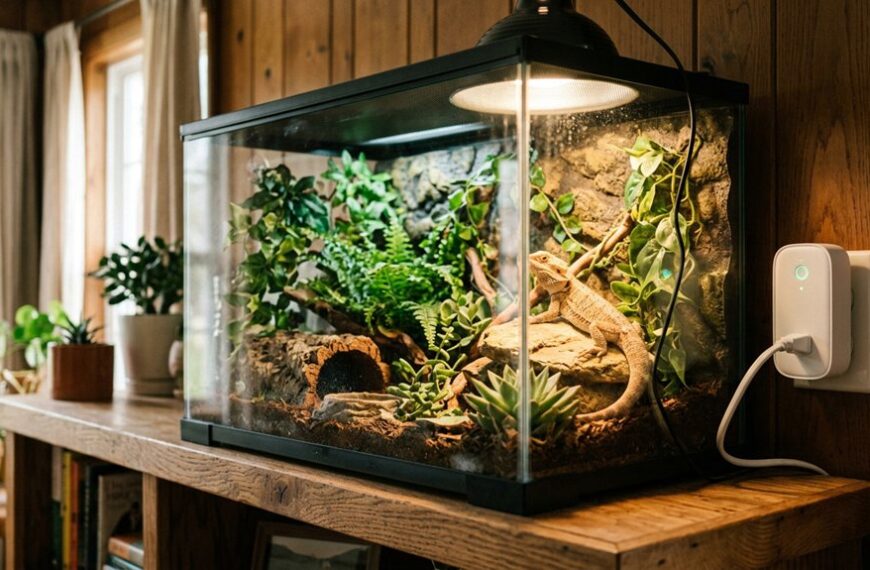
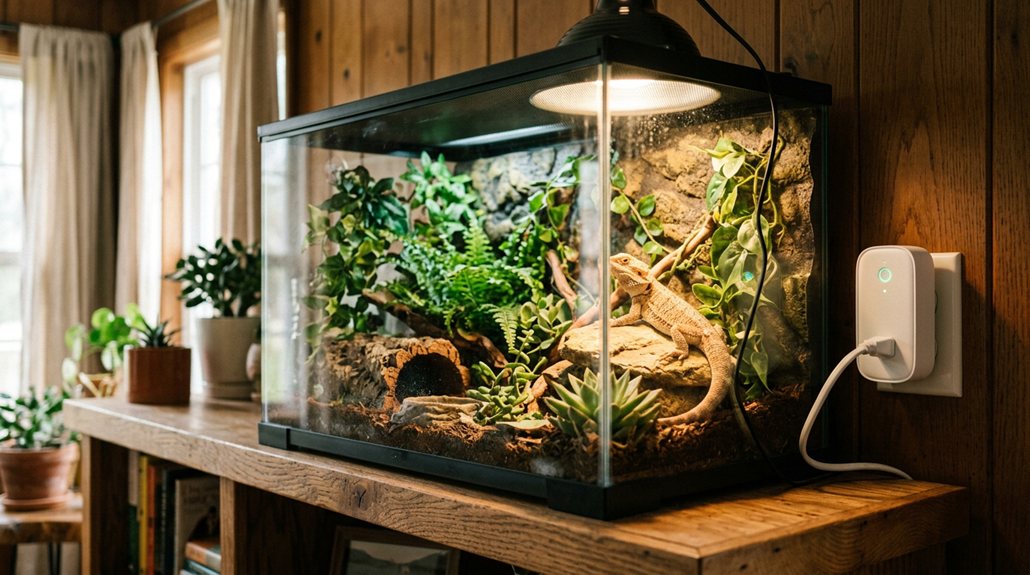
【Powerful 100W Basking Heat】100W reptile heat lamp is designed to provide efficient and reliable daily heating for your reptile pet to ensure that your pet gets the best daylight warmth. The 100W reptile basking bulb can create a sun-like basking spot for reptiles, increase the overall air temperature in the glass container, terrariums or reptile enclosures, helping the reptiles regulate their own body temperature and creating a comfortable living environment for them.

Simulated Sunlight: Most amphibians and reptiles are poikilotherms, whose body temperature changes with their environment. Therefore, sunlight and temperature affect the growth, development and reproduction of reptiles. The REPTI HOME reptile heat lamp is able to simulate sunlight, and create an area for reptiles to bask in the sun, which provide a comfortable habitat for your reptile pet

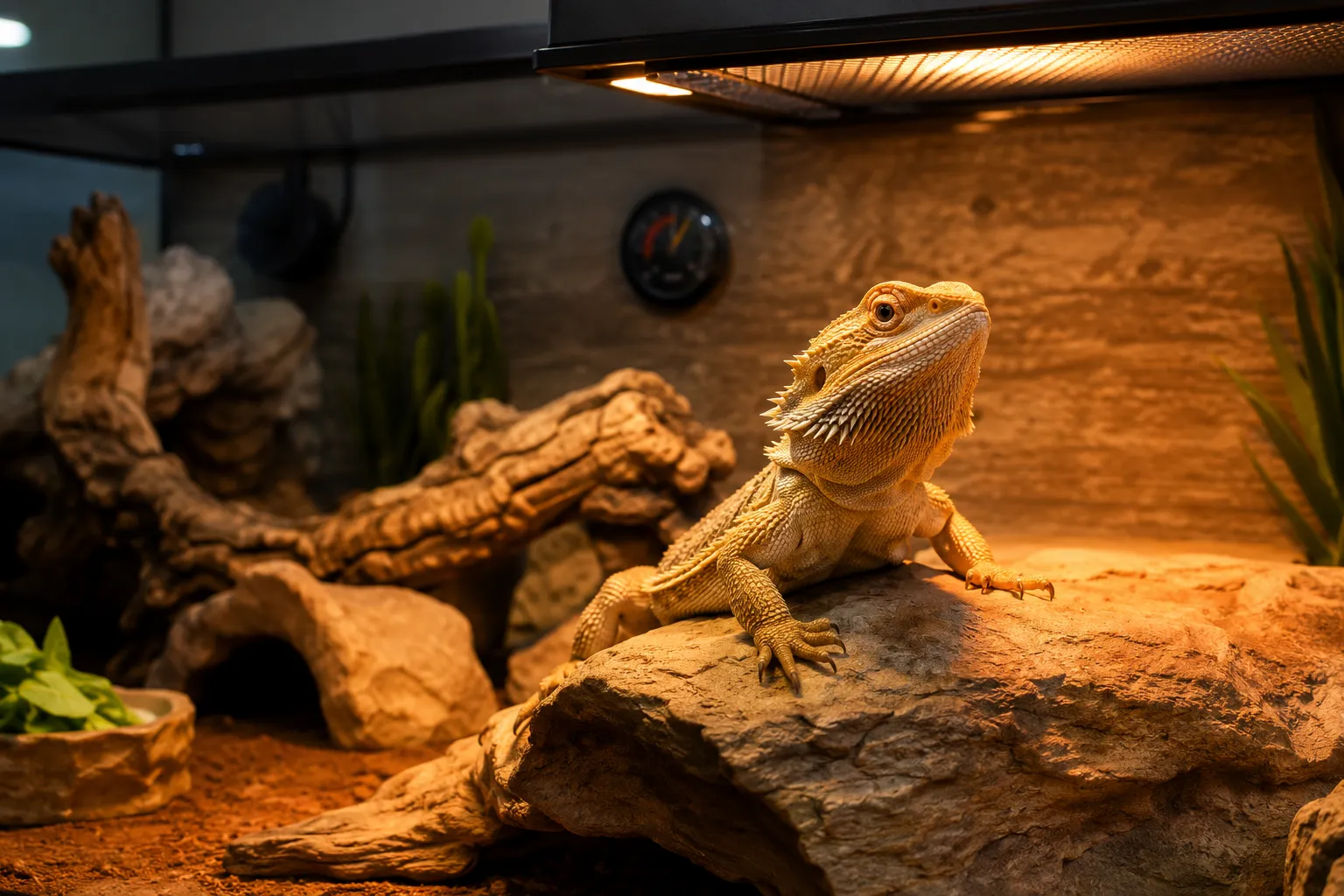
UVA Sunlight Simulation: Our reptiles heat lamp creates a sun-like basking zone, encouraging healthy digestion, activity, and appetite regulation. Maintain optimal terrarium temperatures to help reptiles like bearded dragons, chameleons, and tortoises thrive. Mimic natural sunlight to support reptile vitality which is great for basking & habitat health!
Key Takeaways
- Heat rocks cause thermal burns because they heat unevenly and reach dangerously high temperatures on their surface
- Bearded dragons can’t sense belly heat quickly enough to avoid burns from direct contact with hot surfaces
- Overhead heating is essential because it mimics natural basking behavior and allows proper thermoregulation
- Basking spots should reach 95-110°F for adults and 100-110°F for juveniles, measured with a temperature gun
- Safe alternatives include ceramic heat emitters, halogen basking bulbs, and mercury vapor bulbs mounted overhead
- Thermal burns require immediate veterinary care and can take weeks to months to heal completely
- Under-tank heaters are also risky when used as primary heat sources, though safer than heat rocks with proper thermostats
- Pet stores still sell heat rocks despite the danger, prioritizing profit over reptile welfare
- No amount of monitoring makes heat rocks safe because temperature spikes happen faster than you can react
Why Are Heat Rocks Dangerous for Bearded Dragons?
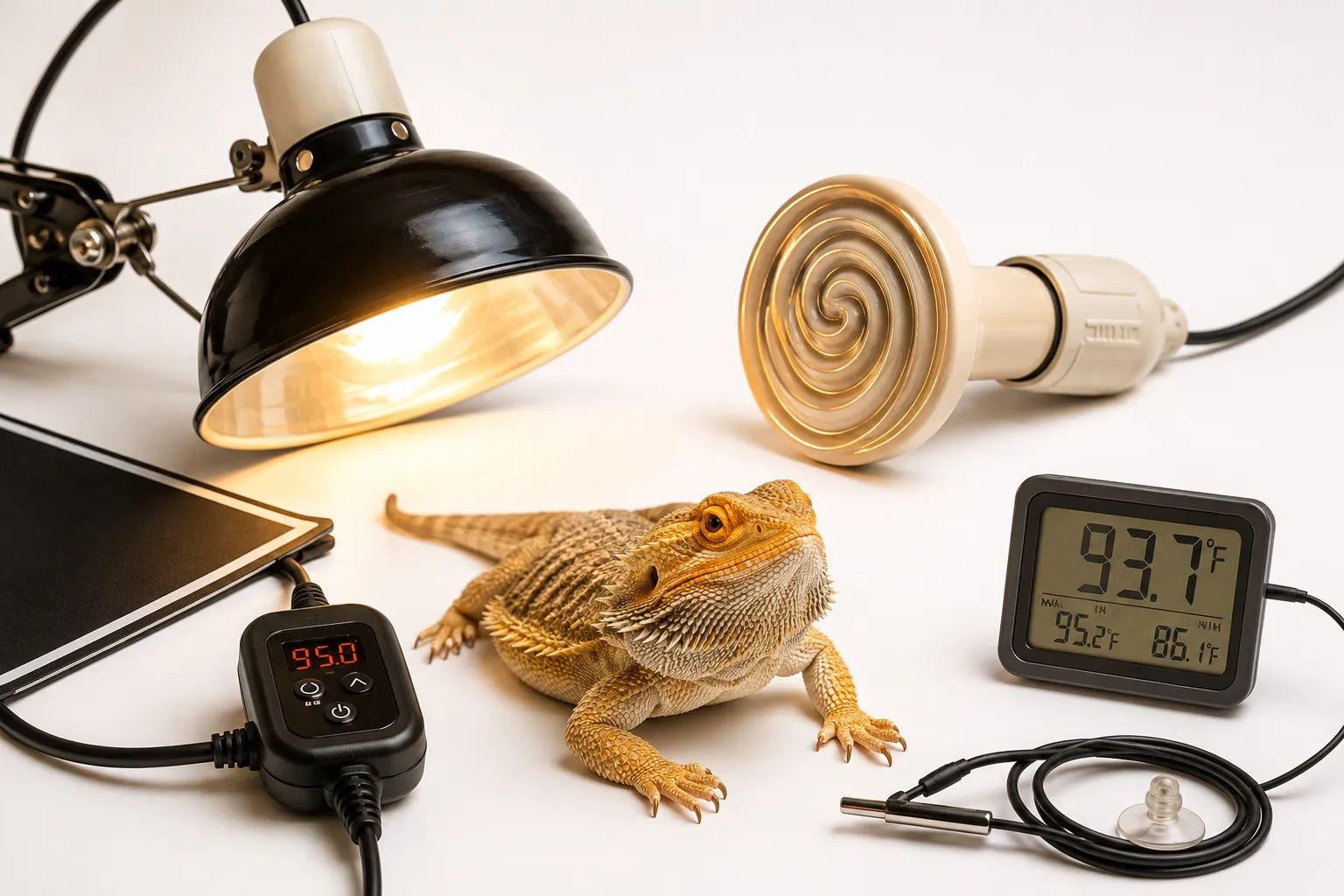
Heat rocks pose multiple serious risks to bearded dragons because of how they function and how these reptiles sense temperature. The primary danger comes from uneven heating patterns that create hot spots significantly hotter than the thermostat setting indicates.
The core problems with heat rocks include:
- Uneven surface temperatures, Heat rocks develop hot spots that can reach 120-140°F even when the average temperature reads safe
- Malfunctioning thermostats, Internal temperature controls frequently fail, causing the rock to overheat without warning
- Belly scale vulnerability, Bearded dragons have thin, sensitive ventral scales that burn more easily than their thicker dorsal scales
- Delayed heat sensation, Reptiles sense heat primarily through their backs and heads, not their bellies, so they don’t feel dangerous heat from below until damage occurs
- Contact burn mechanism, Direct, prolonged contact with a hot surface causes deeper tissue damage than radiant heat
Bearded dragons naturally bask on rocks in the Australian outback, but those rocks are heated gradually by the sun from above. The dragon can sense the warmth on its back and move before overheating. Heat rocks work in reverse, heating from below where the dragon can’t properly sense temperature until burns have already formed.
Common mistake: Thinking that a heat rock set to 95°F is safe. The surface temperature varies wildly across the rock, and hot spots can be 30-40 degrees hotter than the setting.
What Happens If a Bearded Dragon Gets Burned by a Heat Rock?
Thermal burns from heat rocks cause immediate tissue damage that worsens over several days. The burn initially appears as darkened, discolored scales on the belly, chest, or limbs where the dragon made contact with the hot surface.
Burn progression timeline:
- First 24 hours, Scales darken to brown or black, skin appears dry and tight
- Days 2-5, Blistering may develop, scales begin to separate from underlying tissue
- Week 1-2, Dead tissue becomes obvious, infection risk increases significantly
- Weeks 3-8, Healthy tissue slowly regenerates if infection is prevented
Severe burns penetrate through multiple skin layers and can damage muscle tissue underneath. These deep burns are extremely painful and often become infected because the protective skin barrier is destroyed. Infected burns can lead to sepsis, a life-threatening condition that requires aggressive antibiotic treatment.
Edge case: Some burns don’t appear severe initially but worsen dramatically over 3-5 days as the full extent of tissue damage becomes apparent. Never assume a minor-looking burn is safe without veterinary examination.
Beyond physical damage, burned bearded dragons often become lethargic, stop eating, and show signs of stress like beard darkening and glass surfing. The recovery process is lengthy and expensive, typically requiring multiple vet visits, prescription medications, and specialized wound care. For guidance on stress behaviors, check out our article on why bearded dragons glass surf.
How to Tell If My Bearded Dragon Has a Thermal Burn
Identifying thermal burns early improves treatment outcomes significantly. Bearded dragons can’t vocalize pain, so you must watch for visual and behavioral signs of injury.
Visual indicators of thermal burns:
- Discolored belly scales, Brown, black, or gray patches on normally light-colored ventral scales
- Texture changes, Rough, dry, or crusty areas where scales should be smooth
- Blistering, Fluid-filled bubbles under or between scales
- Scale separation, Scales lifting away from the skin or falling off entirely
- Redness around edges, Pink or red tissue visible around darkened areas
Behavioral signs of burn injury:
- Reluctance to move or walk normally
- Avoiding contact with tank surfaces
- Decreased appetite or complete food refusal
- Increased time spent in cool zones
- Lethargy and reduced activity levels
- Stress indicators like beard darkening or arm waving
Check your dragon’s belly during regular handling by gently turning them over and examining the ventral scales in good lighting. Healthy belly scales should be uniform in color (cream, white, or light yellow) and lie flat against the body.
Decision rule: If you see any discoloration, texture change, or behavioral shift after your dragon has been near a heat source, schedule a veterinary appointment immediately. Burns worsen rapidly, and early intervention prevents complications.
Best Heating Options for Bearded Dragons Instead of Heat Rocks
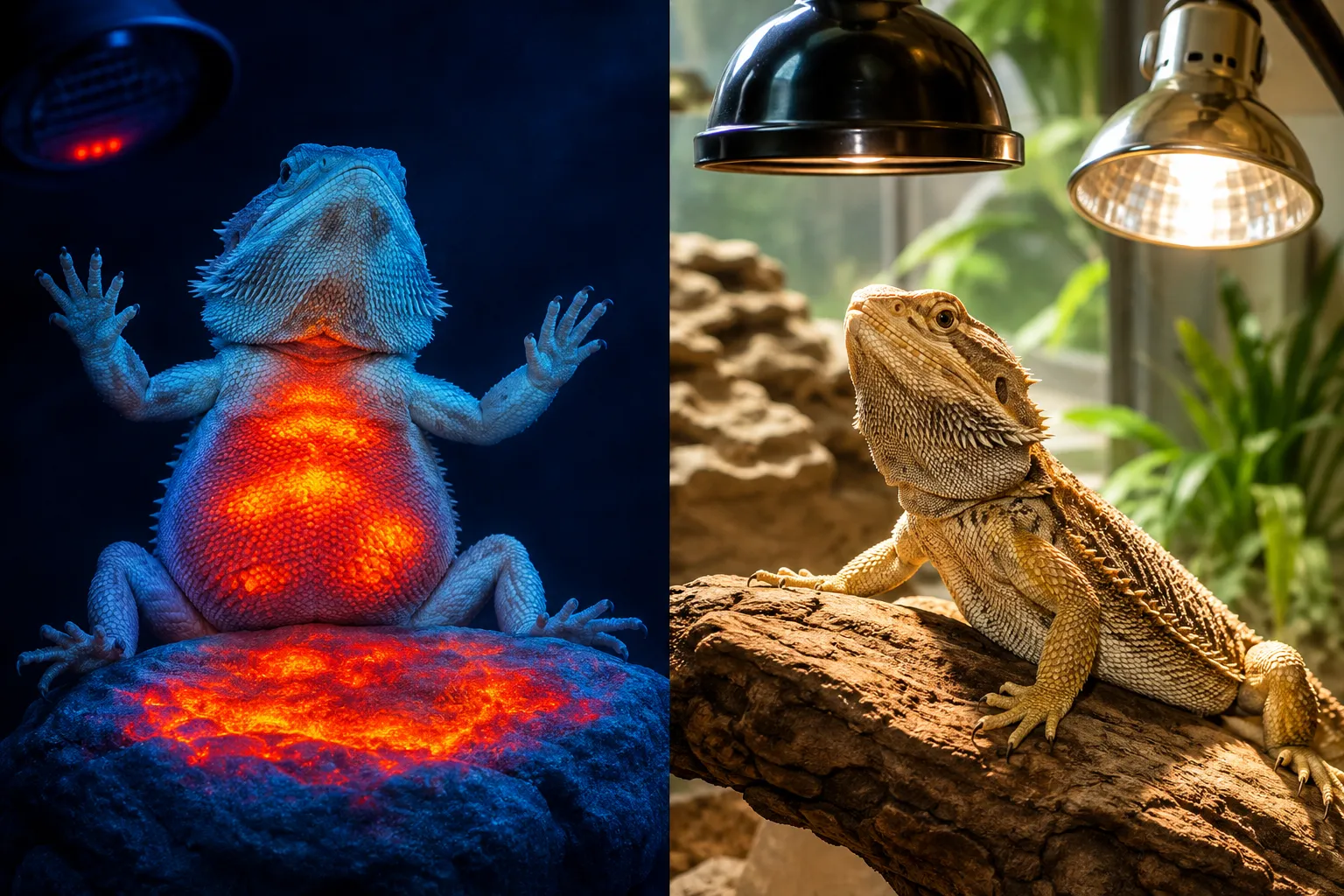
Proper heating for bearded dragons requires overhead heat sources that create a temperature gradient and allow natural basking behavior. The best setups combine multiple heat sources to provide both warmth and appropriate light spectrum.
Top heating solutions for bearded dragon tanks:
Halogen basking bulbs, The gold standard for daytime basking. These bulbs produce intense heat and a light spectrum similar to natural sunlight. They create a focused basking spot and allow dragons to thermoregulate by moving closer or farther away. Use 50-100 watt bulbs depending on tank size and ambient room temperature.
Ceramic heat emitters (CHE), Excellent for nighttime heating or supplemental warmth. CHEs produce heat without light, maintaining proper temperatures during dark periods without disrupting sleep cycles. Always use with a porcelain socket rated for high heat.
Mercury vapor bulbs (MVB), All-in-one solution providing heat, UVB, and visible light. These powerful bulbs work well for larger enclosures (75+ gallons) but require careful distance management to prevent overheating and excessive UVB exposure.
Deep heat projectors, Newer technology that produces infrared-A and infrared-B wavelengths, penetrating deeper into tissue like natural sunlight. More expensive but highly effective for creating natural heating patterns.
Setup requirements for safe heating:
- Mount all heat sources overhead, never on the tank floor
- Use a dimming thermostat to maintain consistent basking temperatures
- Create a thermal gradient from 95-110°F (basking) to 75-85°F (cool side)
- Measure temperatures with an infrared temperature gun, not stick-on gauges
- Provide multiple basking surfaces at different heights for temperature options
For more information on creating the ideal environment, see our guide on proper tank sizes for bearded dragons.
Heat Lamp vs Heat Rock for Bearded Dragons
Heat lamps and heat rocks represent fundamentally different heating philosophies, with only one being appropriate for bearded dragon care. Understanding why overhead heating works and ground heating fails is essential for proper husbandry.
Heat lamp advantages:
- Mimics natural sunlight, Dragons evolved basking under the sun, which heats from above
- Allows thermoregulation, Dragons can move toward or away from the heat source to adjust body temperature
- Heats the back first, Dragons sense temperature most accurately through their dorsal surface
- Creates behavioral enrichment, Encourages natural basking postures and movement patterns
- Visible heat source, You can see when the lamp is on and monitor its function easily
Heat rock disadvantages:
- Unnatural heating pattern, No natural environment heats reptiles from below
- Poor temperature sensing, Belly scales don’t detect dangerous heat quickly enough
- No escape option, Dragons often sleep on heat rocks, leading to prolonged exposure
- Hidden malfunction, You can’t see when a heat rock overheats until damage occurs
- Eliminates natural behavior, Removes the need for active thermoregulation
Choose heat lamps if: You want to provide species-appropriate heating that supports natural behavior and allows your dragon to regulate its body temperature safely (this applies to all bearded dragons).
Never choose heat rocks because: There is no scenario where they are safer or more appropriate than overhead heating, regardless of brand, price, or thermostat features.
What Temperature Should a Bearded Dragon Basking Spot Be?
Basking spot temperatures must match your bearded dragon’s age and activity level. Too cool and they can’t digest food properly; too hot and they risk overheating and stress.
Optimal basking temperatures by age:
- Hatchlings (0-3 months): 100-110°F
- Juveniles (3-12 months): 95-105°F
- Adults (12+ months): 95-100°F
- Seniors (8+ years): 90-95°F
The cool side of the tank should remain between 75-85°F to provide a proper thermal gradient. This temperature difference allows your dragon to move between zones and regulate body temperature precisely.
Measuring temperature correctly:
Use an infrared temperature gun (temp gun) to measure the actual surface temperature of basking rocks or branches. Point the laser at the exact spot where your dragon’s belly will rest while basking. Take measurements at multiple times throughout the day because temperatures fluctuate as bulbs age and room conditions change.
Stick-on thermometers and analog gauges are notoriously inaccurate, often reading 10-15 degrees off. Digital probe thermometers are better but only measure air temperature at one point, not surface temperature where it matters.
Common mistake: Setting up heating based on wattage rather than measured temperature. A 100-watt bulb might create perfect temperatures in one setup and dangerous heat in another depending on tank size, room temperature, and fixture type.
Can Heat Rocks Cause Burns on Reptiles?
Yes, heat rocks cause burns on all reptile species, not just bearded dragons. Veterinary literature documents thermal burn cases across dozens of reptile species that used heat rocks, including leopard geckos, ball pythons, blue-tongue skinks, and iguanas.
The mechanism of injury is identical across species: uneven heating creates hot spots, reptiles can’t sense dangerous belly heat quickly enough, and prolonged contact causes tissue damage. Some species are even more vulnerable than bearded dragons because they spend more time motionless on surfaces.
Species particularly at risk:
- Nocturnal geckos, Poor vision in daylight means they don’t see heat rocks as a threat
- Heavy-bodied snakes, Large contact area and slow movement increase burn severity
- Burrowing species, Natural instinct to press against warm surfaces leads to prolonged contact
- Sick or weak reptiles, Reduced mobility prevents escape from dangerous heat
The reptile veterinary community universally recommends against heat rocks for any species. Organizations including the Association of Reptilian and Amphibian Veterinarians (ARAV) explicitly warn against their use in care guidelines.
Edge case: Some keepers argue that heat rocks work for certain desert species that naturally rest on sun-heated rocks. However, naturally heated rocks warm gradually and cool gradually, allowing continuous temperature assessment. Artificial heat rocks cycle on and off, creating rapid temperature spikes that don’t occur in nature.
Are Under Tank Heaters Safe for Bearded Dragons?
Under tank heaters (UTH) are safer than heat rocks but still not ideal as primary heat sources for bearded dragons. When used correctly with proper thermostats, they can provide supplemental belly heat, but they shouldn’t replace overhead basking lights.
When UTH can be used safely:
- As supplemental heat only, not the primary basking source
- Connected to a reliable thermostat set to 85-90°F maximum
- Covered with at least 1/4 inch of substrate or tile to diffuse heat
- Monitored with a temperature gun to verify surface temperatures
- Combined with overhead basking lights for proper thermal gradient
Why UTH alone is insufficient:
Bearded dragons are heliothermic, meaning they need light-based heat to trigger proper basking behavior and digestion. Belly heat alone doesn’t stimulate the same physiological responses as dorsal heating from above. Dragons kept with only UTH often show poor appetite, incomplete digestion, and reduced activity levels.
Additionally, UTH placed directly under glass can create hot spots similar to heat rocks if the thermostat fails or is set incorrectly. The glass itself can reach dangerous temperatures that burn belly scales.
Decision rule: Use UTH only if you already have proper overhead heating and want to add gentle supplemental warmth to the cool side of the tank. Never rely on UTH as your dragon’s primary heat source.
For comprehensive care information, visit our bearded dragon care resources.

🦎No Light Emitted - The heat lamp bulb only generates heat during use, and does not emit light. It provides sufficient heat for your pets so that they can feel the warmth you made for it in a cold environment. Especially when it is used at night, it will not affect the pet's sleep.

【Reliable Heat Source】: 100W heat lamp ensures 24-hour warmth for reptiles and amphibians with the ceramic heat emitter, ideal for maintaining their thermoregulation needs.
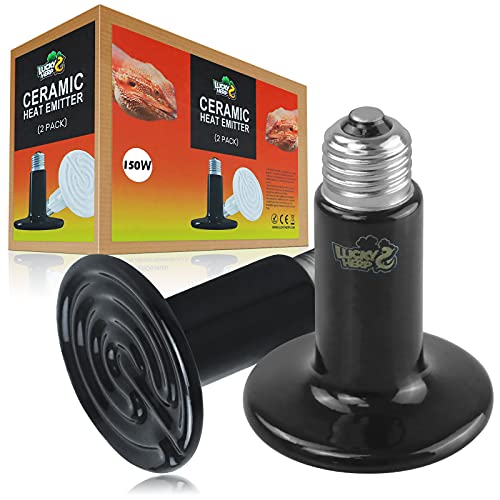
🦎No Light Emitted - The heat lamp bulb only generates heat during use, and does not emit light. It provides sufficient heat for your pets so that they can feel the warmth you made for it in a cold environment. Especially when it is used at night, it will not affect the pet's sleep.
Ceramic Heat Emitter vs Basking Bulb for Bearded Dragons
Both ceramic heat emitters and basking bulbs serve important but different roles in bearded dragon heating. Understanding when to use each ensures your dragon gets appropriate heat throughout the day-night cycle.
Basking bulbs (halogen or incandescent):
- Best for: Daytime basking and primary heat source
- Produces: Heat plus visible light
- Temperature range: Can achieve 95-110°F basking spots
- Behavioral impact: Stimulates natural basking behavior and activity
- Typical wattage: 50-100 watts for most setups
- Lifespan: 2,000-4,000 hours (replace every 6-12 months)
Ceramic heat emitters:
- Best for: Nighttime heating and supplemental warmth
- Produces: Heat only, no light
- Temperature range: Maintains ambient warmth 70-80°F
- Behavioral impact: Allows natural sleep cycles without light disruption
- Typical wattage: 60-100 watts for nighttime use
- Lifespan: 10,000+ hours (replace every 2-3 years)
Ideal heating schedule:
Most bearded dragons need basking bulbs during the day (12-14 hours) and no additional heat at night if room temperature stays above 65°F. If your home drops below 65°F at night, add a CHE to maintain 70-75°F ambient temperature without producing light that disrupts sleep.
Choose basking bulbs if: You need daytime heat and want to encourage active basking behavior (required for all setups).
Add a CHE if: Your room temperature drops below 65°F at night or you need supplemental heat without light.
Common mistake: Using only a CHE without any basking bulb. Dragons need the light component of basking to trigger proper digestion and vitamin D3 synthesis, even when UVB is provided separately.
Why Do Pet Stores Still Sell Heat Rocks If They’re Dangerous?
Pet stores continue selling heat rocks primarily because they’re profitable and many employees lack proper reptile husbandry training. Despite decades of veterinary evidence documenting thermal burns, heat rocks remain common in chain pet stores and online retailers.
Reasons heat rocks persist in stores:
Profit margins, Heat rocks are inexpensive to manufacture and sell for $15-30, providing good profit margins compared to proper heating equipment that requires more customer education.
Lack of regulation, No federal laws prohibit selling heat rocks, and pet product safety standards are minimal. Manufacturers can market products as “safe” without proving they don’t cause harm.
Employee training gaps, Many pet store employees receive minimal reptile care training and repeat outdated information from product packaging or company training materials that prioritize sales over animal welfare.
Customer demand, Some buyers specifically request heat rocks because they seem convenient or were recommended by outdated care sheets, so stores stock what customers ask for.
Liability protection, Product packaging includes disclaimers about proper use and monitoring, legally protecting manufacturers and retailers when burns occur.
What responsible retailers do differently:
Quality reptile specialty stores and experienced breeders refuse to stock heat rocks regardless of customer requests. They educate buyers about proper overhead heating and explain why heat rocks cause injuries. Some stores display photos of thermal burns to illustrate the real-world consequences.
Decision rule: If a pet store employee recommends a heat rock, shop elsewhere. Their advice indicates either poor training or prioritizing sales over animal welfare, and you can’t trust other recommendations they provide.
Can I Use a Heat Rock If I Monitor the Temperature Closely?
No, constant temperature monitoring doesn’t make heat rocks safe for bearded dragons. The fundamental problems with heat rocks, uneven heating, belly heat sensation delays, and malfunction potential, exist regardless of how carefully you monitor them.
Why monitoring doesn’t solve the problem:
Temperature spikes happen faster than you can react, Heat rocks can develop dangerous hot spots within minutes when thermostats malfunction. Even checking every hour leaves 60-minute windows for burns to occur.
You can’t monitor while sleeping, Burns often happen overnight when dragons settle on heat rocks for extended periods and owners can’t intervene.
Surface temperature varies across the rock, Measuring one spot doesn’t tell you the temperature of every surface area. Hot spots can exist inches away from where you measured.
Belly burns happen before behavioral changes, By the time your dragon shows discomfort and moves away, tissue damage has already occurred.
Thermostat failure is unpredictable, You can’t predict when a thermostat will malfunction, and by the time you notice, your dragon may already be injured.
The effort required to “safely” use a heat rock:
To minimize (not eliminate) risk, you would need to check surface temperatures with a temp gun every 30 minutes, 24 hours a day, measuring multiple spots across the entire rock surface. You’d need backup thermostats, redundant monitoring systems, and immediate intervention capability at all times. This level of monitoring is impossible to maintain and completely unnecessary when proper overhead heating is safe, effective, and requires minimal monitoring.
Choose overhead heating if: You want a heating solution that’s actually safe rather than one that requires constant vigilance to prevent injury (this applies to everyone).
How Long Does It Take for a Heat Rock Burn to Heal on a Bearded Dragon?
Heat rock burn healing time varies from 3 weeks to 6 months depending on burn severity, infection presence, and treatment quality. Superficial burns affecting only the outer scale layer heal fastest, while deep burns penetrating to muscle tissue require months of intensive care.
Healing timeline by burn severity:
Superficial burns (first-degree):
- Appearance: Darkened scales, no blistering
- Healing time: 3-4 weeks
- Treatment: Topical antibiotics, clean environment, proper temperatures
- Outcome: Usually complete recovery with minimal scarring
Partial-thickness burns (second-degree):
- Appearance: Blistering, scale separation, exposed tissue
- Healing time: 6-10 weeks
- Treatment: Veterinary care, systemic antibiotics, wound cleaning, pain management
- Outcome: Scarring likely, scales may not regenerate normally
Full-thickness burns (third-degree):
- Appearance: Deep tissue damage, muscle exposure, extensive scale loss
- Healing time: 3-6 months
- Treatment: Aggressive veterinary intervention, possible surgery, long-term antibiotics
- Outcome: Permanent scarring, possible mobility issues, some cases require euthanasia
Factors affecting healing speed:
- Infection control, Infected burns take 2-3 times longer to heal and may never fully recover
- Nutrition, Well-fed dragons with proper supplementation heal faster than malnourished ones
- Stress levels, Calm, comfortable dragons heal better than stressed individuals
- Age, Younger dragons regenerate tissue faster than older adults
- Wound care quality, Consistent cleaning and medication application speeds recovery
Common mistake: Assuming a burn is healing well because the dragon starts eating again. Appetite returns before tissue fully regenerates, and underlying infection can persist even when behavior normalizes.
Veterinary costs for burn treatment typically range from $200-800+ depending on severity and number of follow-up visits required. Prevention through proper heating is far less expensive and eliminates suffering. To learn more about keeping your dragon healthy long-term, read about bearded dragon lifespan.
Do Any Reptiles Actually Benefit from Heat Rocks?
No reptile species truly benefits from heat rocks compared to proper overhead or radiant heating. While some keepers claim success with heat rocks for certain species, these anecdotal reports don’t outweigh the documented injury risk and the availability of safer alternatives.
Species sometimes (incorrectly) recommended for heat rocks:
Nocturnal geckos, Some keepers argue that species like leopard geckos benefit from belly heat since they’re active at night. However, under-tank heaters with thermostats provide the same belly warmth without the hot spot and malfunction risks of heat rocks.
Burrowing snakes, Species that naturally seek underground warmth supposedly benefit from heat rocks. In reality, properly installed UTH or radiant heat panels create more natural and safer heat gradients.
Temperate species, Reptiles from cooler climates that need gentle warmth rather than intense basking supposedly do well with heat rocks. However, low-wattage CHEs or heat panels provide the same gentle warmth without contact burn risk.
Why alternatives are always better:
Every heating need that heat rocks supposedly address can be met more safely with modern heating equipment. UTH with thermostats, radiant heat panels, deep heat projectors, and low-wattage CHEs all provide controlled, predictable heating without the failure modes that make heat rocks dangerous.
The reptile veterinary community doesn’t recognize any species-specific exception to the heat rock warning. If a heating method causes burns across dozens of species, the burden of proof lies with anyone claiming a particular species is somehow immune to those same risks.
Edge case: Some very large, thick-skinned reptiles like adult iguanas or large monitors might theoretically tolerate heat rocks better than smaller species. However, even for these animals, proper overhead heating is more effective and eliminates any burn risk, making heat rocks unnecessary rather than beneficial.
What Are the Safest Heat Sources for a Bearded Dragon Tank?
The safest heating setup for bearded dragons combines multiple overhead heat sources with proper temperature control and monitoring. This approach creates natural thermal gradients while eliminating contact burn risks.
Complete safe heating setup:
Primary basking heat:
- 75-100 watt halogen flood bulb in a dome fixture
- Positioned over a basking platform (rock, branch, or hammock)
- Creates focused 95-110°F basking spot
- Provides 12-14 hours of daytime heat and light
UVB lighting:
- T5 HO 10.0 or 12% UVB tube light
- Mounted inside the tank or on screen top
- Provides essential UVB for calcium metabolism
- Runs on same schedule as basking light
Nighttime heating (if needed):
- 60-100 watt ceramic heat emitter
- Maintains 70-75°F ambient temperature
- Only necessary if room drops below 65°F at night
- Connected to thermostat for automatic control
Temperature control equipment:
- Dimming thermostat for basking bulb (maintains consistent temperature)
- On/off thermostat for CHE (prevents overheating at night)
- Infrared temperature gun for spot-checking surface temperatures
- Digital thermometer with probe for ambient air temperature monitoring
Safety features to include:
- Fixture guards, Prevent direct contact with hot bulbs if dragon climbs
- Secure mounting, Ensure fixtures can’t fall into the tank
- Proper wattage, Don’t exceed fixture ratings (fire hazard)
- Backup monitoring, Multiple thermometers to catch equipment failure
- GFCO outlets, Protect against electrical issues in humid environments
This setup costs $150-250 initially but lasts for years with only bulb replacements needed. Compare this to the $200-800+ cost of treating a single heat rock burn, plus the suffering your dragon endures.
For more guidance on creating the ideal habitat, explore our bearded dragon care tag.
Frequently Asked Questions
Can bearded dragons sleep on heat rocks safely?
No, bearded dragons should never sleep on heat rocks. Dragons are most vulnerable to burns while sleeping because they remain motionless for 8-12 hours, allowing prolonged contact with hot spots. Many severe burn cases occur overnight when owners can’t monitor their dragons or intervene if the heat rock malfunctions.
What should I do if my bearded dragon was burned by a heat rock?
Remove the heat rock immediately and schedule an emergency veterinary appointment. Take clear photos of the burn for the vet. Keep your dragon in a clean environment with proper overhead heating only. Don’t apply any home remedies or ointments before veterinary examination, as some products can worsen burns or interfere with treatment.
Are expensive heat rocks safer than cheap ones?
No, price doesn’t make heat rocks safe. Expensive models may have better thermostats that fail less often, but all heat rocks share the fundamental design flaw of heating from below where reptiles can’t sense temperature properly. The uneven heating that creates dangerous hot spots occurs regardless of brand or price point.
Can I use a heat rock for a baby bearded dragon?
Absolutely not. Baby bearded dragons are even more vulnerable to heat rock burns than adults because their scales are thinner and their bodies are smaller, meaning burns cover a larger percentage of their body surface. Babies also spend more time resting on surfaces, increasing exposure time to dangerous heat.
How can I tell if a heat rock is malfunctioning?
You can’t reliably detect heat rock malfunction before it causes injury. Surface temperatures can spike within minutes, and hot spots may exist in areas you’re not monitoring. By the time you notice your dragon showing discomfort or see visible burns, tissue damage has already occurred. This unpredictability is why heat rocks should never be used.
Will a thermostat make a heat rock safe for my bearded dragon?
No, thermostats reduce but don’t eliminate heat rock dangers. Thermostats can fail, and they only measure temperature at the probe location, not across the entire rock surface. Hot spots can still develop in areas away from the probe. Additionally, thermostats don’t solve the fundamental problem that bearded dragons can’t sense dangerous belly heat quickly enough to avoid burns.
What temperature is too hot for a bearded dragon’s belly?
Sustained contact with surfaces above 100°F can cause thermal burns on bearded dragon belly scales. However, burn risk depends on both temperature and exposure time. Even 95°F can cause burns if contact lasts several hours, while brief contact with 110°F might not cause injury. This variability makes heat rocks especially dangerous because dragons often rest on them for extended periods.
Can I use a heat rock in addition to overhead heating?
No, adding a heat rock to proper overhead heating doesn’t make it safe. The burn risk remains unchanged regardless of what other heat sources are present. If your overhead heating is adequate, the heat rock is unnecessary. If your overhead heating is inadequate, fix that problem rather than adding a dangerous supplemental heat source.
Are there any heat rocks specifically designed for bearded dragons?
Some manufacturers market heat rocks as “reptile-safe” or “thermostat-controlled,” but no design eliminates the fundamental risks. Marketing claims don’t change the physics of how heat rocks function or how bearded dragons sense temperature. Veterinary evidence of burns comes from all brands and models, including those marketed as safe.
How much does it cost to treat a heat rock burn?
Treatment costs range from $200-800+ depending on burn severity. Initial emergency vet visits typically cost $150-250, prescription antibiotics add $50-100, follow-up visits cost $75-150 each, and severe cases requiring surgery or hospitalization can exceed $1,000. Prevention through proper heating costs less and eliminates suffering.
What should I use instead of a heat rock for nighttime heating?
Use a ceramic heat emitter connected to a thermostat if your room temperature drops below 65°F at night. CHEs produce heat without light, maintaining proper ambient temperature without disrupting sleep cycles. Most bearded dragons don’t need nighttime heating if room temperature stays above 65°F, as they tolerate and even benefit from a natural nighttime temperature drop.
Can older bearded dragons tolerate heat rocks better than young ones?
No, age doesn’t make bearded dragons safer with heat rocks. While older dragons may have slightly thicker scales, they’re often less mobile and spend more time resting, increasing burn risk. Senior dragons also heal more slowly from injuries, making burns more serious. Heat rocks are dangerous for bearded dragons of all ages.
Conclusion
Heat rocks pose serious, well-documented dangers to bearded dragons and should never be used regardless of brand, price, or monitoring efforts. The combination of uneven heating, malfunctioning thermostats, and bearded dragons’ inability to sense dangerous belly heat quickly enough creates an unacceptable burn risk that proper overhead heating completely eliminates.
Your action steps for safe bearded dragon heating:
- Remove any heat rocks immediately from your dragon’s enclosure and dispose of them
- Install proper overhead heating using halogen basking bulbs for daytime and ceramic heat emitters for nighttime if needed
- Measure temperatures accurately with an infrared temperature gun, checking basking spot surface temperatures daily
- Create a thermal gradient from 95-110°F basking area to 75-85°F cool side
- Inspect your dragon’s belly regularly during handling to catch any potential issues early
- Invest in quality equipment including dimming thermostats and proper fixtures that will last for years
If your bearded dragon currently has a heat rock burn, remove the heat rock and schedule a veterinary appointment immediately. Early treatment significantly improves outcomes and reduces healing time.
The initial cost of proper heating equipment ($150-250) is less than treating a single burn injury and provides years of safe, effective heating that supports your dragon’s natural behavior and health. Your bearded dragon depends on you to provide species-appropriate care, and that starts with safe heating that mimics their natural environment.
For more comprehensive care guidance, explore our resources on bearded dragon behavior and reptile health.

Incandescent Spotlight Bulbs: These 150 Watt reptile bulbs are specifically designed to provide the heat light for reptiles, aiding in the reduction of chronic illness risk.

【Reptile Basking Bulb】This basking bulb creates a basking area for the thermoregulation of animals, facilitating the distinction between hot and cold zones in the terrarium and facilitating the restoration of the animals' natural ecological activities.

【Reptile Heat Lamp】The Daylight Basking Spot light spectrum is ideal to create a daytime light cycle, promoting healthier animal growth and breeding.