
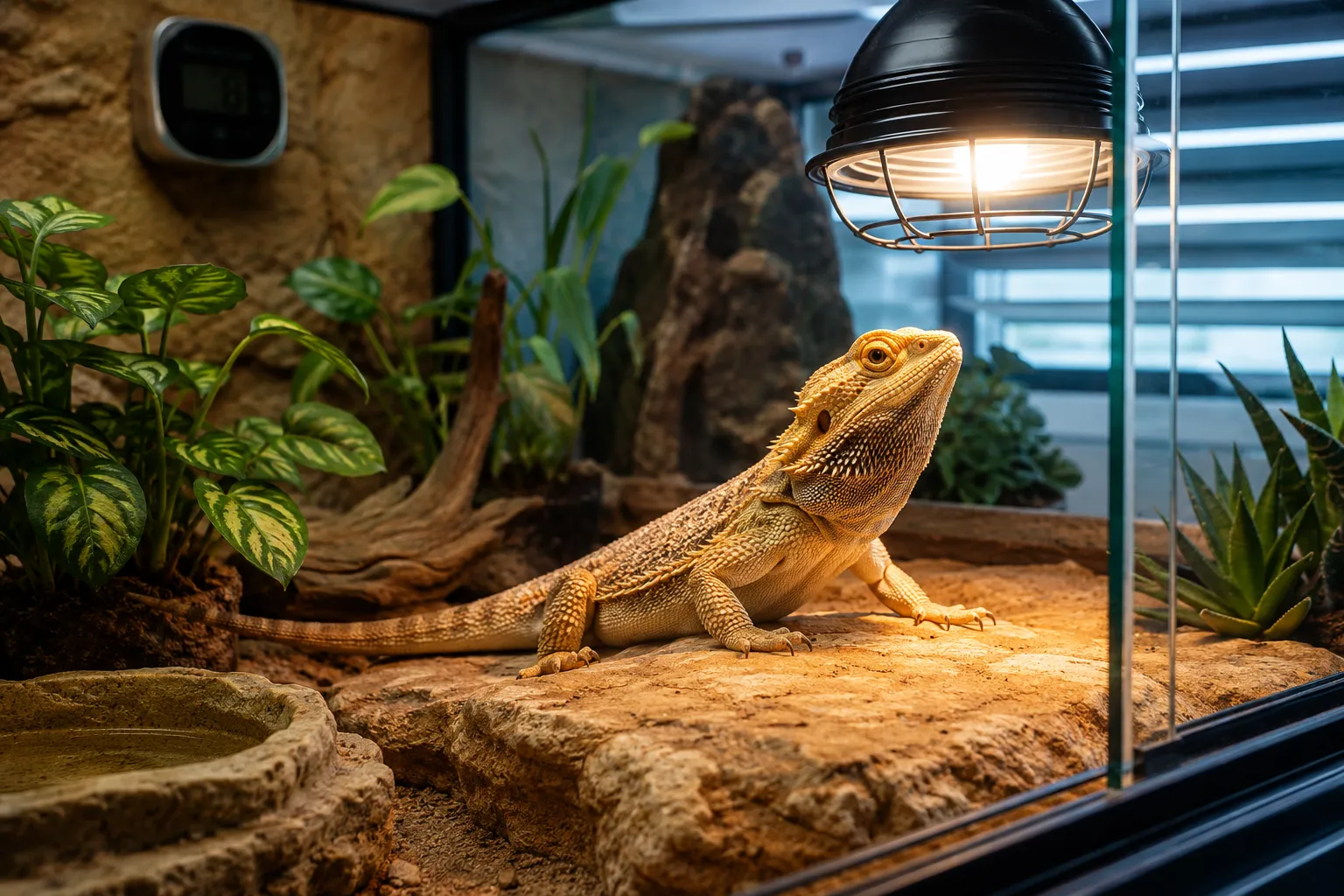
Bearded dragons require 12 to 14 hours of UVB and basking light daily during their active season, followed by 10 to 12 hours of complete darkness at night. This photoperiod mimics their natural Australian habitat and supports proper calcium metabolism, digestion, and circadian rhythm. Using an automatic timer ensures consistency and prevents the health problems that arise from irregular lighting schedules.
Key Takeaways
- Bearded dragons need 12-14 hours of light and 10-12 hours of darkness each day during spring and summer
- Both UVB lighting (for calcium absorption) and basking lights (for thermoregulation) must run on the same schedule
- Never leave lights on at night, bearded dragons require complete darkness to maintain healthy sleep cycles
- Replace UVB bulbs every 6-12 months even if they still produce visible light, as UVB output degrades over time
- Baby bearded dragons need the same lighting duration as adults, but may require slightly higher UVB intensity
- Digital timers are essential for maintaining consistent schedules and preventing metabolic bone disease
- Lethargy, loss of appetite, and weak bones often indicate inadequate UVB exposure or incorrect photoperiods
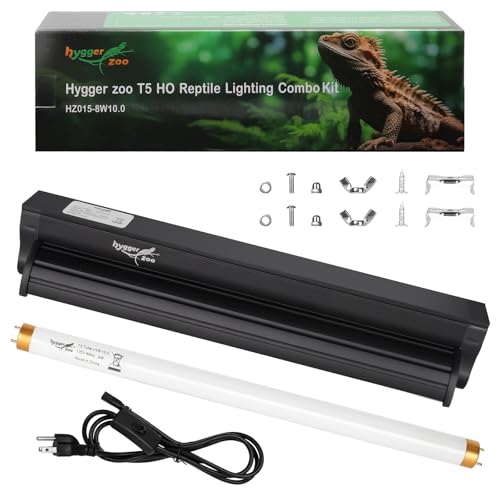
🌞🌞Higher UVB Output Value. T5 10.0 8W UVB reptile light fixture is 12 inch. Higher UVB output promote reptiles vitamin D3 synthesis and help them grow better. And the reptile UVB light also can help promote the absorption of their calcium and phosphorus, improve their reproductive behavior and boost their immunity.

Enhances UVB & Light Reflection: The reptile light fixture focuses the light emitted by the bulb, ensuring even distribution across the entire illumination area. The polished interior surface greatly enhances light reflection, minimizing losses of both light and UVB. This reflective effect optimizes the efficiency of the light source, promoting the health and growth of reptiles

【 Complete T5 UVB Lighting Combo Kit】The GREENPAW T5 UVB reptile light fixture comes as a complete lighting kit, including a 8W 10.0 reptile UVB bulb, 12.44-inch terrarium hood, mounting accessories, and power cord. Specifically designed for 16-24 inch reptile terrariums and vivariums. This kit delivers reliable UVB light for reptiles, ideal for new owners.
How Many Hours of Light Do Bearded Dragons Need Per Day?
Bearded dragons need 12 to 14 hours of light during their active season (spring through fall) and 10 to 12 hours during winter brumation periods. This schedule replicates the natural photoperiod in their native Australian environment and supports their biological clock, digestion, and vitamin D3 synthesis.

The exact duration depends on the season you’re simulating:
- Spring/Summer (March-September): 14 hours on, 10 hours off
- Fall (October-November): 12 hours on, 12 hours off
- Winter/Brumation (December-February): 10 hours on, 14 hours off (optional for healthy adults)
Most keepers maintain a consistent 12-14 hour schedule year-round if they’re not inducing brumation. Choose a schedule that fits your routine, for example, lights on at 7 AM and off at 8 PM, and stick to it. Consistency matters more than the exact hour.
Common mistake: Randomly adjusting light schedules disrupts your dragon’s circadian rhythm and can cause stress, appetite loss, and irregular bowel movements. Set a timer and let it run automatically.
What Happens If Bearded Dragons Don’t Get Enough UVB Light?
Insufficient UVB exposure prevents bearded dragons from synthesizing vitamin D3, which leads to metabolic bone disease (MBD), a serious and often irreversible condition. Without adequate UVB, dragons cannot absorb dietary calcium properly, resulting in soft bones, deformities, tremors, seizures, and eventually death if untreated.
Early signs of UVB deficiency include:
- Lethargy and reduced activity
- Loss of appetite
- Swollen or misshapen jaw (rubber jaw)
- Trembling limbs or twitching
- Difficulty walking or climbing
- Bowed or curved legs
MBD develops gradually over weeks to months. Young, growing bearded dragons are especially vulnerable because their rapid bone development demands high calcium absorption. Adult dragons with chronic UVB deficiency may develop osteoporosis-like symptoms and fractures from normal activity.
Prevention is straightforward: Provide a quality UVB bulb (10.0 or 12% output) positioned 8-12 inches from the basking spot, running 12-14 hours daily. Replace bulbs every 6 months even if they appear to work, UVB output degrades long before visible light dims.
If you suspect MBD, consult a reptile veterinarian immediately. Treatment typically involves calcium injections, oral supplements, and correcting the lighting setup. For more information on recognizing health issues, check our guide on metabolic bone disease.
Should I Leave My Bearded Dragon’s Light On at Night?
No, you should never leave UVB or basking lights on at night. Bearded dragons require complete darkness for 10-12 hours to maintain healthy sleep cycles, regulate body temperature naturally, and support proper hormone production. Continuous light exposure causes chronic stress, sleep deprivation, and suppressed immune function.
Bearded dragons are diurnal reptiles, they’re active during the day and sleep at night. Their bodies rely on darkness to trigger melatonin production and lower metabolic rates during rest periods. Leaving lights on disrupts this natural cycle and can lead to:
- Chronic stress and behavioral problems
- Weakened immune system
- Poor appetite and digestion
- Irregular sleep patterns
- Increased aggression or lethargy
What about heat at night? Most homes maintain temperatures (65-75°F) that are perfectly safe for bearded dragons overnight. If your room drops below 65°F, use a ceramic heat emitter (CHE) or deep heat projector, both produce heat without visible light. Never use colored night bulbs (red, blue, or purple) as bearded dragons can see these wavelengths and they still disrupt sleep.
Exception: If your dragon is recovering from illness and your vet recommends maintaining specific temperatures around the clock, use a non-light-emitting heat source only, never a basking or UVB lamp.
Difference Between UVB and Basking Light for Bearded Dragons
UVB lights produce ultraviolet B radiation that enables vitamin D3 synthesis and calcium absorption, while basking lights generate visible light and heat for thermoregulation. Both are essential but serve completely different biological functions, you cannot substitute one for the other.
Here’s how they differ:
UVB Lights:
- Produce invisible ultraviolet B wavelengths (290-320 nm)
- Enable calcium metabolism and prevent metabolic bone disease
- Typically fluorescent tubes (T5 or T8) or compact bulbs
- Rated by UVB output percentage (10.0, 12%, etc.)
- Must be replaced every 6-12 months as UVB degrades
- Position 8-12 inches from basking spot
- Run 12-14 hours daily
Basking Lights:
- Produce visible light and infrared heat
- Create temperature gradient (basking spot 95-105°F, cool side 75-85°F)
- Usually halogen, incandescent, or mercury vapor bulbs
- Rated by wattage (50W, 75W, 100W, etc.)
- Last longer but still need periodic replacement
- Position to create proper basking temperature
- Run on same schedule as UVB
Both lights must operate simultaneously during the day. Bearded dragons bask under heat while absorbing UVB, these processes happen together in nature. Running only one type of light creates serious health problems.
Pro tip: Mercury vapor bulbs (MVB) produce both UVB and heat in a single bulb, but they’re expensive and must be replaced when either output degrades. Most keepers prefer separate UVB and basking bulbs for better control and cost-effectiveness.
Best Timer for Bearded Dragon Lights
Digital programmable timers with battery backup are the best choice for bearded dragon lighting because they maintain schedules during power outages and allow precise daily programming. Look for timers rated for at least 1000 watts to handle multiple light fixtures safely, with grounded outlets and UL certification.
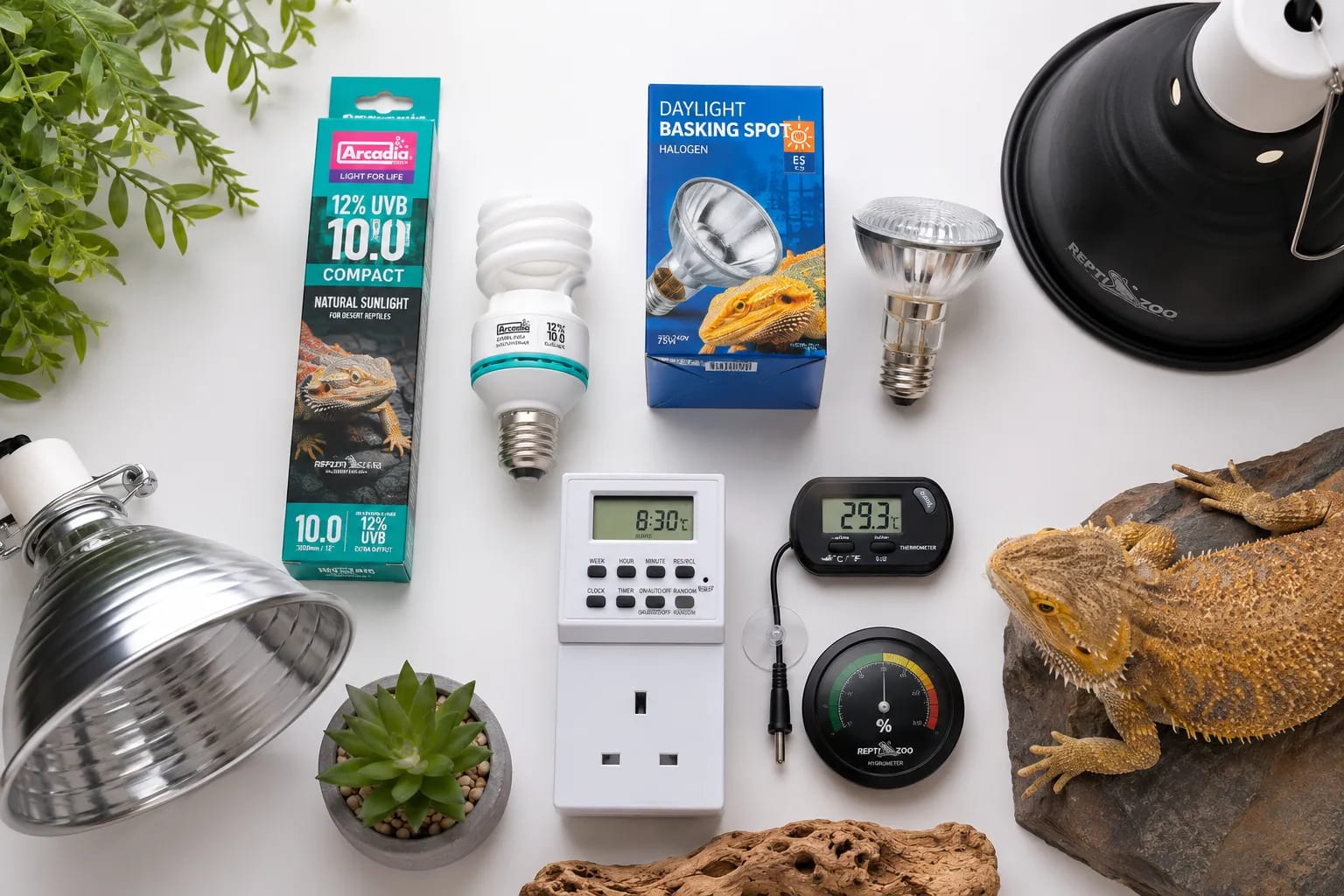
Recommended features:
- Digital display, easier to program than mechanical dial timers
- Battery backup, preserves settings during outages
- Multiple on/off cycles, useful if you want to simulate dawn/dusk gradually
- Grounded outlets, safety requirement for heat lamps
- 1000+ watt capacity, handles UVB and basking lights together
- Outdoor rating (optional), more durable construction
Popular reliable models:
- BN-LINK Digital Timer (7-day programmable, battery backup)
- Century Digital Timer (heavy-duty, 1875W capacity)
- Hydrofarm Digital Timer (dual outlet, 1725W)
Setup tip: Plug both your UVB and basking lights into the same timer so they turn on and off simultaneously. If you need nighttime heat, use a separate timer for your ceramic heat emitter set to turn on only when temperatures drop below 65°F.
Avoid mechanical dial timers, they drift over time, don’t have battery backup, and are harder to adjust for seasonal changes. The $15-25 investment in a quality digital timer prevents the health problems caused by inconsistent lighting.
For more guidance on setting up your dragon’s environment, visit our bearded dragon care resources.
Do Baby Bearded Dragons Need Different Lighting Schedule Than Adults?
Baby bearded dragons need the same 12-14 hour photoperiod as adults, but they may benefit from slightly higher UVB intensity due to their rapid growth and higher calcium demands. The lighting duration remains consistent across all ages, only the UVB strength and basking temperature may need adjustment.
Lighting schedule by age:
Babies (0-6 months):
- 12-14 hours of light daily
- UVB: 10.0-12% output, positioned 8-10 inches away
- Basking temperature: 105-110°F
- No brumation period
Juveniles (6-18 months):
- 12-14 hours of light daily
- UVB: 10.0% output, positioned 10-12 inches away
- Basking temperature: 100-105°F
- Optional short brumation (2-4 weeks)
Adults (18+ months):
- 12-14 hours of light daily (10-12 during brumation)
- UVB: 10.0% output, positioned 10-12 inches away
- Basking temperature: 95-105°F
- Optional brumation (6-12 weeks)
Why babies need consistent schedules: Young bearded dragons grow rapidly and require maximum UVB exposure to build strong bones. Irregular lighting disrupts feeding schedules and calcium absorption during this critical development period. Babies should never experience brumation, they need consistent warmth and light to grow properly.
Common mistake: Keeping baby dragons in smaller tanks with inadequate UVB coverage. Even babies need proper lighting across their entire enclosure. Check our guide on what tank size a bearded dragon needs to ensure adequate space for lighting setup.
Can I Use Natural Sunlight Instead of UVB Bulbs for My Bearded Dragon?
Natural, unfiltered sunlight provides excellent UVB when temperatures permit, but it cannot replace artificial UVB bulbs as a primary source in most climates. Glass and plastic filter out UVB rays, and weather, season, and latitude make outdoor exposure inconsistent and unreliable for meeting daily requirements.
Benefits of natural sunlight:
- Provides full-spectrum UVB at optimal wavelengths
- Free and natural
- Offers environmental enrichment
- Produces vitamin D3 more efficiently than artificial sources
Limitations and risks:
- Window glass blocks 95-100% of UVB
- Screen mesh reduces UVB by 30-50%
- Outdoor temperatures may be too hot or cold
- Predators pose risks during outdoor time
- Inconsistent weather makes daily exposure impossible
- Winter months provide insufficient UVB at higher latitudes
Safe outdoor exposure guidelines:
If you live in a warm climate and want to supplement with natural sunlight:
- Supervised only, never leave your dragon unattended outside
- Provide shade, allow your dragon to thermoregulate by moving between sun and shade
- Watch temperature, outdoor temps should be 75-95°F
- Limit duration, 15-30 minutes of direct sun, 2-3 times per week
- Use secure enclosure, protect from predators and escape
- Avoid midday summer sun, risk of overheating
Bottom line: Use natural sunlight as a supplement, not a replacement. Maintain your indoor UVB bulbs on their regular 12-14 hour schedule and treat outdoor time as a bonus. This approach ensures your dragon receives consistent UVB regardless of weather or season.
What Wattage UVB Bulb Does a Bearded Dragon Need?
UVB bulbs are rated by UVB output percentage (not wattage), and bearded dragons need bulbs rated 10.0 or 12% UVB for proper calcium metabolism. The actual wattage (typically 18W-54W for fluorescent tubes) determines brightness and energy consumption but doesn’t indicate UVB strength, always check the UVB percentage rating.
Correct UVB ratings for bearded dragons:
- Reptisun 10.0 (Zoo Med), industry standard, widely available
- Arcadia 12% (Arcadia), slightly stronger, longer-lasting
- T5 HO (High Output), preferred over T8 for better UVB penetration
UVB bulb types:
Linear fluorescent tubes (recommended):
- T5 HO: 22-54W, covers larger area, stronger output
- T8: 15-18W, older technology, requires closer positioning
- Length: 24-48 inches depending on tank size
Compact fluorescent (not recommended):
- 13-26W, limited coverage area
- Higher risk of eye damage with some models
- Suitable only for very small enclosures
Mercury vapor bulbs:
- 100-160W, produces UVB + heat + visible light
- Expensive but all-in-one solution
- Must be replaced when either UVB or heat output degrades
Positioning matters more than wattage: A 10.0 T5 HO bulb positioned 12 inches away delivers appropriate UVB. The same bulb at 18 inches provides insufficient exposure. Follow manufacturer guidelines for mounting distance based on your specific bulb type.
Avoid these mistakes:
- Using 5.0 bulbs (too weak for bearded dragons)
- Mounting UVB outside screen tops (screen blocks 30-50% of UVB)
- Relying on wattage instead of UVB percentage
- Using “full spectrum” or “daylight” bulbs without UVB rating
For a complete habitat setup, including proper tank dimensions for mounting lights, see our tank size guide.
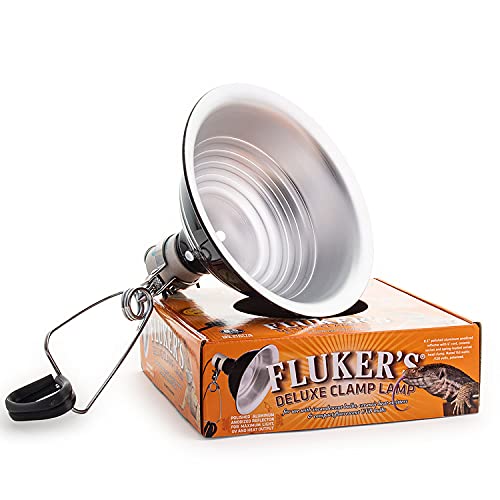
Optimal Heating for Reptiles: Fluker's Repta-Clamp Lamp is a UL/CUL approved 8.5 inch heating clamp designed to create the perfect basking environment for your reptiles.

【BEAR MAX 150W】: This dual heat lamp for reptiles can be equipped with two lamps, each lamp can bear Max 150W, suit reptile ceramic heat lamp, UVB UVA basking spot lamp, UVB reptile light, daylight lamp, nightlight lamp and infrared spot lamp.

Excellent Aluminum Construction & High Reflectivit - MECESOR reptile light fixture is made of high-quality aluminum.The interior of the lampshade undergoes fine polishing,which can effectively reflect heat and enhance brightness—significantly increasing UVA and UVB output.With a 1mm-thick lamp wall, it ensures better high-temperature resistance and is not easily deformed. It enables even heat distribution, preventing reptile burns caused by local overheating
My Bearded Dragon Is Lethargic, Could It Be the Lighting Schedule?
Yes, lethargy is a common symptom of inadequate or inconsistent lighting schedules. Insufficient UVB exposure, incorrect photoperiods, or lights left on at night all disrupt normal behavior and energy levels. If your dragon is sluggish, check your lighting setup before assuming illness.
Lighting-related causes of lethargy:
Insufficient UVB:
- Old bulbs past replacement date (6-12 months)
- Wrong UVB strength (5.0 instead of 10.0)
- Bulb mounted too far from basking spot
- Screen blocking UVB between bulb and dragon
- Solution: Replace bulb, reposition closer, or mount inside enclosure
Incorrect photoperiod:
- Too few hours of light (less than 10 hours)
- Inconsistent schedule (lights on at different times daily)
- No clear day/night cycle
- Solution: Set timer for consistent 12-14 hours daily
Lights on at night:
- Prevents deep sleep and recovery
- Causes chronic stress and exhaustion
- Solution: Ensure complete darkness for 10-12 hours
Temperature issues:
- Basking light too weak (basking spot below 95°F)
- No temperature gradient
- Solution: Increase basking bulb wattage, verify temps with thermometer
When to see a vet: If correcting lighting doesn’t improve energy levels within 5-7 days, or if lethargy accompanies other symptoms (weight loss, labored breathing, swelling), consult a reptile veterinarian. Lethargy can indicate parasites, infection, or metabolic bone disease requiring medical treatment.
Quick diagnostic: Place your dragon under the basking light. A healthy dragon with proper lighting should become alert and active within 30-60 minutes of lights turning on. Continued sluggishness suggests either lighting problems or underlying illness.
For more information on behavioral changes, read our article on why bearded dragons glass surf.
How to Simulate Seasons with Bearded Dragon Lighting
Simulating seasonal changes involves gradually adjusting photoperiod and temperature over several weeks to mimic natural environmental cycles. This practice supports natural behaviors like brumation and breeding, though it’s optional for pet dragons not used for breeding.
Seasonal lighting schedule:
Spring (March-May):
- Gradually increase from 10 to 14 hours of light
- Raise basking temperature to 100-105°F
- Increase feeding frequency
- Dragons become more active and may show breeding behaviors
Summer (June-August):
- Maintain 14 hours of light
- Keep basking temperature at 100-105°F
- Peak activity and appetite
- Optimal time for growth
Fall (September-November):
- Gradually decrease to 10-12 hours of light
- Lower basking temperature to 95-100°F
- Reduce feeding slightly
- Activity begins to slow
Winter (December-February):
- Maintain 10 hours of light (or allow brumation)
- Lower basking temperature to 90-95°F
- Reduced appetite is normal
- Optional brumation period for healthy adults
Brumation guidelines:
Brumation is a hibernation-like state that’s natural but not required for pet bearded dragons. If you choose to allow brumation:
- Health check first, only healthy, well-nourished dragons should brumate
- Gradual transition, reduce light and temperature over 2-3 weeks
- Stop feeding, allow complete digestion before deep brumation
- Provide water, maintain access to water throughout
- Monitor weekly, check for weight loss or health issues
- Gradual emergence, slowly increase light and heat over 2-3 weeks
Who should skip seasonal cycling:
- Baby dragons under 18 months
- Underweight or ill dragons
- First-time keepers unfamiliar with brumation
- Anyone uncomfortable monitoring a dormant reptile
Most pet owners maintain consistent 12-14 hour schedules year-round without problems. Seasonal cycling is primarily for breeders or keepers wanting to replicate natural behaviors. Your dragon will thrive with consistent lighting if you prefer simplicity.
Common Mistakes with Bearded Dragon Lighting Setup
The most frequent lighting errors include using incorrect UVB strength, mounting bulbs too far away, leaving lights on at night, and failing to replace bulbs on schedule. These mistakes cause metabolic bone disease, stress, and behavioral problems that are easily prevented with proper setup.
Top lighting mistakes and fixes:
1. Using 5.0 UVB bulbs instead of 10.0
- Problem: Insufficient UVB for calcium absorption
- Fix: Replace with 10.0 or 12% rated bulbs immediately
2. Mounting UVB outside screen top
- Problem: Screen blocks 30-50% of UVB
- Fix: Mount fixture inside enclosure or use screen clips to position bulb below screen
3. Positioning bulbs too far away
- Problem: UVB strength decreases rapidly with distance
- Fix: Follow manufacturer guidelines (typically 8-12 inches for T5, 6-8 inches for T8)
4. Not replacing bulbs on schedule
- Problem: UVB output degrades months before visible light dims
- Fix: Mark replacement date on calendar, replace every 6-12 months per manufacturer specs
5. Leaving lights on 24/7
- Problem: Disrupts sleep, causes chronic stress
- Fix: Use timer for consistent 12-14 hours on, 10-12 hours off
6. Using colored night bulbs
- Problem: Bearded dragons see red/blue light, disrupts sleep
- Fix: Use complete darkness or ceramic heat emitter if nighttime heat needed
7. No timer or inconsistent schedule
- Problem: Irregular photoperiods disrupt circadian rhythm
- Fix: Install digital timer, maintain consistent daily schedule
8. Combining incompatible bulbs
- Problem: Using only heat or only UVB
- Fix: Provide both UVB and basking lights running simultaneously
9. Relying on “full spectrum” bulbs without UVB rating
- Problem: “Full spectrum” doesn’t guarantee adequate UVB
- Fix: Always verify specific UVB percentage (10.0 or 12%)
10. Ignoring temperature gradients
- Problem: Entire tank at same temperature
- Fix: Create basking spot (95-105°F) and cool side (75-85°F)
Quick setup checklist:
- ✅ 10.0 or 12% UVB bulb
- ✅ Separate basking light (halogen or incandescent)
- ✅ Both lights on digital timer
- ✅ Bulbs positioned 8-12 inches from basking spot
- ✅ Mounted inside enclosure (not outside screen)
- ✅ 12-14 hours on, 10-12 hours off
- ✅ Replacement date marked on calendar
- ✅ Thermometer to verify temperatures
Proper lighting is the foundation of bearded dragon health. Getting these basics right prevents the majority of common health problems. For comprehensive habitat guidance, explore our bearded dragon care section.
Do Bearded Dragons Need Complete Darkness at Night?
Yes, bearded dragons require complete darkness at night to maintain healthy circadian rhythms and proper sleep quality. Even dim lights or colored bulbs disrupt melatonin production and prevent the deep rest necessary for immune function, growth, and stress recovery.
Why darkness matters:
Bearded dragons evolved in environments with clear day-night cycles. Darkness triggers:
- Melatonin production, regulates sleep-wake cycles
- Lower metabolic rate, conserves energy during rest
- Temperature drop, signals rest period
- Hormone regulation, supports growth and reproduction
- Immune system recovery, repairs and strengthens during sleep
What counts as “complete darkness”:
- No basking lights
- No UVB lights
- No colored night bulbs (red, blue, purple, or black)
- No bright room lights
- Ambient moonlight through windows is acceptable
- Digital clock displays or small indicator lights are fine
What if my room has ambient light? Low levels of ambient light from windows or hallway lights are generally acceptable. Bearded dragons can sleep in conditions similar to natural moonlight. However, avoid direct bright lights, TV screens, or computer monitors near the enclosure.
Nighttime heating without light:
If your room temperature drops below 65°F at night, use heat sources that don’t produce light:
- Ceramic heat emitter (CHE), produces infrared heat, no visible light
- Deep heat projector (DHP), penetrating heat, no light
- Radiant heat panel, mounted heat source, no light
- Under-tank heater, supplemental belly heat (use with thermostat)
Never use:
- Red night bulbs (bearded dragons see red light)
- Blue or purple night bulbs (also visible to dragons)
- “Moonlight” bulbs (still produce disruptive light)
- Regular basking or UVB lights at night
Most homes maintain 65-75°F overnight, which is perfectly safe for bearded dragons. Unless your room is unusually cold, you likely don’t need any nighttime heating at all.
How Often Should I Replace UVB Bulbs for Bearded Dragons?
Replace UVB bulbs every 6 to 12 months depending on the manufacturer’s specifications, even if the bulb still produces visible light. UVB output degrades significantly faster than visible light, and expired bulbs fail to provide adequate ultraviolet radiation for calcium metabolism.
Replacement schedule by bulb type:
T5 High Output fluorescent:
- Reptisun 10.0 T5 HO: Every 12 months
- Arcadia 12% T5 HO: Every 12 months
- Longer lifespan due to high-output technology
T8 Standard fluorescent:
- Reptisun 10.0 T8: Every 6 months
- Arcadia 12% T8: Every 12 months
- Shorter lifespan, requires more frequent replacement
Compact fluorescent:
- Most compact UVB bulbs: Every 6 months
- Less efficient, faster degradation
Mercury vapor bulbs:
- Most MVB bulbs: Every 6-12 months
- Replace when either UVB or heat output decreases
Why visible light doesn’t indicate UVB output:
UVB wavelengths (290-320 nm) are invisible to human eyes. A bulb can appear perfectly bright while producing little to no UVB. The phosphor coating that generates UVB degrades from use and exposure to heat, even when the bulb continues producing visible light.
Tracking replacement:
- Write installation date on bulb with permanent marker
- Set phone reminder for replacement date
- Keep spare bulb on hand
- Replace proactively rather than waiting for problems
Signs your UVB bulb may be expired:
- Lethargy or decreased activity
- Loss of appetite
- Soft or swollen jaw
- Trembling or twitching
- Bulb is older than manufacturer recommendation
Cost-saving tip: T5 HO bulbs cost more upfront but last twice as long as T8 bulbs and provide better UVB penetration. Over time, they’re more economical and effective.
Don’t risk your dragon’s health by extending bulb life beyond recommendations. Metabolic bone disease from inadequate UVB is expensive to treat and often irreversible. The $30-50 annual cost of replacement bulbs is a small investment in prevention.
What Color Light Is Best for Bearded Dragons at Night?
No colored light is appropriate for bearded dragons at night, they need complete darkness. Bearded dragons can see red, blue, and purple wavelengths, so colored night bulbs disrupt sleep just as much as white light. If nighttime heating is necessary, use a ceramic heat emitter or deep heat projector that produces no visible light.
Why colored bulbs don’t work:
Red bulbs:
- Marketed as “night heat” but bearded dragons see red light clearly
- Disrupts circadian rhythm and melatonin production
- Creates unnatural environment
- Verdict: Don’t use
Blue/purple bulbs:
- Also visible to bearded dragons
- Equally disruptive to sleep
- No scientific basis for “calming” effects
- Verdict: Don’t use
“Moonlight” bulbs:
- Produce dim white or blue light
- Still bright enough to disrupt sleep
- Natural moonlight is much dimmer
- Verdict: Don’t use
Black/infrared bulbs:
- Produce some visible red glow
- Heat output often insufficient
- Better than colored bulbs but not ideal
- Verdict: Ceramic heat emitter is better choice
Proper nighttime heating options:
If your room drops below 65°F at night, use these light-free heat sources:
Ceramic heat emitter (CHE):
- Produces infrared heat, zero visible light
- Available in 60W-150W
- Requires ceramic socket (not plastic)
- Use with thermostat for safety
- Best choice for most setups
Deep heat projector (DHP):
- Produces penetrating infrared-A and infrared-B
- More natural heat than CHE
- More expensive but more efficient
- Arcadia brand is popular
- Premium option
Radiant heat panel:
- Mounts to enclosure ceiling
- Even heat distribution
- Energy efficient
- Good for larger enclosures
Under-tank heater:
- Supplemental belly heat only
- Must use with thermostat
- Not sufficient as sole heat source
- Supplemental option only
Most bearded dragons don’t need nighttime heat if your home stays above 65°F. Room temperatures of 65-75°F overnight are perfectly healthy and allow natural temperature drops that support quality sleep.
For more information on creating the ideal habitat, including proper heating zones, check our guide on tank setup requirements.
Frequently Asked Questions
Can I turn my bearded dragon’s lights off during the day if the room is bright?
No, room lighting doesn’t provide UVB radiation necessary for calcium absorption. Even bright natural light through windows loses most UVB passing through glass. Your dragon needs dedicated UVB bulbs running 12-14 hours daily regardless of room brightness.
What happens if I forget to turn the lights on one day?
Missing one day occasionally won’t cause permanent harm, but it disrupts your dragon’s routine and may affect appetite and activity. Use a timer to prevent this. Repeated missed days can lead to calcium deficiency and metabolic problems over time.
Should I adjust lighting schedule when my bearded dragon is brumating?
Yes, reduce to 8-10 hours of light during brumation and lower basking temperatures. This mimics natural winter conditions. However, never allow complete darkness for extended periods, some light exposure is still necessary even during brumation.
Can I use a smart plug to control my bearded dragon’s lights?
Yes, smart plugs work well for bearded dragon lighting as long as they’re rated for the wattage of your fixtures (typically 1000W minimum). They offer the advantage of remote control and monitoring, but ensure they have battery backup or reconnect automatically after power outages.
Do bearded dragons need different lighting in winter vs. summer?
Pet bearded dragons can thrive on consistent 12-14 hour schedules year-round. Seasonal adjustments (10 hours in winter, 14 in summer) are optional and primarily for breeders or those wanting to replicate natural cycles. Choose the approach that works for your situation.
How do I know if my UVB bulb is still working?
You can’t tell by looking, UVB is invisible. Use a Solarmeter 6.5 to measure UVB output, or simply replace bulbs on the manufacturer’s schedule (6-12 months). Don’t wait for symptoms of deficiency to appear.
Can I use a sunrise/sunset dimmer for bearded dragon lights?
Standard dimmers don’t work with fluorescent UVB bulbs and can damage them. Some advanced systems allow gradual lighting changes, but they’re expensive and unnecessary. Bearded dragons adapt fine to lights turning on and off instantly with a timer.
What if my bearded dragon sleeps during the day even with lights on?
Excessive daytime sleeping suggests problems with lighting (insufficient UVB, wrong temperatures), health issues, or stress. Verify your UVB bulb is current and properly positioned, check basking temperatures, and consult a vet if behavior continues. For more on sleep patterns, see our article on why bearded dragons sleep so much.
Do I need separate timers for UVB and basking lights?
No, both lights should run on the same schedule. Plug them into the same timer so they turn on and off together. Use a separate timer only for nighttime heating devices like ceramic heat emitters if needed.
How long does it take for a bearded dragon to adjust to a new lighting schedule?
Most bearded dragons adjust within 3-7 days. Make schedule changes gradually if possible, shift by 30 minutes every few days rather than making sudden 2-3 hour changes. Consistency is more important than the exact timing.
Can I use LED lights for my bearded dragon?
LED lights can provide visible light and some heat, but most don’t produce adequate UVB. A few specialized reptile LED fixtures claim UVB output, but fluorescent T5 bulbs remain the proven, reliable choice. If using LEDs, verify UVB output with a Solarmeter.
Should lights turn on before or after I feed my bearded dragon?
Turn lights on first and allow 30-60 minutes for your dragon to warm up before feeding. Bearded dragons need proper body temperature to digest food effectively. Feeding before they’ve warmed up can cause digestive problems.
Conclusion
Getting the lighting schedule right is one of the most important aspects of bearded dragon care. Your dragon needs 12-14 hours of both UVB and basking light daily, followed by 10-12 hours of complete darkness. This consistent photoperiod supports calcium metabolism, healthy digestion, proper sleep, and overall wellbeing.
Key actions to take now:
- Install a digital timer if you don’t have one, consistency is essential
- Verify your UVB bulb is rated 10.0 or 12% and positioned 8-12 inches from the basking spot
- Check the installation date on your current UVB bulb and replace if it’s older than 6-12 months
- Ensure complete darkness at night by removing any colored bulbs or unnecessary lights
- Monitor your dragon’s behavior, increased activity and appetite indicate proper lighting
Remember that lighting problems often develop gradually. Regular equipment checks, timely bulb replacements, and consistent schedules prevent the serious health issues that result from inadequate UVB exposure or disrupted circadian rhythms.
If you’re setting up a new enclosure or upgrading your current setup, proper lighting is your foundation. Combined with appropriate tank size, temperature gradients, and nutrition, a well-designed lighting schedule gives your bearded dragon the best chance at a long, healthy life. For comprehensive habitat guidance, explore our bearded dragon care resources and tank setup guides.

Non-dimmer: Socket S1 is turned on and off at a set time, while Socket S2 is turned on and off according to the set temperature
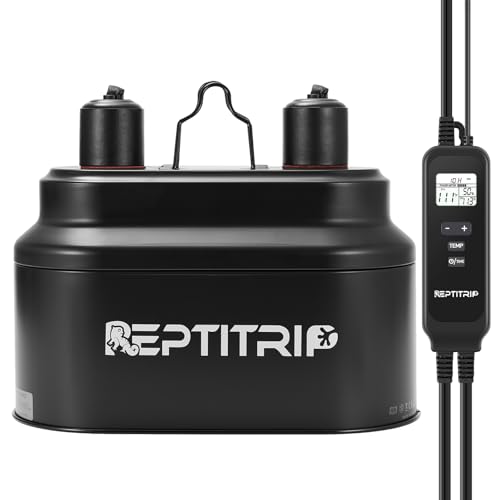
Function: One smart controller manages two lamp sockets with different functions, one socket runs on PID dimming thermostat for precise temperature control, while the other operates on a programmable timer, ideal for creating stable day/night heating and lighting cycles

✓ NO LOOSE PARTS: Unlike classic timers with removable pins, BN-LINK 3 prong plug in timers for electrical outlets features an easy to use, built-in pin dial that allows you to set your outlet timer indoor by pressing the toggle pins down for ON, or keeping them up for OFF.


