
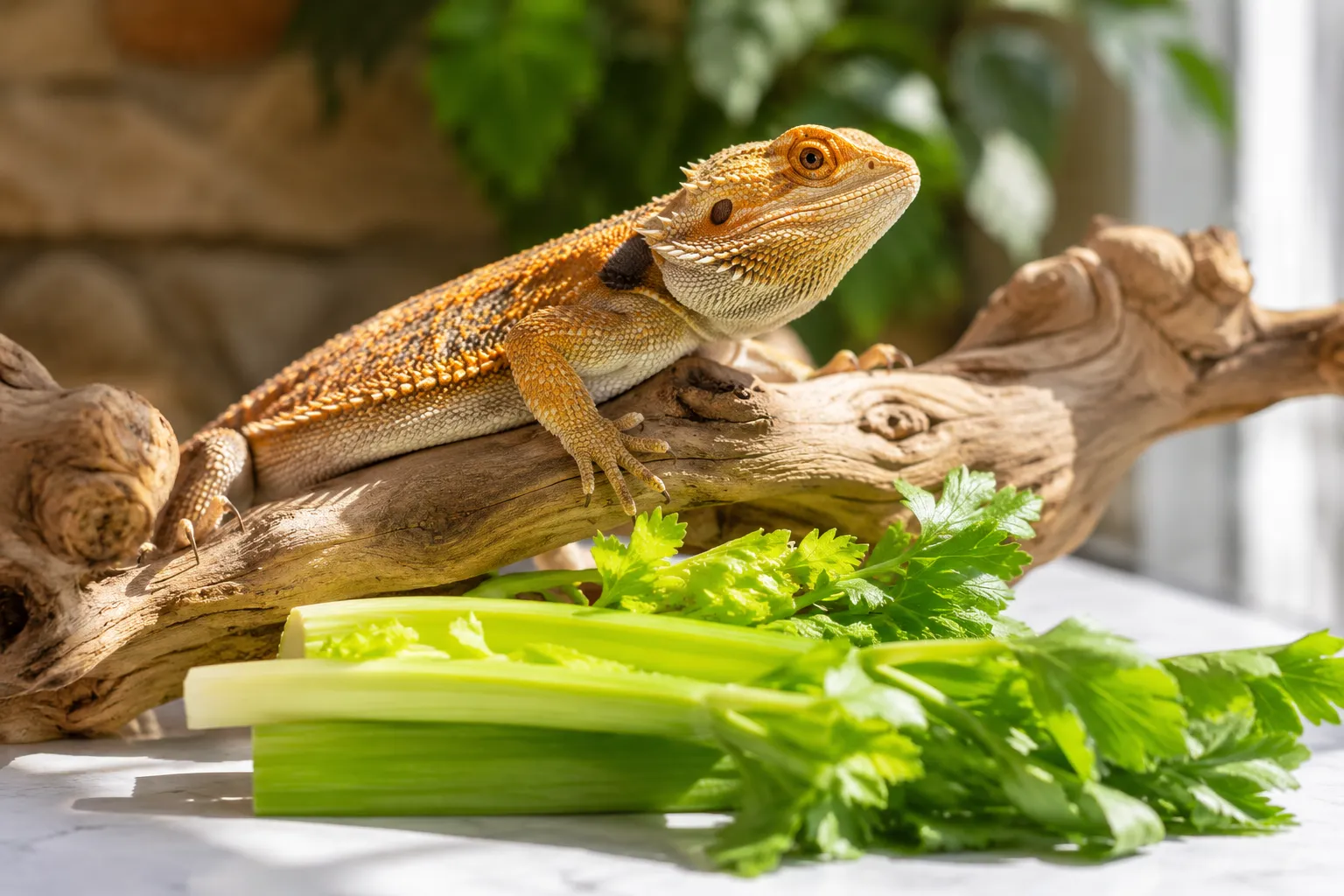
Quick Answer: Bearded dragons can technically eat celery, but it should only be offered occasionally as a rare treat, not as a regular part of their diet. Celery has very poor nutritional value for bearded dragons, contains an unfavorable calcium-to-phosphorus ratio, and is mostly water with minimal vitamins or minerals that benefit these reptiles.
Key Takeaways
- Celery is safe in small amounts but offers almost no nutritional benefit to bearded dragons
- The calcium-to-phosphorus ratio in celery is poor (1:1.6), which can interfere with calcium absorption
- Celery should be limited to once or twice per month at most, in very small portions
- Both celery stalks and leaves can be eaten, but leaves contain slightly more nutrients
- Baby bearded dragons should avoid celery entirely due to their higher nutritional needs
- Raw celery is fine, but it must be chopped into tiny pieces to prevent choking
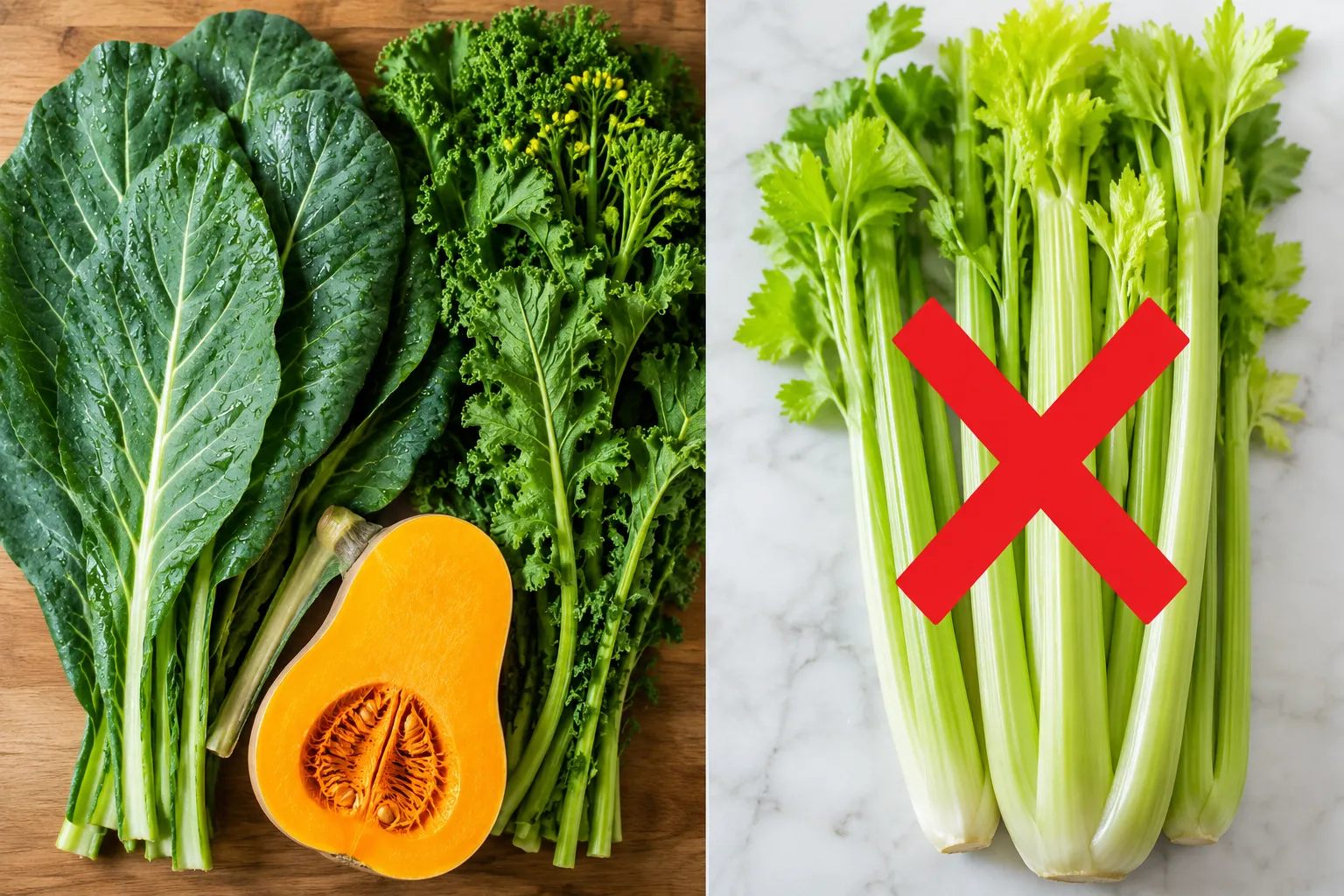
- Healthier alternatives include collard greens, mustard greens, butternut squash, and bell peppers
- Too much celery can cause diarrhea and contribute to metabolic bone disease over time

Vitamin Enriched Formula That Provides Essential Proteins, Fats, Vitamins And Minerals

All Natural: 100% all-natural and preservative-free
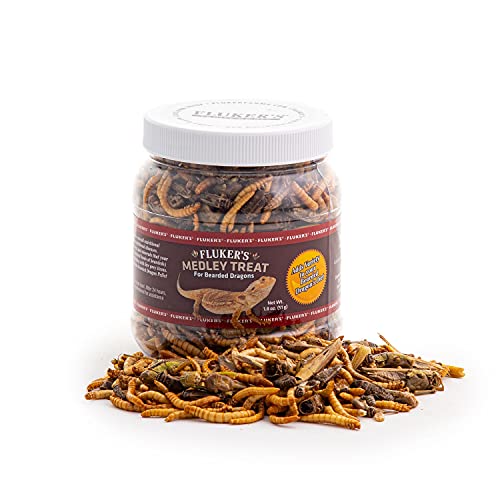
All without the hassle of dealing with live Prey items
Is Celery Safe for Bearded Dragons to Eat?
Yes, celery is technically safe for bearded dragons to eat and is not toxic to them. However, safe doesn’t mean beneficial or recommended as a dietary staple.
Celery won’t poison your bearded dragon if they nibble on it, but it’s essentially nutritional “empty space” in their diet. The vegetable is roughly 95% water and contains very little protein, fat, vitamins, or minerals that bearded dragons need to thrive. The biggest concern isn’t toxicity but rather the opportunity cost, every bite of celery is a bite they’re not taking of something nutritious.
Common safety concerns with celery:
- Choking hazard: The stringy fibers in celery stalks can wrap around a bearded dragon’s tongue or get stuck in their throat
- Digestive issues: High water content can lead to loose stools or diarrhea if fed too frequently
- Calcium binding: The poor calcium-to-phosphorus ratio can interfere with calcium absorption over time
If you do offer celery, always chop it into very small pieces (no larger than the space between your dragon’s eyes) and remove the stringy fibers as much as possible.
How Often Can Bearded Dragons Have Celery?
Bearded dragons should only have celery once or twice per month at most, and only in very small portions. Think of celery as an occasional snack, not a regular vegetable in their rotation.
A safe serving size is one or two small pieces (about the size of your pinky fingernail) mixed into a salad with more nutritious greens. Never offer celery as the main vegetable in a meal, and never feed it multiple days in a row.
Feeding frequency guidelines:
- Adult bearded dragons: 1-2 times per month maximum
- Juvenile bearded dragons: Once per month or less
- Baby bearded dragons: Avoid entirely
The reason for this strict limitation is that bearded dragons need vegetables with high calcium content and beneficial vitamins. Regular celery consumption takes up space in their diet that should be filled with nutrient-dense options like collard greens, turnip greens, or squash.
Why Is Celery Bad for Bearded Dragons?
Celery isn’t necessarily “bad” in the sense of being toxic, but it’s a poor nutritional choice that can cause problems if fed regularly. The main issues stem from its nutritional profile and physical properties.
Key problems with celery:
- Poor calcium-to-phosphorus ratio: Celery has a ratio of approximately 1:1.6 (calcium to phosphorus), when bearded dragons need ratios of at least 1.5:1 or higher. Phosphorus binds to calcium in the digestive system and prevents absorption, which can contribute to metabolic bone disease over time.
- Minimal vitamin content: Celery contains very little vitamin A, vitamin D3, or other essential nutrients bearded dragons require
- High water content: While hydration is important, too much water from vegetables can cause diarrhea and nutrient dilution
- Stringy texture: The fibrous strings in celery stalks are difficult to digest and pose a choking risk
Choose celery only when you want to add a tiny bit of variety or crunch to your dragon’s salad, not because it provides any meaningful nutrition.
Celery Calcium to Phosphorus Ratio for Bearded Dragons
The calcium-to-phosphorus ratio in celery is approximately 1:1.6, meaning it contains more phosphorus than calcium. This is the opposite of what bearded dragons need for healthy bone development and metabolic function.
Bearded dragons require a calcium-to-phosphorus ratio of at least 1.5:1 or ideally 2:1 in their overall diet. When they consume foods high in phosphorus relative to calcium, the phosphorus binds to calcium in the gut and prevents it from being absorbed into the bloodstream. Over time, this can lead to calcium deficiency and metabolic bone disease (MBD), a serious condition that causes weak bones, deformities, and paralysis.
Comparison of calcium-to-phosphorus ratios:
| Vegetable | Ca:P Ratio | Verdict |
|---|---|---|
| Celery | 1:1.6 | Poor |
| Collard greens | 14.5:1 | Excellent |
| Mustard greens | 2.4:1 | Excellent |
| Butternut squash | 2.5:1 | Excellent |
| Cucumber | 1:1.4 | Poor |
This table makes it clear why celery should be a rare treat rather than a dietary staple. The vegetables with excellent ratios should make up the bulk of your bearded dragon’s plant-based diet.
Can Baby Bearded Dragons Eat Celery or Only Adults?
Baby bearded dragons should avoid celery entirely. Young dragons have much higher nutritional demands than adults because they’re growing rapidly and developing their skeletal systems.
Baby bearded dragons (0-6 months) need a diet that’s approximately 70-80% protein (insects) and 20-30% vegetables, with those vegetables being extremely nutrient-dense. Every bite counts during this critical growth phase, and celery simply doesn’t provide the calcium, vitamins, or minerals that baby dragons need.
Age-based celery guidelines:
- Baby (0-6 months): No celery, focus on calcium-rich greens and gut-loaded insects
- Juvenile (6-12 months): Celery only once per month in tiny amounts, if at all
- Adult (12+ months): Celery 1-2 times per month maximum as an occasional treat
Adult bearded dragons have slower metabolisms and less demanding nutritional needs, which is why they can tolerate the occasional nutritionally-empty treat. But even for adults, celery should never be a regular menu item.
How to Prepare Celery for Bearded Dragons
If you decide to offer celery to your adult bearded dragon, proper preparation is essential to minimize choking risk and make it easier to digest. Raw celery is fine, there’s no need to cook it, which would remove even more of its limited nutrients.
Step-by-step preparation:
- Wash thoroughly: Rinse the celery under cool water to remove any pesticides or dirt
- Remove strings: Use a vegetable peeler or knife to remove as many of the stringy fibers as possible from the stalk
- Chop into tiny pieces: Cut the celery into pieces no larger than the space between your dragon’s eyes (roughly 1/4 inch or smaller)
- Mix with nutritious greens: Combine the small amount of celery with a larger portion of collard greens, mustard greens, or other calcium-rich vegetables
- Offer as part of a salad: Never serve celery alone, it should be a minor component of a varied salad
Pro tip: If you’re concerned about the stringy texture, you can use only the inner, more tender parts of the celery stalk and discard the outer, stringier portions.
Can Bearded Dragons Eat Celery Leaves and Stalks?
Yes, bearded dragons can eat both celery leaves and celery stalks, though the leaves are slightly more nutritious than the stalks. Celery leaves contain more vitamins and minerals than the watery stalks, though both are still poor choices compared to other vegetables.
The leaves have a softer texture and are less stringy, making them easier for bearded dragons to chew and digest. However, they’re also more bitter, so some bearded dragons may refuse them.
Comparison:
- Celery stalks: Higher water content, more stringy fibers, mild flavor, very low nutrients
- Celery leaves: Slightly higher vitamin and mineral content, softer texture, bitter flavor, still low overall nutrition
If you’re going to offer celery at all, including a few chopped leaves mixed with the stalk pieces can provide marginally more nutrition. But remember that “marginally more” still means very little compared to proper bearded dragon vegetables.
Can Bearded Dragons Eat Raw Celery or Does It Need to Be Cooked?
Bearded dragons can and should eat raw celery if you offer it at all, cooking is unnecessary and actually removes what little nutritional value celery has. Raw vegetables retain more vitamins and minerals than cooked ones, and bearded dragons are perfectly capable of digesting raw plant matter.
Cooking celery would make it even softer and mushier, which might seem like it would be easier to eat, but it also concentrates the water content and can make the texture slimy and unappealing. Most bearded dragons prefer the crunch of raw vegetables.
Never cook vegetables for bearded dragons in these ways:
- Don’t add salt, butter, oil, or seasonings
- Don’t boil or steam (removes nutrients)
- Don’t fry or sauté
The only exception to the raw vegetable rule is hard squashes like butternut squash, which can be lightly steamed to soften them. But for celery, cucumber, leafy greens, and most other vegetables, raw is always best.


✔ HEALTHY - This nutritious blend includes figs, papaya, green beans, cabbage, squash, apple and carrots

AN APPETIZING SERVING OF CALCIUM for herbivorous reptiles, such as bearded dragons, uromastyx, iguanas and tortoises.

Package Dimensions: 12.953 H x 7.62 L x 7.62 W (centimeters)
What Vegetables Are Healthier Than Celery for Bearded Dragons?
Many vegetables are significantly healthier than celery for bearded dragons. The best options have high calcium content, favorable calcium-to-phosphorus ratios, and rich vitamin profiles.
Top vegetable choices for daily feeding:
- Collard greens: Excellent calcium-to-phosphorus ratio (14.5:1), high in vitamins A and K
- Mustard greens: Great calcium content (2.4:1 ratio), rich in antioxidants
- Turnip greens: High calcium (4.5:1 ratio), good vitamin content
- Dandelion greens: Excellent calcium source (2.8:1 ratio), high in vitamins
- Butternut squash: Good calcium ratio (2.5:1), high in vitamin A and fiber
- Bell peppers (red): High in vitamin C and beta-carotene, good hydration
- Acorn squash: Similar benefits to butternut squash
- Endive: Good calcium content, low in oxalates
Vegetables to offer occasionally (1-2 times per week):
- Carrots (shredded)
- Green beans
- Snap peas
- Zucchini
Vegetables to avoid or severely limit:
- Celery (poor nutrition)
- Cucumber (mostly water, poor ratio)
- Iceberg lettuce (no nutritional value)
- Spinach (high in oxalates that bind calcium)
- Rhubarb (toxic)
Building a rotation of 3-4 staple greens and 2-3 occasional vegetables will provide much better nutrition than including celery in the diet.
Celery vs Cucumber for Bearded Dragons: Which Is Better?
Neither celery nor cucumber is a good choice for regular feeding, but if you must choose between them, cucumber is slightly better. Both vegetables are mostly water with poor calcium-to-phosphorus ratios, but cucumber has a softer texture and is less likely to cause choking.
Side-by-side comparison:
| Factor | Celery | Cucumber |
|---|---|---|
| Water content | ~95% | ~96% |
| Ca:P ratio | 1:1.6 | 1:1.4 |
| Choking risk | High (stringy) | Low (soft) |
| Nutritional value | Very low | Very low |
| Digestibility | Moderate | Good |
Both should be limited to occasional treats (1-2 times per month), and neither should ever be a dietary staple. If you’re looking for a hydrating vegetable with better nutrition, try bell peppers or butternut squash instead, both provide hydration plus actual vitamins and minerals.
Choose cucumber if: You want a safe, hydrating treat with minimal prep and low choking risk.
Choose celery if: You want to add a crunchy texture to a salad and are willing to do the extra prep work to remove strings.
Choose neither if: You want to provide optimal nutrition (which you should).
What Happens If a Bearded Dragon Eats Too Much Celery?
If a bearded dragon eats too much celery, the most immediate effect is likely to be diarrhea or loose stools due to the extremely high water content. Over time, regular celery consumption can contribute to more serious health problems.
Short-term effects of too much celery:
- Diarrhea or watery stools
- Decreased appetite for more nutritious foods
- Mild digestive discomfort
- Dehydration (ironically, from diarrhea caused by excess water intake)
Long-term effects of regular celery feeding:
- Metabolic bone disease (MBD): The poor calcium-to-phosphorus ratio can lead to calcium deficiency over weeks or months, causing weak bones, tremors, deformities, and paralysis
- Nutritional deficiencies: Filling up on celery means missing out on essential vitamins and minerals from better vegetables
- Weight loss: Low caloric and nutritional density can lead to gradual weight loss
- Weakened immune system: Poor nutrition makes bearded dragons more susceptible to infections and illness
If your bearded dragon accidentally eats a large amount of celery, monitor them for diarrhea and ensure they have access to proper nutrition in their next few meals. One incident won’t cause lasting harm, but make it a learning experience to prevent regular feeding.
Best Vegetables for Bearded Dragons’ Daily Diet
The best vegetables for daily feeding are leafy greens with high calcium content and favorable calcium-to-phosphorus ratios. These should make up about 80-90% of the vegetable portion of an adult bearded dragon’s diet.
Daily staple vegetables (rotate 2-3 of these each day):
- Collard greens – The gold standard for bearded dragon nutrition
- Mustard greens – Excellent calcium and vitamin content
- Turnip greens – High in calcium and easy to find
- Dandelion greens – Wild or store-bought, highly nutritious
- Endive – Good calcium, low oxalates
Weekly rotation vegetables (offer 2-3 times per week):
- Butternut squash (lightly steamed)
- Acorn squash
- Bell peppers (especially red)
- Green beans
- Snap peas
Occasional treats (1-2 times per month):
- Carrots
- Cucumber
- Celery
- Strawberries
- Blueberries
Sample daily salad for an adult bearded dragon:
- 2 parts collard greens (chopped)
- 1 part mustard greens (chopped)
- 1/2 part butternut squash (small cubes)
- A few pieces of bell pepper
- Optional: 2-3 blueberries or a small piece of strawberry
This combination provides excellent calcium, vitamins A and K, fiber, and hydration without the nutritional emptiness of celery.
My Bearded Dragon Won’t Eat Celery: What Should I Do?
If your bearded dragon won’t eat celery, that’s actually a good thing, you don’t need to encourage them to eat it. Celery offers so little nutritional value that there’s no reason to make it a priority in their diet.
Many bearded dragons are naturally selective eaters and may refuse foods that don’t smell or taste appealing to them. Celery has a mild, slightly bitter flavor that some dragons simply don’t find interesting, especially compared to sweeter vegetables like squash or bell peppers.
What to do instead:
- Don’t force it: There’s no nutritional reason your dragon needs to eat celery
- Offer better alternatives: Focus on getting them to eat collard greens, mustard greens, and butternut squash
- Add variety gradually: If your dragon is a picky eater, introduce new vegetables slowly by mixing tiny amounts with their favorites
- Try different textures: Some dragons prefer shredded greens, while others like larger pieces they can bite
If your dragon refuses all vegetables:
- Ensure proper temperature in their enclosure (basking spot should be 95-105°F for adults)
- Check for signs of illness or stress
- Try hand-feeding small pieces
- Mix vegetables with a small amount of fruit to make them more appealing
- Consult a reptile veterinarian if the refusal continues for more than a few days
Remember, a bearded dragon refusing celery is showing good judgment, they instinctively know it’s not worth eating.
Celery Causing Diarrhea in Bearded Dragons
Yes, celery can cause diarrhea in bearded dragons, especially if fed in large amounts or too frequently. The extremely high water content (about 95%) can overwhelm their digestive system and lead to loose, watery stools.
Bearded dragons evolved in arid environments and are adapted to get most of their hydration from the insects and plants they eat, not from drinking large amounts of water. When they consume too much water-rich food like celery, their digestive system processes it quickly, resulting in diarrhea.
Signs your bearded dragon has diarrhea from celery:
- Watery or very loose stools
- More frequent bowel movements than usual
- Stools with undigested food particles
- Decreased appetite
- Lethargy or reduced activity
What to do if celery causes diarrhea:
- Stop feeding celery immediately and remove it from their diet
- Offer more fiber-rich vegetables like collard greens and butternut squash to help firm up stools
- Ensure proper hydration by offering water in a shallow dish, but don’t force drinking
- Monitor for 24-48 hours to see if stools return to normal
- Consult a vet if diarrhea persists for more than 2-3 days or if your dragon shows signs of dehydration (sunken eyes, wrinkled skin, lethargy)
Occasional mild diarrhea from a small amount of celery isn’t usually dangerous, but it’s a clear sign that celery isn’t agreeing with your dragon’s digestive system and should be avoided in the future.
FAQ
Can bearded dragons eat celery every day?
No, bearded dragons should not eat celery every day. Celery has poor nutritional value and an unfavorable calcium-to-phosphorus ratio that can lead to metabolic bone disease if fed regularly. Limit celery to once or twice per month at most as an occasional treat.
Is celery toxic to bearded dragons?
No, celery is not toxic to bearded dragons and won’t poison them. However, it’s nutritionally poor and can cause digestive issues like diarrhea if fed too frequently. The stringy fibers also pose a choking hazard if not properly prepared.
Can bearded dragons eat celery sticks?
Yes, bearded dragons can eat celery sticks, but they must be chopped into very small pieces (no larger than the space between the dragon’s eyes) and have the stringy fibers removed to prevent choking. Never offer whole celery sticks.
What vegetables should bearded dragons eat instead of celery?
Bearded dragons should eat collard greens, mustard greens, turnip greens, dandelion greens, butternut squash, and bell peppers instead of celery. These vegetables have much higher calcium content and better nutritional profiles for reptile health.
Can bearded dragons eat cooked celery?
Bearded dragons can eat cooked celery, but raw is better because cooking removes even more of celery’s already limited nutrients. If you offer celery at all, serve it raw, chopped into small pieces, with the strings removed.
How much celery can I give my bearded dragon?
Give your bearded dragon only 1-2 small pieces of celery (about the size of your pinky fingernail) once or twice per month at most. Mix these small pieces with more nutritious greens rather than offering celery alone.
Can celery cause impaction in bearded dragons?
Yes, the stringy fibers in celery can potentially cause impaction if large pieces are swallowed or if the strings wrap around the digestive tract. Always remove strings and chop celery into tiny pieces to minimize this risk.
Do bearded dragons like the taste of celery?
Most bearded dragons are indifferent to celery or actively dislike it because of its mild, slightly bitter flavor. They typically prefer sweeter vegetables like squash or bell peppers. If your dragon refuses celery, don’t force it.
Can celery help hydrate my bearded dragon?
While celery is 95% water, it’s not a good hydration source because too much can cause diarrhea. Better hydration options include offering water in a shallow dish, misting vegetables, or feeding water-rich but nutritious options like bell peppers.
Is celery better than lettuce for bearded dragons?
Celery and iceberg lettuce are both poor choices with minimal nutritional value. If you must choose, celery is marginally better than iceberg lettuce, but both should be avoided in favor of nutrient-dense leafy greens like collard or mustard greens.
Can juvenile bearded dragons eat celery?
Juvenile bearded dragons can technically eat tiny amounts of celery, but it’s not recommended. Juveniles have high nutritional demands for growth and should focus on calcium-rich greens and protein-rich insects rather than nutritionally empty vegetables.
What are the signs of too much celery in a bearded dragon’s diet?
Signs include diarrhea, watery stools, decreased appetite for nutritious foods, weight loss, lethargy, and over time, symptoms of metabolic bone disease like tremors, weak limbs, or difficulty moving. Reduce or eliminate celery if you notice these signs.
Conclusion
Can bearded dragons eat celery? Yes, but they really shouldn’t except as a very rare treat. While celery isn’t toxic, it offers almost no nutritional benefit and can actually harm your dragon’s health if fed regularly due to its poor calcium-to-phosphorus ratio and extremely high water content.
The key takeaway is that celery should never be a staple in your bearded dragon’s diet. Instead, focus on nutrient-dense vegetables like collard greens, mustard greens, turnip greens, and butternut squash that provide the calcium, vitamins, and minerals your dragon needs to thrive. If you do offer celery, limit it to once or twice per month in very small, properly prepared pieces mixed with healthier greens.
Action steps for bearded dragon owners:
- Remove celery from your dragon’s regular feeding rotation
- Stock up on collard greens, mustard greens, and butternut squash as dietary staples
- If you’ve been feeding celery regularly, transition to better vegetables over the next week
- Monitor your dragon’s stools and overall health for signs of improvement
- Consult a reptile veterinarian if you notice any symptoms of metabolic bone disease or nutritional deficiency
Your bearded dragon’s health depends on the quality of their diet. By choosing vegetables that actually support their nutritional needs rather than just filling their stomach with water and fiber, you’ll help ensure they live a long, healthy, and active life.

Safe Material for Reptile: The artificial terrarium plant is made with non-toxic polyethylene plastic and soft silk leaves. Just dip in water to clear debris. These vines are bendable, life-like vines with a natural feel and look and can be twisted together with vines of different sizes to create a 3-D habitat

2 Pieces Plants - The package contains two plants. The length dimension is 33.1 inches. Plants is made with plastic and soft silk leaves, clear texture and bright color, safe and durable, creates a fun & dynamic hiding spot and climbing for reptile amphibians.

Flexible Moss Vine: If you are looking for a reptile vine or habitat decoration for climbing, this moss vine is designed for terrarium climbing setups. You can easily bend it into different shapes and put it in different sizes of terrarium tanks. With a length of 118 inches and a diameter of 0.6 inches, the reptile tank accessory is long enough for reptiles to climb and move with more space, while helping you make better use of the vertical area inside the enclosure.


