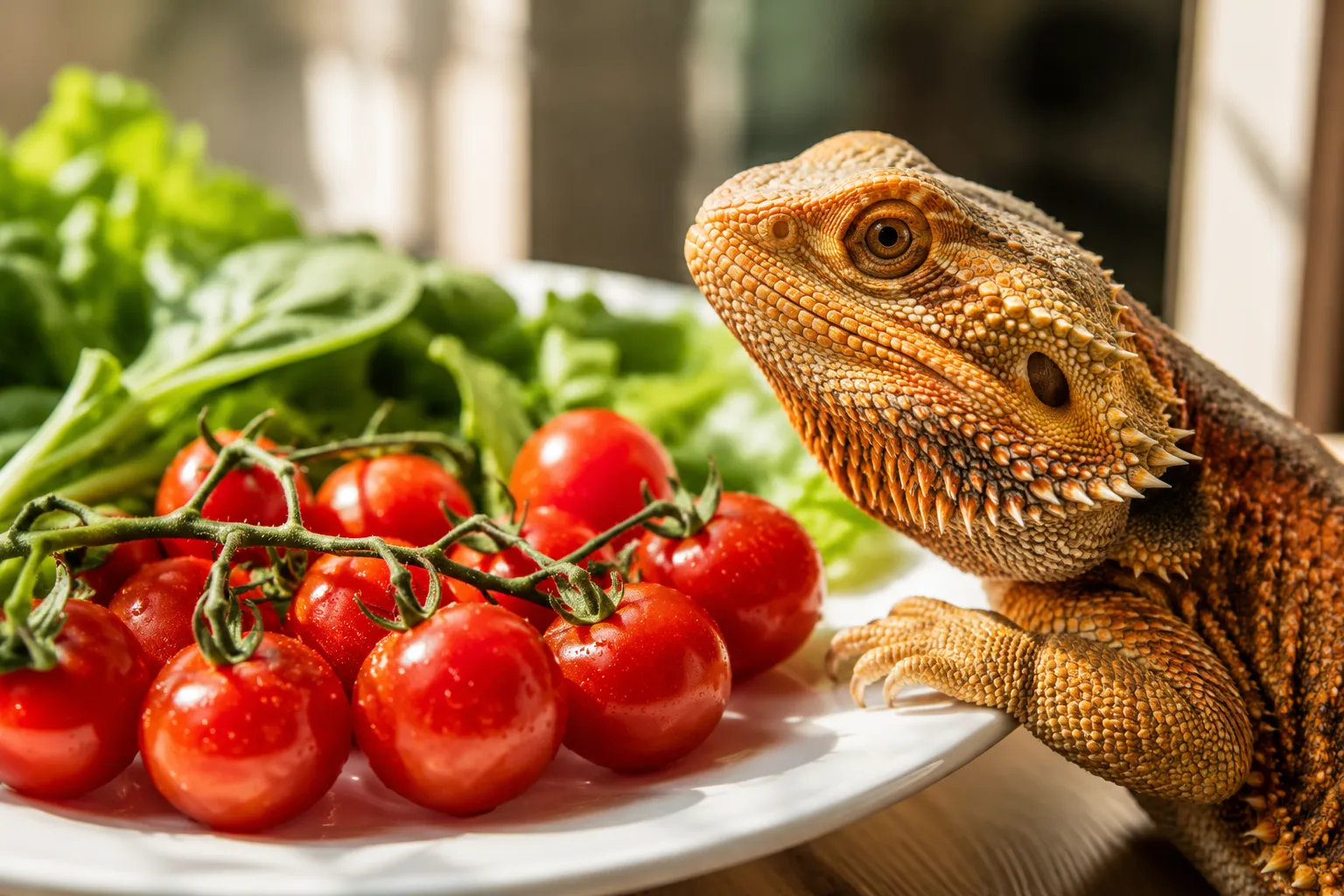
Quick Answer: Yes, bearded dragons can eat tomatoes, but only occasionally and in very small amounts. Tomatoes are high in acidity and have an unfavorable calcium-to-phosphorus ratio, which can interfere with calcium absorption and lead to metabolic bone disease if fed too frequently. Offer tomatoes as a rare treat, no more than once per month, and always remove the leaves and stems, which are toxic.
Key Takeaways
- Tomatoes are safe for bearded dragons only as an occasional treat (once per month maximum)
- The high acidity in tomatoes can cause digestive upset and mouth irritation
- Tomatoes have a poor calcium-to-phosphorus ratio (1:2) that can block calcium absorption
- Always remove tomato leaves, stems, and vines, they contain toxic solanine
- Cherry and grape tomatoes are fine but must be diced into small pieces
- Baby bearded dragons should avoid tomatoes entirely due to their sensitive digestive systems
- Better vegetable options include collard greens, mustard greens, and bell peppers
- Signs of tomato overconsumption include diarrhea, lethargy, and loss of appetite

Vitamin Enriched Formula That Provides Essential Proteins, Fats, Vitamins And Minerals

All Natural: 100% all-natural and preservative-free
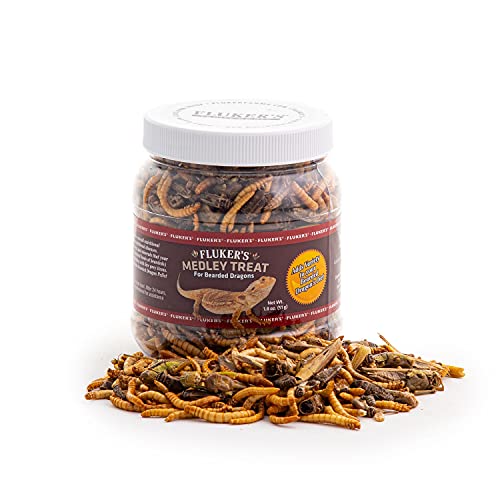
All without the hassle of dealing with live Prey items
Are Tomatoes Safe for Bearded Dragons?
Tomatoes are technically safe for bearded dragons when fed in strict moderation, but they come with several nutritional drawbacks that make them a poor choice for regular feeding. The fruit contains beneficial vitamins A and C, but the high acidity and imbalanced mineral content outweigh these benefits.
The primary concern with tomatoes is their calcium-to-phosphorus ratio of approximately 1:2. Bearded dragons need foods with a calcium-to-phosphorus ratio of at least 1.5:1 or higher. When phosphorus levels exceed calcium, the phosphorus binds to calcium in the digestive tract and prevents absorption. Over time, this leads to metabolic bone disease (MBD), a serious condition that causes weak bones, deformities, and paralysis.
Additional safety concerns include:
- High acidity that can irritate the mouth and digestive tract
- Oxalates that further bind calcium and reduce absorption
- High water content (95%) that provides minimal nutritional value
- Low fiber compared to leafy greens that support healthy digestion
Choose tomatoes only if your bearded dragon has already eaten calcium-rich greens that day and you’re looking for a small flavor variety. Never use tomatoes as a staple vegetable or feed them more than once monthly.
How Often Can Bearded Dragons Eat Tomatoes?

Bearded dragons should eat tomatoes no more than once per month, and only in very small portions. A single cherry tomato (diced) or one small slice of a regular tomato is the maximum serving size for an adult bearded dragon.
The monthly feeding limit exists because of the cumulative effect of phosphorus on calcium absorption. Even though a single tomato feeding won’t cause immediate harm, repeated feedings throughout the month can create a phosphorus overload that interferes with bone health. Bearded dragons require consistent calcium intake to maintain strong bones, proper muscle function, and healthy egg production in females.
Feeding frequency guidelines:
- Adult bearded dragons: Once per month maximum, small dice
- Juvenile bearded dragons (6-12 months): Once every 6-8 weeks, tiny pieces
- Baby bearded dragons (0-6 months): Avoid entirely
- Breeding females: Avoid during egg production cycles
If your bearded dragon shows signs of digestive upset after eating tomatoes (runny stool, reduced appetite), extend the time between feedings to every 6-8 weeks or eliminate tomatoes completely from the diet.
Can Baby Bearded Dragons Eat Tomatoes?
Baby bearded dragons should not eat tomatoes. Their digestive systems are far more sensitive than adults, and they require a diet focused almost entirely on protein (80% insects) and calcium-rich vegetables (20% greens) to support rapid growth and bone development.
Babies grow at an extraordinary rate during their first six months, and any disruption to calcium absorption can result in permanent skeletal deformities. The acidic nature of tomatoes can also cause stomach upset and diarrhea in young dragons, leading to dehydration and nutritional deficiencies.
Why babies should avoid tomatoes:
- Developing bones need maximum calcium absorption
- Sensitive digestive systems can’t handle high acidity
- Limited stomach capacity should be reserved for nutrient-dense foods
- Risk of metabolic bone disease is highest during growth phases
Wait until your bearded dragon reaches at least 12 months of age before introducing tomatoes, and even then, offer them sparingly. Focus baby and juvenile diets on collard greens, mustard greens, turnip greens, and calcium-dusted insects.
Tomatoes vs Bell Peppers for Bearded Dragons
Bell peppers are significantly better than tomatoes for bearded dragons and can be fed several times per week as part of a varied vegetable rotation. Unlike tomatoes, bell peppers have a favorable calcium-to-phosphorus ratio, lower acidity, and higher vitamin content.
Nutritional comparison:
| Nutrient | Tomatoes | Bell Peppers (Red) |
|---|---|---|
| Calcium:Phosphorus | 1:2 (poor) | 1:1 (acceptable) |
| Vitamin A | Moderate | Very high |
| Vitamin C | Moderate | Extremely high |
| Acidity | High | Low |
| Feeding frequency | Once monthly | 2-3 times weekly |
Red bell peppers contain nearly three times the vitamin A of tomatoes and are one of the richest sources of vitamin C available to bearded dragons. The low acidity makes them gentle on the digestive system, and the crunchy texture provides enrichment.
Choose bell peppers if:
- You want a colorful vegetable that’s safe for regular feeding
- Your dragon needs more vitamin A for eye and skin health
- You’re looking for a low-acid alternative to tomatoes
Choose tomatoes only if:
- You’re offering a rare treat for variety
- Your dragon has already eaten calcium-rich greens that day
- You understand the feeding limits and risks

What Vegetables Are Better Than Tomatoes for Bearded Dragons?
Dozens of vegetables outperform tomatoes nutritionally and can be fed daily or several times per week. The best vegetables for bearded dragons are dark leafy greens with high calcium content, low oxalates, and a favorable calcium-to-phosphorus ratio.
Top daily staple vegetables:
- Collard greens (14.5:1 calcium-to-phosphorus ratio)
- Mustard greens (2.4:1 ratio)
- Turnip greens (4.5:1 ratio)
- Dandelion greens (2.8:1 ratio)
- Endive (1.9:1 ratio)
Excellent 2-3 times weekly vegetables:
- Butternut squash (high vitamin A, good fiber)
- Bell peppers (all colors, high vitamin C)
- Acorn squash (nutrient-dense, low oxalates)
- Snap peas (crunchy texture, moderate calcium)
- Okra (good calcium, unique texture)
Occasional treats (weekly):
- Carrots (shredded, high vitamin A but also high in sugar)
- Green beans (good fiber, moderate nutrients)
- Zucchini (low nutrients but hydrating)
Aim for 80% dark leafy greens and 20% other vegetables in your adult bearded dragon’s vegetable mix. This combination provides optimal calcium, vitamins, and fiber while minimizing phosphorus and oxalates.
Can Bearded Dragons Eat Cherry Tomatoes or Grape Tomatoes?
Yes, bearded dragons can eat cherry tomatoes and grape tomatoes with the same restrictions as regular tomatoes, once per month maximum and in small amounts. Cherry and grape tomatoes have essentially the same nutritional profile as full-size tomatoes, including the same calcium-to-phosphorus ratio and acidity level.
The smaller size of cherry and grape tomatoes makes portion control easier. One cherry tomato, diced into small pieces, is an appropriate serving for an adult bearded dragon. The bite-sized format also reduces choking risk when properly prepared.
Preparation steps for cherry/grape tomatoes:
- Wash thoroughly to remove pesticides
- Remove any attached stems or leaves
- Cut into quarters or small dice (no larger than the space between your dragon’s eyes)
- Mix with calcium-rich greens to balance the phosphorus
- Offer only 1-2 small pieces as part of a larger salad
Some bearded dragons prefer the sweeter taste of cherry tomatoes over regular varieties, but this doesn’t change the feeding frequency. Whether you offer cherry, grape, Roma, or beefsteak tomatoes, the once-monthly limit applies to all tomato types.
What Happens If My Bearded Dragon Eats Too Many Tomatoes?
If your bearded dragon eats too many tomatoes in one sitting or receives them too frequently, several health problems can develop ranging from mild digestive upset to serious metabolic bone disease.
Immediate effects (within 24-48 hours):
- Diarrhea or runny stool from high water content and acidity
- Mouth irritation or redness around the lips
- Reduced appetite due to stomach discomfort
- Lethargy from digestive upset
- Dehydration if diarrhea is severe
Long-term effects (weeks to months of overfeeding):
- Metabolic bone disease (MBD) from calcium depletion
- Soft or rubbery jaw (early MBD symptom)
- Tremors or twitching from calcium deficiency
- Difficulty walking or limb deformities
- Bone fractures from weakened skeleton
- Paralysis in severe untreated cases
If your bearded dragon accidentally consumes a large amount of tomato, monitor closely for signs of digestive distress. Offer plenty of fresh water and calcium-rich greens for the next several days. If diarrhea persists beyond 48 hours or you notice tremors or weakness, contact a reptile veterinarian immediately.
Common mistake: Feeding tomatoes multiple times per week because “my dragon loves them.” Bearded dragons will eagerly eat many foods that aren’t nutritionally appropriate. Owner discipline is essential for long-term health.
Do I Need to Remove Tomato Seeds Before Feeding Bearded Dragon?
No, you do not need to remove tomato seeds before feeding them to your bearded dragon. Tomato seeds are small, soft, and easily digestible. They pose no choking hazard and contain no toxic compounds.
Unlike some fruits with large pits or hard seeds, tomato seeds break down quickly in the digestive tract and pass through without issue. The seeds contain small amounts of fiber and healthy fats, though the quantities are too minimal to provide significant nutritional benefit.
What you DO need to remove:
- Tomato leaves (contain toxic solanine)
- Tomato stems (also contain solanine)
- Tomato vines (toxic)
- Any green or unripe parts (higher solanine content)
Focus your preparation efforts on washing the tomato thoroughly, removing all green plant material, and cutting the flesh into appropriately sized pieces. The seeds can stay.

Calcium supplement without Vitamin D3 is

Calcium is essential to reptiles for the prevention of metabolic bone disease

Rep-Cal Ultrafine Powder Is An Excellent Source Of Calcium For All Reptiles And Amphibians
Can Bearded Dragons Eat Tomato Leaves or Stems?
No, bearded dragons should never eat tomato leaves, stems, or vines. These parts of the tomato plant contain solanine, a toxic alkaloid compound that can cause serious poisoning in reptiles.
Solanine is a natural pesticide produced by plants in the nightshade family (Solanaceae), which includes tomatoes, potatoes, and eggplants. While the ripe fruit of these plants is generally safe in moderation, the green parts concentrate solanine at dangerous levels.
Symptoms of solanine poisoning in bearded dragons:
- Excessive drooling or foaming at the mouth
- Vomiting or regurgitation
- Severe diarrhea
- Weakness or inability to move
- Tremors or seizures
- Difficulty breathing
- Death in severe cases
If your bearded dragon accidentally ingests tomato leaves or stems, contact a reptile veterinarian immediately. Solanine poisoning requires professional treatment and can be fatal without intervention.
Safe practice: When offering tomatoes, completely remove all green parts and inspect carefully. Even small amounts of leaf or stem material can cause problems, especially in smaller or juvenile dragons.
Why Are Tomatoes Not Recommended for Bearded Dragons?
Tomatoes are not recommended for regular feeding because they fail to meet the nutritional requirements of bearded dragons and can actively interfere with calcium absorption, the most critical mineral for reptile health.
Primary reasons tomatoes are problematic:
Inverted calcium-to-phosphorus ratio: The 1:2 ratio means phosphorus blocks calcium absorption, contributing to metabolic bone disease over time.
High acidity: Tomatoes have a pH of 4.3-4.9, which can irritate the mouth, esophagus, and stomach lining, especially with repeated exposure.
Oxalates: These compounds bind to calcium in the digestive tract and prevent absorption, compounding the phosphorus problem.
Low nutrient density: Despite containing vitamins A and C, tomatoes provide far less nutrition per serving than leafy greens or squash.
High water content: At 95% water, tomatoes fill the stomach without delivering substantial nutrients, potentially displacing more nutritious foods.
Risk of overconsumption: Bearded dragons often find tomatoes palatable and will eat them readily, making it easy for owners to overfeed them.
Reptile nutritionists and veterinarians consistently recommend limiting or avoiding tomatoes in favor of vegetables that support rather than hinder calcium absorption. The occasional treat won’t cause harm, but tomatoes should never become a regular part of the diet.
How to Prepare Tomatoes for Bearded Dragons
When you do offer tomatoes as a monthly treat, proper preparation minimizes risks and makes the food safer and easier to digest.
Step-by-step preparation:
Choose ripe, red tomatoes: Avoid green or unripe tomatoes, which contain higher solanine levels. Organic tomatoes reduce pesticide exposure.
Wash thoroughly: Rinse under cool running water for 30 seconds to remove dirt, bacteria, and pesticide residue.
Remove all green parts: Cut away the stem, any attached leaves, and the small green core where the stem attaches. Inspect carefully.
Cut into small pieces: Dice the tomato into pieces no larger than the space between your dragon’s eyes (roughly 1/4 inch for adults). This prevents choking.
Mix with calcium-rich greens: Combine the small amount of tomato with a large portion of collard greens, mustard greens, or turnip greens to balance the phosphorus.
Serve immediately: Fresh-cut tomatoes spoil quickly. Remove any uneaten portions within 2-3 hours to prevent bacterial growth.
Serving size guide:
- Adult bearded dragons (18+ inches): 1 cherry tomato or 1 thin slice, diced
- Juvenile bearded dragons (12-18 months): 1/2 cherry tomato, finely diced
- Baby bearded dragons (under 12 months): None
Never offer tomato sauce, ketchup, or cooked tomatoes, as these often contain salt, sugar, onion, garlic, and other ingredients that are toxic to bearded dragons.
Are Tomatoes Too Acidic for Bearded Dragons?
Yes, tomatoes are considered too acidic for regular feeding to bearded dragons. With a pH ranging from 4.3 to 4.9, tomatoes are among the more acidic foods commonly offered to reptiles, and this acidity can cause several problems.
Bearded dragons have relatively simple digestive systems compared to mammals. Their stomach acid is designed to break down insects and plant matter, but excessive dietary acid from foods like tomatoes can overwhelm the system and cause irritation.
Effects of high acidity:
- Mouth sores or irritation around the lips and gums
- Esophageal discomfort that may cause reduced appetite
- Stomach upset leading to diarrhea or loose stool
- Acid reflux in sensitive individuals
- Reduced nutrient absorption when the digestive tract is irritated
Some bearded dragons are more sensitive to acidity than others. If you notice your dragon rubbing its mouth, showing reluctance to eat after consuming tomatoes, or developing loose stool, the acidity is likely too much for that individual.
Lower-acid alternatives:
- Bell peppers (pH 4.8-5.3, less acidic than tomatoes)
- Butternut squash (pH 6.0-6.3, nearly neutral)
- Collard greens (pH 6.5, slightly alkaline)
- Mustard greens (pH 6.0-6.5, neutral to slightly alkaline)
The monthly feeding limit for tomatoes exists partly because of acidity concerns. Occasional exposure allows the digestive system to recover between feedings, while frequent exposure can cause chronic irritation.
What Fruits and Vegetables Can Bearded Dragons Eat Daily?
Bearded dragons can eat specific dark leafy greens daily as the foundation of their vegetable intake. These greens provide essential calcium, vitamins, and fiber without the phosphorus overload or acidity problems associated with tomatoes.
Safe daily staple greens (should comprise 80% of vegetable intake):
- Collard greens (highest calcium content)
- Mustard greens (excellent calcium and vitamin A)
- Turnip greens (high calcium, good variety)
- Dandelion greens (wild-foraged or store-bought)
- Endive or escarole (good texture variety)
Vegetables to rotate 2-3 times weekly:
- Butternut squash (diced)
- Acorn squash (diced)
- Bell peppers (all colors)
- Snap peas (whole or chopped)
- Okra (sliced)
Fruits (treats only, 1-2 times weekly):
- Blueberries (2-3 berries)
- Strawberries (1 berry, diced)
- Mango (small cube)
- Papaya (small cube)
- Figs (small piece)
Foods to avoid entirely:
- Iceberg lettuce (no nutritional value)
- Spinach (extremely high oxalates)
- Rhubarb (toxic)
- Avocado (toxic)
- Onions and garlic (toxic)
Adult bearded dragons should receive fresh vegetables daily, with the salad comprising about 80% of their diet and insects making up the remaining 20%. Juveniles have the opposite ratio (80% insects, 20% vegetables) due to their higher protein needs for growth.
Signs of Digestive Problems in Bearded Dragons from Tomatoes
Recognizing digestive problems early allows you to adjust your bearded dragon’s diet before minor issues become serious health concerns. Tomato-related digestive upset typically appears within 24-48 hours of feeding.
Immediate digestive symptoms:
- Runny or watery stool (diarrhea)
- Undigested food in feces (indicates rapid gut transit)
- Straining to defecate or constipation (less common)
- Reduced appetite for 1-2 days after feeding
- Lethargy or decreased activity level
- Mouth rubbing or pawing at the face
Signs of calcium deficiency from repeated overfeeding:
- Soft or rubbery jaw (early metabolic bone disease)
- Tremors or twitching especially in the limbs or jaw
- Difficulty walking or reluctance to climb
- Swollen limbs or joints
- Curved spine or kinked tail
- Lack of coordination or falling
When to contact a veterinarian:
- Diarrhea lasting more than 48 hours
- Blood in the stool
- Complete loss of appetite for more than 3 days
- Visible tremors or twitching
- Inability to walk or stand normally
- Labored breathing or open-mouth breathing
If you suspect tomatoes are causing digestive problems, immediately remove them from the diet and focus on calcium-rich greens and properly gut-loaded insects. Offer a calcium supplement dusted on food for several days to help restore balance.
Prevention strategy: Keep a feeding journal noting what vegetables you offer and any digestive changes. This helps identify problem foods quickly and allows you to share detailed information with your veterinarian if needed.
Frequently Asked Questions
Can bearded dragons eat tomatoes every day?
No, bearded dragons should never eat tomatoes daily. The high phosphorus content and acidity make daily feeding dangerous, potentially causing metabolic bone disease and chronic digestive irritation. Limit tomatoes to once per month maximum.
Are cherry tomatoes safer than regular tomatoes for bearded dragons?
Cherry tomatoes have the same nutritional profile as regular tomatoes, including the same calcium-to-phosphorus ratio and acidity. They’re not safer, but their smaller size makes portion control easier. The same monthly feeding limit applies.
Can bearded dragons eat cooked tomatoes?
Bearded dragons should only eat raw tomatoes. Cooked tomatoes, tomato sauce, and ketchup often contain added salt, sugar, onion, garlic, and other ingredients that are toxic to reptiles. Always offer fresh, raw tomatoes only.
What should I do if my bearded dragon ate tomato leaves?
Contact a reptile veterinarian immediately. Tomato leaves contain solanine, a toxic compound that can cause serious poisoning. Monitor for symptoms including drooling, vomiting, weakness, or tremors while seeking professional help.
Can bearded dragons eat tomatoes with other vegetables?
Yes, always mix small amounts of tomato with calcium-rich greens like collard greens or mustard greens. This helps balance the phosphorus content and provides better overall nutrition than feeding tomatoes alone.
How do I know if tomatoes are causing problems for my bearded dragon?
Watch for diarrhea, reduced appetite, lethargy, mouth rubbing, or loose stool within 24-48 hours of feeding tomatoes. If these symptoms appear, eliminate tomatoes from the diet and focus on staple greens.
Are sun-dried tomatoes safe for bearded dragons?
No, sun-dried tomatoes are not recommended. They’re often treated with salt, oil, or preservatives, and the concentrated form makes portion control difficult. Stick to fresh, raw tomatoes only.
Can bearded dragons eat green tomatoes?
No, green or unripe tomatoes contain higher levels of solanine and should never be fed to bearded dragons. Only offer fully ripe, red tomatoes, and only as an occasional treat.
What’s the best vegetable to feed bearded dragons instead of tomatoes?
Collard greens are the best daily staple vegetable, offering a 14.5:1 calcium-to-phosphorus ratio, high vitamin A, and low acidity. For variety and color, bell peppers are an excellent choice that can be fed several times weekly.
Can I feed my bearded dragon tomato juice?
No, tomato juice is too acidic and concentrated. It also lacks the fiber of whole tomatoes and may contain added salt or preservatives. Always offer whole, fresh vegetables rather than juices.
How long should I wait between feeding tomatoes to my bearded dragon?
Wait at least 4 weeks (one month) between tomato feedings. This allows time for the digestive system to recover and prevents phosphorus accumulation that interferes with calcium absorption.
Do bearded dragons need tomatoes in their diet?
No, bearded dragons do not need tomatoes at all. Tomatoes provide no unique nutritional benefits that can’t be obtained from safer vegetables like collard greens, bell peppers, and squash. They’re purely an optional treat.
Conclusion
Bearded dragons can eat tomatoes, but only as a rare monthly treat in very small amounts. The high acidity, unfavorable calcium-to-phosphorus ratio, and risk of calcium depletion make tomatoes a poor choice for regular feeding. While a small piece of tomato once per month won’t harm a healthy adult bearded dragon, dozens of other vegetables provide better nutrition without the associated risks.
Action steps for bearded dragon owners:
- Build a daily salad base of collard greens, mustard greens, and turnip greens
- Add variety with bell peppers, butternut squash, and other calcium-rich vegetables 2-3 times weekly
- Limit tomatoes to once per month maximum, always mixed with calcium-rich greens
- Remove all stems and leaves before offering any tomato
- Monitor your dragon for digestive upset after introducing any new food
- Keep a feeding journal to track what works best for your individual dragon
Focus your feeding efforts on vegetables that support calcium absorption and bone health rather than those that hinder it. Your bearded dragon will thrive on a diet rich in dark leafy greens, appropriate insects, and proper supplementation, no tomatoes required.

Package Dimensions: 12.953 H x 7.62 L x 7.62 W (centimeters)

Age range description: adult

✔ HEALTHY - This nutritious blend includes figs, papaya, green beans, cabbage, squash, apple and carrots


