

Quick Answer: Bearded dragons wave their arms as a submissive gesture to acknowledge other dragons or perceived threats, signaling they recognize the other’s dominance and mean no harm. This behavior is completely normal and typically indicates your beardie is being polite rather than aggressive, though the context matters when determining if it’s friendly acknowledgment or stress-related submission.
Key Takeaways
- Arm waving is a submissive, non-threatening gesture that bearded dragons use to communicate they’re not a threat to larger or dominant animals
- Baby bearded dragons wave more frequently than adults because they’re smaller and more vulnerable to perceived threats
- Waving differs from head bobbing: waving signals submission while head bobbing displays dominance or territorial behavior
- Your dragon may wave at you, other pets, or even its reflection as a way of acknowledging your presence
- Waving is normal behavior and usually not a cause for concern unless accompanied by other stress signs like glass surfing or appetite loss
- Context matters: occasional waving is healthy communication, but constant waving may indicate chronic stress
- You don’t need to wave back, but calm, gentle interactions help your dragon feel secure

Note: The colour in your print may vary slightly from what you see on your screen due to different screen types

Bearded Dragon Feeding Guide Magnet – Quick-reference guide for daily and weekly feeding, designed to help keep your lizard healthy and happy.
What Does It Mean When a Bearded Dragon Waves Its Arm?
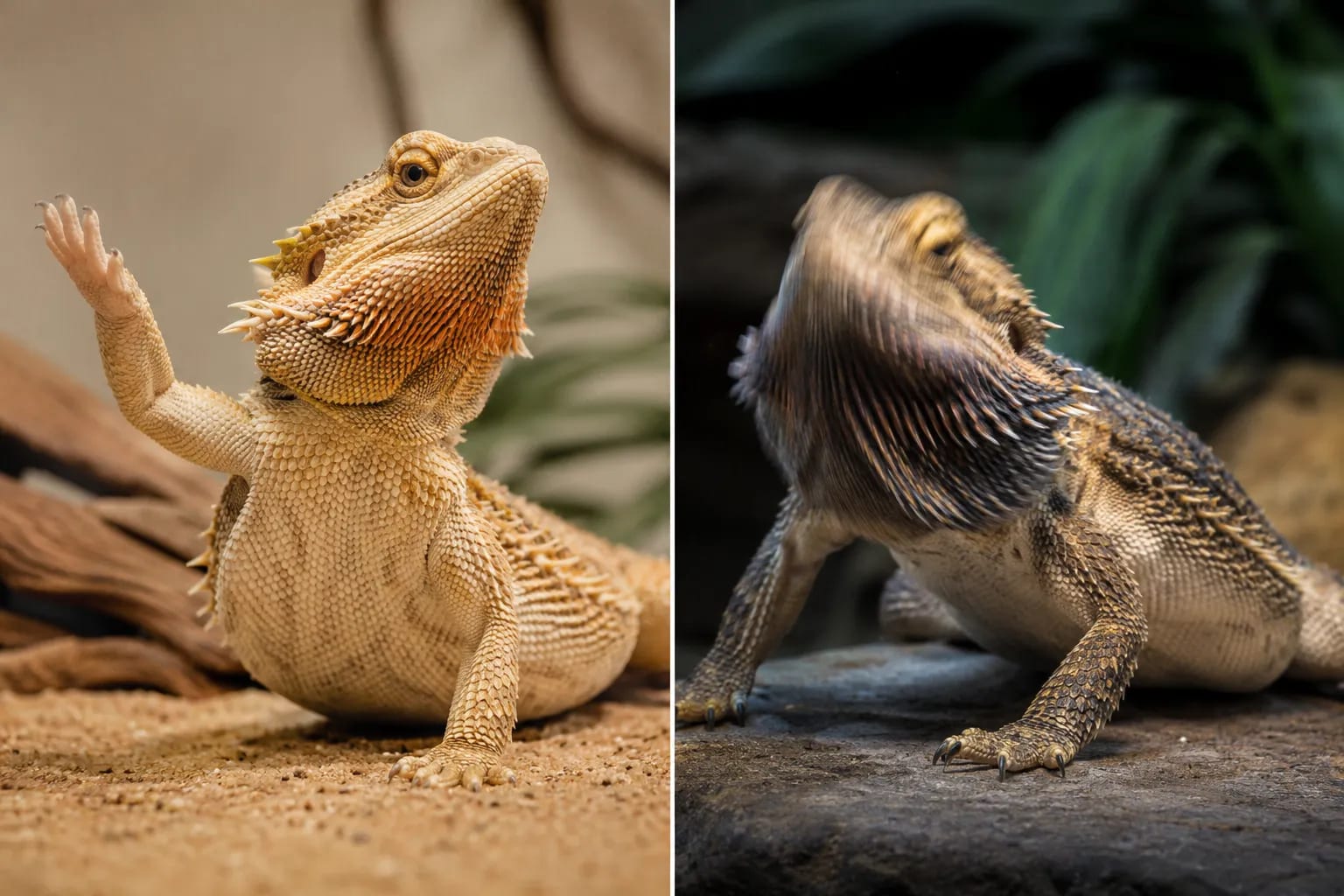
When a bearded dragon waves its arm, it’s performing a submissive social signal that communicates “I see you, I’m not a threat, and I acknowledge you’re bigger or more dominant than me.” The dragon lifts one front leg slowly and rotates it in a circular motion, almost like a slow-motion human wave.
This behavior is hardwired into bearded dragon communication and serves an important purpose in the wild. In their native Australian habitat, bearded dragons use arm waving to:
- Avoid conflicts with larger dragons or predators
- Signal peaceful intentions when entering another dragon’s territory
- Acknowledge hierarchy within dragon communities
- Reduce aggression from dominant individuals
The wave is essentially your beardie’s way of saying “I come in peace.” It’s a polite gesture rather than a sign of fear, though the underlying message is one of deference.
Common mistake: Many owners worry that waving means their dragon is terrified. While waving does indicate your dragon sees you as dominant, this is normal and healthy. Your beardie recognizes you’re much larger and is simply being respectful.
Is Bearded Dragon Waving a Sign of Stress or Friendliness?
Bearded dragon waving sits somewhere between stress acknowledgment and friendly greeting, depending on context. The behavior itself is submissive, but submission doesn’t automatically mean distress.
When waving indicates healthy, friendly behavior:
- Your dragon waves once or twice when you approach the tank
- The wave happens during calm interactions
- Your beardie shows relaxed body language (flat beard, normal coloring)
- Eating, basking, and activity levels remain normal
- The waving stops after initial acknowledgment
When waving may signal stress:
- Constant, repetitive waving throughout the day
- Waving combined with glass surfing (frantically scratching at tank walls)
- Dark beard coloration or stress marks on the belly
- Reduced appetite or hiding behavior
- Waving accompanied by frantic running or escape attempts
Think of it this way: if your dragon waves when you walk by, then goes back to basking contentedly, that’s friendly acknowledgment. If your dragon waves nonstop while trying to escape the tank, that’s stress.
Choose this interpretation if: Your dragon waves occasionally but otherwise acts normal and healthy, this is standard polite behavior. Choose the stress interpretation if waving is constant and paired with other anxiety signals.
Difference Between Bearded Dragon Waving and Head Bobbing
Waving and head bobbing are opposite behaviors in the bearded dragon communication toolkit. Waving signals submission, while head bobbing displays dominance and confidence.
Arm Waving:
- Slow, circular motion with one front leg
- Submissive, non-threatening signal
- Says “I’m not challenging you”
- Common in smaller or younger dragons
- Calm, deliberate movement
Head Bobbing:
- Rapid up-and-down head movements
- Dominant, territorial display
- Says “I’m in charge here” or “This is my space”
- More common in adult males
- Can be slow (relaxed dominance) or fast (aggressive warning)
Dragons often use these behaviors in sequence. A dominant dragon might head bob at a newcomer, and the newcomer responds with arm waving to show they accept the hierarchy. This prevents physical fights.
In captivity: Your bearded dragon might head bob at you (especially males during breeding season) or wave at you depending on their personality and how they perceive the relationship. Some confident dragons head bob at their owners, while more submissive individuals wave.

Do Baby Bearded Dragons Wave More Than Adults?
Baby bearded dragons wave significantly more often than adults because they’re smaller, more vulnerable, and instinctively recognize that nearly everything around them is larger and potentially threatening. This is completely normal developmental behavior.
Why babies wave more:
- Size vulnerability: At 3-4 inches long, baby beardies see almost everything as a potential predator
- Survival instinct: Waving helps them avoid aggression from larger dragons and animals
- Social learning: Young dragons are still learning the social hierarchy
- Frequent encounters: Babies are more reactive to movement and new stimuli
Typical waving frequency by age:
- Hatchlings (0-3 months): May wave multiple times daily at owners, other pets, or large objects
- Juveniles (3-12 months): Waving decreases as they grow but still common during interactions
- Adults (12+ months): Waving becomes less frequent, usually only in specific situations or with particularly submissive personalities
Most bearded dragons naturally wave less as they mature and gain confidence. An adult dragon that waved constantly as a baby might only wave occasionally or not at all once fully grown.
Edge case: Some adult bearded dragons maintain submissive personalities and continue waving regularly throughout their lives. This is a personality trait, not a problem, as long as the dragon shows no other stress signs.
Should I Wave Back at My Bearded Dragon?
You don’t need to wave back at your bearded dragon, and doing so won’t communicate anything meaningful to them since they don’t recognize human arm movements as the same gesture. However, waving back won’t harm anything either if it makes the interaction fun for you.
What actually helps your dragon feel secure:
- Slow, calm movements when approaching the tank
- Speaking in a gentle, quiet voice to signal non-threatening presence
- Approaching from the side rather than from above (predators attack from above)
- Offering hand slowly for them to investigate before picking up
- Consistent, positive handling to build trust over time
Your bearded dragon’s waving acknowledges your dominance, so the best response is to prove you’re a safe, non-threatening presence. Calm, predictable behavior builds confidence better than any return gesture.
Common question: “Will my dragon think I’m submissive if I don’t wave back?” No. Bearded dragons don’t expect return communication in their own language. They respond to your overall demeanor, handling technique, and whether you cause them stress or comfort.
My Bearded Dragon Waves at Me But Not Other People, Why?
When your bearded dragon waves at you specifically but not at other family members, it typically means your dragon perceives you as the most dominant or imposing presence in their environment. This can relate to your size, voice, handling frequency, or even just the dragon’s individual associations with you.
Reasons for person-specific waving:
- You’re the primary caregiver: The person who feeds, cleans, and handles the dragon most often becomes the most significant presence
- Size and height differences: Taller or larger people may trigger more submissive responses
- Voice depth: Deeper voices can seem more imposing to small animals
- Handling confidence: If you handle your dragon more confidently (even if gently), they may perceive you as more dominant
- First bonding: The person who brought the dragon home often remains the primary “authority figure”
This behavior doesn’t mean your dragon dislikes you or prefers others. It simply means they’ve categorized you as the “alpha” in their social understanding. Other people might get different behaviors, head bobs, no response, or even more relaxed interaction if the dragon sees them as equals.
To reduce person-specific waving: Have other family members take over some feeding and handling duties so your dragon builds positive associations with multiple people and sees them as equally important.
Is Arm Waving Normal Behavior for Bearded Dragons?
Arm waving is completely normal, instinctive behavior for bearded dragons and is part of their natural communication repertoire. Both wild and captive bearded dragons wave, and the behavior appears across all subspecies of Pogona vitticeps.
Why waving is normal:
- Evolutionary adaptation: Waving prevents injuries by establishing hierarchy without fighting
- Universal behavior: Observed in bearded dragons across different environments and breeding lines
- Age-appropriate: Expected especially in young dragons
- Functional communication: Serves a clear social purpose
When waving is normal:
- Occasional waves when you approach the tank
- Waving at other pets visible from the tank
- Waving at their reflection
- Waving when introduced to new dragons
- Brief waving episodes followed by normal behavior
When to investigate further:
- Waving constantly throughout the day
- Waving combined with other stress behaviors
- Sudden increase in waving frequency
- Waving with physical symptoms (lethargy, weight loss)
Think of waving like a dog wagging its tail, it’s a natural behavior, but context determines whether it’s healthy or indicates a problem. A few wags are normal; constant, frantic wagging might signal anxiety.
When to Worry About Bearded Dragon Waving Behavior
Most waving is harmless communication, but certain patterns warrant closer attention to ensure your dragon isn’t experiencing chronic stress or health issues.
Red flags that require investigation:
Constant waving (multiple times per hour throughout the day)
- May indicate the tank environment feels threatening
- Check temperature gradients, hiding spots, and tank placement
Waving plus glass surfing
- Suggests your dragon wants to escape the enclosure
- Review tank size (adults need 75+ gallons), enrichment, and lighting
Waving with dark beard or stress marks
- Physical stress indicators combined with submissive behavior
- Examine husbandry: temperatures, UVB lighting, diet, hydration
Sudden behavior changes
- Dragon who never waved suddenly starts, or frequent waver stops completely
- Could indicate illness, pain, or environmental change
Waving with appetite loss or lethargy
- Behavioral changes plus physical symptoms suggest health problems
- Schedule a vet visit with a reptile specialist
Decision rule: If your dragon waves occasionally but eats well, basks normally, has healthy coloring, and shows curiosity about their environment, the waving is normal communication. If waving is constant or paired with other concerning signs, investigate husbandry and consider a vet check.

Harness and Leash Size: This harness is suitable for small animal with neck circumference: 4.5"-7" and chest circumference: 6.4"-8.6". In addition, this harness also comes with a 5ft short leash, which is suitable for use when walking outdoors.

❤️❤Lizard Themed Gifts for Women❤️❤--Bearded dragons are typically recognized for their gentle and friendly nature. It's a charming bearded dragon-themed gift for people who love bearded dragon.

【Safe Material & Durable】Bearded dragon hammock is made of natural seagrass. Natural wooden bridge for reptiles to climb. The jungle vine is made of iron wire inside and soft PU material outside. Reptile plants are made from intentionally non-toxic plastic and the stems were made from iron wire. It creates a dynamic environment with fun hiding spots and intriguing obstacles.
Do Bearded Dragons Wave at Their Reflection?
Bearded dragons frequently wave at their own reflection because they perceive it as another dragon in their space. Since they can’t recognize themselves in mirrors, the reflection appears to be a separate bearded dragon, triggering the same social responses they’d show to a real dragon.
Why reflection-waving happens:
- Lack of self-recognition: Bearded dragons don’t understand mirror reflections are themselves
- Social response: They treat the reflection as another dragon requiring acknowledgment
- Size matching: The reflection is the same size, so submission (waving) is an appropriate response
- Movement synchronization: The reflection’s movements seem like another dragon’s behavior
Common reflection sources:
- Glass tank walls (especially with certain lighting)
- Mirrors in the room
- Shiny surfaces near the enclosure
- Phone or tablet screens
When reflection-waving becomes problematic:
- If your dragon spends hours daily interacting with their reflection, it can cause stress
- Constant reflection exposure may prevent proper rest
- Some dragons become agitated or confused by persistent reflections
Solution: If reflection-waving seems excessive, reduce reflective surfaces near the tank. Cover shiny tank backgrounds, reposition the enclosure away from mirrors, and adjust lighting to minimize glass reflections. Most dragons wave at their reflection occasionally without issue, but obsessive interaction suggests the reflection should be eliminated.
How to Tell If My Bearded Dragon Is Submissive or Scared
Distinguishing between healthy submission and genuine fear helps you understand whether your dragon’s waving is normal communication or a stress response requiring intervention.
Signs of healthy submission (normal):
- Calm waving with relaxed body posture
- Normal beard color (not black or dark)
- Continues normal activities after waving
- Maintains appetite and basking routine
- Will approach you or accept handling after waving
- Eyes remain alert but not bulging
Signs of fear or stress (concerning):
- Frantic waving combined with escape attempts
- Beard turns black or dark brown
- Body flattens or puffs up defensively
- Hissing or open-mouth displays
- Refuses food or hides constantly
- Stress marks (dark oval patterns on belly)
- Tail curled tightly
- Eyes wide with visible stress
The key difference: A submissive dragon acknowledges your dominance but remains comfortable in your presence. A scared dragon shows active fear responses and tries to avoid interaction entirely.
Test for comfort level: Offer your hand slowly near your dragon. A submissive but comfortable dragon may wave, then investigate your hand or allow handling. A genuinely scared dragon will retreat, darken their beard, or show defensive postures.
Bearded Dragon Waving vs Glass Surfing, What’s the Difference?
Waving and glass surfing are distinct behaviors that sometimes occur together but have different meanings and causes. Understanding both helps you interpret your dragon’s overall state.
Arm Waving:
- What it looks like: Slow, circular motion with one front leg raised
- What it means: Submissive social signal
- Frequency: Occasional, brief episodes
- Concern level: Usually normal unless constant
Glass Surfing:
- What it looks like: Frantically scratching or “swimming” against tank glass, often standing on hind legs
- What it means: Desire to escape, boredom, stress, or seeing reflection/outside activity
- Frequency: Can be persistent, lasting minutes to hours
- Concern level: Often indicates environmental or husbandry issues
When they occur together:
Dragons may wave at their reflection while glass surfing, or wave at you while trying to escape the tank. This combination suggests stress rather than simple social acknowledgment.
Common causes of glass surfing:
- Tank too small (adults need minimum 75 gallons, preferably 120)
- Incorrect temperatures (basking spot should be 95-105°F)
- Inadequate UVB lighting
- Boredom or lack of enrichment
- Seeing other pets or outdoor activity
- Breeding season hormones (especially males)
Action steps: If your dragon waves occasionally but doesn’t glass surf, behavior is normal. If they wave constantly while glass surfing, review your husbandry setup and make necessary adjustments to tank size, temperatures, lighting, and enrichment.
Can Bearded Dragons Wave as a Greeting to Humans?
Bearded dragons can wave as a form of greeting, though it’s more accurately described as acknowledgment rather than a friendly “hello” in the human sense. The wave recognizes your presence and establishes the social dynamic, which becomes a routine part of your interaction.
How waving functions as greeting:
- Recognition: Your dragon sees you and acknowledges your approach
- Routine establishment: Regular waving during interactions becomes a predictable pattern
- Social ritual: The wave becomes part of the “script” for how you and your dragon interact
What greeting-waving looks like:
- Happens when you first approach the tank
- Usually one or two waves, then normal behavior resumes
- Dragon may approach the glass after waving
- Often paired with alertness and interest in your presence
- Stops once interaction begins or you move away
Many owners interpret this as their dragon saying hello, and while the dragon isn’t thinking “hello” in human terms, the functional result is similar, it’s a recognition and acknowledgment that you’ve arrived.
Personality variation: Some bearded dragons develop more elaborate greeting rituals that include waving, head bobbing, or running to the front of the tank. Others never wave at owners but show recognition through different behaviors like alertness or approaching for food. Each dragon has individual communication preferences.
My Bearded Dragon Stopped Waving Suddenly, Is Something Wrong?
A sudden stop in waving behavior can be normal maturation or personality change, but it can also indicate health issues or environmental changes that need attention. Context determines whether this change is concerning.
Normal reasons for stopping:
- Maturation: As dragons grow and gain confidence, they often wave less or stop entirely
- Established hierarchy: Once your dragon fully accepts the household routine, they may not feel the need to wave anymore
- Personality development: Some dragons become more confident or bold with age
- Seasonal changes: Behavior can shift with breeding season or brumation periods
Concerning reasons for stopping:
- Illness or pain: Sick dragons may stop normal behaviors including waving
- Vision problems: If your dragon can’t see well, they won’t respond to visual stimuli with waving
- Neurological issues: Sudden behavior changes can indicate health problems
- Severe stress: Extremely stressed dragons may become withdrawn and stop all social behaviors
How to assess the change:
If your dragon stopped waving but:
- Eats normally ✓
- Basks regularly ✓
- Shows normal activity levels ✓
- Responds to your presence ✓
- Has healthy coloring ✓
Then: The change is likely normal maturation or personality shift. Monitor but don’t worry.
If your dragon stopped waving and:
- Shows appetite loss ✗
- Seems lethargic ✗
- Has physical symptoms (weight loss, abnormal stool) ✗
- Doesn’t respond to stimuli ✗
- Shows signs of pain or discomfort ✗
Then: Schedule a veterinary exam to rule out health issues.
Edge case: Some dragons stop waving at their primary caregiver once they’re fully comfortable but continue waving at strangers or new people. This is normal and indicates your dragon no longer sees you as someone requiring submissive acknowledgment.
FAQ
Why does my bearded dragon wave at me every morning?
Morning waving is your dragon’s way of acknowledging you when you first appear for the day. It’s a routine greeting that establishes the social dynamic and is completely normal behavior, especially if your dragon then proceeds with normal basking and activity.
Is it bad if my bearded dragon never waves?
No, some bearded dragons never wave due to confident personalities or individual temperament. As long as your dragon is healthy, eating well, and showing normal behavior, lack of waving isn’t a concern, it just means your dragon has a bolder personality.
Can bearded dragons wave with both arms?
Bearded dragons typically wave with one arm at a time, alternating which arm they use. Simultaneous two-arm waving is extremely rare and not part of normal bearded dragon communication repertoire.
Do female bearded dragons wave more than males?
Females and males wave at similar rates when young, but adult males often wave less than females because males tend to display more dominant behaviors like head bobbing, especially during breeding season.
Should I be concerned if my bearded dragon waves at the ceiling fan?
Waving at ceiling fans, shadows, or moving objects is normal, your dragon perceives movement and responds with acknowledgment. This is harmless unless your dragon seems constantly stressed by the movement, in which case reduce the visual stimulation.
How long does each wave typically last?
A single wave motion takes about 2-4 seconds. Dragons usually wave 1-3 times in succession, then stop. Continuous waving for minutes at a time may indicate stress or obsession with a reflection.
Will my bearded dragon wave at other pets?
Yes, bearded dragons often wave at cats, dogs, or other pets they can see from their enclosure. This is normal acknowledgment of a larger animal’s presence and usually isn’t stressful unless the other pet is aggressive or constantly bothering the dragon.
Can I train my bearded dragon to wave on command?
Bearded dragons can’t be trained to wave on command like dogs learn tricks. Waving is an instinctive social response to specific stimuli, not a learned behavior that can be cued by human commands.
Does waving mean my bearded dragon is unhappy with me?
No, waving doesn’t indicate unhappiness. It’s simply acknowledgment of your dominant position. A happy, healthy dragon may wave at you regularly while also showing affection through other behaviors like approaching for interaction or relaxing during handling.
Why does my bearded dragon wave more after I rearrange the tank?
Tank rearrangement creates a “new” environment that may feel less secure temporarily. Increased waving after changes is normal as your dragon re-establishes comfort with the altered space. This should decrease within a few days as they adjust.
Is waving related to shedding or brumation?
Waving behavior may decrease during shedding or brumation because dragons are less active and responsive overall. Some dragons become more irritable during shed and may show more defensive behaviors instead of submissive waving.
At what age do bearded dragons start waving?
Bearded dragons can start waving as early as a few weeks old, once they’re alert and responsive to their environment. The behavior is instinctive and doesn’t require learning or development beyond basic motor control.
Conclusion
Understanding why your bearded dragon waves helps you interpret their communication and ensure they’re healthy and comfortable. Waving is a natural, submissive gesture that acknowledges dominance and prevents conflict, it’s your dragon’s way of saying “I see you and I’m not a threat.” While the behavior is typically normal, especially in young dragons, context matters. Occasional waving paired with healthy eating, basking, and activity indicates normal social behavior. Constant waving combined with glass surfing, dark coloring, or appetite loss suggests stress that requires husbandry adjustments or veterinary attention.
Take these steps to support healthy communication:
- Maintain proper tank conditions (correct temperatures, adequate UVB, appropriate size)
- Approach your dragon calmly and predictably to build trust
- Reduce reflective surfaces if your dragon obsesses over their reflection
- Monitor for behavior changes that might indicate health issues
- Remember that waving frequency often decreases as dragons mature and gain confidence
Your bearded dragon’s waving is a window into their social understanding and comfort level. By recognizing what’s normal for your individual dragon and watching for concerning patterns, you can ensure your scaly friend feels secure and thrives in their environment.

Funny Bearded Dragon Warning Sign:Featuring the humorous message “Small Movements May Cause Big Reactions,” this metal sign adds personality to reptile rooms, pet spaces, and home decor.

Bearded Dragon Decoration: This wooden sign, featuring a cute bearded dragon and the slogan "Silently Judging You," is the perfect decorative piece for your home. Your family and friends will surely love it, drawn to its charming design and bringing them surprise and joy.

Bearded Dragon Funny Lizard Graphic Tee


