
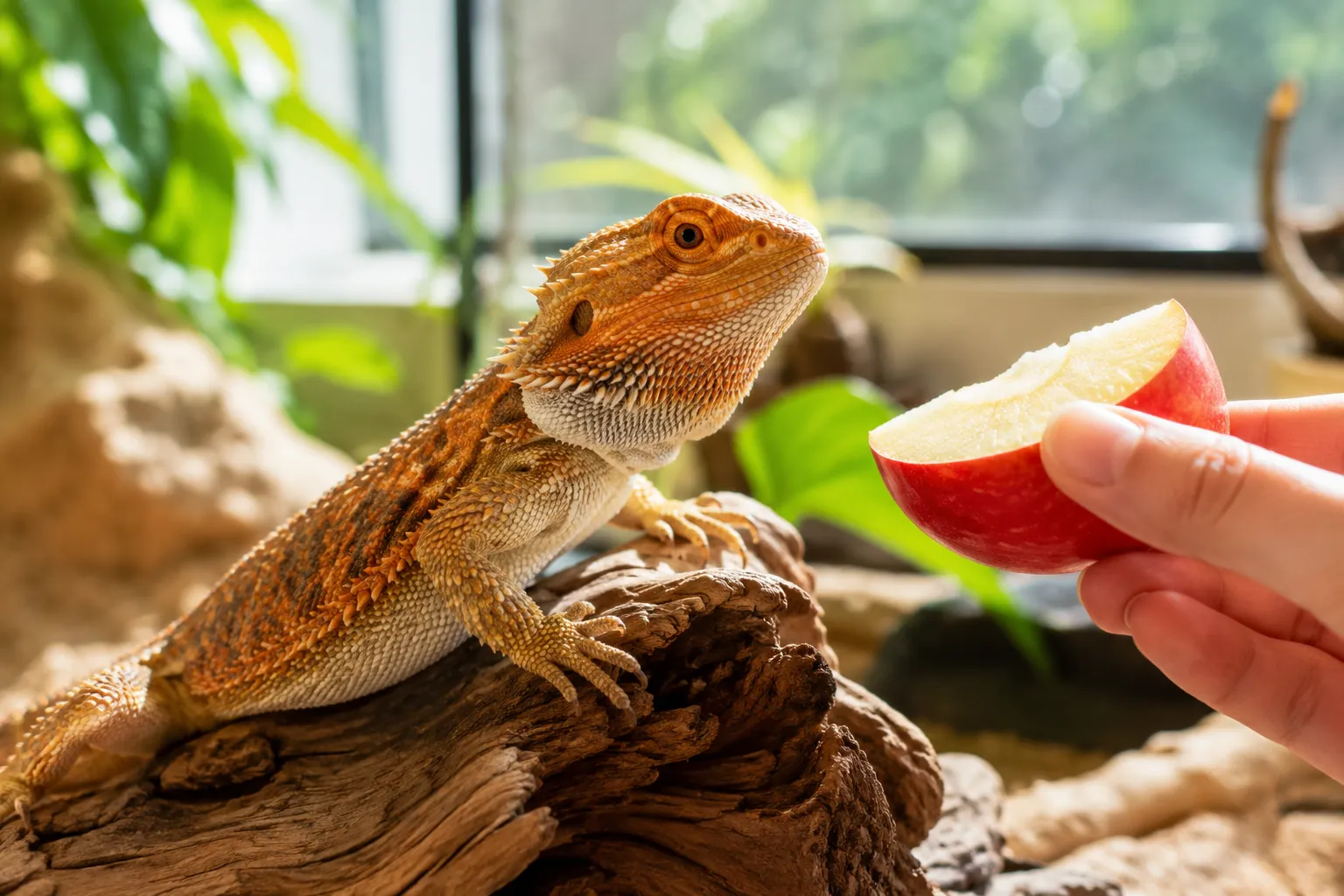
Quick Answer: Yes, bearded dragons can eat apples, but only as an occasional treat in small amounts. Apples should make up no more than 5-10% of the fruit portion of their diet (and fruit itself should only be about 10% of total diet). The high sugar content and unfavorable calcium-to-phosphorus ratio mean apples should be fed sparingly, typically once or twice per month, and always cut into small, bite-sized pieces with seeds and core removed.
Key Takeaways
- Apples are safe but should be rare treats: Feed only once or twice monthly due to high sugar content
- Preparation matters: Always remove seeds, core, and stem; peel is optional but skin can be left on if organic and washed
- Portion control is critical: Offer pieces no larger than the space between your dragon’s eyes
- Baby dragons need different diets: Bearded dragons under 12 months should focus on protein and avoid fruit almost entirely
- Better fruit alternatives exist: Blueberries, strawberries, and papaya offer superior nutritional profiles for bearded dragons
- Watch the calcium-phosphorus ratio: Apples have a poor Ca:P ratio (1:2), which can interfere with calcium absorption
- All apple varieties are safe: Red, green, Granny Smith, and Fuji apples are all acceptable in moderation
- Sugar overload causes health problems: Too much apple can lead to obesity, digestive issues, and metabolic bone disease
- Some dragons simply won’t eat apples: This is completely normal and not a cause for concern
- Never feed apple seeds: They contain trace amounts of cyanide compounds that are toxic to reptiles

Vitamin Enriched Formula That Provides Essential Proteins, Fats, Vitamins And Minerals

All Natural: 100% all-natural and preservative-free
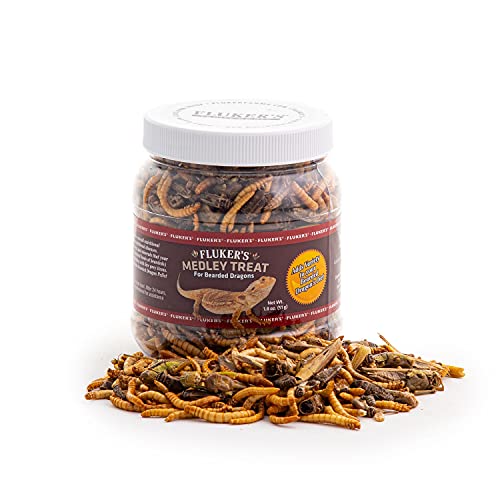
All without the hassle of dealing with live Prey items
Are Apples Safe for Bearded Dragons?
Apples are safe for bearded dragons when prepared correctly and fed in strict moderation. They contain no compounds that are acutely toxic to reptiles, and many bearded dragons enjoy the sweet taste and crunchy texture.
However, “safe” doesn’t mean “ideal.” Apples present several nutritional challenges:
The calcium-phosphorus problem: Bearded dragons need a dietary calcium-to-phosphorus ratio of at least 1.5:1 or ideally 2:1. Apples have roughly 6mg calcium and 11mg phosphorus per 100g, giving them a ratio of approximately 1:2, the opposite of what your dragon needs. Phosphorus binds to calcium in the digestive tract and prevents absorption, potentially contributing to metabolic bone disease over time.
High sugar content: A medium apple contains about 19g of sugar. While natural fruit sugar is better than processed sugar, bearded dragons evolved in arid Australian environments eating primarily insects and tough vegetation. Their bodies aren’t designed to process large amounts of sugar, which can lead to obesity, fatty liver disease, and digestive upset.
Low protein and fiber: Apples offer minimal protein (0.3g per 100g) and moderate fiber (2.4g per 100g), meaning they don’t contribute meaningfully to your dragon’s core nutritional needs.
Choose apples if: Your dragon enjoys variety, you’re looking for an occasional hydrating treat, or you want to add enrichment to feeding time.
Skip apples if: Your dragon has metabolic bone disease, is overweight, has digestive issues, or is under 12 months old.
How Often Can Bearded Dragons Eat Apples?

Adult bearded dragons should eat apples no more than once or twice per month. This frequency keeps sugar intake low while still providing occasional dietary variety and enrichment.
The 90-10 rule provides a helpful framework: 90% of an adult bearded dragon’s diet should be vegetables and leafy greens, with 10% being fruit. Within that 10% fruit allowance, rotate between different options rather than relying on apples alone.
Feeding frequency by age:
- Baby bearded dragons (0-6 months): No fruit, including apples. Focus on 80% protein (insects) and 20% greens.
- Juvenile bearded dragons (6-12 months): Minimal fruit, perhaps a tiny piece once monthly. Diet should be 50% protein, 50% vegetables.
- Adult bearded dragons (12+ months): Once or twice monthly. Diet should be 80% vegetables/greens, 20% protein, with fruit as an occasional component of the vegetable portion.
Common mistake: Feeding apples weekly because “it’s just a small piece.” Even small amounts add up when fed frequently, and the poor calcium-to-phosphorus ratio compounds over time.
Do I Need to Peel Apples for My Bearded Dragon?
You don’t need to peel apples for your bearded dragon, but it’s a good idea if the apples aren’t organic. Apple skin is safe and contains additional fiber and nutrients, but conventional apples often carry pesticide residues concentrated in the peel.
When to leave the peel on:
- Organic apples that have been thoroughly washed
- You want to provide extra fiber
- Your dragon has no trouble digesting the skin
When to remove the peel:
- Conventional (non-organic) apples
- Your dragon has shown digestive sensitivity
- You notice undigested skin in droppings
- The apple has a waxy coating
If you choose to leave the skin on, scrub the apple under running water for at least 30 seconds, even if it’s organic. A produce brush can help remove surface contaminants and natural wax.
Preparation checklist:
- Wash the apple thoroughly
- Remove the core, seeds, and stem completely
- Decide whether to peel based on organic status
- Cut into small cubes (no larger than the space between your dragon’s eyes)
- Serve at room temperature, never cold from the refrigerator
Can Baby Bearded Dragons Eat Apples?
Baby bearded dragons should not eat apples or any fruit. Dragons under 12 months old require a protein-heavy diet to support their rapid growth, and fruit provides almost no protein while filling their small stomachs with sugar and water.
During the first six months of life, baby bearded dragons need approximately 80% of their diet to come from appropriately sized insects (crickets, dubia roaches, black soldier fly larvae) and only 20% from finely chopped greens like collard greens, mustard greens, and turnip greens.
Why fruit is problematic for babies:
- Displaces critical protein: A baby dragon that fills up on apple won’t eat enough insects to support bone and muscle development
- Increases metabolic bone disease risk: The poor calcium-to-phosphorus ratio is especially dangerous during the rapid growth phase
- Can cause digestive issues: Young dragons have sensitive digestive systems that struggle with high-sugar foods
- Creates bad habits: Early exposure to sweet foods may make dragons picky eaters who refuse nutritious staples
When to introduce fruit: Wait until your bearded dragon is at least 12 months old and has reached adult size. Even then, start with small amounts of better options like blueberries or papaya before trying apples.
If you accidentally fed your baby dragon a small piece of apple, don’t panic. One exposure is unlikely to cause harm, but make sure the next several meals are protein-rich to compensate.

Can Bearded Dragons Eat Apple Skin and Seeds?
Bearded dragons can eat apple skin if it’s clean and pesticide-free, but they should never eat apple seeds. The skin is digestible and safe, while the seeds contain amygdalin, a compound that breaks down into cyanide when digested.
Apple seeds and toxicity: While the amount of cyanide in a single apple seed is tiny, bearded dragons are much smaller than humans and more susceptible to toxins. Even a few seeds could potentially cause problems. Seeds also present a choking hazard and can cause intestinal blockages.
Always remove:
- All seeds from the apple core
- The tough core itself
- The stem and any leaves
- Any bruised or brown spots
Apple skin considerations: The skin contains quercetin and other beneficial plant compounds, plus additional fiber. However, it’s also where pesticides concentrate. If you’re using conventional apples, peeling is the safer choice.
Edge case: If your dragon accidentally swallows a single apple seed, monitor for signs of distress (lethargy, gaping, unusual behavior) but don’t panic. The risk from one seed is low. However, make it a practice to always remove seeds going forward.
How Much Apple Should I Feed My Bearded Dragon?
Feed your bearded dragon 1-3 small cubes of apple per serving, with each cube no larger than the space between their eyes. For an average adult bearded dragon, this translates to roughly one thin slice or about 1-2 teaspoons of diced apple.
Portion guidelines by dragon size:
| Dragon Size | Apple Amount | Cube Size |
|---|---|---|
| Small adult (14-16 inches) | 1-2 small cubes | 1/4 inch cubes |
| Medium adult (16-20 inches) | 2-3 medium cubes | 1/3 inch cubes |
| Large adult (20-24 inches) | 3 medium cubes | 1/2 inch cubes |
The space-between-eyes rule: This is the gold standard for sizing any food for bearded dragons. Food pieces larger than this can cause choking or impaction. Apples are firm and can be difficult to break down, making proper sizing especially important.
Serving method: Mix the apple cubes with a larger salad of appropriate greens (collard greens, mustard greens, turnip greens, dandelion greens) and vegetables (butternut squash, bell peppers, green beans). This ensures your dragon doesn’t fill up on just the sweet apple and ignores more nutritious foods.
Common mistake: Offering apple as the only food item. Always present fruit as part of a varied salad, not as a standalone meal.
What Happens If My Bearded Dragon Eats Too Much Apple?
If your bearded dragon eats too much apple, they may experience digestive upset, diarrhea, and temporary loss of appetite. In the short term, excess sugar can cause loose stools and stomach discomfort. Long-term overconsumption contributes to obesity, fatty liver disease, and metabolic bone disease.
Immediate effects (within 24-48 hours):
- Watery or loose stools
- Increased urination
- Lethargy or reduced activity
- Loss of interest in regular food
- Possible regurgitation
Long-term effects (weeks to months of overfeeding):
- Weight gain and obesity
- Fatty liver disease
- Metabolic bone disease from calcium-phosphorus imbalance
- Dental problems
- Weakened immune system
- Shortened lifespan
What to do if your dragon ate too much apple:
- Don’t panic: A one-time overindulgence is unlikely to cause permanent harm
- Provide fresh water: Ensure they stay hydrated
- Skip the next feeding or two: Let their digestive system reset
- Return to staple foods: Offer only greens and appropriate vegetables for the next week
- Monitor droppings: Watch for return to normal consistency
- Contact a vet if: Diarrhea persists beyond 48 hours, your dragon becomes lethargic, or they refuse food for more than 3-4 days
Prevention: Measure portions carefully, feed apples infrequently, and never leave fruit in the enclosure where your dragon can gorge.
Why Are Apples High in Sugar Bad for Bearded Dragons?
Apples are high in sugar (about 10g per 100g), which is problematic because bearded dragons evolved eating low-sugar foods and lack the metabolism to process large amounts of simple carbohydrates efficiently. Excess sugar leads to obesity, disrupts gut bacteria, and can cause insulin resistance over time.
The evolutionary context: Wild bearded dragons in Australia eat primarily insects, flowers, and tough desert vegetation. Their natural diet contains minimal sugar, and their digestive systems are optimized for protein and fiber, not fructose and glucose.
How sugar harms bearded dragons:
- Obesity: Unused sugar converts to fat, leading to weight gain that stresses joints and organs
- Fatty liver disease: The liver stores excess sugar as fat, potentially causing hepatic lipidosis
- Gut dysbiosis: Sugar feeds harmful bacteria and yeast, disrupting the beneficial microbiome
- Tooth decay: Though less common than in mammals, reptiles can develop dental problems from sugar
- Metabolic issues: Chronic high sugar intake may affect insulin sensitivity and glucose regulation
- Nutritional displacement: Dragons that fill up on sweet foods often refuse more nutritious options
The calcium connection: High sugar intake can also interfere with calcium metabolism indirectly. When dragons eat too much fruit, they consume less of the calcium-rich greens they need, compounding the poor calcium-to-phosphorus ratio already present in apples.
Choose lower-sugar fruits: If you want to offer fruit, options like papaya, cactus fruit, and figs provide better nutritional profiles with less sugar per serving.

Balanced Mix for Daily Lizard Wellness --- A nutrient-rich blend of sun-dried veggies, freeze-dried fruits, and calcium-coated insects, our Lizard Fruit & Insect Mix helps support digestion, vitality, and bone strength.

✔ HEALTHY - This nutritious blend includes figs, papaya, green beans, cabbage, squash, apple and carrots
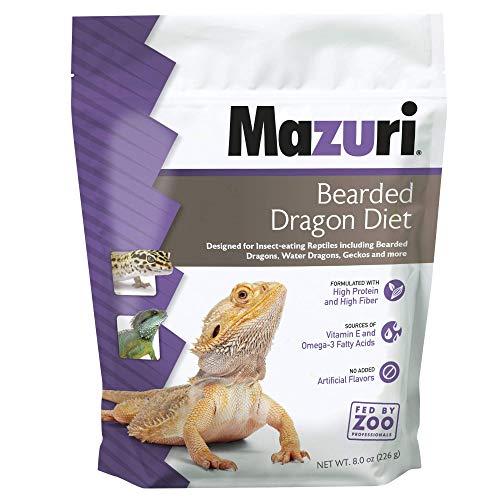
Great source of omega-3 fatty acids and Vitamin E.
Can Bearded Dragons Eat Green Apples or Just Red Apples?
Bearded dragons can eat all varieties of apples, red, green, Granny Smith, Fuji, Gala, Honeycrisp, and others, with equal safety. The nutritional differences between apple varieties are minimal and don’t significantly impact their suitability for bearded dragons.
Nutritional comparison (per 100g):
- Red apples (Fuji, Gala): ~10g sugar, slightly sweeter, 6mg calcium
- Green apples (Granny Smith): ~9g sugar, more tart, 6mg calcium
- Yellow apples (Golden Delicious): ~10g sugar, mild flavor, 6mg calcium
All varieties share the same core issues: high sugar content relative to protein and fiber, and a poor calcium-to-phosphorus ratio. The slight variation in sugar content (1-2g per 100g) doesn’t meaningfully change their nutritional value for reptiles.
Taste preferences: Some bearded dragons prefer sweeter red apples, while others enjoy the tartness of green varieties. This is purely individual preference and doesn’t reflect nutritional superiority.
What matters more than variety:
- Organic vs. conventional (pesticide exposure)
- Freshness (avoid brown or mealy apples)
- Preparation (proper washing, seed removal, sizing)
- Frequency (once or twice monthly regardless of variety)
Experiment safely: If your dragon enjoys apples, feel free to rotate between varieties for enrichment, but maintain the same strict portion control and frequency regardless of which type you choose.
What Fruits Are Better Than Apples for Bearded Dragons?
Several fruits offer better nutritional profiles than apples for bearded dragons, including blueberries, papaya, figs, strawberries, and cactus fruit (prickly pear). These options provide superior calcium-to-phosphorus ratios, more beneficial nutrients, and in some cases, lower sugar content.
Top fruit alternatives:
Blueberries: Lower sugar than apples, high in antioxidants, good calcium-to-phosphorus ratio (1:1), easy to portion. Feed 2-3 berries once or twice weekly.
Papaya: Excellent calcium-to-phosphorus ratio (4.8:1), contains digestive enzymes, rich in vitamin A. Feed small cubes once weekly.
Figs: Higher calcium content, good fiber, but also high in sugar, feed sparingly. One small fig or equivalent once monthly.
Strawberries: Moderate sugar, decent calcium-to-phosphorus ratio (1.5:1), high in vitamin C. Feed 1-2 berries once weekly.
Cactus fruit (prickly pear): Excellent calcium-to-phosphorus ratio (2.3:1), hydrating, low in oxalates. Feed small amounts once weekly.
Mango: Rich in vitamin A, but high in sugar, feed less frequently than blueberries. Small cubes once or twice monthly.
Comparison table:
| Fruit | Ca:P Ratio | Sugar Content | Frequency |
|---|---|---|---|
| Apple | 1:2 (poor) | High | 1-2x monthly |
| Blueberry | 1:1 (good) | Moderate | 1-2x weekly |
| Papaya | 4.8:1 (excellent) | Moderate | 1x weekly |
| Strawberry | 1.5:1 (good) | Moderate | 1-2x weekly |
| Cactus fruit | 2.3:1 (excellent) | Low-moderate | 1x weekly |
The bottom line: While apples aren’t harmful in moderation, several other fruits provide better nutrition and can be fed more frequently. Rotate between multiple fruit options rather than relying on apples as your go-to treat.
What Fruits Should Bearded Dragons Never Eat?
Bearded dragons should never eat avocado, rhubarb, or citrus fruits (oranges, lemons, limes, grapefruit). Avocado contains persin, which is toxic to many animals including reptiles. Rhubarb contains high levels of oxalic acid that binds calcium and can cause kidney damage. Citrus fruits are too acidic and can cause severe digestive upset.
Toxic and dangerous fruits:
Avocado: Contains persin, a fungicidal toxin that can cause heart damage, respiratory distress, and death in reptiles. Never feed any part of the avocado, including the flesh, skin, or pit.
Rhubarb: Extremely high in oxalates (oxalic acid), which binds calcium and can cause kidney stones, kidney failure, and metabolic bone disease. Even small amounts are dangerous.
Citrus fruits: Oranges, lemons, limes, tangerines, and grapefruit are too acidic for bearded dragon digestive systems. They can cause stomach upset, diarrhea, and mouth irritation.
Fruits to avoid or limit severely:
- Grapes: High in sugar and oxalates; if fed at all, only 1-2 grapes monthly
- Bananas: Very high in phosphorus (1:3 Ca:P ratio), high in sugar; feed rarely if at all
- Kiwi: High in oxalates; occasional small amounts only
- Tomatoes: Technically a fruit, high in acid; feed sparingly
- Cherries: High in sugar, pits are toxic; if fed, remove pits and limit severely
Why oxalates matter: Oxalic acid binds to calcium in the digestive tract, forming calcium oxalate crystals that the body cannot absorb. This effectively removes calcium from the diet and can contribute to metabolic bone disease and kidney problems.
Safe rule: When in doubt, skip it. Bearded dragons don’t need fruit to thrive, and the safest approach is to stick with proven, low-risk options like blueberries and papaya.
My Bearded Dragon Won’t Eat Apples, Is That Normal?
Yes, it’s completely normal if your bearded dragon won’t eat apples. Bearded dragons have individual taste preferences, and many simply don’t enjoy apples or show no interest in fruit at all. This is not a cause for concern and doesn’t indicate any health problem.
Why some dragons refuse apples:
- Texture preference: Some dragons dislike the firm, crunchy texture
- Taste sensitivity: Not all dragons are attracted to sweet flavors
- Neophobia: Fear of new foods is common; some dragons are suspicious of anything unfamiliar
- Already satiated: If your dragon is full from greens and insects, they may ignore treats
- Individual variation: Just like humans, reptiles have personal preferences
What to do if your dragon refuses apples:
- Don’t force it: Never try to force-feed fruit or make your dragon eat something they’re refusing
- Try alternatives: Offer other fruits like blueberries, strawberries, or papaya
- Mix with favorites: Chop apple very small and mix with preferred greens
- Try different preparations: Some dragons prefer shredded apple over cubes
- Accept their preference: If they consistently refuse fruit, focus on excellent vegetable variety instead
Is fruit necessary? No. Bearded dragons can thrive on a diet of appropriate insects, leafy greens, and vegetables without any fruit at all. Fruit is enrichment and variety, not a nutritional requirement.
When to worry: If your dragon suddenly stops eating all foods (not just apples), becomes lethargic, loses weight, or shows other signs of illness, consult a reptile veterinarian. Refusing one specific food item is normal; refusing all food is not.
Best Way to Prepare Apples for Bearded Dragons
The best way to prepare apples for bearded dragons is to wash thoroughly, remove all seeds and core, cut into small cubes no larger than the space between their eyes, and serve at room temperature mixed with leafy greens. Proper preparation ensures safety and makes the apple easier to digest.
Step-by-step preparation guide:
Select a fresh apple: Choose firm apples without bruises or soft spots. Organic is preferable to avoid pesticides.
Wash thoroughly: Scrub the apple under running water for 30 seconds, using a produce brush if available. This removes surface pesticides, wax, and bacteria.
Decide on peeling: Remove the peel if the apple is conventional (non-organic) or if your dragon has shown digestive sensitivity. Leave it on if organic and well-washed.
Remove core and seeds: Cut the apple into quarters and carefully remove the entire core, all seeds, and the stem. Seeds contain trace cyanide compounds and must never be fed.
Cut into appropriate sizes: Dice the apple into cubes no larger than the space between your dragon’s eyes. For most adult dragons, this means 1/4 to 1/2 inch cubes.
Bring to room temperature: Never feed cold food from the refrigerator, as it can slow digestion and cause stomach upset. Let the apple sit at room temperature for 15-20 minutes.
Mix with salad: Combine 1-3 apple cubes with a larger portion of appropriate greens (collard greens, mustard greens, turnip greens) and vegetables (butternut squash, bell pepper, green beans).
Serve immediately: Don’t leave apple in the enclosure for more than 2-3 hours, as it can attract bacteria and insects.
Common preparation mistakes:
- Leaving seeds in the apple
- Cutting pieces too large (choking hazard)
- Serving cold from the fridge
- Offering apple alone without mixing with greens
- Not washing conventional apples
- Leaving apple in the enclosure overnight
Storage tip: If you’re preparing apple for multiple feedings, cut and portion it immediately, then freeze individual portions in ice cube trays. Thaw to room temperature before serving.
Frequently Asked Questions
Can bearded dragons eat applesauce?
No, bearded dragons should not eat applesauce. Commercial applesauce contains added sugar, preservatives, and sometimes artificial sweeteners that are harmful to reptiles. Even unsweetened applesauce lacks fiber and is too processed. Stick to fresh, raw apple pieces.
How do I know if my bearded dragon is eating too much fruit?
Signs include loose or watery stools, weight gain, refusing staple greens, lethargy after eating, and sticky residue around the mouth. If you notice these symptoms, eliminate fruit entirely for 1-2 weeks and focus on greens and insects.
Can bearded dragons eat dried apples?
Dried apples are not recommended. The drying process concentrates sugar dramatically, and many commercial dried apples contain added sugar or preservatives. The tough, chewy texture also poses a choking risk. Fresh apple is always the better choice.
What if my bearded dragon ate an apple seed?
Monitor your dragon for 24-48 hours for signs of distress (lethargy, gaping, loss of appetite, unusual behavior). One seed is unlikely to cause serious harm, but contact a reptile vet if you notice any concerning symptoms. Always remove seeds going forward.
Can bearded dragons drink apple juice?
No, never give bearded dragons apple juice. It’s far too high in sugar, lacks fiber, and provides no nutritional benefit. Bearded dragons should only drink fresh, clean water. Juice can cause severe digestive upset and blood sugar spikes.
Is apple good for hydration?
Apples are about 86% water and can contribute to hydration, but they shouldn’t be relied upon as a primary water source. Always provide fresh water in a shallow dish, and offer water-rich vegetables like cucumber and bell pepper more frequently than fruit.
Can bearded dragons eat cooked apples?
Raw apples are preferable to cooked. Cooking breaks down fiber and concentrates sugar, and many cooking methods add butter, sugar, or spices that are inappropriate for reptiles. If you must offer cooked apple, use plain steamed or baked apple with no additives, but raw is better.
How long can apple sit in my bearded dragon’s enclosure?
Remove uneaten apple after 2-3 hours maximum. Fresh fruit attracts bacteria, mold, and insects quickly, especially in the warm temperatures of a bearded dragon enclosure. Spoiled fruit can cause serious digestive illness.
Can bearded dragons eat apple leaves or tree bark?
No, apple tree leaves and bark should not be fed to bearded dragons. While not acutely toxic, they contain compounds that can cause digestive upset and provide no nutritional value. Stick to the fruit flesh only, properly prepared.
What’s the best time of day to feed apple to my bearded dragon?
Feed apple in the morning or early afternoon when your dragon is most active and their metabolism is highest. Avoid feeding fruit in the evening, as they need time to digest before their nighttime temperature drop. Always feed after the enclosure has reached proper temperature.
Can I use apple as a way to give my bearded dragon medication?
Consult your reptile veterinarian before using any food to administer medication. While apple’s sweet taste might mask medicine, the sugar content and poor calcium ratio make it a less-than-ideal vehicle. Your vet may recommend better options like a small piece of hornworm or a specific commercial product.
Do wild bearded dragons eat fruit like apples?
Wild bearded dragons in Australia occasionally eat native fruits and flowers, but these are typically lower in sugar and higher in fiber than cultivated apples. Their diet is primarily insects (especially during youth) and native vegetation. Apples don’t exist in their natural habitat.
Conclusion
Bearded dragons can eat apples, but they should be treated as an occasional treat rather than a dietary staple. The high sugar content and poor calcium-to-phosphorus ratio mean apples should be fed sparingly, no more than once or twice per month, and always in small, properly prepared portions. Remove all seeds and core, cut into appropriately sized cubes, and mix with nutrient-dense greens to ensure your dragon doesn’t fill up on sugar at the expense of more valuable foods.
For optimal health, prioritize better fruit alternatives like blueberries, papaya, and strawberries, which offer superior nutritional profiles and can be fed more frequently. Remember that fruit of any kind should make up only a small fraction of your bearded dragon’s diet, with the bulk coming from appropriate leafy greens, vegetables, and protein sources.
Take action now: Review your bearded dragon’s current diet and ensure fruit makes up no more than 10% of their total food intake. If you’ve been feeding apples weekly, scale back to monthly and introduce better alternatives. Always prepare fruit properly, monitor portion sizes, and watch for any signs of digestive upset. When in doubt, consult a reptile veterinarian who can provide personalized dietary recommendations based on your dragon’s age, size, and health status.
Your bearded dragon’s long-term health depends on a balanced, species-appropriate diet. While the occasional apple cube won’t harm your pet, building a foundation of nutritious greens, quality protein, and proper supplementation will help your dragon thrive for years to come.

Insect-Based Nutrition: Formulated with highly palatable Black Soldier Fly larvae, these protein-packed pellets provide essential nutrients for bearded dragons and other insect-eating reptiles

Are you looking for a bearded dragon Apparel for a bearded dragon owner, breeder, or keeper?

Are you looking for a bearded dragon Apparel for a bearded dragon owner, breeder, or keeper?


