Most bearded dragons tolerate being petted and some genuinely enjoy it, but their preference depends heavily on individual personality, how they were socialized, and whether you’re petting them in the right spots using the correct technique. A well-socialized bearded dragon will often show signs of contentment like relaxed body language and slightly closed eyes when stroked gently along the head or back, while others may simply tolerate touch without stress.
Key Takeaways
- Bearded dragons can enjoy being petted, but many simply tolerate it – the difference lies in body language cues like relaxed posture versus stiff, alert positioning
- The best petting spots are the top of the head, along the back, and under the chin; avoid the tail, belly, and legs which can trigger stress responses
- Signs your dragon enjoys touch include relaxed body, slightly closed eyes, leaning into your hand, and staying still without attempting to flee
- Stress signals include beard darkening, puffing up, arm waving, trying to escape, and rigid body posture
- Baby bearded dragons can be petted but require shorter, gentler sessions (5-10 minutes) to avoid overwhelming their developing nervous systems
- Individual personality varies dramatically – some dragons actively seek interaction while others prefer minimal handling throughout their lives
- Building trust takes 2-4 weeks of consistent, gentle daily handling sessions before most bearded dragons become comfortable with petting


Realistic Bearded Dragon: Detailed sculpting captures the recognizable look of this Australian reptile, with lifelike texture and natural proportions for a convincing toy that fits pet-themed play.
Do Bearded Dragons Actually Enjoy Being Touched or Just Tolerate It?
The honest answer is that most bearded dragons fall somewhere on a spectrum between tolerance and enjoyment, with true enjoyment being less common than many owners assume. Bearded dragons lack the same social bonding instincts as mammals, so their response to touch is more about learned association and individual temperament than innate affection.
What tolerance looks like:
- Remaining still without fleeing but showing no active engagement
- Neutral body language – not stressed but not seeking more contact
- Allowing touch without positive or negative reactions
- Staying in place but not leaning into your hand
What genuine enjoyment looks like:
- Actively leaning into your touch or moving their head under your hand
- Slightly closing their eyes in a relaxed manner
- Seeking out interaction by approaching your hand
- Remaining calm with soft, loose body posture for extended periods
The key difference is active participation. A dragon that enjoys petting will often initiate or prolong contact, while one that merely tolerates it will accept touch passively without engagement. Research on reptile cognition suggests that bearded dragons can form positive associations with handling when it’s paired with pleasant experiences like warmth, food, or gentle interaction, but this learned response differs from the social bonding seen in dogs or cats.
Factors that influence their response:
- Early socialization: Dragons handled regularly from 8-12 weeks old typically become more receptive
- Consistency: Daily gentle interaction builds positive associations over time
- Handler confidence: Hesitant, jerky movements create anxiety; calm, steady touch promotes relaxation
- Environmental security: A dragon that feels safe in its habitat is more likely to accept handling
Understanding your bearded dragon’s behavior patterns helps you distinguish between genuine comfort and simple tolerance.
How Can You Tell If Your Bearded Dragon Likes Being Petted?
Your bearded dragon’s body language provides clear signals about their comfort level with petting. A dragon that enjoys touch will display relaxed physical cues and may even seek out more interaction, while one that dislikes it will show subtle stress signals even if they don’t actively flee.
Positive signs your dragon enjoys petting:
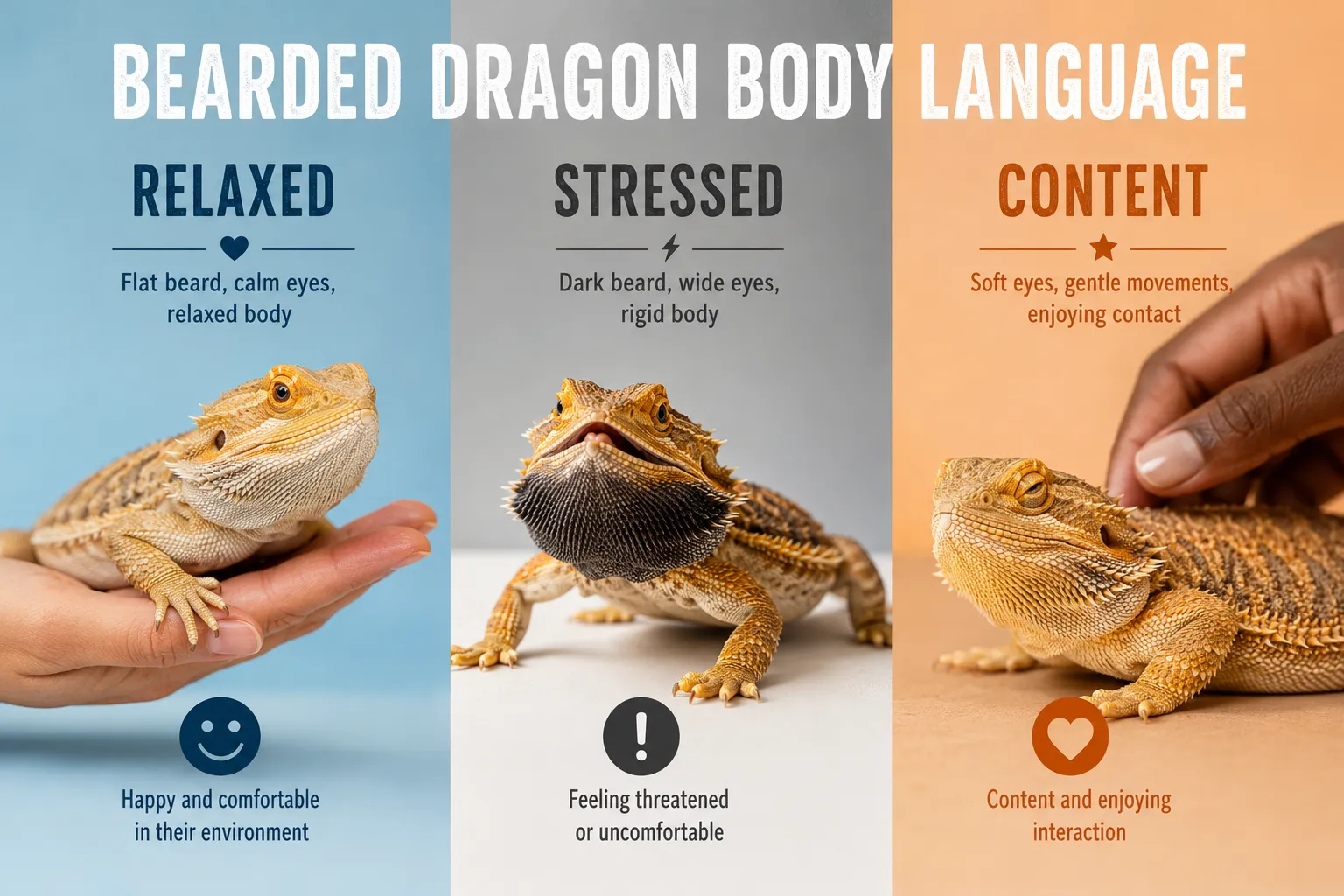
- Relaxed body posture: Flat against your hand or surface, not rigid or tense
- Slightly closed eyes: A content dragon may partially close their eyes (not fully closed, which can indicate illness)
- Leaning behavior: Moving their head or body into your hand for more contact
- Calm breathing: Steady, regular breathing without rapid chest movements
- Staying put: Remaining in place voluntarily without attempting to leave
- Soft beard: Beard remains light-colored and flat, not puffed or darkened
Negative signs your dragon dislikes or feels stressed by petting:
- Beard darkening: The beard turns black or dark gray, indicating stress or aggression
- Puffing up: Body inflates to appear larger, a defensive response
- Rigid posture: Body becomes stiff and tense, legs locked
- Rapid head movements: Quick, jerky head turns to track your hand
- Attempting to flee: Trying to run away or jump from your hand
- Arm waving: Slow circular arm movements signal submission and stress
- Mouth gaping: Opening the mouth wide, often a precursor to defensive behavior
- Tail twitching: Rapid tail movements indicate agitation
The “tolerance zone” exists between these extremes – your dragon may show neutral body language, neither seeking nor avoiding touch. This is normal and doesn’t mean they’re unhappy, just that they’re not particularly invested in the interaction.
Pay attention to context too. A dragon that enjoys petting during calm afternoon sessions might show stress signals if handled right after eating or during their morning basking time when they’re focused on thermoregulation.
Where Do Bearded Dragons Like to Be Petted Most?
Bearded dragons have preferred petting zones based on their anatomy and natural sensitivities. The top of the head, along the back, and under the chin are generally well-tolerated or enjoyed, while the belly, tail, legs, and sides often trigger defensive responses.
Best spots to pet your bearded dragon:
1. Top of the head
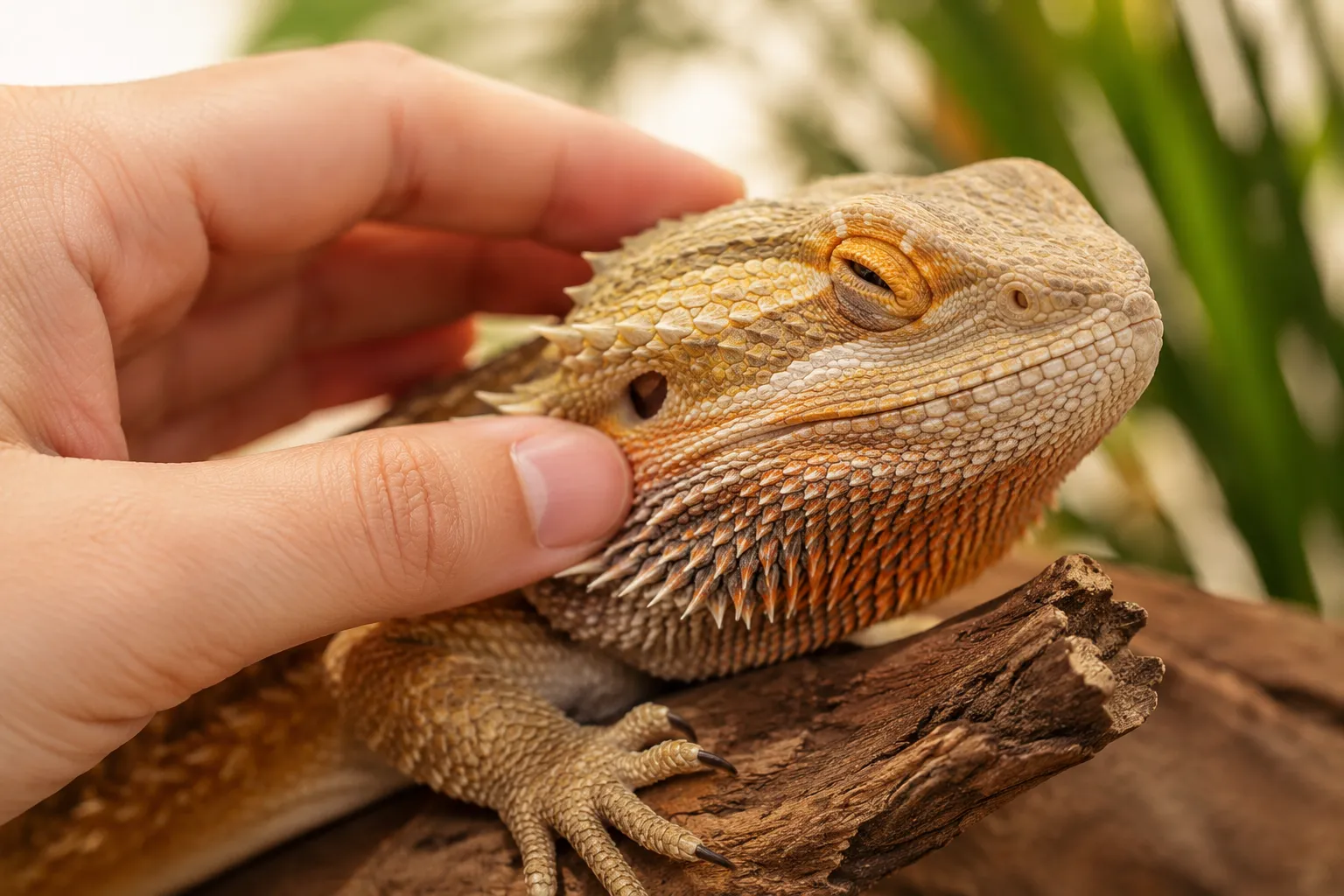
Gently stroke from between the eyes toward the back of the head using one or two fingers. This area has fewer nerve endings and mimics natural grooming behavior. Many dragons will close their eyes slightly when this spot is stroked correctly.
2. Along the back
Use slow, gentle strokes from the base of the head down toward the tail (never backward against the scales). Follow the natural direction of the scales with light pressure. This area is less sensitive than the sides and belly.
3. Under the chin
Some dragons enjoy very gentle scratching or stroking under the chin and along the throat. Start with light touch and watch for positive responses like leaning into your hand.
4. Sides of the head
The area behind the eyes and along the jawline can be pleasant for some dragons, but approach cautiously as this is closer to their eyes and ears.
Areas to avoid or approach with caution:
- Belly: This is a vulnerable area that triggers defensive instincts in most reptiles
- Tail: Highly sensitive with many nerve endings; most dragons dislike tail handling
- Legs and feet: These are functional limbs for escape, and touching them often causes stress
- Sides of the body: More sensitive than the back; can trigger defensive puffing
- Vent area: Never touch the cloaca region, which is extremely sensitive
Technique matters as much as location:
- Use 1-2 fingers, not your whole hand, for more controlled pressure
- Stroke in the direction of scale growth, never against it
- Keep pressure light – you’re not massaging, just making gentle contact
- Move slowly and predictably; sudden movements trigger prey-animal responses
- Start with 30-60 seconds and gradually increase duration as your dragon relaxes
Individual preferences vary significantly. Some dragons love chin scratches but dislike back stroking, while others show the opposite preference. Experiment gently and let your dragon’s body language guide you.
Do Bearded Dragons Like Being Petted vs Other Reptiles Like Geckos?
Bearded dragons are generally more tolerant of handling and petting compared to most other common pet reptiles, including leopard geckos, crested geckos, and ball pythons. Their diurnal nature, relatively calm temperament, and larger size make them better candidates for regular interaction, though they still don’t seek affection the way mammals do.
Bearded dragons vs other reptiles:
| Reptile Species | Handling Tolerance | Petting Response | Social Behavior |
|---|---|---|---|
| Bearded Dragon | High – often tolerate daily handling | Some enjoy gentle petting on head/back | Most tolerant; can recognize owners |
| Leopard Gecko | Moderate – tolerate brief handling | Generally tolerate but rarely enjoy | Prefer minimal interaction |
| Crested Gecko | Low to Moderate – easily stressed | Dislike petting; prefer to be left alone | Skittish; stress easily from handling |
| Ball Python | Moderate – tolerate handling but don’t enjoy it | Tolerate being held but not petted | Solitary; no social bonding |
| Blue Tongue Skink | High – similar to bearded dragons | Many tolerate or enjoy gentle touch | Relatively social for reptiles |
Why bearded dragons are more receptive:
- Diurnal activity: Being awake during the day aligns with human schedules, allowing more natural interaction opportunities
- Visual learners: They rely heavily on sight and can recognize their owners, building familiarity
- Calmer temperament: Bred in captivity for decades, they’ve been selected for docility
- Size advantage: Large enough to handle confidently without fear of injury
- Thermoregulation behavior: They naturally seek warm surfaces, which can include human hands
Common mistake: Assuming all reptiles want the same level of interaction. Geckos, for example, are primarily nocturnal and have different stress responses. Forcing interaction on species that prefer solitude causes chronic stress and health problems.
If you’re specifically interested in a reptile that tolerates or enjoys regular handling, bearded dragons and blue tongue skinks are your best options. However, even within these species, individual personality varies more than species-typical behavior.
Why Does My Bearded Dragon Run Away When I Try to Pet It?
A bearded dragon that runs away from petting attempts is displaying natural prey-animal behavior, signaling either fear, lack of trust, poor timing, or previous negative experiences. This response is especially common in newly acquired dragons, young dragons, or those that haven’t been properly socialized.
Common reasons for avoidance behavior:
1. Insufficient trust building
New dragons need 1-2 weeks to adjust to their environment before regular handling begins. Attempting to pet too soon triggers flight responses because they haven’t learned you’re not a threat.
2. Approaching from above
In the wild, predators (hawks, eagles) attack from above. When you reach down toward your dragon from overhead, it triggers instinctive escape behavior. Always approach from the side at their eye level.
3. Poor timing
Dragons are less receptive to handling during certain times:
- Early morning when they’re cold and need to bask
- Right after eating (they need to digest undisturbed)
- During shedding (skin is sensitive and uncomfortable)
- During breeding season (hormones increase territorial behavior)
4. Previous negative experiences
If handling has been associated with stress (vet visits, rough handling, being grabbed suddenly), your dragon will avoid interaction to prevent repeating the experience.
5. Individual personality
Some dragons are naturally more skittish regardless of socialization. This is genetic temperament, not a reflection of your care.
How to build trust with an avoidant dragon:
- Start with presence, not touch: Spend time near the enclosure talking softly so they associate your presence with safety
- Hand-feed treats: Offer favorite foods from your hand to create positive associations
- Approach from the side: Never reach from directly above; come from their eye level
- Use the “scoop” method: Slide your hand under their chest from the front rather than grabbing from above
- Keep sessions brief: Start with 5 minutes and gradually increase as comfort grows
- Stay consistent: Daily gentle interaction builds trust faster than sporadic handling
- Respect refusal: If your dragon actively flees, end the session and try later
Timeline for improvement: Most dragons show reduced avoidance after 2-4 weeks of consistent, gentle daily interaction. If your dragon still flees after 6-8 weeks of proper socialization, they may simply have a more independent personality that prefers minimal handling.
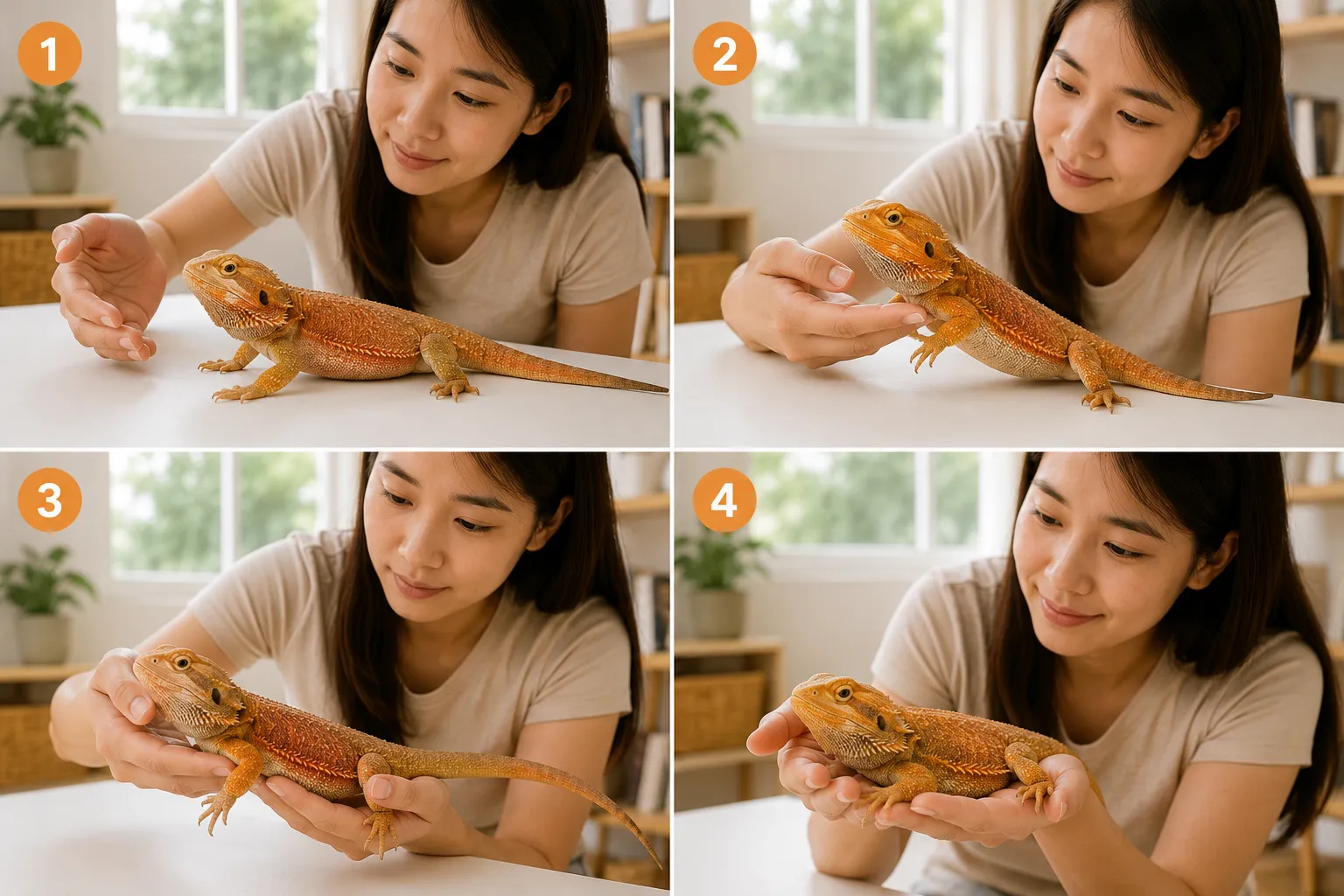
Can You Pet a Baby Bearded Dragon or Is It Too Stressful?
You can and should pet baby bearded dragons, but sessions must be shorter, gentler, and less frequent than with adults to avoid overwhelming their developing nervous systems. Brief, positive handling experiences during the 8-16 week age window are critical for socialization and help create adults that tolerate or enjoy interaction.
Guidelines for handling baby bearded dragons:
Frequency and duration:
- Age 8-12 weeks: 5-10 minutes once daily
- Age 12-16 weeks: 10-15 minutes once or twice daily
- Age 16+ weeks: Gradually increase to 15-30 minutes as tolerated
Technique adjustments for babies:
- Use one or two fingers instead of your whole hand
- Support their entire body – never let legs dangle
- Keep them close to a surface so they feel secure
- Avoid petting during the first week after bringing them home
- Wash hands before and after to prevent bacterial transfer
Signs of stress in baby dragons (stop immediately if you see these):
- Rapid breathing or panting
- Trying to jump from your hand
- Darkened beard (even in babies)
- Frantic running movements
- Defecating (stress response)
Benefits of early socialization:
- Creates positive associations with human contact
- Reduces adult stress responses to necessary handling (vet visits, tank cleaning)
- Helps you learn your dragon’s individual personality early
- Builds trust during their most adaptable developmental period
Common mistake: Over-handling babies because they’re cute and small. Baby bearded dragons are more fragile and stress more easily than adults. Their small size also means they lose body heat faster when removed from their basking area, so keep sessions brief and return them to their heat source promptly.
If you’re raising a baby dragon, prioritize creating a secure environment with proper tank setup and consistent care routines before focusing heavily on handling. A dragon that feels safe in its habitat will be more receptive to interaction.
What Are Signs a Bearded Dragon Is Stressed from Too Much Handling?
Bearded dragons show specific behavioral and physical signs when they’re experiencing stress from excessive handling or petting. Recognizing these signals early prevents chronic stress, which can lead to weakened immune systems, appetite loss, and behavioral problems.
Immediate stress signals during handling:
- Beard darkening or blackening: The most obvious stress indicator
- Puffing up: Body inflates to appear larger and more threatening
- Hissing: Audible exhale sound, often accompanied by mouth gaping
- Mouth gaping: Opening mouth wide, sometimes with beard puffed
- Rapid breathing: Fast, shallow breaths visible in chest movement
- Frantic movements: Trying to jump, run, or escape your grip
- Tail twitching: Quick, jerky tail movements
- Arm waving: Slow circular arm motion indicating submission and fear
- Defecation: Stress-induced bowel movement during handling
Longer-term stress indicators (from chronic over-handling):
- Appetite loss: Refusing food or eating significantly less
- Lethargy: Less active than normal, spending excessive time hiding
- Color changes: Overall darker coloration even when not being handled
- Glass surfing: Frantically scratching at tank walls (can indicate stress or other issues)
- Aggression: Increased defensive behaviors like biting or hissing
- Hiding constantly: Spending most time in hides rather than basking
- Stress marks: Dark oval marks on the belly (common in stressed dragons)
How much handling is too much?
Most adult bearded dragons tolerate 15-30 minutes of handling once or twice daily, but individual limits vary. Signs you’re handling too frequently:
- Your dragon shows stress signals at the beginning of sessions, not just at the end
- They actively avoid your hand when you reach into the tank
- They display stress behaviors for hours after handling ends
- Their appetite or activity level decreases over several days
Recovery protocol if you’ve over-handled:
- Reduce handling immediately: Cut back to 5-10 minutes every other day
- Ensure proper habitat conditions: Verify temperatures, lighting, and humidity are correct
- Minimize other stressors: Keep tank location quiet, maintain consistent feeding schedule
- Offer favorite foods: Encourage eating with preferred items like hornworms
- Give them space: Allow 3-5 days of minimal interaction for stress recovery
- Gradually reintroduce handling: Slowly increase duration as stress signs disappear
Special considerations:
- Dragons under 6 months old stress more easily and need shorter sessions
- During shedding, brumation, or breeding season, reduce handling significantly
- After moving to a new home, allow 1-2 weeks before regular handling begins
- Sick or injured dragons should only be handled for necessary care
Understanding your dragon’s stress signals helps you find the sweet spot between beneficial socialization and overwhelming interaction.
Do Bearded Dragons Recognize Their Owners and Show Affection?
Bearded dragons can recognize their owners through visual cues, scent, and learned associations, but their response is better described as familiarity and trust rather than affection in the mammalian sense. They distinguish between their primary caregiver and strangers, often showing calmer behavior and more tolerance for handling from familiar people.
Evidence of owner recognition:
Visual recognition: Bearded dragons have excellent color vision and can distinguish between different people based on appearance, clothing, and movement patterns. Studies on reptile cognition show they can remember visual information for months.
Behavioral differences: Many dragons display notably different behavior with their owner versus strangers:
- Calmer body language when their owner approaches
- More willingness to be handled by familiar people
- Reduced stress signals during routine interactions with their caregiver
- Sometimes approaching the glass when their owner enters the room
Learned associations: Dragons associate their owner with positive experiences (food, warmth, safe handling), creating a conditioned response that resembles bonding but is fundamentally different from mammalian attachment.
What “affection” looks like in bearded dragons:
- Seeking warmth: Climbing onto you and settling in (often mistaken for cuddling but primarily thermoregulation)
- Calm acceptance: Relaxing during handling sessions without stress signals
- Food-motivated approach: Coming to the front of the tank when you appear (usually anticipating feeding)
- Tolerance of proximity: Allowing you to be near without defensive behaviors
What is NOT affection:
- Closing both eyes fully: This indicates illness or extreme stress, not contentment
- Staying motionless: May be freezing behavior (fear response) rather than relaxation
- Following movement: Often tracking potential threats or food sources, not seeking interaction
The reality of reptile emotions:
Reptiles lack the limbic system structures that generate complex emotions in mammals. They experience basic states (comfort, discomfort, fear, calm) but not affection, love, or attachment as we understand them. This doesn’t make them less valuable as pets – it just means we should appreciate them for what they are rather than projecting mammalian emotions onto them.
Building the strongest possible bond:
- Consistency: Regular interaction at the same times daily
- Positive associations: Always pair handling with pleasant experiences
- Respect their signals: End sessions when they show stress
- Quality habitat: A dragon that feels secure is more receptive to interaction
- Patience: Recognition and trust build over months, not days
Your bearded dragon may not love you in the way a dog does, but they can learn to trust you, recognize you, and associate you with safety and positive experiences – which is the reptile equivalent of a strong bond.

SIZE: 12X8 Inch,this sign is compact and can easily be displayed in various locations.

Bearded Dragon Decoration: This wooden sign, featuring a cute bearded dragon and the slogan "Silently Judging You," is the perfect decorative piece for your home. Your family and friends will surely love it, drawn to its charming design and bringing them surprise and joy.

Note: The colour in your print may vary slightly from what you see on your screen due to different screen types
How Often Should You Handle and Pet a Bearded Dragon?
Most adult bearded dragons benefit from 15-30 minutes of handling once daily or every other day, though individual tolerance varies significantly based on personality, age, and socialization history. The goal is consistent, positive interaction that maintains socialization without causing stress or disrupting essential behaviors like basking and feeding.
Recommended handling schedule by age:
Baby dragons (2-6 months):
- Frequency: Once daily
- Duration: 5-10 minutes
- Focus: Gentle socialization and building trust
- Caution: More fragile and stress-prone; keep sessions brief
Juvenile dragons (6-12 months):
- Frequency: Once or twice daily
- Duration: 10-20 minutes
- Focus: Continued socialization and learning handling cues
- Note: Growth period requires frequent feeding; don’t interfere with meal times
Adult dragons (12+ months):
- Frequency: Once daily to every other day
- Duration: 15-30 minutes
- Focus: Maintaining socialization and providing enrichment
- Flexibility: Well-socialized adults can handle longer sessions if they show positive responses
Senior dragons (8+ years):
- Frequency: Every other day or as tolerated
- Duration: 10-20 minutes
- Focus: Gentle interaction; respect reduced energy levels
- Adjustment: May need shorter, less frequent sessions as they age
Factors that should reduce handling frequency:
- Shedding: Skin is sensitive; limit handling to necessary care only
- Brumation: During winter dormancy, minimize disturbance
- Illness or injury: Handle only for medical care
- After eating: Wait 2-3 hours for digestion before handling
- Breeding season: Hormonal changes increase stress responses
- New environment: First 1-2 weeks after bringing home or moving tanks
Signs you’re handling the right amount:
✓ Your dragon remains calm when you approach the tank
✓ They don’t show stress signals at the beginning of sessions
✓ They maintain normal appetite and activity levels
✓ They tolerate the full session without trying to escape
✓ Their behavior is consistent day-to-day
Signs you’re handling too much:
✗ Stress signals appear immediately when you reach for them
✗ Decreased appetite or activity over several days
✗ Constant hiding or avoidance behavior
✗ Darkened coloration even outside handling sessions
✗ Increased aggression or defensive displays
Quality over quantity: A single 15-minute session where your dragon is calm and relaxed is far better than three 10-minute sessions where they show stress signals. Pay attention to individual responses and adjust accordingly.
Creating a handling routine:
- Choose consistent times: Same time daily helps your dragon anticipate interaction
- Avoid meal times: Handle 2-3 hours after feeding or before meals
- Start during active hours: Mid-morning to early afternoon when they’re alert but not basking intensely
- End on a positive note: Stop while they’re still calm, not after stress signals appear
- Vary activities: Sometimes just hold them, other times allow supervised exploration
Remember that handling is for socialization and bonding, not entertainment. If your dragon consistently shows they prefer minimal interaction, respect that preference rather than forcing frequent handling.
Mistakes People Make When Petting Bearded Dragons for the First Time
New bearded dragon owners commonly make several handling errors that can damage trust, cause stress, or even result in injury. Understanding these mistakes before your first interaction helps create positive experiences that set the foundation for a good long-term relationship.
Top mistakes and how to avoid them:
1. Approaching from above
The mistake: Reaching down from overhead to grab your dragon.
Why it’s wrong: Mimics predator attack patterns (birds of prey).
Correct approach: Come from the side at their eye level, slide your hand under their chest from the front.
2. Grabbing instead of scooping
The mistake: Pinching or grabbing around the body or tail.
Why it’s wrong: Triggers panic and defensive responses; can injure them.
Correct approach: Scoop from underneath, supporting the chest with one hand and back legs with the other.
3. Handling too soon after bringing them home
The mistake: Trying to pet or hold them within the first few days.
Why it’s wrong: They need time to adjust to new environment before adding handling stress.
Correct approach: Wait 5-7 days, allowing them to settle, eat, and establish routine first.
4. Petting against the scales
The mistake: Stroking backward from tail toward head.
Why it’s wrong: Uncomfortable and can damage scales.
Correct approach: Always pet in the direction of scale growth (head to tail).
5. Forcing interaction when they show stress
The mistake: Continuing to handle despite beard darkening, puffing, or escape attempts.
Why it’s wrong: Creates negative associations and increases future avoidance.
Correct approach: Respect stress signals; end the session and try again later.
6. Handling right after eating
The mistake: Picking them up within 1-2 hours of feeding.
Why it’s wrong: Can cause regurgitation and creates negative food associations.
Correct approach: Wait at least 2-3 hours after meals before handling.
7. Using jerky, sudden movements
The mistake: Quick, unpredictable hand movements near your dragon.
Why it’s wrong: Triggers prey-animal startle responses.
Correct approach: Move slowly, smoothly, and predictably at all times.
8. Not supporting their whole body
The mistake: Letting legs or tail dangle unsupported.
Why it’s wrong: Feels insecure and can cause injury if they jump.
Correct approach: Always support both front and back of body; keep them close to your chest or a surface.
9. Handling in the wrong location
The mistake: Taking them to loud, busy areas for first interactions.
Why it’s wrong: Adds environmental stress on top of handling stress.
Correct approach: Start in quiet, familiar spaces; gradually introduce new environments.
10. Expecting immediate affection
The mistake: Assuming your dragon will enjoy petting right away.
Why it’s wrong: Trust takes weeks to build; rushing creates stress.
Correct approach: Start with brief sessions focused on building familiarity, not forced interaction.
11. Inconsistent handling
The mistake: Handling intensively for a few days, then not at all for a week.
Why it’s wrong: Prevents trust building; dragon never learns to anticipate routine.
Correct approach: Maintain consistent daily or every-other-day schedule.
12. Ignoring body language
The mistake: Not learning to read stress signals before handling.
Why it’s wrong: You can’t respond appropriately to their communication.
Correct approach: Study bearded dragon body language before your first handling session.
First-time handling checklist:
- Dragon has been home for at least 5-7 days
- Last meal was 3+ hours ago
- You’ve washed your hands
- Environment is quiet with no other pets present
- You’ve approached from the side, not above
- You’re using the scoop method, not grabbing
- You’re supporting their entire body
- Session is limited to 5-10 minutes maximum
- You’re watching for stress signals
- You’re prepared to end session if they show discomfort
Taking time to do it right the first time prevents weeks or months of trust-rebuilding later.
Do All Bearded Dragons Have Different Personalities About Being Petted?
Individual personality variation in bearded dragons is significant and often more influential than species-typical behavior when it comes to handling preferences. Some dragons actively seek interaction and appear to enjoy petting, while others remain aloof and prefer minimal contact throughout their lives, regardless of identical care and socialization.
The personality spectrum:
The Social Dragon (15-20% of individuals)
- Approaches the glass when you enter the room
- Climbs onto your hand willingly
- Shows relaxed body language during extended handling
- May seek out petting by positioning their head under your hand
- Tolerates or enjoys 30+ minute sessions
- Rarely shows stress signals during routine handling
The Tolerant Dragon (50-60% of individuals)
- Accepts handling without major stress signals
- Remains calm but doesn’t actively engage
- Shows neutral body language – neither seeking nor avoiding
- Tolerates 15-20 minute sessions comfortably
- Doesn’t initiate interaction but doesn’t flee from it
The Independent Dragon (20-25% of individuals)
- Prefers minimal handling
- Shows mild stress signals even with gentle, proper technique
- Tolerates brief sessions (5-10 minutes) but clearly wants to return to tank
- Never initiates interaction
- May always remain somewhat skittish despite proper socialization
The Defensive Dragon (5-10% of individuals)
- Shows strong stress or defensive responses to handling attempts
- May hiss, puff up, or attempt to bite
- Requires extensive patience and may never fully accept regular handling
- Best suited for observation rather than interactive pet keeping
Factors influencing personality:
Genetics: Temperament has a heritable component; dragons from calm parents tend to be calmer.
Early experiences: Dragons handled regularly from 8-12 weeks develop better tolerance than those with minimal early socialization.
Individual neurology: Like all animals, bearded dragons have individual variations in nervous system sensitivity and stress responses.
Past trauma: Negative experiences (rough handling, predator exposure, injury) can create lasting behavioral changes.
Health status: Chronic pain or illness can make even naturally social dragons irritable and avoidant.
Can you change your dragon’s personality?
You can influence behavior through consistent, positive handling, but you cannot fundamentally change core temperament. An independent dragon may become more tolerant with patient work, but they’re unlikely to become a social dragon that seeks interaction. Conversely, a naturally social dragon can become defensive if mishandled.
Working with your dragon’s personality:
- Social dragons: Enjoy regular interaction; can handle longer sessions and more varied activities
- Tolerant dragons: Maintain regular but moderate handling to preserve socialization
- Independent dragons: Respect their preference; handle only for necessary care and brief socialization
- Defensive dragons: Focus on building basic trust; accept they may never enjoy handling
Common mistake: Comparing your dragon to others and feeling disappointed if yours is less social. Personality variation is normal and doesn’t reflect on your care quality. An independent dragon that’s healthy, eating well, and showing natural behaviors is just as successful a pet as a social one – they simply have different interaction preferences.
If you’re selecting a dragon and want one that enjoys handling, spend time observing individuals before purchase. Look for dragons that approach the front of their enclosure, show curiosity about people, and remain calm when the breeder handles them.
Is It Normal for My Bearded Dragon to Puff Up When I Pet It?
A bearded dragon puffing up during petting is a defensive response indicating discomfort, stress, or feeling threatened – it’s not normal for a relaxed, comfortable dragon and signals you should stop the interaction immediately. This behavior means your dragon is trying to appear larger and more intimidating because they perceive the situation as threatening.
What puffing up means:
When a bearded dragon inflates their body and beard, they’re displaying defensive behavior that says “back off.” This is distinct from normal breathing or slight body expansion during basking. A true defensive puff involves:
- Noticeable body inflation, making them appear 1.5-2x their normal width
- Beard extension and often darkening
- Rigid, tense posture
- Sometimes accompanied by mouth gaping or hissing
- Held for several seconds or until the perceived threat leaves
Why your dragon might puff up during petting:
1. You’re touching a sensitive area
Belly, tail, legs, or sides can trigger defensive responses even in otherwise calm dragons.
2. Your approach is too sudden
Fast movements or reaching from above activates prey-animal defenses.
3. Insufficient trust
New dragons or those with limited socialization puff up because they haven’t learned you’re safe.
4. Poor timing
Handling during shedding, right after eating, or when they’re cold can trigger defensive responses.
5. Previous negative experience
If petting has been associated with discomfort (rough handling, being dropped), they’ll puff up anticipating repetition.
6. Individual personality
Some dragons are naturally more defensive and may puff up even with perfect technique.
What to do when your dragon puffs up:
Immediate response:
- Stop petting immediately – Don’t continue trying to “calm them down” with more touch
- Slowly withdraw your hand – Quick movements will increase stress
- Give them space – Step back from the enclosure or set them down gently if you’re holding them
- End the session – Don’t try again for several hours
Long-term solutions:
- Slow down your approach: Spend more time letting them see your hand before touching
- Shorten sessions: Reduce handling time to 5-10 minutes
- Focus on trust-building: Hand-feed treats, spend time near the tank without handling
- Avoid sensitive areas: Stick to head and back only until they’re more comfortable
- Check timing: Ensure you’re not handling during stress-prone times
- Evaluate technique: Review proper handling methods to ensure you’re not making common mistakes
When puffing up is more concerning:
- Constant puffing: If your dragon puffs up even when you’re not trying to handle them, they may be experiencing chronic stress from environmental factors
- Accompanied by other stress signs: Dark beard, glass surfing, appetite loss, lethargy
- No improvement over time: If puffing continues after 4-6 weeks of proper socialization, consult a reptile veterinarian to rule out health issues
Normal vs. defensive puffing:
Normal (not concerning):
- Slight body expansion during basking (thermoregulation)
- Brief puffing when startled, then quickly relaxing
- Puffing at other dragons or their reflection
Defensive (concerning during handling):
- Sustained puffing throughout handling session
- Puffing specifically in response to your touch
- Puffing combined with beard darkening and escape attempts
If your dragon consistently puffs up during petting despite proper technique and adequate socialization time, they may simply have a personality that prefers minimal handling. Respect this preference rather than forcing interaction that causes stress.
Best Way to Get a New Bearded Dragon Used to Being Handled
Successfully acclimating a new bearded dragon to handling requires a structured, patient approach that builds trust gradually over 4-6 weeks. Rushing the process creates negative associations that can take months to overcome, while a methodical introduction establishes a foundation for years of positive interaction.
Week 1: No handling – Adjustment period
Goals: Let your dragon settle into their new environment without the added stress of handling.
Activities:
- Set up proper habitat with correct temperatures, lighting, and tank size
- Establish feeding routine
- Spend time near the enclosure talking softly so they learn your voice
- Observe their behavior and personality from outside the tank
- Resist the urge to handle, even though they’re new and exciting
What success looks like: Your dragon is eating regularly, basking normally, and showing alert but calm behavior.
Week 2: Hand presence and feeding
Goals: Associate your hand with positive experiences without actual handling.
Activities:
- Place your hand flat inside the tank for 2-3 minutes daily (don’t reach for them)
- Hand-feed favorite treats or insects
- Let them approach your hand on their own terms
- Continue talking to them during feeding and tank maintenance
- If they climb onto your hand voluntarily, let them stay briefly then gently encourage them back to their basking spot
What success looks like: Your dragon doesn’t flee when your hand enters the tank and may approach for food.
Week 3: First handling sessions
Goals: Begin brief, positive handling experiences.
Activities:
- Use the scoop method: slide hand under chest from the front, support back legs with other hand
- Lift them out for 5 minutes maximum
- Hold them close to your body or over a soft surface
- Pet gently on the head or back if they’re calm
- End session before stress signals appear
- Do this once daily at the same time
What success looks like: Your dragon tolerates being picked up without major stress signals and remains relatively calm during the 5-minute session.
Week 4: Extending duration
Goals: Gradually increase handling time while maintaining positive associations.
Activities:
- Extend sessions to 10-15 minutes
- Introduce gentle petting on preferred areas (head, back)
- Allow them to explore your lap or arms while supervised
- Continue once or twice daily
- Watch for stress signals and end sessions if they appear
What success looks like: Your dragon shows relaxed body language during most of the session and doesn’t immediately try to escape.
Weeks 5-6: Establishing routine
Goals: Create consistent handling routine and assess their personality.
Activities:
- Settle into regular 15-20 minute sessions
- Experiment with different petting locations to learn preferences
- Introduce them to quiet areas outside their tank (supervised)
- Begin to understand whether they’re social, tolerant, or independent
- Adjust handling frequency based on their responses
What success looks like: Your dragon has predictable responses to handling, shows minimal stress signals, and you understand their individual personality and preferences.
Troubleshooting common problems:
Problem: Dragon runs away when you reach for them in week 3
Solution: Return to week 2 activities for another week; they need more time building positive hand associations
Problem: Stress signals appear immediately during first handling
Solution: Shorten sessions to 2-3 minutes; focus on just picking up and putting down without petting
Problem: Dragon was calm initially but now shows increased stress
Solution: You may be handling too frequently or for too long; reduce duration and frequency
Problem: No improvement after 6 weeks
Solution: You may have an independent personality dragon; accept lower handling frequency or consult a reptile veterinarian to rule out health issues
Key principles throughout the process:
- Consistency: Same time, same approach, every day
- Patience: Don’t skip steps or rush the timeline
- Observation: Watch body language constantly and adjust based on responses
- Positive associations: Always pair handling with pleasant experiences
- Respect: If they’re having a bad day, skip the session rather than forcing it
Special considerations:
- Baby dragons: Follow the same timeline but with shorter session durations (5-10 minutes maximum)
- Rescue dragons: May need extended timelines if they have trauma history; some may take 8-12 weeks
- Multiple dragons: Acclimate each individually; don’t handle them together initially
By week 6, you should have a clear understanding of your dragon’s personality and handling preferences, allowing you to establish a long-term routine that works for both of you. Remember that even well-socialized dragons have days when they prefer to be left alone – respecting these signals maintains trust.
Conclusion
Understanding whether bearded dragons like being petted comes down to recognizing that these reptiles experience interaction differently than mammals. While they don’t feel affection in the way dogs or cats do, many bearded dragons can learn to tolerate and even show signs of enjoying gentle petting when it’s done correctly. The key is reading their body language, respecting their individual personality, and building trust through consistent, positive experiences.
Your action plan for successful interaction:
- Give new dragons 5-7 days to settle before attempting any handling
- Learn to read body language – distinguish between relaxed, tolerant, and stressed responses
- Start with brief sessions (5-10 minutes) and gradually increase as your dragon shows comfort
- Focus on preferred areas – head, back, and under the chin while avoiding belly, tail, and legs
- Use proper technique – approach from the side, scoop from underneath, support the whole body
- Maintain consistency – handle at the same time daily or every other day
- Respect individual personality – some dragons will always prefer minimal interaction, and that’s okay
- Watch for stress signals – dark beard, puffing, escape attempts mean stop immediately
- Build positive associations – pair handling with treats, warmth, and calm environments
- Be patient – trust develops over weeks and months, not days
Whether your bearded dragon becomes a social butterfly that seeks out interaction or remains an independent observer that tolerates brief handling, providing proper care, a secure habitat, and respectful interaction will ensure they thrive. The goal isn’t to force affection but to create a relationship based on trust and understanding of their unique reptilian nature.
For more guidance on creating the best environment for your bearded dragon, explore our resources on proper care and understanding their behavior.
FAQ
How long does it take for a bearded dragon to get used to being petted?
Most bearded dragons need 4-6 weeks of consistent, gentle daily handling to become comfortable with petting. Baby dragons may take 6-8 weeks, while rescue dragons with trauma history can require 8-12 weeks or longer.
Can bearded dragons feel love toward their owners?
No, bearded dragons lack the brain structures that generate complex emotions like love. However, they can recognize their owners, learn to trust them, and associate them with positive experiences like food and warmth.
What does it mean when my bearded dragon closes its eyes while I pet it?
Slightly closed eyes (partial closing) during head or back petting usually indicates relaxation and contentment. Fully closed eyes can signal extreme stress or illness and requires immediate attention.
Should I pet my bearded dragon every day?
Most adult bearded dragons benefit from daily or every-other-day handling sessions of 15-30 minutes. However, individual tolerance varies – some prefer less frequent interaction while others tolerate more.
Why does my bearded dragon flatten out when I try to pet it?
Flattening is a defensive behavior where the dragon makes itself appear larger and harder to grab. This signals fear or stress and means you should stop the interaction and work on building more trust.
Is it normal for my bearded dragon to never enjoy being petted?
Yes, approximately 20-25% of bearded dragons have independent personalities and prefer minimal handling throughout their lives. This is normal variation and doesn’t indicate poor care or health problems.
Can I pet my bearded dragon while it’s shedding?
It’s best to minimize handling during shedding as their skin is sensitive and uncomfortable. Limit interaction to necessary care only, and avoid touching areas that are actively shedding.
What’s the difference between a bearded dragon that likes petting and one that just tolerates it?
A dragon that enjoys petting will actively lean into your hand, seek out interaction, show relaxed body language, and may approach you. One that tolerates it remains passive and neutral without showing stress but doesn’t engage or seek more contact.
How do I know if I’m petting my bearded dragon too hard?
If your dragon shows stress signals (darkened beard, trying to move away, stiffening), you’re applying too much pressure. Use only 1-2 fingers with very light pressure – you should barely be making contact with their scales.
At what age should I start petting my baby bearded dragon?
Begin gentle handling at 8-12 weeks old with very brief sessions (5-10 minutes). This is the critical socialization window, but sessions must be shorter and gentler than with adults.
Why does my bearded dragon run to me but then run away when I try to pet it?
Your dragon may be approaching because they associate you with food or warmth, not because they want petting. The running away indicates they’re not interested in physical interaction at that moment.
Can bearded dragons get stressed from too much petting even if they seem calm?
Yes, chronic stress can occur even without obvious signals. If your dragon’s appetite decreases, they become lethargic, or show increased hiding behavior over several days, reduce handling frequency even if they seem calm during sessions.

BEARDED DRAGON CARRIER:This portable bag is just what you need if you want to carry your beardie around your house, yard, or pet store while still being able to use your hands!

Bruh design for Bearded Dragon lovers