Quick Answer
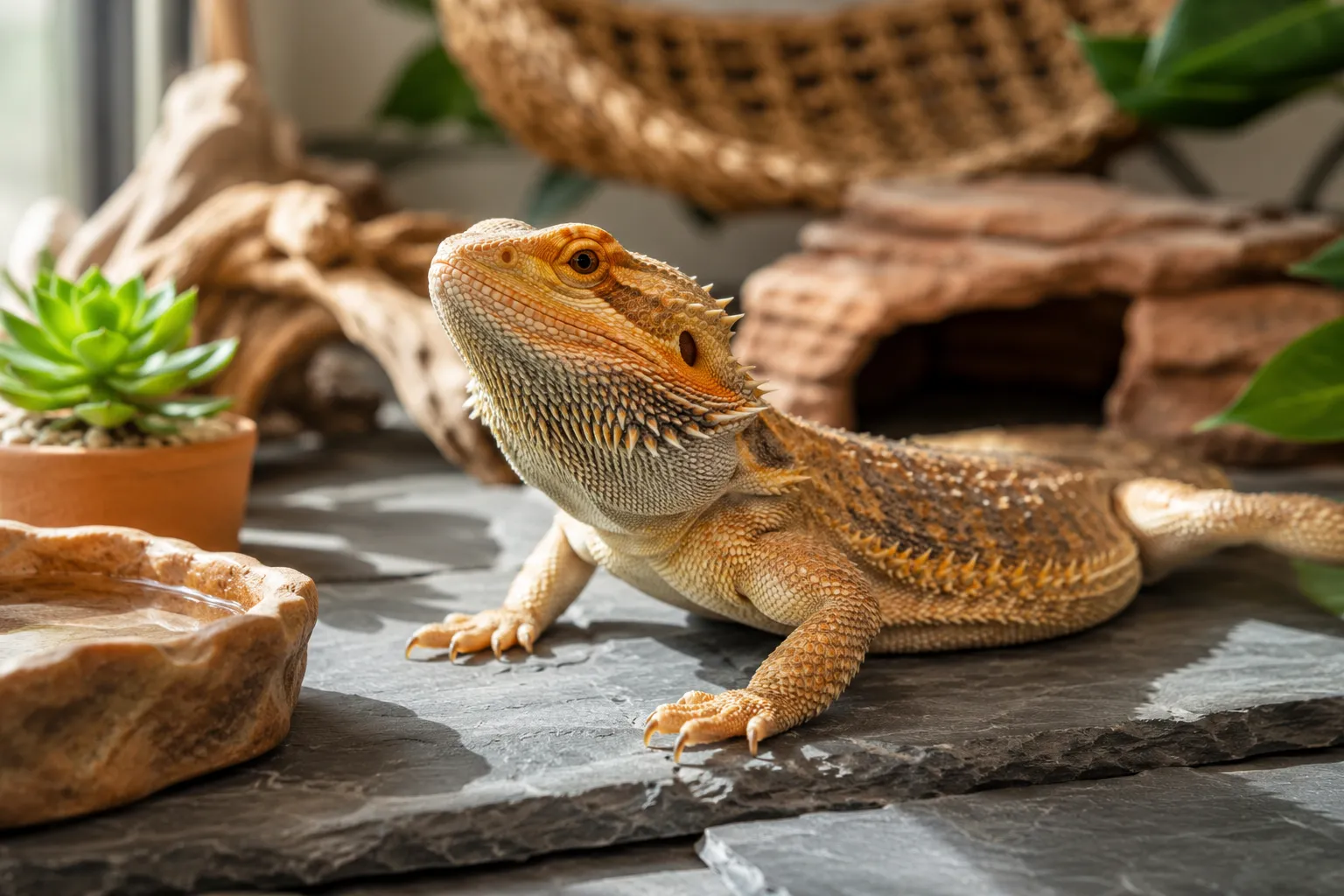
Sand is generally not safe for bearded dragons and is not recommended by most reptile veterinarians. While bearded dragons live in arid regions in the wild, their natural habitat consists of hard-packed soil, clay, and rock, not loose sand. Loose sand substrates pose serious risks of impaction (intestinal blockage) when ingested, respiratory irritation from dust, and bacterial growth. Safer alternatives like ceramic tile, reptile carpet, or non-adhesive shelf liner provide better traction, easier cleaning, and zero ingestion risk.

Each reptile tank mat is made with easy-to-clean, waterproof, and reptile-safe material that is both stylish and durable

CREATE A NATURAL DESERT HABITAT: Transform your reptile enclosure with real desert sand that mimics natural desert environments; Made from 100% natural sand with no added dyes or chemicals for a more authentic terrarium setup

IDEAL FOR DESERT-DWELLING REPTILES: specifically designed for adult bearded dragons, uromastyx, desert skinks, monitors, leopard geckos, and more
Key Takeaways
- Sand substrates are not recommended for bearded dragons due to high impaction risk, especially for juveniles and dragons with poor husbandry
- Calcium sand is particularly dangerous despite marketing claims, it hardens when wet and causes severe impaction
- Wild bearded dragons live on hard-packed soil and rock, not loose sand, making sand an inaccurate habitat replication
- Tile, reptile carpet, and shelf liner are the safest substrate options recommended by veterinarians
- Baby bearded dragons should never be kept on sand due to their tendency to ingest substrate while learning to hunt
- Signs of sand impaction include lethargy, loss of appetite, constipation, dragging back legs, and a swollen abdomen
- If your dragon eats sand, monitor closely for 48-72 hours and seek veterinary care if symptoms appear
- Setup costs for safe substrates range from $10-50, making them affordable alternatives to sand
- Play sand is marginally safer than calcium sand but still carries significant risks and is not recommended
- Some experienced keepers use sand for adult dragons in bioactive setups, but only with perfect husbandry and close monitoring
Why Do People Say Sand Is Bad for Bearded Dragons?
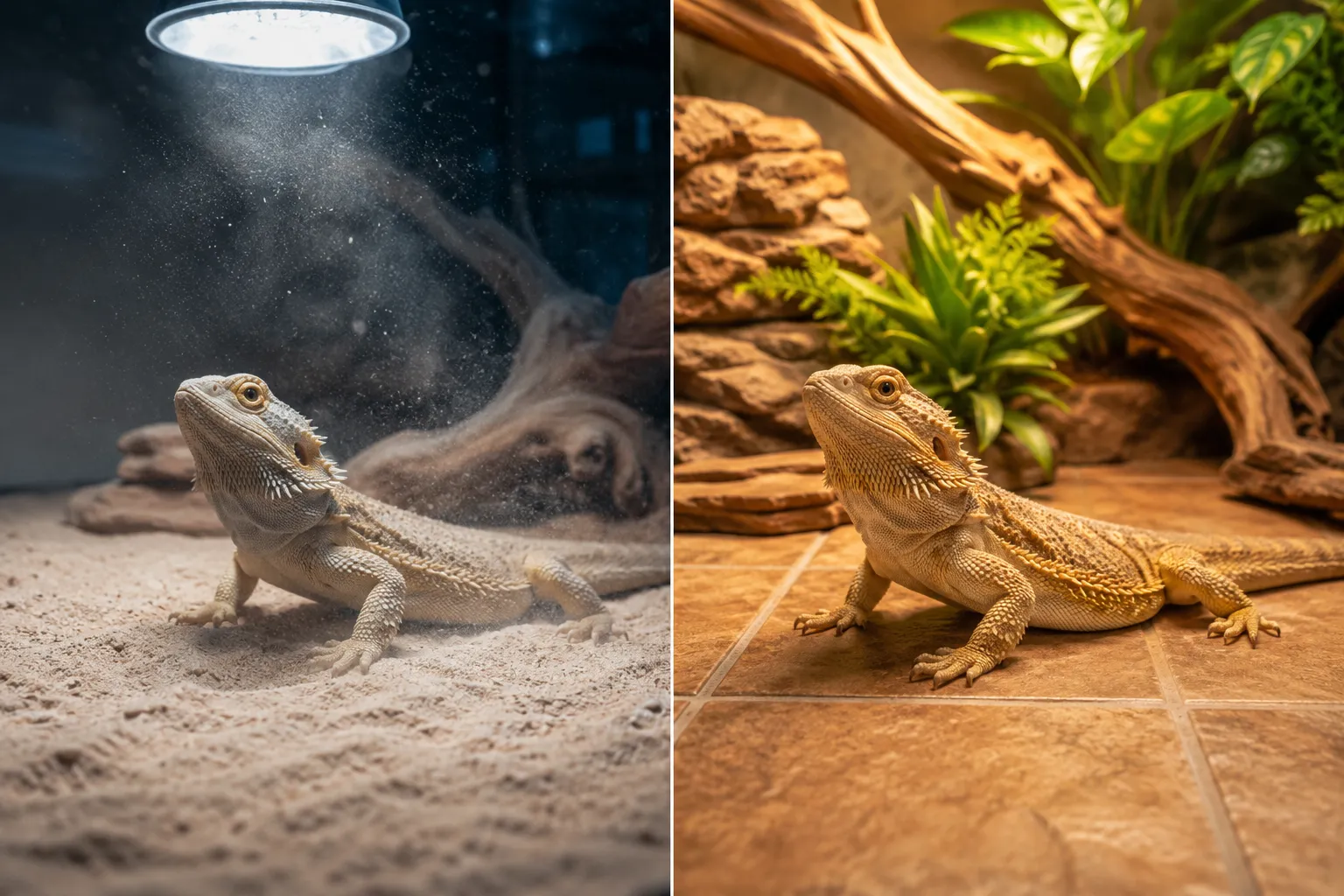
Sand is considered dangerous for bearded dragons primarily because of impaction risk,a potentially fatal condition where ingested substrate blocks the digestive tract. Bearded dragons naturally ingest small amounts of substrate while hunting, drinking, or exploring their environment. Unlike natural hard-packed soil that passes through the digestive system, loose sand particles can accumulate in the intestines and form a solid mass.
Beyond impaction, sand creates several other health hazards:
- Respiratory irritation: Fine sand particles become airborne during dragon movement, potentially causing respiratory infections
- Bacterial growth: Sand retains moisture and fecal matter, creating breeding grounds for harmful bacteria like Salmonella
- Eye irritation: Sand can get into eyes during digging or movement, causing infections
- Difficulty cleaning: Spot-cleaning sand is nearly impossible, and complete substrate changes are expensive and wasteful
- Poor traction: Loose sand doesn’t provide stable footing, potentially causing joint stress and mobility issues
The reptile veterinary community has consistently advised against sand substrates since the early 2000s, with organizations like the Association of Reptilian and Amphibian Veterinarians noting that impaction cases frequently involve sand substrates.
Common mistake: Many new owners choose sand because pet stores display bearded dragons on it, but these are temporary setups designed for easy viewing, not long-term health.
What Happens If a Bearded Dragon Eats Sand?
When a bearded dragon ingests sand, the outcome depends on the amount consumed, the dragon’s age and health, and the type of sand. Small amounts may pass through the digestive system without issue, especially in healthy adult dragons with proper temperatures and hydration. However, repeated ingestion or larger quantities can lead to partial or complete impaction.
Progression of Sand Impaction
- Initial ingestion (hours 0-24): Sand enters the digestive tract, potentially mixing with food
- Accumulation phase (days 1-7): Sand particles collect in the intestines, especially if temperatures are suboptimal or the dragon is dehydrated
- Blockage formation (days 7-14): Sand compacts into a solid mass, preventing normal digestion
- Critical stage (days 14+): Complete blockage causes organ failure if untreated
Mild cases may resolve with increased hydration, warm baths, and gentle belly massages. Severe cases require veterinary intervention including laxatives, enemas, or surgical removal of the blockage.
The mortality rate for untreated severe impaction is high. Even with treatment, surgery carries risks and can cost $500-2,000.
Choose immediate veterinary care if: Your dragon hasn’t defecated in 7+ days, shows signs of distress, has a visibly swollen abdomen, or drags its back legs (indicating nerve compression from the blockage).
Do Bearded Dragons Live on Sand in the Wild?
Bearded dragons in their native Australian habitat do not live on loose sand. This is one of the most persistent misconceptions in reptile keeping. Wild bearded dragons (Pogona vitticeps) inhabit semi-arid woodlands, scrublands, and rocky outcrops where the ground consists of:
- Hard-packed clay soil
- Compacted earth with sparse vegetation
- Rocky surfaces and stone outcroppings
- Dried leaf litter in some areas
The Australian outback does contain sandy regions, but bearded dragons actively avoid deep, loose sand in favor of firm substrates that provide stable footing for hunting and basking. When they do encounter sand, it’s typically mixed with clay and vegetation, creating a much firmer surface than commercial reptile sand.
Field observations from herpetologists studying wild populations consistently show bearded dragons basking on rocks, fallen logs, and fence posts, not sand dunes. Their natural behavior involves climbing and perching on elevated surfaces to regulate temperature and watch for prey.
The takeaway: Using sand because “it’s natural” is based on a false premise. Replicating their actual wild habitat means choosing firm, solid substrates that mimic hard-packed earth and rock.
What Kind of Sand Is Safe If Any for Bearded Dragons?
The short answer is no type of sand is truly safe for bearded dragons, especially juveniles. However, if you’re determined to use a sand-like substrate, understanding the relative risks of different types is important.
Sand Type Risk Comparison
Calcium sand (marketed as “digestible”): Highest risk. Despite claims that it’s safe if ingested, calcium sand hardens when exposed to stomach acid and moisture, creating cement-like blockages. This product has been linked to numerous impaction deaths and is strongly discouraged by veterinarians.
Play sand (children’s sandbox sand): High risk. Finer particles than calcium sand, making it easier to ingest accidentally. While it doesn’t harden like calcium sand, it still accumulates in the digestive tract. Slightly safer than calcium sand but still not recommended.
Reptile sand mixes (sand blended with soil): Moderate-high risk. These products attempt to create a more natural substrate by mixing sand with organic matter. Still carries impaction risk but may be marginally safer for adult dragons in bioactive setups.
Excavator clay (moldable substrate): Lower risk than pure sand. Hardens when dry, creating a more stable surface. Dragons can still ingest pieces, but the risk is reduced compared to loose sand.
The only truly safe option: Skip sand entirely and choose solid substrates like tile or reptile carpet. If you want a natural aesthetic, consider a bioactive setup with a soil-based substrate mix (no sand) topped with leaf litter and live plants.
Play Sand vs Calcium Sand for Bearded Dragons
Between these two poor options, play sand is marginally less dangerous than calcium sand, but neither should be used. Here’s the critical difference:
Calcium sand is marketed as “digestible” because it contains calcium carbonate, with manufacturers claiming it will dissolve harmlessly if eaten. In reality, when calcium sand mixes with stomach acid and moisture, it forms a concrete-like substance that’s nearly impossible to pass. Veterinarians report that calcium sand impactions are among the most difficult to treat and often require surgery.
Play sand consists of fine silica particles that don’t harden when wet. While this means it won’t form cement-like blockages, the fine particles still accumulate in the intestines and can cause impaction through sheer volume. Play sand also creates more dust, increasing respiratory irritation risk.
Why Neither Is Acceptable
- Both require frequent complete changes (expensive and wasteful)
- Both harbor bacteria in ways that solid substrates don’t
- Both create dust that irritates respiratory systems
- Both pose impaction risk with every feeding
- Neither provides the firm surface bearded dragons need for proper joint health
If you currently use either: Transition to a safe substrate immediately. The small aesthetic benefit isn’t worth the health risks. For guidance on proper bearded dragon care practices, including habitat setup, consult comprehensive care resources.
Best Substrate for Bearded Dragons Instead of Sand
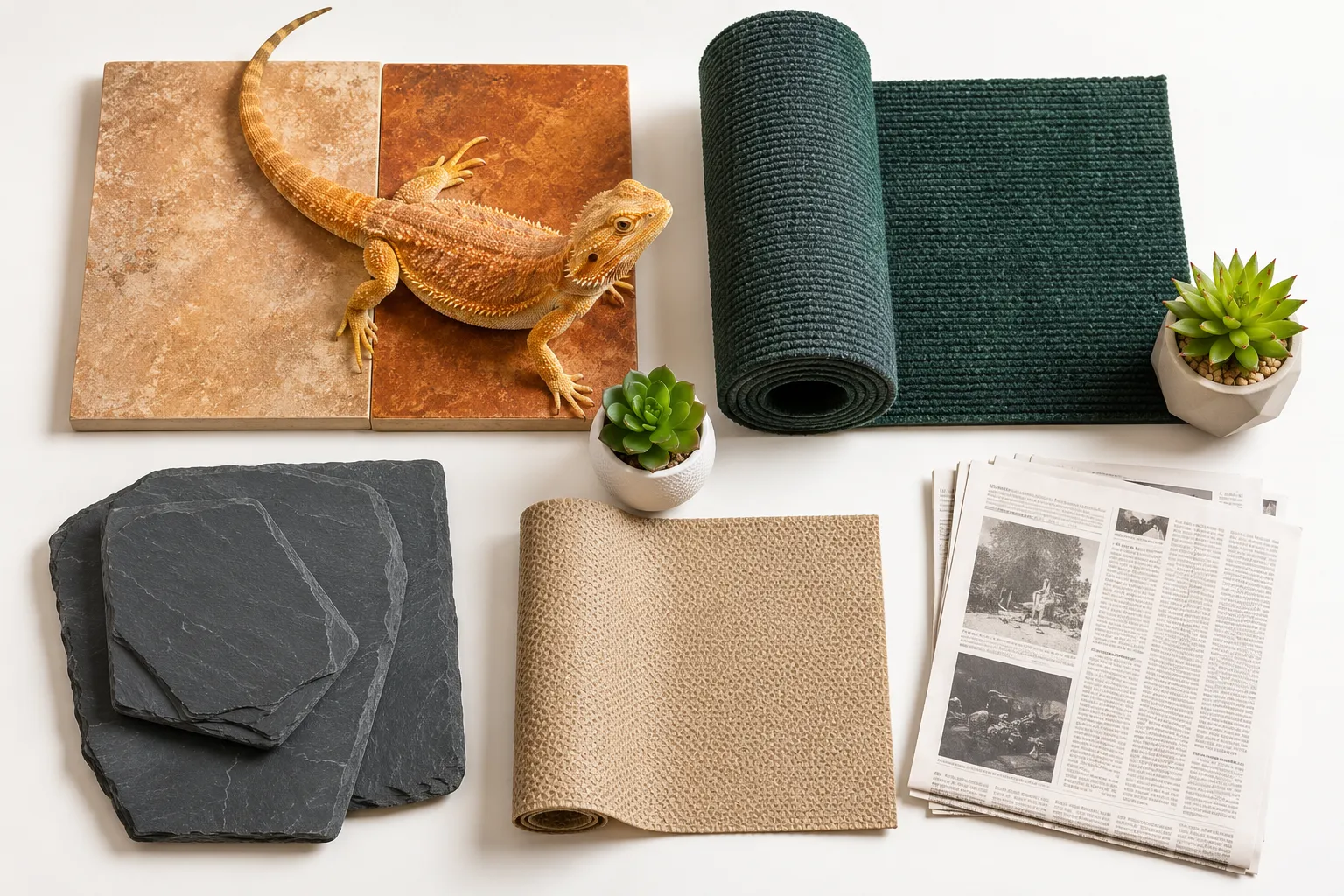
Reptile veterinarians and experienced keepers consistently recommend solid, non-particulate substrates that eliminate ingestion risk while providing easy cleaning and proper traction. Here are the top options:
Ceramic or Slate Tile
Best overall choice for most keepers. Tile provides a firm, stable surface that mimics natural rock, retains heat well for basking, and is completely safe if licked or walked on.
Pros:
- Zero impaction risk
- Easy to spot-clean and disinfect
- Naturally files down nails
- Excellent heat retention
- Long-lasting (essentially permanent)
- Professional, clean appearance
Cons:
- Initial cost ($20-50 for a 40-gallon tank)
- Requires cutting to fit (or custom ordering)
- Can be slippery when wet
- Hard surface (though this matches their natural habitat)
Best for: Adult dragons, permanent setups, keepers who want low-maintenance care.
Reptile Carpet
Textured fabric designed specifically for reptile enclosures, providing traction and easy cleaning.
Pros:
- Soft on joints
- Good traction
- Affordable ($10-20)
- Machine washable (buy two, rotate during cleaning)
- Easy to cut to size
Cons:
- Claws can catch in loose threads
- Requires frequent washing
- Wears out over time (replace every 6-12 months)
- Can harbor bacteria if not cleaned properly
Best for: Baby and juvenile dragons, temporary setups, budget-conscious keepers.
Non-Adhesive Shelf Liner
Rubber or vinyl shelf liner provides grip and easy cleaning at minimal cost.
Pros:
- Very affordable ($5-15)
- Easy to replace
- Good traction
- Simple to cut to size
- Quick to wipe clean
Cons:
- Less attractive than tile
- Can curl at edges
- May need replacement every few months
- Some dragons may try to eat it (monitor closely)
Best for: Budget setups, quarantine tanks, temporary housing.
Paper Products (Newspaper, Paper Towels)
The most basic option, often used by breeders and for quarantine.
Pros:
- Extremely cheap
- Easy to replace daily
- Allows easy feces monitoring
- Zero impaction risk
Cons:
- Unattractive
- No heat retention
- Requires daily changes
- Ink may transfer to dragon’s belly
Best for: Quarantine, sick dragons requiring close monitoring, temporary setups.
For more information on setting up a proper habitat, see our guide on what tank size a bearded dragon needs.
Can Baby Bearded Dragons Be Kept on Sand?
Absolutely not. Baby bearded dragons should never be housed on sand or any loose particulate substrate. Juveniles under 12 months are at dramatically higher risk of impaction for several reasons:
Developmental factors that increase risk:
- Inexperienced hunting: Babies frequently miss their prey and ingest substrate in the process
- Smaller digestive tracts: Even small amounts of sand can cause blockages in tiny intestines
- Rapid growth demands: Juveniles need optimal nutrition; impaction disrupts nutrient absorption during critical growth periods
- Exploratory behavior: Young dragons taste and lick everything, increasing accidental ingestion
- Higher feeding frequency: Babies eat 2-3 times daily, multiplying exposure to substrate ingestion
Veterinary consensus is unanimous: loose substrates are inappropriate for any bearded dragon under 18 months old, and many vets recommend avoiding them entirely regardless of age.
Safe substrates for babies:
- Paper towels (easiest for monitoring health)
- Reptile carpet (provides traction for developing legs)
- Non-adhesive shelf liner (affordable and safe)
Transition timeline: Even for adult dragons, don’t consider any substrate change until the dragon is at least 18 months old, measures 16+ inches in length, and has demonstrated consistent healthy eating and defecation patterns for at least 6 months.
Common mistake: Pet stores often house baby bearded dragons on sand for display purposes. This is for convenience and cost savings, not because it’s safe. Never replicate pet store setups at home.
Signs of Sand Impaction in Bearded Dragons
Recognizing impaction early dramatically improves treatment outcomes. Sand impaction symptoms typically develop gradually over days to weeks, though acute cases can occur with large ingestion events.

UNIQUE FABRIC MATERIAL: The high quality fabric using a non abrasive material and having the moss, solid print in the carpet so, the terrarium liner is soft and feels nice on your reptile's feet, tummy and teeth. Your reptile will not be caught in it. We have upgraded the product packaging to make it easier to transport. So please lay it flat when you receive it, the carpet will become flat and wrinkle free after 24 hours, we hope your pet will like our product
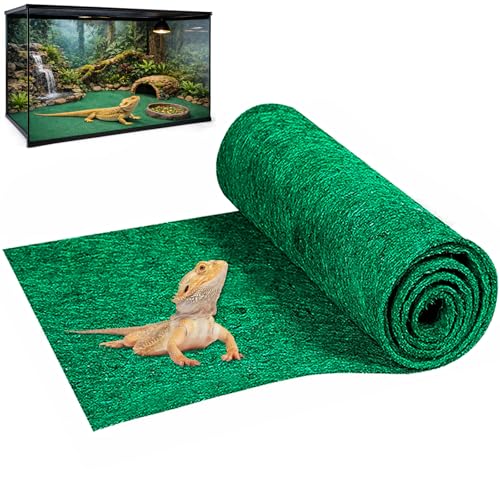
【Durable and Soft】Liner is soft, it is perfect for reptiles, such as tortoises, bearded dragons, lizard snakes, chameleons and so on. It can protect reptiles from getting wet and scraped. You can also use this carpet with terrarium carpet together.

【Durable and Soft】Liner is soft, it is perfect for reptiles, such as tortoises, bearded dragons, lizard snakes, chameleons and so on. It can protect reptiles from getting wet and scraped. You can also use this carpet with terrarium carpet together.
Early Warning Signs (Days 1-7)
- Reduced appetite or refusing food
- Smaller or less frequent bowel movements
- Lethargy or decreased activity
- Spending excessive time in the basking spot
- Straining during attempted defecation
Moderate Symptoms (Days 7-14)
- Complete loss of appetite
- No bowel movements for 5+ days
- Visible abdominal swelling or firmness
- Reduced movement or reluctance to climb
- Darkening of the beard (stress indicator)
Severe/Emergency Symptoms (Days 14+)
- Dragging back legs (indicates nerve compression from blockage)
- Extreme lethargy or unresponsiveness
- Severely distended abdomen
- Vomiting or regurgitation
- Tremors or seizures
- Cold body temperature despite proper heating
Diagnostic confirmation: A veterinarian can confirm impaction through physical palpation, X-rays, or ultrasound. X-rays will show radio-dense material (sand appears white) blocking the intestinal tract.
At-home assessment: Gently feel your dragon’s belly. A healthy abdomen feels soft and pliable. An impacted abdomen feels firm, distended, or has a hard mass you can feel through the skin.
Critical timing: If your dragon shows moderate symptoms, seek veterinary care within 24-48 hours. If severe symptoms appear, this is a life-threatening emergency requiring immediate veterinary attention.
For more on recognizing health issues, see our article on why your bearded dragon might not be eating.
How to Prevent Impaction in Bearded Dragons from Sand
If you currently use sand or are considering it despite recommendations, these practices can reduce but not eliminate impaction risk. However, the safest prevention is simply choosing a non-particulate substrate.
Essential Prevention Strategies
Maintain proper temperatures: Impaction risk increases dramatically when basking temperatures fall below 95°F. Proper heat is essential for digestion and helps the body process any accidentally ingested substrate.
- Basking spot: 95-105°F
- Cool side: 75-85°F
- Nighttime: 70-75°F
Ensure adequate hydration: Dehydrated dragons are more prone to impaction because dry intestinal contents move slowly.
- Offer fresh water daily
- Provide 10-15 minute warm baths 2-3 times weekly
- Mist vegetables before feeding
- Monitor for signs of dehydration (sunken eyes, wrinkled skin)
Feed in a separate container: This significantly reduces substrate ingestion during feeding.
- Use a plastic tub or separate feeding tank
- Allow dragon to eat all prey items before returning to main enclosure
- Particularly important for baby dragons learning to hunt
Supplement calcium properly: Calcium deficiency can cause dragons to deliberately eat substrate seeking minerals.
- Dust insects with calcium powder 5 times weekly for juveniles, 3 times weekly for adults
- Provide calcium with D3 if UVB lighting is inadequate
- Offer a small dish of calcium powder for voluntary consumption
Monitor closely: Watch for early warning signs and act immediately if symptoms appear.
Choose larger particle sizes: If you insist on using sand despite risks, larger particles are marginally safer than fine sand, though this doesn’t eliminate the danger.
The reality: Even with perfect husbandry, sand still poses unnecessary risk. These prevention strategies reduce but don’t eliminate the danger, and the effort required to minimize risk exceeds the effort of simply using a safe substrate.
Is Tile or Reptile Carpet Better Than Sand?
Both tile and reptile carpet are dramatically safer than sand, eliminating impaction risk entirely. The choice between them depends on your priorities, budget, and maintenance preferences.
Tile Advantages
Tile is the gold standard for experienced keepers and is recommended by most reptile veterinarians.
When to choose tile:
- You want a permanent, low-maintenance solution
- You have an adult dragon (tile’s hardness is fine for adults)
- You prioritize easy cleaning and hygiene
- You want natural heat retention for basking
- You don’t mind the initial setup effort and cost
Setup tips: Use ceramic or slate tiles from home improvement stores (much cheaper than “reptile” tiles). Measure your tank, have tiles cut to size (most stores offer free cutting), and place them directly on the tank bottom. No adhesive needed, the weight keeps them in place.
Reptile Carpet Advantages
Reptile carpet offers a softer surface and easier initial setup.
When to choose reptile carpet:
- You have a baby or juvenile dragon
- You want a softer surface
- You prefer lower upfront cost
- You don’t mind regular washing
- You want something easy to cut and install
Maintenance tips: Buy two pieces so you can rotate them during washing. Machine wash on hot with reptile-safe detergent, air dry completely before reinstalling. Replace when threads become loose or frayed (claws can catch).
Direct Comparison
| Factor | Tile | Reptile Carpet |
|---|---|---|
| Safety | Excellent – zero ingestion risk | Excellent – zero ingestion risk |
| Initial Cost | $20-50 | $10-20 |
| Longevity | Permanent (years) | 6-12 months |
| Cleaning | Wipe daily, deep clean weekly | Machine wash weekly |
| Heat Retention | Excellent | Poor |
| Best For | Adults, permanent setups | Juveniles, temporary housing |
Bottom line: Both are infinitely better than sand. Choose tile for long-term value and ease, or carpet for softer surfaces and lower initial cost. You can’t go wrong with either option from a safety perspective.
My Bearded Dragon Ate Some Sand What Should I Do?
If you’ve witnessed your bearded dragon ingest sand or suspect it has happened, don’t panic but do act promptly. Most single ingestion events won’t cause immediate problems, but monitoring and supportive care are essential.
Immediate Actions (First 24 Hours)
Step 1: Assess the amount
- Small amount (a few grains during feeding): Low risk, monitor normally
- Moderate amount (visible mouthful): Moderate risk, implement supportive care
- Large amount (deliberate eating or multiple mouthfuls): High risk, contact vet
Step 2: Verify temperatures
- Confirm basking spot is 95-105°F
- Ensure proper temperature gradient
- Optimal digestion requires proper heat
Step 3: Increase hydration
- Offer a 15-20 minute warm bath (85-90°F water)
- Gently massage belly during bath to stimulate digestion
- Ensure fresh water is available
Step 4: Monitor closely
- Watch for normal defecation within 24-48 hours
- Check for appetite and activity level
- Note any behavioral changes
Ongoing Monitoring (Days 2-7)
- Continue daily warm baths
- Offer high-moisture foods (avoid insects temporarily to reduce substrate exposure)
- Watch for impaction symptoms (listed in previous section)
- Keep a log of bowel movements
When to Call the Vet
Contact your reptile veterinarian if:
- No bowel movement within 5-7 days
- Loss of appetite lasting more than 2 days
- Lethargy or reduced activity
- Visible abdominal swelling
- Any severe symptoms (dragging legs, vomiting, extreme lethargy)
What the vet may do: Physical exam, X-rays to visualize blockage, laxatives, enemas, or in severe cases, surgical removal.
Prevention going forward: This incident should be your signal to switch to a safe substrate immediately. Remove all sand and replace it with tile, reptile carpet, or paper towels. The stress and risk aren’t worth the aesthetic preference.
For more guidance on maintaining your dragon’s health, explore our bearded dragon feeding guide.
Are There Any Situations Where Sand Is Okay for Bearded Dragons?
In very limited circumstances, some experienced keepers successfully use sand or sand-mix substrates, but this comes with strict conditions that most keepers cannot or should not attempt to meet. Even then, it remains controversial among veterinarians.
The Only Potentially Acceptable Scenario
Bioactive setups for adult dragons with perfect husbandry
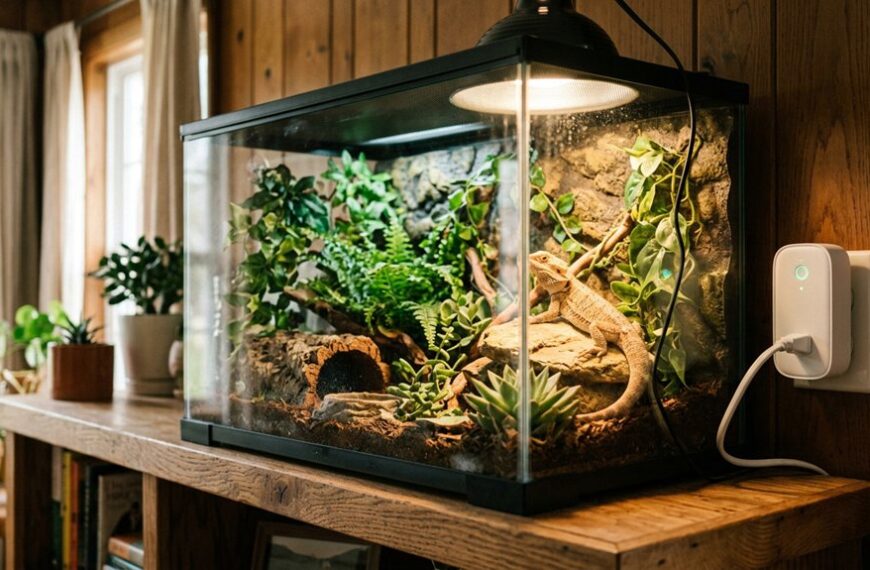
A bioactive enclosure uses a living ecosystem with beneficial bacteria, isopods, and springtails that break down waste. In this context, some advanced keepers use a soil-sand mix (not pure sand) as part of a naturalistic setup.
Requirements for this approach:
- Dragon must be 18+ months old and fully grown
- Perfect temperature gradients maintained 24/7
- Excellent hydration practices
- Proper calcium supplementation
- Deep substrate layer (4-6 inches) with cleanup crew
- Soil-based mix with only 20-30% sand content
- Regular fecal checks for parasites
- Owner has 2+ years of bearded dragon experience
- Immediate access to reptile veterinary care
Why this is still risky: Even with all precautions, ingestion can occur. The “cleanup crew” doesn’t eliminate impaction risk, it only helps with waste management.
When Sand Is Never Acceptable
- Any dragon under 18 months old
- Dragons with any history of impaction
- Setups without proper temperatures
- Owners without emergency vet access
- Pure sand (always inappropriate)
- Calcium sand (never acceptable under any circumstances)
- First-time reptile owners
Expert opinion: Most reptile veterinarians still recommend against sand even in bioactive setups, arguing that the risks outweigh the aesthetic benefits. Dr. Douglas Mader, a leading reptile veterinarian, has stated that he sees impaction cases regularly and they almost always involve particulate substrates.
The practical reality: If you’re asking whether sand is okay, you probably shouldn’t use it. Experienced keepers who successfully use sand-mix substrates have years of experience, understand the risks intimately, and have backup plans for complications. For 95% of keepers, solid substrates remain the safer, smarter choice.
What Do Reptile Vets Recommend for Bearded Dragon Substrate?
The veterinary consensus is clear and consistent: solid, non-particulate substrates are the safest choice for bearded dragons at all life stages. Reptile veterinarians base these recommendations on decades of clinical experience treating impaction cases.
Top Veterinary Recommendations
First choice: Ceramic or slate tile
- Recommended by the Association of Reptilian and Amphibian Veterinarians
- Eliminates ingestion risk completely
- Easy to sanitize and maintain
- Provides appropriate surface for nail maintenance
- Mimics natural rock surfaces in wild habitat
Second choice: Reptile carpet or shelf liner
- Safe alternative for dragons that need softer surfaces
- Appropriate for all ages including juveniles
- Easy to clean and replace
- No ingestion risk when properly maintained
Acceptable temporary option: Paper products
- Newspaper or paper towels
- Ideal for quarantine or medical monitoring
- Easy to change daily
- Allows clear visualization of feces for health monitoring
What Vets Advise Against
Never recommended:
- Calcium sand (highest risk)
- Play sand
- Crushed walnut shell
- Wood shavings or chips
- Corn cob bedding
- Any loose particulate substrate for juveniles
Controversial/case-dependent:
- Bioactive soil mixes for experienced keepers with adult dragons only
- Excavator clay (some vets accept for adults, others don’t)
Why Vets Are So Consistent on This
Reptile veterinarians see the consequences of poor substrate choices regularly. Impaction cases are:
- Common: Among the top reasons for bearded dragon emergency visits
- Preventable: Nearly 100% of cases could be avoided with proper substrate
- Expensive: Treatment costs $200-2,000 depending on severity
- Dangerous: Mortality rate is significant even with treatment
- Traumatic: Surgery and recovery are stressful for the animal
Veterinary perspective: When a simple, affordable substrate change eliminates a major health risk entirely, there’s no medical justification for using risky alternatives. The aesthetic preference for sand doesn’t outweigh the clinical evidence against it.
For comprehensive information on proper bearded dragon care practices recommended by experts, consult veterinary resources and experienced keeper communities.
How Much Does It Cost to Set Up a Bearded Dragon Tank Without Sand?
Setting up a bearded dragon habitat with safe substrate is affordable and often cheaper than sand when you factor in long-term costs and potential veterinary bills. Here’s a realistic budget breakdown for 2026.
Safe Substrate Costs
Ceramic/slate tile (40-gallon tank):
- Home improvement store tiles: $20-40
- Cutting service (if needed): $0-10
- Total: $20-50
- Lifespan: Permanent (one-time cost)
Reptile carpet (40-gallon tank):
- Single piece: $10-15
- Two pieces (for rotation): $20-30
- Total: $20-30
- Lifespan: 6-12 months (replace annually)
Non-adhesive shelf liner (40-gallon tank):
- Roll sufficient for multiple changes: $10-15
- Total: $10-15
- Lifespan: 3-6 months (replace 2-4 times yearly)
Paper products (40-gallon tank):
- Newspaper: Free
- Paper towels: $5-10 monthly
- Total: $0-120 annually
Complete Tank Setup Budget (Without Sand)
For a proper 40-gallon bearded dragon setup in 2026:
- Tank: $100-200 (40-gallon breeder tank)
- Substrate (tile): $20-50
- Heating (basking bulb + fixture): $20-40
- UVB lighting (tube fixture + bulb): $60-100
- Thermometers/hygrometer: $15-25
- Hides and décor: $30-60
- Food and water dishes: $10-20
Total initial setup: $255-495
Cost Comparison: Safe Substrate vs Sand
Sand setup (40-gallon tank):
- Initial sand purchase: $20-40
- Complete changes (4-6 times yearly): $80-240 annually
- First year total: $100-280
Tile setup (40-gallon tank):
- Initial purchase: $20-50
- Maintenance: $0 (just cleaning supplies)
- First year total: $20-50
- Lifetime cost: $20-50 (one-time)
The financial reality: Tile is cheaper than sand over the dragon’s lifetime. When you add potential veterinary costs for impaction ($200-2,000), sand becomes exponentially more expensive.
Budget-friendly approach: Start with paper towels or shelf liner ($0-15) while you save for tile. This gives you the safest option immediately at minimal cost, then upgrade to tile when budget allows.
For more information on proper tank setup, see our guide on what tank size a bearded dragon needs.
Frequently Asked Questions
Can I use sand from the beach for my bearded dragon?
No, beach sand is completely inappropriate for bearded dragons. It contains salt, bacteria, parasites, and other contaminants that can cause serious health problems. Beach sand is also typically very fine, increasing impaction risk. Never use sand from outdoor sources in reptile enclosures.
How long does it take for a bearded dragon to pass sand?
In healthy adult dragons with proper temperatures and hydration, small amounts of accidentally ingested sand may pass within 24-72 hours. However, larger amounts or repeated ingestion can accumulate over weeks, leading to impaction. If your dragon hasn’t defecated normally within 5-7 days after ingesting sand, consult a veterinarian.
Is Vita-Sand safe for bearded dragons?
No, Vita-Sand (a calcium sand product) is not safe despite marketing claims. This product hardens when wet, forming concrete-like masses in the digestive tract that are extremely difficult to pass. Veterinarians strongly advise against all calcium sand products, which are responsible for numerous impaction cases and deaths.
Can I mix sand with soil for my bearded dragon?
While a soil-sand mix is marginally safer than pure sand, it still poses ingestion risks and is not recommended for most keepers. If you’re an experienced keeper with an adult dragon and want to attempt a bioactive setup, use a soil-based mix with minimal sand content (20% or less) and implement strict monitoring protocols. For most keepers, solid substrates remain the safer choice.
What should I do if my bearded dragon is eating sand deliberately?
Deliberate sand consumption often indicates a nutritional deficiency, particularly calcium. Immediately verify your supplementation schedule (calcium powder should be dusted on insects 3-5 times weekly depending on age), check UVB lighting strength, and ensure proper temperatures for vitamin D3 synthesis. Remove sand substrate and replace with a safe alternative. Consult a reptile veterinarian to rule out metabolic bone disease or other health issues.
Is reptile sand different from regular sand?
“Reptile sand” is typically finer and sometimes colored or calcium-based, but it’s not meaningfully safer than regular sand. All loose sand substrates pose impaction risks. The “reptile” label is primarily marketing, these products aren’t veterinarian-approved despite pet store placement. Choose solid substrates instead regardless of how sand is marketed.
Can adult bearded dragons safely live on sand?
While adult dragons have lower impaction risk than juveniles, sand is still not recommended by veterinarians for dragons of any age. Adults can and do develop impaction from sand, especially if temperatures are suboptimal or hydration is inadequate. The risk may be lower than for babies, but it’s never zero. Solid substrates eliminate this risk entirely.
How do I transition my bearded dragon from sand to tile?
Remove all sand from the enclosure, clean thoroughly with reptile-safe disinfectant, and install tile directly on the tank bottom. Most dragons adapt immediately with no transition period needed. Some dragons may seem confused initially but typically adjust within 24-48 hours. Monitor to ensure your dragon is eating, drinking, and defecating normally after the change.
Does sand help bearded dragons shed?
No, sand does not help with shedding and may actually complicate the process if it sticks to moist, shedding skin. Proper hydration through baths and appropriate humidity levels are what facilitate healthy shedding. Rough surfaces like tile or textured reptile carpet can help dragons rub off loose skin without the risks associated with sand.
What’s the best substrate for a bearded dragon tank in 2026?
Ceramic or slate tile remains the best substrate choice in 2026, recommended by reptile veterinarians and experienced keepers. It’s safe, permanent, easy to clean, retains heat well, and eliminates impaction risk. For budget-conscious keepers or those with juvenile dragons, reptile carpet or non-adhesive shelf liner are excellent alternatives. All three options are dramatically safer than any sand product.
Can I use sand in just part of my bearded dragon’s tank?
No, partial sand setups still pose risks. Bearded dragons explore their entire enclosure, and they’ll inevitably encounter and potentially ingest sand regardless of where it’s placed. Additionally, sand in one area can spread throughout the tank during dragon movement. Use consistent, safe substrate throughout the entire enclosure.
Is there a sand alternative that looks natural?
Yes, several options provide a natural aesthetic without sand’s risks. Slate or flagstone tiles offer an authentic rocky desert look. Textured ceramic tiles in earth tones mimic natural stone. For advanced keepers, bioactive soil-based substrates (without sand) topped with leaf litter and live plants create beautiful naturalistic environments. These options look great while keeping your dragon safe.
Conclusion
Is sand safe for bearded dragons? The evidence is clear: sand is not safe and should be avoided for bearded dragons of all ages. While it may seem like a natural choice, sand poses serious risks including impaction, respiratory irritation, and bacterial growth that far outweigh any aesthetic benefits. Reptile veterinarians consistently recommend solid substrates like ceramic tile, reptile carpet, or shelf liner that eliminate these dangers entirely.
The good news is that safe alternatives are affordable, easy to maintain, and often more attractive than sand. Ceramic tile, in particular, offers a permanent, low-maintenance solution that mimics the hard-packed surfaces bearded dragons naturally inhabit in the wild. For budget-conscious keepers, reptile carpet and shelf liner provide excellent safety at minimal cost.

Unlike reptile carpet, reptile tank liner is easy to spot clean and fully clean. This reptile substrate is a great low-maintenance option to maintain a clean and convenient environment

Easy to clean and maintain: Each reptile tank mat is made of easy-to-clean and waterproof material, it will not absorb your pet's waste, simply wipe with a damp cloth or rinse under running water to keep the reptile mat clean, spot cleaning is faster and more efficient
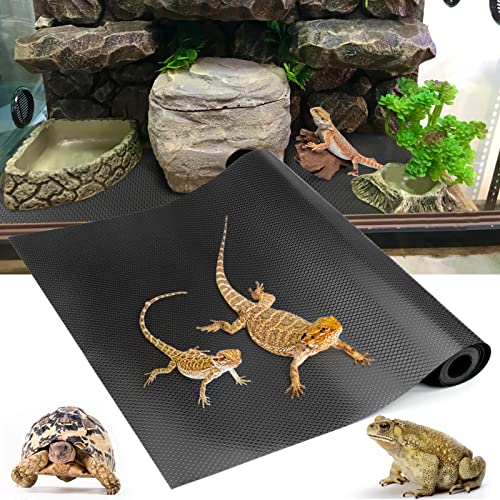
Perfect reptile tank Carpet - made from easy to clean, non-absorbent, safe material that won't soak through like carpet, no need to worry about heat and humidity, poop can be wiped right off, you don't need to take it out daily to wash. Couldn't be easier!
Your Next Steps
If you currently use sand: Remove it immediately and replace it with tile, reptile carpet, or paper towels. Your dragon’s health is worth more than substrate aesthetics.
If you’re setting up a new tank: Choose ceramic tile for long-term value or reptile carpet for an affordable starter option. Avoid all sand products regardless of marketing claims.
Monitor your dragon’s health: Watch for signs of impaction if your dragon has been on sand. Contact a reptile veterinarian if you notice lethargy, loss of appetite, or absence of bowel movements.
Educate yourself further: Learn about proper bearded dragon care practices, including temperature requirements, UVB lighting, and nutrition to ensure your dragon thrives.
Share this information: Help other bearded dragon owners make informed decisions by sharing what you’ve learned about substrate safety.
Your bearded dragon depends on you to make safe choices about their habitat. By choosing appropriate substrate, you’re eliminating one of the most common and preventable health risks these amazing reptiles face in captivity. The small effort of selecting and installing safe substrate pays dividends in your dragon’s long-term health and your peace of mind.