When the power goes out, your bearded dragon can survive 12-24 hours without a heat lamp if you act quickly to provide alternative warmth. The key is maintaining a minimum temperature of 65°F and using passive heating methods like hot water bottles, hand warmers, and body heat until electricity returns.
Key Takeaways
- Bearded dragons can survive 12-24 hours without heat if kept above 65°F using emergency methods
- Move your dragon to the warmest room in your house immediately when power fails
- Chemical hand warmers wrapped in towels provide safe, temporary heat for 6-8 hours
- Hot water bottles are effective but must be wrapped to prevent burns
- Monitor for cold-stress signs: lethargy, darkened color, lack of movement, and refusal to eat
- A portable generator or battery-powered heat source is the best long-term solution
- Temperatures below 65°F for more than a few hours can trigger health problems or unwanted brumation
- Prepare an emergency kit before outages happen with backup heating supplies

【Overheat Protect&Adjustable Temperature】Our heat rocks for reptiles supports a 12V power supply of 5 watts, bringing warm temperatures in cold winters. Hot rock supports a constant temperature adjustment range of 91 ℃ to 118 ℉, effectively preventing pets from being scalded by heated rocks

【Efficient Heating】: This Reptile Heat Lamp Bulbs Combo Include One UVA Daylight Heating Light Bulb and One Infrared Nightlight Heat Lamp. This combined reptile light bulb could provide the right temperature for your pet from day and night.

Efficient & Even Heating – Provides a stable and evenly distributed heat source for reptiles such as bearded dragons, snakes, lizards, and hermit crabs, ensuring a comfortable and natural habitat.
How Long Can a Bearded Dragon Survive Without a Heat Lamp?
A bearded dragon can typically survive 12-24 hours without a heat lamp, but this depends entirely on the ambient room temperature and your emergency response. If the room stays above 70°F, your beardie will be uncomfortable but not in immediate danger. Below 65°F, however, metabolic problems begin within hours.
Critical survival factors:
- Room temperature baseline: If your home is 72°F when power fails, you have more time than if it’s 60°F
- Season and climate: Winter outages in cold regions are far more dangerous than summer blackouts
- Dragon’s age and health: Juveniles and sick dragons are more vulnerable to temperature drops
- Duration of cold exposure: A few hours below optimal is manageable; 12+ hours can cause serious issues
The real danger isn’t immediate death but rather the cascade of health problems that follow prolonged cold exposure. Bearded dragons are ectothermic, meaning they rely entirely on external heat to regulate body temperature, digest food, and maintain immune function. Without heat, digestion stops, immunity weakens, and respiratory infections become likely.
What happens hour by hour:
- 0-4 hours: Dragon becomes sluggish, seeks warmth, digestion slows
- 4-8 hours: Noticeable lethargy, darkened coloring, complete digestive shutdown
- 8-12 hours: Risk of regurgitation if food is in stomach, immune suppression begins
- 12-24 hours: Serious health risks, potential respiratory infection, possible brumation trigger
- 24+ hours: Life-threatening hypothermia, organ stress, veterinary intervention needed
What Temperature Is Too Cold for a Bearded Dragon?
Temperatures below 65°F are too cold for a bearded dragon and will cause metabolic stress within hours. The ideal temperature range is 75-85°F on the cool side and 95-105°F in the basking spot, so anything significantly below 70°F puts your dragon at risk.
Temperature danger zones:
| Temperature Range | Risk Level | What Happens |
|---|---|---|
| 75-85°F | Safe (cool side) | Normal activity, healthy metabolism |
| 70-74°F | Caution | Reduced activity, slower digestion |
| 65-69°F | Danger | Lethargy, digestive shutdown, stress |
| 60-64°F | Critical | Hypothermia risk, immune suppression |
| Below 60°F | Emergency | Life-threatening, immediate action required |
Your bearded dragon will show visible distress when temperatures drop too low. Watch for these warning signs and act immediately if you see them. The longer your dragon stays cold, the harder it becomes to warm them safely without shocking their system.
Common mistake: Don’t try to warm a very cold dragon too quickly. Rapid temperature changes can cause more harm than gradual warming. If your beardie has been cold for many hours, warm them slowly over 30-60 minutes rather than placing them directly on a hot surface.
How to Keep a Bearded Dragon Warm During a Power Outage Without Electricity
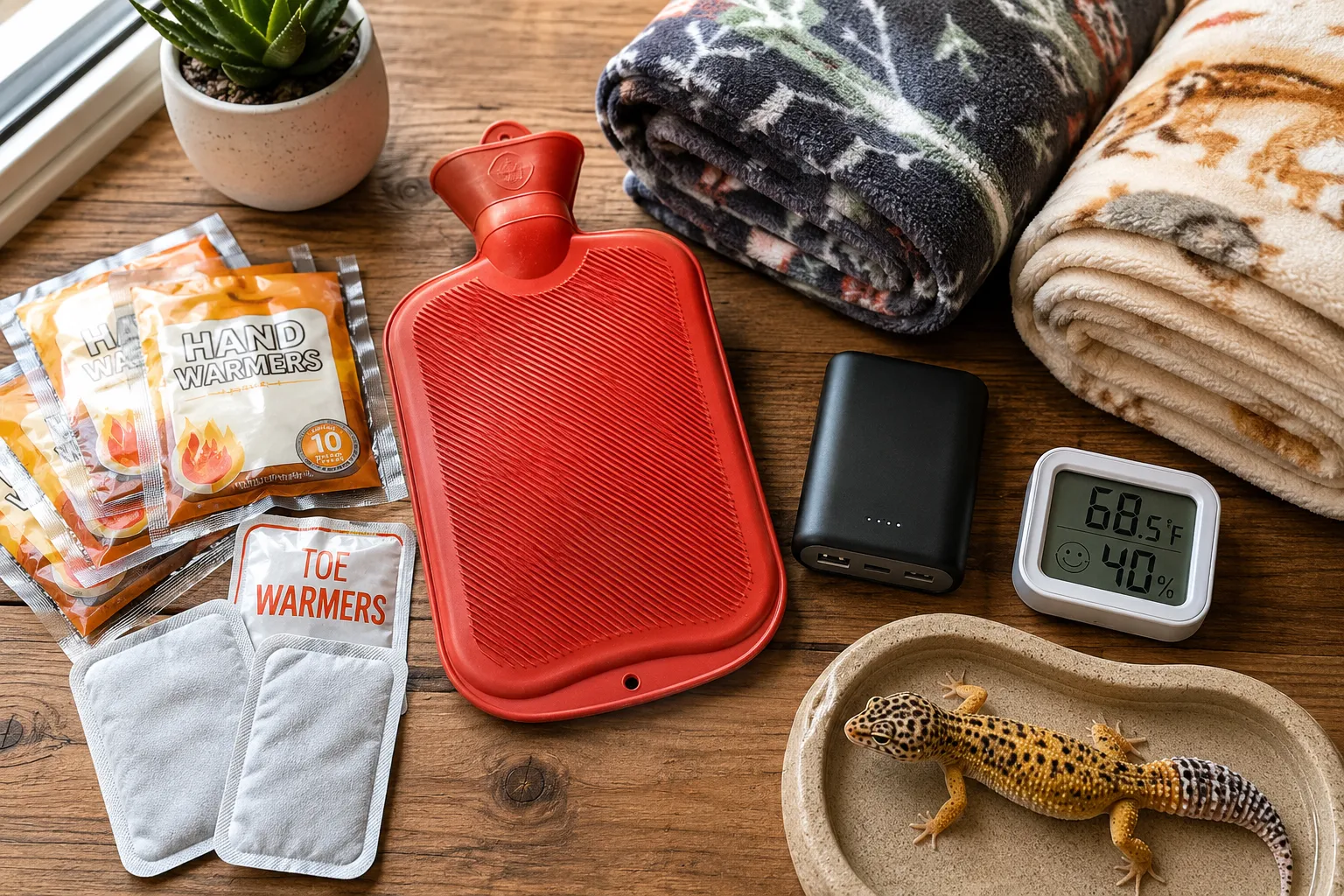
To keep your bearded dragon warm during a power outage, use a combination of passive heating methods: hot water bottles wrapped in towels, chemical hand warmers placed outside the tank, fleece blankets draped over the enclosure, and moving the tank to the warmest room in your home.
Immediate emergency heating steps:
- Move to the warmest location: Relocate the entire tank to the warmest room (usually an interior room, away from exterior walls)
- Insulate the enclosure: Drape thick blankets or towels over three sides of the tank, leaving the front partially open for air circulation
- Add a hot water bottle: Fill with hot (not boiling) water, wrap in a towel, and place it inside the tank away from direct contact with your dragon
- Use body heat: Hold your beardie against your chest under your shirt for 15-20 minutes at a time
- Monitor temperature constantly: Use a battery-powered thermometer to track tank temperature every 30 minutes
Best passive heating methods ranked:
- Hot water bottles (6-8 hours of warmth): Most effective, but requires hot water source (gas stove, fireplace)
- Chemical hand warmers (6-10 hours): Convenient, reliable, but must be wrapped to prevent burns
- Microwavable heat packs (2-4 hours): Good if you have a generator to run a microwave briefly
- Your body heat (as long as you can hold them): Excellent for short periods, helps reduce stress
- Blanket insulation (passive): Doesn’t add heat but prevents heat loss dramatically
Choose hot water bottles if you have access to a way to boil water (gas stove, camping stove, fireplace). They provide the longest-lasting, most consistent warmth.
Choose hand warmers if you have no way to heat water or need a completely portable solution. Stock up on these before winter.
Can I Use Hand Warmers for My Bearded Dragon in a Power Outage?
Yes, you can safely use chemical hand warmers for your bearded dragon during a power outage, but they must never touch your dragon directly and should be wrapped in a towel or placed outside the tank. Hand warmers typically reach 130-150°F, which is hot enough to burn reptile skin on contact.
Safe hand warmer placement methods:
- Outside the tank: Tape 2-3 activated hand warmers to the outside glass on one side, creating a warm zone
- Inside wrapped in towels: Place hand warmers in a sock or wrapped in 2-3 layers of towel, then position in the tank
- Under a hide: Put wrapped hand warmers under a hide box so your dragon can move closer or farther as needed
- In a separate container: Place hand warmers in a small box with ventilation holes, then put the box in the tank
Hand warmer safety rules:
- Never let your dragon touch an unwrapped hand warmer directly
- Check the wrapped warmer temperature with your hand before placing it in the tank
- Replace hand warmers every 6-8 hours as they cool down
- Use multiple smaller warmers rather than one large one for better temperature distribution
- Always provide a cool zone so your dragon can thermoregulate
The biggest advantage of hand warmers is that they require no electricity, no hot water, and no preparation beyond opening the package. Stock at least 20-30 hand warmers in your emergency kit so you can maintain warmth for 2-3 days if needed. For more information on proper bearded dragon care during emergencies, having the right supplies ready makes all the difference.
Should I Move My Bearded Dragon to a Warmer Room When Power Goes Out?
Yes, immediately move your bearded dragon’s entire enclosure to the warmest room in your house when the power goes out. Interior rooms away from exterior walls retain heat longer, and rooms with southern exposure or residual heat from appliances are ideal temporary locations.
Best rooms to move to (in order):
- Interior bathroom: Small space, often retains heat, usually has a door to close
- Master bedroom: Interior room, away from drafty windows
- Laundry room: May have residual heat from water heater or dryer
- Kitchen: Central location, often warmer from appliances
- Living room with fireplace: If you can safely use the fireplace
Moving your dragon safely:
- Move the entire tank if possible to avoid stressing your dragon with handling
- If the tank is too heavy, move your dragon in a secure carrier with a wrapped hot water bottle
- Set up the new location before moving your dragon
- Bring all essential supplies: thermometer, water dish, hides
- Close doors to the room to contain warmth
Common mistake: Don’t move your dragon to a room with a fireplace or space heater and then leave them unattended. Direct heat sources can overheat one side of the tank dangerously while leaving the other side cold. Always monitor temperature and provide temperature gradients.
If you’re moving your dragon out of their usual tank setup, try to maintain as much of their normal environment as possible to reduce stress during an already difficult situation.
Battery-Powered Heat Lamp Options for Bearded Dragon Emergencies
Battery-powered heat lamps for bearded dragons are extremely limited because heat lamps draw 75-150 watts, far more than standard battery packs can sustain for meaningful periods. A portable power station (300-500 watt-hour capacity) can run a 75-watt heat lamp for 3-5 hours, making it a viable short-term emergency solution but not a multi-day backup.
Realistic battery-powered heating options:
- Portable power station (500Wh): Can run a ceramic heat emitter (100W) for 4-5 hours; costs $300-600
- Car inverter + heat lamp: Run a heat lamp from your car battery for 2-3 hours; requires running the car periodically
- USB-powered heating pad (10W): Too weak for primary heat but can supplement other methods; runs 20+ hours on a power bank
- Battery-powered heated blanket: Some models work but are designed for humans, not reptiles; use with extreme caution
Best emergency power solution: A portable power station (like Jackery, EcoFlow, or Bluetti) with 500+ watt-hours is the most reliable battery-powered option. These can run a low-wattage ceramic heat emitter or heat lamp for several hours and can be recharged via solar panels if the outage extends beyond a day.
Why standard battery packs don’t work: A typical 20,000mAh USB power bank stores about 74 watt-hours of energy. A 75-watt heat lamp would drain it in less than one hour. Heat lamps simply require too much power for consumer battery technology to sustain affordably.
Choose a portable power station if you live in an area with frequent or extended outages and can invest $300-600 in emergency preparedness. It’s the only battery solution that provides meaningful heating duration.
Portable Generator Options for Bearded Dragon Setup
A portable generator is the most reliable long-term solution for maintaining your bearded dragon’s heating during extended power outages. A small 1000-2000 watt inverter generator can run your entire reptile setup (heat lamp, UVB, and other accessories) for 8-12 hours on a single tank of gas.
Generator sizing for reptile setups:
- Small setup (1 dragon): 1000W generator sufficient (runs 100W heat lamp + 40W UVB + extras)
- Multiple tanks: 2000W generator recommended
- Whole-room backup: 3000W+ for multiple reptiles and other essentials
Top generator features for reptile keepers:
- Inverter technology: Provides clean power safe for electronic thermostats and timers
- Quiet operation: 50-60 decibels so you can run it near your home
- Fuel efficiency: 8-12 hour runtime on a single tank
- Electric start: Easier to use in emergency situations
- CO safety: Must be used outdoors only, never in garage or enclosed space
Generator safety rules:
- Always operate outdoors, at least 20 feet from your home
- Use heavy-duty outdoor extension cords rated for the wattage
- Never refuel while the generator is running or hot
- Store gasoline properly in approved containers
- Test your generator monthly to ensure it starts when needed
Cost consideration: A quality 2000W inverter generator costs $500-1200, but it provides peace of mind for any emergency, not just power outages. It can also power refrigerators, medical equipment, and other essentials during extended blackouts.
Common mistake: Don’t buy a generator during an emergency. They sell out immediately when storms are forecast. Purchase and test your generator well before you need it, and keep fresh stabilized fuel on hand.
How to Tell If Your Bearded Dragon Is Getting Too Cold
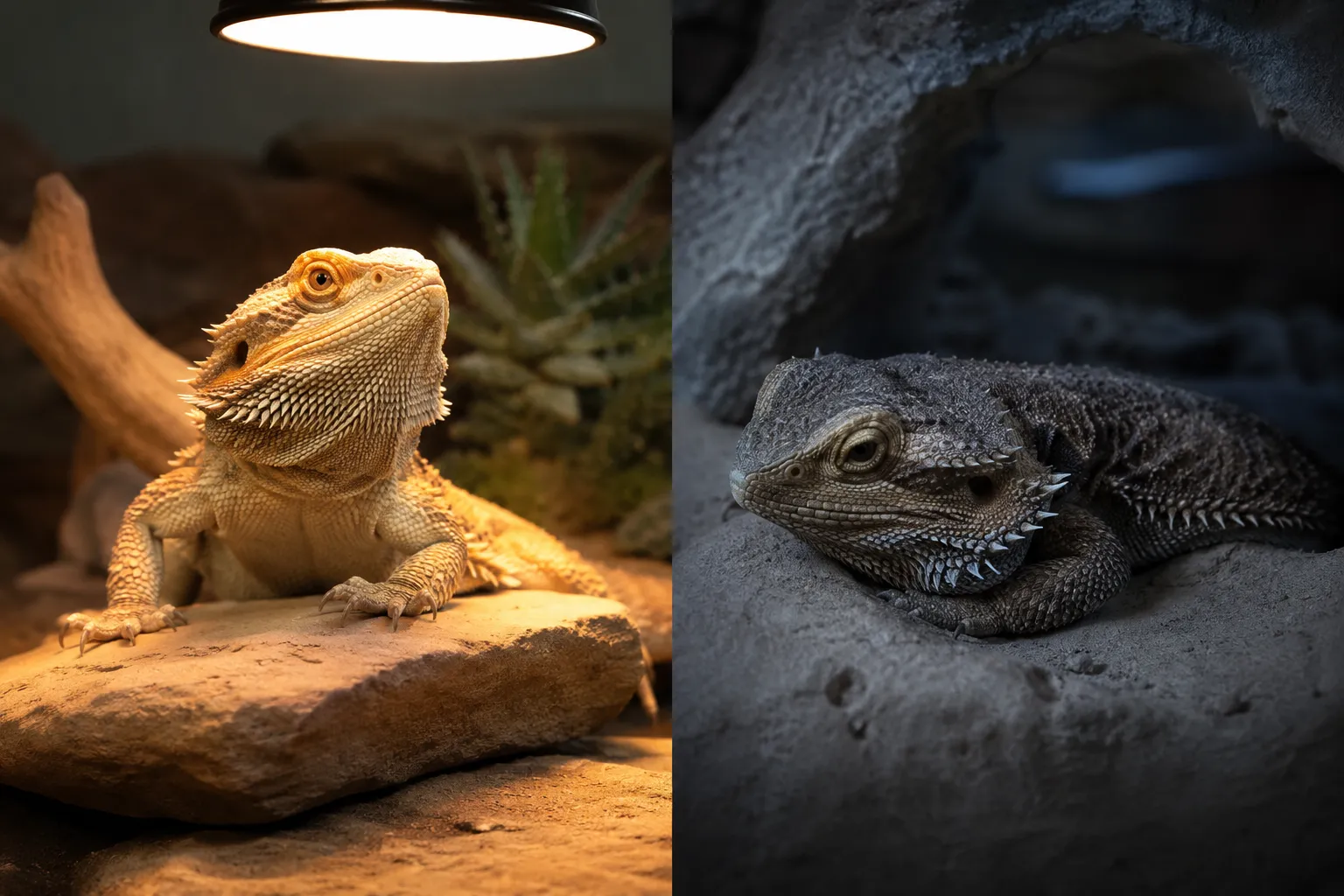
A bearded dragon that’s getting too cold will display obvious behavioral and physical changes: lethargy, darkened coloring (especially on the beard and body), lack of response to stimuli, staying in one spot without moving, and refusing food. These signs appear within 2-4 hours of inadequate temperatures.
Cold-stress warning signs (in order of appearance):
- Reduced activity: Less movement, staying in one spot
- Darkened coloring: Body and beard turn darker to absorb more heat
- Lethargy: Slow response when you approach or handle them
- Flattened posture: Lying flat to maximize surface area for heat absorption
- Closed or half-closed eyes: Sign of extreme stress or shutdown
- Cold to the touch: Belly and limbs feel noticeably cool
- Lack of grip strength: Weak when you pick them up
How to check your dragon’s temperature:
- Gently touch their belly (should feel warm, not cool or cold)
- Check their activity level (should be alert during normal waking hours)
- Observe their color (should be bright, not dark or dull)
- Test their grip (should hold onto your hand firmly)
If you notice multiple cold-stress signs, your dragon needs immediate warming. Use the emergency heating methods described earlier, but warm them gradually over 30-60 minutes rather than exposing them to sudden high heat.
When to worry: If your dragon has been cold for more than 8-12 hours and shows signs of extreme lethargy, won’t open their eyes, or feels very cold to the touch, contact a reptile veterinarian immediately. Prolonged hypothermia can cause organ damage and secondary infections that require medical treatment.
Understanding why your bearded dragon might show stress behaviors helps you recognize when temperature issues are affecting their wellbeing.

Sticks Well on Multiple Surfaces – Premium vinyl bearded dragon stickers designed to stick securely to water bottles, laptops, phone cases, journals, skateboards, and even car windows. Durable adhesive grips smooth and slightly textured surfaces with ease.

25 oz Aluminum Sports Water Bottle measuring 10" H x 3" W

【Deluxe 6-Piece bearded dragon pool Set】: Treat your pet to a relaxing spa experience with our comprehensive bathing kit! This set includes a foldable bearded dragon bathtub, a quiet water pump, a soft bath brush, an absorbent towel, a spray bottle, and plastic tweezers. It serves as an excellent all-in-one bath for bearded dragon, providing what you need for bathing, drying, grooming, and shedding care in one convenient package.
Can Bearded Dragons Go Into Brumation From a Power Outage?
Yes, an extended power outage with prolonged cold temperatures can trigger premature or unplanned brumation in bearded dragons, especially if temperatures drop below 70°F for several days. Brumation is a natural hibernation-like state, but when triggered by emergency conditions rather than seasonal cues, it can be dangerous for unprepared or unhealthy dragons.
How power outages trigger brumation:
- Temperature drop: Extended cold signals winter conditions to your dragon’s biology
- Reduced light: Lack of UVB and daylight mimics shorter winter days
- Stress response: Some dragons enter brumation as a survival mechanism during extreme stress
Signs your dragon is entering brumation:
- Refusing food for several days
- Sleeping more than usual, especially during normal active hours
- Seeking dark, cool hiding spots
- Reduced bowel movements
- Less responsive to handling
Why emergency brumation is risky:
- Your dragon may have undigested food in their stomach, which can rot and cause infection
- They may not be in good health to safely brumate
- You can’t provide proper brumation conditions during a power outage
- It’s difficult to monitor their health during the outage
What to do if your dragon starts brumating during an outage:
- Don’t try to force them to stay awake or eat
- Ensure they’re in a safe, stable temperature (60-70°F is acceptable for brumation)
- Provide access to water
- Once power returns, gradually warm them over 2-3 days
- Monitor closely for signs of illness after they wake
If you’re concerned about brumation signs and timeline, understanding the natural process helps you distinguish between healthy seasonal brumation and emergency-triggered dormancy.
Is a Hot Water Bottle Safe for a Bearded Dragon?
A hot water bottle is safe for bearded dragons during power outages when used correctly: fill it with hot (not boiling) water, wrap it in at least two layers of towels, and place it in the tank where your dragon can move toward or away from it. Never let your dragon lie directly on an unwrapped hot water bottle, as it can cause thermal burns.
Safe hot water bottle protocol:
- Fill with hot tap water (120-130°F), not boiling water
- Wrap thoroughly: Use 2-3 towels or a thick fleece blanket
- Test temperature: Touch the wrapped bottle for 10 seconds; it should feel warm but not hot
- Place strategically: Put it on one side of the tank to create a temperature gradient
- Monitor your dragon: Watch to ensure they’re not lying directly on it for extended periods
- Replace every 4-6 hours: Refill when the bottle cools to maintain consistent warmth
Hot water bottle advantages:
- Provides 4-6 hours of consistent warmth per fill
- Completely safe when properly wrapped
- Can be refilled if you have a gas stove, camping stove, or fireplace
- Mimics a natural basking surface better than chemical warmers
- Reusable and cost-effective
Hot water bottle mistakes to avoid:
- Using boiling water (can be too hot even when wrapped)
- Insufficient wrapping (must have multiple layers)
- Placing it where your dragon can’t escape if it’s too warm
- Forgetting to replace it when it cools down
- Using a damaged bottle that might leak
Alternative: If you don’t have a traditional rubber hot water bottle, you can use a sealed plastic bottle (like a soda bottle) filled with hot water and wrapped the same way. Just ensure the cap is tightly sealed to prevent leaks.
What Happens If a Bearded Dragon Gets Too Cold for a Few Hours?
If a bearded dragon gets too cold for a few hours (2-4 hours below 70°F), they will experience temporary metabolic slowdown, lethargy, and digestive disruption, but typically recover fully once proper temperatures are restored. The key is how cold they get and how quickly you warm them back up.
Short-term cold exposure effects (2-4 hours):
- Sluggish movement and reduced activity
- Darkened coloring as they try to absorb more heat
- Digestive slowdown (food sits in stomach longer)
- Temporary immune system suppression
- Mild stress response
Recovery process:
Most bearded dragons bounce back within a few hours of being returned to proper temperatures. You’ll notice their color brightens, activity increases, and they return to normal behavior patterns. However, monitor them closely for 24-48 hours after the incident.
When a few hours becomes dangerous:
- If your dragon had recently eaten a large meal (risk of regurgitation or impaction)
- If temperatures dropped below 60°F (more severe metabolic impact)
- If your dragon is very young, elderly, or already ill
- If they were exposed to cold multiple times in quick succession
Post-cold-exposure care:
- Gradually return to normal temperatures over 30-60 minutes
- Offer water but don’t force feeding for 12-24 hours
- Monitor for signs of respiratory infection (wheezing, mucus, open-mouth breathing)
- Watch their poop for the next few days (should return to normal)
- Provide extra UVB exposure once power returns to boost immune function
Common mistake: Don’t immediately feed your dragon after a cold exposure. Their digestive system needs time to return to normal function. Wait until they’ve been at proper temperature for at least 12 hours and are showing active, alert behavior before offering food.
Emergency Heating Options for Reptiles During a Blackout
The most effective emergency heating options for reptiles during a blackout combine multiple passive heating methods: chemical hand warmers, hot water bottles, insulated enclosures, body heat, and relocation to warmer areas of your home. No single method is sufficient for extended outages, so layering multiple approaches provides the best results.
Comprehensive emergency heating strategy:
Tier 1 – Immediate actions (0-1 hour):
- Move enclosure to warmest room
- Drape blankets over three sides of tank
- Add wrapped hot water bottle or hand warmers
- Hold your dragon for body heat if temperature is critical
Tier 2 – Short-term solutions (1-12 hours):
- Rotate hot water bottles every 4-6 hours
- Replace hand warmers every 6-8 hours
- Use your car’s heater (run car outside, bring dragon in carrier for 15-20 minutes)
- Create a smaller temporary enclosure to concentrate heat
Tier 3 – Extended outage (12+ hours):
- Deploy portable generator or power station
- Use car inverter to run heat lamp in shifts
- Consider temporary relocation to a friend’s house with power
- Contact local reptile stores or veterinarians for emergency boarding
Creative emergency heating methods:
- Rice sock: Microwave rice in a sock (if you have generator access), provides 1-2 hours of warmth
- Warm water bath: Place dragon in shallow warm water (85-90°F) for 10-15 minutes to raise body temperature
- Styrofoam cooler: Transfer dragon to insulated cooler with hand warmers for better heat retention
- Car heater: Use your vehicle as a temporary warm space (never leave dragon unattended in car)
What doesn’t work:
- Candles (fire hazard, minimal heat output, toxic fumes)
- Propane heaters indoors (carbon monoxide danger)
- Heating pad without thermostat (burn risk)
- Oven or stove heat (dangerous, uncontrolled temperature)
The best approach is preparation. Build an emergency kit before you need it with multiple heating options so you’re never caught without a solution.
Do I Need to Feed My Bearded Dragon During a Long Power Outage?
No, you should not feed your bearded dragon during a long power outage unless you can maintain proper temperatures above 85°F consistently. Bearded dragons cannot digest food without adequate heat, and feeding them in cold conditions can lead to food rotting in their stomach, causing serious health problems or death.
Feeding guidelines during outages:
If temperatures stay above 85°F: You can continue normal feeding, though your dragon may eat less due to stress.
If temperatures are 70-85°F: Skip feeding entirely. Your dragon can safely go 3-7 days without food with no health consequences.
If temperatures are below 70°F: Absolutely do not feed. Focus entirely on maintaining warmth and providing water.
Why feeding in cold is dangerous:
- Food sits in the stomach undigested, creating a bacterial breeding ground
- Rotting food can cause impaction, infection, or sepsis
- Your dragon lacks the metabolic energy to process food
- Risk of regurgitation increases, which can lead to aspiration pneumonia
What about water?
Always provide access to fresh water during a power outage, regardless of temperature. Bearded dragons can become dehydrated quickly, and water doesn’t require heat to process. Change the water daily even during outages to prevent bacterial growth.
Post-outage feeding protocol:
- Wait until temperatures have been stable at 85°F+ for at least 12 hours
- Offer a small meal (half the normal amount)
- Watch for normal digestion and bowel movements
- Return to regular feeding schedule after 24-48 hours of normal temperatures
If you’re unsure about proper feeding amounts for your dragon’s age and size, err on the side of caution and skip feeding during any temperature instability.
How to Prepare for a Power Outage With Your Bearded Dragon
Preparing for a power outage with your bearded dragon means assembling an emergency kit before disaster strikes, including backup heating supplies, a portable power source, monitoring equipment, and a written action plan. Preparation is the difference between a manageable inconvenience and a life-threatening emergency.
Essential power outage emergency kit:
Heating supplies:
- 20-30 chemical hand warmers (6-10 hour duration)
- 2-3 hot water bottles with covers
- Thick fleece blankets or sleeping bags
- Emergency space blankets (reflect heat back into enclosure)
- Portable power station (500Wh+) or generator
Monitoring equipment:
- Battery-powered thermometer (with extra batteries)
- Battery-powered hygrometer
- Flashlight or headlamp
- Battery-powered clock (to track heating supply changes)
Transport and containment:
- Secure carrier or travel container
- Smaller temporary enclosure (easier to heat than full tank)
- Styrofoam cooler (excellent insulation for emergency housing)
Supplies and documentation:
- Bottled water (for drinking and hot water bottles)
- Emergency contact list (reptile vet, reptile stores, friends with power)
- Care instruction sheet (for if someone else needs to help)
- Photos of your setup (for insurance or if you need to evacuate)
Preparation checklist:
- Assemble emergency kit and store in accessible location
- Test portable power station or generator monthly
- Practice moving your dragon’s enclosure to backup room
- Identify warmest room in your house
- Program reptile vet number into phone
- Take photos of your dragon and setup for identification
- Create written emergency protocol and share with household members
- Check hand warmer expiration dates annually
- Keep car gas tank at least half full during storm season
Seasonal preparation:
Winter: Double your hand warmer supply, ensure generator is serviced, keep extra fuel stabilized and stored safely.
Summer: Power outages in summer are less dangerous for heat but can cause overheating if your home gets too hot. Have a plan for cooling if needed.
Storm season: Monitor weather forecasts, charge all battery devices before storms hit, fill hot water bottles preemptively.
The best time to prepare is right now, before you need it. Don’t wait until the power goes out to discover you’re missing critical supplies.
Frequently Asked Questions
How long can a bearded dragon go without heat at night?
Bearded dragons can safely go 8-10 hours overnight without supplemental heat if room temperature stays above 65°F, as they naturally experience temperature drops at night in the wild. However, during a power outage, if daytime temperatures are also compromised, nighttime heat becomes more critical.
Can I put my bearded dragon in bed with me to keep them warm?
You can hold your bearded dragon against your body under blankets for short periods (15-30 minutes) to share body heat, but don’t sleep with them in your bed. You could roll over and injure them, and they need a secure enclosure, not an open bed where they could escape or fall.
Will my bearded dragon die if the power is out for 24 hours?
A healthy adult bearded dragon will likely survive 24 hours without power if you implement emergency heating measures and keep temperatures above 65°F. However, prolonged cold exposure increases risks of respiratory infection, digestive issues, and stress-related illness that may appear days later.
Should I take my bearded dragon to a hotel if the power is out?
If the power outage is expected to last more than 24-48 hours and you cannot maintain adequate temperatures at home, relocating to a hotel with power, a friend’s house, or a reptile boarding facility is a smart decision. Call ahead to ensure hotels accept reptiles.
Can I use a propane heater to warm my bearded dragon’s room?
Propane heaters can be used to warm the room your bearded dragon is in, but never use them in enclosed spaces without proper ventilation due to carbon monoxide risk. Keep the heater at least 6 feet from the enclosure and monitor room temperature carefully to avoid overheating.
How do I know if my bearded dragon has hypothermia?
Signs of hypothermia in bearded dragons include extreme lethargy, inability to move or lift their head, very cold body temperature, pale or grayish coloring, and lack of response to stimuli. This is a veterinary emergency requiring immediate professional care.
What temperature should I keep my bearded dragon at during a power outage?
Aim to maintain at least 70-75°F during a power outage, though higher is better. The absolute minimum safe temperature is 65°F. If you can maintain 75-80°F using emergency methods, your dragon will be much more comfortable and face fewer health risks.
Can I use my car to keep my bearded dragon warm?
Yes, you can use your car’s heater as a temporary warming station by running the car outside (never in a garage) and bringing your dragon in a secure carrier for 15-20 minute warming sessions. Never leave your dragon unattended in a car, and ensure adequate ventilation.
Do baby bearded dragons need more heat during a power outage than adults?
Yes, baby bearded dragons are more vulnerable to temperature drops than adults because they have less body mass to retain heat and faster metabolisms. Prioritize keeping babies above 75°F and monitor them more frequently during outages.
Should I cover my bearded dragon’s tank completely during a power outage?
Cover three sides of the tank with blankets to retain heat, but leave the front partially open for air circulation. Complete coverage can lead to poor air quality and make it difficult to monitor your dragon’s condition.
Can cold from a power outage make my bearded dragon sick later?
Yes, even if your dragon survives the cold exposure, they may develop respiratory infections, digestive problems, or immune system issues in the days and weeks following a power outage. Monitor closely for 2-3 weeks after the incident and consult a vet if you notice any concerning symptoms.
What’s the best long-term backup power solution for bearded dragons?
A portable power station (500-1000Wh capacity) combined with a solar panel for recharging provides the best long-term backup solution. This setup can run your heat lamp for several hours daily and be recharged without grid power, making it viable for extended outages.
Conclusion
Power outages don’t have to be life-threatening for your bearded dragon if you’re prepared and act quickly. The key is maintaining temperatures above 65°F using a combination of passive heating methods like hot water bottles, chemical hand warmers, insulation, and body heat. Remember that your dragon can safely go 12-24 hours without optimal heat if you implement emergency measures, but the longer the outage, the more critical backup power becomes.
Start building your emergency kit today with at least 20-30 hand warmers, hot water bottles, thick blankets, and a battery-powered thermometer. If you live in an area with frequent outages, invest in a portable power station or generator. Test your emergency plan before you need it by practicing moving your dragon’s enclosure and timing how long your heating supplies last.
Most importantly, never feed your dragon during a power outage unless you can maintain temperatures above 85°F consistently. Focus on warmth and hydration first, and return to normal feeding only after temperatures have been stable for at least 12 hours.
For more guidance on bearded dragon emergency care and understanding stress behaviors, having the right knowledge and supplies can make all the difference when disaster strikes. Don’t wait until the lights go out to start preparing.

【Double-Layer Design】Reptile hammock adopts a double-layer triangular structure design. The upper layer can be used as a space for climbing pets to bask in the sun, while the lower layer provides a hidden resting place, providing additional space for pets to relax and engage in activities.

Soft Material:Our onesie Pajamas is made of 100% Polar Fleece with high fiber density, which will not lint-free, and fluffy. It is soft and skin-friendly, keep you warm in the cold winter.

【Size】Bearded dragon hammock set includes a pink rectangular hammock measuring 29.5×7.1 inches. This lizard bed comes with 4 bell toys and suction cups. Not only can it enrich the daily life of pet, but it can also add beauty to the reptile tank. Suitable for small and medium-sized climbing pets such as bearded dragons, lizards, and geckos.