

Quick Answer
Cleaning a bearded dragon tank requires a three-tier approach: daily spot cleaning to remove waste and uneaten food (5 minutes), weekly maintenance including water dish sanitizing and substrate checks (20-30 minutes), and monthly deep cleans where you disinfect all surfaces, decorations, and replace substrate (1-2 hours). This schedule prevents bacterial buildup, reduces odors, and keeps your bearded dragon healthy.

- Perfect for feeding your bearded dragon, turtle, lizard, snake, or shrimp in their tank

【7-in-1 Professional Cleaning Kit】Designed specifically for reptile care, this set includes 7 essential tools, meeting all your needs from daily cleaning to deep maintenance.Whether for bearded dragon enclosures, geckos (such as leopard geckos), or habitats for other small to medium-sized lizards, this kit provides a comprehensive and convenient cleaning solution, making it an ideal assistant for both beginners and experienced keepers
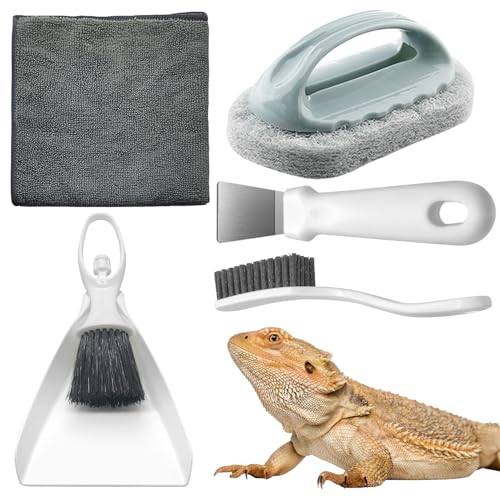
A Simple All-in-One Bearded Dragon Tank Cleaning Kit: Instead of gathering random tools, this bearded dragon tank accessories groups the basic tank cleaning tools used for routine and deep enclosure cleaning into one ready-to-use set for everyday reptile care
Key Takeaways
- Daily spot cleaning takes 5 minutes and removes fresh waste, uneaten food, and refreshes water
- Weekly cleaning includes sanitizing the water dish, wiping glass, and checking substrate for 20-30 minutes
- Monthly deep cleans require removing your dragon, disinfecting everything, and replacing substrate (1-2 hours)
- White vinegar diluted 1:1 with water is safe and effective for most cleaning tasks
- Remove your bearded dragon during weekly and monthly cleans to reduce stress and prevent chemical exposure
- Avoid harsh chemicals like bleach, ammonia, or scented cleaners that can harm reptiles
- Common mistakes include over-cleaning (stressing your pet), using toxic products, or skipping daily maintenance
- Proper ventilation and complete drying time prevent mold and respiratory issues
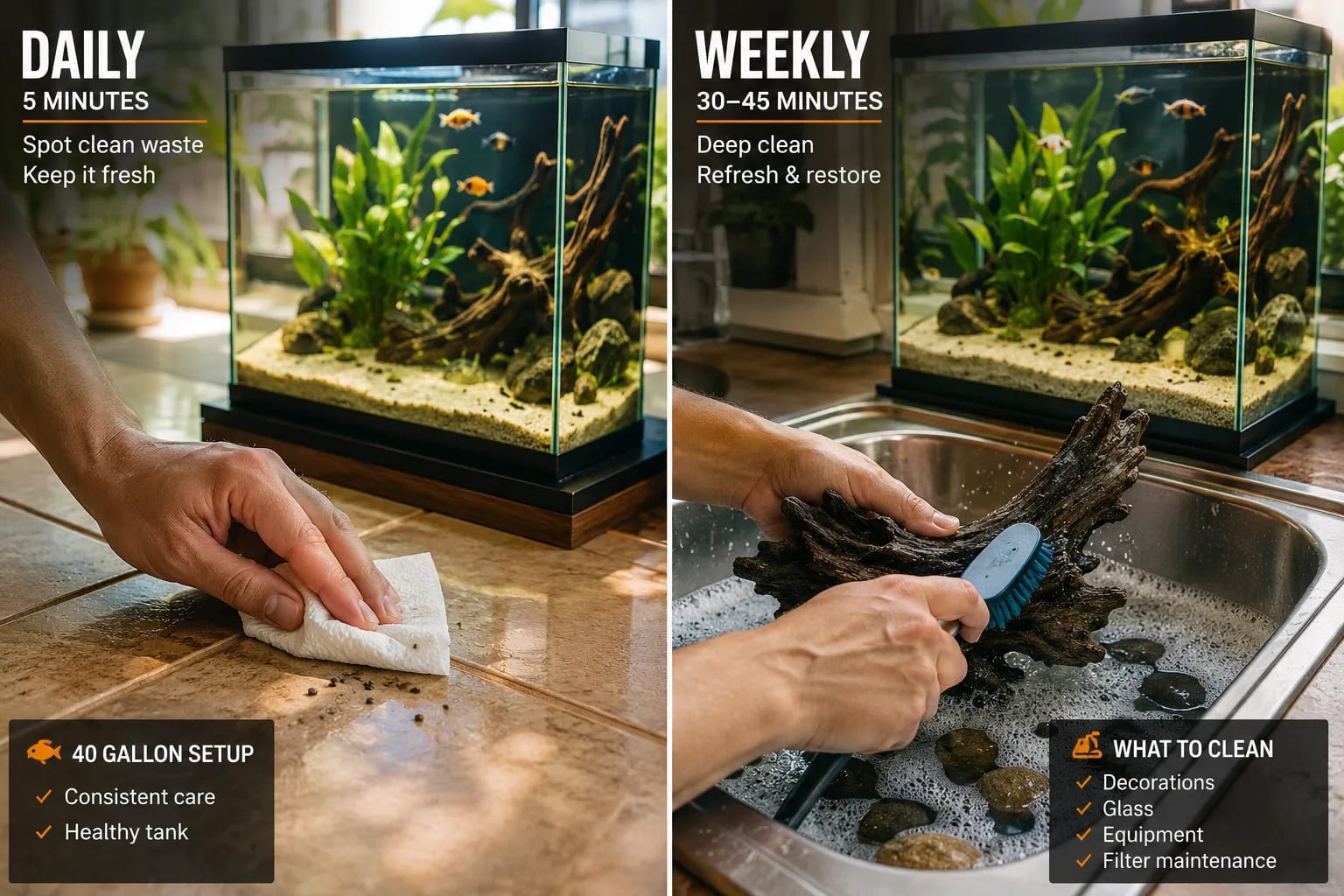
What’s the Difference Between Daily Spot Cleaning and Weekly Cleaning for Bearded Dragons?
Daily spot cleaning focuses on removing fresh waste and maintaining basic hygiene in 5 minutes or less, while weekly cleaning involves deeper sanitizing of water dishes, glass surfaces, and substrate inspection that takes 20-30 minutes. Daily maintenance prevents waste from hardening and bacteria from multiplying, whereas weekly sessions address buildup that accumulates despite daily efforts.
Daily spot cleaning tasks:
- Remove visible feces and urates immediately
- Pick out uneaten insects or dead feeders
- Wipe down soiled spots on glass or decorations
- Refresh water dish with clean water
- Quick visual check for mold or unusual odors
Weekly cleaning tasks:
- Scrub and disinfect water and food dishes thoroughly
- Clean all glass surfaces inside and out
- Inspect substrate for hidden waste or mold
- Wipe down decorations, hides, and branches
- Check and clean basking platforms
- Replace soiled substrate sections if using loose substrate
The key difference is depth and time investment. Daily cleaning is preventive and quick, while weekly cleaning addresses areas that need more attention. Skipping daily maintenance makes weekly cleaning much harder because waste hardens and bacteria establish colonies.
What Supplies Do I Need to Clean a Bearded Dragon Tank?
You need basic cleaning supplies that are safe for reptiles and effective at removing organic waste: white vinegar, spray bottles, microfiber cloths, paper towels, a dedicated scrub brush, nitrile gloves, and a reptile-safe disinfectant for monthly deep cleans. These supplies cost $20-30 total and last several months.
Essential cleaning supply checklist:
Daily maintenance:
- Paper towels or disposable wipes
- Small dustpan or scooper for waste removal
- Spray bottle with plain water
Weekly cleaning:
- White vinegar (distilled)
- Spray bottles (at least two)
- Microfiber cloths (3-4 dedicated to tank cleaning)
- Soft scrub brush or old toothbrush
- Nitrile or latex gloves
Monthly deep cleaning:
- Reptile-safe disinfectant (F10SC or chlorhexidine)
- Bucket for soaking decorations
- Larger scrub brush
- Squeegee for glass drying
- Temporary container for your bearded dragon
Store all cleaning supplies separately from your kitchen items to prevent cross-contamination. Label spray bottles clearly so you never accidentally use the wrong solution. Many keepers keep a dedicated cleaning caddy near the tank for quick access during daily maintenance.

Can I Use Vinegar to Clean My Bearded Dragon Tank or Is It Toxic?
White vinegar diluted 1:1 with water is completely safe for cleaning bearded dragon tanks and is one of the most recommended natural cleaners by reptile veterinarians. Vinegar’s acetic acid breaks down urates, kills common bacteria, neutralizes odors, and leaves no toxic residue when dried properly.
How to use vinegar safely:
- Mix equal parts white distilled vinegar and water in a spray bottle
- Spray surfaces and let sit for 3-5 minutes
- Wipe clean with microfiber cloth or paper towel
- Rinse with plain water if desired (optional for most surfaces)
- Allow surfaces to air dry completely before returning your dragon
Vinegar is particularly effective on glass because it removes water spots and urate stains without streaking. It also works well on non-porous decorations like ceramic hides and plastic plants. The smell dissipates quickly as it dries, and any residual vinegar is harmless to reptiles.
When NOT to use vinegar:
- On natural wood that hasn’t been sealed (can cause warping)
- Mixed with other cleaners like hydrogen peroxide or bleach (creates harmful fumes)
- On porous rocks that can absorb and retain the acidic solution
For stubborn calcium deposits or urate buildup, use undiluted vinegar and let it sit for 10-15 minutes before scrubbing. The white residue will dissolve much easier than with water alone.
Best Disinfectant for Reptile Tanks That’s Safe for Bearded Dragons
F10SC veterinary disinfectant and chlorhexidine solution (0.05-0.1% dilution) are the safest and most effective disinfectants for bearded dragon tanks, recommended by reptile veterinarians for monthly deep cleans. Both kill bacteria, viruses, and fungi without leaving toxic residues when used correctly and rinsed thoroughly.
F10SC disinfectant:
- Dilution: 1:250 for general cleaning (4ml per liter of water)
- Contact time: 10 minutes
- Effective against: Salmonella, E. coli, coccidia, adenovirus
- Cost: $25-35 for concentrate that makes 60+ liters
- Rinse required: Yes, thoroughly with clean water
Chlorhexidine solution:
- Dilution: 0.05% for reptile use (heavily diluted from 2-4% veterinary stock)
- Contact time: 5-10 minutes
- Effective against: Most bacteria and some fungi
- Cost: $15-20 for veterinary solution
- Rinse required: Yes, multiple times
Avoid these common household cleaners:
- Bleach (too harsh, fumes harmful to reptiles)
- Ammonia-based cleaners (respiratory irritant)
- Lysol or similar sprays (toxic residues)
- Scented cleaners (respiratory problems)
- Pine-Sol or phenol-based products (extremely toxic to reptiles)
For routine weekly cleaning, vinegar solution is sufficient. Save disinfectants for monthly deep cleans or after illness. Always ensure complete drying and ventilation before returning your bearded dragon to the tank. If you can smell the cleaner, it’s not ready yet.
Is Dawn Dish Soap Safe for Cleaning Bearded Dragon Tanks?
Original blue Dawn dish soap diluted heavily with water is safe for cleaning bearded dragon tanks when rinsed extremely thoroughly, but it should be reserved for scrubbing heavily soiled decorations and dishes rather than general tank surfaces. The key is complete removal of all soap residue, which requires multiple rinses with clean water.
Safe Dawn soap usage:
For water and food dishes:
- Use 2-3 drops of Dawn in warm water
- Scrub thoroughly with dedicated brush
- Rinse at least 3-4 times with hot water
- Air dry completely or dry with clean towel
For decorations and hides:
- Soak in warm soapy water (1 teaspoon Dawn per gallon)
- Scrub with brush to remove organic buildup
- Rinse thoroughly under running water for 2-3 minutes
- Final rinse with plain water
- Air dry for several hours
Why Dawn specifically? Original Dawn (blue) contains fewer additives, dyes, and fragrances than other dish soaps. It’s also the soap wildlife rescuers use to clean animals after oil spills, demonstrating its safety when properly rinsed.
When to avoid soap entirely:
- On porous surfaces that can trap residue (unsealed wood, certain rocks)
- For quick daily cleaning (vinegar is faster and requires no rinsing)
- If you’re not confident about thorough rinsing
The biggest risk with any soap is residue. Bearded dragons lick surfaces and can ingest soap film, potentially causing digestive upset. If you use Dawn, treat rinsing as the most important step. When in doubt, vinegar solution is a safer choice for most cleaning tasks.
Do I Need to Remove My Bearded Dragon Every Time I Clean the Tank?
Remove your bearded dragon during weekly and monthly cleaning sessions to prevent stress and chemical exposure, but you can perform daily spot cleaning with your dragon inside the tank if you work calmly and avoid the area where they’re resting. For any cleaning that involves sprays, disinfectants, or moving decorations, always relocate your pet first.
When to remove your bearded dragon:
- Weekly glass cleaning with vinegar spray
- Any use of disinfectants or soap
- Moving or rearranging decorations
- Substrate changes or deep cleaning
- Scrubbing surfaces near their basking spot
- Any cleaning that takes longer than 5 minutes
When you can clean with them inside:
- Quick daily poop removal from a distant corner
- Removing uneaten insects
- Refreshing water dish (if you can do it without sprays)
- Spot-wiping a small area with a damp cloth
Safe temporary housing during cleaning:
- Large plastic storage tote with ventilation holes
- Spare tank or enclosure
- Bathtub with towels (supervised only)
- Secure cardboard box for short periods (under 30 minutes)
Provide a hide or towel in the temporary container so your dragon feels secure. Keep the temporary space at room temperature for short cleaning sessions (under an hour). For longer monthly cleans, provide a heat source if the cleaning will take more than 90 minutes.
Many bearded dragons become stressed by the cleaning process itself, especially the sounds of scrubbing and the smell of cleaners. Stress behaviors like glass surfing or darkened beard coloration indicate your dragon should be removed even for routine maintenance.
Can I Clean the Tank with My Bearded Dragon Still Inside for Daily Maintenance?
Yes, you can perform basic daily spot cleaning with your bearded dragon inside the tank as long as you avoid using sprays, work quietly, and don’t disturb their basking or hiding areas. This approach works best for removing visible waste from accessible areas using paper towels or a small scooper.
Safe daily cleaning with dragon inside:
- Use paper towels or scooper to remove solid waste
- Work in areas away from where your dragon is currently positioned
- Move slowly and avoid sudden movements
- Don’t use any spray bottles or liquids
- Keep cleaning sessions under 5 minutes
- Avoid reaching over or near your dragon’s head
Signs your dragon is stressed by cleaning:
- Puffing or darkening their beard
- Attempting to flee or hide
- Opening mouth or hissing
- Flattening their body
- Glass surfing after you finish
If your bearded dragon shows stress behaviors during daily cleaning, switch to removing them first even for quick maintenance. Some dragons are more sensitive to human activity in their space, especially younger animals or recent adoptions still adjusting to their environment.
The advantage of cleaning with your dragon inside is speed and convenience for daily maintenance. The disadvantage is limited access to certain areas and the inability to use any cleaning solutions. Most experienced keepers develop a routine where daily spot cleaning happens with the dragon inside, but weekly and monthly sessions always involve temporary relocation.
How to Clean Bearded Dragon Poop Stains Off Glass
Fresh bearded dragon feces wipe away easily with damp paper towels, but dried poop stains on glass require white vinegar solution (1:1 with water) sprayed directly on the stain, allowed to sit for 5 minutes, then scrubbed with a microfiber cloth or soft brush. For stubborn urate stains, use undiluted vinegar or a plastic scraper.
Step-by-step for dried poop stains:
- Remove your bearded dragon to a temporary container
- Spray undiluted white vinegar directly on the stain
- Let it sit for 5-10 minutes to break down the organic matter
- Scrub with microfiber cloth using circular motions
- For stubborn spots, use a plastic scraper at a 45-degree angle
- Wipe with damp cloth to remove residue
- Dry with clean cloth to prevent water spots
- Ensure complete drying before returning your dragon
For urate stains (white chalky deposits):
Urates are high in calcium and create white crusty stains that are harder to remove than feces. Vinegar’s acetic acid dissolves calcium deposits effectively. For very old urate buildup, make a paste of baking soda and vinegar, apply to the stain, let it fizz for 2-3 minutes, then scrub.
Prevention tips:
- Clean fresh waste immediately before it dries (daily spot cleaning)
- Place a tile or slate under basking areas where dragons typically defecate
- Use removable substrate in high-traffic areas
- Keep a spray bottle of vinegar solution near the tank for quick response
The key to easy glass cleaning is addressing stains while they’re fresh. Dried waste that’s been baked under a heat lamp for days becomes significantly harder to remove and may require multiple treatments.

Terrarium and small animal cage disinfectant, cleaner and deodorizer

Used by Vets, Loved by Pets - Kill pathogens in as little as 60 seconds with Rescue. Prevents outbreaks and kills a broad-spectrum of pathogens - including canine parvovirus

Versatile Design: Multi-purpose reptile tank cleaner made specifically for bearded dragon enclosures and terrariums. Keeps your pet’s habitat clean, odor-free, and hygienic with a powerful formula that tackles waste, grime, and buildup on contact.
How Often Should I Do a Full Deep Clean of My Bearded Dragon Enclosure?
Perform a complete deep clean of your bearded dragon enclosure once per month, or every 3-4 weeks, which includes removing all substrate, disinfecting every surface, washing all decorations, and sanitizing the entire tank. Increase frequency to every 2-3 weeks if you notice persistent odors, use loose substrate, or house multiple dragons in one enclosure.
Monthly deep clean checklist:
Preparation (10 minutes):
- Remove bearded dragon to temporary housing with heat source
- Remove all decorations, hides, dishes, and substrate
- Unplug and safely remove heat lamps and fixtures
Cleaning process (60-90 minutes):
- Dispose of all old substrate
- Vacuum or wipe out remaining debris
- Spray entire tank interior with reptile-safe disinfectant
- Let disinfectant sit for 10 minutes contact time
- Scrub all surfaces including corners and seams
- Rinse thoroughly with clean water
- Dry completely with towels or allow to air dry
- Clean glass inside and out with vinegar solution
- Soak all decorations in disinfectant solution
- Scrub decorations with dedicated brush
- Rinse decorations thoroughly and air dry
Reassembly (20-30 minutes):
- Add fresh substrate
- Replace clean decorations in desired arrangement
- Reinstall heat lamps and check temperatures
- Add fresh water to clean dish
- Return bearded dragon once temperatures stabilize
When to deep clean more frequently:
- After any illness or parasite treatment
- If you notice mold or unusual odors
- Following a substrate impaction scare
- When switching substrate types
- After introducing a new dragon to the enclosure
For larger tanks like 75-120 gallons, the deep cleaning process may take 2-3 hours. Plan accordingly and ensure your temporary housing setup can maintain proper temperatures for the duration.
How Long Does a Monthly Deep Clean Take for a 40 Gallon Tank?
A thorough monthly deep clean of a 40-gallon bearded dragon tank typically takes 60-90 minutes from start to finish, including removing your dragon, cleaning all surfaces and decorations, allowing proper disinfectant contact time, rinsing, drying, and reassembly. First-time deep cleans may take up to 2 hours as you develop an efficient routine.
Time breakdown for 40-gallon tank:
- Setup and removal (10 minutes): Move dragon to temporary housing, remove all items
- Substrate disposal (5 minutes): Remove and dispose of old substrate
- Disinfecting (25 minutes): Spray surfaces, 10-minute contact time, scrub, rinse
- Decoration cleaning (20 minutes): Soak, scrub, rinse all hides and decorations
- Drying (15-30 minutes): Towel dry or air dry all surfaces
- Reassembly (15 minutes): Add fresh substrate, arrange decorations, check temperatures
- Final checks (5 minutes): Verify everything is dry and temperatures are correct
Time-saving tips:
- Clean decorations in bathtub or large sink simultaneously while tank disinfectant sits
- Use a squeegee for faster glass drying
- Prepare fresh substrate and supplies before starting
- Keep all cleaning supplies in one dedicated caddy
- Take photos of your setup before disassembly for quick reassembly reference
Factors that increase cleaning time:
- Heavily soiled tanks that haven’t been deep cleaned in 2+ months
- Loose substrate that requires more thorough removal
- Many decorations or complex setups
- Stubborn urate or calcium buildup
- Bioactive setups (which require different cleaning approaches)
The most common mistake is rushing the drying process. Returning your bearded dragon to a damp tank can cause respiratory issues and promote mold growth. If you’re short on time, use towels to speed drying rather than skipping the drying step entirely. Proper ventilation and even using a fan can reduce drying time to 15-20 minutes.
What to Do If My Bearded Dragon Gets Stressed During Tank Cleaning
If your bearded dragon shows stress behaviors during cleaning, immediately move them to a quiet, darkened temporary container with a hide, reduce noise and movement, and give them 30-60 minutes to calm down before continuing. Chronic cleaning stress indicates you should adjust your routine, clean when they’re naturally calmer (early morning), or use a more secure temporary housing setup.
Immediate stress response:
- Stop cleaning activities immediately
- Dim lights in the temporary container
- Provide a hide or towel for security
- Eliminate loud noises (scrubbing, running water)
- Move temporary container to a quiet room
- Avoid handling or checking on them repeatedly
Signs of cleaning-related stress:
- Darkened or black beard
- Puffed-up body or beard
- Hissing or open-mouth displays
- Frantic movement or escape attempts
- Refusing to eat after cleaning
- Excessive glass surfing for hours after returning to tank
Long-term solutions for stress-prone dragons:
- Schedule cleaning during their naturally calm periods (early morning before full activity)
- Use a more secure temporary container with solid sides instead of clear plastic
- Cover part of the temporary container with a towel to create darkness
- Provide a heat source in temporary housing for longer cleans
- Clean more frequently so each session is shorter and less disruptive
- Consider splitting deep cleans into two shorter sessions on consecutive days
Temporary housing improvements:
- Use a container large enough for them to move comfortably (at least 2x their body length)
- Add familiar items like their favorite hide or a worn t-shirt with your scent
- Ensure adequate ventilation but not drafts
- Keep room temperature stable (75-80°F minimum)
- Place container in a quiet area away from other pets or loud appliances
Some bearded dragons are naturally more sensitive to routine disruptions. Younger dragons and recent rescues often show more stress than established adult pets. If stress behaviors persist despite adjustments, consult with a reptile veterinarian to rule out underlying health issues that might make them more reactive to environmental changes.
How to Sanitize Decorations and Hides in a Bearded Dragon Tank
Sanitize bearded dragon decorations and hides monthly by soaking them in reptile-safe disinfectant solution (F10SC at 1:250 dilution) for 10 minutes, scrubbing with a dedicated brush to remove organic buildup, rinsing thoroughly under running water for 2-3 minutes, and air-drying completely before returning them to the tank. Different materials require slightly different approaches.
By decoration type:
Ceramic and resin hides:
- Soak in disinfectant solution for 10 minutes
- Scrub all surfaces including inside crevices
- Rinse thoroughly under hot running water
- Air dry completely (2-4 hours)
- Safe for dishwasher top rack as alternative
Natural wood branches:
- Brush off loose debris
- Spray with vinegar solution (avoid soaking)
- Wipe with damp cloth
- Air dry in sunlight if possible (UV helps sanitize)
- Bake at 200°F for 30 minutes for deep sanitizing (only for sealed wood)
Rocks and slate:
- Soak in disinfectant solution
- Scrub with stiff brush
- Rinse very thoroughly (porous rocks absorb chemicals)
- Boil for 10 minutes as alternative to chemical disinfection
- Air dry completely
Plastic plants and decorations:
- Soak in warm soapy water (Dawn dish soap)
- Scrub with soft brush
- Rinse thoroughly multiple times
- Soak in diluted vinegar solution for final sanitizing
- Air dry
Fabric items (hammocks, bedding):
- Machine wash in hot water with unscented detergent
- Run extra rinse cycle to remove all soap
- Dry completely in dryer or air dry
- Inspect for wear and replace if fraying
Items that cannot be sanitized:
- Heavily porous rocks with deep cracks (bacteria harbors in crevices)
- Unsealed wood that’s rotting or moldy
- Fabric items with tears or heavy staining
- Plastic decorations with cracks where bacteria can hide
Replace decorations that can’t be properly cleaned or show signs of deterioration. The cost of new decorations is far less than treating a sick bearded dragon. Most keepers maintain a rotation of decorations, cleaning one set while using another, which reduces stress on the dragon and ensures always having clean items available.
Do I Need to Replace Substrate Every Time I Clean or Just Spot Clean It?
Replace loose substrate completely during monthly deep cleans, but spot-clean daily by removing soiled sections and adding fresh substrate to maintain proper depth. Tile, paper, and non-particulate substrates can be cleaned in place weekly with disinfectant and only need replacement when damaged or excessively worn.
Substrate-specific cleaning schedules:
Loose substrate (sand, soil, bioactive mixes):
- Daily: Remove visible waste and soiled areas
- Weekly: Stir substrate to prevent compaction, remove any damp sections
- Monthly: Complete replacement with fresh substrate
- Cost consideration: Budget $15-30 monthly for quality loose substrate
Tile or slate:
- Daily: Wipe up waste with paper towel
- Weekly: Remove tiles, scrub with vinegar solution, rinse, dry, replace
- Monthly: Deep clean with disinfectant
- Replacement: Only when cracked or damaged (years of use)
Reptile carpet:
- Daily: Spot clean with damp cloth
- Weekly: Remove, shake out debris, machine wash or hand scrub
- Monthly: Deep clean with disinfectant, inspect for fraying
- Replacement: Every 6-12 months or when worn
Paper towels or newspaper:
- Daily: Replace soiled sections
- Complete replacement: Every 2-3 days or as needed
- Cost: Most economical option at $5-10 monthly
Bioactive substrate:
- Daily: Remove solid waste only (let cleanup crew handle the rest)
- Weekly: Light surface maintenance, add leaf litter as needed
- Monthly: No complete replacement (defeats bioactive purpose)
- Deep clean: Only if bioactive system fails (every 12-18 months)
When to replace substrate early:
- Visible mold growth
- Persistent foul odors despite cleaning
- After illness or parasite treatment
- Substrate becomes compacted or dusty
- Accidental chemical spills
The biggest mistake new keepers make is either replacing substrate too frequently (wasting money) or not often enough (creating health hazards). Loose substrate harbors bacteria even with spot cleaning, which is why monthly complete replacement is essential. Non-particulate substrates like tile offer easier maintenance and lower long-term costs, though higher initial investment.
Common Mistakes People Make When Cleaning Bearded Dragon Enclosures
The most common cleaning mistakes include using toxic household cleaners not designed for reptiles, failing to rinse disinfectants thoroughly, returning the dragon to a damp tank, over-cleaning which stresses the animal, and neglecting daily spot cleaning which makes weekly and monthly sessions much harder. These errors can cause respiratory issues, chemical burns, stress, and bacterial infections.
Top 10 cleaning mistakes:
1. Using harsh chemicals
- Problem: Bleach, ammonia, Lysol, and scented cleaners leave toxic residues
- Solution: Stick to vinegar, F10SC, or chlorhexidine only
- Why it matters: Reptiles are extremely sensitive to chemical fumes and residues
2. Inadequate rinsing
- Problem: Leaving soap or disinfectant residue on surfaces
- Solution: Rinse at least 2-3 times with clean water, then wipe dry
- Why it matters: Dragons lick surfaces and can ingest harmful residues
3. Returning dragon to damp tank
- Problem: Moisture promotes mold and respiratory infections
- Solution: Ensure complete drying, use towels or fans to speed process
- Why it matters: High humidity in arid-species enclosures causes health issues
4. Cleaning too frequently
- Problem: Daily deep cleaning stresses the dragon and disrupts their environment
- Solution: Follow the daily/weekly/monthly schedule, not more
- Why it matters: Constant disruption causes chronic stress and behavioral issues
5. Neglecting daily spot cleaning
- Problem: Letting waste accumulate for days before cleaning
- Solution: Remove fresh waste within hours of noticing it
- Why it matters: Bacteria multiply rapidly in warm environments
6. Not removing the dragon
- Problem: Spraying chemicals or moving decorations with dragon inside
- Solution: Always relocate for any cleaning beyond quick spot removal
- Why it matters: Chemical exposure and stress from disruption
7. Forgetting to clean under substrate
- Problem: Waste seeps through loose substrate to tank bottom
- Solution: Remove all substrate monthly and clean the glass underneath
- Why it matters: Hidden waste creates bacterial breeding grounds
8. Using the same supplies for multiple pets
- Problem: Cross-contaminating between reptile enclosures
- Solution: Dedicate cleaning supplies to each tank or disinfect between uses
- Why it matters: Prevents spreading parasites and diseases
9. Skipping decoration cleaning
- Problem: Only cleaning visible surfaces, ignoring hides and branches
- Solution: Monthly deep clean includes all items in the enclosure
- Why it matters: Bacteria and parasites accumulate on all surfaces
10. Not checking temperatures after cleaning
- Problem: Returning dragon before heat lamps warm the tank properly
- Solution: Verify basking spot reaches 95-105°F before returning dragon
- Why it matters: Temperature shock can cause stress and suppress immune function
Many of these mistakes stem from applying general pet care knowledge to reptiles, but bearded dragons have unique needs. Their sensitivity to chemicals, requirement for specific humidity levels, and stress responses to environmental changes mean cleaning routines must be more carefully planned than for mammals or birds. Following proper bearded dragon care protocols prevents these common pitfalls.
FAQ
How long should I wait after cleaning before putting my bearded dragon back in the tank?
Wait until all surfaces are completely dry, all chemical smells have dissipated, and temperatures have returned to proper ranges (basking spot 95-105°F, cool side 75-85°F). This typically takes 30-60 minutes after cleaning is complete. If you can smell any cleaning products, wait longer.
Can I use hydrogen peroxide to clean my bearded dragon tank?
Hydrogen peroxide (3% solution) can be used for spot disinfection but must be rinsed extremely thoroughly and allowed to completely decompose (which happens naturally when exposed to light). Vinegar or F10SC are safer choices because they’re specifically tested for reptile use and leave no harmful residues when used correctly.
What should I do with my bearded dragon’s water dish daily?
Empty, rinse, and refill the water dish with fresh water every day. Perform a thorough scrub with Dawn dish soap and hot water during weekly cleaning, rinsing multiple times to remove all soap residue. Bearded dragons often defecate in their water, so daily changes prevent bacterial growth.
Is it normal for my bearded dragon to poop right after I clean the tank?
Yes, many bearded dragons defecate shortly after being returned to a freshly cleaned tank. The stress of relocation, the activity of moving around, or the warmth of returning to their basking spot can all trigger bowel movements. This is normal behavior and not a sign of distress.
Can I use a steam cleaner on my bearded dragon tank?
Steam cleaning is safe and chemical-free for glass and non-porous surfaces, but ensure the tank cools and dries completely before returning your dragon. Steam doesn’t replace disinfectant for monthly deep cleans but works well for weekly maintenance. Avoid using steam on wood or porous materials that can absorb moisture.
How do I clean a bioactive bearded dragon enclosure?
Bioactive enclosures require minimal cleaning: remove solid waste daily and let the cleanup crew (isopods, springtails) handle the rest. Avoid disinfectants that kill beneficial organisms. Add fresh leaf litter monthly and only perform deep substrate replacement every 12-18 months if the bioactive system fails.
What temperature should the water be when cleaning decorations?
Use warm to hot water (not boiling) for cleaning decorations, around 110-130°F. Hot water helps dissolve organic matter and improves cleaning effectiveness without damaging most materials. Always allow items to cool to room temperature before returning them to the tank.
Should I clean my bearded dragon’s tank more often if they’re sick?
Yes, increase cleaning frequency to every 2-3 days during illness to prevent reinfection and reduce pathogen load. Use reptile-safe disinfectant for all cleaning sessions during illness. Consult your reptile veterinarian about specific cleaning protocols for the diagnosed condition.
Can I use baby wipes for quick spot cleaning?
Only use unscented, chemical-free baby wipes specifically labeled as safe for sensitive skin, and only for quick waste removal. Never use wipes on surfaces your dragon will lick or on their water dish. Paper towels dampened with plain water are a safer choice for most spot cleaning.
How do I remove hard water stains from my bearded dragon’s glass?
Hard water stains (white mineral deposits) respond well to undiluted white vinegar applied directly to the stain and left for 10-15 minutes before scrubbing. For very stubborn stains, make a paste of vinegar and baking soda, apply, let fizz, then scrub with a microfiber cloth.
Is it safe to clean my bearded dragon tank outside?
Yes, cleaning tanks outside in good weather is ideal because it provides excellent ventilation for chemical fumes and allows sunlight to help sanitize surfaces. Ensure your dragon is secured indoors in appropriate housing, and thoroughly rinse all items before bringing them back inside.
Do I need to clean the tank differently for baby bearded dragons?
Baby bearded dragons produce more frequent, smaller waste and are more susceptible to bacteria, so increase daily spot cleaning frequency to 2-3 times per day. Maintain the same weekly and monthly schedule but be extra diligent about removing waste quickly to prevent bacterial buildup in their developing immune systems.
Conclusion
Maintaining a clean bearded dragon tank through consistent daily spot cleaning, thorough weekly maintenance, and monthly deep cleans creates a healthy environment that prevents illness, reduces odors, and keeps your pet comfortable. The three-tier cleaning schedule, 5 minutes daily, 20-30 minutes weekly, and 1-2 hours monthly, is manageable for any keeper and dramatically reduces the risk of bacterial infections, parasites, and stress-related health issues.
Your next steps:
- Create a cleaning supply kit with white vinegar, spray bottles, microfiber cloths, gloves, and reptile-safe disinfectant
- Set calendar reminders for weekly and monthly cleaning sessions so they become routine
- Start daily spot cleaning today by removing any visible waste and refreshing water
- Schedule your first monthly deep clean within the next 2-4 weeks if you haven’t done one recently
- Document your routine by taking before and after photos to track improvements and identify problem areas
Remember that consistency matters more than perfection. A quick daily spot clean prevents the overwhelming buildup that makes deep cleaning difficult. By investing a few minutes each day, you’ll spend less time on intensive cleaning sessions and provide your bearded dragon with a healthier, more comfortable home. The effort you put into proper tank maintenance directly translates to a longer, healthier life for your pet.

Item Length: 0.02 Inches

No Scent Reptile Spray: Simple to use, mist, spray, pour or saturate habitat, cage, enclosure & carrier with NoScent; Use to freshen substrate, sand, bedding, carpet, flooring, plants, decor & accessories:
Blazer quart spray tank cleaner for commercial & farm use. Without a proper cleanse, the fertilizers, pesticides, or herbicides that remain in the tank and can cause cross contamination, killing the plants that you worked so hard to grow. Using Blazer is the solution!


