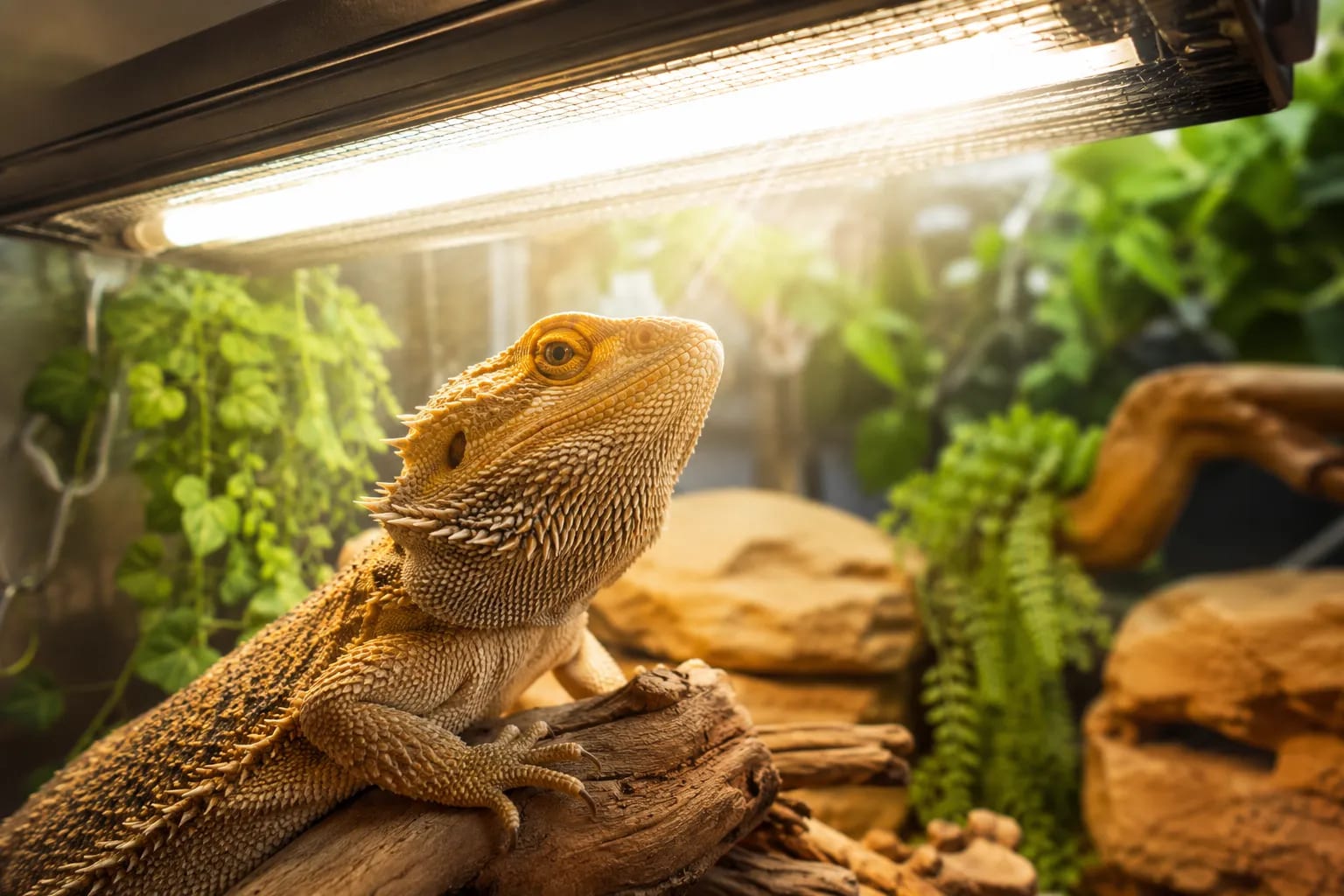
Most UVB bulbs need replacement every 6 to 12 months depending on the brand and type, even when they still produce visible light. The invisible UVB radiation that keeps your bearded dragon healthy degrades much faster than the bulb’s ability to light up, making timely replacement critical for preventing metabolic bone disease and other health issues.
Key Takeaways
- Replace most UVB bulbs every 6-12 months, fluorescent tubes typically last 10-12 months, while compact bulbs need replacement closer to 6 months
- Visible light doesn’t indicate UVB output, bulbs continue glowing long after UVB radiation drops to dangerous levels
- Brand matters significantly, Arcadia bulbs last 12 months, Zoo Med ReptiSun 10.0 lasts 12 months, while generic brands may fail at 6 months
- Skipping replacements causes metabolic bone disease, inadequate UVB prevents calcium absorption, leading to deformed bones, seizures, and death
- Testing requires a UV meter, the Solarmeter 6.5 is the only reliable way to measure UVB output at home
- Mark your calendar immediately, write the installation date on the bulb with permanent marker and set a replacement reminder
- Tube bulbs outlast compact bulbs, linear fluorescent tubes provide more consistent UVB and longer lifespans than coil-style compact bulbs

☀️☀️Increased Brightness. Hygger Zoo uvb light is brighter than other UVB bulbs because of evenly distributed fluorescent powder and a high-tech circuit board. And the uva uvb reptile light bulb can simulate natural sunlight, your reptile pets will enjoy natural light in the comfort of their own home and feel like they are in the wild.
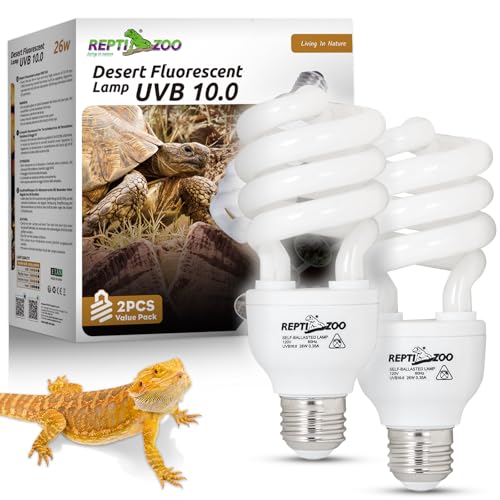
Complete Dual-Pack Value for Continuous Care – REPTI ZOO delivers not one, but two high-performance 10.0 UVB Light for Reptiles in a single purchase. This bundle ensures you always have a backup ready, guaranteeing your tropical pets never miss a single day of essential UVB exposure. With an extended lifespan of up to 10000h, these bulbs drastically reduce the frequency of replacements, saving you time, worry, and money in the long run.

[2 Pack 10.0 UVB Bulbs] Voltage:110-130V, Base type: E26, Wattage: 23W. Each 23 Watt Desert UVB 10.0 CFL Reptile Bulb offers stable 10% UVB and 30% UVA output with no harmful UVC output.
How Often to Replace UVB Bulbs for Reptiles
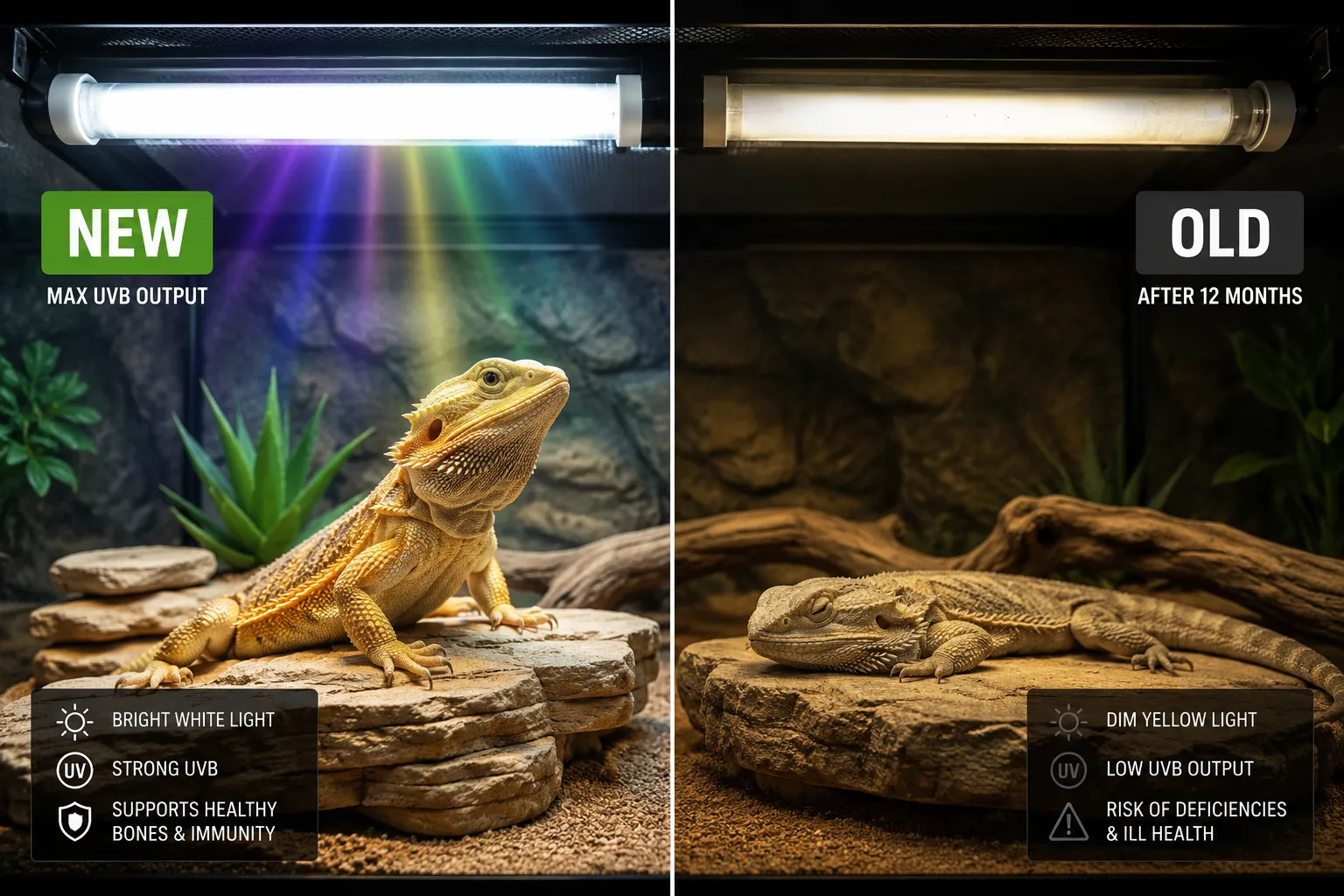
Replace UVB bulbs every 6-12 months for reptiles, with the exact timeline depending on bulb type, brand, and manufacturer specifications. Most quality fluorescent tube bulbs last 10-12 months, while compact fluorescent bulbs typically need replacement at 6 months.
The replacement schedule varies by species needs, but the bulb degradation timeline remains consistent:
- High-output tube bulbs (T5 HO): 12 months for Arcadia and Zoo Med ReptiSun
- Standard tube bulbs (T8): 10-12 months for quality brands
- Compact fluorescent bulbs: 6 months maximum
- Mercury vapor bulbs: 12-18 months (also provide heat)
- Generic or unknown brands: 6 months to be safe
For bearded dragons specifically, who require strong UVB exposure (10-12% UVB in the basking zone), using a 12-month bulb like the Arcadia 12% or Zoo Med ReptiSun 10.0 T5 HO provides the best value and consistency. These desert-dwelling lizards depend heavily on UVB for vitamin D3 synthesis, making reliable bulb performance essential for preventing metabolic bone disease.
Common mistake: Assuming all UVB bulbs last the same duration. Always check the manufacturer’s replacement recommendation printed on the bulb packaging, as some budget brands degrade in as little as 3-4 months.
Do UVB Bulbs Stop Working Even If They Still Light Up?
Yes, UVB bulbs continue producing visible light long after their UVB output drops below safe levels. The phosphor coating inside fluorescent bulbs that generates UVB radiation degrades faster than the components producing visible light, creating a dangerous illusion that the bulb still works.
This is the most critical concept for bearded dragon owners to understand. When you look at your terrarium and see the bulb glowing brightly, you might assume everything is fine. In reality, the invisible UVB-B wavelengths (290-320 nanometers) that enable calcium metabolism may have dropped by 50% or more.
Here’s what happens inside the bulb:
- Months 0-6: UVB output remains at or near manufacturer specifications
- Months 6-9: UVB begins declining noticeably (20-40% reduction)
- Months 9-12: UVB drops to 50-70% of original output
- After 12 months: UVB may be nearly absent while visible light remains bright
The visible light you see comes from different phosphors and wavelengths than the UVB radiation. Think of it like a car with a broken speedometer, the engine runs fine, but you’ve lost a critical function you can’t see.
Edge case: Mercury vapor bulbs combine heat and UVB in a single unit. These also continue producing heat and light after UVB output fails, making the problem even harder to detect without testing equipment.
Difference Between UVB Bulb Lifespan and Visible Light Lifespan
UVB radiation typically degrades to unsafe levels at 6-12 months, while the same bulb may produce visible light for 2-3 years or longer. This mismatch occurs because the phosphor coatings that convert mercury vapor into UVB wavelengths break down much faster than the basic fluorescent light-producing mechanism.
The technical explanation involves how fluorescent bulbs work:
- Electric current excites mercury vapor inside the tube
- Mercury vapor emits ultraviolet radiation (mostly UV-C)
- Phosphor coating on the glass converts UV-C into visible light and UVB
- Phosphor degradation occurs from constant bombardment by UV-C radiation
The phosphors responsible for UVB output are particularly fragile and degrade first. The phosphors producing visible light are more stable and continue functioning long after UVB production fails.
Comparison of lifespans:
| Function | Typical Lifespan | Why It Lasts This Long |
|---|---|---|
| UVB output | 6-12 months | Fragile phosphor coating degrades quickly |
| Visible light | 24-36+ months | Stable phosphor compounds resist degradation |
| Bulb operation | 36-48+ months | Basic electrical components very durable |
This is why you should never judge a UVB bulb’s effectiveness by whether it lights up. The bulb will happily glow for years while providing zero health benefits to your bearded dragon.
How to Tell When a UVB Bulb Needs Replacing
The only reliable method is using a Solarmeter 6.5 UV meter to measure UVB output in microwatts per square centimeter (μW/cm²). Without a meter, you must rely on the manufacturer’s replacement schedule and calendar tracking, as visual inspection provides no useful information about UVB output.
Using a UV Meter (Most Accurate)
The Solarmeter 6.5 costs around $250-280 in 2026 but provides precise UVB-B measurements. For bearded dragons, you want readings of:
- 35-50 μW/cm² in the basking zone (10-12 inches from bulb)
- 15-25 μW/cm² in the mid-range zone
- 5-10 μW/cm² in the cool zone
When readings drop below these ranges, replace the bulb immediately, even if it hasn’t reached the manufacturer’s recommended timeline.
Without a Meter (Calendar Method)
If you can’t afford a UV meter, follow this system:
- Write the installation date directly on the bulb with permanent marker
- Set a phone reminder for 1 month before replacement is due
- Order the replacement bulb when you get the reminder
- Replace on schedule regardless of how the bulb looks
- Keep a log in a notebook or phone app
Behavioral signs your bearded dragon isn’t getting enough UVB (these appear after damage has already begun):
- Lethargy and reduced appetite
- Soft or rubbery jaw and limbs
- Tremors or twitching
- Difficulty walking or climbing
- Swollen limbs or curved spine
By the time you notice these symptoms, metabolic bone disease has already progressed. Prevention through timely bulb replacement is essential.
Can I Use a UVB Bulb Longer Than 6 Months to Save Money?
You can safely extend high-quality tube bulbs (Arcadia, Zoo Med ReptiSun T5 HO) to 12 months, but never beyond the manufacturer’s recommendation. Attempting to save money by using bulbs past their rated lifespan will cost far more in veterinary bills when your bearded dragon develops metabolic bone disease.
The math doesn’t support cutting corners:
Cost of proper UVB maintenance (annual):
- Quality T5 HO bulb: $35-45
- Replacement once per year: $35-45 total
Cost of treating metabolic bone disease:
- Emergency vet visit: $150-300
- X-rays: $100-200
- Calcium injections: $50-150
- Follow-up visits: $100-300
- Specialized diet: $50-100
- Total: $450-1,050 or more
Even if you use a meter and confirm adequate UVB output beyond the manufacturer’s timeline, you’re gambling with your pet’s health for minimal savings. The phosphor degradation accelerates unpredictably, and UVB can drop suddenly rather than gradually.
When you might extend slightly:
- Using Arcadia 12% bulbs rated for 12 months, tested with a meter at 11 months showing strong output
- Emergency situations where replacement bulbs are temporarily unavailable
- Short extensions (2-4 weeks maximum) while waiting for online orders
Never extend:
- Compact fluorescent bulbs beyond 6 months
- Generic or unknown brand bulbs
- Any bulb without UV meter confirmation
- Bulbs used for baby or juvenile bearded dragons (they’re more vulnerable)
The proper approach is budgeting for annual UVB replacement as a non-negotiable part of reptile care costs, just like food and substrate.
What Happens If I Don’t Replace UVB Bulbs on Time
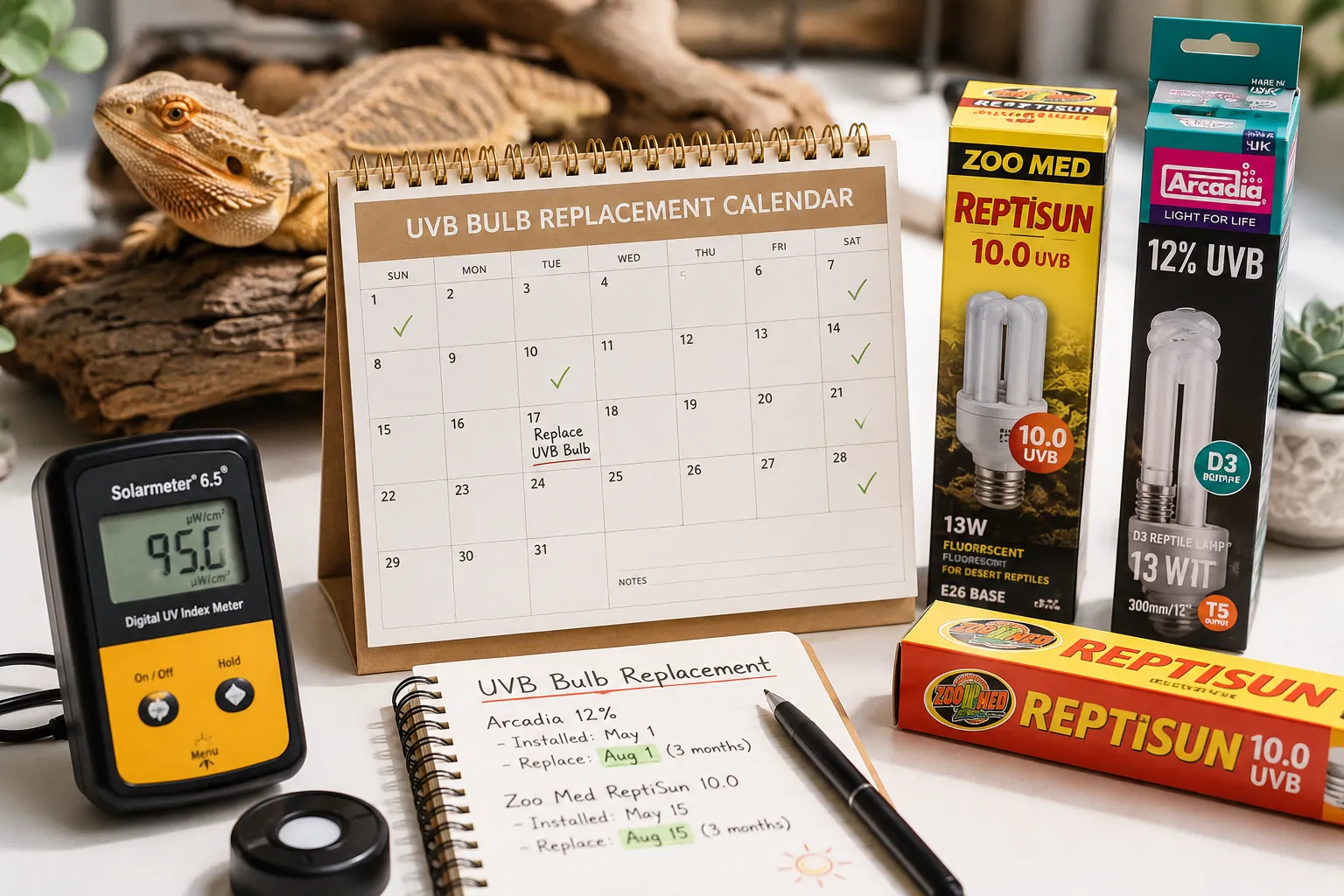
Delayed UVB bulb replacement causes metabolic bone disease (MBD), a progressive and potentially fatal condition where calcium deficiency leads to soft, deformed bones, seizures, and organ failure. The damage begins within weeks of inadequate UVB exposure and becomes irreversible if not caught early.
The Progression of UVB Deficiency
Weeks 1-4 (Early stage):
- Reduced vitamin D3 synthesis
- Decreased calcium absorption from food
- Body begins pulling calcium from bones
- No visible symptoms yet
Weeks 4-8 (Developing MBD):
- Softening of jaw and limb bones
- Reduced appetite and activity
- Slight tremors may appear
- Reversible with immediate intervention
Weeks 8-16 (Advanced MBD):
- Visible bone deformities (curved spine, swollen limbs)
- Difficulty walking or climbing
- Seizures from low blood calcium
- Partially reversible with aggressive treatment
Beyond 16 weeks (Severe MBD):
- Permanent skeletal deformities
- Organ damage from calcium imbalance
- High risk of death
- Irreversible damage even with treatment
Baby and juvenile bearded dragons are especially vulnerable because they’re actively growing. A baby beardie can develop severe MBD in just 6-8 weeks without adequate UVB, while adults may take 3-4 months to show symptoms.
Other consequences of inadequate UVB:
- Weakened immune system leading to infections
- Poor appetite and weight loss
- Reproductive problems in breeding adults
- Shortened lifespan even if MBD is treated
The cruel reality is that MBD often progresses silently until it’s advanced. Your bearded dragon may seem fine for months with an expired bulb, then suddenly crash when calcium reserves are exhausted. This is why calendar-based replacement is critical, you can’t wait for symptoms.
UVB Bulb Replacement Schedule for Bearded Dragons vs Chameleons
Both bearded dragons and chameleons require the same bulb replacement schedule (6-12 months depending on bulb type), but they need different UVB strengths and placement distances. The bulb degrades at the same rate regardless of which species uses it, but the initial setup differs significantly.
Bearded Dragons (Desert Species)
Bearded dragons evolved in the Australian desert with intense, direct sunlight. They require:
- UVB strength: 10-12% UVB output (Zone 3-4 on Ferguson zones)
- Bulb distance: 10-12 inches from basking spot
- Recommended bulbs: Arcadia 12% T5 HO, Zoo Med ReptiSun 10.0 T5 HO
- Replacement: Every 12 months for quality T5 bulbs
- Basking behavior: Extended periods directly under UVB
Chameleons (Forest Species)
Most chameleons (especially veiled and panther chameleons) come from filtered forest environments:
- UVB strength: 5-6% UVB output (Zone 2-3 on Ferguson zones)
- Bulb distance: 8-12 inches from highest branches
- Recommended bulbs: Arcadia 6% T5 HO, Zoo Med ReptiSun 5.0 T5 HO
- Replacement: Every 12 months for quality T5 bulbs
- Basking behavior: Brief exposures with ability to retreat
The key difference isn’t replacement frequency but initial bulb selection. Using a 10.0 bulb for a chameleon can cause eye damage and stress from excessive UVB. Using a 5.0 bulb for a bearded dragon provides insufficient UVB for proper calcium metabolism.
Common mistake: Switching from a bearded dragon to a chameleon (or vice versa) and reusing the old UVB bulb. Always match the bulb strength to the species’ natural habitat, even if the bulb is relatively new.
Both species benefit from the same replacement discipline: mark the installation date, set reminders, and replace on schedule regardless of how the bulb looks.
Are Compact UVB Bulbs or Tube UVB Bulbs Better for Longevity?
Linear tube bulbs (T5 and T8) significantly outlast compact fluorescent bulbs, typically providing 10-12 months of effective UVB compared to just 6 months for compact bulbs. Tube bulbs also distribute UVB more evenly across the terrarium and are less prone to creating dangerous “hot spots” of excessive UV radiation.

【 Complete T5 UVB Lighting Combo Kit】The GREENPAW T5 UVB reptile light fixture comes as a complete lighting kit, including a 8W 10.0 reptile UVB bulb, 12.44-inch terrarium hood, mounting accessories, and power cord. Specifically designed for 16-24 inch reptile terrariums and vivariums. This kit delivers reliable UVB light for reptiles, ideal for new owners.

T5 terrarium kit light fixture:12 inch, 5.9ft power cord of lamp accessories and heat lamp accessories for hanging.Uvb reptile light fixture with removable power cable with convenient on/off switch, t5 uvb reptile light fixture easy to use in vivarium reptile tank.One purchase to meet the lighting needs of your reptile pets. We have carefully matched high-quality T5 reptile light fixture with 10.0 uvb reptile light to provide a perfect lighting environment for your reptile pets.

Simulated Natural Sunlight: REPTI HOME T5 UVB reptile light can provide your reptiles with a lighting area that simulates natural sunlight, making your reptiles in a very comfortable environment. At the same time, the simulated natural light of uvb lights can improve the appetite of reptiles, promote natural activities of reptiles and induce reproductive behavior.
Tube Bulbs (T5 and T8), Recommended
Advantages:
- Longer lifespan (10-12 months for quality brands)
- Even UVB distribution across length of terrarium
- More consistent output over time
- Better coverage for larger enclosures
- Lower risk of eye damage from concentrated UVB
Disadvantages:
- Require dedicated fixture (additional $40-80 cost)
- Bulkier and less flexible for small setups
- Slightly higher initial investment
Best for: Adult bearded dragons in 40-gallon or larger tanks, any permanent setup where you want reliable long-term performance.
Compact Fluorescent Bulbs (Coil Style), Not Recommended
Advantages:
- Fit standard dome fixtures (lower initial cost)
- Compact size for small enclosures
- Easy to find in pet stores
Disadvantages:
- Short lifespan (6 months maximum)
- Uneven UVB distribution creates hot spots
- Higher risk of eye damage from concentrated output
- Less cost-effective over time
- History of quality control issues with some brands
Best for: Temporary setups, quarantine enclosures, or very small tanks where tube fixtures won’t fit (though upgrading tank size is preferable).
Cost Comparison Over 2 Years
T5 HO tube bulb setup:
- Initial fixture: $60
- Bulbs (2 replacements): $80
- Total: $140
Compact fluorescent setup:
- Initial dome fixture: $20
- Bulbs (4 replacements): $120
- Total: $140
The costs are similar over time, but tube bulbs provide superior UVB quality and require fewer replacements. The compact bulb setup requires twice as many bulb changes, increasing the risk of forgetting a replacement.
Bottom line: Invest in a T5 HO fixture with quality tube bulbs for any permanent bearded dragon setup. The improved UVB quality and longer replacement intervals make it the clear winner for longevity and reptile health.
How Much Does It Cost to Replace UVB Bulbs Yearly?
Annual UVB bulb replacement costs $35-90 depending on bulb type and brand, with premium T5 HO tube bulbs at the higher end and compact fluorescent bulbs requiring more frequent replacement at the lower per-bulb cost. This represents one of the essential ongoing expenses of bearded dragon ownership.
Annual Cost Breakdown by Bulb Type
Premium T5 HO tube bulbs (12-month replacement):
- Arcadia 12% T5 HO (24″): $40-45
- Zoo Med ReptiSun 10.0 T5 HO (24″): $35-40
- Replacements per year: 1
- Annual cost: $35-45
Standard T8 tube bulbs (10-12 month replacement):
- Zoo Med ReptiSun 10.0 T8 (24″): $25-30
- Generic brands: $20-25
- Replacements per year: 1
- Annual cost: $20-30
Compact fluorescent bulbs (6-month replacement):
- Zoo Med ReptiSun 10.0 compact: $20-25
- Generic brands: $15-20
- Replacements per year: 2
- Annual cost: $30-50
Mercury vapor bulbs (12-18 month replacement):
- Zoo Med PowerSun: $45-55
- Exo Terra Solar Glo: $40-50
- Replacements per year: 0.67-1
- Annual cost: $30-55
Total First-Year Setup Cost
For a complete UVB lighting system in year one:
- T5 HO fixture: $50-80
- Initial bulb: $35-45
- Replacement bulb (if starting mid-year): $0-45
- Total first year: $85-170
Subsequent years: $35-45 annually for bulb replacement only.
Ways to Save Without Compromising Safety
Smart savings strategies:
- Buy replacement bulbs during online sales (save 10-20%)
- Purchase 2-3 bulbs at once for bulk discounts
- Join reptile forums for group buys
- Set price alerts on Amazon for your specific bulb
- Use manufacturer coupons (Zoo Med occasionally offers them)
False economy (don’t do this):
- Extending bulbs past manufacturer recommendations
- Buying generic brands with unknown replacement schedules
- Using plant grow lights instead of reptile-specific UVB
- Skipping UVB entirely and relying only on supplements
Remember that proper UVB lighting prevents metabolic bone disease, which costs $450-1,050+ to treat. The $35-45 annual bulb cost is cheap insurance for your bearded dragon’s health. Budget for it the same way you budget for quality feeder insects and proper nutrition.
Do All UVB Bulb Brands Need Replacing at the Same Frequency?
No, replacement frequency varies significantly by brand, with premium manufacturers like Arcadia and Zoo Med offering 12-month lifespans while generic brands may need replacement at 6 months or less. Always follow the manufacturer’s specific replacement recommendation printed on the bulb packaging.
Brand-Specific Replacement Schedules
12-month replacement (premium brands):
- Arcadia (all T5 HO models): 12 months
- Zoo Med ReptiSun (T5 HO models): 12 months
- Exo Terra Reptile UVB (T5 HO models): 12 months
10-12 month replacement (standard quality):
- Zoo Med ReptiSun (T8 models): 10-12 months
- Exo Terra Reptile UVB (T8 models): 10-12 months
6 month replacement (compact and budget):
- All compact fluorescent bulbs (any brand): 6 months maximum
- Generic/unknown brands: 6 months to be safe
- Budget tube bulbs (no-name brands): 6 months
12-18 month replacement (mercury vapor):
- Zoo Med PowerSun: 12 months
- Exo Terra Solar Glo: 12 months
- Mega-Ray: 12-18 months (manufacturer claims longer, but 12 months is safer)
Why Brand Matters
The difference comes down to phosphor quality and manufacturing standards. Premium brands use:
- Higher-grade phosphor compounds that resist degradation
- Stricter quality control during manufacturing
- Better glass coatings to protect phosphors
- More conservative output ratings (bulb starts stronger, degrades to safe minimum)
Generic brands often use cheaper phosphors that degrade faster, and their quality control is inconsistent. You might get a bulb that lasts 12 months or one that fails at 4 months, there’s no way to know without testing.
Real-world example: A Zoo Med ReptiSun 10.0 T5 HO tested with a Solarmeter 6.5 typically maintains 80-90% of original UVB output at 12 months. A generic “Reptile UVB 10.0” bulb from an unknown brand may drop to 40-50% output at 6 months.
Common mistake: Assuming all “10.0” or “12%” bulbs are equivalent. The percentage refers to UVB output strength, not quality or longevity. A cheap 10.0 bulb and a premium 10.0 bulb may start at similar output but degrade at vastly different rates.
Bottom line: Stick with Arcadia or Zoo Med ReptiSun for bearded dragons. The premium price ($10-15 more per bulb) buys you reliable 12-month performance and peace of mind.
Can You Test UVB Output Without a Meter at Home?
No, there is no reliable way to test UVB output at home without a UV meter. UVB radiation is invisible to human eyes, and no visual inspection, behavioral observation, or DIY test can accurately measure whether your bulb is producing adequate UVB for your bearded dragon’s health.
Why DIY Testing Doesn’t Work
Methods that don’t work:
- Visual inspection: UVB is invisible; brightness tells you nothing about UV output
- Sunburn test: Exposing your skin to the bulb is dangerous and unreliable (reptile skin responds differently)
- Smartphone apps: Phone cameras have UV filters that block the wavelengths you need to measure
- UV-reactive materials: Glow-in-the-dark items or UV-reactive paper respond to UV-A (320-400nm), not the UVB-B (290-320nm) that reptiles need
- Bearded dragon behavior: By the time your dragon shows symptoms of UVB deficiency, damage has already occurred
The only reliable method is a Solarmeter 6.5 UV meter, which costs $250-280 in 2026. This device specifically measures UVB-B radiation in the 290-320nm range that enables vitamin D3 synthesis.
Is a UV Meter Worth the Investment?
For serious bearded dragon keepers, yes:
- Test new bulbs to verify they meet specifications
- Monitor degradation over time
- Confirm proper UVB levels at basking distance
- Troubleshoot health issues related to lighting
- Verify UVB penetration through screen tops
- Use across multiple reptiles or breeding operations
For budget-conscious keepers:
- Follow manufacturer replacement schedules strictly
- Buy only premium brands (Arcadia, Zoo Med ReptiSun)
- Mark installation dates clearly
- Set calendar reminders
- Replace on schedule regardless of appearance
Alternative: Some reptile veterinarians and specialty pet stores have UV meters available for customer use. Call ahead to ask if you can bring your bulb in for testing (or test in-store before purchase).
What You Can Monitor Without a Meter
While you can’t measure UVB, you can watch for warning signs:
- Basking behavior changes: Spending excessive time under UVB or avoiding it entirely
- Appetite changes: Reduced interest in food
- Activity level: Lethargy or reluctance to move
- Physical symptoms: Soft jaw, tremors, difficulty walking
These symptoms indicate a problem but appear only after damage has begun. Prevention through timely replacement is always better than reacting to symptoms.
Bottom line: If you can afford a Solarmeter 6.5, buy one. If not, stick religiously to replacement schedules and buy quality bulbs. There’s no middle ground for safely testing UVB at home.
Common Mistakes When Replacing Reptile UVB Bulbs
The most common mistakes include forgetting to mark installation dates, placing bulbs too far from basking spots, using bulbs through screen tops without accounting for UVB blockage, and mixing incompatible bulb types with fixtures. These errors can leave your bearded dragon with inadequate UVB despite having a “working” bulb.
Top 10 UVB Replacement Mistakes
1. Not marking the installation date
Write the date directly on the bulb with permanent marker the moment you install it. Relying on memory or “I think it was around…” leads to overdue replacements.
2. Placing bulbs outside the screen top
Screen mesh blocks 30-50% of UVB radiation. Always place UVB bulbs inside the terrarium or use a fixture that sits directly on the screen with no gap. Better yet, remove a section of screen under the fixture.
3. Using the wrong bulb for the fixture
T5 HO bulbs require T5 HO fixtures; T8 bulbs require T8 fixtures. Mixing them produces incorrect output and can damage the bulb or fixture. Check compatibility before purchasing.
4. Positioning bulbs too far from basking spot
UVB intensity follows the inverse square law, doubling the distance reduces UVB to 25% of original strength. Keep bulbs 10-12 inches from basking spots for bearded dragons.
5. Replacing bulbs one at a time in multi-bulb setups
If you use multiple UVB bulbs, replace them all simultaneously. Mixing old and new bulbs creates uneven UVB distribution and makes tracking replacement dates confusing.
6. Assuming compact bulbs last as long as tubes
Compact fluorescent bulbs need replacement at 6 months, not 12. Don’t apply tube bulb replacement schedules to compact bulbs.
7. Buying bulbs without checking expiration dates
UVB bulbs degrade slowly even while sitting on store shelves. Check packaging for manufacture dates and avoid bulbs older than 6-12 months.
8. Using plant grow lights instead of reptile UVB
Plant grow lights produce UV-A and visible light but little to no UVB-B. They’re not interchangeable with reptile-specific UVB bulbs.
9. Forgetting to clean the bulb
Dust and debris on the bulb surface block UVB transmission. Wipe bulbs monthly with a dry cloth (when cool and powered off).
10. Disposing of old bulbs without marking them
Mark expired bulbs as “EXPIRED” immediately after removal so you don’t accidentally reinstall them later. Old bulbs look identical to new ones.
Quick Replacement Checklist
When installing a new UVB bulb:
- ✅ Verify bulb type matches fixture (T5 HO, T8, compact)
- ✅ Check manufacture date on packaging
- ✅ Write installation date on bulb with permanent marker
- ✅ Set calendar reminder for replacement (11 months for 12-month bulbs)
- ✅ Measure distance from bulb to basking spot (10-12 inches)
- ✅ Confirm bulb is inside screen top or screen section is removed
- ✅ Test that bulb lights up properly
- ✅ Mark old bulb as “EXPIRED” before disposal
- ✅ Order replacement bulb 1 month before next change is due
Following this checklist prevents the most common errors and ensures your bearded dragon receives consistent, adequate UVB throughout the year.
Do LED UVB Bulbs Last Longer Than Fluorescent Ones?
True LED UVB bulbs are not yet widely available for reptile keeping in 2026, and the few products marketed as “LED UVB” are often LED visible light combined with separate fluorescent UVB components. When genuine LED UVB technology becomes mainstream, it promises significantly longer lifespans (20,000-50,000 hours) compared to fluorescent bulbs (8,000-12,000 hours), but current options remain limited and expensive.
Current State of LED UVB Technology
Why LED UVB is challenging:
- Producing UVB wavelengths (290-320nm) with LEDs requires specialized materials
- Most LEDs naturally produce longer wavelengths (visible light, UV-A)
- UVB LEDs are expensive to manufacture at scale
- Few products have been tested long-term for reptile health outcomes
Available “LED UVB” products in 2026:
- Arcadia JungleDawn LED Bar: Provides visible light spectrum only, no UVB (despite marketing confusion)
- Hybrid fixtures: Combine LED visible light with separate fluorescent UVB tubes
- Experimental products: A few specialty manufacturers offer true LED UVB, but at $200-400+ per unit with limited availability
Theoretical Advantages of True LED UVB (When Available)
Potential benefits:
- Lifespan of 20,000-50,000 hours (5-15 years at 12 hours/day)
- More energy-efficient than fluorescent
- Instant on/off with no warm-up period
- More durable (no fragile glass tubes)
- Potentially more stable UVB output over time
Potential drawbacks:
- High initial cost ($200-500+ per fixture)
- Limited long-term testing with reptiles
- Uncertain replacement part availability
- May still require periodic testing to verify output
What to Use Right Now
For bearded dragons in 2026, stick with proven fluorescent UVB technology:
- T5 HO fluorescent tubes (Arcadia 12%, Zoo Med ReptiSun 10.0)
- 12-month replacement schedule
- Decades of proven results in reptile keeping
- Affordable ($35-45 per bulb)
When to consider LED UVB:
- Wait for products with at least 2-3 years of documented success in reptile communities
- Look for independent testing by reptile veterinarians or researchers
- Verify that the product produces true UVB-B (290-320nm), not just UV-A
- Confirm replacement parts will be available long-term
Common scam: Products marketed as “full spectrum LED with UVB” that actually produce only visible light and UV-A. Always check specifications for specific UVB-B output measurements in microwatts per square centimeter.
Bottom line: LED UVB technology shows promise for the future, but fluorescent tubes remain the gold standard for bearded dragon lighting in 2026. Don’t experiment with unproven LED products when your pet’s bone health is at stake.
UVB Bulb Replacement for Turtles vs Lizards
Both turtles and lizards require the same UVB bulb replacement schedule (6-12 months depending on bulb type), but aquatic turtles need specialized fixtures that resist moisture damage and may require more frequent cleaning due to humidity. The bulb degradation timeline is identical regardless of species, but setup and maintenance differ.
Aquatic Turtles (Red-Eared Sliders, Painted Turtles, etc.)
UVB requirements:
- 5-10% UVB output depending on species
- Bulb positioned 10-12 inches above basking platform
- Must be protected from water splashing
- Fixture should be moisture-resistant
Replacement schedule:
- Same as lizards: 6-12 months depending on bulb type
- May need more frequent cleaning due to humidity and algae buildup
- Check fixture for corrosion or water damage during each bulb change
Special considerations:
- Use fixtures rated for damp/wet locations
- Ensure basking platform allows turtle to get within 10-12 inches of bulb
- Clean bulb monthly to remove water spots and algae film
- Consider acrylic or glass barriers to protect fixture from splashing (but ensure UVB can penetrate)
Terrestrial Lizards (Bearded Dragons, Leopard Geckos, etc.)
UVB requirements:
- 5-12% UVB output depending on species (bearded dragons need 10-12%)
- Bulb positioned 10-12 inches from basking spot
- Standard fixtures work fine in dry environments
Replacement schedule:
- 6-12 months depending on bulb type
- Less frequent cleaning needed in dry environments
- Standard fixtures last longer without moisture damage
Special considerations:
- Match UVB strength to species’ natural habitat (desert vs forest)
- Ensure adequate basking temperatures in addition to UVB
- Monitor for proper basking behavior
Key Similarities
Both turtles and lizards:
- Use the same UVB bulb types (T5 HO, T8, compact fluorescent)
- Follow identical replacement schedules
- Require UVB for vitamin D3 synthesis and calcium metabolism
- Develop metabolic bone disease without adequate UVB
- Need bulbs positioned at appropriate distances
The main difference is environmental, aquatic turtle setups require moisture-resistant fixtures and more frequent cleaning, but the bulbs themselves degrade at the same rate.
Common mistake: Assuming aquatic turtles need less UVB because they spend time in water. Turtles require just as much UVB as terrestrial reptiles, and water doesn’t provide vitamin D3. They must bask under UVB regularly to stay healthy.
Whether you keep turtles or lizards, mark your calendar, set reminders, and replace UVB bulbs on schedule. The species doesn’t change the fundamental importance of timely replacement.
Frequently Asked Questions
How do I know if my UVB bulb is still working?
The only reliable way is using a Solarmeter 6.5 UV meter to measure UVB output. Visual inspection is useless because bulbs continue producing visible light long after UVB output drops to dangerous levels. Without a meter, follow the manufacturer’s replacement schedule strictly.
Can I use a regular fluorescent bulb instead of a UVB bulb?
No. Regular fluorescent bulbs produce visible light but no UVB-B radiation (290-320nm). Bearded dragons require specific UVB wavelengths to synthesize vitamin D3 and absorb calcium. Using regular bulbs will cause metabolic bone disease.
Do UVB bulbs need to be on 24/7?
No. UVB bulbs should run 10-12 hours per day to mimic natural day/night cycles. Continuous lighting disrupts your bearded dragon’s circadian rhythm and can cause stress. Use a timer to maintain consistent lighting schedules.
What’s the difference between UVB and UVA?
UVB (290-320nm) enables vitamin D3 synthesis and calcium absorption, preventing metabolic bone disease. UVA (320-400nm) supports natural behaviors, appetite, and color vision but doesn’t prevent MBD. Bearded dragons need both, but UVB is critical for survival.
Can I use a UVB bulb from a different brand in my fixture?
Only if the bulb type matches the fixture. T5 HO bulbs require T5 HO fixtures, T8 bulbs require T8 fixtures, and compact bulbs fit standard dome fixtures. Mixing incompatible types produces incorrect output and may damage equipment.
How far should the UVB bulb be from my bearded dragon?
Position the bulb 10-12 inches from the basking spot for bearded dragons using 10-12% UVB bulbs. This distance provides 35-50 μW/cm² of UVB, which is optimal for desert species. Adjust based on UV meter readings if available.
Do I need to replace the UVB bulb if my bearded dragon is brumating?
Yes, if the bulb reaches its replacement date during brumation. Even though your dragon isn’t actively basking, the bulb continues degrading. Replace on schedule so adequate UVB is available when your dragon emerges from brumation.
Can I use a plant grow light for my bearded dragon?
No. Plant grow lights produce UV-A and visible light but insufficient UVB-B for reptile health. They’re not interchangeable with reptile-specific UVB bulbs. Always use bulbs specifically designed and tested for reptile keeping.
What happens if I accidentally use an expired UVB bulb?
Your bearded dragon will begin developing vitamin D3 deficiency within weeks, leading to metabolic bone disease if not corrected. Replace the bulb immediately and monitor for symptoms like lethargy, soft jaw, tremors, or difficulty walking. Consult a reptile veterinarian if symptoms appear.
Should I buy a UVB bulb online or from a pet store?
Both are fine if you buy from reputable sellers. Online retailers often have better prices and selection, but check manufacture dates to avoid old stock. Pet stores allow immediate purchase but may have limited selection. Avoid bulbs older than 6 months from manufacture date.
Can I use a mercury vapor bulb instead of a fluorescent UVB bulb?
Yes, mercury vapor bulbs provide both heat and UVB in a single unit. They work well for large enclosures but produce significant heat, making temperature control more challenging. They also require 12-month replacement despite lasting longer than fluorescent bulbs.
Do I need a UVB bulb if I give my bearded dragon vitamin D3 supplements?
Yes. While D3 supplements help, they don’t fully replace natural UVB synthesis. Bearded dragons evolved to produce vitamin D3 through UVB exposure, and supplements alone may not provide adequate levels. Use both UVB lighting and proper supplementation for optimal health.
Conclusion
Replacing UVB bulbs every 6-12 months is non-negotiable for bearded dragon health. The invisible UVB radiation that prevents metabolic bone disease degrades long before the visible light fails, making calendar-based replacement essential. Invest in quality T5 HO tube bulbs from Arcadia or Zoo Med ReptiSun, mark the installation date directly on the bulb, and set a reminder for 11 months out.
The $35-45 annual cost of proper UVB maintenance is minimal compared to the $450-1,050+ cost of treating metabolic bone disease, not to mention the suffering your bearded dragon endures from preventable bone deformities and organ damage. If you can afford a Solarmeter 6.5 UV meter ($250-280), it’s a worthwhile investment for verifying UVB output and troubleshooting lighting issues.
Take action today:
- Check the installation date on your current UVB bulb right now
- If it’s been more than 12 months (or 6 months for compact bulbs), order a replacement immediately
- Write the installation date on the new bulb with permanent marker
- Set a calendar reminder for 11 months from installation
- Consider upgrading to a T5 HO fixture if you’re currently using compact bulbs
Your bearded dragon depends on you for proper UVB exposure. Unlike diet or temperature issues that show symptoms quickly, UVB deficiency progresses silently until serious damage occurs. Don’t wait for warning signs, replace bulbs on schedule and give your dragon the bone-healthy lighting they need to thrive.
For more guidance on creating the optimal environment for your bearded dragon, explore our resources on proper tank setup, nutrition, and overall care.

【Newly Upgraded Bell-Mouth Design】 :This newly upgraded heating lamp with a TFNN bell-mouth design provides a wider range of UVA/B ultraviolet rays compared to the design of ordinary models. It can simultaneously heat and illuminate multiple reptiles. The light is adjustable, making it suitable for different seasons and various reptiles, and it is extremely convenient to use.
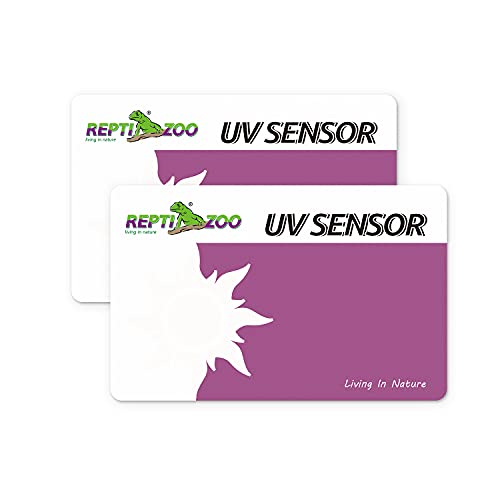
UVB tester reptile card measures the intensity of the UVB rays of UV fluorescent lamps.

Perfect for desert dwelling reptile habitats.


