
Quick Answer
Bearded dragons need humidity levels between 30-40% in their enclosure, mirroring the arid Australian desert environment they come from. Humidity above 50% can lead to respiratory infections and skin problems, while levels below 20% may cause shedding difficulties. During shedding periods, you can temporarily increase humidity to 40-50% in a designated humid hide, but the main enclosure should remain dry.

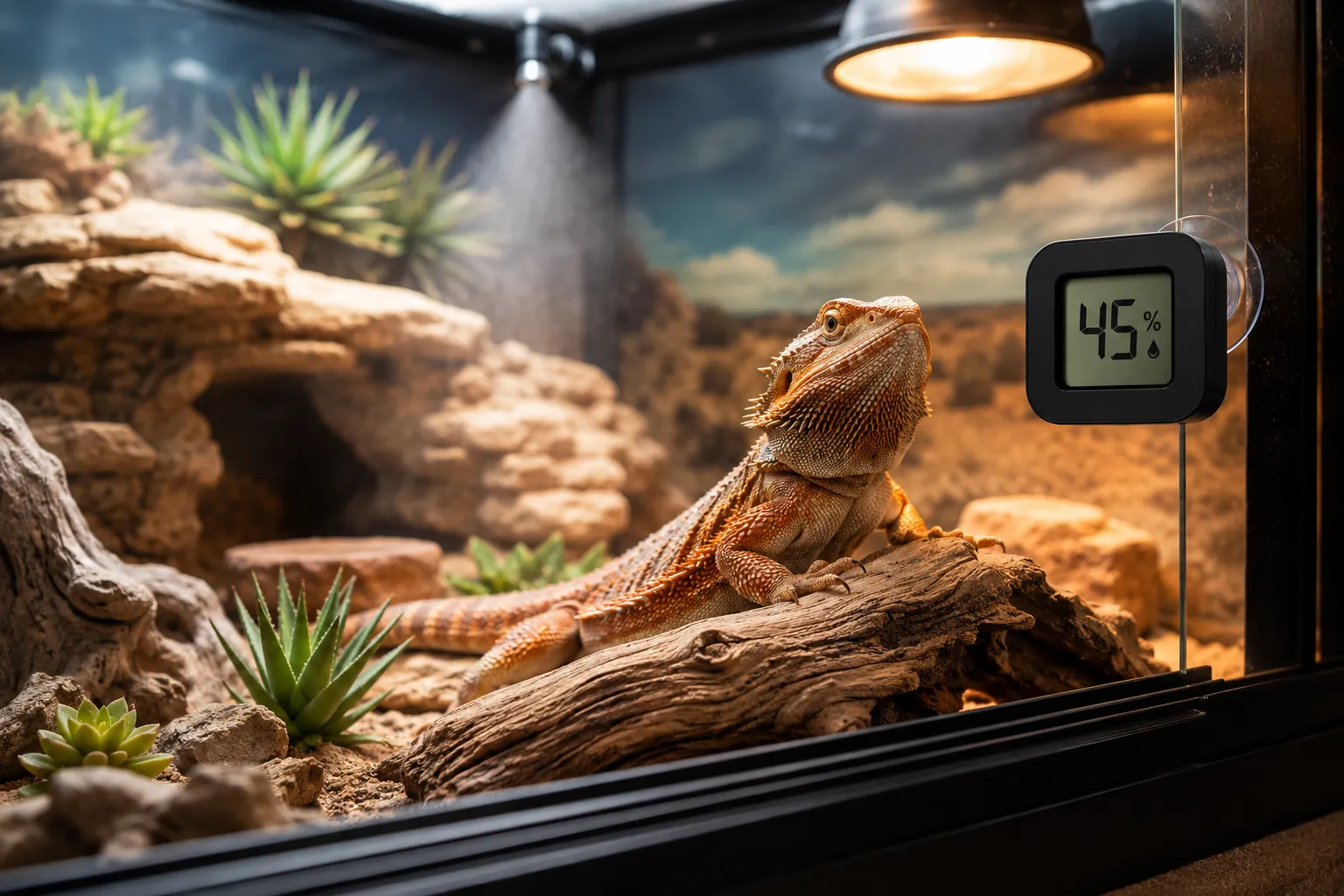
Precision Health Guardian: Your reptile pets are very sensitive to temperature and humidity, and small changes can affect their comfort and even their health. This humidity thermometer utilizes a built-in high-precision measurement chip that monitors the environment with 0.9°F accuracy, ensuring you are always aware of the actual conditions in your animal's tank. It's not just a matter of caring, it's a consideration for your pet's long-term health.

【High-Precision】The thermometer for reptile tank can simultaneously detect humidity and temperature,10s response time, temperature accuracy:±1℉,Humidity accuracy:±5%.Helping you quickly and accurately understand the environment around crawlers, ensuring the long-term health of pets.

Reptile Necessary: Meet the need of Humidity and Temperature measuring for monitoring reptile's living conditions and health. Easily check your pet's living environment. When there are abnormalities, you can timely discovery through reptile thermometer.
Key Takeaways
- Ideal humidity range: 30-40% for adult bearded dragons in the main enclosure
- Shedding periods: Temporarily increase to 40-50% using a humid hide only
- Baby dragons: Slightly higher at 35-40% but still well below 50%
- Measurement matters: Use a digital hygrometer placed at mid-tank level for accurate readings
- High humidity risks: Respiratory infections, scale rot, fungal growth, and bacterial problems
- Low humidity problems: Stuck shed, dehydration, and eye issues
- Quick fixes: Improve ventilation to lower humidity; add a humid hide to raise it temporarily
- Seasonal adjustments: Winter heating may require slight humidity monitoring changes
- Species comparison: Bearded dragons need much drier conditions than tropical reptiles like leopard geckos
What Is the Ideal Humidity Range for Bearded Dragons?

The ideal humidity range for bearded dragons is 30-40%, with 35% being the sweet spot for most healthy adults. This range replicates the dry, arid climate of central Australia where bearded dragons naturally live, and maintaining it is one of the most important aspects of proper bearded dragon care.
Bearded dragons are desert reptiles that evolved in regions with very low atmospheric moisture. Their respiratory systems, skin, and overall physiology are designed for dry environments. When you ask “what humidity do bearded dragons need,” the answer is always “less than most people think.”
Why this range matters:
- 30-35%: Optimal for respiratory health and preventing bacterial growth
- 35-40%: Safe upper range that still prevents moisture-related illness
- Below 30%: Generally safe but may require monitoring during shed cycles
- Above 40%: Risk zone where problems begin to develop over time
Choose 30-35% if:
- Your dragon is healthy with no shedding issues
- You live in a naturally dry climate
- Your enclosure has good ventilation
- Your dragon is an adult
Choose 35-40% if:
- Your dragon is currently shedding
- You have a baby or juvenile dragon
- Your climate is naturally humid and you’re working to reduce it
- You’re using a humid hide for temporary moisture
The key is consistency. Wild fluctuations between 20% and 50% throughout the day stress your dragon more than a steady 35%. When setting up your tank, plan for stable humidity from the start.
How Do I Measure Humidity in a Bearded Dragon Tank?
Use a digital hygrometer placed at mid-tank level, away from water dishes and heat sources, to get accurate humidity readings. Analog dial hygrometers are notoriously inaccurate and should be avoided. Take readings at the same time each day to track patterns.
Best practices for measuring humidity:
- Digital hygrometer placement: Position it at the dragon’s basking level, not on the floor or ceiling
- Multiple units: Use 2-3 hygrometers in different zones (cool side, warm side, basking area)
- Calibration: Test accuracy using the salt test method every few months
- Avoid cheap models: Invest in a quality digital unit with ±3% accuracy or better
Recommended hygrometer features:
- Digital display with large, easy-to-read numbers
- Memory function to track high/low readings
- Temperature and humidity combo units
- Probe sensors for precise placement
- Battery-powered with low-battery indicator
Common measurement mistakes:
- Placing the hygrometer directly under a heat lamp (reads artificially low)
- Positioning it next to a water bowl (reads artificially high)
- Using stick-on analog gauges that lose accuracy quickly
- Only checking humidity once during setup and never again
- Relying on a single hygrometer for the entire enclosure
The best hygrometers for bearded dragon enclosures include models from brands like Zoo Med, Exo Terra, and ThermoPro. Look for units specifically designed for reptile habitats that can handle temperature ranges from 70-110°F without losing accuracy.
Check your hygrometer readings daily, especially when you first set up your enclosure or make changes to heating, ventilation, or water sources. Understanding what humidity bearded dragons need starts with knowing what humidity you actually have.
What Happens If Humidity Is Too High for Bearded Dragons?
High humidity above 50% creates a breeding ground for respiratory infections, scale rot, and fungal growth in bearded dragons. Prolonged exposure to excessive moisture can lead to serious health problems and even death if left untreated.
Immediate effects of high humidity:
- Increased respiratory rate and labored breathing
- Lethargy and reduced appetite
- Mucus around nostrils or mouth
- Frequent gaping (mouth breathing)
- Condensation on tank walls
Long-term health consequences:
- Respiratory infections: Bacterial or fungal pneumonia requiring veterinary treatment
- Scale rot: Bacterial infection causing discolored, soft scales and skin lesions
- Fungal infections: Yellow fungus disease (YFD), which can be fatal
- Weakened immune system: Making dragons susceptible to other illnesses
- Digestive problems: High humidity can disrupt normal gut function
Warning signs your humidity is too high:
- Persistent condensation on tank walls, especially in the morning
- Musty or moldy smell in the enclosure
- Substrate stays damp or clumpy
- Dragon spends excessive time with mouth open
- Visible mold growth on decorations or substrate
- Dragon avoids basking area (trying to escape moisture)
If you notice any of these signs, take immediate action to lower humidity. The longer your dragon lives in high-humidity conditions, the greater the risk of permanent health damage. This is especially critical for understanding how long bearded dragons live in captivity, as environmental stress significantly shortens lifespan.
Emergency steps if humidity spikes above 60%:
- Remove all water dishes temporarily
- Increase ventilation by opening screen tops or adding fans
- Replace damp substrate immediately
- Move the enclosure to a drier room
- Run a dehumidifier near (not in) the tank
- Schedule a vet visit if respiratory symptoms appear
What Happens If Humidity Is Too Low for Bearded Dragons?
Humidity below 20% can cause shedding problems, dehydration, and eye irritation in bearded dragons, though this is far less dangerous than high humidity. Most healthy dragons tolerate low humidity better than excess moisture, but chronic dryness still requires attention.
Effects of low humidity:
- Stuck shed: Skin doesn’t peel off cleanly, especially around toes, tail tip, and face
- Retained eye caps: Old skin stuck over eyes, potentially causing vision problems
- Dehydration signs: Sunken eyes, wrinkled skin, lethargy
- Respiratory irritation: Dry air can irritate nasal passages (though far less risky than damp air)
When low humidity becomes a problem:
Low humidity is primarily an issue during shedding cycles. A dragon living at 25% humidity year-round will likely be fine between sheds but may struggle when it’s time to shed. The solution isn’t to raise overall tank humidity but to provide a humid hide during shedding periods.
Signs your humidity is too low:
- Shed comes off in small pieces rather than large sheets
- Shed remains stuck for more than a week
- Toes or tail tip retain multiple layers of old skin
- Dragon’s skin looks dull or ashy between sheds
- Increased scratching or rubbing against objects
How to address low humidity safely:
- Create a humid hide: Use a covered container with damp sphagnum moss (40-50% humidity inside)
- Offer regular baths: 15-20 minute soaks in shallow lukewarm water during shedding
- Mist lightly: Spray your dragon directly (not the enclosure) once daily during shed
- Check hydration: Ensure fresh water is always available and consider offering water-rich vegetables
The key difference: low humidity problems are temporary and easily fixed during shedding, while high humidity creates chronic health risks. When people ask what humidity bearded dragons need, the answer always errs on the side of drier conditions.

Bearded Dragon Humidity vs Leopard Gecko Humidity Requirements
Bearded dragons need 30-40% humidity while leopard geckos thrive at 30-40% as well, making them similar in requirements, though leopard geckos tolerate slightly higher humidity (up to 50%) better than bearded dragons. Both are arid-climate reptiles, but bearded dragons are more sensitive to moisture-related respiratory issues.
Humidity comparison:
| Species | Ideal Range | Maximum Safe | Minimum Safe | Humid Hide |
|---|---|---|---|---|
| Bearded Dragon | 30-40% | 45% | 20% | 40-50% during shed |
| Leopard Gecko | 30-40% | 50% | 25% | 60-70% always available |
Key differences:
- Respiratory sensitivity: Bearded dragons develop respiratory infections faster in high humidity
- Humid hide use: Leopard geckos need a permanent humid hide; bearded dragons only during shedding
- Shedding patterns: Leopard geckos shed more frequently and rely more heavily on moisture
- Natural habitat: Both are desert dwellers, but bearded dragons come from even drier regions of Australia
Why this matters for multi-species keepers:
If you’re housing both species (in separate enclosures), you can use similar humidity management strategies, but bearded dragons require stricter upper limits. A leopard gecko might tolerate 50% humidity without immediate problems, but a bearded dragon at that level faces real health risks within weeks.
Common mistake: Assuming all desert reptiles have identical needs. While both prefer dry conditions, the acceptable range and tolerance for deviation differ significantly. Always research species-specific requirements rather than applying one-size-fits-all desert reptile care.
Best Hygrometer for Bearded Dragon Enclosure
The best hygrometers for bearded dragon enclosures are digital models with ±3% accuracy, probe sensors, and memory functions to track daily fluctuations. Top choices include the ThermoPro TP50, Zoo Med Digital Thermometer-Humidity Gauge, and Govee Bluetooth Hygrometer for smart monitoring.
Top features to look for:
- Accuracy: ±3% or better (most cheap models are ±5-10%)
- Digital display: Large, backlit screen readable from across the room
- Probe option: Remote sensor you can place exactly where your dragon sits
- Min/max memory: Tracks the highest and lowest readings since last reset
- Dual function: Combined temperature and humidity in one unit
- Calibration: Ability to manually adjust for accuracy
Recommended models:
- ThermoPro TP50: Budget-friendly, accurate, large display, tracks trends
- Zoo Med Digital Combo: Reptile-specific, includes probe, easy mounting
- Govee Bluetooth: Smart monitoring with phone alerts and data logging
- Exo Terra Digital Hygrometer: Reliable, designed for reptile habitats
- AcuRite Pro Accuracy: Professional-grade for serious keepers
Placement strategy:
- Place one hygrometer on the cool side at mid-level
- Place another on the warm side near (but not in) the basking zone
- If using a humid hide, place a third inside to monitor moisture levels
- Avoid placing directly on substrate or touching tank walls
Calibration test (salt test method):
- Mix 1 tablespoon salt with a few drops of water to make a paste
- Place paste in a small container with the hygrometer
- Seal in a plastic bag for 6-8 hours
- Reading should be exactly 75% (adjust if different)
Investing in quality hygrometers is essential for answering “what humidity do bearded dragons need” with actual data rather than guesswork. A $15 digital hygrometer prevents thousands in vet bills from humidity-related illness.
How to Lower Humidity in Bearded Dragon Tank
To lower humidity in a bearded dragon tank, improve ventilation by switching to a screen top, remove or reduce water dish size, replace damp substrate, and use a dehumidifier in the room if needed. Most high-humidity problems stem from poor airflow and excessive water sources.
Immediate fixes (within hours):
- Replace solid lids with screen tops: Glass or plastic lids trap moisture
- Remove standing water: Take out large water bowls or move them to the cool side only
- Increase air circulation: Add a small fan near (not blowing directly into) the enclosure
- Check substrate: Replace any damp bedding with fresh, dry material
- Reduce misting: Stop any misting or fogging systems immediately
Long-term solutions:
- Switch substrate: Use tile, reptile carpet, or paper towels instead of moisture-retaining options like coconut fiber
- Improve room conditions: Run a dehumidifier in the room housing the enclosure
- Adjust heating: Ensure basking lights are strong enough to create proper temperature gradients (heat helps reduce humidity)
- Relocate the tank: Move away from bathrooms, kitchens, or naturally humid rooms
- Check for leaks: Inspect misting systems, water dishes, and humid hides for spills
Ventilation upgrades:
- Replace half-screen lids with full-screen tops
- Add ventilation holes to wooden enclosures (top and bottom for airflow)
- Use PVC or melamine enclosures with built-in ventilation panels
- Avoid glass aquariums with limited top ventilation
Common causes of high humidity:
- Oversized water dishes that increase evaporation
- Misting systems designed for tropical reptiles
- Damp substrate from spills or poor drainage
- Insufficient heating allowing moisture to accumulate
- Humid room environment (basements, bathrooms)
- Too many live plants releasing moisture
What NOT to do:
- Don’t eliminate water entirely (dragons still need drinking water)
- Don’t use heat to “dry out” the tank excessively (creates other problems)
- Don’t ignore the issue hoping it resolves itself
- Don’t add chemical desiccants that could harm your dragon
If you’ve tried these steps and humidity remains above 45%, the problem likely lies in your room’s ambient humidity. A room dehumidifier running nearby (not inside the tank) can make a significant difference, especially in naturally humid climates or during summer months.
How to Increase Humidity for Bearded Dragon Shedding
To increase humidity for bearded dragon shedding, create a humid hide using a covered container with damp sphagnum moss (40-50% humidity inside), offer daily 15-minute lukewarm baths, and lightly mist your dragon directly once per day. Never raise the entire enclosure’s humidity above 40%.
The humid hide method (best approach):
- Container: Use a plastic storage container or hide box with an entrance hole
- Substrate: Fill with damp (not soaking) sphagnum moss or paper towels
- Placement: Position on the warm side but not directly under the basking light
- Maintenance: Re-dampen moss daily and replace weekly to prevent mold
- Monitoring: Place a small hygrometer inside to maintain 40-50%
Bath routine during shedding:
- Fill a shallow container with lukewarm water (95-100°F)
- Water level should reach your dragon’s shoulders, not cover the head
- Soak for 15-20 minutes once daily
- Gently rub shedding areas with a soft toothbrush if needed
- Pat dry before returning to the enclosure
Direct misting technique:
- Use a spray bottle with dechlorinated water
- Mist your dragon’s body directly (avoid the face)
- Do this once daily, preferably in the morning
- Let your dragon dry under the basking light afterward
- Never mist the entire enclosure or substrate
What NOT to do:
- Don’t raise overall tank humidity above 40% (creates respiratory risk)
- Don’t peel shed manually (causes skin damage and stress)
- Don’t leave your dragon in water unsupervised
- Don’t use hot water (causes burns) or cold water (causes stress)
- Don’t mist at night when temperatures drop
Signs your dragon needs shedding help:
- Shed has been stuck for more than 10 days
- Skin is constricting toes or tail tip (circulation risk)
- Dragon is scratching excessively or rubbing against objects
- Retained eye caps affecting vision
- Multiple layers of old shed building up
When to see a vet:
If shed remains stuck after two weeks of humid hide use and daily baths, or if you notice swelling, discoloration, or loss of circulation in toes or tail, schedule a veterinary visit. Stuck shed can lead to tissue death in extreme cases.
The key to understanding what humidity bearded dragons need during shedding is recognizing that temporary, localized moisture is safe, but raising the entire enclosure’s humidity is dangerous. Think of the humid hide as a “moisture spa” your dragon can visit as needed, not a permanent environmental change.
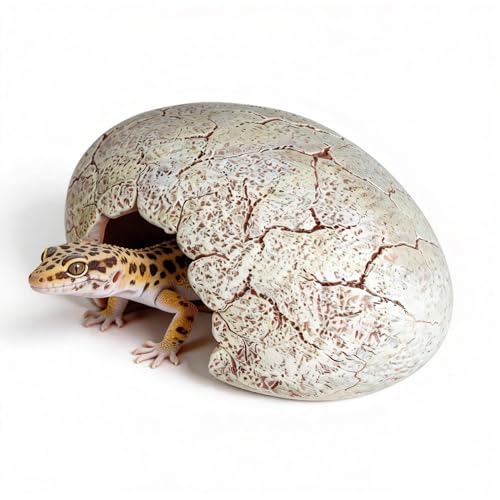
Unique Dinosaur Egg Design & Realistic Look - Capture your pet's natural instincts with our uniquely designed Dinosaur Egg Reptile Hide. Its realistic, textured appearance seamlessly blends into desert or tropical terrarium decor, providing an enchanting and naturalistic centerpiece for your bearded dragon tank or leopard gecko habitat.

Compact Dimensions: Measures 9 inches by 6.75 inches by 3 inches, providing an appropriately sized humid hide for various reptile species

【Heat Storage Slate Stone】The bearded dragon basking platform is designed with a heat-absorbing slate at the top, which absorbs heat from sunlight and heat lamps during the day and slowly releases warmth at night, mimicking the temperature changes in the natural habitat and providing a comfortable and healthy back-bathing environment for the Bearded Dragon.
Do Baby Bearded Dragons Need Different Humidity Than Adults?
Baby bearded dragons need slightly higher humidity at 35-40% compared to adults at 30-40%, but the difference is minimal and both age groups should never exceed 45%. Babies are more sensitive to dehydration during shedding since they shed more frequently, but they’re equally vulnerable to respiratory infections from excess moisture.
Age-based humidity guidelines:
- Hatchlings (0-2 months): 35-40%, with careful monitoring during frequent sheds
- Juveniles (2-12 months): 35-40%, gradually transitioning to adult levels
- Sub-adults (12-18 months): 30-40%, adult care applies
- Adults (18+ months): 30-40%, standard maintenance range
Why babies need slightly more moisture:
- Shed every 3-4 weeks compared to adults’ 6-8 weeks
- Smaller body size means faster dehydration
- Still developing immune systems need extra hydration support
- More active growth requires proper skin elasticity
Important caveat: The 5% difference is subtle. Don’t interpret “babies need more humidity” as permission to keep them at 50-60%. A baby dragon at 55% humidity faces the same respiratory infection risks as an adult.
Special considerations for baby dragons:
- Smaller water dishes: Prevents drowning risk but still provides drinking water
- More frequent baths: 2-3 times per week during shedding periods
- Humid hide access: Offer a humid hide starting at 2 months old
- Closer monitoring: Check humidity twice daily instead of once
- Substrate choice: Use paper towels or reptile carpet to prevent accidental ingestion and maintain consistent moisture levels
Common mistakes with baby dragon humidity:
- Assuming babies are tropical and need 60%+ humidity (they don’t)
- Keeping substrate damp to “help with hydration” (causes respiratory issues)
- Misting the entire enclosure multiple times daily (too much moisture)
- Using heat lamps that are too weak, allowing humidity to climb
- Comparing baby bearded dragon needs to baby tropical reptiles
Transition timeline:
As your dragon grows, gradually reduce humidity from 40% to 35% over the first year. This isn’t a dramatic shift, you’re simply allowing natural seasonal variation rather than artificially maintaining the higher end of the range. By 12 months, treat your dragon as an adult regarding humidity needs.
For more information on setting up appropriate housing as your dragon grows, see our guide on tank size requirements.
Can High Humidity Make My Bearded Dragon Sick?
Yes, high humidity above 50% can make your bearded dragon seriously sick, causing respiratory infections, scale rot, fungal diseases, and weakened immune function. Respiratory infections from high humidity are one of the leading causes of death in captive bearded dragons and require immediate veterinary treatment.
How high humidity causes illness:
- Bacterial growth: Warm, moist air creates ideal conditions for harmful bacteria
- Fungal spores: Mold and fungus thrive above 50% humidity
- Compromised breathing: Excess moisture in airways makes breathing difficult
- Immune suppression: Chronic stress from wrong humidity weakens disease resistance
- Skin barrier breakdown: Constant moisture damages protective skin layers
Specific diseases linked to high humidity:
- Respiratory infections (RI): Bacterial or fungal pneumonia with symptoms including wheezing, mucus discharge, open-mouth breathing, lethargy, and loss of appetite
- Yellow fungus disease (YFD): Often fatal fungal infection causing yellow-brown skin discoloration, crusty lesions, and systemic infection
- Scale rot: Bacterial infection creating soft, discolored scales, blisters, and open sores
- Mouth rot (stomatitis): Bacterial infection of the mouth and gums, often secondary to respiratory issues
- Parasitic infections: High humidity increases parasite reproduction rates
Timeline of illness development:
- Days 1-7: Dragon may seem fine but bacteria begin colonizing
- Weeks 2-3: Subtle signs appear (reduced appetite, slight lethargy)
- Weeks 4-6: Obvious symptoms develop (breathing problems, visible infection)
- Months 2-3: Chronic illness becomes established, harder to treat
Emergency symptoms requiring immediate vet care:
- Audible wheezing, clicking, or crackling sounds when breathing
- Mucus or bubbles around nostrils or mouth
- Persistent open-mouth breathing (not just basking behavior)
- Lethargy combined with loss of appetite for more than 3 days
- Visible skin lesions, discoloration, or swelling
- Tilted head or loss of balance
Treatment costs and prognosis:
Respiratory infections typically require 2-4 weeks of injectable antibiotics, costing $200-500 in veterinary care. Yellow fungus disease is often fatal even with aggressive treatment. Scale rot requires antibiotics and wound care. Prevention through proper humidity is far easier and cheaper than treatment.
Prevention checklist:
- Maintain humidity at 30-40% consistently
- Use a reliable digital hygrometer and check daily
- Ensure proper ventilation with screen tops
- Keep substrate dry and clean
- Remove water dishes at night if humidity climbs
- Schedule annual vet checkups to catch early signs
Understanding what humidity bearded dragons need isn’t just about comfort, it’s about preventing life-threatening illness. High humidity is one of the most common and most preventable causes of serious health problems in captive bearded dragons.
Common Mistakes With Bearded Dragon Humidity Levels
The most common mistakes with bearded dragon humidity levels include using inaccurate analog hygrometers, misting the entire enclosure daily, keeping oversized water bowls, and assuming all reptiles need tropical humidity. These errors often stem from misinformation or applying care guides meant for different species.
Top 10 humidity mistakes:
- Using cheap analog hygrometers: These dial gauges are often 10-20% inaccurate and give false security
- Daily misting routines: Misting is for tropical reptiles, not desert species like bearded dragons
- Oversized water dishes: Large bowls increase evaporation and raise humidity unnecessarily
- No ventilation: Glass tanks with solid lids trap moisture like greenhouses
- Damp substrate: Using coconut fiber, moss, or soil that retains moisture
- Ignoring seasonal changes: Not adjusting for summer humidity or winter heating
- Confusing species needs: Applying care guides for iguanas, chameleons, or other tropical reptiles
- Never checking humidity: Setting up the tank once and assuming it stays constant
- Raising humidity for all sheds: Increasing entire enclosure humidity instead of using a humid hide
- Keeping tanks in humid rooms: Placing enclosures in bathrooms, basements, or kitchens
Why these mistakes happen:
- Misinformation online: Many care sheets are outdated or written for different species
- Pet store advice: Staff often lack species-specific knowledge
- Tropical reptile bias: Most reptile care content focuses on tropical species
- Visual cues: Condensation on glass “looks healthy” to new keepers
- Overcorrection: Seeing stuck shed and overcompensating with too much humidity
How to avoid these mistakes:
- Research bearded dragon-specific care from reputable sources
- Join bearded dragon communities and forums for species-specific advice
- Invest in quality equipment (digital hygrometers, proper heating)
- Monitor humidity daily, especially when first setting up
- Understand that bearded dragons are desert reptiles with unique needs
- When in doubt, err on the side of drier conditions
Red flags you’re making humidity mistakes:
- Persistent condensation on tank walls
- Musty smell in the enclosure
- Dragon constantly has mouth open (not just while basking)
- Frequent respiratory issues or vet visits
- Substrate stays damp or clumpy
- Mold growth on decorations or walls
Course correction:
If you recognize yourself making any of these mistakes, don’t panic. Most humidity problems can be fixed within 24-48 hours by improving ventilation, removing excess water sources, and replacing damp substrate. Monitor your dragon for any signs of respiratory distress and consult a reptile vet if symptoms appear.
The question “what humidity do bearded dragons need” has a clear answer (30-40%), but implementing it correctly requires avoiding these common pitfalls. Learn from others’ mistakes rather than making them yourself.
Do Bearded Dragons Need a Humid Hide?
Bearded dragons need a humid hide only during shedding periods, not as a permanent fixture. Unlike leopard geckos that require constant access to a humid hide, bearded dragons should have one available when you notice shedding starting, then it can be removed once the shed is complete.
When to provide a humid hide:
- When you first notice your dragon’s skin becoming dull or grayish (pre-shed)
- During active shedding when skin is peeling
- If shed remains stuck after 7-10 days
- When you observe your dragon scratching excessively
When NOT to provide a humid hide:
- Year-round as a permanent feature (unnecessary and risky)
- Between sheds when skin looks normal
- If your dragon has respiratory symptoms
- When overall tank humidity is already above 40%
How to create an effective humid hide:
- Container: Use a plastic hide box, storage container, or cave with a single entrance
- Size: Large enough for your dragon to fit comfortably but cozy enough to retain moisture
- Substrate: Damp sphagnum moss, paper towels, or reptile-safe substrate
- Moisture level: Damp to the touch but not dripping wet
- Location: Warm side of the tank but not directly under the basking light
- Maintenance: Re-dampen daily and replace substrate weekly to prevent mold
Humid hide vs. overall humidity:
This is a critical distinction. A humid hide creates a microclimate of 40-50% humidity inside a small space, while the rest of the enclosure remains at 30-40%. Your dragon can enter the hide when it needs moisture for shedding, then return to the dry environment for normal activity.
Signs your dragon is using the humid hide effectively:
- Spends 1-2 hours per day inside during shedding
- Shed comes off in large, complete pieces
- No stuck shed on toes, tail, or face
- Returns to normal basking behavior between hide visits
Signs the humid hide isn’t working:
- Dragon never enters the hide (may be too small or poorly positioned)
- Shed still sticks despite hide availability
- Moss or substrate is bone dry (needs more frequent dampening)
- Mold growing inside (too wet or not cleaned regularly)
Alternative to humid hides:
If your dragon refuses to use a humid hide, daily lukewarm baths during shedding work just as well. Some dragons simply prefer soaking to using enclosed spaces. Offer both options and let your dragon choose what works best.
For more insights into normal bearded dragon behavior patterns, including how they interact with their environment during shedding, check our behavior guide.
What Humidity Do Bearded Dragons Need in Winter?
Bearded dragons need the same 30-40% humidity in winter as in summer, but winter heating systems often create drier air that requires monitoring. Central heating and space heaters can drop humidity below 20%, which may cause shedding difficulties, while poor ventilation in closed-up homes can raise humidity above safe levels.
Winter humidity challenges:
- Forced-air heating: Can drop room humidity to 15-25%
- Closed windows: Reduces air circulation and can trap moisture
- Increased basking time: Dragons spend more time under heat, which affects local humidity
- Room humidifiers: Often used for human comfort but can raise tank humidity too high
How to maintain proper humidity in winter:
- Monitor more frequently: Check hygrometer twice daily instead of once
- Adjust water dish size: Slightly larger dish if room air is very dry (below 25%)
- Maintain ventilation: Keep screen tops in place even when room is cold
- Position carefully: Keep enclosure away from heating vents and radiators
- Use room humidifiers wisely: If using one for human comfort, place it far from the tank
Winter-specific problems:
- Stuck shed from dry air: More common in winter when indoor humidity drops
- Respiratory issues from poor ventilation: Closed-up homes trap moisture
- Inconsistent readings: Heating cycles cause humidity fluctuations throughout the day
- Condensation from temperature differences: Cold windows near warm tanks create moisture
Regional considerations:
- Dry winter climates (Southwest US): May need to offer more frequent baths during shedding
- Humid winter climates (Southeast US): May need dehumidifiers even in winter
- Cold climates (Northern US/Canada): Balance between heating and ventilation becomes critical
- Mild climates (West Coast): Usually fewer winter adjustments needed
Heating equipment and humidity:
Different heating methods affect humidity differently:
- Ceramic heat emitters: Dry the air more than other heat sources
- Heat mats: Minimal effect on humidity
- Basking bulbs: Moderate drying effect
- Mercury vapor bulbs: Strong drying effect
If you’re using multiple heat sources in winter, you may need to compensate with slightly more available water or more frequent shedding baths. However, never raise overall tank humidity above 40% to compensate for winter dryness.
Winter monitoring schedule:
- Check humidity morning and evening
- Record readings to identify patterns
- Adjust water dish size or placement as needed
- Increase bath frequency during sheds
- Watch for signs of respiratory issues from poor air quality
The answer to “what humidity do bearded dragons need in winter” is the same as any other season: 30-40%. The difference is that winter conditions require more active management to maintain that range.
Is 40 Percent Humidity OK for Bearded Dragons?
Yes, 40% humidity is perfectly fine for bearded dragons and sits at the upper end of the ideal 30-40% range. This level is safe for long-term health, won’t cause respiratory issues, and provides enough moisture to support healthy shedding without creating risks associated with higher humidity.
Why 40% is safe:
- Still well below the 50% threshold where respiratory problems begin
- Provides adequate moisture for normal skin health
- Reduces risk of stuck shed without creating dampness
- Matches the higher end of natural habitat conditions
- Safe for all ages from hatchlings to adults
When 40% is ideal:
- During shedding periods (but not higher)
- For baby and juvenile dragons that shed frequently
- In naturally dry climates where maintaining 30% is difficult
- When using tile or other non-absorbent substrates
- For dragons with a history of minor shedding difficulties
When to aim lower (30-35%):
- If your dragon has any history of respiratory issues
- In naturally humid climates where 40% is hard to maintain
- During summer when ambient humidity rises
- If using substrate that retains any moisture
- For dragons with no shedding problems
The 40% vs. 45% distinction:
This 5% difference matters more than it seems. At 40%, you’re still in the safe zone with a buffer before problems start. At 45%, you’re entering the risk zone where prolonged exposure can cause issues. At 50%, you’re in active danger territory.
Monitoring 40% humidity:
- Check that it’s a consistent 40%, not fluctuating between 30-50%
- Ensure it’s measured at dragon level, not floor or ceiling
- Verify your hygrometer is accurate (use the salt test)
- Watch for any signs of respiratory stress even at this safe level
- Be prepared to lower it if you notice any health changes
Common scenarios:
- “My humidity is always 40%,is that OK?” Yes, that’s fine long-term.
- “My humidity fluctuates between 35-45%,is that OK?” Yes, as long as it doesn’t spike above 45% regularly.
- “Should I try to lower 40% to 35%?” Only if it’s easy to do so; 40% is already safe.
- “Can I go higher than 40% during shedding?” Only in a humid hide, not the entire enclosure.
Regional reality:
Some climates make maintaining exactly 35% difficult. If you live in a region where ambient humidity naturally sits at 40%, don’t stress about lowering it to 35%. The difference is minimal, and the stress of constant environmental manipulation can be worse than the 5% humidity difference.
The key takeaway: 40% humidity is safe, healthy, and appropriate for bearded dragons. It’s not a problem that needs fixing unless it starts climbing higher or your dragon shows signs of illness.
Frequently Asked Questions
What is the best humidity level for bearded dragons?
The best humidity level for bearded dragons is 30-40%, with 35% being ideal for most healthy adults. This range mimics their natural Australian desert habitat and prevents both respiratory infections from excess moisture and shedding problems from excessive dryness.
How do I know if my bearded dragon’s humidity is too high?
Signs of high humidity include persistent condensation on tank walls, labored breathing, frequent mouth gaping, lethargy, mucus around nostrils, and a musty smell in the enclosure. If your hygrometer reads above 50%, take immediate action to improve ventilation and remove moisture sources.
Can I mist my bearded dragon daily?
You should not mist your bearded dragon’s enclosure daily, as this raises humidity to dangerous levels. Instead, mist your dragon directly once per day only during shedding periods, allowing them to dry under the basking light afterward. Daily enclosure misting is for tropical reptiles, not desert species.
What happens if bearded dragon humidity is at 50%?
Humidity at 50% puts your bearded dragon at risk for respiratory infections, scale rot, and fungal diseases. While not immediately life-threatening, prolonged exposure to 50% humidity will likely cause health problems within weeks. Lower humidity to 30-40% as soon as possible.
Do bearded dragons need a water bowl?
Yes, bearded dragons need a water bowl for drinking, but it should be small and shallow to minimize evaporation that raises humidity. Place it on the cool side of the enclosure and consider removing it at night if humidity climbs above 40%.
How often should I check my bearded dragon’s humidity?
Check your bearded dragon’s humidity at least once daily, preferably at the same time each day to track patterns. During setup, seasonal changes, or when making enclosure modifications, check twice daily (morning and evening) to ensure stability.
What substrate is best for controlling humidity?
Tile, reptile carpet, and paper towels are best for controlling humidity because they don’t retain moisture. Avoid coconut fiber, moss, soil, or sand, which absorb and hold water, making it difficult to maintain proper dry conditions.
Can high humidity kill my bearded dragon?
Yes, high humidity can kill your bearded dragon by causing respiratory infections or yellow fungus disease, both of which can be fatal if untreated. Respiratory infections are one of the leading causes of death in captive bearded dragons, and high humidity is the primary trigger.
Should I use a humidifier for my bearded dragon?
No, you should never use a humidifier for a bearded dragon enclosure. Bearded dragons need dry conditions, and humidifiers are designed for tropical species. If anything, you may need a dehumidifier in the room to lower excessive ambient humidity.
How long does it take to lower humidity in a bearded dragon tank?
With proper ventilation changes (switching to a screen top, removing water sources, replacing damp substrate), you can lower humidity from 60% to 40% within 2-4 hours. Lowering from 45% to 35% may take 24-48 hours as the enclosure fully dries out.
What’s the difference between humidity for baby and adult bearded dragons?
Baby bearded dragons need slightly higher humidity at 35-40% compared to adults at 30-40%, but the difference is minimal. Both age groups should never exceed 45%, and babies are equally vulnerable to respiratory infections from excess moisture despite needing marginally more hydration support.
Is 60% humidity dangerous for bearded dragons?
Yes, 60% humidity is very dangerous for bearded dragons and will likely cause respiratory infections within days to weeks. This level is far above their natural habitat conditions and creates ideal conditions for bacterial and fungal growth. Lower humidity immediately and monitor for signs of illness.
Conclusion
Understanding what humidity bearded dragons need, 30-40% with 35% being ideal, is fundamental to keeping your dragon healthy and preventing serious respiratory infections, scale rot, and fungal diseases. Unlike tropical reptiles, bearded dragons are desert dwellers that thrive in dry conditions and suffer when exposed to excess moisture.
Key actions to take today:
- Invest in a quality digital hygrometer and place it at mid-tank level to get accurate readings
- Check your current humidity and make immediate adjustments if it’s above 45% or below 20%
- Improve ventilation by switching to a screen top if you’re using a solid lid
- Create a humid hide for shedding periods only, not as a permanent fixture
- Monitor daily until you’re confident your setup maintains stable 30-40% humidity
- Remove excess water sources like oversized bowls that increase evaporation
- Replace moisture-retaining substrate with tile, reptile carpet, or paper towels
The difference between proper and improper humidity can mean the difference between a healthy dragon that lives 10-15 years and one that suffers from chronic respiratory infections requiring expensive veterinary care. Most humidity-related health problems are completely preventable with proper setup and monitoring.
Remember that temporary low humidity during shedding is far less dangerous than chronic high humidity year-round. When in doubt, err on the side of drier conditions and use humid hides or baths to address specific shedding needs rather than raising overall enclosure humidity.
Start by checking your humidity right now with a reliable digital hygrometer. If you don’t have one, that’s your first purchase. If your readings are outside the 30-40% range, use the strategies in this guide to make corrections today. Your bearded dragon’s long-term health depends on getting this critical environmental factor right.
For more comprehensive guidance on creating the perfect environment for your bearded dragon, explore our resources on proper tank setup and understanding normal behaviors that indicate your dragon is thriving in optimal conditions.

【Size Matter】Phailozoo 120 gallon reptile terrarium measures 48" Lx 24" W x 24"H, perfect for desert and rainforest bioactive setups, such as bearded dragon tank, snake tank, and lizard tank. Spacious playground for your beloved reptiles to explore and thrive while being safe.

【Automatic Humidity Control & Temperature Regulation】 Set your desired humidity level and temperature with the built-in hygrometer and thermostat. The fan will automatically activate when humidity exceeds your preset threshold, ensuring your reptile tank stays comfortable and safe.

1.【Binano Portable and Foldable Reptile Habitats】: Introducing portable and foldable designs, our reptile terrariums are perfect for travel and temporary pet placement. They provide unmatched convenience without occupying much space, offering a hassle-free solution for on-the-go reptile care.


