
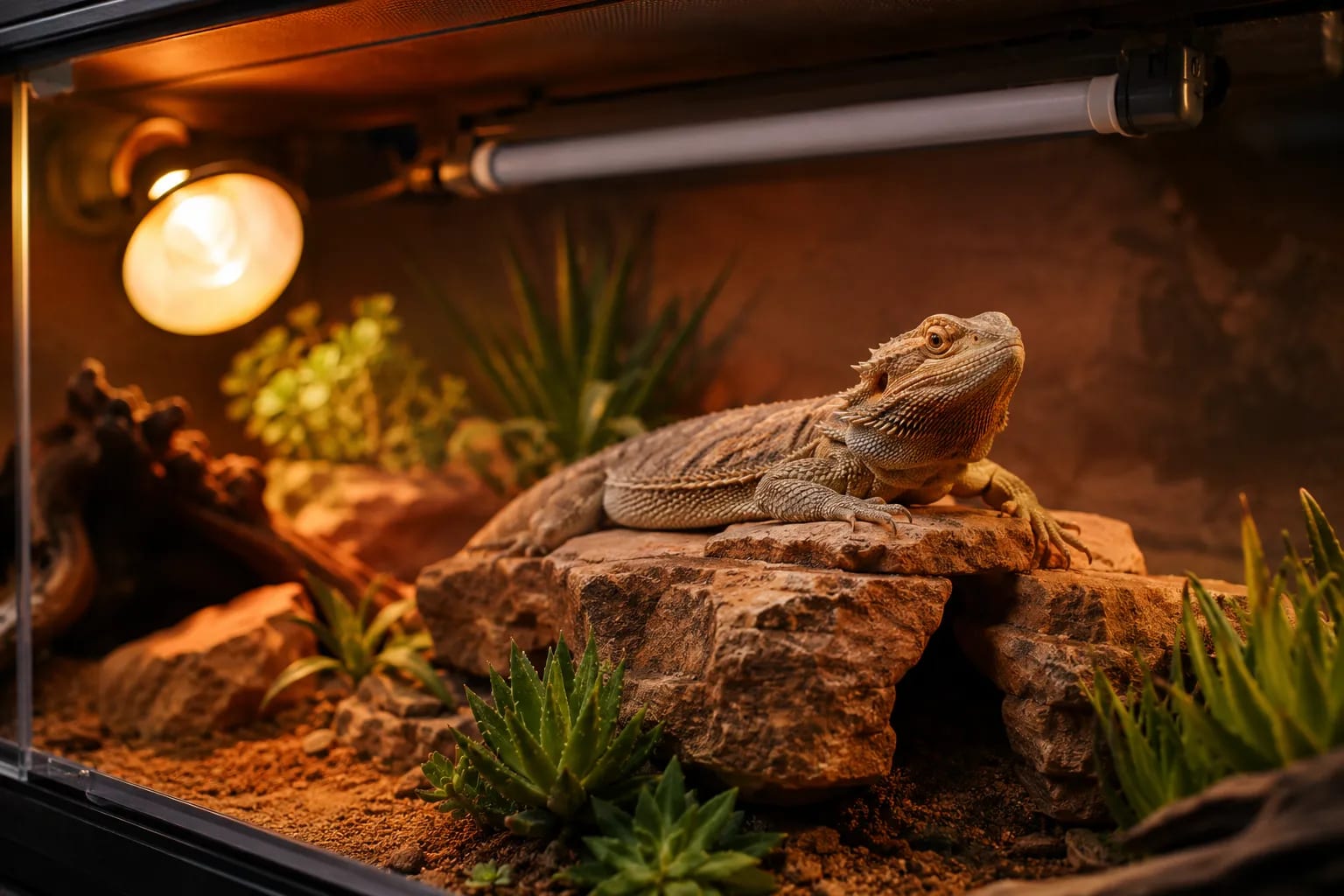
Quick Answer: No, bearded dragons do not need UVB at night. UVB lighting should only be provided during the day for 10-14 hours to mimic their natural Australian habitat. At night, turn off all UVB and visible lights to allow your dragon to rest in darkness or near-darkness, using only supplemental heat sources like ceramic heat emitters if temperatures drop below 65°F.
Key Takeaways
- Turn off UVB at night, Bearded dragons need complete darkness or near-darkness to maintain healthy sleep cycles
- 10-14 hours of UVB daily, Provide UVB lighting only during daytime hours to match natural circadian rhythms
- Use ceramic heat emitters for nighttime warmth, If your tank drops below 65°F at night, use non-light-emitting heat sources
- 24/7 UVB causes stress and health problems, Constant light exposure disrupts sleep, suppresses immune function, and causes behavioral issues
- Baby and adult dragons follow the same schedule, All ages need the same day/night UVB cycle
- Nighttime temperatures can safely drop to 65-70°F, Bearded dragons naturally experience cooler nights in the wild
- Red or blue “night lights” are not recommended, These still emit visible light that can disturb sleep patterns
🌞🌞Higher UVB Output Value. T5 10.0 8W UVB reptile light fixture is 12 inch. Higher UVB output promote reptiles vitamin D3 synthesis and help them grow better. And the reptile UVB light also can help promote the absorption of their calcium and phosphorus, improve their reproductive behavior and boost their immunity.
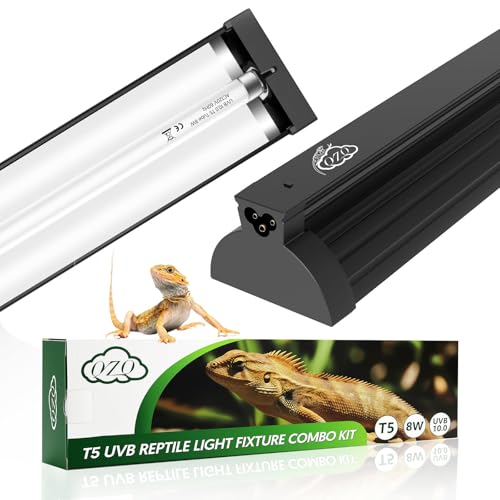
T5 UVB Reptile Light Fixture Combo Kit: The QZQ T5 UVB reptile light features a 5.9ft detachable power cord, a convenient on/off switch, and multiple mounting accessories for easy installation. Whether you're setting up a reptile tank or terrarium, this reptile light fixture meets your reptile lighting needs, providing your pets with the perfect 10.0 UVB lighting environment for healthy growth

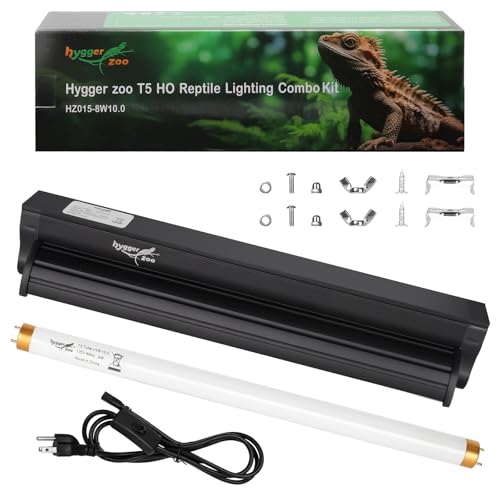
【T5 UVB Reptile Light with UV Sensor Card - Test with Easy】Stop guessing if your bulb is working! Every T5 HO 10.0 8W reptile light fixture combo kit includes a UV sensor card to verify UV presence instantly. A purple glow confirms the bulb is emitting UVB, providing a visual "With/Without" status. Since UVB Lamp's UVB degrades while light stays visible, our indicator ensures your chameleon or turtle gets necessary UVB light for reptiles. Note: Card detects presence, not exact levels. Replace the UVB reptile light every 6-12 months for optimal health.
Do Bearded Dragons Need UVB Light at Night or Just During the Day?
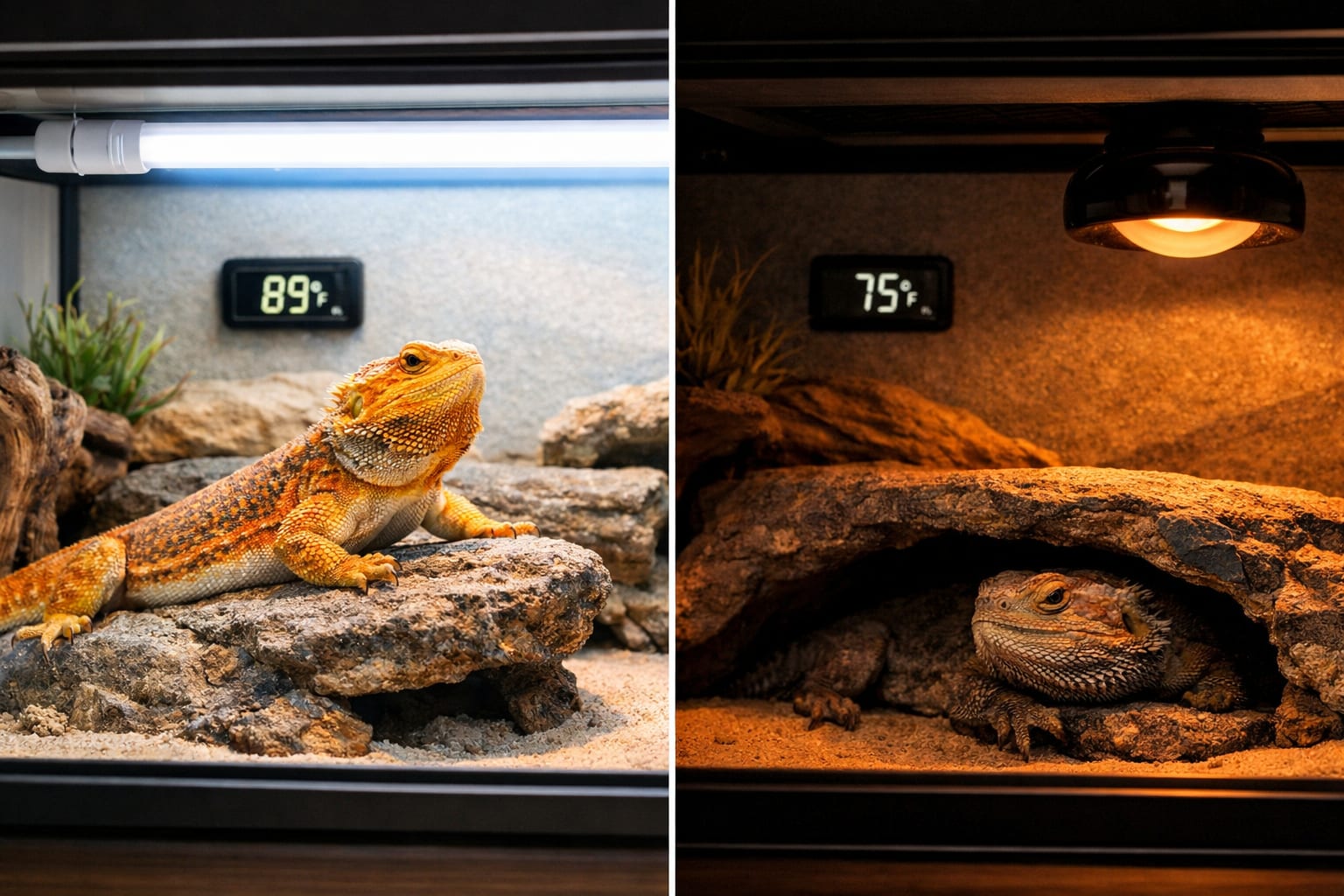
Bearded dragons need UVB light only during the day, not at night. In their native Australian habitat, these reptiles experience natural day-night cycles with approximately 12-14 hours of sunlight followed by complete darkness. Replicating this pattern in captivity is essential for their physical and mental health.
UVB lighting serves a specific daytime function: it enables bearded dragons to synthesize vitamin D3, which is necessary for calcium absorption and bone health. This process occurs when they bask under UVB rays during active hours. At night, their metabolism slows significantly, and they enter a rest state where UVB exposure provides no benefit.
Why nighttime UVB is unnecessary:
- Vitamin D3 synthesis only occurs during active basking periods when body temperature is elevated
- Bearded dragons’ circadian rhythms depend on clear light-dark cycles for hormone regulation
- Melatonin production (essential for sleep) requires darkness
- Continuous light exposure prevents the natural rest and recovery processes
Set your UVB light on a timer to turn on in the morning (around 8-9 AM) and off in the evening (around 8-10 PM), creating a consistent 12-14 hour photoperiod. This schedule supports healthy metabolism, proper digestion, and natural behavior patterns.
What Happens If a Bearded Dragon Gets UVB at Night?
Exposing bearded dragons to UVB at night disrupts their circadian rhythm and causes chronic stress. While a single night of accidental UVB exposure won’t cause immediate harm, prolonged nighttime lighting leads to sleep deprivation, weakened immune function, and behavioral problems.
Documented effects of nighttime UVB exposure:
- Sleep disruption, Bearded dragons cannot enter deep sleep with lights on, leading to exhaustion and lethargy during the day
- Stress hormone elevation, Constant light triggers elevated cortisol levels, suppressing immune response
- Appetite loss, Sleep-deprived dragons often refuse food or eat less than normal
- Aggressive or erratic behavior, Stressed dragons may become defensive, glass surf excessively, or show signs of anxiety
- Color changes, Chronic stress can cause persistent dark beard coloration or dull body colors
- Metabolic issues, Disrupted circadian rhythms interfere with proper digestion and nutrient absorption
If you’ve accidentally left UVB on overnight, simply return to the normal schedule the next day. Most dragons recover quickly from occasional mistakes. However, if you’ve been running UVB 24/7 for weeks or months, gradually transition to a proper day-night cycle over 3-4 days to avoid shocking their system.
For more information on recognizing stress behaviors, check out our guide on why bearded dragons glass surf.
How Many Hours of UVB Does a Bearded Dragon Need Per Day?
Bearded dragons need 10-14 hours of UVB exposure per day, with 12 hours being the ideal standard for most keepers. This duration mimics the natural photoperiod in their native Australian environment and supports healthy vitamin D3 synthesis, calcium metabolism, and circadian rhythm regulation.
Recommended UVB schedules by season:
- Spring/Summer (March-August): 12-14 hours daily to match longer natural daylight
- Fall/Winter (September-February): 10-12 hours daily to simulate shorter days and support natural brumation cycles
- Year-round consistent option: 12 hours daily works well if you prefer not to adjust seasonally
Use a reliable timer to automate your lighting schedule. Manual switching often leads to inconsistent photoperiods, which can stress your dragon and disrupt their internal clock. Digital timers cost $10-20 and eliminate the risk of forgetting to turn lights on or off.
UVB intensity matters as much as duration:
- Replace UVB bulbs every 6-12 months even if they still produce visible light (UVB output degrades over time)
- Position UVB tubes 10-12 inches from basking spots for optimal exposure
- Use a UVB meter annually to verify output is in the 3.0-5.0 UVI range at basking level
- Mesh screen tops can block up to 50% of UVB, so consider mounting lights inside the enclosure when possible
Proper tank setup with adequate space for basking zones helps ensure your dragon gets sufficient UVB exposure during the designated hours.
Can I Leave My Bearded Dragon’s UVB Light On 24/7?
No, you should never leave UVB lights on 24/7. Continuous lighting prevents bearded dragons from sleeping properly and causes significant health problems over time. Even though these reptiles may appear to tolerate constant light initially, the cumulative effects lead to serious welfare issues.
Why 24/7 UVB is harmful:
- Prevents melatonin production, This hormone requires darkness to be synthesized and regulates sleep, immune function, and cellular repair
- Causes chronic sleep deprivation, Dragons need 8-12 hours of darkness to complete full sleep cycles
- Increases stress hormones, Elevated cortisol from constant light exposure weakens disease resistance
- Disrupts appetite and digestion, Natural feeding patterns depend on circadian rhythm cues
- May contribute to eye problems, Prolonged light exposure can cause eye strain and sensitivity issues
Some new keepers mistakenly believe that “more UVB equals better health,” but this is incorrect. Bearded dragons have evolved to process UVB during specific active hours, not continuously. Excessive exposure provides no additional benefit once vitamin D3 synthesis reaches saturation, which typically occurs within the first few hours of basking.
Common misconceptions:
- ❌ “My dragon seems fine with lights on all night”, Behavioral changes from chronic stress develop gradually
- ❌ “I need lights on to keep the tank warm at night”, Use ceramic heat emitters or under-tank heaters instead
- ❌ “The pet store said to leave everything on”, Unfortunately, retail advice is often incorrect
Always provide a clear day-night cycle with 10-14 hours of light followed by complete or near-complete darkness.
What Kind of Light Do Bearded Dragons Need at Night?
Bearded dragons need no light at night in most cases. Complete darkness is ideal for healthy sleep. If your enclosure temperature drops below 65°F at night, use non-light-emitting heat sources like ceramic heat emitters or radiant heat panels rather than any type of bulb that produces visible light.
Appropriate nighttime heating options:
- Ceramic heat emitter (CHE), Produces infrared heat without any visible light; most popular option for nighttime warmth
- Radiant heat panel, Mounted to enclosure ceiling, provides gentle overhead heat without light
- Under-tank heating pad, Placed under one side of the tank to create a warm zone (use with thermostat)
- Deep heat projector, Penetrating infrared heat that mimics sun warmth without visible spectrum
Avoid these nighttime lighting options:
- ❌ Red or blue “night bulbs”, Despite marketing claims, these emit visible light that bearded dragons can see and that disrupts sleep
- ❌ Low-wattage white bulbs, Any visible light interferes with melatonin production
- ❌ UVB tubes left on, Completely unnecessary and harmful at night
- ❌ Heat lamps with visible glow, Even dim incandescent bulbs produce enough light to disturb rest
Most homes maintain ambient temperatures that keep bearded dragon enclosures above 65°F at night without supplemental heat. Check your nighttime tank temperature with a reliable digital thermometer. If it stays between 65-75°F, no additional heating is needed. If it drops below 65°F, add a ceramic heat emitter controlled by a thermostat set to maintain 65-70°F.

Do Bearded Dragons Need Complete Darkness at Night?
Bearded dragons need complete darkness or near-darkness at night for optimal health. While they can tolerate minimal ambient light from nearby rooms (like light seeping under a door), the enclosure itself should have no direct light sources. Total darkness allows proper melatonin production and supports natural sleep architecture.
Acceptable nighttime lighting conditions:
- Complete darkness, Ideal; cover the enclosure with a breathable blanket if room lights stay on
- Minimal ambient light, Distant hallway light or streetlight through curtains is generally tolerable
- Red LED night vision light, Very dim red LEDs (used for observation only) can be used briefly without major disruption
Problematic nighttime lighting:
- Room lights left on near the enclosure
- Television or computer screens facing the tank
- Bright nightlights positioned close to the habitat
- Any in-tank lighting including colored bulbs
In their natural habitat, bearded dragons experience true darkness at night, broken only by moonlight and starlight. While they have some ability to see in low light, their circadian system evolved to respond to the absence of light as a sleep cue. Disrupting this signal causes the same types of health problems seen in humans with chronic sleep deprivation.
Signs your dragon isn’t getting enough darkness:
- Staying alert or active when lights go off instead of settling down
- Sleeping during the day more than usual
- Reduced appetite or irregular feeding patterns
- Increased stress behaviors like glass surfing or beard darkening
- Lethargy or lack of interest in normal activities
If you need to observe your dragon at night occasionally, use a very dim red LED flashlight for brief periods (under 5 minutes). For regular nighttime viewing, consider installing a low-wattage red LED on a separate switch that you only turn on when checking the enclosure, then immediately turn off.
UVB Light vs Heat Lamp for Bearded Dragons at Night
At night, bearded dragons need neither UVB light nor heat lamps in most cases. If supplemental warmth is required, use a ceramic heat emitter rather than any lamp that produces visible light. UVB serves no function during inactive nighttime hours, and heat lamps disrupt sleep by emitting light.
Key differences:
| Light Type | Daytime Use | Nighttime Use | Purpose |
|---|---|---|---|
| UVB tube/bulb | Required 10-14 hrs | Never | Vitamin D3 synthesis, calcium metabolism |
| Basking heat lamp | Required 10-14 hrs | Never | Elevate basking spot to 95-105°F |
| Ceramic heat emitter | Optional | If needed | Maintain ambient warmth without light |
| Radiant heat panel | Optional | If needed | Gentle overhead heat without light |
Proper nighttime temperature management:
Most bearded dragon enclosures maintain adequate nighttime temperatures (65-75°F) without any supplemental heat, especially in climate-controlled homes. Before adding nighttime heating, verify your actual tank temperature with a digital thermometer placed at the cool end of the enclosure.
When to add nighttime heat:
- Ambient tank temperature drops below 65°F
- Dragon appears lethargic or cold in the morning
- You live in a particularly cold climate or keep your home below 68°F at night
When nighttime heat is unnecessary:
- Tank temperature stays between 65-75°F naturally
- Dragon is active and eating normally
- Home heating maintains comfortable room temperature
Never use a heat lamp with visible light output for nighttime heating. Even “moonlight” or “night glow” bulbs marketed for reptiles emit enough visible spectrum light to interfere with sleep. Ceramic heat emitters screw into standard lamp fixtures and provide the same heat output as incandescent bulbs without any light, making them the ideal nighttime heating solution.
For comprehensive habitat setup guidance, see our article on proper tank sizing and setup.
Best Nighttime Lighting Setup for Bearded Dragons
The best nighttime lighting setup for bearded dragons is no lighting at all. Turn off all UVB and basking lights, and provide complete darkness. If your enclosure drops below 65°F at night, add a ceramic heat emitter controlled by a thermostat, which provides warmth without any visible light.
Optimal nighttime setup checklist:
✅ All UVB and basking lights off, Use a timer to automate this daily
✅ Ceramic heat emitter (if needed), Only if temperature drops below 65°F
✅ Thermostat control, Prevents overheating and maintains consistent temperature
✅ Digital thermometer, Monitor actual nighttime temperatures at cool end
✅ Dark, quiet location, Position enclosure away from TVs, bright windows, and high-traffic areas
✅ Breathable cover (optional), Light blanket over part of the tank if room lights must stay on
Step-by-step nighttime routine:
- 8-10 PM: Timer automatically turns off UVB and basking lights
- Temperature check: Verify cool end stays above 65°F
- Ceramic heat emitter activates (if installed): Thermostat maintains 65-70°F
- Complete darkness: No visible light sources in or near enclosure
- 8-9 AM: Timer turns lights back on for new day cycle
Equipment recommendations:
- Timer: Digital 7-day programmable timer ($15-25) for consistent scheduling
- Ceramic heat emitter: 100-150 watt CHE for most enclosures ($15-30)
- Thermostat: Reptile-specific thermostat with probe ($25-50) prevents temperature fluctuations
- Thermometer: Digital thermometer with remote probe ($10-20) for accurate monitoring
This setup replicates natural conditions where bearded dragons experience warm, bright days followed by cool, dark nights. The temperature gradient between day and night is normal and healthy, dragons don’t need constant warmth around the clock.
Common setup mistakes to avoid:
- Using colored bulbs thinking they’re “night safe”
- Leaving UVB on because “it doesn’t seem bright”
- Positioning heat sources too close to sleeping areas
- Failing to monitor actual temperatures vs. assuming they’re adequate
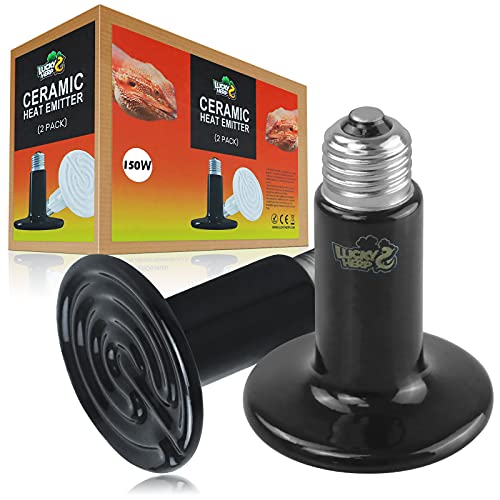
🦎No Light Emitted - The heat lamp bulb only generates heat during use, and does not emit light. It provides sufficient heat for your pets so that they can feel the warmth you made for it in a cold environment. Especially when it is used at night, it will not affect the pet's sleep.

🦎NO LIGHT EMITTED - LUCKY HERP reptile ceramic heat lamp does not emit any visible light, only a radiant heat source. Ensuring that it provides only the necessary warmth for your beloved reptile companion without interfering with their natural day/night cycle and sleep cycle.

🦎No Light Emitted - The heat lamp bulb only generates heat during use, and does not emit light. It provides sufficient heat for your pets so that they can feel the warmth you made for it in a cold environment. Especially when it is used at night, it will not affect the pet's sleep.
Will Keeping UVB On at Night Hurt My Bearded Dragon?
Yes, keeping UVB on at night will hurt your bearded dragon over time. While the damage isn’t immediate, chronic nighttime UVB exposure causes cumulative health problems including sleep deprivation, immune suppression, chronic stress, and behavioral abnormalities. The severity increases with duration of exposure.
Timeline of effects:
First few days: Dragon may appear normal but experiences disrupted sleep cycles and elevated stress hormones
After 1-2 weeks: Noticeable behavioral changes including reduced appetite, lethargy during normal active hours, increased glass surfing, or defensive behavior
After 1-2 months: Weakened immune system makes dragon more susceptible to respiratory infections and parasites; may show persistent stress coloration
After 3+ months: Chronic health issues may develop including metabolic problems, failure to thrive, and potentially shortened lifespan
Documented health impacts:
- Immune suppression, Chronic light exposure reduces white blood cell function and disease resistance
- Metabolic disruption, Abnormal circadian rhythms interfere with digestion, nutrient absorption, and hormone regulation
- Behavioral problems, Sleep-deprived dragons become stressed, aggressive, or withdrawn
- Reduced lifespan, Chronic stress and immune dysfunction may shorten overall life expectancy
Recovery after correcting the problem:
If you’ve been keeping UVB on 24/7 and switch to a proper day-night cycle, most dragons show improvement within 1-2 weeks. You may notice increased appetite, more normal activity patterns, and reduced stress behaviors. However, if immune function was compromised, it may take several weeks to fully recover.
Immediate steps if you’ve been using 24/7 UVB:
- Install a timer today and establish a 12-hour on/off cycle
- Monitor your dragon’s behavior and appetite over the next two weeks
- Ensure nighttime temperatures stay above 65°F without light-emitting heat sources
- Watch for signs of illness (lethargy, respiratory symptoms, loss of appetite) that may indicate compromised immunity
- Consider a veterinary check-up if your dragon has been exposed to 24/7 lighting for months
For more information on recognizing health and behavior issues, read our guide on why bearded dragons sleep excessively.
Do Baby Bearded Dragons Need a Different UVB Schedule Than Adults?
No, baby bearded dragons need the same UVB schedule as adults: 10-14 hours per day with complete darkness at night. All ages require consistent day-night cycles for healthy growth, proper calcium metabolism, and normal circadian rhythm development. The intensity and positioning of UVB matters more than the duration when it comes to age-specific needs.
UVB schedule for all ages:
- Babies (0-6 months): 12-14 hours daily UVB, complete darkness at night
- Juveniles (6-18 months): 12-14 hours daily UVB, complete darkness at night
- Adults (18+ months): 10-14 hours daily UVB, complete darkness at night
What DOES differ by age:
While the schedule stays the same, baby bearded dragons have different needs in other areas:
- Basking temperature, Babies need slightly higher basking temps (105-110°F vs. 95-105°F for adults)
- Feeding frequency, Babies eat 2-3 times daily vs. once daily for adults
- Enclosure size, Babies can start in smaller tanks but need upgrades as they grow
- UVB positioning, Ensure babies can get within 8-10 inches of UVB source since they’re smaller
Why consistent schedules matter for babies:
Young bearded dragons are in rapid growth phases and require optimal calcium absorption to develop strong bones and prevent metabolic bone disease. UVB exposure during active hours enables vitamin D3 synthesis, which is critical for calcium metabolism. However, they also need quality sleep for growth hormone production and tissue development.
Disrupting sleep with nighttime lighting can actually stunt growth in baby bearded dragons by interfering with these essential recovery processes. The misconception that babies need “more light” or “constant warmth” leads some keepers to leave lights on 24/7, which is counterproductive.
Proper care for baby bearded dragons:
- Use the same 12-14 hour light cycle as adults
- Ensure UVB tube is positioned 8-10 inches from basking spot
- Maintain basking temperature at 105-110°F during light hours
- Allow nighttime temperature to drop to 70-75°F (slightly warmer than adult range)
- Replace UVB bulbs every 6 months for optimal output
For more details on feeding schedules for young dragons, check out our guide on how many crickets baby bearded dragons should eat.
Common Mistakes With Bearded Dragon Lighting at Night
Many bearded dragon keepers make preventable lighting mistakes that compromise their pet’s health. Understanding these common errors helps you avoid them and provide optimal nighttime conditions for your dragon.
Most frequent nighttime lighting mistakes:
1. Using colored “night bulbs”
Red, blue, or purple bulbs marketed as “nighttime heat” still emit visible light that bearded dragons can see. Despite manufacturer claims, these bulbs disrupt sleep just like white bulbs. Use ceramic heat emitters instead.
2. Leaving UVB on for “just a few extra hours”
Some keepers extend UVB beyond 14 hours thinking more is better. This gradually shifts toward 24/7 lighting and causes the same problems. Stick to 10-14 hours maximum.
3. Forgetting to use a timer
Manual light switching leads to inconsistent schedules. Dragons thrive on routine, and irregular photoperiods cause stress. Invest in a $15 timer to automate your lighting.
4. Adding nighttime heat when unnecessary
Many keepers add ceramic heat emitters even when tank temperature stays above 65°F. Check actual temperatures before adding equipment, most homes don’t need supplemental nighttime heat.
5. Positioning lights where dragons can’t escape them
Even with proper schedules, lights positioned poorly can prevent dragons from finding dark sleeping areas. Ensure your dragon has hides and areas away from any light sources.
6. Using heat lamps instead of ceramic heat emitters at night
Heat lamps with visible glow (even dim ones) disrupt sleep. Only use non-light-emitting heat sources after dark.
7. Keeping room lights on near the enclosure
Ambient room lighting from TVs, computers, or overhead lights can illuminate the tank enough to disturb sleep. Position enclosures in areas that get dark at night or use a breathable cover.
8. Not monitoring actual nighttime temperatures
Assuming temperatures are adequate without checking leads to either unnecessary heating equipment or dangerously cold conditions. Use a digital thermometer with min/max memory.
9. Replacing UVB bulbs based on visible light output
UVB bulbs continue producing visible light long after UVB output degrades. Replace tubes every 6-12 months regardless of whether they still glow.
10. Ignoring behavioral signs of lighting problems
Glass surfing, appetite loss, lethargy, and stress coloration often indicate lighting issues. Don’t dismiss these signs, evaluate your entire lighting setup.
Quick troubleshooting guide:
| Problem | Likely Cause | Solution |
|---|---|---|
| Dragon active at night | Lights still on or too much ambient light | Ensure complete darkness, check for light leaks |
| Sleeping during day | Not getting enough darkness at night | Verify lights turn off, eliminate ambient light sources |
| Loss of appetite | Sleep disruption from poor lighting | Establish consistent 12-hour day/night cycle |
| Glass surfing | Stress from lighting issues or other factors | Review entire setup including lighting schedule |
| Cold in morning | Nighttime temperature too low | Add ceramic heat emitter with thermostat |
Ceramic Heat Emitter vs UVB at Night for Bearded Dragons
Ceramic heat emitters are the appropriate nighttime heating solution for bearded dragons, while UVB should never be used at night. CHEs provide infrared heat without any visible light, allowing dragons to stay warm while sleeping in complete darkness. UVB serves no function during inactive nighttime hours and actively harms sleep quality.
Ceramic heat emitter benefits:
- Produces heat without visible light
- Screws into standard lamp fixtures
- Available in 50-150 watt options for different enclosure sizes
- Lasts 3-5 years with proper use
- Can be controlled with thermostats for precise temperature management
- Safe for 24-hour use when needed
Why UVB is wrong for nighttime:
- Provides no metabolic benefit during rest periods
- Disrupts circadian rhythms and melatonin production
- Causes chronic sleep deprivation
- Increases stress hormone levels
- Offers no temperature regulation benefit
Choosing the right ceramic heat emitter:
- 50-75 watt: Small enclosures (20-40 gallons) or mild temperature drops
- 100 watt: Standard 40-75 gallon enclosures with moderate heating needs
- 150 watt: Large enclosures (75+ gallons) or very cold environments
Installation tips:
- Mount CHE in a ceramic socket (not plastic, CHEs get very hot)
- Position 10-12 inches above basking area or sleeping zone
- Connect to a thermostat with probe placed at dragon’s level
- Set thermostat to maintain 65-70°F at night
- Use a wire cage guard to prevent accidental contact
Cost comparison:
- Ceramic heat emitter: $15-30 (lasts 3-5 years)
- Thermostat: $25-50 (one-time purchase)
- UVB tube: $25-40 (must replace every 6-12 months)
Using a CHE for nighttime heat (when needed) plus proper daytime UVB creates the ideal temperature and lighting cycle. Never substitute one for the other, they serve completely different functions.
How to Keep Bearded Dragons Warm at Night Without UVB
Keep bearded dragons warm at night using ceramic heat emitters, radiant heat panels, or under-tank heating pads, never UVB or visible light sources. Most enclosures maintain adequate nighttime temperatures (65-75°F) without supplemental heat, but if your tank drops below 65°F, non-light-emitting heat sources provide warmth without disrupting sleep.
Best nighttime heating methods:
1. Ceramic Heat Emitter (CHE)
Most popular option; screws into standard dome fixture and produces infrared heat without light. Use with thermostat for temperature control.
- Pros: Affordable, effective, easy to install, long-lasting
- Cons: Gets very hot (requires ceramic socket), can dry out air if used excessively
- Best for: Most standard setups needing supplemental nighttime heat
2. Radiant Heat Panel (RHP)
Mounts to enclosure ceiling and provides gentle overhead heat without light. More expensive but very efficient.
- Pros: Even heat distribution, energy efficient, doesn’t dry air as much as CHE
- Cons: Higher upfront cost ($80-150), requires mounting hardware
- Best for: Large enclosures or permanent setups
3. Under-Tank Heating Pad
Adhesive pad placed under one side of tank bottom creates warm zone from below.
- Pros: Inexpensive ($15-25), provides belly heat, doesn’t affect air humidity
- Cons: Less effective for large tanks, must use with thermostat to prevent overheating
- Best for: Supplemental heat in smaller enclosures or as secondary heat source
4. Deep Heat Projector
Specialized bulb that produces infrared-A and infrared-B heat without visible light, mimicking sun warmth.
- Pros: Most natural heat spectrum, excellent for thermoregulation
- Cons: Expensive ($60-80), requires specific fixture
- Best for: Advanced keepers wanting optimal heat quality
Step-by-step nighttime heating setup:
- Measure actual nighttime temperature, Use digital thermometer at cool end of tank
- Determine if heat is needed, Only add heat if temperature drops below 65°F
- Choose appropriate heat source, CHE works for most situations
- Install with thermostat, Set to maintain 65-70°F
- Position probe correctly, Place at dragon’s level, not directly under heat source
- Monitor for several nights, Verify temperatures stay in target range
- Adjust as needed, Fine-tune thermostat settings based on actual readings
When nighttime heating isn’t necessary:
- Room temperature stays above 68°F at night
- Tank maintains 65-75°F naturally
- Dragon shows no signs of being cold (active in morning, normal appetite)
- You live in a warm climate or keep home well-heated
Signs your dragon is too cold at night:
- Lethargic or slow to warm up in the morning
- Reduced appetite or refusing food
- Spending excessive time basking without moving
- Dark coloration that doesn’t brighten after basking
Signs of overheating at night:
- Dragon sleeping in coolest corner away from heat source
- Gaping (mouth open) during nighttime hours
- Restless behavior or inability to settle
- Tank temperature above 75°F at cool end
Remember that bearded dragons naturally experience temperature drops at night in their native habitat. A nighttime range of 65-75°F is healthy and normal, you don’t need to maintain daytime temperatures around the clock.
For comprehensive habitat setup including proper heating zones, see our guide on bearded dragon tank requirements.
FAQ
Can I use a red light for my bearded dragon at night?
No, red lights are not recommended for nighttime use. Despite marketing claims, bearded dragons can see red light, and it disrupts their sleep. Use ceramic heat emitters instead if you need nighttime warmth.
What temperature should my bearded dragon tank be at night?
Nighttime temperatures should range from 65-75°F. This natural temperature drop is healthy and mimics their native habitat. Only add supplemental heat if your tank drops below 65°F.
How do I know if my bearded dragon is getting enough UVB during the day?
Signs of adequate UVB include normal appetite, active basking behavior, strong bone structure, and healthy growth. Have your vet check vitamin D3 levels if concerned, and replace UVB bulbs every 6-12 months.
Should I turn off the heat lamp at night too?
Yes, turn off all heat lamps that produce visible light at night. If your tank needs supplemental warmth, use a ceramic heat emitter or other non-light-emitting heat source instead.
Can moonlight through a window hurt my bearded dragon’s sleep?
Natural moonlight through windows is generally fine and mimics their natural environment. However, bright streetlights or security lights shining directly on the enclosure should be blocked with curtains or a breathable cover.
My bearded dragon seems active when I turn the lights off, is this normal?
Some dragons take 15-30 minutes to settle down after lights go off. If your dragon remains active for hours or shows signs of stress, check for ambient light sources or other environmental issues.
Do bearded dragons need a night light to see?
No, bearded dragons do not need night lights. They have adapted to navigate in darkness and should sleep during nighttime hours, not move around. Complete darkness is healthiest.
How long does it take for a bearded dragon to adjust to a new lighting schedule?
Most dragons adjust to a new lighting schedule within 3-7 days. Maintain consistency during this transition period, and avoid making frequent changes to the photoperiod.
Can I use a low-wattage bulb at night instead of a ceramic heat emitter?
No, even low-wattage bulbs that produce visible light will disrupt sleep. Only use non-light-emitting heat sources like ceramic heat emitters, radiant heat panels, or under-tank heaters at night.
What’s the difference between UVA and UVB, and do bearded dragons need both at night?
UVA helps with behavior and appetite, while UVB enables vitamin D3 synthesis. Bearded dragons need both during the day but neither at night. Use full-spectrum UVB bulbs during daytime hours only.
Should I cover my bearded dragon’s tank at night?
Covering isn’t necessary if the room gets dark naturally. However, if room lights must stay on or there’s excessive ambient light, use a breathable blanket or sheet to cover part of the enclosure while ensuring adequate ventilation.
Will my bearded dragon go into brumation if I give them complete darkness at night?
No, normal nighttime darkness won’t trigger brumation. Brumation is influenced by temperature changes, photoperiod length (shorter days), and natural seasonal cycles, not simply by having dark nights.
Conclusion
Bearded dragons do not need UVB at night and should never be exposed to it during sleeping hours. Providing 10-14 hours of UVB during the day followed by complete darkness at night replicates their natural Australian habitat and supports healthy circadian rhythms, proper sleep, and optimal metabolic function.
Turn off all UVB and basking lights at night using a timer to maintain consistency. If your enclosure drops below 65°F, use a ceramic heat emitter controlled by a thermostat to provide warmth without light. Avoid red, blue, or any colored “night bulbs”, these still emit visible light that disrupts sleep.
Action steps for proper nighttime care:
- Install a timer to automate your 12-hour day/night lighting cycle
- Turn off all UVB and heat lamps at night
- Check nighttime temperatures with a digital thermometer
- Add a ceramic heat emitter only if temperatures drop below 65°F
- Ensure your dragon’s enclosure is in a location that gets dark at night
- Monitor your dragon’s behavior and appetite to confirm they’re thriving
By following these guidelines, you’ll create an environment that supports your bearded dragon’s natural biology and promotes long-term health. Proper lighting schedules are just as important as nutrition and temperature, don’t overlook this critical aspect of bearded dragon care.
Remember that consistency matters more than perfection. Set up your lighting schedule correctly from the start, and your dragon will establish healthy sleep patterns that contribute to a long, vibrant life.

Convenient Design: Plug and play, easy to use; Support reading with Centigrade or Fahrenheit

Non-dimmer: Socket S1 is turned on and off at a set time, while Socket S2 is turned on and off according to the set temperature

Timer thermostat for reptiles, 3 plugs outlet can work independently. Integrated design with day/night temperature and timing control, which can meet the physiological needs of temperature, and lighting for reptiles, amphibians, or plants.


