

Quick Answer: Bearded dragons dig for several natural reasons including preparing to lay eggs (gravid females), seeking cooler or warmer temperatures, preparing for brumation (a hibernation-like state), expressing stress or boredom, or simply exhibiting instinctive wild behavior. Female bearded dragons are most likely to dig when gravid, but males also dig for temperature regulation and comfort.
Key Takeaways
- Digging is normal behavior for both male and female bearded dragons, rooted in their natural Australian desert habitat instincts
- Gravid females dig to create nesting sites for eggs, even if they haven’t mated (infertile eggs are common)
- Temperature regulation drives much digging behavior as dragons seek cooler substrate or warmer basking areas
- Corner digging often signals stress, inadequate tank size, or the search for a secure nesting spot
- Glass surfing plus digging typically indicates environmental stress, boredom, or tank conditions that need adjustment
- Safe substrate depth should be 2-4 inches for general digging, but 6-8 inches in a separate lay box for gravid females
- Not all digging requires intervention, but persistent digging with appetite loss or lethargy warrants a vet visit
- Male bearded dragons dig too, though less frequently than gravid females, usually for thermoregulation or brumation preparation

VERSATILE USE: Natural coconut fiber mat suitable for chicken nesting boxes and various reptile habitats including terrariums for lizards, turtles, snakes, and geckos

100% Natural Walnut Shells: Made from premium English walnut shells, this substrate provides a natural and non-toxic bedding solution for your pets.

👍𝐂𝐨𝐦𝐩𝐥𝐞𝐭𝐞 𝟏𝟎-𝐏𝐢𝐞𝐜𝐞 𝐒𝐞𝐭: Includes 10 natural coconut fiber mats, each measuring 12" x 12" (30.5 x 30.5cm). Perfect for frequent replacement and multiple usage scenarios like reptile habitats, poultry nesting, and garden mulch
Is It Normal for Bearded Dragons to Dig?
Yes, digging is completely normal behavior for bearded dragons of both sexes and all ages. In their native Australian desert habitat, wild bearded dragons dig burrows to escape extreme temperatures, hide from predators, and create secure sleeping spots. This instinct remains strong in captive bearded dragons even after generations of breeding.
Healthy bearded dragons may dig occasionally without any cause for concern. The behavior becomes noteworthy when it’s persistent, accompanied by other symptoms, or occurs in specific patterns that signal underlying needs.
When digging is normal:
- Brief episodes lasting a few minutes
- Occurs after tank cleaning or substrate changes
- Happens during seasonal transitions (spring and fall)
- Dragon appears otherwise healthy and active
- Eating and basking habits remain unchanged
When to investigate further:
- Digging lasts hours or continues for multiple days
- Dragon refuses food during digging episodes
- Visible weight loss or lethargy accompanies the behavior
- Digging focuses obsessively on one corner or area
- Dragon appears distressed or frantic
Understanding bearded dragon behavior helps distinguish between natural instinct and a signal that something needs attention.
Why Is My Bearded Dragon Digging in the Corner of the Tank?
Corner digging typically indicates your bearded dragon is searching for a secure, enclosed space or trying to escape current tank conditions. Corners provide the most enclosed feeling in a terrarium, making them attractive for nesting, hiding, or expressing stress about the open environment.
Gravid females often choose corners because they offer two walls for security while digging a nest. However, corner digging can also signal that your dragon feels exposed, stressed, or confined in their current setup.
Common causes of corner digging:
- Gravid female seeking nesting site, Most common reason in mature females
- Tank too small, Dragons feel cramped and seek more space
- Insufficient hiding spots, Lack of secure caves or covered areas
- Stress from external factors, Other pets, loud noises, or frequent handling
- Temperature gradients inadequate, Seeking cooler or warmer zones
If your bearded dragon is digging in corners and also glass surfing, this combination strongly suggests environmental stress. Check that your tank size is appropriate (minimum 40 gallons for juveniles, 75-120 gallons for adults) and that you’ve provided adequate hiding spots and proper temperature zones.
Quick fix: Add a hide box or cave in the corner where your dragon digs, and ensure your basking spot reaches 95-105°F while the cool side stays around 75-85°F.
Bearded Dragon Digging Behavior Meaning
Digging behavior communicates different needs depending on context, frequency, and accompanying body language. Learning to read these signals helps you respond appropriately to your dragon’s needs.
Temperature regulation digging: Your dragon digs to reach cooler substrate layers when too hot, or positions near the basking light after digging when seeking warmth. This digging is usually brief and followed by settling into the created depression.
Nesting/gravid digging: Females dig persistently, often in corners or against tank walls, creating bowl-shaped depressions. They may appear restless, pace before digging, and show a swollen abdomen. This behavior intensifies as egg-laying approaches.
Brumation preparation: As temperatures drop seasonally (fall/winter), bearded dragons may dig to create a burrow for their dormant period. This digging comes with decreased appetite, increased sleeping, and reduced activity.
Stress or boredom digging: Repetitive, frantic digging without clear purpose, often combined with glass surfing, indicates environmental dissatisfaction. The dragon may dig, stop, pace, and resume digging without settling.
Exploratory digging: Young bearded dragons especially may dig simply to investigate their environment. This appears playful, brief, and doesn’t show distress signals.
Watch for accompanying behaviors like appetite changes, color darkening, beard puffing, or lethargy to understand what your dragon’s digging means in context.
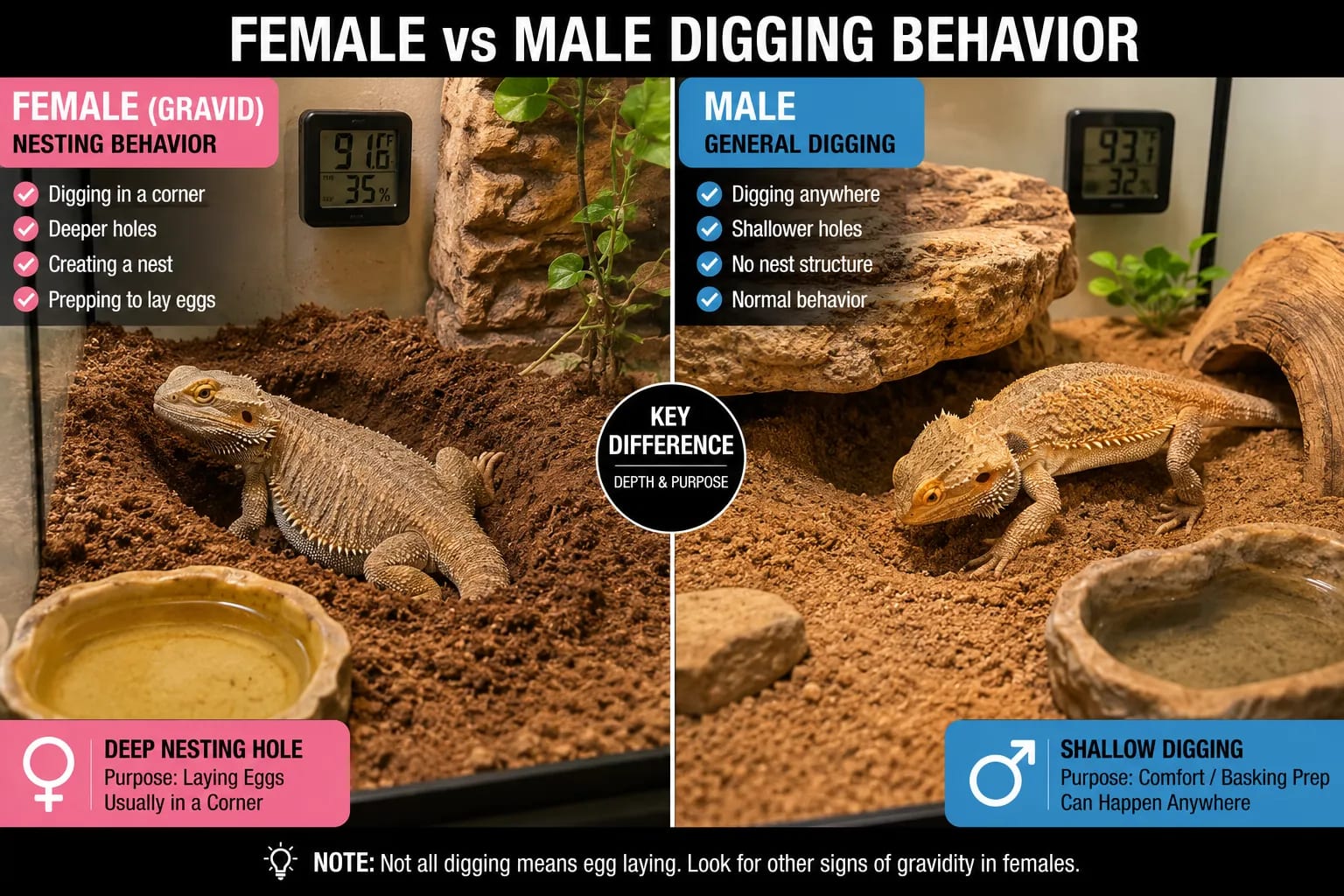
Female Bearded Dragon Digging But No Eggs
Female bearded dragons can dig persistently as if preparing to lay eggs even when no eggs are present, or they may dig and then fail to lay eggs despite being gravid. Both scenarios are common and have different causes.
Infertile egg development: Female bearded dragons produce eggs even without mating, similar to chickens. These infertile eggs still trigger nesting behavior and digging. If your female has never been with a male but is digging intensely, she likely has infertile eggs that need to be laid.
Egg binding (dystocia): Sometimes a gravid female digs but cannot successfully lay her eggs. This serious condition requires immediate veterinary attention. Signs include prolonged digging (more than 24-48 hours), visible straining, lethargy, loss of appetite, and a visibly swollen abdomen that doesn’t decrease after digging.
False pregnancy behavior: Occasionally, hormonal fluctuations cause nesting behavior without actual egg development. This is less common but can occur, especially in younger females experiencing their first breeding season.
What to do:
- Provide a proper lay box immediately (see setup instructions below)
- Monitor for 24-48 hours
- If no eggs appear and dragon shows distress, contact a reptile veterinarian
- Ensure calcium supplementation is adequate to prevent egg binding
- Keep the dragon hydrated with regular baths
Never assume digging without visible eggs means nothing is wrong. Egg binding can be fatal if untreated, so err on the side of caution and consult a vet if digging persists beyond two days without egg-laying.
How to Tell If My Bearded Dragon Is Gravid or Just Digging
Distinguishing between gravid (egg-carrying) digging and other types of digging requires checking multiple physical and behavioral signs beyond just the digging itself.
Physical signs of gravidity:
- Swollen abdomen, Noticeably rounder and firmer than usual, especially visible from above
- Visible egg outlines, In thin females, you may see or feel individual eggs through the belly wall
- Weight gain, Sudden increase of 50-100 grams over 2-3 weeks
- Decreased appetite, Eating less as eggs take up internal space
- Restlessness, Pacing, exploring unusual areas, refusing to settle
Behavioral differences:
| Gravid Digging | General Digging |
|---|---|
| Persistent, lasts hours or days | Brief episodes, minutes at a time |
| Focused on creating bowl-shaped nests | Random locations, no clear pattern |
| Accompanied by restlessness and pacing | Dragon settles after digging |
| Occurs with swollen abdomen | Normal body shape maintained |
| May refuse food for days | Appetite remains normal |
Palpation test: Gently feel along your dragon’s sides near the back legs. Gravid females have firm, marble-like lumps (eggs) that are distinctly different from fat deposits or organs. If you’re inexperienced with palpation, ask your reptile veterinarian to demonstrate proper technique.
Age consideration: Female bearded dragons typically reach sexual maturity around 18-24 months old. Younger females are less likely to be gravid, though early egg production can occur.
If you suspect your female is gravid, set up a lay box immediately rather than waiting for confirmation. Providing the option does no harm and may prevent egg binding if she is indeed carrying eggs.
Bearded Dragon Digging vs Burrowing Difference
While often used interchangeably, digging and burrowing describe different behaviors with distinct purposes in bearded dragon care.
Digging refers to surface-level excavation where the dragon moves substrate around, creates shallow depressions, or pushes material aside. The dragon remains mostly visible and doesn’t fully cover itself. Digging serves purposes like nesting preparation, temperature adjustment, or exploration.
Burrowing means the dragon creates or enters a deeper tunnel or hole and partially or fully covers itself with substrate. Burrowing is primarily for temperature regulation, security, or brumation. A burrowing dragon may disappear completely under substrate for hours or days.
Key differences:
Digging:
- Shallow, surface-level activity
- Dragon remains mostly visible
- Active, energetic movement
- Creates depressions or moves substrate aside
- Common in gravid females and stressed dragons
Burrowing:
- Deep, creates tunnels or complete coverage
- Dragon may disappear from view
- Slower, more deliberate movement
- Seeks to be completely enclosed
- Common during brumation or extreme temperature stress
Both behaviors are natural, but burrowing requires deeper substrate (4-6 inches minimum) to be performed safely. If your dragon attempts to burrow but substrate is too shallow, they may become frustrated and dig more frantically.
Safety note: Ensure any substrate deep enough for burrowing is safe if ingested. Avoid loose substrates like sand for young bearded dragons who may accidentally consume it while burrowing. Tile, reptile carpet, or paper-based substrates are safer alternatives until your dragon is fully grown.
What Substrate Is Safe for Bearded Dragons That Dig?
Choosing the right substrate for a digging bearded dragon balances safety, natural behavior expression, and ease of maintenance. The wrong substrate can cause impaction (intestinal blockage) if ingested, while the right choice allows natural digging without health risks.
Safest substrates for digging:
Excavator clay (best for digging): This moldable substrate hardens when dry, allowing dragons to dig and create stable burrows. It’s digestible in small amounts and doesn’t cause impaction. Mix according to package directions, mold into desired terrain, and let dry completely.
Organic topsoil (chemical-free): Plain topsoil without additives, fertilizers, or perlite provides a natural digging medium. Mix with 30-40% play sand for better drainage. Ensure it’s completely organic and safe for reptiles.
Play sand (for adults only): Fine, washed play sand from hardware stores allows natural digging but poses impaction risk if consumed in quantity. Only use for adult bearded dragons over 18 months old with established feeding habits. Never use calcium sand, which is marketed for reptiles but causes severe impaction.
Bioactive substrate mix: Combination of organic topsoil, play sand, and clay designed for bioactive enclosures. Supports live plants and cleanup crew insects while allowing digging. Requires more setup but creates the most natural environment.
Substrates to avoid:
- ❌ Calcium sand (marketed as “digestible” but causes impaction)
- ❌ Walnut shell (sharp edges, impaction risk)
- ❌ Wood shavings (splinters, respiratory irritation)
- ❌ Crushed corn cob (molds easily, impaction risk)
For juveniles and high-risk dragons: Use non-loose substrates like tile, reptile carpet, or paper towels until the dragon is fully grown and demonstrates careful eating habits. You can provide a separate digging box with safe substrate for enrichment.
Substrate depth guidelines:
- General maintenance: 2-4 inches for temperature regulation and light digging
- Gravid females: 6-8 inches in a separate lay box
- Burrowing enrichment: 4-6 inches minimum for stable tunnel creation
Should I Stop My Bearded Dragon From Digging?
No, you should not stop normal digging behavior, as it’s a natural instinct and often serves important purposes. However, you should address the underlying cause if digging becomes excessive, obsessive, or indicates a problem.
When to allow digging:
- Brief, occasional episodes
- Seasonal behavior during spring or fall
- Gravid female preparing to lay eggs
- Dragon appears healthy otherwise
- Digging in appropriate substrate
When to intervene (address the cause, not the behavior):
- Digging on hard surfaces like glass or tile (provide appropriate substrate)
- Obsessive corner digging with stress signs (improve tank setup)
- Digging combined with appetite loss (check for illness)
- Frantic digging with glass surfing (environmental stress)
How to address problematic digging:
- For gravid females: Provide a proper lay box immediately
- For temperature issues: Check and adjust basking and cool-side temperatures
- For stress: Add hiding spots, reduce handling, minimize external disturbances
- For boredom: Increase tank size, add enrichment items, vary diet
- For inappropriate substrate: Switch to dig-friendly, safe substrate
Never physically prevent your dragon from digging by removing all substrate or confining them. This increases stress and prevents natural behavior expression. Instead, create an environment where digging serves its natural purpose without causing problems.
If digging persists despite environmental improvements, consult a reptile veterinarian to rule out underlying health issues.

All natural no dyes or colors added

IDEAL FOR DESERT-DWELLING REPTILES: specifically designed for adult bearded dragons, uromastyx, desert skinks, monitors, leopard geckos, and more

Reptile Necessary: Meet the need of Humidity and Temperature measuring for monitoring reptile's living conditions and health. Easily check your pet's living environment. When there are abnormalities, you can timely discovery through reptile thermometer.
Bearded Dragon Digging at Glass Constantly
Constant glass digging (often combined with glass surfing or “glass dancing”) indicates significant stress or dissatisfaction with the current environment. This behavior is not normal and requires immediate attention to prevent chronic stress.
Primary causes of glass digging:
Tank too small: The most common cause. Adult bearded dragons need 75-120 gallons minimum. In smaller tanks, they feel confined and attempt to escape. Check if your tank size is adequate.
Reflection confusion: Bearded dragons may see their reflection in the glass and interpret it as another dragon, triggering territorial behavior and attempts to reach or escape the “intruder.”
Inadequate temperature gradient: If the entire tank is too hot or too cold, dragons dig at glass trying to reach better conditions they sense beyond the enclosure.
Boredom and lack of enrichment: Intelligent reptiles need environmental variety. Bare tanks with minimal decoration lead to stress and escape attempts.
External stressors: Other pets (especially cats or dogs) watching the tank, loud noises, frequent movement near the enclosure, or positioning near windows with outdoor activity.
Solutions:
- Upgrade tank size if currently under 75 gallons for an adult
- Cover lower glass sides with background material to eliminate reflections
- Verify temperature zones with multiple thermometers (basking: 95-105°F, cool side: 75-85°F)
- Add enrichment: branches, rocks, hides, platforms at varying heights
- Relocate tank away from high-traffic areas and other pets
- Provide digging substrate so the dragon can express the behavior appropriately
- Increase out-of-tank time with supervised exploration in a safe room
Glass digging combined with other stress behaviors like a black beard or excessive sleeping requires comprehensive habitat evaluation and improvement.
Do Male Bearded Dragons Dig Too or Just Females?
Yes, male bearded dragons dig too, though typically less frequently and intensely than gravid females. Males dig primarily for temperature regulation, brumation preparation, and general comfort rather than nesting.
Reasons males dig:
Temperature regulation: Males dig to reach cooler substrate layers when overheated or to create basking depressions that hold warmth. This is the most common reason for male digging behavior.
Brumation preparation: During fall and winter, males may dig to create a sleeping burrow as they enter their dormant period. This instinct remains strong even in controlled indoor environments.
Territorial behavior: Occasionally, males dig to mark territory or create a preferred resting spot, especially in larger enclosures with multiple zones.
Stress or boredom: Like females, males dig when stressed, bored, or dissatisfied with their environment.
Behavioral differences between sexes:
| Male Digging | Female Digging |
|---|---|
| Usually brief episodes | Can last hours or days when gravid |
| Less focused, random locations | Concentrated in corners or specific spots |
| Seasonal (brumation-related) | Seasonal (breeding-related) plus gravid episodes |
| Rarely obsessive | Can become intense and persistent |
| No physical swelling | Visible abdominal swelling when gravid |
When male digging is concerning:
- Persists for multiple days without settling
- Accompanied by appetite loss or lethargy
- Occurs with other stress behaviors (glass surfing, aggression)
- Dragon appears unable to regulate temperature despite digging
If your male bearded dragon suddenly begins intense digging behavior, check environmental conditions first. Ensure proper temperature gradients, adequate substrate depth (2-4 inches), and sufficient enrichment. If digging continues despite optimal conditions, consult a reptile veterinarian to rule out health issues.
Male bearded dragons generally require less intervention for digging behavior than females, but the behavior still deserves attention to ensure their needs are being met.
How Deep Should Substrate Be for Bearded Dragon to Dig?
Substrate depth depends on your bearded dragon’s age, the purpose of digging, and whether you’re setting up the main enclosure or a separate lay box.
Main enclosure substrate depth:
For general maintenance (2-4 inches): This depth allows light digging for temperature regulation and comfort without excessive maintenance challenges. It’s sufficient for most non-gravid dragons to express natural digging behavior.
For enrichment and burrowing (4-6 inches): If you want to provide full burrowing opportunities, 4-6 inches allows dragons to create stable tunnels and fully cover themselves. This depth works well with excavator clay or bioactive substrates that hold structure.
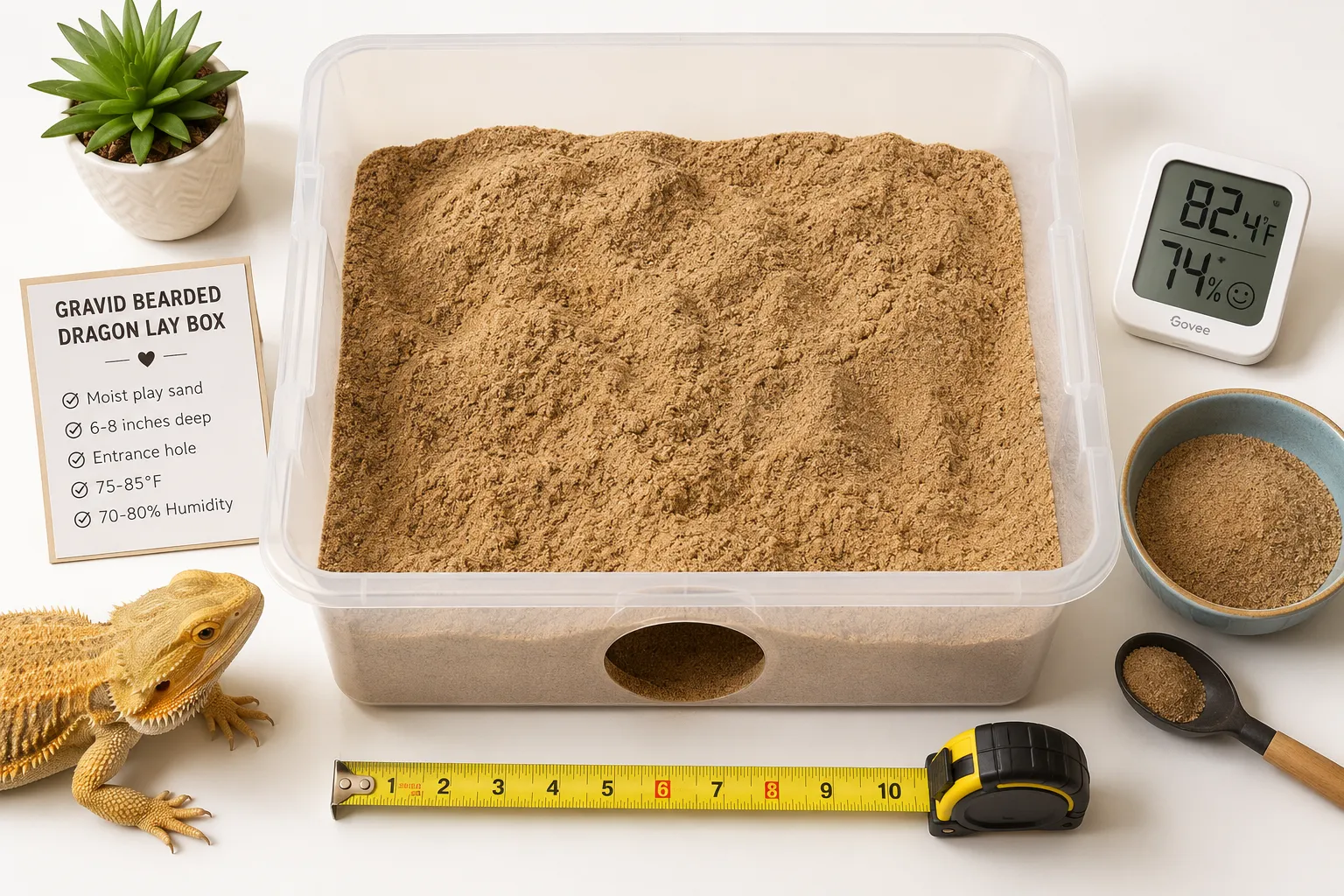
Lay box for gravid females (6-8 inches): Gravid females need deeper substrate to create proper nesting chambers. A separate lay box with 6-8 inches of moist substrate provides the depth and humidity needed for successful egg-laying.
Age considerations:
- Juveniles (under 12 months): Use shallow substrate (1-2 inches) or non-loose options like tile to prevent impaction risk
- Sub-adults (12-18 months): Can handle 2-4 inches of safe substrate with supervision
- Adults (18+ months): Can safely use 4-6 inches for full digging enrichment
Substrate depth by purpose:
| Purpose | Recommended Depth | Best Substrate Type |
|---|---|---|
| Basic maintenance | 2-4 inches | Tile, reptile carpet, or thin excavator clay |
| Temperature regulation | 3-4 inches | Organic topsoil mix or play sand (adults only) |
| Full burrowing | 4-6 inches | Excavator clay or bioactive mix |
| Gravid female nesting | 6-8 inches (in lay box) | Moist play sand or organic topsoil |
Important considerations:
- Deeper substrate requires more frequent spot-cleaning to prevent bacterial growth
- Ensure substrate is completely dry except in lay boxes (moisture promotes mold)
- Monitor for accidental ingestion, especially with loose substrates
- Provide solid feeding platforms to minimize substrate consumption during meals
For most bearded dragon keepers, 2-4 inches in the main enclosure with a separate 6-8 inch lay box for females provides the best balance of safety, enrichment, and maintenance.
Bearded Dragon Digging and Not Eating Is This Normal?
Temporary appetite loss during intense digging episodes can be normal, especially for gravid females, but prolonged food refusal combined with digging signals a problem that needs attention.
When it’s normal:
Gravid females: Often stop eating 1-3 days before laying eggs as the eggs take up internal space and the dragon focuses on nesting. Appetite typically returns within 24-48 hours after egg-laying.
Brumation preparation: Dragons naturally reduce food intake as they prepare for dormancy, often while digging to create sleeping burrows. This is seasonal (fall/winter) and accompanied by increased sleeping.
Brief stress response: A day or two of reduced appetite during environmental changes or after introducing new substrate is normal as the dragon adjusts.
When it’s concerning:
- Food refusal lasting more than 3-4 days
- Visible weight loss or lethargy
- Digging appears frantic or distressed
- Dragon shows signs of pain (reluctance to move, hunched posture)
- Combination with other symptoms (diarrhea, vomiting, labored breathing)
Possible serious causes:
Egg binding (dystocia): Gravid females unable to pass eggs may dig obsessively while refusing food. This is a medical emergency requiring immediate veterinary care.
Impaction: Intestinal blockage from substrate ingestion causes both digging (discomfort) and appetite loss. Watch for lack of bowel movements and abdominal swelling.
Parasites or infection: Internal parasites or bacterial infections can cause both behavioral changes (digging) and appetite loss.
Extreme stress: Chronic environmental stress manifests as both escape behaviors (digging) and food refusal.
What to do:
- Day 1-2: Monitor closely, ensure proper temperatures, offer favorite foods
- Day 3: Provide a warm bath to encourage hydration and bowel movement
- Day 4: If no improvement, contact a reptile veterinarian
- Immediate vet visit if: Dragon shows lethargy, visible distress, or is a potentially gravid female
Never wait more than 4-5 days to seek veterinary care for a bearded dragon refusing food, especially when combined with abnormal behaviors like excessive digging. Early intervention prevents serious complications.
Maintaining a varied, nutritious diet helps prevent many health issues. Learn more about proper bearded dragon feeding to keep your dragon healthy.
When to Take Bearded Dragon to Vet for Digging Behavior
While most digging is normal, certain situations require professional veterinary evaluation to prevent serious health complications.
Immediate vet visit required:
Suspected egg binding: Gravid female digging for more than 48 hours without laying eggs, especially with visible straining, lethargy, or swollen abdomen. Egg binding can be fatal within days if untreated.
Signs of impaction: Digging combined with no bowel movements for 5+ days, visible abdominal swelling, lethargy, and dragging back legs. Impaction requires immediate intervention.
Visible distress or pain: Dragon appears to be in pain while digging (vocalizing, jerky movements, inability to settle), refuses to move normally, or shows labored breathing.
Neurological symptoms: Digging combined with loss of coordination, seizures, head tilting, or inability to right themselves indicates potential neurological issues.
Schedule vet appointment within 24-48 hours:
- Digging persists for 3+ days with appetite loss
- Weight loss visible despite normal eating before digging started
- Behavioral changes beyond digging (aggression, extreme lethargy, hiding constantly)
- Digging on hard surfaces causing injury (damaged nails, nose rubbing)
- Female with swollen abdomen but no digging progress after 24 hours
Monitor at home (no immediate vet needed):
- Brief digging episodes lasting minutes
- Seasonal digging during spring or fall with normal appetite
- Digging that stops when environmental improvements are made
- Male dragon digging occasionally without other symptoms
- Digging in appropriate substrate with normal behavior otherwise
Questions your vet will ask:
- How long has the digging behavior lasted?
- Is your dragon eating, drinking, and having normal bowel movements?
- What substrate are you using?
- What are the basking and cool-side temperatures?
- Is this a female, and could she be gravid?
- Have there been any recent changes to the environment?
Prepare this information before your appointment to help your vet diagnose the issue quickly. Bring photos or videos of the digging behavior if possible.
Prevention tip: Establish a relationship with a reptile veterinarian before emergencies occur. Annual check-ups help catch potential issues early and give you a trusted professional to contact when concerns arise.
How to Set Up a Lay Box for Gravid Bearded Dragon
A proper lay box is essential for gravid female bearded dragons to successfully and safely lay their eggs. Setting one up correctly can prevent egg binding and reduce stress during the laying process.
Lay box specifications:
Container size: Use a plastic storage container at least 12 inches long × 8 inches wide × 8 inches deep for average-sized females. Larger females need proportionally larger boxes (up to 18 inches long).
Substrate choice: Use moist (not wet) play sand or organic topsoil. The substrate should hold its shape when squeezed but not drip water. Avoid calcium sand or other specialty reptile sands.
Substrate depth: Fill the box with 6-8 inches of substrate, allowing the female to dig a proper nesting chamber.
Entry access: Cut an entrance hole in one side, about 3-4 inches in diameter, positioned low enough that the dragon can easily enter but high enough that substrate doesn’t spill out.
Step-by-step setup:
- Choose the container: Select an opaque plastic container (clear containers provide less security)
- Cut entrance hole: Use a utility knife or heated tool to create a smooth entrance on one long side
- Add substrate: Fill with 6-8 inches of play sand or organic topsoil
- Moisten substrate: Spray with water and mix until it holds shape when compressed
- Test consistency: Squeeze a handful; it should form a ball without dripping
- Place in enclosure: Position in a quiet corner away from basking lights
- Maintain temperature: Keep lay box area at 80-85°F (not directly under basking light)
- Monitor humidity: Substrate should stay moist but not wet; mist lightly if it dries out
Placement tips:
- Put the lay box in the coolest area of the enclosure
- Ensure the dragon can easily access it without climbing obstacles
- Position away from high-traffic viewing areas for privacy
- Keep lighting subdued in the lay box area
Maintenance during use:
- Check moisture level daily
- Don’t disturb the dragon once she begins nesting
- Remove the box 24-48 hours after egg-laying
- Clean and disinfect the container before storage
What to expect:
- Female may investigate the box multiple times before using it
- Actual egg-laying typically occurs at night or early morning
- The process can take 2-4 hours once she begins
- She may dig multiple test holes before selecting a final spot
- Clutch size ranges from 15-35 eggs typically
After egg-laying:
- Allow the female to exit on her own
- Offer food and water immediately (she’ll likely be hungry)
- Provide a warm bath to help her rehydrate
- Remove eggs carefully if you plan to incubate them
- Monitor the female for signs of retained eggs (continued digging, swelling)
Setting up a lay box as soon as you suspect your female is gravid prevents the stress and danger of egg binding. Even if you’re not certain she’s carrying eggs, providing the option does no harm and may save her life.
FAQ
How long does bearded dragon digging behavior last? Digging duration varies by cause. Brief exploratory digging lasts minutes, temperature-regulation digging may continue intermittently for an hour, while gravid females can dig persistently for 24-48 hours before laying eggs. Brumation-related digging may occur sporadically over several weeks as the dragon prepares for dormancy.
Can bearded dragons dig through reptile carpet? No, bearded dragons cannot dig through reptile carpet, which is why dragons on this substrate may scratch at it or dig at corners in frustration. If your dragon shows persistent digging behavior on reptile carpet, consider providing a separate digging box with appropriate substrate or switching to a dig-friendly substrate like excavator clay.
Why is my bearded dragon digging after I just cleaned the tank? Dragons often dig after tank cleaning because the new substrate smells different and they’re re-establishing their territory and comfort zones. This behavior is normal and typically subsides within a few hours once the dragon has investigated and adjusted to the refreshed environment.
Do bearded dragons dig before brumation? Yes, many bearded dragons dig to create sleeping burrows before entering brumation, their hibernation-like dormant state. This typically occurs in fall and winter months and is accompanied by decreased appetite, increased sleeping, and reduced activity. The digging is instinctive preparation for a secure resting spot during dormancy.
How can I tell if my bearded dragon is digging because of stress? Stress-related digging appears frantic and purposeless, often combined with glass surfing, beard darkening, and rapid pacing. The dragon doesn’t settle after digging and may repeatedly dig in the same spot without creating a functional depression. Stressed dragons also show appetite changes and may hide more than usual.
Is it safe to let my bearded dragon dig in sand? Adult bearded dragons (18+ months) can safely dig in plain play sand if they have established careful eating habits. However, juveniles and dragons that tongue-test their environment frequently should not have sand substrate due to impaction risk. Always use plain play sand, never calcium sand or other specialty reptile sands.
Should I provide a hide box if my bearded dragon is digging? Yes, providing secure hide boxes often reduces stress-related digging because the dragon has an established secure space and doesn’t need to create one. Place at least two hides in the enclosure, one on the warm side and one on the cool side, to give your dragon temperature-appropriate security options.
Can male bearded dragons become egg-bound? No, male bearded dragons cannot become egg-bound because they don’t produce eggs. If a male is digging persistently with signs of distress, the cause is environmental stress, temperature issues, brumation preparation, or a health problem unrelated to reproduction. Consult a vet if the behavior persists with other symptoms.
How often should I mist the lay box substrate? Check the lay box substrate daily and mist lightly if it feels dry to the touch. The substrate should maintain a consistency where it holds its shape when squeezed but doesn’t drip water. In dry climates, you may need to mist once daily, while humid environments may require misting every 2-3 days.
What should I do with bearded dragon eggs after they’re laid? If eggs are infertile (from an unmated female), you can discard them after confirming they’re not developing. If potentially fertile, carefully transfer them to an incubator maintaining 82-86°F with proper humidity. Never rotate eggs during transfer; mark the top with a pencil and maintain the same orientation. Infertile eggs will mold or collapse within days.
Can digging behavior indicate parasites? Yes, internal parasites can cause discomfort that manifests as unusual digging behavior, often combined with appetite changes, weight loss, and abnormal feces. If your dragon shows persistent digging with these symptoms, collect a fresh fecal sample and have your reptile veterinarian perform a parasite screening.
Why does my bearded dragon dig only at night? Nighttime digging is common for gravid females preparing to lay eggs, as they often lay during nighttime or early morning hours when they feel most secure. Dragons may also dig at night when seeking cooler substrate as nighttime temperatures drop, or when preparing for brumation and establishing sleeping burrows.
Conclusion
Understanding why your bearded dragon is digging helps you respond appropriately to their needs and prevent potential health issues. Most digging is normal, instinctive behavior rooted in wild survival strategies, but persistent or unusual digging patterns signal specific needs requiring your attention.
Key actions to take:
- Assess the context, Consider your dragon’s age, sex, season, and recent environmental changes
- Check tank conditions, Verify temperature gradients, tank size, substrate type, and enrichment options
- Provide appropriate substrate, Ensure 2-4 inches for general digging, 6-8 inches in a lay box for gravid females
- Monitor for concerning signs, Watch for appetite loss, lethargy, or digging lasting more than 2-3 days
- Set up a lay box, If you have a mature female, keep lay box materials ready for quick setup
- Consult a vet when needed, Don’t hesitate to seek professional help for persistent digging with other symptoms
Remember that bearded dragons communicate through behavior. Digging is one of their primary ways to tell you about their needs, whether that’s temperature adjustment, nesting preparation, or environmental dissatisfaction. By learning to read these signals and responding appropriately, you’ll ensure your bearded dragon lives a healthy, comfortable life that honors their natural instincts.
For more guidance on bearded dragon care and behavior, explore our comprehensive resources on bearded dragon behavior and general care.

Practical material and accessories combination: The use of thick plastic raw materials suitable for the reptile breeding place, can withstand the daily activities of the reptile. Equipped with natural wooden ladders, it is easy for climbing pets to enter the digging box and provide them with a climbing path.In addition, it is also equipped with special cleaning tools, whether it is to clean the plastic digging box or clean the Terrarium tank. At the same time, the paired tweezers are convenient for the owner to accurately feed the pet, avoiding direct contact

【MULTIFUNCTIONAL CROSSBODY BAG】: These crossbody bags not only can storage your cosmetics, but also jewelry, electronic accessories, camera, essential oil, toiletries, shaving kit, valuable objects and so on.

Best Gift: Compared to flowers or a card, a practical tote bag and makeup pouch set makes a more memorable gift. Perfect for Christmas, Mother's Day, birthdays, or any occasion.


