Quick Answer
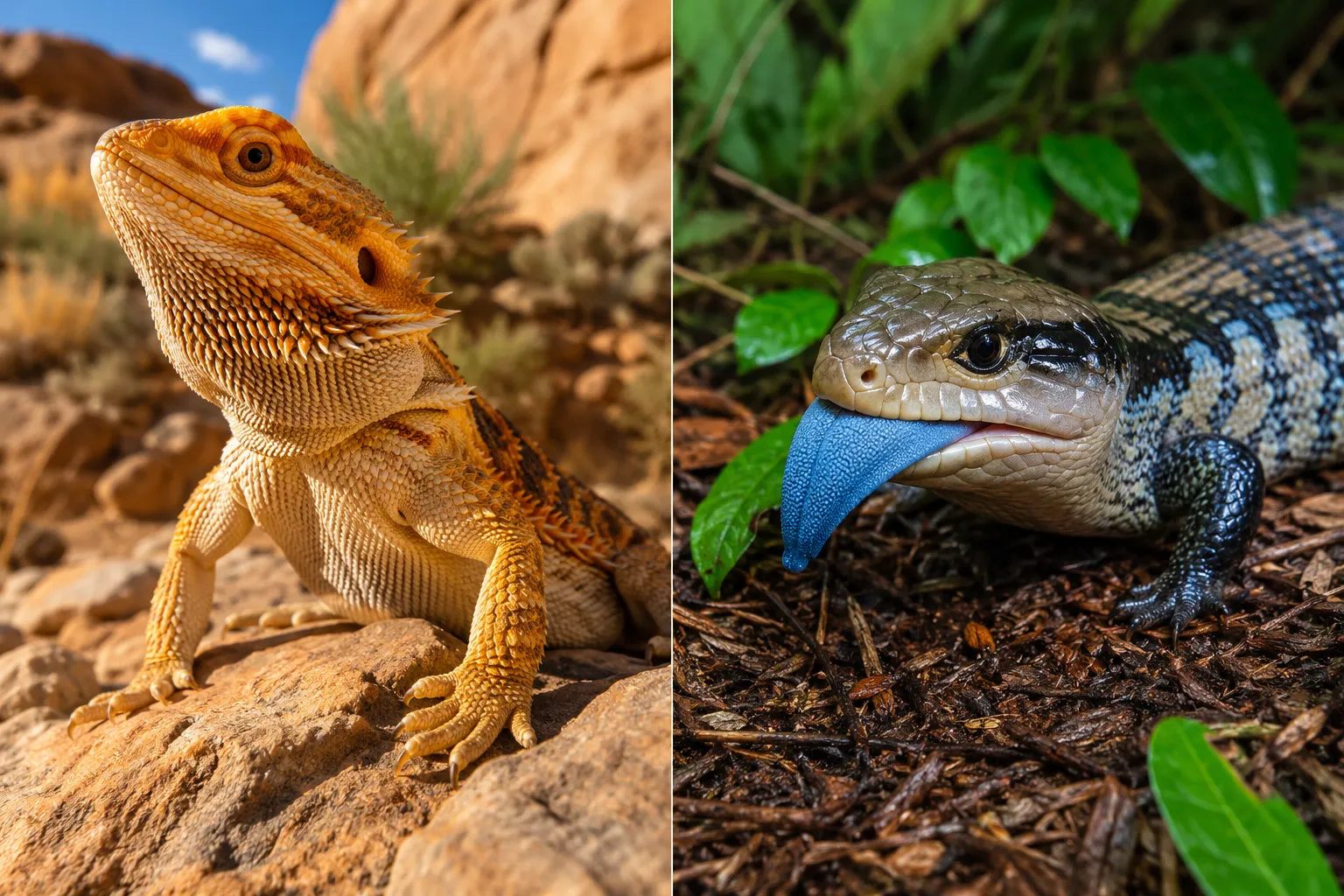
The Bearded Dragon vs Blue-Tongue Skink comparison reveals two excellent pet reptiles with distinct differences. Bearded dragons are more active, social, and require intense UVB lighting with larger enclosures (75+ gallons for adults), while blue-tongue skinks are calmer, more terrestrial, and thrive in slightly smaller spaces (40-55 gallons) with moderate UVB. Bearded dragons typically cost less upfront ($40-$200) compared to blue-tongues ($150-$400), but both have similar long-term care expenses. For beginners seeking an interactive, diurnal pet, bearded dragons edge ahead, while blue-tongue skinks suit those wanting a docile, lower-maintenance reptile.

T5 Reptile Light Fixture with UVB 10.0 Bulb Kit - The REPTIDLDB T5 reptile light fixture comes with a UVB 10.0 bulb kit, offering 10% UVB and 30% UVA output. This lighting system provides a natural and balanced lighting environment, ensuring your reptiles receive the proper UVB radiation for optimal health. The fixture is designed with minimal heat emission, making it perfect for your reptile's habitat without overheating the enclosure. The UVB 10.0 bulb is replaceable, giving you flexibility and convenience in maintaining your reptile’s environment.
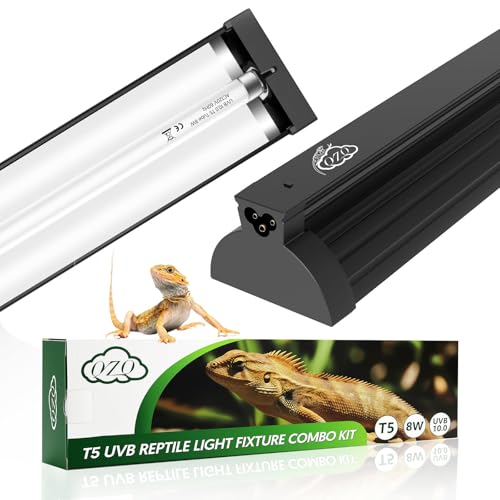
T5 UVB Reptile Light Fixture Combo Kit: The QZQ T5 UVB reptile light features a 5.9ft detachable power cord, a convenient on/off switch, and multiple mounting accessories for easy installation. Whether you're setting up a reptile tank or terrarium, this reptile light fixture meets your reptile lighting needs, providing your pets with the perfect 10.0 UVB lighting environment for healthy growth

【 Complete T5 UVB Lighting Combo Kit】The GREENPAW T5 UVB reptile light fixture comes as a complete lighting kit, including a 8W 10.0 reptile UVB bulb, 12.44-inch terrarium hood, mounting accessories, and power cord. Specifically designed for 16-24 inch reptile terrariums and vivariums. This kit delivers reliable UVB light for reptiles, ideal for new owners.
Key Takeaways
- Bearded dragons are more active, social, and interactive, while blue-tongue skinks are calmer and more ground-dwelling
- Blue-tongue skinks require less intense UVB (5-7% vs 10-12%) and slightly smaller enclosures than bearded dragons
- Bearded dragons live 8-12 years on average; blue-tongue skinks can reach 15-20 years with proper care
- Initial purchase costs favor bearded dragons ($40-$200) over blue-tongues ($150-$400), but ongoing expenses are comparable
- Both species are beginner-friendly, though bearded dragons demand more daily interaction and handling
- Never house these species together, they have incompatible habitat needs and territorial behaviors
- Bearded dragons eat more frequently (daily insects for juveniles) while adult blue-tongues can eat 2-3 times weekly
- Blue-tongue skinks are better suited for apartments due to quieter behavior and smaller space requirements
Which Is Easier to Care for: Bearded Dragon or Blue-Tongue Skink?
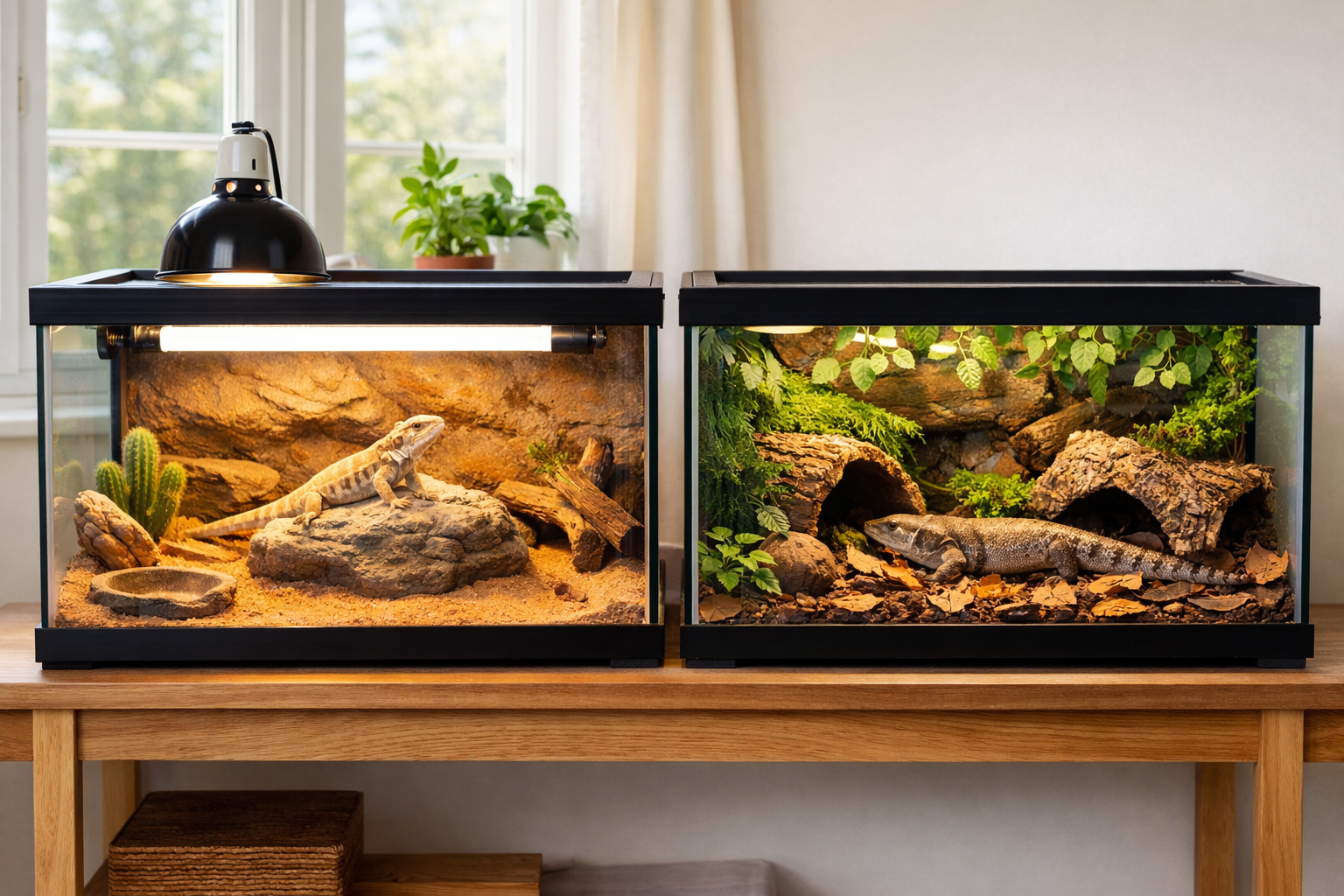
Blue-tongue skinks are generally easier to care for than bearded dragons, particularly for owners with limited time. Blue-tongues tolerate handling well but don’t require daily interaction, eat less frequently as adults (2-3 times per week), and manage with lower UVB requirements. Bearded dragons need daily feeding during their juvenile stage, more frequent tank maintenance due to higher activity levels, and consistent social interaction to remain tame.
Care difficulty factors:
- Feeding schedule: Juvenile bearded dragons need insects 2-3 times daily; blue-tongue skinks can eat every other day even as babies
- Temperature management: Both need basking spots (95-110°F for beardies, 90-100°F for blue-tongues), but bearded dragons are more sensitive to temperature drops
- Cleaning frequency: Bearded dragons produce more waste due to higher metabolism and activity, requiring spot-cleaning daily
- Handling requirements: Bearded dragons become skittish without regular interaction; blue-tongues stay calm with less frequent handling
Common mistake: Assuming blue-tongue skinks don’t need UVB because they’re less active. They absolutely require UVB lighting (5-7% output) for calcium metabolism and overall health, just at lower intensity than bearded dragons.
For detailed care guidelines, check our comprehensive bearded dragon care resources.
Bearded Dragon vs Blue-Tongue Skink Size Difference
Adult bearded dragons reach 18-24 inches in total length and weigh 350-600 grams, while blue-tongue skinks grow 18-24 inches but are significantly heavier and bulkier at 400-900 grams. The size difference isn’t in length but in body mass, blue-tongues have thick, robust bodies with short legs, whereas bearded dragons are leaner with longer limbs and tails.
Size comparison breakdown:
| Species | Length | Weight | Body Type |
|---|---|---|---|
| Bearded Dragon | 18-24 inches | 350-600g | Lean, athletic build |
| Blue-Tongue Skink | 18-24 inches | 400-900g | Thick, stocky build |
Growth timeline:
- Bearded dragons reach adult size in 12-18 months with rapid growth in the first 6 months
- Blue-tongue skinks grow more slowly, reaching full size in 2-3 years
- Both species continue to gain weight and bulk after reaching full length
Tank size implications: Despite similar lengths, blue-tongue skinks need more floor space due to their terrestrial nature, while bearded dragons require vertical space for climbing. A 40-gallon breeder tank works temporarily for blue-tongues, but 75-gallon enclosures suit both species best long-term.
Learn more about proper housing in our guide on what tank size a bearded dragon needs.
Which Is More Friendly: Bearded Dragon or Blue-Tongue Skink?
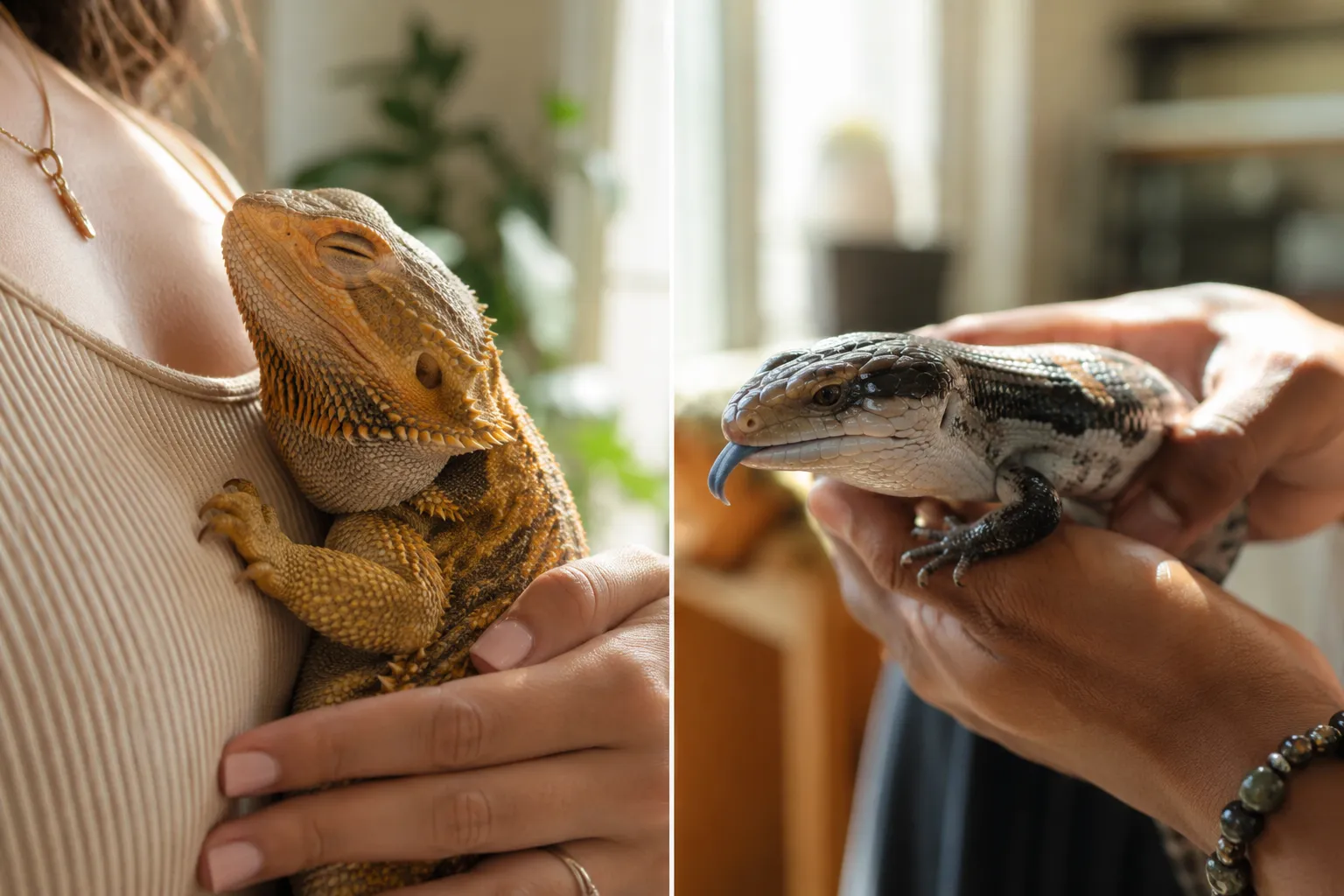
Bearded dragons are more outwardly friendly and interactive, actively seeking human attention, watching their owners, and responding to visual cues. Blue-tongue skinks are equally docile but less socially engaged, they tolerate handling calmly without initiating interaction. Both species rarely bite when properly socialized, but bearded dragons display more personality through behaviors like arm waving and head bobbing.
Friendliness characteristics:
Bearded Dragons:
- Recognize individual people and respond to their owners
- Often run to the glass when they see their keeper
- Enjoy supervised exploration outside their enclosure
- Display clear body language (arm waving, head bobbing, beard puffing)
- Become stressed without regular social interaction
Blue-Tongue Skinks:
- Calm and tolerant during handling sessions
- Less likely to display stress behaviors
- Content to sit still on laps for extended periods
- Show personality through food enthusiasm rather than social behaviors
- Maintain tameness with less frequent handling (2-3 times weekly)
Choose bearded dragons if you want a pet that actively engages with you and displays varied behaviors. Choose blue-tongue skinks if you prefer a calm, steady companion that’s easy to handle but doesn’t demand constant attention.
For insights into bearded dragon communication, read about why bearded dragons head bob and explore reptile body language.
Blue-Tongue Skink vs Bearded Dragon Cost Comparison
Bearded dragons cost $40-$200 for common morphs, while blue-tongue skinks range from $150-$400 for standard varieties, with rare morphs exceeding $1,000. Initial setup costs are similar ($300-$600) for both species, including enclosure, lighting, heating, and decor. Long-term expenses favor bearded dragons slightly due to lower food costs, but the difference is minimal over the animal’s lifetime.
Initial purchase costs:
- Bearded dragons: $40-$100 (standard), $150-$400 (fancy morphs)
- Blue-tongue skinks: $150-$300 (Northern), $250-$400 (Indonesian), $500+ (rare morphs)
Setup costs (both species):
- Enclosure (40-75 gallon): $150-$300
- UVB lighting system: $50-$100
- Heat lamp and thermostat: $40-$80
- Substrate and decor: $30-$60
- Food and water dishes: $15-$30
- Total initial investment: $325-$770 (including the animal)
Monthly maintenance costs:
- Bearded dragons: $30-$50 (insects, vegetables, supplements, electricity)
- Blue-tongue skinks: $25-$45 (omnivore diet with less frequent feeding)
- Replacement UVB bulbs: $25-$40 every 6-12 months (both species)
Veterinary costs: Exotic vet checkups run $50-$100 annually for both species. Emergency care can reach $200-$500 depending on the issue.
Common mistake: Underestimating electricity costs for heating and lighting. Expect $10-$20 monthly for proper temperature and UVB maintenance year-round.
Do Bearded Dragons or Blue-Tongue Skinks Live Longer?
Blue-tongue skinks live significantly longer than bearded dragons, with lifespans of 15-20 years in captivity compared to bearded dragons’ 8-12 years. This longer lifespan makes blue-tongues a bigger commitment but also means more years with your pet. Proper husbandry, diet, and veterinary care directly impact longevity for both species.
Lifespan factors:
Bearded Dragons (8-12 years average):
- Females may have shorter lifespans due to egg production stress
- Metabolic bone disease from inadequate UVB shortens life significantly
- Impaction from improper substrate or diet is a common cause of premature death
- Well-cared-for individuals occasionally reach 14-15 years
Blue-Tongue Skinks (15-20 years average):
- Northern blue-tongues typically outlive Indonesian varieties
- Slower metabolism contributes to longer lifespan
- Less prone to calcium deficiency issues than bearded dragons
- Some individuals documented living 25+ years in optimal conditions
Maximizing lifespan for both:
- Provide species-appropriate UVB lighting (replace bulbs every 6-12 months)
- Feed varied, balanced diets with proper calcium supplementation
- Maintain correct temperature gradients and humidity levels
- Schedule annual exotic vet checkups
- Avoid overfeeding, which leads to obesity and shortened lifespan
For more on bearded dragon longevity, see our article on how long bearded dragons live.
Can Bearded Dragons and Blue-Tongue Skinks Live Together?
Never house bearded dragons and blue-tongue skinks together. These species have incompatible habitat requirements, territorial behaviors, and different activity patterns that make cohabitation dangerous. Bearded dragons need higher temperatures and UVB intensity, while blue-tongue skinks require higher humidity and lower basking temperatures. Both species are solitary and will compete for resources, leading to stress, injury, or death.
Why cohabitation fails:
- Temperature conflicts: Bearded dragons need 95-110°F basking spots; blue-tongues prefer 90-100°F
- Humidity differences: Blue-tongues need 40-60% humidity; bearded dragons thrive at 30-40%
- UVB requirements: Bearded dragons require 10-12% UVB; blue-tongues need only 5-7%
- Territorial aggression: Both species are solitary and will fight over basking spots, food, and space
- Disease transmission: Cross-species parasite and bacterial transmission poses serious health risks
Behavioral incompatibility:
- Bearded dragons are diurnal and highly active; blue-tongues are more crepuscular (active at dawn/dusk)
- Bearded dragons display dominance through head bobbing and beard displays, which stresses blue-tongues
- Blue-tongues may bite bearded dragons during feeding time due to their less precise feeding response
- Size and strength differences mean blue-tongues can seriously injure bearded dragons despite similar lengths
Safe alternative: Keep each species in separate, properly equipped enclosures. If space is limited, choose one species that best fits your lifestyle and commitment level.
Bearded Dragon vs Blue-Tongue Skink for Beginners
Both bearded dragons and blue-tongue skinks are excellent beginner reptiles, but bearded dragons edge ahead for first-time keepers due to their availability, lower initial cost, and extensive care resources. Blue-tongue skinks are equally beginner-friendly in terms of temperament but require more research to source properly and have fewer readily available care guides.
Beginner-friendly factors:
Bearded Dragons (slightly better for beginners):
- Widely available at pet stores with established care information
- Lower purchase price allows budget for proper setup
- Active daytime behavior makes health monitoring easier
- Large online community for troubleshooting and advice
- Clear body language helps beginners read their pet’s needs
Blue-Tongue Skinks (excellent for beginners with research):
- Calmer temperament reduces handling anxiety for new keepers
- Less frequent feeding simplifies care routines
- More forgiving of minor husbandry mistakes
- Longer lifespan rewards commitment to learning proper care
- Harder to find quality captive-bred specimens
Learning curve considerations:
- Bearded dragons require mastering daily feeding schedules and insect gut-loading
- Blue-tongue skinks need understanding of omnivore nutrition balance
- Both species demand proper UVB and temperature management
- Bearded dragons show health issues faster, allowing quicker intervention
- Blue-tongues hide illness longer, requiring more observant monitoring
Best choice for absolute beginners: Start with a bearded dragon if you want immediate availability and extensive support resources. Choose a blue-tongue skink if you’re willing to research breeders and prefer a calmer, longer-lived pet.
Explore our bearded dragon feeding guides to master nutrition basics.
Which Eats More: Bearded Dragon or Blue-Tongue Skink?
Bearded dragons eat significantly more than blue-tongue skinks, especially during their rapid growth phase. Juvenile bearded dragons need insects 2-3 times daily plus fresh vegetables, while juvenile blue-tongues eat every other day. Adult bearded dragons still require daily vegetables and insects 3-4 times weekly, whereas adult blue-tongues thrive on 2-3 feedings per week.
Feeding frequency comparison:
Bearded Dragons:
- Juveniles (0-6 months): 30-80 appropriately sized insects daily, unlimited vegetables
- Sub-adults (6-12 months): 20-40 insects daily, vegetables daily
- Adults (12+ months): Insects 3-4 times weekly, vegetables daily
- Higher metabolism requires consistent food availability
Blue-Tongue Skinks:
- Juveniles (0-12 months): Every other day feeding with protein and vegetables
- Adults (12+ months): 2-3 times weekly with balanced omnivore diet
- Lower metabolism allows less frequent feeding
- Prone to obesity if overfed
Diet composition differences:
- Bearded dragons: 70-80% insects when young, shifting to 70-80% vegetables as adults
- Blue-tongue skinks: 50-60% protein (insects, lean meat, eggs), 40-50% vegetables throughout life
- Bearded dragons need more variety in insects (crickets, dubia roaches, hornworms)
- Blue-tongues accept a wider range of protein sources including cooked chicken and eggs
Food cost impact: Bearded dragons’ higher insect consumption means spending $20-$30 monthly on feeders, while blue-tongues cost $15-$25 monthly with their varied omnivore diet.
Learn about safe protein options like mealworms and hornworms for bearded dragons.

ESSENTIAL NUTRITION: Elevate your Blue Tongue Skink's health with our SALAD TOPPER. Packed with premium ingredients like Alfalfa Leaf Powder, Dandelion, and Calcium Carbonate, it provides essential nutrients for optimal health and well-being

Blue tongue skink book and blue tongue skink food with blue tongue skink hide for every blue tongue skink owner. Blue Tongue Skink accessories and blue tongue skink enclosure with blue tongue skink toys in a blue tongue skink terrarium.

HUNTING BLUEY: Some skinks may be picky, and will need some encouragement getting used to a brand-new food. Starting with a solid stripe for hand feeding using tongs or tweezers triggers their hunting instinct, creating a healthy and engaging feeding experience for both pet and owner
Do Blue-Tongue Skinks Need UVB Like Bearded Dragons?
Yes, blue-tongue skinks absolutely need UVB lighting, but at lower intensity than bearded dragons. Blue-tongues require 5-7% UVB output, while bearded dragons need 10-12% UVB. Both species use UVB to synthesize vitamin D3 for calcium metabolism, and without it, they develop metabolic bone disease regardless of calcium supplementation.
UVB requirements breakdown:
Bearded Dragons:
- UVB strength: 10-12% (ReptiSun 10.0 or Arcadia 12%)
- Distance from bulb: 12-18 inches for optimal exposure
- Daily duration: 12-14 hours matching natural photoperiod
- Replacement schedule: Every 6-12 months (output degrades even when bulb still lights)
Blue-Tongue Skinks:
- UVB strength: 5-7% (ReptiSun 5.0 or Arcadia 6%)
- Distance from bulb: 10-15 inches
- Daily duration: 10-12 hours
- Replacement schedule: Every 6-12 months
Why both species need UVB:
- Enables vitamin D3 synthesis for calcium absorption
- Prevents metabolic bone disease (MBD), which causes bone deformities, seizures, and death
- Supports immune function and overall health
- Promotes natural behaviors and circadian rhythms
- Cannot be fully replaced by dietary D3 supplements alone
Common mistake: Thinking blue-tongue skinks don’t need UVB because they’re more terrestrial or because they come from areas with less sun exposure. All diurnal and crepuscular reptiles require UVB for proper calcium metabolism.
UVB setup tips:
- Use linear fluorescent or LED UVB bulbs, not compact coils (uneven output)
- Mount inside the enclosure when possible (glass and mesh block UVB)
- Create a gradient so reptiles can self-regulate exposure
- Combine with proper calcium and vitamin D3 supplementation
Bearded Dragon vs Blue-Tongue Skink Temperament Differences
Bearded dragons are alert, curious, and socially responsive, actively engaging with their environment and owners, while blue-tongue skinks are calm, steady, and tolerant, preferring to observe rather than interact. Bearded dragons display more varied behaviors and body language, making them entertaining to watch, whereas blue-tongues are predictable and easy-going, ideal for keepers who want a low-stress pet.
Temperament characteristics:
Bearded Dragons:
- Activity level: High, constantly exploring, basking, and repositioning
- Social behavior: Recognize owners, respond to presence, may become excited at feeding time
- Stress indicators: Glass surfing, darkened beard, hiding, loss of appetite
- Defensive behaviors: Beard puffing, hissing, arm waving (rarely bite)
- Handling response: Enjoy being out of enclosure, may perch on shoulders
Blue-Tongue Skinks:
- Activity level: Moderate, active during feeding and exploration periods, otherwise calm
- Social behavior: Tolerate interaction but don’t seek it out
- Stress indicators: Hissing, tongue flicking, hiding (more subtle than bearded dragons)
- Defensive behaviors: Hissing, blue tongue display, may bite if cornered (stronger bite than bearded dragons)
- Handling response: Remain still and calm, comfortable being held for extended periods
Personality development:
- Bearded dragons become more personable with daily handling and interaction
- Blue-tongues stay consistently calm regardless of handling frequency (within reason)
- Both species can become defensive if handled during shed or when unwell
- Individual personality varies, some bearded dragons are naturally calmer, some blue-tongues more active
Choose based on interaction style: Pick bearded dragons if you want an engaging pet that responds to you. Choose blue-tongues if you prefer a calm companion that’s easy to handle but doesn’t demand attention.
For more on bearded dragon behavior, read about glass surfing and other behavioral patterns.
Common Mistakes When Choosing Between Bearded Dragon and Blue-Tongue Skink
The most common mistake is choosing based on appearance alone without considering long-term care requirements, space availability, and lifestyle compatibility. Many new keepers underestimate the commitment level for bearded dragons’ daily feeding and interaction needs or overlook blue-tongue skinks’ 15-20 year lifespan and specific humidity requirements.
Critical decision mistakes:
Underestimating space requirements:
- Assuming a 20-gallon tank is sufficient for either species (both need 40+ gallons minimum, 75+ gallons ideal)
- Not planning for adult size when setting up juvenile enclosures
- Failing to account for vertical space needs for bearded dragons
Ignoring time commitment:
- Not considering daily feeding schedules for juvenile bearded dragons
- Underestimating time needed for proper insect gut-loading and vegetable preparation
- Overlooking the 15-20 year commitment for blue-tongue skinks
Budget miscalculations:
- Focusing only on purchase price without budgeting for setup costs ($300-$600)
- Not accounting for ongoing expenses (food, electricity, bulb replacements)
- Skipping exotic vet fund planning ($50-$100 annual checkups, $200-$500 emergency care)
Husbandry misunderstandings:
- Believing blue-tongue skinks don’t need UVB lighting
- Thinking bearded dragons can thrive on vegetables alone as adults
- Assuming either species can live in room-temperature environments without supplemental heating
Sourcing errors:
- Buying wild-caught blue-tongue skinks (health issues, parasite loads, poor temperament)
- Purchasing from pet stores without asking about breeding source or health history
- Not researching reputable breeders before committing to purchase
How to avoid these mistakes:
- Research both species thoroughly for at least 2-4 weeks before purchasing
- Set up the complete enclosure and run it for a week before bringing your pet home
- Budget for the full first-year cost (animal + setup + food + vet = $500-$1,000+)
- Honestly assess your daily schedule and long-term housing stability
- Join species-specific online communities to learn from experienced keepers
Are Blue-Tongue Skinks Better for Apartments Than Bearded Dragons?
Yes, blue-tongue skinks are generally better suited for apartment living than bearded dragons due to their calmer demeanor, smaller minimum space requirements, and quieter behavior. Blue-tongues thrive in 40-55 gallon enclosures that fit easily in apartments, while bearded dragons ideally need 75-120 gallon tanks. Blue-tongues also produce less noise and require less frequent feeding, reducing odor and insect storage concerns.
Apartment-friendly factors:
Blue-Tongue Skinks (better for apartments):
- Space: 40-55 gallon enclosure sufficient for adults (48″ x 18″ footprint)
- Noise level: Nearly silent except occasional hissing
- Odor: Less frequent feeding means less waste and odor
- Insect storage: Lower insect consumption reduces need for large feeder colonies
- Activity level: Calmer behavior less likely to disturb neighbors or roommates
Bearded Dragons (manageable but more challenging):
- Space: 75-120 gallon enclosure ideal for adults (48″ x 24″ footprint minimum)
- Noise level: Quiet but may scratch glass during glass surfing episodes
- Odor: Daily feeding produces more frequent waste requiring cleaning
- Insect storage: Need space for cricket or roach colonies (can be noisy and smelly)
- Activity level: High activity visible through glass may be distracting in small spaces
Practical apartment considerations:
- Both species’ enclosures are heavy (150-300+ lbs when fully set up), ensure floor can support weight
- Electricity costs for heating and lighting add $10-$20 monthly to utility bills
- UVB lighting may be visible under doors if enclosure is in bedroom
- Both species are odorless when properly maintained, but food insects can smell
- Neither species requires outdoor access or exercise space
Landlord and lease considerations:
- Check lease for exotic pet restrictions (some apartments ban reptiles)
- Verify electrical capacity for heat lamps and UVB fixtures
- Consider enclosure placement away from shared walls to minimize any noise concerns
- Both species are non-destructive and contained, making them ideal apartment pets
Which Is More Expensive to Maintain: Bearded Dragon or Blue-Tongue Skink?
Bearded dragons are slightly more expensive to maintain long-term due to higher food consumption, more frequent feeding schedules, and greater insect costs. Monthly maintenance for bearded dragons averages $30-$50 compared to $25-$45 for blue-tongue skinks. However, the difference is minimal over the animal’s lifetime, and both species have comparable electricity, supplement, and veterinary costs.
Monthly maintenance breakdown:
Bearded Dragons ($30-$50/month):
- Insects (crickets, dubia roaches, hornworms): $20-$30
- Fresh vegetables and fruits: $5-$10
- Calcium and vitamin supplements: $3-$5
- Electricity (heating and UVB): $10-$15
- Substrate replacement: $2-$5
Blue-Tongue Skinks ($25-$45/month):
- Protein sources (insects, lean meat, eggs): $15-$25
- Fresh vegetables and fruits: $5-$10
- Calcium and vitamin supplements: $3-$5
- Electricity (heating and UVB): $8-$12
- Substrate replacement: $2-$5
Annual fixed costs (both species):
- UVB bulb replacement (1-2 per year): $25-$80
- Heat bulb replacement (2-4 per year): $10-$30
- Exotic vet checkup: $50-$100
- Total annual fixed costs: $85-$210
Lifetime cost comparison:
- Bearded dragon (10-year average lifespan): $4,400-$7,200 total
- Blue-tongue skink (17-year average lifespan): $5,800-$9,900 total
Cost-saving strategies:
- Breed your own feeder insects (dubia roaches are easy and cost-effective)
- Grow vegetables like collard greens and squash at home
- Buy UVB bulbs in bulk or during sales
- Maintain proper husbandry to prevent expensive vet emergencies
- Join reptile groups for equipment swaps and bulk food purchases
Hidden costs to budget for:
- Emergency veterinary care ($200-$500 per incident)
- Enclosure upgrades as animal grows
- Backup heating equipment in case of failure
- Quarantine supplies if adding additional reptiles
Bearded Dragon vs Blue-Tongue Skink Handling Requirements
Bearded dragons require frequent handling (4-5 times weekly minimum) to maintain tameness and prevent stress-related behaviors, while blue-tongue skinks stay docile with less frequent handling (2-3 times weekly). Both species tolerate handling well when properly socialized, but bearded dragons actively benefit from regular interaction, whereas blue-tongues simply tolerate it without becoming defensive.
Handling frequency guidelines:
Bearded Dragons:
- Juveniles: Daily brief sessions (5-10 minutes) to build trust
- Adults: 4-5 times weekly for 15-30 minutes
- Become skittish and may develop glass surfing if under-handled
- Enjoy supervised exploration time outside enclosure
- May seek out owner interaction by running to glass
Blue-Tongue Skinks:
- Juveniles: 2-3 times weekly for 10-15 minutes
- Adults: 2-3 times weekly for 20-30 minutes
- Maintain calm temperament even with less frequent handling
- Content to sit still on laps or shoulders
- Don’t require handling for mental stimulation
Proper handling techniques:
For both species:
- Always support the body fully, never grab by tail
- Approach from the side, not from above (predator angle)
- Wash hands before and after handling
- Avoid handling during shed, right after feeding, or when showing stress signs
- Keep sessions short initially, gradually increasing duration
Bearded dragons specifically:
- Scoop from underneath, supporting chest and hindquarters
- Allow them to perch on forearm or shoulder
- Watch for stress signs (darkened beard, arm waving, attempting to jump)
Blue-tongue skinks specifically:
- Support the entire body length due to their weight
- Move slowly, they’re less agile than bearded dragons
- Watch for hissing or tongue displays indicating stress
- Their bite is stronger than bearded dragons’ if they feel threatened
When to avoid handling:
- During brumation (winter dormancy period)
- Within 2-3 days of bringing home (acclimation period)
- When shedding (skin is sensitive and vision may be impaired)
- If showing signs of illness or injury
- Immediately after feeding (risk of regurgitation)
For more on understanding your bearded dragon’s needs, explore our resources on reptile care.
Conclusion
The Bearded Dragon vs Blue-Tongue Skink comparison reveals two outstanding pet reptiles that cater to different keeper preferences and lifestyles. Bearded dragons shine as interactive, engaging pets perfect for keepers who want daily interaction and enjoy watching active, curious behavior. Their lower initial cost ($40-$200) and widespread availability make them accessible for beginners, though they demand consistent feeding schedules and regular handling to thrive.
Blue-tongue skinks excel as calm, low-maintenance companions ideal for keepers seeking a docile, long-lived pet (15-20 years) that doesn’t require constant attention. While their higher purchase price ($150-$400) and longer commitment may seem daunting, their forgiving temperament and less demanding care routine reward patient owners with decades of companionship.
Your next steps:
- Assess your lifestyle honestly: Can you commit to daily feeding and interaction (bearded dragon) or prefer 2-3 weekly care sessions (blue-tongue skink)?
- Evaluate your space: Measure where the enclosure will go and ensure you can accommodate 75+ gallons for bearded dragons or 40-55 gallons for blue-tongues
- Budget completely: Calculate the full first-year cost including animal, setup, food, and emergency vet fund ($500-$1,000+)
- Research breeders: Find reputable sources for captive-bred animals with health guarantees
- Set up before purchasing: Run your complete enclosure for one week to ensure proper temperatures and UVB before bringing your pet home
Both species offer rewarding reptile keeping experiences when matched to the right owner. Choose bearded dragons for an active, social pet that responds to your presence, or select blue-tongue skinks for a steady, calm companion that fits seamlessly into a busy lifestyle. Whichever you choose, proper research and preparation ensure a successful, long-term relationship with your new reptile friend.
Ready to start your bearded dragon journey? Explore our complete bearded dragon care guide and learn about proper feeding practices to give your pet the best possible start.
Frequently Asked Questions
Can I keep a bearded dragon and blue-tongue skink in the same room?
Yes, you can keep both species in the same room as long as they’re in separate enclosures. Ensure each has proper temperature, humidity, and UVB specific to their needs, and that neither can see the other (visual stress). Maintain separate feeding and handling tools to prevent cross-contamination.
Which species is better with children?
Both are excellent with supervised children, but bearded dragons are slightly better due to their more interactive nature and lighter weight. Blue-tongue skinks’ heavier bodies and stronger bite (though rare) require more careful handling. Children under 8 should always have adult supervision with either species.
Do bearded dragons or blue-tongue skinks smell?
Neither species has body odor when healthy. Any smell comes from inadequate enclosure cleaning, spoiled food, or health issues. Bearded dragons require more frequent spot-cleaning due to higher metabolism, while blue-tongues produce less waste overall.
Can bearded dragons eat the same foods as blue-tongue skinks?
There’s significant overlap in vegetables and fruits, but protein sources differ. Bearded dragons need primarily insects, while blue-tongues can eat insects, cooked lean meats, and eggs. Never feed bearded dragons dog food or cat food, which some blue-tongue keepers use sparingly.
Which species is more prone to health problems?
Bearded dragons are more susceptible to metabolic bone disease due to higher calcium demands and show health issues more quickly. Blue-tongue skinks are generally hardier but hide illness longer, making problems harder to detect early. Both need proper UVB and nutrition to stay healthy.
How much does it cost to take a bearded dragon or blue-tongue skink to the vet?
Routine exotic vet checkups cost $50-$100 for either species. Emergency visits or treatments range from $200-$500 depending on the issue. Not all vets treat reptiles, so locate an exotic vet before emergencies arise.
Can bearded dragons and blue-tongue skinks recognize their owners?
Bearded dragons clearly recognize individual people and respond differently to their primary keeper versus strangers. Blue-tongue skinks show less obvious recognition but may become calmer with their regular handler compared to unfamiliar people.
Which species is easier to find a vet for?
Both require exotic vets, but bearded dragons are more commonly treated due to their popularity. Research exotic vets in your area before purchasing either species, as not all veterinary practices have reptile expertise.
Do bearded dragons or blue-tongue skinks make noise?
Both are nearly silent. Bearded dragons may produce soft hissing when threatened, and you’ll hear scratching during glass surfing. Blue-tongue skinks hiss when defensive but are otherwise quiet. Neither species vocalizes like mammals.
Which species is better for someone with a busy schedule?
Blue-tongue skinks are better for busy owners due to less frequent feeding (2-3 times weekly for adults) and lower handling requirements. Bearded dragons need daily vegetable preparation and more frequent interaction to stay tame.
Can I take my bearded dragon or blue-tongue skink outside?
Both can enjoy supervised outdoor time in warm weather (75°F+) with proper precautions. Use a secure harness or enclosed outdoor pen, never leave unattended, watch for predators (birds, cats), and ensure they can’t escape. Limit sessions to 15-30 minutes to prevent overheating or stress.
Which species is better for breeding?
Bearded dragons are easier to breed due to shorter maturity time (12-18 months) and more predictable breeding behaviors. Blue-tongue skinks are live-bearers with longer maturity (2-3 years) and smaller litter sizes, making breeding more complex but potentially more profitable due to higher offspring value.

Simulated Sunlight: Most amphibians and reptiles are poikilotherms, whose body temperature changes with their environment. Therefore, sunlight and temperature affect the growth, development and reproduction of reptiles. The REPTI HOME reptile heat lamp is able to simulate sunlight, and create an area for reptiles to bask in the sun, which provide a comfortable habitat for your reptile pet

【Reptile Basking Bulb】This basking bulb creates a basking area for the thermoregulation of animals, facilitating the distinction between hot and cold zones in the terrarium and facilitating the restoration of the animals' natural ecological activities.