Quick Answer
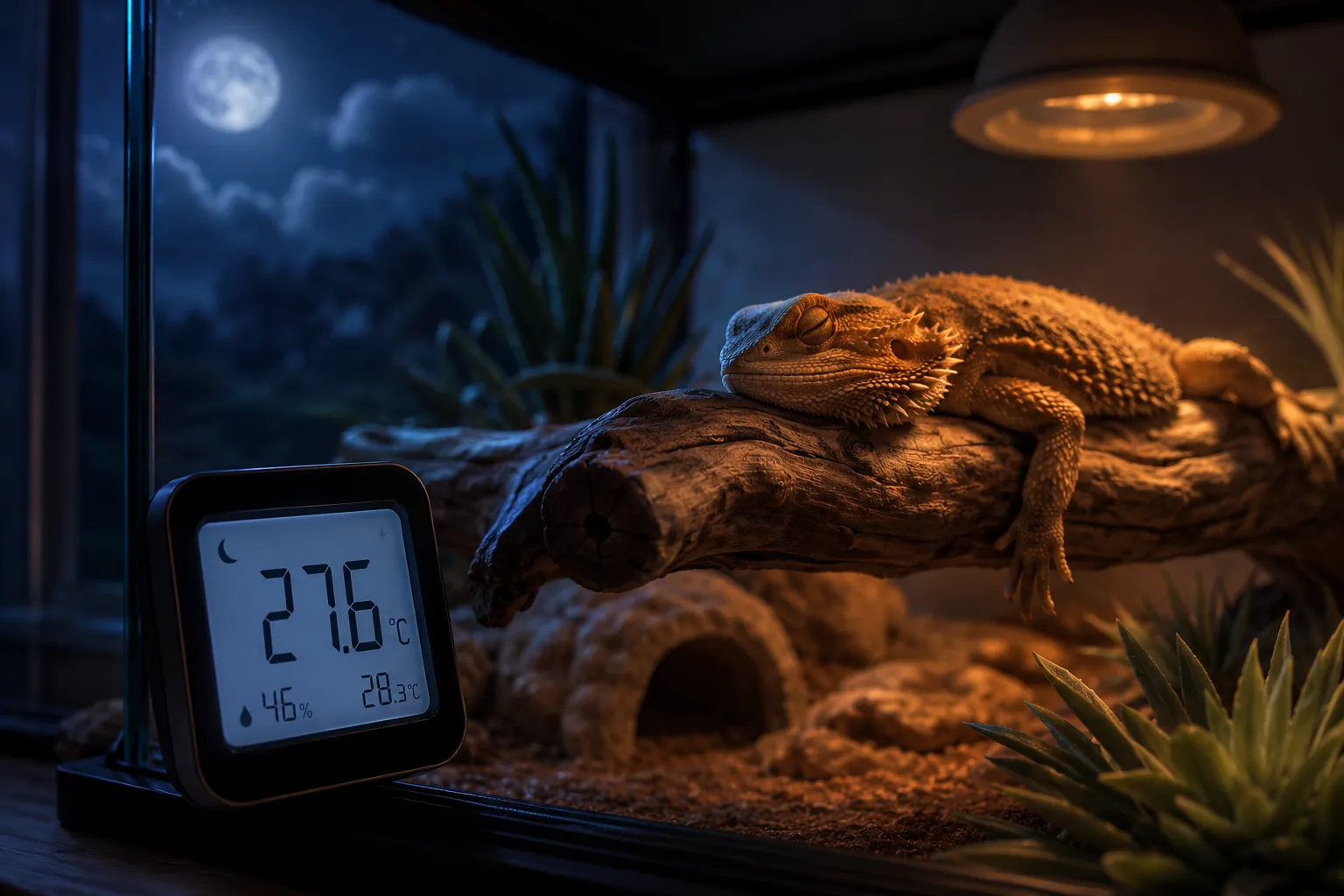
Nighttime tank temperature for bearded dragons should drop to 65-75°F (18-24°C), with 70°F being ideal for most adult dragons. This temperature drop mimics their natural Australian habitat where desert nights cool significantly after hot days. Temperatures below 65°F can stress your dragon and suppress their immune system, while temperatures above 75°F prevent proper rest and disrupt their natural circadian rhythm.

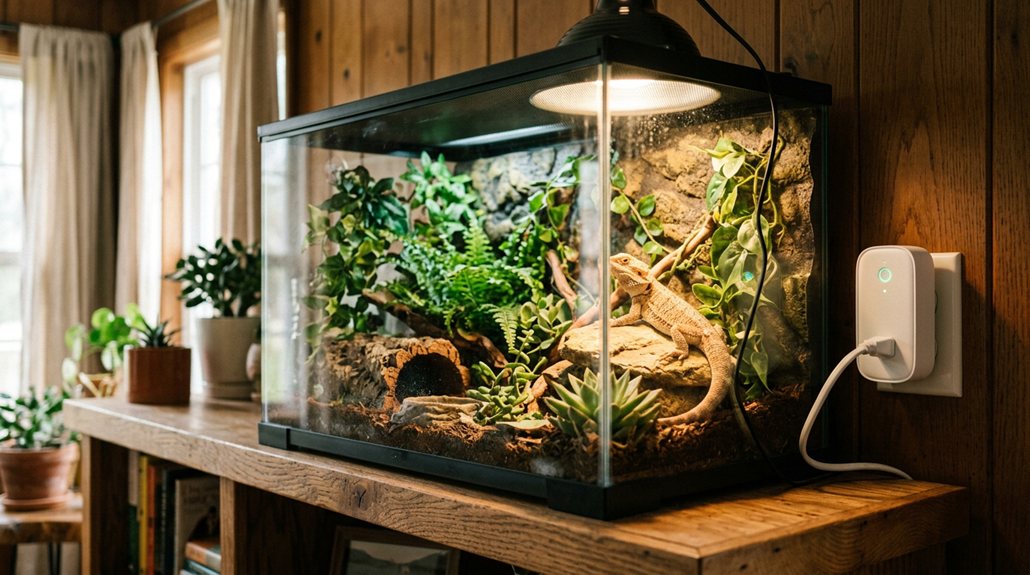
Our BOEESPAT ceramic heat lamp generates sun-like natural warmth with zero visible light, never disrupting your reptiles’ day-night sleep cycles. Boasting a 99% high thermal efficiency rate and up to 15,000 hours stable service life, it delivers consistent gentle heat 24/7 without disturbing your pet’s terrarium habitat.
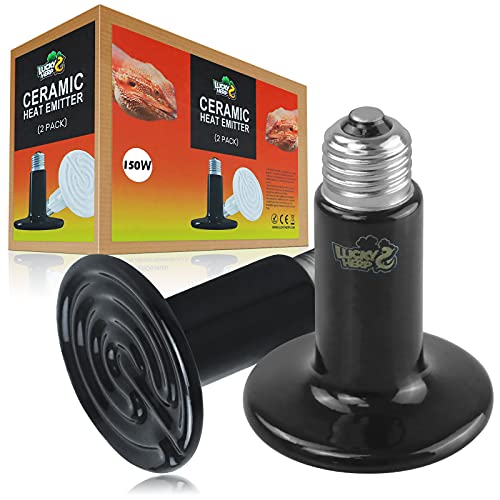
🦎No Light Emitted - The heat lamp bulb only generates heat during use, and does not emit light. It provides sufficient heat for your pets so that they can feel the warmth you made for it in a cold environment. Especially when it is used at night, it will not affect the pet's sleep.

🦎No Light Emitted - The heat lamp bulb only generates heat during use, and does not emit light. It provides sufficient heat for your pets so that they can feel the warmth you made for it in a cold environment. Especially when it is used at night, it will not affect the pet's sleep.
Key Takeaways
- Bearded dragons need nighttime temperatures between 65-75°F, with 70°F being the sweet spot for healthy adults
- A 10-20°F drop from daytime temperatures is natural and healthy, mimicking their native Australian desert environment
- Turn off basking lights and UVB at night but maintain ambient warmth with ceramic heat emitters if room temperature drops below 65°F
- Temperatures below 65°F cause stress and health issues, including respiratory infections and weakened immunity
- Temperatures above 75°F at night prevent proper sleep, leading to behavioral problems and metabolic issues
- Baby bearded dragons need slightly warmer nights (70-75°F) compared to adults who tolerate cooler temperatures better
- Use a reliable digital thermometer with a probe placed at dragon level, not stuck to glass walls where readings are inaccurate
- Ceramic heat emitters and under-tank heaters work best for nighttime warmth without disrupting sleep with visible light
What Temperature Should a Bearded Dragon Tank Be at Night?
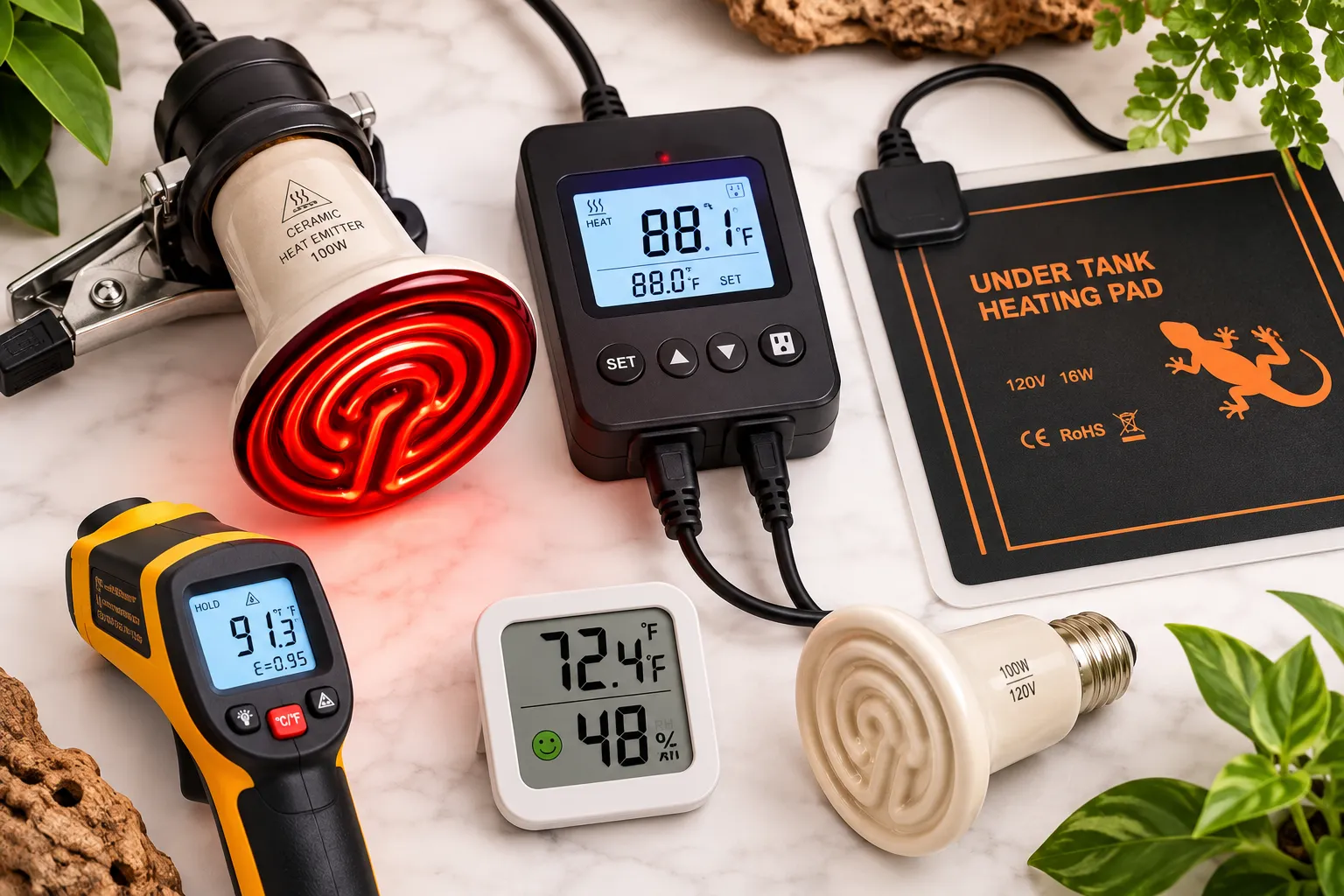
Bearded dragon tanks should maintain nighttime temperatures between 65-75°F (18-24°C), with 70°F being optimal for most adults. This range allows your dragon to experience a natural temperature drop that supports healthy sleep cycles and metabolic function. In their native Australian habitat, bearded dragons experience significant temperature swings between day and night, and replicating this pattern in captivity promotes better health outcomes.
The specific temperature within this range depends on several factors:
- Adult dragons (18+ months) thrive at 65-70°F at night
- Juvenile dragons (6-18 months) prefer 68-72°F
- Baby dragons (0-6 months) need 70-75°F for optimal growth
- Room temperature in your home affects how much supplemental heat you’ll need
Most keepers find that turning off all heat and light sources at night works perfectly if their home stays between 68-72°F. If your house gets colder, especially in winter months, you’ll need supplemental heating that doesn’t emit visible light.
Common mistake: Many new owners keep basking lights on 24/7, thinking their dragon needs constant warmth. This prevents proper rest and can lead to stress, aggression, and health problems. Bearded dragons are diurnal and need darkness to sleep properly.
Do I Need to Lower Aquarium Temperature at Night?
Yes, you should lower your bearded dragon tank temperature at night by turning off basking lights and UVB bulbs. This natural temperature drop of 10-20°F from daytime highs is essential for healthy circadian rhythms and proper metabolic function. Unlike tropical fish that need stable temperatures 24/7, bearded dragons are desert reptiles adapted to significant day-night temperature fluctuations.
The temperature drop serves several important biological functions:
- Regulates sleep-wake cycles and hormone production
- Reduces metabolic rate during rest periods, conserving energy
- Mimics natural conditions that trigger instinctive behaviors
- Prevents overheating stress that can suppress appetite and immunity
To achieve proper nighttime temperatures, follow this simple routine:
- Turn off basking lights 30-60 minutes before your dragon’s bedtime
- Turn off UVB lights at the same time (12-14 hour photoperiod total)
- Allow ambient room temperature to cool the tank naturally
- Add supplemental heat only if temperature drops below 65°F
Decision rule: If your room temperature stays above 65°F at night, you don’t need any nighttime heating equipment. If it drops below 65°F, use a ceramic heat emitter or under-tank heater controlled by a thermostat.
For more guidance on setting up the right tank environment, check out our guide on what tank size a bearded dragon needs.
How Much Can Tank Temperature Drop at Night Safely?
Tank temperature can safely drop 10-20°F from daytime highs, as long as nighttime temperatures stay above 65°F. For example, if your basking spot reaches 95-100°F during the day and the cool side stays around 80-85°F, dropping to 68-72°F at night is perfectly healthy. This mirrors the temperature swings bearded dragons experience in the wild and supports natural biological rhythms.
Here’s a safe temperature drop guide based on age:
Adult Bearded Dragons (18+ months):
- Daytime cool side: 80-85°F
- Nighttime: 65-70°F
- Safe drop: 15-20°F
Juvenile Bearded Dragons (6-18 months):
- Daytime cool side: 80-85°F
- Nighttime: 68-72°F
- Safe drop: 12-17°F
Baby Bearded Dragons (0-6 months):
- Daytime cool side: 80-85°F
- Nighttime: 70-75°F
- Safe drop: 10-15°F
Warning signs your temperature drop is too extreme:
- Dragon appears lethargic in the morning
- Refuses food after waking up
- Seeks heat source immediately upon waking
- Dark beard or stress marks in the morning
- Respiratory symptoms (wheezing, mucus, open-mouth breathing)
Edge case: During brumation (winter dormancy), adult bearded dragons can tolerate temperatures as low as 60°F for extended periods. However, this should only occur if your dragon is showing natural brumation behaviors like reduced appetite and increased sleeping. Learn more about these behaviors in our article on why bearded dragons sleep so much.
Difference Between Day and Night Temperature for Reptile Tanks
Bearded dragons require a 10-20°F temperature difference between day and night, while other popular reptiles have different needs. This variation reflects each species’ natural habitat and evolutionary adaptations. Understanding these differences prevents the common mistake of applying one-size-fits-all temperature guidelines across different reptile species.
Temperature Requirements by Species:
| Reptile Species | Daytime Range | Nighttime Range | Day-Night Drop |
|---|---|---|---|
| Bearded Dragon | 95-105°F (basking) 80-85°F (cool side) |
65-75°F | 15-20°F |
| Leopard Gecko | 88-92°F (warm side) 75-80°F (cool side) |
70-75°F | 10-15°F |
| Ball Python | 88-92°F (warm side) 78-82°F (cool side) |
75-80°F | 5-10°F |
| Crested Gecko | 72-78°F | 65-72°F | 5-10°F |
| Blue Tongue Skink | 90-95°F (basking) 75-82°F (cool side) |
65-72°F | 15-20°F |
Why the difference matters:
- Desert species (bearded dragons, leopard geckos) evolved with dramatic temperature swings and need larger drops
- Tropical species (ball pythons, crested geckos) come from stable environments and prefer smaller fluctuations
- Temperate species (blue tongue skinks) fall somewhere in between
Bearded dragons specifically need that significant nighttime drop because their native Australian desert habitat experiences these extremes. Daytime temperatures in central Australia can exceed 100°F, while nights regularly drop into the 60s, especially during cooler months.
Common mistake: Treating all reptiles like tropical fish that need constant stable temperatures. This approach works for some species but causes stress and health problems in desert reptiles that depend on temperature cycles for proper hormone regulation and metabolic function.
Should I Turn Off Aquarium Heater at Night?
You should turn off basking lights and UVB bulbs at night, but whether you need supplemental heating depends on your room temperature. If your home stays above 65°F at night, turn off all heating equipment. If temperatures drop below 65°F, use a ceramic heat emitter or radiant heat panel controlled by a thermostat, never leave basking lights on overnight.
Nighttime heating decision tree:
Room temperature 68°F or above:
- Turn off all lights and heat sources
- No supplemental heating needed
- Monitor with a digital thermometer to confirm tank stays above 65°F
Room temperature 65-67°F:
- Turn off all lights
- Optional: low-wattage ceramic heat emitter on thermostat
- Monitor closely to ensure temperature doesn’t climb above 75°F
Room temperature below 65°F:
- Turn off all lights
- Required: ceramic heat emitter or radiant heat panel on thermostat
- Set thermostat to maintain 68-70°F
- Consider under-tank heating pad as supplemental warmth
Why visible light matters: Bearded dragons need complete darkness to produce melatonin and achieve deep sleep. Even red or blue “nighttime” bulbs disrupt their sleep cycle. These marketed “moonlight” bulbs are unnecessary and potentially harmful despite being sold specifically for reptiles.
Thermostat importance: Never run heating equipment without a thermostat. Ceramic heat emitters can overheat tanks quickly, and without automatic shutoff, you risk cooking your dragon while you sleep. Quality thermostats cost $20-40 and prevent both overheating and temperature drops.
For comprehensive care information including temperature management, visit our bearded dragon care guide.
What Happens If Tank Gets Too Cold at Night?
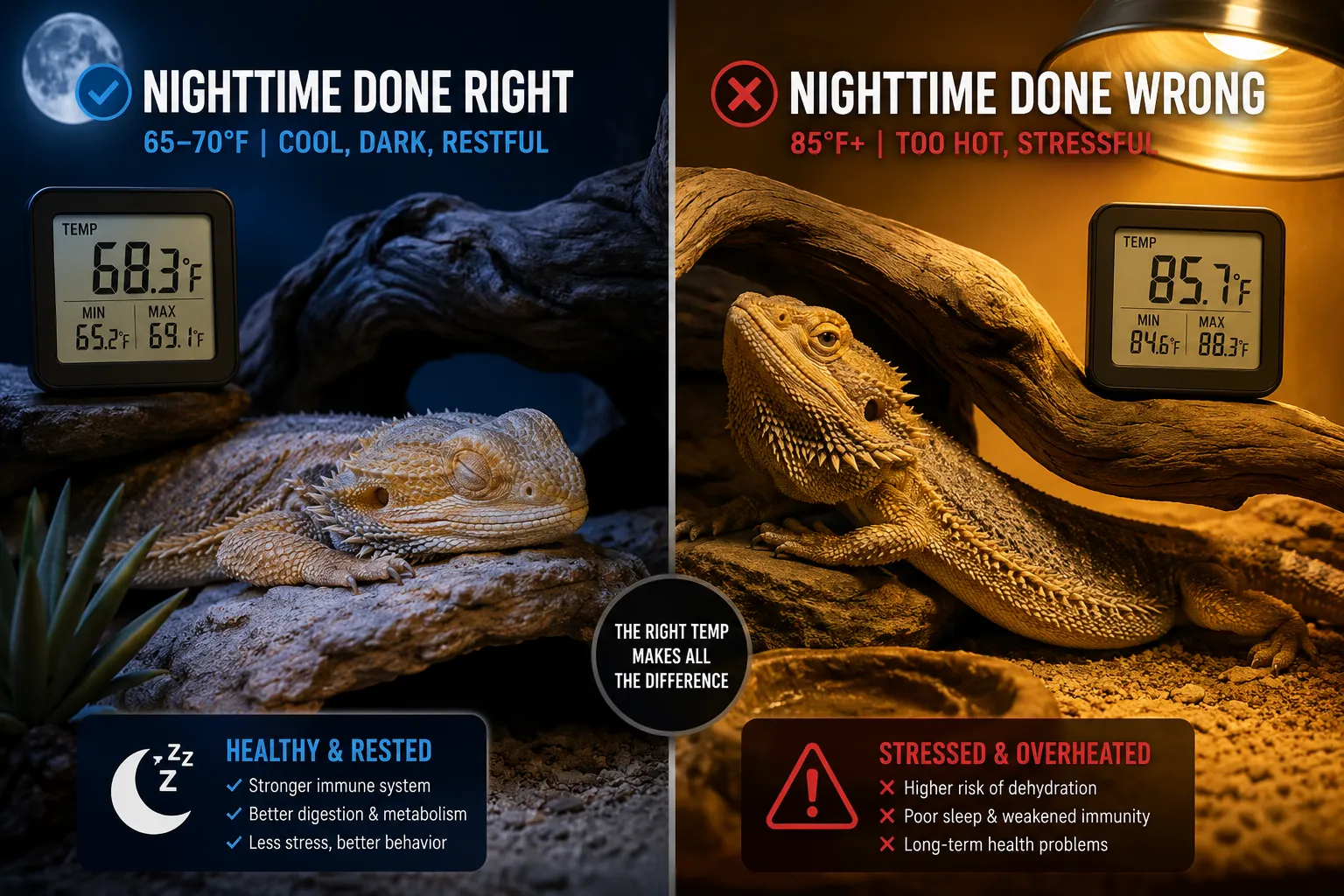
When tank temperatures drop below 65°F at night, bearded dragons experience stress that weakens their immune system and makes them vulnerable to respiratory infections. Prolonged exposure to temperatures below 60°F can be life-threatening, especially for baby and juvenile dragons whose smaller body mass makes them more susceptible to temperature-related health issues.
Immediate effects of cold temperatures (60-65°F):
- Sluggish movement and lethargy in the morning
- Reduced appetite or complete food refusal
- Darker coloration (stress response)
- Seeking warmth desperately when lights turn on
- Slower digestion leading to potential impaction
Serious health risks from prolonged cold (below 60°F):
- Respiratory infections: Cold-stressed dragons develop bacterial or fungal lung infections, showing symptoms like wheezing, mucus around nostrils, and open-mouth breathing
- Weakened immunity: Low temperatures suppress immune function, making dragons vulnerable to parasites and disease
- Metabolic problems: Digestive enzymes don’t function properly, causing food to rot in the gut
- Brumation confusion: Unseasonably cold temperatures can trigger premature brumation in dragons not physically prepared
Recovery steps if your tank got too cold:
- Gradually warm the tank over 30-60 minutes (never use hot water or rapid heating)
- Offer a warm bath (95-100°F) to raise core body temperature safely
- Monitor for respiratory symptoms over the next week
- Increase basking time to help boost immunity
- Consider a vet visit if appetite doesn’t return within 48 hours
Prevention: Place a minimum/maximum thermometer in your tank to track overnight temperature swings. These inexpensive devices ($10-15) record the lowest and highest temperatures reached, alerting you to problems even while you sleep.
Maintaining proper temperatures is just one aspect of reptile health, nutrition also plays a critical role in keeping your dragon strong and resilient.
Nighttime Temperature for Betta Fish Tank vs Bearded Dragon Tank
Betta fish tanks need stable temperatures of 76-80°F day and night with no significant drops, while bearded dragon tanks should cool to 65-75°F at night, a fundamental difference reflecting aquatic versus terrestrial reptile biology. This distinction is crucial because applying fish-keeping temperature principles to reptile care leads to health problems and vice versa.
Key differences explained:
Betta Fish (Tropical Aquatic):
- Constant 76-80°F, 24/7
- Temperature swings of 2-3°F can cause stress
- Heater runs continuously
- Water temperature changes slowly, providing natural stability
- Native to warm, stable Southeast Asian waters
Bearded Dragons (Desert Terrestrial):
- 95-105°F basking during day, 65-75°F at night
- 15-20°F drop is healthy and necessary
- All heat sources turn off at night (except in cold homes)
- Air temperature changes quickly, mimicking desert conditions
- Native to Australian desert with extreme day-night swings
Why the biology matters: Fish are ectothermic animals living in water, which has high thermal mass and changes temperature slowly. Their metabolism evolved for stable conditions. Bearded dragons are also ectothermic but live in air, which heats and cools rapidly. Their metabolism depends on temperature cycles to regulate hormones, digestion, and behavior.
Common confusion: New reptile owners with fish-keeping experience often try to maintain stable temperatures 24/7, thinking consistency equals health. For bearded dragons, this approach prevents proper rest, disrupts circadian rhythms, and can lead to chronic stress.
Edge case: Some keepers maintain both fish and reptiles. If you’re one of them, remember that your betta’s heater should never turn off, while your bearded dragon’s basking light should never stay on overnight. These are opposite care requirements despite both being ectothermic pets.
Do Tropical Fish Need Heat at Night?
Yes, tropical fish including bettas need continuous heat at night to maintain stable temperatures between 76-80°F. Unlike bearded dragons that require nighttime temperature drops, tropical fish evolved in warm, stable aquatic environments where temperature fluctuations cause stress and disease. However, this article focuses on bearded dragon care, and the temperature principles for fish do not apply to desert reptiles.
For bearded dragon owners, the key takeaway is this: ignore any advice suggesting reptiles need the same stable temperatures as tropical fish. This misconception causes many new keepers to overheat their dragons at night, preventing proper sleep and causing long-term health issues.
Why this confusion exists:
- Both fish and reptiles are ectothermic (cold-blooded)
- Pet stores often group reptile and fish supplies together
- Some heating equipment (thermostats, heaters) works for both
- Well-meaning fish keepers give reptile advice based on aquarium experience
The critical difference: Water has high thermal mass and changes temperature slowly, while air heats and cools rapidly. Bearded dragons evolved in environments where air temperature swings dramatically between day and night. Their biology depends on these cycles in ways that fish biology does not.
If you’re keeping both fish and reptiles, maintain separate temperature protocols for each species based on their specific evolutionary adaptations and natural habitat conditions.

1-【Widely Application】The digital LCD monitor can be used in home, office, garage, schools, hotels, laboratories, kindergartens, aquaculture, instrument workshop, warehouse, reptile tank terrarium, aquarium, hermit crab habitat, and other places where temperature/humidity measurement is required.

Precision Health Guardian: Your reptile pets are very sensitive to temperature and humidity, and small changes can affect their comfort and even their health. This humidity thermometer utilizes a built-in high-precision measurement chip that monitors the environment with 0.9°F accuracy, ensuring you are always aware of the actual conditions in your animal's tank. It's not just a matter of caring, it's a consideration for your pet's long-term health.
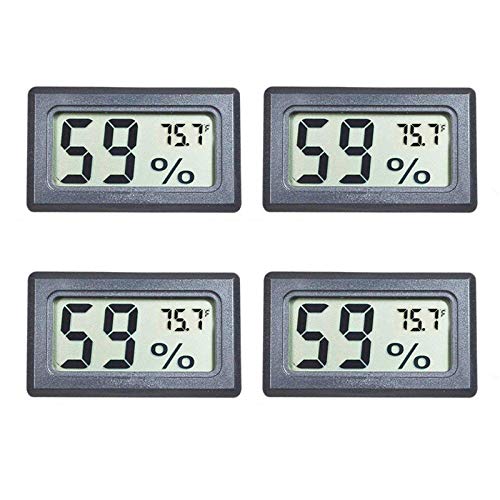
Easy Temperature and Humidity Monitoring: Mini Digital Humidity Thermometer allows you to easily know the temperature and humidity around you
Nighttime Temperature for Bearded Dragon vs Leopard Gecko
Bearded dragons need nighttime temperatures of 65-75°F while leopard geckos prefer slightly warmer nights at 70-75°F, though both species tolerate similar ranges. The main difference lies in their activity patterns and heating requirements: bearded dragons need intense basking spots during the day (95-105°F) while leopard geckos prefer gentler warmth (88-92°F), but both benefit from significant nighttime temperature drops.
Detailed comparison:
Bearded Dragons:
- Daytime basking: 95-105°F
- Daytime cool side: 80-85°F
- Nighttime: 65-75°F (ideal: 70°F)
- Day-night drop: 15-20°F
- Native habitat: Australian desert with extreme temperature swings
- Activity: Diurnal (active during day)
Leopard Geckos:
- Daytime warm side: 88-92°F
- Daytime cool side: 75-80°F
- Nighttime: 70-75°F (ideal: 72°F)
- Day-night drop: 10-15°F
- Native habitat: Pakistani/Afghan rocky deserts with moderate swings
- Activity: Crepuscular (active dawn/dusk)
Practical implications:
Both species can comfortably share similar nighttime temperature ranges (70-75°F), making them good choices for keepers who want multiple reptiles in the same room. However, their daytime requirements differ significantly, so they cannot share the same enclosure.
Setup similarities:
- Both need all lights off at night
- Both benefit from ceramic heat emitters in cold homes
- Both require thermostats for safety
- Both need temperature gradients, not uniform heat
Setup differences:
- Bearded dragons need much more intense basking heat
- Bearded dragons require UVB lighting; leopard geckos benefit from it but can survive without
- Bearded dragons need larger tanks (40+ gallons minimum; see our guide on whether a 40-gallon tank works long-term)
- Leopard geckos can thrive in smaller spaces (20 gallons for adults)
Common mistake: Assuming all desert reptiles have identical care requirements. While bearded dragons and leopard geckos share some similarities, their different activity patterns and native habitats mean they have distinct optimal temperature ranges during active hours.
How to Maintain Stable Tank Temperature Overnight
Maintaining stable nighttime tank temperature requires turning off all lights, monitoring with accurate thermometers, and adding supplemental heat only if room temperature drops below 65°F. The goal is controlled cooling to 65-75°F, not preventing temperature drops entirely. Most keepers achieve perfect nighttime temperatures by simply turning off heat sources and letting room temperature naturally cool the tank.
Step-by-step nighttime temperature management:
1. Install proper monitoring equipment:
- Digital thermometer with probe (not stick-on analog gauges)
- Place probe at dragon level, not on glass walls
- Consider a min/max thermometer to track overnight lows
- Check batteries monthly to ensure accurate readings
2. Establish a consistent light schedule:
- 12-14 hours of light during summer months
- 10-12 hours during winter (mimics natural seasonal changes)
- Use a timer to automate lights on/off
- Turn off basking and UVB simultaneously
3. Assess your room temperature:
- Measure room temperature at night for one week
- Note seasonal variations (winter vs summer)
- Identify if supplemental heating is needed
- Plan for temperature changes during different seasons
4. Add supplemental heat if needed:
- If room stays 68°F+: No supplemental heat required
- If room drops to 65-67°F: Optional low-wattage ceramic heat emitter
- If room drops below 65°F: Ceramic heat emitter or radiant heat panel on thermostat set to 68-70°F
5. Choose the right nighttime heating equipment:
Ceramic Heat Emitters (CHEs):
- Emit infrared heat without visible light
- Available in 50W, 75W, 100W, 150W
- Require ceramic socket (not plastic)
- Must use with thermostat
- Best for: Maintaining ambient temperature in cold rooms
Radiant Heat Panels:
- Flat panels that mount to tank ceiling
- Even heat distribution
- More expensive ($80-150) but very efficient
- Longer lifespan than CHEs
- Best for: Large tanks or very cold rooms
Under-Tank Heaters (UTH):
- Heating pads that stick to tank bottom
- Provide belly heat for digestion
- Should cover 1/3 of tank floor maximum
- Must use with thermostat
- Best for: Supplemental warmth, not primary heat source
6. Avoid these common mistakes:
- Using red or blue “nighttime” bulbs (they disrupt sleep)
- Running heat sources without thermostats (fire hazard and overheating risk)
- Placing thermometer probes on glass (reads surface temp, not air temp)
- Covering the tank with blankets (reduces ventilation and causes humidity spikes)
- Heating the entire tank uniformly (dragons need a temperature gradient even at night)
Seasonal adjustments:
Summer: Most homes stay warm enough that no nighttime heating is needed. Monitor for overheating if your home lacks air conditioning.
Winter: Room temperatures often drop, requiring supplemental heat. Increase thermostat settings gradually as outdoor temperatures fall.
Troubleshooting temperature instability:
Problem: Temperature drops too much (below 60°F)
- Solution: Add ceramic heat emitter on thermostat, check for drafts near tank, move tank away from windows
Problem: Temperature stays too high (above 80°F)
- Solution: Ensure all lights are off, improve room ventilation, consider air conditioning in summer
Problem: Temperature fluctuates wildly
- Solution: Check thermostat calibration, ensure probe placement is correct, eliminate drafts and direct airflow
Proper temperature management works hand-in-hand with other care aspects like nutrition. For feeding guidance, see our article on how many crickets baby beardies should eat.
Is a 5-Degree Drop at Night Bad for Fish or Reptiles?
A 5-degree drop at night is too small for bearded dragons and won’t provide the natural temperature cycle they need for healthy sleep and metabolic function. Bearded dragons require a 10-20°F drop from daytime temperatures to properly regulate their circadian rhythm. A minimal 5°F drop suggests your nighttime temperatures are too high, likely because heat sources are still running when they should be turned off.
What a 5°F drop indicates:
If your tank drops from 85°F to 80°F at night, you’re maintaining temperatures that are too warm for proper rest. This typically happens when:
- Basking lights are left on overnight
- Room temperature is very warm (above 80°F)
- Supplemental heating is set too high
- Tank is poorly ventilated, trapping heat
Proper temperature drops by species:
Bearded Dragons: Need 15-20°F drop (from 80-85°F cool side to 65-70°F at night)
Leopard Geckos: Need 10-15°F drop (from 75-80°F cool side to 70-72°F at night)
Ball Pythons: Need 5-10°F drop (from 78-82°F cool side to 75-78°F at night)
Tropical Fish (Bettas, etc.): Need 0-2°F variation maximum (stable 76-80°F)
Why the drop size matters: Bearded dragons evolved in environments with dramatic day-night temperature swings. Their endocrine system uses these temperature cues to regulate hormones including melatonin (sleep), cortisol (stress response), and reproductive hormones. Without adequate temperature drops, these systems become dysregulated.
Health consequences of insufficient temperature drops:
- Poor sleep quality and daytime lethargy
- Increased stress and aggression
- Reduced appetite
- Weakened immune function
- Behavioral problems like glass surfing
How to achieve proper temperature drops:
- Turn off all heat sources at night (basking lights, UVB, heat lamps)
- Allow room temperature to naturally cool the tank
- Only add supplemental heat if temperature drops below 65°F
- Verify temperature drop with accurate thermometers
Edge case: During extreme summer heat waves when room temperature stays above 80°F even at night, achieving proper temperature drops becomes challenging. In this situation, use air conditioning, fans (not blowing directly on tank), or move the tank to the coolest room in your home.
Best Heater for Keeping Tank Warm at Night
Ceramic heat emitters (CHEs) controlled by thermostats are the best heating solution for maintaining bearded dragon tank temperatures at night when room temperature drops below 65°F. Unlike basking bulbs that emit visible light, CHEs produce only infrared heat, allowing your dragon to sleep in complete darkness while staying warm. A 100-150W ceramic heat emitter paired with a quality thermostat provides reliable, safe nighttime heating for most standard enclosures.
Top nighttime heating options ranked:
1. Ceramic Heat Emitters (Best Overall)
- Pros: No visible light, long lifespan (2+ years), affordable ($15-25), widely available
- Cons: Require ceramic socket, get very hot to touch, need thermostat
- Wattage guide: 50-75W for tanks under 40 gallons, 100-150W for 40-75 gallon tanks, 150-200W for larger enclosures
- Best for: Most keepers needing supplemental nighttime heat
2. Radiant Heat Panels (Best for Large Tanks)
- Pros: Even heat distribution, energy efficient, very long lifespan (5+ years), safe (low surface temperature)
- Cons: Expensive ($80-150), require mounting hardware, limited availability
- Best for: Large tanks (75+ gallons), permanent setups, multiple reptile rooms
3. Deep Heat Projectors (Best for Naturalistic Heating)
- Pros: Penetrating infrared heat similar to sun, no visible light, energy efficient
- Cons: Expensive ($40-60), shorter lifespan than CHEs, require specific fixtures
- Best for: Keepers prioritizing naturalistic heating, dragons with joint issues
4. Under-Tank Heaters (Supplemental Only)
- Pros: Provide belly heat, low energy use, silent operation
- Cons: Cannot heat air temperature adequately, risk of burns if too hot, must use with thermostat
- Best for: Supplemental warmth combined with CHE, not as primary heat source
Essential thermostat features:
A quality thermostat is non-negotiable for safe nighttime heating. Look for:
- Temperature range: Adjustable from 60-100°F minimum
- Probe accuracy: ±1°F or better
- Wattage capacity: Handle at least 150W (check your heater wattage)
- Reliability: Digital thermostats are more accurate than analog
- Price range: $20-60 for quality units
Recommended thermostat brands:
- Inkbird ITC-308 ($35-40): Reliable, easy to use, good for beginners
- Herpstat (various models, $100-300): Professional-grade, multiple zones, highly accurate
- Vivarium Electronics ($60-150): Excellent mid-range option, very reliable
Setup instructions:
- Install ceramic heat emitter in a ceramic socket (never plastic)
- Position CHE at one end of tank to maintain temperature gradient
- Place thermostat probe at dragon level, 6-8 inches from heat source
- Set thermostat to 68-70°F
- Plug CHE into thermostat, thermostat into wall outlet
- Monitor temperatures for 24 hours to ensure proper cycling
- Adjust thermostat setting as needed
Safety considerations:
- Never touch a running CHE (surface temperature exceeds 300°F)
- Use a wire cage around CHE to prevent dragon contact
- Check ceramic socket monthly for cracks or damage
- Replace CHEs when they stop producing adequate heat (usually 2-3 years)
- Keep flammable materials away from heating equipment
When you don’t need nighttime heating:
If your room temperature naturally stays between 68-75°F at night, save your money and skip supplemental heating entirely. Simply turn off all lights and let the tank cool naturally. This is the simplest, safest, and most cost-effective approach for most keepers.
Budget consideration: A quality CHE ($20) plus thermostat ($35) costs about $55 total, a worthwhile investment that lasts years and prevents both overheating and dangerous temperature drops. Cheap alternatives without thermostats create fire hazards and risk your dragon’s health.
Do Saltwater Tanks Need Different Night Temperature Than Freshwater?
Saltwater and freshwater fish tanks both require stable temperatures with minimal day-night variation, unlike bearded dragon tanks that need significant nighttime drops. This distinction matters because some new reptile owners mistakenly apply aquarium temperature principles to reptile care. Whether your aquarium is saltwater or freshwater, fish need consistency; whether your reptile is a bearded dragon or leopard gecko, they need temperature cycles.
Quick comparison:
Saltwater Fish Tanks:
- Stable 76-82°F depending on species
- 0-2°F variation day to night
- Heater runs continuously
- Temperature stability critical for coral and invertebrates
Freshwater Fish Tanks:
- Stable 72-82°F depending on species
- 0-2°F variation day to night
- Heater runs continuously
- Tropical species need consistent warmth
Bearded Dragon Tanks:
- 95-105°F basking during day
- 65-75°F at night
- 15-20°F drop required
- All lights off at night
Why this matters for reptile keepers: If you’re transitioning from fish keeping to reptile keeping, you must completely change your temperature management approach. The stable, consistent temperatures that keep fish healthy will stress and harm bearded dragons. Conversely, the dramatic temperature swings bearded dragons need would kill most tropical fish.
Common crossover mistake: Using aquarium heaters in reptile tanks. Aquarium heaters are designed to maintain constant water temperature and will overheat a reptile tank at night. They’re also submersible and not designed for air heating. Never use aquarium equipment for reptile heating.
If you keep both fish and reptiles: Maintain completely separate temperature protocols. Your fish tank heater runs 24/7 to maintain stability. Your bearded dragon’s basking light turns off every night to allow temperature drops. These are opposite care requirements despite both being ectothermic animals.
Common Mistakes with Nighttime Aquarium Temperature
The most common mistakes with nighttime bearded dragon tank temperature include leaving basking lights on overnight, using colored “nighttime” bulbs that disrupt sleep, and maintaining temperatures too high for proper rest. Many new keepers also rely on inaccurate stick-on thermometers, place heating equipment incorrectly, or run heaters without thermostats, all of which create dangerous temperature conditions.
Top 10 nighttime temperature mistakes:
1. Leaving basking lights on 24/7
- Why it’s harmful: Prevents sleep, causes chronic stress, disrupts hormone production
- Fix: Use a timer to turn off all lights after 12-14 hours
- Cost of mistake: Behavioral problems, weakened immunity, reduced lifespan
2. Using red or blue “nighttime” bulbs
- Why it’s harmful: Bearded dragons can see these wavelengths; they disrupt melatonin production
- Fix: Complete darkness at night; use ceramic heat emitters if supplemental heat is needed
- Marketing trap: These bulbs are marketed for reptiles but harm them
3. Relying on stick-on thermometers
- Why it’s harmful: Measure glass surface temperature, not air temperature; often inaccurate by 5-10°F
- Fix: Use digital thermometers with probes placed at dragon level
- Cost difference: $8-15 for accurate digital vs $3 for inaccurate stick-on
4. Running heaters without thermostats
- Why it’s harmful: Risk of overheating (potentially fatal), fire hazard, no automatic shutoff
- Fix: Always pair heating equipment with quality thermostats
- Safety issue: Ceramic heat emitters can overheat tanks to 100°F+ without regulation
5. Maintaining temperatures too high at night (above 75°F)
- Why it’s harmful: Prevents proper rest, increases stress, disrupts natural circadian rhythm
- Fix: Allow temperature to drop to 65-75°F by turning off heat sources
- Common cause: Leaving supplemental heat on when room temperature is already adequate
6. Allowing temperatures to drop too low (below 60°F)
- Why it’s harmful: Suppresses immune system, causes respiratory infections, prevents digestion
- Fix: Add ceramic heat emitter on thermostat if room temperature drops below 65°F
- Risk factors: Winter months, poorly insulated homes, tanks near windows
7. Heating the entire tank uniformly
- Why it’s harmful: Removes temperature gradient; dragon can’t thermoregulate
- Fix: Heat only one end of tank, creating warm and cool zones even at night
- Natural behavior: Dragons move between zones to find their preferred temperature
8. Covering tank with blankets or towels
- Why it’s harmful: Reduces ventilation, spikes humidity, creates fire hazard near heat sources
- Fix: Use proper heating equipment instead of insulation
- Humidity risk: Bearded dragons need low humidity (30-40%); covering tanks traps moisture
9. Placing thermometer probes on glass walls
- Why it’s harmful: Reads surface temperature of glass, not air temperature where dragon lives
- Fix: Position probe at dragon level, 6-8 inches from heat source, not touching any surface
- Accuracy difference: Can be off by 10-15°F
10. Ignoring seasonal temperature changes
- Why it’s harmful: Summer and winter require different heating approaches
- Fix: Adjust supplemental heating based on room temperature changes throughout the year
- Monitoring: Check nighttime temperatures monthly and adjust equipment as needed
How to avoid these mistakes:
- Invest in quality equipment from the start (digital thermometers, thermostats)
- Research bearded dragon-specific care, not general reptile or fish care
- Monitor temperatures for the first week to establish baseline
- Join bearded dragon communities for species-specific advice
- Schedule seasonal equipment checks (spring and fall)
Cost of mistakes vs cost of proper setup:
Proper nighttime temperature management costs $50-80 total (digital thermometer $15, thermostat $35, ceramic heat emitter if needed $20). Compare this to vet bills for respiratory infections ($200-500) or the cost of losing your dragon to temperature-related illness. The upfront investment in quality equipment pays for itself many times over.
For comprehensive guidance on all aspects of bearded dragon care, explore our reptile care guide resources.
Frequently Asked Questions
What is the lowest safe nighttime temperature for bearded dragons?
The lowest safe nighttime temperature for bearded dragons is 65°F (18°C) for adults. Temperatures below 65°F cause stress and suppress immune function, while temperatures below 60°F can trigger respiratory infections and other serious health issues. Baby and juvenile dragons need slightly warmer nights, with 70°F being the minimum safe temperature for dragons under six months old.
Can I use a heat lamp at night for my bearded dragon?
No, never use heat lamps at night because they emit visible light that disrupts your bearded dragon’s sleep cycle and prevents proper rest. If supplemental nighttime heating is needed, use ceramic heat emitters, radiant heat panels, or deep heat projectors that produce infrared heat without visible light. Complete darkness is essential for healthy sleep and hormone regulation.
How do I know if my bearded dragon is too cold at night?
Signs your bearded dragon is too cold at night include lethargy in the morning, refusing food after waking, dark stress coloration, desperately seeking heat when lights turn on, and slow movement. Long-term cold exposure causes respiratory symptoms like wheezing, mucus discharge, and open-mouth breathing. Use a minimum/maximum thermometer to verify overnight temperatures stay above 65°F.
Do bearded dragons need a temperature drop every night?
Yes, bearded dragons need a nighttime temperature drop of 10-20°F every night to maintain healthy circadian rhythms and metabolic function. This natural cooling period from 80-85°F during the day to 65-75°F at night mimics their native Australian desert habitat and supports proper hormone production, digestion, and sleep quality. Consistent temperature drops are essential for long-term health.
What’s the difference between nighttime temperature for baby vs adult bearded dragons?
Baby bearded dragons (0-6 months) need warmer nighttime temperatures of 70-75°F, while adult bearded dragons (18+ months) thrive at 65-70°F. Juveniles (6-18 months) fall in between at 68-72°F. Babies have less body mass and higher metabolic rates, making them more vulnerable to cold temperatures. As dragons mature, they tolerate cooler nights better and benefit from larger temperature drops.
Should nighttime temperature be the same in summer and winter?
Nighttime tank temperature should remain in the 65-75°F range year-round, but the amount of supplemental heating needed changes with seasons. In summer, most homes stay warm enough that no nighttime heating is required. In winter, room temperatures drop and ceramic heat emitters become necessary to maintain the 65-75°F range. Adjust your heating equipment based on actual room temperature, not the calendar.
Can I use a space heater to warm my bearded dragon’s room at night?
Yes, using a space heater to warm the entire room is an effective strategy if you keep multiple reptiles or if your home gets very cold at night. This approach maintains ambient temperature above 65°F without needing individual tank heaters. However, ensure the space heater has safety features (tip-over shutoff, overheat protection) and never place it where your dragon could contact it directly.
How accurate do nighttime thermometers need to be?
Nighttime thermometers should be accurate within ±1-2°F to ensure temperatures stay in the safe 65-75°F range. Digital thermometers with probes are most accurate, while stick-on analog gauges can be off by 5-10°F. The narrow safe temperature range for bearded dragons means accuracy matters, a few degrees can be the difference between healthy sleep and stress or illness.
What happens if I forget to turn off the basking light at night?
If you forget to turn off the basking light at night once, your bearded dragon will experience disrupted sleep and stress but likely won’t suffer permanent harm. However, repeated exposure to 24/7 lighting causes chronic stress, behavioral problems, weakened immunity, and potential long-term health issues. Use a timer to automate your lighting schedule and prevent accidental overnight heating.
Do bearded dragons need different nighttime temperatures during brumation?
During brumation (winter dormancy), bearded dragons can tolerate cooler nighttime temperatures of 60-65°F, slightly lower than the normal 65-75°F range. However, brumation should only occur if your dragon is showing natural brumation behaviors like reduced appetite and increased sleeping. Never force brumation by artificially lowering temperatures. Adult dragons over 18 months old are most likely to brumate naturally.
Can room temperature alone maintain proper nighttime tank temperature?
Yes, if your room temperature naturally stays between 68-75°F at night, you don’t need any supplemental heating equipment for your bearded dragon tank. Simply turn off all lights and heat sources and allow the tank to cool to room temperature. This is the simplest, safest, and most cost-effective approach for maintaining proper nighttime temperatures when room conditions are appropriate.
How long does it take for a tank to cool down at night?
Most bearded dragon tanks cool from daytime temperatures (80-85°F) to nighttime temperatures (65-75°F) within 1-2 hours after turning off heat sources, depending on tank size, room temperature, and insulation. Larger tanks and well-insulated enclosures cool more slowly. Monitor the cooling rate for the first few nights to ensure your tank reaches appropriate nighttime temperatures within a reasonable timeframe.
Conclusion
Getting nighttime tank temperature right is one of the most important aspects of bearded dragon care. Your dragon needs temperatures between 65-75°F at night, a natural drop of 10-20°F from daytime highs, to support healthy sleep, proper hormone regulation, and strong immune function. This temperature cycle mimics the dramatic day-night swings of their native Australian desert and is essential for long-term health.
Key actions to take today:
- Verify your current nighttime temperatures using an accurate digital thermometer with a probe placed at dragon level
- Turn off all basking lights and UVB bulbs at night,use a timer to automate this schedule
- Add supplemental heating only if needed,if room temperature drops below 65°F, install a ceramic heat emitter controlled by a thermostat
- Eliminate visible light sources,remove any red or blue “nighttime” bulbs that disrupt sleep
- Monitor for one week,use a minimum/maximum thermometer to track overnight temperature ranges and adjust as needed
Remember that proper temperature management works together with other care essentials like appropriate tank size, balanced nutrition, and attentive health monitoring. By maintaining the right nighttime temperatures, you’re giving your bearded dragon the foundation for a long, healthy, and happy life.
Start tonight by checking your thermometer placement and confirming your lights turn off on schedule. These simple steps make an enormous difference in your dragon’s quality of life and set you up for success as a responsible reptile keeper.
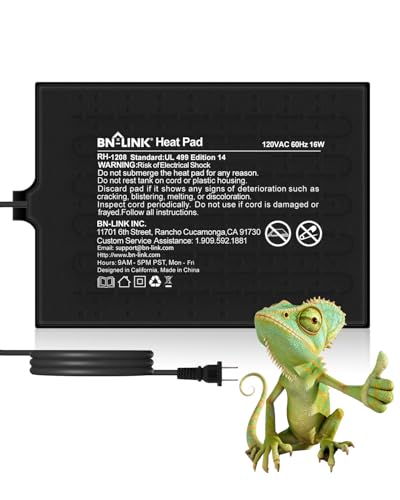
GREAT UTILITY: The BN-LINK Heating Pad for Reptiles is great for keeping your reptile tank warm, but never scorched. It’s also great for amphibian, small animal, or plant terrariums.

GREAT UTILITY: The BN-LINK Heating Pad for Reptiles is great for keeping your reptile tank warm, but never scorched. It’s also great for amphibian, small animal, or plant terrariums.

High Effeciency: This Under Tank Heater is suitable for turtles, snakes, lizards, leopard gecko, bearded dragon, spiders, ball python, small animals, reptiles, amphibians etc. and provides the ideal amount of heat. Also perfect for germination, home brewing, or Kampuchea Tea