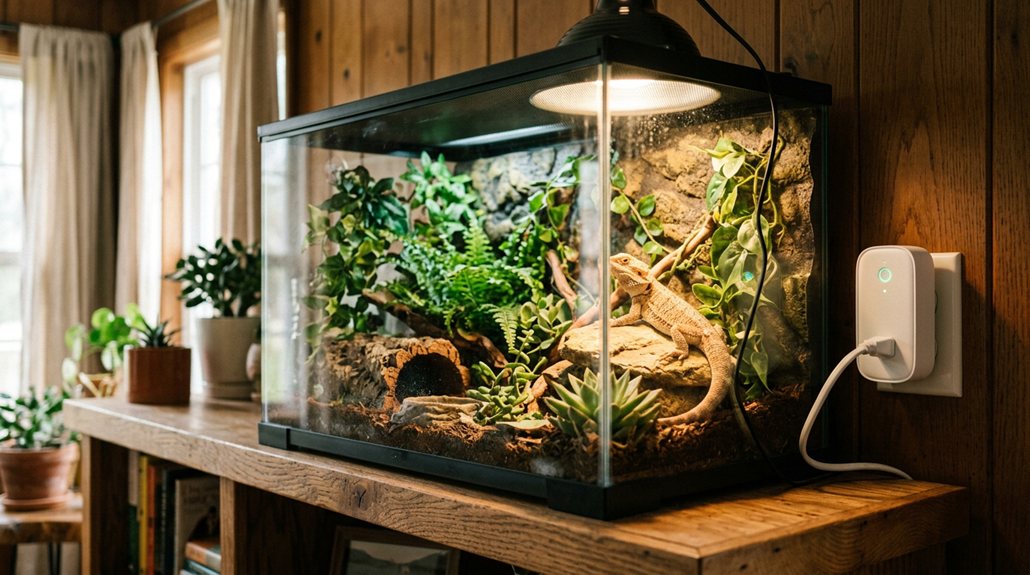
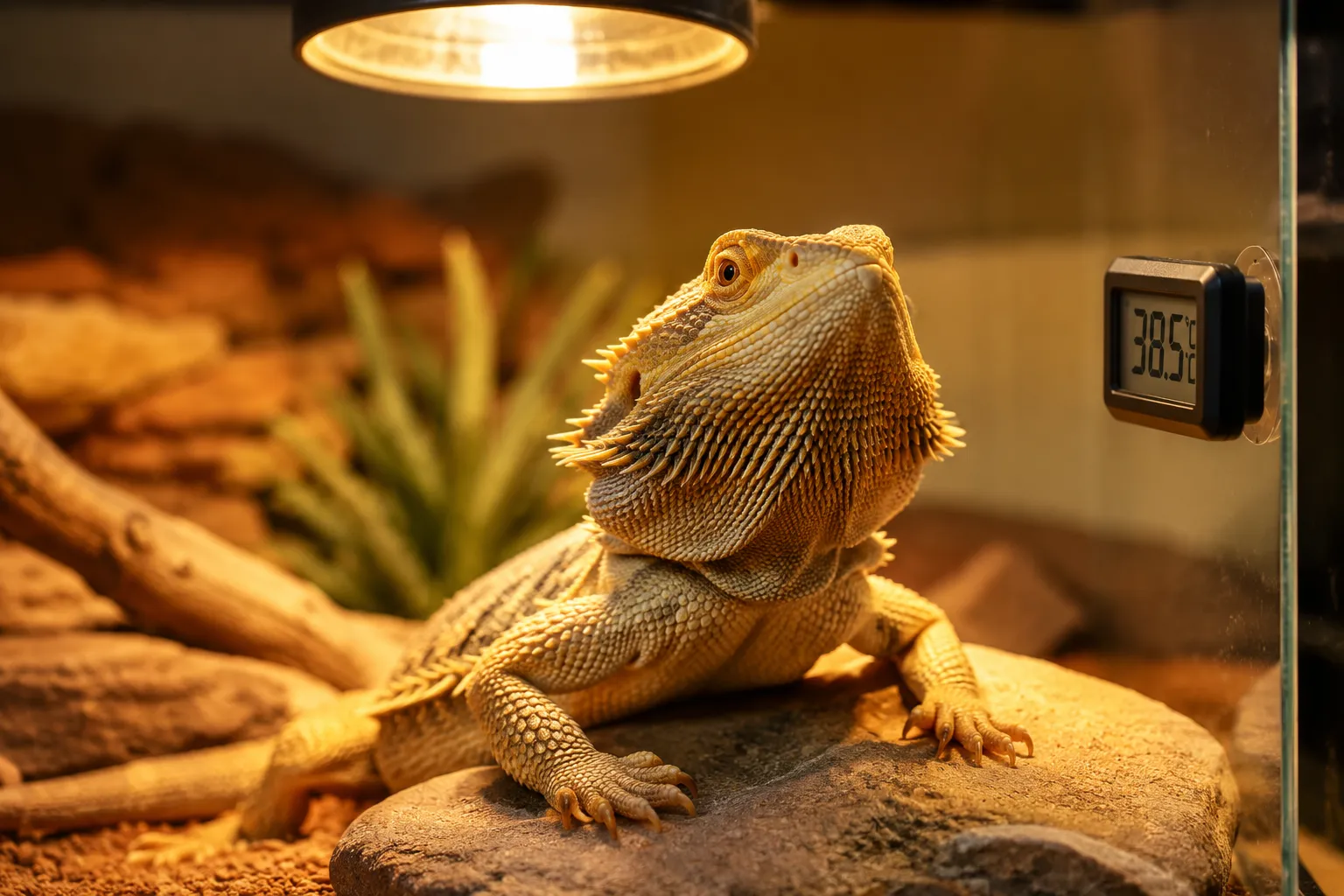
Quick Answer: A bearded dragon tank requires a basking spot of 95-110°F, a cool side of 75-85°F, and nighttime temperatures of 65-75°F. This temperature gradient allows your dragon to thermoregulate naturally by moving between warm and cool zones throughout the day.
Key Takeaways
- Basking spot temperature: 100-110°F for adults, 105-110°F for babies
- Cool side temperature: 75-85°F during the day
- Nighttime temperature: 65-75°F (heat lamp off)
- Temperature gradient is essential: Dragons need both hot and cool zones to regulate body temperature
- Use multiple thermometers: Place one on each side of the tank for accurate readings
- Baby dragons need slightly warmer temps: Higher basking temperatures support faster growth and digestion
- Ceramic heat emitters work for night heating: Only use if temperatures drop below 65°F
- Never rely on guesswork: Improper temperatures cause serious health issues including metabolic bone disease
- Check temperatures at dragon level: Not at the top of the tank where heat rises
- Adjust seasonally: Room temperature changes may require tweaking your heating setup

The Light Dome with heat resistant ceramic socket can accommodate either reptile heat lamp or reptile basking bulb and ceramic heat emitter (Max. 150W).

Enhances UVB & Light Reflection: The reptile light fixture focuses the light emitted by the bulb, ensuring even distribution across the entire illumination area. The polished interior surface greatly enhances light reflection, minimizing losses of both light and UVB. This reflective effect optimizes the efficiency of the light source, promoting the health and growth of reptiles
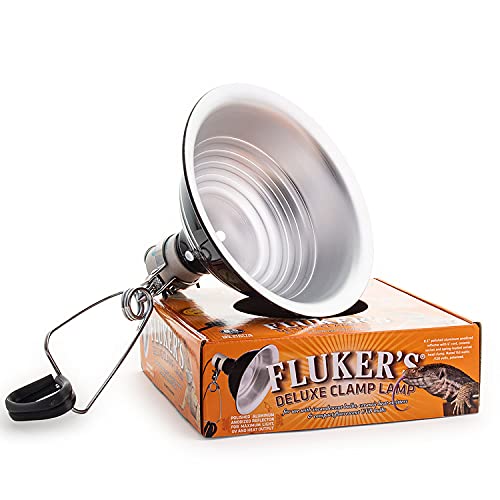
Optimal Heating for Reptiles: Fluker's Repta-Clamp Lamp is a UL/CUL approved 8.5 inch heating clamp designed to create the perfect basking environment for your reptiles.
What Is the Ideal Basking Temperature for Bearded Dragons?
The ideal basking temperature for adult bearded dragons is 100-110°F, while juveniles and babies need slightly warmer basking spots at 105-110°F. This hot zone mimics the intense Australian desert sun that bearded dragons evolved under and is critical for proper digestion, metabolism, and overall health.
Your bearded dragon uses this basking spot to raise its body temperature after sleeping and before eating. Without adequate basking heat, food sits undigested in the stomach, leading to impaction, lethargy, and potential bacterial growth.
How to create the perfect basking spot:
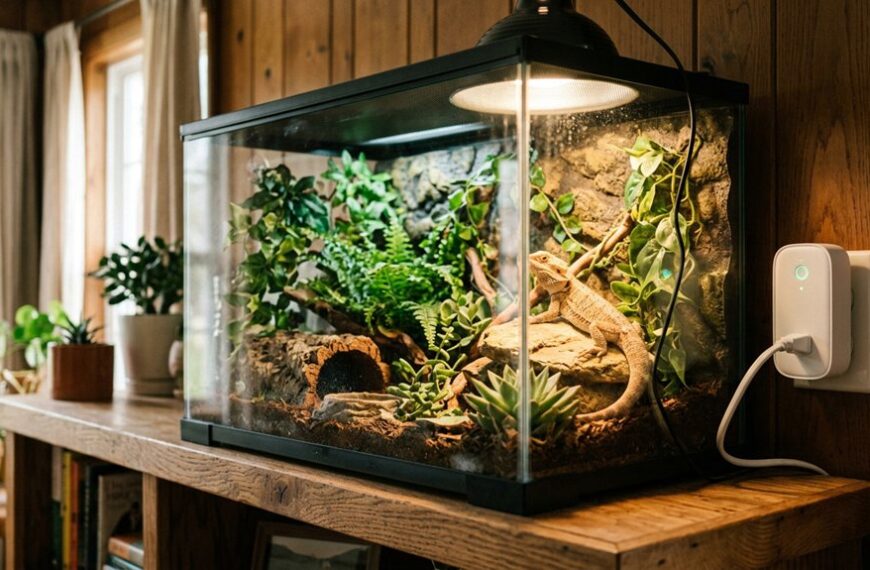
- Position a basking bulb (75-150 watts depending on tank size) 8-12 inches above a flat rock or platform
- Use a dimmer switch or adjustable fixture to fine-tune the temperature
- Measure temperature at the surface where your dragon actually sits, not in the air above it
- Create a basking platform large enough for your dragon’s entire body
- Replace basking bulbs every 6-12 months even if they still produce light (heat output decreases over time)
Common mistake: Many keepers place the thermometer probe too high or measure air temperature instead of surface temperature. The rock or platform surface should read 100-110°F, which may require the air temperature above it to be slightly higher.
Choose a higher basking temp (108-110°F) if: Your dragon is a baby under 6 months old, your dragon seems lethargic after meals, or you’re feeding larger prey items that require more digestive heat.
For more guidance on setting up the right enclosure, check out our guide on what tank size a bearded dragon needs.
Bearded Dragon Cool Side vs Hot Side Temperature
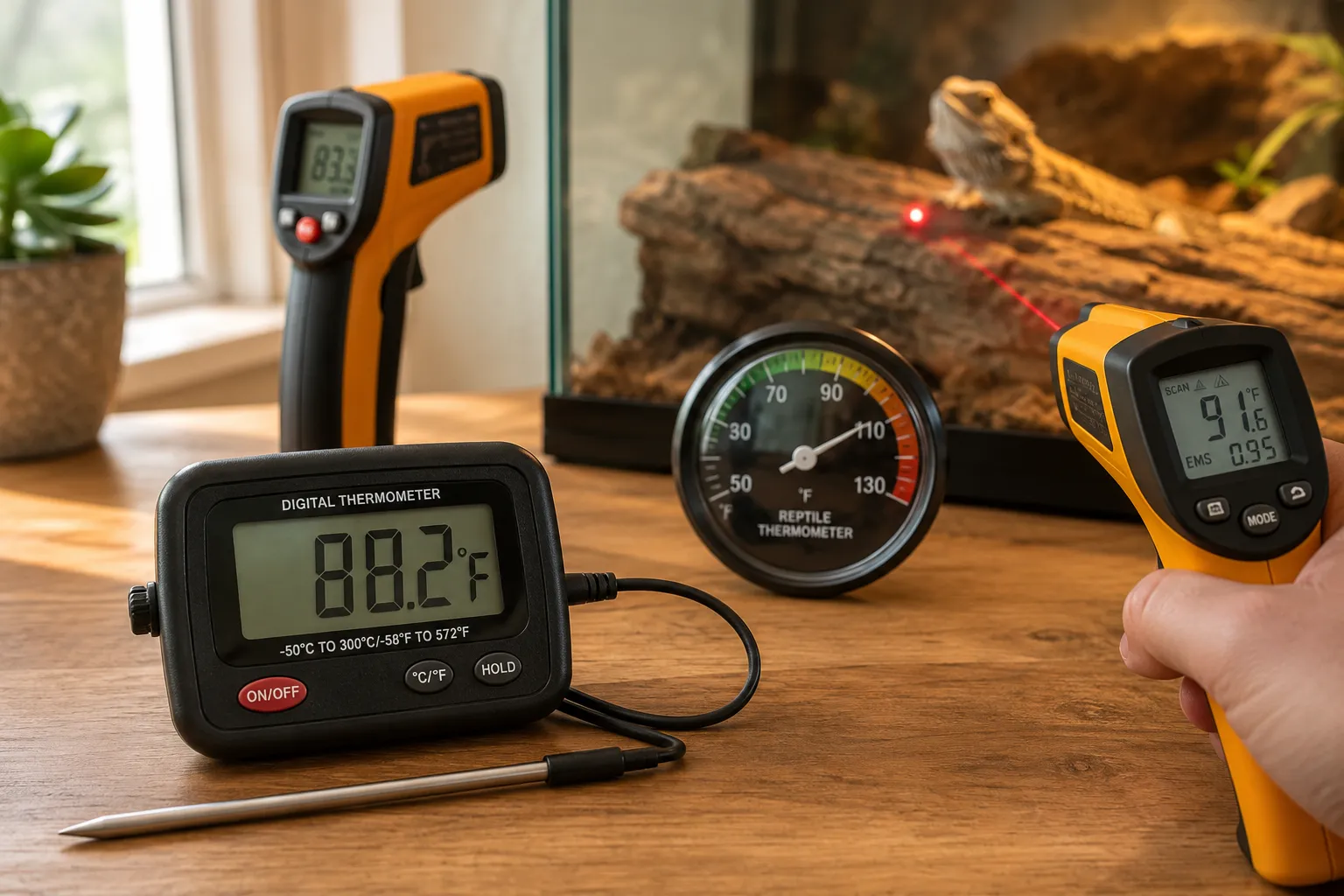
A proper bearded dragon enclosure requires a temperature gradient with a hot basking side at 100-110°F and a cool side at 75-85°F. This 25-35 degree difference allows your dragon to move between zones and self-regulate its body temperature throughout the day.
In their natural Australian habitat, bearded dragons shuttle between sun-exposed rocks and shaded burrows to maintain optimal body temperature. Your tank setup should replicate this natural behavior.
Setting up the temperature gradient:
- Hot side (basking zone): Place your basking bulb and UVB light at one end of the tank
- Cool side (retreat zone): The opposite end should have no direct heat source
- Middle zone: Creates a transitional area around 85-95°F
- Measure both ends: Use separate thermometers on each side to monitor the gradient
Why the gradient matters:
- Thermoregulation: Reptiles can’t generate their own body heat and must move to warmer or cooler areas
- Digestive control: Dragons bask after eating to speed digestion, then move to cooler areas once food is processed
- Stress reduction: Access to cooler zones prevents overheating and gives dragons control over their comfort
- Natural behavior: Mimics wild behavior patterns and promotes mental stimulation
Edge case: In very small tanks (under 40 gallons), creating an adequate gradient becomes difficult. The entire tank may become too warm, which is one reason why proper tank sizing matters. Learn more about whether a 40-gallon tank is sufficient long-term.
Do Bearded Dragons Need Heat at Night?
Bearded dragons do not need heat lamps at night as long as temperatures stay above 65°F. Nighttime temperatures of 65-75°F are ideal and actually beneficial, as the temperature drop mimics natural desert conditions and supports healthy sleep cycles.
Most homes maintain temperatures within this range, making additional nighttime heating unnecessary. In fact, keeping bright basking lights on 24/7 disrupts your dragon’s circadian rhythm and can cause stress, sleep deprivation, and health problems.
When nighttime heating IS needed:
- Room temperature drops below 65°F regularly
- You live in a particularly cold climate during winter
- Your dragon is recovering from illness and needs stable warmth
- Baby dragons in the first few weeks may benefit from slightly warmer nights (70-75°F)
Safe nighttime heating options:
- Ceramic heat emitter (CHE): Produces heat without light, won’t disturb sleep
- Deep heat projector: Penetrating infrared heat that mimics sun warmth
- Under-tank heating pad: Provides gentle belly heat (use with thermostat)
- Space heater: Warms the entire room rather than just the tank
Never use these at night:
- ❌ White basking bulbs (too bright)
- ❌ Blue or red “nighttime” bulbs (still produce visible light that disrupts sleep)
- ❌ Heat rocks (cause burns and don’t heat the air)
Pro tip: If you’re using a ceramic heat emitter at night, connect it to a thermostat set to maintain 68-72°F. This prevents overheating and reduces electricity costs.
How to Measure Temperature in Bearded Dragon Tank
Accurate temperature measurement requires at least two digital thermometers with probes placed at dragon level on both the basking side and cool side of the tank. Measuring at the height where your dragon actually sits (not at the top of the tank) gives you the temperatures your pet actually experiences.
Best thermometer types for bearded dragons:
- Digital probe thermometers: Most accurate, displays current temp on a digital screen, probe sits at dragon level
- Infrared temperature gun: Instant surface temperature readings, perfect for checking basking spot accuracy
- Combination temp/humidity gauge: Monitors both metrics in one device
- Stick-on analog thermometers: Least accurate, often read 5-10 degrees off, use only as backup
Proper thermometer placement:
- Basking side probe: Position directly on or 1 inch above the basking platform surface
- Cool side probe: Place at ground level in the coolest corner of the tank
- Avoid top placement: Heat rises, so top-of-tank readings are always warmer than what your dragon experiences
- Secure probes: Use suction cups or tape to prevent your dragon from moving them
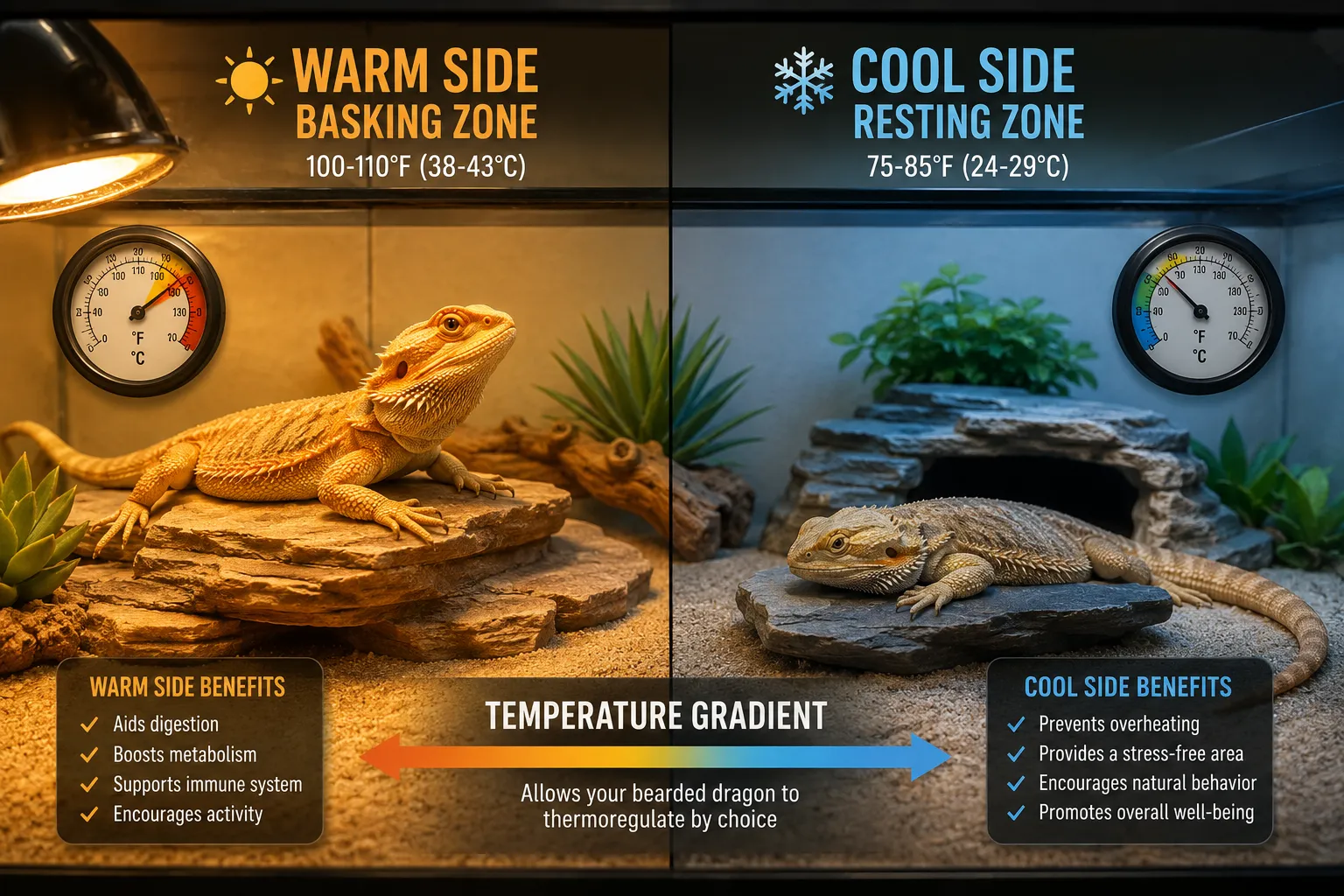
Using an infrared temperature gun:
This tool is invaluable for spot-checking specific surfaces. Point the laser at your basking rock, substrate, or any surface your dragon touches to get instant readings. Take multiple readings across the basking area since temperatures can vary by several degrees across a single platform.
Common measurement mistakes:
- Relying on a single thermometer for the entire tank
- Using cheap stick-on thermometers as your only monitoring tool
- Measuring air temperature instead of surface temperature
- Placing probes too high where heat accumulates
- Not calibrating digital thermometers periodically
Decision rule: If your dragon constantly avoids the basking spot, check your thermometer accuracy with an infrared gun. The displayed temperature might be wrong, or the surface temperature might differ significantly from the air temperature your thermometer measures.
What Temperature Should a Bearded Dragon Tank Be for Different Ages?
Baby bearded dragons (0-6 months) need basking temperatures of 105-110°F and a cool side of 80-85°F, while juveniles (6-12 months) do well with 100-105°F basking and 75-80°F cool side. Adults (12+ months) thrive with 95-105°F basking and 75-85°F cool side temperatures.
Temperature requirements by life stage:
| Age Group | Basking Temp | Cool Side | Night Temp | Why Different? |
|---|---|---|---|---|
| Hatchling (0-2 months) | 105-110°F | 80-85°F | 70-75°F | Rapid growth requires maximum metabolic rate |
| Baby (2-6 months) | 105-110°F | 80-85°F | 70-75°F | High protein diet needs strong digestion |
| Juvenile (6-12 months) | 100-105°F | 75-80°F | 65-75°F | Still growing but metabolism slowing |
| Adult (12+ months) | 95-105°F | 75-85°F | 65-75°F | Mature metabolism, less frequent feeding |
| Senior (8+ years) | 95-100°F | 75-85°F | 65-75°F | May prefer slightly lower temps |
Why babies need warmer temperatures:
Young bearded dragons eat significantly more protein (mostly insects) than adults. Higher temperatures speed up their metabolism and digestion, allowing them to process multiple feedings per day. Without adequate heat, baby dragons can develop impaction from undigested insects or fail to absorb calcium properly, leading to metabolic bone disease.
For feeding guidance specific to baby dragons, see our article on how many crickets a baby beardie should eat.
Adjusting temperatures as your dragon grows:
- Monitor growth rate: If your juvenile seems sluggish or isn’t growing steadily, increase basking temp by 2-3 degrees
- Watch behavior: Dragons that constantly bask may need more heat; those that avoid the basking spot may need less
- Transition gradually: When moving from juvenile to adult temps, decrease by 2-3 degrees over several weeks
- Individual variation: Some dragons prefer the higher or lower end of the range
Edge case: Gravid (egg-bearing) females may seek extra warmth. If your female is developing eggs, she might spend more time basking. This is normal, but ensure she still has access to cooler zones to prevent overheating.
My Bearded Dragon Tank Is Too Cold: What Should I Do?
If your bearded dragon tank is too cold, increase wattage of your basking bulb, move the bulb closer to the basking spot, or add a secondary heat source like a ceramic heat emitter. Most cold tank problems stem from insufficient wattage, bulbs positioned too far away, or heat loss through screen tops and thin glass.
Immediate fixes for a cold tank:
- Upgrade bulb wattage: Replace a 75-watt bulb with 100-watt or 150-watt (for large tanks)
- Lower the fixture: Move the lamp 2-4 inches closer to the basking platform
- Add a reflector dome: Focuses heat downward instead of dispersing it
- Block drafts: Move tank away from windows, doors, or air vents
- Cover part of the screen top: Use a towel or solid cover over 1/3 of the screen to trap heat (leave UVB area open)
Long-term solutions:
- Insulate the tank: Add foam board insulation to the back and sides (outside the tank)
- Upgrade to a PVC enclosure: Retains heat much better than glass tanks
- Use a thermostat-controlled CHE: Adds supplemental heat without overlighting
- Warm the room: A space heater in the room helps maintain ambient temperature
- Check for heat loss: Seal gaps around doors and ensure the tank isn’t on a cold floor
Troubleshooting specific cold tank scenarios:
Problem: Basking spot only reaches 85-90°F
Solution: Your bulb is too weak or too far away. Increase wattage or lower the fixture by 3-4 inches.
Problem: Cool side is too cold (below 70°F)
Solution: The room itself is too cold. Add a low-wattage CHE on the cool side or warm the entire room.
Problem: Temperatures drop dramatically at night
Solution: Normal if staying above 65°F. If dropping below 60°F, add a thermostat-controlled CHE for nighttime only.
Problem: Tank was fine, now suddenly cold
Solution: Your bulb is aging and producing less heat. Replace bulbs every 6-12 months even if they still light up.
Common mistake: Adding multiple heat sources without thermostats can cause the tank to overheat once the room warms up. Always use thermostats with ceramic heat emitters and monitor temperatures daily.
What Happens If a Bearded Dragon Gets Too Hot?
If a bearded dragon gets too hot, it will experience heat stress, dehydration, organ damage, and potentially death if unable to escape to cooler areas. Signs of overheating include gaping mouth, frantic glass surfing, lethargy, darkened beard, and attempting to climb tank walls to escape heat.
Symptoms of overheating:
- Mouth gaping: Opening mouth wide while not basking (different from normal basking behavior)
- Frantic movement: Desperately trying to escape the tank
- Darkened coloration: Body turns dark to reflect heat
- Panting or rapid breathing: Attempting to cool down
- Lethargy or collapse: In severe cases, the dragon becomes unresponsive
- Avoiding basking spot entirely: Never goes near the hot side
Immediate action for overheating:
- Turn off all heat sources immediately
- Move dragon to a cool (not cold) area
- Offer water: Mist lightly or provide a shallow bath (lukewarm, not cold)
- Monitor closely: Watch for signs of recovery over the next 30-60 minutes
- Contact a vet: If dragon doesn’t improve or shows severe symptoms
What temperature is too hot?
- Basking spot above 115°F: Dangerous for all ages
- Cool side above 90°F: Eliminates the ability to thermoregulate
- Ambient tank temp above 95°F: No escape from heat
- Prolonged exposure to 110°F+ without cool zones: Can cause organ damage within hours
Preventing overheating:
- Always maintain a proper temperature gradient with a cool side under 85°F
- Use a thermostat with all heat sources to prevent runaway temperatures
- Never place tanks in direct sunlight or near heat sources (radiators, fireplaces)
- Monitor temperatures daily, especially during summer months
- Ensure adequate ventilation through screen tops
- Provide multiple hiding spots on the cool side
Edge case: During heat waves, your room temperature may rise significantly. If your cool side climbs above 90°F, you may need to temporarily use air conditioning, move the tank to a cooler room, or reduce heat lamp wattage until ambient temperatures drop.
If your dragon is showing unusual behaviors, our guide on why bearded dragons glass surf can help you identify stress signals.

Includes most essentials needed for a bearded dragon habitat

Reptile Necessary: Meet the need of Humidity and Temperature measuring for monitoring reptile's living conditions and health. Easily check your pet's living environment. When there are abnormalities, you can timely discovery through reptile thermometer.

【Fast & Accurate Temperature and Humidity Monitoring】 Equipped with a high-precision sensor, this reptile thermometer hygrometer delivers fast and accurate readings—within ±1.8℉/±1℃ for temperature and ±5%RH for humidity. Ideal for keeping your pet reptile healthy and comfortable.
Best Thermometer for Bearded Dragon Enclosure
The best thermometer for a bearded dragon enclosure is a digital thermometer with a remote probe that measures surface temperature at dragon level. Top choices include the Zoo Med Digital Thermometer, Govee Bluetooth Thermometer/Hygrometer, and Etekcity Infrared Temperature Gun for spot-checking basking surfaces.
Recommended thermometer types and when to use them:
1. Digital probe thermometers (Primary monitoring)
- Best for: Continuous temperature monitoring on both sides of tank
- Accuracy: ±1-2°F
- Cost: $8-15 each
- How many: Minimum two (one per side)
- Pros: Accurate, easy to read, probe sits at dragon level
- Cons: Requires batteries, probe wires can be unsightly
2. Infrared temperature guns (Spot-checking)
- Best for: Measuring exact basking surface temperature
- Accuracy: ±2°F
- Cost: $15-30
- How many: One is sufficient
- Pros: Instant readings, measures actual surface temp, no installation
- Cons: Requires manual checking, doesn’t provide continuous monitoring
3. Combination temp/humidity gauges (Dual monitoring)
- Best for: Monitoring both temperature and humidity simultaneously
- Accuracy: ±2-3°F for temp, ±5% for humidity
- Cost: $12-25
- How many: One or two
- Pros: Tracks two important metrics, some models have Bluetooth app connectivity
- Cons: Slightly less accurate than dedicated thermometers
4. Stick-on analog thermometers (Backup only)
- Best for: Quick visual reference only
- Accuracy: ±5-10°F (often inaccurate)
- Cost: $3-5
- How many: Use only as backup
- Pros: Cheap, no batteries needed
- Cons: Very inaccurate, measures glass temperature not air/surface temp
Recommended setup for accurate monitoring:
- Two digital probe thermometers: One on basking side, one on cool side
- One infrared temp gun: For weekly spot-checks of basking surface
- Optional Bluetooth gauge: For remote monitoring and historical data tracking
Features to look for:
- Min/max memory: Tracks temperature fluctuations when you’re not watching
- Alarm function: Alerts you if temps go outside safe range
- Waterproof probe: Survives tank cleaning and humidity
- Long probe cable: Reaches from outside tank to floor level inside
- Large display: Easy to read from across the room
Decision rule: Choose a digital probe thermometer if you need reliable daily monitoring. Choose an infrared gun if you want to verify your basking spot surface temperature or troubleshoot cold/hot spots. Ideally, use both types together for complete temperature management.
Ceramic Heat Emitter vs Basking Bulb for Bearded Dragons
A basking bulb provides both heat and visible light for daytime use, while a ceramic heat emitter (CHE) produces only heat without light for nighttime or supplemental heating. Most bearded dragon setups require a basking bulb during the day and may optionally use a CHE at night if room temperatures drop below 65°F.
Basking bulb characteristics:
- Purpose: Primary daytime heat source that mimics sunlight
- Light output: Bright white or yellow visible light
- Heat output: Focused directional heat creating a hot basking spot
- When to use: 12-14 hours per day during daylight cycle
- Wattage range: 75-150 watts depending on tank size
- Lifespan: 6-12 months (heat output decreases even if bulb still lights)
- Cost: $5-15 per bulb
Ceramic heat emitter characteristics:
- Purpose: Supplemental heat without light for nighttime or ambient warmth
- Light output: None (completely dark)
- Heat output: Radiant heat that warms air and surfaces
- When to use: Nighttime only, or 24/7 for ambient heat in cold rooms
- Wattage range: 60-150 watts
- Lifespan: 2-5 years (much longer than basking bulbs)
- Cost: $15-25 per emitter
When to use each:
| Scenario | Basking Bulb | CHE | Both |
|---|---|---|---|
| Daytime heating | ✅ Required | ❌ Not needed | Use bulb only |
| Nighttime (room above 65°F) | ❌ Turn off | ❌ Not needed | Neither |
| Nighttime (room below 65°F) | ❌ Turn off | ✅ Use with thermostat | CHE only |
| Large tank needs more ambient heat | ✅ Primary heat | ✅ Supplemental | Both together |
| Cold room year-round | ✅ Daytime | ✅ Nighttime | Both (different times) |
Combining both heat sources:
In large tanks (75+ gallons) or cold environments, you might run a basking bulb during the day and add a CHE on the opposite end to raise ambient temperature. Always use a thermostat with the CHE to prevent overheating.
Common mistakes:
- Using a CHE as the only heat source (dragons need visible light for natural behavior)
- Running a basking bulb 24/7 (disrupts sleep and circadian rhythm)
- Not using a thermostat with CHEs (can overheat the tank)
- Choosing a CHE that’s too powerful for the tank size
Deep heat projectors (alternative option):
These produce infrared-A and infrared-B heat that penetrates deeper into tissue, similar to natural sunlight. They’re more expensive ($50-80) but more efficient and natural than CHEs. Use them the same way you’d use a CHE.
Decision rule: Use a basking bulb during the day for all setups. Add a CHE only if nighttime temperatures drop below 65°F or if your large tank struggles to maintain ambient warmth on the cool side.
Can Bearded Dragons Survive Without a Heat Lamp?
Bearded dragons cannot survive long-term without a heat lamp because they are ectothermic reptiles that rely entirely on external heat sources to regulate body temperature, digest food, and maintain metabolic functions. Without proper heating, dragons develop serious health problems within days to weeks, including impaction, metabolic bone disease, respiratory infections, and organ failure.
What happens without adequate heat:
Days 1-3:
- Lethargy and reduced activity
- Loss of appetite
- Inability to digest food (leading to impaction)
- Seeking warmest areas of tank or room
Days 4-14:
- Undigested food begins to rot in stomach
- Immune system weakens
- Increased susceptibility to respiratory infections
- Weight loss begins
Weeks 2-4:
- Metabolic bone disease develops from inability to process calcium
- Severe impaction from undigested food
- Respiratory infections become severe
- Organ systems begin to fail
Long-term (months):
- Death from organ failure, infection, or starvation
Emergency situations without a heat lamp:
If your heat lamp breaks and you can’t immediately replace it, use these temporary alternatives for 24-48 hours maximum:
- Warm room: Heat the entire room to 80-85°F with a space heater
- Hot water bottle: Wrapped in towels, placed under one section of the tank (monitor carefully)
- Heating pad: Under-tank heating pad on low setting (use with caution)
- Sunlight: Natural sunlight through a window (watch for overheating, glass blocks UVB)
- Warm baths: 15-minute lukewarm baths 2-3 times daily to maintain body temperature
None of these are long-term solutions. Order a replacement bulb immediately or visit a local pet store.
Can they survive in a warm house?
Even if your house stays at 75-80°F, this is insufficient. Bearded dragons need basking temperatures of 100-110°F to properly digest food and maintain health. Ambient room temperature alone cannot provide this critical heat gradient.
Related consideration: Along with heat, bearded dragons also require UVB lighting for calcium metabolism. Both heat and UVB are non-negotiable requirements for survival. Learn more about complete bearded dragon care requirements.
How to Maintain Proper Temperature Gradient in Bearded Dragon Tank
To maintain a proper temperature gradient, position your basking bulb at one end of the tank to create a hot zone (100-110°F), leave the opposite end without direct heat for a cool zone (75-85°F), and monitor both areas daily with separate thermometers. The key is creating distinct thermal zones that allow your dragon to choose its preferred temperature.
Step-by-step gradient setup:
1. Choose the right tank size
- Minimum 40 gallons for juveniles, 75+ gallons for adults
- Larger tanks create better gradients with more distinct zones
- Length matters more than height (4-foot long tanks work best)
2. Position heat sources correctly
- Place basking bulb and UVB light at the same end (hot side)
- Mount 8-12 inches above basking platform
- Use a reflector dome to focus heat downward
- Ensure no heat sources on the cool side
3. Create a basking platform
- Use a flat rock, slate tile, or commercial basking platform
- Position directly under the heat lamp
- Should be large enough for your dragon’s entire body
- Elevate 6-8 inches off the tank floor
4. Arrange decorations strategically
- Place hides on both hot and cool sides
- Create a middle “transition zone” with branches or rocks
- Avoid blocking the temperature gradient with large decorations
- Leave clear floor space for temperature variation
5. Monitor and adjust
- Check temperatures at dragon level, not at the top of the tank
- Measure multiple spots across the tank floor
- Adjust bulb height or wattage to fine-tune temperatures
- Recheck after any changes to setup
Factors that disrupt temperature gradients:
- Tank too small: Under 40 gallons makes it difficult to create distinct zones
- Too many heat sources: Multiple heat lamps can eliminate the cool side
- Poor ventilation: Screen tops are essential for proper air circulation
- Room temperature extremes: Very cold or hot rooms make gradients harder to maintain
- Incorrect bulb placement: Centered bulbs heat the entire tank evenly (wrong)
Seasonal adjustments:
Summer: You may need to reduce bulb wattage or raise the fixture if room temperatures increase. Monitor the cool side to ensure it doesn’t exceed 85°F.
Winter: You may need to increase wattage, lower the fixture, or add supplemental heating if room temperatures drop significantly.
Troubleshooting gradient problems:
Problem: Entire tank is the same temperature
Solution: Move heat source to one end only, increase basking bulb wattage, or upgrade to a longer tank.
Problem: Cool side is too warm (above 85°F)
Solution: Reduce basking bulb wattage, raise the fixture higher, improve ventilation, or cool the room.
Problem: Gradient exists but dragon only stays on one side
Solution: Check if temperatures are actually correct at dragon level (not just air temp), ensure both sides have appropriate hides and enrichment.
Pro tip: Use an infrared temperature gun to create a “heat map” of your tank. Take readings every 6 inches across the tank floor to visualize the gradient and identify any unexpected hot or cold spots.
Bearded Dragon Not Basking: Is Temperature Wrong?
If your bearded dragon isn’t basking, the basking spot may be too hot (above 115°F), too cold (below 95°F), or the dragon may be experiencing other issues like illness, stress, or brumation. Check your basking surface temperature with an infrared thermometer first, as incorrect temperatures are the most common cause of basking avoidance.
Temperature-related reasons for not basking:
1. Basking spot too hot
- Surface temperature above 115°F burns or is uncomfortable
- Dragon approaches then quickly retreats
- May see darkened coloration or gaping mouth
- Solution: Raise fixture, reduce wattage, or add a dimmer switch
2. Basking spot too cold
- Temperature below 95°F doesn’t provide enough warmth
- Dragon sits on basking spot for extended periods without warming up
- May seem lethargic or have digestion issues
- Solution: Lower fixture, increase wattage, or add a reflector dome
3. No temperature gradient
- Entire tank is the same temperature
- Dragon has no reason to seek out basking spot specifically
- Solution: Reposition heat source to create distinct hot and cool zones
Non-temperature reasons for not basking:
Brumation (seasonal dormancy):
- Occurs naturally in fall/winter months
- Dragon sleeps more, eats less, avoids basking
- Normal behavior if dragon is healthy otherwise
- Learn more about why bearded dragons sleep so much
Illness or parasites:
- Lethargy, weight loss, abnormal feces
- May avoid basking due to weakness
- Action needed: Vet visit required
Stress:
- New environment, handling, or tank changes
- May hide instead of basking
- Give dragon time to acclimate (1-2 weeks)
Improper lighting schedule:
- Lights on 24/7 or irregular schedule
- Disrupts natural basking behavior
- Solution: Maintain consistent 12-14 hour light cycle
Recent large meal:
- Dragons often bask heavily after eating, then rest
- Not basking for several hours post-digestion is normal
How to diagnose the issue:
- Check basking surface temp with infrared gun (should be 100-110°F)
- Verify temperature gradient exists (cool side 75-85°F)
- Observe behavior for other symptoms (lethargy, not eating, abnormal feces)
- Review recent changes (new tank, new location, seasonal changes)
- Check lighting schedule (12-14 hours on, 10-12 hours off)
When to worry:
Not basking for 1-2 days occasionally is normal. Seek veterinary care if your dragon:
- Hasn’t basked in 3+ days
- Shows other symptoms (weight loss, lethargy, not eating)
- Has abnormal feces or signs of illness
- Seems weak or unresponsive
Decision rule: If temperatures are correct (verified with an infrared gun) and your dragon still won’t bask for more than 2-3 days while showing other concerning symptoms, schedule a vet appointment. If temperatures are incorrect, adjust them and monitor for 24-48 hours to see if behavior improves.
For more insights into bearded dragon behavior, check our guide on bearded dragon behavior patterns.
Frequently Asked Questions
What is the minimum temperature for a bearded dragon tank?
The minimum safe temperature is 65°F at night on the cool side. Daytime cool side should never drop below 75°F, and the basking spot must reach at least 95°F for adults or 100°F for juveniles. Temperatures below these thresholds prevent proper digestion and metabolism.
How do I know if my bearded dragon is too cold?
Signs of a cold bearded dragon include lethargy, dark coloration, refusing to eat, spending all time on the basking spot, slow movements, and seeking the warmest areas of the tank. If your dragon feels cool to the touch or won’t leave the basking area, check your temperatures immediately.
Can I use a regular light bulb for basking?
Yes, regular incandescent or halogen household bulbs work well as basking bulbs if they produce adequate heat. Use 75-150 watt bulbs depending on your tank size. Avoid LED bulbs as they produce minimal heat. The bulb must create a basking surface temperature of 100-110°F.
Should I turn off the heat lamp at night?
Yes, turn off the basking lamp at night to allow natural temperature drops and maintain a proper day/night cycle. Nighttime temperatures of 65-75°F are ideal. Only add a ceramic heat emitter at night if room temperature drops below 65°F.
What temperature kills a bearded dragon?
Sustained temperatures above 115-120°F can cause fatal heat stress within hours, while prolonged exposure to temperatures below 60°F can lead to respiratory infections and organ failure within days to weeks. Both temperature extremes are life-threatening and require immediate correction.
How long can a bearded dragon go without heat?
A bearded dragon can survive 24-48 hours without heat in emergency situations if kept in a warm room (75-80°F), but will begin experiencing health problems after this period. Prolonged lack of heat (3+ days) causes serious digestive issues, immune suppression, and potential organ damage.
Do bearded dragons need a temperature drop at night?
Yes, a nighttime temperature drop of 10-20 degrees is natural and beneficial. This mimics their native Australian desert habitat where temperatures drop significantly after sunset. The drop supports healthy sleep cycles and natural circadian rhythms.
What’s the best wattage for a bearded dragon basking bulb?
For a 40-gallon tank, use 75-100 watts. For a 75-gallon tank, use 100-150 watts. For larger tanks (120+ gallons), you may need 150+ watts or multiple bulbs. The correct wattage depends on room temperature, tank size, and distance from basking spot.
Can I use a heat mat instead of a basking lamp?
No, heat mats alone are insufficient. Bearded dragons are heliothermic, meaning they bask under overhead heat like the sun. Heat mats don’t provide the necessary basking temperatures or mimic natural heating. Use heat mats only as supplemental heat, never as the primary source.
How often should I replace my bearded dragon’s heat bulb?
Replace basking bulbs every 6-12 months even if they still produce light. Heat output decreases over time while the bulb still appears to work. Mark your calendar when installing a new bulb to track replacement timing.
What temperature should a bearded dragon tank be during brumation?
During brumation (seasonal dormancy), gradually reduce temperatures to 65-75°F throughout the tank by reducing light hours and lowering basking bulb wattage. This mimics natural winter conditions. Never let temperatures drop below 60°F even during brumation.
Is 90 degrees too cold for a bearded dragon basking spot?
Yes, 90°F is too cold for a basking spot. Adult bearded dragons need 95-105°F, and juveniles need 100-110°F for proper digestion and metabolism. A 90°F basking spot will result in incomplete digestion, lethargy, and potential health problems over time.
Conclusion
Getting the temperature right in your bearded dragon tank isn’t just about comfort, it’s about survival. Your dragon needs a basking spot of 100-110°F, a cool retreat at 75-85°F, and nighttime temperatures of 65-75°F to thrive. This temperature gradient allows natural thermoregulation, proper digestion, and healthy metabolic function.
Take these action steps today:
- Verify your temperatures with a digital probe thermometer on both sides of the tank and an infrared gun for basking surface readings
- Adjust your setup if temperatures fall outside the recommended ranges
- Create a proper gradient by positioning heat sources at one end only
- Monitor daily to catch temperature fluctuations before they cause health problems
- Replace aging bulbs every 6-12 months to maintain consistent heat output
Remember that baby dragons need slightly warmer temperatures than adults, nighttime heat is usually unnecessary unless your room drops below 65°F, and ceramic heat emitters work better than colored bulbs for any nighttime heating needs.
Temperature management is one of the most critical aspects of bearded dragon care. Get it right, and your dragon will reward you with healthy appetite, active behavior, and vibrant coloration. Get it wrong, and you risk serious health complications that can be expensive to treat and difficult to reverse.
Start by checking your temperatures right now, don’t wait until your dragon shows signs of temperature stress. A few minutes of monitoring today can prevent weeks of health problems tomorrow.

【Reliable Heat Source】: 100W heat lamp ensures 24-hour warmth for reptiles and amphibians with the ceramic heat emitter, ideal for maintaining their thermoregulation needs.

🦎No Light Emitted - The heat lamp bulb only generates heat during use, and does not emit light. It provides sufficient heat for your pets so that they can feel the warmth you made for it in a cold environment. Especially when it is used at night, it will not affect the pet's sleep.

DOMICA Ceramic Heat Emitter, Safeguard Your Reptiles’ Healthy Sleep Cycle - Delivers steady, targeted heat that aligns with your reptiles’ physiological needs, effectively maintaining their healthy sleep cycle. Unlike some heat bulbs that emit light, it provides reliable heat without disrupting natural photoperiods – perfect for both day and night heat supply, even when paired with a daytime heat bulb to avoid light interference at night.