

Quick Answer
No, two bearded dragons should not live together. Bearded dragons are solitary reptiles that become stressed, aggressive, and competitive when housed with other bearded dragons, regardless of gender pairing or enclosure size. Even when they appear peaceful, cohabitation leads to chronic stress, injuries, nutritional deficiencies, and shortened lifespans.

Spacious 120-Gallon Terrarium - This premium 4x2x2 reptile enclosure offers a generous 120-gallon capacity, ideal for bearded dragons, snakes, geckos, and other medium-to-large reptiles. Whether you're housing one majestic pet or creating a cohabitation environment, this large reptile tank provides ample room for natural behaviors, enrichment, and comfort. TIP: This tank is not suitable for holding water. (Note: Shipped by 2 boxes, may arrive separately.)

1.【Binano Portable and Foldable Reptile Habitats】: Introducing portable and foldable designs, our reptile terrariums are perfect for travel and temporary pet placement. They provide unmatched convenience without occupying much space, offering a hassle-free solution for on-the-go reptile care.

【Unique design】:We have upgraded this product and added two zipper doors to facilitate the entry and exit of small animals, reducing trouble.4 zipper openings allow for easy access to refill food and water.
Key Takeaways
- Bearded dragons are naturally solitary and territorial in the wild, not social animals
- Cohabitation causes chronic stress even when no visible fighting occurs
- Dominant dragons will monopolize basking spots, food, and prime territory
- Both male-male and male-female pairings result in aggression and breeding stress
- Female-female pairs still compete for resources and establish harmful dominance hierarchies
- Baby bearded dragons may tolerate each other briefly but become aggressive as they mature
- Bearded dragons can inflict serious injuries including bite wounds, tail loss, and limb damage
- A single bearded dragon does not experience loneliness and thrives when housed alone
- Proper bearded dragon care means providing individual enclosures for each dragon
Why Can’t Bearded Dragons Live Together?
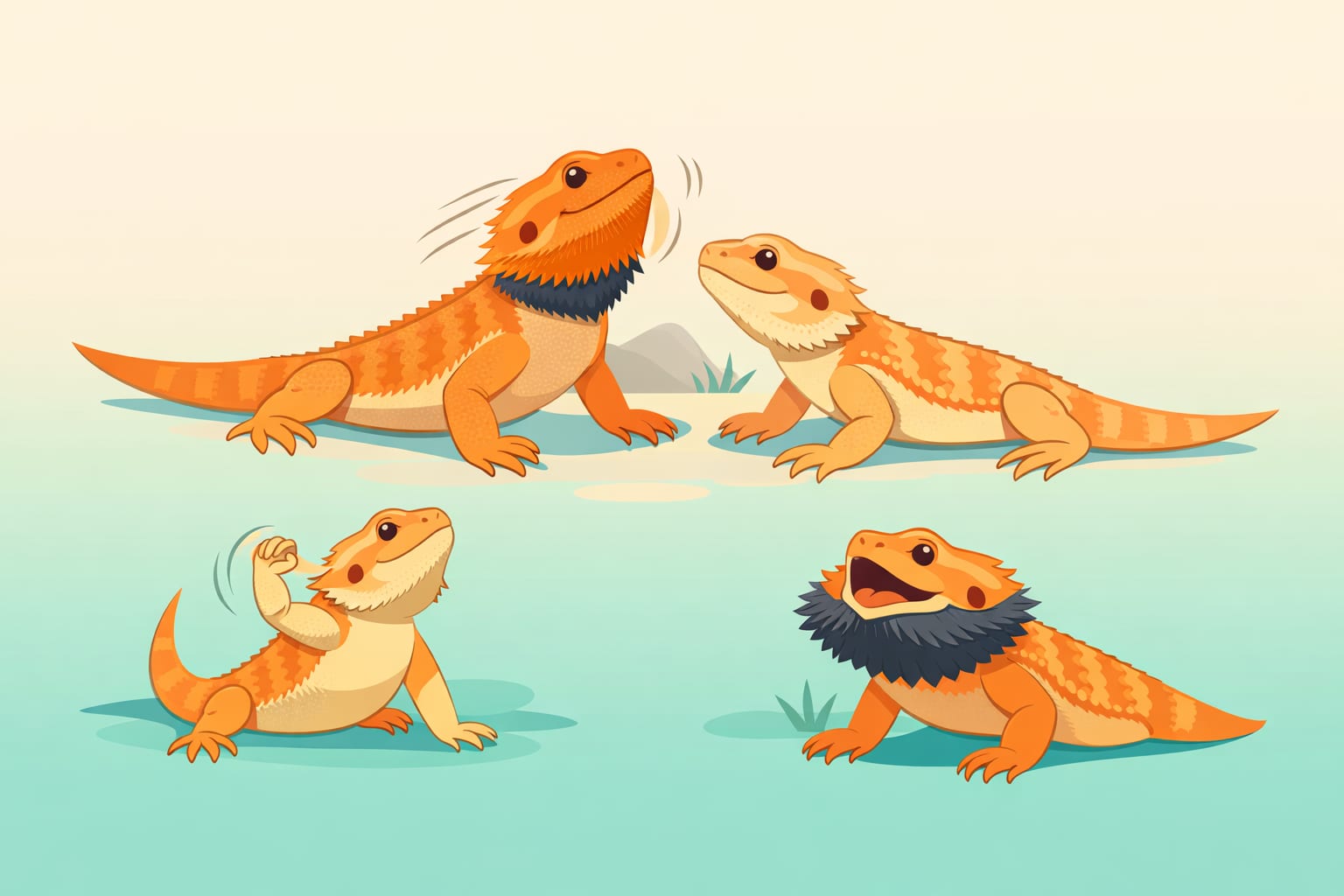
Bearded dragons are solitary, territorial reptiles that do not form social bonds or benefit from companionship. In their native Australian habitat, adult bearded dragons maintain individual territories and only interact during brief breeding encounters. Their biology and behavior are hardwired for solitary living, not communal housing.
The fundamental reasons bearded dragons cannot cohabitate include:
- Territorial instinct: Both males and females defend feeding areas, basking spots, and shelter locations from other dragons
- Resource competition: Even in large enclosures, dragons compete for the warmest basking spot, the best hiding places, and food
- Dominance hierarchies: One dragon will always establish dominance, causing chronic stress to subordinate dragons
- Lack of social needs: Unlike mammals, reptiles do not require social interaction for psychological well-being
- Breeding stress: Mixed-gender pairs lead to constant breeding attempts, exhausting females and causing aggression
The reptile veterinary community universally recommends against cohabitation. Experienced keepers who have attempted it consistently report stress behaviors, injuries, and health decline even in seemingly “peaceful” pairs.
What Happens If You Put Two Bearded Dragons in the Same Tank?
When two bearded dragons share an enclosure, one will immediately establish dominance through aggressive displays, resource monopolization, and physical intimidation. The subordinate dragon experiences chronic stress that suppresses immune function, disrupts digestion, and shortens lifespan, even if no visible fighting occurs.
Common outcomes of cohabitation include:
Immediate dominance behaviors:
- Head bobbing and arm waving displays
- Beard puffing and darkening
- Body flattening to appear larger
- Chasing and tail whipping
- Blocking access to basking spots
Resource monopolization:
- Dominant dragon claims the prime basking spot, forcing the subordinate to thermoregulate improperly
- Food aggression during feeding time, with the dominant dragon eating first and most
- Territorial blocking of hides and elevated perches
- Subordinate dragon spending excessive time in corners or hiding
Physical injuries:
- Bite wounds on limbs, tail, or body
- Tail tip loss or complete tail amputation
- Toe and foot injuries from bites
- Scratches and abrasions from aggressive encounters
- Eye injuries from defensive strikes
Health consequences:
- Chronic stress leading to weakened immune system
- Metabolic bone disease from inadequate basking access
- Malnutrition when subordinate dragon cannot compete for food
- Impaction and digestive issues from stress
- Increased susceptibility to respiratory infections and parasites
Even when dragons appear to “tolerate” each other by lying on opposite sides of the tank, the subordinate is experiencing harmful stress. Stress behaviors like glass surfing often indicate the dragon is trying to escape the situation.
Male vs Female Bearded Dragons: Can They Cohabitate?
No gender combination of bearded dragons can safely cohabitate. Male-female, male-male, and female-female pairings all result in aggression, stress, and health problems, though the specific risks vary by pairing.
Male-male pairings:
- Most visibly aggressive combination
- Constant territorial displays and fighting
- Severe bite wounds and injuries common
- Both dragons experience extreme stress
- Never recommended under any circumstances
Male-female pairings:
- Male will constantly attempt to breed
- Female experiences exhausting breeding stress year-round
- Females can become egg-bound or develop follicular stasis
- Male may bite female’s neck and body during breeding attempts
- Female cannot escape male’s advances in shared enclosure
- Unwanted breeding produces eggs that require specialized care
Female-female pairings:
- Often mistakenly considered “safer” but still problematic
- Dominance hierarchy still forms with resource competition
- Subordinate female experiences chronic stress
- Aggression increases during breeding season when both may develop eggs
- Bite wounds and territorial disputes still occur
- Both dragons’ health suffers over time
“Gender pairing does not eliminate the fundamental problem: bearded dragons are solitary animals that experience stress when forced to share territory with another dragon.”
The only safe approach is individual housing for each bearded dragon, regardless of gender.
Signs of Stress When Bearded Dragons Are Housed Together
Stress signs in cohabitated bearded dragons include dark beard coloration, glass surfing, lethargy, appetite loss, and submissive postures, though some stress indicators are subtle and easily missed. Recognizing these signs early is critical because chronic stress causes permanent health damage.
Visible stress behaviors:
- Dark or black beard: Indicates fear, stress, or submission
- Glass surfing: Frantic scratching at tank walls trying to escape
- Flattened body posture: Making themselves appear smaller and less threatening
- Hiding excessively: Spending most time in hides rather than basking
- Arm waving: Submissive gesture acknowledging dominant dragon
- Staying in corners: Avoiding the dominant dragon’s territory
- Rapid breathing: Stress-induced respiratory changes
- Gaping mouth: Can indicate stress in addition to thermoregulation
Behavioral changes:
- Decreased appetite or refusing food when dominant dragon is present
- Reluctance to bask even when lights are on
- Sleeping more than normal or lethargy
- Skittish behavior and increased wariness
- Attempting to climb tank walls or lid
- Pacing or restless movement
Physical health indicators:
- Weight loss despite adequate food availability
- Dull or darkened coloration overall
- Slow growth rate in juveniles
- Frequent shedding problems
- Wounds, scratches, or missing tail/toe tips
- Soft bones or metabolic bone disease from inadequate basking
Deceptive “peaceful” cohabitation:
Many owners mistake tolerance for compatibility. Two dragons lying on opposite sides of a tank are not “getting along”, the subordinate dragon is avoiding the dominant one. The absence of visible fighting does not mean absence of stress. Chronic low-level stress is just as harmful as acute aggression and leads to shortened lifespan and poor quality of life.

How Big of a Tank Would You Need for Two Bearded Dragons?
No tank size is large enough to safely house two bearded dragons together. While adult bearded dragons require a minimum 120-gallon (4x2x2 feet) enclosure individually, even doubling or tripling this space does not eliminate territorial behavior, resource competition, or dominance hierarchies.
The space limitation problem:
- Basking spot competition: There can only be one optimal basking spot with the correct temperature gradient, and the dominant dragon will claim it
- Territory establishment: Bearded dragons establish territories regardless of enclosure size
- Visual contact stress: Even in large enclosures, dragons remain aware of each other’s presence, causing ongoing stress
- Resource concentration: Food, water, and heat sources create competition points no matter how much floor space exists
Why larger tanks don’t solve the problem:
A 240-gallon enclosure (8x2x2 feet) costs significantly more than two separate 120-gallon tanks but still fails to provide safe cohabitation. The investment in a massive shared enclosure is wasted money that would be better spent on proper individual housing.
The math of proper housing:
- One adult bearded dragon: 120-gallon minimum (4x2x2 feet)
- Two adult bearded dragons: Two separate 120-gallon enclosures
- Total space needed: 240 gallons in separate enclosures, not combined
For guidance on appropriate tank sizes, see our article on what tank size a bearded dragon needs and whether a 40-gallon tank is sufficient long-term.
Do Baby Bearded Dragons Get Along Better Than Adults?
Baby bearded dragons may temporarily tolerate each other, but this is not true compatibility and they will become aggressive as they mature. Breeders often house hatchlings together for space efficiency, but this practice is stressful even for babies and becomes dangerous as they grow.
Why babies seem more tolerant:
- Smaller size means less perceived threat
- Immature territorial instincts not fully developed
- Survival instinct to avoid conflict when vulnerable
- Limited space in breeding facilities normalizes crowding
The reality of juvenile cohabitation:
Even baby bearded dragons establish dominance hierarchies. The largest, most aggressive babies monopolize food and basking spots, leading to stunted growth in subordinate dragons. This size disparity increases over time, with dominant babies growing faster and becoming increasingly aggressive toward smaller cage mates.
When aggression escalates:
- 3-6 months: Territorial behaviors begin emerging
- 6-12 months: Aggression increases as sexual maturity approaches
- 12-18 months: Full territorial and breeding behaviors develop
- Adult stage: Cohabitation becomes extremely dangerous
Risks specific to baby cohabitation:
- Toe and tail nipping: Babies may bite each other’s extremities, causing permanent injury
- Uneven growth rates: Dominant babies grow faster, creating size mismatches
- Nutritional competition: Smaller babies cannot compete for food, leading to malnutrition
- Early stress imprinting: Chronic stress during development affects long-term health
- Sudden escalation: Peaceful babies can become aggressive seemingly overnight
The separation timeline:
If you acquire baby bearded dragons housed together, separate them immediately. Do not wait for aggression to appear. The stress of cohabitation affects development even when no fighting is visible. Each baby needs its own enclosure from the start to ensure proper growth, health, and temperament.
Bearded Dragon Dominance Behavior With Other Bearded Dragons
Bearded dragon dominance behaviors include head bobbing, beard puffing, body flattening, arm waving (submission), basking spot monopolization, and physical aggression ranging from chasing to biting. Understanding these behaviors helps owners recognize when cohabitation is causing problems.
Dominance displays:
- Head bobbing: Rapid up-and-down head movement asserting dominance; faster bobbing indicates higher aggression
- Beard puffing and darkening: Making the throat appear larger and darker to intimidate rivals
- Body flattening and broadside display: Turning sideways and flattening the body to appear larger
- Tail elevation: Raising the tail while displaying
- Mouth gaping: Opening mouth wide as a threat display
- Chasing: Pursuing the subordinate dragon around the enclosure
- Blocking: Positioning body to prevent access to resources
Submissive responses:
- Arm waving: Slow circular arm motion acknowledging dominance and signaling submission
- Slow head bobbing: Slower bobs than dominant dragon, indicating lower status
- Retreating: Moving away from dominant dragon
- Staying low: Keeping body close to ground to appear smaller
- Avoiding eye contact: Not challenging the dominant dragon
- Remaining motionless: Freezing when dominant dragon approaches
Physical aggression:
When displays fail to establish clear hierarchy, bearded dragons escalate to physical violence:
- Biting: Powerful jaws can cause deep puncture wounds
- Tail whipping: Using tail as a weapon to strike rivals
- Ramming: Charging and body-slamming the other dragon
- Pinning: Holding the subordinate dragon down
- Breeding attempts: Males forcibly breeding females (not consensual mating)
Resource guarding:
Dominant dragons actively prevent subordinates from accessing:
- Prime basking spots with optimal temperature
- Food during feeding time
- Water dishes
- Elevated perches and hides
- Preferred areas of the enclosure
These dominance behaviors cause chronic stress in subordinate dragons even when they “submit” appropriately. The subordinate dragon lives in constant fear and cannot meet its basic needs for thermoregulation, nutrition, and security.
Can Bearded Dragons Kill Each Other If Kept Together?
Yes, bearded dragons can kill each other through direct combat injuries, stress-induced illness, or by preventing access to essential resources like heat and food. While immediate death from fighting is less common than chronic health decline, fatal outcomes occur regularly in cohabitation situations.
Direct fatal injuries:
- Severe bite wounds: Deep bites to the neck, head, or body can cause fatal bleeding or infection
- Tail amputation: Complete tail loss leads to blood loss and infection risk
- Limb injuries: Severe damage to legs can prevent movement and feeding
- Eye injuries: Bites to the face can damage eyes, leading to infection and death
- Internal injuries: Ramming and aggressive encounters can cause internal trauma
Indirect causes of death:
- Starvation: Subordinate dragon cannot compete for food and slowly starves
- Metabolic bone disease: Inadequate basking access leads to calcium deficiency and organ failure
- Immune suppression: Chronic stress weakens immune system, allowing infections to become fatal
- Impaction: Stress-induced digestive problems lead to fatal blockages
- Egg binding: Females stressed by male breeding attempts develop fatal follicular stasis
Timeline of decline:
Death from cohabitation rarely happens overnight. Instead, subordinate dragons experience gradual health decline over weeks or months:
- Initial stress and reduced appetite
- Weight loss and decreased activity
- Weakened immune system and minor infections
- Major health crisis (respiratory infection, metabolic bone disease, impaction)
- Death or emergency veterinary intervention
Case severity factors:
- Size mismatch: Larger dragons can inflict more severe injuries on smaller ones
- Male-male pairings: Most aggressive combination with highest injury risk
- Breeding season: Aggression intensifies during spring and summer
- Inadequate space: Smaller enclosures increase conflict frequency
- Limited resources: Single basking spot or feeding area increases competition
The tragedy of cohabitation deaths is that they are entirely preventable. Every bearded dragon that dies from cohabitation-related causes could have lived a long, healthy life in individual housing. The average lifespan of a bearded dragon is 10-15 years in captivity, but cohabitated dragons often die within 2-5 years.

【Safe Material & Durable】Bearded dragon hammock is made of natural seagrass. Natural wooden bridge for reptiles to climb. The jungle vine is made of iron wire inside and soft PU material outside. Reptile plants are made from intentionally non-toxic plastic and the stems were made from iron wire. It creates a dynamic environment with fun hiding spots and intriguing obstacles.

【Warm & Comfortable Material】The lizard bed and pillow are made of durable and breathable canvas, filled with PP cotton. This blanket has a soft and comfortable surface. The hammock is made of canvas material. The hammock is suitable for reptiles to rest and play on

Comprehensive Starter Set: This gecko tank accessories kit includes 20 essential accessories, providing everything you need to set up a reptile terrarium, including artificial plants, hiding places for pets, pet toys, temperature and humidity monitoring equipment, food dishes, and feeding tools
Alternatives to Housing Multiple Bearded Dragons in One Enclosure
The only safe alternative to cohabitation is providing separate, individual enclosures for each bearded dragon. While this requires more space and equipment, it ensures each dragon thrives without stress, competition, or injury risk.
Individual housing setup:
- Separate tanks: Each dragon needs its own complete enclosure (120-gallon minimum for adults)
- Independent heating and lighting: Each tank requires its own basking bulb, UVB light, and temperature gradient
- Individual feeding: Feed each dragon separately to ensure proper nutrition
- Separate equipment: Each enclosure needs its own thermometers, hides, and accessories
Space-efficient arrangements:
If space is limited, consider these options:
- Vertical stacking: Stack enclosures vertically using sturdy shelving or stands
- Room division: Use one room for multiple separate enclosures
- Vision barriers: Ensure dragons cannot see each other between tanks to prevent stress
- Dedicated reptile room: Convert a spare room into a reptile keeping space
Cost considerations:
Yes, individual housing costs more upfront:
- Two 120-gallon tanks: $400-800
- Two complete lighting setups: $200-400
- Two sets of accessories: $100-200
- Total initial investment: $700-1,400
However, this investment prevents:
- Emergency veterinary bills from injuries ($200-1,000+ per incident)
- Chronic health problems requiring ongoing treatment
- Shortened lifespan and premature death
- Stress and suffering for your pets
Supervised interaction myth:
Some owners ask about supervised “playtime” between dragons. This is not recommended because:
- Bearded dragons do not play or socialize
- Brief interactions still cause stress
- Aggression can escalate instantly
- No benefit to the dragons’ wellbeing
- Risk of injury during “supervised” time
The breeding exception:
The only time bearded dragons should be in the same space is during intentional, carefully supervised breeding by experienced keepers. Even then:
- Introduce dragons only during female’s receptive period
- Supervise constantly during breeding
- Separate immediately after successful mating
- Never leave breeding pair together overnight
- Ensure female has proper nutrition and calcium for egg development
Breeding should only be attempted by experienced keepers with proper knowledge, resources, and homes for offspring.
Common Mistakes When Trying to Keep Two Bearded Dragons Together
The most common mistake is assuming that the absence of visible fighting means cohabitation is working, when in reality chronic stress is causing hidden health damage. Understanding these mistakes helps owners avoid harming their dragons.
Mistake 1: Believing gender matters
Many owners think female-female pairs are safe or that opposite-sex pairs will “bond.” In reality, all gender combinations result in dominance hierarchies and stress. The specific risks vary, but no pairing is safe.
Mistake 2: Thinking bigger tanks solve the problem
Owners often believe a large enough enclosure eliminates competition. However, territorial behavior and resource monopolization occur regardless of space. The dominant dragon will claim the best basking spot even in a 300-gallon tank.
Mistake 3: Misinterpreting peaceful behavior
When dragons lie on opposite sides of the tank, owners assume they’re “getting along.” This is actually avoidance behavior, the subordinate dragon is staying away from the dominant one. Apparent peace is actually chronic stress.
Mistake 4: Comparing to other reptile species
Some reptiles (like certain gecko species) can cohabitate successfully. Owners mistakenly apply this to bearded dragons, but each species has unique social structures. Bearded dragons are solitary, unlike some other reptiles.
Mistake 5: Following pet store advice
Pet stores often house multiple bearded dragons together for space efficiency and may tell customers this is acceptable. This is incorrect, stores prioritize space and sales over animal welfare. Temporary housing in stores does not mean long-term cohabitation is safe.
Mistake 6: Waiting for problems to appear
Some owners house dragons together and plan to separate “if problems arise.” By the time visible problems appear, significant stress damage has already occurred. Prevention through immediate separation is essential.
Mistake 7: Believing dragons are “bonded”
Owners who raise baby dragons together often believe they’ve formed a special bond. Bearded dragons do not form social bonds or friendships. What appears to be bonding is actually learned tolerance under duress, which breaks down as dragons mature.
Mistake 8: Inadequate quarantine
When acquiring a second dragon, some owners immediately house them together. This risks disease transmission and immediate aggression. New dragons should be quarantined separately for 30-60 days regardless of future housing plans.
Mistake 9: Anthropomorphizing reptile behavior
Owners project human emotions and social needs onto their dragons, believing they’ll be “lonely” or “want a friend.” Reptile brains function differently from mammalian brains, bearded dragons do not experience loneliness or desire companionship.
Mistake 10: Prioritizing convenience over welfare
The honest reason many owners attempt cohabitation is convenience, one tank is easier and cheaper than two. However, responsible pet ownership means providing appropriate care even when it’s less convenient. Each dragon deserves individual housing for optimal health and wellbeing.
How to Introduce Bearded Dragons to Each Other Safely
There is no safe way to introduce bearded dragons for cohabitation because they are solitary animals that should never live together. However, if you must temporarily house dragons in proximity (such as during transport or veterinary visits), follow strict safety protocols.
The only acceptable “introduction” scenarios:
- Intentional breeding: Experienced breeders introducing dragons for supervised mating
- Veterinary transport: Multiple dragons traveling to the vet in separate carriers
- Temporary housing emergency: Short-term crisis requiring dragons in same room (but separate enclosures)
If breeding is your goal:
Breeding should only be attempted by experienced keepers who understand genetics, egg incubation, and have homes for all offspring. The process requires:
- Quarantine: New dragons must be quarantined 30-60 days and tested for parasites
- Health verification: Both dragons must be healthy, proper weight, and sexually mature (18+ months)
- Female conditioning: Female must be well-fed and supplemented with calcium for egg development
- Neutral territory: Introduce in a space neither dragon considers their territory
- Constant supervision: Never leave breeding pair unsupervised
- Immediate separation: Separate after successful mating; never house together long-term
- Female monitoring: Watch for egg development and provide proper laying box
Signs to separate immediately during breeding:
- Excessive aggression beyond normal breeding behavior
- Female showing extreme stress (black beard, attempting to escape)
- Male biting female’s body or limbs (not just neck holding during mating)
- Either dragon injured or bleeding
- Female refusing male’s advances repeatedly
What NOT to do:
- Never introduce dragons “to see if they get along”
- Never leave introduced dragons unsupervised
- Never house newly introduced dragons together permanently
- Never introduce dragons of unknown health status
- Never introduce juveniles for “socialization”
The bottom line:
If you’re not an experienced breeder conducting supervised mating, there is no reason to introduce bearded dragons to each other. They do not benefit from meeting other dragons, do not form friendships, and do not require social interaction. The safest approach is keeping dragons completely separate throughout their lives.
Are There Any Reptiles That Can Live With a Bearded Dragon?
No reptiles should be housed with bearded dragons. Cohabitation between different species (called “mixed-species housing”) creates even more problems than housing two bearded dragons together, including disease transmission, incompatible environmental needs, and predation risk.
Why mixed-species housing fails:
- Different temperature requirements: Species have specific temperature gradients that cannot be met in shared housing
- Different humidity needs: Bearded dragons need low humidity (30-40%) while many reptiles need higher levels
- Disease transmission: Different species carry different pathogens that may not affect their own species but harm others
- Dietary competition: Different feeding schedules and food types create conflict
- Size mismatches: Larger animals may injure or eat smaller ones
- Stress from unfamiliar species: Even non-aggressive species cause stress through their presence
Commonly attempted (but dangerous) pairings:
Bearded dragons with other lizards:
- Blue-tongue skinks: Different humidity needs, potential aggression, disease risk
- Leopard geckos: Nocturnal vs. diurnal conflict, temperature incompatibility, stress
- Uromastyx: Similar appearance but different care requirements, territorial conflict
- Iguanas: Size mismatch, aggression risk, completely different environmental needs
Bearded dragons with snakes:
- Snakes are predators that may attempt to eat bearded dragons
- Completely incompatible environmental requirements
- Extreme stress for both animals
- Never attempt under any circumstances
Bearded dragons with turtles/tortoises:
- Different humidity and temperature needs
- Turtles carry Salmonella strains dangerous to lizards
- Tortoises may bite or ram bearded dragons
- Incompatible dietary needs
The “community tank” myth:
Some exotic pet forums discuss “community reptile tanks” with multiple species. These setups consistently result in stress, illness, injury, or death. The fact that animals survive temporarily does not mean they’re thriving. Responsible reptile keeping means species-appropriate individual housing.
Safe multi-pet households:
You can keep multiple reptile species in the same home by:
- Housing each species in separate, appropriate enclosures
- Maintaining proper quarantine protocols for new animals
- Using separate equipment for each enclosure to prevent cross-contamination
- Washing hands between handling different animals
- Ensuring enclosures are secure so animals cannot access each other
This approach allows you to enjoy multiple species while ensuring each animal’s welfare.
What to Do If My Bearded Dragons Are Already Living Together
Separate your bearded dragons immediately into individual enclosures. Even if they appear peaceful, cohabitation causes chronic stress and health problems. The longer they remain together, the more damage occurs.
Immediate action steps:
- Acquire a second complete setup: Purchase or assemble a second tank with all necessary equipment (heating, lighting, substrate, hides)
- Separate the dragons: Move one dragon to the new enclosure immediately
- Conduct health checks: Examine both dragons for injuries, weight loss, or illness signs
- Schedule vet visits: Have both dragons examined by a reptile veterinarian to assess stress-related health issues
- Monitor behavior: Watch for improvement in appetite, activity, and stress indicators over the following weeks
Health assessment checklist:
Examine both dragons for:
- Injuries: Bite marks, scratches, missing tail/toe tips, wounds
- Weight: Weigh both dragons; subordinate is often underweight
- Coloration: Check for persistent dark coloration indicating chronic stress
- Appetite: Monitor whether both dragons eat eagerly after separation
- Activity level: Note if previously lethargic dragon becomes more active
- Basking behavior: Ensure both dragons now bask properly with unrestricted access
Recovery timeline:
After separation, expect:
- Days 1-3: Initial adjustment; dragons may seem confused or continue stress behaviors
- Week 1-2: Appetite and activity typically improve noticeably
- Weeks 2-4: Coloration brightens, stress behaviors decrease
- Months 1-3: Full recovery of normal behavior patterns
- Long-term: Monitor for lasting health effects of cohabitation stress
If you cannot afford two complete setups immediately:
While two proper enclosures are essential, temporary solutions include:
- Temporary divider: Use a solid, opaque divider to split one large tank (only as emergency measure for days, not weeks)
- Rehoming: If you truly cannot provide two setups, rehome one dragon to an experienced keeper
- Financial assistance: Contact local reptile rescues for equipment donations or low-cost supplies
- DIY enclosures: Build a temporary enclosure using storage tubs or DIY methods until you can afford a proper tank
What NOT to do:
- Do not wait to see if problems develop, separate immediately
- Do not use a clear divider that allows dragons to see each other
- Do not alternate which dragon gets the “better” enclosure
- Do not attempt gradual separation, make a clean break
- Do not feel guilty about “separating friends”, you’re ending a stressful situation
Long-term care:
After separation, each dragon needs:
- Individual feeding schedules
- Separate handling and enrichment time
- Independent health monitoring
- Proper bearded dragon care in species-appropriate housing
Most dragons show remarkable improvement after separation, demonstrating that cohabitation was indeed stressful even if it appeared peaceful.
Do Bearded Dragons Get Lonely If Kept Alone?
No, bearded dragons do not experience loneliness when housed individually. They are solitary reptiles that do not form social bonds, do not require companionship, and actually thrive when kept alone without the stress of cohabitation.
Understanding reptile psychology:
Bearded dragons have fundamentally different brain structures than social mammals:
- No social bonding: Reptile brains lack the neural structures for forming emotional attachments
- Solitary instinct: In the wild, adult bearded dragons live alone except during brief breeding encounters
- Territory-focused: Dragons are concerned with territory and resources, not companionship
- No pack mentality: Unlike social animals, bearded dragons do not seek group membership
What bearded dragons actually need:
Instead of social interaction with other dragons, bearded dragons need:
- Proper environment: Correct temperature gradient, UVB lighting, and enclosure size
- Adequate nutrition: Varied diet of insects and vegetables appropriate to age
- Environmental enrichment: Climbing branches, varied terrain, and exploration opportunities
- Human interaction: Regular, gentle handling builds trust with their keeper
- Mental stimulation: Rearranging decor, offering different foods, supervised exploration time outside the enclosure
Signs of a content solitary dragon:
A happy bearded dragon living alone displays:
- Healthy appetite and eagerness to eat
- Active basking behavior
- Bright, vibrant coloration
- Alert, responsive behavior
- Comfortable body language (no stress postures)
- Healthy growth and weight
- Normal shedding cycles
- Engagement during handling time
The anthropomorphism trap:
Humans naturally project their own social needs onto pets. We feel lonely without companionship, so we assume our pets do too. This is called anthropomorphism, attributing human characteristics to non-human animals. While this empathy is well-intentioned, it leads to inappropriate care decisions.
Comparing to social species:
Some animals do require social interaction:
- Social mammals: Dogs, rabbits, guinea pigs, rats need companionship
- Social birds: Many parrot species require flock interaction
- Social fish: Schooling fish need groups of their own species
Bearded dragons are not on this list. They are solitary by nature and biology.
Quality of life for solitary dragons:
A bearded dragon living alone in proper conditions has:
- No competition for resources
- Unrestricted access to optimal basking temperatures
- Stress-free feeding without food aggression
- Ability to establish comfortable territory
- No risk of injury from other dragons
- Longer lifespan due to reduced stress
- Better overall health and wellbeing
Your role as keeper:
You provide everything your bearded dragon needs:
- Daily interaction through feeding and handling
- Environmental management for optimal health
- Enrichment through varied diet and habitat changes
- Veterinary care when needed
- Safe, stress-free living conditions
A bearded dragon with an attentive keeper living alone is far happier than a bearded dragon with a “companion” in a shared enclosure.
Conclusion
Bearded dragons cannot and should not live together. Despite their docile nature with humans, these reptiles are solitary and territorial with their own species. Cohabitation causes chronic stress, resource competition, injuries, and shortened lifespans regardless of gender pairing, enclosure size, or how peaceful they appear.
The evidence is clear: dominance hierarchies form immediately, subordinate dragons suffer from inadequate access to heat and food, and even “successful” cohabitation causes hidden stress damage. From baby dragons to adults, from males to females, no combination is safe for long-term housing together.
Your action steps:
- If you have multiple dragons together: Separate them immediately into individual enclosures
- If you’re considering getting a second dragon: Prepare a complete second setup before bringing the new dragon home
- If someone tells you cohabitation is fine: Trust the veterinary consensus and experienced keeper community, it’s not
- Focus on quality individual care: Provide each dragon with proper housing, nutrition, and enrichment
Your bearded dragon will not be lonely in individual housing. Instead, they’ll thrive without the stress of competition, enjoy unrestricted access to resources, and live a longer, healthier life. The investment in separate enclosures is an investment in your dragons’ wellbeing.
For more guidance on proper housing, explore our resources on bearded dragon tank sizes and comprehensive care requirements. Your dragons deserve the best, and the best means giving each one their own space to thrive.
FAQ
Can two female bearded dragons live together peacefully? No, female bearded dragons still establish dominance hierarchies and compete for resources. While they may show less visible aggression than males, the subordinate female experiences chronic stress that harms her health. All gender combinations require separate housing.
How long can baby bearded dragons stay together? Baby bearded dragons should be separated immediately, even though they may temporarily tolerate each other. Dominance behaviors begin forming within weeks, and the stress of cohabitation affects development. Each baby needs individual housing from the start for optimal growth.
What size tank do I need if I insist on housing two bearded dragons together? No tank size makes cohabitation safe. Even a 300-gallon enclosure cannot eliminate territorial behavior, resource competition, or dominance hierarchies. The money spent on an oversized shared tank would be better invested in two properly-sized individual enclosures.
Will my bearded dragon be sad or lonely living alone? No, bearded dragons do not experience loneliness. They are solitary reptiles that do not form social bonds or require companionship. A bearded dragon living alone with proper care, handling, and enrichment is healthier and happier than one forced to share space with another dragon.
Can I introduce my bearded dragons for supervised playtime? No, bearded dragons do not play or socialize. Brief interactions still cause stress and carry injury risk. There is no benefit to the dragons from meeting each other. Keep them completely separate except for intentional breeding by experienced keepers.
What should I do if my pet store said cohabitation is fine? Pet stores often provide incorrect care information and house multiple dragons together for space efficiency, not animal welfare. Follow veterinary recommendations and experienced keeper consensus: separate housing is essential. Separate your dragons immediately regardless of pet store advice.
Can bearded dragons live with other reptile species? No, bearded dragons should never be housed with other reptile species. Mixed-species housing creates additional problems including disease transmission, incompatible environmental needs, and predation risk. Each species requires its own appropriate enclosure.
How do I know if my cohabitated dragons are stressed? Stress signs include dark beard coloration, glass surfing, excessive hiding, appetite loss, weight loss, lethargy, and submissive postures like arm waving. However, chronic stress can exist without obvious signs, apparent peace often masks harmful stress in subordinate dragons.
Is it ever safe to house bearded dragons together? The only exception is temporary, supervised breeding by experienced keepers. Even then, dragons should only be together during active mating (minutes to hours) and separated immediately afterward. Long-term cohabitation is never safe under any circumstances.
What happens if I can’t afford two separate setups? If you cannot provide proper individual housing for multiple bearded dragons, you should rehome one to an experienced keeper who can. Responsible pet ownership means providing appropriate care even when it requires sacrifice. Contact reptile rescues for assistance or rehoming support.
Do bearded dragons recognize each other if raised together? Bearded dragons do not form lasting social bonds or “remember” siblings. Even dragons raised together from hatching will establish dominance hierarchies and experience stress from cohabitation. Being raised together does not create a special bond that makes cohabitation safe.
Can I keep two bearded dragons in the same room in separate tanks? Yes, multiple bearded dragons can live in the same room in separate enclosures as long as they cannot see each other. Use opaque barriers between tanks to prevent visual stress. Each dragon needs its own complete setup with independent heating, lighting, and equipment.

Bruh design for Bearded Dragon lovers

Funny Bearded Dragon Beardzilla graphic design for Women, Men, Boys, Girls, Teens, Kids, Mom, Dad, Mother, Father, Sister, Aunt, Wife, Husband, Uncle, Mommy, Mama, Daddy, Papa, Bearded Dragon Lover.

Hammock for lizard: boredom and stress, prevent them from producing , and maintain ,Chinchilla Hammock


