Quick Answer
Traveling with a bearded dragon requires a secure, well-ventilated carrier, temperature control between 75-85°F, and careful planning for trips under 8-10 hours. Pack essential supplies including heating sources, food, water, and familiar bedding. For longer journeys or air travel, consult an exotic veterinarian and research destination regulations before departure.

2022 Upgraded Bearded Dragon Carrier,Guinea Pig Carrier, Turtle carrieradding side-accessing window convenient for easy in-and-out. Place this small animal carrier indoor and leave the side-window open for temporary bed and playen.

❤【EXCELLENT VENTILATION DESIGN】3 large vent holes (diameter is 0.75”) in the front of bubble window, upgraded 4 holes on both sides of the backpack and extra side accessing window for pet easy in-and-out, these ensure great air circulation for your fur-kids wherever you go.
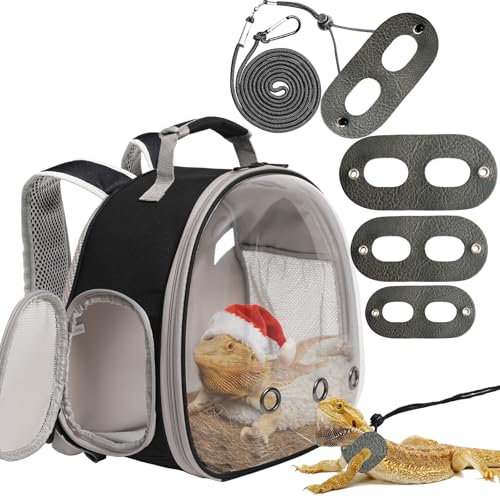
The Bearded Dragon backpack carrier with harness leash set has a Bubble Window. The front hard clear bubble window is better to protect reptile from crushing and attacking if accidents, it also provides a nice front view so they could check surroundings without anxiety.Great gift for Reptiel lovers and festival like Christmas and New Year Gift Choice.
Key Takeaways
- Use a proper carrier: Choose a ventilated container sized appropriately for your dragon with secure closures and non-slip flooring
- Maintain temperature: Keep your bearded dragon between 75-85°F using portable heat packs, car heating, or battery-powered warmers
- Limit travel time: Car trips should ideally stay under 8-10 hours; longer journeys require overnight stops with proper heating setup
- Pack essential supplies: Bring food, water, misting bottle, paper towels, and any necessary medications
- Check regulations: Air travel and hotel stays require advance planning, health certificates, and confirmation of pet policies
- Monitor stress levels: Watch for signs like glass surfing, darkened beard, or refusal to eat during and after travel
- Consider alternatives: For trips longer than a few days, a knowledgeable pet sitter at home may be less stressful than travel
What Supplies Do I Need to Travel With a Bearded Dragon?

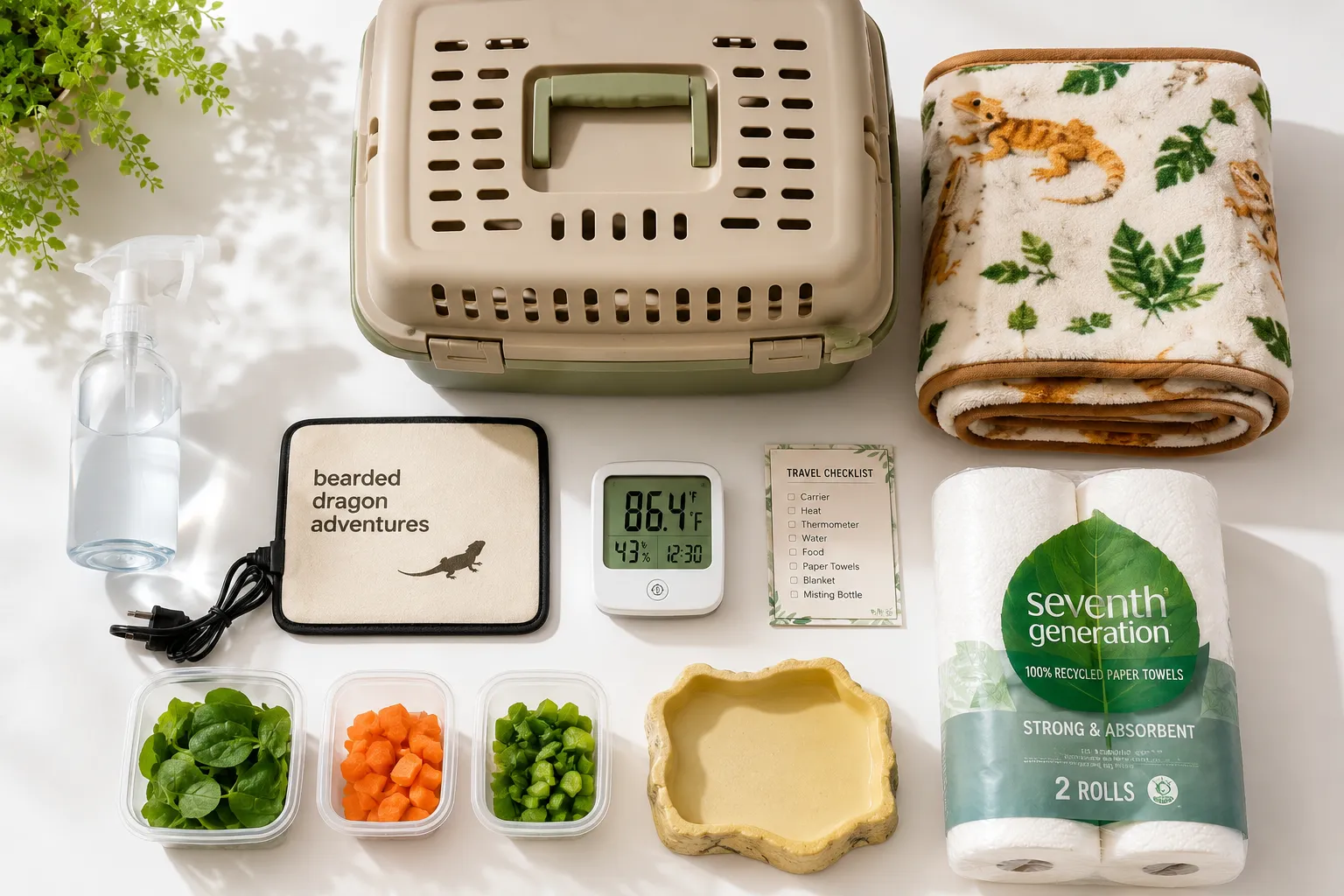
Essential travel supplies for a bearded dragon include a secure carrier with ventilation, portable heating source, thermometer, water misting bottle, paper towels or reptile-safe bedding, pre-portioned food, and a soft towel or familiar substrate. These items ensure your dragon stays comfortable, warm, and secure throughout the journey.
Core travel kit checklist:
- Carrier: Plastic reptile carrier, small pet carrier, or sturdy container with air holes (never cardboard for trips over 30 minutes)
- Temperature control: Portable heat pack, hand warmers wrapped in cloth, or battery-powered heating pad
- Monitoring tools: Digital thermometer to check carrier temperature, small hygrometer if traveling in very dry climates
- Hydration: Spray bottle for misting, small water dish (though most dragons won’t drink during short trips)
- Food: Pre-washed greens in sealed container, live insects in separate ventilated container if needed
- Bedding: Paper towels (easiest to replace), reptile carpet piece, or soft towel
- Cleaning supplies: Extra paper towels, small trash bags for waste, hand sanitizer
- Documentation: Health certificate if required, vet contact information, photo of your dragon for identification
Common mistake: Packing a carrier that’s too large. During travel, bearded dragons feel more secure in snug spaces where they won’t slide around. A carrier roughly 1.5 times your dragon’s length is ideal for trips under 10 hours.
For more guidance on general bearded dragon care essentials, check our comprehensive care resources.
How Long Can a Bearded Dragon Be in a Car?
Bearded dragons can safely travel in a car for 8-10 hours maximum with proper temperature control, though shorter trips of 2-4 hours are ideal. Trips exceeding 10 hours require overnight stops where you can set up temporary heating and lighting in a hotel or rest area.
Time-based guidelines:
- Under 2 hours: Minimal stress for most adult bearded dragons; maintain temperature and secure carrier
- 2-6 hours: Monitor temperature every hour, offer water misting at rest stops, check for signs of stress
- 6-10 hours: Plan at least two rest stops, consider offering small amount of greens if dragon shows interest
- Over 10 hours: Requires overnight accommodation with proper heating setup; not recommended without experience
Temperature management during car travel:
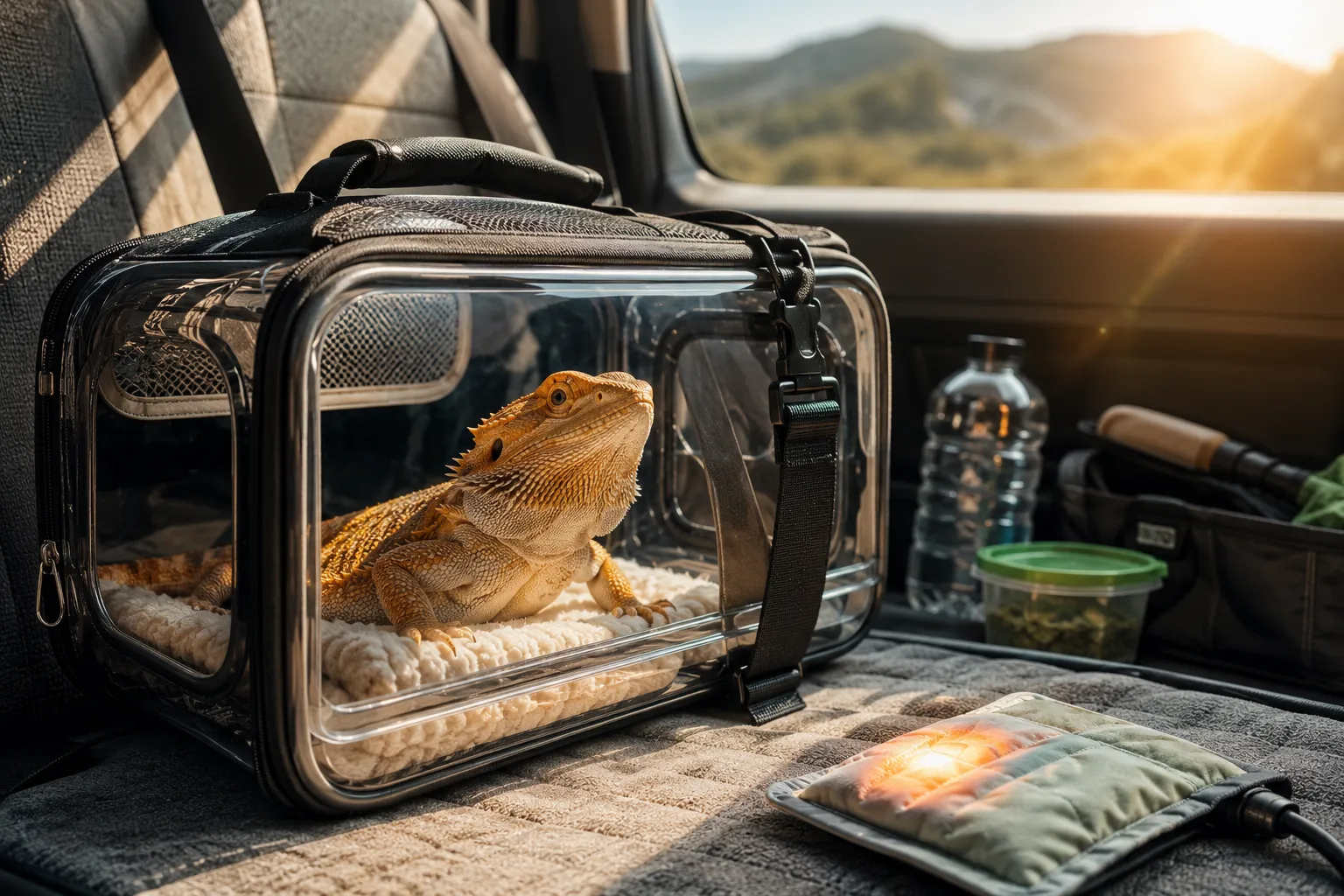
Keep your car’s interior temperature stable rather than relying solely on portable heat sources. In summer, use air conditioning but don’t aim vents directly at the carrier. In winter, run the heater and supplement with heat packs if needed. Place the carrier on a seat (never the floor where temperatures fluctuate more) and secure it with a seatbelt to prevent sliding.
Decision rule: If your bearded dragon is under 6 months old, limit car travel to 4 hours maximum. Baby dragons are more sensitive to temperature fluctuations and stress.
What Is the Best Travel Carrier for a Bearded Dragon?
The best travel carrier for a bearded dragon is a hard-sided plastic reptile carrier or small pet carrier (10-20 gallons equivalent) with secure latches, adequate ventilation holes, and a non-slip floor surface. The carrier should be large enough for your dragon to turn around but snug enough to prevent excessive movement during transport.
Top carrier options:
- Plastic reptile carriers: Purpose-built with ventilation, clear viewing panels, and secure locks (best for trips under 6 hours)
- Small pet carriers: Designed for cats/small dogs, offer more space for longer journeys (good for 6+ hour trips)
- Kritter Keeper-style containers: Affordable, lightweight, adequate ventilation (suitable for short trips under 3 hours)
- Insulated reptile shipping boxes: Professional-grade for temperature control (best for extreme weather or very long trips)
Features to prioritize:
- Ventilation: Multiple air holes on at least two sides, but not so many that heat escapes rapidly
- Security: Latches that won’t pop open if dropped; avoid simple snap-on lids
- Visibility: Clear panels let you check on your dragon without opening the carrier
- Size: 1.5-2 times your dragon’s body length; 10-12 inches wide for adult dragons
- Material: Hard plastic that’s easy to clean and disinfect
What to avoid: Cardboard boxes (absorb moisture and weaken), mesh carriers (poor temperature retention), carriers with wire floors (can catch claws), or any container without secure closures.
Can Bearded Dragons Go on Airplanes?
Bearded dragons can travel on airplanes, but policies vary significantly by airline and most require reptiles to travel as cargo rather than in-cabin, which poses temperature and stress risks. Only a few airlines permit small reptiles in-cabin, and you’ll need a health certificate from an exotic veterinarian dated within 10 days of travel.
Airline travel requirements:
- Health certificate: Required by all airlines; must be issued by licensed vet within 10 days of departure
- Carrier specifications: Must fit under seat if in-cabin (typically 18x14x8 inches maximum); must be airline-approved for cargo
- Temperature restrictions: Most airlines won’t accept reptiles as cargo if ground temperatures exceed 85°F or drop below 45°F
- Advance booking: Call airline 2-4 weeks ahead; reptile policies aren’t always listed online
- Fees: Typically $125-200 each way for in-cabin pets, $200-400 for cargo
Airlines more likely to accept reptiles in-cabin (policies change frequently; always verify):
- Frontier Airlines (small reptiles in approved carriers)
- Some regional carriers with case-by-case approval
Major risks of air travel:
Cargo holds can experience temperature fluctuations, delays may leave your dragon without climate control for hours, and the stress of flying can suppress immune function for weeks. For trips requiring air travel, seriously consider whether leaving your dragon with a qualified pet sitter is safer.
Decision rule: Only fly with your bearded dragon if you’re relocating permanently or the trip exceeds two weeks. For vacations under two weeks, a pet sitter at home is almost always less risky.
How to Keep a Bearded Dragon Warm While Traveling
Keep your bearded dragon warm during travel by maintaining carrier temperatures between 75-85°F using portable heat sources like hand warmers wrapped in cloth, battery-powered heating pads, or your car’s heating system. Monitor temperature with a digital thermometer and adjust heat sources every 1-2 hours.
Effective heating methods:
For car travel:
- Run vehicle heater to maintain 75-80°F cabin temperature
- Place disposable hand warmers (wrapped in thin cloth) along one side of carrier, creating a temperature gradient
- Use rechargeable USB heating pads designed for reptiles
- Position carrier away from air vents but in stable temperature zone
For air travel or extended stops:
- 40-hour heat packs designed for reptile shipping (activate just before travel)
- Insulated carrier or wrap carrier in towel to retain heat
- Battery-powered heating pad with thermostat control
Temperature monitoring schedule:
- Check carrier temperature every 30-60 minutes during active travel
- Adjust or replace heat sources as needed (hand warmers last 6-10 hours)
- Never let carrier temperature exceed 90°F or drop below 70°F
- Create a warm side (80-85°F) and cool side (75-78°F) if carrier is large enough
Common mistake: Placing heat sources directly against your dragon or using heating pads without temperature control. Always create a barrier (cloth, paper towels) between heat source and your dragon to prevent burns.
What Temperature Should I Keep My Bearded Dragon at While Traveling?
Maintain your bearded dragon’s travel environment between 75-85°F, with 78-82°F being the ideal range. This temperature range keeps your dragon comfortable without requiring basking heat, reduces stress, and prevents both hypothermia and overheating during transport.
Temperature zones explained:
- 75-78°F: Minimum safe temperature; dragon will be calm and less active
- 78-82°F: Optimal travel temperature; mimics cool side of home enclosure
- 82-85°F: Upper safe range; acceptable for short periods but monitor closely
- Below 70°F: Risk of respiratory infection and metabolic slowdown
- Above 90°F: Risk of overheating, stress, and potential heat stroke
Seasonal adjustments:
Summer travel: Use car air conditioning to maintain stable temperature; avoid leaving dragon in parked car even for minutes. If stopping, bring carrier inside with you or have someone stay with vehicle running.
Winter travel: Pre-warm carrier before placing dragon inside; use multiple heat sources; wrap carrier in blanket for insulation; check temperature more frequently (every 30 minutes).
Nighttime travel: Bearded dragons naturally tolerate slightly cooler temperatures at night (72-75°F is acceptable), but don’t let temperature drop below 70°F.
Do I Need a Vet Certificate to Travel With My Bearded Dragon?
You need a veterinary health certificate for air travel, crossing state lines for extended periods, or entering certain states with strict reptile regulations, but not for short car trips within your home state. The certificate must be issued by a licensed veterinarian within 10 days of travel and confirms your dragon is healthy and free from contagious diseases.
When health certificates are required:
- Air travel: All airlines require health certificates for reptiles
- Interstate travel: Some states require certificates for reptiles entering their borders (Hawaii, California, and Florida have strict rules)
- International travel: Always required, plus import permits and quarantine periods
- Extended stays: Hotels or rental properties may request proof of health
- Returning home: Some states require certificates even for residents returning with pets
What the certificate includes:
- Veterinarian’s license number and contact information
- Your bearded dragon’s species, age, sex, and identifying features
- Statement of health examination within 10 days
- Confirmation of no visible signs of disease or parasites
- Your contact information and travel dates
- Official veterinary clinic stamp or seal
Cost and timing: Expect to pay $50-150 for a health certificate. Schedule the vet visit 3-7 days before departure to ensure the certificate is valid for your entire travel period.
State-specific regulations: Check your destination state’s Department of Agriculture or Fish and Wildlife website. States like Hawaii prohibit bearded dragons entirely, while others require permits in addition to health certificates.

【Newly Upgraded Bell-Mouth Design】 :This newly upgraded heating lamp with a TFNN bell-mouth design provides a wider range of UVA/B ultraviolet rays compared to the design of ordinary models. It can simultaneously heat and illuminate multiple reptiles. The light is adjustable, making it suitable for different seasons and various reptiles, and it is extremely convenient to use.

[Superior Safety Design with Low-Voltage USB Power Supply]: ONKELYIM reptile heat pad Utilizes a USB interface and DC5V low-voltage power supply, it completely eliminates the risk of overheating. Even during prolonged operation, it maintains a stable temperature rise, providing a safe and warm environment for your ring peace of mind during use. (Note: Reptiles should not be placed directly on heating pads.)

【Novique 5W Reptile Heating Pad】: Providing a warm and comfortable environment for reptiles in their terrariums is essential for pet owners. How can you ensure consistent warmth for your pet's habitat? Novique can easily create a comfortable environment for your pet. It features rapid & even & healthy heating, reinforced materials & safety structure, easy installation and ultra-thin design, and wide applications. Owning it is an excellent value!
How Often Do I Need to Feed My Bearded Dragon on a Road Trip?
For trips under 8 hours, most bearded dragons don’t need to eat during travel and will resume normal feeding once they reach their destination. For longer journeys, offer small amounts of greens (no insects) at rest stops every 6-8 hours, though many dragons won’t eat due to stress and that’s normal.
Feeding guidelines by trip length:
Under 4 hours: No feeding necessary; feed normally before departure and after arrival
4-8 hours: Optional to offer greens at midpoint; don’t worry if dragon refuses
8-12 hours: Offer small portion of favorite greens at 6-8 hour mark; mist dragon for hydration
Over 12 hours: Offer greens every 8 hours; consider offering insects only after settling at overnight stop with proper heating
What to pack for feeding:
- Pre-washed, dry greens in sealed container (collard greens, mustard greens, or arugula)
- Small pieces of favorite vegetables like bell peppers or cucumber
- Avoid watery fruits that create mess in carrier
- Skip live insects during active travel (they escape and stress your dragon)
Hydration priority: Misting is more important than feeding during travel. Spray your dragon lightly with room-temperature water every 2-3 hours, especially around the mouth and nose. Most bearded dragons get adequate hydration from misting and won’t drink from a bowl during travel.
Common mistake: Forcing food on a stressed dragon. Refusing food during travel is a normal stress response. As long as your dragon resumes eating within 24-48 hours of arrival, there’s no cause for concern.
For more information on safe foods, explore our bearded dragon food guides.
My Bearded Dragon Is Stressed During Car Rides, What Do I Do?
If your bearded dragon shows stress during car rides (darkened beard, glass surfing in carrier, gaping mouth), reduce visual stimulation by covering the carrier with a light towel, minimize handling, maintain stable temperature, and ensure the carrier is secured to prevent sliding. Most dragons calm down after 20-30 minutes once they adjust to the motion.
Signs of travel stress:
- Darkened or black beard
- Attempting to escape carrier (scratching at walls)
- Rapid breathing or gaping mouth
- Flattened body posture
- Refusal to settle down after 30+ minutes
Immediate stress-reduction techniques:
- Cover carrier partially: Drape a light towel over 2-3 sides, leaving ventilation holes exposed; reduces visual overstimulation
- Eliminate handling: Resist urge to take dragon out to “comfort” them; handling increases stress during travel
- Secure carrier firmly: Use seatbelt or wedge between seats so carrier doesn’t slide or tip
- Reduce noise: Lower radio volume, avoid sudden loud sounds
- Maintain smooth driving: Avoid sudden braking, sharp turns, or rapid acceleration
- Check temperature: Stress symptoms can indicate overheating; verify carrier is 75-85°F
Long-term desensitization (for dragons who need frequent travel):
Start with 5-minute car trips around the block, gradually increasing duration over several weeks. Reward calm behavior with favorite treats after each trip. This conditioning works best for young dragons but can help adults too.
When to stop and reassess: If your dragon shows signs of severe distress (continuous gaping, attempting to bite, or complete color darkening) for more than an hour, find a safe place to stop. Set up the carrier in a quiet location, verify temperature, offer water misting, and give your dragon 30 minutes to calm down before continuing.
Decision rule: If your bearded dragon consistently shows severe stress during car travel despite these interventions, they may be a poor candidate for regular trips. Consider a pet sitter for future travel needs.
For more on understanding bearded dragon behavior and stress signals, visit our behavior guide.
Traveling With a Bearded Dragon vs Leaving at Home With a Sitter
Leaving your bearded dragon at home with a knowledgeable pet sitter is less stressful for trips under two weeks, while traveling with your dragon makes sense for relocations, trips over two weeks, or when you cannot find a qualified reptile sitter. Home care maintains routine and proper habitat conditions, whereas travel introduces temperature fluctuations and stress.
When to leave your dragon at home:
- Trips lasting 3-14 days
- You have a reptile-experienced pet sitter or friend available
- Travel involves air travel or extreme weather conditions
- Your dragon has shown severe stress during previous car trips
- Destination doesn’t allow pets or lacks proper accommodation
When to travel with your dragon:
- Permanent relocation or moves
- Trips exceeding two weeks
- No qualified pet sitter available
- Your dragon tolerates car travel well
- Destination is driving distance (under 10 hours) with pet-friendly lodging
Finding a qualified pet sitter:
Look for someone who can:
- Maintain proper temperature gradients (basking spot 95-105°F, cool side 75-85°F)
- Feed appropriate diet and portion sizes
- Recognize signs of illness or stress
- Handle your dragon safely if needed
- Visit daily (minimum) or stay at your home
Preparing for a pet sitter:
Create a detailed care sheet including feeding schedule, temperature requirements, emergency vet contact, and your dragon’s normal behavior patterns. Do a practice run where the sitter cares for your dragon while you’re home to address questions.
Cost comparison: Pet sitters typically charge $15-30 per visit or $50-75 per day for house-sitting. Travel costs include carrier ($20-60), portable heating supplies ($15-40), potential hotel pet fees ($25-75 per night), and health certificates if needed ($50-150).
Can I Take My Bearded Dragon to a Hotel?
You can take your bearded dragon to a hotel if the property allows exotic pets, though policies vary widely and many hotels that accept dogs and cats still prohibit reptiles. Always call ahead to confirm, request written confirmation of their exotic pet policy, and be prepared to pay pet deposits of $25-100 per night.
Finding reptile-friendly hotels:
- Call directly: Don’t rely on website pet policies; speak to manager about reptiles specifically
- Extended-stay hotels: Often more flexible with exotic pets (Residence Inn, Extended Stay America, some Marriott properties)
- Independent hotels: Typically more willing to accommodate unusual pet requests than chains
- Vacation rentals: Airbnb and VRBO hosts may allow reptiles even if they don’t accept dogs/cats
- RV parks and campgrounds: If traveling by RV, most don’t restrict reptile species
Questions to ask hotels:
- Do you allow bearded dragons specifically? (some allow reptiles but not lizards)
- Is there a pet deposit or nightly fee?
- Are there size or enclosure restrictions?
- Can I request a specific room location? (ground floor, away from noisy areas)
- What’s your policy if my pet causes damage?
Hotel room setup:
Bring a portable enclosure or use a large plastic storage bin with screen top. Set up temporary heating with a portable basking lamp (clamp lamp with ceramic socket) and heat pad. Use towels or cardboard to create a dark hide area. Keep room temperature at 75-80°F using hotel climate control.
Etiquette and precautions:
- Place waterproof barrier under enclosure to protect hotel surfaces
- Never leave your dragon loose in the room
- Keep enclosure clean to avoid odors
- Don’t use hotel towels for your dragon
- Inspect room for escape routes before setting up
Alternative: Some reptile boarding facilities offer short-term care if you’re traveling to an area without pet-friendly lodging. Search for “reptile boarding near [destination]” or ask local exotic vets for recommendations.
Is It Safe to Travel With a Baby Bearded Dragon?
Traveling with a baby bearded dragon (under 6 months old) is riskier than traveling with adults due to their higher sensitivity to temperature fluctuations, stress, and dehydration, so trips should be limited to 2-4 hours maximum and only when absolutely necessary. Baby dragons require more frequent temperature monitoring and are more prone to stress-related health issues.
Additional risks for baby bearded dragons:
- Temperature sensitivity: Babies chill faster and overheat quicker than adults
- Dehydration: Higher surface-area-to-volume ratio means faster moisture loss
- Immune system: Less developed, making them more susceptible to stress-related illness
- Feeding needs: Babies need to eat 2-3 times daily; missing meals impacts growth
- Size: Easier to escape from carriers; more vulnerable to injury if carrier tips
Modified travel guidelines for babies:
- Trip length: Maximum 4 hours; ideally under 2 hours
- Temperature checks: Every 20-30 minutes instead of hourly
- Hydration: Mist every 60-90 minutes
- Feeding: Feed before departure and immediately upon arrival; for trips over 4 hours, offer food at midpoint
- Carrier size: Smaller carrier (6-8 inches) to prevent excessive movement
- Supervision: Never leave baby dragon unattended in vehicle
When to avoid travel with babies entirely:
- During first 2 weeks after bringing dragon home (adjustment period)
- If baby is under 4 inches long (extremely fragile)
- In extreme weather (below 40°F or above 90°F outside)
- If baby has shown any signs of illness in past two weeks
Best practice: For baby bearded dragons, arrange for an experienced reptile sitter to provide in-home care rather than traveling whenever possible. The stress of travel during critical growth periods can impact long-term health and development.
Common Mistakes When Traveling With Bearded Dragons
The most common mistakes when traveling with bearded dragons include using carriers that are too large or poorly ventilated, failing to monitor temperature consistently, offering live insects during active travel, and handling the dragon excessively to “calm” them. These errors increase stress and risk injury or illness.
Top 10 travel mistakes to avoid:
- Oversized carrier: Large carriers let dragons slide around; use snug carriers 1.5x dragon’s length
- No temperature monitoring: Assuming temperature is fine without checking; always use a thermometer
- Direct heat sources: Placing heat packs directly against dragon causes burns; always wrap in cloth
- Feeding insects in carrier: Live insects escape and stress dragons; offer only greens if feeding during travel
- Excessive handling: Taking dragon out frequently “to check on them” increases stress; minimize handling
- Inadequate ventilation: Too few air holes causes poor air quality and humidity buildup
- Leaving dragon in parked car: Even 10 minutes in summer heat or winter cold can be fatal
- No practice runs: First trip being a long journey; do short test drives first
- Forgetting water: Not bringing misting bottle for hydration during longer trips
- No backup plan: Not having emergency vet contacts for your route or destination
Consequences of common mistakes:
- Temperature errors can cause respiratory infections or heat stroke
- Stress from poor handling can suppress immune function for weeks
- Dehydration can lead to impaction and kidney issues
- Inadequate carrier security can result in escape or injury
Prevention checklist: Before any trip, verify carrier security, pack thermometer and heat sources, prepare food and water supplies, research emergency vets along your route, and do a 30-minute test drive to identify any issues with your setup.
Frequently Asked Questions
Can bearded dragons travel in cold weather?
Yes, bearded dragons can travel in cold weather if you maintain carrier temperature between 75-85°F using hand warmers, portable heating pads, and insulated carrier wraps. Pre-warm the carrier and vehicle before placing your dragon inside, and check temperature every 30 minutes during winter travel.
How do I transport a bearded dragon on a long-distance move?
For long-distance moves, transport your dragon in a secure carrier with temperature control, plan overnight stops at pet-friendly hotels where you can set up temporary heating, and pack a portable enclosure with basking lamp for overnight setups. Ship or transport the main tank separately and set it up before introducing your dragon to the new home.
Can I take my bearded dragon on vacation with me?
You can take your bearded dragon on vacation if the trip is driving distance (under 10 hours), you have pet-friendly accommodations confirmed, and you can maintain proper temperature and lighting at your destination. For vacations over 10 hours away or requiring air travel, a qualified pet sitter at home is usually safer and less stressful.
What if my bearded dragon poops during travel?
If your bearded dragon poops during travel, clean it up at your next safe stop using paper towels and replace soiled bedding. This is normal, especially if your dragon ate within 12 hours of departure. Bring extra paper towels and small trash bags for easy cleanup.
Should I turn off my bearded dragon’s lights before traveling?
Yes, turn off all lights and heating elements in your dragon’s home tank before traveling, but maintain appropriate temperature in the travel carrier using portable heat sources. Your dragon doesn’t need UVB lighting during travel periods under 24 hours, but temperature must remain stable.
Can bearded dragons get car sick?
Bearded dragons don’t experience motion sickness the same way mammals do, but they can become stressed by car motion, which may cause them to refuse food or show stress behaviors. Securing the carrier to prevent sliding and covering it partially to reduce visual stimulation helps most dragons adjust to car travel.
How soon after traveling can I handle my bearded dragon normally?
Wait 2-4 hours after arriving at your destination before handling your bearded dragon normally, giving them time to adjust to the new environment and destress. Offer food and water first, then allow your dragon to explore their temporary or permanent enclosure before resuming regular interaction.
Do I need to bring my bearded dragon’s entire tank when traveling?
No, you don’t need to bring the entire tank for trips under a week. Use a travel carrier during transport and set up a temporary enclosure at your destination using a plastic storage bin, portable heating lamp, and basic hides. For permanent moves, transport the tank separately and set it up before introducing your dragon.
Can I take my bearded dragon through airport security?
If your airline allows in-cabin reptile travel, you’ll need to remove your bearded dragon from the carrier and hold them while the carrier goes through the X-ray machine. The dragon does not go through the X-ray. Inform TSA agents in advance that you’re traveling with a reptile and follow their specific instructions.
What’s the best time of day to travel with a bearded dragon?
Early morning or late afternoon are the best times to travel with a bearded dragon, avoiding the hottest part of the day in summer and taking advantage of warmer temperatures in winter. Starting travel 1-2 hours after your dragon’s morning basking period allows them to thermoregulate before the journey.
How do I know if my bearded dragon is too stressed to continue traveling?
Stop traveling if your bearded dragon shows continuous gaping, attempts to bite when approached, maintains a completely black beard for over an hour, or appears lethargic with closed eyes during normal waking hours. These signs indicate severe stress requiring immediate rest and temperature verification.
Can I use a cardboard box to transport my bearded dragon?
Cardboard boxes are only suitable for very short trips under 30 minutes, as they provide poor ventilation, absorb moisture, weaken quickly, and offer no temperature control. For any trip over 30 minutes, use a proper plastic carrier with ventilation holes and secure closures.
Conclusion
Learning how to travel with a bearded dragon successfully comes down to preparation, temperature management, and understanding your individual dragon’s stress tolerance. While short car trips under 8 hours are manageable with the right supplies and planning, longer journeys require careful consideration of whether travel or a qualified pet sitter is the better choice for your dragon’s wellbeing.
Your next steps:
- Assess your trip: Determine length, destination, and whether travel is truly necessary or if a pet sitter is more appropriate
- Invest in proper equipment: Purchase a secure carrier, portable heating sources, and a reliable thermometer before your first trip
- Do a test run: Take your dragon on a 30-minute practice drive to identify any issues with your setup
- Research your route: Identify emergency exotic vets along your path and confirm pet policies at your destination
- Pack strategically: Use the supply checklist in this guide to ensure you have everything needed for safe travel
Remember that every bearded dragon has a different tolerance for travel. Some dragons adapt quickly and travel becomes routine, while others remain stressed despite perfect conditions. Pay attention to your dragon’s individual signals and prioritize their health and comfort over convenience. With proper planning and the right approach, you can safely transport your bearded dragon when necessary while minimizing stress for both of you.
For more comprehensive guidance on daily care routines, explore our bearded dragon care resources and feeding guides to ensure your dragon thrives both at home and on the road.
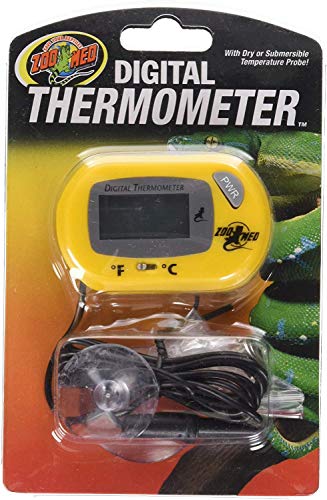
External sensor can go in water

1-【Widely Application】The digital LCD monitor can be used in home, office, garage, schools, hotels, laboratories, kindergartens, aquaculture, instrument workshop, warehouse, reptile tank terrarium, aquarium, hermit crab habitat, and other places where temperature/humidity measurement is required.
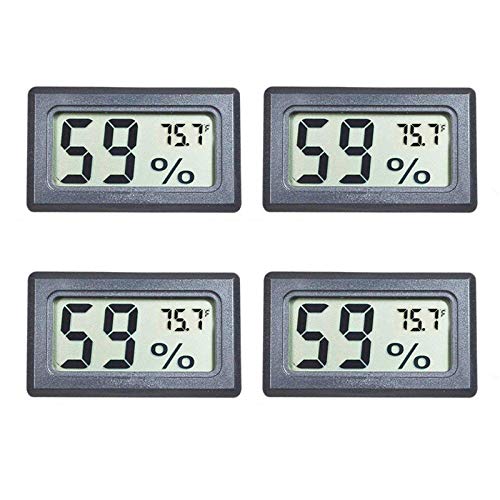
Easy Temperature and Humidity Monitoring: Mini Digital Humidity Thermometer allows you to easily know the temperature and humidity around you