

Quick Answer
Yes, bearded dragons can absolutely live in a bioactive enclosure. A properly designed bioactive setup with the right substrate, cleanup crew, and plant selection creates a self-sustaining ecosystem that reduces maintenance while providing natural enrichment. The key is maintaining low humidity levels (30-40%), using arid-adapted plants, and choosing cleanup crew species that thrive in dry conditions.

DESERT PLANTS THRIVE: Proven for years to accommodate a huge variety of plants from succulents to cacti.

NO CHANGING BioBedding for years when used in combination with microfauna like Springtails and Isopods; saving you time and money

DESERT PLANTS THRIVE: Proven for years to accommodate a huge variety of plants from succulents to cacti.
Key Takeaways
- Bioactive enclosures work well for bearded dragons when designed for arid conditions with proper drainage and low humidity
- Cleanup crews of isopods and springtails safely coexist with bearded dragons and help break down waste naturally
- Initial setup costs $150-$400 depending on tank size, compared to $50-$100 for traditional setups
- Substrate depth of 3-4 inches is ideal, using a mix of organic topsoil, sand, and clay
- Baby bearded dragons can live bioactively but require closer monitoring for proper feeding and hygiene
- Maintenance drops significantly after the first 2-3 months once the ecosystem establishes
- Common mistakes include excessive humidity, wrong substrate choices, and insufficient drainage layers
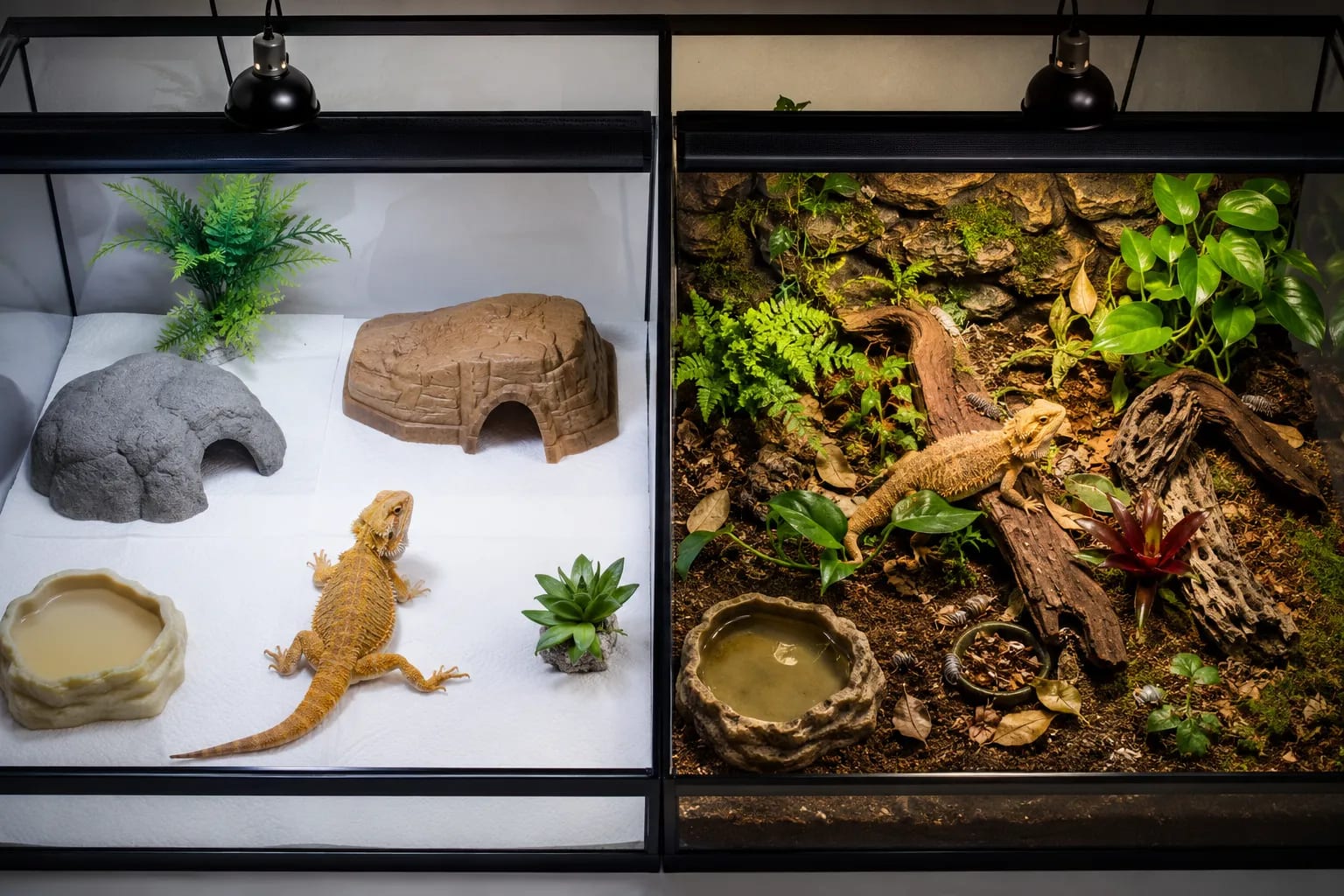
What Is a Bioactive Enclosure for Bearded Dragons?
A bioactive enclosure is a self-sustaining habitat that mimics natural ecosystems using live plants, beneficial microorganisms, and cleanup crew insects. Unlike traditional setups with paper towels or tile, bioactive tanks include layered substrate that supports a living ecosystem where waste breaks down naturally.
The system includes four main components:
- Drainage layer: Clay balls or gravel at the bottom prevent water accumulation
- Substrate layer: 3-4 inches of organic soil mix that supports plant roots and microfauna
- Cleanup crew: Isopods and springtails that consume waste, mold, and decaying matter
- Live plants: Arid-adapted species that provide cover, enrichment, and help regulate the environment
This approach transforms the enclosure from a sterile container into a functioning mini-ecosystem. The cleanup crew continuously processes feces and uneaten food, while plants absorb excess nutrients and provide natural hiding spots. For bearded dragons specifically, the setup must prioritize low humidity and desert-appropriate species, which differs from tropical bioactive setups used for other reptiles.
When properly established, a bioactive enclosure requires far less frequent deep cleaning than traditional setups. Instead of weekly substrate changes, keepers typically only spot-clean and maintain plants. Proper tank size remains important regardless of setup style.
Benefits of Bioactive Setup for Bearded Dragons vs Traditional
Bioactive enclosures offer several advantages over traditional paper towel or tile setups. The most significant benefit is reduced maintenance after the initial establishment period. Once the cleanup crew population stabilizes (usually 2-3 months), waste management becomes largely automated.
Key advantages include:
- Natural waste processing: Isopods and springtails break down feces within 24-48 hours, eliminating odor faster than manual removal
- Behavioral enrichment: Bearded dragons exhibit natural digging, foraging, and exploring behaviors impossible on flat substrates
- Aesthetic appeal: Live plants and natural landscaping create visually stunning displays
- Stable humidity: Properly designed arid bioactive setups maintain consistent 30-40% humidity without spiking
- Cost savings long-term: No recurring substrate replacement costs after initial investment
Traditional setups do have advantages in specific situations. They’re easier to sanitize completely if illness occurs, simpler for beginners to manage, and allow precise monitoring of feces for health checks. Paper towels make it immediately obvious if your dragon has parasites or digestive issues.
The choice often comes down to keeper priorities. If you value naturalistic behavior and reduced daily maintenance, bioactive wins. If you prefer maximum control and simplicity, or you’re managing health issues requiring frequent deep cleaning, traditional setups may be better. Many experienced keepers maintain both types depending on the individual dragon’s needs and overall care requirements.
How Much Does a Bioactive Bearded Dragon Enclosure Cost?
A complete bioactive setup for a bearded dragon typically costs $150-$400 for initial materials, compared to $50-$100 for a traditional setup. The higher upfront investment pays off through eliminated recurring substrate costs and reduced cleaning time.
Detailed cost breakdown:
| Component | Price Range | Notes |
|---|---|---|
| Drainage layer (clay balls) | $15-$30 | Lasts indefinitely |
| Mesh barrier | $5-$10 | One-time purchase |
| Substrate mix (soil, sand, clay) | $30-$60 | 40-gallon tank amount |
| Cleanup crew starter culture | $25-$50 | Reproduces continuously |
| Live plants (3-5 specimens) | $30-$80 | Succulents and desert species |
| Natural décor (rocks, wood) | $20-$60 | Optional but recommended |
| Leaf litter | $10-$20 | Provides food for cleanup crew |
| Springtail culture | $15-$25 | Separate from isopods |
For a standard 40-gallon tank, expect to spend around $200-$250 for quality materials. Larger enclosures (75-120 gallons) can reach $350-$400. You can reduce costs by collecting safe rocks and wood yourself, buying substrate components in bulk, or starting with fewer plants and adding more over time.
Ongoing costs are minimal: You’ll occasionally need to replace plants that die ($10-$20 every few months) and may supplement cleanup crew populations if they crash ($15-$30), but there’s no weekly substrate replacement expense. Over a year, bioactive setups often cost less than traditional ones when you factor in recurring paper towel or tile cleaning supply purchases.
The biggest hidden cost is time during setup. Plan for 4-6 hours to properly layer substrate, plant vegetation, and establish the system. However, this investment saves 10-15 minutes per week in cleaning time once established.
Best Cleanup Crew Insects for Bearded Dragon Bioactive Tank
The ideal cleanup crew for bearded dragon bioactive enclosures consists of arid-adapted isopods and springtails that thrive in low-humidity environments. These species must tolerate the 30-40% humidity and warm temperatures (75-85°F ambient, 95-105°F basking) that bearded dragons require.
Top cleanup crew species:
Isopods (primary waste processors):
- Porcellio scaber (common rough woodlouse): Hardy, reproduces quickly, handles dry conditions well
- Porcellio laevis (dairy cow isopod): Excellent for arid setups, very active waste consumers
- Armadillidium vulgare (pill bug): Tolerates temperature fluctuations, good for beginners
- Porcellio dilatatus: Larger species that processes waste faster, prefers slightly drier conditions
Springtails (mold and microbe control):
- Collembola temperate species: Better for arid environments than tropical varieties
- Sinella curviseta: Tolerates lower humidity, excellent mold prevention
Start with a culture of 25-50 isopods and a separate springtail culture of similar size. They’ll reproduce to match the available food supply (your dragon’s waste). Isopods handle solid waste while springtails consume mold, fungi, and microscopic debris.
Common mistake: Avoid tropical isopod species like Cubaris or Trichorhina that require 60%+ humidity. They’ll struggle in bearded dragon conditions and may die off within weeks. Stick with Porcellio and Armadillidium genera for reliability.
Provide supplemental food for your cleanup crew by adding small amounts of leaf litter, dried leaves, or occasional vegetable scraps in a corner away from the basking area. This ensures they thrive even during periods when your dragon produces less waste.

Do Bearded Dragons Eat the Cleanup Crew Bugs?
Yes, bearded dragons will occasionally eat isopods and springtails, but this is completely safe and actually beneficial. These cleanup crew insects are non-toxic, nutritious, and pose no health risk when consumed. In fact, wild bearded dragons naturally eat similar invertebrates in their native Australian habitat.
Isopods provide calcium and chitin, while springtails offer protein. Your dragon might hunt them opportunistically, especially younger dragons with strong prey drives. However, cleanup crews reproduce quickly enough that occasional predation won’t collapse the population.
What to expect:
- Juvenile bearded dragons (under 6 months) may actively hunt isopods, viewing them as live food
- Adult bearded dragons typically ignore cleanup crews unless very hungry or bored
- Population balance: A healthy cleanup crew reproduces faster than a single dragon can consume them
The key is starting with sufficient population numbers. If you introduce only 10-15 isopods, a hungry juvenile might eat them all before they establish. Starting with 40-50 gives them time to reproduce and spread throughout the substrate where they’re harder to hunt.
Pro tip: Feed your bearded dragon their regular diet of appropriately-sized insects and vegetables consistently. A well-fed dragon has little interest in hunting tiny isopods. If you notice your dragon obsessively hunting cleanup crews, it may indicate underfeeding of their primary diet. Check out proper feeding guidelines to ensure your dragon gets adequate nutrition.
Springtails are so small (1-2mm) that bearded dragons rarely target them intentionally. They might consume a few accidentally while eating substrate-dwelling insects, but this has zero impact on springtail populations.
How to Set Up a Bioactive Enclosure for Bearded Dragon Step by Step
Setting up a bioactive bearded dragon enclosure requires careful layering and patience for the ecosystem to establish. The process takes 4-6 hours initially, plus 4-6 weeks before introducing your dragon to allow the cleanup crew to colonize.
Step-by-step setup process:
1. Prepare the drainage layer (bottom 1-2 inches)
- Add expanded clay balls, lava rock, or large gravel to the tank bottom
- This prevents water accumulation and root rot
- Create a slight slope toward one corner for drainage
2. Install mesh barrier
- Cut fiberglass window screen or weed barrier fabric to fit tank dimensions
- Place over drainage layer to prevent substrate from filtering down
- Overlap edges by 2-3 inches if using multiple pieces
3. Mix and add substrate (3-4 inches deep)
- Combine 40% organic topsoil (no fertilizers or additives), 40% play sand, 20% excavator clay
- Moisten slightly until it holds shape when squeezed but isn’t muddy
- Add in layers, compacting gently to prevent future settling
- Create varied topography with hills and valleys for visual interest
4. Install hardscape elements
- Position rocks, driftwood, and cork bark before planting
- Ensure basking platforms are stable and won’t shift
- Create hiding spots and climbing opportunities
5. Plant live vegetation
- Choose arid-adapted species: aloe vera, haworthia, echeveria, prickly pear cactus (spines removed), snake plants
- Plant in substrate, ensuring roots reach deep enough for stability
- Space plants to allow dragon movement between them
6. Add leaf litter and hides
- Scatter oak, magnolia, or other safe dried leaves across substrate surface
- This provides food and hiding spots for cleanup crew
- Add at least one hide on the cool side
7. Introduce cleanup crew
- Add isopod culture (40-50 individuals) to multiple spots in substrate
- Add springtail culture near leaf litter and under hides
- Lightly mist one corner to create a moisture gradient
8. Establish the ecosystem (4-6 weeks)
- Run lights and heating on normal schedule
- Monitor humidity (should stay 30-40%)
- Add small amounts of vegetable scraps weekly to feed cleanup crew
- Watch for isopod reproduction (tiny white babies)
9. Final check before dragon introduction
- Verify temperatures: 95-105°F basking, 75-85°F cool side
- Confirm humidity stays below 45%
- Ensure plants are rooted and stable
- Check that cleanup crew is active and reproducing
Common mistake: Don’t introduce your bearded dragon immediately after setup. The cleanup crew needs time to establish population numbers and spread throughout the substrate. Introducing a dragon too early means they’ll eat most of the crew before they reproduce, defeating the purpose of bioactive.
For more details on proper tank setup, including heating and lighting requirements that apply to both bioactive and traditional enclosures, check our comprehensive guides.
Can Baby Bearded Dragons Live in Bioactive Enclosures?
Yes, baby bearded dragons can live in bioactive enclosures, but they require extra monitoring during the first few months. The main concerns are ensuring proper feeding, preventing impaction from substrate ingestion, and maintaining hygiene standards for their more vulnerable immune systems.
Baby bearded dragons (0-6 months) have different needs than adults. They eat 2-3 times daily, produce more frequent waste, and are more prone to hunting cleanup crew insects instead of their intended feeder insects. These factors make bioactive setups slightly more challenging but still manageable with proper precautions.
Best practices for baby beardies in bioactive:
- Feed in a separate container for the first 3-4 months to prevent substrate ingestion while eating
- Use finer substrate particles mixed with more clay content to reduce impaction risk if ingested
- Start with larger cleanup crew populations (60-80 isopods) since babies will hunt them more actively
- Monitor feces closely for the first month to ensure the cleanup crew is processing waste adequately
- Provide multiple shallow water dishes to maintain small humid microclimates for cleanup crew without raising overall humidity
The biggest advantage of starting babies in bioactive is behavioral development. Young dragons raised in naturalistic environments show more diverse behaviors, better muscle development from climbing and digging, and often transition to adult diets more smoothly.
When to avoid bioactive for babies:
- If the baby shows signs of illness or parasites (treat in a sterile quarantine setup first)
- If you’re a first-time keeper still learning basic care requirements
- If the baby is underweight or recovering from poor conditions
Many breeders and experienced keepers successfully raise babies bioactively from hatching. The key is vigilance during the first 8-12 weeks while the dragon’s immune system strengthens and feeding routines stabilize. After that period, bioactive maintenance becomes easier than traditional setups.
For more information on caring for baby bearded dragons, including feeding schedules and growth expectations, explore our detailed guides.
Problems with Bioactive Enclosures for Bearded Dragons
While bioactive setups offer many benefits, they come with specific challenges that keepers should understand before committing. The most common issues involve humidity management, initial complexity, and troubleshooting ecosystem imbalances.
Primary challenges:
Humidity spikes: The biggest problem for bearded dragons in bioactive setups is maintaining sufficiently low humidity. Moist substrate can raise humidity to 50-60%, which promotes respiratory infections in bearded dragons. Solutions include increasing ventilation, using coarser substrate that dries faster, and positioning water dishes away from the basking area.
Mold growth: During the first 2-4 weeks, white or gray mold often appears on leaf litter and wood. This is normal and actually beneficial, springtails will consume it. However, excessive mold indicates too much moisture. Reduce misting and increase airflow if mold spreads to substrate surface.
Cleanup crew die-offs: If humidity drops too low (below 25%) or temperatures exceed 95°F in cool areas, isopods and springtails may die. Create a moisture gradient by keeping one corner slightly damper with buried water dishes or moist sphagnum moss pockets.
Plant death: Desert plants can still die from overwatering, insufficient light, or being crushed by your dragon. Expect to replace 1-2 plants every few months. Choose hardy species like snake plants and aloe that tolerate neglect.
Difficulty diagnosing health issues: In bioactive setups, cleanup crews consume feces quickly, making it harder to monitor your dragon’s digestive health. Check feces daily before the crew processes them, especially if you suspect parasites or digestive problems.
Higher initial complexity: Bioactive setups require more research, planning, and upfront work than traditional enclosures. First-time reptile keepers may find the learning curve steep.
Parasite concerns: While rare, there’s theoretical risk of parasites cycling through substrate and cleanup crew. This is primarily a concern if you introduce wild-caught insects or contaminated materials. Use captive-bred cleanup crews and sterilize any outdoor materials (bake wood at 200°F for 30 minutes).
Cost of failure: If the ecosystem crashes (cleanup crew dies, plants fail, mold overwhelms), you may need to tear down and restart the entire setup, wasting the initial $200-$400 investment.
Most problems are preventable with proper planning and monitoring during the first 2-3 months. Once established, bioactive systems are remarkably stable and require less intervention than traditional setups.

2 Pieces Plants - The package contains two plants. The length dimension is 33.1 inches. Plants is made with plastic and soft silk leaves, clear texture and bright color, safe and durable, creates a fun & dynamic hiding spot and climbing for reptile amphibians.
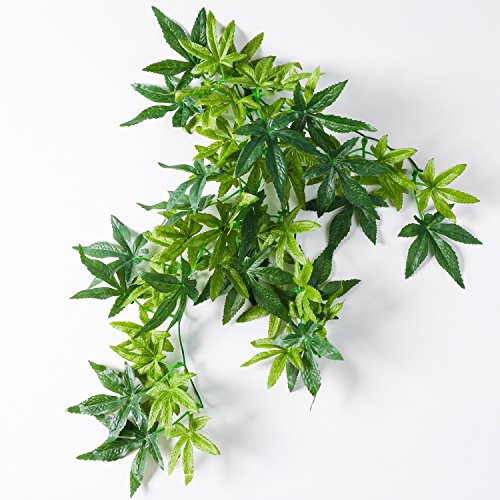
REPTILE HABITAT PLANTS DECORATIONS :this plastic terrarium plant is designed to replicate the plants that your pet would find in nature. The lifelike decor not only makes your habitat more vibrant and colorful, but it also gives your reptiles,bearded dragon, iguana, lizard,snake or turtle a sense of being at home in the wild.

Abundant Tank Accessories Set: Package comes with 9 pieces including 1 bearded dragon hammock, 1 flexible bendable bridge, 1 hanging plant, 1 reptile vine, 1 leaves, and 4 stand plants to help you create a vibrant and colorful habitat for your reptile
Is Bioactive Too Humid for Bearded Dragons?
Bioactive enclosures can be too humid for bearded dragons if not designed specifically for arid conditions, but proper setup techniques keep humidity in the safe 30-40% range. The key is using fast-draining substrate, adequate ventilation, and avoiding tropical bioactive methods designed for rainforest species.
Bearded dragons are native to arid and semi-arid regions of Australia where humidity rarely exceeds 40%. Prolonged exposure to 50%+ humidity can cause respiratory infections, skin problems, and stress. Many keepers worry that any moist substrate will spike humidity dangerously high.
How to maintain proper humidity in bioactive:
- Use coarse substrate mix: More sand and less organic matter means faster drying
- Ensure excellent ventilation: Screen tops are essential; glass lids trap moisture
- Limit misting: Only lightly mist one small corner 1-2 times weekly for cleanup crew, never the entire enclosure
- Position water dishes strategically: Place on the cool side, away from basking areas, and use shallow dishes that minimize evaporation
- Monitor with hygrometer: Place one on the cool side and one on the warm side to track humidity gradients
- Increase basking temperature slightly: 100-105°F basking spots help dry substrate faster
- Use deeper substrate: 4 inches allows the top 2 inches to dry completely while bottom layers retain slight moisture for cleanup crew
Humidity gradient approach: The best bioactive setups create a moisture gradient. The surface and basking area stay dry (25-35% humidity), while the bottom 1-2 inches of substrate near the drainage layer maintains slightly higher moisture (40-50%) where cleanup crews congregate. Your dragon spends most time on the dry surface, while the crew thrives in the damper lower layers.
If you measure humidity consistently above 45% in the basking area, troubleshoot immediately:
- Increase ventilation (add more screen openings)
- Reduce misting frequency
- Remove excess leaf litter that holds moisture
- Check for water dish spills or leaks
- Consider adding a small fan to increase air circulation
Compare to traditional setups: Interestingly, properly designed bioactive enclosures often maintain more stable humidity than traditional setups with water bowls on tile. The substrate acts as a buffer, absorbing excess moisture rather than letting it evaporate directly into the air.
What Substrate to Use in Bearded Dragon Bioactive Setup
The ideal substrate for bearded dragon bioactive enclosures is a custom mix of organic topsoil, play sand, and excavator clay in roughly 40:40:20 ratio. This combination provides drainage, supports plant growth, allows natural digging behavior, and maintains the arid conditions bearded dragons require.
Recommended substrate components:
Organic topsoil (40%):
- Use additive-free, fertilizer-free topsoil from garden centers
- Provides nutrients for plants and food for microfauna
- Brands: Scott’s Premium Topsoil, Timberline Topsoil (check ingredients)
- Avoid Miracle-Gro or fertilized products
Play sand (40%):
- Standard children’s play sand from hardware stores
- Increases drainage and mimics natural desert substrate
- Rinse before use to remove dust
- Avoid calcium sand or “vita-sand” products
Excavator clay (20%):
- Allows substrate to hold burrow shapes
- Prevents excessive shifting and settling
- Zoo Med Excavator Clay or ReptiSand work well
- Can substitute with pure bentonite clay powder
Optional additions:
- 5-10% coconut coir for moisture retention in cleanup crew zones
- Crushed walnut shells (small amounts) for texture variation
- Sphagnum moss buried in one corner for isopod moisture refuge
Mixing instructions:
- Combine dry ingredients in a large container or tub
- Add water gradually while mixing until substrate holds shape when squeezed but crumbles easily
- Aim for “sandcastle consistency”, too wet causes compaction, too dry won’t support burrows
- Let sit 24 hours before adding to enclosure to allow moisture to distribute evenly
Depth requirements: Use 3-4 inches minimum for bioactive function. Shallower substrate doesn’t provide enough space for cleanup crew populations and root development. Deeper substrate (5-6 inches) works well for larger enclosures and allows more dramatic landscaping.
What to avoid:
- Pure sand (doesn’t support plants or cleanup crew)
- Reptile carpet (not bioactive-compatible)
- Calcium sand (causes impaction, doesn’t support ecosystem)
- Cedar or pine shavings (toxic to reptiles)
- Peat moss as primary component (too acidic, retains too much moisture)
The substrate mix should feel slightly damp in the bottom inch but dry on the surface within 2-3 hours of misting. If the surface stays wet longer, add more sand to improve drainage. If it dries within 30 minutes, add slightly more organic matter.
How Often Do You Clean a Bioactive Bearded Dragon Tank?
Bioactive bearded dragon enclosures require minimal cleaning compared to traditional setups. After the initial 2-3 month establishment period, you’ll only need to spot-clean daily and perform light maintenance monthly, with no full substrate changes required for 1-2 years.
Cleaning schedule for established bioactive:
Daily (2-3 minutes):
- Remove any uneaten food items before they rot
- Spot-clean any feces the cleanup crew hasn’t processed yet (usually only fresh droppings)
- Check water dish and refill as needed
- Quick visual check for mold overgrowth or dead plants
Weekly (5-10 minutes):
- Remove dead leaves or plant matter
- Lightly mist one corner for cleanup crew (if humidity is low)
- Wipe down glass/acrylic walls
- Check that hides and décor remain stable
Monthly (15-20 minutes):
- Trim or remove overgrown plants
- Add leaf litter if supply is depleted
- Check cleanup crew population (should see isopods when you lift décor)
- Inspect substrate depth and add more if settling has occurred
- Clean and disinfect water dish thoroughly
Every 3-6 months (30 minutes):
- Replace any dead plants
- Rearrange décor for enrichment
- Add supplemental food for cleanup crew if population seems low
- Deep clean glass and remove any mineral deposits
Every 1-2 years (4-6 hours):
- Complete substrate replacement if it becomes depleted or contaminated
- This is the only “deep clean” required for bioactive systems
- Save some old substrate to seed the new setup with established microfauna
Compare to traditional cleaning:
Traditional setups require complete substrate changes weekly (paper towels) or thorough disinfection weekly (tile), taking 15-30 minutes each time. Over a year, traditional setups demand 13-26 hours of cleaning versus 3-5 hours for bioactive.
When to deep clean immediately:
- If your dragon contracts parasites (requires sterilization)
- If mold overwhelms the system despite increased ventilation
- If cleanup crew population crashes completely
- If substrate develops foul odor (indicates anaerobic bacteria)
The reduced cleaning frequency is possible because the cleanup crew continuously processes waste, breaking it down into nutrients that plants absorb. This creates a balanced cycle that maintains itself with minimal intervention. However, bioactive doesn’t mean “no maintenance”, it means different, less frequent maintenance focused on ecosystem balance rather than sterilization.
Are Isopods and Springtails Safe for Bearded Dragons?
Yes, isopods and springtails are completely safe for bearded dragons and pose no health risks whether consumed, touched, or living in the same enclosure. These cleanup crew organisms are non-toxic, non-parasitic, and actually provide nutritional benefits if eaten.
Isopods are terrestrial crustaceans (related to shrimp and crabs) that feed on decaying organic matter. Springtails are tiny hexapods that consume mold and fungi. Neither species bites, stings, or carries diseases transmissible to reptiles. In fact, both are commonly used as supplemental feeder insects in some reptile keeping communities.
Safety profile:
Nutritional value if consumed:
- Isopods provide calcium (their exoskeleton is calcium carbonate), protein, and chitin
- Springtails offer protein and are too small to cause impaction
- Both are more nutritious than many commercial feeder insects
No disease transmission:
- Captive-bred cleanup crews are parasite-free
- They don’t host or transmit reptile-specific pathogens
- Cannot carry salmonella to humans (though bearded dragons can)
No physical harm:
- Isopods cannot bite or pinch bearded dragons
- Springtails are too small (1-2mm) to cause any physical interaction
- Neither species is aggressive or defensive
Environmental safety:
- Both species help prevent harmful bacteria by consuming waste quickly
- Springtails prevent mold overgrowth that could cause respiratory issues
- They improve substrate quality by aerating and processing organic matter
The only precaution: Always purchase cleanup crews from reputable reptile supply companies rather than collecting wild specimens. Wild-caught isopods and springtails may carry pesticides, parasites, or pathogens from their outdoor environment. Captive-bred cultures are guaranteed clean and safe.
Some keepers worry that isopods might nibble on their dragon while sleeping, but this is unfounded. Isopods are detritivores (they eat dead organic matter) and have no interest in living tissue. They’ll only consume shed skin after it’s been discarded, which actually helps keep the enclosure clean.
If your bearded dragon has an open wound, it’s theoretically possible for isopods to be attracted to it, but this would only occur with severe neglect. Healthy dragons with intact skin have zero risk from cleanup crew interactions.
Common Mistakes When Making Bioactive Bearded Dragon Enclosure
Even experienced reptile keepers make predictable errors when transitioning to bioactive setups for bearded dragons. Understanding these common pitfalls helps you avoid costly failures and ensures your ecosystem thrives from the start.
Top mistakes and how to avoid them:
1. Using tropical bioactive methods
Many bioactive guides focus on rainforest species like dart frogs or crested geckos. Applying those high-humidity techniques to bearded dragons causes respiratory infections. Always design for arid conditions with less organic matter and more drainage.
2. Insufficient drainage layer
Skipping or skimping on the drainage layer (using less than 1 inch) causes water to pool at the bottom, creating anaerobic conditions that kill cleanup crews and rot plant roots. Always use 1.5-2 inches of clay balls or lava rock.
3. Introducing the dragon too early
Adding your bearded dragon before the cleanup crew establishes (minimum 4 weeks) means they’ll eat most of the isopods before they reproduce. Wait until you see baby isopods (tiny white specks) before introducing your dragon.
4. Wrong plant choices
Tropical plants like pothos or ferns require too much water and raise humidity. Stick with succulents, cacti (spines removed), and desert-adapted species that thrive in dry conditions.
5. Over-misting
Many keepers mist daily out of habit from other reptile care. Bearded dragon bioactive setups need misting only 1-2 times weekly in one small corner. Over-misting spikes humidity and promotes mold.
6. Inadequate cleanup crew population
Starting with only 10-15 isopods isn’t enough for a 40-gallon tank. Begin with 40-50 isopods and a robust springtail culture to ensure they establish before predation pressure from your dragon.
7. Poor ventilation
Using glass lids or insufficient screen area traps humidity. Bearded dragon bioactive enclosures need full screen tops or multiple ventilation points to maintain air circulation.
8. Ignoring temperature gradients
Placing heat sources incorrectly can create hot spots that kill cleanup crews or cold zones where plants fail. Ensure the cool side stays 75-85°F and basking reaches 95-105°F without overheating the entire substrate.
9. Not monitoring humidity
Assuming humidity is fine without measuring leads to problems. Use digital hygrometers on both warm and cool sides to track conditions accurately. Adjust ventilation or misting based on readings, not guesswork.
10. Expecting immediate results
Bioactive systems take 2-3 months to fully establish. During this period, you may see mold, plant die-off, or slow waste processing. This is normal. Resist the urge to tear down and restart unless there’s a serious problem like foul odors or complete cleanup crew death.
11. Using fertilized or treated soil
Garden soil with added fertilizers, pesticides, or moisture-retention crystals can poison your dragon and cleanup crew. Only use organic topsoil with no additives, or purchase reptile-safe substrate mixes.
12. Neglecting the cleanup crew’s needs
Isopods and springtails need food beyond just dragon waste. Add leaf litter, occasional vegetable scraps, and ensure one area stays slightly moist for them to thrive. A healthy cleanup crew is essential for system function.
Learning from these mistakes saves time, money, and frustration. Most failed bioactive attempts result from rushing the process or not adapting techniques specifically for bearded dragons’ arid requirements. Take your time during setup, monitor conditions closely for the first few months, and adjust as needed.
Bioactive vs Non-Bioactive: Which Is Better for Bearded Dragons?
The choice between bioactive and traditional setups depends on your priorities, experience level, and specific situation. Neither is universally “better”, each excels in different circumstances and for different keeper goals.
Choose bioactive if:
- You want reduced long-term maintenance (after initial establishment)
- You value naturalistic behavior and enrichment for your dragon
- You enjoy the aesthetic of planted, natural-looking enclosures
- You’re willing to invest time in learning ecosystem management
- Your dragon is healthy with no ongoing medical issues
- You have experience with basic bearded dragon care already
- You’re committed to monitoring humidity and making adjustments
Choose traditional (paper towel/tile) if:
- You’re a first-time bearded dragon keeper still learning basics
- Your dragon has health issues requiring frequent feces monitoring
- You need to quarantine a new dragon or treat parasites
- You prefer maximum control and simplicity
- You want the lowest possible upfront cost
- You’re uncomfortable with insects in the enclosure
- You need to move or transport the setup frequently
Side-by-side comparison:
| Factor | Bioactive | Traditional |
|---|---|---|
| Initial cost | $150-$400 | $50-$100 |
| Setup time | 4-6 hours + 4-6 weeks establishment | 30 minutes |
| Weekly maintenance | 10-15 minutes | 20-30 minutes |
| Aesthetic appeal | High (natural, planted) | Low to moderate |
| Behavioral enrichment | Excellent (digging, foraging) | Minimal |
| Health monitoring | Moderate difficulty | Easy (feces visible) |
| Humidity risk | Moderate (requires monitoring) | Low |
| Longevity | 1-2 years before substrate change | Weekly substrate changes |
| Best for beginners | No | Yes |
Hybrid approach: Some keepers use traditional setups for juveniles and quarantine situations, then transition to bioactive once the dragon reaches adulthood and establishes good health. This combines the monitoring benefits of traditional setups during vulnerable periods with the enrichment benefits of bioactive for healthy adults.
Long-term considerations: Over the lifespan of a bearded dragon (8-15 years in captivity), bioactive setups save significant time and money despite higher initial costs. A traditional setup requires approximately 1,000-1,500 substrate changes over a decade, while bioactive needs only 5-10 complete overhauls.
The “better” choice ultimately aligns with your goals. If you view reptile keeping as a hobby that includes ecosystem management and naturalistic husbandry, bioactive is rewarding and practical. If you prefer straightforward, predictable care routines with minimal variables, traditional setups work perfectly well and millions of healthy bearded dragons thrive in them.
Many experienced keepers maintain both types depending on individual dragon needs. A breeding female might get a bioactive setup for enrichment, while a rescue dragon with unknown health history starts in a sterile traditional setup until cleared by a vet. There’s no wrong choice, only the right choice for your specific situation.
Frequently Asked Questions
How long does it take for a bioactive bearded dragon enclosure to establish?
A bioactive enclosure takes 4-6 weeks to establish before introducing your bearded dragon. During this time, the cleanup crew colonizes the substrate, plants root properly, and the microbial ecosystem develops. You’ll know it’s ready when you see baby isopods and springtails actively moving through the substrate.
Can I use sand alone as substrate in a bioactive setup?
No, pure sand doesn’t support bioactive function because it lacks nutrients for plants and cleanup crews, and doesn’t retain any moisture for isopods and springtails. You need a mix of sand (40%), organic topsoil (40%), and clay (20%) to create a functional ecosystem while maintaining proper drainage.
Will bioactive substrate cause impaction in bearded dragons?
Properly mixed bioactive substrate (topsoil, sand, and clay) poses minimal impaction risk when dragons are properly hydrated and fed appropriate-sized prey. The risk is lower than pure sand because the organic matter breaks down more easily if ingested. Feed in a separate dish if concerned, especially for juveniles.
How do I know if my cleanup crew is still alive and working?
Lift décor items or gently dig in a corner of the substrate to check for isopods. You should see them scurrying away from light. Springtails are harder to spot but you’ll see them as tiny white specks jumping on moist surfaces. If waste disappears within 24-48 hours, your crew is functioning properly.
Can I add live plants later to an existing traditional setup?
Yes, but you’ll need to add appropriate substrate depth (3-4 inches) to support plant roots, which means essentially converting to bioactive. You can’t successfully plant in paper towels or tile. It’s easier to start fresh with proper layering than to retrofit an existing traditional setup.
What do I do if mold appears in my bioactive enclosure?
White or gray mold during the first month is normal and beneficial, springtails will consume it. If mold spreads excessively or turns black/green, increase ventilation, reduce misting, and ensure your cleanup crew population is adequate. Remove any rotting food immediately.
Do I need to add more isopods over time?
Usually no. A healthy population reproduces continuously to match available food (your dragon’s waste). Only add more if you notice population crash (no isopods visible, waste not being processed) due to environmental issues like excessive heat or extreme dryness.
Can I use fake plants instead of live ones in bioactive?
Fake plants don’t contribute to the ecosystem but won’t harm it. However, they don’t absorb excess nutrients, provide oxygen, or create the full naturalistic environment. If you struggle with live plants, start with extremely hardy species like snake plants or aloe rather than using artificial ones.
How do I maintain proper humidity with live plants that need water?
Choose desert-adapted plants (succulents, cacti, snake plants) that thrive on minimal water. Water plants individually with a spray bottle or syringe directed at roots rather than misting the entire enclosure. This keeps plants healthy while maintaining low ambient humidity.
Is bioactive safe for bearded dragons with a history of parasites?
Wait until parasites are completely cleared (confirmed by fecal tests) before using bioactive. During treatment, keep the dragon in a sterile traditional setup for easy cleaning and monitoring. Once cleared for 2-3 months, you can safely transition to bioactive.
What’s the minimum tank size for bioactive setup?
A 40-gallon tank is the practical minimum for bioactive, though it’s possible in smaller enclosures. Larger tanks (75-120 gallons) work better because they provide more space for ecosystem balance and are easier to maintain stable conditions. Check our guide on appropriate tank sizes for more details.
Can I use bioactive for a bearded dragon that eats a lot of vegetables?
Yes, and it may actually work better. Vegetable-eating dragons produce waste that cleanup crews process easily. Just remove uneaten vegetables daily before they rot, as decomposing produce can cause mold issues and attract fruit flies.
Conclusion
Bearded dragons absolutely can thrive in bioactive enclosures when the setup is designed specifically for their arid requirements. The key is maintaining low humidity (30-40%), using appropriate substrate mixes, choosing desert-adapted plants, and establishing a robust cleanup crew of isopods and springtails before introducing your dragon.
While bioactive setups require higher initial investment ($150-$400) and more planning than traditional enclosures, they offer significant long-term benefits: reduced maintenance, natural behavioral enrichment, and aesthetic appeal. The system becomes largely self-sustaining after 2-3 months, requiring only spot-cleaning and light monthly maintenance rather than weekly substrate changes.
Your next steps:
- Assess your situation: Determine if bioactive fits your experience level, budget, and dragon’s health status
- Research and plan: Spend time understanding arid bioactive principles before purchasing materials
- Gather quality materials: Invest in proper substrate components, appropriate cleanup crew species, and desert plants
- Take your time during setup: Don’t rush the layering process or establishment period
- Monitor closely for 3 months: Track humidity, temperature, and cleanup crew activity while making adjustments
- Join bioactive communities: Connect with other keepers for troubleshooting and advice
Whether you choose bioactive or traditional setup, the most important factor is meeting your bearded dragon’s core needs: proper temperatures, UVB lighting, appropriate diet, and adequate space. Bioactive is a tool for enrichment and convenience, not a requirement for keeping healthy dragons. Choose the approach that aligns with your goals and capabilities, and your bearded dragon will thrive.
For more guidance on creating the perfect environment for your bearded dragon, explore our comprehensive resources on bearded dragon care and habitat setup.

Effective Clean-Up Crew: These industrious isopods play an essential role in maintaining a healthy terrarium by breaking down leaf litter, decaying food, and other organic matter, preventing the accumulation of waste and promoting a thriving environment for plants and animals


Great for isopod keepers, bioactive terrarium fans, reptile enclosure builders, and anyone who manages a tiny cleanup crew.


