

Quick Answer
Bonding with your bearded dragon requires patience, consistency, and understanding of reptile behavior. Start by spending time near their enclosure without handling, then gradually introduce short handling sessions of 5-10 minutes once they show calm body language. Most bearded dragons begin showing trust within 2-4 weeks of daily interaction, though adult rescues may take several months. The key is reading their stress signals and never forcing interaction when they display defensive behaviors like beard puffing or arm waving.
🛡️Ultimate Protection for Handlers : The Hedgehog Anti-Scratch Gloves offer unparalleled safety during small animal handling, ensuring a secure shield against bites and...
Key Takeaways
- Bonding takes time: Expect 2-4 weeks for juveniles, 2-6 months for adults, depending on their history and temperament
- Start slow: Begin with presence near the tank before attempting to handle your dragon
- Read body language: Relaxed posture, normal coloring, and calm breathing indicate readiness for interaction
- Handle daily but briefly: 10-15 minute sessions once or twice daily build trust without causing stress
- Use positive associations: Hand-feeding treats creates positive connections with your presence
- Respect boundaries: Puffed beards, darkened coloring, and hissing mean back off immediately
- Adult dragons bond too: Older bearded dragons can form strong bonds, though they may need more time than babies
- Recognition is real: Research shows bearded dragons can distinguish their owners from strangers through visual and scent cues
- Consistency matters: Regular interaction at similar times helps your dragon anticipate and accept handling
- Environment affects bonding: A properly set-up habitat with correct temperatures and lighting reduces stress and improves receptiveness
What Does Bonding With a Bearded Dragon Mean?
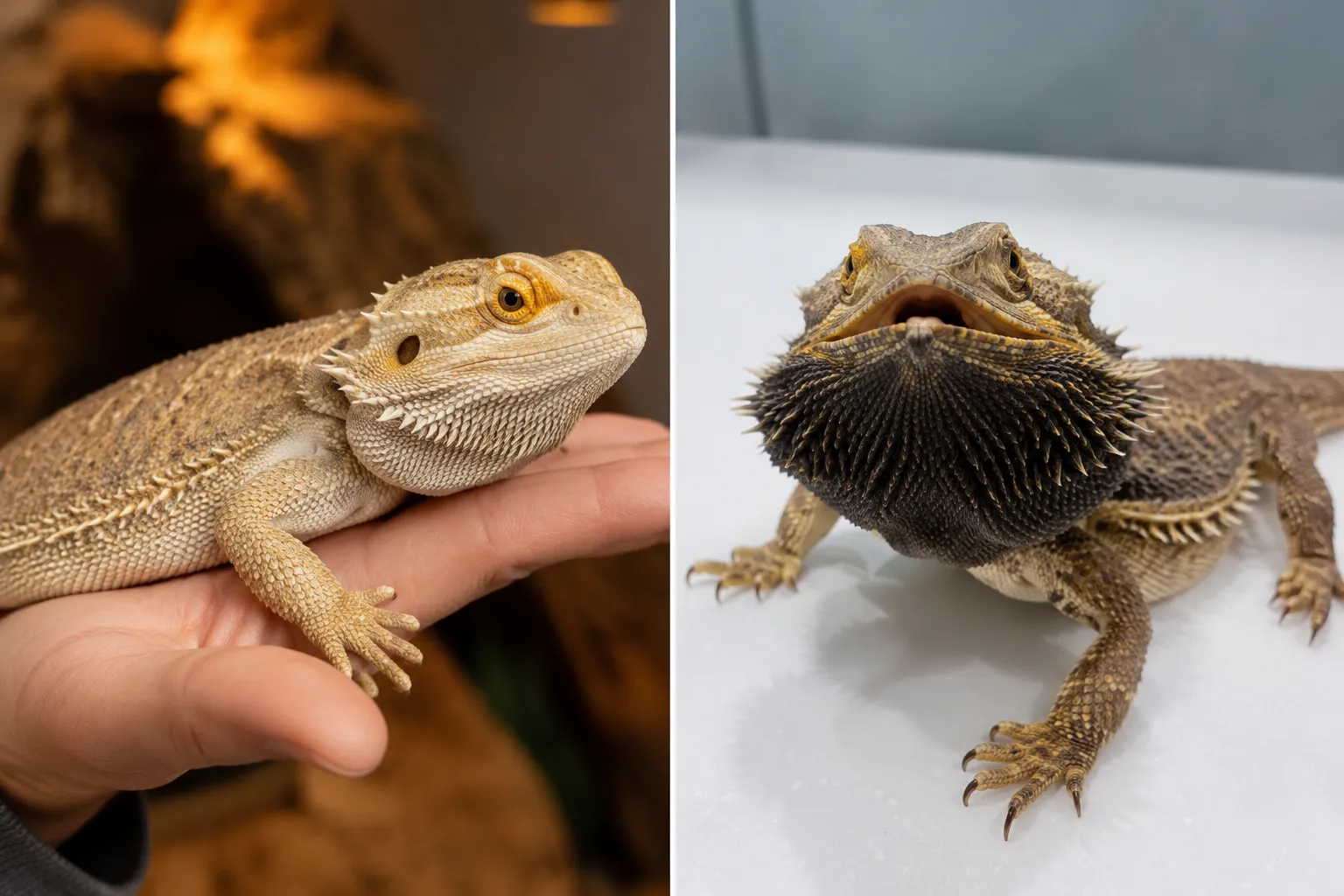
Bonding with a bearded dragon means building a relationship where your reptile tolerates and eventually seeks out interaction with you, showing reduced stress responses during handling and recognizing you as a safe presence. Unlike mammals, bearded dragons don’t form emotional attachments in the traditional sense, but they do learn to associate specific people with positive experiences like food, warmth, and safety.
A bonded bearded dragon will:
- Remain calm when you approach their enclosure
- Allow handling without defensive displays
- Maintain normal coloring and relaxed body posture around you
- Sometimes approach the glass when they see you
- Tolerate being held for extended periods without stress signs
What bonding is NOT: Bearded dragons won’t cuddle like dogs or seek affection for emotional comfort. They’re solitary reptiles that tolerate handling when they feel safe, not because they crave social interaction. Understanding this distinction helps set realistic expectations for your relationship.
The bonding process teaches your dragon that you’re not a predator and that interaction with you leads to positive outcomes. This learned trust forms the foundation of your relationship and makes routine care like health checks and tank cleaning much easier.
How Long Does It Take to Bond With a Bearded Dragon?
Bonding typically takes 2-4 weeks for juvenile bearded dragons with consistent daily interaction, while adult dragons or rescues may require 2-6 months depending on their previous experiences and individual temperament. The timeline varies significantly based on the dragon’s age, personality, handling history, and how consistently you work with them.
Timeline breakdown:
- Week 1-2: Acclimation period where your dragon adjusts to their new environment; minimal handling recommended
- Week 3-4: Begin short handling sessions; most juveniles start showing reduced stress responses
- Month 2-3: Increased comfort with regular handling; dragon may begin approaching when they see you
- Month 4-6: Strong bond established with adult rescues or particularly shy individuals
Factors that speed up bonding:
- Starting with a young dragon (8-12 weeks old)
- Previous positive handling experiences from the breeder
- Calm household environment with minimal loud noises
- Consistent daily interaction at similar times
- Using food rewards during handling sessions
Factors that slow bonding:
- Adult dragons from pet stores with unknown handling history
- Previous negative experiences or rough handling
- Frequent household disruptions or multiple handlers
- Inconsistent interaction schedules
- Health issues causing discomfort
Choose patience over speed. Rushing the process by forcing interaction when your dragon shows stress signals will damage trust and extend the bonding timeline significantly. Some dragons naturally have more docile temperaments and bond quickly, while others remain more aloof throughout their lives, both are normal.
Best Activities to Do With Your Bearded Dragon to Build Trust
The most effective trust-building activities include hand-feeding, supervised exploration outside the enclosure, and calm handling sessions that let your dragon set the pace. These activities create positive associations with your presence while respecting your dragon’s comfort level.
Hand-feeding (most effective):
Hand-feeding is the single best bonding tool because it associates your presence with something your dragon values highly, food. Start by offering favorite treats like hornworms or blueberries from your palm or tongs held close to your hand.
- Begin with tongs if your dragon is very skittish
- Gradually transition to offering food from your flat palm
- Use high-value treats reserved specifically for bonding time
- Practice daily during their most active feeding periods
Supervised exploration:
Allow your dragon to explore a safe, enclosed space while you sit nearby. This lets them investigate you on their terms without feeling trapped.
- Use a dragon-proofed room or large playpen
- Sit on the floor and let them approach you
- Avoid sudden movements or reaching toward them
- Sessions of 15-20 minutes work well
Gentle handling progression:
Start with brief handling sessions and gradually increase duration as your dragon’s comfort grows.
- Week 1-2: Simply rest your hand in the enclosure for 5 minutes daily
- Week 3-4: Scoop from below (never grab from above) for 5-minute holds
- Week 5-6: Extend to 10-15 minute sessions with gentle movement
- Week 7+: Incorporate walking around the house, sitting together while you watch TV
Bath time bonding:
Lukewarm baths (85-90°F) in a shallow container provide a neutral bonding environment. Many dragons relax in water, making it easier to interact calmly. Stay present during the entire bath and speak softly to create positive associations.
Common mistake: Doing too much too soon. If your dragon shows stress during any activity (darkened beard, rapid breathing, attempts to flee), end the session immediately and try again the next day with a less intense approach.
How Often Should I Handle My Bearded Dragon for Bonding?
Handle your bearded dragon once or twice daily for 10-15 minutes during the bonding phase, then maintain this routine 4-5 times weekly once trust is established. Consistency matters more than duration, short daily sessions build trust faster than infrequent long sessions.
Optimal handling schedule:
- Morning or early evening: Handle during their active periods, never right after waking or before sleep
- After they’ve warmed up: Wait 30-60 minutes after lights come on so they reach optimal body temperature
- Before feeding: Hungry dragons are more motivated to interact, but avoid handling immediately after large meals
Session length guidelines:
- Week 1-2: 5 minutes maximum
- Week 3-4: 10-15 minutes
- Week 5+: 15-30 minutes
- Established bond: 30-60 minutes as tolerated
Signs you’re handling too much:
- Persistent stress coloring (darkened beard, dark markings)
- Decreased appetite
- Lethargy or excessive sleeping
- Aggressive responses that weren’t present before
- Attempts to hide when you approach
Signs you’re not handling enough:
- No progress in comfort level after 3-4 weeks
- Dragon remains skittish or defensive
- No recognition of you versus strangers
- Difficulty performing routine care tasks
Balance is critical. Under-handling prevents bonding, while over-handling causes chronic stress that damages trust. Watch your individual dragon’s responses and adjust accordingly, some dragons genuinely enjoy longer interaction periods, while others prefer brief but frequent contact.

Signs That Your Bearded Dragon Trusts You and Feels Bonded
A bonded bearded dragon displays relaxed body language during handling, maintains normal coloring in your presence, and may actively approach the glass when they see you. These behavioral indicators show your dragon has learned to associate you with safety rather than threat.
Clear trust indicators:
- Calm acceptance of handling: No puffing, hissing, or attempts to flee when you reach into the enclosure
- Normal coloring: Beard and body remain their usual colors, not darkened or stressed
- Relaxed posture: Body flat against your hand or arm, not rigid or attempting to jump
- Slow, controlled breathing: No rapid chest movements or gaping mouth
- Comfortable eye closure: Briefly closing eyes while being held (not to be confused with stress-induced eye closing)
- Approaching behavior: Moving toward the front glass when you enter the room
- Feeding readily: Eating normally in your presence or from your hand
Advanced bonding signs:
- Falling asleep on you during handling sessions
- Remaining calm during necessary but uncomfortable procedures (nail trims, baths)
- Distinguishing you from strangers and showing preference for your handling
- Seeking out your hand for climbing or perching
- Tolerating gentle head or chin rubs without pulling away
What’s NOT a bonding sign:
- Arm waving: This is submissive behavior, not affection
- Head bobbing: Usually territorial or mating behavior, not a greeting
- Licking: Sensory exploration, not “kisses”
- Staying still: Could be fear-based freezing rather than comfort
Compare your dragon’s behavior with you versus strangers. A truly bonded dragon will show noticeably calmer responses to your handling compared to unfamiliar people, demonstrating they’ve learned to recognize you specifically as safe.
Do Bearded Dragons Actually Recognize Their Owners?
Yes, bearded dragons can recognize their owners through a combination of visual cues, scent, and learned associations, though their recognition abilities differ from mammals. Research on reptile cognition shows that bearded dragons possess better visual discrimination and learning capabilities than previously assumed, allowing them to distinguish familiar people from strangers.
How recognition works:
Bearded dragons use multiple sensory inputs to identify individuals:
- Visual recognition: They can distinguish between different human faces and body shapes, particularly recognizing the person who regularly feeds them
- Scent detection: Their Jacobson’s organ detects chemical signatures, helping them identify familiar versus unfamiliar people
- Movement patterns: They learn to recognize the specific way their primary caregiver moves and approaches the enclosure
- Routine association: They anticipate feeding and interaction times, responding differently to their owner during these periods
Evidence of recognition:
- Dragons often approach the glass when their primary caregiver enters the room but ignore other household members
- They typically show calmer body language with their owner compared to strangers
- Some dragons accept handling from their owner but display defensive behaviors with unfamiliar people
- They may refuse food from strangers while readily eating from their owner’s hand
Limitations to understand:
Bearded dragon recognition is primarily learned association rather than emotional attachment. They recognize you as “the safe food-bringer” rather than forming the complex emotional bonds that dogs or cats develop. This doesn’t make the relationship less valuable, it’s simply different and should be appreciated on its own terms.
The strength of recognition correlates directly with consistency. Dragons with a single primary caregiver who handles them daily develop stronger recognition than those in households where multiple people share care duties equally.
My Bearded Dragon Runs Away When I Try to Hold It
A bearded dragon that runs away during handling attempts is displaying natural prey-animal fear responses and needs a slower bonding approach that builds trust before attempting to pick them up. This behavior is extremely common with new dragons, rescues, or those with limited positive handling history.
Why they run:
- Predator response: In the wild, anything approaching from above is likely a predator; your hand triggers this instinct
- Previous negative experiences: Rough handling, being dropped, or painful interactions create lasting fear
- Insufficient acclimation time: New dragons need 1-2 weeks to settle before handling begins
- Approach technique: Reaching from above or moving too quickly triggers flight responses
Step-by-step solution:
- Stop all handling attempts for 3-5 days: Let your dragon decompress and observe that your presence doesn’t always mean being grabbed
- Build presence tolerance: Sit near the enclosure for 15-20 minutes daily, reading or using your phone, so they acclimate to you
- Hand-feed through the glass: Offer treats with tongs near the glass to create positive associations
- Progress to in-tank hand-feeding: Once they approach the glass, open it and offer food from your hand without attempting to touch them
- Introduce touch gradually: While they eat from your hand, gently touch their side or back for 1-2 seconds
- Practice the scoop method: Slide your hand under their chest from the front (never from above), supporting their full body weight
Critical technique adjustments:
- Always approach from the front or side, never from directly above
- Move slowly and deliberately, giving them time to process your movements
- Support their entire body when lifting, never dangle or grab
- Keep sessions brief (2-3 minutes) until they stop fleeing
- End on a positive note by offering a treat before returning them to the enclosure
If your dragon continues running after 3-4 weeks of this approach, consider whether environmental stressors might be contributing. Check that temperatures are correct, the enclosure provides adequate hiding spots, and household activity isn’t overwhelming them. Some dragons are naturally more skittish and may always prefer minimal handling, respect this personality trait rather than forcing interaction.
Why Does My Bearded Dragon Puff Up When I Approach?
A puffed-up beard accompanied by darkened coloring signals that your bearded dragon feels threatened and is displaying defensive behavior to appear larger and more intimidating. This response means you need to slow down your bonding approach and give your dragon more time to feel secure.
What the puffing means:
Beard puffing is a clear stress signal that your dragon perceives you as a potential threat. The behavior serves to:
- Make them appear larger to potential predators
- Display their “spiky” beard as a warning
- Communicate discomfort or fear
- Prepare for potential defensive actions (hissing, biting, or fleeing)
Common triggers:
- Too-fast approach: Moving quickly toward the enclosure or reaching in suddenly
- Overhead approach: Your hand coming from above mimics predator attacks
- Insufficient acclimation: New dragons need time before they accept handling
- Previous trauma: Rescues or pet store dragons may have negative handling associations
- Territorial response: Some dragons puff when they perceive their space is being invaded
- Breeding season: Males become more defensive during mating season (spring/early summer)
Immediate response:
When your dragon puffs up, stop all movement immediately and slowly back away. Continuing to approach or attempting to handle them will:
- Reinforce that you’re a threat
- Potentially trigger a bite response
- Damage the trust-building process
- Create lasting negative associations
Correction strategy:
- Pause all handling for 2-3 days to reset the relationship
- Approach more slowly, spending 30-60 seconds near the tank before opening it
- Use a lower approach angle, coming from the side rather than above
- Talk softly as you approach to signal your presence before visual contact
- Offer high-value treats from outside the enclosure before attempting to reach in
- Wait for calm body language (normal coloring, relaxed posture) before any handling attempt
When to be concerned:
Occasional puffing during early bonding is normal. However, if your dragon consistently puffs after 4-6 weeks of proper bonding techniques, consider:
- Health issues: Pain or illness can make dragons defensive; schedule a vet check
- Environmental stress: Incorrect temperatures, inadequate hiding spots, or excessive household activity
- Personality: Some dragons are naturally more defensive and may never fully enjoy handling
Understanding bearded dragon behavior helps you distinguish between temporary fear responses and deeper issues requiring different approaches.

【Fast & Accurate Temperature and Humidity Monitoring】 Equipped with a high-precision sensor, this reptile thermometer hygrometer delivers fast and accurate readings—within ±1.8℉/±1℃ for temperature and ±5%RH for humidity. Ideal for keeping your pet reptile healthy and comfortable.

Faster and Accurate Monitoring: Our reptile thermometer and humidity gauge use a built-in high-precision measurement chip, provides precise readings to ensure your pet's environment remains optimal for their health and comfort, support Fahrenheit display, a must-have accessory for reptiles & amphibian. Attention: The measurement range and error are 14~122 ° F (± 4 ° F)/20%~90% RH (± 5%)

Can You Bond With an Adult Bearded Dragon or Only Babies?
Adult bearded dragons can absolutely form strong bonds with their owners, though the process typically takes longer than with juveniles, expect 2-6 months versus 2-4 weeks for babies. Age doesn’t prevent bonding; previous experiences and individual temperament matter more than how old the dragon is when you acquire them.
Advantages of bonding with adults:
- Established personality: You know exactly what temperament you’re working with, no surprises
- Physical resilience: Less fragile than babies, reducing injury risk during handling
- Calmer demeanor: Many adults are naturally less skittish than juveniles
- Slower movements: Easier to handle than quick, energetic babies
- Rescue satisfaction: Giving a second chance to an adult in need
Challenges with adult bonding:
- Unknown history: Rescues or pet store adults may have negative handling experiences
- Ingrained behaviors: Established fear responses take longer to overcome
- Extended timeline: Building trust requires more patience and consistency
- Potential health issues: Older dragons may have underlying problems affecting behavior
Bonding strategy for adults:
The approach is fundamentally the same as with juveniles but requires more patience and lower expectations for rapid progress:
- Extended acclimation: Give 2-3 weeks of minimal interaction to settle into their new environment
- Slower progression: Spend twice as long at each bonding stage before advancing
- Higher-value rewards: Use premium treats like hornworms or wax worms to create stronger positive associations
- Consistent schedule: Adults benefit even more from predictable routines
- Respect limits: Some adults will tolerate handling but never seek it out, accept this as their personality
Success markers:
Track progress in smaller increments with adults. Celebrate when they stop puffing at your approach, even if they don’t yet approach the glass. Recognize that tolerating 5-minute handling sessions without stress is significant progress for a previously neglected adult.
Many adult bearded dragons become wonderfully bonded pets, especially when their owner understands that the relationship may look different from what’s possible with a dragon raised from a baby. The bond is no less real, it’s simply built on a different foundation.
Bearded Dragon vs Leopard Gecko: Which Is Easier to Bond With?
Bearded dragons are generally easier to bond with than leopard geckos because they’re diurnal (active during the day when you are), larger and easier to handle, and tend to show more interactive behaviors that owners interpret as bonding. However, individual personality varies significantly within both species.
Bearded dragon bonding advantages:
- Diurnal activity: Awake during human hours, making interaction more convenient
- Size: Larger body makes handling less delicate and nerve-wracking
- Visual engagement: Often watch their owners and respond to movement outside the enclosure
- Handling tolerance: Most bearded dragons tolerate extended handling sessions (30+ minutes)
- Food motivation: Strong feeding response makes treat-based bonding highly effective
- Personality variation: Wide range from very interactive to more reserved
Leopard gecko bonding characteristics:
- Crepuscular/nocturnal: Most active at dawn and dusk, less available during typical human waking hours
- Smaller size: More delicate, requiring gentler handling
- Less visual interaction: Don’t typically watch owners or approach glass as often
- Shorter handling tolerance: Generally prefer briefer interaction periods
- Calmer demeanor: Often very docile once acclimated but less “interactive”
- Easier care: Simpler setup requirements may reduce overall stress
Choose a bearded dragon if you want:
- A pet that’s active when you are
- More visible interactive behaviors
- A larger reptile that’s easier to handle
- A pet that may approach the glass when you enter the room
Choose a leopard gecko if you want:
- A smaller, more manageable reptile
- Lower maintenance requirements
- A calmer, less demanding pet
- Evening/night interaction times work better for your schedule
Neither species forms emotional bonds like mammals, but bearded dragons typically display more behaviors that humans interpret as bonding, approaching the glass, watching their owner, appearing to “seek out” interaction. These behaviors make the bonding process feel more rewarding for many owners, even though both species are simply learning that you’re safe and associated with positive outcomes.
For detailed care requirements that affect bonding success, see our guide on bearded dragon care.
Is a Bearded Dragon Good for Kids Who Want a Cuddly Pet?
Bearded dragons are not cuddly pets in the traditional sense and won’t fulfill a child’s desire for an affectionate animal that seeks out physical contact. However, they can be excellent pets for children who understand reptile behavior and are interested in observation, gentle handling, and care routines rather than emotional reciprocity.
What bearded dragons offer children:
- Tolerance of handling: Will sit calmly on laps or shoulders once bonded
- Interactive feeding: Kids enjoy hand-feeding and watching hunting behaviors
- Educational value: Teach responsibility, biology, and animal behavior
- Predictable temperament: Most are docile and rarely bite
- Long lifespan: 7-10+ years allows growing up together
- Visual interest: Active during the day with engaging behaviors
What they don’t offer:
- Emotional affection: Won’t seek out petting or show excitement to see the child
- Cuddling: Don’t enjoy being held close to the body for warmth/comfort
- Play interaction: Won’t fetch, chase toys, or engage in games
- Immediate bonding: Require weeks or months of patient work
- Forgiveness of rough handling: Can become fearful if handled incorrectly
Age considerations:
- Under 8 years: Generally too young for primary care responsibility; requires constant adult supervision during handling
- 8-12 years: Can participate in care with adult oversight; good age for learning proper handling
- 13+ years: Can manage most care independently with periodic adult check-ins
Setting appropriate expectations:
Before getting a bearded dragon for a child, ensure they understand:
- The dragon won’t love them back or miss them when they’re gone
- Handling must be gentle, patient, and on the dragon’s terms
- Daily care (feeding, cleaning) is required even when they’d rather play
- The dragon may never enjoy being held, and that’s okay
- Bonding takes weeks or months of consistent effort
Better alternatives for cuddly pets:
If a child specifically wants a pet that cuddles and shows affection, consider:
- Rats (highly social, affectionate, interactive)
- Guinea pigs (gentle, vocal, enjoy gentle handling)
- Rabbits (can be affectionate when properly socialized)
- Dogs or cats (traditional affectionate companions)
Bearded dragons make wonderful pets for children who are genuinely interested in reptiles and understand what realistic interaction looks like. They’re poor choices for children who want a pet primarily for emotional comfort or physical affection.
Common Mistakes People Make When Trying to Bond With Bearded Dragons
The most damaging bonding mistakes include handling too soon after bringing your dragon home, approaching from above, forcing interaction when stress signals are present, and inconsistent handling schedules. These errors break trust and significantly extend the bonding timeline.
Critical mistakes to avoid:
1. Handling immediately after bringing them home
New dragons need 5-7 days to acclimate to their environment before any handling begins. Immediate handling adds stress when they’re already overwhelmed by new sights, sounds, and smells.
- Correct approach: Observe only for the first week, ensuring they eat and explore their new enclosure
- Exception: Brief handling for necessary health checks only
2. Approaching from above
Reaching down from above triggers predator-response instincts, causing fear even in otherwise calm dragons.
- Correct approach: Always approach from the front or side, sliding your hand under their chest
- Visual cue: Let them see your hand approaching before contact
3. Ignoring stress signals
Continuing to handle a dragon that’s puffing, darkening, or attempting to flee teaches them that their communication doesn’t work, increasing stress and potentially triggering bites.
- Correct approach: Stop immediately when stress signals appear; try again later
- Learn the signals: Dark beard, rapid breathing, arm waving, hissing, gaping mouth
4. Inconsistent handling schedule
Handling intensively for a few days, then not at all for a week prevents your dragon from learning to anticipate and accept interaction.
- Correct approach: Brief daily sessions are far more effective than occasional long sessions
- Minimum: 5-10 minutes daily during the bonding phase
5. Forcing interaction during shed
Dragons are uncomfortable and irritable during shedding; forced handling during this time creates negative associations.
- Correct approach: Minimize handling during active shed; offer baths instead
- Resume: Return to normal handling once shed is complete
6. Grabbing or restraining
Grabbing your dragon or holding them firmly when they try to move creates fear and damages trust.
- Correct approach: Support their body and let them move freely on your hands/arms
- Allow exploration: Let them climb and reposition themselves
7. Skipping the hand-feeding stage
Jumping straight to handling without first creating positive associations through food misses the most effective bonding tool.
- Correct approach: Spend 1-2 weeks hand-feeding before attempting regular handling
- Build value: Use special treats reserved only for bonding time
8. Expecting dog-like behavior
Interpreting normal reptile behavior through a mammal lens leads to disappointment and inappropriate interaction attempts.
- Correct approach: Learn reptile-specific communication and accept that bonding looks different
- Realistic expectations: Tolerance and recognition, not affection and excitement
9. Multiple handlers during bonding
Having different family members handle the dragon during the initial bonding phase confuses them and slows trust-building.
- Correct approach: One primary handler for the first 4-6 weeks, then gradually introduce others
- After bonding: Multiple handlers are fine once the dragon is comfortable
10. Poor environmental conditions
Attempting to bond with a dragon living in incorrect temperatures, inadequate lighting, or a too-small enclosure is futile, they’re too stressed to form positive associations.
- Correct approach: Ensure proper tank setup before beginning bonding work
- Baseline: Proper basking spot (95-105°F), UVB lighting, and appropriate enclosure size
Avoiding these mistakes dramatically improves your bonding success rate and timeline. Most “difficult” bearded dragons are simply responding to well-intentioned but counterproductive handling approaches.
How Much Does Bearded Dragon Bonding Toys and Accessories Cost?
Bonding-specific accessories typically cost $30-80 total, though they’re not strictly necessary, the most effective bonding tools are your time, patience, and high-value food treats. Optional items that can enhance the bonding process include treat feeders, handling gloves for nervous owners, and enrichment items for supervised exploration.
Useful bonding accessories and costs:
Essential (recommended):
- Feeding tongs ($5-12): Allow hand-feeding while maintaining safe distance initially
- High-value treats ($8-15/month): Hornworms, waxworms, or mealworms for positive associations
- Shallow bath container ($8-15): For bonding during bath time
Optional (helpful for some owners):
- Handling gloves ($10-20): For nervous owners during initial handling (remove once comfortable)
- Reptile harness and leash ($15-25): For outdoor bonding time once trust is established
- Exploration playpen ($30-60): Safe contained area for supervised out-of-tank time
- Bonding pouch ($15-30): Allows dragon to rest against your body warmth during TV time
Not necessary:
- Specialized “bonding” products: Marketing gimmicks; your presence is the bonding tool
- Expensive treat varieties: Standard feeder insects work fine; variety matters more than cost
- Multiple accessories: Start with basics; add items only if they address specific challenges
Budget-friendly alternatives:
- Use a cardboard box instead of a purchased playpen
- Make a bonding pouch from a soft pillowcase
- Use a shallow baking dish for baths
- Hand-feed without tongs once comfortable
Total realistic cost:
- Minimal approach: $15-25 (tongs, treats, bath container)
- Moderate approach: $40-60 (add harness, playpen alternative)
- Full setup: $80-120 (all optional accessories)
The most expensive bonding “tool” is actually time, expect to invest 10-20 minutes daily for 2-6 months. This time investment matters far more than any accessory purchase. Many successfully bonded dragons never used any special products beyond regular feeding tongs and patience.
Focus your budget on ensuring proper baseline care (correct enclosure, lighting, temperature, and diet) rather than bonding-specific accessories. A dragon living in optimal conditions will be naturally more receptive to bonding than one in a suboptimal environment, regardless of how many bonding toys you purchase.
What If My Bearded Dragon Never Seems to Warm Up to Me?
Some bearded dragons remain naturally aloof or merely tolerant of handling despite months of proper bonding efforts, and this personality trait doesn’t indicate failure on your part. If your dragon shows no progress after 3-4 months of consistent, appropriate bonding techniques, reassess your approach, rule out health issues, and consider accepting a more hands-off relationship.
Troubleshooting steps:
1. Verify environmental conditions
Stress from improper husbandry prevents bonding regardless of your technique:
- Temperature: Basking spot 95-105°F, cool side 75-85°F
- UVB lighting: Proper 10-12% UVB tube, replaced every 6-12 months
- Enclosure size: Minimum 40 gallons for juveniles, 75+ gallons for adults
- Hiding spots: At least one secure hide on each temperature gradient
2. Rule out health problems
Pain, illness, or parasites make dragons defensive and unreceptive:
- Schedule a reptile vet exam if behavior seems abnormal
- Check for signs of lethargy, appetite changes, or unusual postures
- Consider a fecal test for parasites
3. Evaluate your technique
Review common mistakes honestly:
- Are you truly consistent with daily interaction?
- Do you stop immediately when stress signals appear?
- Are you approaching from the front/side, never from above?
- Have you spent adequate time on hand-feeding before handling?
4. Consider personality and history
Some factors are beyond your control:
- Wild-caught dragons: May never fully trust humans
- Breeding season: Males become temporarily more defensive
- Natural temperament: Some individuals are simply more solitary
- Unknown trauma: Rescue dragons may have deep-seated fear
When to accept limited bonding:
After 4-6 months of proper, consistent effort, if your dragon:
- Tolerates brief handling without extreme stress but never relaxes
- Eats and behaves normally but shows no recognition or approach behavior
- Consistently displays mild stress signals during interaction
It may be time to accept that this dragon prefers minimal handling. This doesn’t mean you’ve failed, it means you have a dragon with a more independent personality.
Adjusting expectations:
Shift your relationship to focus on:
- Observation: Enjoy watching their natural behaviors in the enclosure
- Minimal handling: Brief sessions for health checks and necessary care only
- Environmental enrichment: Provide interesting tank setups and feeding variety
- Acceptance: Appreciate them for who they are, not who you hoped they’d be
Some of the healthiest, longest-lived bearded dragons are those whose owners respected their preference for limited interaction rather than forcing unwanted handling. A hands-off dragon can still be a fascinating, rewarding pet when you adjust your expectations to match their personality.
Conclusion
Bonding with your bearded dragon is a gradual process built on patience, consistency, and respect for reptile behavior. Most dragons begin showing trust within 2-4 weeks of daily interaction, though adults and rescues may need several months. The foundation of successful bonding lies in reading your dragon’s body language, starting with hand-feeding before handling, and never forcing interaction when stress signals appear.
Remember that bearded dragons don’t form emotional attachments like mammals, they learn to recognize you as safe and associate your presence with positive outcomes. This learned trust is no less valuable than mammalian bonding; it’s simply different and should be appreciated on its own terms. A bonded dragon will tolerate handling calmly, maintain normal coloring around you, and may even approach the glass when they see you.
Your next steps:
- Assess your current approach: Are you making any of the common mistakes outlined in this guide?
- Establish a consistent schedule: Commit to 10-15 minutes of daily interaction at similar times
- Start with hand-feeding: Spend the first 1-2 weeks building positive associations through food
- Progress gradually: Move to brief handling sessions only after your dragon shows calm body language
- Track progress: Note behavioral changes weekly to recognize improvement
- Adjust expectations: Accept your dragon’s individual personality rather than forcing an idealized relationship
The most successful bearded dragon owners are those who approach bonding as a long-term project rather than a quick achievement. Your dragon may never cuddle or show excitement to see you, but with proper technique and patience, they can become a calm, tolerant companion who recognizes you and accepts your presence as part of their routine. That trust, earned over weeks and months of respectful interaction, forms the foundation of a rewarding relationship that can last a decade or more.
For more information on creating the optimal environment that supports bonding success, explore our resources on bearded dragon behavior and proper care techniques.
Frequently Asked Questions
How long should I wait before handling a new bearded dragon?
Wait 5-7 days after bringing your new bearded dragon home before attempting any handling. This acclimation period allows them to adjust to their new environment, establish eating patterns, and reduce initial stress. During this time, limit interaction to necessary tank maintenance and observation only.
Can bearded dragons feel love or affection toward their owners?
No, bearded dragons don’t experience love or affection as mammals do. They lack the brain structures necessary for complex emotional bonding. However, they do learn to recognize their owners, associate them with positive experiences, and show reduced stress responses around familiar people, a form of trust that’s valuable even if it’s not emotional love.
Why does my bearded dragon close its eyes when I pet it?
Eye closing during petting usually indicates discomfort or stress, not enjoyment. Bearded dragons close their eyes as a defensive response when they can’t escape an unwanted stimulus. If your dragon consistently closes its eyes during petting, stop the behavior and focus on handling techniques they tolerate better, like simply holding them calmly.
Is it normal for my bearded dragon to never approach the glass?
Yes, some bearded dragons are naturally less interactive and won’t approach the glass even when fully bonded. As long as your dragon tolerates handling without extreme stress, eats normally, and shows healthy behaviors, not approaching the glass is simply a personality trait rather than a bonding failure.
How do I know if my bearded dragon is scared or just calm?
Scared dragons display dark beard coloring, puffed-up body, rapid breathing, attempts to flee, or defensive postures. Calm dragons maintain normal coloring, relaxed flat body posture, slow controlled breathing, and remain still without tension. Learning to distinguish between fear-based freezing and genuine calm takes observation over multiple interactions.
Can I bond with a bearded dragon that was previously neglected?
Yes, neglected bearded dragons can form bonds with new owners, though the process typically takes longer, often 3-6 months versus 2-4 weeks for well-socialized dragons. The key is extreme patience, very gradual progression, and accepting that some previously neglected dragons may never fully enjoy handling but can learn to tolerate it without stress.
Should I talk to my bearded dragon during bonding?
Yes, speaking softly to your bearded dragon helps them learn to recognize your voice and associate it with your presence. While they don’t understand words, they can distinguish familiar voices from unfamiliar ones. Consistent verbal cues before approaching or handling can help them anticipate interaction and reduce startle responses.
What’s the best time of day to handle my bearded dragon?
Handle your bearded dragon during their active periods, typically mid-morning to early evening, after they’ve had 30-60 minutes to warm up under their basking light. Avoid handling right after waking, immediately before sleep, or right after large meals. Consistency in timing helps them anticipate and accept interaction.
How do I introduce my bearded dragon to other family members?
After establishing a bond with one primary handler (4-6 weeks), gradually introduce other family members one at a time. Have new handlers sit nearby during your handling sessions first, then progress to brief handling while you supervise. Each person should use the same gentle techniques and respect the dragon’s stress signals.
Can bearded dragons bond with multiple people equally?
Bearded dragons can learn to tolerate multiple handlers, but they typically show stronger recognition and calmer responses with their primary caregiver who feeds and handles them most frequently. Secondary handlers can develop good relationships, but the bond is usually strongest with whoever provides the most consistent daily care.
What treats work best for bonding with bearded dragons?
High-value treats like hornworms, waxworms, and mealworms work best for bonding because they’re highly palatable and motivating. Fruit treats like blueberries or small pieces of apple also work well. Reserve these special treats exclusively for bonding time to create stronger positive associations.
Is it bad to wake my bearded dragon up for bonding time?
Yes, waking your bearded dragon for handling is counterproductive and creates negative associations with your presence. Always wait until they wake naturally and have had time to warm up under their basking light. Disturbing their sleep cycle can cause stress and health issues that interfere with bonding.

Vitamin Enriched Formula That Provides Essential Proteins, Fats, Vitamins And Minerals

All Natural: 100% all-natural and preservative-free

Bearded Dragon Bites Is A Soft Moist Ready To Eat Food Designed For Bearded Dragons


