Quick Answer
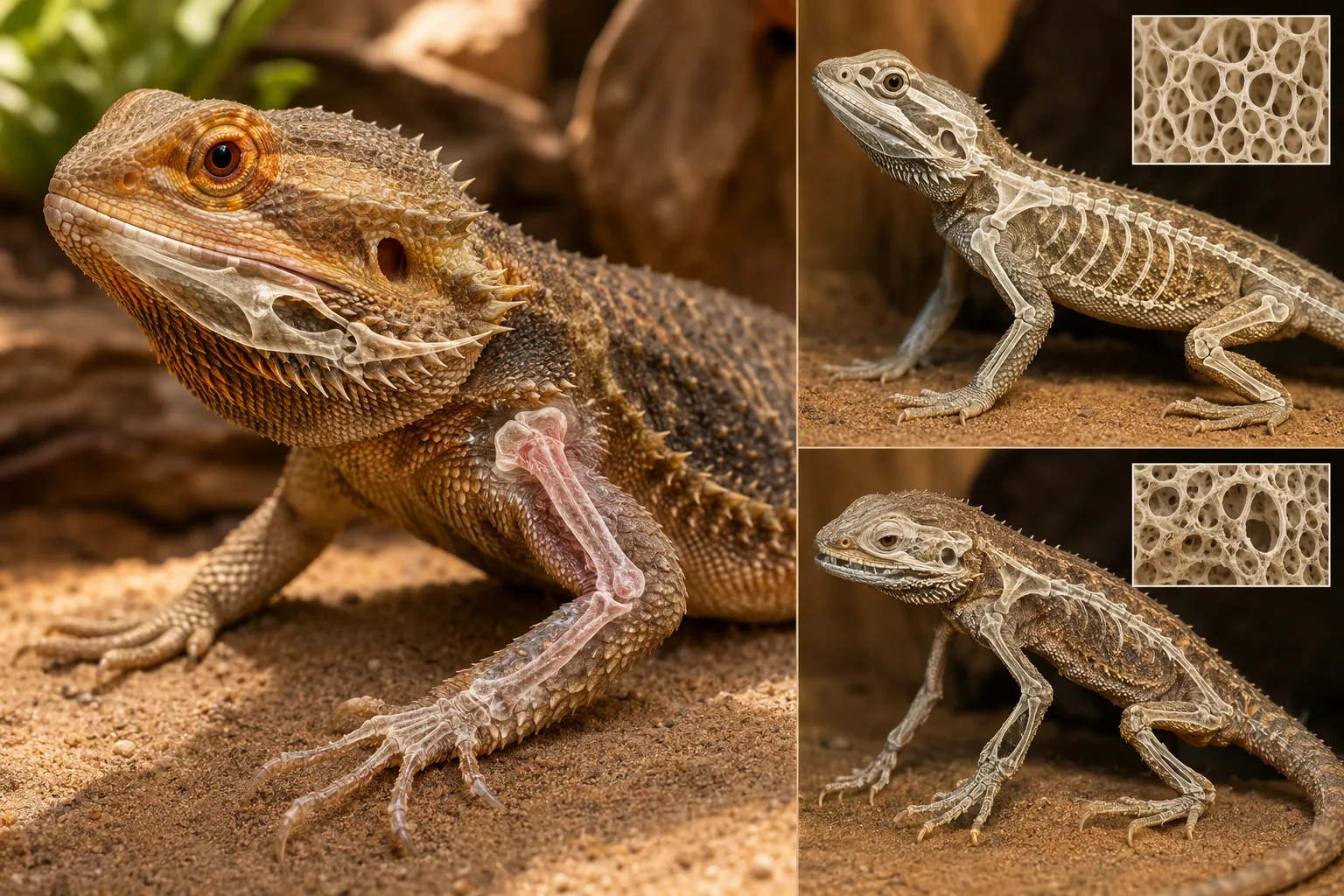
Metabolic bone disease (MBD) in bearded dragons is a serious condition caused by calcium deficiency, inadequate UVB exposure, or improper vitamin D3 levels that weakens bones and disrupts normal skeletal development. The disease causes bones to become soft, brittle, and deformed, leading to symptoms like tremors, bowed legs, a rubbery jaw, difficulty walking, and in severe cases, paralysis or death. MBD is preventable through proper husbandry including adequate UVB lighting, calcium supplementation, and a balanced diet, but once bone deformities occur, they cannot be fully reversed.
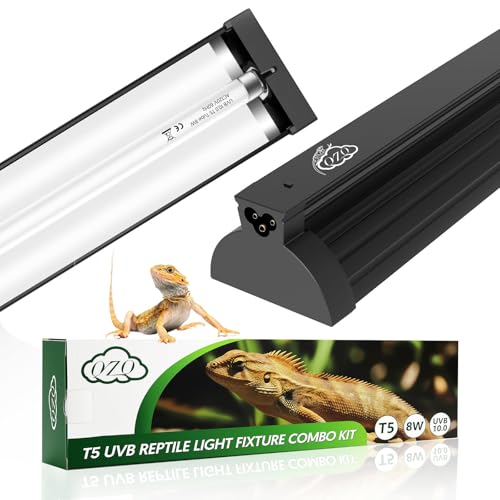
T5 UVB Reptile Light Fixture Combo Kit: The QZQ T5 UVB reptile light features a 5.9ft detachable power cord, a convenient on/off switch, and multiple mounting accessories for easy installation. Whether you're setting up a reptile tank or terrarium, this reptile light fixture meets your reptile lighting needs, providing your pets with the perfect 10.0 UVB lighting environment for healthy growth

Enhances UVB & Light Reflection: The reptile light fixture focuses the light emitted by the bulb, ensuring even distribution across the entire illumination area. The polished interior surface greatly enhances light reflection, minimizing losses of both light and UVB. This reflective effect optimizes the efficiency of the light source, promoting the health and growth of reptiles

T5 Reptile Light Fixture with UVB 10.0 Bulb Kit - The REPTIDLDB T5 reptile light fixture comes with a UVB 10.0 bulb kit, offering 10% UVB and 30% UVA output. This lighting system provides a natural and balanced lighting environment, ensuring your reptiles receive the proper UVB radiation for optimal health. The fixture is designed with minimal heat emission, making it perfect for your reptile's habitat without overheating the enclosure. The UVB 10.0 bulb is replaceable, giving you flexibility and convenience in maintaining your reptile’s environment.
Key Takeaways
- MBD is a preventable calcium metabolism disorder that weakens bones when bearded dragons lack proper calcium, vitamin D3, or UVB exposure
- Early signs include tremors, lethargy, and difficulty walking before visible bone deformities develop
- Baby bearded dragons develop MBD faster than adults because their rapid growth demands more calcium
- Proper UVB lighting (10-12% output) is essential for vitamin D3 synthesis and calcium absorption
- Calcium supplementation should be daily for juveniles and 3-4 times weekly for adults
- Early-stage MBD can be halted but not reversed once bone deformities occur
- Untreated MBD leads to paralysis, seizures, and death within months
- Treatment costs range from $100-500+ depending on severity and required veterinary intervention
- A soft or rubbery jaw is a classic MBD symptom but not all jaw issues indicate MBD
- Bearded dragons with severe MBD can still live comfortably with proper supportive care and environmental modifications
What Causes Metabolic Bone Disease in Bearded Dragons?
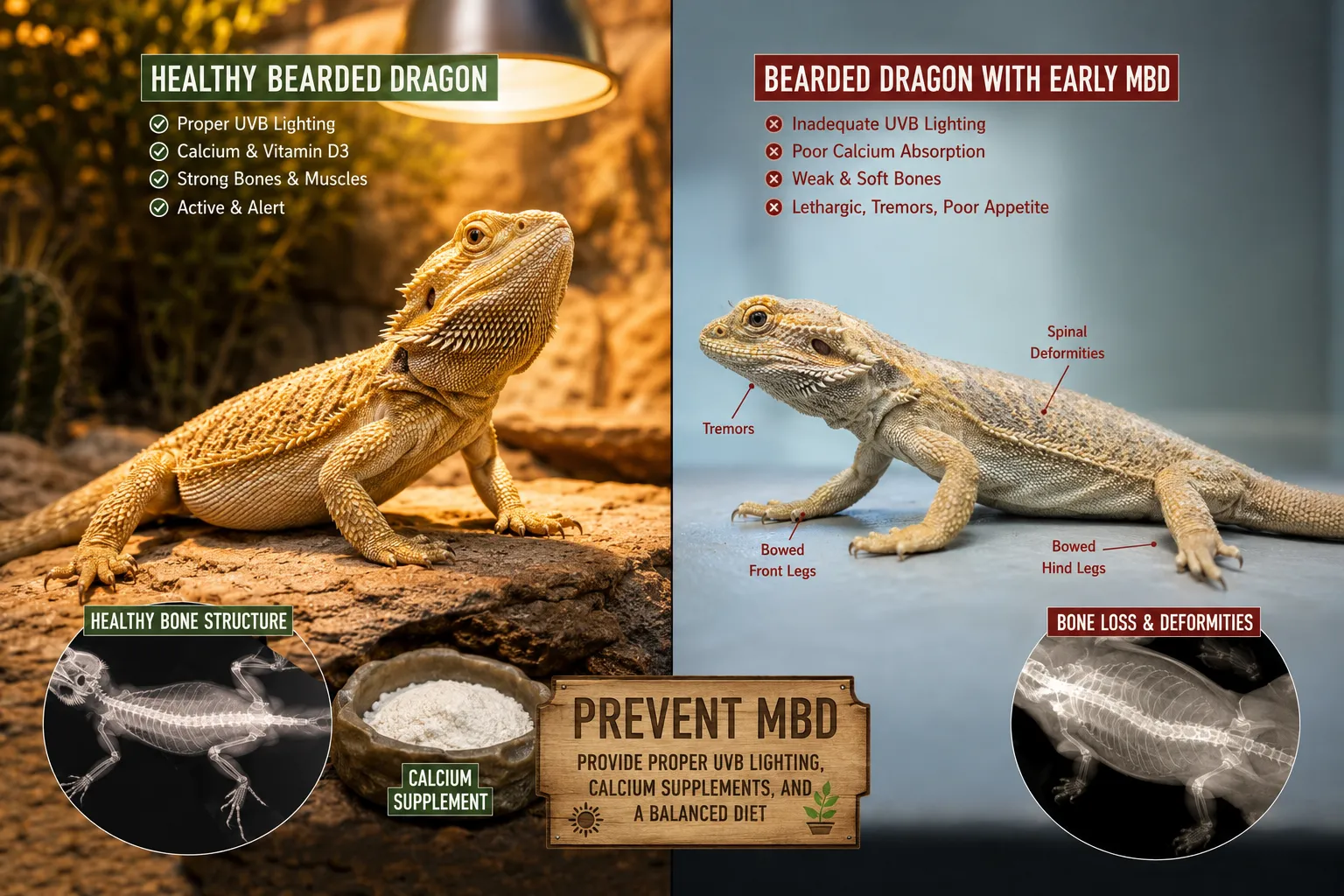
Metabolic bone disease in bearded dragons develops when the body cannot properly metabolize calcium due to insufficient dietary calcium, inadequate UVB lighting preventing vitamin D3 synthesis, or an imbalanced calcium-to-phosphorus ratio in the diet. The condition occurs because bearded dragons require both calcium and vitamin D3 to maintain healthy bones, and without proper UVB exposure, they cannot convert vitamin D3 into its active form needed for calcium absorption.
The three primary causes work together:
Insufficient UVB Exposure
- Bearded dragons need 10-12 hours daily of UVB lighting with 10-12% output
- UVB bulbs lose effectiveness after 6-12 months even when still producing visible light
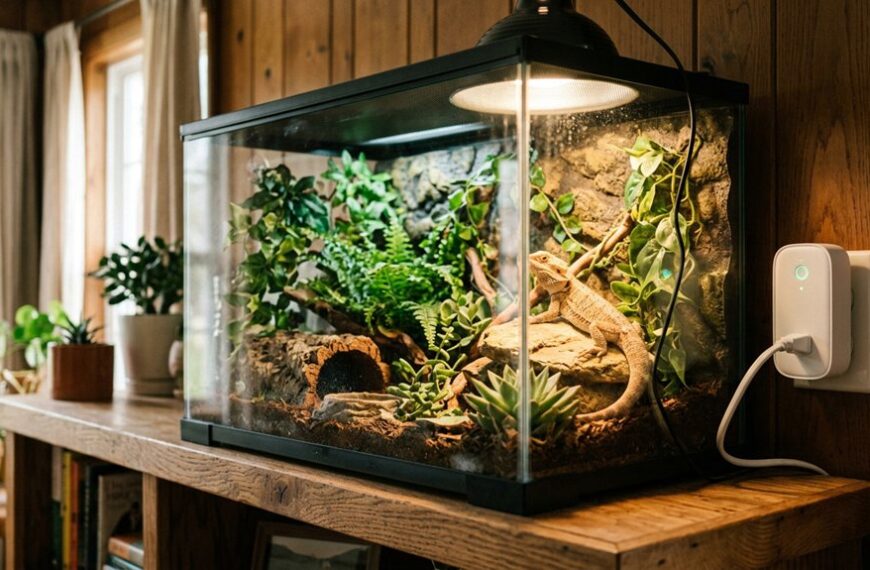
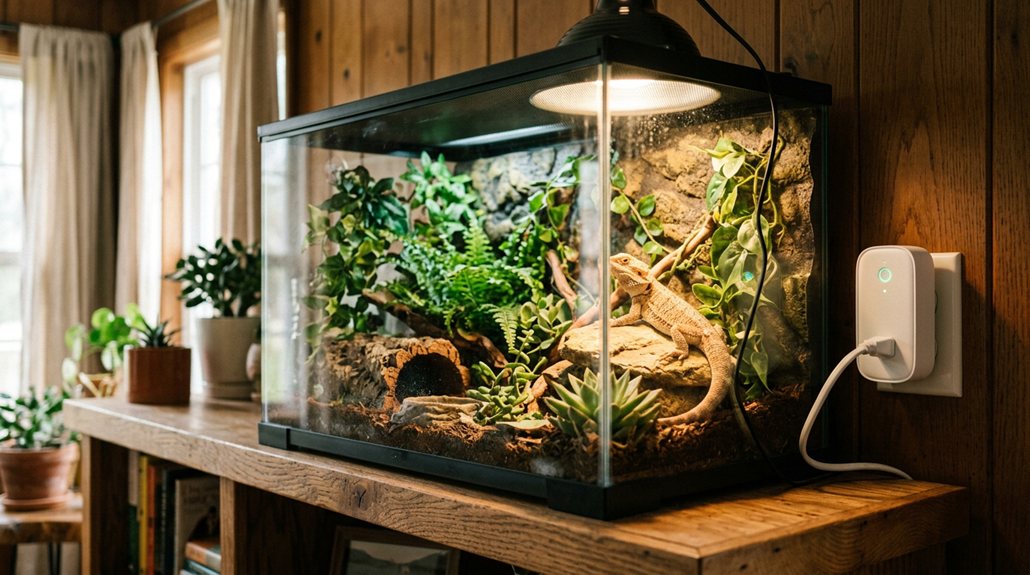
- Glass and plastic block UVB rays, so lights must be positioned inside the enclosure or use mesh tops
- Incorrect bulb placement (too far from basking spot) reduces UVB effectiveness
Calcium Deficiency
- Diet lacking calcium-rich foods like collard greens, mustard greens, and properly supplemented insects
- Feeding insects without calcium dusting removes the primary calcium source
- Offering foods high in oxalates (spinach, beet greens) that bind calcium and prevent absorption
Improper Calcium-to-Phosphorus Ratio
- Bearded dragons need a 2:1 calcium-to-phosphorus ratio in their overall diet
- Feeding too many phosphorus-rich foods (like iceberg lettuce or certain insects) without calcium supplementation creates an imbalance
- The body pulls calcium from bones to maintain blood calcium levels when dietary intake is insufficient
Common mistake: Many owners assume that providing calcium powder alone is sufficient, but without adequate UVB lighting, the dragon cannot process that calcium effectively. Both elements must work together.
What Are the Early Signs of MBD in Bearded Dragons?
Early signs of metabolic bone disease include muscle twitches or tremors (especially in the legs and tail), lethargy, decreased appetite, and difficulty walking or climbing that appears before visible bone deformities develop. These subtle symptoms often go unnoticed because they can be mistaken for normal behavior variations or other health issues.
Watch for these early warning signs:
Neurological and Muscular Symptoms
- Fine tremors or twitching in the limbs, particularly the back legs
- Muscle spasms or jerky movements when walking
- Weakness or reluctance to climb or move around the enclosure
- Difficulty gripping branches or surfaces
Behavioral Changes
- Decreased activity level or spending more time lying flat
- Loss of appetite or refusing favorite foods
- Avoiding basking spots or showing unusual posture
- Glass surfing or restless behavior due to discomfort
Physical Indicators
- Slightly swollen or puffy appearance around the limbs or jaw
- Soft or pliable bones when gently palpated (requires veterinary examination)
- Bowed or curved appearance in the legs (indicates progression beyond early stage)
- Rubbery or flexible lower jaw
Timeline consideration: Early symptoms can appear within 2-4 weeks of inadequate husbandry in baby bearded dragons, while adults may take 2-3 months to show signs. The faster you catch these symptoms, the better the outcome.
Edge case: Some bearded dragons show tremors from other causes like low temperatures or stress. If tremors occur only during feeding or when the dragon is cold, check your tank setup and temperatures first before assuming MBD.
Can Metabolic Bone Disease Be Reversed in Bearded Dragons?
Metabolic bone disease cannot be fully reversed once bone deformities have occurred, but early-stage MBD can be halted and partially improved with aggressive treatment including corrected husbandry, calcium supplementation, proper UVB exposure, and sometimes injectable calcium from a veterinarian. The key distinction is that while you can stop the disease progression and improve calcium metabolism, permanent skeletal deformities like bowed legs or a misshapen jaw will remain.
What can be improved:
- Muscle strength and coordination through proper calcium levels
- Tremors and twitching typically resolve within 2-4 weeks of treatment
- Energy levels and appetite return to normal
- Bone density can increase, making bones stronger (though not reshaping deformed bones)
- Quality of life improves significantly even with permanent deformities
What cannot be reversed:
- Visible bone deformities including bowed legs, curved spine, or shortened limbs
- Jaw malformations that affect the dragon’s bite or appearance
- Stunted growth in juveniles who developed MBD during critical growth periods
- Severe skeletal damage that has already occurred
Treatment success factors:
- Stage of disease: Caught within the first 2-3 weeks of symptoms, outcomes are much better
- Age of dragon: Younger dragons respond better to treatment but also suffer more severe deformities if untreated
- Severity of deficiency: Mild cases respond to husbandry corrections alone; severe cases need veterinary intervention
- Owner compliance: Consistent daily treatment and proper husbandry are essential
Choose veterinary care if: Your bearded dragon shows severe symptoms (inability to walk, seizures, complete loss of appetite), has visible bone deformities, or doesn’t improve within 1-2 weeks of corrected husbandry. Injectable calcium and prescription vitamin D3 can accelerate recovery in serious cases.
MBD vs Normal Bearded Dragon Bone Structure
Normal bearded dragon bone structure features firm, straight limbs with strong skeletal support that allows confident movement and climbing, while MBD-affected bones become soft, pliable, and often visibly deformed with bowed legs, curved spine, shortened limbs, and a flexible or misshapen jaw. The difference is most apparent when comparing the dragon’s posture, gait, and the firmness of skeletal structures.
Healthy Bone Structure Characteristics:
| Feature | Healthy Dragon | Dragon with MBD |
|---|---|---|
| Limb appearance | Straight, well-proportioned legs | Bowed, curved, or shortened limbs |
| Jaw structure | Firm, well-defined jawbone | Soft, rubbery, or swollen jaw |
| Posture | Body held off ground, confident stance | Belly dragging, splayed legs |
| Movement | Smooth, coordinated walking and climbing | Wobbly gait, difficulty walking, tremors |
| Spine | Straight back line | Curved, kinked, or humped spine |
| Tail | Straight with normal taper | Kinked, curved, or dragging |
| Bone density | Firm bones resistant to pressure | Soft, pliable bones (rubbery feel) |
Visual assessment tips:
- Observe your dragon from the side: healthy dragons hold their body and tail off the ground when walking
- Check leg alignment: legs should be relatively straight, not bowed outward or inward
- Watch climbing behavior: healthy dragons grip branches confidently without slipping
- Compare to photos of healthy dragons of the same age for reference
Common mistake: Some natural variation exists in bearded dragon body shapes, and not every slightly curved tail or minor asymmetry indicates MBD. Look for multiple symptoms together rather than a single physical trait.
When to worry: If you can gently press on the jawbone or limbs and feel unusual softness or flexibility, or if your dragon’s posture has changed noticeably over 2-4 weeks, consult a reptile veterinarian immediately.
How Much Calcium Does a Bearded Dragon Need to Prevent MBD?
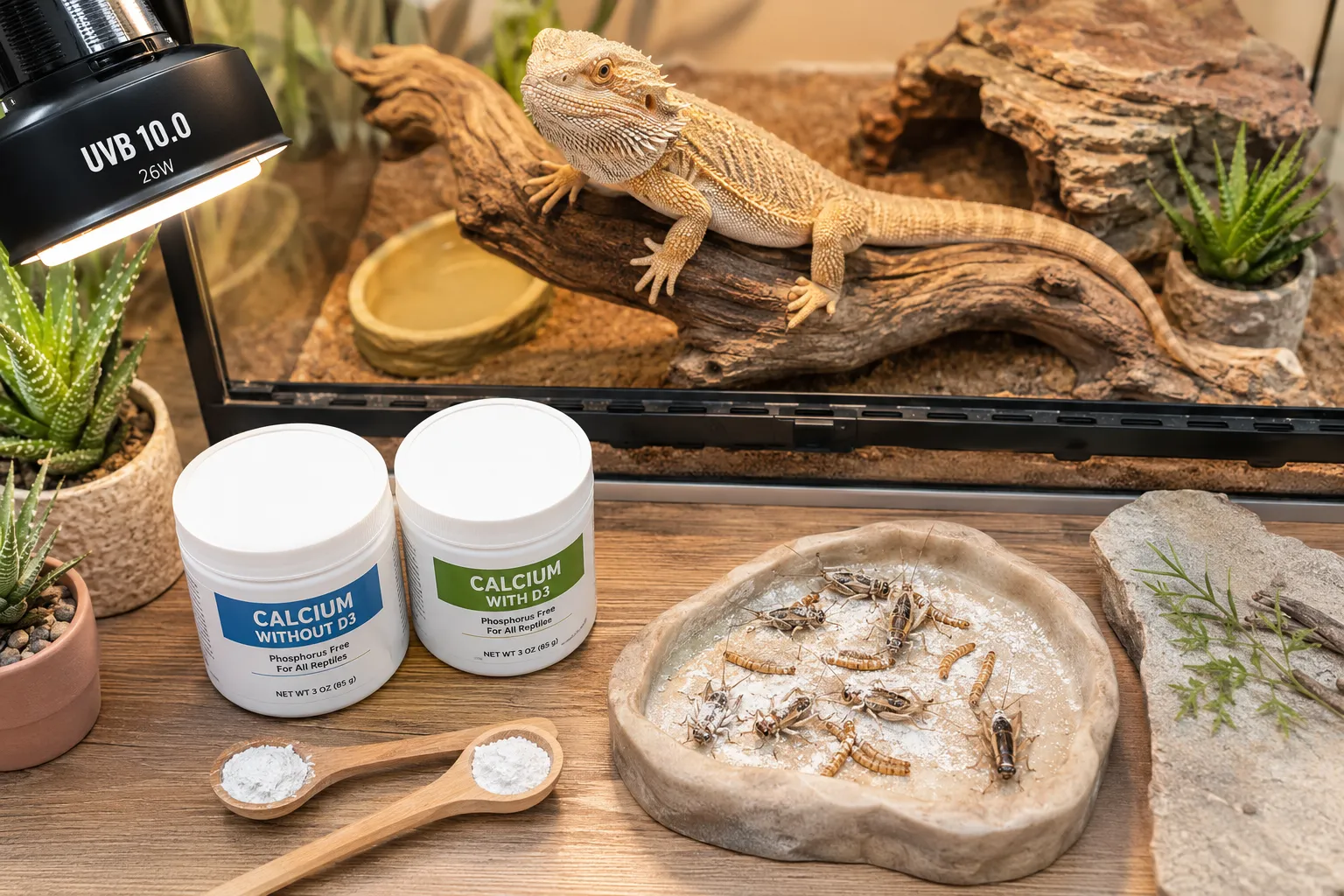
Bearded dragons need calcium supplementation at every feeding for babies and juveniles (under 12 months), and 3-4 times per week for adults, using calcium powder dusted on insects and offered through calcium-rich vegetables like collard greens, mustard greens, and turnip greens. The total dietary calcium should maintain a 2:1 calcium-to-phosphorus ratio across all foods offered.
Supplementation schedule by age:
Baby Bearded Dragons (0-6 months)
- Dust insects with calcium powder (without D3) at every feeding
- Offer calcium with D3 twice per week
- Provide calcium-rich greens daily (though babies eat fewer vegetables)
- Total calcium intake: highest requirement due to rapid bone growth
Juvenile Bearded Dragons (6-12 months)
- Dust insects with calcium powder (without D3) 5-6 times per week
- Offer calcium with D3 2-3 times per week
- Increase vegetable intake with calcium-rich options
- Transition period requires careful monitoring
Adult Bearded Dragons (12+ months)
- Dust insects with calcium powder (without D3) 3-4 times per week
- Offer calcium with D3 once per week
- Daily calcium-rich vegetables as primary diet component
- Lower requirement but still essential for maintenance
Calcium-rich food options:
- Best vegetables: Collard greens, mustard greens, turnip greens, dandelion greens
- Good options: Bok choy, butternut squash, bell peppers
- Avoid: Spinach, beet greens (high oxalates block calcium absorption)
Decision rule: Choose calcium powder without D3 for daily use because excess D3 is toxic. Use calcium with D3 only 1-3 times per week depending on age, since proper UVB lighting should provide most D3 needs naturally.
Common mistake: Over-supplementing with D3 can cause vitamin D3 toxicity, which is as dangerous as deficiency. If your UVB lighting is adequate, your dragon synthesizes D3 naturally and needs minimal supplemental D3.
What Is the Best UVB Light for Preventing Metabolic Bone Disease?
The best UVB light for preventing metabolic bone disease is a linear fluorescent or LED tube bulb with 10-12% UVB output (such as ReptiSun 10.0 or Arcadia 12%) positioned 8-12 inches from the basking spot and replaced every 6-12 months regardless of whether the bulb still produces visible light. Linear tubes provide more consistent UVB coverage across the enclosure compared to compact coil bulbs.
Recommended UVB setup specifications:
Bulb Type and Strength
- Linear tube bulbs: 10-12% UVB output (T5 or T8)
- Length: Should cover 50-75% of the enclosure length
- Avoid: Compact/coil UVB bulbs (inconsistent output and coverage)
- Avoid: Mercury vapor bulbs for most setups (too intense for standard enclosures)
Positioning Requirements
- Distance from basking spot: 8-12 inches for T5 bulbs, 12-15 inches for T8 bulbs
- Placement: Inside the enclosure or directly on mesh top (glass blocks UVB)
- Coverage: Dragon should be able to bask directly under UVB, not just heat lamp
- Duration: 10-12 hours daily, mimicking natural day/night cycle
Replacement Schedule
- T5 bulbs: Replace every 12 months
- T8 bulbs: Replace every 6-9 months
- LED UVB: Follow manufacturer recommendations (often 2-3 years)
- Critical note: UVB output degrades long before visible light dims
Verification method: Use a UVB meter (Solarmeter 6.5) to measure UVB levels at basking spot. Target UVI reading of 3.0-5.0 for optimal vitamin D3 synthesis.
Choose T5 over T8 if: You have a larger enclosure (40+ gallons) or need stronger UVB output. T5 bulbs are more efficient and maintain output longer.
Common mistake: Placing UVB bulbs outside a glass or plastic enclosure top completely blocks UVB rays, making the bulb useless. Always ensure UVB can reach your dragon directly through mesh or by placing the fixture inside the tank.
How Long Does It Take for MBD to Develop in Bearded Dragons?
Metabolic bone disease can develop in as little as 2-4 weeks in baby bearded dragons under poor husbandry conditions, while adult bearded dragons typically take 2-4 months to show symptoms when deprived of adequate calcium and UVB exposure. The development timeline depends on the dragon’s age, growth rate, existing calcium stores, and the severity of husbandry deficiencies.
Development timeline by age:
Baby Bearded Dragons (0-6 months)
- Fastest development: 2-4 weeks with no calcium or UVB
- Moderate deficiency: 4-8 weeks with inadequate supplementation
- Reason: Rapid skeletal growth demands constant calcium supply
- Risk factor: Babies have minimal calcium reserves to draw from
Juvenile Bearded Dragons (6-12 months)
- Typical timeline: 6-10 weeks with poor husbandry
- Moderate deficiency: 2-3 months with partial supplementation
- Reason: Still growing rapidly but have some calcium reserves
- Risk factor: Growth spurts increase calcium demands
Adult Bearded Dragons (12+ months)
- Typical timeline: 2-4 months with no calcium or UVB
- Moderate deficiency: 4-6 months with inadequate care
- Reason: Slower metabolism and established bone structure
- Risk factor: Breeding females deplete calcium faster
Factors that accelerate MBD development:
- Complete absence of UVB lighting (versus inadequate UVB)
- No calcium supplementation whatsoever
- Diet high in phosphorus-rich foods without calcium balance
- Breeding females producing eggs (massive calcium drain)
- Pre-existing health conditions affecting nutrient absorption
- Improper temperatures preventing proper digestion and metabolism
Factors that slow development:
- Partial calcium supplementation (even if inadequate)
- Some UVB exposure (even if insufficient)
- Calcium-rich diet even without supplementation
- Older dragons with established bone density
Edge case: A bearded dragon with excellent husbandry for the first year who then experiences a sudden drop in care quality (broken UVB bulb, diet change) may take longer to develop MBD because of existing calcium reserves in bones.
Prevention window: If you acquire a bearded dragon with unknown history, implement proper husbandry immediately. Even if previous care was poor, you can prevent MBD progression within days of correction.
Can Baby Bearded Dragons Get MBD Faster Than Adults?
Yes, baby bearded dragons develop metabolic bone disease significantly faster than adults because their rapid skeletal growth requires constant calcium availability, and they have minimal calcium reserves stored in their bones to buffer against dietary deficiencies. A baby can show MBD symptoms in as little as 2-4 weeks under poor conditions, while an adult might take 2-4 months.
Why babies are more vulnerable:
Rapid Growth Demands
- Baby bearded dragons can grow 1-2 inches per month during the first 6 months
- Skeletal development requires massive calcium input during this period
- Growth rate is 3-5 times faster than adult maintenance needs
- Missing even a few days of proper supplementation impacts development
Limited Calcium Reserves
- Adults store calcium in established bone structure to draw from during shortages
- Babies have minimal bone density and virtually no calcium reserves
- When dietary calcium is insufficient, babies have nothing to pull from
- Deficiency immediately affects new bone formation
Higher Metabolic Rate
- Babies eat more frequently (2-3 times daily versus once daily for adults)
- Faster metabolism processes nutrients more quickly
- Greater energy expenditure for growth increases all nutrient demands
- More frequent feeding means more opportunities for supplementation errors
Comparison timeline:
| Age Group | Time to Early Symptoms | Time to Visible Deformities | Recovery Potential |
|---|---|---|---|
| Baby (0-6 months) | 2-4 weeks | 4-6 weeks | Good if caught early, but deformities permanent |
| Juvenile (6-12 months) | 6-10 weeks | 10-14 weeks | Moderate, some growth remains |
| Adult (12+ months) | 2-4 months | 4-6 months | Limited, maintenance only |
Critical care period: The first 6 months of a bearded dragon’s life represent the highest MBD risk window. Owners of baby bearded dragons must be especially vigilant about daily calcium supplementation and proper UVB exposure.
Choose more frequent supplementation if: Your baby bearded dragon is in a growth spurt (noticeable size increase week to week), is recovering from illness, or came from a pet store with unknown care history.
Common mistake: Assuming that because a baby bearded dragon looks healthy and active, their calcium needs are being met. MBD can develop silently until symptoms suddenly appear.

Calcium supplement without Vitamin D3 is

Provides high absorption and assimilation because it passes directly into the small intestine.

HUNTING DRAGON: We all know some bearded dragons may be picky, and will need some encouragement getting used to a brand-new food. Let's patiently help them fall in love with Gargeer gels! We advise starting with a solid stripe you'll hand feed, using tongs/tweezers, an action that triggers their hunting instinct. A healthy fun for all parties involved
What Is the Treatment Cost for Metabolic Bone Disease in Bearded Dragons?
Metabolic bone disease treatment costs typically range from $100-500+ depending on severity, with mild cases requiring only husbandry corrections and calcium supplements ($50-100), moderate cases needing veterinary examination and injectable calcium ($150-300), and severe cases requiring ongoing veterinary care, medications, and supportive treatments ($300-500+). These costs don’t include the necessary equipment upgrades like proper UVB lighting and calcium supplements for long-term management.
Cost breakdown by severity:
Mild MBD (Early Stage)
- Veterinary exam: $50-100 (recommended but not always required)
- Calcium supplements: $15-25
- UVB bulb replacement: $25-50
- Dietary improvements: $20-40
- Total: $100-200
- Timeline: 2-4 weeks of treatment
Moderate MBD (Visible Symptoms)
- Veterinary exam and consultation: $75-150
- Injectable calcium (series of 3-5 injections): $50-150
- Oral calcium supplements: $20-30
- UVB lighting upgrade: $50-100
- Follow-up exam: $50-100
- Total: $250-500
- Timeline: 4-8 weeks of active treatment
Severe MBD (Advanced Deformities)
- Initial emergency veterinary visit: $100-200
- Diagnostic imaging (X-rays): $100-200
- Injectable calcium and vitamin D3 series: $100-200
- Prescription medications: $30-75
- Multiple follow-up visits: $150-300
- Supportive care equipment: $50-100
- Ongoing management: $50-100 monthly
- Total initial: $500-1,000+
- Timeline: 8-12 weeks intensive treatment, then ongoing management
Additional long-term costs:
- UVB bulb replacements: $25-50 every 6-12 months
- Calcium supplements: $15-25 every 2-3 months
- Specialized diet: $30-50 monthly
- Periodic veterinary check-ups: $75-150 annually
Cost-saving considerations:
- Catching MBD early dramatically reduces treatment costs
- Preventive care (proper setup from the start) costs far less than treatment
- Some veterinarians offer payment plans for expensive treatments
- Pet insurance rarely covers pre-existing conditions like MBD
Decision rule: If your bearded dragon shows any MBD symptoms, a veterinary visit is worth the cost. Early intervention prevents the disease from progressing to the expensive severe stage.
Edge case: Bearded dragons with severe MBD may require lifelong supportive care including modified enclosures, assisted feeding, and regular veterinary monitoring, adding $500-1,000+ annually to care costs.
What Happens If MBD Is Left Untreated in Bearded Dragons?
Untreated metabolic bone disease progresses from mild symptoms like tremors and weakness to severe skeletal deformities, paralysis, seizures, and ultimately death within 3-6 months for juveniles or 6-12 months for adults. The disease is degenerative and fatal because the body continues pulling calcium from bones to maintain vital functions, eventually causing complete skeletal collapse and organ failure.
Progression stages of untreated MBD:
Stage 1: Early Symptoms (Weeks 1-4)
- Muscle tremors and twitching
- Slight weakness and lethargy
- Reduced appetite
- Minor coordination issues
- Reversibility: High with immediate intervention
Stage 2: Moderate Progression (Weeks 4-8)
- Visible bone softening (rubbery jaw)
- Difficulty walking and climbing
- Bowed legs beginning to form
- Frequent falls and poor coordination
- Reluctance to move
- Reversibility: Partial, deformities becoming permanent
Stage 3: Advanced Disease (Weeks 8-16)
- Severe skeletal deformities (bowed legs, curved spine)
- Inability to walk or support body weight
- Dragging limbs or complete immobility
- Swollen, deformed limbs and jaw
- Severe muscle wasting
- Reversibility: None, only supportive care possible
Stage 4: Critical/Terminal (Weeks 16+)
- Complete paralysis, especially of hind limbs
- Seizures due to critically low blood calcium
- Inability to eat or drink without assistance
- Respiratory distress from skeletal deformities
- Organ failure
- Death from complications
- Reversibility: None, humane euthanasia often recommended
Specific complications:
Skeletal Collapse
- Bones become so soft they can no longer support the body
- Spontaneous fractures from normal movement
- Permanent deformities affecting quality of life
- Spine curvature causing organ compression
Neurological Damage
- Seizures from hypocalcemia (low blood calcium)
- Muscle spasms and uncontrolled tremors
- Loss of coordination and balance
- Paralysis, typically starting in hind legs
Organ Failure
- Heart arrhythmias from calcium imbalance
- Respiratory failure from chest deformities
- Digestive system shutdown
- Kidney damage from calcium metabolism disruption
Secondary Infections
- Weakened immune system from malnutrition
- Pressure sores from immobility
- Respiratory infections from inability to move
- Mouth infections from jaw deformities
Timeline to death: Baby bearded dragons with untreated MBD typically die within 3-6 months of symptom onset, while adults may survive 6-12 months but with severely diminished quality of life. Death usually results from seizures, organ failure, or complications from immobility rather than the bone disease itself.
Humane considerations: Veterinarians often recommend euthanasia for bearded dragons with stage 4 MBD because the suffering is severe and recovery is impossible. Quality of life should guide end-of-life decisions.
Do All Bearded Dragons with Soft Jaw Have MBD?
Not all bearded dragons with a soft jaw have metabolic bone disease, but a soft or rubbery jaw is one of the most characteristic symptoms of MBD and should always be evaluated by a veterinarian to rule out the condition. Other causes of jaw softness or swelling include mouth infections (stomatitis), jaw injuries, abscesses, or tumors, though these are less common than MBD.
Distinguishing MBD jaw symptoms from other conditions:
MBD Jaw Characteristics
- Rubbery, pliable feel when gently pressed
- Symmetrical softening affecting entire lower jaw
- Accompanied by other MBD symptoms (tremors, weakness, bowed legs)
- Gradual onset over weeks
- No visible wounds, swelling, or discoloration
- Difficulty eating due to weak jaw strength
Other Jaw Conditions
Mouth Rot (Stomatitis)
- Swelling with redness or discoloration
- Visible pus, discharge, or dead tissue
- Foul odor from mouth
- Localized to specific area rather than entire jaw
- Often follows mouth injury or poor hygiene
Jaw Abscess
- Hard lump or swelling, not soft/rubbery
- Asymmetrical (one side affected)
- May have visible puncture wound or injury site
- Rapid onset (days rather than weeks)
- Dragon may paw at face or show pain
Jaw Injury or Fracture
- History of trauma (fall, bite, impact)
- Sudden onset
- Visible bruising or swelling
- Asymmetrical appearance
- Dragon shows pain when jaw is touched
Tumor or Growth
- Hard mass rather than soft tissue
- Progressive growth over months
- May be asymmetrical
- Usually affects older dragons
- Other symptoms depend on tumor type
Diagnostic approach:
- Check for other MBD symptoms (tremors, weakness, bowed legs)
- Review husbandry (UVB lighting, calcium supplementation, diet)
- Examine mouth for signs of infection or injury
- Consider timeline (gradual versus sudden onset)
- Consult veterinarian for definitive diagnosis
Decision rule: If your bearded dragon has a soft jaw and inadequate UVB lighting or calcium supplementation, MBD is the most likely cause. If husbandry is excellent and the jaw issue appeared suddenly or is accompanied by visible mouth problems, consider other diagnoses.
Common mistake: Assuming any jaw abnormality is automatically MBD without checking for other symptoms or causes. While MBD is the most common cause of jaw softness, proper diagnosis ensures appropriate treatment.
Calcium Powder With or Without D3 for Bearded Dragons?
Bearded dragons need both types of calcium powder: calcium without D3 for daily supplementation (or most feedings) and calcium with D3 used sparingly 1-3 times per week depending on age, because proper UVB lighting should provide most vitamin D3 needs naturally and excess supplemental D3 can cause toxicity. The ratio between the two types depends on your dragon’s age and the quality of your UVB setup.
Supplementation strategy:
Calcium Without D3 (Plain Calcium)
- Use: Daily for babies, 4-5 times weekly for juveniles, 3-4 times weekly for adults
- Purpose: Provides calcium without risk of D3 overdose
- Best for: Dragons with proper UVB lighting
- Application: Dust insects lightly before feeding
Calcium With D3
- Use: 2-3 times weekly for babies, 2 times weekly for juveniles, once weekly for adults
- Purpose: Supplements D3 for dragons with suboptimal UVB or during winter
- Caution: Excess D3 causes toxicity (calcification of organs)
- Application: Dust insects lightly, alternating with plain calcium
Sample weekly schedule for juvenile bearded dragon:
| Day | Calcium Type | Notes |
|---|---|---|
| Monday | Without D3 | Regular feeding |
| Tuesday | Without D3 | Regular feeding |
| Wednesday | With D3 | Supplemental D3 |
| Thursday | Without D3 | Regular feeding |
| Friday | Without D3 | Regular feeding |
| Saturday | With D3 | Supplemental D3 |
| Sunday | Without D3 | Regular feeding |
Factors affecting D3 supplementation needs:
Increase D3 supplementation (2-3x weekly) if:
- UVB bulb is older than 6-9 months (reduced output)
- Dragon spends limited time basking under UVB
- Winter months with less natural sunlight exposure
- Dragon is recovering from MBD
- UVB placement is suboptimal (too far from basking spot)
Decrease D3 supplementation (1x weekly or less) if:
- Brand new, high-quality UVB bulb recently installed
- Dragon receives outdoor natural sunlight exposure regularly
- Dragon basks extensively under UVB daily
- Using high-output UVB (12% or mercury vapor)
D3 toxicity symptoms (over-supplementation):
- Lethargy and weakness
- Loss of appetite
- Excessive thirst and urination
- Calcification of soft tissues (requires veterinary diagnosis)
- Kidney damage
Decision rule: If you have excellent UVB lighting (proper bulb, correct distance, replaced on schedule), use calcium without D3 for most feedings and calcium with D3 only once weekly. If your UVB setup is questionable or you’re unsure, use calcium with D3 2-3 times weekly until you can verify proper UVB levels with a meter.
Common mistake: Using only calcium with D3 at every feeding because “more is better.” This approach risks D3 toxicity, which can be as dangerous as deficiency. Balance is essential.
Is My Bearded Dragon Wobbly Because of MBD or Something Else?
A wobbly bearded dragon may have metabolic bone disease if the wobbling is accompanied by other MBD symptoms like tremors, weak limbs, or difficulty climbing, but wobbling can also result from incorrect temperatures, neurological issues, impaction, dehydration, or recent injury. Distinguishing MBD from other causes requires checking for additional symptoms and reviewing husbandry conditions.
Differential diagnosis for wobbly gait:
Metabolic Bone Disease
- Wobbling accompanied by tremors or twitching
- Weak limbs that collapse or bow outward
- Difficulty gripping or climbing
- Gradual onset over weeks
- Poor calcium supplementation or UVB lighting history
- Other MBD signs (soft jaw, lethargy)
Incorrect Temperatures
- Wobbling only when dragon is cold
- Improves after basking under heat lamp
- Sluggish, lethargic behavior
- Basking spot below 95-100°F or cool side below 75°F
- Normal coordination when properly warmed
Neurological Issues
- Sudden onset wobbling or loss of coordination
- Head tilting or circling behavior
- Seizures or unusual movements
- May follow head injury or infection
- Requires immediate veterinary attention
Impaction
- Wobbling with distended, hard belly
- Loss of appetite or inability to defecate
- Straining or discomfort
- History of eating substrate or large prey items
- Dragging hind legs due to blockage pressure
Dehydration
- Wobbling with sunken eyes and wrinkled skin
- Lethargy and weakness
- Infrequent urination or very concentrated urates
- Recent illness or inadequate water access
Recent Injury or Overexertion
- Sudden wobbling after fall or rough handling
- Localized pain or swelling
- Favoring one side or limb
- Improves with rest
Diagnostic checklist:
Check husbandry first:
- Basking spot temperature: 95-105°F
- Cool side temperature: 75-85°F
- UVB lighting: proper bulb, correct distance, recent replacement
- Calcium supplementation: appropriate frequency for age
Assess other symptoms:
- Tremors or muscle twitching (suggests MBD)
- Soft jaw or bowed legs (confirms MBD)
- Distended belly (suggests impaction)
- Sunken eyes (suggests dehydration)
- Head tilt or circling (suggests neurological issue)
Review timeline:
- Gradual onset over weeks (MBD likely)
- Sudden onset (injury, impaction, or neurological issue)
- Improves when warm (temperature issue)
- Worsens over time (progressive condition like MBD)
Test response to intervention:
- Warm bath: improves with temperature or dehydration issues
- Proper basking: improves with temperature regulation
- Calcium supplementation: gradual improvement suggests MBD
- No improvement: requires veterinary diagnosis
Decision rule: If your bearded dragon is wobbly and has inadequate UVB/calcium supplementation and shows other MBD symptoms, MBD is the likely cause. If wobbling is isolated and husbandry is excellent, investigate other causes.
When to see a vet immediately:
- Sudden severe wobbling or complete loss of coordination
- Wobbling with seizures or unusual head movements
- No improvement after correcting temperatures and hydration
- Wobbling worsens rapidly over 24-48 hours
- Dragon cannot stand or walk at all
Can a Bearded Dragon with Severe MBD Still Live a Good Life?
Yes, a bearded dragon with severe metabolic bone disease can still live a comfortable life with proper supportive care, environmental modifications, and dedicated husbandry, though their lifespan may be shortened and they will have permanent physical limitations including mobility challenges and skeletal deformities. Quality of life depends on the severity of deformities, the owner’s commitment to specialized care, and whether the disease progression has been halted.
Supportive care requirements for severe MBD:
Environmental Modifications
- Low, accessible enclosure: Remove tall climbing structures to prevent falls
- Soft substrate: Reptile carpet, paper towels, or fleece to cushion movement
- Ramps and platforms: Gentle inclines instead of vertical climbs
- Multiple basking spots: Easy access to heat and UVB without climbing
- Shallow water dish: Prevent drowning risk for dragons with limited mobility
Feeding Adaptations
- Hand-feeding: May be necessary if dragon cannot catch insects
- Soft foods: Pureed vegetables, smaller insects, easier-to-chew options
- Elevated feeding station: Reduce strain on deformed limbs
- Assisted feeding: For dragons with severe jaw deformities
- Frequent small meals: Easier to manage than large feedings
Medical Management
- Ongoing calcium supplementation: Prevent further deterioration
- Regular veterinary check-ups: Monitor for complications
- Pain management: If dragon shows signs of discomfort
- Physical therapy: Gentle exercises to maintain muscle tone
- Wound care: Pressure sores from immobility require attention
Quality of Life Indicators
Good quality of life:
- Dragon shows interest in food and eats willingly
- Alert and responsive to environment
- No signs of pain or distress
- Able to move around enclosure (even if slowly)
- Basks regularly and maintains body temperature
- Normal elimination (urination and defecation)
Poor quality of life:
- Refuses food consistently
- Lethargic and unresponsive
- Shows pain behaviors (hissing, biting when touched)
- Complete immobility or inability to reach resources
- Chronic infections or pressure sores
- Seizures or severe neurological symptoms
Realistic expectations:
- Lifespan: May be reduced by 30-50% compared to healthy dragons
- Mobility: Permanent limitations, may never climb or run normally
- Appearance: Visible deformities will not improve
- Care time: Requires 2-3x more daily care than healthy dragon
- Costs: Ongoing veterinary and specialized care expenses
Decision considerations:
- Owner commitment: Can you provide daily specialized care for 5-10 years?
- Financial resources: Can you afford ongoing veterinary care and modifications?
- Dragon’s temperament: Calm dragons adapt better than highly active ones
- Severity of symptoms: Paralyzed dragons require more intensive care than those with bowed legs
When euthanasia is humane:
- Dragon is in constant pain despite medication
- Complete inability to eat or drink even with assistance
- Frequent seizures that cannot be controlled
- Severe respiratory distress from skeletal deformities
- Chronic infections that don’t respond to treatment
- Dragon shows no interest in life (unresponsive, won’t eat)
Success story example: Many bearded dragons with moderate to severe MBD live 5-8 years with dedicated care, enjoying modified enclosures, hand-feeding, and regular interaction with their owners. While they may never climb or run normally, they can still bask, eat, and show personality.
Choose supportive care if: Your dragon still shows interest in food, responds to interaction, and can move around (even if awkwardly). Many dragons adapt remarkably well to physical limitations when their basic needs are met.
Frequently Asked Questions
How quickly can MBD be reversed?
MBD cannot be fully reversed, but early symptoms like tremors and weakness can improve within 2-4 weeks of proper treatment including corrected husbandry, calcium supplementation, and adequate UVB exposure. Bone deformities that have already formed are permanent, though bone density can improve over 2-3 months.
Can bearded dragons get MBD from too much calcium?
No, bearded dragons cannot develop MBD from excess calcium, but they can develop vitamin D3 toxicity from over-supplementation with D3, which causes different health problems including organ calcification. Excess plain calcium is typically excreted without harm, though extreme oversupplementation can cause constipation.
Is MBD painful for bearded dragons?
Yes, metabolic bone disease causes pain, especially in advanced stages when bones fracture easily, joints become inflamed, and skeletal deformities create pressure on organs and nerves. Early-stage MBD may cause discomfort from muscle weakness and tremors rather than acute pain.
Can outdoor sunlight prevent MBD better than UVB bulbs?
Natural sunlight provides superior UVB compared to artificial bulbs and can prevent MBD effectively, but only if the bearded dragon receives 30-60 minutes of direct, unfiltered sunlight (not through glass) several times per week in safe temperatures (75-95°F). Most owners cannot provide this consistently, making quality UVB bulbs more practical.
Do bearded dragons with MBD need different food?
Bearded dragons with MBD need the same calcium-rich diet as healthy dragons but may require food modifications based on physical limitations, such as smaller insects for dragons with jaw deformities, pureed vegetables for those who cannot chew, or hand-feeding for dragons with severe mobility issues.
How do I know if my UVB bulb is still working?
UVB bulbs lose effectiveness after 6-12 months even though they still produce visible light, so replace them on schedule regardless of appearance. The only reliable way to verify UVB output is using a UVB meter (Solarmeter 6.5), which measures actual UVB radiation at the basking spot.
Can MBD cause sudden death in bearded dragons?
MBD rarely causes sudden death but can lead to fatal complications including seizures from critically low blood calcium, organ failure from prolonged calcium imbalance, or respiratory failure from severe skeletal deformities. Death from MBD is typically gradual over weeks to months as the disease progresses.
Is MBD contagious to other bearded dragons?
No, metabolic bone disease is not contagious because it results from nutritional deficiency and inadequate UVB exposure, not from bacteria, viruses, or parasites. However, if multiple bearded dragons share the same inadequate husbandry conditions, they will all develop MBD independently.
Can a bearded dragon with MBD still breed?
Bearded dragons with MBD should not breed because egg production places enormous calcium demands on females that can worsen the disease and prove fatal, and genetic factors may contribute to MBD susceptibility. Additionally, dragons with severe MBD lack the physical capability to mate successfully.
What’s the difference between MBD and rickets?
Metabolic bone disease and rickets are essentially the same condition caused by vitamin D deficiency and inadequate calcium metabolism. “Rickets” specifically refers to the disease in growing animals (juveniles), while “MBD” is the broader term used for the condition at any age in reptiles.
How often should I take my bearded dragon to the vet for MBD monitoring?
Bearded dragons being treated for MBD should see a veterinarian every 2-4 weeks during active treatment, then every 3-6 months once stabilized to monitor bone density, calcium levels, and overall health. Dragons with severe MBD may need monthly check-ups indefinitely.
Can I use calcium supplements made for humans?
No, do not use human calcium supplements for bearded dragons because they often contain inappropriate ratios of minerals, additives, or forms of calcium that reptiles cannot properly absorb. Use reptile-specific calcium powder formulated for proper bioavailability and without harmful additives.
Conclusion
Metabolic bone disease in bearded dragons is a serious but preventable condition that develops when calcium deficiency, inadequate UVB exposure, or vitamin D3 imbalance weakens the skeletal system. While early-stage MBD can be halted and symptoms improved with aggressive treatment, permanent bone deformities cannot be reversed, making prevention through proper husbandry the most critical strategy.
Take these action steps immediately:
Verify your UVB setup: Ensure you have a 10-12% linear tube bulb positioned 8-12 inches from the basking spot and replace it every 6-12 months regardless of whether it still produces light.
Implement proper calcium supplementation: Dust insects with calcium powder (without D3) at most feedings and use calcium with D3 only 1-3 times weekly depending on your dragon’s age.
Assess your dragon for symptoms: Check for tremors, weakness, soft jaw, or bowed legs, and consult a reptile veterinarian immediately if you notice any warning signs.
Review your dragon’s diet: Ensure daily access to calcium-rich vegetables like collard greens and mustard greens while avoiding high-oxalate foods that block calcium absorption.
Monitor babies and juveniles closely: Young bearded dragons develop MBD much faster than adults, so be especially vigilant during the first year of life with daily supplementation and proper lighting.
Remember that metabolic bone disease is almost entirely preventable with correct husbandry, and catching symptoms early dramatically improves outcomes. If you’re unsure about your setup, invest in a UVB meter to verify proper lighting levels and consult with a reptile veterinarian for a husbandry review. Your bearded dragon’s skeletal health depends on consistent, proper care every single day.
For more information on bearded dragon care and preventing common health issues, explore our comprehensive guides on proper tank setup, nutrition, and behavior.

Highly bio-available source of calcium carbonate

Ultra fine super stick formula

Rep-Cal Ultrafine Powder Is An Excellent Source Of Calcium For All Reptiles And Amphibians