Quick Answer
Bearded dragons and leopard geckos are both excellent beginner reptiles, but they suit different lifestyles. Bearded dragons need larger enclosures (75+ gallons), daily vegetable prep, and more handling interaction, while leopard geckos thrive in smaller spaces (20 gallons), eat only insects, and prefer less frequent handling. Choose a bearded dragon if you want an active, social pet that enjoys interaction; pick a leopard gecko if you prefer a low-maintenance, compact setup with minimal daily care.

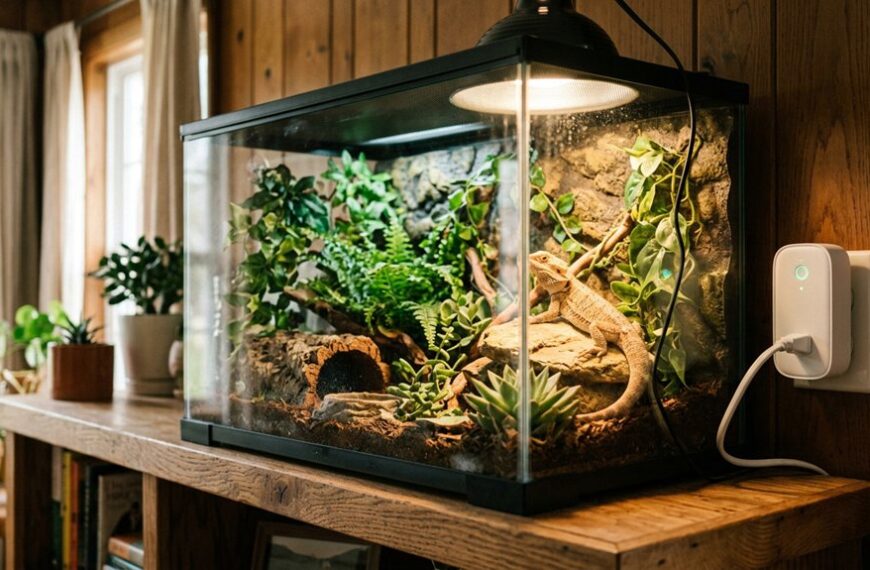
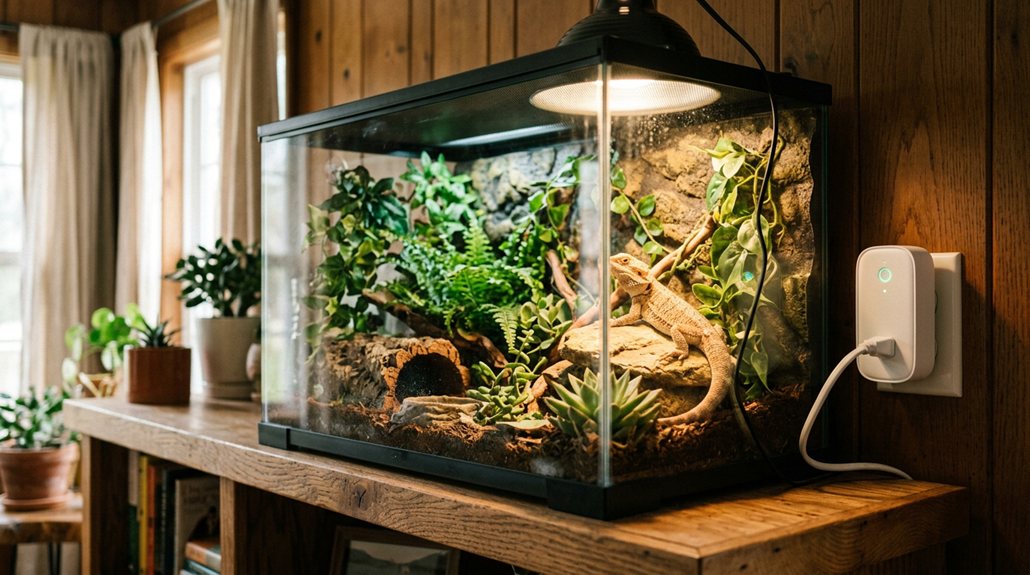
【Premium Materials & Sturdy Build】Crafted from strong tempered glass and natural wood with a waterproof coating, this reptile terrarium combines durability with a modern, stylish look. The included acrylic base panel offers reliable protection against spills and moisture, keeping the habitat clean and long-lasting. Its spacious interior allows your reptile to roam, bask, and hide—supporting natural behaviors and overall health.(Note: The product does not include the decorations in the picture)

Unlike reptile carpet, reptile tank liner is easy to spot clean and fully clean. This reptile substrate is a great low-maintenance option to maintain a clean and convenient environment

【360° Tempered Glass Viewing】All four sides are made of crystal-clear tempered glass, offering full visibility of your reptile's activities. Compared with standard glass or acrylic, tempered glass is stronger and more scratch-resistant, ensuring your enclosure stays clear and attractive even when pets climb or rub against the panels.Note: Items Inside of the cage are NOT included.
Key Takeaways
- Size difference: Bearded dragons grow 18-24 inches and need 75-120 gallon tanks; leopard geckos reach 7-10 inches and do well in 20-gallon enclosures
- Diet requirements: Bearded dragons eat both insects and vegetables daily; leopard geckos are strictly insectivores
- Handling personality: Bearded dragons are typically more social and tolerate frequent handling; leopard geckos are calmer but prefer shorter interactions
- Setup costs: Bearded dragon setups run $300-600; leopard gecko setups cost $150-300
- Lifespan: Both live 10-15 years with proper care, making them long-term commitments
- Beginner-friendly: Leopard geckos are slightly easier for absolute beginners due to simpler diet and smaller space needs
- Space requirements: Bearded dragons need significantly more room and vertical climbing space
- Temperature needs: Both require specific heating, but bearded dragons also need UVB lighting while leopard geckos can thrive without it
- Never house together: These species have incompatible habitat needs and should never share an enclosure
What Are the Main Differences Between Bearded Dragons and Leopard Geckos?
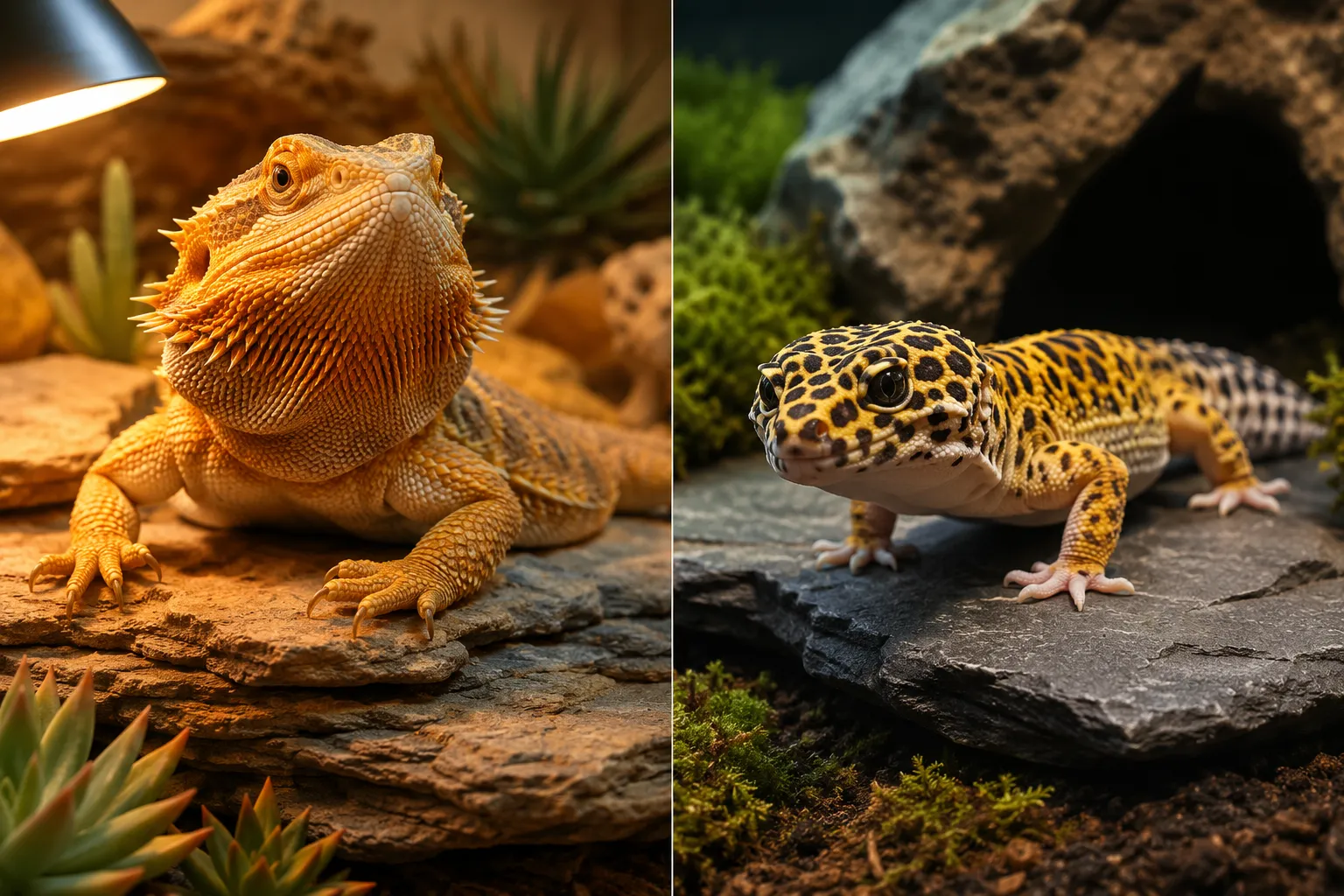
Bearded dragons and leopard geckos differ fundamentally in size, diet, habitat requirements, and temperament. Bearded dragons are diurnal (active during the day), omnivorous lizards from Australian deserts that grow substantially larger and require complex lighting setups. Leopard geckos are crepuscular (active at dawn and dusk), insectivorous lizards from Asian grasslands that stay compact and have simpler lighting needs.
Physical and behavioral differences:
- Activity patterns: Bearded dragons are awake during your daytime hours, making them more interactive. Leopard geckos are most active at twilight and may hide during peak daylight
- Body structure: Bearded dragons have flat, triangular heads with spiny scales and can puff their “beards” when stressed. Leopard geckos have smooth skin, fat-storing tails, and movable eyelids (rare among geckos)
- Communication: Bearded dragons display head bobbing and arm waving. Leopard geckos vocalize with chirps and squeaks
- Climbing ability: Bearded dragons are semi-arboreal and need branches. Leopard geckos are terrestrial ground-dwellers
Common mistake: Many first-time owners underestimate how quickly bearded dragons outgrow small starter tanks. A juvenile bearded dragon in a 40-gallon tank will need an upgrade within 6-12 months, while a leopard gecko can live its entire life in a 20-gallon long enclosure.
Bearded Dragon vs Leopard Gecko Size Comparison
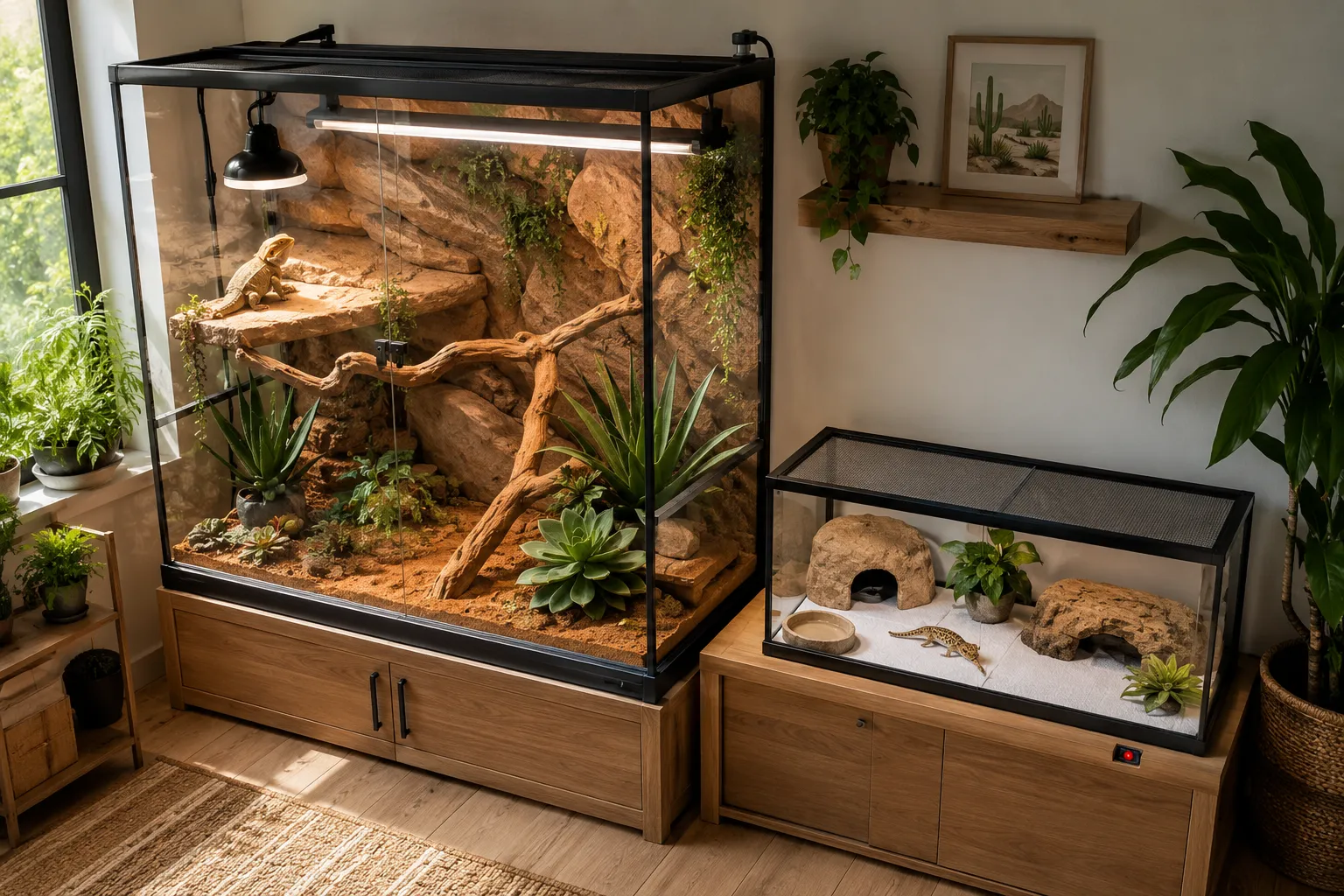
Bearded dragons grow significantly larger than leopard geckos, reaching 18-24 inches in length and weighing 300-500 grams as adults. Leopard geckos typically measure 7-10 inches and weigh 45-80 grams when fully grown. This size difference directly impacts enclosure requirements, food costs, and handling experience.
Size progression timeline:
| Age | Bearded Dragon | Leopard Gecko |
|---|---|---|
| Hatchling | 3-4 inches | 3-4 inches |
| 3 months | 8-11 inches | 5-6 inches |
| 6 months | 11-16 inches | 6-7 inches |
| 12 months | 16-20 inches | 7-9 inches |
| Adult (18+ months) | 18-24 inches | 7-10 inches |
Space implications:
- Bearded dragons need minimum 75-gallon tanks (48″ x 18″ x 18″) for adults, with 120 gallons preferred
- Leopard geckos thrive in 20-gallon long tanks (30″ x 12″ x 12″) throughout their lives
- Bearded dragons require 4-6 square feet of floor space; leopard geckos need only 2-3 square feet
Choose a bearded dragon if: You have dedicated floor or furniture space for a large enclosure and don’t mind the footprint. Choose a leopard gecko if: You live in an apartment, dorm, or smaller space where a compact setup is essential.
For more details on appropriate housing, see our guide on what tank size a bearded dragon needs.
Which Is Easier to Care For: Bearded Dragon or Leopard Gecko?
Leopard geckos are generally easier to care for than bearded dragons, especially for absolute beginners. They require less daily maintenance, simpler diet preparation, and more forgiving temperature gradients. However, bearded dragons offer more interactive experiences and are often considered more rewarding for owners who enjoy hands-on pet care.
Daily care comparison:
Leopard Gecko (15-20 minutes daily):
- Feed insects 3-4 times per week (adults)
- Spot-clean waste
- Refill water dish
- Check temperatures
- No daily vegetable prep required
Bearded Dragon (30-45 minutes daily):
- Prepare fresh salad daily
- Feed insects (frequency varies by age)
- Spot-clean waste and uneaten food
- Mist vegetables for hydration
- Monitor basking behavior
- More frequent handling and interaction
Complexity factors:
- Lighting: Bearded dragons require both UVB and heat lamps with specific replacement schedules. Leopard geckos can thrive with heat mats and optional low-level UVB
- Diet variety: Bearded dragons need rotating vegetables, greens, and insects with proper calcium dusting. Leopard geckos eat only insects with calcium supplementation
- Temperature precision: Bearded dragons need 95-110°F basking spots and 75-85°F cool zones. Leopard geckos need 88-92°F warm zones and 70-75°F cool zones
Common mistake: New owners often choose bearded dragons for their friendly personality without realizing the daily salad prep commitment. If you travel frequently or have an unpredictable schedule, a leopard gecko’s less demanding routine may fit better.
How Much Does It Cost to Set Up a Tank for Bearded Dragon vs Leopard Gecko?
Initial setup costs for a bearded dragon range from $300-600, while leopard gecko setups typically cost $150-300. The price difference stems primarily from enclosure size, lighting requirements, and heating equipment. Both species require ongoing monthly expenses for food, supplements, and electricity.
Bearded Dragon Setup Costs:
- Enclosure: $150-300 (75-120 gallon tank or PVC enclosure)
- UVB lighting: $40-80 (tube fixture and bulb)
- Basking bulb and dome: $20-35
- Thermometers/hygrometers: $15-30
- Substrate: $20-40 (tile, reptile carpet, or loose substrate)
- Decor and hides: $40-80 (branches, rocks, hides)
- Food/water dishes: $15-25
- Initial food and supplements: $30-50
- Total: $330-640
Leopard Gecko Setup Costs:
- Enclosure: $50-100 (20-gallon long tank)
- Heat mat and thermostat: $40-70
- Thermometers: $10-20
- Substrate: $10-20 (paper towels, reptile carpet, or tile)
- Hides (3 minimum): $30-60
- Food/water dishes: $10-20
- Initial food and supplements: $25-40
- Total: $175-330
Monthly ongoing costs:
- Bearded dragon: $40-70 (insects, vegetables, electricity, supplements)
- Leopard gecko: $20-35 (insects, electricity, supplements)
Money-saving tip: Both species can use tile flooring (from hardware stores) instead of expensive reptile substrates, and you can find quality used tanks on local marketplaces. However, never compromise on UVB lighting quality for bearded dragons, this is essential for preventing metabolic bone disease.
Do Bearded Dragons or Leopard Geckos Live Longer?
Both bearded dragons and leopard geckos have similar lifespans of 10-15 years in captivity with proper care, though leopard geckos occasionally reach 20+ years. Wild bearded dragons typically live only 5-8 years due to predation and environmental stress, while captive specimens benefit from consistent care, veterinary access, and protected environments.
Lifespan factors:
Bearded Dragons:
- Average lifespan: 10-12 years
- Well-cared-for individuals: 12-15 years
- Record longevity: 18+ years (rare)
- Primary health risks: Metabolic bone disease, impaction, respiratory infections
Leopard Geckos:
- Average lifespan: 10-15 years
- Well-cared-for individuals: 15-20 years
- Record longevity: 28 years (documented)
- Primary health risks: Impaction, retained shed, calcium deficiency
Longevity best practices:
- Proper UVB exposure and calcium supplementation (critical for bearded dragons)
- Appropriate temperature gradients maintained consistently
- Regular veterinary checkups every 12-18 months
- Quality diet with variety and proper supplementation
- Clean enclosure with low stress levels
- Avoiding overfeeding and obesity
For more information on bearded dragon longevity, read our detailed guide on how long bearded dragons live.
Reality check: Both species represent 10-15 year commitments. Consider your life plans, college, career moves, housing changes, before committing to either pet. Leopard geckos’ slightly longer potential lifespan and easier care may make them better for younger owners who anticipate lifestyle changes.
Are Bearded Dragons or Leopard Geckos Better for Beginners?
Leopard geckos are slightly better for absolute beginners due to their smaller size, simpler diet, and more forgiving care requirements. However, bearded dragons are also excellent beginner reptiles and may be preferable for owners who prioritize interactive handling and daytime activity. Both species are considered among the best starter reptiles available.
Beginner-friendly features:
Leopard Geckos Win For:
- Smaller space requirements (apartment-friendly)
- No UVB lighting required (though beneficial)
- Simpler diet (insects only, no daily salad prep)
- Less frequent feeding (adults eat 3-4 times weekly)
- Lower initial and ongoing costs
- More forgiving temperature ranges
- Quieter and less active (better for bedrooms)
Bearded Dragons Win For:
- More tolerant of handling errors
- Active during your waking hours
- More expressive body language (easier to read)
- Better for families with supervised children
- More interactive and engaging personalities
- Visible eating behavior (easier to monitor health)
Skill-building progression:
Both species teach essential reptile care skills: temperature management, humidity control, proper supplementation, and recognizing health issues. Leopard geckos are more forgiving of minor care mistakes, while bearded dragons require more attention to detail but reward you with more interaction.
Choose leopard gecko if: You’re a first-time reptile owner, have limited space or budget, prefer lower daily maintenance, or want a pet that’s content with less handling.
Choose bearded dragon if: You want a more interactive pet, have space for a large enclosure, don’t mind daily food prep, and enjoy frequent handling sessions.
For more beginner guidance, explore our bearded dragon care resources.
Can Bearded Dragons and Leopard Geckos Live Together in the Same Tank?
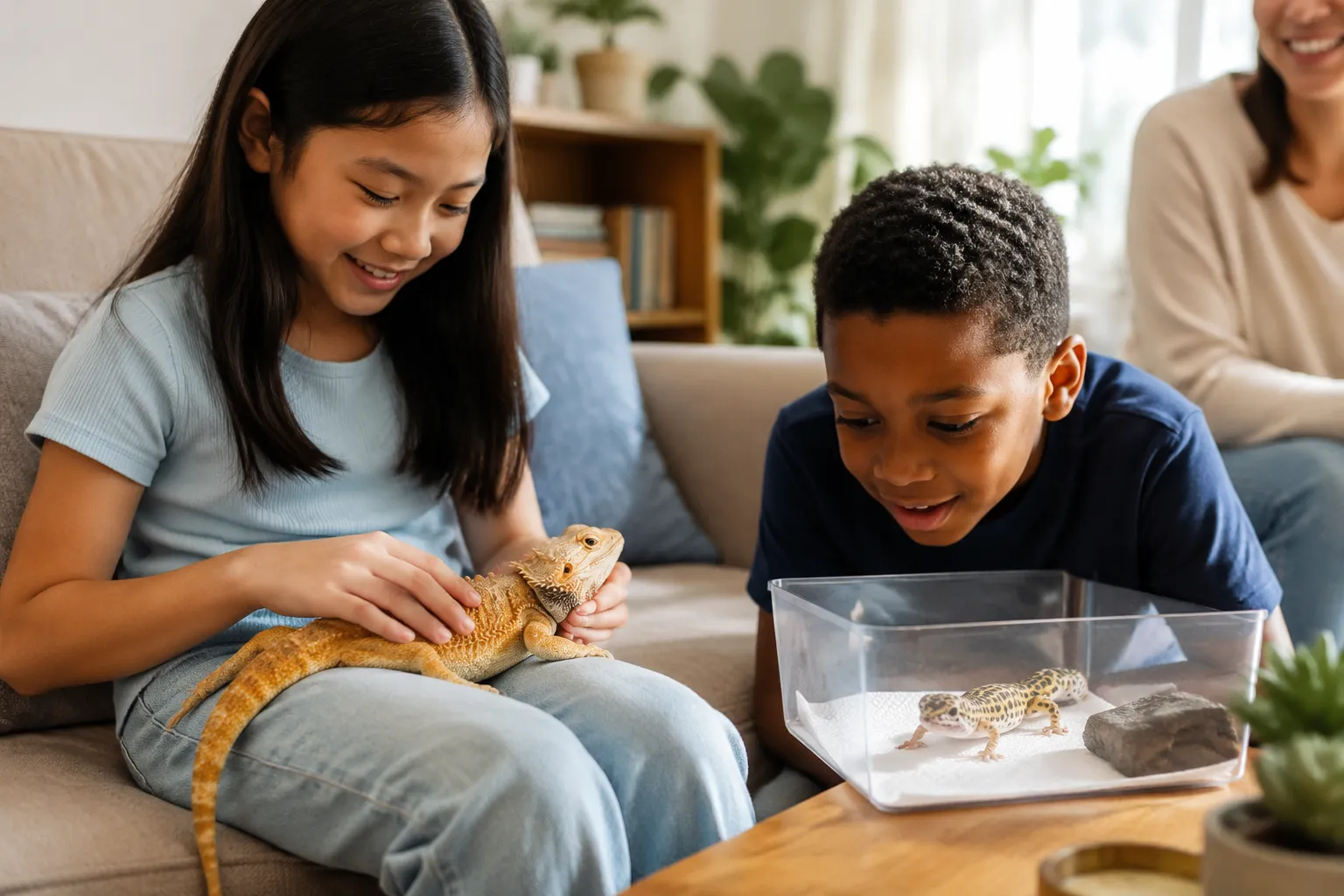
No, bearded dragons and leopard geckos should never live together in the same enclosure. These species have incompatible temperature requirements, activity patterns, size differences, and territorial behaviors that make cohabitation dangerous and stressful for both animals. Even large enclosures cannot safely accommodate both species simultaneously.
Why cohabitation fails:
- Temperature conflict: Bearded dragons need 95-110°F basking spots; leopard geckos become stressed above 92°F
- Humidity differences: Bearded dragons prefer 30-40% humidity; leopard geckos need 40-50% with humid hides
- Size disparity: Adult bearded dragons could seriously injure or kill leopard geckos, even unintentionally
- Activity mismatch: Diurnal bearded dragons are active when crepuscular leopard geckos are trying to rest
- Territorial aggression: Both species are territorial and will compete for resources
- Disease transmission: Cross-species parasite and bacteria transmission risks
Additional cohabitation concerns:
Even housing two bearded dragons together or two leopard geckos together carries significant risks. Both species are naturally solitary and territorial. Cohabitation often leads to:
- Competition for food and basking spots
- Dominant individuals preventing subordinates from eating
- Stress-related health issues and suppressed immune systems
- Bite wounds and tail loss
- Stunted growth in subordinate animals
Safe multi-reptile households: If you want both species, maintain completely separate enclosures with independent heating, lighting, and care routines. Keep enclosures in different rooms if possible to prevent visual stress. Never handle one species and immediately handle the other without washing hands thoroughly to prevent cross-contamination.
What Do Bearded Dragons Eat vs What Do Leopard Geckos Eat?
Bearded dragons are omnivores requiring both animal protein (insects) and plant matter (vegetables and greens) in their diet, with the ratio shifting from 70% insects as juveniles to 70% vegetables as adults. Leopard geckos are strict insectivores that eat only live insects throughout their entire lives, never requiring vegetables or plant matter.
Bearded Dragon Diet:
Juvenile (0-12 months):
- 70-80% insects, 20-30% vegetables
- Feed insects 2-3 times daily
- Offer fresh salad daily
- Common insects: crickets, dubia roaches, black soldier fly larvae
Adult (12+ months):
- 20-30% insects, 70-80% vegetables
- Feed insects 3-4 times weekly
- Fresh salad daily
- Staple greens: collard greens, mustard greens, turnip greens, dandelion greens
- Occasional vegetables: bell peppers, squash, carrots
- Treats: blueberries, apples (10% of diet)
Leopard Gecko Diet:
All life stages:
- 100% insects (no vegetables needed)
- Juveniles: Feed daily
- Adults: Feed 3-4 times weekly
- Staple insects: crickets, dubia roaches, black soldier fly larvae
- Occasional treats: mealworms, hornworms, waxworms (fatty)
- Insects should be appropriately sized (no larger than the space between the gecko’s eyes)
Supplementation requirements:
Both species need calcium and vitamin D3 supplementation, but delivery differs:
- Bearded dragons: Dust insects with calcium + D3 powder 3-4 times weekly; multivitamin once weekly. UVB lighting helps synthesize D3 naturally
- Leopard geckos: Dust insects with calcium + D3 every feeding; multivitamin once weekly. Provide a small dish of pure calcium powder in the enclosure for self-supplementation
Common feeding mistake: New bearded dragon owners often struggle with vegetable acceptance. Start offering greens from day one, even if juveniles ignore them initially. This establishes healthy eating patterns before adulthood when vegetables become dietary staples.
For more feeding guidance, visit our bearded dragon feeding resources.

All-in-One Terrarium Decor Starter Kit:This 5-piece set is carefully curated to cover the essential needs of your leopard gecko - hiding, climbing, feeding, hydrating, and resting. Save time and money by getting everything you need in one click, eliminating the hassle of searching for separate decor items

【Tempered Glass Tank 20 Gallon】Patented Design Reptile Tank Size: 30" x 12" x 12". Made of high quality tempered glass for sturdy and safe, this wide terrarium tank is suitable for normal reptile amphibian pets as lizard, crested gecko, frog, snake, tortoise and more.

【Superior Insulation】: Compared to glass and wooden reptile tank, premium PVC Reptile Tank offer excellent insulation and temperature regulation, effectively maintaining a stable internal temperature. Ideal for reptiles that require a consistent climate, such as geckos, lizards, bearded dragons, ball pythons, and blue-tongued skinks.
Why Is My Bearded Dragon Not Eating But Leopard Gecko Eating Fine?
If your bearded dragon stops eating while your leopard gecko maintains normal appetite, the issue likely relates to species-specific factors like temperature, UVB exposure, brumation, or stress. Bearded dragons have more complex environmental needs and are more sensitive to lighting and seasonal changes than leopard geckos.
Common bearded dragon appetite issues:
Temperature problems:
- Basking spot below 95°F prevents proper digestion
- Bearded dragons won’t eat if they can’t reach optimal body temperature
- Leopard geckos tolerate wider temperature ranges
UVB lighting issues:
- Expired or inadequate UVB bulbs (replace every 6-12 months)
- UVB bulb too far from basking spot (should be 8-12 inches)
- Leopard geckos don’t depend on UVB for appetite
Brumation (seasonal dormancy):
- Bearded dragons naturally brumate in fall/winter, reducing or stopping food intake
- Can last weeks to months
- Leopard geckos also brumate but less commonly in captivity
- Learn more about brumation signs and timeline
Stress factors:
- New environment or enclosure changes
- Improper substrate (loose substrate can cause impaction fear)
- Lack of proper hides or too much visibility
- Recent handling or transport
Health concerns:
- Parasites (more common in bearded dragons)
- Impaction from inappropriate substrate or food
- Respiratory infection
- Metabolic bone disease
Troubleshooting steps:
- Verify basking temperature with infrared thermometer (should read 95-110°F)
- Check UVB bulb age and replace if over 6 months old
- Assess for brumation signs: lethargy, hiding, darkened color
- Reduce handling and environmental stress
- Offer favorite foods to gauge interest
- Consult reptile veterinarian if appetite loss exceeds 2 weeks (outside brumation)
Why leopard geckos are less affected: Their simpler care requirements, lack of UVB dependency, and more stable appetite patterns make them less prone to environmental-related feeding strikes. However, leopard geckos can also stop eating due to impaction, retained shed, or illness.
Are Leopard Geckos Good Pets for Kids or Should I Get a Bearded Dragon?
Both leopard geckos and bearded dragons can be excellent pets for children with proper supervision, but bearded dragons are generally better for kids aged 8 and older due to their sturdier build, tolerance for handling, and interactive personalities. Leopard geckos suit responsible children aged 10+ who can handle delicate animals gently and respect their need for less frequent interaction.
Bearded Dragons for Kids:
Advantages:
- More tolerant of handling mistakes and gentle squeezing
- Larger size makes them easier for children to hold safely
- Active during daytime when kids are awake
- Expressive behaviors teach children to read animal body language
- Calmer temperament during handling sessions
- Can participate in supervised “outdoor time” on warm days
Considerations:
- Require adult supervision for daily salad preparation
- Need consistent daily care routines (good for teaching responsibility)
- Larger enclosures require more space in child’s room
- Higher ongoing costs for food and supplies
Leopard Geckos for Kids:
Advantages:
- Lower maintenance fits busy family schedules
- Smaller enclosure footprint
- Less expensive to maintain
- Quieter and less disruptive in bedrooms
- Easier feeding routine (no vegetable prep)
Considerations:
- Fragile bodies and detachable tails require very gentle handling
- Less tolerant of frequent handling (2-3 times weekly maximum)
- Crepuscular activity means less daytime interaction
- Smaller size makes them harder for young children to hold safely
- Tail loss from rough handling causes stress (though tails regenerate)
Age-appropriate guidelines:
- Ages 5-7: Adult handles pet; child observes and helps with simple tasks under close supervision
- Ages 8-10: Child can handle bearded dragon with supervision; leopard gecko with very close supervision
- Ages 11+: Responsible children can handle either species independently with periodic adult check-ins
Teaching responsibility: Both species offer excellent opportunities to teach children about commitment, routine care, and respecting animal needs. Bearded dragons provide more immediate feedback and interaction, while leopard geckos teach patience and gentle handling.
Family decision factors: Consider your family’s schedule, available supervision time, and child’s maturity level. A bearded dragon may be worth the extra effort if your child wants an interactive pet they can handle frequently. Choose a leopard gecko if your family prefers lower maintenance or your child is naturally gentle and patient.
Common Mistakes When Choosing Between Bearded Dragon and Leopard Gecko
The most common mistake when choosing between these species is prioritizing appearance over lifestyle compatibility. Many owners select based on which reptile looks cooler without considering daily care requirements, space availability, long-term costs, and personal interaction preferences, leading to rehoming situations or inadequate care.
Critical decision-making errors:
Underestimating space requirements:
- Assuming a 40-gallon tank is sufficient for adult bearded dragons (it’s not, see can a bearded dragon live in a 40-gallon tank forever)
- Not measuring available space before purchasing
- Forgetting to account for heat lamp clearance and ventilation
Ignoring time commitment:
- Not considering daily salad prep time for bearded dragons
- Underestimating insect care and gut-loading requirements
- Failing to account for regular enclosure cleaning schedules
Budget miscalculations:
- Only considering initial setup costs, not ongoing monthly expenses
- Forgetting to budget for veterinary care ($75-200 per visit)
- Not accounting for electricity costs (bearded dragon lighting can add $15-30 monthly)
Impulse purchasing:
- Buying a reptile before researching care requirements
- Purchasing from pet stores without understanding the animal’s age or health history
- Getting a reptile as a surprise gift without recipient’s input
Personality mismatches:
- Choosing a bearded dragon but wanting a low-maintenance pet
- Selecting a leopard gecko but expecting frequent handling
- Not considering whether you prefer diurnal or crepuscular pet activity
Seasonal considerations:
- Not understanding brumation and appetite changes
- Expecting consistent behavior year-round
- Panicking during natural seasonal dormancy periods
How to avoid these mistakes:
- Research first, purchase later: Spend at least 2-4 weeks researching before committing
- Measure your space: Ensure you have room for appropriate adult enclosure size
- Calculate total costs: Budget for setup, monthly expenses, and emergency vet fund
- Assess your schedule: Honestly evaluate available daily care time
- Visit both species: Handle bearded dragons and leopard geckos at reptile expos or pet stores before deciding
- Plan for longevity: Consider your life plans over the next 10-15 years
Decision framework: Choose a bearded dragon if you want daily interaction, have space for a large enclosure, and don’t mind food prep. Choose a leopard gecko if you prefer lower maintenance, have limited space, and want a more hands-off pet.
Do Bearded Dragons Need More Space Than Leopard Geckos?
Yes, bearded dragons require significantly more space than leopard geckos due to their larger adult size, active nature, and need for temperature gradients. Adult bearded dragons need minimum 75-gallon enclosures (120 gallons preferred), while leopard geckos thrive in 20-gallon long tanks throughout their lives, a difference of nearly 4-6 times the space requirement.
Minimum space requirements:
Bearded Dragons:
- Juvenile (0-6 months): 40-gallon breeder minimum
- Sub-adult (6-12 months): 75-gallon minimum
- Adult (12+ months): 75-120 gallons minimum
- Ideal dimensions: 48″ L x 24″ W x 24″ H or larger
- Floor space priority: 4-6 square feet minimum
- Vertical space needed: 18-24 inches for climbing
Leopard Geckos:
- Juvenile: 10-gallon tank acceptable
- Adult: 20-gallon long minimum (30″ x 12″ x 12″)
- Ideal dimensions: 36″ L x 18″ W x 12″ H
- Floor space priority: 2.5-3 square feet
- Vertical space: 12 inches sufficient (terrestrial species)
Why bearded dragons need more space:
- Thermoregulation: Require distinct basking zone (95-110°F) and cool zone (75-85°F) with adequate distance between them
- Activity level: Semi-arboreal and active, need room to explore, climb, and exercise
- Size: 18-24 inch body length requires proportional enclosure
- Behavioral needs: Glass surfing and stress behaviors increase in cramped spaces
Space-saving considerations:
If space is limited, leopard geckos offer clear advantages:
- 20-gallon tanks fit on standard dressers or shelves
- Stackable enclosures allow multiple geckos in vertical space
- Smaller footprint works in apartments, dorms, or bedrooms
- Easier to relocate if you move
Upgrade planning: Budget for enclosure upgrades when purchasing juvenile bearded dragons. Many owners start with 40-gallon tanks but need 75-120 gallon upgrades within the first year, essentially paying for two enclosures. Leopard geckos eliminate this concern with their stable space requirements.
Which Is More Friendly: Bearded Dragon or Leopard Gecko?
Bearded dragons are generally more friendly and social than leopard geckos, displaying more tolerance for frequent handling, seeking out human interaction, and showing more expressive body language. Leopard geckos are calm and docile but prefer less frequent handling and don’t actively seek human attention the way bearded dragons often do.
Bearded Dragon Personality:
Social behaviors:
- Often approach glass when owners enter room
- Many enjoy being taken out for handling sessions
- Can recognize individual people and show preferences
- Display head bobbing, arm waving, and beard puffing communication
- Some tolerate shoulder sitting or supervised exploration
- Generally calm during handling after acclimation period
Interaction tolerance:
- Can handle daily interaction sessions
- Many enjoy gentle petting and scratching
- Tolerate being held for 15-30 minutes
- Some individuals are more outgoing than others
Leopard Gecko Personality:
Calm behaviors:
- Docile and rarely bite (even when stressed)
- Tolerate handling but don’t actively seek it
- Prefer 2-3 handling sessions weekly maximum
- Less expressive body language (harder to read mood)
- May vocalize with chirps or squeaks when startled
Interaction preferences:
- Best handled for 10-15 minutes maximum
- Prefer being allowed to walk hand-to-hand rather than restrained
- May become stressed with excessive handling
- More independent and content in their enclosure
Individual variation: Personality varies significantly within both species. Some bearded dragons are shy or skittish, while some leopard geckos are remarkably outgoing. Early socialization, consistent gentle handling, and respecting individual temperament all influence friendliness.
Handling best practices:
For Bearded Dragons:
- Support body fully with both hands
- Allow them to rest on your arm or lap
- Handle during active daytime hours
- Watch for stress signs: darkened beard, hissing, arm waving
For Leopard Geckos:
- Scoop from below rather than grabbing from above
- Let them walk hand-to-hand
- Handle during evening hours when naturally active
- Never grab the tail (can detach)
- Watch for stress signs: tail rattling, vocalization, attempting to flee
Choose bearded dragon if: You want a pet that enjoys frequent interaction and shows personality. Choose leopard gecko if: You prefer a calmer pet that’s content with occasional handling and more independent behavior.
Alternatives to Bearded Dragons and Leopard Geckos for Reptile Pets
If neither bearded dragons nor leopard geckos perfectly fit your needs, several alternative beginner-friendly reptiles offer different care requirements, sizes, and interaction levels. Consider crested geckos, blue-tongued skinks, corn snakes, or ball pythons depending on your specific preferences for handling, space, and maintenance.
Alternative reptile options:
Crested Geckos:
- Size: 7-9 inches
- Care level: Easier than both (no insects required)
- Diet: Commercial crested gecko diet powder + occasional insects
- Space: 20-gallon tall tank (vertical)
- Personality: Docile, tolerate handling, active at night
- Best for: Owners who want gecko size without insect-only diet
Blue-Tongued Skinks:
- Size: 18-24 inches (similar to bearded dragons)
- Care level: Moderate
- Diet: Omnivorous (vegetables, protein, commercial food)
- Space: 40-75 gallon tank
- Personality: Very docile, handleable, curious
- Best for: Owners who want bearded dragon size with simpler lighting needs
Corn Snakes:
- Size: 3-5 feet
- Care level: Easy
- Diet: Frozen-thawed mice (feeding every 7-14 days)
- Space: 20-40 gallon tank
- Personality: Calm, tolerate handling, low maintenance
- Best for: Owners comfortable with snake feeding who want minimal daily care
Ball Pythons:
- Size: 3-5 feet
- Care level: Easy to moderate
- Diet: Frozen-thawed rats (feeding every 7-14 days)
- Space: 40-gallon tank minimum
- Personality: Very docile, can be picky eaters
- Best for: Owners who want a handleable snake with calm temperament
African Fat-Tailed Geckos:
- Size: 7-9 inches
- Care level: Similar to leopard geckos
- Diet: Insectivorous
- Space: 20-gallon tank
- Personality: Slightly more shy than leopard geckos
- Best for: Owners who like leopard geckos but want something less common
Comparison factors:
| Species | Daily Care Time | Space Needed | Handling Tolerance | Diet Complexity |
|---|---|---|---|---|
| Bearded Dragon | 30-45 min | Large | High | High |
| Leopard Gecko | 15-20 min | Small | Moderate | Moderate |
| Crested Gecko | 10-15 min | Small-Medium | Moderate | Low |
| Blue-Tongued Skink | 20-30 min | Large | High | Moderate |
| Corn Snake | 5-10 min | Medium | High | Low |
Decision criteria: Choose alternatives based on what aspect of bearded dragon or leopard gecko care doesn’t fit your situation. If daily food prep is the issue, consider snakes. If space is limiting, stick with smaller geckos. If you want easier diet management, crested geckos offer commercial food options.
Conclusion
Choosing between a bearded dragon and leopard gecko ultimately depends on your lifestyle, available space, time commitment, and interaction preferences. Bearded dragons offer more social interaction, expressive personalities, and daytime activity but require larger enclosures, daily vegetable preparation, and more complex lighting setups. Leopard geckos provide easier maintenance, smaller space requirements, and lower costs while still offering a rewarding pet experience with their calm temperament and simple care needs.
Both species make excellent pets for beginners and can live 10-15 years with proper care, representing significant long-term commitments. Neither is objectively “better”, the right choice is the one that aligns with your daily routine, living situation, and what you want from a reptile companion.
Next steps to make your decision:
- Measure your available space and confirm you can accommodate the appropriate enclosure size
- Calculate your budget for both initial setup and ongoing monthly costs
- Assess your daily schedule and honestly evaluate available care time
- Visit local reptile stores or expos to handle both species before committing
- Research reputable breeders rather than purchasing from chain pet stores when possible
- Prepare the complete enclosure before bringing your new pet home
- Locate a reptile veterinarian in your area before emergencies arise
Remember that proper research and preparation lead to successful reptile ownership. Whether you choose a bearded dragon or leopard gecko, commit to providing appropriate care, regular veterinary checkups, and a properly maintained environment. Both species will reward your dedication with years of fascinating behavior and companionship.
For more detailed care information, explore our comprehensive guides on bearded dragon care and feeding requirements.
Frequently Asked Questions
Can I keep a bearded dragon and leopard gecko in the same room?
Yes, you can keep both species in the same room as long as they have separate enclosures with independent heating and lighting systems. Ensure enclosures aren’t positioned where the animals can see each other constantly, as this may cause stress. Maintain good hygiene by washing hands between handling each pet to prevent cross-contamination.
How often should I handle my bearded dragon vs leopard gecko?
Bearded dragons can be handled daily for 15-30 minutes once acclimated, while leopard geckos should be handled 2-3 times weekly for 10-15 minutes maximum. Both species need a 3-5 day acclimation period after bringing them home before beginning regular handling. Always handle during their active hours, daytime for bearded dragons, evening for leopard geckos.
Which species is better for apartment living?
Leopard geckos are better suited for apartment living due to their compact 20-gallon enclosure requirement, lower noise levels, and simpler setup. Bearded dragons require 75-120 gallon tanks that may be challenging to accommodate in smaller apartments and need more complex lighting that increases electricity costs.
Do bearded dragons or leopard geckos smell more?
Neither species has a strong natural odor, but bearded dragons may produce more noticeable smells due to their larger size, daily vegetable waste, and more frequent defecation. Both require regular spot-cleaning and monthly deep cleaning to prevent odor buildup. Proper substrate choice and ventilation minimize any smell issues.
Can bearded dragons and leopard geckos eat the same insects?
Yes, both species can eat crickets, dubia roaches, and black soldier fly larvae. However, portion sizes differ significantly, bearded dragon juveniles eat 30-80 insects daily, while leopard geckos eat 5-10 insects per feeding. Both require calcium dusting, but bearded dragons need additional vegetable variety that leopard geckos don’t eat.
Which pet is quieter: bearded dragon or leopard gecko?
Both species are generally quiet pets. Leopard geckos occasionally vocalize with chirps or squeaks, especially when startled or during breeding season. Bearded dragons are typically silent but may hiss when threatened. Neither species produces disruptive noise levels suitable for apartments or shared living spaces.
How much does a vet visit cost for bearded dragons vs leopard geckos?
Veterinary costs are similar for both species, typically ranging from $75-150 for routine checkups and $150-400 for illness treatment or emergency care. Bearded dragons may have slightly higher veterinary costs over their lifetime due to more common metabolic bone disease issues if UVB lighting is inadequate.
Can I take my bearded dragon or leopard gecko outside?
Bearded dragons can enjoy supervised outdoor time on warm days (75°F+) in secure enclosures or on harnesses, benefiting from natural UVB exposure. Leopard geckos should not be taken outside as they’re crepuscular, stress easily in bright light, and are more prone to escape. Never leave either species unattended outdoors.
Which species is more likely to bite?
Both species rarely bite humans. Bearded dragons may bite if they mistake fingers for food or feel extremely threatened, but their bites are usually minor. Leopard geckos are even less likely to bite and typically only do so if severely stressed or mishandled. Proper handling techniques prevent biting in both species.
Do bearded dragons or leopard geckos need a heat lamp at night?
Bearded dragons don’t need heat lamps at night if room temperature stays above 65°F; they benefit from a natural temperature drop. Leopard geckos also don’t need nighttime heating if temperatures remain above 65°F, though under-tank heaters can provide gentle warmth. Neither species requires light at night, use ceramic heat emitters if supplemental warmth is needed.
Can I feed my bearded dragon and leopard gecko the same supplements?
Both species need calcium with D3 and multivitamin supplements, but application frequency differs. Bearded dragons receive calcium + D3 on insects 3-4 times weekly plus natural D3 synthesis from UVB lighting. Leopard geckos need calcium + D3 dusted on every feeding since they typically don’t have UVB exposure. Use reptile-specific supplements for both.
Which pet is better if I travel frequently?
Leopard geckos are better for frequent travelers since adults only need feeding 3-4 times weekly and can tolerate 3-4 days without care in emergencies. Bearded dragons require daily salad preparation and more frequent monitoring, making them harder to leave with pet sitters. Both species need reliable care during extended absences.
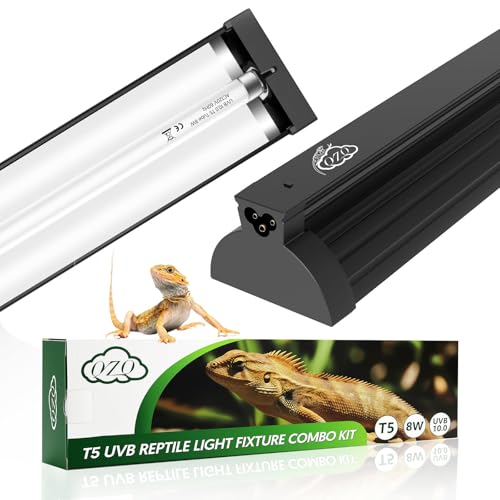
T5 UVB Reptile Light Fixture Combo Kit: The QZQ T5 UVB reptile light features a 5.9ft detachable power cord, a convenient on/off switch, and multiple mounting accessories for easy installation. Whether you're setting up a reptile tank or terrarium, this reptile light fixture meets your reptile lighting needs, providing your pets with the perfect 10.0 UVB lighting environment for healthy growth

T5 UVB Reptile Light Fixture Combo Kit: The QZQ T5 UVB reptile light features a 5.9ft detachable power cord, a convenient on/off switch, and multiple mounting accessories for easy installation. Whether you're setting up a reptile tank or terrarium, this reptile light fixture meets your reptile lighting needs, providing your pets with the perfect 10.0 UVB lighting environment for healthy growth

T5 Reptile Light Fixture with UVB 10.0 Bulb Kit - The REPTIDLDB T5 reptile light fixture comes with a UVB 10.0 bulb kit, offering 10% UVB and 30% UVA output. This lighting system provides a natural and balanced lighting environment, ensuring your reptiles receive the proper UVB radiation for optimal health. The fixture is designed with minimal heat emission, making it perfect for your reptile's habitat without overheating the enclosure. The UVB 10.0 bulb is replaceable, giving you flexibility and convenience in maintaining your reptile’s environment.